The Siberian Shan'gi tomato stands out for its large fruits, which have a rich, deep flavor. The pulp is sweet and meaty, ideal for salads, juices, and pastes. This variety is mid-early, with the first harvest available as early as mid-summer.
Content
- 1 Siberian Shan'gi tomato variety characteristics in the table
- 2 Photo gallery of the tomato variety Siberian Shan'gi:
- 3 A detailed description of the Siberian Shan'gi tomato variety
- 4 Advantages and disadvantages of the Siberian Shan'gi tomato variety
- 5 Features of sowing and planting tomatoes of the Siberian Shangi variety
- 6 Caring for Siberian Shan'gi Tomatoes
- 7 Use and storage of Siberian Shan'gi tomatoes
- 8 Comparison of the Siberian Shan'gi tomato variety with other varieties in the table
- 9 Real reviews from gardeners about the Siberian Shan'gi tomato variety
Siberian Shan'gi tomato variety characteristics in the table
| Characteristic | Description |
| Description |
A determinate (unlimited growth) variety with a mid-season ripening period. Suitable for planting in private gardens. |
| Ripening period | 100-110 days. |
| Fetus | Flat-round, with indistinct ribbing, pinkish. Taste sugar. |
| Fruit weight | On average 157 g. |
| Productivity | 500-600 c/ha |
| Application | For salads, processing into tomato products. |
| Preferred growing regions | Can be grown in different regions of the country. |
| Disease resistance | Tomato is resistant to most fungal infections. |
| Agricultural technology |
|
| 2017 | |
| Originator | Russia, Novosibirsk, Postnikova Olga Valentinovna. |
Photo gallery of the tomato variety Siberian Shan'gi:
A detailed description of the Siberian Shan'gi tomato variety
Tomatoes can be planted both in greenhouses and garden beds in any region, including the north and the Urals. Let's take a look at the Siberian Shan'gi tomato.
Bush characteristics
Forms vigorous, sparsely branched bushes, 150-170 cm tall. Each plant produces 4-6 clusters, each bearing 3-5 tomatoes.
Fruit characteristics
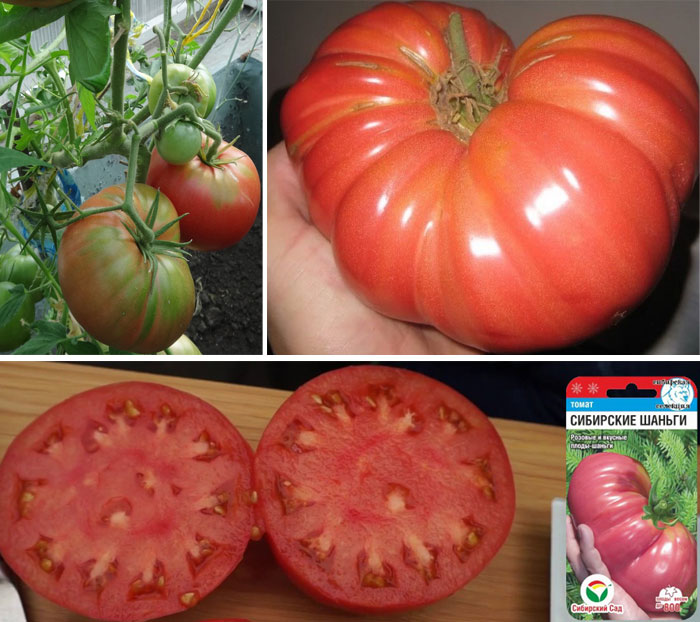
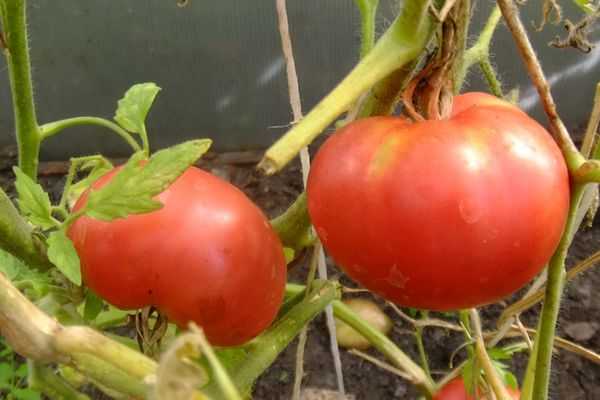
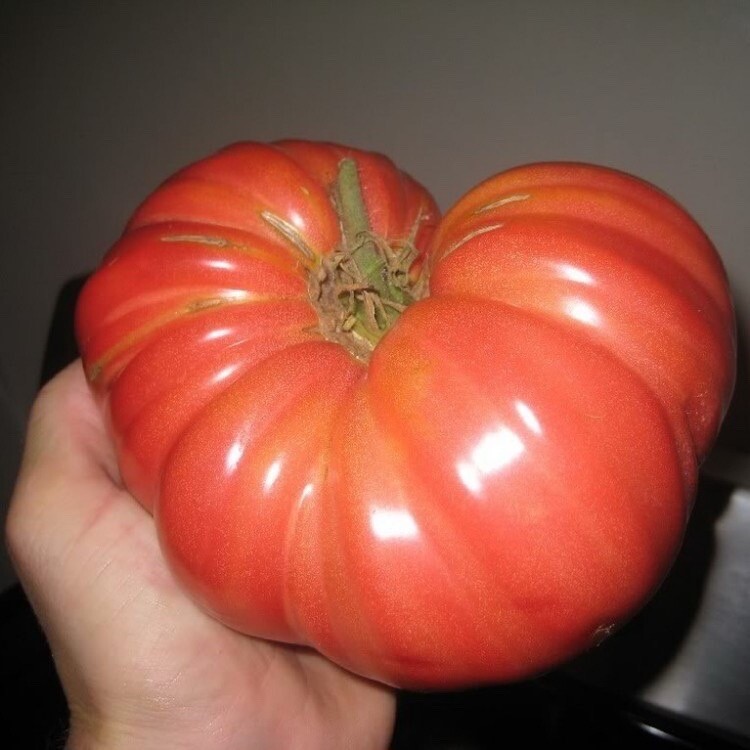
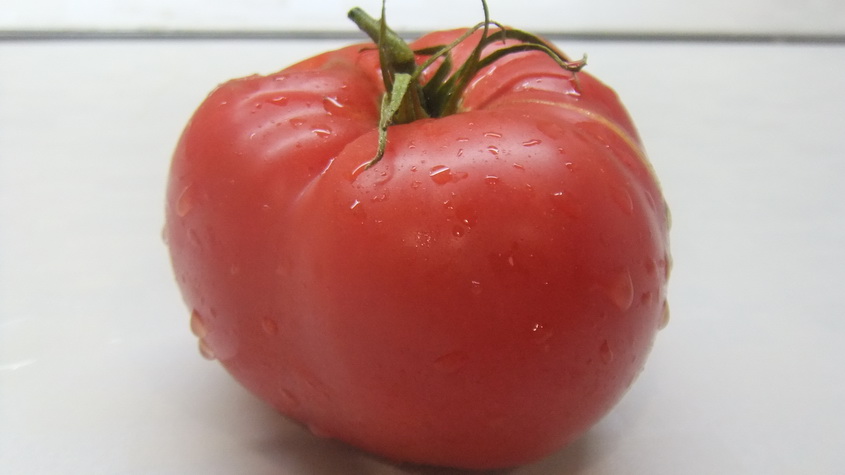
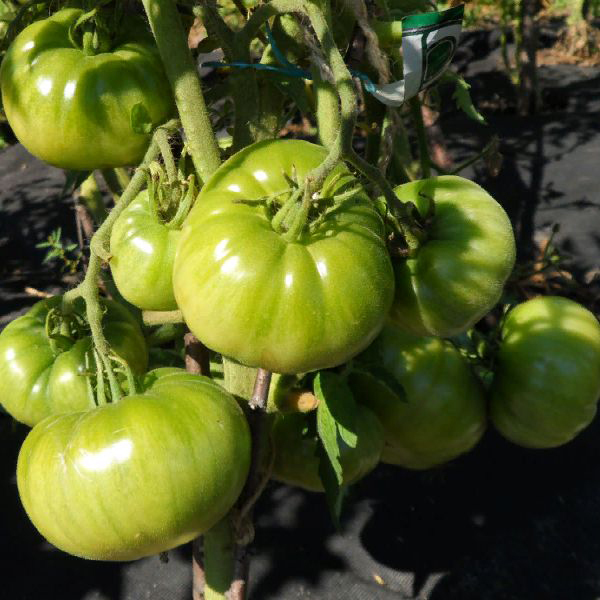
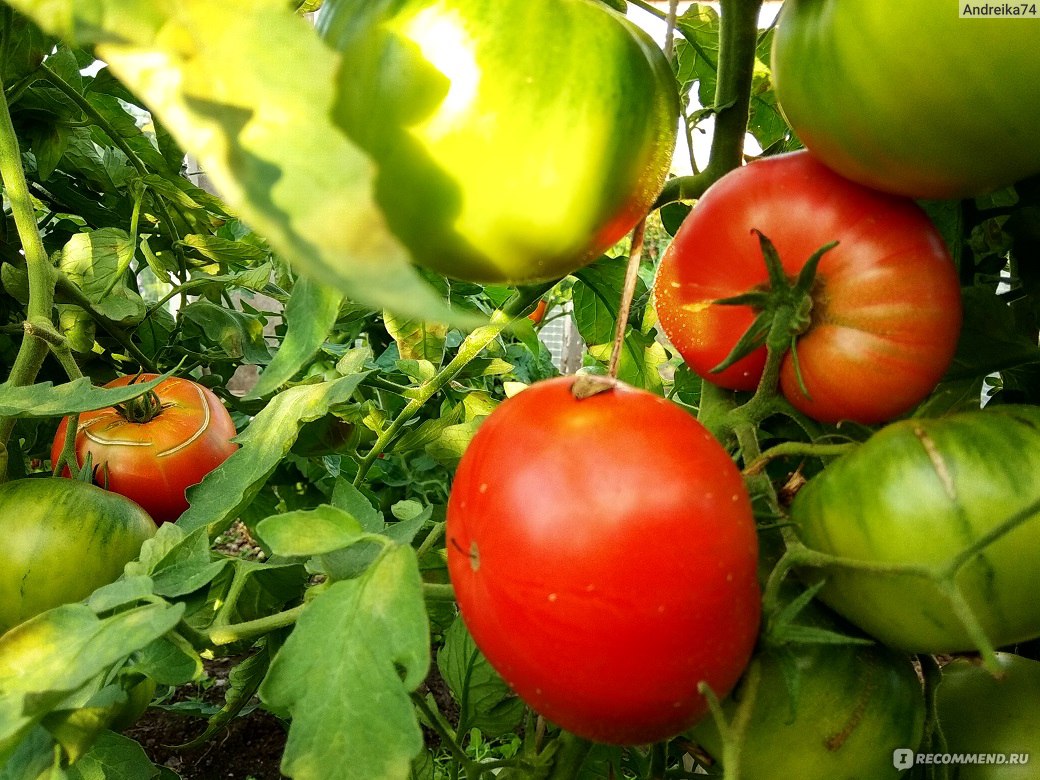
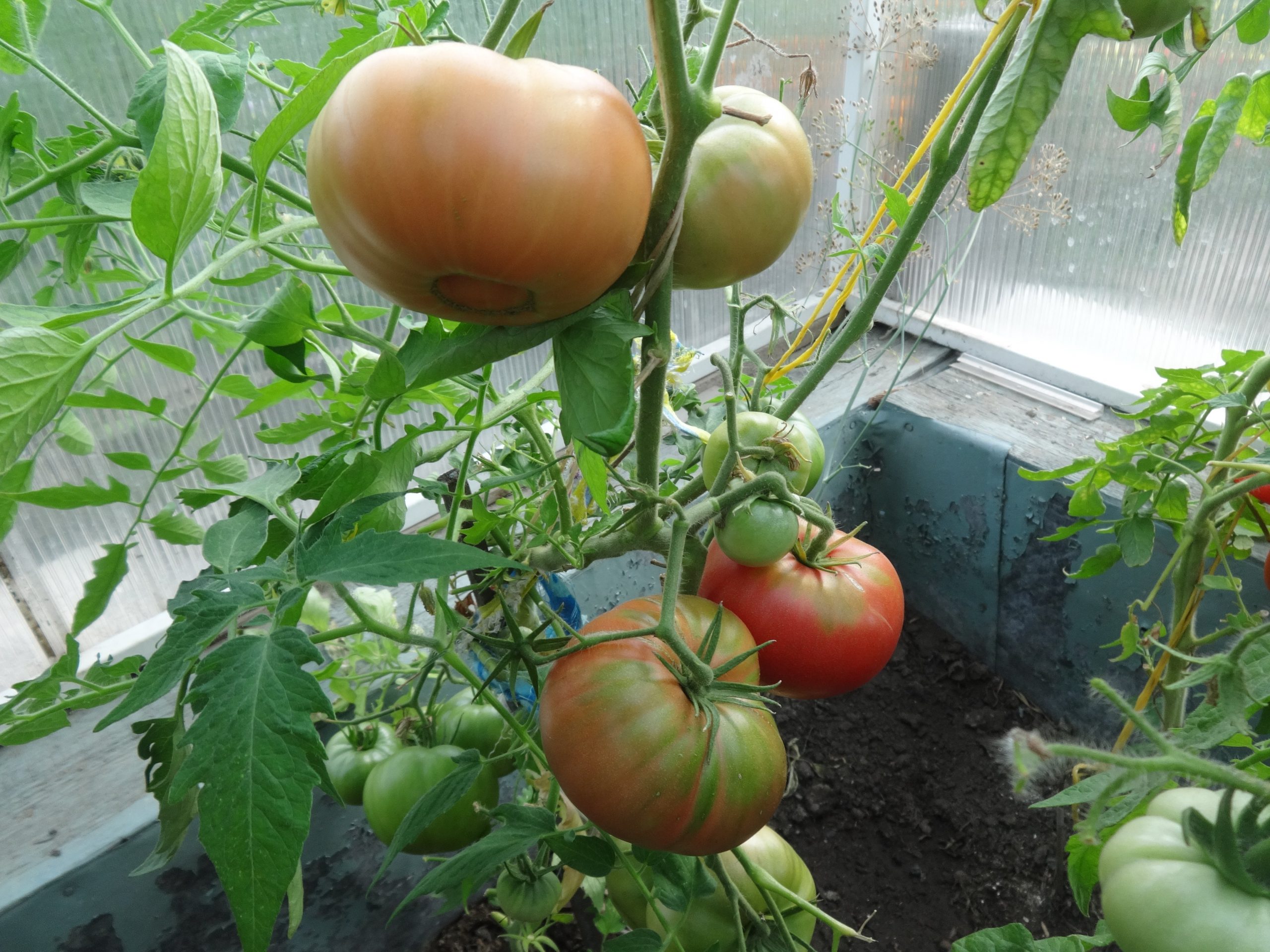
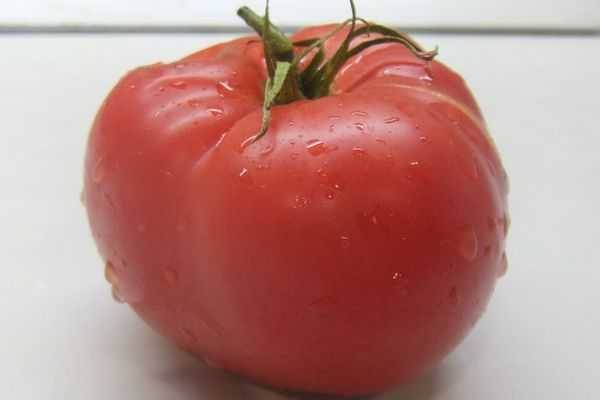
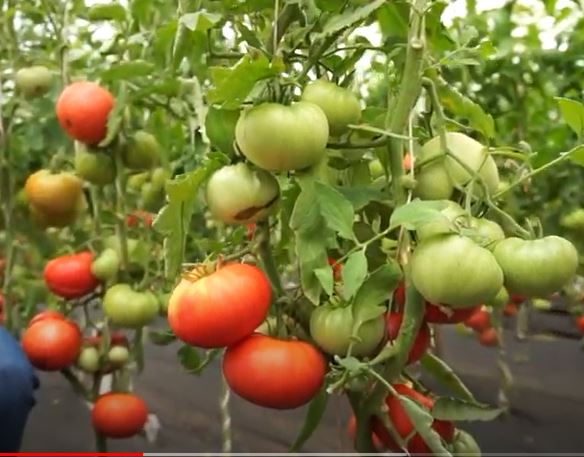
Large, with thick skin. They can be crimson with a green spot near the stem, or pink with no green spot. You can see what they look like in the photo.
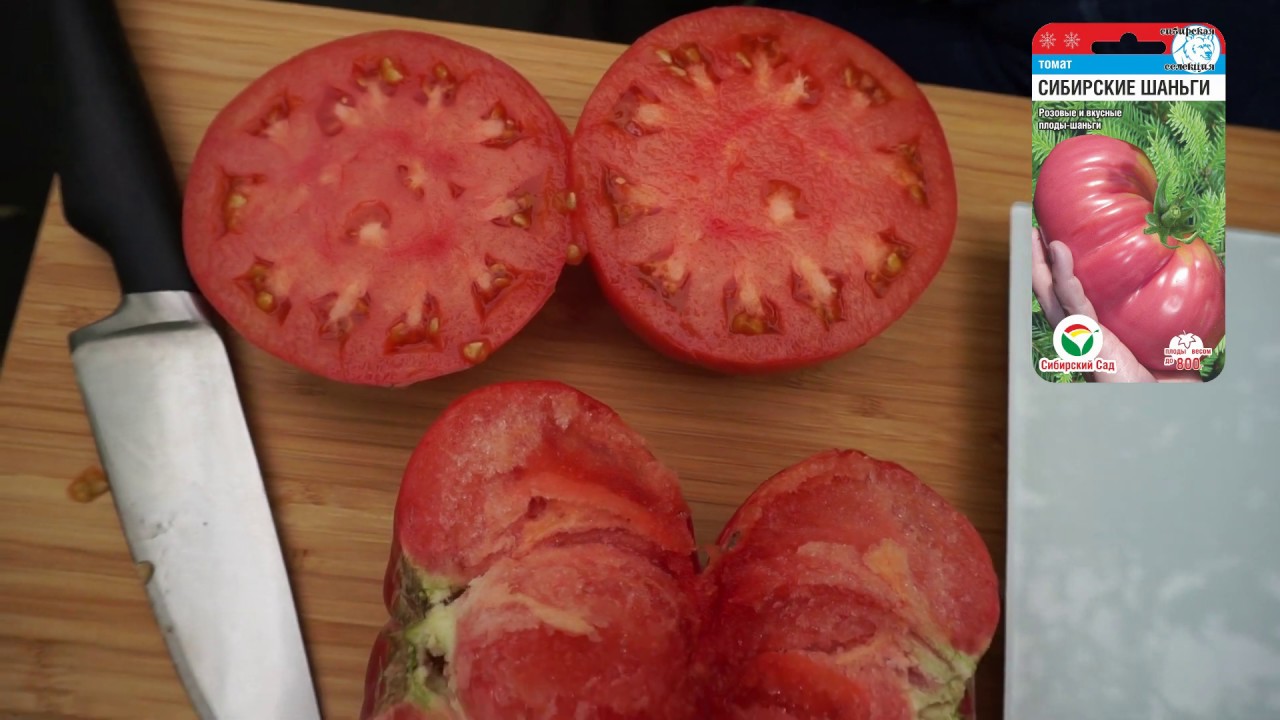
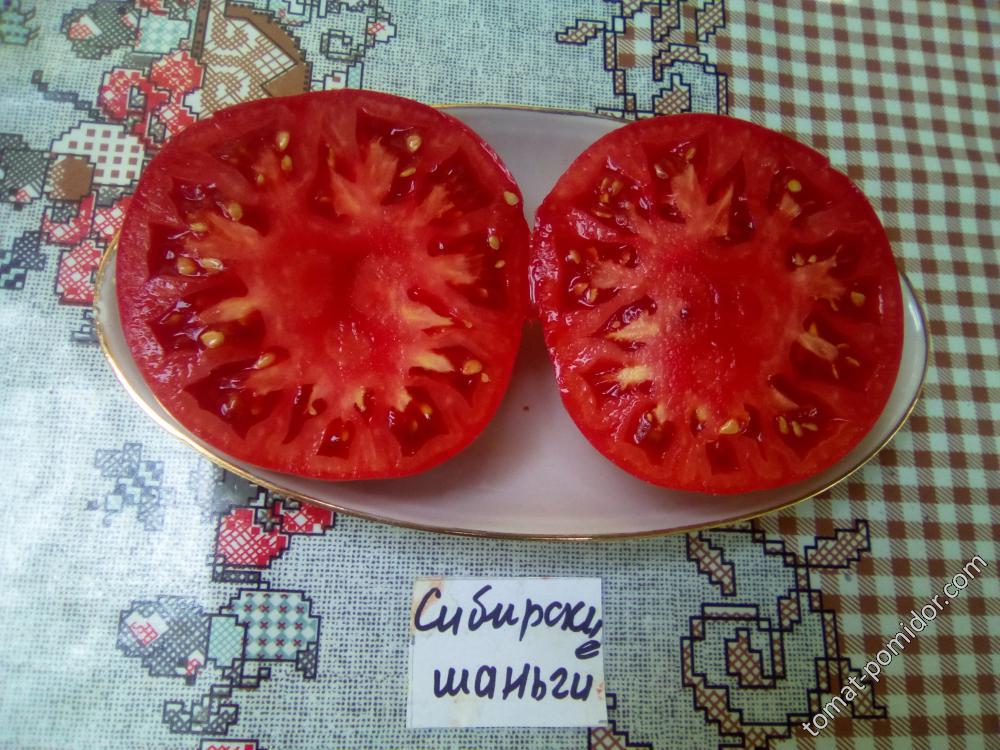
The flesh is juicy, sweet, and sugary, with a distinct tomato aroma. The consistency is firm but tender. The fruit contains a minimal amount of seeds.
Ripening time
From germination to full ripening, it takes only 100-110 days. If all the rules are followed, the first harvest can be collected as early as the end of July.
Productivity
Sibirskie Shan'gi tomatoes are large-fruited varieties. The average weight of a single tomato is 500-600 g, although the registry lists the average weight as only 157 g. Under favorable growing conditions and proper agricultural practices, the fruit weight can even increase to 800-900 g. An average of 5-6 kg of fruit can be harvested from one square meter.
Advantages and disadvantages of the Siberian Shan'gi tomato variety
The advantages of this variety include:
- undemanding to growing conditions;
- high yield rate;
- excellent shelf life;
- possibility of long-distance transportation;
- ability to ripen;
- resistance to sudden temperature changes;
- resistance to fungal infections.
There are also disadvantages, including the need for staking and shaping, which takes time from gardeners. Furthermore, tomatoes of this variety are unsuitable for whole-plant canning due to their large size.
Features of sowing and planting tomatoes of the Siberian Shangi variety
To obtain a good harvest, it is recommended to use the seedling method of cultivation.
Sowing seeds and growing seedlings
Sowing seeds for seedlings is carried out 60 days before the expected planting in a permanent location:
- Soak the seed material in a growth stimulator, following the instructions on the package.
- Sow the seeds to a depth of 1.5-2 cm. It's best to use a separate peat tablet or cup for each seed. We recommend using a general-purpose seedling soil, which can be purchased at any gardening store.
- Cover the crops with plastic film or glass to create a greenhouse effect.
- Place the seedlings at a temperature of +22…+25 °C.
- After the sprouts appear, remove the cover and place the containers closer to light sources.
Please note! Before planting in open ground or a greenhouse, seedlings should be watered regularly to prevent a dry crust from forming.
Planting in the ground
It is recommended to plant seedlings in their permanent location in early May, when they are 60 days old. By this time, they will have time to strengthen, and the weather outside will have stabilized. Approximately 1.5 weeks before transplanting, the plants need to be hardened off. The seedlings are taken outside daily, initially for 20-30 minutes. Gradually increase the time. Two to three days before transplanting, the bushes should be left outside overnight. To ensure good air circulation, it is recommended to plant no more than three plants per square meter.
Caring for Siberian Shan'gi Tomatoes
This variety requires complex fertilizing at least 5-6 times during the growing season. Water with warm, settled water 2-3 times a week. After each watering, loosening and mulching the soil is recommended. This will ensure better access of moisture, oxygen, and nutrients to the roots.
Helpful information! If tomatoes are grown in a greenhouse, it is recommended to set up a drip irrigation system. This will save time and effort and minimize the risk of late blight.
Weed as weeds grow. This variety requires training into 1-2 stems, removing side shoots. Otherwise, yield will decrease. The bushes also require staking. If not, tall stems will break under the weight of the fruit. It is also recommended to remove leaves from the first fruit cluster. This will ensure better air circulation, which will positively impact yield.
Despite its good resistance to fungal infections, preventative treatment is still necessary. Furthermore, the variety is susceptible to pest attacks; spraying will help prevent their proliferation and spread.
Use and storage of Siberian Shan'gi tomatoes
The fruits have a thick skin that doesn't crack during transportation. They keep well, not softening during storage. If needed, tomatoes can be picked green; they ripen well in a warm place. They can be eaten in salads and sliced, and used to make juices and pastes.
Comparison of the Siberian Shan'gi tomato variety with other varieties in the table
Please note! How can you easily convert centners/ha to kg/sq.m? Simply divide by 100! For example, the Abakansky Pink tomato yields 400 centners of marketable fruit per hectare. This equals 4 kg per square meter. It's that simple! Also, keep in mind that typically no more than 3-4 plants are planted per square meter. This way, you can calculate the yield per bush. In the case of the Abakansky Pink, it's about 1 kg.
| Variety | Ripening period (number of days from full germination to ripening)
Yield of commercial fruits |
Brief description | Fetus |
| Siberian Shan'gi | 100-110 days The yield of commercial fruits in open ground was 5.6 kg/sq.m. |
A mid-season determinate variety for open ground and greenhouses. Suitable for salads. | Flat-round, medium density, slightly ribbed, raspberry, 157 g. Excellent taste. |
| Siberian early ripening | 98-108 days
289-543 c/ha (open ground), 20-43% of the total yield ripens in 15 days of fruiting, 630-950 c/ha (greenhouse and under film), in the first month of fruiting 240-580 c/ha. |
An early-ripening, determinate, low-growing variety for open ground and greenhouses. Suitable for salads. | Round and flat-round, slightly ribbed, medium-sized and large, red, 62-114 g. The taste is satisfactory. |
| Siberian tiger | 110-120 days
Up to 1200 c/ha |
A mid-season indeterminate variety for open ground and greenhouses. Requires staking and training into 1-2 stems. Suitable for salads and processing into tomato products. | Flat-round, ribbed, dark pink with dark purple streaks, 150-250 g. Excellent taste. |
| Siberian big guy | 90-100 days
900-1200 c/ha |
An early-ripening indeterminate variety for open ground and greenhouses. Suitable for salads, processing into tomato products, and preparing first and second courses. | Flat-round, slightly ribbed, red, 500 g. Good to excellent taste. |
| Siberian giant | 115-120 days The commercial yield of fruits was 9.0-11.0 kg/sq.m. |
A mid-early indeterminate variety for greenhouses. Suitable for salads. | Flat-round, large, medium-ribbed, loose, red, 400-500 g. Excellent taste. |
| Silver spruce | 90-100 days
1500-1800 c/ha |
A mid-early determinate variety for open ground and greenhouses. Requires staking and training into 2-3 stems. Suitable for salads and canning. | Flat-round, slightly ribbed, with a little pubescence, red, 300 g. The taste is good and excellent. |
| Siberian garland | 90-95 days
1700-1900 c/ha |
An early-ripening indeterminate variety for open ground and greenhouses. Suitable for salads. | Flat-round, large, smooth, dense, red, 260 g. Excellent taste. |
| Abakan pink | 120 days or more
400 c/ha |
A late-ripening determinate variety for open ground and greenhouses. Requires staking and training. Suitable for salads and processing into tomato products. | Flat-round, slightly ribbed, medium density and pink in color, 200-500 g. Good taste. |
| Alsou | 105-110 days 700 c/ha |
An early-ripening, determinate variety for open ground and greenhouses. Requires staking and shaping. Suitable for salads. | Flat-round, slightly ribbed, medium density, red, 312 g. Good taste. |
| Blagovest | 101-105 days
1500-1600 c/ha |
An early-ripening determinate variety for greenhouses. Suitable for salads and canning. | Flat-round, slightly ribbed, glossy, red, 100-110 g. Excellent taste. |
| Big Momma | 85-95 days (greenhouse), about 100 days (open ground)
700-900 c/ha |
A mid-early determinate variety for open ground and greenhouses (greenhouses only, according to the register). Suitable for salads, canning, pickling, and juice. | Round, large, slightly ribbed, medium density, red, 200-250 g. Excellent taste. |
| Debut | about 90 days
910 c/ha |
An early-ripening determinate variety for open ground and greenhouses. Suitable for salads. | Flat-round, slightly ribbed, medium density, red, 210-230 g. Good to excellent taste. |
| King of the Early | 85-95 days depending on the growing location 1200 c/ha |
An early-ripening determinate variety for open ground and greenhouses. Suitable for salads and processing into tomato products. | Flat-round, smooth, red, 150-200 g (up to 400 g). Good taste. |
| Kostroma | 105-110 days
1350-1500 c/ha |
A mid-season determinate variety for greenhouses. Requires staking and training. Suitable for salads, whole-fruit canning, and processing into tomato products. | Flat-round, slightly ribbed, glossy, red or orange, 80-150 g. Good taste, sweet and sour. |
| Red Rooster | 85-95 days
400-600 c/ha |
A mid-early determinate variety for greenhouses. Suitable for salads. | Flat-round, large, slightly ribbed, medium density, red, 160-180 g. Good taste. |
| Sunrise | 85-100 days
400 c/ha |
An early-ripening determinate variety for open ground. Suitable for salads. | Flat-round, ribbed, dense, red, 161-180 g. Excellent taste. |
Real reviews from gardeners about the Siberian Shan'gi tomato variety
Gardeners' reviews of the variety are mostly positive, noting the excellent taste of the fruit and high yields regardless of weather conditions.
Hello dear readers!
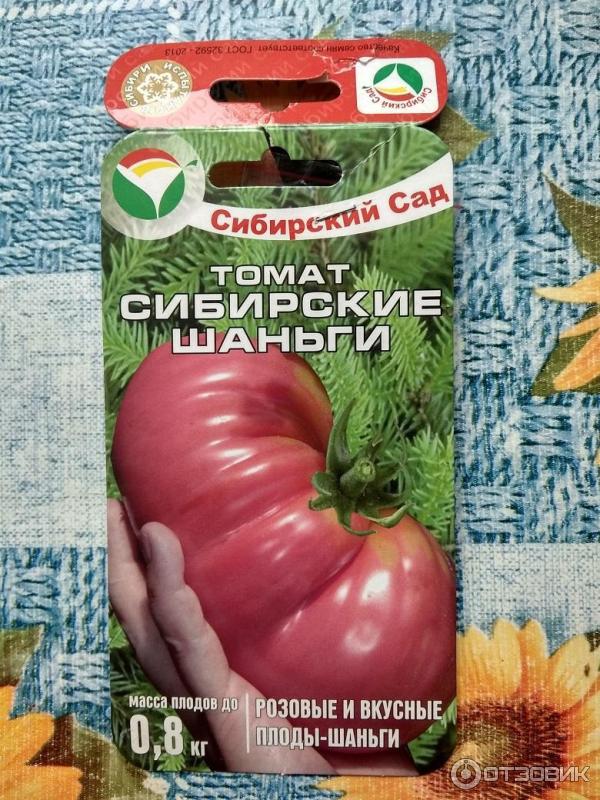
This review is dedicated to tomato seeds from the breeding company "Siberian Garden".
My parents gave me these seeds last year because they didn't have room for seedlings. Later, I gave them some ready-made seedlings in return. I was very interested in this variety for its fruit; I had never bought any seeds from this grower before. The name "Siberian Shan'gi" alone made it clear that this variety was suitable for cold climates. We don't always have warm summers, so this variety was perfect for our conditions. But I couldn't get the image of huge tomatoes out of my head, and I was eager to plant them to see what would grow. Last season, I had the opportunity, and I'll show you what grew at the end of this review; unfortunately, I didn't have a good-quality photo.Package:
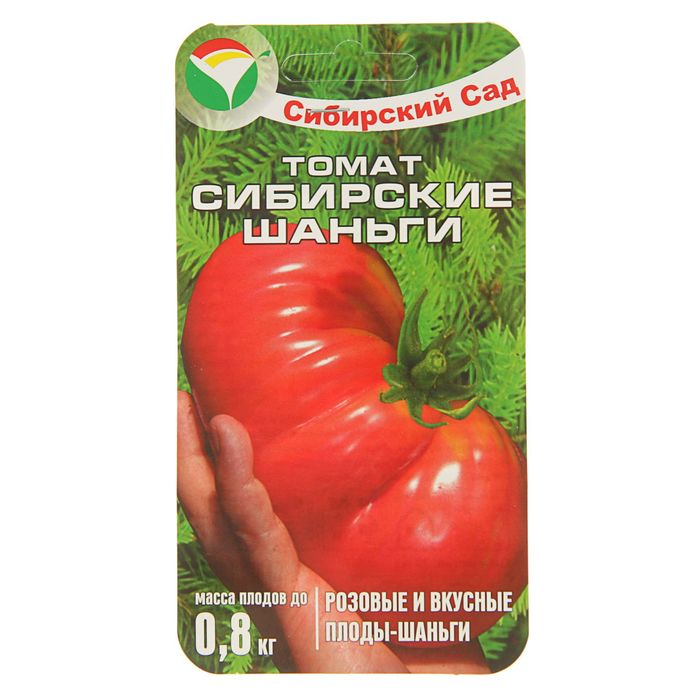
The seeds are stored in a small zip-lock bag on the back of the cardboard packaging. The packaging is very beautiful, with rich, vibrant images, but upon closer inspection of the seed, you can see that it was Photoshopped. So, all that was left was to wait for the seeds to grow. The package contains 20 seeds. The cost of such a package is low, around 10-15 rubles.
About the variety:
This variety is mid-early. The stems are very strong and thick. It reaches a height of up to one and a half meters or more. A single plant produces 4-6 clusters of huge tomatoes, each weighing up to 800 grams. The fruits are flat-round with a pinkish or deep crimson hue. They have excellent flavor. This variety is best suited for greenhouse cultivation.
Sowing for seedlings:
I usually sow seeds for seedlings around March 10th. First, I sow them in a common seedling tray, and then, when the first two true leaves appear, I transplant them into individual pots.
After all night frosts have passed, which is approximately the end of May or beginning of June, I transplant the plants into the soil in a permanent location.Plant care:
After transplanting the plants into the ground, they should be thoroughly watered with warm water until they are fully established in their new location. Then, water as needed, and weed, fertilize, and loosen the soil.
When tomatoes are flowering and setting fruit, they need to be watered promptly. I also remove some side shoots to ensure the fruit is large and ripens quickly. Although this isn't mentioned in the description.What has grown:
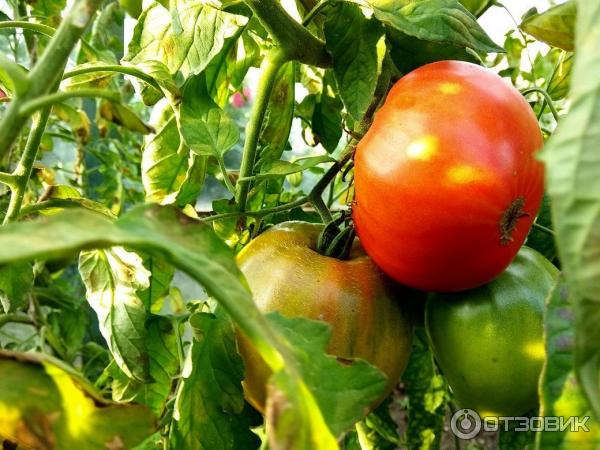
The tomatoes grew truly large, with sturdy, thick bushes over one and a half meters tall. This variety performed well not only in the greenhouse but also in the open ground. This photo shows the very first ripe tomatoes.
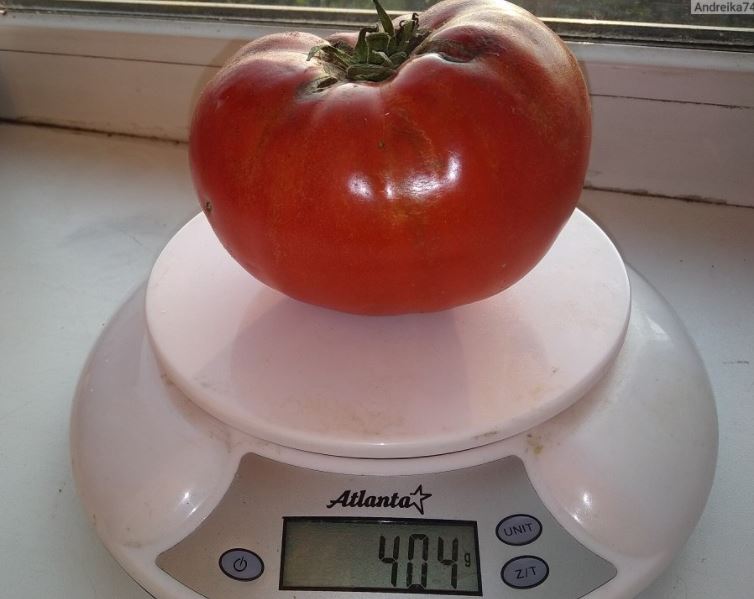
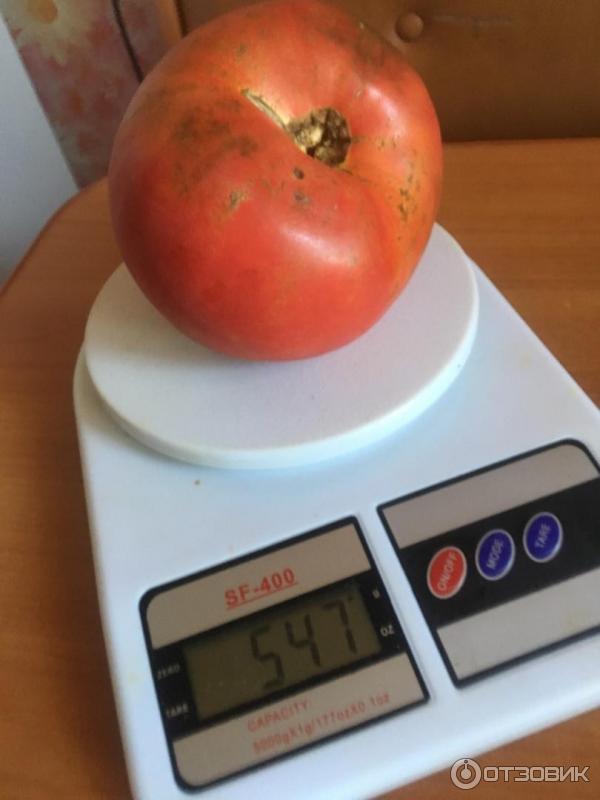
This is the average weight of a single tomato. It's not a bad specimen, and would be plenty for a salad.
Application of the variety:
This variety is great for salads, sauces, and freezing for the winter. But never for pickling, as it won't fit in a jar.
Conclusion:
We really liked the Siberian Shan'gi variety, even though it looks slightly different from the package picture. Most importantly, it's very productive, doesn't require a lot of soil, and tolerates cold temperatures, producing large Shan'gi fruits.
The tomatoes are juicy, tasty, and moderately sweet, with thin skin. We used this variety for salads and for freezing them for the winter. Freezing tomatoes keeps just as well as fresh ones. In winter, you can easily take out a jar and add it to any dish.Thank you for your attention!!!
Good day to the readers of my review!
If I go to a specialty store just to buy a few seeds, I always grab some others, often including tomatoes. How could I pass up such a tempting variety? A single fruit is bigger than your hand, and even one is enough to make a salad for the family. The manufacturer promises impressive weight; this is my favorite size for tomatoes; I rarely see such specimens. I decided to test this out and bought one.
On the back is a description of the plant and fruit, special requirements (grown indoors only), sowing instructions for seedlings, and care, including disease control. We don't have any seriously diseased plants, so I don't treat them with chemicals.
I grew excellent seedlings starting in mid-March. After the May holidays, I planted them in the greenhouse in a prime location. The bushes began growing and blooming vigorously, which required considerable effort to form them into a single stem, as recommended by the seed manufacturer. Side shoots popped up en masse and had to be removed more frequently than with other varieties, on average twice a week.
I periodically tied the stems to a support; the fruit set well, and the flowers didn't fall off. The bushes reached a height of about one hundred and twenty centimeters, although large-fruited ones usually support the roof of the greenhouse. Even the appearance of the bushes raised doubts about their ability to produce very large tomatoes.
The tomatoes didn't reach the size I wanted, but they started to ripen on the bush. This is definitely a plus, as tomatoes that ripen this way have a richer flavor.
I started collecting the fruit when it was already ripe, and collected it from three bushes into a box, which is about 2.5 kilograms.
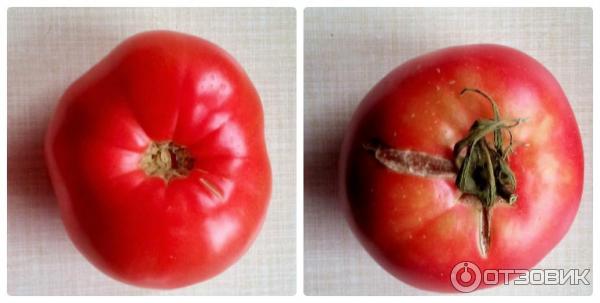
The fruits are flattened, round, and slightly flattened. Some have started to crack, although I only water them once a week and this usually doesn't happen.
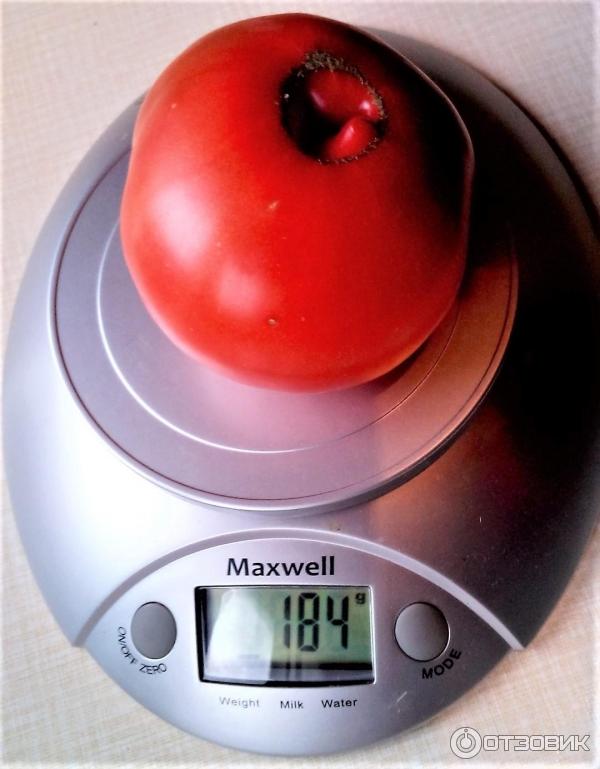
The largest tomato weighed one hundred and eighty-four grams, which was very disappointing to me. I created the most comfortable conditions for growth and expected at least the first ones in the litter to weigh six hundred grams.
This variety didn't live up to my expectations, and I won't be growing it myself. I'm not sure whether I got the wrong variety in the seeds, or the manufacturer overstated the variety's capabilities.
I have quite a few similar varieties. But I'll recommend these because they yield a high amount, the plants are easy to grow, the flavor is sweet and sour, like a tomato, and the fruits are juicy. I've used them all for preserves.
If you need a bountiful harvest of small tomatoes, this will do, but the picture is nothing more than an advertisement for the name.


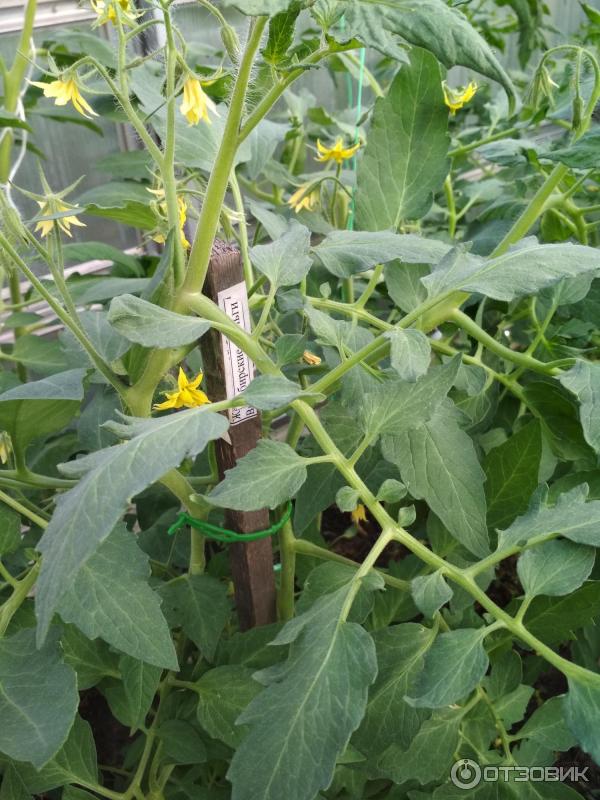
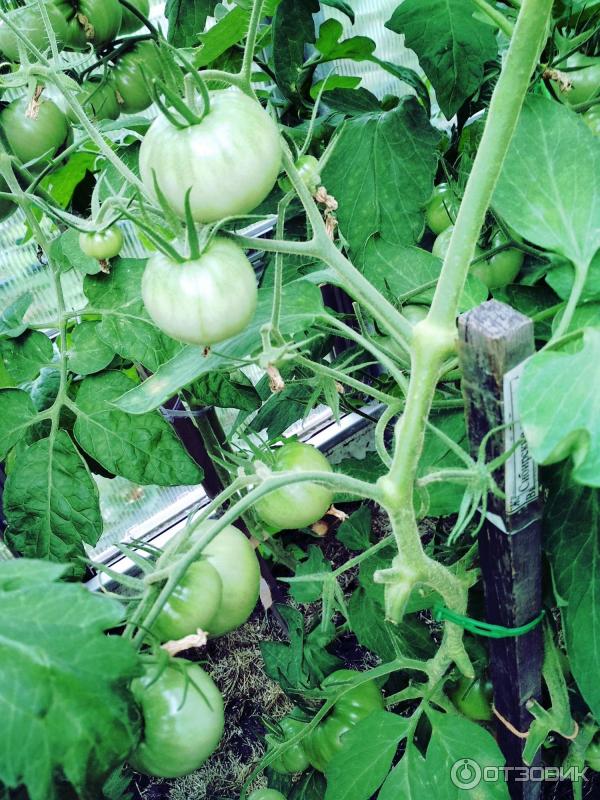
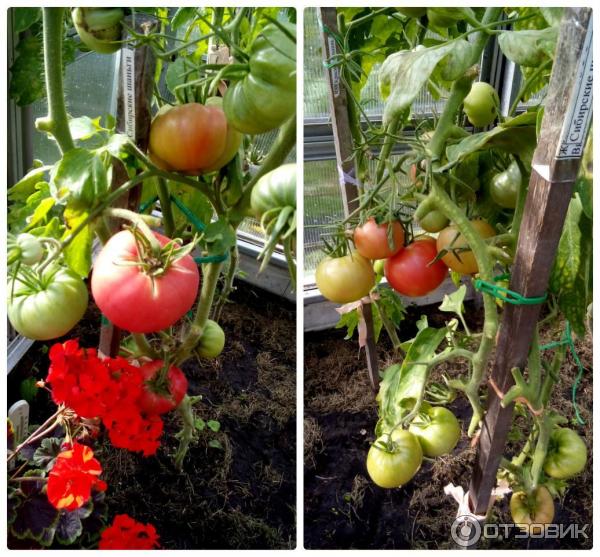
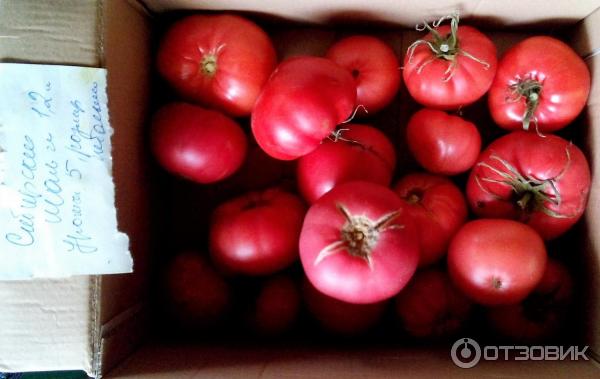
This is my second year planting these tomatoes, and they'll definitely be around for a long time. This tomato variety, the Siberian Garden "Sibirskie Shan'gi," produces very large fruits that also grow tall and strong. Stem strength is important to me, as it not only needs to support the large fruits but also provide them with all the necessary nutrients.
The harvest is large; last year we collected at least 10 kilograms of tomatoes from one bush.
Although the Siberian Garden "Sibirskie Shan'gi" tomato is intended for greenhouses and hotbeds, we tried transplanting it into open ground and nothing happened. The plants didn't get sick, didn't take long to adapt, and continued to grow and yielded a good harvest.
Tomato seeds of this variety are sold everywhere, at least in our city, they're available in grocery stores, kiosks, and markets. A packet of seeds (enough for one season) costs only 12 rubles.
The tomatoes are pink in color and ripen by mid-July, giving us the opportunity to enjoy fresh vegetables and various salads for two to three months.
I pick my last green tomatoes in September (before the first frost), and they ripen in crates, where we continue to eat them fresh until November. I use the medium-sized ones to make lecho and winter salads, and I use the larger and damaged ones for pasta and charred meat.
I recommend this tomato variety, Siberian Garden "Sibirskie Shan'gi," to all gardeners as a good option for Central Russia, the Southern Urals, and southern Siberia.
This variety is not intended for commercial cultivation. However, home gardeners will certainly appreciate it. It produces a fairly good yield, enough for both personal consumption and small-scale sales.