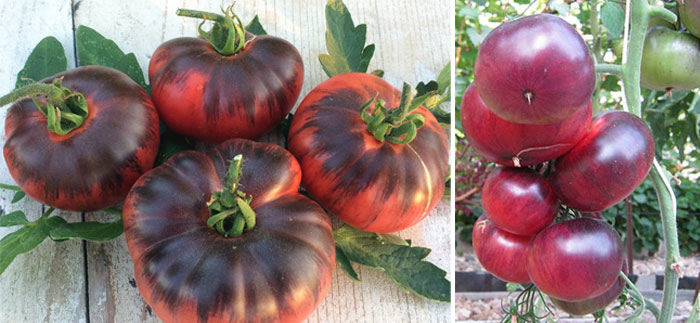
Siberian Tiger tomatoes are American-bred hybrids. They stand out from other tomatoes with their unusual striped fruit coloring. They are intended for growing in private gardens. Gardeners love them for their neat, eye-catching fruits and sweet flavor.
Content
- 1 Pink Siberian Tiger tomato characteristics in a table
- 2 Photo gallery of the Siberian Tiger tomato variety:
- 3 The history of the Siberian Tiger tomato variety
- 4 Varieties of tiger-colored tomatoes
- 5 A detailed description of the Siberian Tiger tomato variety
- 6 Pros and cons of the Siberian Tiger tomato variety
- 7 Features of sowing and planting tomatoes of the Siberian Tiger variety
- 8 Caring for Siberian Tiger Tomatoes
- 9 Insect and Infection Control for the Siberian Tiger Tomato Variety
- 10 Harvesting, using and storing Siberian Tiger tomatoes
- 11 Comparison of the Siberian Tiger tomato variety with other varieties in the table
- 12 Real reviews from gardeners about the Siberian Tiger tomato variety
Pink Siberian Tiger tomato characteristics in a table
| Characteristic | Description |
| Description |
Mid-season, indeterminate hybrid for protected and unprotected soil. |
| Ripening period | 110-120 days. |
| Fruit weight | Up to 0.3-0.4 kg. |
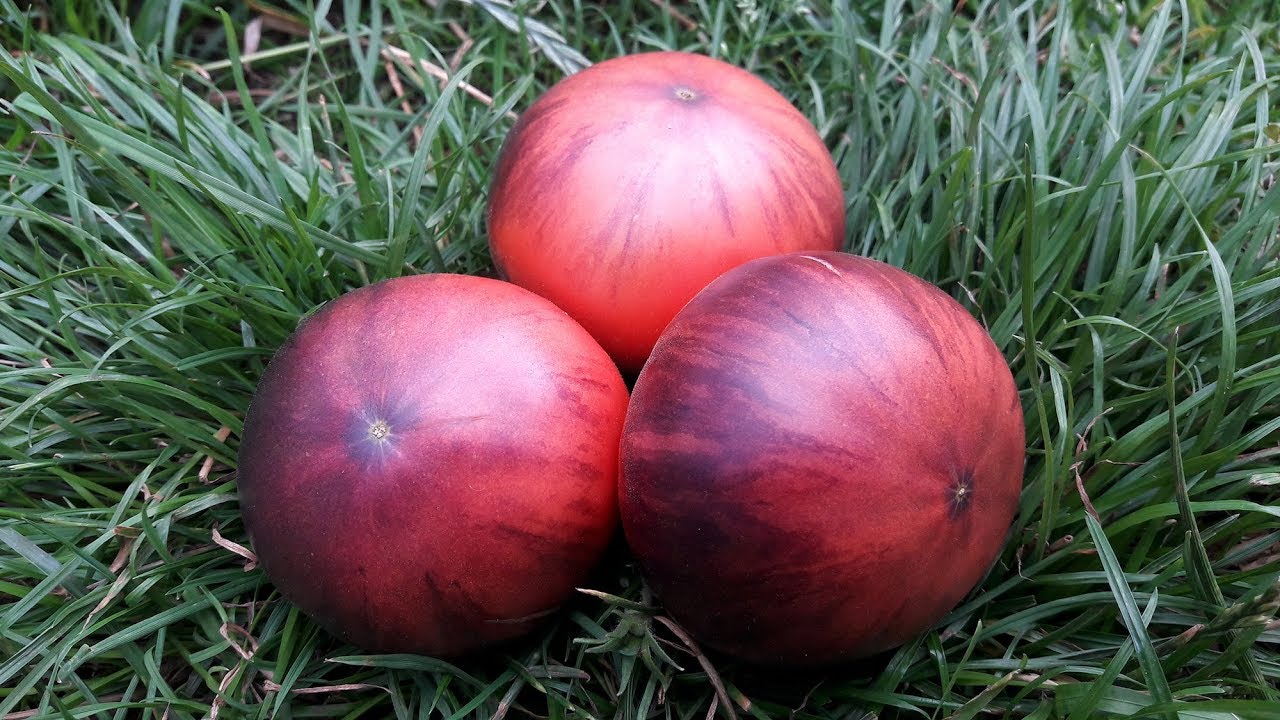
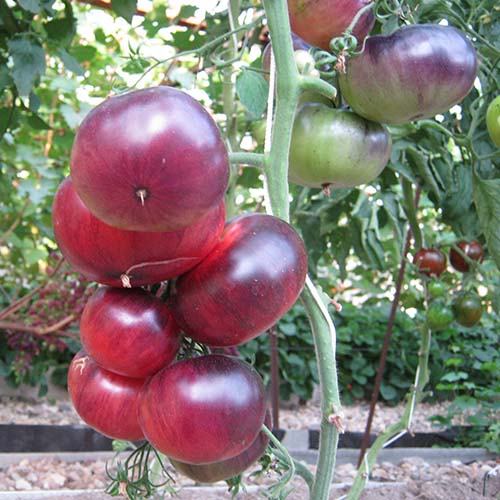
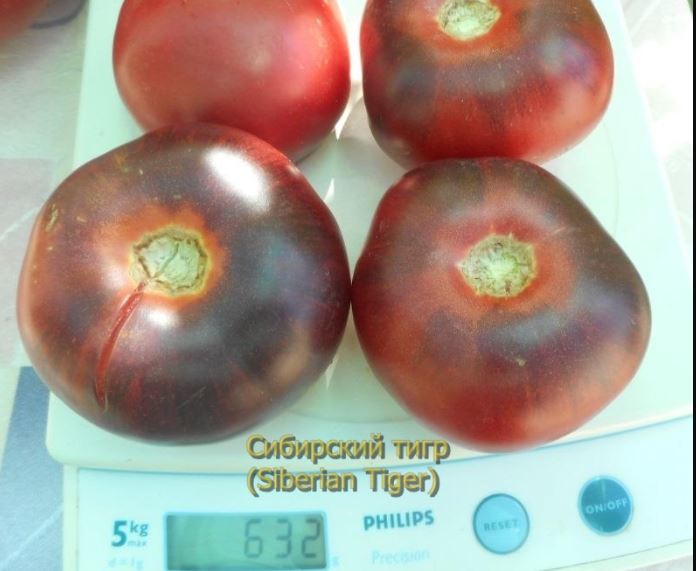
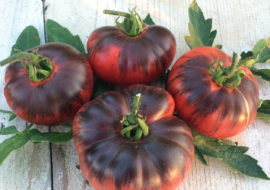
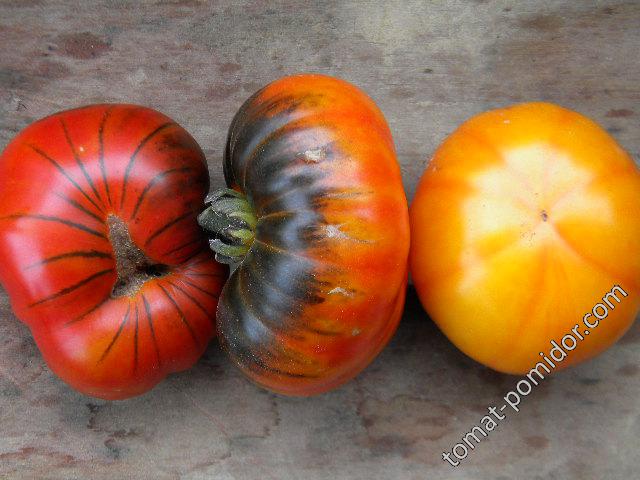
| Description of the fruit | Round, slightly ribbed, purple-pink with distinct violet stripes. Sweetish flavor. |
| Productivity | 12 kg/1 sq. m. |
| Marketability | Excellent. |
| Shelf life | Low. |
| Usage | In salads, for tomato processing. |
| Preferred growing regions | Any. |
| Disease resistance | Resistance to most diseases. |
| Agricultural technology |
|
| not included | |
| Originator | America. M. McCaslin. |
Photo gallery of the Siberian Tiger tomato variety:
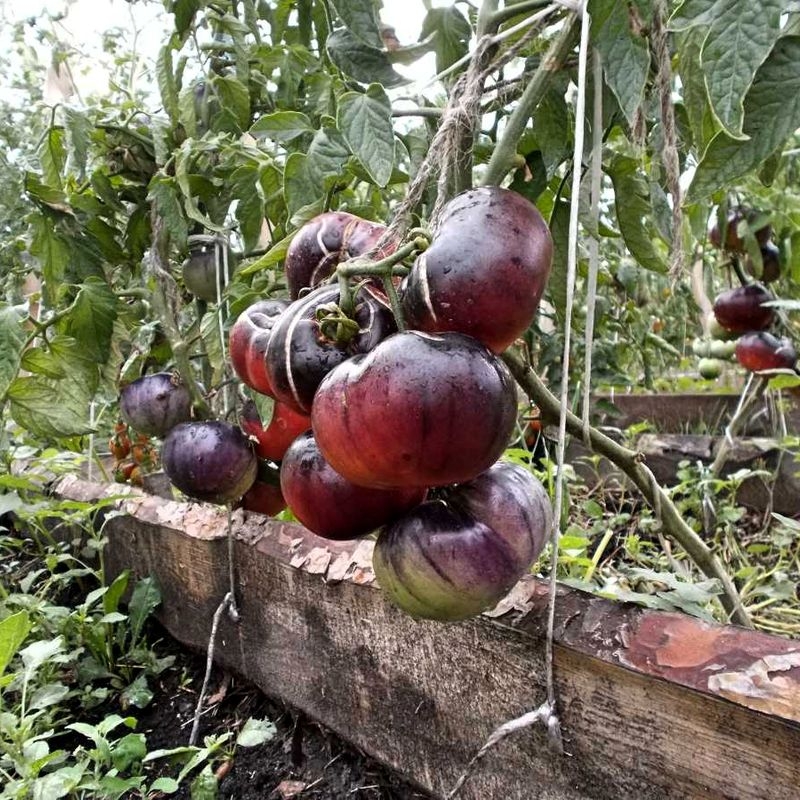
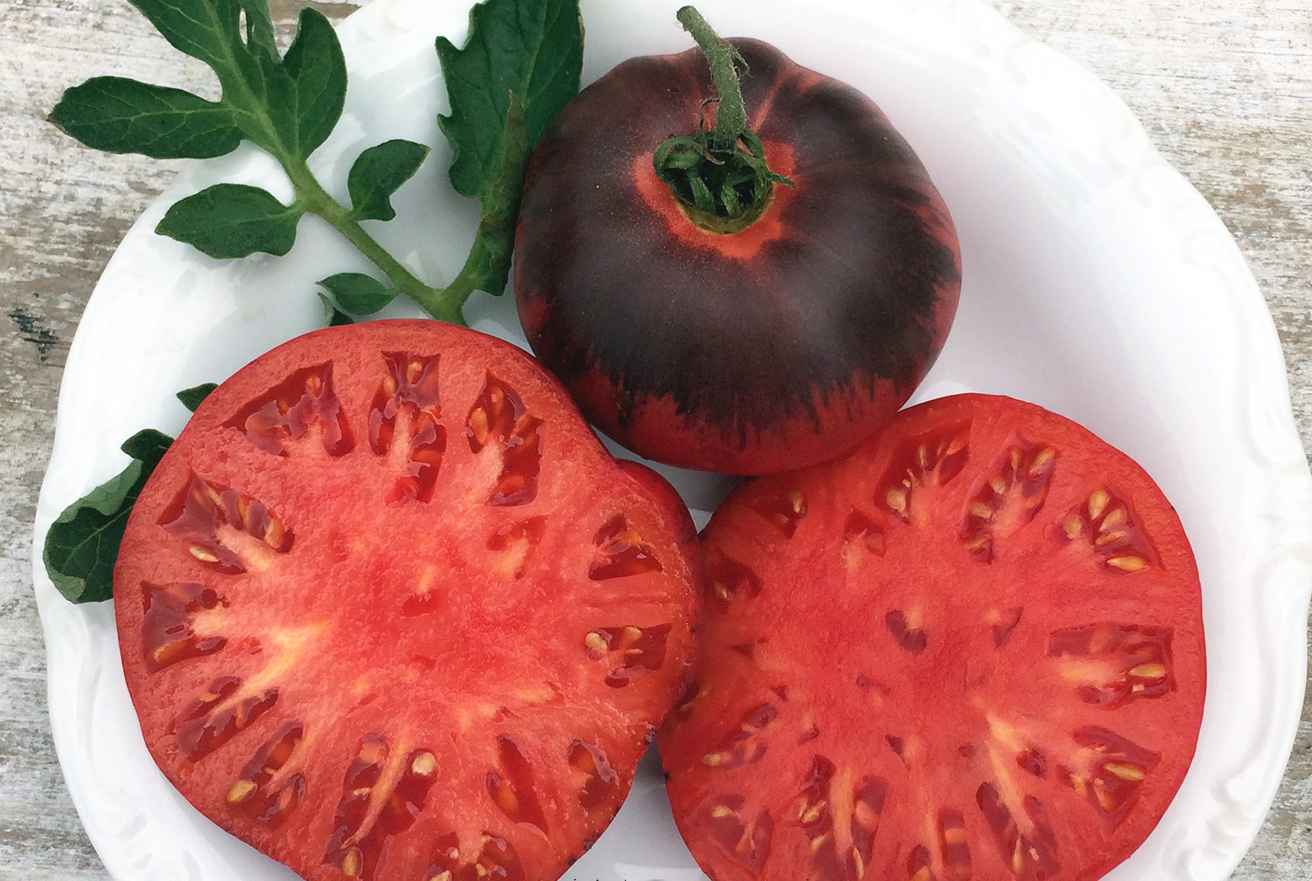
The history of the Siberian Tiger tomato variety
The Siberian Tiger tomato variety was developed by American breeders with the participation of Mark McCaslin. It is a hybrid, meaning that a pair of parent plants (Blue and King of Beauty) with the desired traits were used to create it. They were crossed, or artificially pollinated.
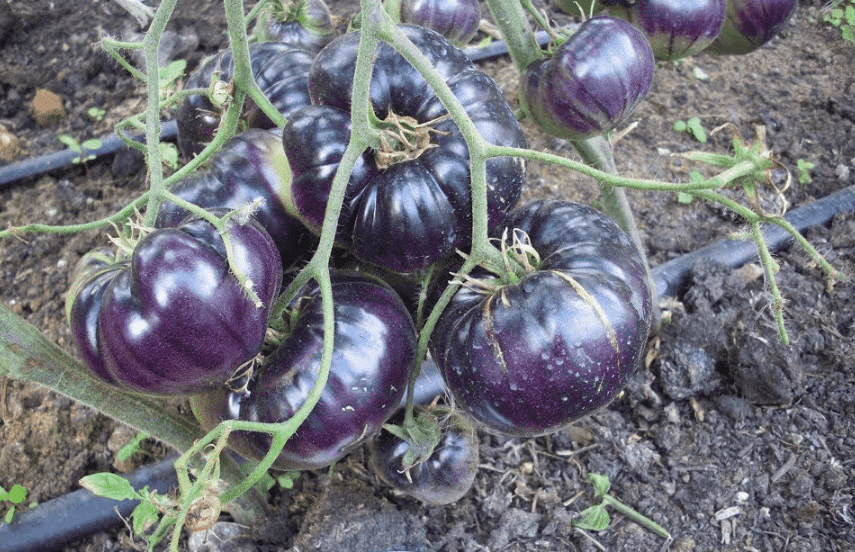
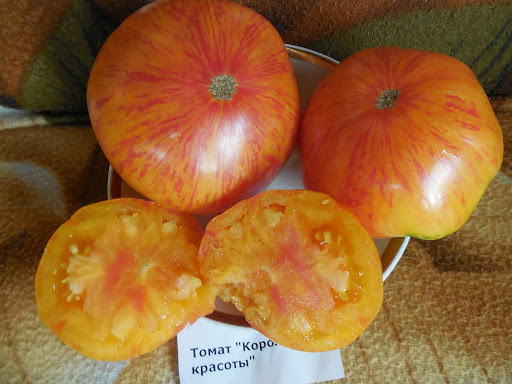
Let's take a closer look at how a new variety is developed. After crossing, F1 hybrids (the first generation) are produced. These typically inherit the best traits from their parents, sometimes even surpassing them. However, the selection process doesn't end there. The next generation, the F2, is not characterized by stable traits. Siblings can differ significantly from each other. The breeders' goal is to plant as many F2 plants as possible and select those that are most similar to the F1. This process continues from generation to generation (F3, F4, etc.), until the tomatoes begin to consistently produce fruit with the desired characteristics.
Let's return to the Siberian Tiger. It was bred using the same principle. Until the fourth generation, its characteristics were inconsistent. However, it was released for sale anyway.
Only in the sixth generation was a bush with the characteristic striped fruit discovered. This is how the final hybrid was created.
It is not included in the Russian register.
A little later, an improved variant was developed, called the Siberian Tiger Claws. Its coloring and stripes are more pronounced.
Varieties of tiger-colored tomatoes
There are several other varieties of tomatoes with striped fruits. Let's take a closer look at each.
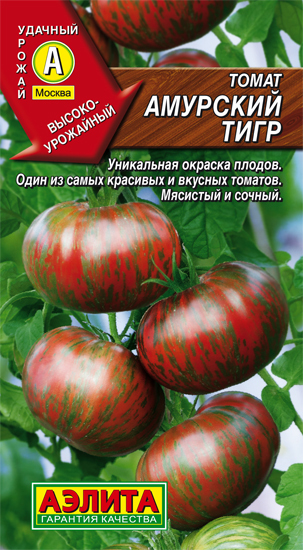
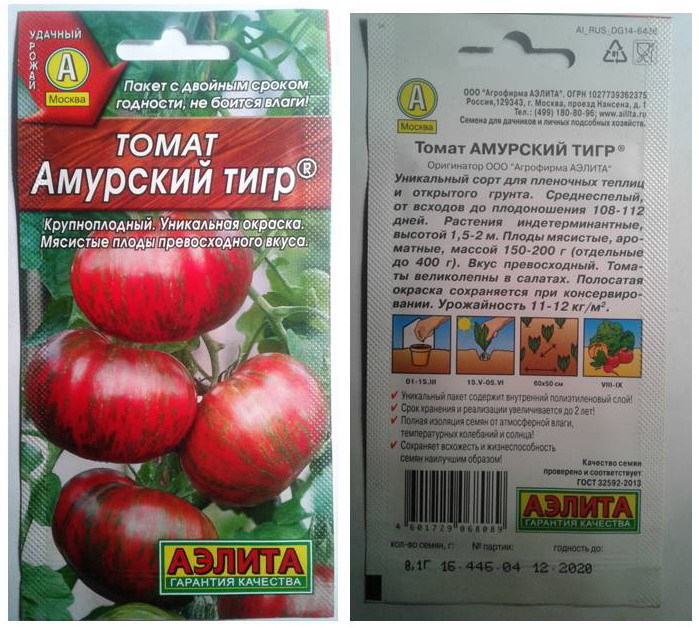
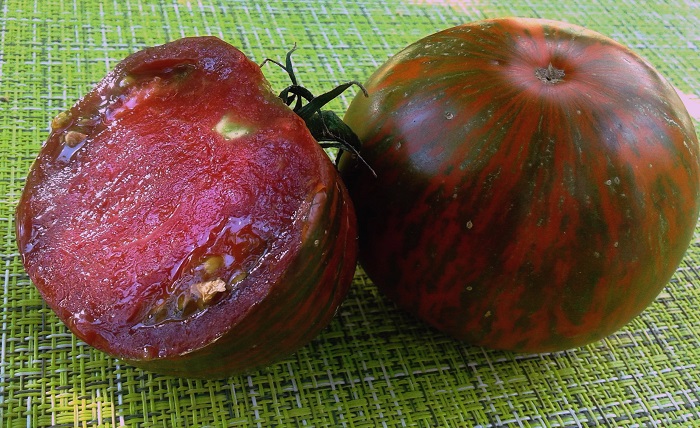
Tomato variety Amur Tiger
A mid-season, indeterminate variety for private farms. The fruits are flat-oval, medium-firm, with slight ribbing, and a brown hue. Each tomato weighs 240 g. The flavor is good. Yields reach 11-11.5 kg/sq. m. Suitable for salads and canning, including whole-fruit preserves. Added to the Russian Register in 2015.
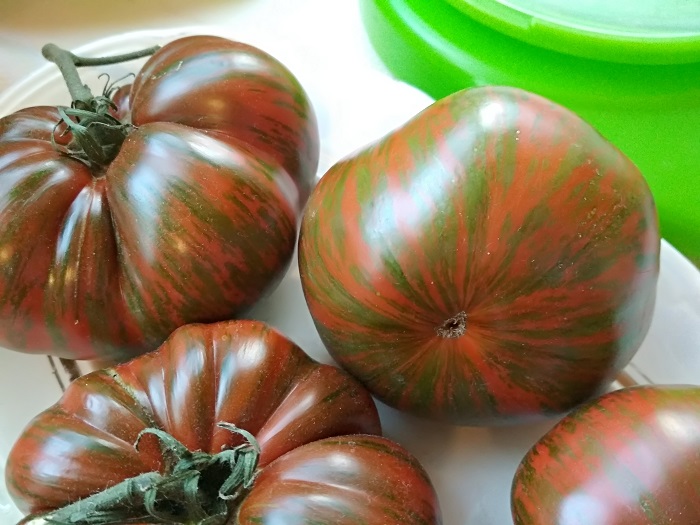
Tomato variety Amur Pink Tiger
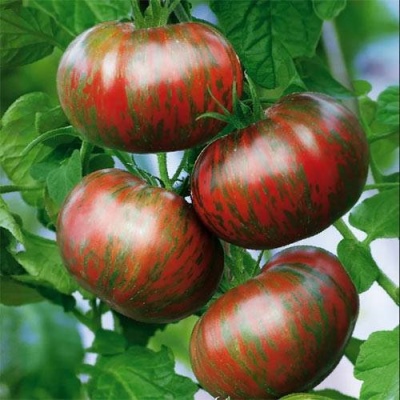
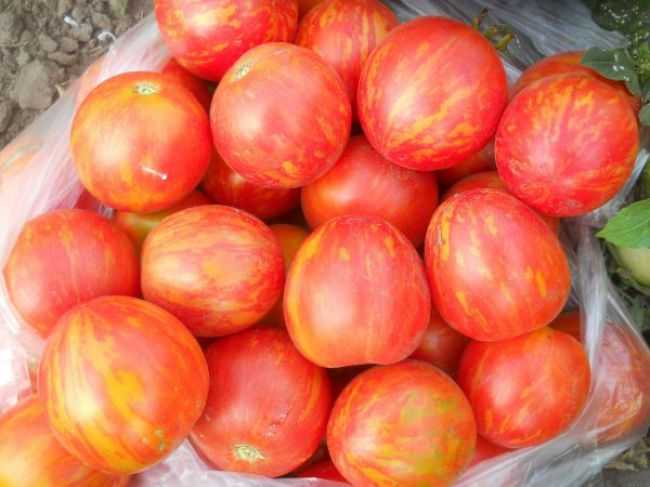
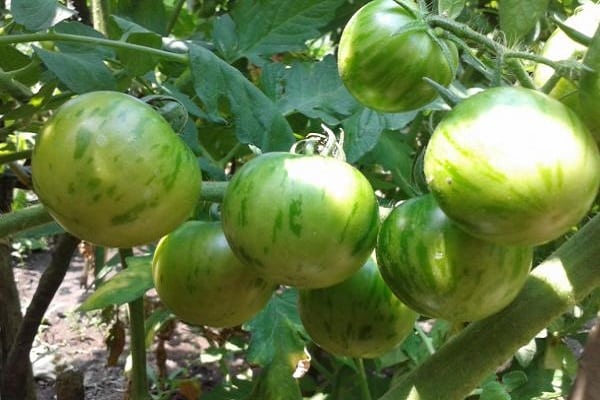
An early-ripening, indeterminate tomato for private plots. The fruits are flat-round, medium-ribbed, pinkish with distinct green stripes.
It is intended for slicing and salads. Compared to its predecessor, the Amur Tiger, it has larger fruits, weighing 250-350 g. The flavor is good, but the yield is not very high, at 9 kg/m2. It was recently added to the register, in 2020. The originator is the agricultural firm "Aelita."
Photo gallery of the tomato varieties Amur Tiger and Amur Pink Tiger:



Tomato variety Tigrenyok
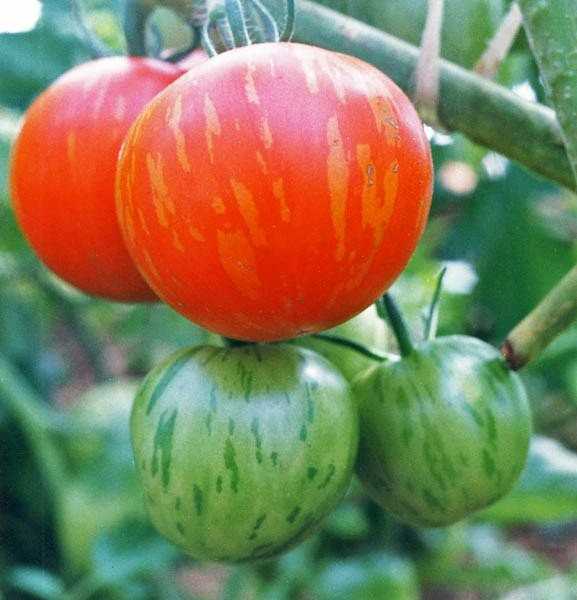
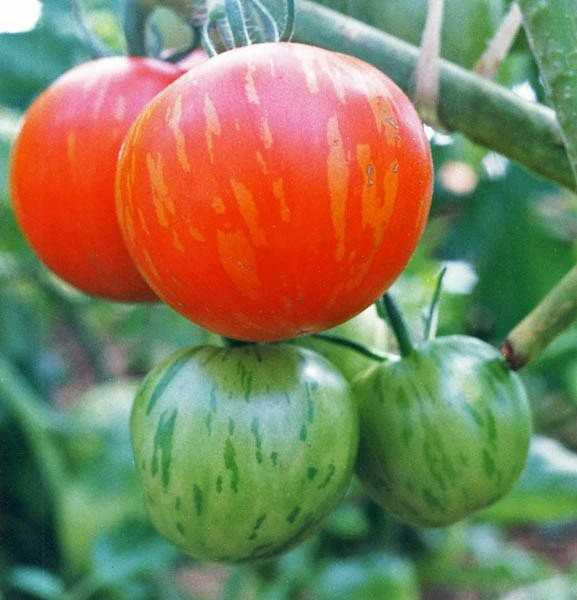
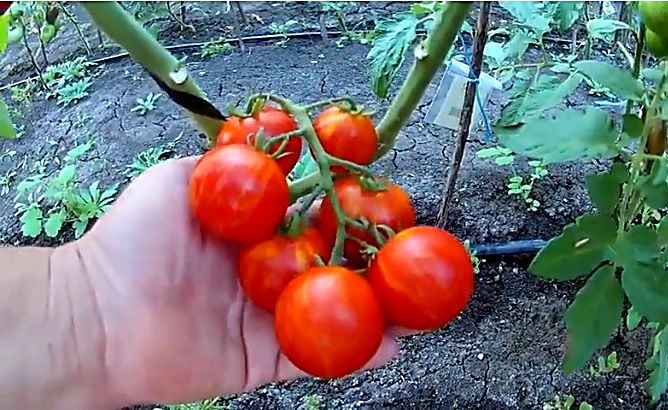
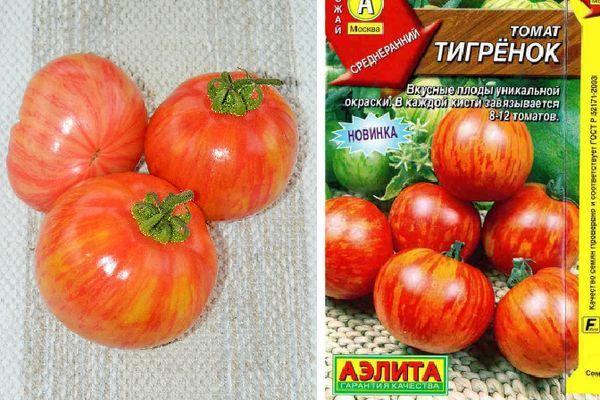
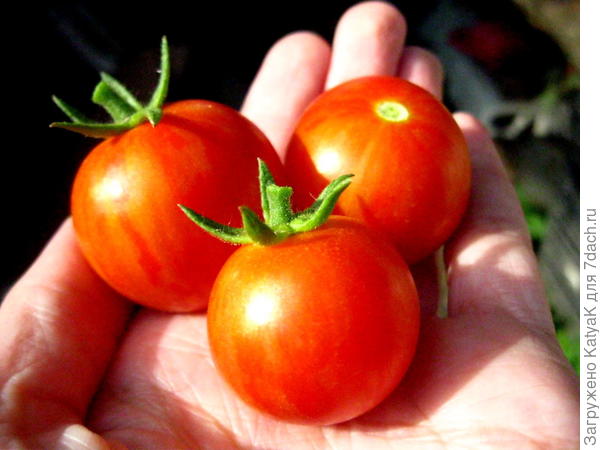
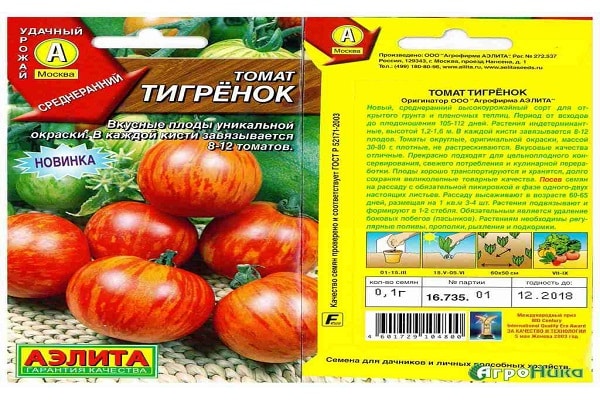
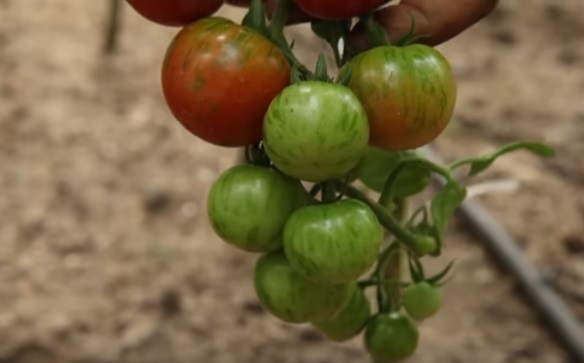
An early-ripening, indeterminate variety for both open- and closed-ground cultivation on private farms. The fruits are small, round, smooth, and red. They weigh between 30-35 g and have a good flavor. They are suitable for salads, fresh consumption, canning, and whole pickling. The yield is low: 9.3-9.5 kg per square meter. Included in the State Register in 2015.
Photo gallery of the tomato variety Tigrenyok:

Tomato variety Tiger Cocktail
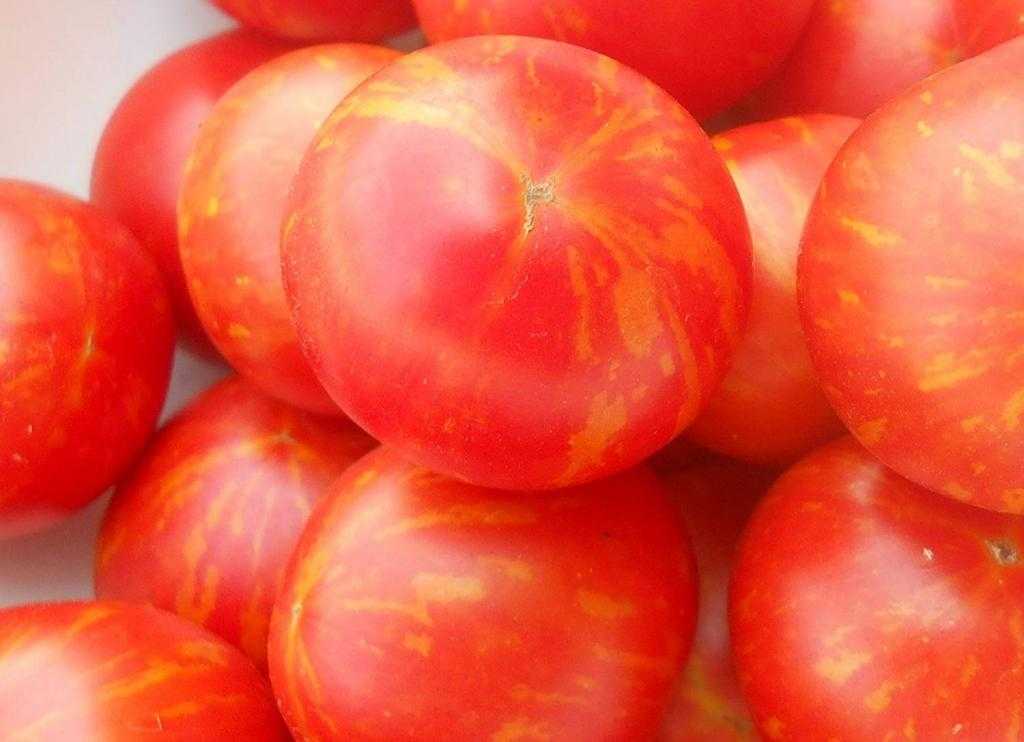
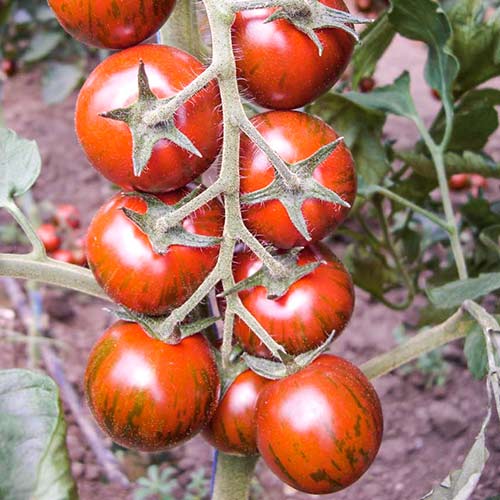
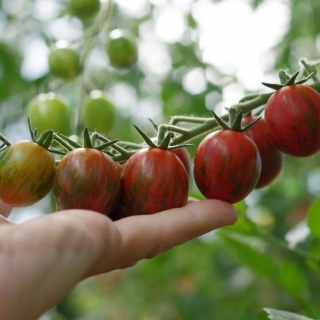
An early-ripening, indeterminate hybrid. Grown in greenhouses and garden beds on private farms. The fruits average 40 g, are round, not very firm, and slightly ribbed. They turn red when ripe. A yield of 8.2 kg per square meter is possible. This is a completely new hybrid, registered in 2021.
Photo gallery of the Tiger Cocktail tomato variety:

A detailed description of the Siberian Tiger tomato variety
Let's take a closer look at what the Siberian Tiger tomato looks like.
Bushes
Indeterminate bushes, 1.5-2 m tall, with medium-sized foliage and long, deep emerald-hued leaves. Three to seven ovaries may form on a stem. Six to eight fruit clusters appear on a shoot.
Fruit characteristics
Round or semi-round (depending on the batch and the company selling the seed). The skin is thin and cracks easily.
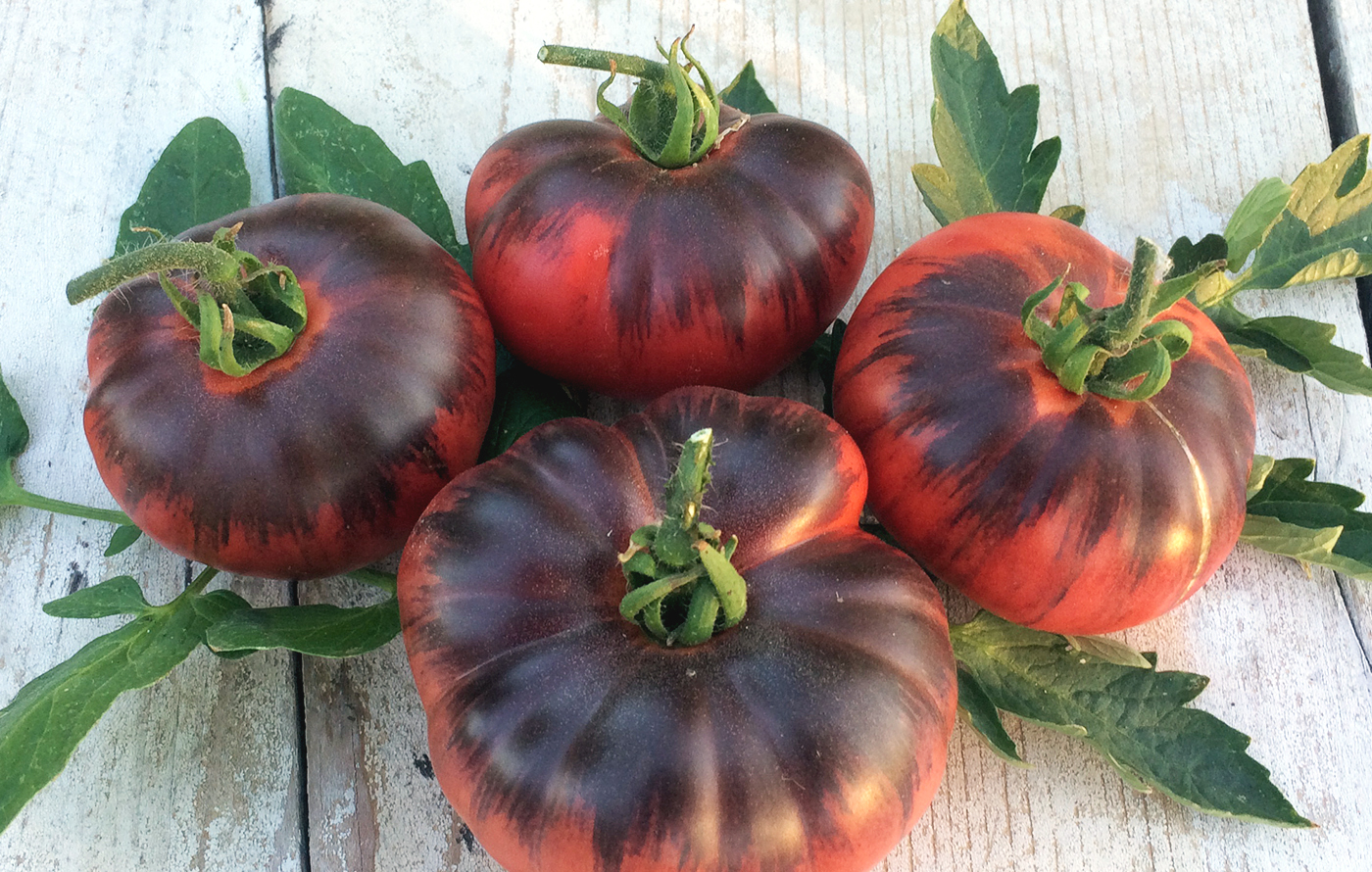
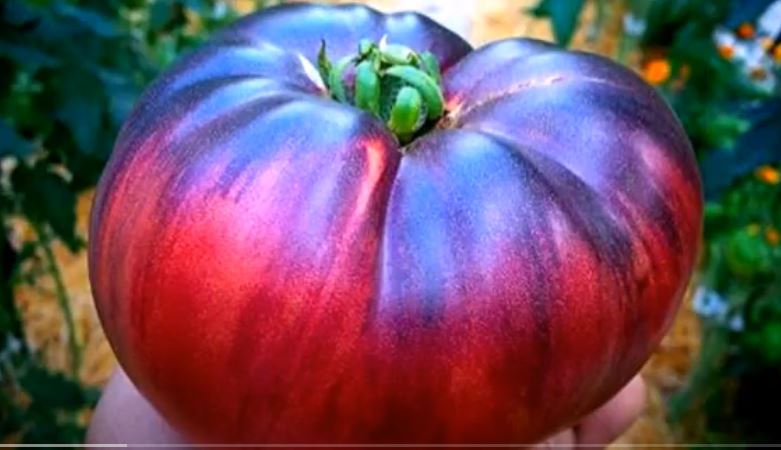
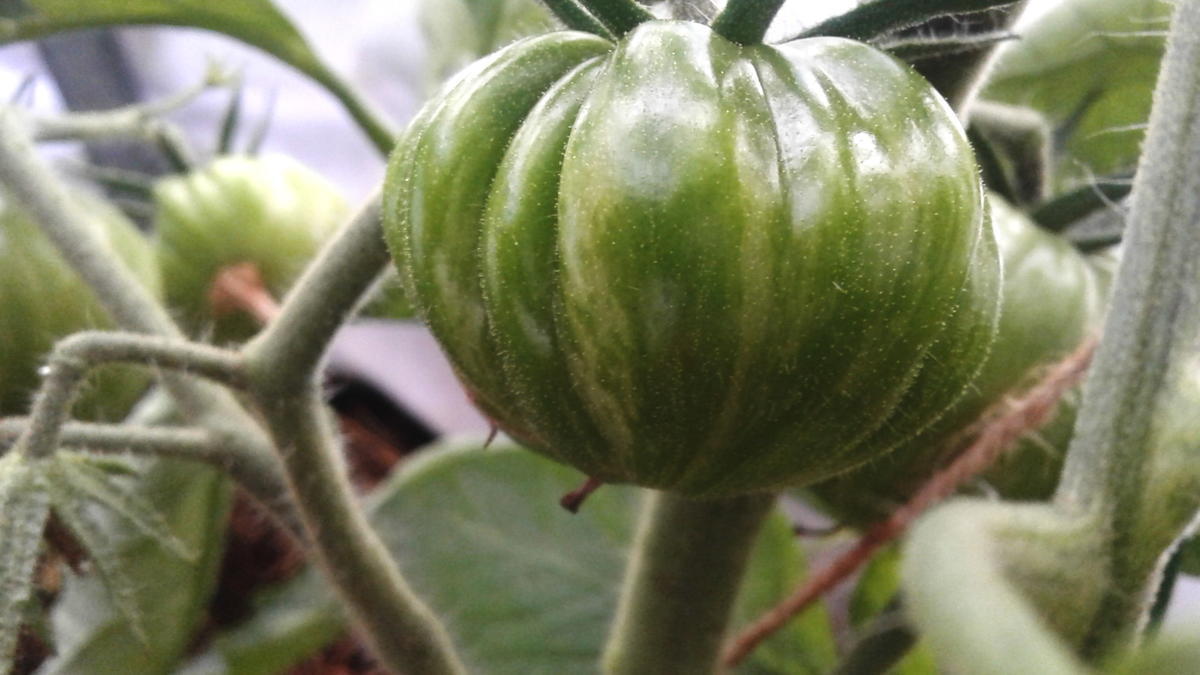
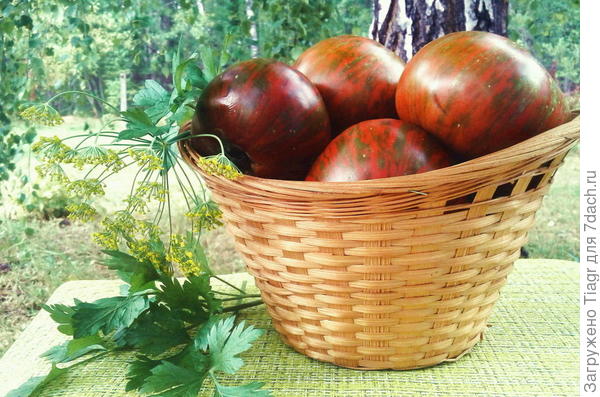
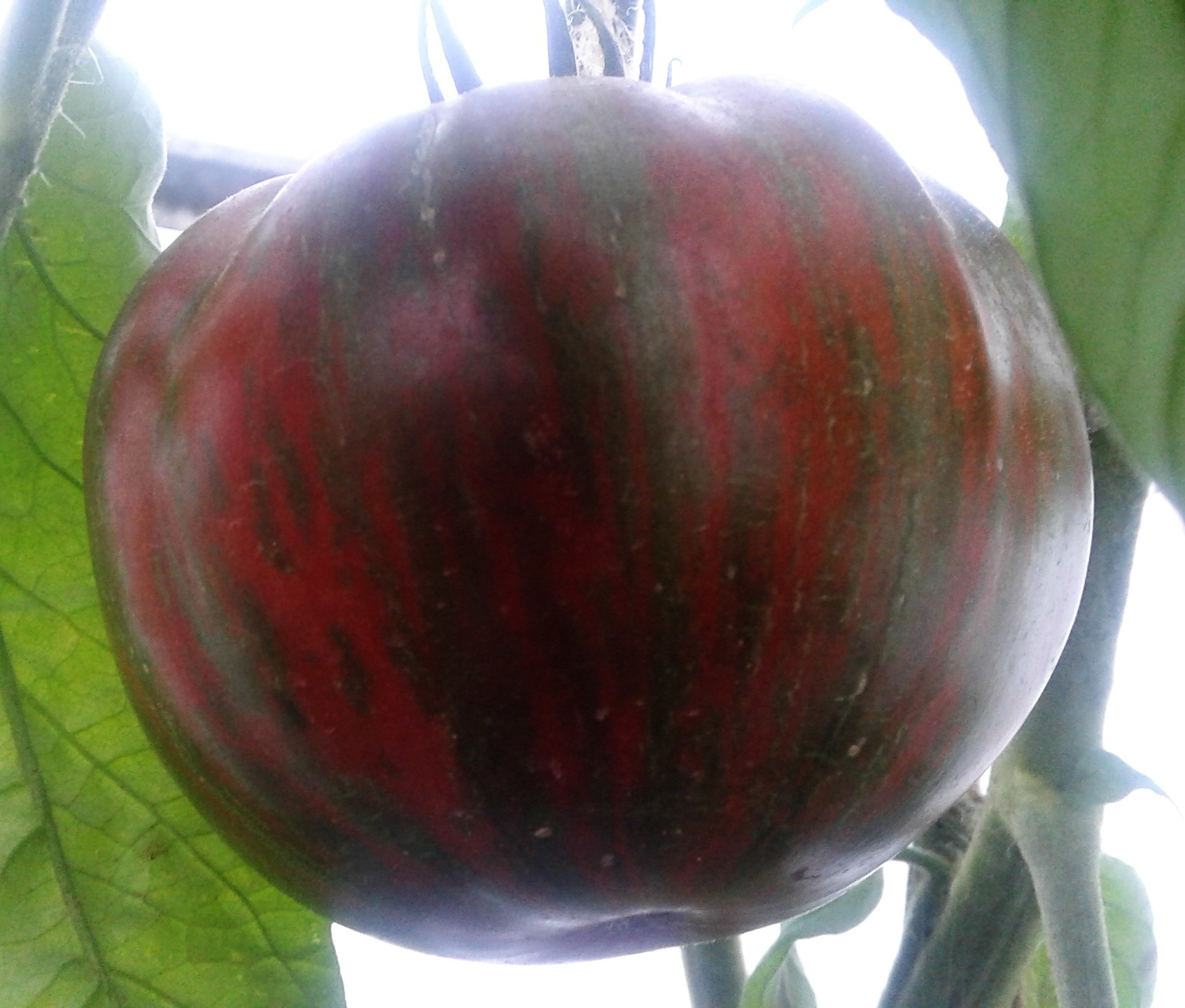
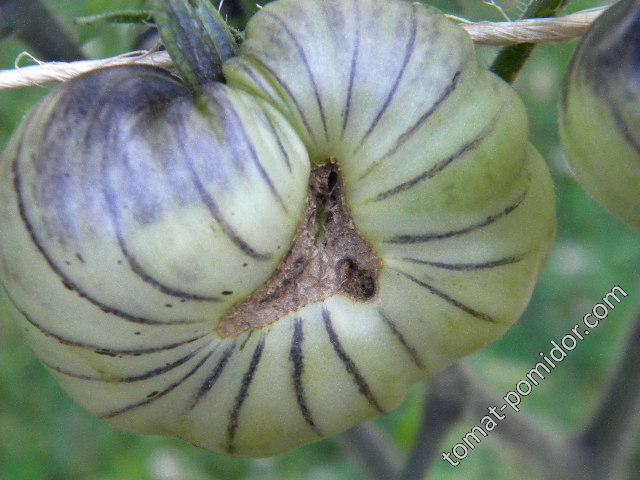
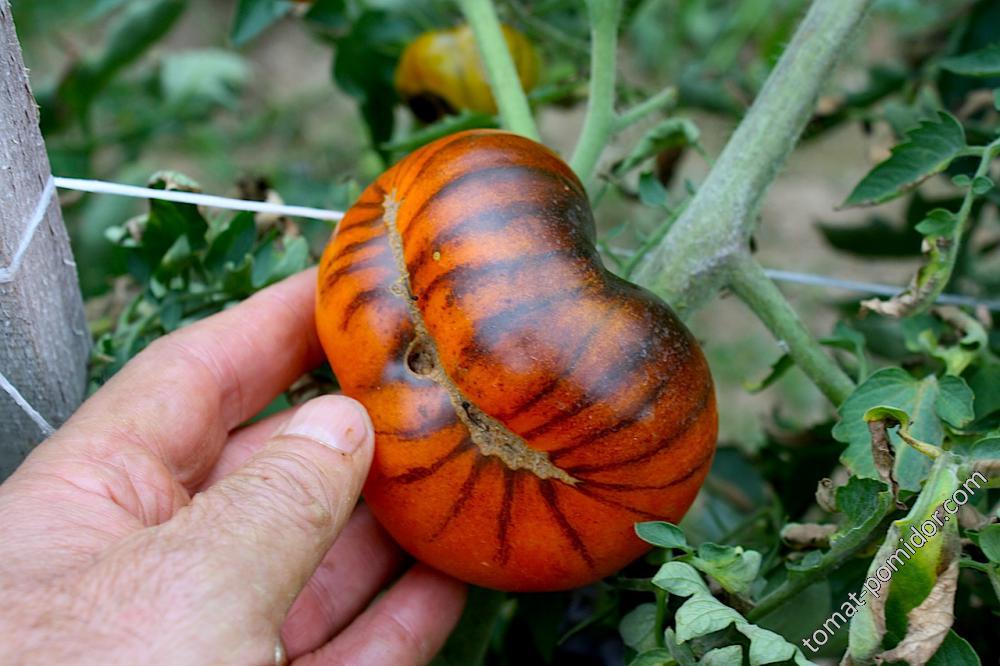
When unripe, the fruit is light green with barely noticeable stripes. When ripe, it turns purple-red with dark purple stripes, reminiscent of a tiger. It is this characteristic that gives the hybrid its name. A dark purple spot is present around the stem.
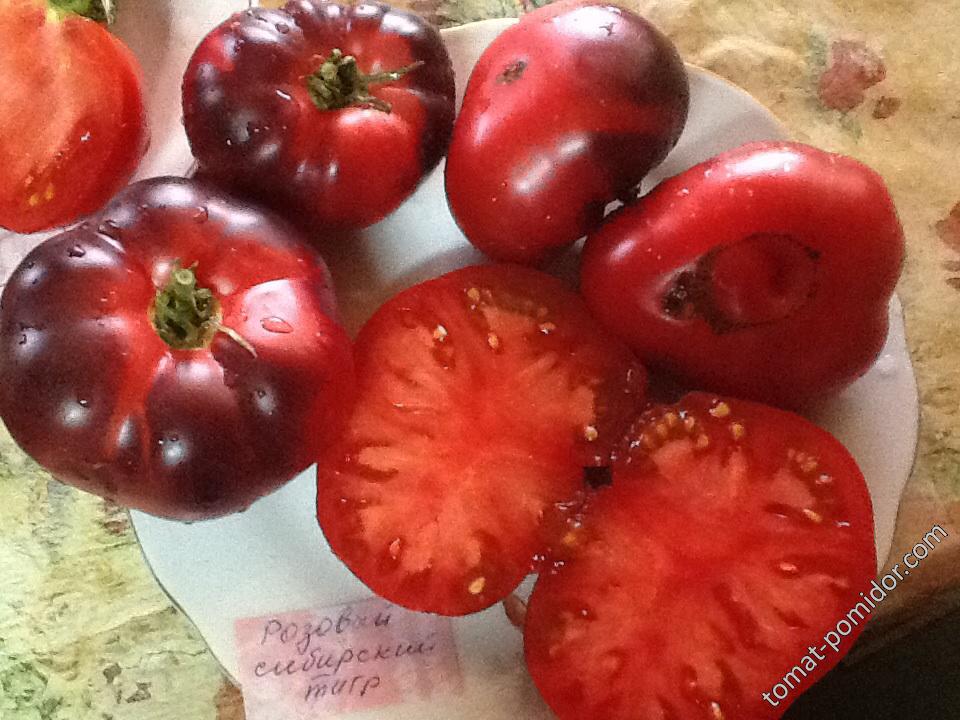
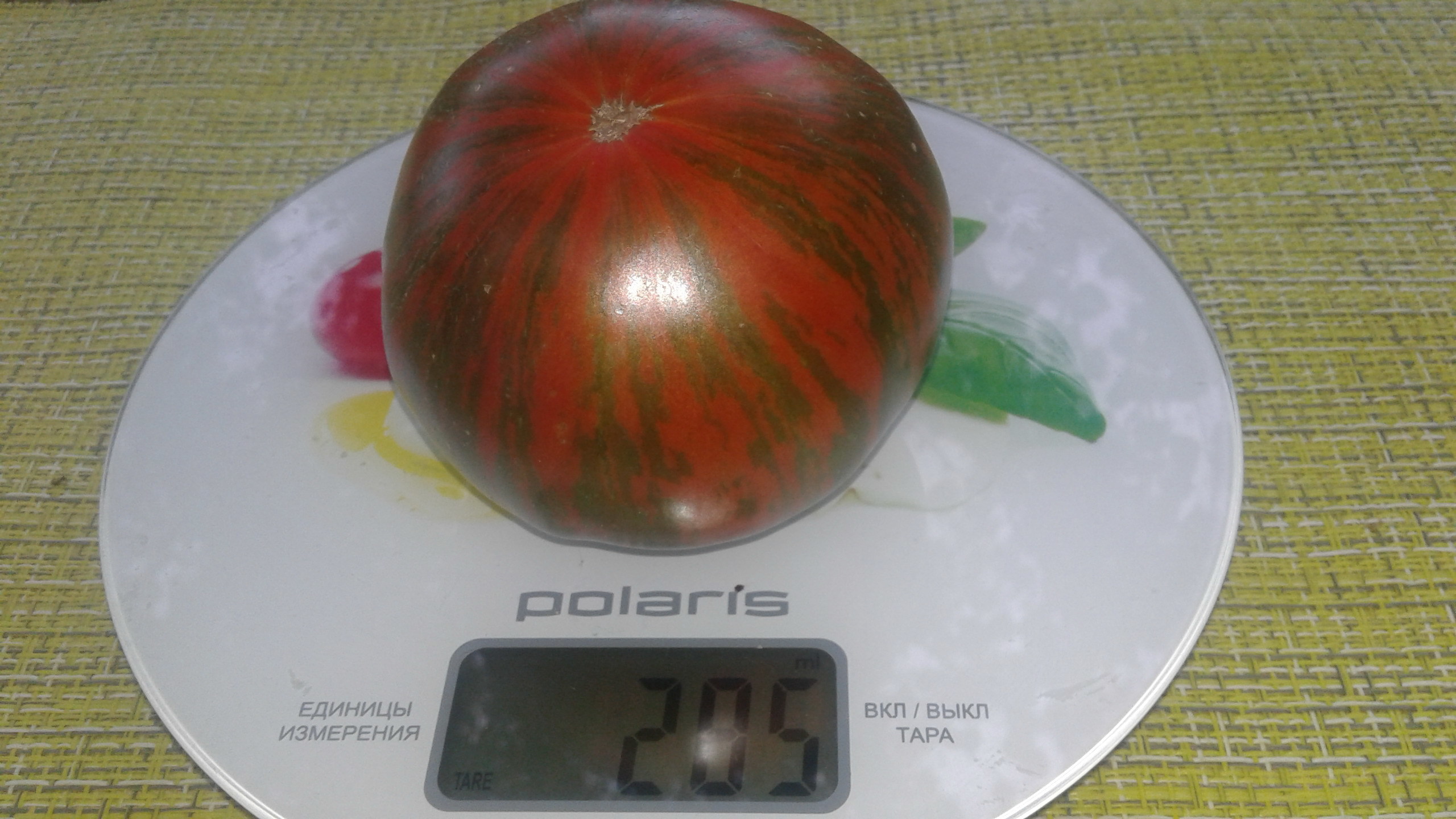
The fruits weigh 300-400 g on the lower branches. On the upper branches, they are smaller, around 150-200 g. The fruits contain several chambers containing numerous seeds. The flesh is reddish, dense, and sweet when cut.
Ripening time and yield
The harvest is ready 110-120 days after germination. If proper agricultural practices are followed, up to 12 kg per square meter can be harvested. To achieve the stated yield, in temperate and northern climates, they should be planted in a greenhouse. In the south, they can be grown in beds.
Pros and cons of the Siberian Tiger tomato variety
| Advantages | Flaws |
|
|
Please note! Siberian Tiger is a hybrid. Therefore, it is not recommended to plant seeds collected from your own plot. They may lose their varietal characteristics.
Features of sowing and planting tomatoes of the Siberian Tiger variety
The most commonly used method is seedlings.
Sowing seeds and growing seedlings
For sowing, select shallow but wide containers. It is recommended to purchase a ready-made potting mix. If this is not available, you can make your own by mixing equal parts garden soil and compost, adding a small amount of ash and sand. Disinfect the soil and seed with potassium permanganate.
Caution! Soaking and germinating seeds is not recommended.
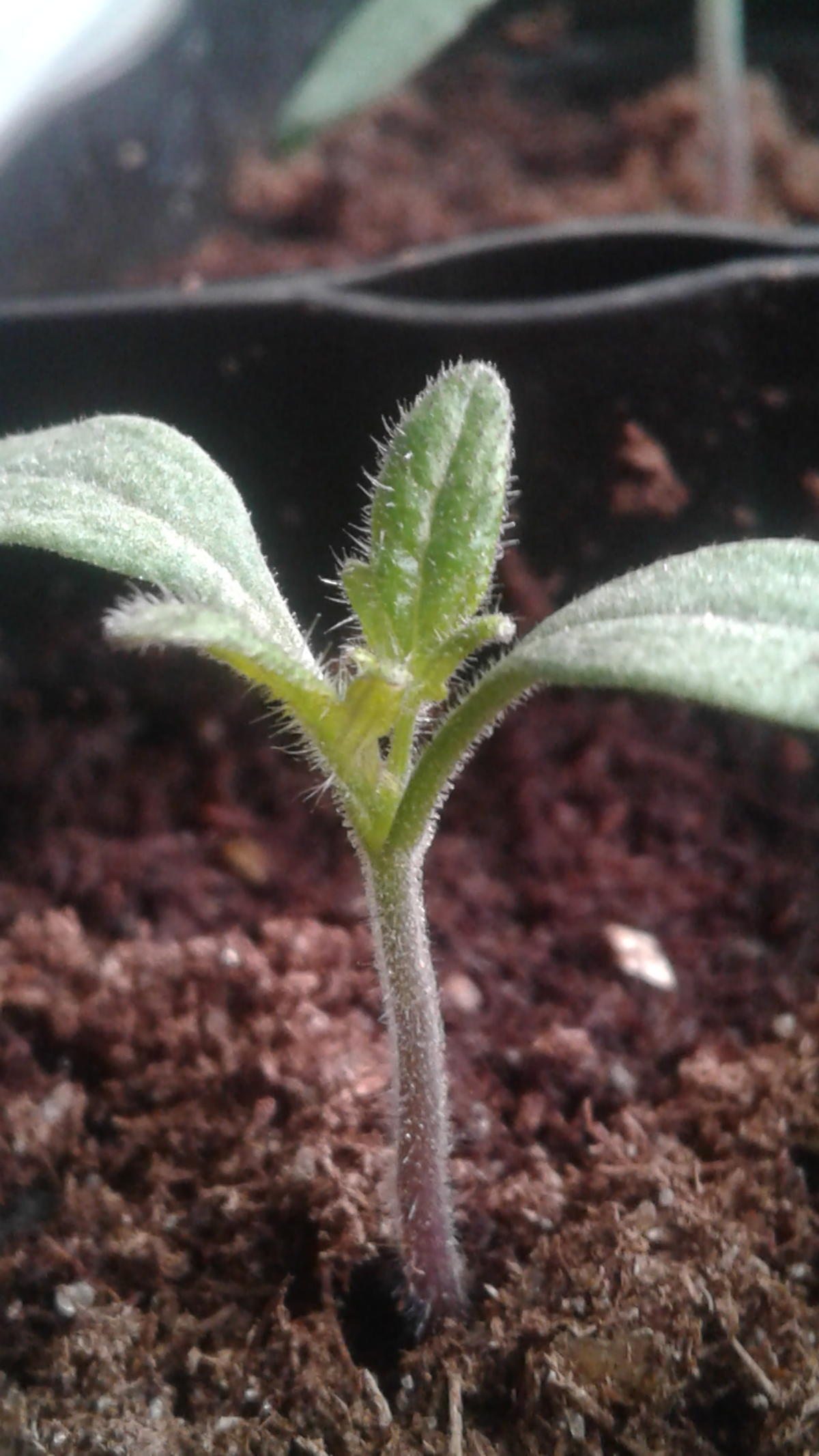
Step-by-step sowing:
- Water the soil.
- Sow seeds 1 cm deep.
- Cover with glass or plastic wrap and place in a warm place.
- The sprouts will emerge in 4-7 days. The cover can be removed, and the seedlings can be moved to a brighter location, with the temperature slightly lowered.
- At the stage of 1-2 leaves, transplant the seedlings into separate containers.
Please note! It is recommended to harden off the plants 1.5-2 weeks before planting. Initially, place them outside for 15-20 minutes, gradually increasing the time to 24 hours.
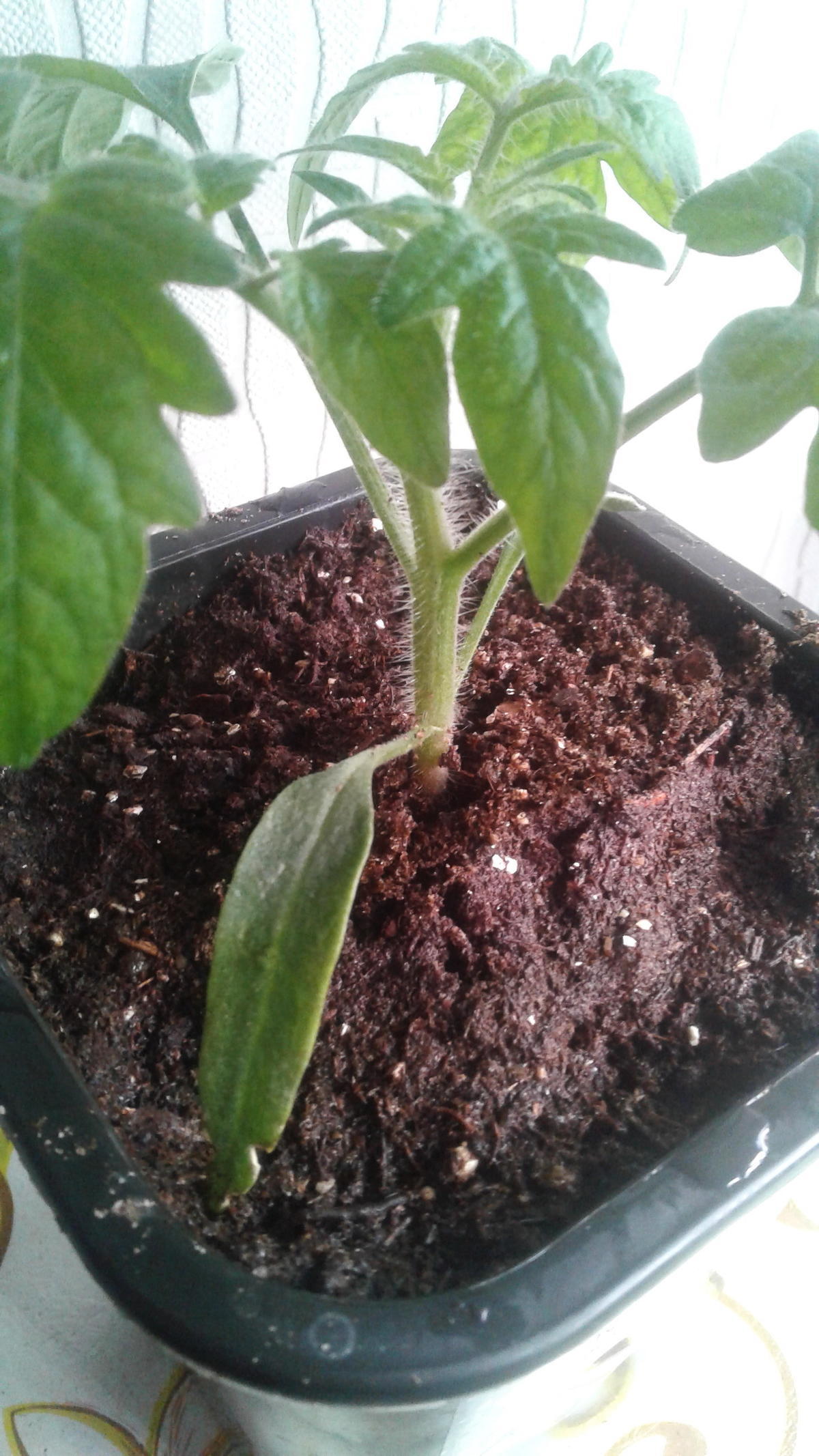
Transplantation into the ground
When the stems turn purple, the seedlings can be planted outdoors. This typically occurs 55-60 days after sowing. The plants should have 5 true leaves.
The planting pattern is 50 x 50 cm. Pre-water the planting holes with boiling water and potassium permanganate. This is necessary for disinfection. Add a handful of wood ash to each hole.
Caring for Siberian Tiger Tomatoes
In early spring, the area for tomatoes must be prepared:
- apply fertilizer;
- dig over and add humus.
After transplanting the seedlings, water the bushes and mulch with fiber and sawdust.
When growing indoors, it's recommended to train the plants into 1-2 stems. When planting in beds, train them into 3 shoots. The first leaves and shoots should be picked off before they fork. Supporting the bushes is also necessary.
Loosen, hill, and weed the beds. It's best to do this immediately after watering or rain. Water the bushes at least once a week. During drought, increase watering to twice a week.
If there is not enough moisture, the fruits will wither.
If the summer is sunny, additional fertilizing is not necessary. In rainy weather, two applications of fertilizer are needed: a nitrogen mixture during the first half of the growing season, and a potassium-phosphate mixture during the second ten days.
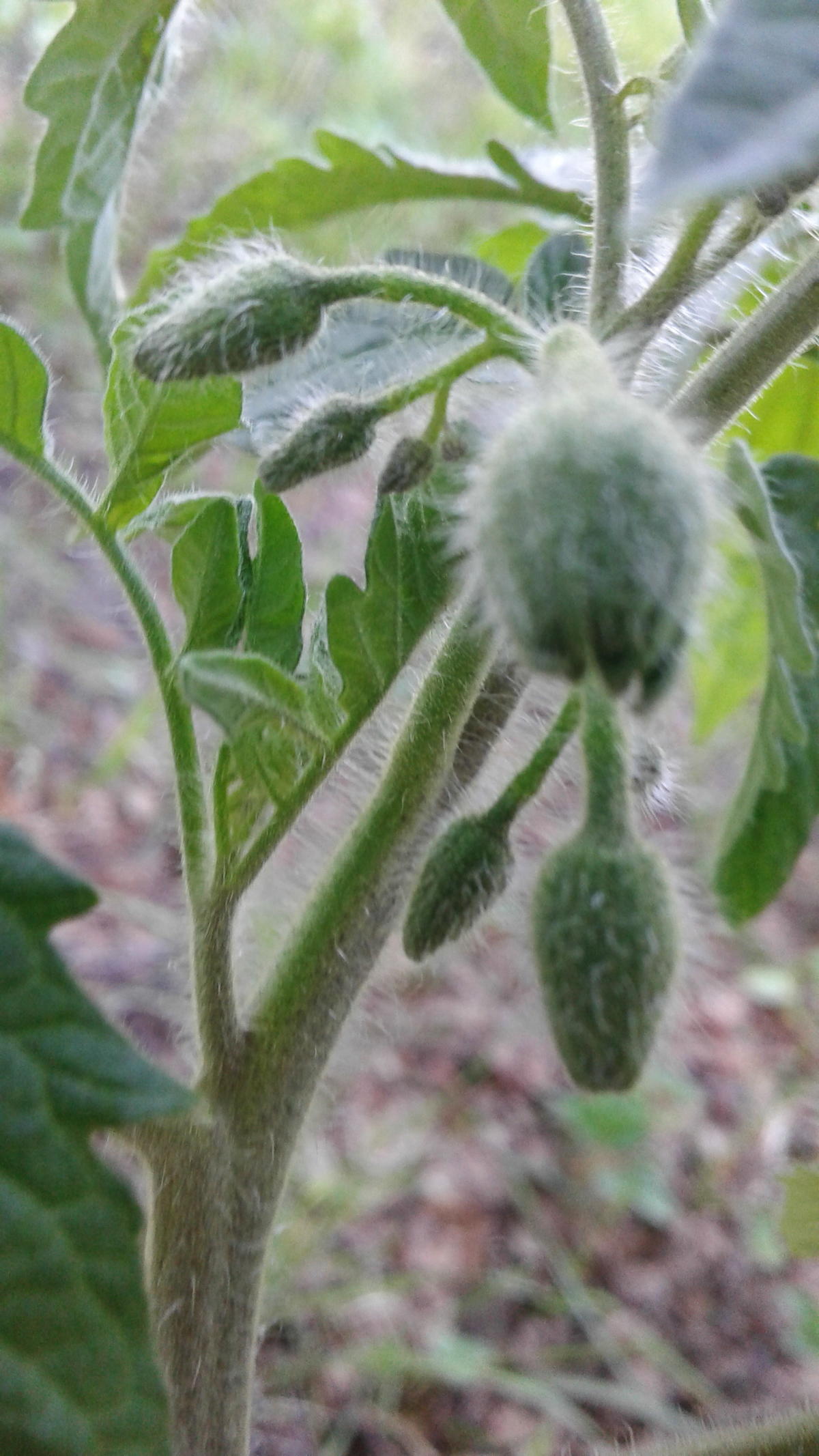
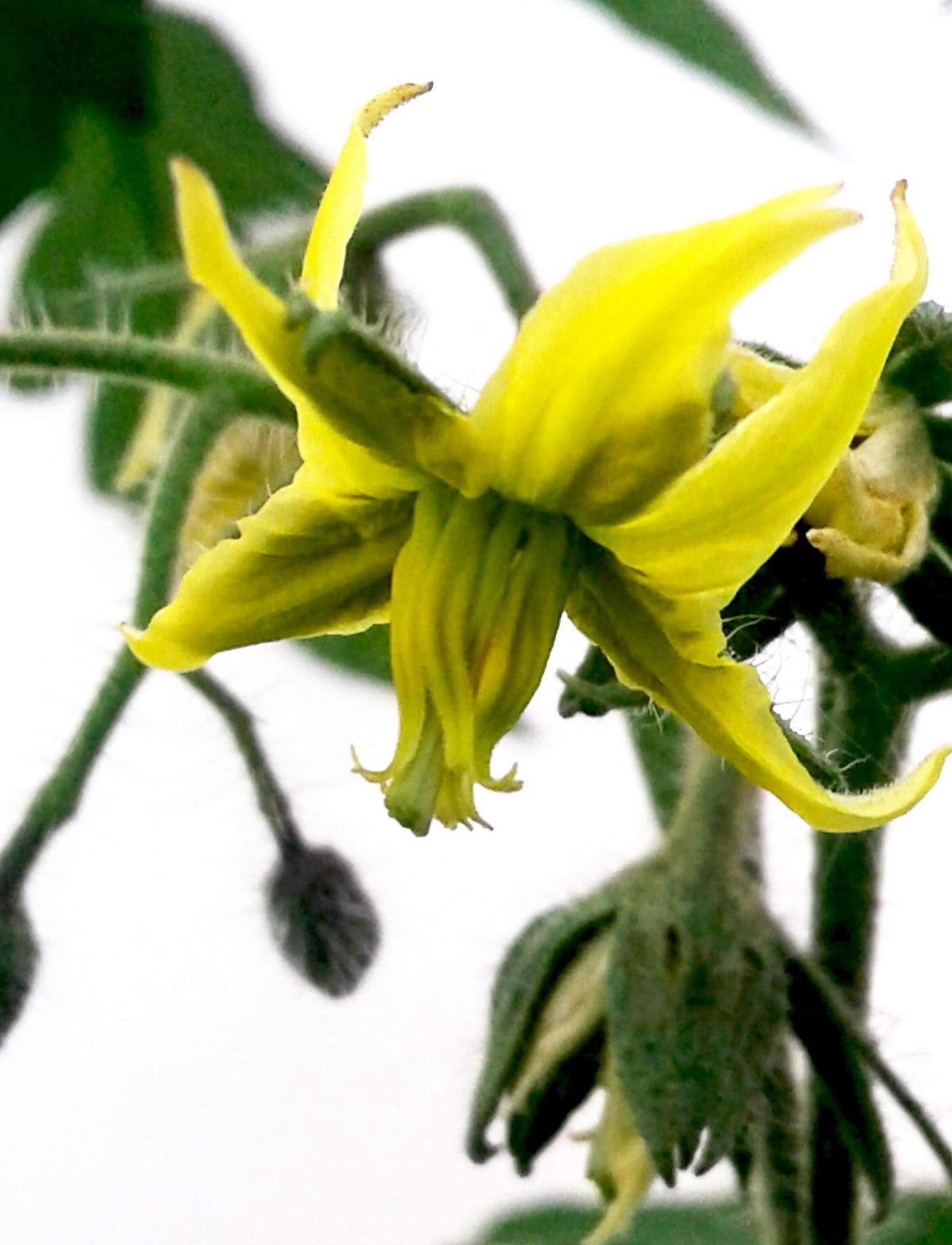
Insect and Infection Control for the Siberian Tiger Tomato Variety
Tomatoes exhibit good resistance to most infections, but if agricultural practices are not followed, they may be susceptible to powdery mildew. Aphids and whiteflies pose a threat to the hybrid. Confidor is effective against these pests.

How to use:
- Dilute 1 ml in a bucket of water.
- Spray the tomatoes.
For reference! This amount will be enough for a 100 square meter plot.
Harvesting, using and storing Siberian Tiger tomatoes
Care must be taken when harvesting. Don't simply throw the fruit into boxes, as they are prone to cracking. Store in a cool place.
The fruits are suitable for slicing, salads, and processing into tomato products. Due to their thin skin and large size, they are not suitable for whole-fruit canning.
Comparison of the Siberian Tiger tomato variety with other varieties in the table
Please note! How can you easily convert centners/ha to kg/sq.m? Simply divide by 100! For example, the Abakansky Pink tomato yields 400 centners of marketable fruit per hectare. This equals 4 kg per square meter. It's that simple! Also, keep in mind that typically no more than 3-4 plants are planted per square meter. This way, you can calculate the yield per bush. In the case of the Abakansky Pink, it's about 1 kg.
| Variety | Ripening period (number of days from full germination to ripening)
Yield of commercial fruits |
Brief description | Fetus |
| Siberian tiger | 110-120 days Up to 1200 c/ha |
A mid-season indeterminate variety for open ground and greenhouses. Requires staking and training into 1-2 stems. Suitable for salads and processing into tomato products. | Flat-round, ribbed, dark pink with dark purple streaks, 150-250 g. Excellent taste. |
| Ampelous Tiger | 100-110 days
there is no exact data |
A mid-season indeterminate variety for open ground and greenhouses. Requires training into single or double stems. Suitable for salads, canning, and freezing. | Round, small, dense, red with orange stripes, 30-50 g. Excellent taste. |
| Amur tiger | 108-112 days
1100-1150 c/ha |
A mid-season indeterminate variety for open ground and greenhouses. Suitable for salads and canning, including whole-fruit preserves. | Flat-round, large, slightly ribbed, medium density, brown, 240 g. Good taste. |
| Amur tiger pink | 105-110 days
900 c/ha |
An early-ripening indeterminate variety for open ground and greenhouses. Suitable for salads. | Flat-round, large, slightly ribbed, medium-density. Unripe fruit is dark green with a dark spot and stripes; ripe fruit is pink with green stripes. Weight: 250-350 g. Good flavor. |
| Tiger cub | 110-120 days 930-950 c/g. |
Early-ripening, indeterminate variety. Grown in open ground and under plastic covers in private gardens. Requires staking and pinching. Suitable for salads and canning, including whole-fruit preserves. | Round, smooth, medium-dense, weighing 30-35g. Turns red when ripe. Good flavor. |
| Tiger Cocktail | 100-120 days
820 c/g. |
An early-ripening, first-generation indeterminate hybrid. Grown in greenhouses and garden beds on private plots. Requires staking and pinching. Suitable for salads. | The fruits average 40 g, are round, not very firm, and have slight ribbing. They turn red when ripe. The flavor is good. |
| Abakan pink | 120 days or more
400 c/ha |
A late-ripening determinate variety for open ground and greenhouses. Requires staking and training. Suitable for salads and processing into tomato products. | Flat-round, slightly ribbed, medium density and pink in color, 200-500 g. Good taste. |
| Mikado Sibiriko | 90-95 days
800 c/ha |
An early indeterminate variety from Siberian breeders. For salads, juice, and pasta. | Heart-shaped, ribbed, pinkish, 400-600 g. Excellent taste. |
| Mikado chocolate | 90-110 days 600-800 c/ha |
A mid-season indeterminate variety for open ground and greenhouses. Requires staking and shaping. Suitable for salads. | Flat-round, large, brown, 170-240 g. Excellent taste. |
| Minusinsk balls | 110-122 days
Up to 1500 c/ha subject to agricultural practices |
A mid-season indeterminate variety for greenhouses. Requires staking and training into single or double stems. Suitable for salads and processing into tomato products. | Round-heart-shaped, ribbed, pinkish-red, 150-250 g. Excellent taste. |
| Katya is pink | 80-85 days
1600-1800 c/ha |
An early-ripening determinate variety for open ground. Suitable for salads. Marketability: 84-90%. | Flat-round, medium density, smooth, pink, 120-130 g. Good taste. |
| Little black boy | 110-115 days
650 c/ha (greenhouse and under film) |
A mid-season indeterminate variety for open ground and greenhouses. Requires staking and shaping. Suitable for salads. | Round, smooth, medium density, brown, 100-150 g. Good taste. |
| Nepas | 100-105 days
630 c/ha (greenhouse and under film) |
An early-ripening determinate variety for open ground and greenhouses. Suitable for salads. | Flat-round, medium density, slightly ribbed, red, 60-80 g. Good taste. |
| Siberian giant | 115-120 days
The commercial yield of fruits was 9.0-11.0 kg/sq.m. |
A mid-early indeterminate variety for greenhouses. Suitable for salads. | Flat-round, large, medium-ribbed, loose, red, 400-500 g. Excellent taste. |
| Siberian big guy | 90-100 days
900-1200 c/ha |
An early-ripening indeterminate variety for open ground and greenhouses. Suitable for salads, processing into tomato products, and preparing first and second courses. | Flat-round, slightly ribbed, red, 500 g. Good to excellent taste. |
| Siberian Shan'gi | 100-110 days
The yield of commercial fruits in open ground was 5.6 kg/sq.m. |
A mid-season determinate variety for open ground and greenhouses. Suitable for salads. | Flat-round, medium density, slightly ribbed, raspberry, 157 g. Excellent taste. |
Real reviews from gardeners about the Siberian Tiger tomato variety
Reviews are mostly positive, noting the fruity and sugary taste; the disadvantages include a not very high yield.
While researching the achievements of American tomato breeders, I came across an interesting article about the Siberian Tiger, a tomato developed by Mark McCaslin. For us Russians, the article is interesting for two reasons: first, what we grow, and second, our attitude toward F1 hybrids.
The forum discussed dehybridization, whether it's possible to collect seeds from F1 hybrid tomatoes, and what we obtain in the second, third, and so on generations. For those unfamiliar with Mendel's laws, I'll give a very simplified overview. A pair of parent plants is selected with different beneficial traits that one would like to combine in a single plant. For example, the mother plant is tasty and large-fruited, while the father plant is very healthy, which is not the case with the mother plant. The result of crossing (artificial pollination) is a tomato—this is the carrier of the F1 seeds (the first generation). If the pair is selected correctly, the yield of seeds from large, tasty, healthy plants is significant. Furthermore, the first generation shows a surge in positive traits. The offspring can surpass both mother and father in these traits. The success of an F1 hybrid depends on the correct selection of parent varieties.
When we collect seeds from second-generation hybrid plants (F2), we observe significant segregation of the plants based on maternal, paternal, and ancestral traits, among other things. Siblings can differ greatly in appearance, health, yield, and so on. The goal of planting such plants is only one: to develop a new variety. This requires planting a very large number of F2 plants and selecting those most similar to the F1 hybrid. Then, over many generations (F3, F4, F5, F6, etc.), we ensure that seed propagation produces consistently similar plants—and that's it—a VARIETY. That's the theory. Now let's return to our Siberian Tiger.
Mark McCaslin makes no secret of the fact that the hybrid cross between OGU Blue and King Beauty, named Siberian Tiger, had inconsistent coloration even in the fourth generation. But!!! It was released!
In the sixth generation (F6) a fruit was accidentally found in plantings in Pennsylvania:
Which will serve as the basis for a new line of breeding and is called the "Bengal Tiger".So, lovers of VARIETIES, what are we growing?
I think you'll draw your own conclusions!
Good day to the readers of my review!
My thoughts on growing another exotic tomato variety are the Pink Siberian Tiger. When I first saw it, I immediately wanted to plant one, especially since it's a local. I assumed it was bred here, but it turns out it came from the USA, has the original name Pink Siberian Tiger, and was created through selective breeding. It inherited its primary colors from its parents, resulting in a strikingly attractive coloration—a vibrant composition of purple, dark red, scarlet, and pink.
By the start of the planting season, I already had the desired seeds. Following proper planting practices, especially pre-treatment and overnight soaking of the seeds in a solution of my preferred EPIN plant growth regulator, allowed me to achieve a germination rate of around 95%.
The results of this sowing were not disappointing either; the plants grew actively and did not get sick.
I paid close attention to them, since it is not easy to buy them; this is a rare variety.
Of course, I assigned them a place in the greenhouse, although tomatoes with anthocyanins in their color prefer a lot of sun, which can be obtained in abundance in open ground.
The plant is tall, with medium foliage. I constantly removed side shoots and unnecessary leaves to provide it with as much sun as possible.
They don’t like abundant watering, excess moisture can affect the taste!!!
The fruit yield and awn set are good. As they mature, the tomatoes are green, then a colored spot appears near the stalk, growing larger as they grow. They are round in shape, slightly flattened at the top.
At first they didn't make an impression, but as they ripened they began to take on more interesting colours.
Oddly enough, in the very corner of the greenhouse, where the sun was the least (I stuck a bush there that was too big to fit, as I felt sorry to throw it away), the tomatoes developed a rich purple color almost all over the fruit, even though purple is generally considered to be a minor color when grown in low-sun conditions. When fully ripe, it caught up with its fellows and was impossible to distinguish from the crowd.
The weight ranged from one hundred and fifty grams to just over two hundred.
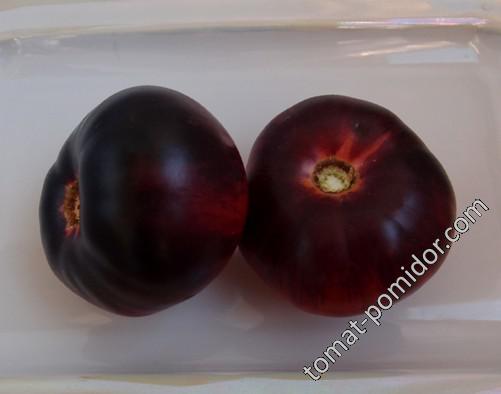
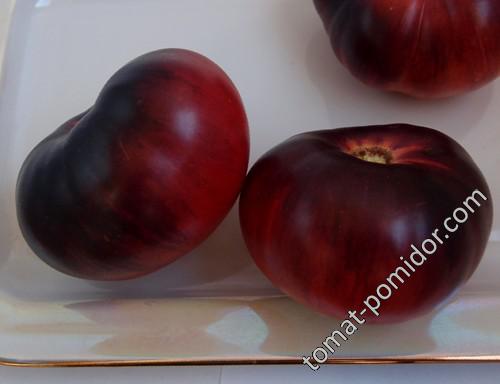
This is what the harvest looked like; it didn't quite match the original. The coloring lacked the pronounced stripes that inspired its name. Pink and blue stripes, hence the name "Pink Siberian Tiger."
This variety is still considered unstable; it behaves differently in different conditions. I've already taken the seeds, and I'll be experimenting with them to the fullest. They'll be planted outdoors in the summer of 2020.
The tomato skin is thin, the flesh is dense and fleshy, with few seeds. The flavor is delicious, with a sweet, sour, and sugary aroma.
Suitable for processing, canning and whole consumption.
I was satisfied with the results of growing it, so I identify the following advantages for it:
+ good germination;
+ the taste is excellent;
+ productivity;
+ long fruiting;
+ long shelf life after removal;
+ universal use;
+ resistant to diseases.I didn’t find any obvious flaws, except for the difference in color, but this may be the result of a lack of sunlight.
I recommend growing it.
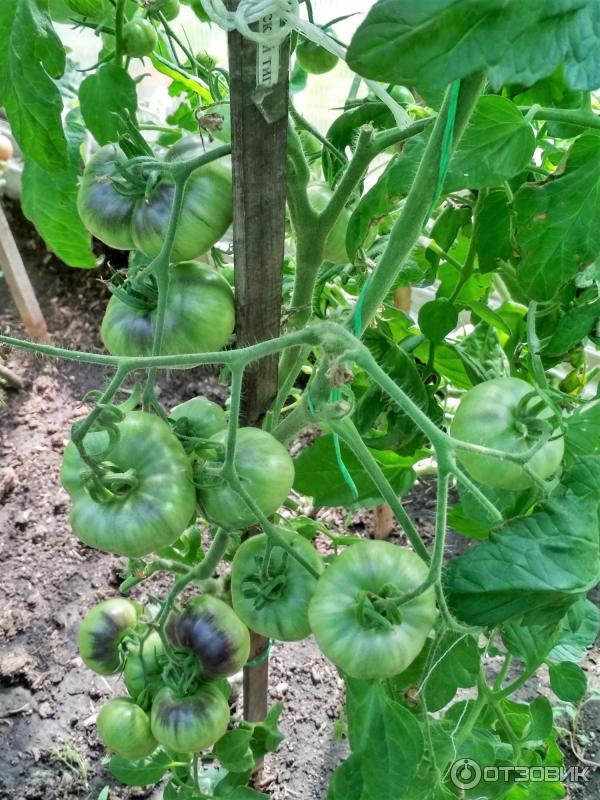
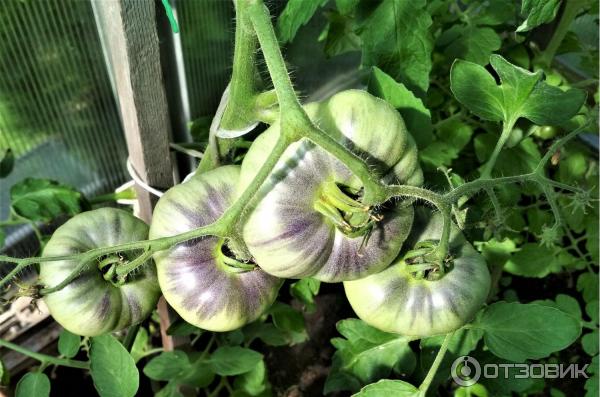
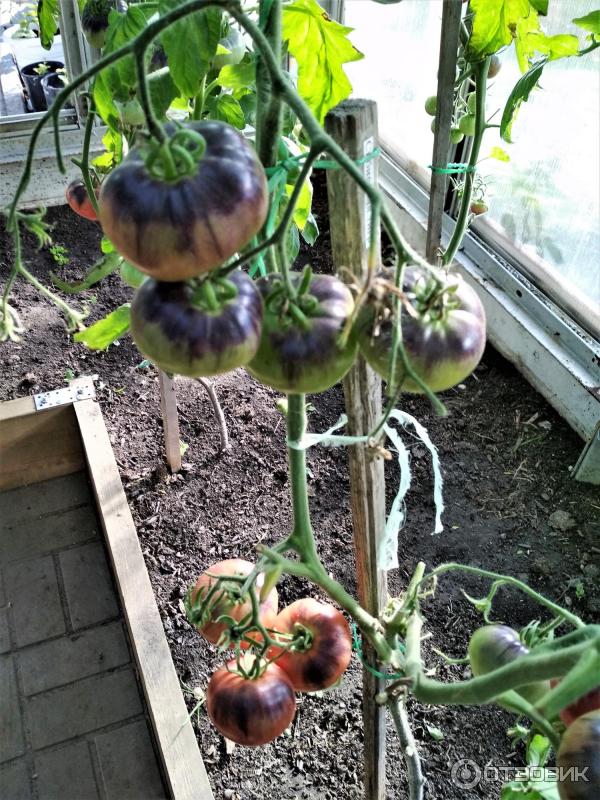
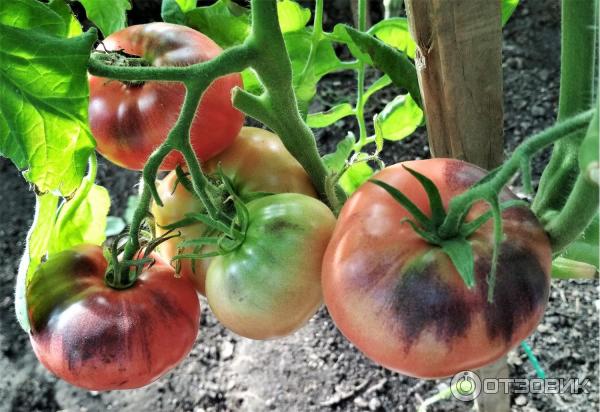
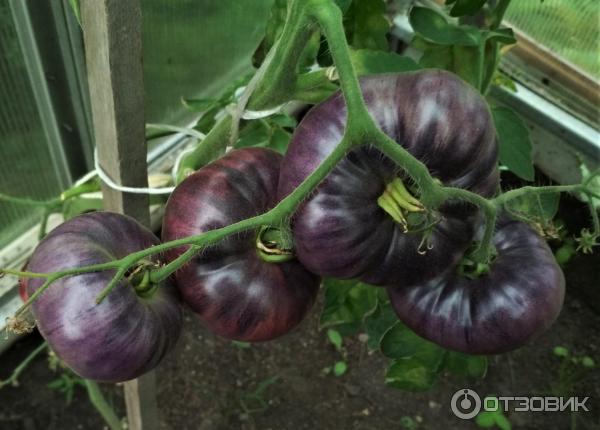
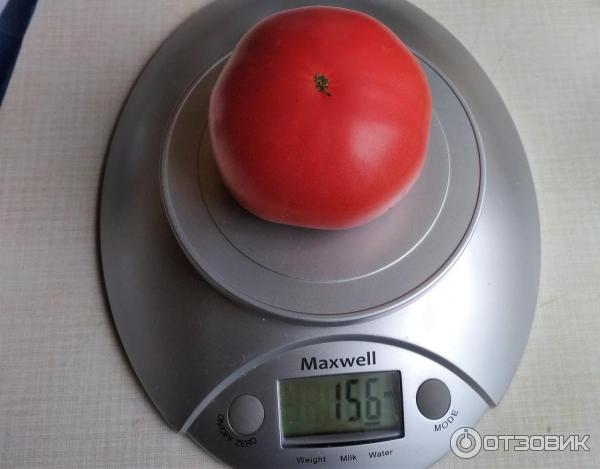
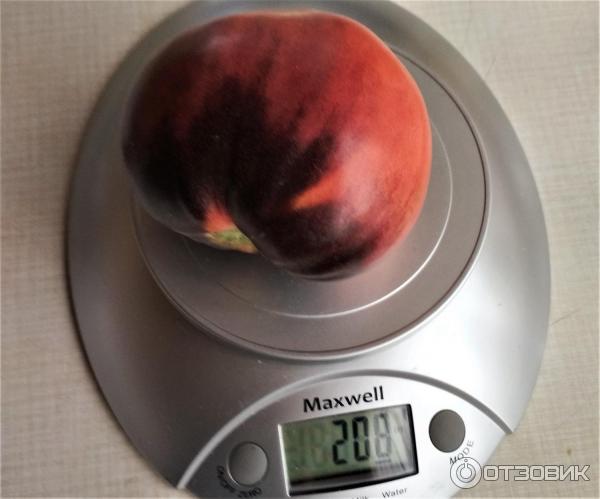
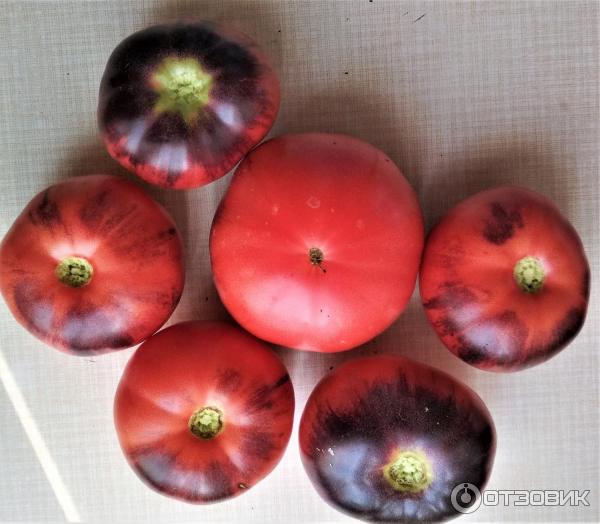
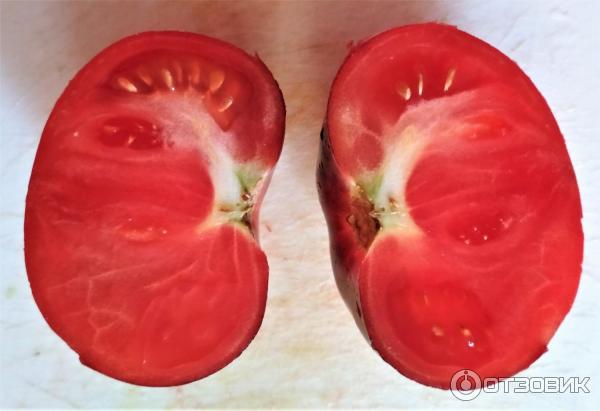
My Pink Siberian Tigers were like this:
The last fruits were more distinct in color.
The seeds were from Germany, from R. Kraft.

Here's mine from Popenko. It's still small because it's growing in the main garden, but the stripes are already visible (you'll have to wait for the color and flavor)).
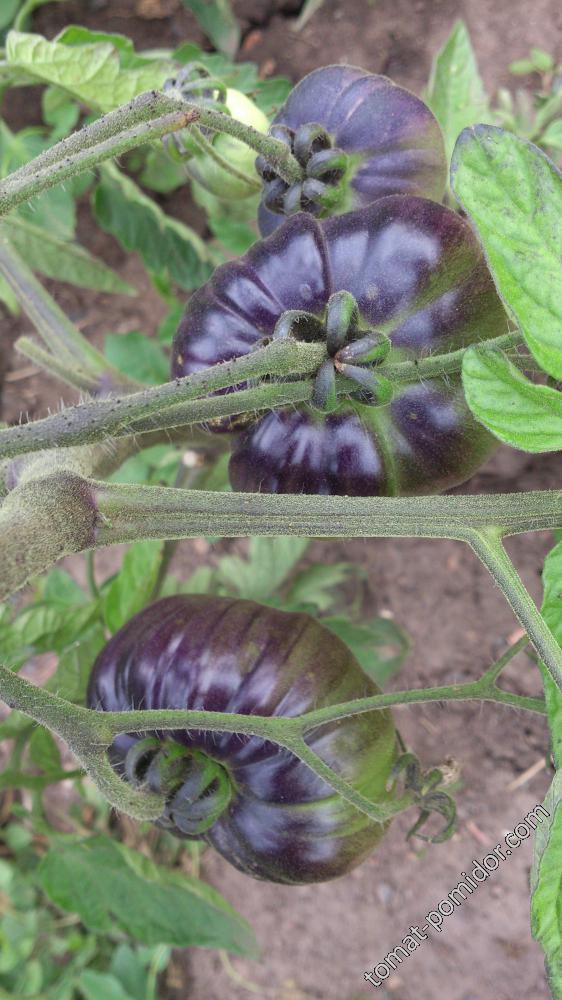
I also have one growing in Popenko's greenhouse. The first cluster was full. I even had to remove the outgrowths.
I don't see a blue color like Svetlana's :-[
The color appears. :-[
The brush is forked and spreading. :-[
I picked off the outer flowers, leaving about 6-7 fruit sets on the cluster.
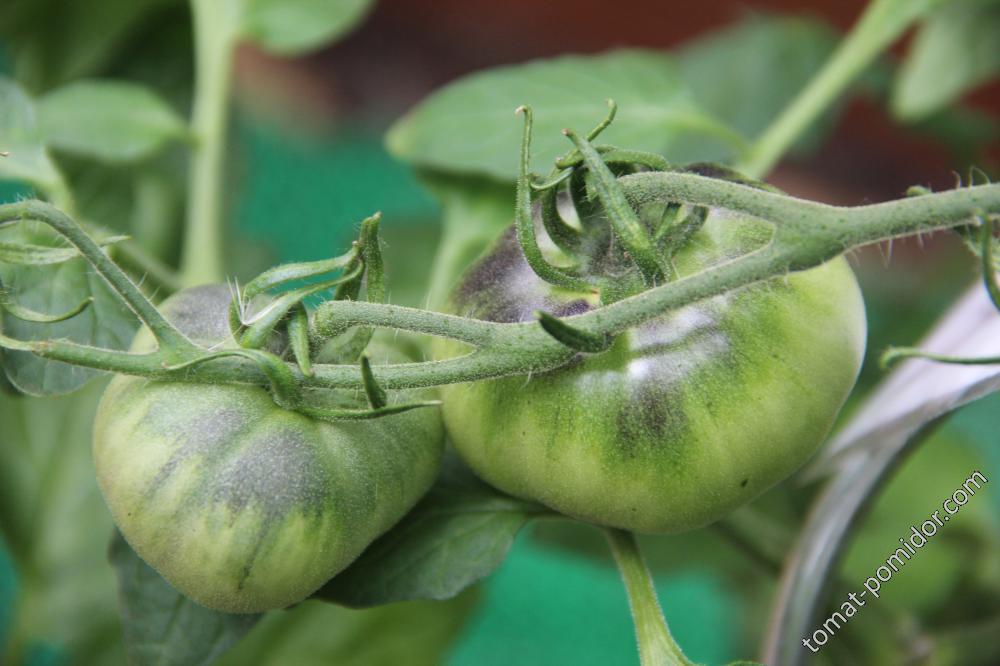
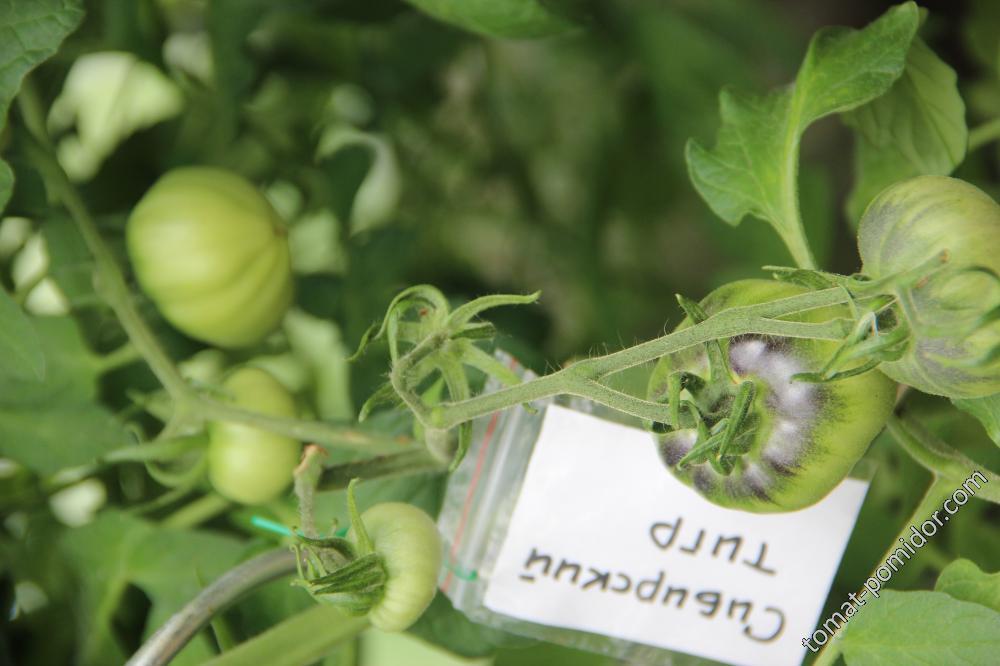
Maybe it's too young for stripes, or maybe it's not getting enough direct sunlight or light? Last year, the blue and stripes on my Blue Beauty became more pronounced when I thinned the foliage of nearby bushes in the fall. It was already cold but not overcast, and that's when I saw the deep blue in all its glory.
What are your outdoor temperatures during the day and night? Our sowing and planting times are close, so it would be interesting to compare the temperatures. I planted mine in the outdoor garden on May 15th, but it didn't grow until it warmed up, and only now has one of the three bushes started blooming. The problem is, I removed the marsh flower from one of the bushes, which slowed down the other buds. I removed the forked stem from another, which slowed down the buds. Only the one that didn't have the forked stem and double flower removed is blooming. That's the picture I have in the outdoor garden.