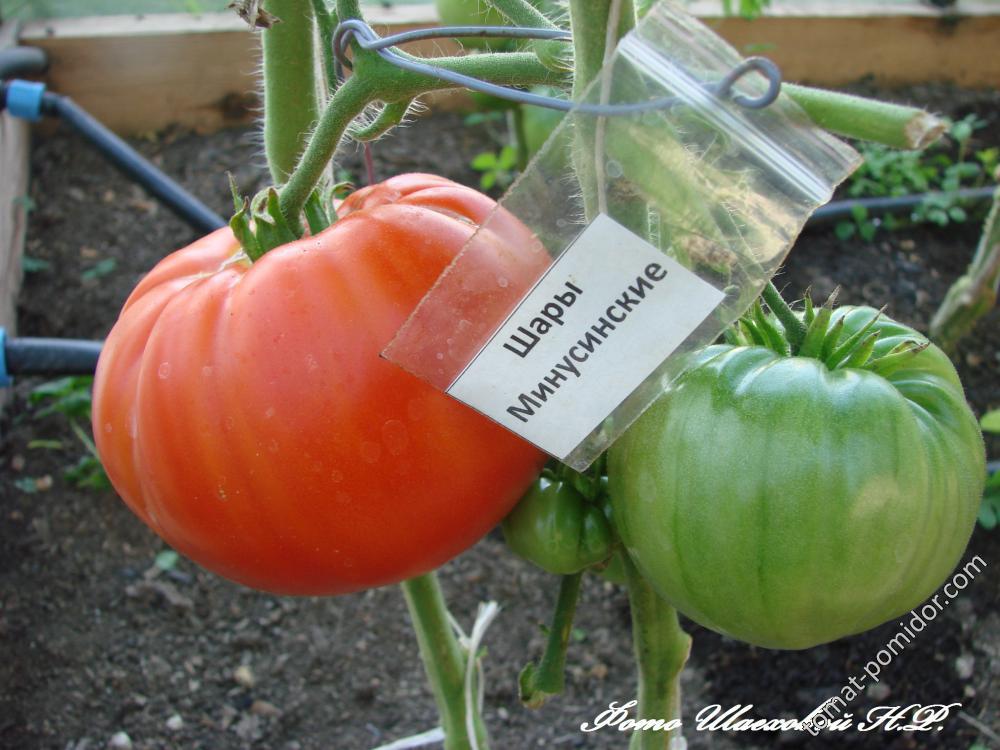
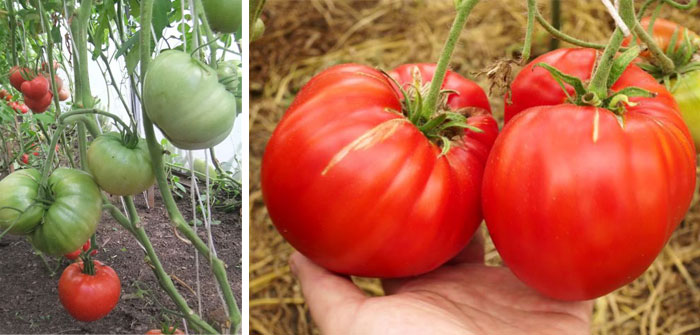
The Minusinskie Shary tomato is a folk-bred variety that has gained recognition among many gardeners across the country. These tomatoes are delicious and aromatic, yield excellent results, and are easy to grow, even for a novice gardener.
Content
- 1 Table of characteristics of the Minusinsk Balls tomato variety
- 2 Photo gallery of the Minusinsk Balls tomato variety
- 3 The origin of the Minusinsk Balls tomato variety
- 4 A detailed description of the Minusinsk Balls tomato variety
- 5 Advantages and disadvantages of the Minusinsk Balls tomato variety
- 6 Planting Tips for the Minusinsk Balls Tomato Variety
- 7 Care, watering and fertilizing of the Minusinsk Balls tomato variety
- 8 Resistance of the Minusinsk Balls tomato variety to diseases and pests
- 9 Harvesting, using and storing the Minusinsk Balls tomato variety
- 10 Comparison of the Minusinsk Balls tomato variety with other varieties in the table
- 11 Real reviews from gardeners about the Minusinsk Balls tomato variety
Table of characteristics of the Minusinsk Balls tomato variety
| Characteristic | Description |
| Description | A mid-season variety with indeterminate shoots. Suitable for greenhouse cultivation. |
| Ripening period | 110-122 days |
| Fruit weight | 150-450 g |
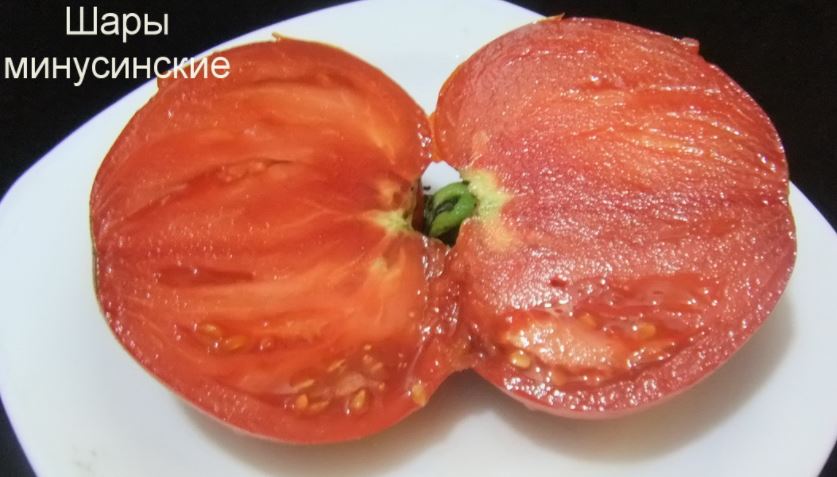
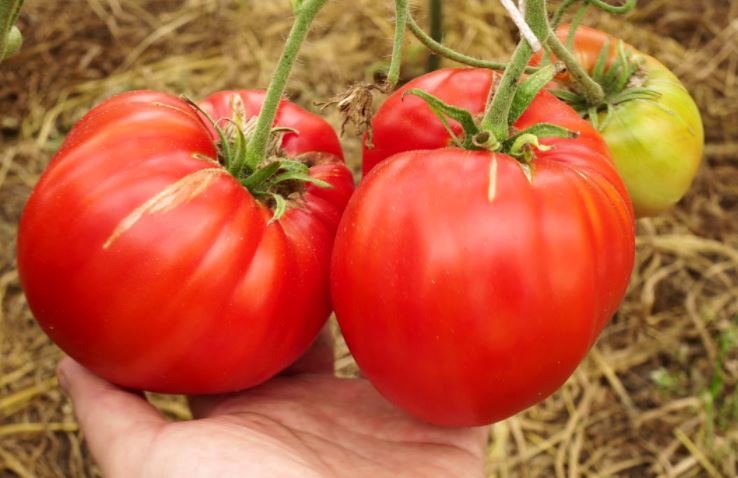
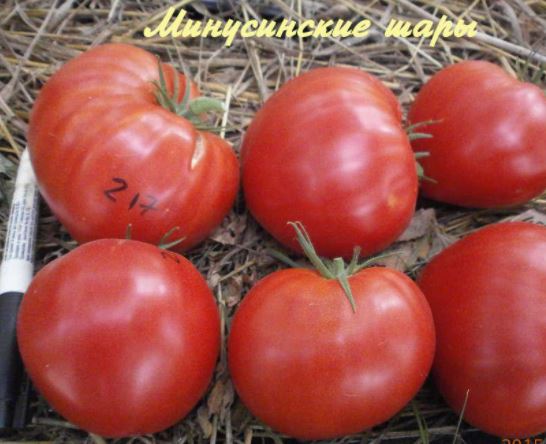
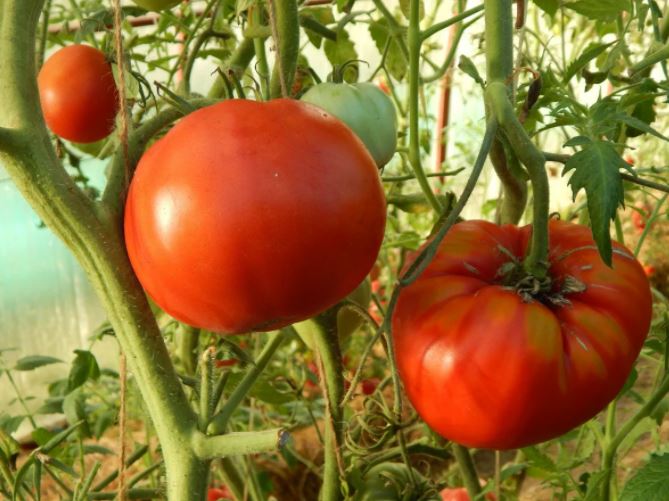
| Description of the fruit | The tomatoes are small, ribbed, heart-shaped, and richly red, even crimson. The flavor is excellent. |
| Productivity | Up to 1500 c/ha, subject to compliance with growing rules. |
| Usage | Minusinsk Shary tomatoes are used for processing into sauces and pastes. Some specimens are suitable for whole-fruit canning. They make an excellent addition to salads and all other dishes. |
| Preferred growing regions | It can be grown in greenhouse conditions in all regions of the country; in the south it also grows well in open ground. |
| Disease resistance | It has a strong immune system. Late blight may occur if watering is not properly administered. |
| Agricultural technology | The bushes require mandatory tying and shaping. |
| Not included | |
| Country of origin | Russia, Minusinsk, folk selection |
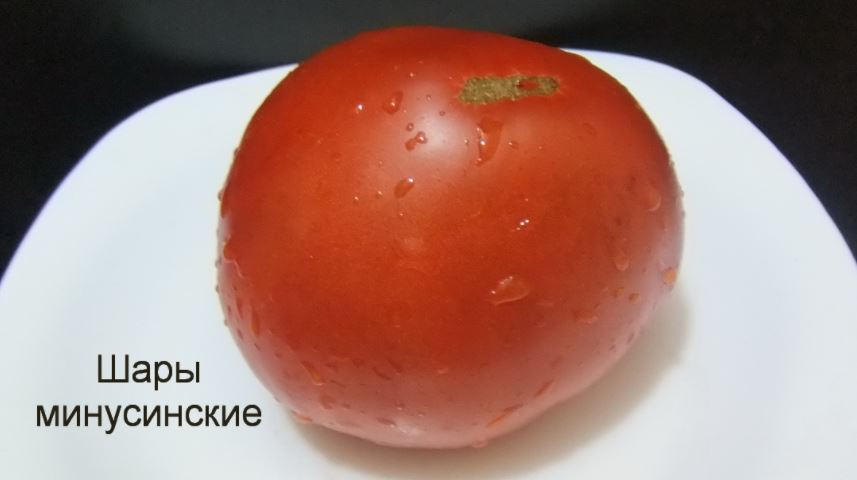
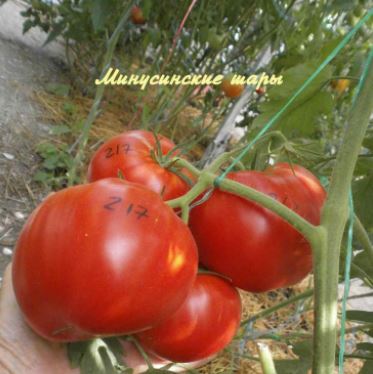
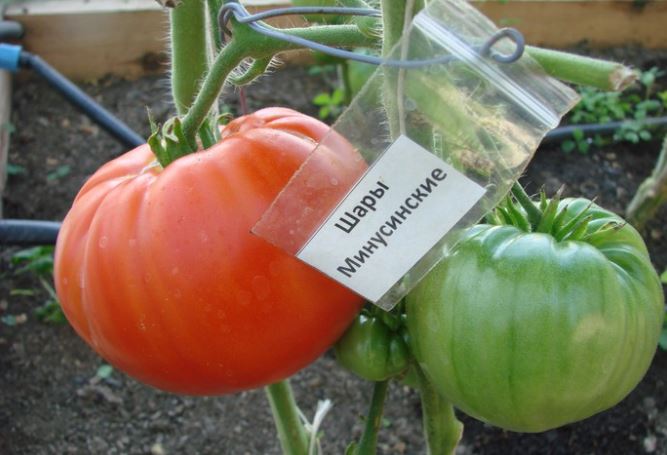
Photo gallery of the Minusinsk Balls tomato variety
The origin of the Minusinsk Balls tomato variety
The city of Minusinsk in the Krasnoyarsk Krai is famous for its tomatoes. Originally, these varieties were bred for greenhouse cultivation in cool climates. However, recently, Minusinsk tomato varieties have spread throughout the country and produce fruit with equal success in various regions. Minusinsk Balls are another masterpiece of folk breeding; this variety has not yet been registered.
A detailed description of the Minusinsk Balls tomato variety
Minusinsk Shary are tall tomatoes that are distinguished by their excellent yield and tasty fruits.
Bushes
Indeterminate shoots can reach a height of up to 2 meters, so staking them is essential for healthy growth. Foliage is average; leaves from the lower tier are removed as the clusters mature. Bushes are trained into 1-2 stems, with no more than three tomatoes recommended per square meter. In southern regions, training plants into 3 stems is acceptable, but the fruit will be smaller.
Fruit
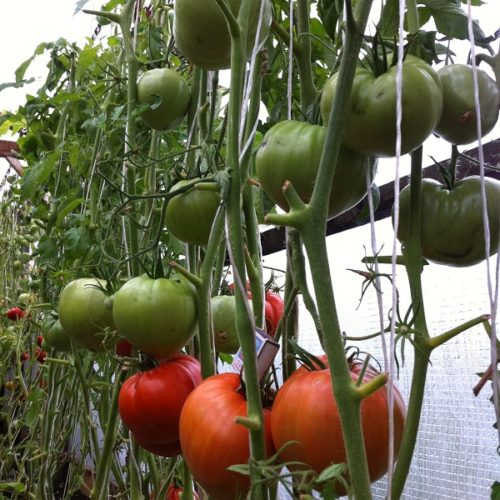
The fruits of the Minusinsk Balls variety are named for a reason—they truly resemble balls. Gardeners note the unevenness of the harvest: some tomatoes weigh no more than 200 g, while others grow to 500 g.
The skin is thick, and the tomatoes don't crack on the vine. They are red, and the flesh is juicy, sweet, and slightly tart. There are very few, small seeds inside.
Productivity
When proper cultivation practices are followed, yields are maintained at a high level, reaching 1,500 centners per hectare. On average, each bush produces 4-6 kg of tomatoes.
Ripening time
Minusinsk Shars are characterized by an average ripening period, from the moment of emergence to harvest it takes from 110 to 122 days.
Advantages and disadvantages of the Minusinsk Balls tomato variety
The Minusinskie Shary variety has advantages and disadvantages, described in the table.
| Advantages | Flaws |
|
|
Planting Tips for the Minusinsk Balls Tomato Variety
The variety's high yield is due to proper cultivation practices. It's important not only to monitor the seedlings but also to properly prepare the seeds for planting.
Sowing seeds and growing seedlings of the Minusinsk Balls tomato variety
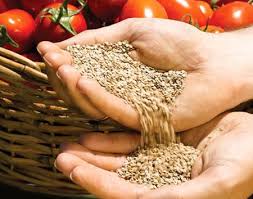
The health and immunity of future plants directly depend on the quality of their seeds, so choosing them requires careful consideration. It's best to purchase seeds from reputable producers with many years of experience in the industry. Some companies pre-treat their planting material, with information about this included on the packaging. These seeds don't need to be soaked or disinfected, as this will remove the protective coating already present on their surface.
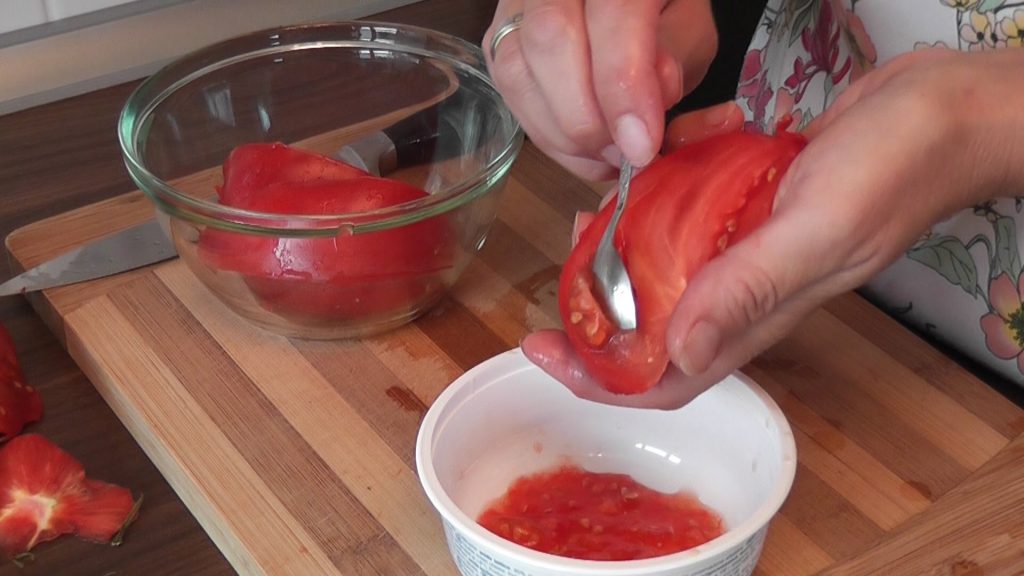
When using home-grown seeds, be sure to undergo antibacterial treatment with a weak solution of potassium permanganate. It's a good idea to soak the seeds in a solution of Fitosporin to boost the tomato's immunity.
The situation is similar with soil. If you're using store-bought soil, there's no need to disinfect it. But if you're making your own soil mix of sand, soil, peat, or humus, you'll definitely need to add potassium permanganate or bake it in the oven.
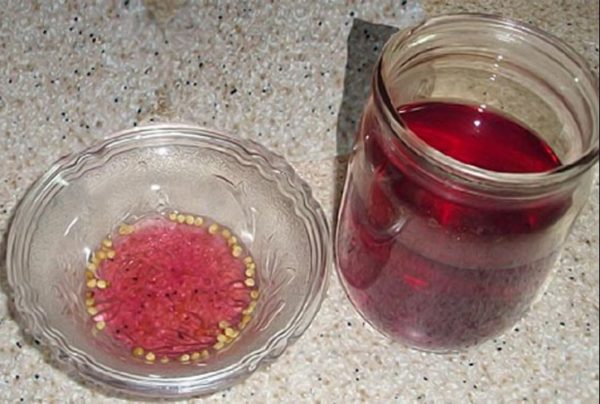
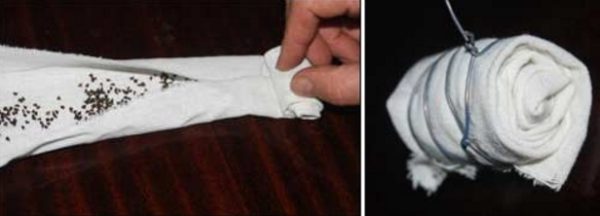
Tomatoes can be planted dry, but experienced gardeners strongly recommend not skipping the germination stage. This process takes only two days, and germination will be much more productive. To do this, place the seeds in a damp cloth and store in a warm place. Typically, planting can begin on the second or third day.
Fill a pre-selected container approximately halfway with soil, then use any available tool to make furrows 1-1.5 cm deep and place the seeds in them. Cover them with a 10 mm layer of soil, gently spray with a spray bottle, and cover the container with glass or plastic.
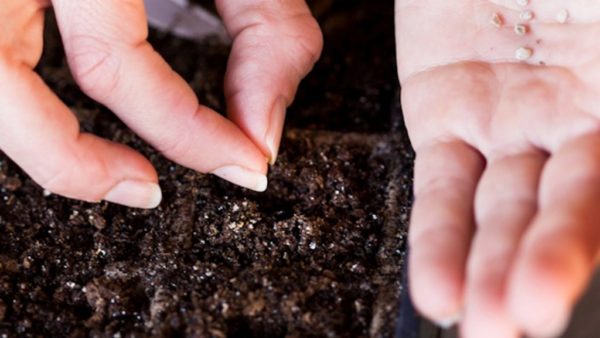
The resulting mini-greenhouse should be kept in a well-lit area where the temperature does not drop below 24°C until the seedlings emerge. The most vigorous tomatoes will begin to sprout in as little as 4 days; treated seeds appear on the soil surface within a week, and with dry planting or using home-grown seeds with minimal treatment, this period can extend to 2 weeks.
As soon as the seedlings begin to push up against the cover, it should be gradually removed. It's best not to do this all at once, to avoid discomfort. After this, the seedlings are moved to another location where the temperature is maintained between 20 and 22°C. The amount of light is crucial for seedlings; without sufficient light, the shoots will become elongated and weak. This is why, at the beginning of the season, grow lights are turned on in all windows to help extend the daylight hours for the plantings.
Once the tomatoes have strengthened and three full leaves have formed on the stem, they are transplanted into separate containers, such as plastic cups. From there, the seedlings will move directly into the garden bed.
Planting the Minusinsk Balls tomato variety in the ground
Tomatoes are planted outdoors after 65 days. In southern regions, Minusinsk Shars can be planted outdoors; in other regions, the seedlings should be placed in a greenhouse. The soil in the bed is prepared in the fall, and fertilizer is added at the same time. In the spring, before planting, the soil will need to be dug again and the holes prepared. The holes should be 25 cm deep and 5-10 cm wider than the diameter of the container in which the tomatoes are growing.
It is recommended to leave a distance of 60 cm between the holes so that no more than 3-4 bushes grow per square meter.
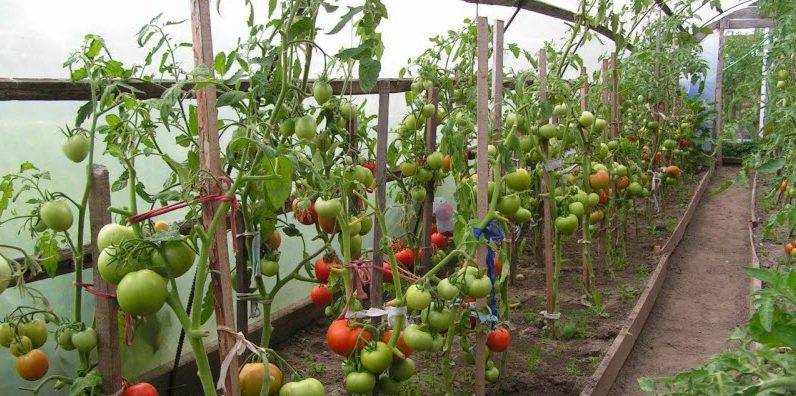
It is important to think through a support system for the shoots and begin tying them up at an early stage, as the stems are quite fragile.
Care, watering and fertilizing of the Minusinsk Balls tomato variety
In the first 10 days after transplanting, no manipulation of the plantings is necessary; the plants need to adapt to the soil.
Next, you can add the first fertilizers, for example, a mixture of mullein (500 ml) and water (10 l).
At the fruit formation stage, it is important to support tomatoes with potassium and phosphorus.
Water as needed, ensuring that water doesn't stagnate around the roots. However, don't allow the soil to dry out for long periods of time, otherwise the fruit may begin to split right on the branch.
It is recommended to water tomatoes in the late evening, using settled water.
The Minusinsk Balls tomato bush needs to be shaped, this is done in 2 stems, all extra stepsons are removed.
Resistance of the Minusinsk Balls tomato variety to diseases and pests
The Minusinskie Shary variety has a relatively strong immune system; it rarely gets sick or is susceptible to viruses. However, if the humidity inside the greenhouse is too high or the watering schedule is not met, late blight can occur.
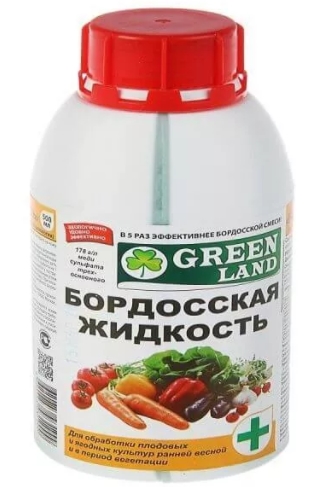
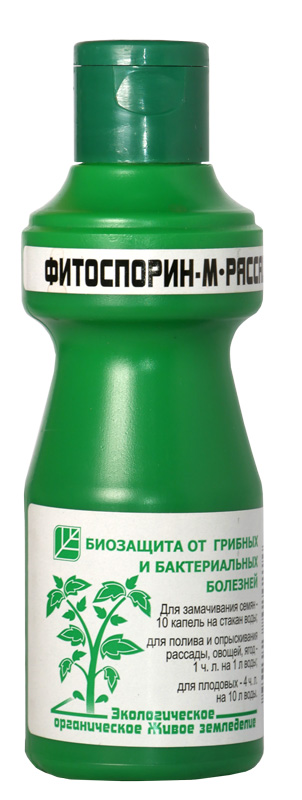
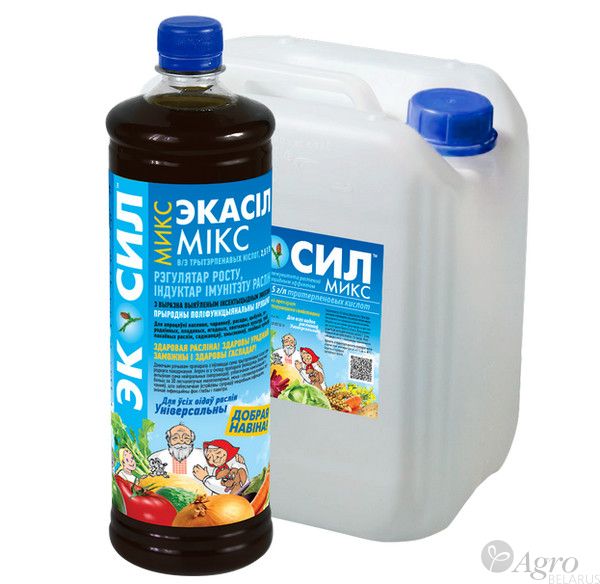
To prevent this, use Bordeaux mixture, Fitosporin or Ecosil solution.
Harvesting, using and storing the Minusinsk Balls tomato variety
The ripening period for Minusinskie Shary tomatoes ranges from 110 to 122 days. The fruits grow unevenly in weight, and some can be used for whole-fruit canning. Large tomatoes, which can weigh up to 500 g, are eaten fresh and can also be processed into sauces, paste, or ketchup.
The dense skin allows tomatoes to be stored for some time without losing their flavor.
Comparison of the Minusinsk Balls tomato variety with other varieties in the table
Please note! How can you easily convert centners/ha to kg/sq.m? Simply divide by 100! For example, the Abakansky Pink tomato yields 400 centners of marketable fruit per hectare. This equals 4 kg per square meter. It's that simple! Also, keep in mind that typically no more than 3-4 plants are planted per square meter. This way, you can calculate the yield per bush. In the case of the Abakansky Pink, it's about 1 kg.
| Variety | Ripening period (number of days from full germination to ripening)
Yield of commercial fruits |
Brief description | Fetus |
| Minusinsk balls | 110-122 days Up to 1500 c/ha subject to agricultural practices |
A mid-season indeterminate variety for greenhouses. Requires staking and training into single or double stems. Suitable for salads and processing into tomato products. | Round-heart-shaped, ribbed, pinkish-red, 150-250 g. Excellent taste. |
| Minusinsk barrel | 112-125 days
900-1200 c/ha |
Mid-season indeterminate variety for open ground and greenhouses. Requires staking and shaping into 1-2 stems. Suitable for salads, processing into tomato products, and canning. |
Flat-round, slightly ribbed, red, 250-500 g. Good to excellent taste. |
| Potato raspberry | 100-105 days
up to 1800 c/ha |
A mid-season, indeterminate, standard variety for open ground and greenhouses. Requires staking and training. Suitable for salads, canning, and processing into tomato products. | Flattened-round, raspberry, 700-800 g. Excellent taste, sugary, rich. |
| King of Kings | 120 days
1500 c/ha |
A mid-late indeterminate variety for greenhouses. Suitable for salads and processing into tomato products. | Flat-round, smooth, slightly ribbed, bright red, 200-1000 g. Good to excellent taste. |
| Abakan pink | 120 days or more 400 c/ha |
A late-ripening determinate variety for open ground and greenhouses. Requires staking and training. Suitable for salads and processing into tomato products. | Flat-round, slightly ribbed, medium density and pink in color, 200-500 g. Good taste. |
| Grandma's secret | 100-115 days
1690 c/ha |
A mid-season indeterminate variety for open ground and greenhouses. Requires staking and shaping. Suitable for salads. | Flat-round, ribbed, dense, pink, 354 g. Excellent taste. |
| Pink bull | 110-118 days
392 c/ha |
A late-ripening determinate variety for open ground and greenhouses. Suitable for salads. Marketability: 90.3%. | Large, slightly ribbed, flat-round, pink with a dark spot near the stalk, 310 g. |
| Dad | 90-105 days
200 c/ha |
An early-ripening indeterminate variety for open ground and greenhouses. Requires staking and shaping. Suitable for salads. | Heart-shaped, slightly ribbed, medium density, fleshy, raspberry, 200 g. Good taste. |
| Mikado Sibiriko | 90-95 days 800 c/ha |
An early indeterminate variety from Siberian breeders. For salads, juice, and pasta. | Heart-shaped, ribbed, pinkish, 400-600 g. Excellent taste. |
| Sensei | 100-105 days
1800-2400 c/ha |
An early-ripening determinate variety for open ground and greenhouses. Suitable for salads, processing into tomato products, canning, first and second courses, and drying. | Round-heart-shaped, ribbed, red-raspberry, up to 400 g. The taste is good and excellent. |
| Heavyweight of Siberia | 85-100 days
The yield of commercial fruits is 2.8 kg/sq.m. |
An early-ripening determinate variety for open ground. Suitable for salads. Transportable. | Heart-shaped, slightly ribbed, medium density, raspberry, 173 g. Excellent taste. |
| Sugar giant | 120-130 days
Up to 1800 c/ha |
A mid-late indeterminate variety for greenhouses. Requires staking and training into 1-2 stems. Suitable for salads and processing into tomato products (juice). | Round, slightly elongated, ribbed, pinkish-red, 340-450 g (up to 650-700 g). Good to excellent flavor. |
Real reviews from gardeners about the Minusinsk Balls tomato variety
The Minusinskie Shary variety is popular among gardeners, who note the tomato's unpretentiousness, pleasant taste, and excellent yield.
Minusinsk Balls. A local variety from Minusinsk. Indeterminate, 1.7-1.9 m tall in greenhouses, the fruits are bright red, shortened hearts, fleshy, sweet, and delicious. The clusters require staking, growing in 2-3 stems.
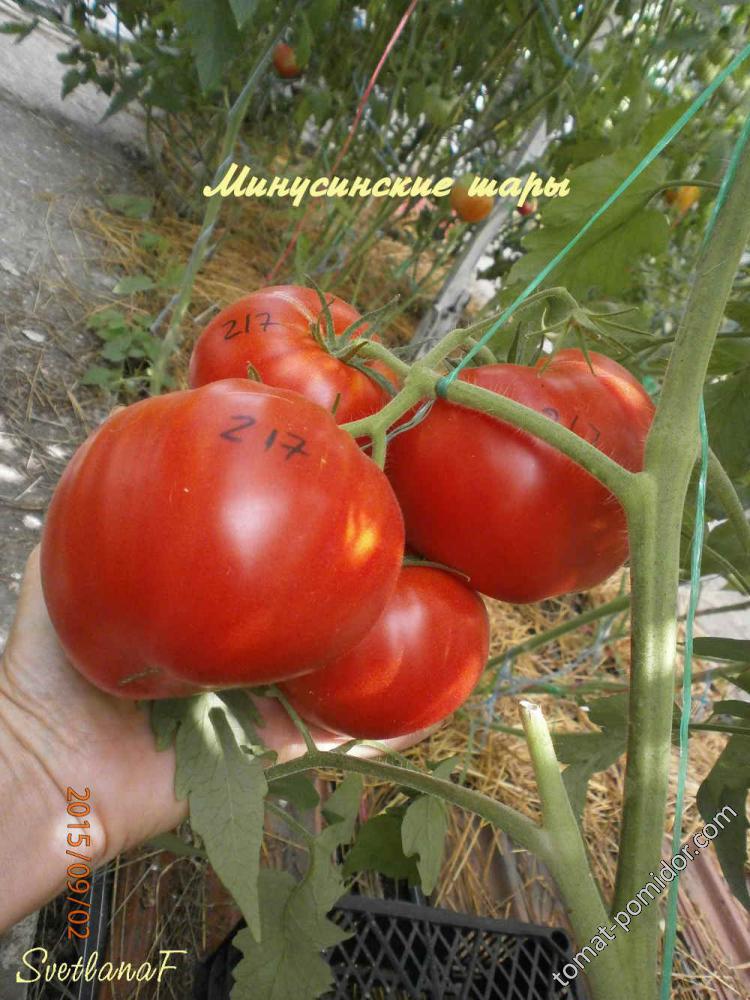
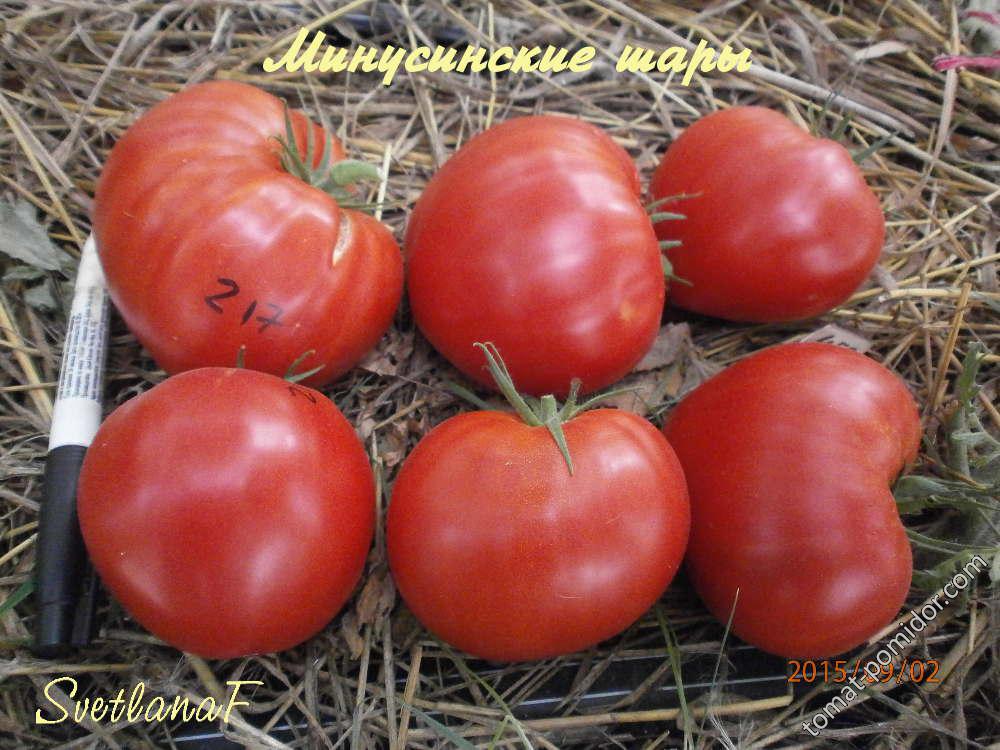
Minusinsk Shary (Minusinsk Shary) height: 1.7 m, round-heart-shaped, flimsy with thin foliage. The lower tiers formed well. The tomatoes turned out quite large and red. They tasted juicy, with lots of seeds, like a tomato. When I cut them, I was disappointed: the tomato had very thin walls.
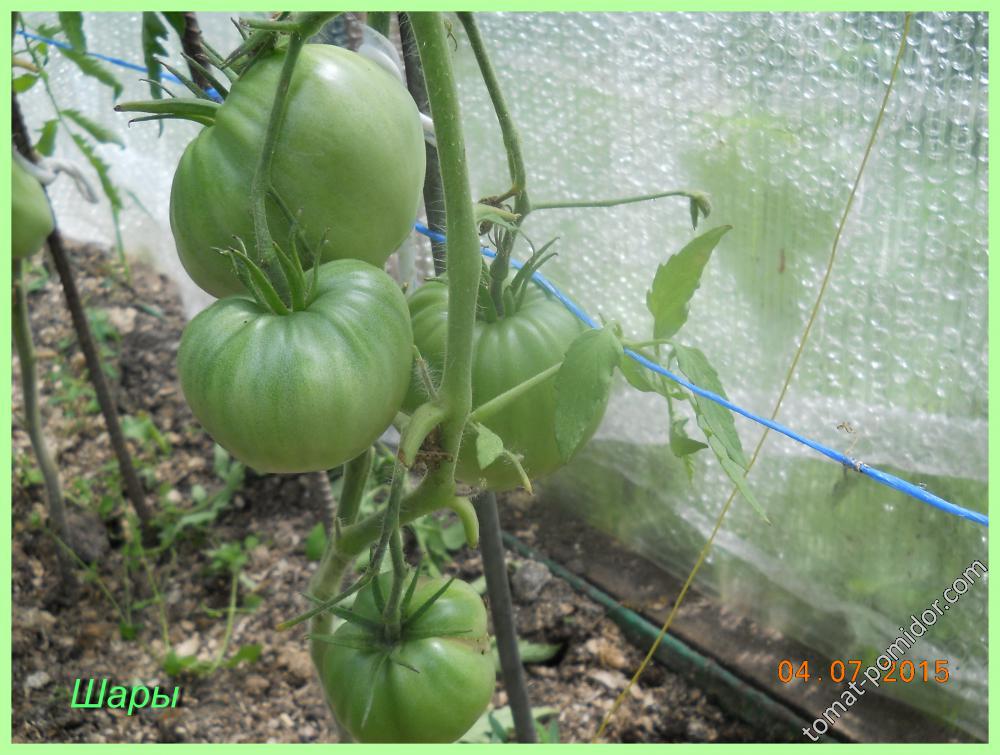
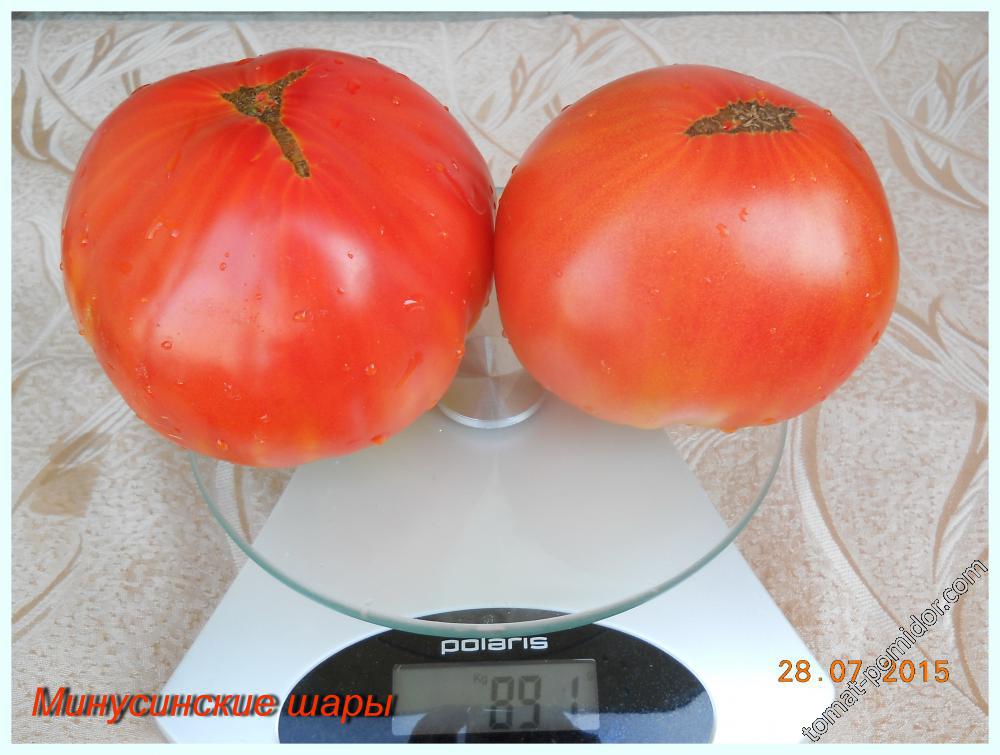
The varieties I grew were delicious. All of them. As for yield, some weren't very good, and some of the trunks would break under the weight... like the Minusinsk Shary. They were very large.
Minusinsk balls are very tasty, but I didn't have a good harvest. Moscow region.
A friend from Minusinsk sent me Minusinsk seeds (we met by chance on OK).
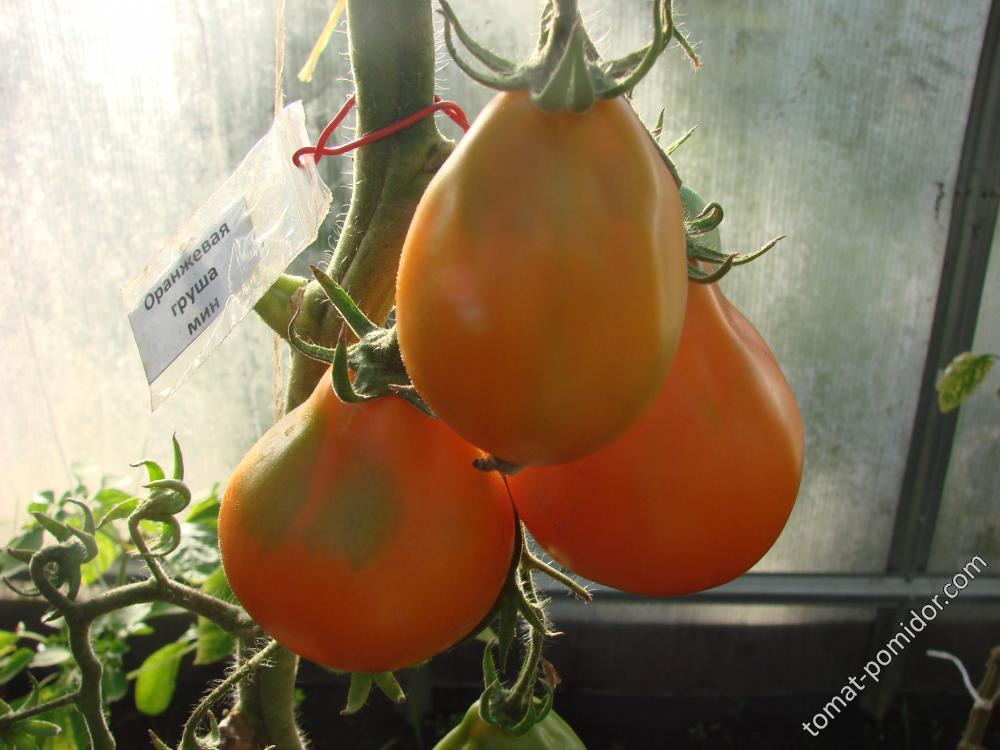
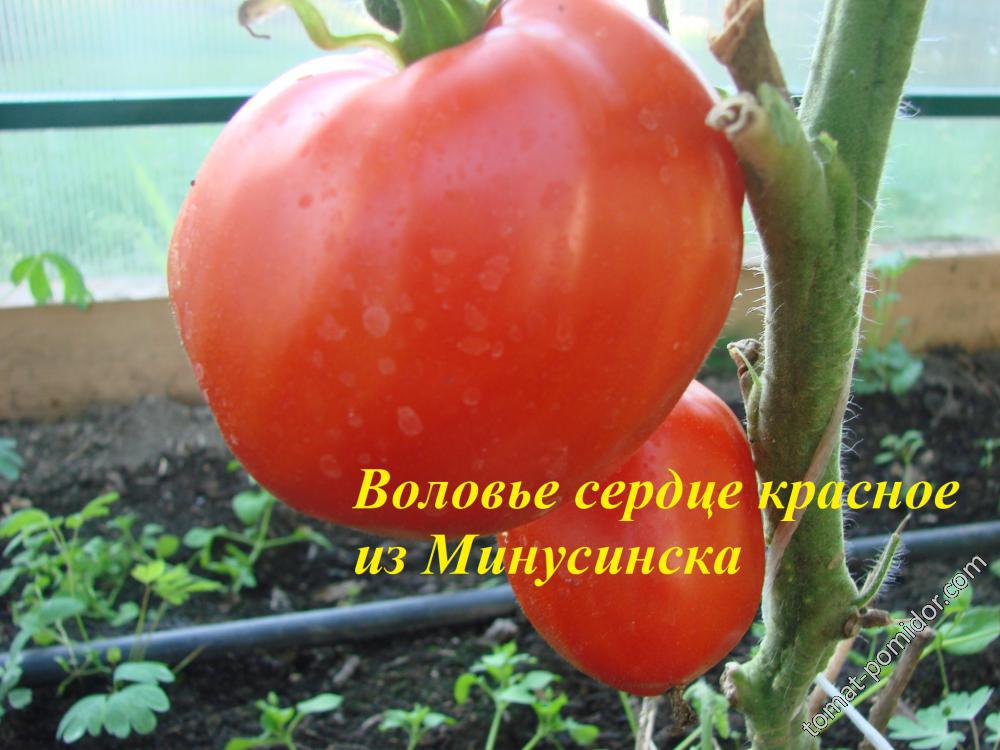
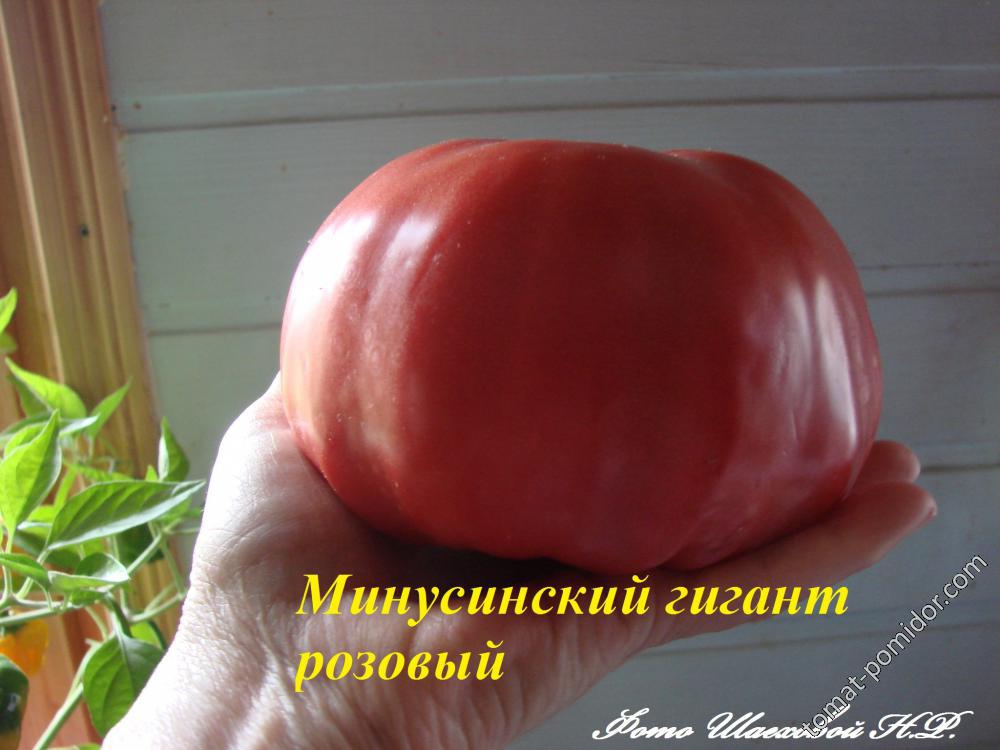
The varieties were Red Large, Ox Heart, Orange and Red Glasses, and Orange Pear. I also bought Minusinsky Giant Pink, Minusinsky Balls, and Minusinsky Apple Balls from collectors. I liked them all. Some were bigger, some were smaller. But I noticed they were quite early. The thing is, we had a frost of -7 degrees Celsius at the end of May. The tops of the tomatoes in the new greenhouse froze, right on the edge where the Minusinsky ones were, except for the Grusha (that variety was in a different greenhouse). The heater was just closer to the other edge. I had to cut off the tops. Side shoots appeared. I thought that was it, there would be no harvest. I left two side shoots. But in the end, they all fruited, several bunches formed, and even some tomatoes turned red on the bush, despite the cold and rainy summer.
Today I will definitely repeat that it seems to me that they did not fully realize their potential due to all the circumstances.