The Alyosha Popovich tomato is good because it can be grown in different regions of the country without much effort on the part of gardeners and produces an excellent harvest.
Content
- 1 Characteristics of the tomato variety Alyosha Popovich in the table
- 2 The history of the tomato variety Alyosha Popovich
- 3 A detailed description of the tomato variety Alyosha Popovich
- 4 Advantages and disadvantages of the tomato variety Alyosha Popovich (table)
- 5 Growing the Alyosha Popovich tomato variety
- 6 Resistance of the tomato variety Alyosha Popovich to diseases and pests, prevention, control (table)
- 7 Harvesting, use and storage of the tomato variety Alyosha Popovich
- 8 Comparison of the tomato variety Alyosha Popovich with other varieties in the table
- 9 Gardeners' reviews of the Alyosha Popovich tomato variety
Characteristics of the tomato variety Alyosha Popovich in the table
| Ripening period (number of days from full seedlings to maturity) |
12-130 days |
| Description | An indeterminate plant variety with a medium ripening period, intended for growing in a greenhouse or in open ground. |
| Fetus | The tomatoes are spherical in shape, reddish-pink in color, and have juicy flesh. |
| Fruit weight | 150-200 g |
| Taste | Sweet, with a slight sourness. |
| Usage | Use for salads, main courses, making juice, pastes, sauces. |
| Marketability | Good |
| Shelf life | High |
| Yield of commercial fruits | From 6 to 6.4 kg per sq.m. |
| Disease resistance | High resistance to tobacco mosaic virus, fusarium wilt. |
| Agricultural technology | The bushes need to be tied up and shaped. |
| Growing regions | Northern, Northwestern, Central, Volga-Vyatka, Central Black Earth Region, North Caucasian, Middle Volga, Lower Volga, Ural, West Siberian, East Siberian, Far Eastern. |
| 2008 | |
| Originator | LLC "Agrofirma Poisk" |
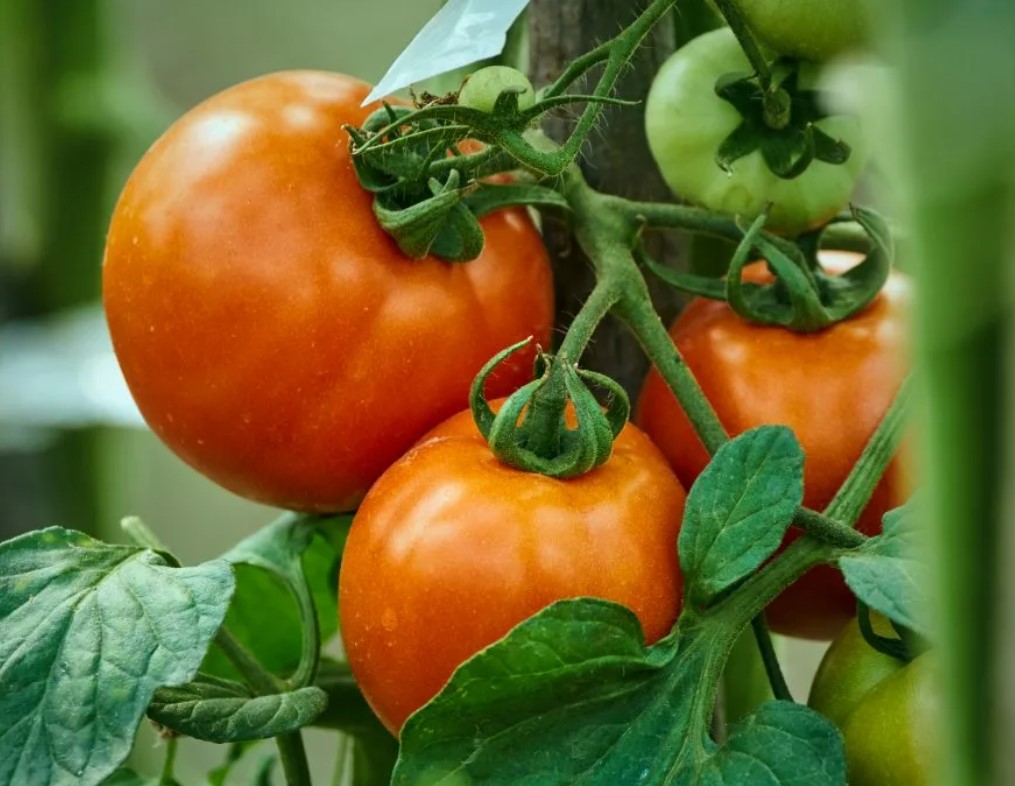
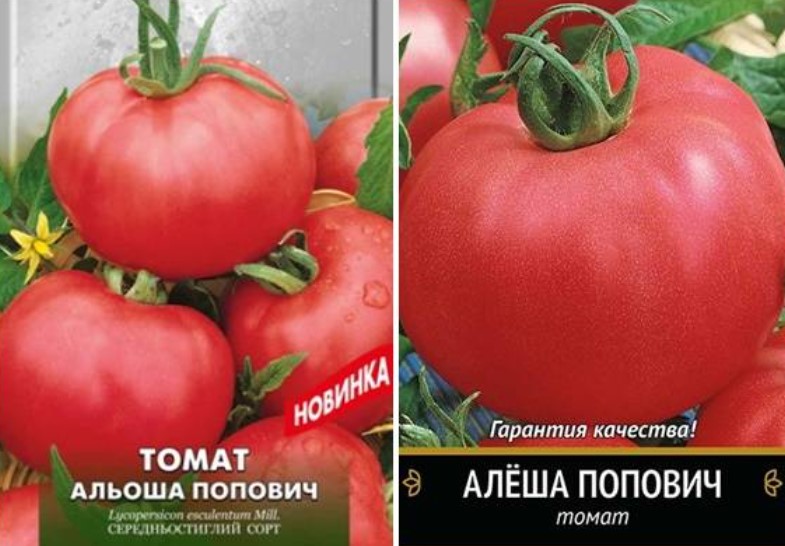
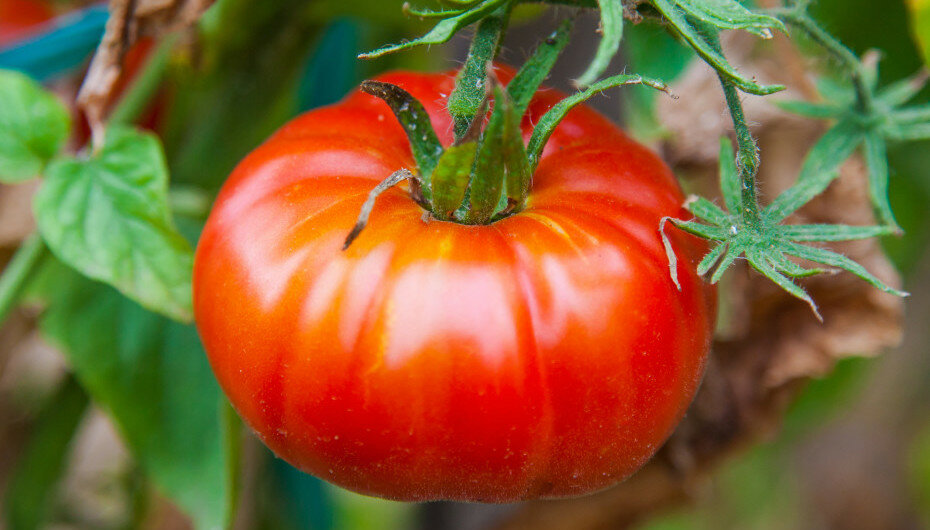
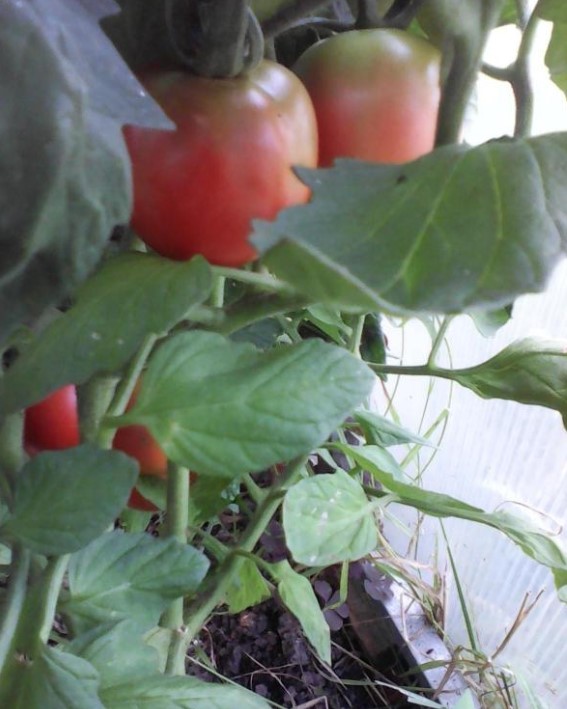
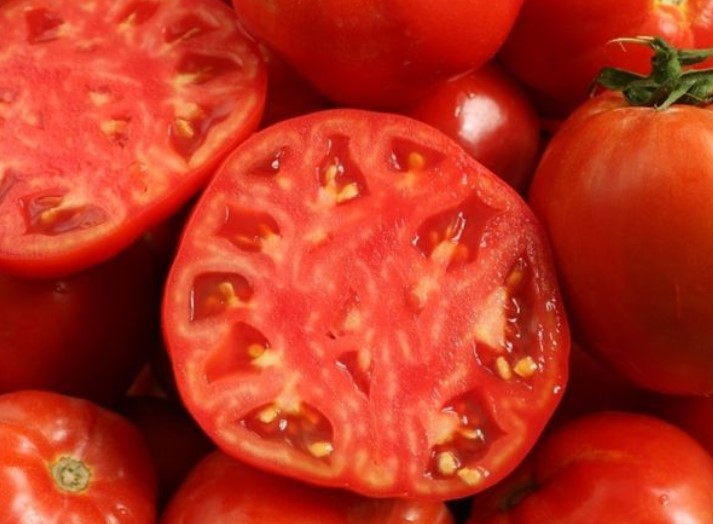
Photo gallery of the tomato variety Alyosha Popovich
The history of the tomato variety Alyosha Popovich
The Alyosha Popovich variety was developed by breeders from the Poisk agricultural firm, whose goal was to create a tomato that would be regionalized and produce excellent fruit in various regions of the country. In 2008, it was officially recognized and added to the register of vegetable crops.
A detailed description of the tomato variety Alyosha Popovich
Gardeners love the Alyosha Popovich variety for its ease of cultivation and excellent tomato taste.
Characteristics of the bush
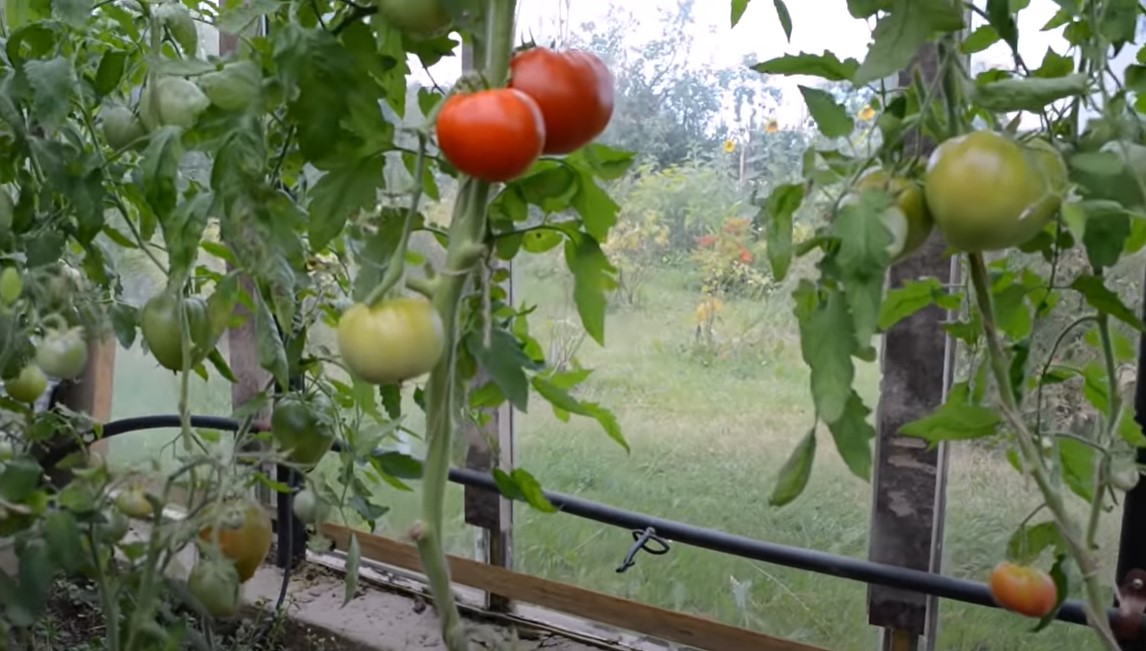
The shoots are indeterminate, ranging in height from 150 to 200 cm, so the bushes require staking. The leaves resemble potato foliage.
Fruit characteristics
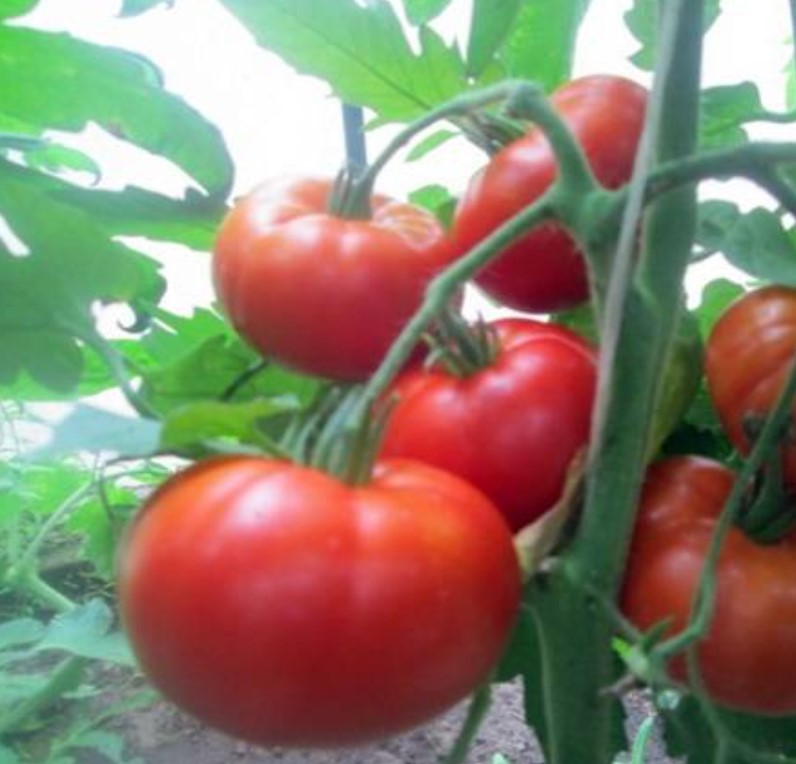
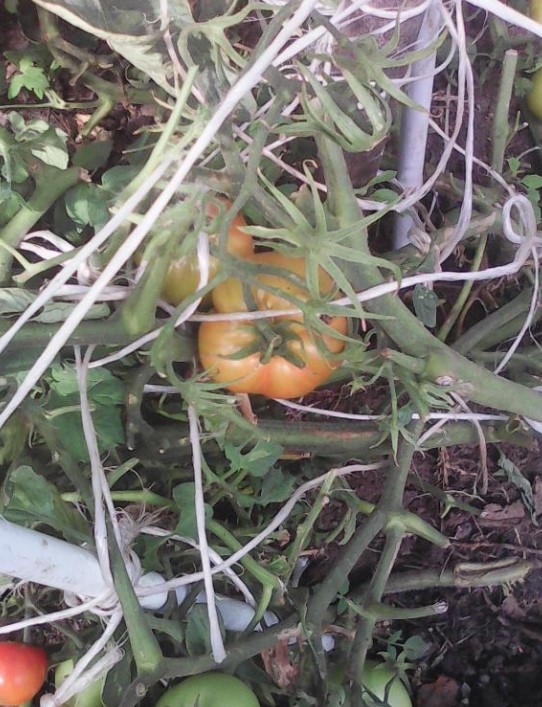
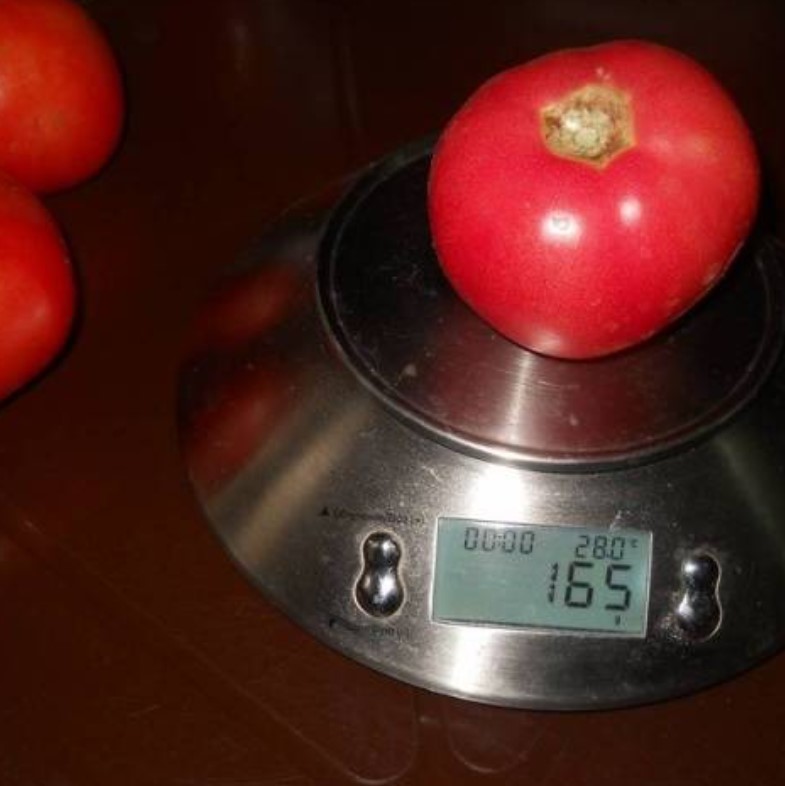
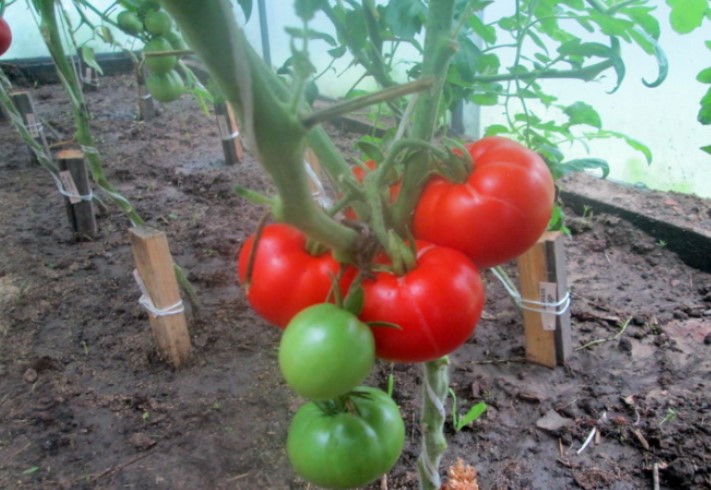
The tomatoes are spherical, slightly flattened at the poles, and have a slightly ribbed surface. At maturity, they are light green in color, turning pinkish-red as they ripen. Ripe fruits weigh 150-200 g, but in greenhouse conditions, some specimens can reach up to 300 g.
The inflorescences are simple, each producing up to 6 fruits, which appear until the first frost.
The pulp is aromatic, juicy, and meaty. The taste is sweet with a subtle tartness.
Ripening time and yield
The harvest ripens 125-130 days after the first shoots emerge. Each square meter yields up to 6.4 kg of ripe tomatoes.
Advantages and disadvantages of the tomato variety Alyosha Popovich (table)
The Alyosha Popovich variety has advantages and disadvantages, described in the table below.
| Advantages | Flaws |
|
|
Growing the Alyosha Popovich tomato variety
The Alyosha Popovich tomato is grown using seedlings; sowing seeds directly into open ground will delay fruiting and ripening of the crop.
Sowing seeds and growing seedlings
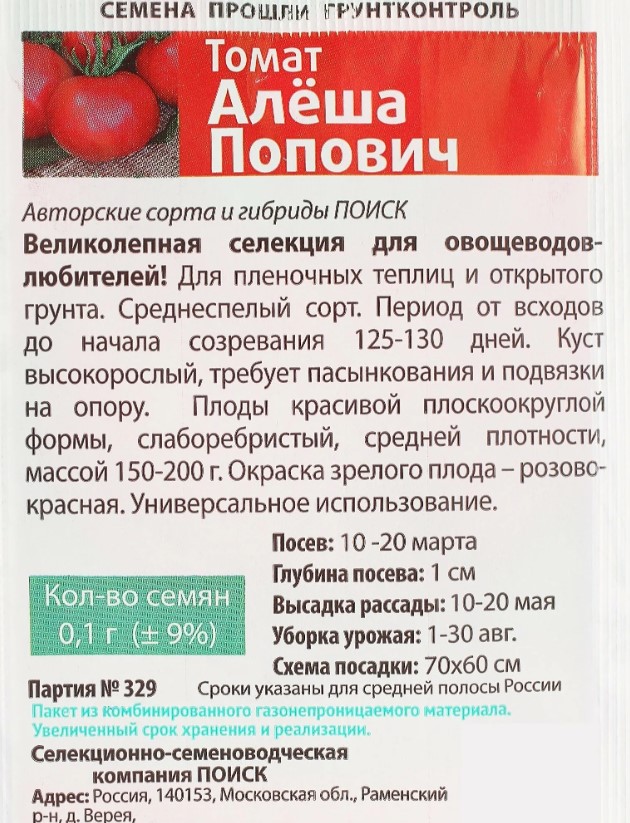
It's recommended to purchase Alyosha Popovich tomato seeds from a reputable supplier. They are usually ready for planting, as indicated on the packaging. If not, you should disinfect the planting material yourself by soaking the seeds in a 1% potassium permanganate solution for 15 minutes.
It's best to use specialized soil designed for seedlings. But if you don't have that, you can mix equal parts garden soil, sand, and humus.
Sowing is done approximately 50-60 days before planting the seedlings in the ground. You can use a large box, container, or cut-down juice bottles or cartons. However, peat pellets or cups are best for this purpose, as the plant will not need to be traumatized when moving it from the container to the garden bed.
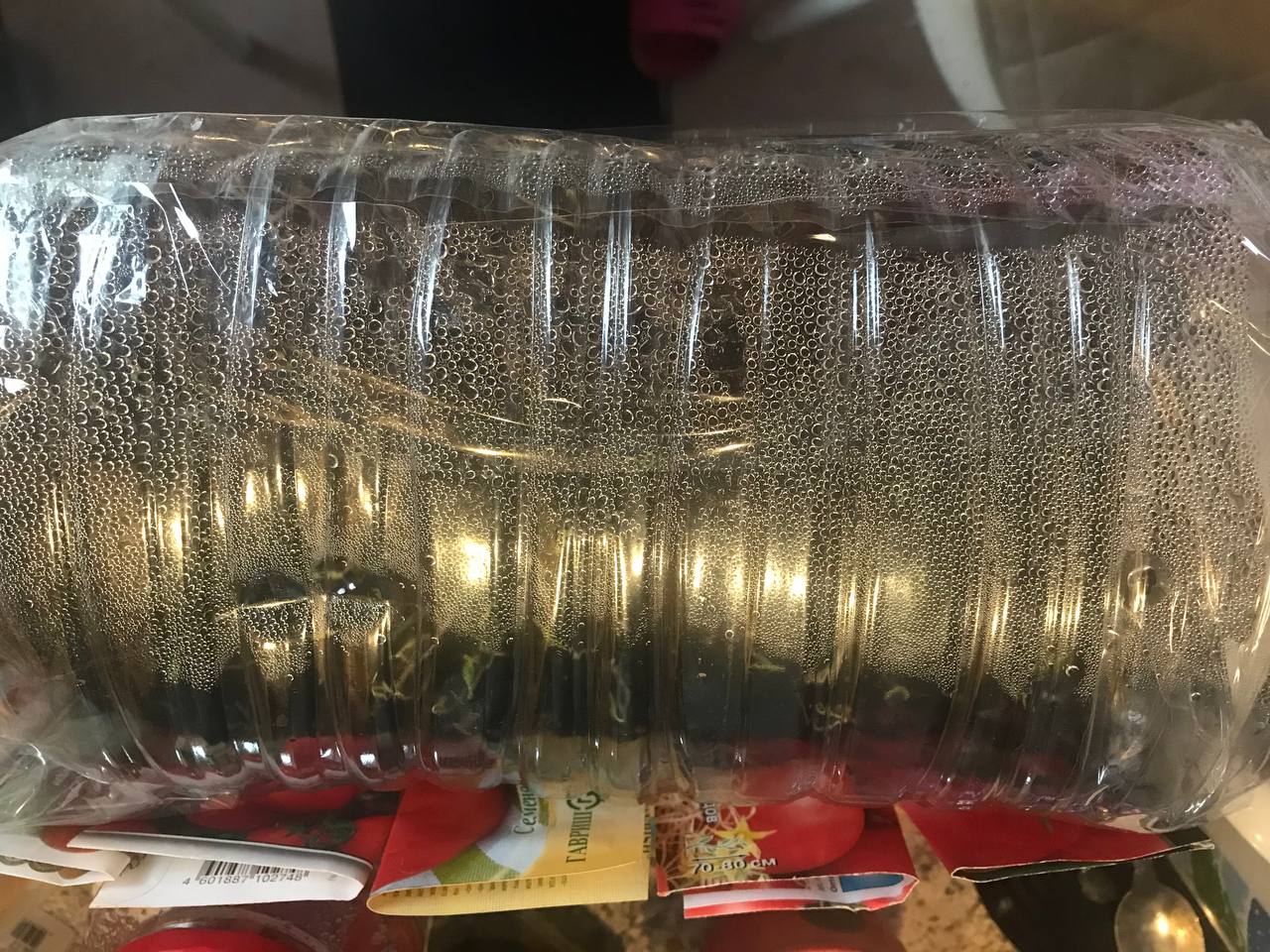
Fill the cups or boxes 2/3 full with soil, then make 1.5 cm deep holes in the surface. Place the seeds in the holes at 2-3 cm intervals and cover with soil. Water the containers, cover them with plastic wrap or glass, and place them in a warm place with an air temperature of 25 degrees Celsius.
Once sprouts emerge from the soil, the cover can be removed and the container moved to a cooler location. At this stage, the plants will require additional lighting, so it's necessary to provide them with a grow light.
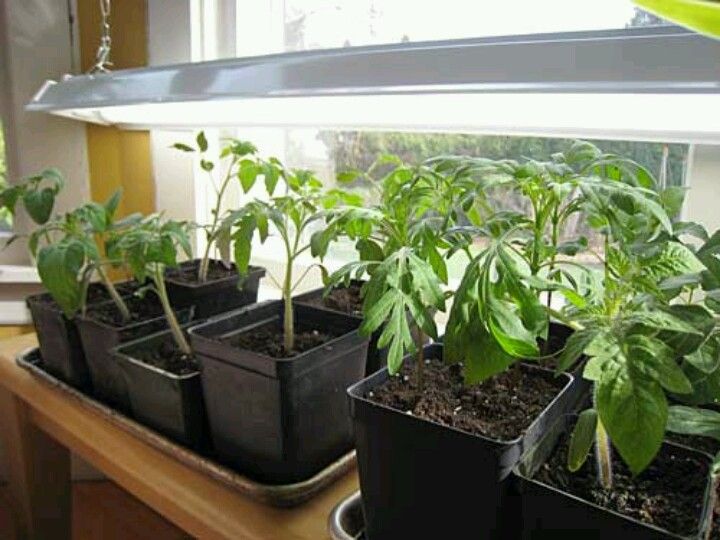
The soil needs to be watered periodically, but avoid over-watering to prevent rot.
Planting in the ground
The Alyosha Popovich tomato thrives in full sun, so the bed should be located in a well-lit area of the garden. Before planting the seedlings outdoors, they need to be hardened off. To do this, place the tomatoes outside for about an hour at first, then increase the time to eight hours.
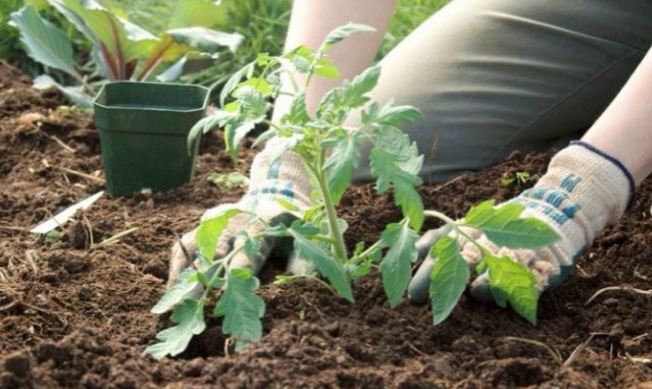
The bed is prepared in the fall, with the soil dug over with humus and manure. In the spring, the soil is dug again, adding superphosphates.
Next, dig holes about 15 cm deep, spaced 60 cm apart. The recommended distance between rows is 70 cm. Plant one plant in each hole, cover it with soil, and then water.
Care
The Alyosha Popovich tomato doesn't require any special care; when growing it, simply follow a few simple rules:
- Experienced gardeners recommend mulching the bed after planting tomatoes to protect the roots from sun and cold.
- The plant responds gratefully to fertilizing. It's best to use store-bought fertilizers; they contain a balanced composition that supports the tomato plant's immune system.
- During the growth process, the plant needs to be side-sonned; the optimal formation of a bush with 2-3 stems is considered optimal.
- It is important to remove weeds from the garden bed and loosen the soil as needed; this will help improve soil aeration and reduce the risk of pests and diseases.
- If there is still a risk of recurrent frosts in the region, the plants must be covered with special fabric or film after planting.
- Watering is done approximately once a week, increasing the frequency during the fruit formation stage. However, it's important to pay attention to weather conditions, as plants require more water in hot weather. It's important not to overwater the bed to prevent water stagnation around the roots, which can lead to a number of dangerous diseases.
Resistance of the tomato variety Alyosha Popovich to diseases and pests, prevention, control (table)
The Alyosha Popovich variety has a strong immune system and resists common diseases. However, sometimes they can occur if care instructions are not followed, so it's important to be aware of preventative and curative measures, as well as the signs that can help you spot illnesses early.
About various tomato diseases, how to avoid and combat them Read on our website.
| Disease | Signs | Prevention and treatment |
| Brown leaf spot | The disease is caused by fungi. They first attack the lower leaves, and then the entire plant. High humidity is the cause. Fruits, stems, and leaves become covered with brown spots. | To prevent the disease, spray the plantings with a solution of Fundazol or Fitosporin. Infected bushes are destroyed. |
| Macrosporiosis (dry or brown spot) | The surface of the leaves becomes covered with rounded brown spots that quickly spread and merge into one. Similar marks then appear on the fruit near the stalk. | Affected foliage is destroyed, and fruits and leaves are removed. In the initial stages, a suitable treatment is a solution of 10 liters of water, 20 g of copper sulfate, and 200 g of green soap (can be replaced with 50 g of grated laundry soap). |
| Late blight | Spots appear on the leaves, and a white coating consisting of spores of the fungus that causes late blight can be seen on the underside of the leaf. Brown, hard spots form on the surface of the fruit, which then begin to turn brown and rot. | To prevent late blight, avoid planting tomatoes near potatoes. At the first sign of disease, spray the plants with Polihom, Ridomil, or copper oxychloride. If the infestation is extensive, destroy the plants. |
| Blossom end rot | A watery, brown spot forms on the top of the fruit, which begins to rot. The disease most often occurs due to potassium deficiency and high humidity. | Plants should be fertilized with potassium-phosphorus fertilizers. In the initial stages, spray with Fitosporin, Bordeaux mixture, or a 0.4% calcium chloride solution. |
Harvesting, use and storage of the tomato variety Alyosha Popovich
Gardeners begin harvesting 130 days after the first shoots emerge. However, the Alyosha Popovich variety boasts a long fruiting period, which can last until October.
Tomatoes are used in salads, main courses, sauces, pastes, and juices. Smaller tomatoes can be preserved whole in jars.
Thanks to their thick skin, tomatoes can be stored in a cool place for some time without losing quality.
Comparison of the tomato variety Alyosha Popovich with other varieties in the table
Please note! How can you easily convert centners/ha to kg/sq.m? Simply divide by 100! For example, the Abakansky Pink tomato yields 400 centners of marketable fruit per hectare. This equals 4 kg per square meter. It's that simple! Also, keep in mind that typically no more than 3-4 plants are planted per square meter. This way, you can calculate the yield per bush. In the case of the Abakansky Pink, it's about 1 kg.
| Variety | Ripening period (number of days from full germination to ripening)
Yield of commercial fruits |
Brief description | Fetus |
| Alyosha Popovich | 125-130 days
600-640 c/ha |
A mid-season indeterminate variety for open ground and greenhouses. Requires staking and training. Suitable for salads. Easy to transport. Resistant to adverse growing conditions. | Round, slightly ribbed, medium density, red, 150-200 g. Good taste. |
| Cosmonaut Volkov | 110 days
1500-2000 c/ha |
A mid-early indeterminate variety for greenhouses. Suitable for salads, appetizers, and processing into tomato products. | Flat-round, slightly ribbed, red, 300-500 g (up to 700 g). Excellent taste. |
| Kostroma | 105-110 days
1350-1500 c/ha |
A mid-season determinate variety for greenhouses. Requires staking and training. Suitable for salads, whole-fruit canning, and processing into tomato products. | Flat-round, slightly ribbed, glossy, red or orange, 80-150 g. Good taste, sweet and sour. |
| Mikado Sibiriko | 90-95 days 800 c/ha |
An early indeterminate variety from Siberian breeders. For salads, juice, and pasta. | Heart-shaped, ribbed, pinkish, 400-600 g. Excellent taste. |
| Abakan pink | 120 days or more
400 c/ha |
A late-ripening determinate variety for open ground and greenhouses. Requires staking and training. Suitable for salads and processing into tomato products. | Flat-round, slightly ribbed, medium density and pink in color, 200-500 g. Good taste. |
| Agatha | 98-113 days
583-676 c/ha |
An early-ripening, determinate, non-standard variety for open ground and greenhouses. Suitable for salads. | Flat-round, smooth, red, 77-99 g.
Taste qualities 3.8-5 points. |
| Agatha Plus | 98-113 days 301-798 c/ha |
An early-to-mid-early determinate variety for open ground. Suitable for salads. | Round, smooth, medium density, red, 128-190 g.
The taste is good and excellent. |
| Big Momma | 85-95 days (greenhouse), about 100 days (open ground)
700-900 c/ha |
A mid-early determinate variety for open ground and greenhouses (greenhouses only, according to the register). Suitable for salads, canning, pickling, and juice. | Round, large, slightly ribbed, medium density, red, 200-250 g. Excellent taste. |
| Big Dipper | 100-110 days
1150-1450 c/ha |
An early-ripening indeterminate variety for open ground and greenhouses. Requires staking and shaping. Suitable for salads. | Flat-round, slightly ribbed, medium density, pink, 210-260 g. Good taste. |
| Volgograd (5/95) | 116-130 days 374-1035 c/ha (20-25% of the total yield ripens within 15 days of fruiting) |
A late-ripening, indeterminate, standard, compact variety for open ground. Suitable for salads and processing into tomato products. | Flat-round, smooth and slightly ribbed, medium-sized and large, red, 90-150 g. Good to excellent taste. |
| Voyage F1 | 95-100 days
1400-1800 c/ha |
An early-ripening indeterminate variety for greenhouses. Suitable for salads. Transportable. | Round, smooth, dense, pink, 120-130 g. Good taste. |
| Siberian big guy | 90-100 days
900-1200 c/ha |
An early-ripening indeterminate variety for open ground and greenhouses. Suitable for salads, processing into tomato products, and preparing first and second courses. | Flat-round, slightly ribbed, red, 500 g. Good to excellent taste. |
| Siberian giant | 115-120 days
The commercial yield of fruits was 9.0-11.0 kg/sq.m. |
A mid-early indeterminate variety for greenhouses. Suitable for salads. | Flat-round, large, medium-ribbed, loose, red, 400-500 g. Excellent taste. |
| Siberian early ripening | 98-108 days 289-543 c/ha (open ground), 20-43% of the total yield ripens in 15 days of fruiting, 630-950 c/ha (greenhouse and under film), in the first month of fruiting 240-580 c/ha. |
An early-ripening, determinate, low-growing variety for open ground and greenhouses. Suitable for salads. | Round and flat-round, slightly ribbed, medium-sized and large, red, 62-114 g. The taste is satisfactory. |
| Siberian kilogram | 116-120 days
600-1000 c/ha |
A mid-season indeterminate variety for greenhouses and open ground. Suitable for salads and processing into tomato products. | Round, slightly ribbed, red, 600-1500 g. Good to excellent taste. |
Gardeners' reviews of the Alyosha Popovich tomato variety
These are very good tomatoes, which almost never get sick and produce an excellent harvest, but if there is insufficient watering, the taste may be sour.
So, in order to pick tomatoes from the bush and cut them for your meal, tomatoes "Alyosha Popovich" are quite suitable.
What's good about them for this event is that one fruit is not small, so five pieces are quite enough.
I grew the Alyosha Popovich seedlings in a rather prosaic way - in toilet paper.
And what do you think?
The seedlings turned out to be quite resilient and strong.
It certainly took two and a half months before the fruits began to sway on their branches.
There were quite a lot of them on the bushes, and these fruits did not bother me.
True, I was still waiting for the final redness, but they were pink by design.
Grown in a greenhouse.
You know, they're tasty, but not very sweet.
And on the cover it was stated that they were also sweet.
But for salads, of course, I recommend it.
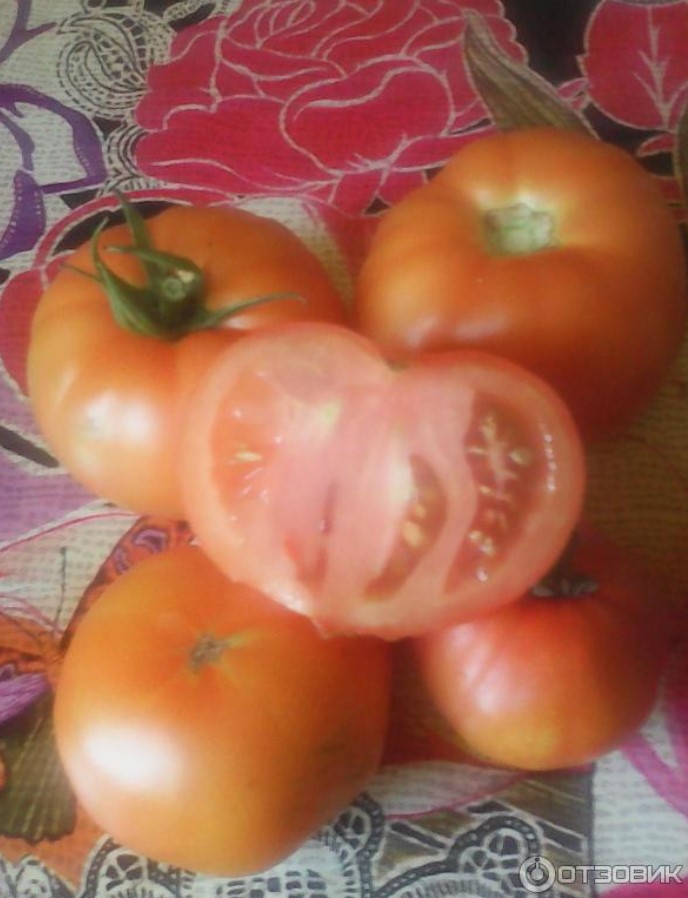
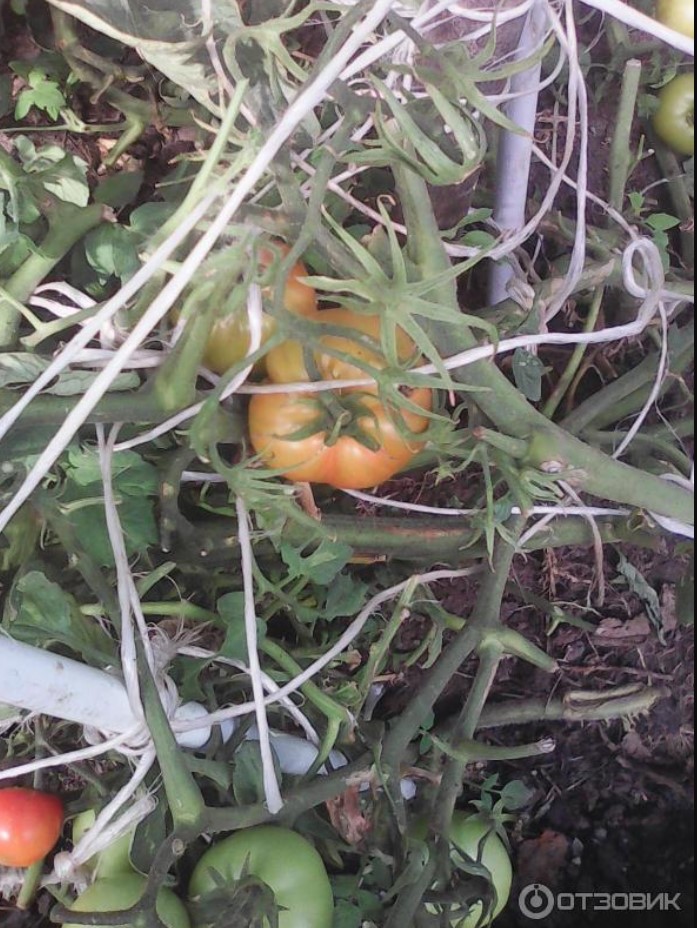
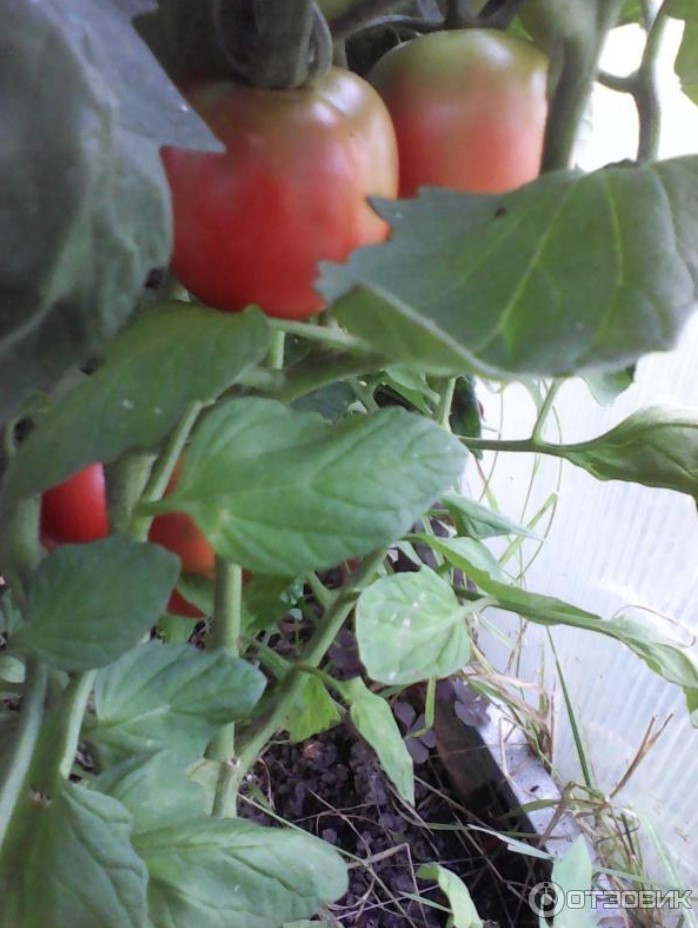
Tomato bushes are tall and vigorous. In greenhouses, they can reach up to 2 meters. This variety produces fruit along its entire height. It is demanding of growing conditions. The average tomato weight is 200 grams. Even when ripe, the color is pinkish-red, and the flesh is juicy with a sweet-tart flavor. It can only be used in salads. The plant is sensitive to low temperatures and insufficient humidity. It requires a lot of light. I had to work hard on this tomato to preserve it, but it rewarded me with a good harvest. Care includes watering, loosening the soil, weeding, various fertilizers, and timely leaf pruning. Grow in a greenhouse and use drip irrigation at the roots.
Description from the pack:
A mid-season variety for plastic greenhouses and open ground. The period from germination to the beginning of ripening is 125-130 days. The bush is vigorous, reaching a height of up to 150 cm, and requires pinching and staking to a support or trellis. The fruits are attractively flattened, slightly ribbed, and medium-dense, weighing 150-200 g. Ripe fruits are pink in color. They have excellent flavor. Recommended for fresh consumption, tomato products, and canning.— Alyosha Popovich – 3.29 kg, average weight 205 g – also good, also red
Photo and description by AlexanderS (3.29 kg is the yield per bush)
"Alyosha Popovich from the search company, there are three of them, Dobrynya, I wrote about him a little higher, Ilya is yellow.
Alyosha is indeterminate, about one and a half meters tall, very productive, pink, fleshy, medium-sized, weighing about 200 grams. Delicious, such a harmonious taste."Review of the Daughter's Mama variety)
"Alyosha Popovich grew in the open ground, but started ripening late, towards the end of August. I've come to the conclusion that it's a greenhouse variety for my conditions, and maybe then it will be mid-season."
Review of the Borchanochka variety
All reviews are taken from diaries.
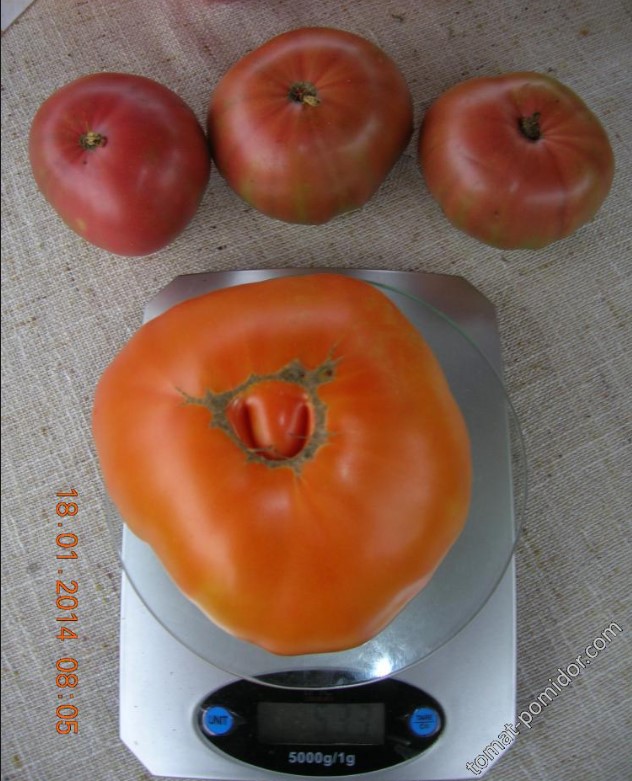
I really liked this tomato. About 1.6 meters tall. Strong. Productive. Delicious. I was given a week-old seedling; I don't know who got the seeds from. But I liked it. I cut them up (they didn't fit whole into the jars) and with butter, onion, and parsley... mmmm, delicious.