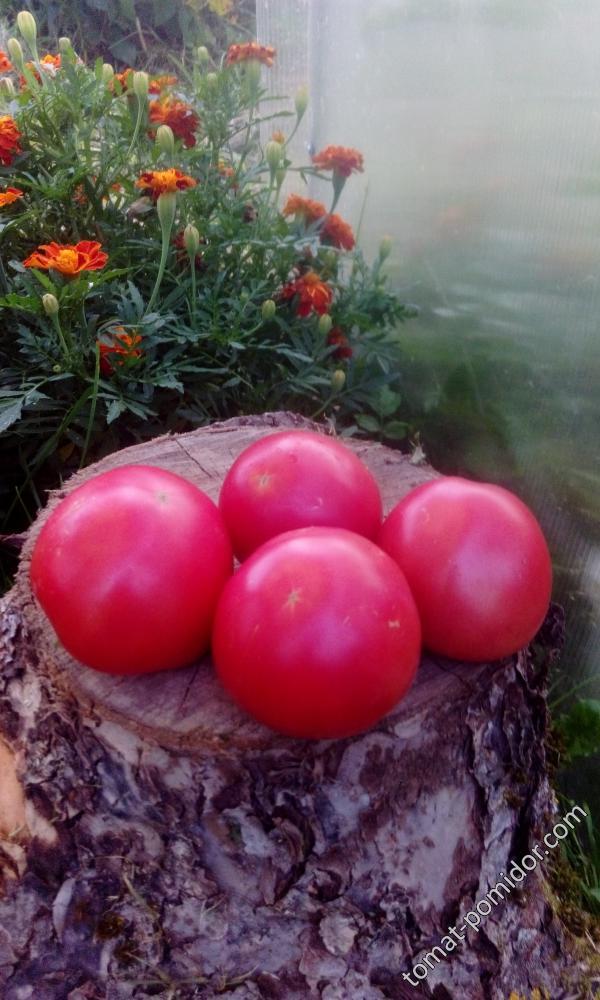
The Volgogradsky tomato, and all its varieties, is rightfully considered a gardener's dream. It's easy to grow, doesn't require extensive fertilizing or meticulous care, and boasts impressive yields. Let's look at three varieties: Volgogradsky 5/95, Volgogradsky 323, and Volgogradsky Pink.
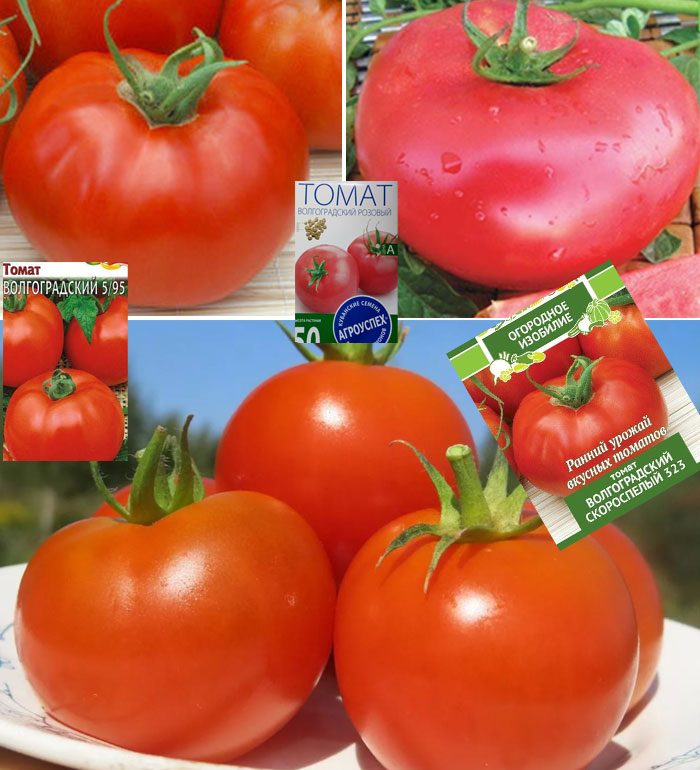
Content
- 1 Table with characteristics of the Volgogradsky 5/95 tomato variety
- 2 Table with characteristics of the tomato variety Volgogradsky skorospel'ny 323
- 3 Table with characteristics of the Volgograd Pink tomato variety
- 4 A detailed description of the classic tomato variety Volgogradsky (5/95)
- 5 A detailed description of the Volgogradsky 323 tomato variety
- 6 A detailed description of the Volgograd Pink tomato variety
- 7 Features of growing tomato varieties Volgogradsky
- 8 Resistance of Volgogradsky tomato varieties to diseases and pests
- 9 Collection, use and storage of Volgograd tomatoes
- 10 Comparison of Volgogradsky tomato varieties with other varieties in the table
- 11 Gardeners' reviews of the Volgogradsky tomato variety
Table with characteristics of the Volgogradsky 5/95 tomato variety
| Characteristic | Description |
| Description | A late-ripening indeterminate variety, the shoots grow no more than 100 cm in height, intended for growing in greenhouses or in open ground. |
| Ripening period | 116-130 days |
| Fruit weight | 90-150 g |
| Description of the fruit | The fruits are flattened and round with subtle ribbing. The skin is thick and smooth. The tomatoes are red with a dark spot near the stem. |
| Productivity | 374-1035 c/ha |
| Usage | Tomatoes are eaten fresh, used for canning and processing into sauces, pastes, and juice. |
| Preferred growing regions | It is intended for open-ground cultivation in the Lower Volga, North Caucasus, and Central Black Earth regions. In the central zone, it can be grown in a greenhouse, but in the north, it grows and bears fruit poorly. |
| Disease resistance | Not prone to diseases, but if care rules are not followed, it can be affected by late blight. |
| Agricultural technology | Despite the compact size of the bushes, staking is recommended. Formation occurs in two shoots. |
| 1953 | |
| Originator | GNU VOLGOGRAD EXPERIMENTAL STATION OF THE N.I. VAVILOV VNIIR RAAS |
Photo gallery of the tomato variety Volgogradsky 5/95
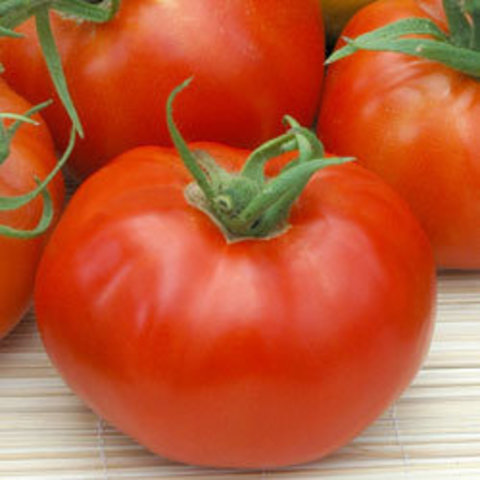
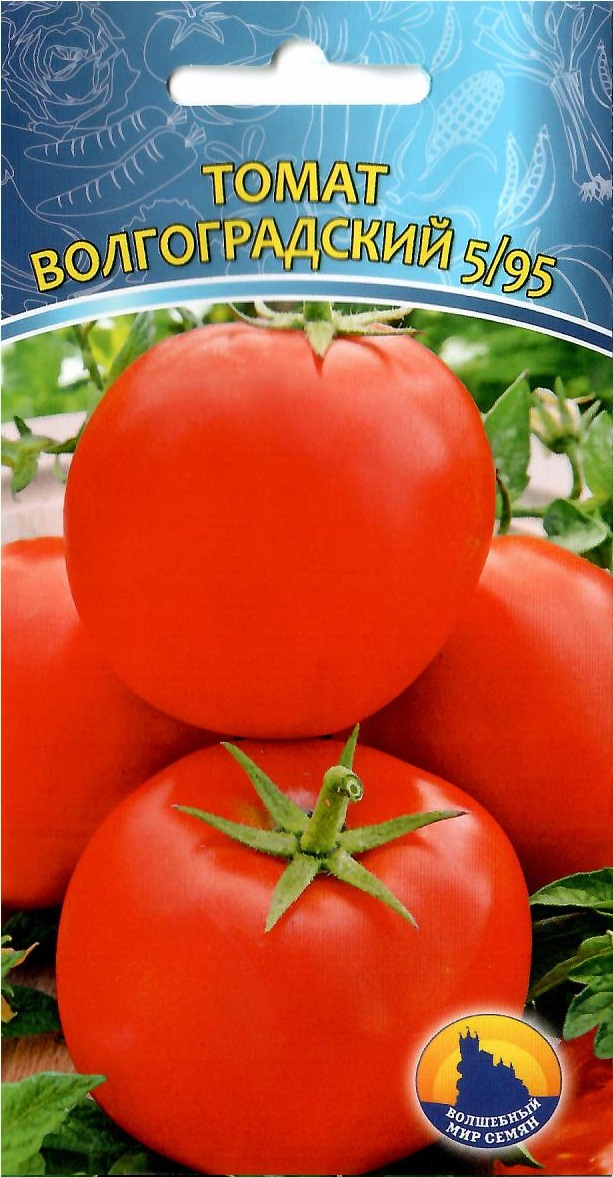
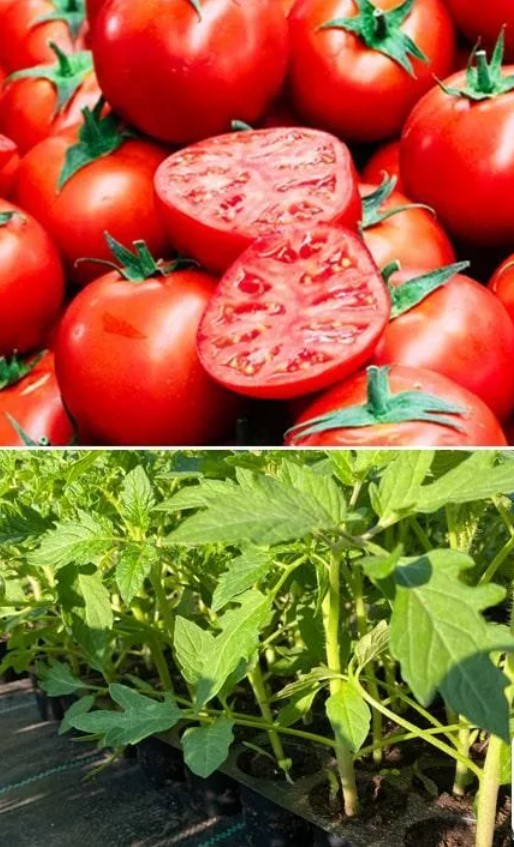
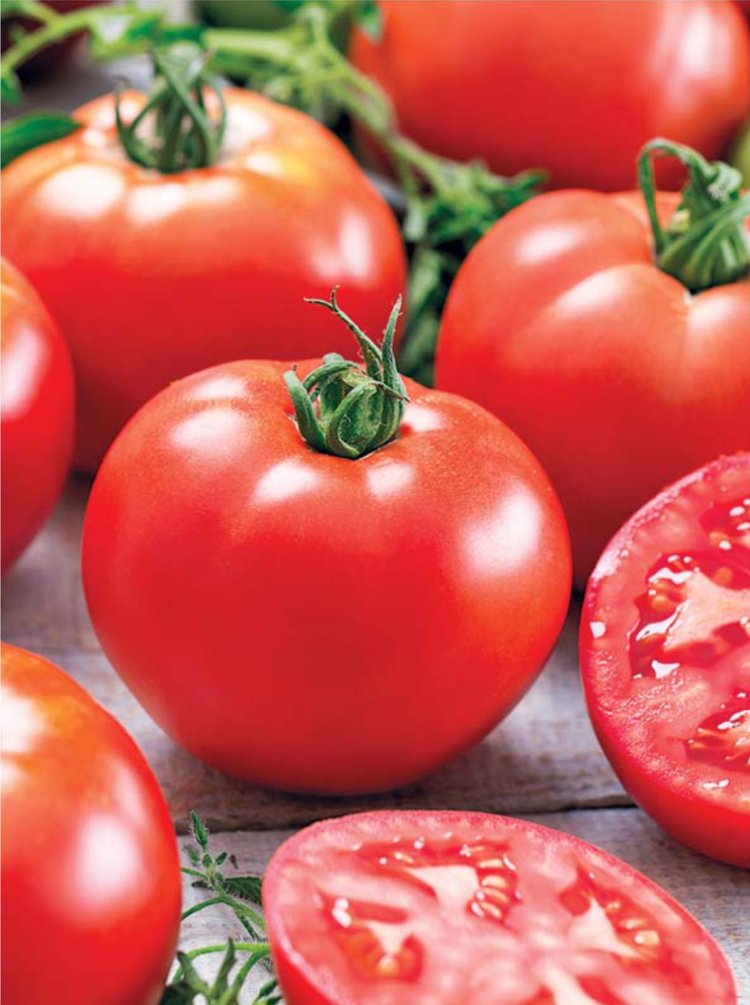
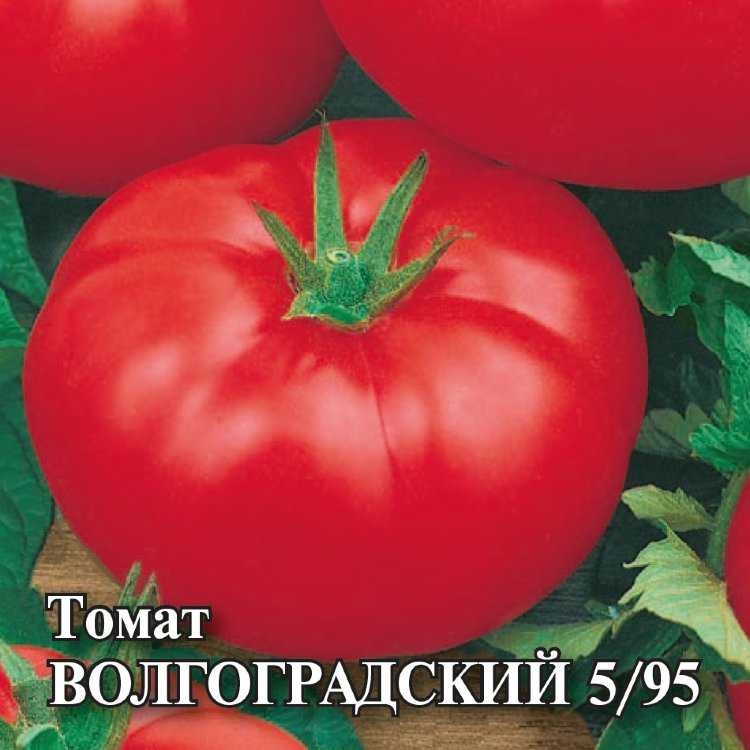
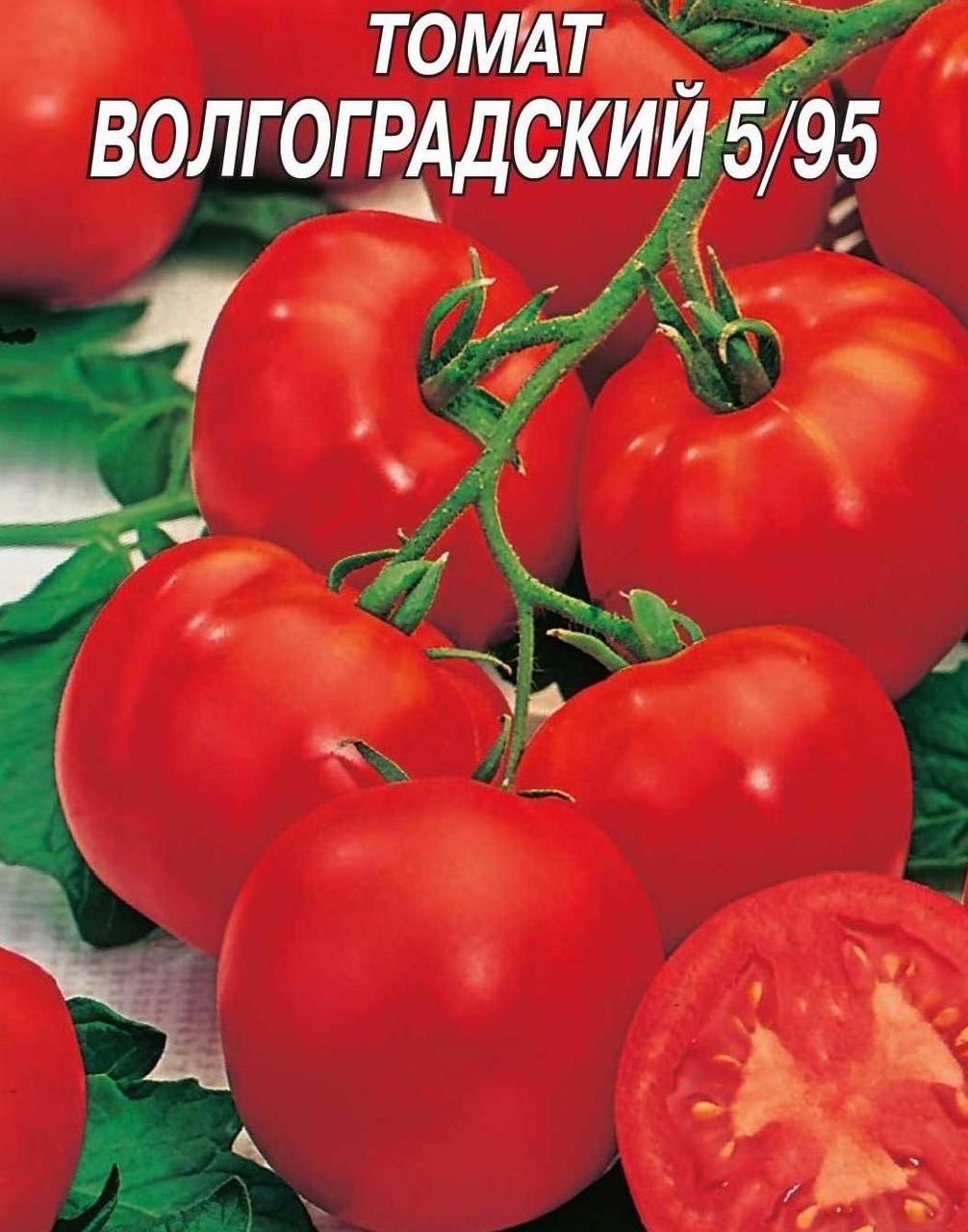
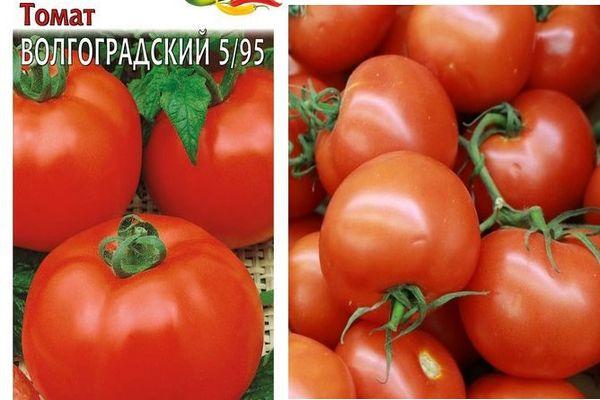
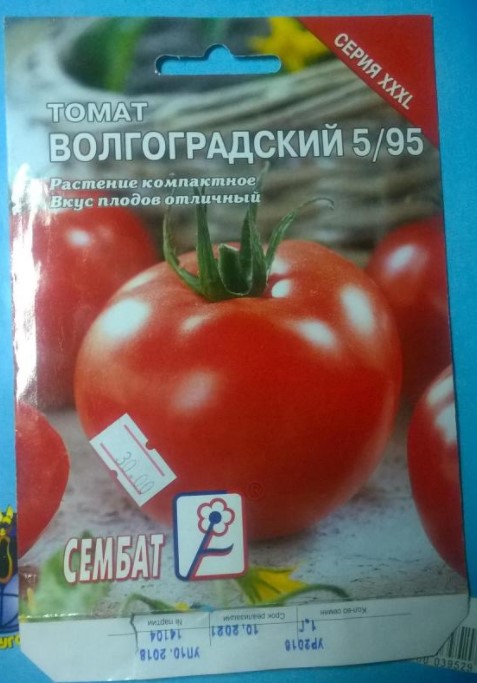
Table with characteristics of the tomato variety Volgogradsky skorospel'ny 323
| Characteristic | Description |
| Description | An early-ripening determinate variety, the shoot height reaches no more than 45 cm (in the register its size is indicated as 15-18 cm) and is intended for cultivation in greenhouses or in open ground. |
| Ripening period | 100-109 days |
| Fruit weight | About 74 g |
| Description of the fruit | The fruits are flattened or round, with virtually no ribbing. The color is orange-red, and the flesh is juicy. |
| Productivity | 401-425 c/ha |
| Usage | Tomatoes are intended for the production of tomato products, but can also be eaten fresh. |
| Preferred growing regions | It is intended for cultivation in the Central Black Earth Region and the North Caucasus. In other regions, it is recommended to plant tomatoes only in greenhouses. |
| Disease resistance | Not prone to diseases, but if care rules are not followed, it can be affected by late blight. |
| Agricultural technology | Does not require tying or shaping the bush. |
| 1973 | |
| Originator | GNU VOLGOGRAD EXPERIMENTAL STATION OF THE N.I. VAVILOV VNIIR RAAS |
Photo gallery of the tomato variety Volgogradsky 323
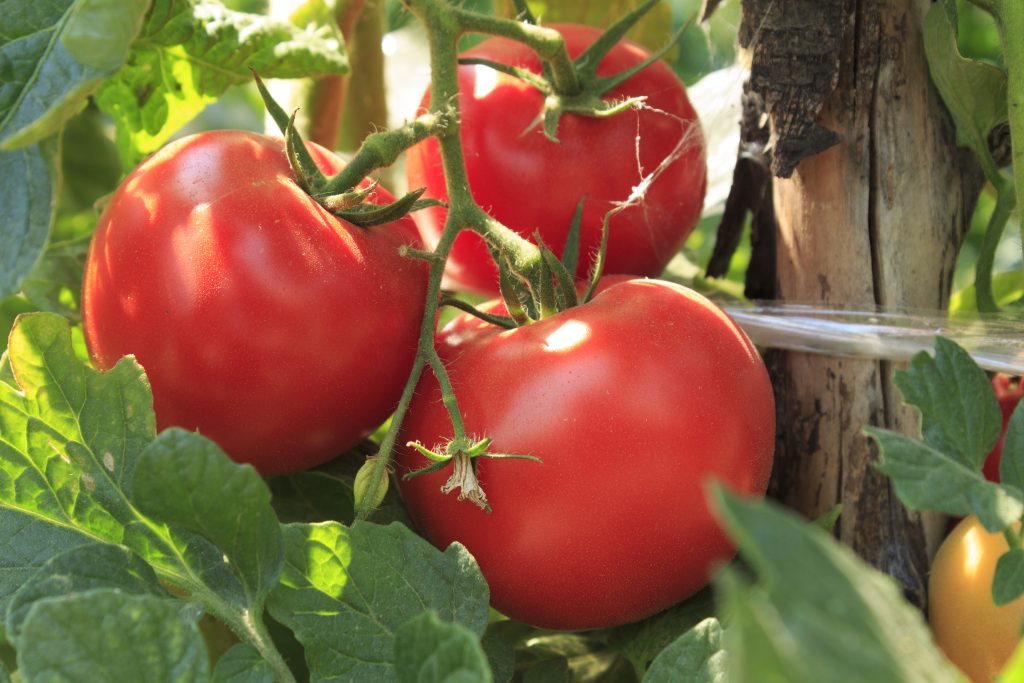
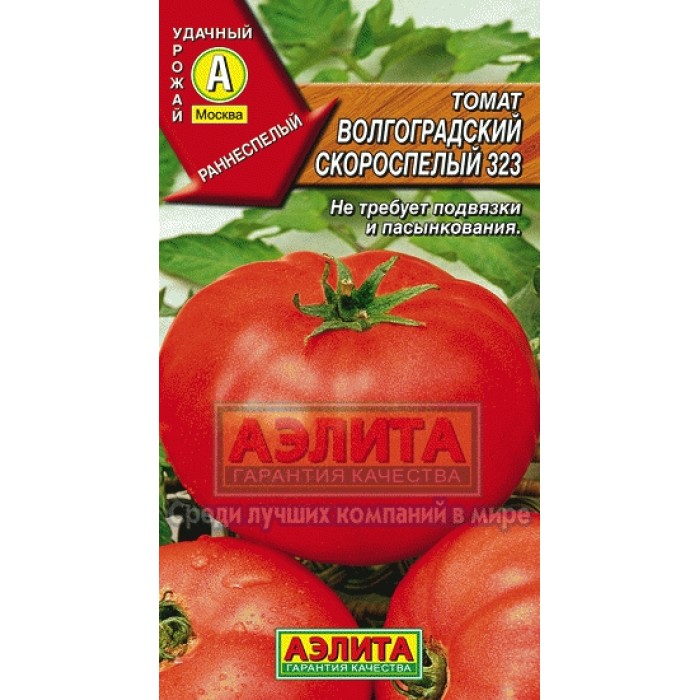
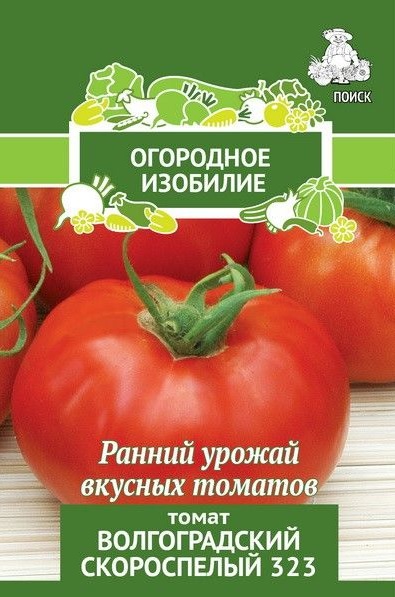
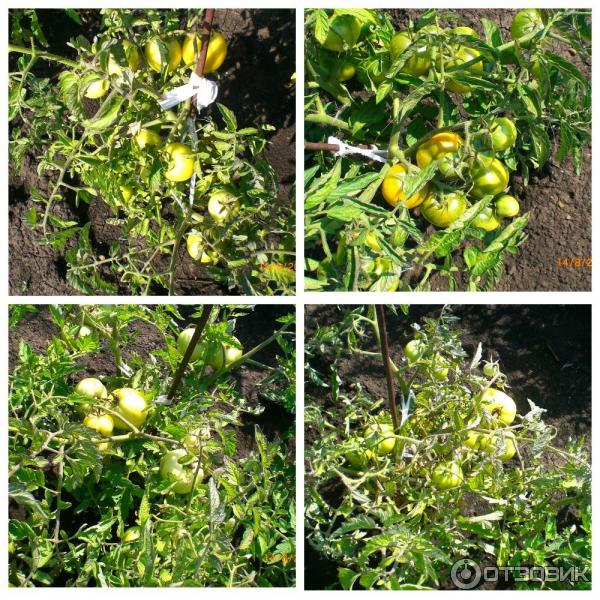
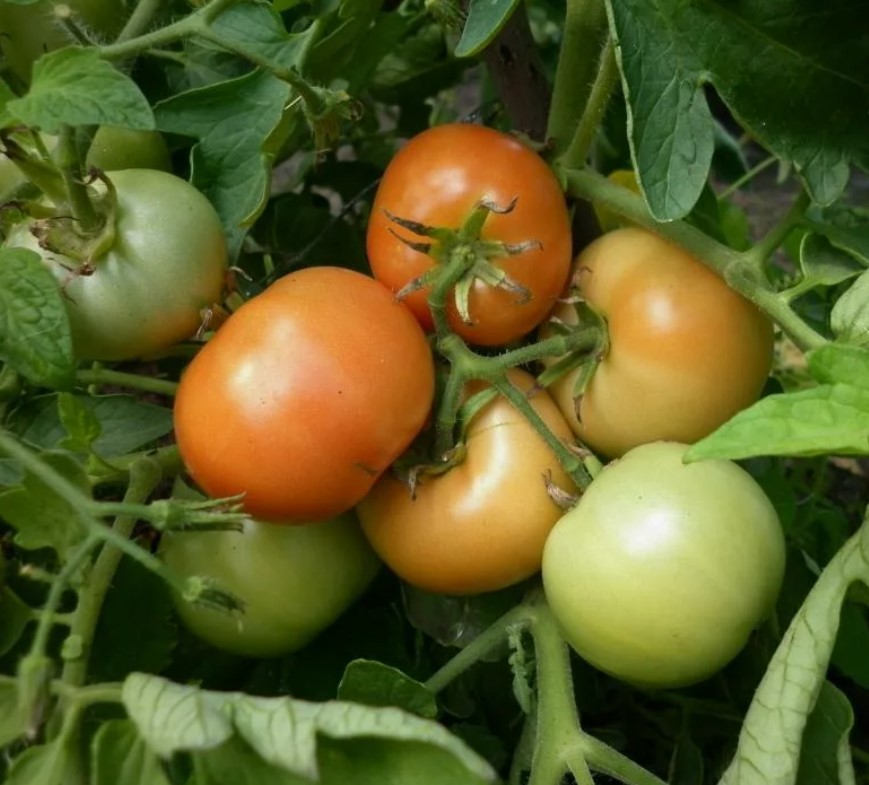
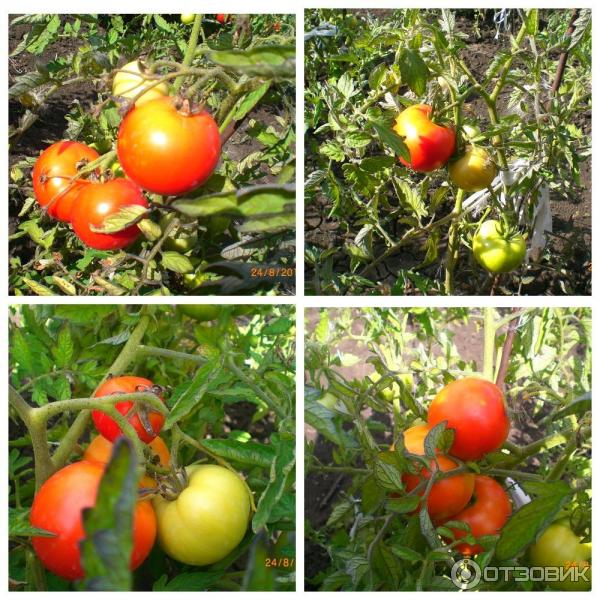
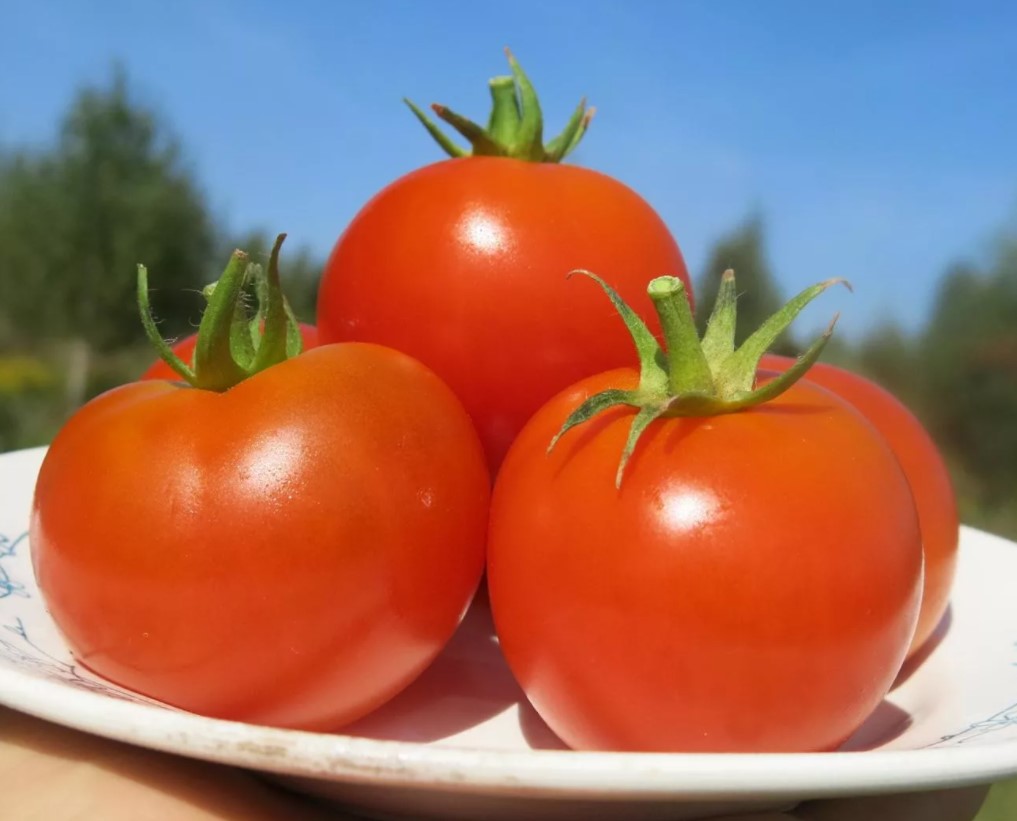
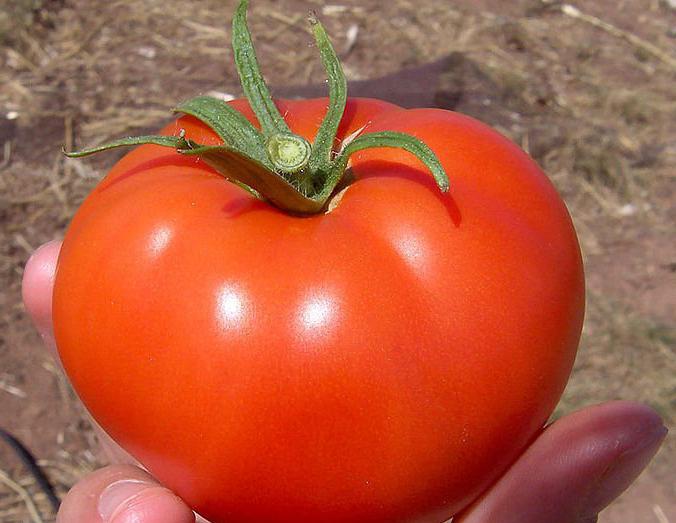
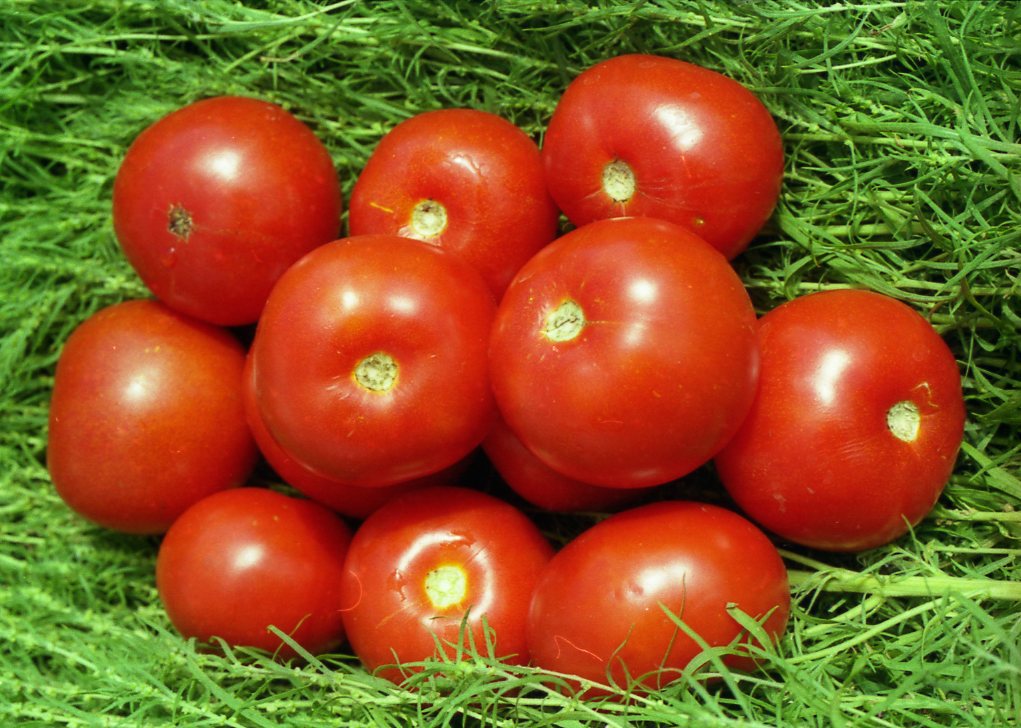
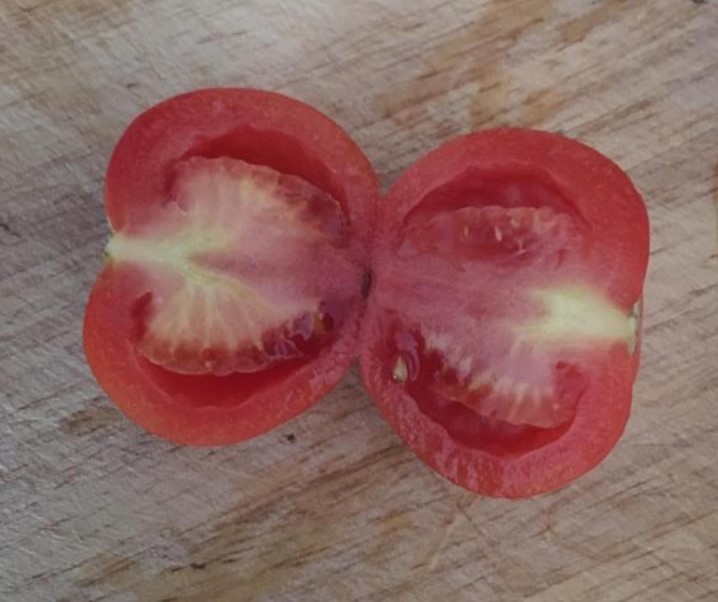
Table with characteristics of the Volgograd Pink tomato variety
| Characteristic | Description |
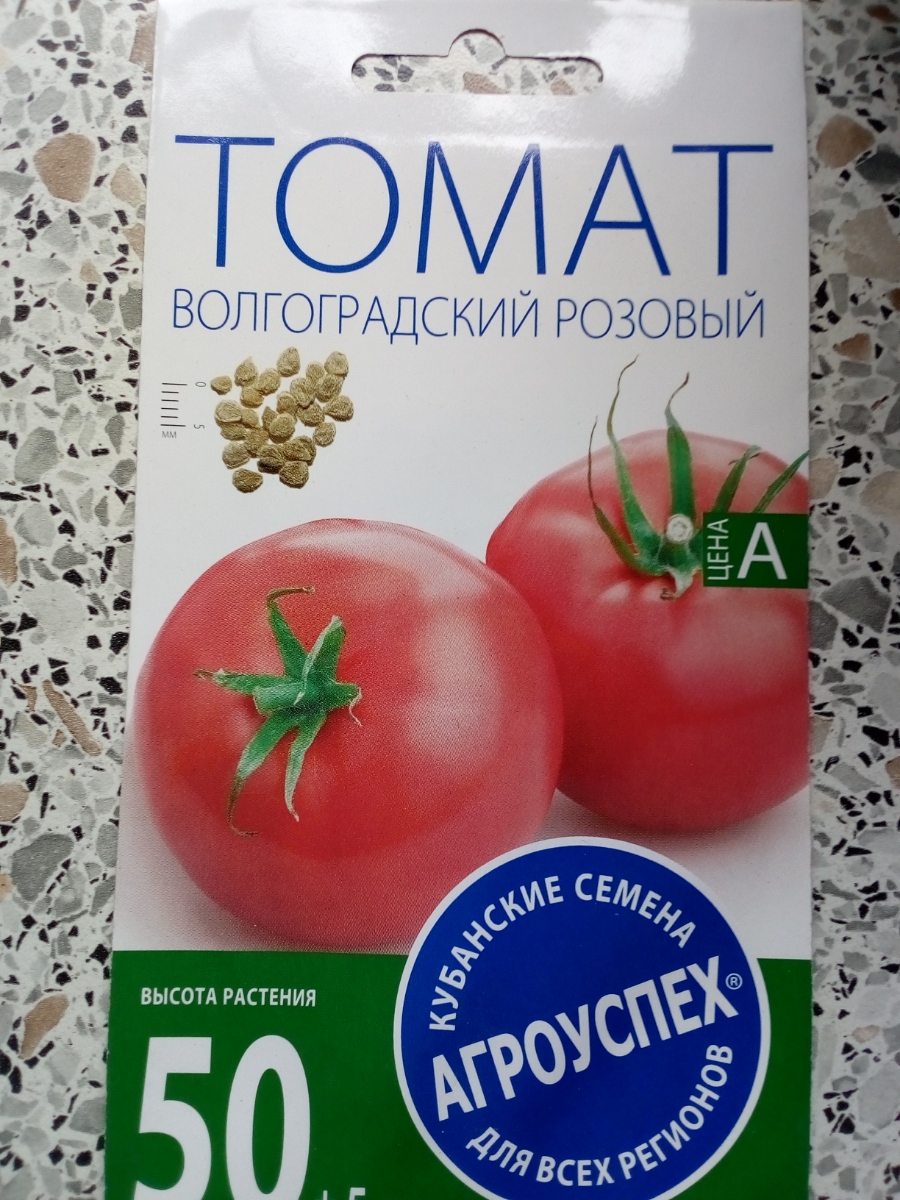
| Description | An early-ripening, determinate, low-growing tomato, suitable for outdoor cultivation. Maximum bush height: 60 cm. |
| Ripening period | 90-100 days |
| Fruit weight | 80-130 g (up to 160 g) |
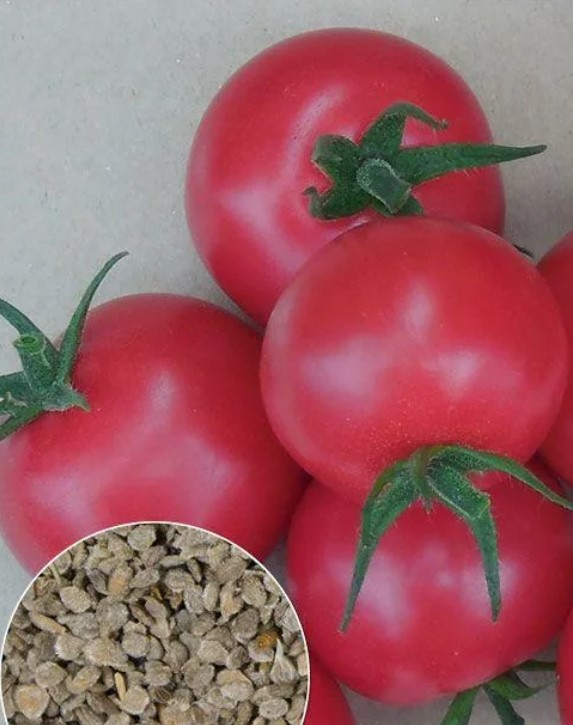
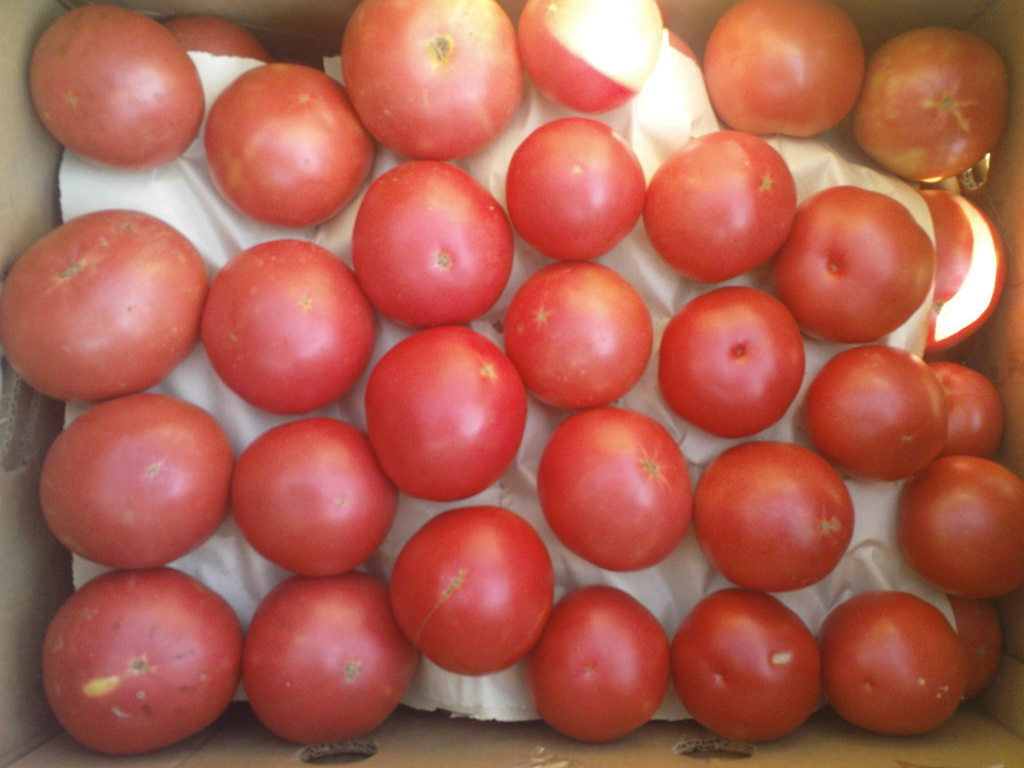
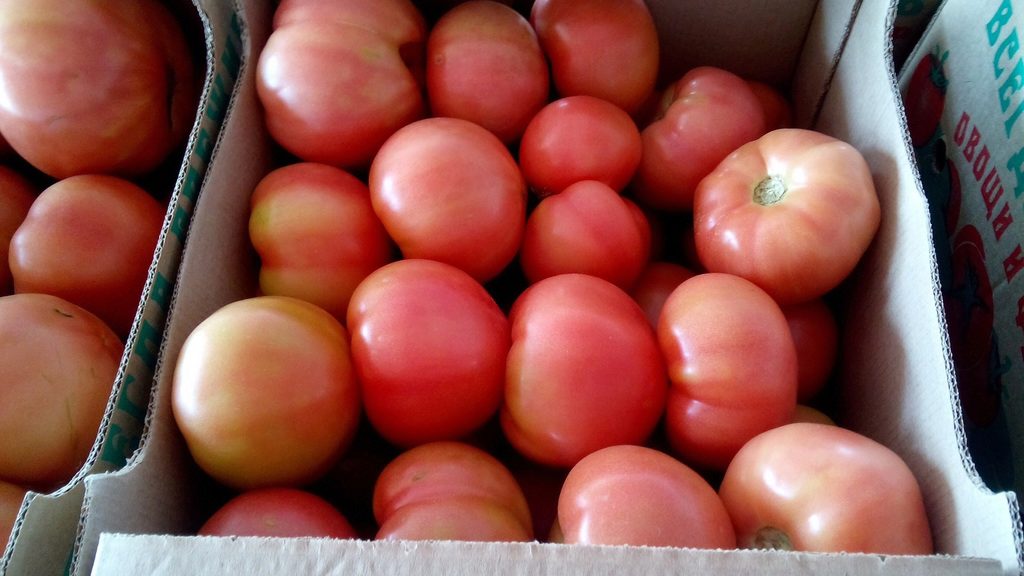
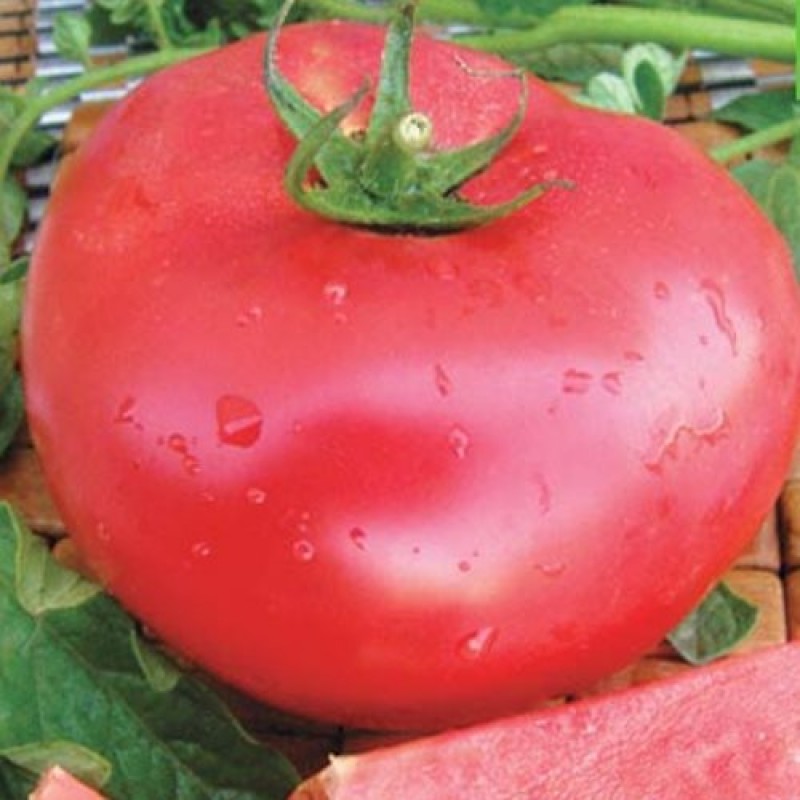
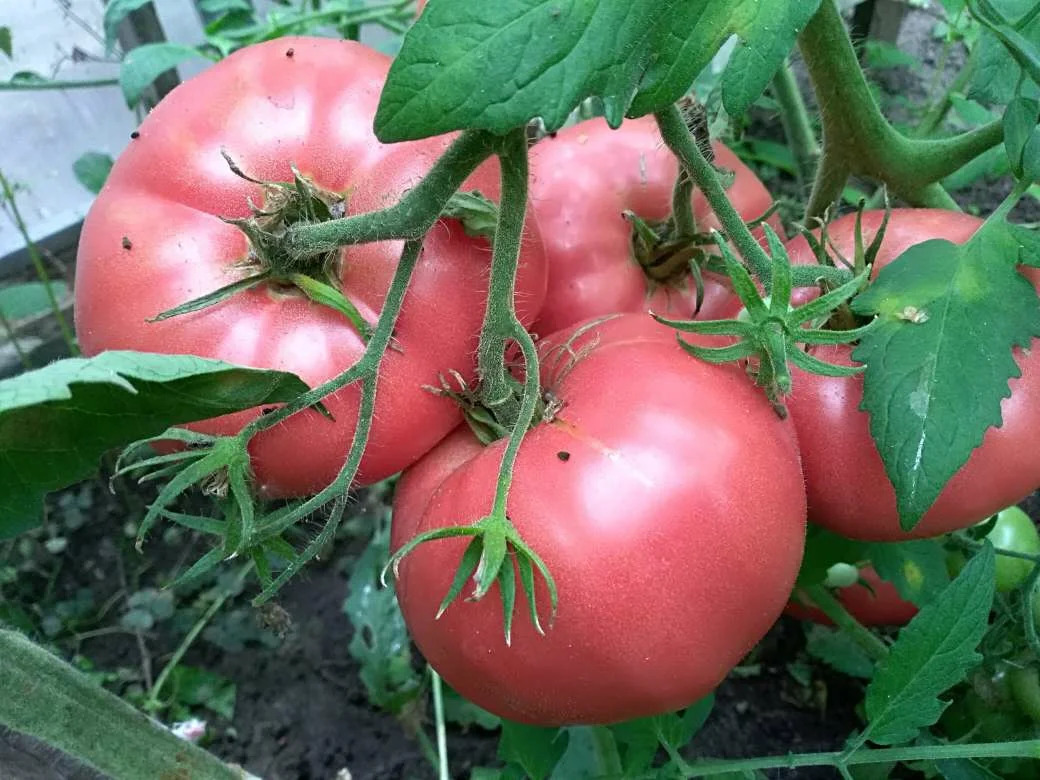
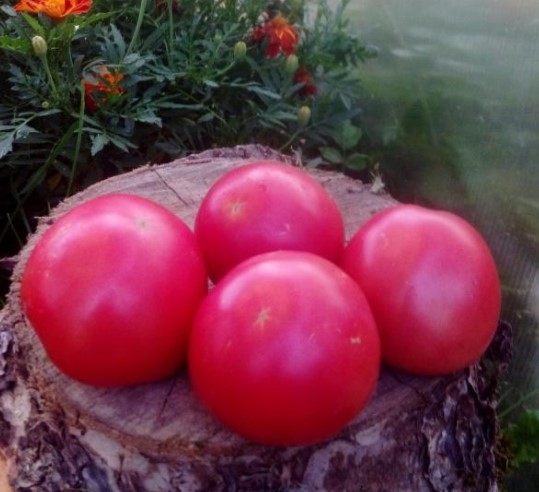
| Description of the fruit | The tomatoes are round, becoming flattened at the poles as they ripen. The color is pink, the flesh is juicy and sweet. The skin is thin but firm. |
| Productivity | Up to 4 kg per bush |
| Usage | Used for fresh eating, canning, and processing into tomato products. |
| Preferred growing regions | It grows well in the southern regions; in the north and central regions, greenhouse cultivation is recommended. |
| Disease resistance | Not prone to diseases, but if care rules are not followed, it can be affected by late blight. |
| Agricultural technology | Stepchildren are removed only up to the first cluster. Staking is recommended. |
| Not included | |
| Originator | GNU VOLGOGRAD EXPERIMENTAL STATION OF THE N.I. VAVILOV VNIIR RAAS |
Photo gallery of the Volgograd Pink tomato variety
A detailed description of the classic tomato variety Volgogradsky (5/95)
The origin of the Volgogradsky 5/95 tomato variety
The history of the Volgogradsky tomato goes back to the distant past, when agriculture was just gaining momentum after World War II. Breeders at the Volgograd Experimental Station, renowned throughout Russia at the time, developed a new tomato variety with astonishing yields and ease of cultivation. In 1953, the Volgogradsky tomato was added to the register. To this day, it remains one of the most popular tomatoes in our country.
Let's look at the description of this tomato in more detail.
Bushes
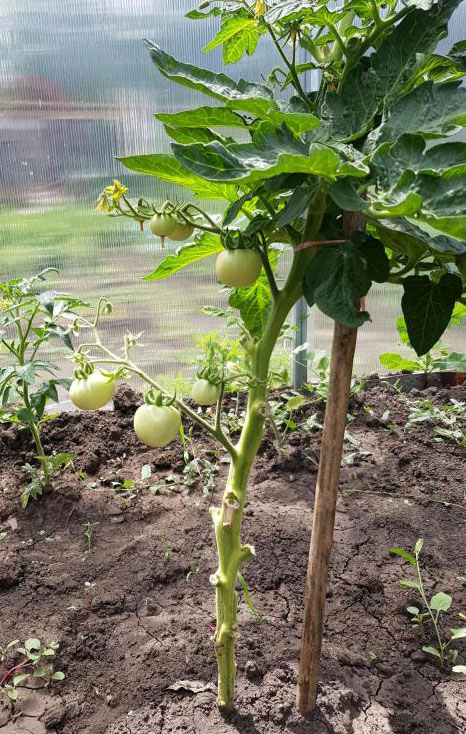
The 5/95 tomato is considered a classic Volgograd tomato. Its bushes reach a height of 70-100 cm. The foliage is medium, with the first inflorescences appearing after 2-3 leaves. It is recommended to train the bushes into 1-2 shoots; staking is necessary during cultivation.
Fruit
Volgogradsky tomatoes are renowned for their sweet flavor. They are flat-round, with virtually no ribbing. The skin is firm and smooth. The flesh is juicy and firm. They weigh between 90 and 150 g.
Productivity
The yield of the Volgogradsky tomato will depend on its cultivation method. In greenhouses, it can be several times higher than in open-air cultivation. The final yield ranges from 374 to 1035 centners per hectare.
Ripening time
The classic Volgograd tomato is characterized by late ripening. From the moment the shoots emerge until harvest, it takes 116 to 130 days. The tomato continues to bear fruit until the first frost.
Advantages and disadvantages of the Volgogradsky 5/95 tomato variety
| Advantages | Flaws |
|
|
A detailed description of the Volgogradsky 323 tomato variety
Now let's take a closer look at the characteristics of the Volgogradsky 323 variety and the history of its creation.
The origin of the Volgograd early ripening tomato variety 323
This variety is not a hybrid; it was created in the late 1960s by breeders at the same Volgograd Experimental Station. In 1973, it was registered in the register for the Central Black Earth and Lower Volga regions for cultivation in open ground.
Bushes
Volgogradskiy 323 tomato plants are low-growing; the registry lists them as 15-18 cm tall, but gardeners report they grow to 25-45 cm. Although the stems are stocky, dense, and hold their fruit well, experienced gardeners recommend providing support and tying them up. The leaves are medium-sized, and are periodically removed from the lower tier to ensure nutrition reaches the fruit. Numerous flower clusters form, with each cluster bearing 5-6 tomatoes.
Fruit
The tomatoes are round in shape and a rich red color. The skin is dense and smooth, but sometimes slight ribbing may appear on the surface.
The weight of tomatoes does not exceed 75 g.
Productivity
The Volgogradsky 323 variety's yield isn't the highest, but it's stable. It ranges from 401 to 425 centners per hectare.
Ripening time
The ripening of tomatoes of the Volgogradsky 323 variety occurs quite quickly, compared to the classic Volgogradsky 5/95 variety, within 100-110 days from the moment of emergence.
Advantages and disadvantages of the Volgogradsky 323 tomato variety
| Advantages | Flaws |
|
|
A detailed description of the Volgograd Pink tomato variety
And finally, let's look at a detailed description of the Volgograd Pink variety.
Bushes
The Vologda Pink variety is a low-growing tomato, with shoots reaching 50-60 cm in height. However, even with such a modest height, staking is recommended.
The foliage is average; leaves from the lower tiers must be removed as ovaries appear, but not more than one leaf at a time.
A bush is formed with 1-2 shoots, all shoots located under the first brush are removed.
Fruit
The tomatoes are round, with ripe pink fruits slightly flattened at the ends. The skin is thin but firm, holding its shape well and preventing the fruit from splitting on the vine.
The pulp is juicy, sweet, and fleshy.
Productivity
The Volgograd Pink tomato yields 3-4 kg per bush. The lower the fruits are located on the shoots, the larger they will be.
Ripening time
The Volgogradsky Pink variety is considered early; the first harvest ripens 90-100 days after emergence.
Advantages and disadvantages of the Volgograd Pink tomato variety
| Advantages | Flaws |
|
|
Features of growing tomato varieties Volgogradsky
All varieties of Volgogradsky tomato are grown using the classic method; the only difference is in the ripening time.
Sowing seeds and growing seedlings
Volgogradsky tomato seeds can be purchased from various producers. However, it's best to choose a reputable one to avoid low germination rates.
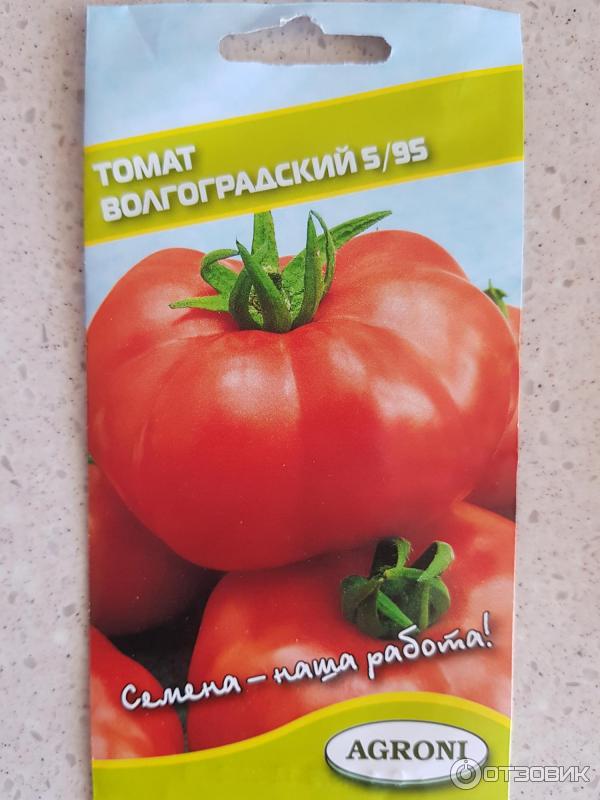
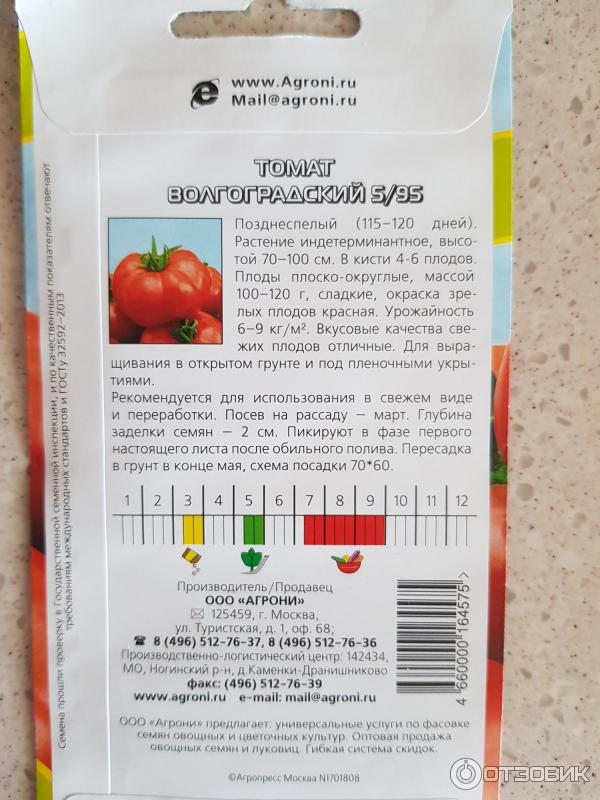
Since the varieties differ in ripening times, sowing them for seedlings occurs at different times:
- Volgogradsky 5/95 is a late-ripening variety, with the time from germination to harvest taking 130 days, so it should be sown for seedlings in mid-February.
- Volgogradsky 323 and pink are early ripening (maximum period 110 days, pink less), so the best time for sowing is early to mid-March.
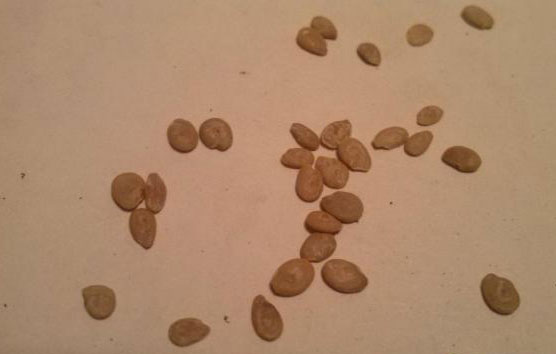 Preparation for sowing is carried out in several stages:
- HardeningOver the course of two days, the seeds are placed in the refrigerator for 12 hours, then transferred to a warm place. This procedure helps strengthen the immunity of future plantings.
- DisinfectionThe seeds are immersed in a weak solution of potassium permanganate for 4-6 hours, after which they are washed under running water.
- SoakTo increase the rate of tomato germination, it is recommended to soak them in a stimulating solution, such as Epin.
- GerminationThe seeds are placed in a damp cloth and kept in a warm place until the sprouts emerge.
Important! If the packaging indicates that they have undergone the necessary preparation, then no further handling is necessary.
It's best to use ready-made soil from a specialist store. Alternatively, you can mix equal parts of soil, sand, peat, and humus.
It's most convenient to plant tomatoes directly in individual containers, such as cups or peat pellets. Alternatively, you can use a container, fill it with soil, and sow the seeds in furrows 1-1.5 cm deep, spacing them 2.5 cm apart.
The final stage of sowing seeds is watering from a spray bottle or syringe.
Until the first shoots appear, the container should be covered with plastic wrap or glass and kept in a warm place. Then, remove the cover and move the tomatoes to a cooler location.
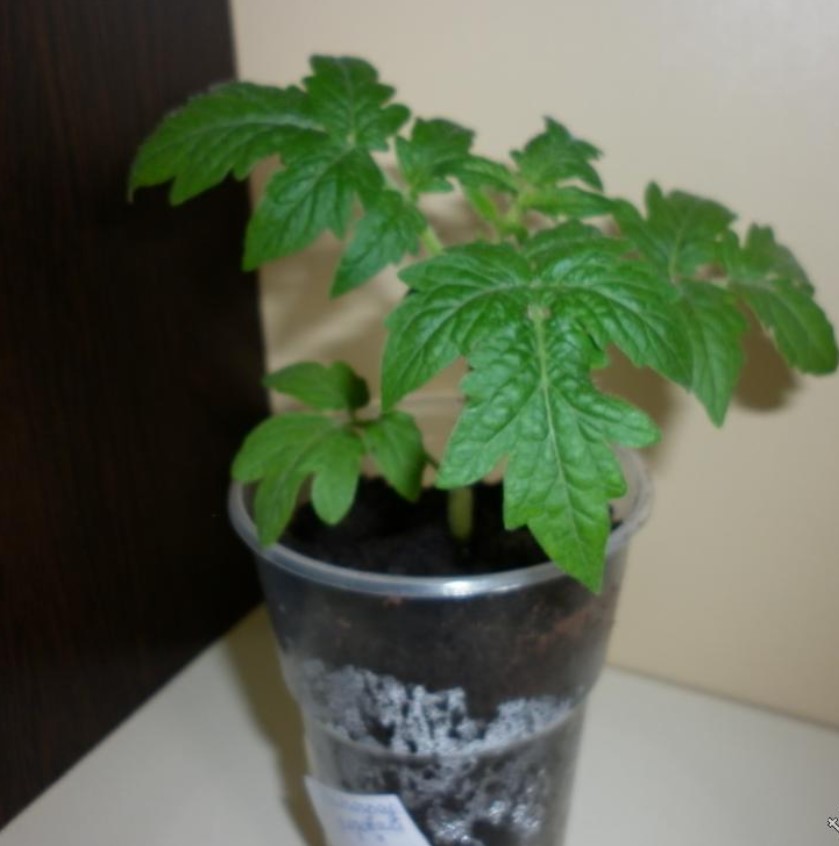
Typically, it takes 60-65 days from sowing to planting seedlings in open ground. This applies to all varieties.
Two weeks before transferring the plants to a permanent bed, it is advisable to harden them off by taking them out onto the veranda or outside for several hours a day.
Planting in the ground
The soil in the garden bed is prepared in the fall, and it is dug up with the addition of specialized or organic fertilizers.
Tomatoes can be planted once the soil temperature has warmed to 10-12 degrees Celsius. Otherwise, they will remain in the ground for too long, showing no activity.
In the spring, the soil is dug over, and holes are made 60-70 cm apart in a staggered pattern. It is recommended to leave the row spacing at least 60 cm wide to facilitate planting.
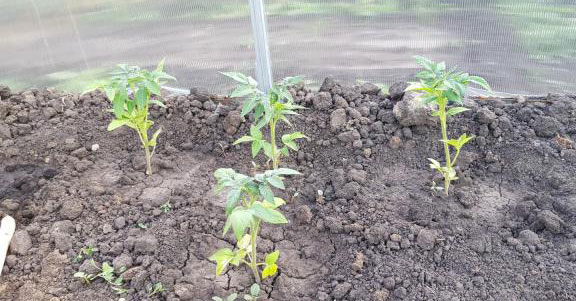
Plant one tomato in each hole, preferably with the soil still attached to the roots to avoid damaging them. Then, fill the hole with soil, water, and mulch the bed.
Care, watering and fertilizing
The first watering is recommended no earlier than 10-14 days after transplanting tomatoes into the garden. Each plant initially requires approximately 3 liters of water, later increasing this amount to 5 liters. The frequency of watering depends on weather conditions. In temperate climates, watering once a week is sufficient. In hotter regions, watering frequency increases to 3-5 times a week.
After planting, it is necessary to think through a system for tying up the shoots so that the ripening tomatoes receive light, air, and nutrition evenly.
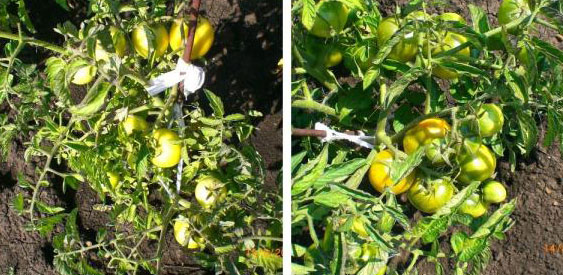
It's recommended to train bushes with 1-2 shoots. The more shoots, the smaller the yield.
The first fertilizing should also be done only after 14 days. To prevent diseases and pests, it is recommended to spray the plants with a solution of Bordeaux mixture or phytosporin.
In the early stages, nitrogen-containing fertilizers can be used. Organic fertilizers or ammonium nitrate can also be used.
It is not recommended to further feed tomatoes with nitrogen, so as not to provoke the growth of vegetative mass.
For subsequent fertilizing, you can dissolve 25 g of potassium sulfate and 40 g of superphosphate in a bucket of water. Apply the mixture only after the next watering.
Resistance of Volgogradsky tomato varieties to diseases and pests
All Volgogradsky tomato varieties are characterized by strong immunity. They are resistant to verticillium wilt, tobacco mosaic, fusarium wilt, and brown spot. The bushes are rarely affected by other diseases and pests, but improper care can lead to rot or late blight. These are especially common with overwatering.
Spraying with Bordeaux mixture or Fitosporin is considered an excellent preventative measure.
If signs of fungal diseases do appear on the plants, you can spray them with Hom, Ordan, and other preparations.
When insect pests become active, the bushes are treated with specialized products such as Biotlin, Actellik, Karate and others.
If the disease progresses, the bushes should be removed. If this occurs during the active ripening period, you can wait until the tomatoes are fully ripe or remove them from the vine to ripen.
Collection, use and storage of Volgograd tomatoes
The Volgogradsky 5/95 tomato ripens relatively late. It takes 115 to 130 days from germination to harvesting the first tomatoes. This tomato is versatile. Its fruits can be eaten fresh, preserved, or processed.
Volgogradsky 323 tomatoes are small and ideal for canning and processing. However, they can also be used fresh for cooking and eating.
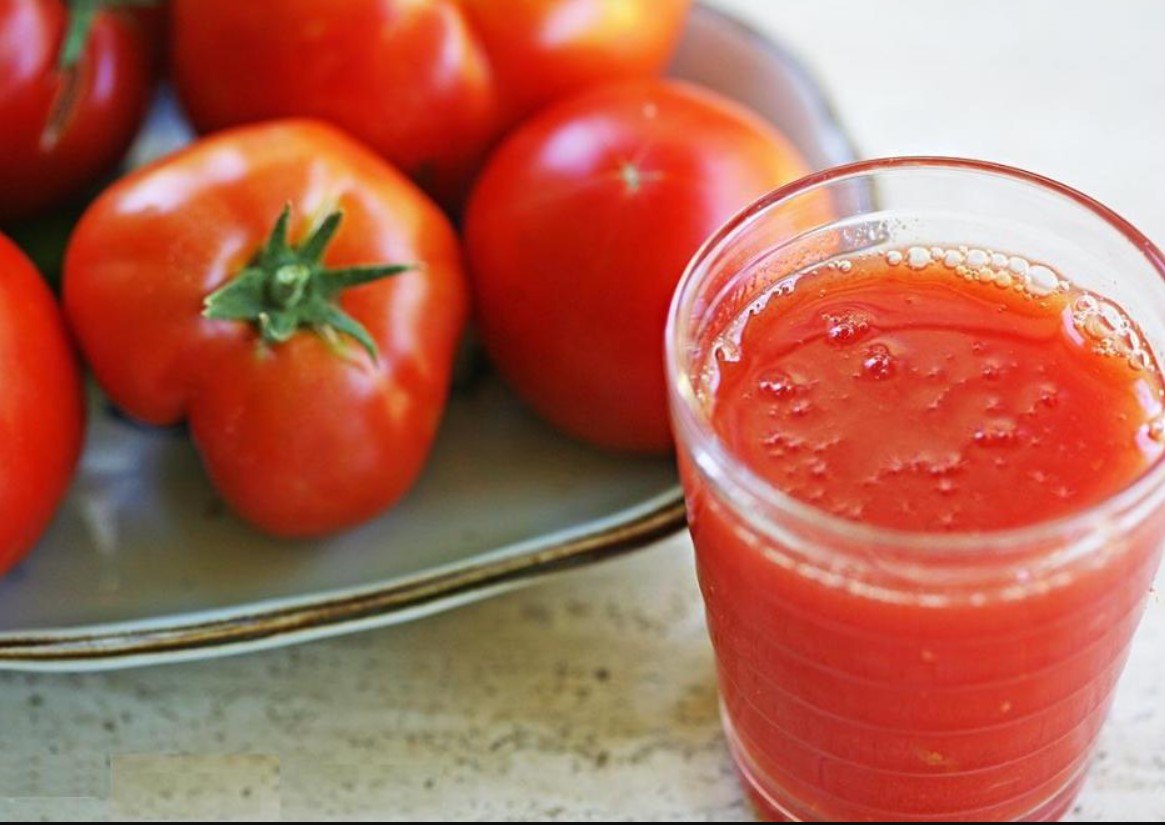
Volgogradskiy Pink tomatoes weigh 80-130 grams, making them ideal for pickling and canning. Their thick skin prevents them from cracking in jars. They can also be processed into sauces, pastes, and juices. They are also great for eating fresh thanks to their pleasant flavor and sweet, juicy flesh.
Comparison of Volgogradsky tomato varieties with other varieties in the table
Please note! How can you easily convert centners/ha to kg/sq.m? Simply divide by 100! For example, the Abakansky Pink tomato yields 400 centners of marketable fruit per hectare. This equals 4 kg per square meter. It's that simple! Also, keep in mind that typically no more than 3-4 plants are planted per square meter. This way, you can calculate the yield per bush. In the case of the Abakansky Pink, it's about 1 kg.
| Variety | Ripening period (number of days from full germination to ripening)
Yield of commercial fruits |
Brief description | Fetus |
| Volgograd (5/95) | 116-130 days
374-1035 c/ha (20-25% of the total yield ripens within 15 days of fruiting) |
A late-ripening, indeterminate, standard, compact variety for open ground. Suitable for salads and processing into tomato products. | Flat-round, smooth and slightly ribbed, medium-sized and large, red, 90-150 g. Good to excellent taste. |
| Volgograd early ripening 323 | 100-109 days
401-425 c/ha |
An early-ripening determinate variety, with shoots reaching no more than 45 cm in height (the register indicates 15-18 cm). It is intended for growing in greenhouses or open ground. Suitable for salads and processing into tomato products. | The fruits are flat-round or round, with virtually no ribbing. The color is orange-red, the flesh is juicy, and weighs 74 g. The flavor is good to excellent. |
| Volgograd pink
|
90-100 days
400 c/ha |
An early-ripening, determinate, low-growing tomato, suitable for outdoor cultivation. Maximum bush height is 60 cm. Suitable for fresh eating, canning, and processing into tomato products. | The tomatoes are round, flattening at the poles as they ripen. The color is pink, the flesh is juicy and sweet. The skin is thin but firm, weighing 80-130 g (up to 160 g). The flavor is good to excellent. |
| Bobcat | 120-130 days
224-412 c/ha |
A late-ripening, determinate variety for open ground. Suitable for salads and processing into tomato products. Marketability 75-96%. | Flat-round, ribbed to strongly ribbed, dense, red, 90-226 g. The taste of the fruit is good, the tomato juice is good to excellent. |
| Abakan pink | 120 days or more
400 c/ha |
A late-ripening determinate variety for open ground and greenhouses. Requires staking and training. Suitable for salads and processing into tomato products. | Flat-round, slightly ribbed, medium density and pink in color, 200-500 g. Good taste. |
| St. Andrew's surprise | about 120 days
800 c/ha |
A late-ripening indeterminate variety for greenhouses (can be grown outdoors in the south). Suitable for salads, juices, and tomato paste. Seedlings tolerate low light conditions well. | Flat-round, smooth, medium density, pink, 150-230 g. Excellent taste. |
| Big Dipper | 100-110 days
1150-1450 c/ha |
An early-ripening indeterminate variety for open ground and greenhouses. Requires staking and shaping. Suitable for salads. | Flat-round, slightly ribbed, medium density, pink, 210-260 g. Good taste. |
| Red and pink bull | 110-118 days
385-392 c/ha |
A late-ripening determinate variety for open ground and greenhouses. Suitable for salads. Marketability: 89.5-90.3%. | Large, medium-ribbed, flat-round, red with a dark spot near the stalk, 305-310 g. |
| Mushroom basket | 115-120 days
630 c/ha |
A late-ripening, indeterminate, standard variety for open ground and greenhouses. Requires staking and shaping. Suitable for salads. | Flat-round, very strongly ribbed, medium density, pink, 250 g. Good taste. |
| Kate | 80-85 days
326-550 c/ha |
An early-ripening determinate variety for open ground. Suitable for salads. Marketability: 84-90%. | Flat-round, smooth, crack-resistant, red, 80-92 g. Good to excellent taste. |
| Katya is pink | 80-85 days
1600-1800 c/ha |
An early-ripening determinate variety for open ground. Suitable for salads. Marketability: 84-90%. | Flat-round, medium density, smooth, pink, 120-130 g. Good taste. |
| Kostroma | 105-110 days
1350-1500 c/ha |
A mid-season determinate variety for greenhouses. Requires staking and training. Suitable for salads, whole-fruit canning, and processing into tomato products. | Flat-round, slightly ribbed, glossy, red or orange, 80-150 g. Good taste, sweet and sour. |
| Golden Raspberry Miracle | 90-95 days, sometimes 100 days
1200-1500 c/ha |
Mid-early determinate variety for open ground and greenhouses. Suitable for salads and processing into tomato products. |
They can be flat-round, round, heart-shaped, or ovoid. All are raspberry or pink, ribbed or round, weighing 100-500 g. The taste is excellent. |
| Russian size | 125-127 days
700-800 c/ha |
A late-ripening indeterminate variety for greenhouses. Suitable for salads. | Flat-round, slightly ribbed, red, 630 g. Excellent taste. |
| Yusupovsky | 110-115 days
100-1200 c/ha |
A late-ripening, tall, indeterminate variety for greenhouses. Requires staking and training. Suitable for salads, juices, and sauces. | Flat-round, large, fleshy, pink-red, 400-800 g. When grown in open ground, the weight is from 200 g. |
Gardeners' reviews of the Volgogradsky tomato variety
Let's look at gardeners' reviews of different varieties of Volgogradsky tomatoes.
Reviews of the Volgogradsky tomato variety 5/95
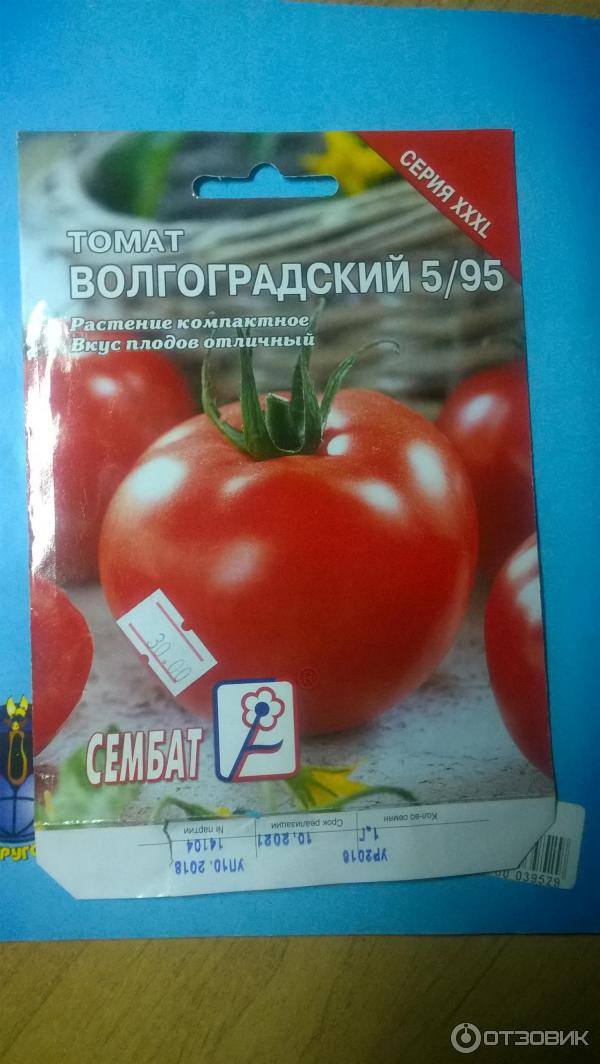
So, today I'd like to share my impressions of seeds from the manufacturer "Sembat." This was my first encounter with this brand, and the purchase was spontaneous. I just wanted to buy them if I could, even though the seed box still had a ton of unplanted seeds.
Walking past the sowing products counter at the store, I noticed a large package that cost only 30 rubles. Well, it would have been a sin not to buy it!
The package says 1 gram—clearly not 10 seeds. What I'm saying is that my desire to have more and more got the better of me.
Volgograd tomatoes have always been famous for their compact size and taste, but I mostly bought seedlings, and then I got the idea to plant them myself.And you know, I liked it!
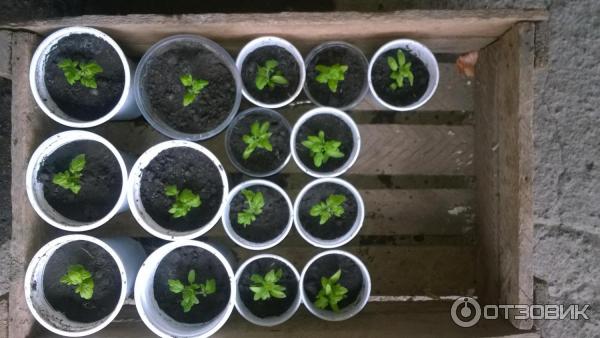
In the photos and videos (subscribe to the channel, I'll be adding more videos in the future), I tried to show the growth of this seed variety in as much detail as possible. I was pleased with the germination rate, as you can see in the video. Next, I'm adding a photo before transplanting into cups. This was about two weeks after the video, so it was early April.
It doesn't matter whether I bought seedlings or planted the seeds myself—the result is the same due to the nature of this tomato! There's no way to fool nature! This is a late-ripening variety, and I'm unlikely to see a harvest before July. And I'm not looking for early-ripening ones. I've been working on it for years—the best-tasting ones are mid-season or late-ripening.
They were easy to transplant; whenever possible, I tried to plant them as deep as possible in the cups and trim off the first lower leaves.
They survived the transplant without a hitch. No wilting, no leaf discoloration, and they're resilient to temperature fluctuations. They're already hardened off. They sit in the sun during the day and under cover in the evenings. We're currently in a sort of "rainy season"—it's been pouring for three days now and it's terribly cold, so we've pulled out the winter jackets again. It's +2 or 0 degrees Celsius at night. I bring them into the outdoor kitchen. It's cool, but not fatal.
The seedlings have performed well, and I hope the harvest will be just as strong!
Volgograd saplings can be planted in the ground after I've transplanted them into garden beds, or they can be tied up, as they're standard plants. Personally, in our area and in my experience, I wouldn't tie them up. The harvest is best when they're stacked on top of each other.
It's up to each gardener. I find it more convenient and productive this way.
In general, I conclude:
— I liked the seeds, I’m happy with the effect
— I am satisfied with the quality and effectiveness of germination
- does not create problems during transplantation
- when sprouting it does not stretch and the stem is thick
This is the moment when I'm absolutely sure of the quality of the seeds! I'm talking about seeds now (I'll note), and I know they're truly worth buying.
I will note the fruiting results in July-August )))
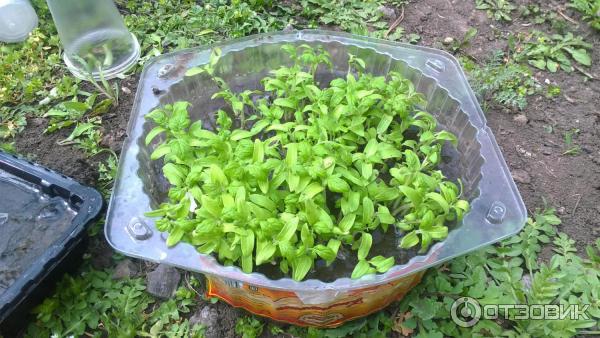
Last year, I planted the "Volgogradsky 5/95" tomato variety from Agroni at my garden plot. I'm pleased with the results and am planting it again this year, along with other varieties.
I started preparing the seedlings in early March. I didn't even need to provide any lighting, as there was plenty of sun in March.
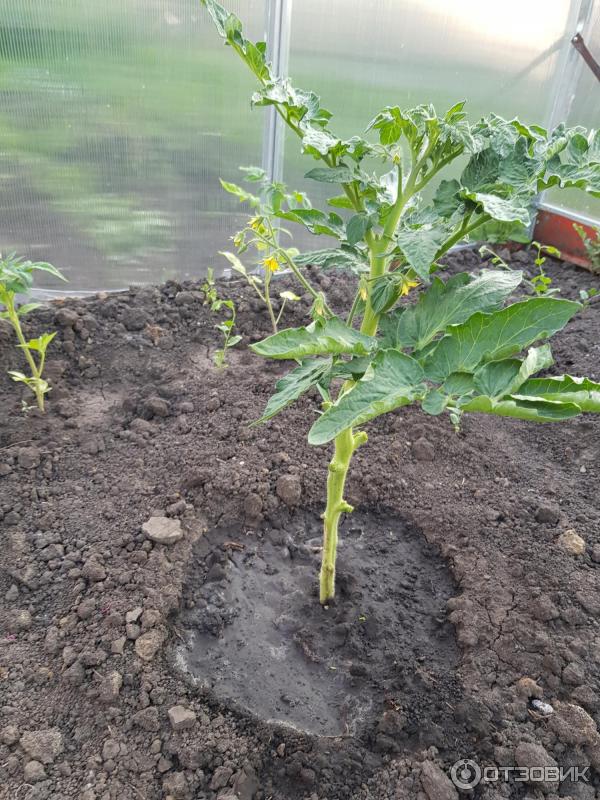
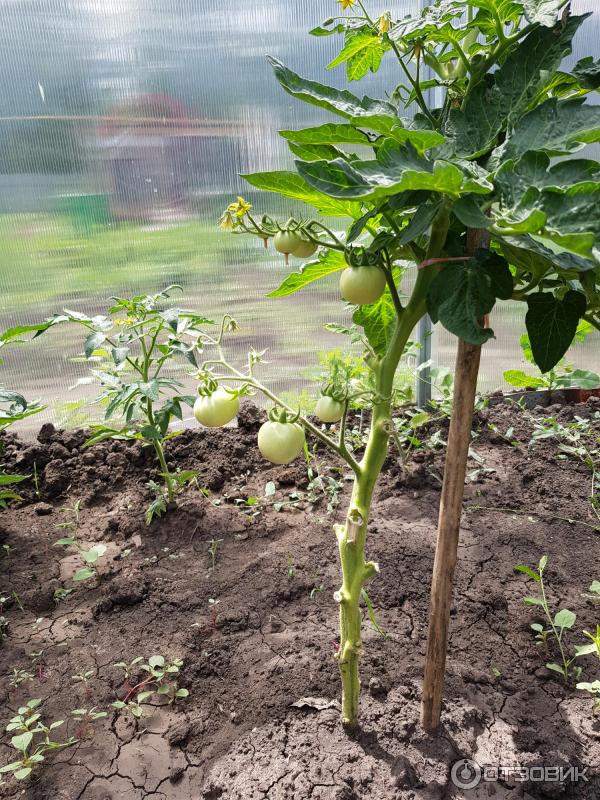
In early May, I tried planting one test bush in the greenhouse. I figured if the cold weather returned, I'd only lose one plant. And if it stayed that way, I'd get a small early harvest. It's a good thing we didn't have any May frosts last year.
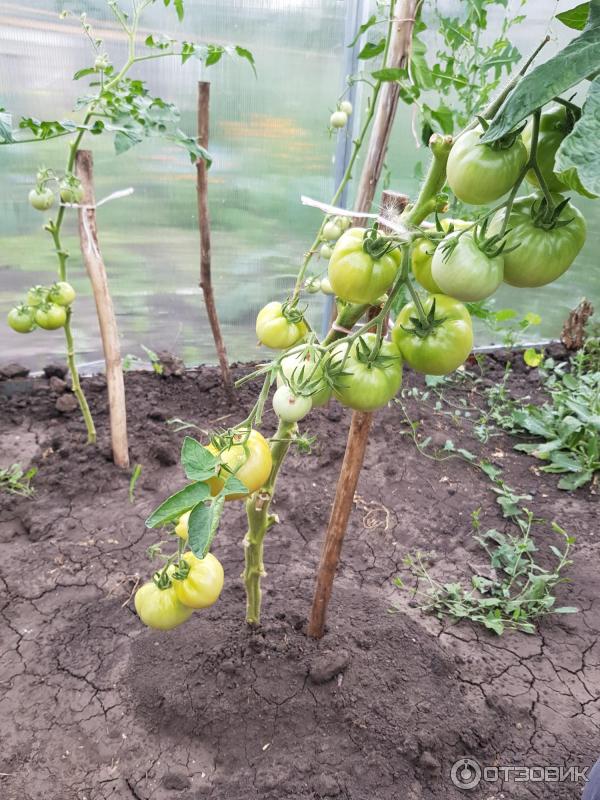
This is the bush I had, already with flowers, on June 8th.
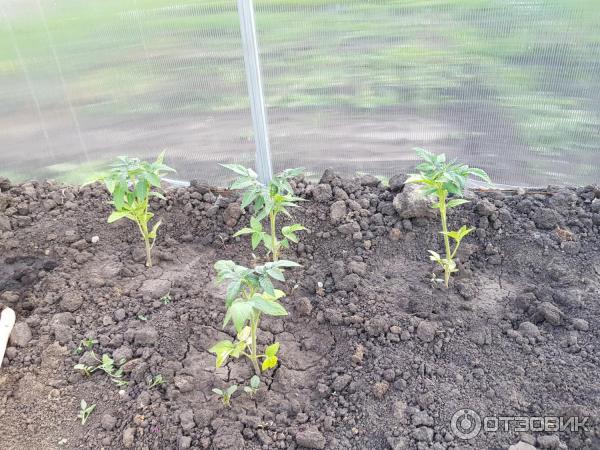
These were also captured as of June 8th. Look how small they are, and that's because they were transplanted into the greenhouse at the end of May.
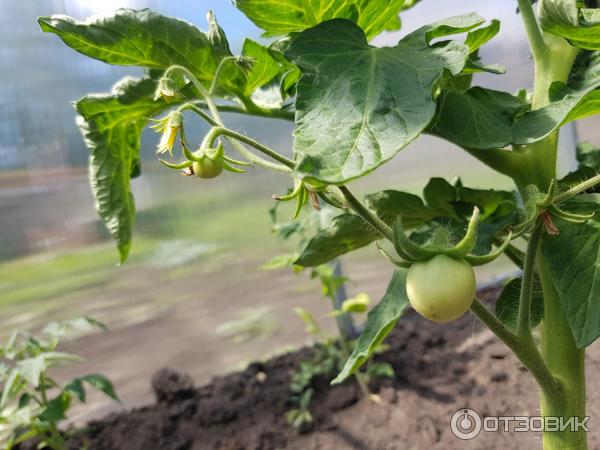
The first fruits appeared on June 16th.
The plant itself is medium-sized, not very tall. It's compact, at least compared to my previous varieties: "Bull's Heart" and "Red Cherry" cherry tomatoes.
There was a problem with the reddening. The tomatoes had reached the right size, there was plenty of sun, but they were very reluctant to turn red. Apparently, they needed some kind of fertilizer, but I didn't know what. And I was afraid to feed them in this state. I was afraid something would settle in the fruits, and we still had them to eat. So, the old-fashioned way: I picked the ones that had more or less changed color and left them on the windowsill until they turned an acceptable red.
I'm happy with the variety; I have no complaints. Everything I planted has grown. I recommend it!
I am constantly expanding my tomato collection.
There are countless varieties and hybrids, and today I'll share my impressions of growing Sembat "Volgogradsky 5/95" tomatoes.
I planted the seedlings in mid-March, as this is a late-ripening variety. From germination to fruit ripening takes 130 days. Seed germination is 100%. This tomato has a compact bush, 100 cm tall, and medium foliage. It requires staking and pinching. Ripe fruits are deep red, flattened and rounded. The surface is glossy and slightly ribbed.The tomatoes have a distinctive, slightly tart flavor. The flesh is firm. Ideal for fresh consumption and canning. Fruiting is extended. Yields in open ground can reach up to 7 kg/m2.
Reviews of the Volgograd early-ripening tomato variety 323
This season's tomato harvest was a great success. Looking back on the past season, my husband and I are considering which tomatoes we'll plant next year. I'd like to share which seeds we liked best. The Volgograd early-ripening tomato seeds turned out to be particularly successful.
The tomato plant is growing and developing very actively. To be honest, I don't add any fertilizer to the soil. Everything is natural. Last year we bought peat moss, ash, compost, and that's about it. Since I don't have time to weed, I covered the beds with black mulch, made holes in it, and planted the tomato seedlings.
I read a lot on the internet that you need to hill up the plants, but it’s not very convenient to do this under a spondylosis slab. Sometimes I had to add soil because the root system was exposed from watering.
And since the Volgograd tomato variety is absolutely unpretentious, everything grew wonderfully.
The tomato bush is strong, the vines are thick and powerful, and well-branched. It produces a lot of fruit. Staking is essential. Pinching out the side shoots is completely unnecessary. I decided to experiment: I pinched out some of the side shoots, but not the other half. They grow exactly the same. Even the yield is the same. So there's no point in pinching out the side shoots.
This variety is disease-resistant when grown. At least, I haven't found a single rotten fruit on this particular tomato.
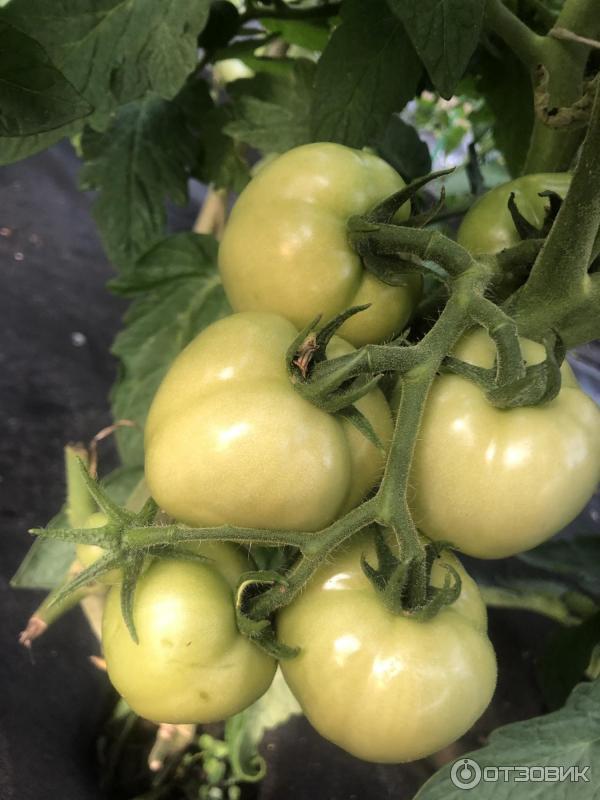
The fruits turned out to be medium-sized, not particularly large. They are round and textured. They peel easily.
The variety is very productive; I picked it four times during the season. And in large quantities.
The flesh is rich, bright red when fully ripe. The flavor is slightly tart. The tomatoes have a very rich aroma. They are great for salads and preserves. Since they are not particularly large, they are ideal for pickling. But most importantly, they store very well and do not spoil for a long time. The skin is dense and fleshy. I highly recommend growing them; I will definitely plant them myself next year. The taste is excellent. Have a nice day and happy shopping, everyone.
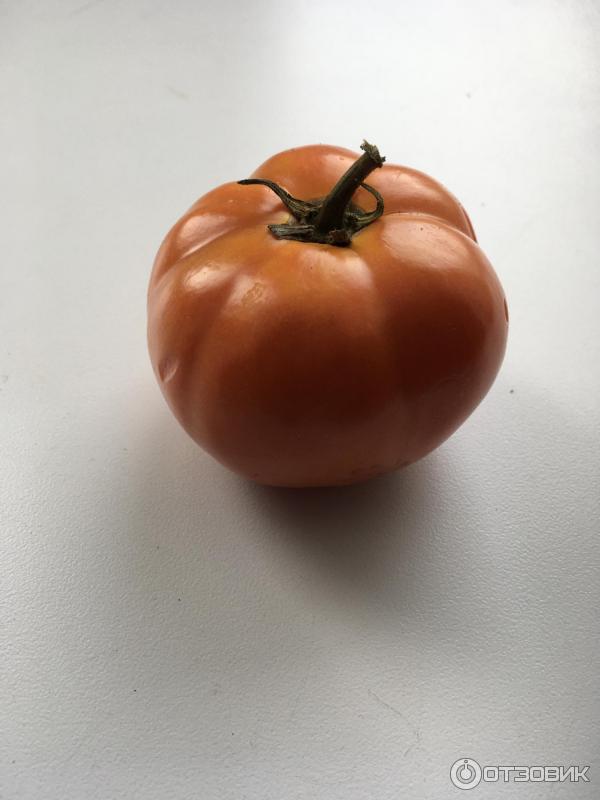
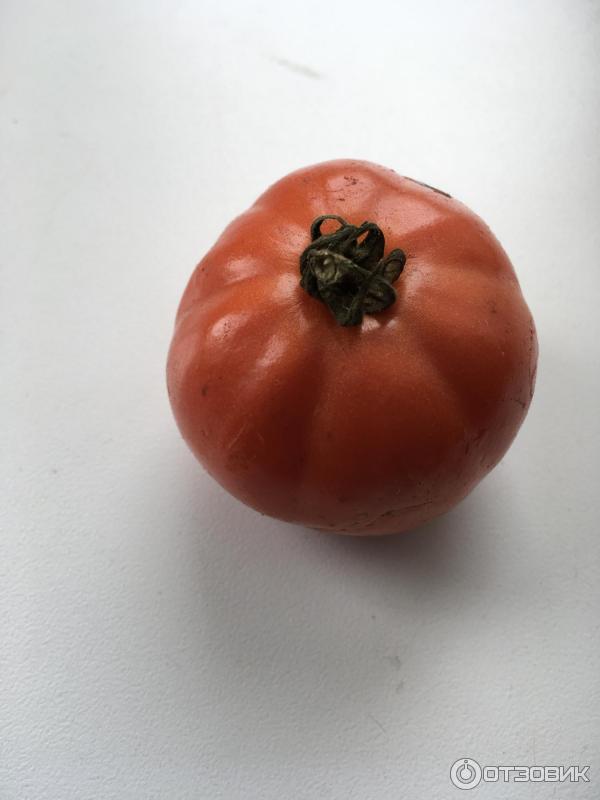
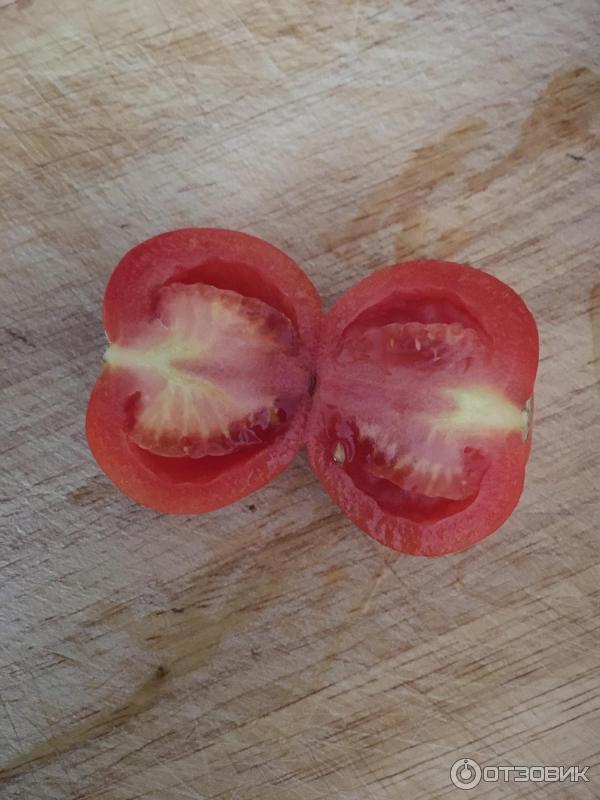
Good day to everyone who came to visit me.
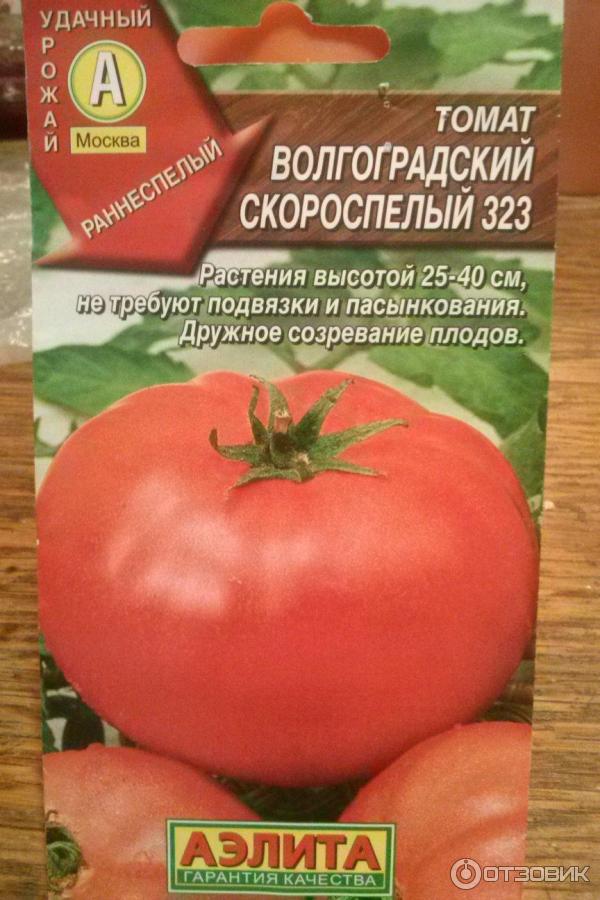
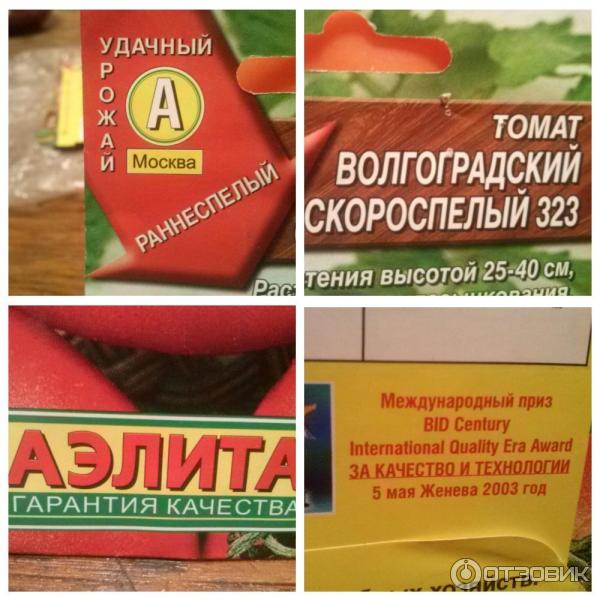
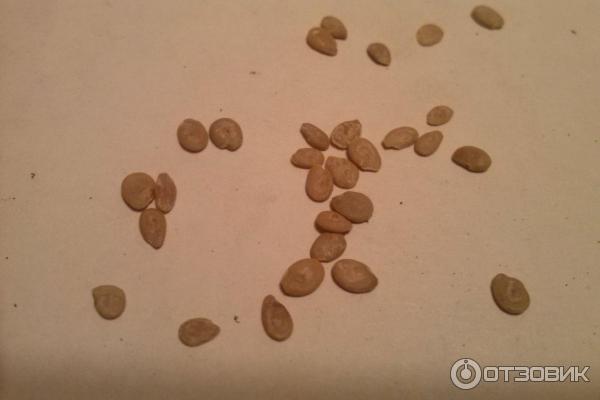
In my review today, I'd like to share my experience growing the "Volgogradskiy Skorospel'nyy 323" tomato variety. The seeds are from Aelita. I bought them for 22 rubles. Each package contains 3 grams of seeds. That's a lot, about 40-45 seeds. I plant different varieties, trying new ones every year. I've been planting this particular variety for two seasons, and they even expired, but this hasn't affected the quality of the seeds.The packaging is colorful and very informative.
I planted the "Volgograd Skorospelny 323" variety of seedlings in early April. These tomatoes are early ripening and determinate. Before you know it, they're already hanging red on the bush. This variety was recommended to me at the store specifically for open ground; it's also suitable for plastic shelters.
I transplant earlier than other varieties, when they have just one true leaf. The seeds germinate evenly, with a germination rate of 95-100%. Excellent results.
I plant them in the ground in early June, depending on the weather. The main thing is that there are no recurring frosts.
The plants are compact. The grower says they don't need staking, but I do staking mine; we get such strong winds in the summer that staking is essential.
"Volgogradskiy Skorospel'ny 323" is a small, dense plant, in contrast to the spreading Eagle's Heart.
I plant 4 bushes per 1 square meter.
This variety doesn't need side-sonning; I call them "tomatoes for lazy gardeners." It just grows and grows, just water it and pull out the weeds. There's a similar tomato variety, Pigmey. It's also wild, and the fruits ripen evenly, almost all at the same time. There are 4-7 on a branch. The tomatoes are medium-sized. The plant itself is about 50 cm tall.
Of course, a single bush yields a small harvest, and the plant stops growing. But at least it's all done in a single moment.
The first cluster begins to grow after the sixth leaf, then every other leaf. In the best season, the bush yields about 3 kg, in the worst, 2-2.5 kg.
The plant is not sick.
Once, my tomatoes were hit by hail, and they were all speckled with white spots. It's a shame there's no photo, they were so funny. And the incident didn't affect the fruit.
The flavor is excellent, the skin is thin, and the flesh is juicy and tender. They are great for eating fresh, and since they ripen earlier than other fruits, we mostly eat them in their original state.
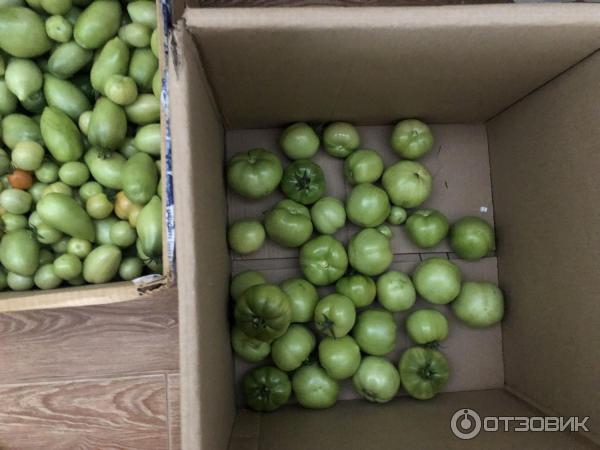
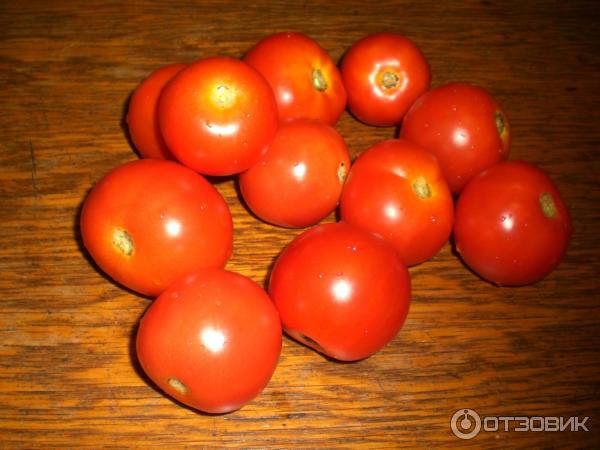
Look, they all look like twin brothers.
Here they are, ready to be pickled, and they're delicious. Medium-sized, thin-skinned, they literally burst in your mouth. One bite equals one tomato. It turns out beautifully when I add yellow tomatoes to the jar, like these "V Ten" (V Ten).
If you're not a picky gardener and don't expect a truckload of this wonderful vegetable, I recommend taking a closer look at the "Volgograd Early 323" variety.
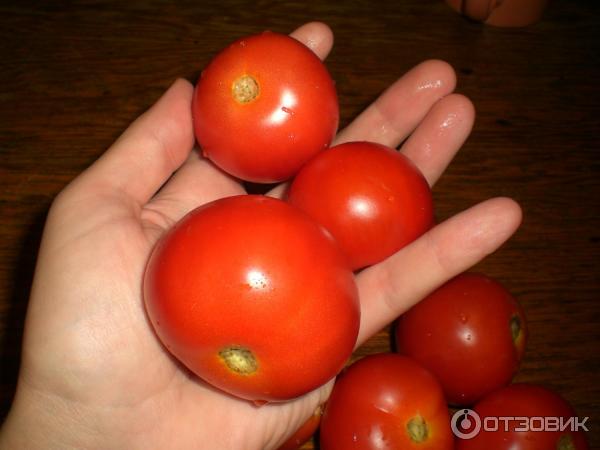
In the 2015 season, we grew Volgogradskiy skorospel'ny 323, sowing on January 25, planting in the greenhouse on April 25, and the first red tomato on May 30. In the greenhouse, the bush was about a meter tall, and the tomatoes were small, weighing about 100 grams. The taste was average, but they were good as first tomatoes. They picked up every possible ailment—that's why I don't plant them anymore.
Scarlet Frigate F1, grown last season – beautiful, even plum for canning, dense walls that don't spread, and a simple, unpretentious flavor. In the greenhouse, we trained it into a single stem – the resulting stem is over 2 meters tall and produces 6-7 clusters. Whether we'll repeat this variety depends on the tasting. It's less susceptible to cladosporiosis than varietal tomatoes.


I really love the Volgogradsky variety. I live in the Volgograd region, so I grow it every year. The "Volgogradsky Skorospel'ny 323" variety ripens early. I use it exclusively in the greenhouse, but the producers recommend it for growing outdoors. It's a determinate plant. It doesn't require additional pollination by bees. That's why it produces good yields in the greenhouse.
This tomato is low-growing. Its bushes are 30-40 centimeters tall. Therefore, the plant doesn't require staking or pinching. This process takes a lot of time, and I'm already short of it in the spring. The Volgogradsky Skorospel'nyy 323 variety fully ripens in 3-3.5 months from germination. Ripe fruits are red, firm, and have smooth skin. The tomatoes are juicy and sweet. My ripe tomatoes average 100 grams.
Tomatoes ripen quickly and evenly. I grow seedlings from all my seeds. I start this in February. At this time, it's very cold outside, with snow and occasional frosts. It's warm inside, so my plants grow quickly. For good growth, the plants need nutritious, light soil. I use my own compost from the garden, adding ash and sand. I mix this mixture thoroughly and pour it into containers. I make furrows in the soil and scatter the seeds in them. I place the seeds on the windowsill, where they germinate. I always transplant the seedlings. I do this when the tomatoes have two true leaves.
This crop is easy to grow, but you'll have to put in some effort to get a good harvest. I plant the tomato plants in beds with loose, nutritious soil. I add humus and sand and make holes. I place some poultry feathers at the bottom (I still have some left over from slaughtering chickens), add water, and then place the plants. I cover the tomato roots with sawdust. It retains moisture, and you don't have to loosen the soil every time you water.
Volgogradskiy Skorospel'nyy 323 (Aelita) tomatoes always produce a bountiful harvest. Their fruits are juicy and delicious. We love eating these tomatoes fresh and making them into vegetable salads. I make tomato paste and juice from these tomatoes every year. We drink it in the winter. It's rich in vitamins, very healthy, and low in calories.
It so happened that I've been buying seeds from this company for two years now. I bought tomato and cucumber seeds, and several types of flowers for seedlings. My mom does all of this. And the feedback on the quality is quite good. All the seedlings sprouted. And after planting in the garden, they took well. They don't get any diseases until mid-summer. We think the seed treatment was good. But then, probably due to the rain and heat, the tops began to spoil, and the fruits developed black spots. We recommend them.
I don't know about others, but I really like this variety... The name itself speaks for itself... The taste is excellent and the size is just right for pickling... I think that tomato lovers like me and my son will like it too... I recommend it... the variety is super
Reviews of the Volgograd Pink tomato variety: 5/95
Volgograd Pink. A good young plant. Height up to 1 m. Weight 100-120 g.
Very early (85-90 days) variety for open ground and film shelters.
Suitable for cultivation without seedlings in areas with unstable agriculture.
The plant is standard, compact, 40-50 cm high.
Does not require pinching.The fruits are large, round, pink-raspberry, weighing 120-150 g, medium-dense, juicy, fleshy.
Value of the variety: resistance to late blight and adverse weather conditions.