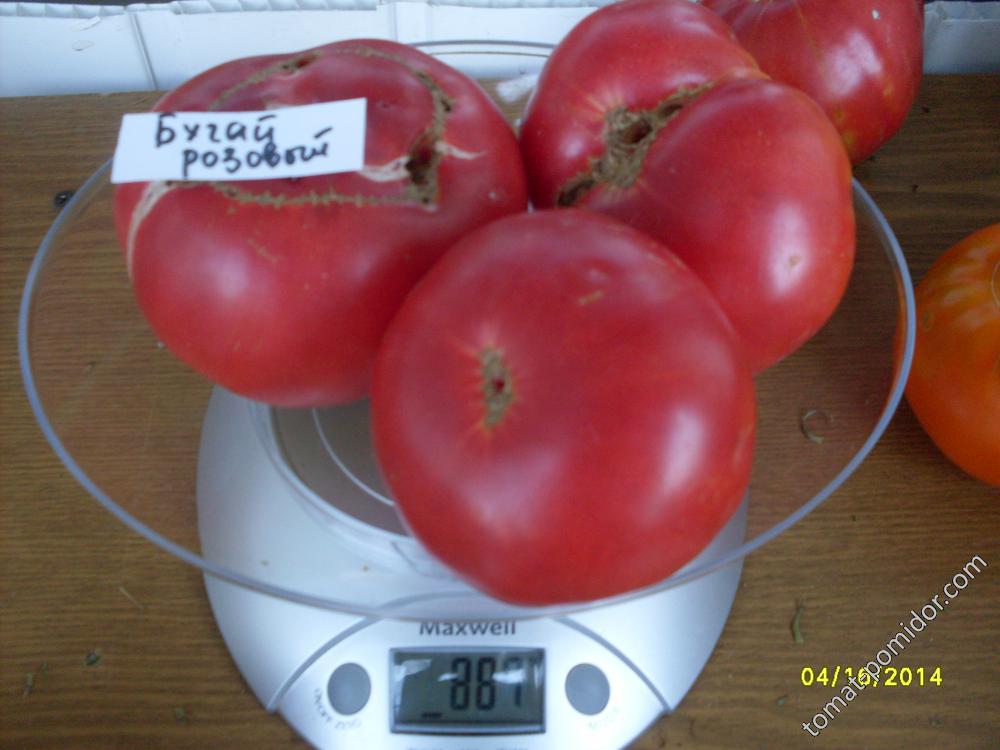
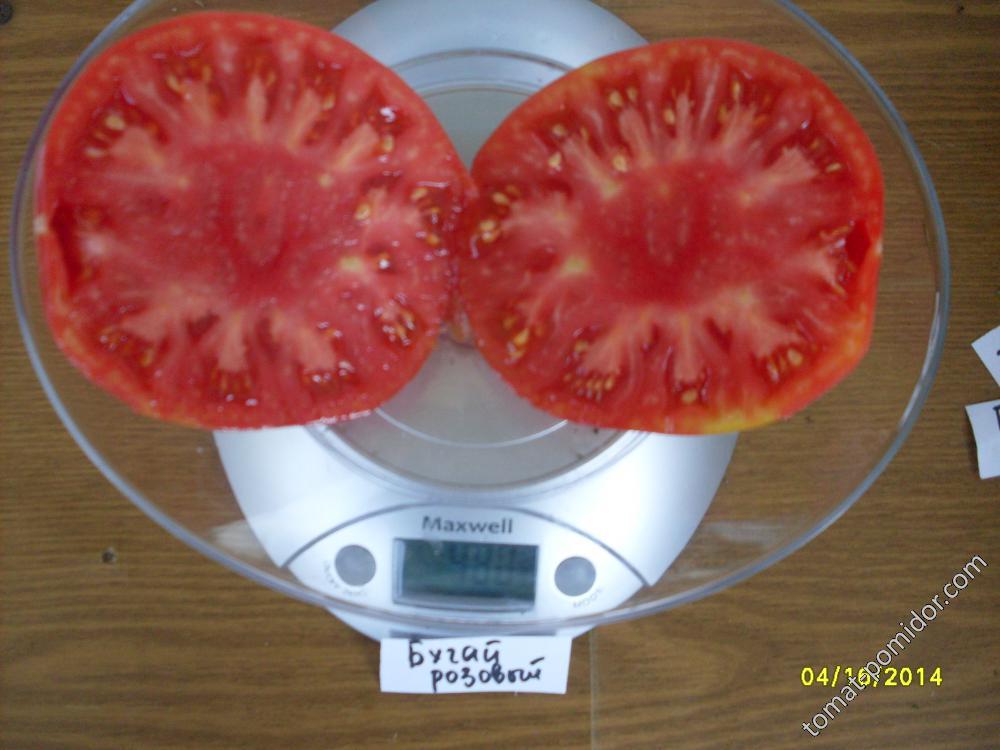
Tomato Bugay is a young tomato variety that has become popular among gardeners for its excellent yield and ease of cultivation.
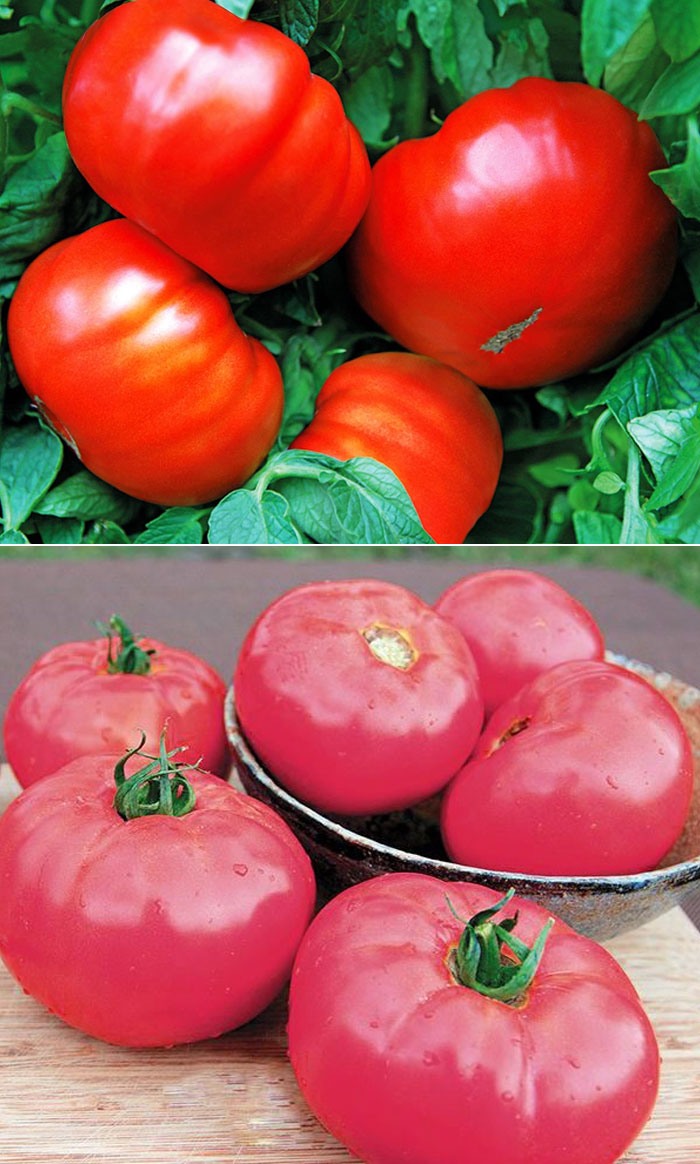
Currently, there are two varieties of the Bugai variety: red and pink.
Content
- 1 Table of characteristics of the Red Bugai tomato variety
- 2 Table of characteristics of the tomato variety Bugai Pink
- 3 The origins of the tomato varieties Bugai Red and Pink
- 4 A detailed description of the tomato varieties Bugai Red and Pink
- 5 Advantages and disadvantages of the red and pink Bugai tomato varieties
- 6 Features of growing tomato varieties Bugai red and pink
- 7 Resistance of Bugai tomato varieties to diseases and pests
- 8 Harvesting, using and storing tomato varieties Bugai red and pink
- 9 Comparison of tomato varieties Bugay with other varieties in the table
- 10 Gardeners' reviews of the Red and Pink Bugai tomato varieties
Table of characteristics of the Red Bugai tomato variety
| Characteristic | Description |
| Description | A late-ripening, determinate hybrid tomato variety. Can be grown in greenhouses or open ground. |
| Ripening period | 110-118 days |
| Fruit weight | From 300 g |
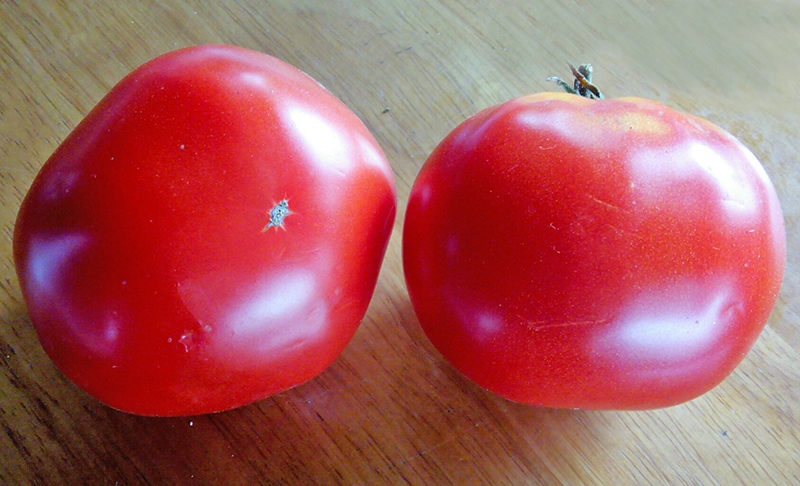
| Description of the fruit | The fruits are round and distinctly flattened. The color is bright red, and the skin is thick. |
| Productivity | 385.0 c/ha |
| Usage | Tomatoes are suitable for preparing various dishes, eating fresh, processing into pastes, sauces and juices. |
| Preferred growing regions | Suitable for all regions, including the Urals, Far East and Siberia |
| Disease resistance | Tomatoes have a strong immune system and are practically immune to common diseases. |
| Agricultural technology | The bushes need to be tied up and shaped; 4 tomatoes can be planted per square meter. |
| 2014 | |
| Originator | Dederko V.N., Postnikova O.V. |
Photo gallery of the Red Bugai tomato
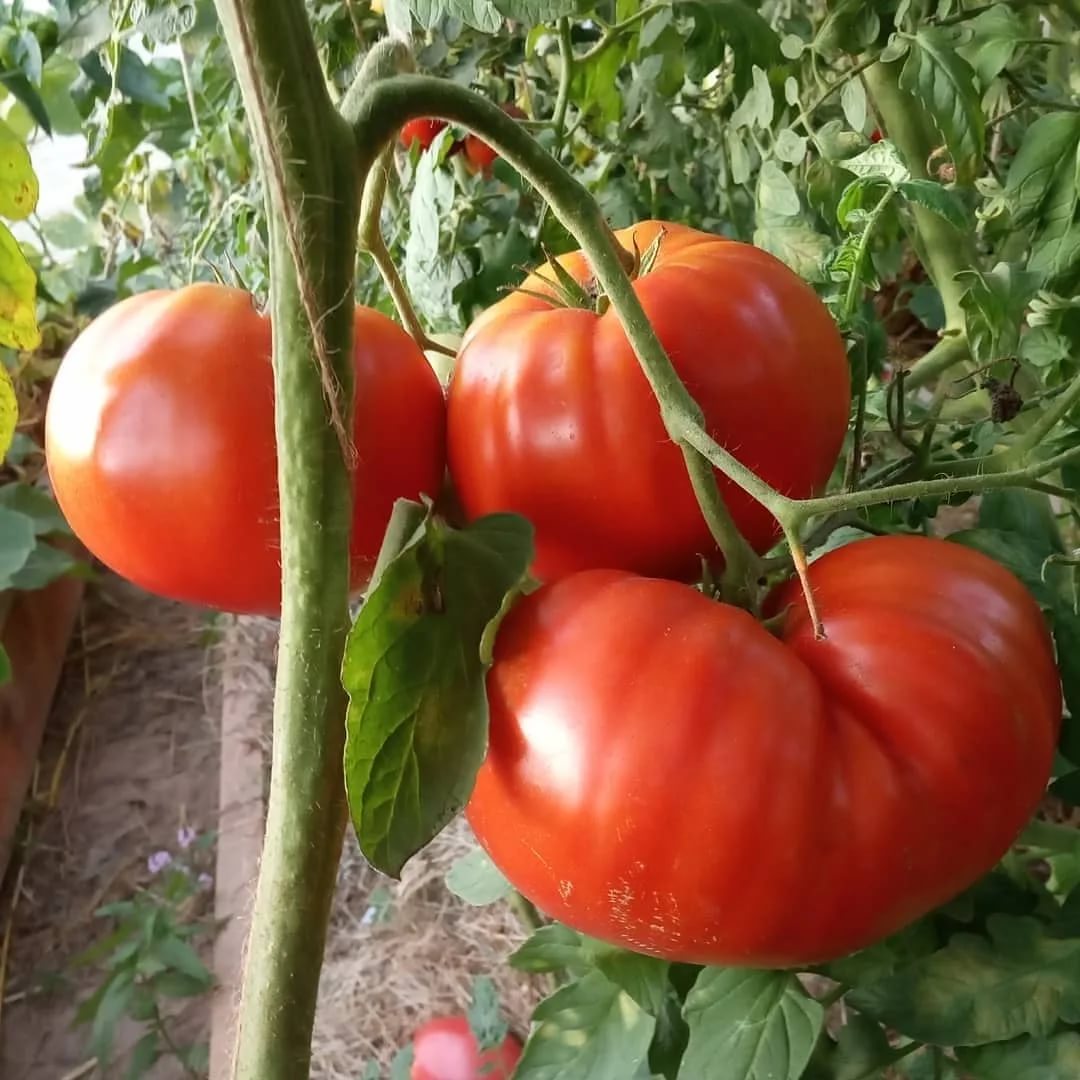
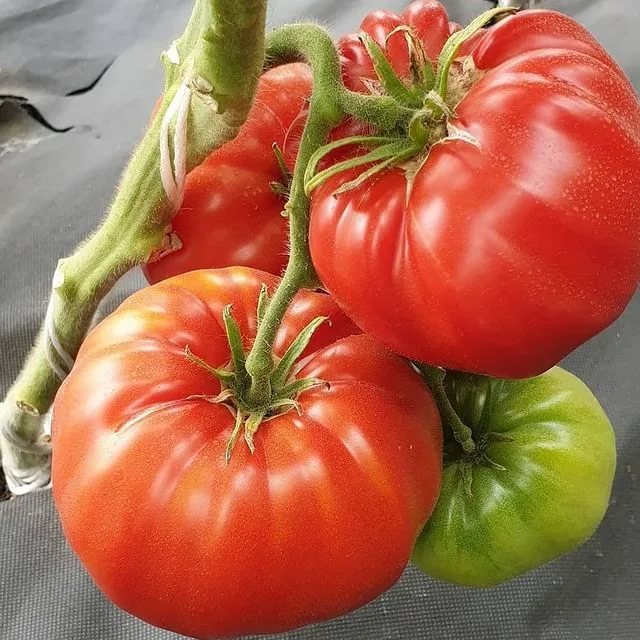
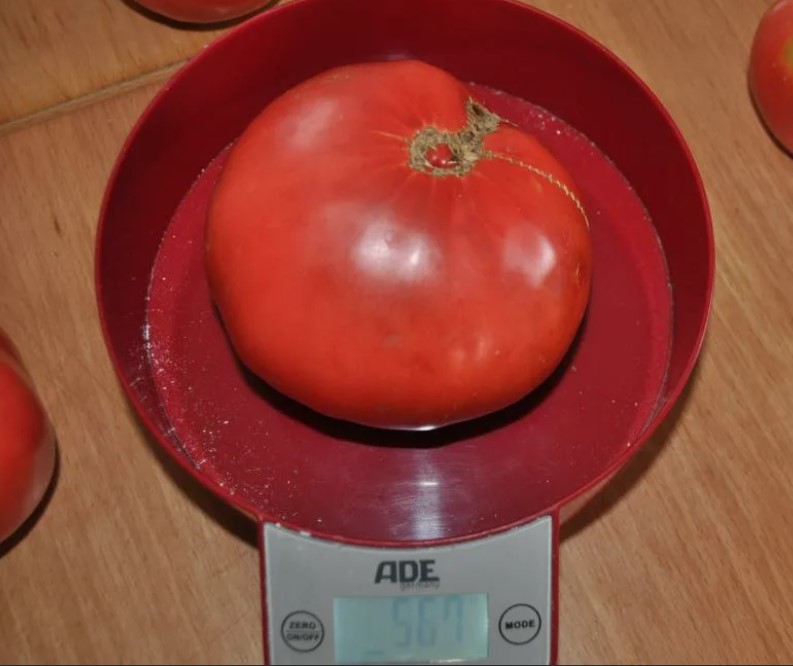
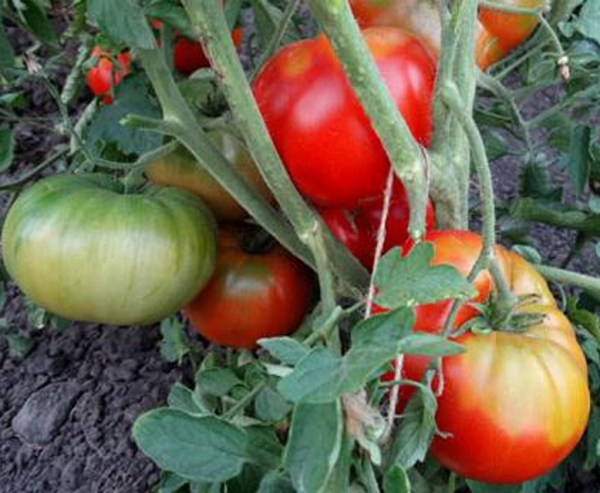
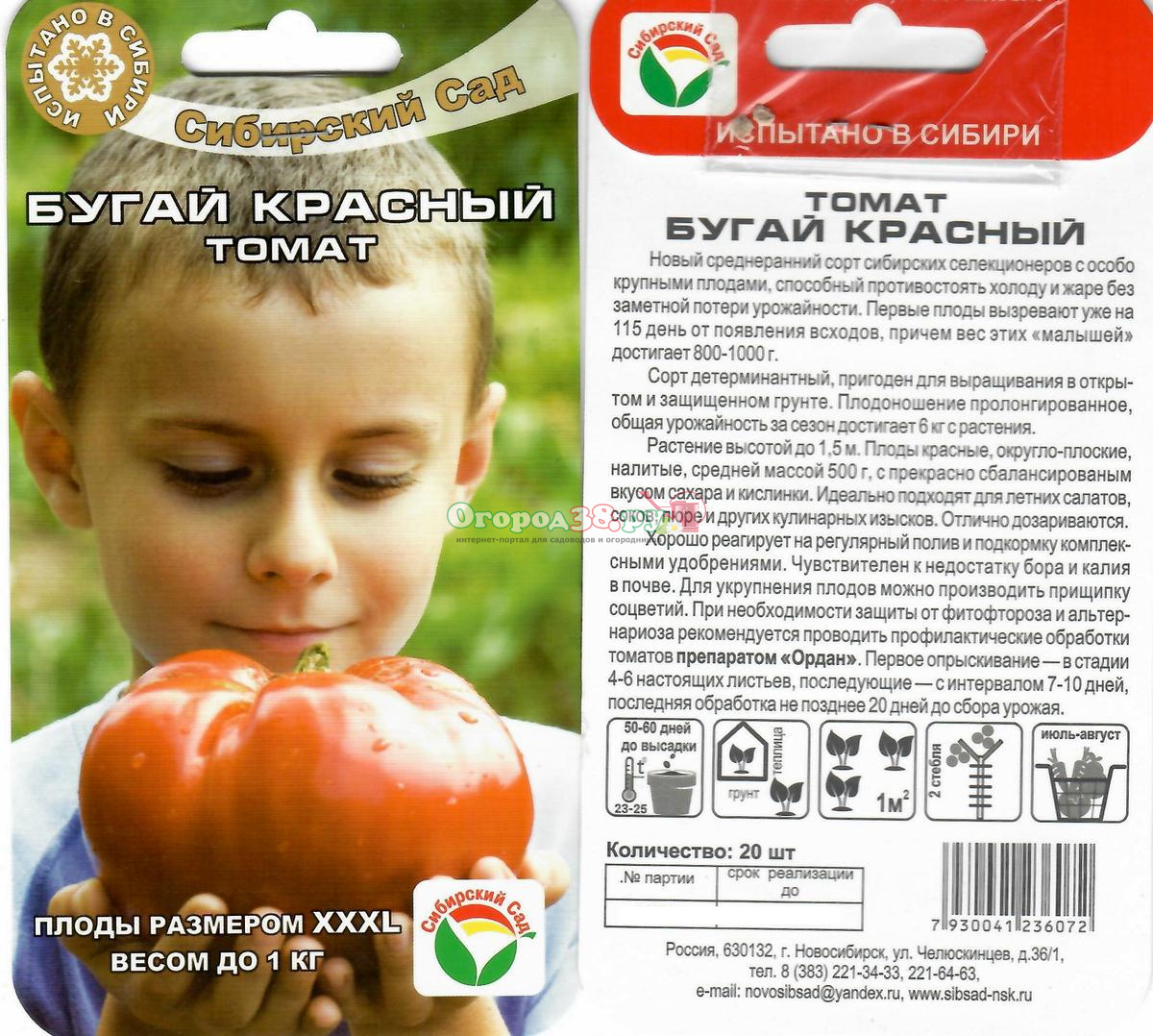
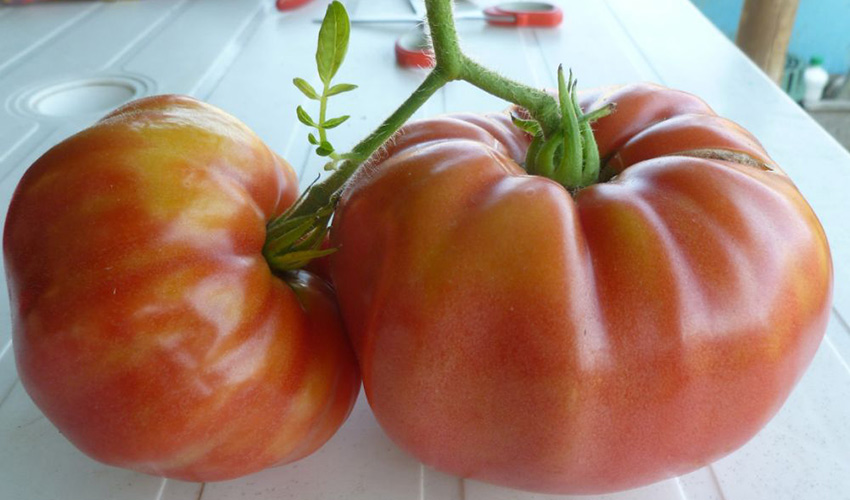
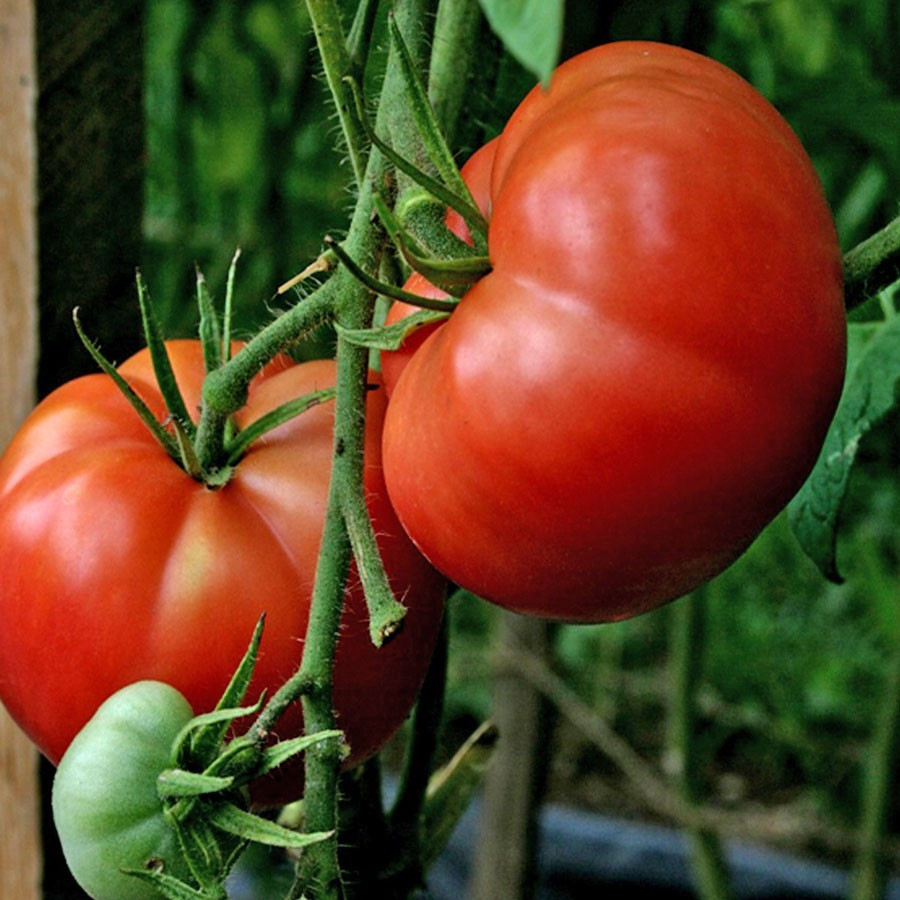
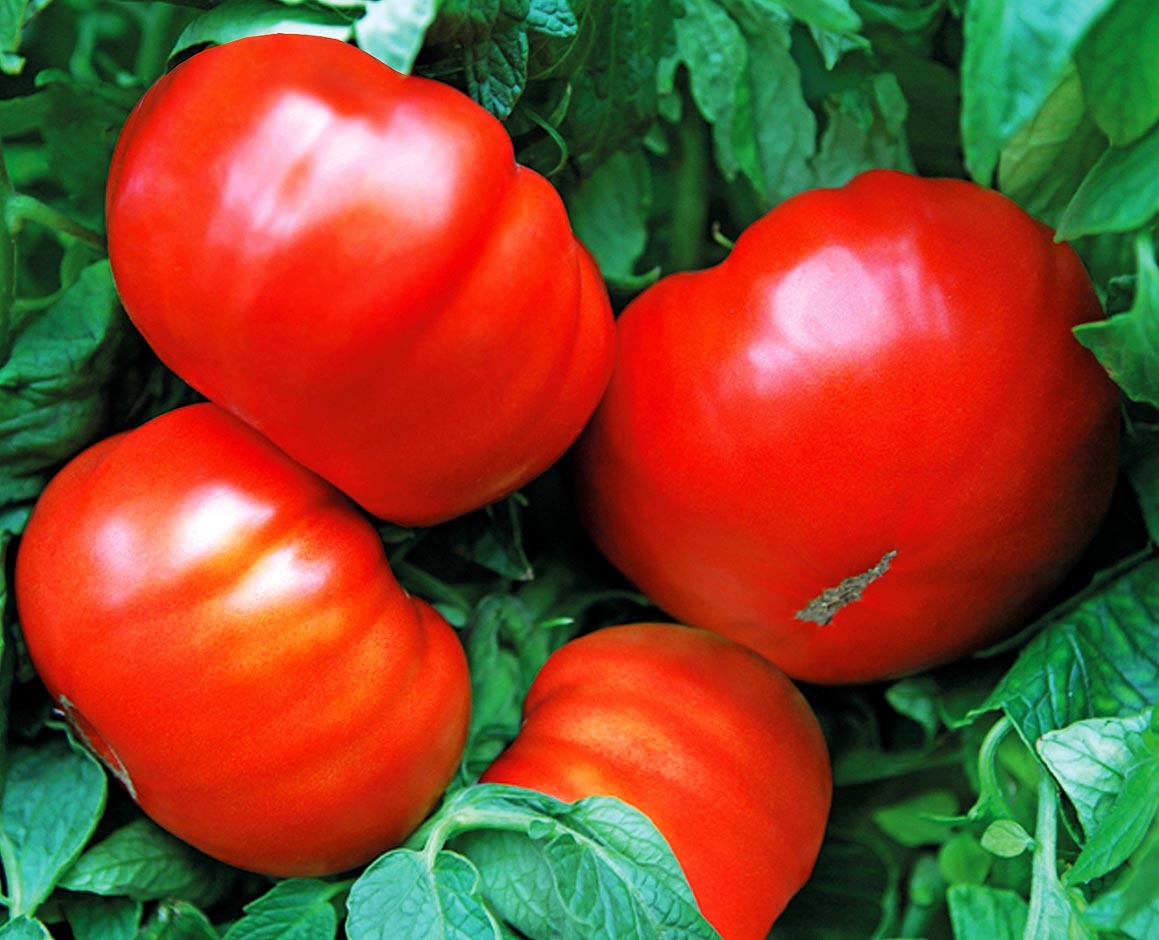
Table of characteristics of the tomato variety Bugai Pink
| Characteristic | Description |
| Description | A late-ripening determinate hybrid, intended for cultivation both in greenhouses and open ground. |
| Ripening period | 115-120 days |
| Fruit weight | From 310 g |
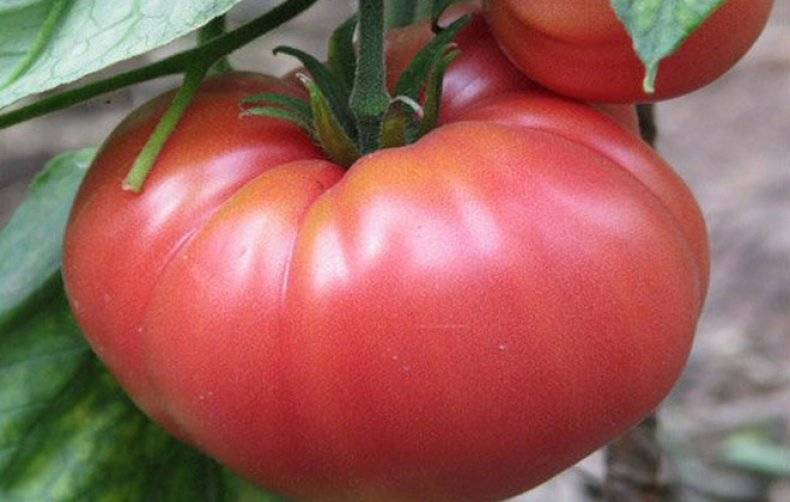
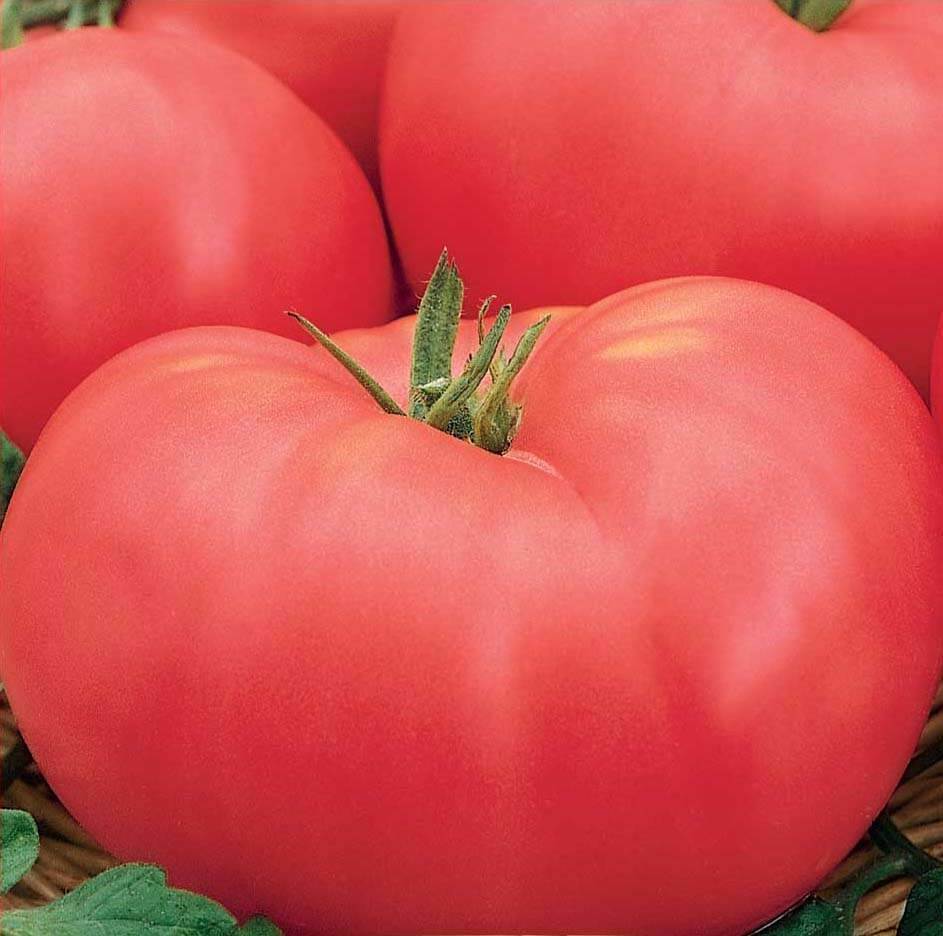
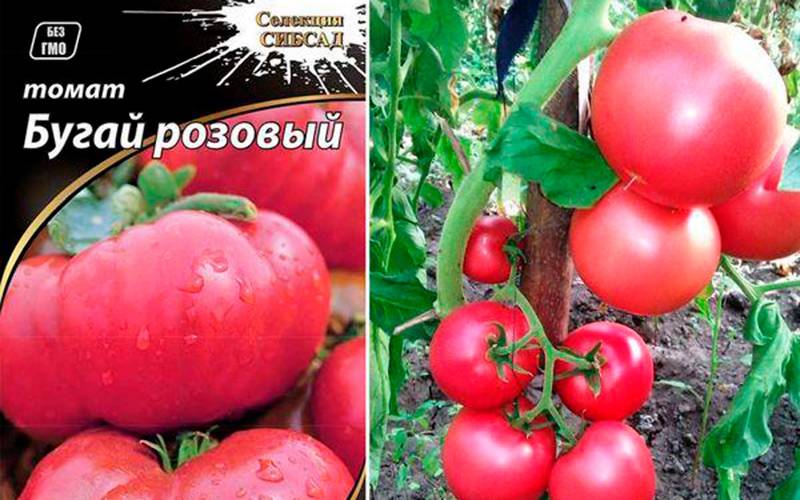
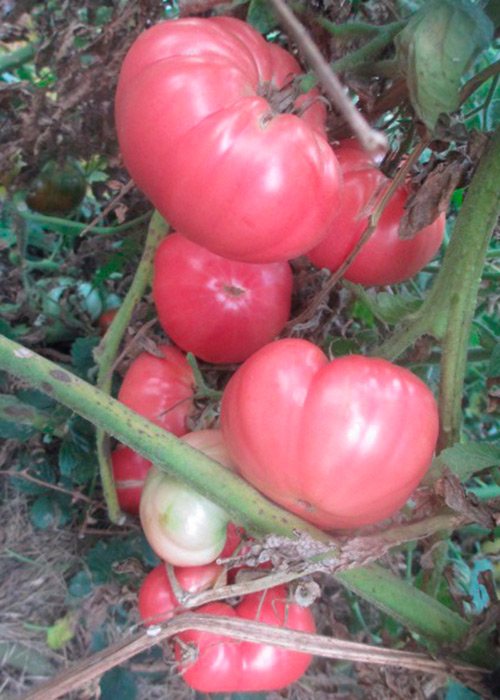
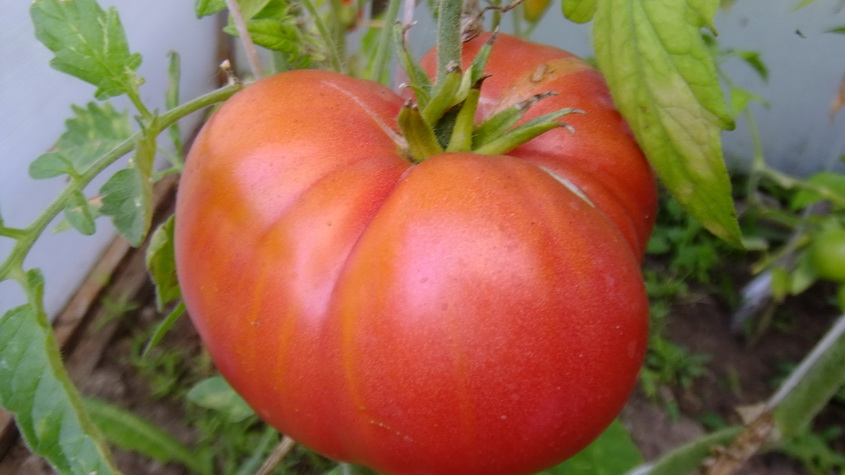
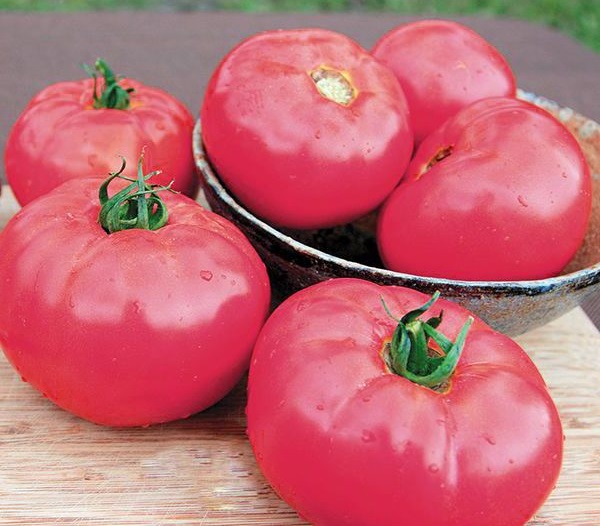
| Description of the fruit | The fruits are round, slightly flattened at the ends. The flesh and skin are pink. The taste is sweet, juicy, and multi-chambered. |
| Productivity | 392.0 c/ha |
| Usage | The harvest is used for processing into sauces, pastes, as well as for preparing salads and fresh food. |
| Preferred growing regions | It is grown with equal success in all regions of the country, but in cities with a harsh climate it should only be planted in a greenhouse. |
| Disease resistance | The variety is distinguished by strong immunity, but is prone to fungal diseases if cultivation rules are violated. |
| Agricultural technology | The variety requires the formation of a bush with 1-2 shoots, which must also have support and be tied up. |
| 2014 | |
| Originator | Dederko V.N., Postnikova O.V. |
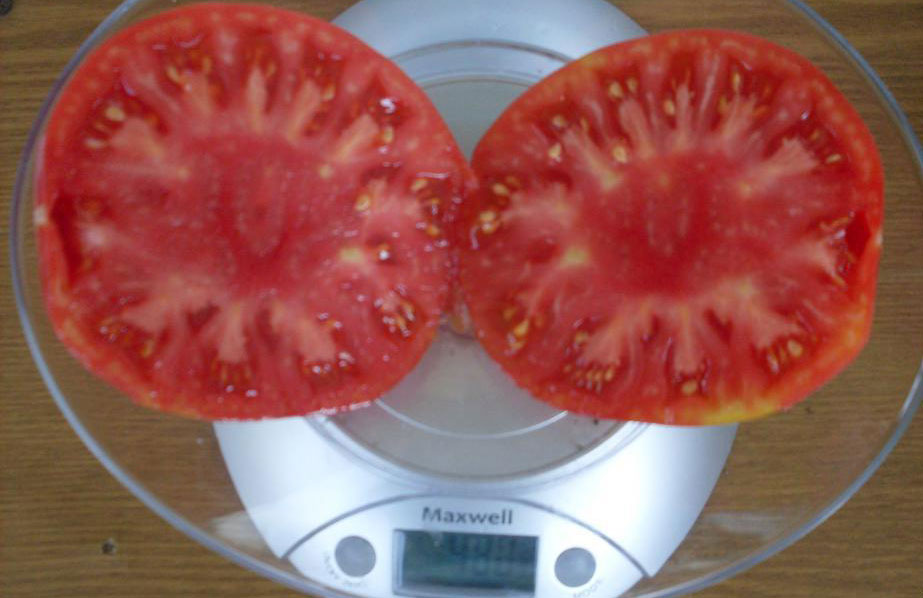
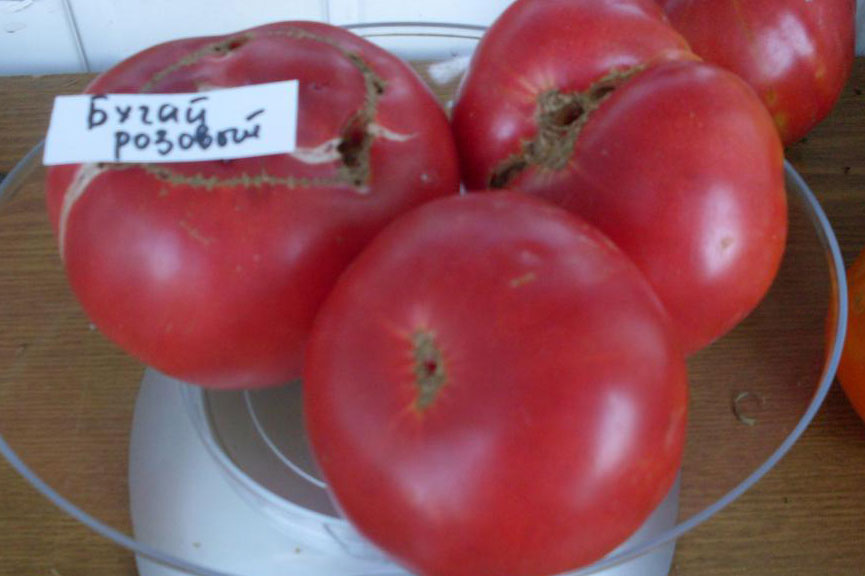
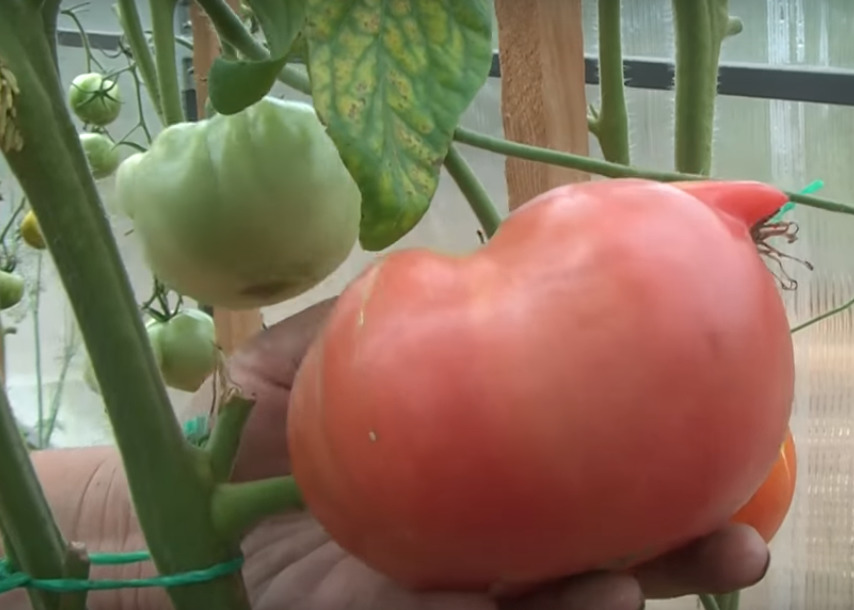
Photo gallery of the Pink Bugay tomato
The origins of the tomato varieties Bugai Red and Pink
Bugay is a relatively new tomato variety. It was developed by two well-known Russian breeders, V.N. Dederko and O.V. Postnikova. Their goal was to create a new tomato variety that would thrive even in northern latitudes and deliver a high yield. They accomplished this goal with flying colors, resulting in two varieties of Bugay—red and pink. Both new varieties were added to the register in 2014.
A detailed description of the tomato varieties Bugai Red and Pink
Since the Bugai red and pink varieties differ practically only in color, let's consider a more detailed general description of the Bugai variety.
Bushes
Although red and pink bugay have determinate shoots, they can reach a height of 1.8-2 m, especially in a greenhouse. Therefore, they must be tied and trained to no more than two shoots.
The leaves are medium-sized; as the tomatoes grow, they are removed from the lower tiers, but not above the third inflorescence.
Each inflorescence produces 3 to 5 fruits.
Fruit
Red and Pink Bugai tomatoes have a round, slightly flattened shape. Their weight ranges from 300 to 1000 g. To obtain the largest fruits, the bush should be grown in a greenhouse, forming a single shoot.
They vary in color: red and pink. The flesh is juicy and fleshy, with a small number of seed chambers. The skin is thin, but dense enough to hold its shape and prevent the tomatoes from cracking on the vine.
Productivity
Tomato yield is directly dependent on growing conditions. The fewer shoots on the vine, the larger the tomatoes will be. Some tomato varieties can reach 1 kg in weight. Each vine can yield up to 10 kg of tomatoes. The average yield of the Red Bugai is 385 c/ha, while the Pink Bugai variety yields slightly more at 392 c/ha.
Ripening time
The Bugai variety is distinguished by its long ripening period, which varies from 110 to 120 days depending on the growing region and conditions.
Advantages and disadvantages of the red and pink Bugai tomato varieties
The Bugay tomato variety has a number of advantages and disadvantages.
| Advantages | Flaws |
|
|
Features of growing tomato varieties Bugai red and pink
Gardeners grow the Bugai tomato from seedlings. It's easy to care for; just provide support, water regularly, and treat for pests.
Sowing seeds and growing seedlings of the Bugay tomato variety
When purchasing seeds, it's important to pay attention to the manufacturer to avoid buying a low-quality product. Many agricultural companies pre-treat the seeds, making things easier for gardeners. All they have to do is germinate the tomatoes and plant them.
Some gardeners skip the germination stage, but experience shows that such plants have a higher germination rate and take root better.
The soil must be nutritious, so it's best to buy it from a specialty store. Alternatively, you can mix the soil yourself using equal parts sand, humus, peat, and garden soil.
Fill the selected container 2/3 full with potting soil, then make shallow furrows into which the seeds are planted. They don't need to be planted very deep; 1 cm is sufficient.
Next, water the seedlings using a syringe or spray bottle, and cover the container with glass or plastic wrap. After this, place the seedlings in a warm place to germinate. Once all or most of the seeds have emerged from the soil, remove the cover and move the tomatoes to a cooler location.
After 2 true leaves appear, the seedlings are picked.
Planting the Bugay tomato variety in the ground
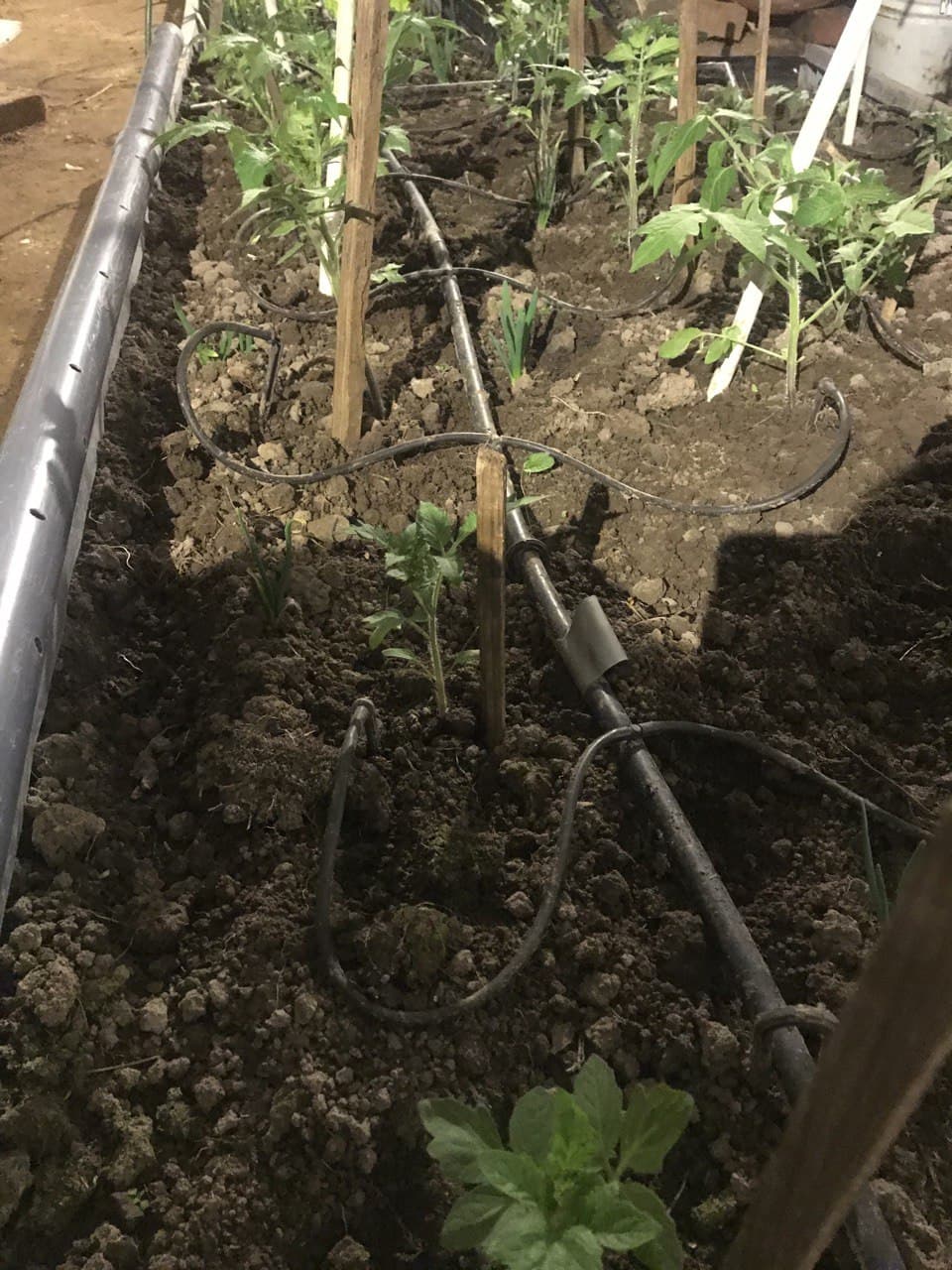
Before planting tomatoes in the garden, many gardeners prefer to harden them off. This can be started 10-14 days before planting by placing the seedlings outside or on the veranda for a few hours.
The soil in the garden bed is prepared in the fall. When digging at the end of the season, all necessary fertilizers are added. In the spring, the soil is dug again. Then, holes are dug 60 cm apart. The distance between rows should be 70 cm.
Tomatoes are transferred to each hole along with a lump of soil on the roots, after which the holes are filled in, watered, and mulched.
The Bugay tomato prefers warm air, so for normal growth the air temperature in the greenhouse should not be below 16 degrees.
Care, watering and fertilizing of the Bugay tomato variety
Tomato shoots are tall, so they require a staking system. As they grow, side shoots and side shoots are removed. The first lower leaves can be removed from the shoots a month after planting. Bushes are trained to consist of 1-2 shoots.
After planting, tomatoes need to be given adequate water. Initially, water once a week, but as the weather improves and temperatures rise, the frequency can be adjusted. In hot climates, it may be necessary to water tomatoes daily to prevent them from splitting on the vine.
A solution of mullein or weeds can be used as fertilizer. Some gardeners prefer commercially available complex fertilizers. These should be applied no more than three times per season.
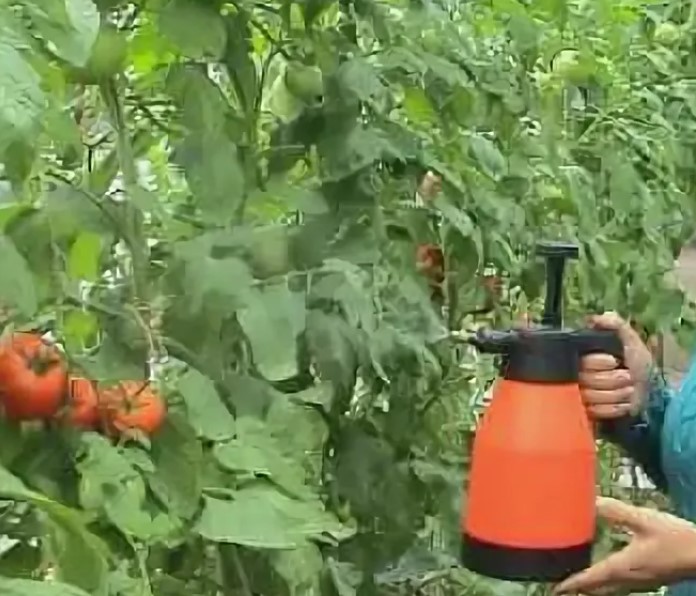
To prevent the appearance of pests and diseases, plantings are sprayed with a solution of phytosporin or Bordeaux mixture at intervals of 10-14 days.
Resistance of Bugai tomato varieties to diseases and pests
The Red and Pink Bugai tomato varieties are characterized by strong immunity and are resistant to many diseases. However, if planting or care instructions are not followed, problems and unpleasant symptoms may arise. To avoid this, preventatively treat the bushes with Bordeaux mixture.
When 6 true leaves have formed on the tomatoes, they are sprayed with Ordan or Fitosporin, which reduces the likelihood of late blight and alternaria.
If traces of fungus appear on plants, it is necessary to use products such as Hom, Ordan, Ridomil Gold and others.
If traces of insect pests appear in the garden bed, Karate, Actellic or Biotlin products will help.
The main thing is to complete all treatments 14 days before the start of harvest.
Harvesting, using and storing tomato varieties Bugai red and pink
Gardeners characterize the Red and Pink Bugay tomatoes as having medium ripening times, ranging from 110 to 120 days from germination, although they are listed as late in the register.
Harvested tomatoes can be stored in a cool place for no more than 4-7 days, after which they begin to spoil.
The Bugay tomato is used in salads and fresh food. Its juicy flesh makes it ideal for making delicious sauces, pastes, and juices. Unfortunately, due to its large size, it's not suitable for whole-fruit canning.
Comparison of tomato varieties Bugay with other varieties in the table
Please note! How can you easily convert centners/ha to kg/sq.m? Simply divide by 100! For example, the Abakansky Pink tomato yields 400 centners of marketable fruit per hectare. This equals 4 kg per square meter. It's that simple! Also, keep in mind that typically no more than 3-4 plants are planted per square meter. This way, you can calculate the yield per bush. In the case of the Abakansky Pink, it's about 1 kg.
| Variety | Ripening period (number of days from full germination to ripening)
Yield of commercial fruits |
Brief description | Fetus |
| Red and pink bull | 110-120 days
385-392 c/ha |
A late-ripening determinate variety for open ground and greenhouses. Suitable for salads. Marketability: 89.5-90.3%. | Large, medium-ribbed, flat-round, red with a dark spot near the stalk and pink, 305-310 g. |
| Abakan pink | 120 days or more
400 c/ha |
A late-ripening determinate variety for open ground and greenhouses. Requires staking and training. Suitable for salads and processing into tomato products. | Flat-round, slightly ribbed, medium density and pink in color, 200-500 g. Good taste. |
| Agatha | 98-113 days 583-676 c/ha |
An early-ripening, determinate, non-standard variety for open ground and greenhouses. Suitable for salads. | Flat-round, smooth, red, 77-99 g.
Taste qualities 3.8-5 points. |
| St. Andrew's surprise | about 120 days
800 c/ha |
A late-ripening indeterminate variety for greenhouses (can be grown outdoors in the south). Suitable for salads, juices, and tomato paste. Seedlings tolerate low light conditions well. | Flat-round, smooth, medium density, pink, 150-230 g. Excellent taste. |
| Bobcat | 120-130 days
224-412 c/ha |
A late-ripening, determinate variety for open ground. Suitable for salads and processing into tomato products. Marketability 75-96%. | Flat-round, ribbed to strongly ribbed, dense, red, 90-226 g. The taste of the fruit is good, the tomato juice is good to excellent. |
| Big Dipper | 100-110 days 1150-1450 c/ha |
An early-ripening indeterminate variety for open ground and greenhouses. Requires staking and shaping. Suitable for salads. | Flat-round, slightly ribbed, medium density, pink, 210-260 g. Good taste. |
| Volgograd (5/95) | 116-130 days
374-1035 c/ha (20-25% of the total yield ripens within 15 days of fruiting) |
A late-ripening, indeterminate, standard, compact variety for open ground. Suitable for salads and processing into tomato products. | Flat-round, smooth and slightly ribbed, medium-sized and large, red, 90-150 g. Good to excellent taste. |
| Mushroom basket | 115-120 days
630 c/ha |
A late-ripening, indeterminate, standard variety for open ground and greenhouses. Requires staking and shaping. Suitable for salads. | Flat-round, very strongly ribbed, medium density, pink, 250 g. Good taste. |
| Pride of Siberia | 85-100 days
up to 2000 c/ha |
A mid-late, indeterminate, standard variety for open ground and greenhouses. Suitable for salads and processing into tomato products. | Flat-round, large, red, 320 g. The taste is good and excellent. |
| Kate | 80-85 days 326-550 c/ha |
An early-ripening determinate variety for open ground. Suitable for salads. Marketability: 84-90%. | Flat-round, smooth, crack-resistant, red, 80-92 g. Good to excellent taste. |
| Katya is pink | 80-85 days
1600-1800 c/ha |
An early-ripening determinate variety for open ground. Suitable for salads. Marketability: 84-90%. | Flat-round, medium density, smooth, pink, 120-130 g. Good taste. |
| Russian size | 125-127 days
700-800 c/ha |
A late-ripening indeterminate variety for greenhouses. Suitable for salads. | Flat-round, slightly ribbed, red, 630 g. Excellent taste. |
| Yusupovsky | 110-115 days
100-1200 c/ha |
A late-ripening, tall, indeterminate variety for greenhouses. Requires staking and training. Suitable for salads, juices, and sauces. | Flat-round, large, fleshy, pink-red, 400-800 g. When grown in open ground, the weight is from 200 g. |
Gardeners' reviews of the Red and Pink Bugai tomato varieties
Gardeners love the Bugai variety for its excellent yield. Many note its low maintenance and low disease resistance.
I order seeds online, but now I'm coming to the conclusion that I should buy them from a specialty store. It's not even because the seeds are bad; it's just that shipping is expensive. And this manufacturer doesn't offer the same number of seeds per package.
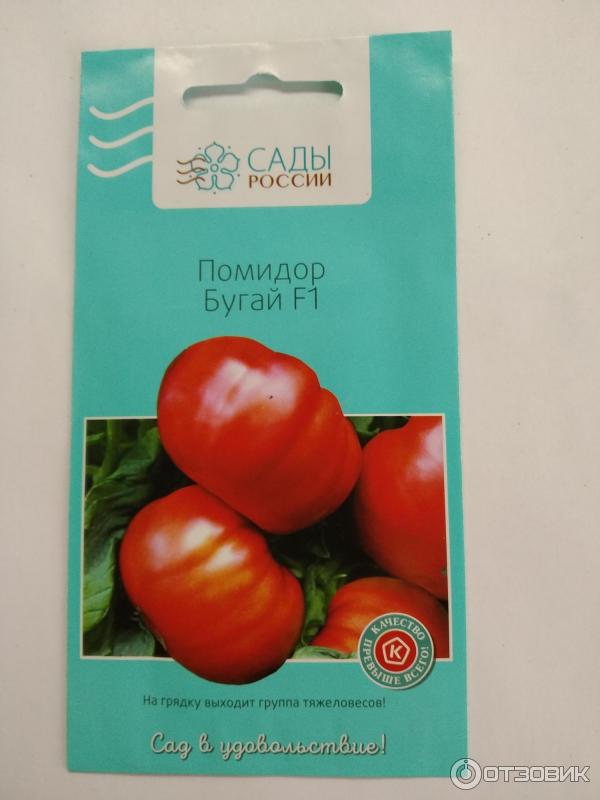
My review today is about the Sady Rossii "Pomidor Bugay F1" seeds; I also ordered them this spring. I really love growing large, fleshy tomatoes because my preserves require larger ones. I rarely salt the tomatoes, and for pickling, I use this variety, for example. I mainly use them to make ketchup, adjika, and, of course, my favorite tomato juice.
That's why I decided to buy this variety. The seed packet from Gardens of Russia is green.
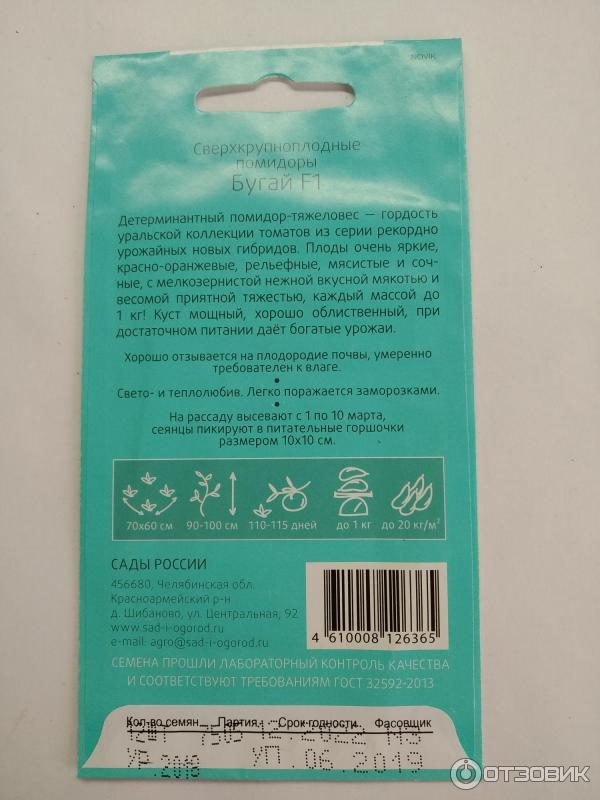
The back of the package contains all the necessary information about this variety and its description. The manufacturer promises fruits up to 1 kilogram. But I understand, of course, that I won't grow such fruits. To do that, I'd have to remove almost all of them, leaving only a few, and I'm not willing to do that. Let them grow as they please. The bush is stated to grow up to one meter tall. Mine started growing taller, so I trimmed off the tops.
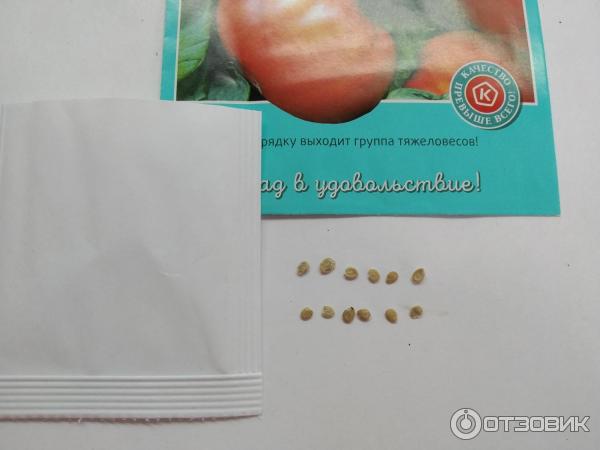
Russian gardens never spoil us with a large quantity of seeds. They're always in short supply. In this case, there are twelve seeds in the package. Not one more. There's additional paper packaging inside. This is very convenient for those who don't plant all the seeds at once. I, however, believe there's nothing to store here. Firstly, they're unlikely to all sprout, and secondly, you need to select the strongest ones later.
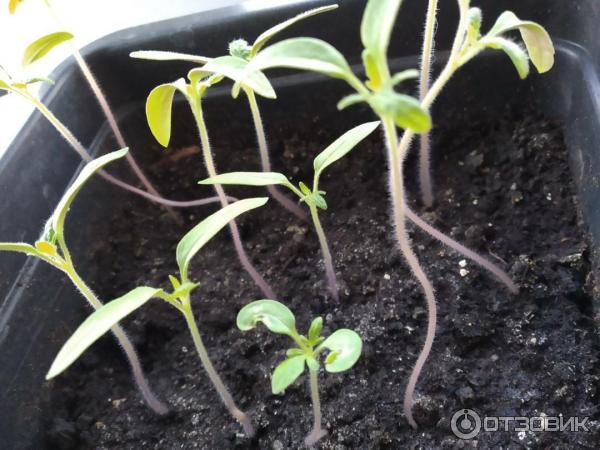
The seeds germinated well, but the seedlings grew very tall. Although I don't plant them too early and always provide them with good light.
Since I didn't remove the fruit—everything that set—they grew, so they varied in size. There were a lot of tomatoes on the bush. At first, I removed the side shoots, but then there was a time when I had no time, and the bushes produced a lot of greenery. When I got to them and started removing them, I was surprised by the number of tomatoes.
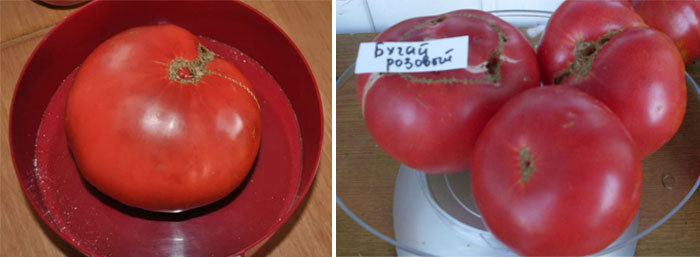
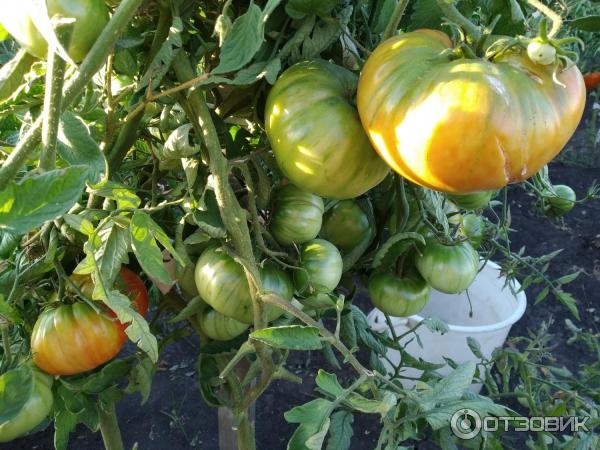
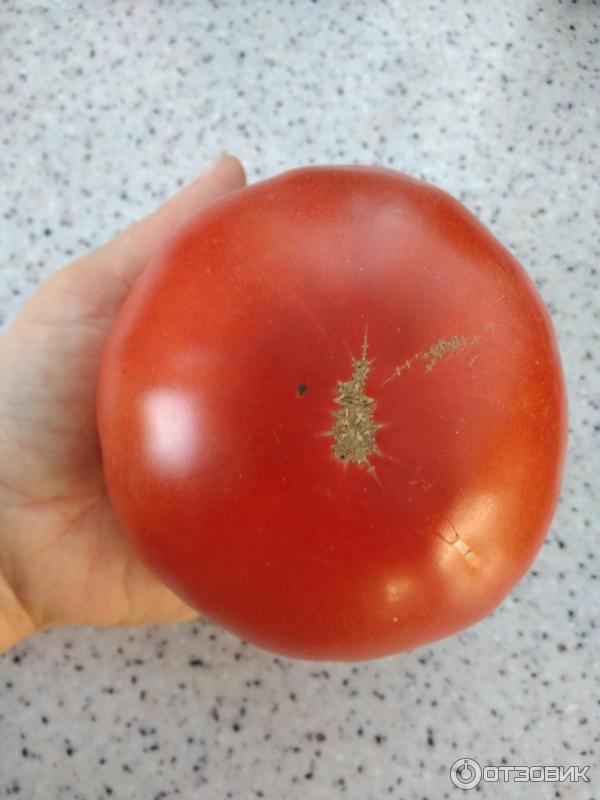
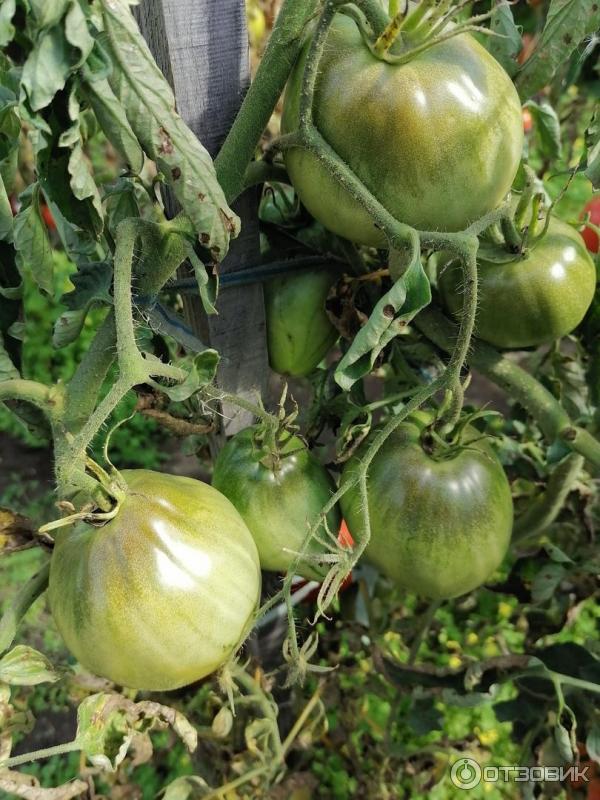
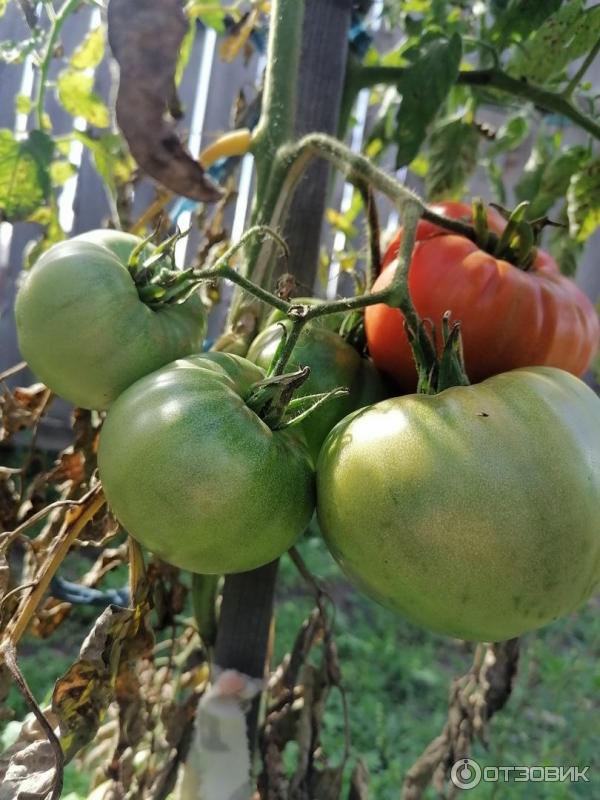
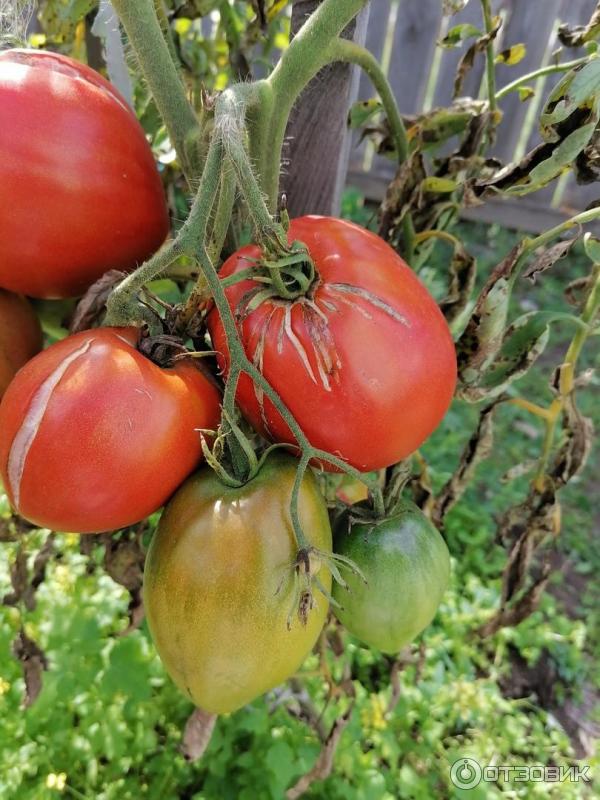
I decided not to overwater them this year either. The rains helped. But I did give them a good three times. Here's a large brown tomato hanging there, and for some reason it's already cracked. I'm guessing this variety is prone to cracking.
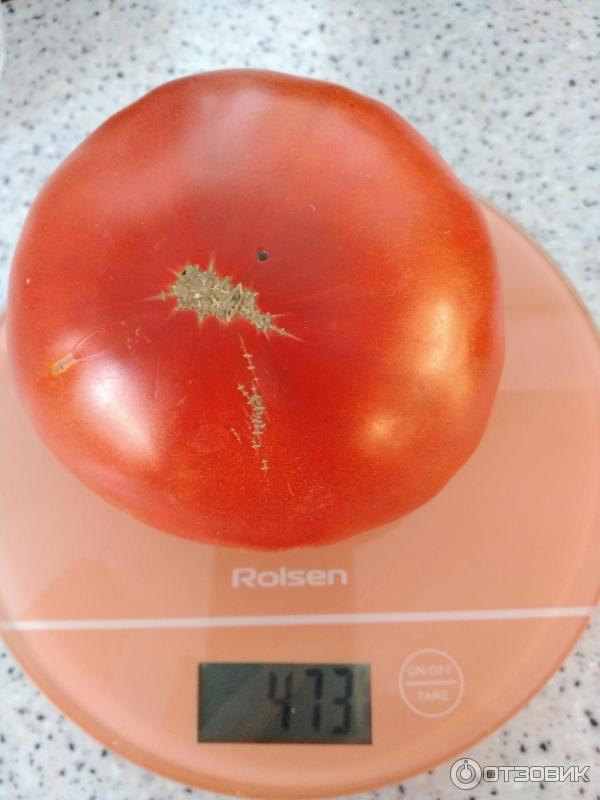
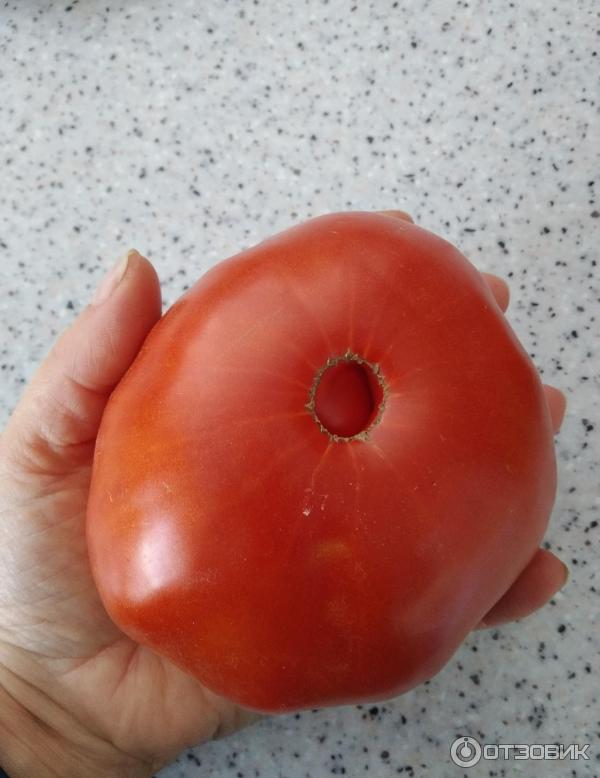
This is the biggest tomato I've ever grown. I picked it in August.
Its weight was 473 grams.
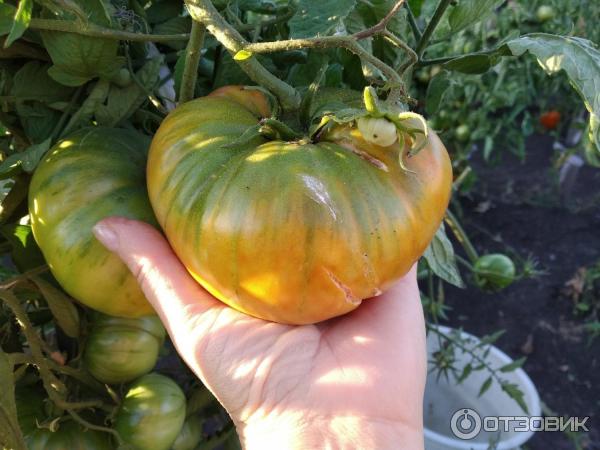
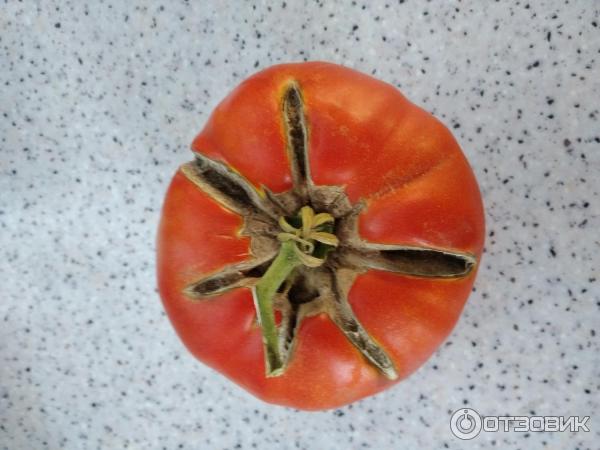
But from the other side, it looks like this. It's also cracked. Obviously, the whole top needs to be cut off. But I don't throw anything away. I have a few laying hens who really appreciate tomatoes. So I give them all the trimmings.
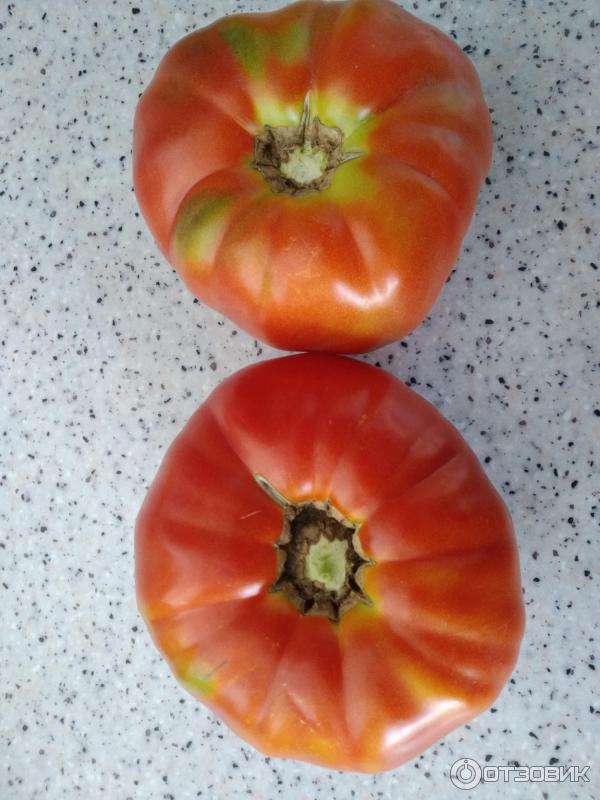
In September, the fruits were a little smaller, these are the largest ones, the ones from September. They're still a little green. The cracks on the top are gone. Drought.
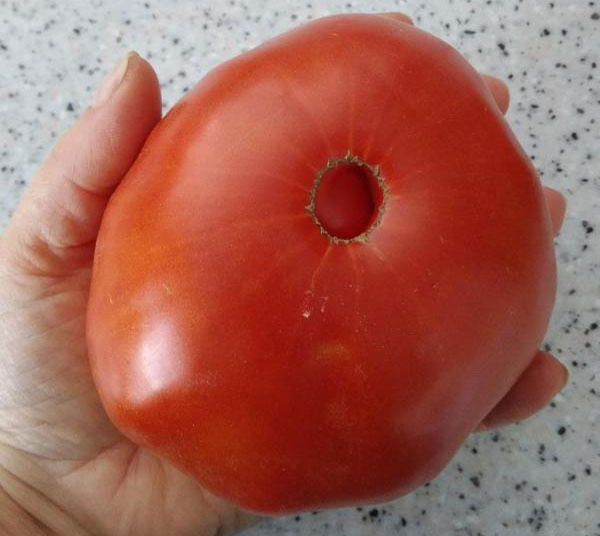
It's nice to hold such a tomato in your hand. And what juice it will make... Mmm.
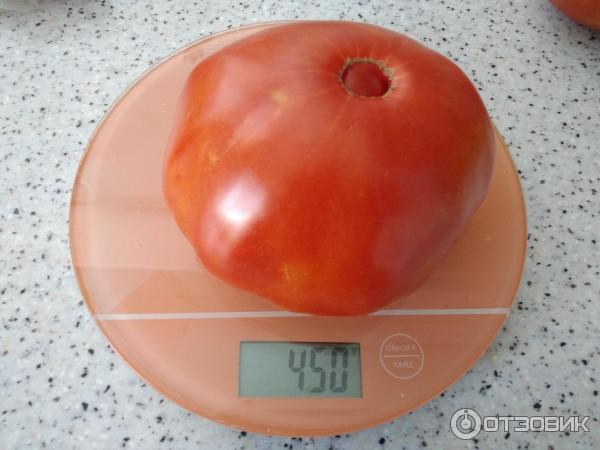
This one weighed 450 grams. It's smaller, but still impressive. The other tomatoes also grew quite large, but they weighed around 300-350 grams. I think that's a pretty good result.
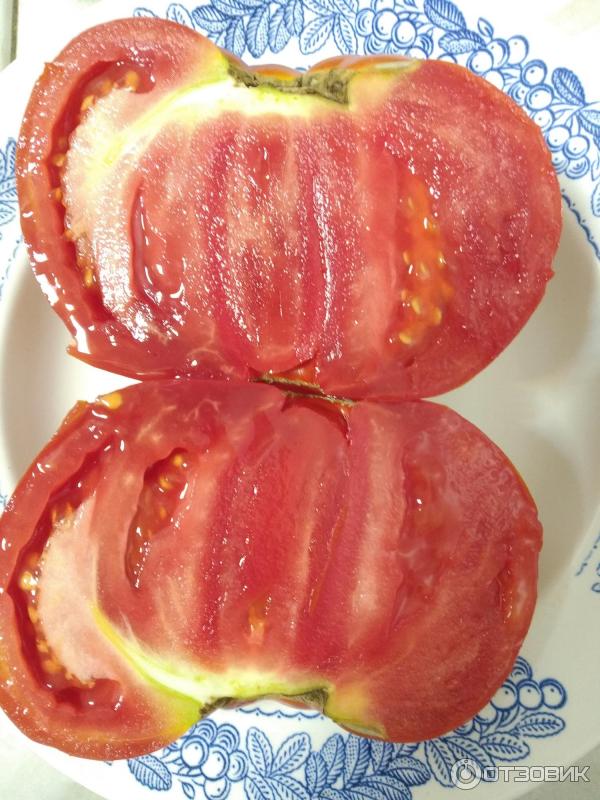
Let's see what it looks like when cut. There's a bit of green stuff near the stem, which will have to be trimmed off, of course. But overall, it's a good tomato—fleshy, dark red. This variety of tomato would be great for ketchup, but I'll eat it at work today.
I've been eyeing this variety for a long time, so I've been holding off on writing a review for a while. I was trying to figure out whether I liked it or not. But I seemed to be happy with the number of fruits and the size. The tomatoes taste good, too. Well, yes, the fruits are prone to cracking. But not all the tomatoes cracked; there were some good ones.
So, I'm inclined to say I liked the Sady Rossii "Tomato Bugay F1" seeds, but I'll still probably take off one star. You can't collect seeds from it since it's an F1 variety. I might buy more, maybe from a different manufacturer. Last year, I also liked this large tomato variety from Sady Rossii; they were also meaty and tasty.
Thank you for your attention to my review, dear readers!
Eat tomatoes while they're still fresh! They're so healthy!
Have a good mood everyone!
Good day, friends and guests! I'd like to write a review of the "Bugai" tomato variety. I was first introduced to it about eight years ago at our gardening store, "Semena." I also purchased the following tomato seeds back then: Sen-Sey, Batyanya, Tomato Sanka, Chelnok, Demidov, Konigsberg, Zolotoy Konigsberg, Medovy Spas, Abakansky Pink, Golden Canary, Easter Egg, Black Prince, Scarlet Candles, Petrusha the Gardener, and Bear's Paw.
Don't be surprised that there are so many varieties; it's still not enough. My professional field is agronomy. And every year, I conduct variety testing of at least 12 tomato varieties, as well as other crops.
So, the seedlings are not 100%, but about 80 percent have sprouted, and knowing our seeds, you can say that’s luck!
The seedlings grew well with additional lighting, without stretching.
After hardening off outside, the seedlings were planted in the ground. And then, as they say, it all began. Cold and rain, and three hailstorms wiped out many of the people's crops. Many simply didn't plant anything that year, while others replanted. I was hit by hail, but only marginally, thank goodness.
Because the weather was unfavorable this year, the tomatoes were attacked by all sorts of diseases, and due to the abundance of heavy rainfall, the fruits cracked!
And yet, we managed to harvest a fairly good crop this year!
The tomato clusters are simple, with 3 to 6 fruits per cluster. The fruits are fleshy with few seeds and liquid, which is very appealing. Fruit weight varies from 150 to 550 grams, with an average of 300 grams. The flavor is sweet without a hint of tartness.
If you enjoy sweet, thin-skinned fruits, I recommend planting this variety. It's great eaten fresh and used in various preserves, including ketchup, juice, and more.
Dear friends and guests, please leave your comments; it's always a pleasure to read them!
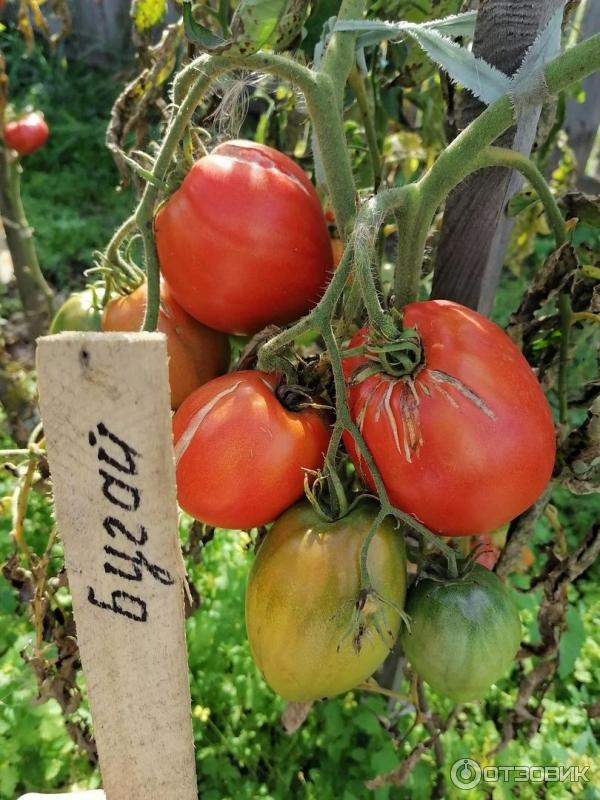
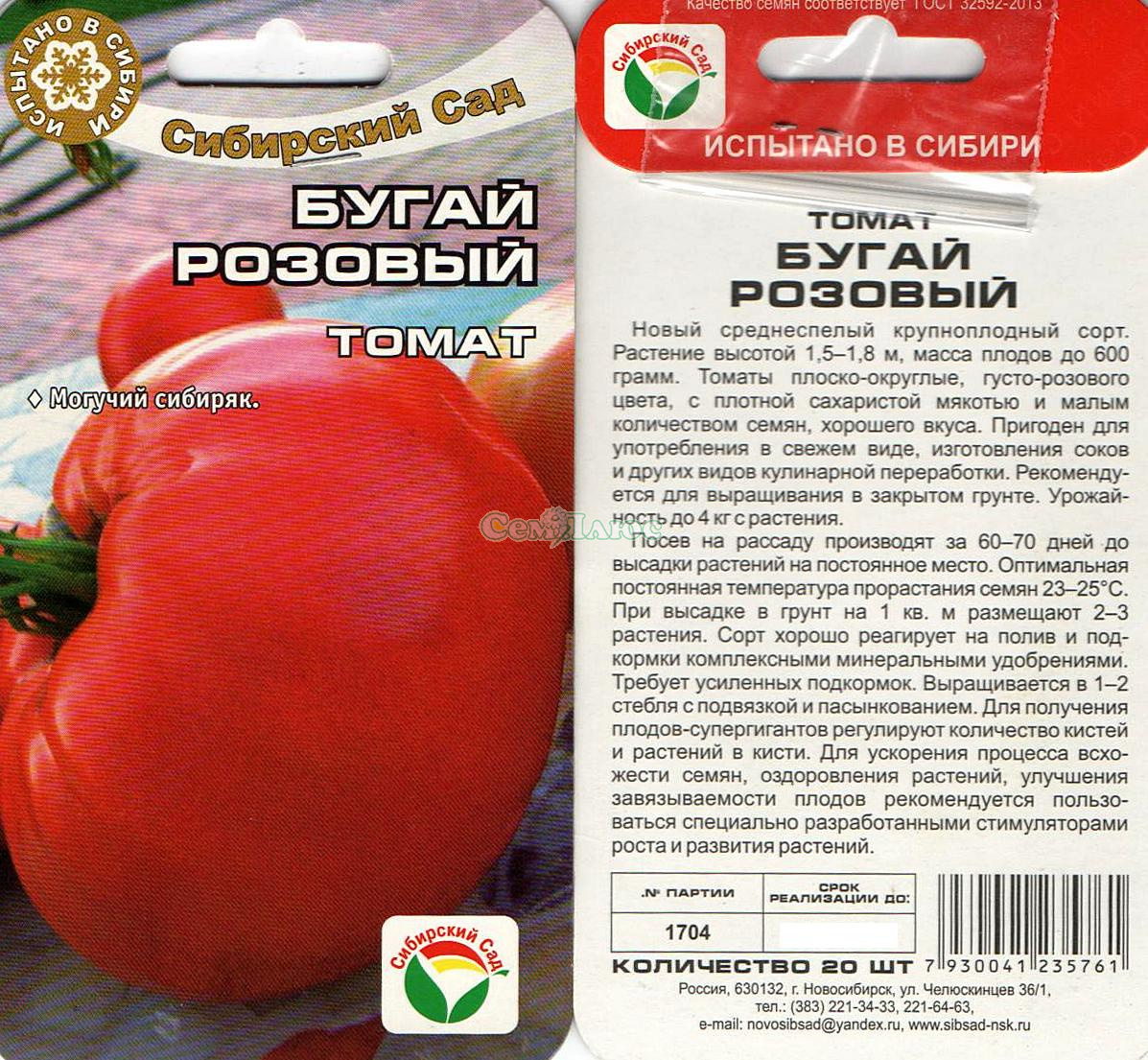
Description from the pack:
A new mid-season, large-fruited variety. Plant height: 1.5-1.8 m, fruit weight: up to 600 g. The fruits are flat-round, deep pink, with dense, sugary flesh and few seeds, offering excellent flavor.