The Russian Size tomato is a hybrid variety. It lives up to its name. It's a large-fruited, sweet, and high-yielding variety grown not only in private gardens but also commercially. This article provides a detailed description of the Russian Size tomato.
Content
- 1 Table of characteristics of the Russian Size F1 tomato variety
- 2 The history of the Russian Size F1 tomato variety
- 3 Detailed description of the tomato variety Russian Size F1
- 4 Pros and cons of the Russian Size F1 tomato variety
- 5 Growing the Russian Size F1 tomato variety
- 6 Planting the Russian Size F1 tomato variety in the ground
- 7 Caring for the Russian Size F1 tomato variety
- 8 Resistance of the tomato variety Russian Size F1 to infections and pests
- 9 Harvesting, using and storing the Russian Size F1 tomato variety
- 10 Comparison of the Russian Size F1 tomato variety with other varieties
- 11 Gardener reviews of the Russian Size F1 tomato variety
Table of characteristics of the Russian Size F1 tomato variety
| Characteristics | Description |
| Description | Indeterminate late-ripening variety for greenhouses and film shelters. |
| Ripening period (number of days from full germination to ripening) | 125-128 days. |
| The fruit is mass | 650-2000 BC |
| Description of the fruit | Red, round, slightly ribbed, slightly flattened. Excellent flavor. |
| Productivity | 7-8 kg/1 sq. m. |
| Usage | Salad and for making juices and sauces. |
| Marketability, shelf life | High, medium. |
| Preferred growing regions | Any. |
| Disease resistance | fusarium; Cladosporiosis; tobacco mosaic virus. |
| Agricultural technology | Requires gartering and shaping into 1 stem. |
| 2002 | |
| Originator | RF. LLC 'BREEDING FIRM GAVRISH' |
Photo gallery of the tomato variety Russian Size F1
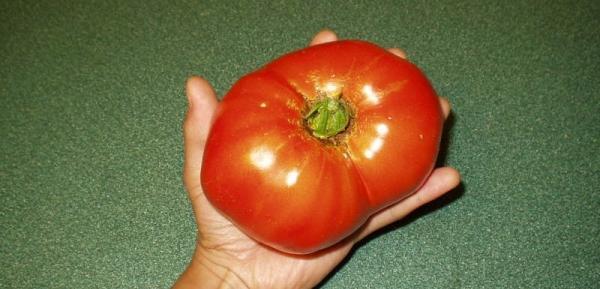
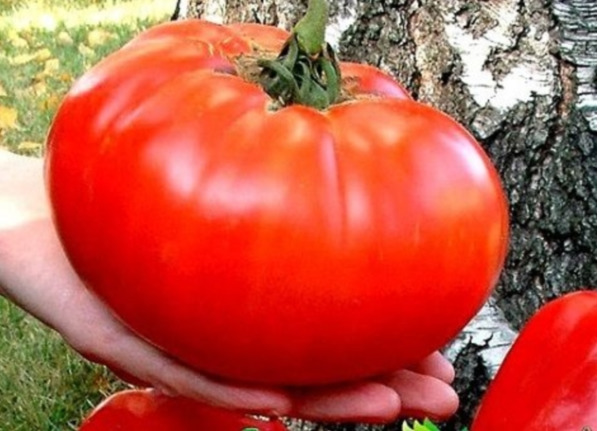

The history of the Russian Size F1 tomato variety
Vegetables like tomatoes were first brought to Russia from South America. They were small in size and lacked flavor. However, through selective breeding, they have improved their appearance and flavor.
Moreover, Russian breeders are keeping pace with their foreign counterparts in this regard. Every year, they develop new varieties and hybrids. One of the achievements of domestic breeding is the "Russian Size" tomato. This variety is renowned for its impressive size and relatively high yield.
Detailed description of the tomato variety Russian Size F1
Let's look at the description of the Russian Size variety in more detail.
Bush characteristics
Forms powerful, branched bushes with a large number of leaves, reaching a height of 180-200 cm. The leaf blades are simple, without pubescence.
The first inflorescence forms above the ninth leaf. Subsequent inflorescences occur every two leaves. The inflorescences are simple. Fruits form on clusters of 3-6. However, the grower recommends leaving no more than three ovaries on the bush.
Fruit characteristics
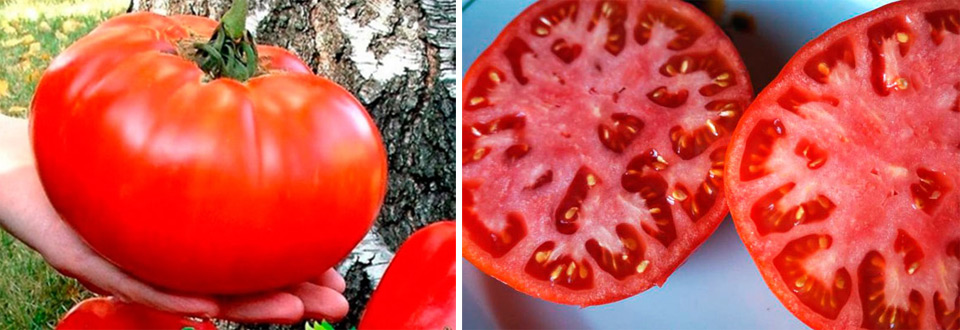
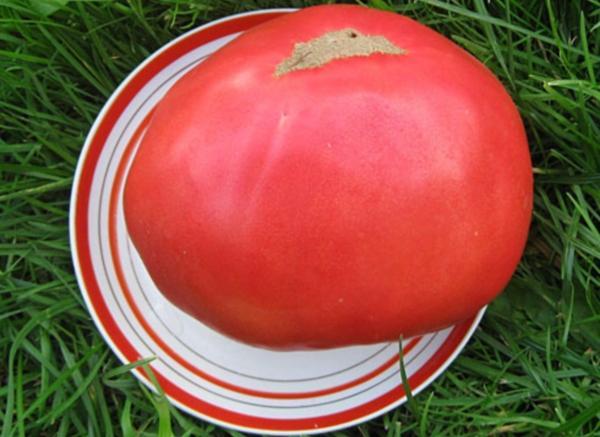
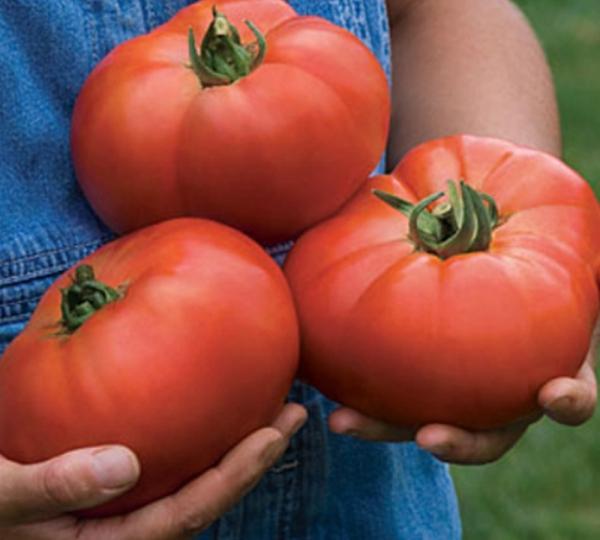
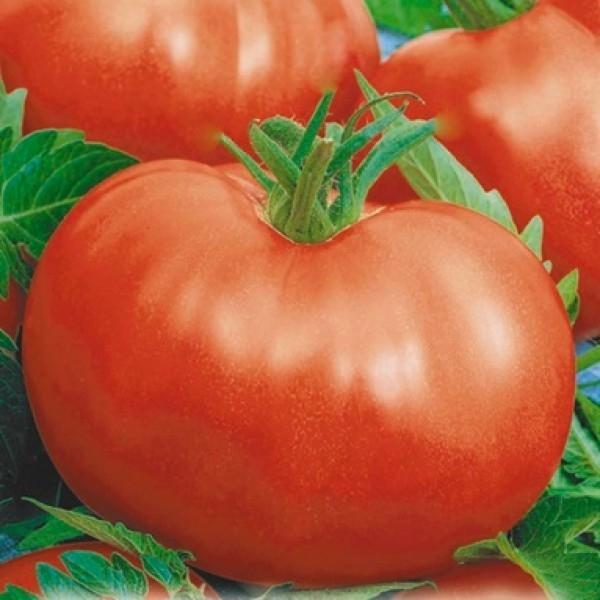
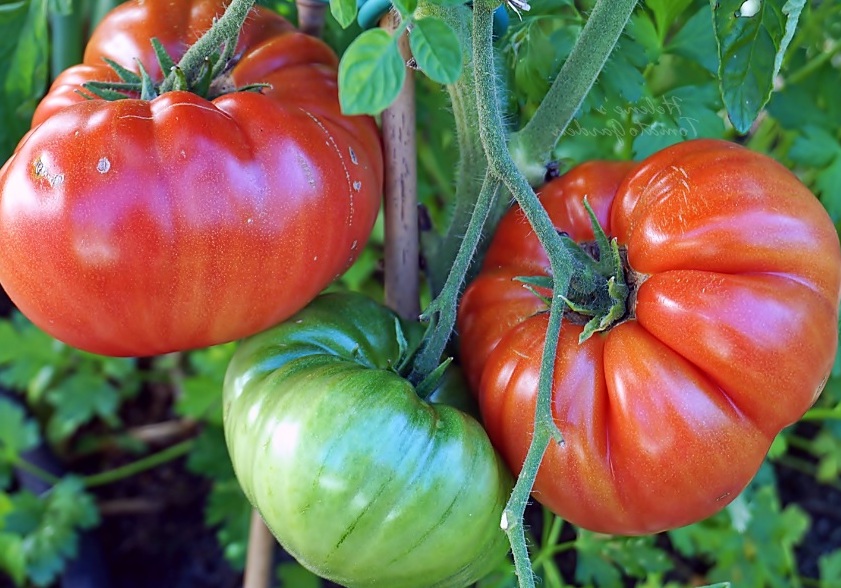
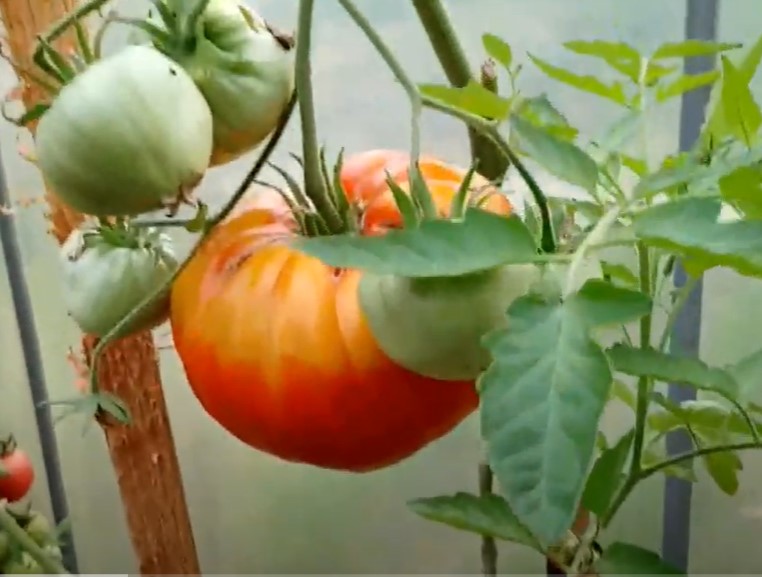
This variety is characterized by giant fruits, which can weigh up to 2 kg. The tomatoes have red skin and red flesh. The shape is round and flattened at the base, although some fruits are irregular. There is no green spot near the stem; there is slight ribbing.
The pulp is abundant and juicy. The flavor is rich and sweet, without a pronounced sourness. It has four seed chambers. The seeds are unsuitable for planting.
Ripening time, yield
This is a late-ripening variety, ripening 128 days after sprouting. Therefore, the harvest can be in August.
If all agricultural technology requirements are met, 8 kg of fruit can be harvested from 1 square meter.
Pros and cons of the Russian Size F1 tomato variety
It has the following advantages:
- fruits of enormous size;
- excellent sweet taste;
- high resistance to many dangerous diseases of nightshades.
Disadvantages include the impossibility of growing in open ground (yields drop significantly) and high demands on care.
Growing the Russian Size F1 tomato variety
Russian size tomatoes are mainly grown using seedlings.
Sowing seeds and growing seedlings
Before sowing, seeds require processing, which is carried out in several stages:
- Check the quality of the seed. First, check the expiration date on the packaging. Then discard any damaged or discolored seeds.
- Checking the seeds for germination: Dissolve 1 teaspoon of salt in a glass of water. Soak the seeds for half an hour. Discard any that float to the surface; they are empty and will not germinate. Use the seeds that sink to the bottom.
- Seed dressing. A solution can be prepared using baking soda (1 teaspoon per 200 ml of water) and Fitosporin (1/2 teaspoon of powder per 100 ml of liquid). Aloe vera juice can also be used. Mix it with water in equal parts. When using these solutions, soak the seeds in the solution for 12 hours. If that time is not available, a light pink solution of potassium permanganate can be used. In this case, soaking for 30 minutes is sufficient.
- Growth stimulation. If Fitosporin, aloe juice, or a soda solution were used for seed dressing, they will also stimulate germination. No additional steps are required. If a potassium permanganate solution was used in the previous step, an additional treatment with Epin will be necessary.
FYI! Many producers treat their seeds themselves. This information is provided on the packaging. The seeds will then turn greenish or orange. In this case, re-treating is not necessary.
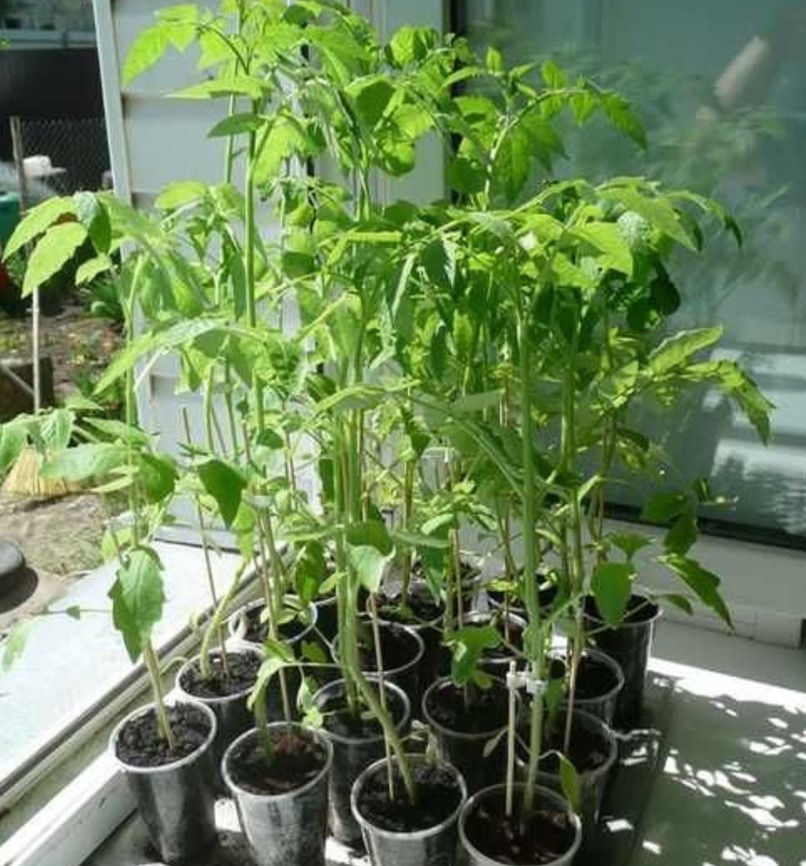
Sow seeds in any container suitable for the plants. For group planting, you can use containers, boxes, semi-finished product packaging, etc. Once grown, transplant the seedlings into 200-300 ml cups or pots. You can also sow directly into peat pellets. This method is convenient, but expensive. One peat pellet costs approximately 5 rubles. This can be expensive for large-scale cultivation. However, for a small garden, this method is worthwhile.
The soil for seedlings should be nutritious and light. You can purchase it at a specialty store or prepare it yourself from garden soil, humus, and peat, mixing all ingredients in equal proportions. It is also recommended to add half a part sand or coconut coir to the soil mixture. To increase fertility and reduce acidity, add a cup of wood ash and a matchbox of superphosphate.
There's an easier way to prepare the soil: mix equal parts black soil and sand.
Please note that the soil and containers must be disinfected before planting. You can do this by pouring boiling water or a potassium permanganate solution over them. Many manufacturers claim that their soil has already been disinfected, but it's always better to be on the safe side.
How to sow in peat tablets:
- Place them with the opening down and pour boiling water over them.
- When the water is completely absorbed, the tablets will swell, add more.
- Remove from container and place with opening facing up. Place seeds inside to a depth of 1 cm.
- Place all peat tablets with seedlings in one deep container, cover with plastic wrap and place in a warm place.
When planting seeds directly into individual pots, add a drainage layer and nutrient-rich soil. The seeds should also be planted 1 cm deep.
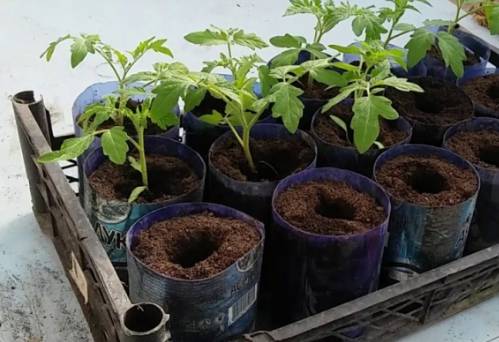
Care for seedlings consists of the following:
- Watering. Before seedlings emerge, mist with a spray bottle. Once sprouts emerge, you can switch to a watering can with a narrow spout or a syringe. Be sure to use warm, settled water, and avoid letting it come into contact with the plants.
- Loosening the soil. This is necessary for plants growing in individual containers. It should be done after each watering. A regular fork can be used for this.
- Pricking out. If the seedlings are in a common container, they should be transplanted into separate containers at the two true leaf stage. Do not pinch the roots, as this will slow down the seedlings' development.
- Fertilizer. When growing seedlings, apply twice: a couple of weeks after the leaves appear and three days before planting in the greenhouse.
When growing seedlings, the following problems may arise:
- Mold appears in the pot. It occurs even before the sprouts emerge due to excessive moisture. In this case, the infected layer should be removed and the soil should be treated with a light pink solution of potassium permanganate.
- Loss of turgor and yellowing of leaves. This is a sign of overwatering or overdrying of the soil. It's time to reconsider your watering schedule.
- Wilting occurs when the soil is sufficiently moist. This occurs when plants are exposed to drafts.
If the greenhouse is unheated, harden off the seedlings two weeks before planting. To do this, take them outside daily, gradually increasing the time spent outdoors.
Planting the Russian Size F1 tomato variety in the ground
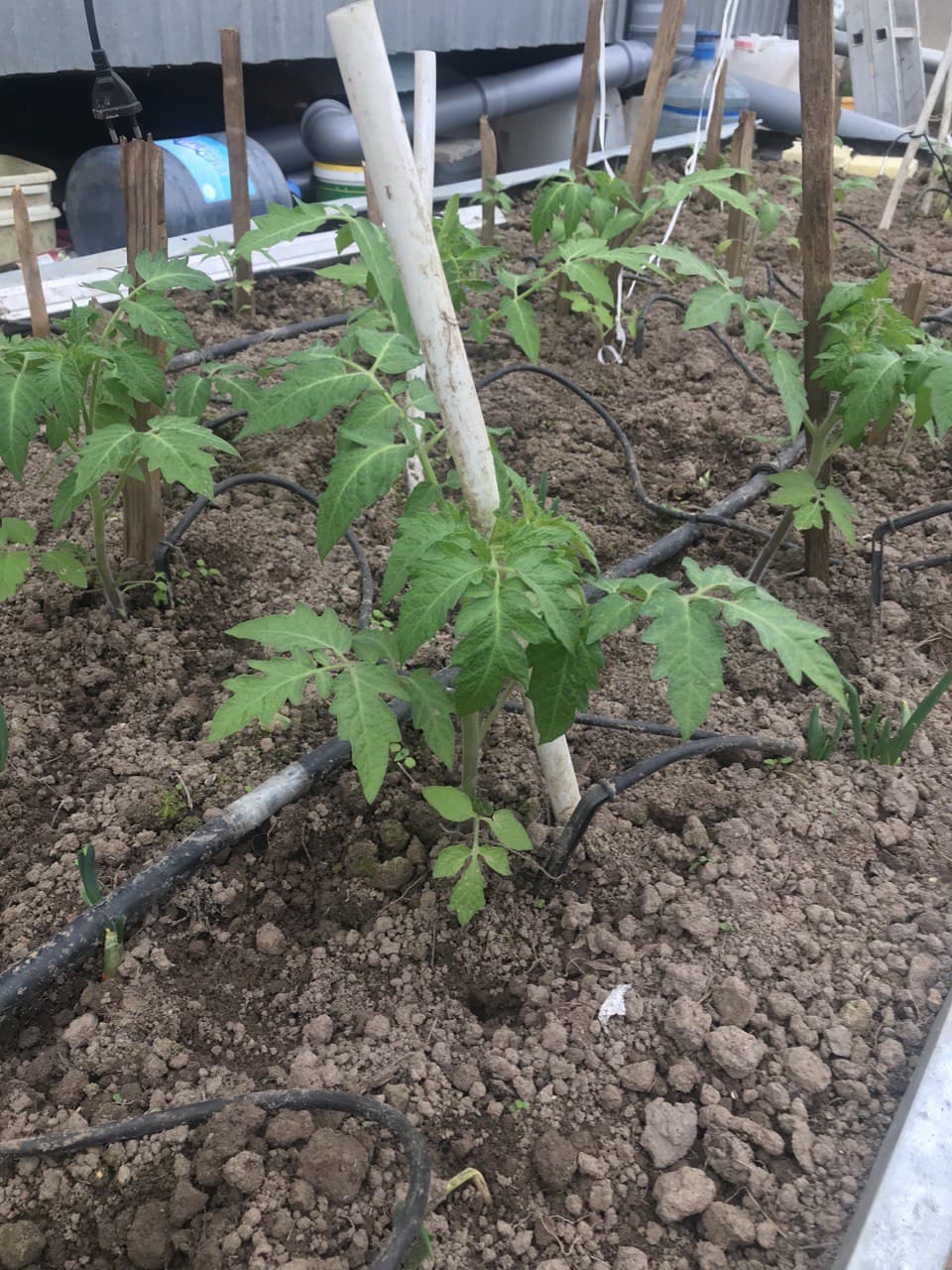
Transplantation into the greenhouse occurs in the second half of May at 60-65 days of age. Seedlings should be planted in beds that haven't had other nightshade crops grown in the last three years. If this isn't possible, the soil needs to be replaced.
The greenhouse is prepared in the fall. The beds are cleared of plant debris and dug over, adding manure to improve fertility. If the pH is high, dry lime is added.
In the spring, clear the beds of plant roots if necessary. Then dig holes. Please note that no more than three plants can be planted per square meter. Fill the holes with long-release granular mineral fertilizer or wood ash.
The seedlings are removed from the containers along with the root ball and placed in the prepared holes. The bushes are covered with nutritious soil and watered. One liter of water is required per plant.
Caring for the Russian Size F1 tomato variety
Cultivation techniques are quite similar to those of other varieties. The crop prefers well-lit areas with temperatures ranging from 21 to 23°C during the day and at least 16°C at night. Humidity levels should be maintained at 80–85%.
The difficulty in caring for this variety lies in its indeterminate nature. This means the plants can grow to very large sizes. Therefore, they need to be tied to a trellis or supports. Otherwise, the bush will lie flat on the ground when the fruit ripens. Contact with the ground will cause the fruit to spoil.
Furthermore, this variety's bushes are highly branched. Therefore, excess branches should be removed immediately. Otherwise, they will drain the plants of energy that could otherwise be used to form fruit. If you don't remove any side shoots, you won't be able to expect large fruits.
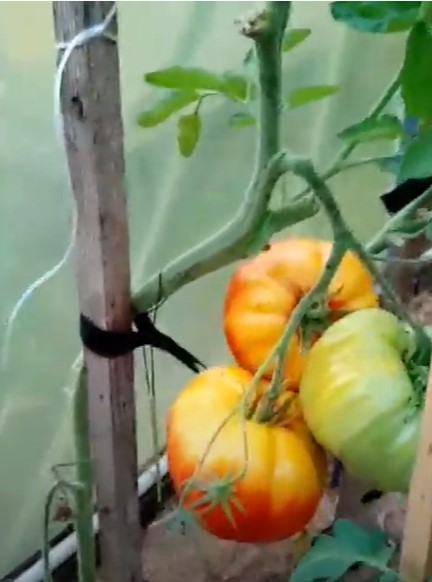
To obtain large specimens, tomatoes must be formed into 1 stem.
Resistance of the tomato variety Russian Size F1 to infections and pests
The hybrid is resistant to most nightshade diseases. However, due to its late ripening period, it is susceptible to late blight. To prevent infection, follow these preventative measures:
- It is essential to disinfect all tools, seeds, soil, and greenhouse walls;
- weed regularly;
- monitor soil moisture, any deviations create favorable conditions for the development of infection;
remove stepsons completely; - carry out treatment with Fitosporin, potassium permanganate solution, copper sulfate;
- Fight pests in a timely manner.
These rules must be strictly followed. It's easier to prevent any disease than to treat it later, which may or may not be successful.
Harvesting, using and storing the Russian Size F1 tomato variety
Ripening occurs in August. Ripe fruits can be picked by hand or cut with a knife. When harvesting, leave the stems on the tomatoes. This will increase their shelf life.
The fruits have a variety of uses. However, due to their very large size, they are not suitable for whole-fruit canning.
Comparison of the Russian Size F1 tomato variety with other varieties
Please note! How can you easily convert centners/ha to kg/sq.m? Simply divide by 100! For example, the Abakansky Pink tomato yields 400 centners of marketable fruit per hectare. This equals 4 kg per square meter. It's that simple! Also, keep in mind that typically no more than 3-4 plants are planted per square meter. This way, you can calculate the yield per bush. In the case of the Abakansky Pink, it's about 1 kg.
| Variety | Ripening period (number of days from full germination to ripening)
Yield of commercial fruits |
Brief description | Fetus |
| Russian size | 125-127 days 700-800 c/ha |
A late-ripening indeterminate variety for greenhouses. Suitable for salads. | Flat-round, slightly ribbed, red, 630 g. Excellent taste. |
| St. Andrew's surprise | about 120 days
800 c/ha |
A late-ripening indeterminate variety for greenhouses (can be grown outdoors in the south). Suitable for salads, juices, and tomato paste. Seedlings tolerate low light conditions well. | Flat-round, smooth, medium density, pink, 150-230 g. Excellent taste. |
| Mushroom basket | 115-120 days
630 c/ha |
A late-ripening, indeterminate, standard variety for open ground and greenhouses. Requires staking and shaping. Suitable for salads. | Flat-round, very strongly ribbed, medium density, pink, 250 g. Good taste. |
| Altai masterpiece | 110-150 days
up to 1000 c/ha (under film) |
A mid-season indeterminate variety for open ground and greenhouses. Requires staking and shaping. Suitable for salads. | Flat-round, medium-ribbed, medium density, red, 300-400 g. Good taste. |
| Scarlet Mustang | 115-120 days 391 c/ha |
A mid-early, indeterminate variety for open ground and greenhouses. Suitable for canning. It has a very high marketability (97.3%). | Medium, cylindrical, hard, slightly ribbed, red, 95 g. |
| Volgograd (5/95) | 116-130 days
374-1035 c/ha (20-25% of the total yield ripens within 15 days of fruiting) |
A late-ripening, indeterminate, standard, compact variety for open ground. Suitable for salads and processing into tomato products. | Flat-round, smooth and slightly ribbed, medium-sized and large, red, 90-150 g. Good to excellent taste. |
| Pride of Siberia | 85-100 days
up to 2000 c/ha |
A mid-late, indeterminate, standard variety for open ground and greenhouses. Suitable for salads and processing into tomato products. | Flat-round, large, red, 320 g. The taste is good and excellent. |
| Malinka Star | 85-95 days
12,600 c/ha |
An early-ripening indeterminate variety for open ground and greenhouses. Suitable for salads. | Flat-round, medium ribbed, pink, 97-120 g, reaches 300 g. Good taste. |
| Abakan pink | 120 days or more 400 c/ha |
A late-ripening determinate variety for open ground and greenhouses. Requires staking and training. Suitable for salads and processing into tomato products. | Flat-round, slightly ribbed, medium density and pink in color, 200-500 g. Good taste. |
| Sugar giant | 120-130 days
Up to 1800 c/ha |
A mid-late indeterminate variety for greenhouses. Requires staking and training into 1-2 stems. Suitable for salads and processing into tomato products (juice). | Round, slightly elongated, ribbed, pinkish-red, 340-450 g (up to 650-700 g). Good to excellent flavor. |
| Siberian giant | 115-120 days
The commercial yield of fruits was 9.0-11.0 kg/sq.m. |
A mid-early indeterminate variety for greenhouses. Suitable for salads. | Flat-round, large, medium-ribbed, loose, red, 400-500 g. Excellent taste. |
| Siberian big guy | 90-100 days
900-1200 c/ha |
An early-ripening indeterminate variety for open ground and greenhouses. Suitable for salads, processing into tomato products, and preparing first and second courses. | Flat-round, slightly ribbed, red, 500 g. Good to excellent taste. |
| Wonder of the World | 120 days 550-620 c/ha |
A late-ripening indeterminate variety for open ground. Requires staking and shaping. Suitable for salads and pickling. | Obovate, slightly ribbed, yellow, 80 g. Good taste. |
Gardener reviews of the Russian Size F1 tomato variety
In their reviews, gardeners write that the variety's drawback is its difficult care, but this is compensated for when it produces huge fruits.
The tomato variety "Russian Size" has very large fruits and the name of the variety perfectly suits the appearance of the fruits.
Tomatoes of this variety are suitable for growing in greenhouses. The fruits ripen 125-127 days after germination. The bushes are very strong and sturdy. The disadvantage of this variety is that it is very foliated and requires constant care, staking, and frequent pinching.Reviews of this tomato variety are quite good.
The "Russian Size" tomato truly lives up to its name. Large-fruited, sweet, and productive, the supergiant "Russian Size F1" tomato is an indeterminate variety, reaching 150-180 cm in height. It is highly productive and suitable for cultivation throughout Russia in greenhouses and under plastic covers. It is not grown outdoors.
"Russian Size" is a late-ripening tomato, with fruits ripening 125-128 days after full germination. As a hybrid, it is resistant to many diseases.
Ripe "Russian Size" tomatoes are red and weigh between 650g and 2kg. The surface is gently ribbed, the flesh is juicy and sweet, and the shape is round and slightly flattened. Two to three tomatoes ripen per truss. This tomato variety is considered a salad variety. However, it is used to make tomato paste, in canned vegetable platters, and as part of adjika or vegetable caviar. Due to its large size, it is not suitable for whole-fruit canning.
I present to you a late-ripening tomato hybrid variety for greenhouses. Sow seedlings in early March, pick them when the first true leaf appears, and transplant them into the greenhouse once frost has passed, around the end of May. The stems need to be tied up 1-2 weeks after transplanting. They require shaping into a single stem. Side shoots must be removed from the plant, otherwise the fruits will grow poorly, will not ripen, or will be small. It is also necessary to pinch out the flowers. The fruits are uniform, large, weighing up to 600 grams, red, sweet, and very tasty; one tomato is enough for a whole family's salad. The hybrid is resistant to some diseases. We planted them last year, and everyone loved them; this year, we haven't found them anywhere yet. Quantity: 12, produced by Gavrish, Moscow.