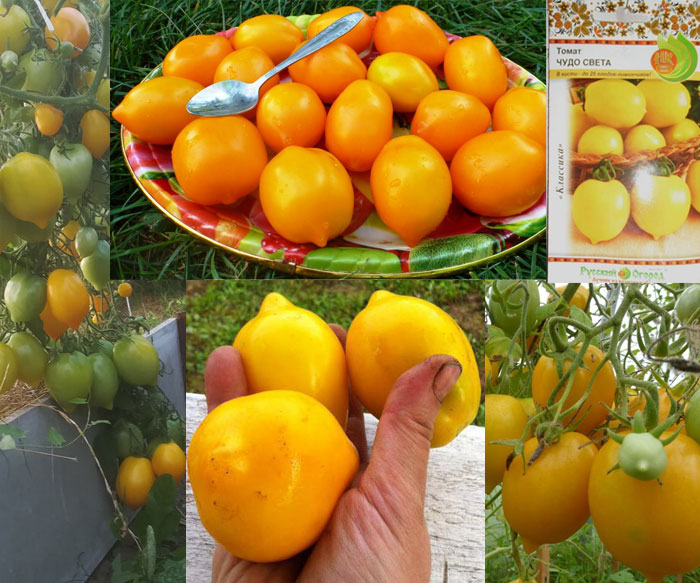
The "Miracle of the World" tomato, or "Lemon Liana," is named for a reason—from a distance, it resembles a tropical vine with lemons instead of tomatoes. However, it's easy to grow, and with proper care, it's sure to delight gardeners with its bountiful harvest.
Content
- 1 Characteristics of the Miracle of the World tomato variety in a table
- 2 The history of the Miracle of the World tomato variety
- 3 A detailed description of the Miracle of the World tomato variety
- 4 Advantages and disadvantages of the Miracle of the World tomato variety
- 5 Growing the Miracle of the World tomato variety
- 6 Resistance of the tomato variety Miracle of the World to diseases and pests
- 7 Harvesting, using and storing the Miracle of the World tomato variety
- 8 Comparison of the tomato variety Miracle of the World with other varieties in the table
- 9 Gardeners' reviews of the Miracle of the World tomato variety
Characteristics of the Miracle of the World tomato variety in a table
| Characteristic | Description |
| Description | An indeterminate variety with a mid-late ripening period and tall bushes. Suitable for greenhouse and outdoor cultivation. |
| Ripening period | 120 days |
| Fruit weight | 50-80 g |
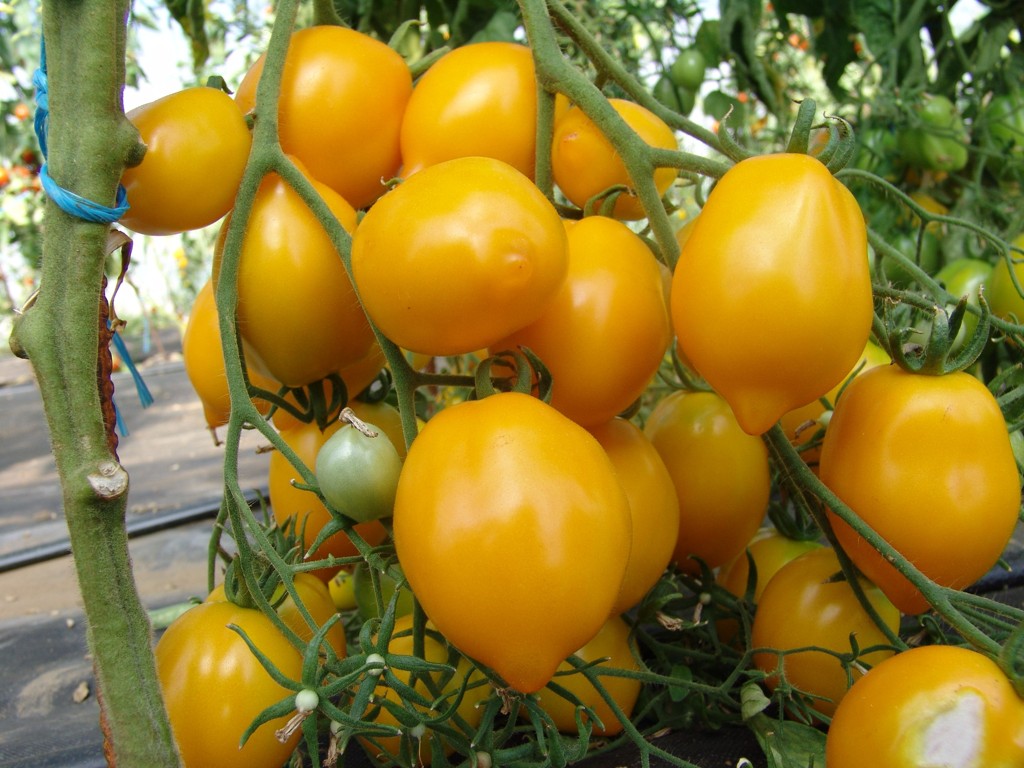
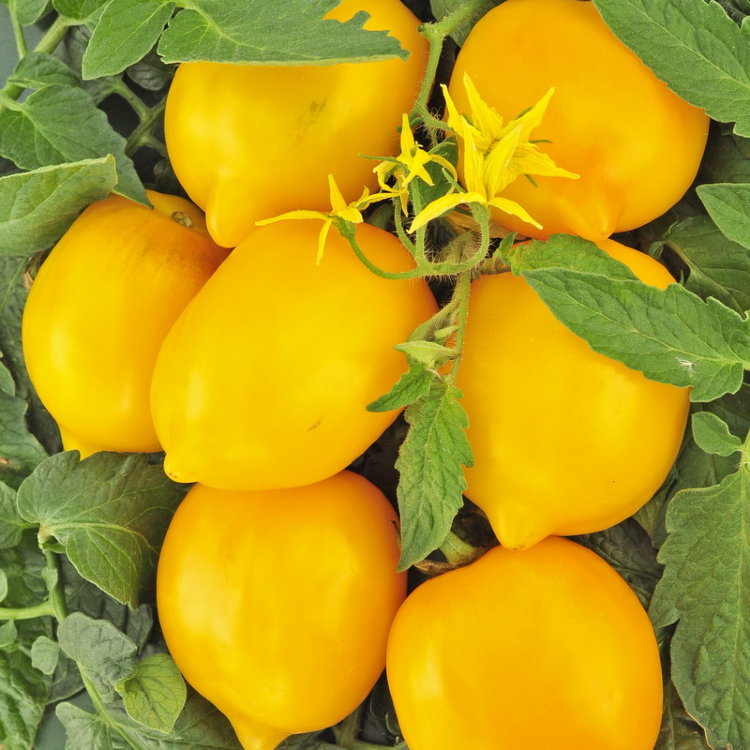
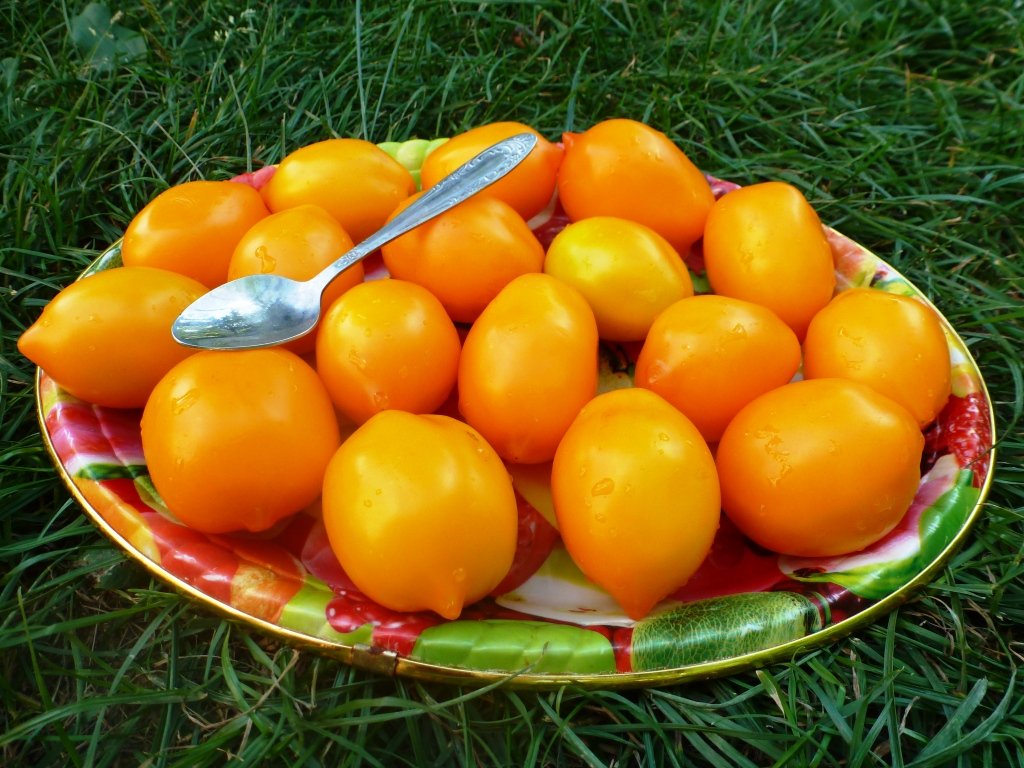
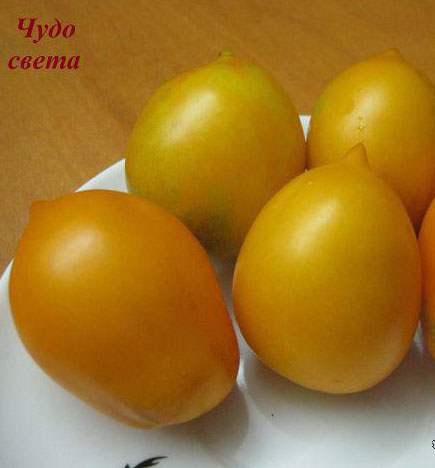
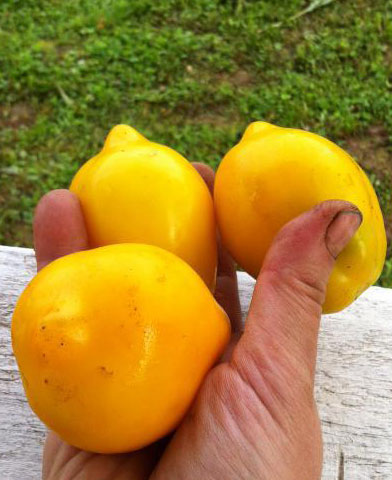
| Description of the fruit | The tomatoes are small and look like lemons due to their yellow color and specific shape. |
| Productivity | 5.5-6.2 kg per sq. m. |
| Usage | Tomatoes are ideal for whole-fruit canning. Their excellent flavor makes them a great addition to salads and main courses. |
| Preferred growing regions | Tomatoes can be grown in all regions of the country, choosing the most suitable method (greenhouse, hotbed, open ground). |
| Disease resistance | It is distinguished by strong immunity. |
| Agricultural technology | The shoots require staking and support, and the bush is formed into 2-3 stems. Due to their powerful root system, it is not recommended to plant tomatoes closer than 80-90 cm from each other. |
| 2001 | |
| Originator | JSC Scientific and Production Corporation NK.LTD |
Photo gallery of the tomato variety Miracle of the World
The history of the Miracle of the World tomato variety
The Chudo Sveta variety was born in the early 21st century thanks to the efforts of breeders at the Scientific and Production Corporation NK.LTD. They develop unusual vegetable varieties, and the vine-shaped tomato with lemon-shaped fruits became one of their masterpieces. The Chudo Sveta variety was added to the register in 2001.
A detailed description of the Miracle of the World tomato variety
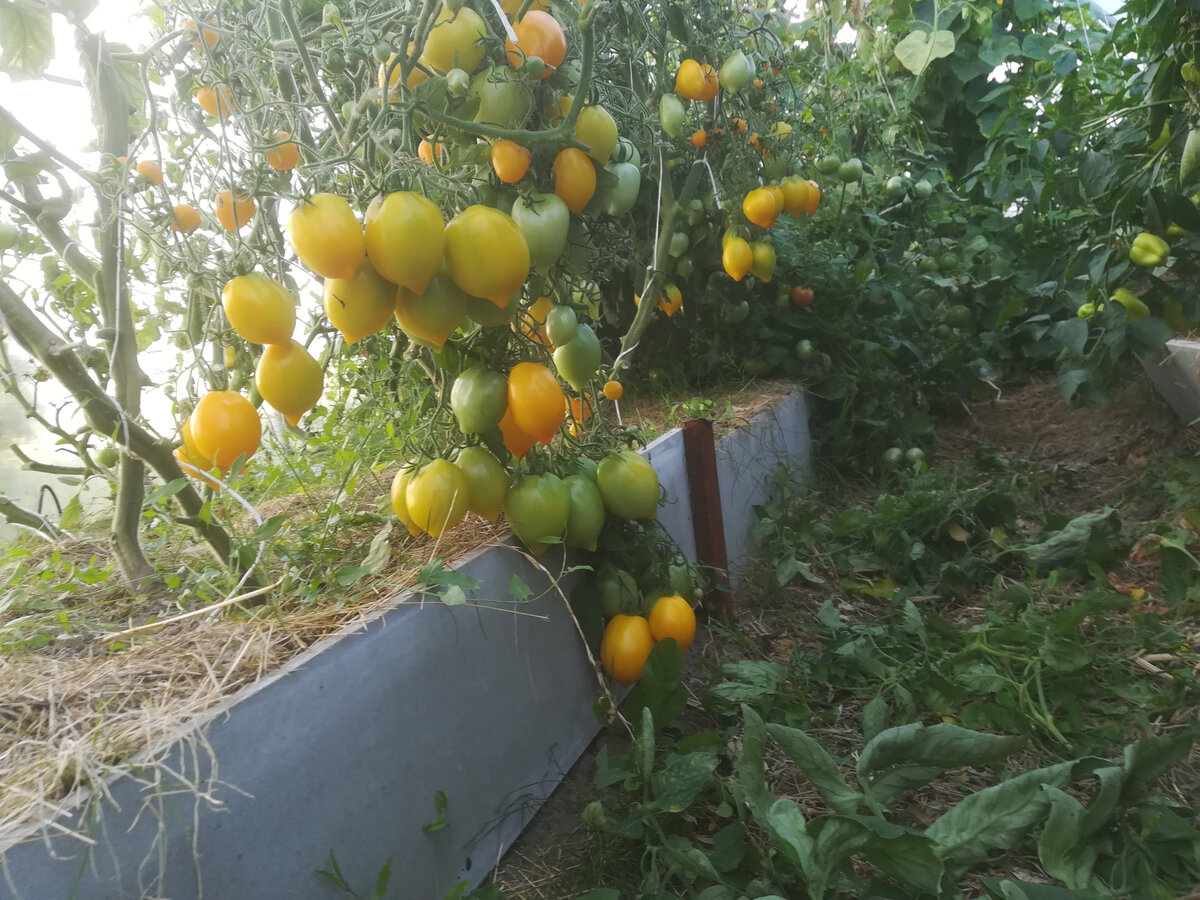
The Miracle of the World tomato is famous among gardeners not only for its bright yellow, unusually shaped fruits, but also for its bushes, which look more like vines than tomatoes.
Characteristics of the bush
The indeterminate shoots of the Miracle of the World tomato closely resemble vines and can grow up to 200 cm, so they definitely require staking. It is recommended to train the bushes into 2-3 stems.
The leaves are large and dark green. The first inflorescence begins to form above the 11th leaf, with subsequent inflorescences appearing at intervals of 3-5 leaves.
The root system is well developed, so tomatoes are not afraid of drought.
Fruit characteristics
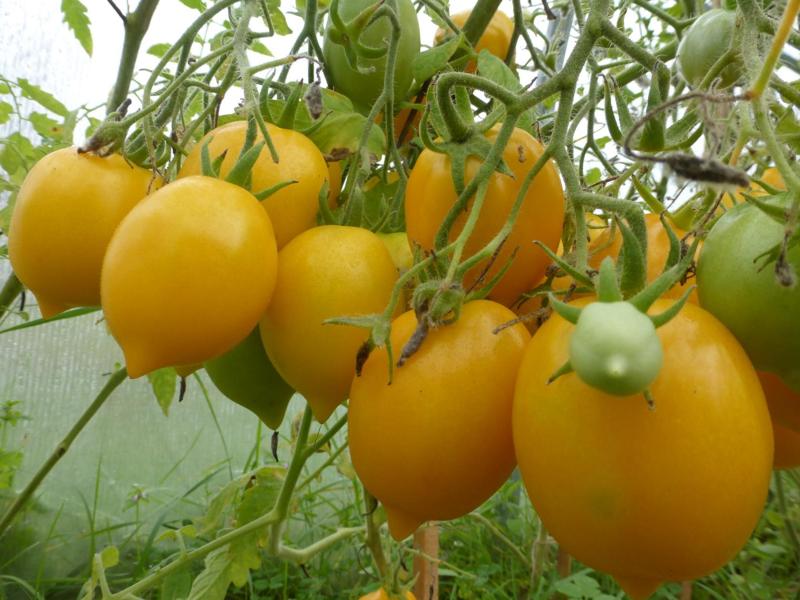
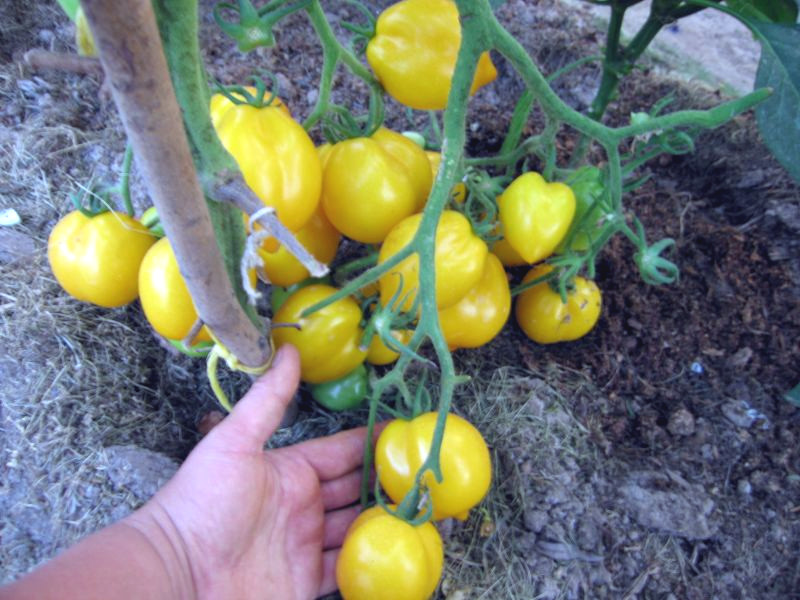
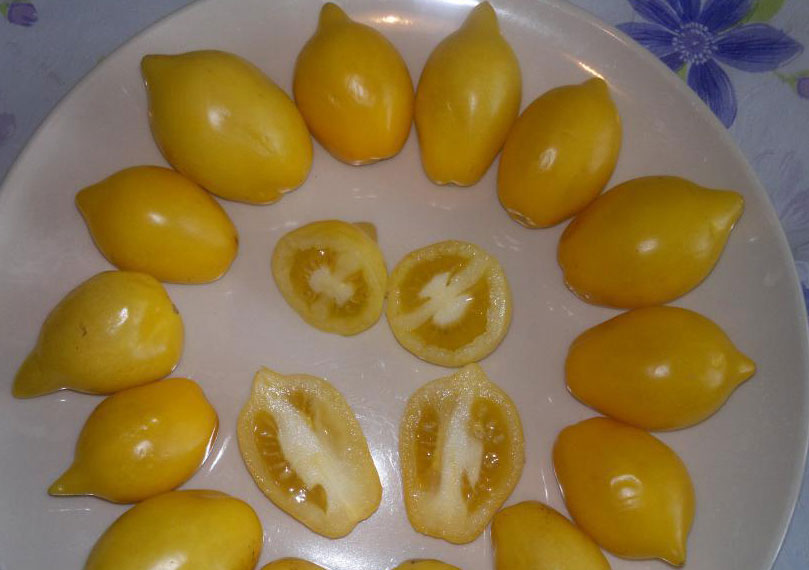
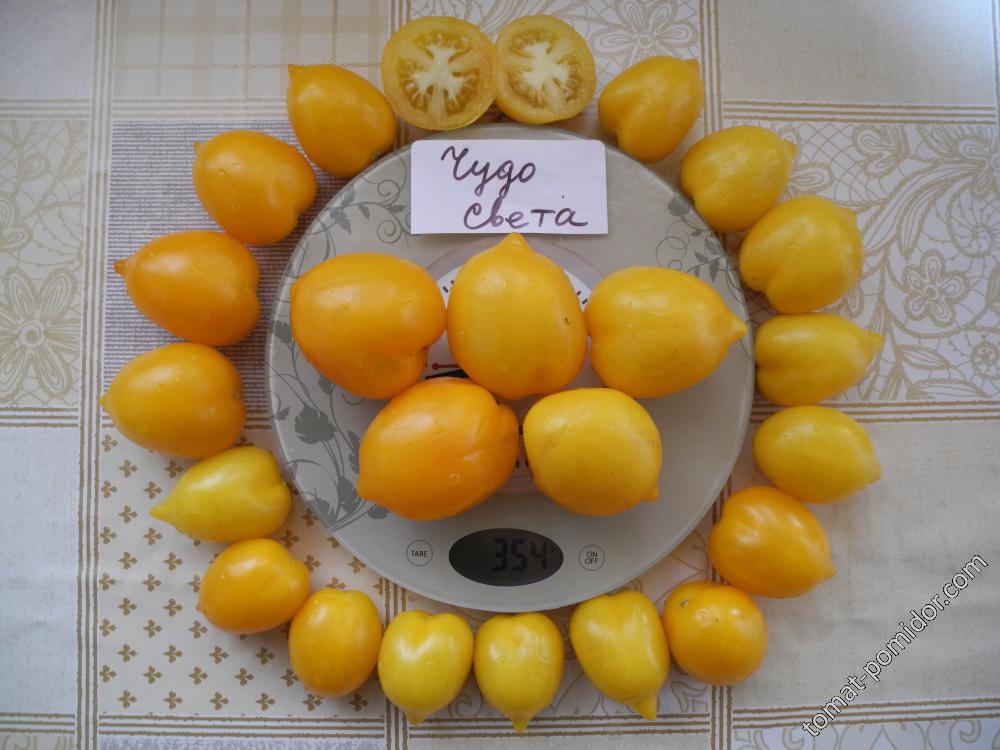
The "Miracle of the World" tomato is distinguished by its unique lemon-like shape. The bright yellow skin gives it this fruit-like appearance. The tomatoes are small, weighing between 50 and 80 grams, making them ideal for all types of pickling and canning.
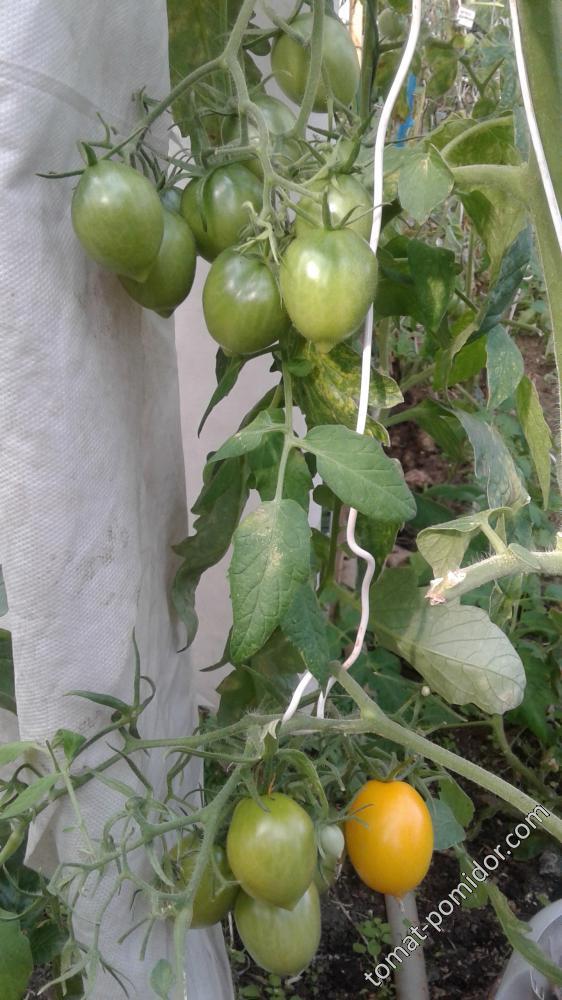
Tomatoes are grouped into clusters, sometimes each cluster can contain up to 30 fruits.
The pulp is dense, tasty, juicy, with 2 seed nests.
Ripening time
This tomato is considered a mid-late variety. Full ripening of the fruit occurs within 120 days from germination.
Productivity
The yield of the Miracle of the World tomato depends on the growing method; it's much higher in a greenhouse. With proper care, a single greenhouse plant can yield up to 12 kg of fruit. On average, 5.5 to 6.2 kg of tomatoes can be harvested per square meter.
Advantages and disadvantages of the Miracle of the World tomato variety
The Miracle of the World tomato has the advantages and disadvantages described in the table.
| Advantages | Flaws |
|
|
Growing the Miracle of the World tomato variety
The Miracle of the World tomato does not require any special agricultural technology; it grows well with proper care.
Sowing seeds and growing seedlings
The Miracle of the World tomato is not a hybrid, so you can collect the seeds yourself. However, it's best to purchase them from a reputable grower, as such seedlings typically undergo the necessary pre-sale preparation (hardening, disinfection, treatment with growth stimulants, etc.).
To sow, take any suitable container and fill it 2/3 full with soil. It's best to buy soil from a specialty store, but some gardeners prefer to prepare their own mixture. To do this, combine equal parts soil, peat moss, compost, and sand. To control moisture levels, you can add vermiculite, but no more than 10% of the total volume.
Small furrows about 15 mm deep are made in the soil. Seeds are placed in these furrows, spaced 2.5 cm apart. They are then covered with soil and watered.
For watering, it is better to use a syringe or spray bottle, otherwise the powerful stream of the watering can will either wash away the soil or drag the seeds to the bottom of the container.
The final step is to cover the seedling container with glass or plastic and place it in a warm location. Once almost all the tomatoes have emerged from the soil, the cover can be removed, and the seedlings can be moved to a cooler location and provided with some light, such as a grow light.
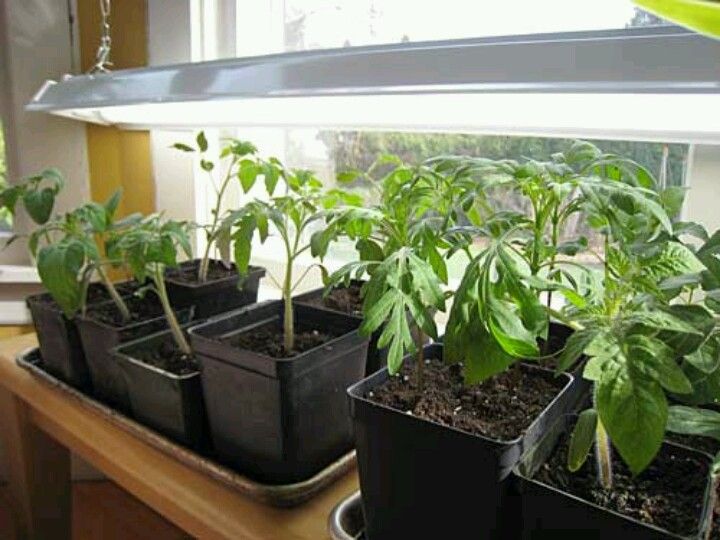
After two full leaves appear, the plants are transplanted into individual cups.
Planting in the ground
Seedlings are planted 60-65 days after sowing, when the soil temperature has warmed above 12 degrees Celsius. The soil should be prepared in advance; it's best to do all the preparatory work in the fall, digging the soil and adding fertilizer. This way, all that's left to do is dig it again in the spring and make holes.
It is recommended to plant them in a staggered pattern at a distance of 80-90 cm from each other. Leave at least 70 cm between rows to facilitate maintenance and harvesting.
Each tomato plant is moved into a hole with a lump of soil around its roots, then buried up to the root collar. Some gardeners plant two plants in a hole at once, then remove all side shoots and suckers. Alternatively, you can plant a single tomato plant, which I then train to produce a maximum of 1-3 shoots.
The final step is watering the plants. Each plant requires about 3.5 liters of water.
Experienced gardeners recommend mulching the surface of the bed with sawdust or bark. This will protect the tomato plant's root system from cold and sun damage, and will also inhibit weed growth.
Care
It is not recommended to water or fertilize tomatoes for two weeks after transplanting. The first portion of water should be added to the soil only after 14 days. Initially, the rate per plant is 3.5 liters, then increasing to 5-8 liters. The frequency of watering depends on weather conditions. In hot weather, it can be done daily, while in normal weather, it should be done only once a week. Watering should be stopped once the fruit begins to change from green to yellow.
You can begin fertilizing your tomatoes along with watering. Some gardeners prefer mullein or weed infusions, and nitrogen-containing fertilizers can be used for the initial feeding.
To prevent diseases, tomatoes are sprayed with a solution of Bordeaux mixture or phytosporin three times per season.
To prevent plantings from becoming too dense, experienced gardeners recommend removing leaves around the fruit and from the lower parts of the shoots. However, this shouldn't be done too frequently, and no more than 1-3 leaves should be removed at a time.
Resistance of the tomato variety Miracle of the World to diseases and pests
This "miracle of the world" has a strong immune system and is resistant to many tomato diseases. However, if care instructions are not followed, especially when it comes to watering, late blight can occur.
Harvesting, using and storing the Miracle of the World tomato variety
Harvesting begins 120 days after the seedlings emerge, so Miracle of the World is considered a late-ripening tomato rather than a mid-season one.
The Miracle of the World tomato is ideal for canning and fresh pickling. Small tomatoes will enhance any dish or salad. Larger tomatoes can be processed into tomato products.
Comparison of the tomato variety Miracle of the World with other varieties in the table
| Variety | Ripening period (number of days from full germination to ripening)
Yield of commercial fruits |
Brief description | Fetus |
| Wonder of the World | 120 days
550-620 c/ha |
A late-ripening indeterminate variety for open ground. Requires staking and shaping. Suitable for salads and pickling. | Obovate, slightly ribbed, yellow, 80 g. Good taste. |
| Banana legs | 80-85 days (greenhouse), 90-100 (open ground) 1780 c/ha |
An early-ripening indeterminate variety for open ground and greenhouses. Suitable for salads. | Cylindrical, dense, slightly ribbed, yellow, 80-100 g. Good taste. |
| Yellow cherry | 95-96 days
300-400 c/ha (1 kg per plant) |
An early-ripening indeterminate variety for open ground. Requires staking, pinching, and side shoots above the third or fourth cluster. Suitable for salads and whole-clump canning. | Round, yellow, smooth, 15-20 g. The taste is good and excellent. |
| Lemon giant | 110-120 days
610-670 c/ha |
A mid-season indeterminate variety for open ground and greenhouses. Requires staking and shaping. Suitable for salads. | Flat-round, medium-ribbed, fleshy, yellow, 350-380 g. Good taste. |
| De Barao yellow | 110-120 days
1200 c/ha |
An indeterminate plant with a bush up to 200 cm tall. Recommended for growing under plastic cover. The bushes are formed into two shoots and require staking. This versatile tomato is well-suited for whole-fruit canning and can be used in dietary menus. | The fruits are round-oval with a smooth surface and a slight indentation at the base. Ripe fruits are bright yellow or golden in color, weighing 80-90 g. The flavor is excellent. |
| The Golden Fleece | 98 days 600 c/ha (greenhouse and under film) |
An early-ripening determinate variety for open ground and greenhouses. Suitable for salads and whole-fruit canning. | Ovoid, smooth, medium density, yellow, 90-100 g. Good taste. |
| Yellow caramel | 85-100 days
460 c/ha |
An early-ripening, long-bearing indeterminate variety for open ground and greenhouses. Requires staking and training. Suitable for salads and whole-fruit canning. Tolerates temperature fluctuations and low light levels. | Elliptical, smooth, dense, yellow, 35-40 g. Excellent taste. |
| Malachite box | 110-120 days
430 c/ha (open ground), 1510 c/ha (greenhouse and under film) |
A mid-season indeterminate variety for open ground and greenhouses. Requires staking and training. Suitable for salads. Marketability is 97%, and the yield of ripe marketable fruits is 75%. | Flat-round, smooth, thin skin, yellow, 250-300 g. Good to excellent taste. |
| Honey drop | 100-105 days
880-950 c/ha (greenhouse and under film) |
A mid-early indeterminate variety for greenhouses. Suitable for salads. | Pear-shaped, medium density, without ribbing, yellow, 40-50 g. Good taste. |
| Mikado Yellow (Gold) | 110-120 days 600-800 c/ha |
A mid-early standard indeterminate variety for greenhouses. Suitable for salads and juice. | Round, flattened, slightly ribbed, yellow, 500 g. Good taste. |
| Nugget | 110-115 days
2400-3200 c/ha |
A mid-season determinate variety for open ground and greenhouses. Requires staking and training into two stems. Suitable for salads, processing into tomato products, drying, and canning. | Plum-shaped, smooth, yellow, 25-50 g. Good taste. |
| Siberian bananas | 105-110 days
Up to 1500 c/ha |
A mid-season semi-determinate variety for open ground and greenhouses. Suitable for salads and canning. | Banana-shaped, smooth, yellow, 150-180 g. Good to excellent taste. |
| Yellow date palm | 130 days
Up to 1.8 kg. |
A mid-late semi-determinate variety for open ground and greenhouses. Requires staking and shaping into 3-4 stems. Suitable for salads, garnishing, and canning. | Oval, smooth, yellow, 20 g. Excellent taste. |
Gardeners' reviews of the Miracle of the World tomato variety
Gardeners note the unpretentiousness of the Miracle of the World tomato, but many agree that the taste of the tomatoes is a little bland.
Every new season, I always buy something new alongside my tried-and-true tomato varieties. This year, I bought five packets of unknown varieties, including seeds from the Russian Garden company called "Miracle of the World." Frankly, I didn't believe the advertising hype: "Up to 25 lemon-sized fruits per cluster!" But when the season ended, I congratulated myself a hundred times over for buying those seeds! The cluster did indeed contain about 20 fruits, small and medium-sized. And there were only three or four of these clusters on the bush itself. Even the thick stems couldn't handle the weight and broke under them. I didn't use any special cultivation techniques for these tomatoes. Everything was as usual: watering, fertilizing, sprinkling the roots with new soil, and tying them to a support. Ripe tomatoes have a wonderful sweet taste, are rich in pulp, and contain very little juice and seeds. Canned, they look so festive, brightening up a jar of red tomatoes with their bright yellow color. They keep fresh for a long time. It's the end of October, and we're still eating these fresh, "wonderful" tomatoes. And unlike red tomatoes, they don't accumulate the unpleasant bitterness of long-term storage. I gave 2-3 tomatoes to all my friends—for seeds, since they're not a hybrid, but a true variety. And I recommend this variety to everyone—you won't regret it!
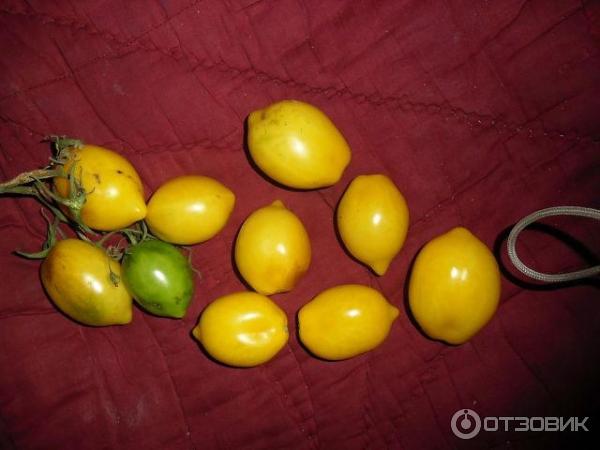
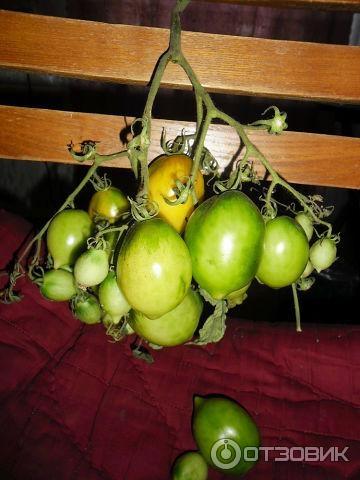
Good afternoon. It's time to harvest our crops by the bucketful, including tomatoes. After reading positive reviews on the "Tomato-Tomato" forum, I purchased "Miracle of the World" tomato seeds. This variety is advertised as mid-season, indeterminate. Mine started turning yellow in early August this year. The fruits turned out larger than the package stated. The photo shows a medium-sized specimen. There are a lot of ovaries. It's best to pick them unripe, otherwise the branches will break. The bunches need to be supported. I also tie up the stems and remove side shoots. I grow them in a greenhouse. I don't overfeed them. When planting, I add rotted manure to the hole, about 1 tablespoon of superphosphate, and water them with a solution of fermented grass, bread, and humate during growth. To improve fruit set, I treated them with boric acid. The tomato flesh is dense and sweet, but "Bull's Heart" and "Chio-Chio San" are tastier. It has a beautiful shape and color. It's suitable for canning. You can collect the seeds, as this is a variety.
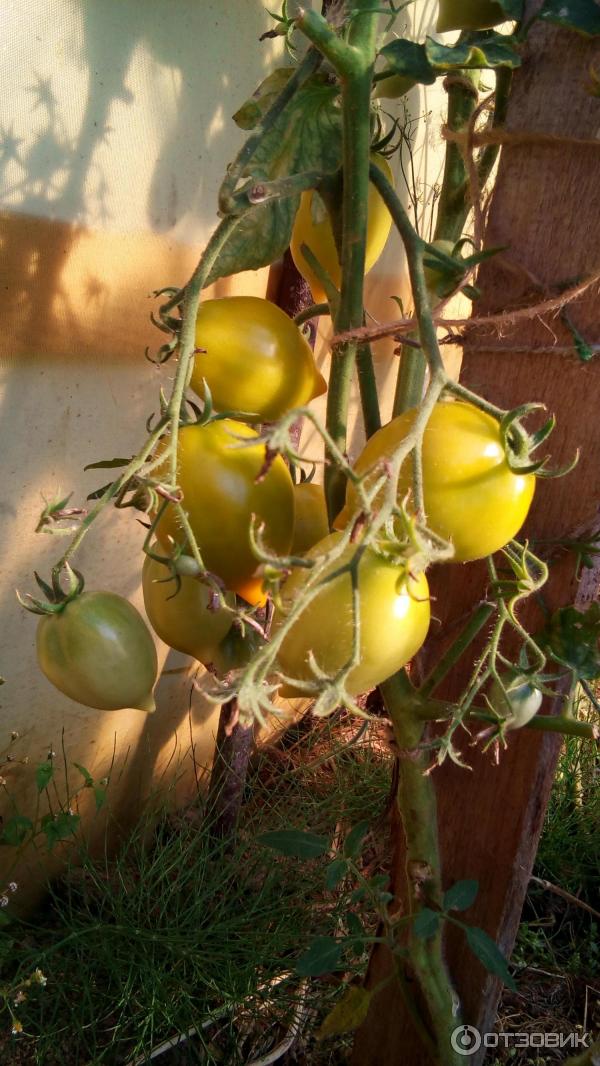
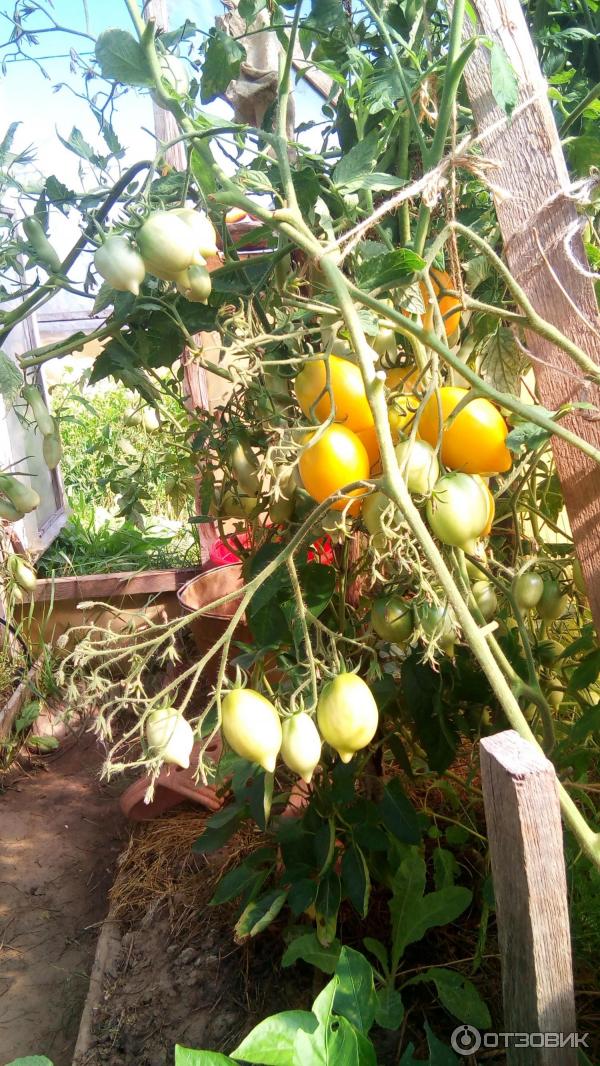
Hello dear readers!
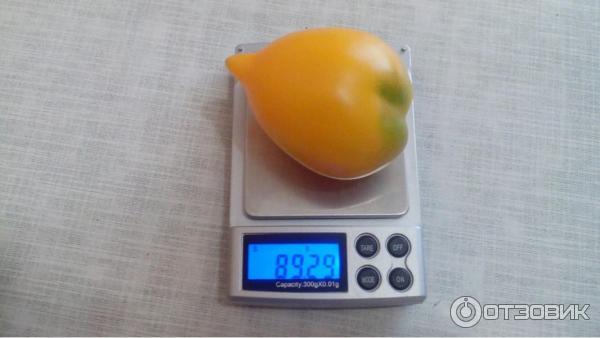
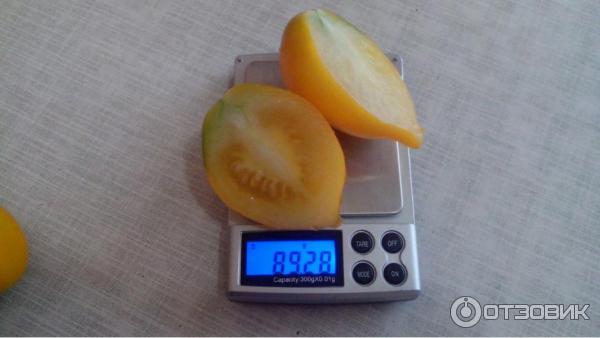
The Miracle of the World tomato is a classic of the Russian garden. This mid-season variety is grown in 2-3 stems, forming 4-5 clusters on each plant. It produces numerous, compact fruits per plant. The tomatoes are beautifully shaped and colored, somewhat lemon-like, and have excellent flavor with a slight tartness. They also have a high beta-carotene content. The fruits can be eaten fresh.Suitable for various salads and for canning. It can be grown in a greenhouse or outdoors. I recommend outdoors, as it is very branched and grows quickly, with a thin stem. Outdoors, it also ripens quickly and is much tastier, with a slightly tart flavor. Seedlings are grown in mid-March to a depth of 1-2 cm. They are pricked out into individual pots in mid-May, or transplanted into open ground after frost when two true leaves appear. This variety loves warmth and light, so the optimal temperature for seed germination is 22-25 degrees Celsius. Water as needed, especially during the flowering period, remember to water, loosen, and fertilize the soil. The seed quantity is 0.2 grams. Produced by the company "Russian Garden" in the Moscow region.
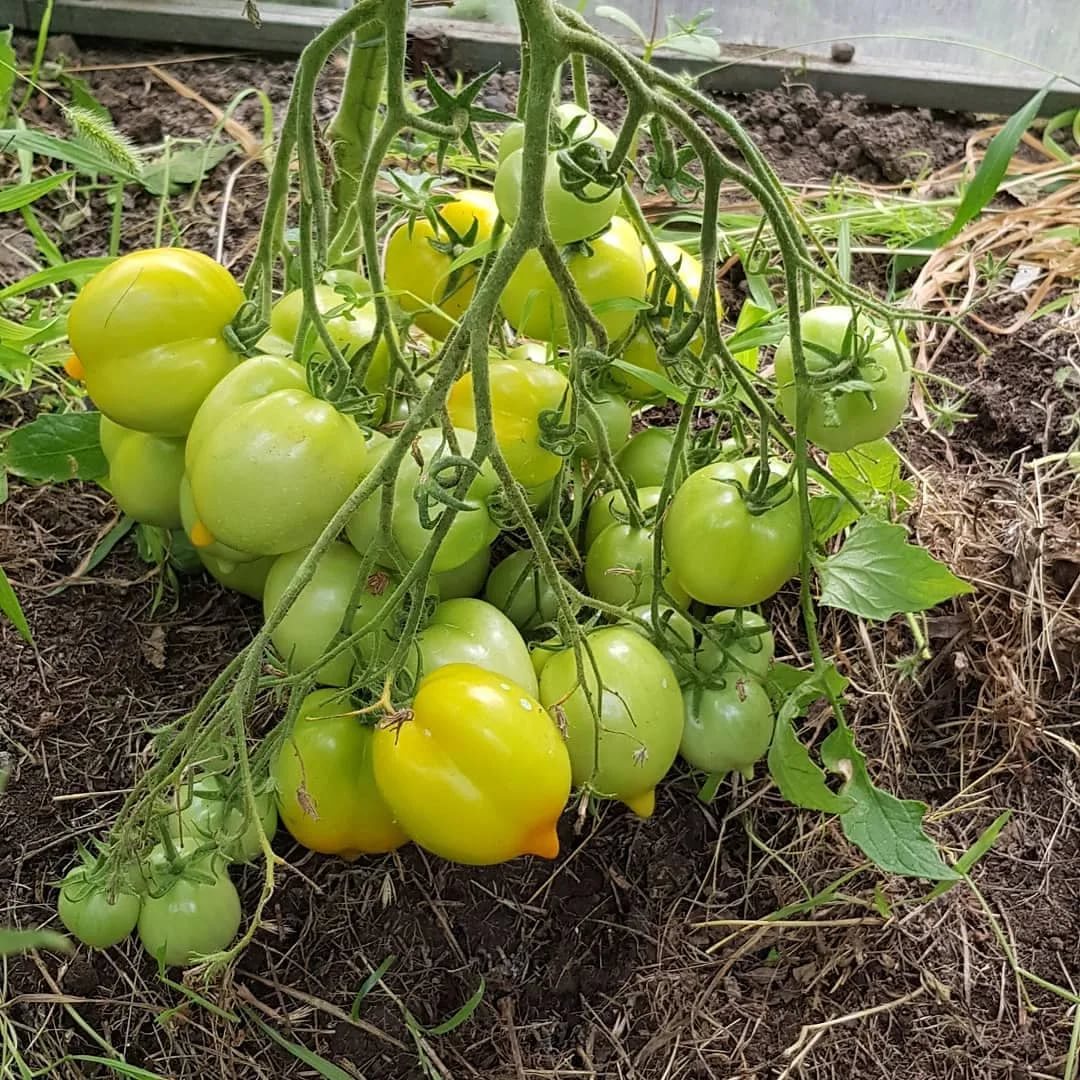
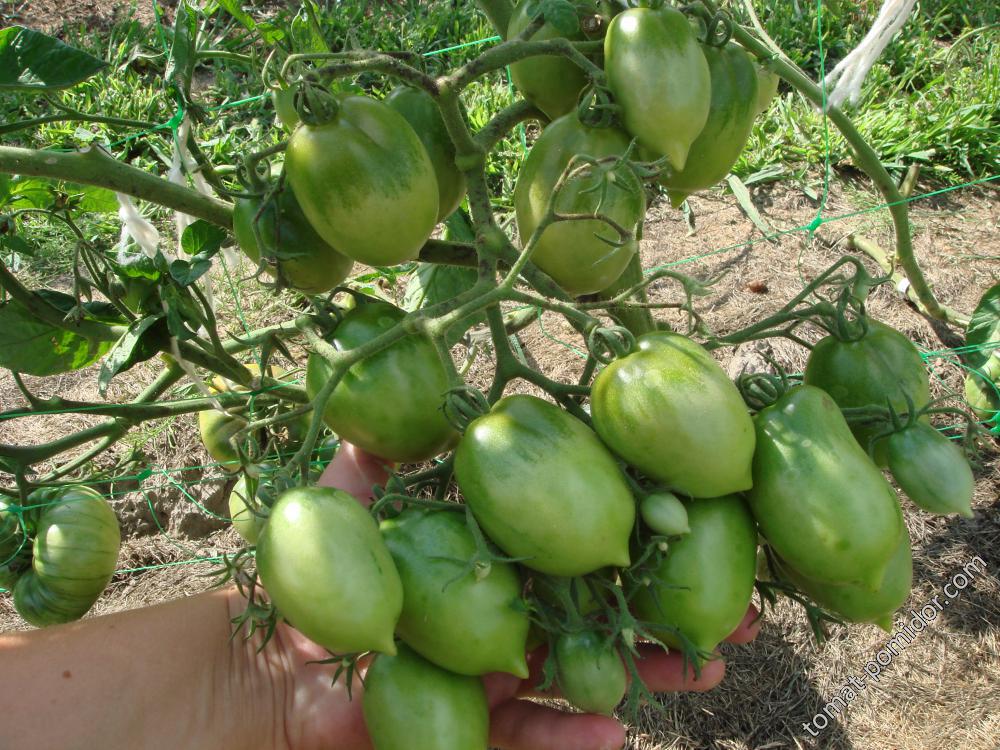
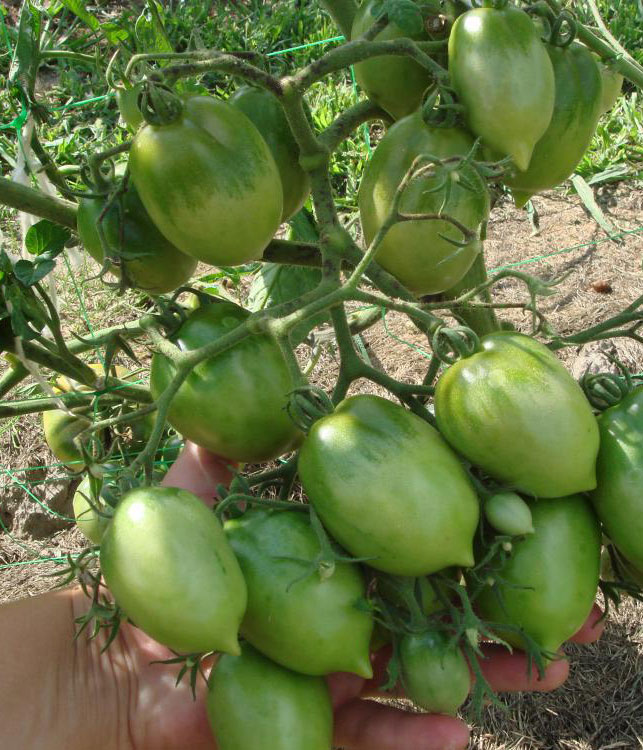
WHAT GREW: Very interesting when still green.
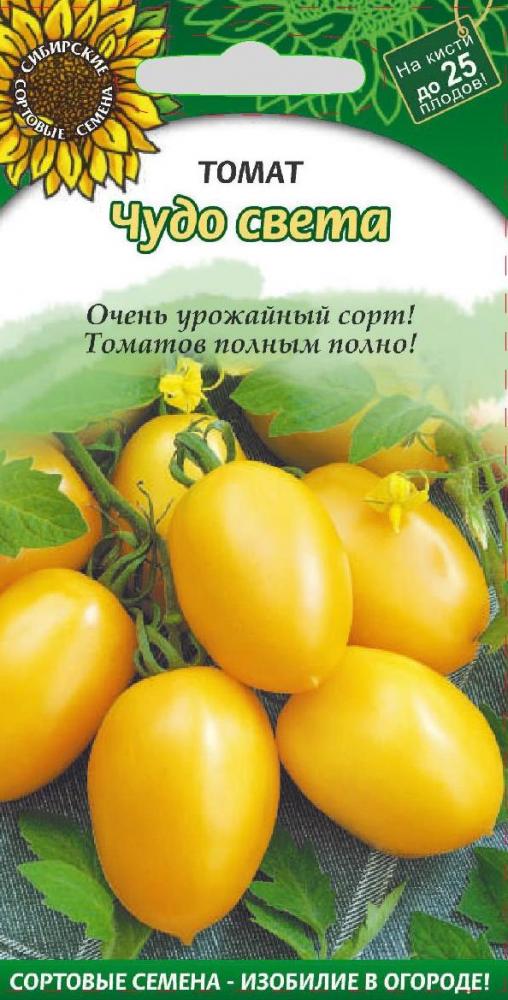
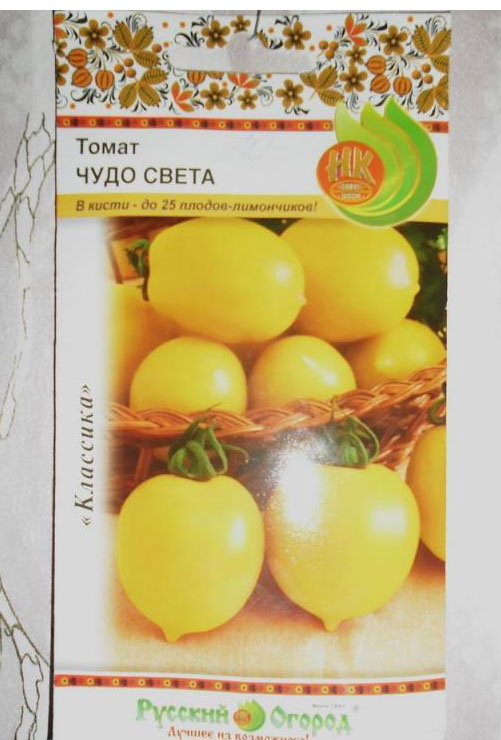
They are a little longer than shown on the packaging, but otherwise they are no different.
Thanks for watching!
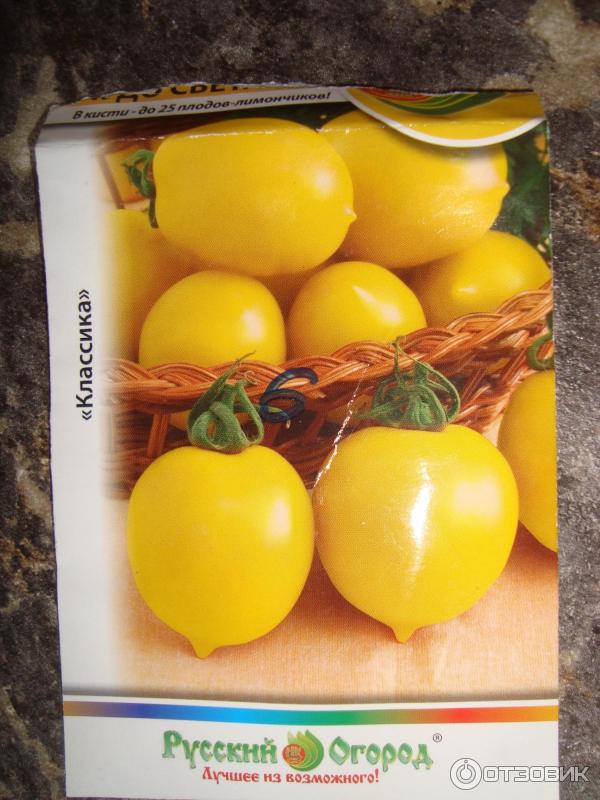
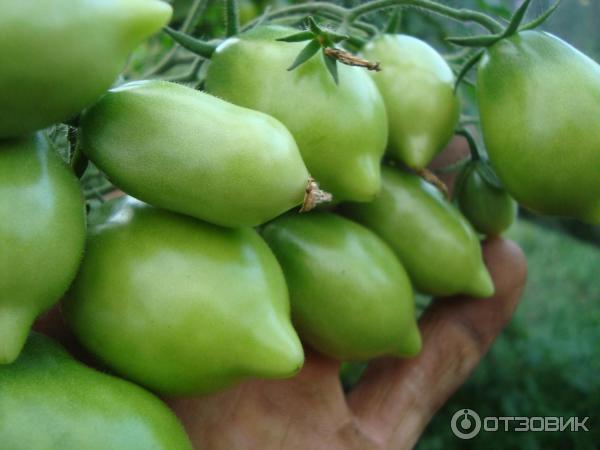
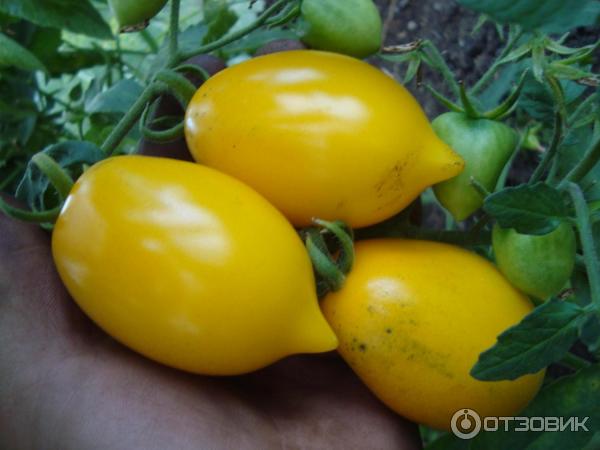
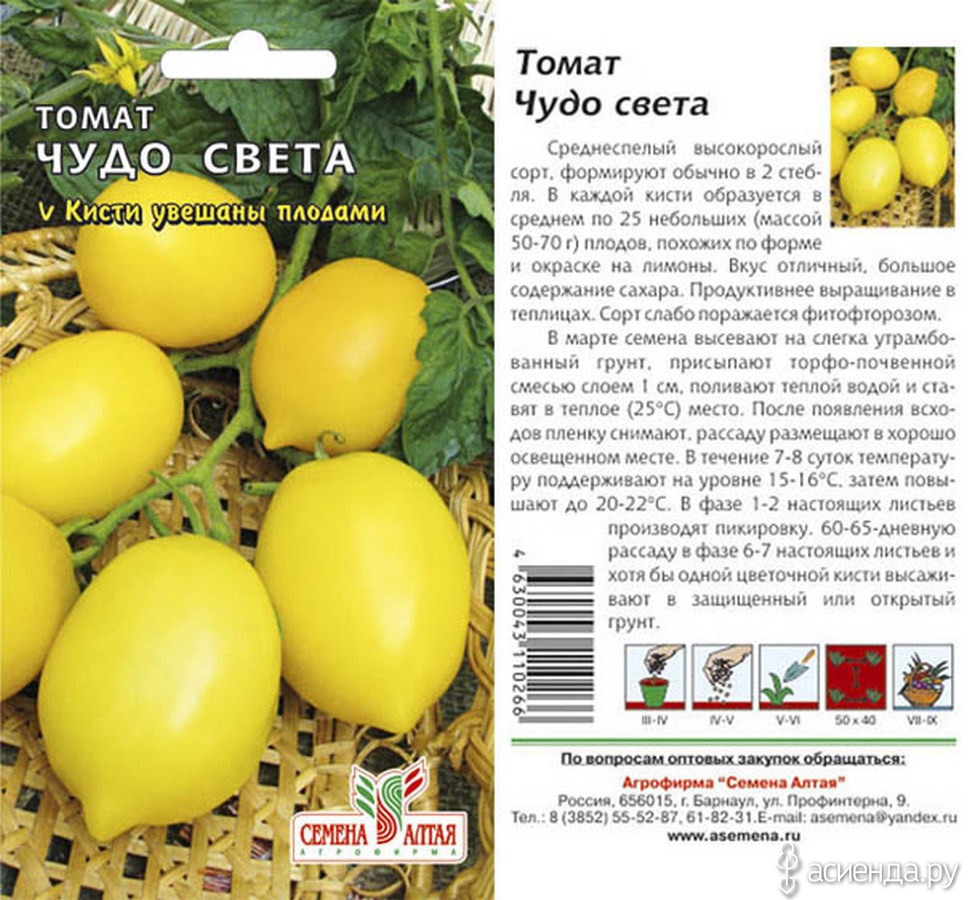
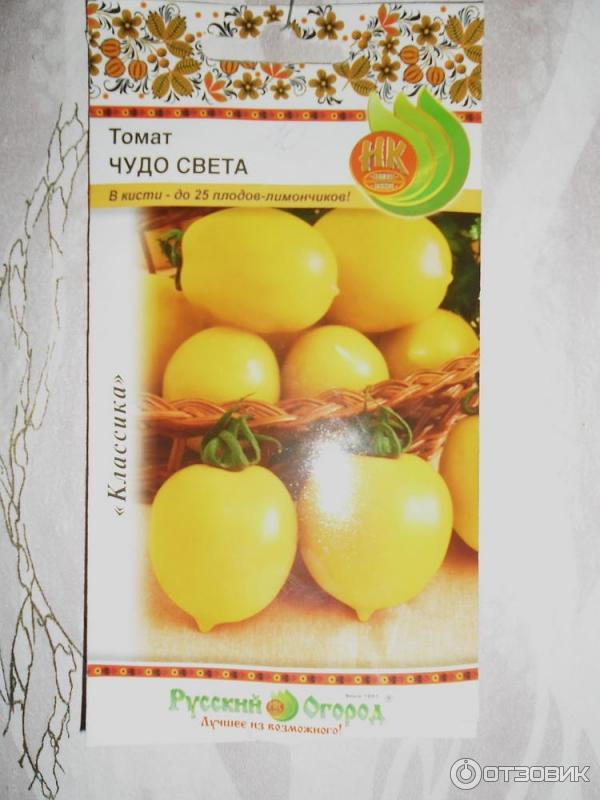
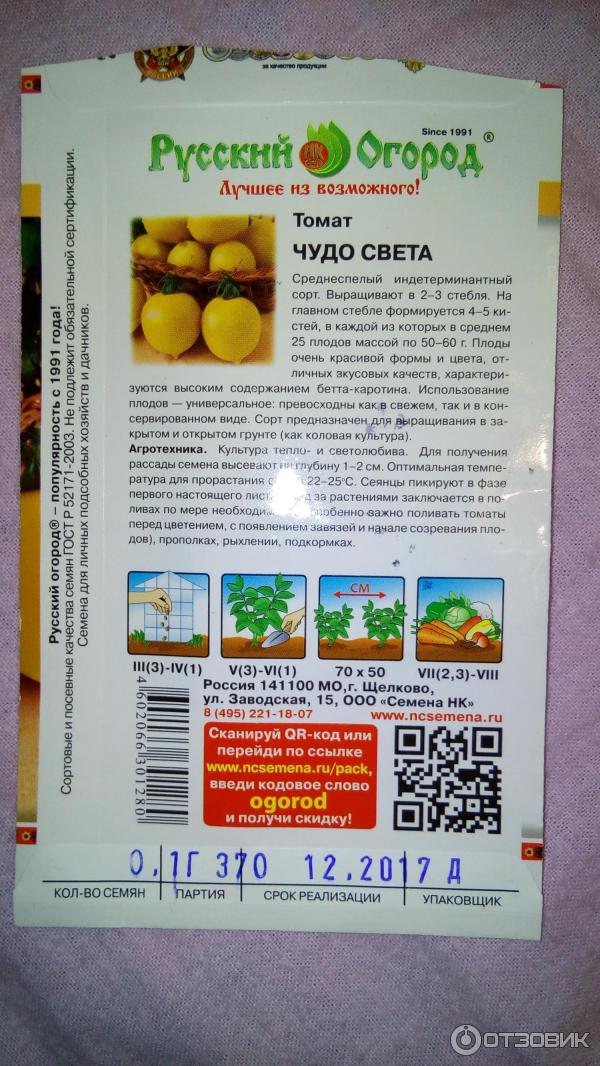
Description from the pack:
A mid-season indeterminate variety. Grown in 2-3 stems. The main stem produces 4-5 clusters, each averaging 25 fruits weighing 50-60 g. The fruits are beautifully shaped and colored, have excellent flavor, and are characterized by a high beta-carotene content. The fruits are versatile in use; they are excellent both fresh and canned. This variety is suitable for both indoor and outdoor cultivation (as a stake crop).
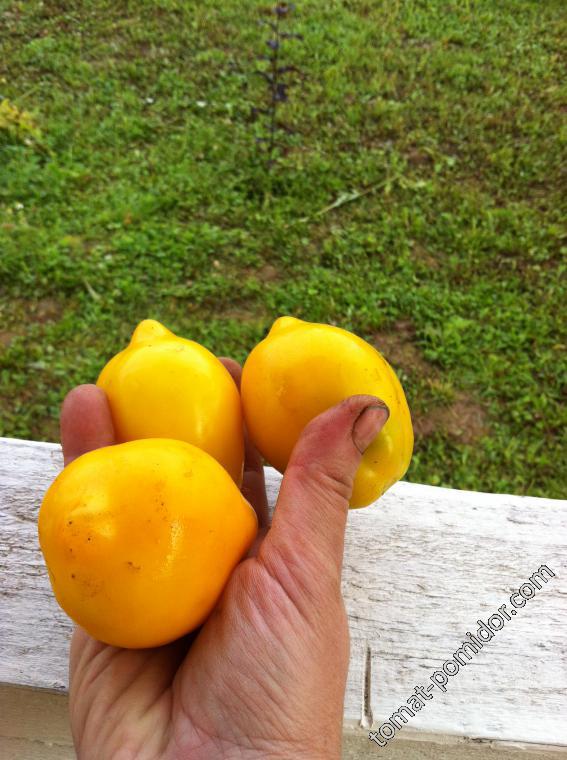
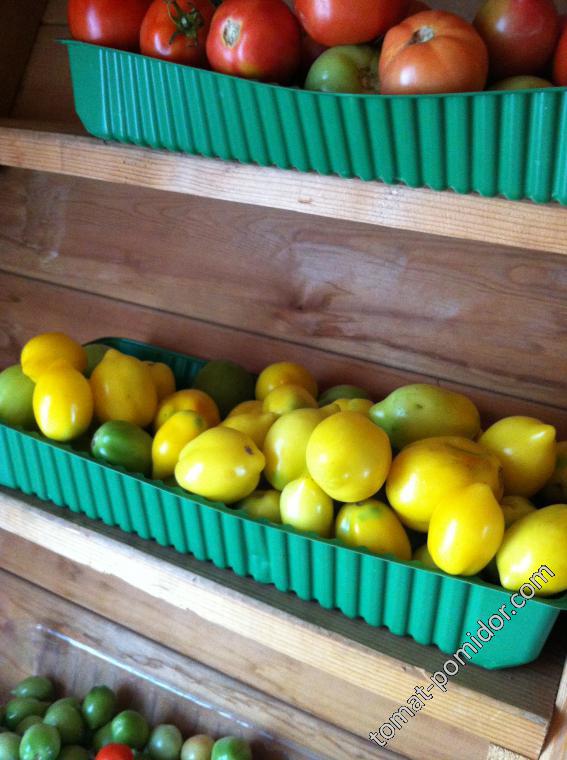
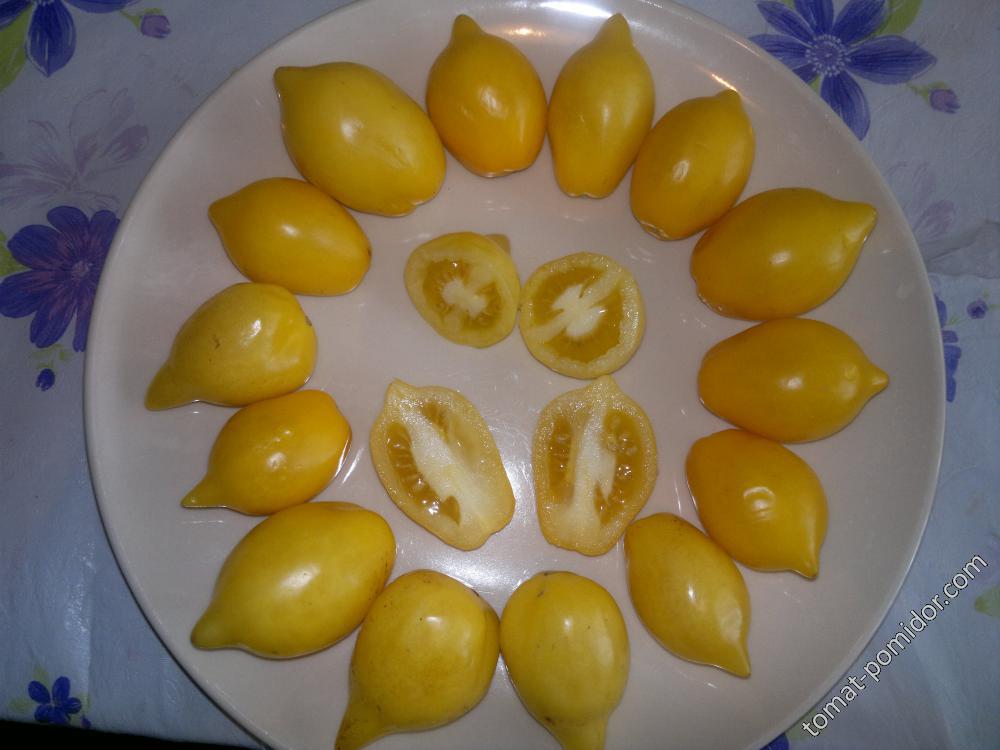
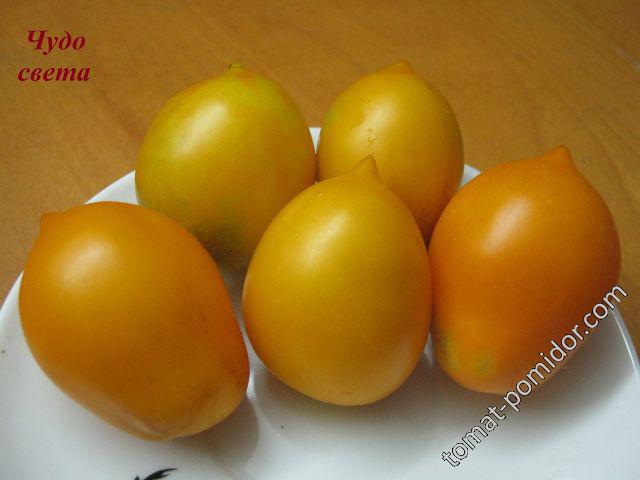
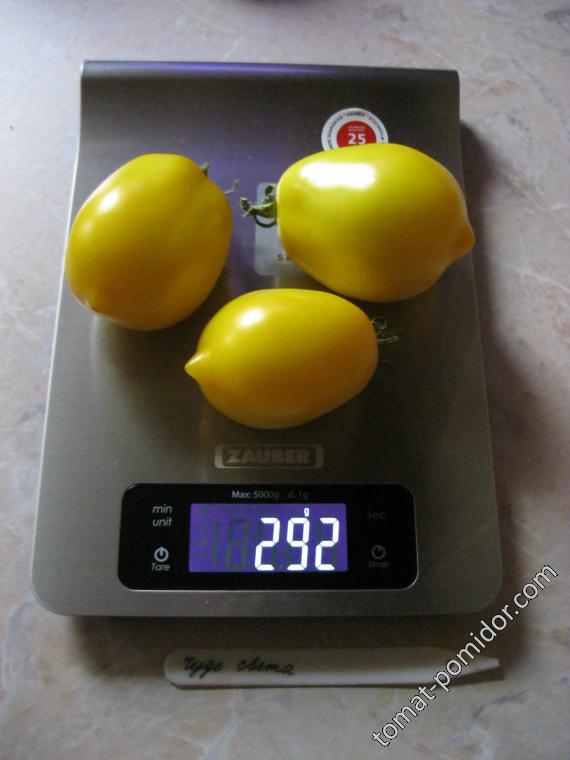
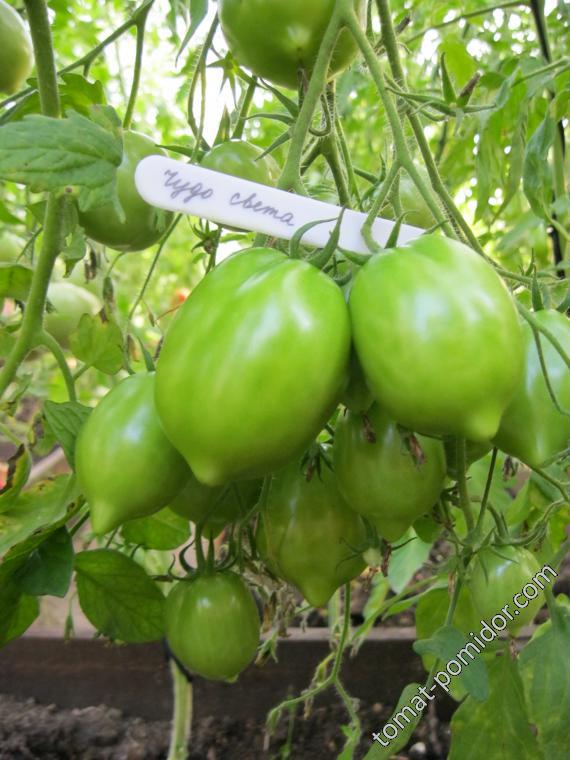
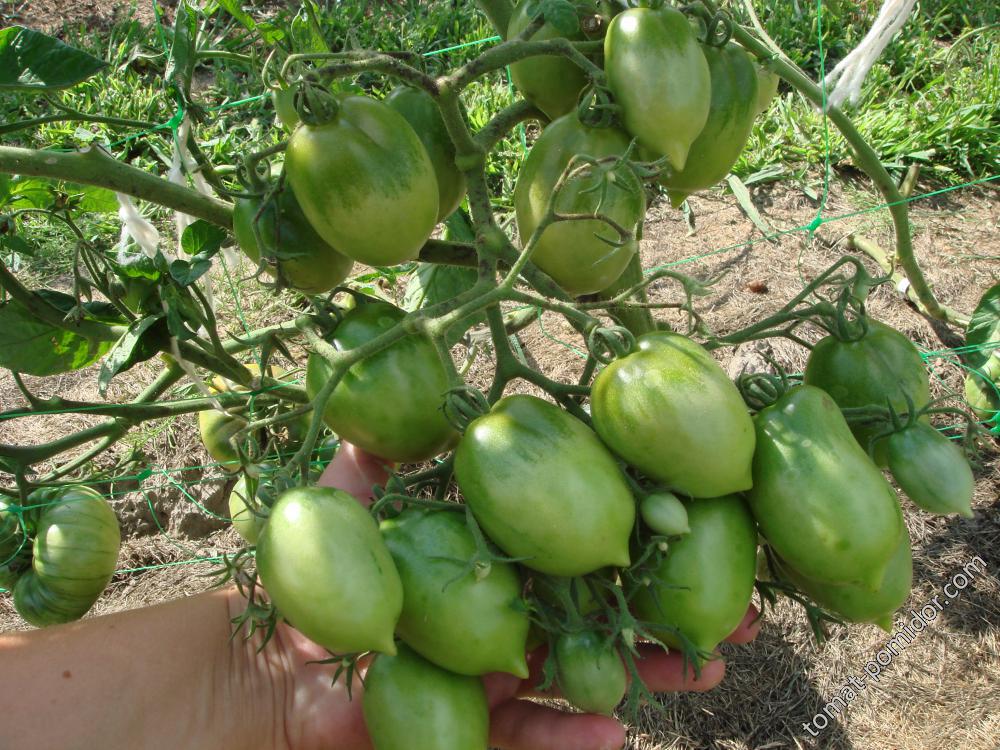
I planted this variety for its beauty and because of its name - almost my namesake - Wonder of the World
Tall, handsome, blond :yep:

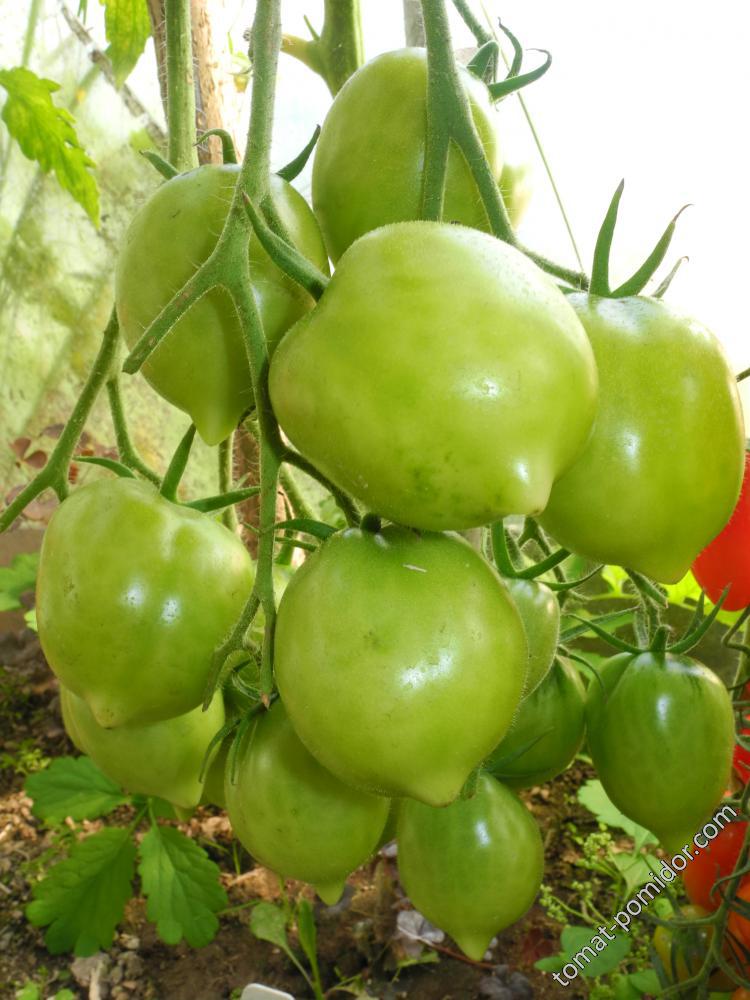
my Wonder of the World.
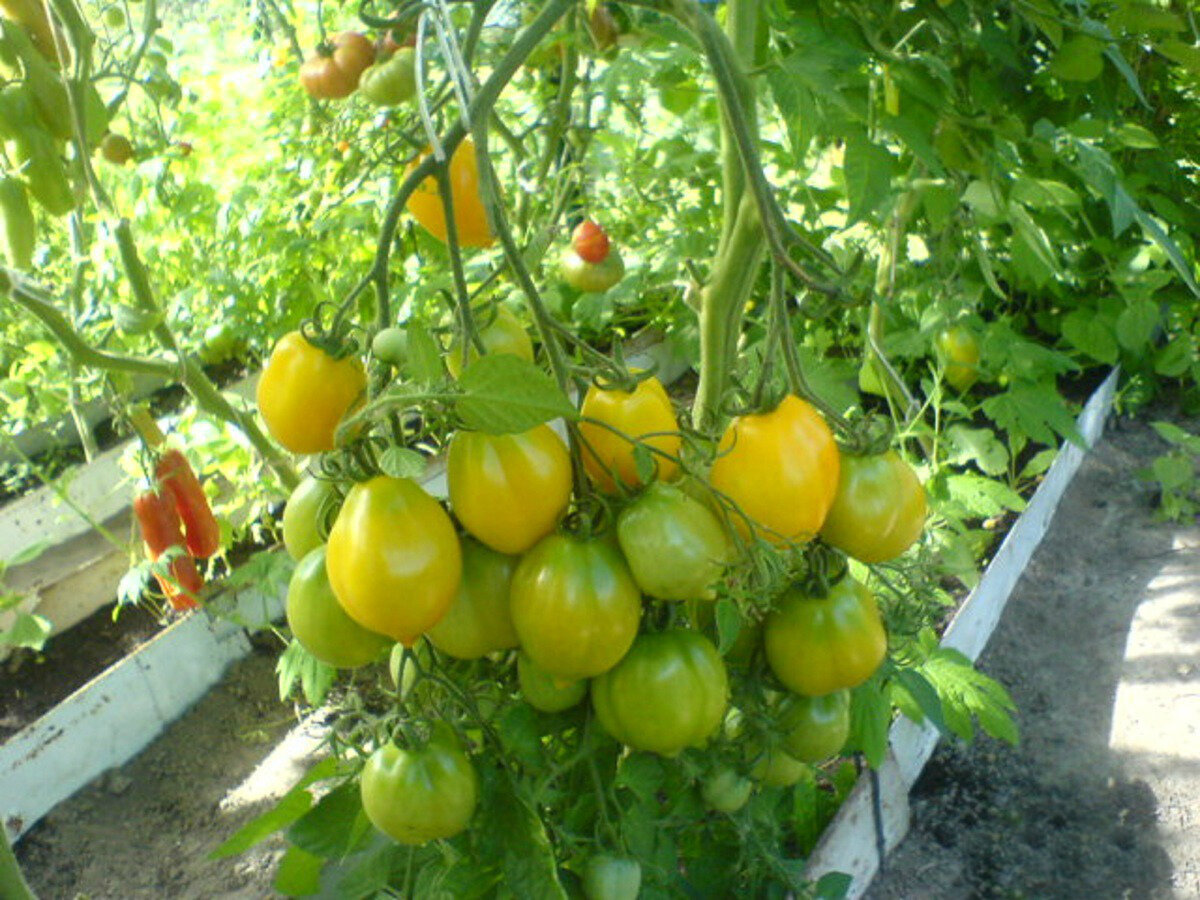
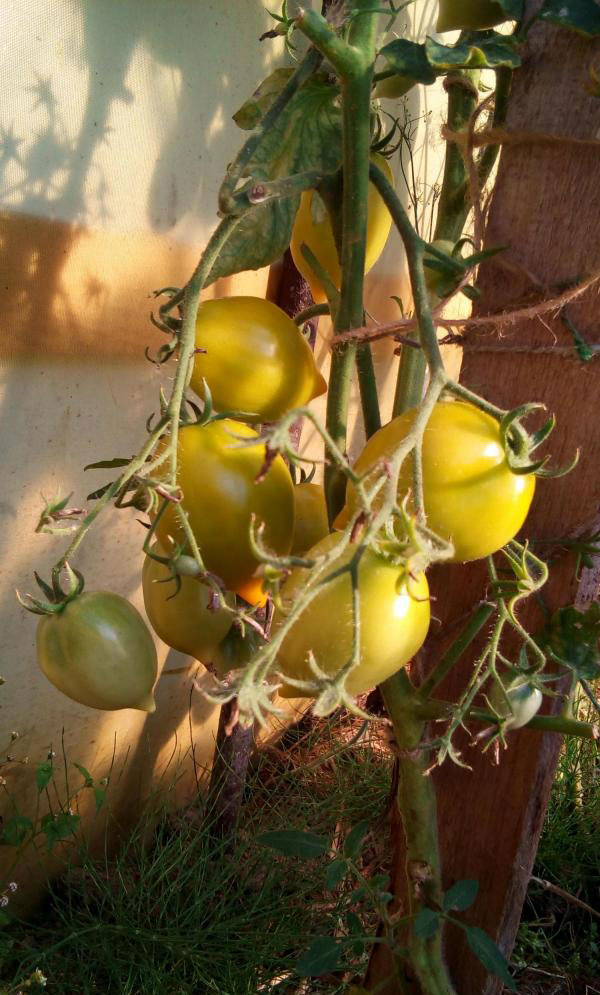
Mine is late, although I planted it very late myself, it was growing in a bag in the corner of the greenhouse (I never got around to it), then I carefully transferred it to the ground... In the photo (the bush) is early September... I've even covered it with a covering in the greenhouse... It's just starting to ripen... It hasn't succumbed to late blight.
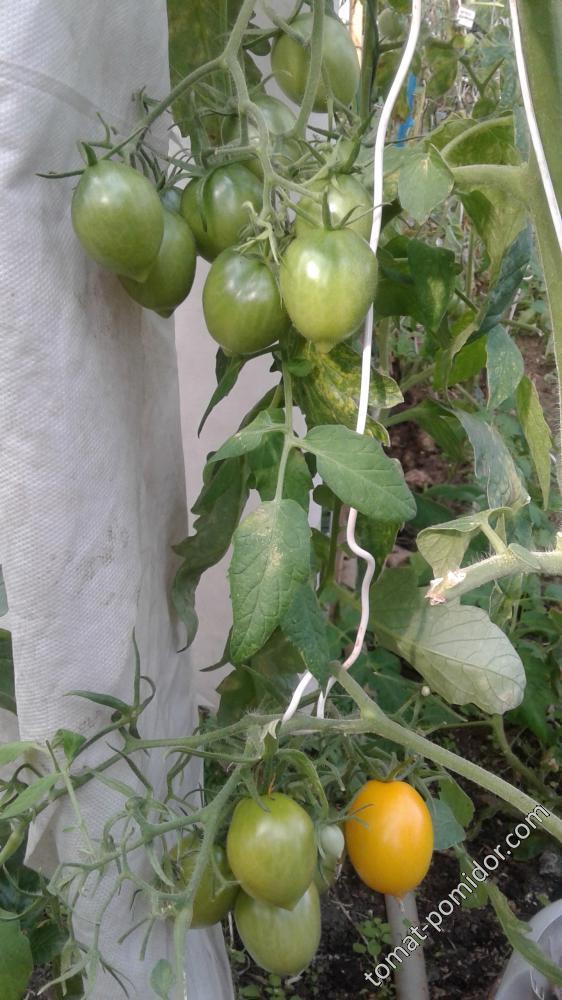
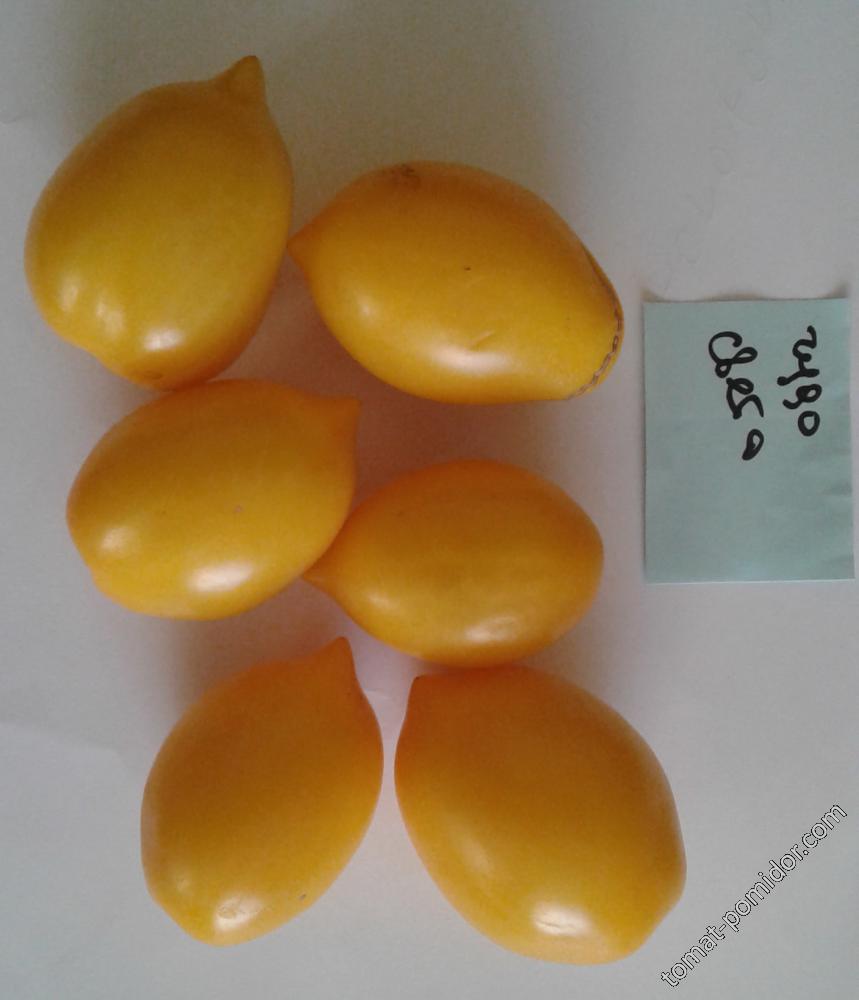
I've planted 'Wonder of the World' three years in a row. It always produces a good harvest and doesn't get sick. The flavor is a bit bland. My little nephew chooses this one out of all the tomatoes (there are 50 varieties) and eats it instead of apples. He says the only thing better than this one is 'Scheherazade.' He doesn't even need 'Malachite Box.' I'll plant it again; he likes it in jars, too.
I recommend this to those who enjoy raising their spirits through vegetable gardening; to those who prefer tart tomato varieties, for example, with meat; and to those who appreciate the color yellow.
The plant requires as much attention as other varieties, but the fruits are often air-filled, with little pulp, and are medium to small in size. The package contains about 10 of them, and enough have sprouted for planting this season; the bushes are not very tall at first.
It's good for a one-time try. The yellow cherry tomatoes are significantly sweeter in comparison (for those with a sweet tooth). As for "planting again"—perhaps I collected the seeds, but there are better options, despite their vibrant appearance. Perhaps someone else has different results.