Some people enjoy tomatoes with a tart edge, but many prefer sweeter fruits. Tomatoes with the word "honey" in their name fall into this category. It perfectly describes their flavor. Let's take a closer look at these varieties.
Content
Tomato variety Honey
The variety's name is well-deserved—it produces delicious, slightly sweet fruits. Although the manufacturer recommends eating the tomatoes fresh, they are also ideal for processing.
Table of characteristics of the Honey tomato variety
| Characteristics | Description |
| Description | Indeterminate mid-season variety for beds and film shelters. |
| Ripening time | 110-115 days |
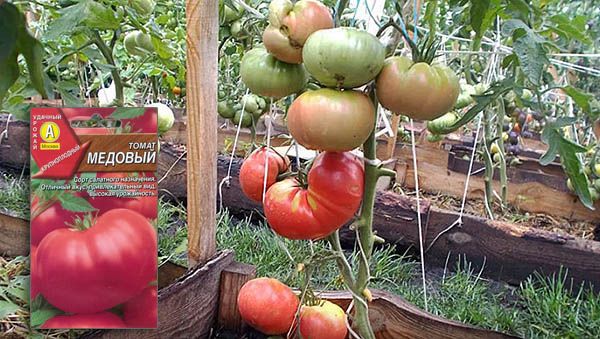
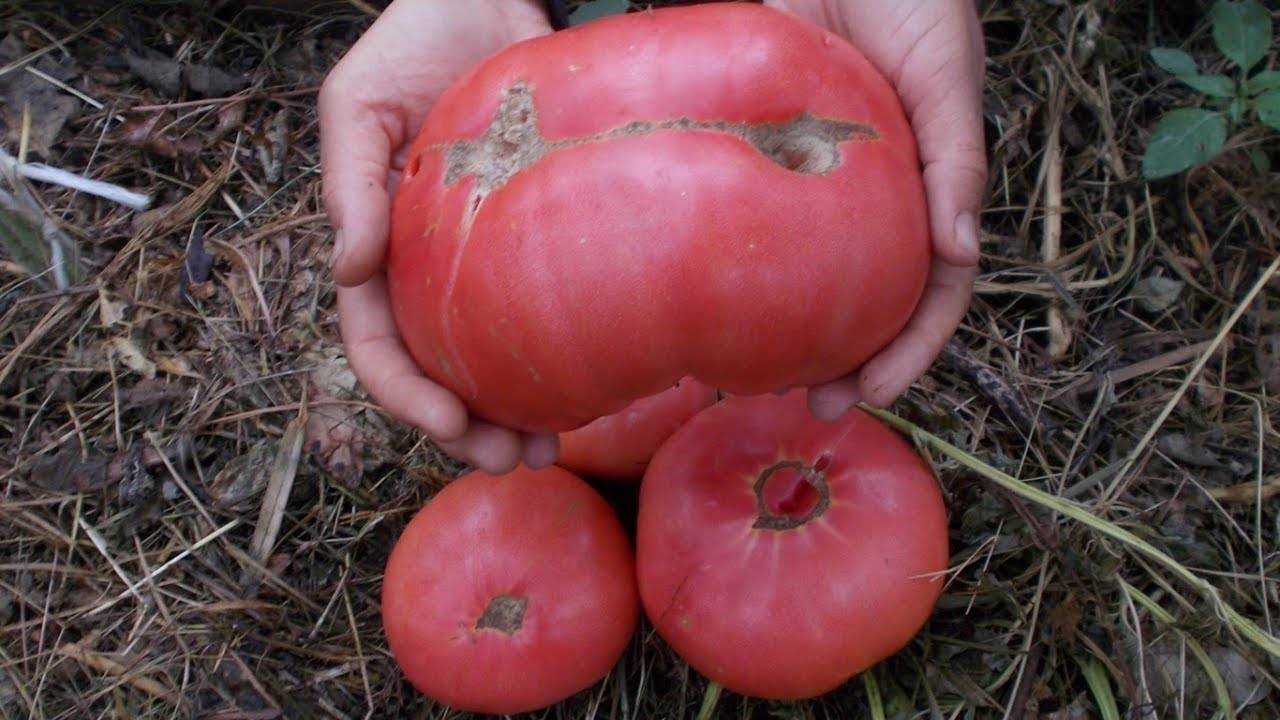
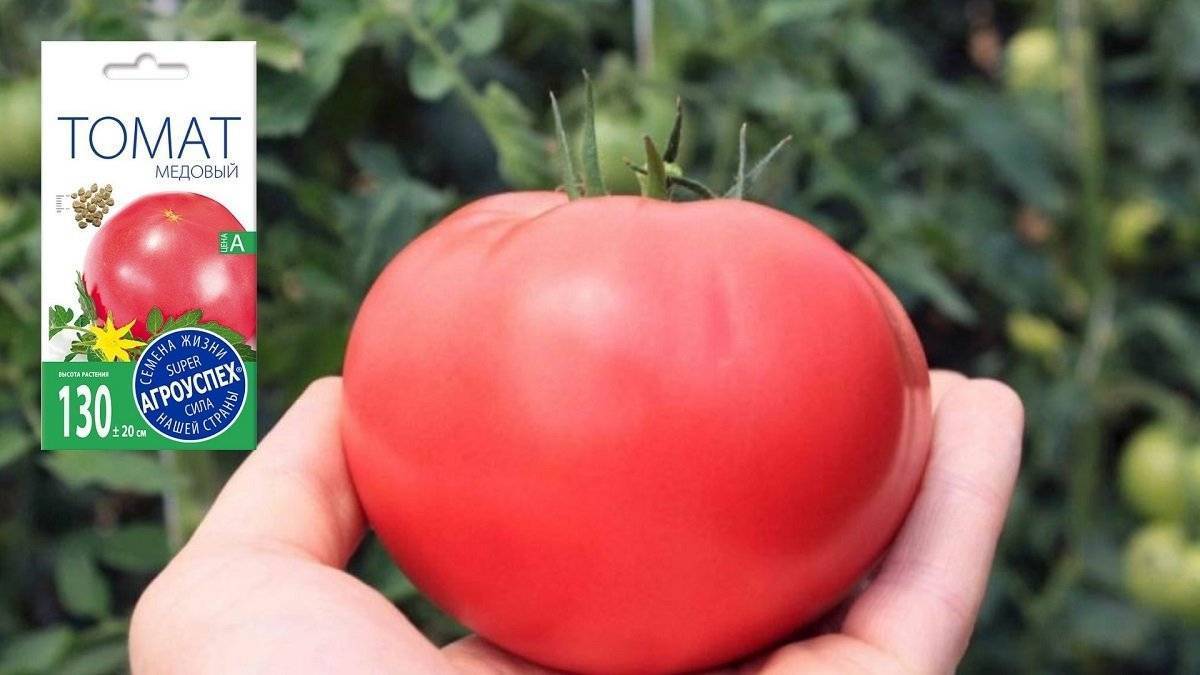
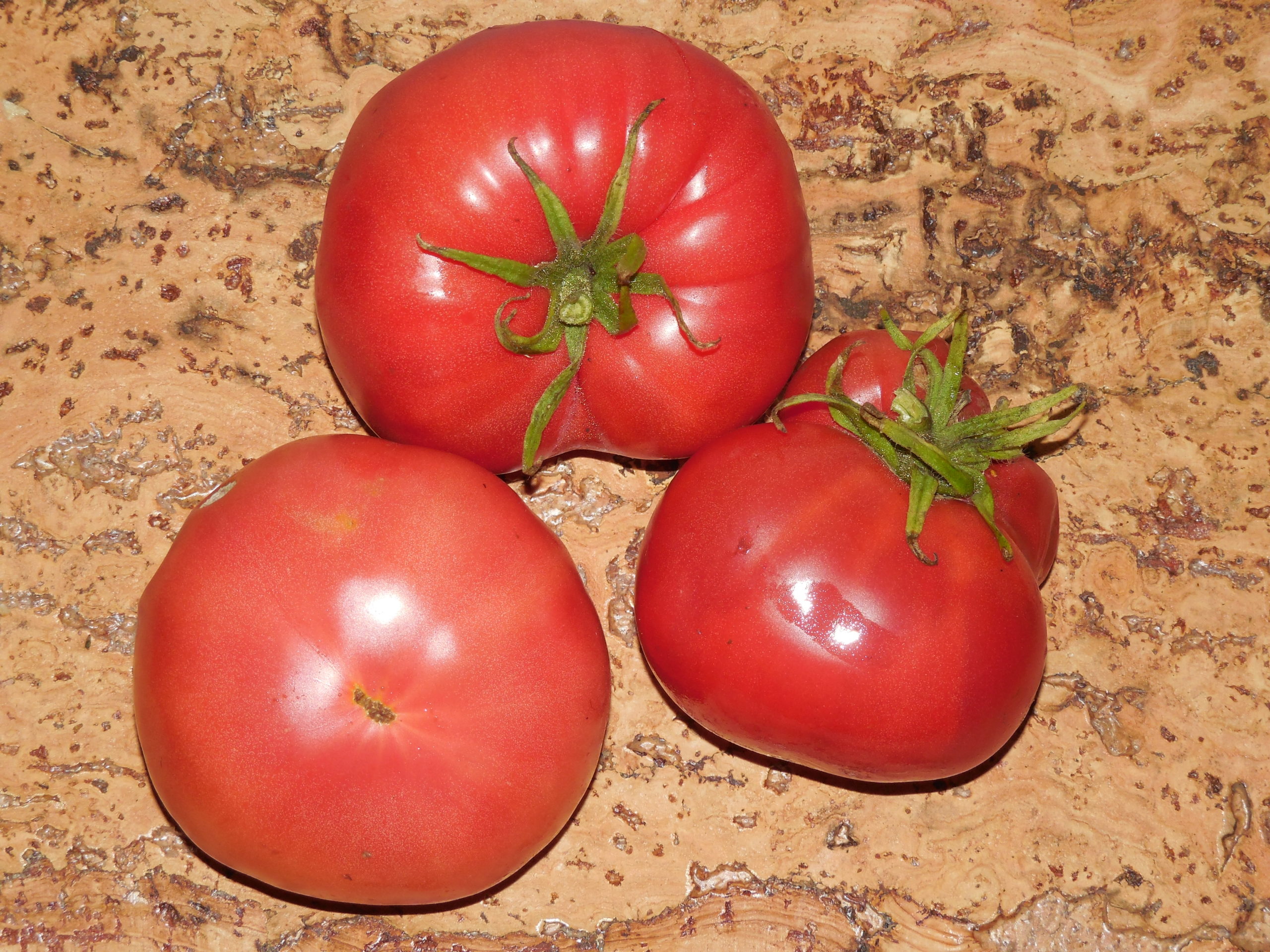
| Fetus | Flat-round, soft, raspberry-colored, slightly ribbed. |
| Fruit weight | 300-400 g. |
| Productivity | 8 kg/sq. m. |
| Application | Salad. |
| Product indicators | Tall. |
| Immunity and infection prevention | To most diseases of nightshades. |
| Agricultural technology | Garter, pinching and shaping. |
| Growing regions | Any. |
| 2007 | |
| Originator | LLC AGROFIRM "DEMETRA-SIBERIA". |
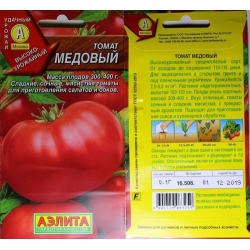
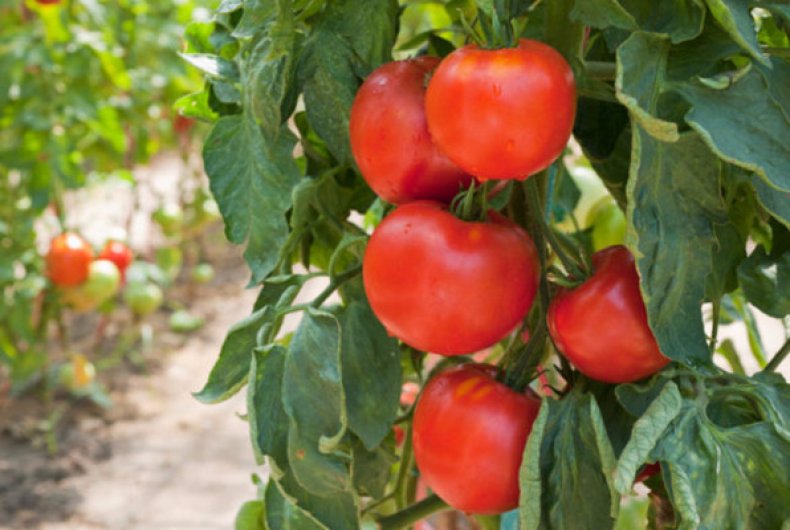
Photo gallery of the tomato variety Honey
Comparison of the Honey tomato variety with similar varieties in the table
| Variety | Ripening period (number of days from full germination to ripening)
Yield of commercial fruits |
Brief description | Fetus |
| Honey | 105-115 days
800 c/ha (greenhouse and under film) |
A mid-season indeterminate variety for open ground and greenhouses. Requires staking and shaping. Suitable for salads. | Flat-round, smooth, soft, raspberry, 300-400 g. Excellent taste. |
| Ox heart | 105-120 days
630-690 c/ha |
A late-ripening indeterminate variety for open ground and greenhouses. Requires staking and shaping. Suitable for salads. Grows best in southern Russia. | Heart-shaped, medium-ribbed, pink-raspberry, 150-300 g. Good taste. |
| Potato raspberry | 100-105 days
up to 1800 c/ha |
A mid-season, indeterminate, standard variety for open ground and greenhouses. Requires staking and training. Suitable for salads, canning, and processing into tomato products. | Flattened-round, raspberry, 700-800 g. Excellent taste, sugary, rich. |
| Crimson Elephant | 110-120 days
650 c/ha |
An early-ripening determinate variety for greenhouses. Suitable for salads. | Round, slightly ribbed, medium-dense, pink, 150-200 g. Excellent taste. |
| Minusinsk home | 110-120 days Up to 1500 c/ha |
An early-ripening indeterminate variety for greenhouses. Requires staking and shaping into 1-2 stems. Suitable for processing into tomato products and canning. | Heart-shaped, slightly ribbed, raspberry, 350-500 g. Excellent taste. |
| Siberian Shan'gi | 100-110 days
The yield of commercial fruits in open ground was 5.6 kg/sq.m. |
A mid-season determinate variety for open ground and greenhouses. Suitable for salads. | Flat-round, medium density, slightly ribbed, raspberry, 157 g. Excellent taste. |
| Favorite | 110-115 days
Up to 1500-2400 c/ha |
A mid-early indeterminate variety for greenhouses. Requires staking and training into two stems. Suitable for salads. | Flat-round, pink, pink-raspberry, slightly ribbed, 250-400 g. Excellent taste. |
Gardeners' reviews of the Honey tomato variety
In their reviews, gardeners write that this variety produces large fruits, so large they can't fit in the palm of a hand. They are not prone to developing whitish, woody patches under any growing conditions. Among the downsides, they note its fussiness: the bushes must be trained into 1-2 stems, tied to supports, and side-shoots removed.
This variety is primarily used for salads, but can be pickled in a barrel. It can be grown both in greenhouses and outdoors. This variety is characterized by cold tolerance. The fruits are quite large, averaging up to 400 g. However, with proper care, fruits weighing half a kilogram or more can be grown. The largest fruits always appear in the first cluster. The yield is good, with 3-4 kg of tomatoes per bush. This variety is easy to grow, resistant to temperature fluctuations, and has high disease immunity. It is best to tie up the branches to prevent breakage, not only the main stems but also the clusters containing the fruits. It is best to plant in a sunny location. The flesh is dense, meaty, and sweet. The skin is not thick but firm. It produces delicious tomato juice.
I grew this variety in a greenhouse this year. The yield was so-so, despite the grower's claims of high yields. The plant is rather determinate. It grows over 1.5 meters tall in the greenhouse. The fruit size is also disappointing. The maximum weight was 200 grams. The flavor is on par with pink varieties. I didn't notice any honey flavor. This variety is strictly for salads.
Requires more space. The plant is spreading. The optimal planting pattern is 50x60. The manufacturer wasn't lying here. No more than four plants should be planted per square meter. I planted them using a 40x60 pattern. Maybe that's why I wasn't impressed with this variety. In general, this year's summer in the Moscow region was unusual. Everyone had problems with tomatoes. I'm judging by other varieties; their yields were better.
In my opinion, it's better not to plant tomatoes for open ground in a greenhouse. It doesn't significantly affect the yield or the size of the fruit. However, there's significantly more green mass. And the plants are 30-50% taller.
Next season I will plant this variety again, but I will take it out into the open ground under film.
One of its undoubted advantages is its resistance to late blight. These plants haven't suffered from any blight at all. They also survived the May and June frosts noticeably better. So I decided to give this variety another chance, this time under plastic in the open ground.
This variety is mid-season, so seedlings should be planted in early March. The seed material is quite good. I plant by sprouting the seeds. All five of the five seeds sprouted. I don't transplant the plants, but add soil as they grow. I grow the seedlings in 0.5-liter cups. I leave a third of the cup empty. As the plants grow, I add soil. When planting in a greenhouse, I deepen the plants an additional 10 centimeters. This is beneficial for tomatoes, as it helps them develop additional roots and strengthen their root system.
Tomato variety Honey Taste
This variety is distinguished by its sweet flavor, which predominates over its tartness. In southern Russia, it can be grown uncovered. In the north, it is planted only in greenhouses.
Table of characteristics of the Honey Taste tomato variety
| Characteristics | Description |
| Description | Semi-determinate early-ripening hybrid for open and closed ground. |
| Ripening time | 95 days. |
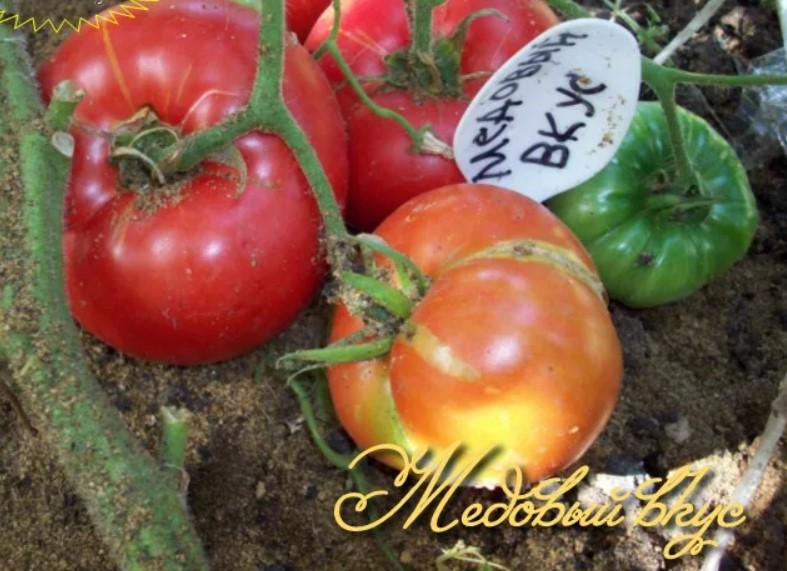
| Fetus | Flat-round, bright red. |
| Fruit weight | 300-250 g |
| Productivity | 8-12 kg/1 sq. m. |
| Application | For juices and salads. |
| Product indicators | Average. |
| Immunity and infection prevention | Average, preventative treatment required. |
| Agricultural technology | Needs fertilizing, formation into 1-2 shoots (in beds), into 3-4 stems (in a greenhouse). |
| Growing regions | Any. |
| Not included. | |
| Originator | Agrofirm "Semena Altaya" |
Photo gallery of the Honey Taste tomato variety
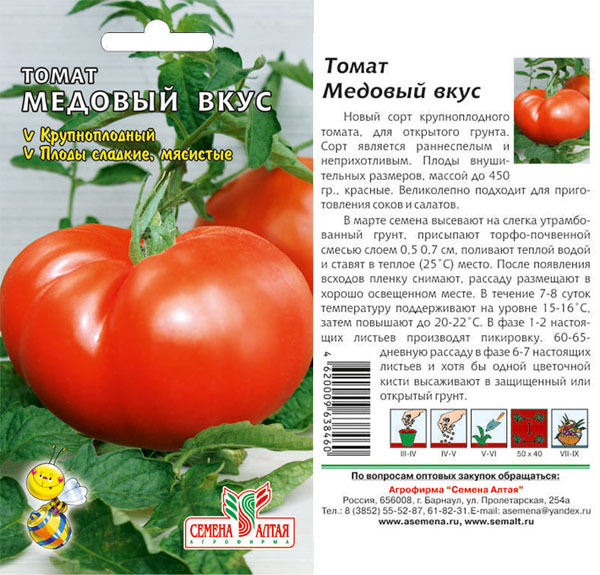
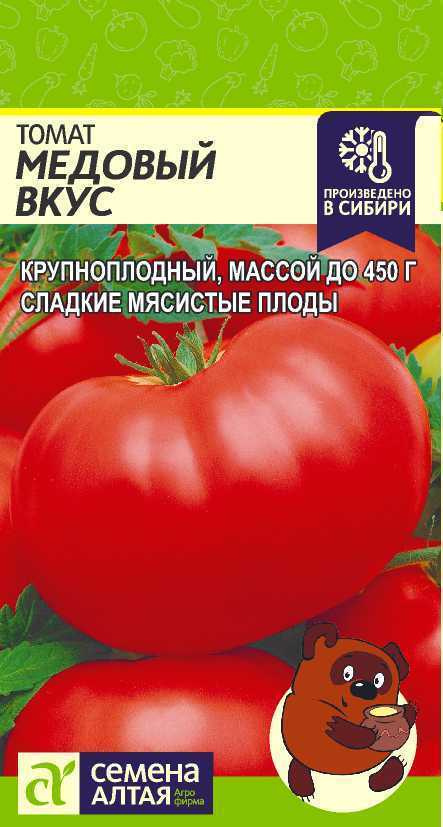
Comparison of the Honey Taste tomato variety with similar varieties in the table
| Variety | Ripening period (number of days from full germination to ripening)
Yield of commercial fruits |
Brief description | Fetus |
| Honey flavor | 95 days
800-12000 c/ha |
A semi-determinate, early-ripening hybrid for both open and closed ground. Requires shaping and fertilizing. Suitable for salads. | Flat-round, bright red, 300-250 g. Excellent taste. |
| Red Bull | 110-118 days
385 c/ha |
A late-ripening determinate variety for open ground and greenhouses. Suitable for salads. Marketability: 89.5%. | Large, medium-ribbed, flat-round, red with a dark spot near the stalk, 305 g. |
| Cosmonaut Volkov | 110 days 1500-2000 c/ha |
A mid-early indeterminate variety for greenhouses. Suitable for salads, appetizers, and processing into tomato products. | Flat-round, slightly ribbed, red, 300-500 g (up to 700 g). Excellent taste. |
| Kostroma | 105-110 days
1350-1500 c/ha |
A mid-season determinate variety for greenhouses. Requires staking and training. Suitable for salads, whole-fruit canning, and processing into tomato products. | Flat-round, slightly ribbed, glossy, red or orange, 80-150 g. Good taste, sweet and sour. |
| Mikado chocolate | 90-110 days
600-800 c/ha |
A mid-season indeterminate variety for open ground and greenhouses. Requires staking and shaping. Suitable for salads. | Flat-round, large, brown, 170-240 g. Excellent taste. |
| Minusinsk apple | 110-112 days
Up to 2500 c/ha |
A mid-season indeterminate variety for greenhouses. Requires staking and training into two stems. Suitable for salads and processing into tomato products. | Flat-round, ribbed, red, up to 500 g. Excellent taste. |
Gardener reviews of the Honey Taste tomato variety
Gardeners cite the advantages of tomatoes as large fruits, resistance to low temperatures, and early ripening. The disadvantages include high fertilizing requirements and the need for shaping.
Hello everyone, I love growing and experimenting with different varieties of tomatoes. In 2017, I purchased a large-fruited tomato variety called "Honey Taste" from a Russian Post post office. I sowed the seeds in the second half of February, and the seedlings turned out to be healthy and even.
Having read reviews online that tomato seedlings definitely need to be hardened off, at the beginning of April I took the box with the already transplanted tomato seedlings out onto the glazed balcony to harden them off.
I planted the seedlings on May 1st in open ground under cover and arches, watering them once a week.
At the end of May, I removed the cover: the tomatoes stood like spreading trees on a thick stem with two or three side shoots. The tomato turned out to be not tall - 70 cm. and beautiful.
Considering the early planting of seedlings in a permanent location in open ground, I did not pick off the side shoots, and eventually they also formed ovaries.
As a result, in the second half of July, huge (500 grams) red tomatoes of excellent taste grew and ripened, so I consider the variety to be early ripening.
The most important feature of this variety for me was not so much the size, but the taste - the tomato is very sweet, not watery, unlike other large-fruited tomatoes!
Tomatoes are perfect for dietary nutrition in fresh form, as they are not sour, and also for making juices and salads.
Since the first nighttime temperature fluctuations that cause tomato blight begin in the Volga region as early as the first half of August, I recommend gardeners plant seedlings in a permanent location under cover in the first half of May as a precaution. This is when the fruits grow very large, weighing up to 500 grams, and are sweet, as they have time to fill out and ripen in the sun.
I recommend this tomato variety to all gardeners and vegetable growers for growing in risky farming zones in Russia, including the Volga region.
I live in northern Germany and have been trying to grow my favorite tomato for four years. Unfortunately, all previous years have been unsuccessful. This year, a glass greenhouse was completed, and in early March, I planted seedlings of different varieties indoors. On April 15th, I transplanted them into the greenhouse and created a hotbed inside. I also planted tomatoes there. Honey Taste was one of the strongest. On June 2nd, the first ones were as small as a pea, and the ovaries were magnificent, with 10 huge tomatoes in the first tier. I only planted five of them, but I fell in love with this variety. They are disease-free, the leaves are beautiful, and don't curl like some others. The foliage is beautiful and elegant, not like my other elephant-like tomatoes, like spreading burdocks. The height of Honey Taste is now (July 4, 2020) approximately 165 cm, but I have already removed the growing point. I hope they taste good. Thanks to those who bred this variety, well done! A magnificent tomato.
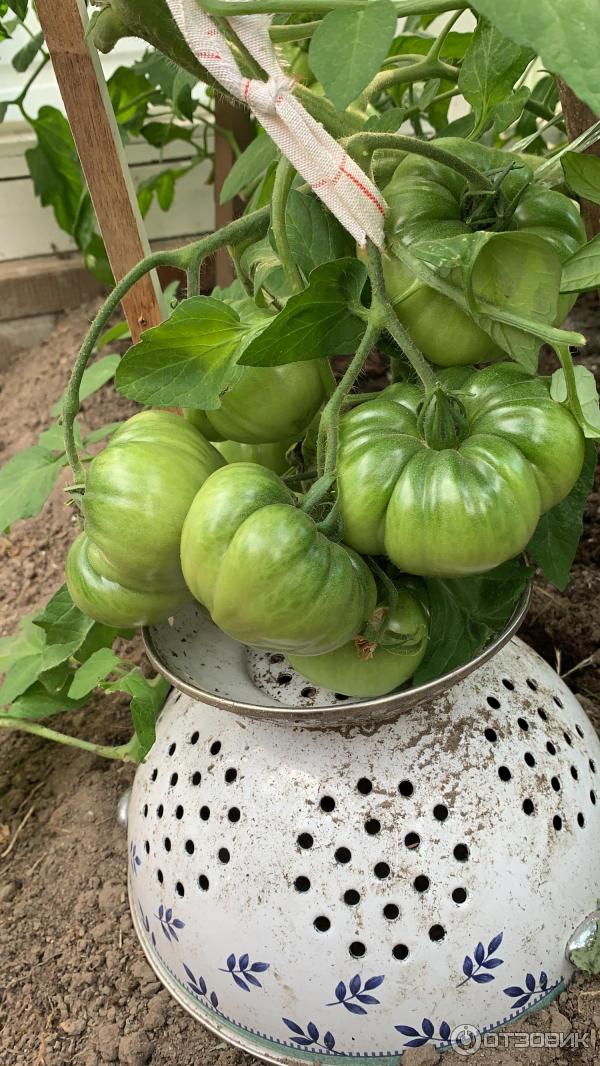
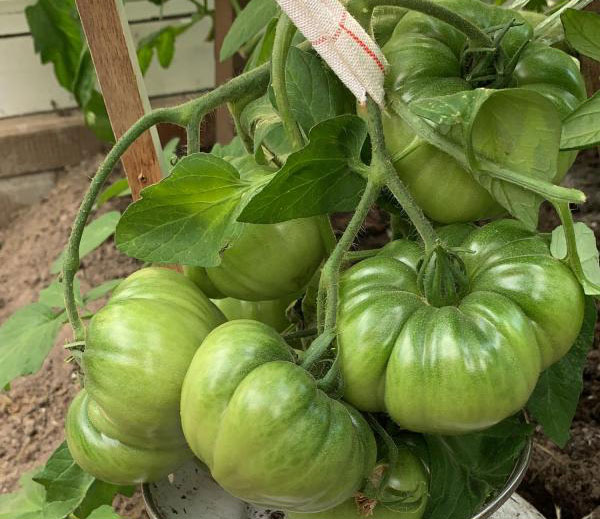
Tomato variety Honey Giant
It has a sweet taste, medium-density flesh, and a distinct fruity aroma.
Table of characteristics of the Honey Giant tomato variety
| Characteristics | Description |
| Description | An early-ripening indeterminate variety for greenhouses and open beds in warm regions. |
| Ripening time | 110-115 days |
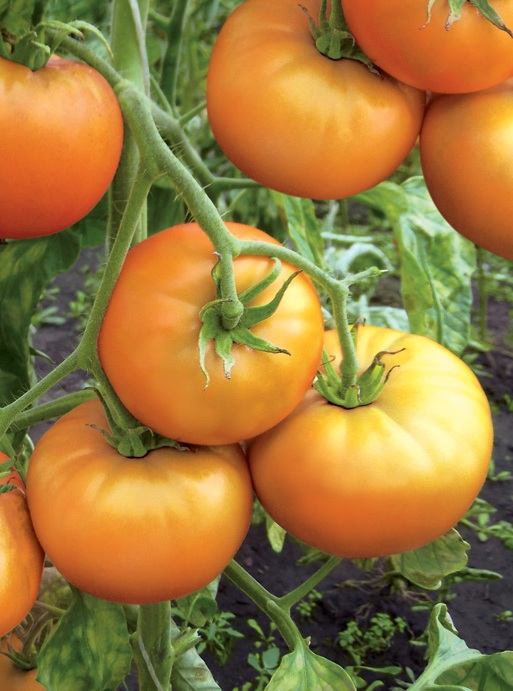
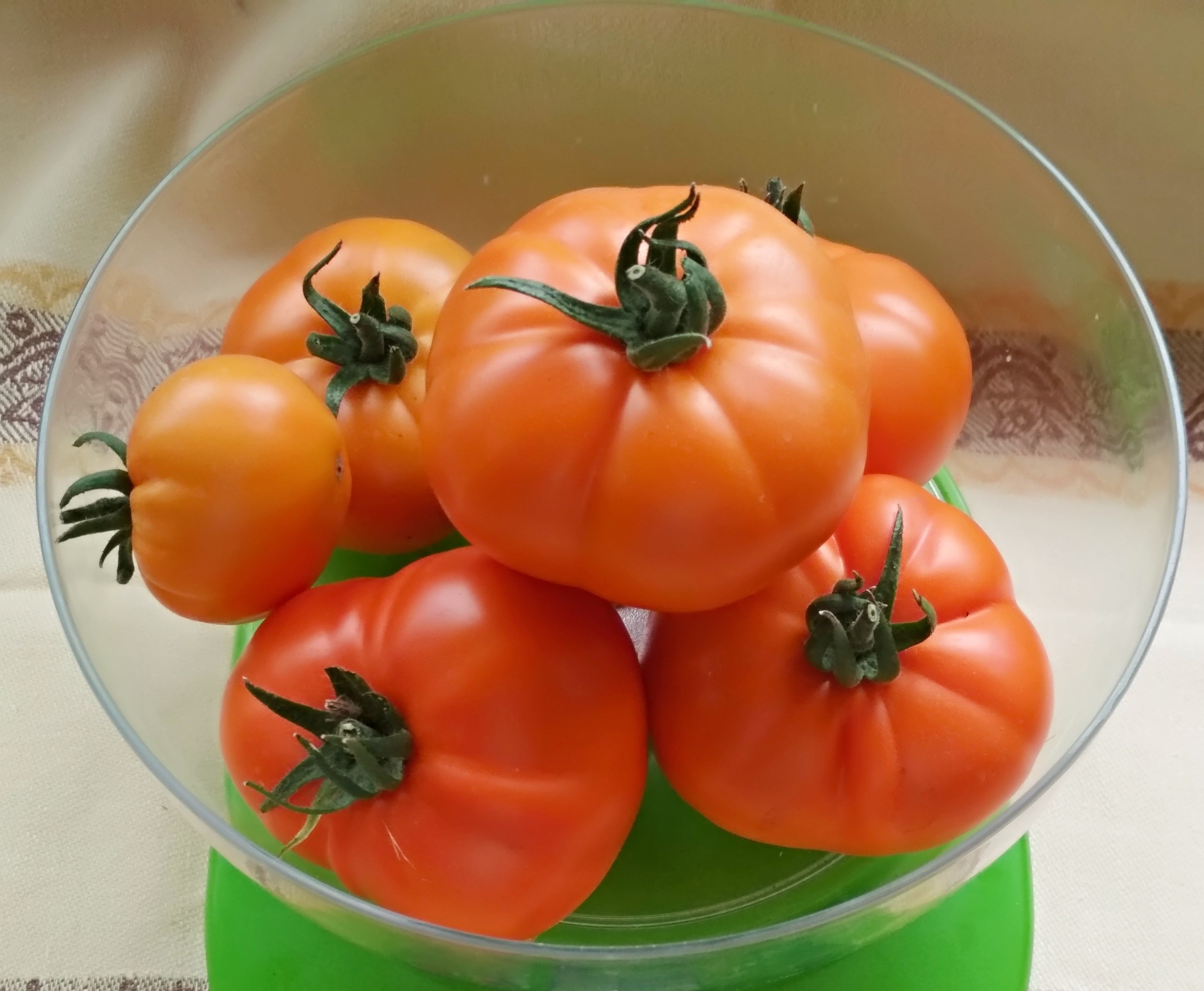
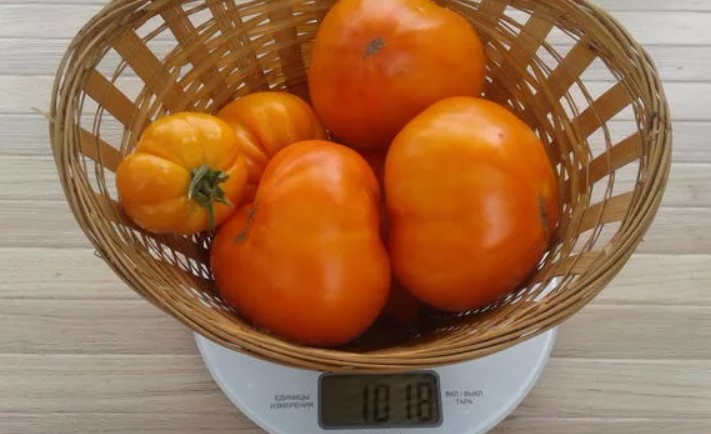
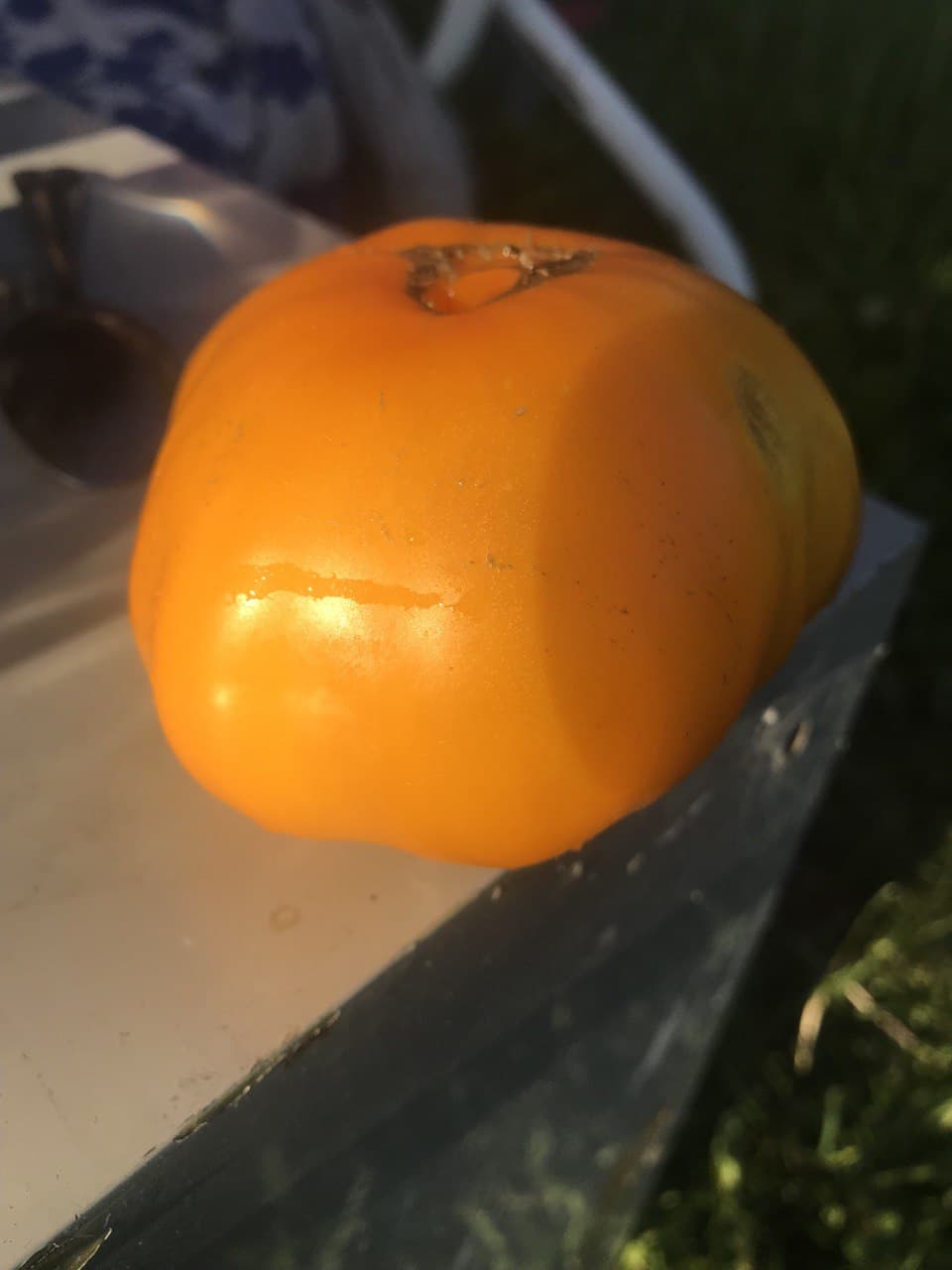
| Fetus | Flat-round, ribbed, orange. |
| Fruit weight | 250-300 g |
| Productivity | 7.5-8 kg/1 sq. m. |
| Application | Salad. For making tomato juice, paste, and sauces. |
| Product indicators | Tall |
| Immunity and infection prevention | Resistance to infections and pests is ensured by timely preventative treatment. Without it, natural resistance will be weak. To prevent the development of late blight and other fungal diseases, it is necessary to maintain crop rotation, regularly ventilate the greenhouse, and loosen the soil. For prevention, it is recommended to spray the bushes with Bordeaux mixture, kefir, copper sulfate, and calcium nitrate. |
| Agricultural technology | Tying, shaping, pinching out side shoots. |
| Growing regions | Any |
| 2013 | |
| Originator | Agrofirma Aelita LLC |
Photo gallery of the Honey Giant tomato variety
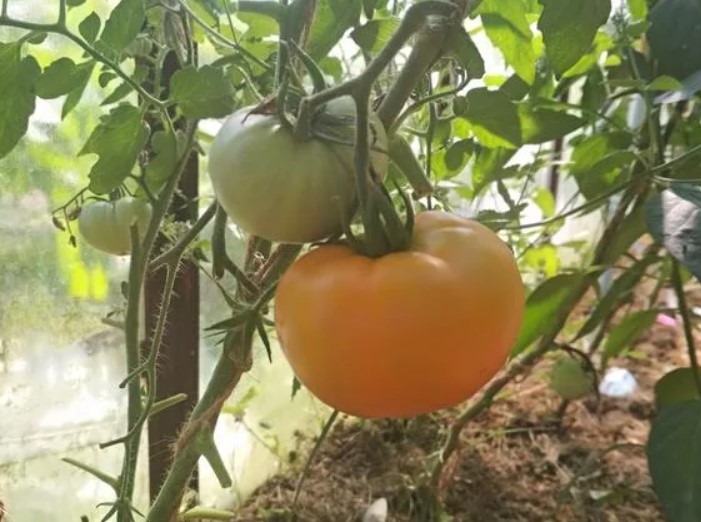
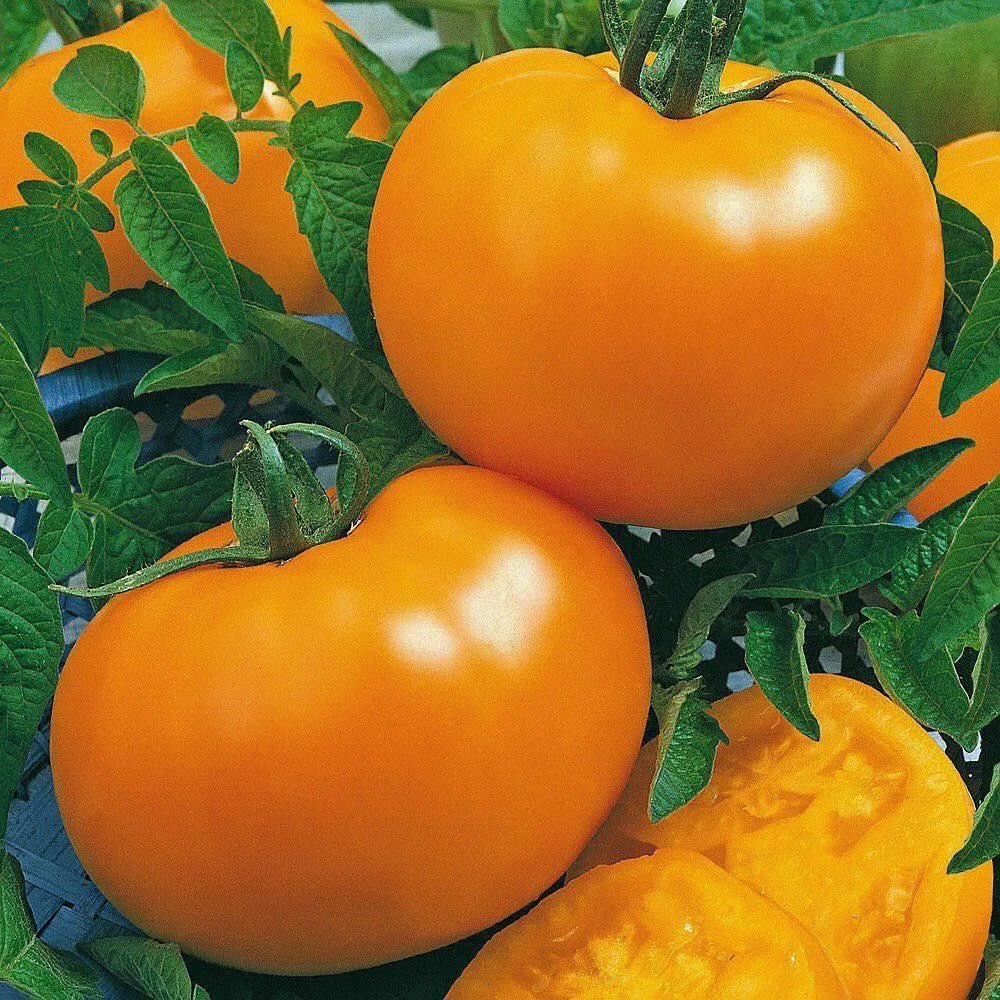
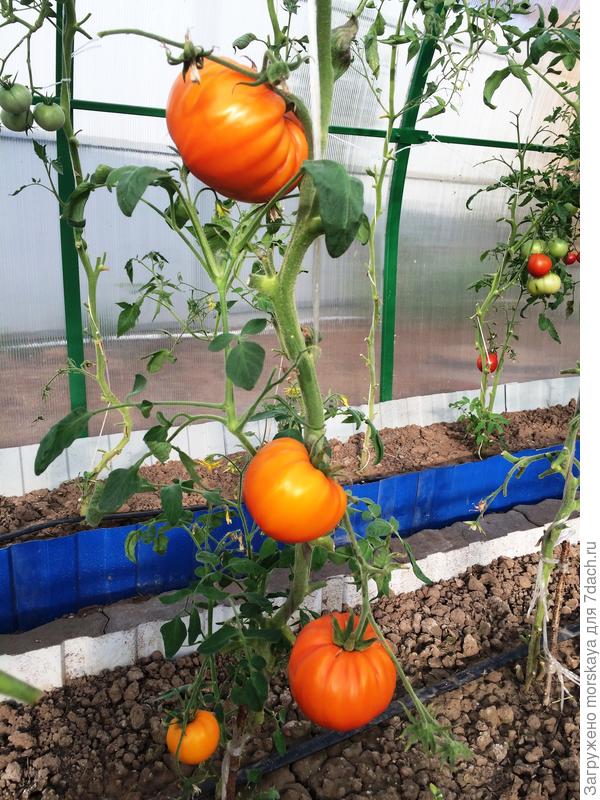
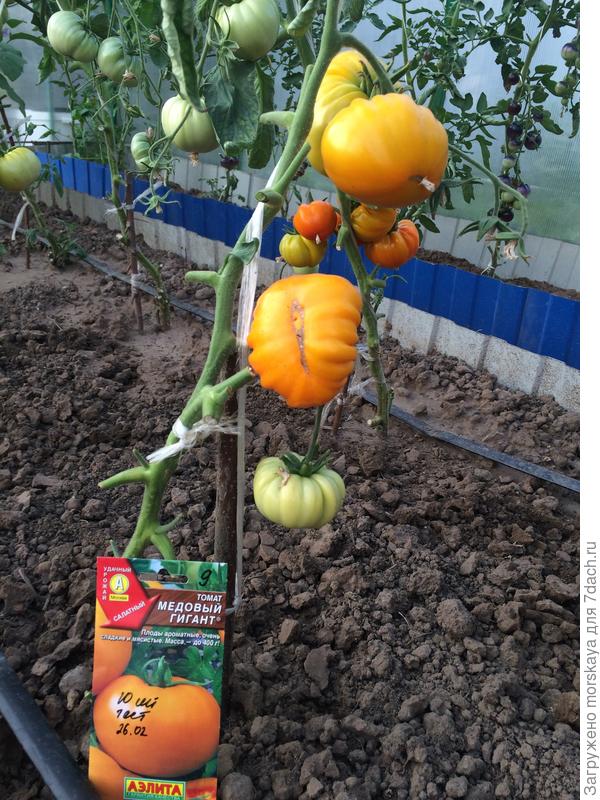
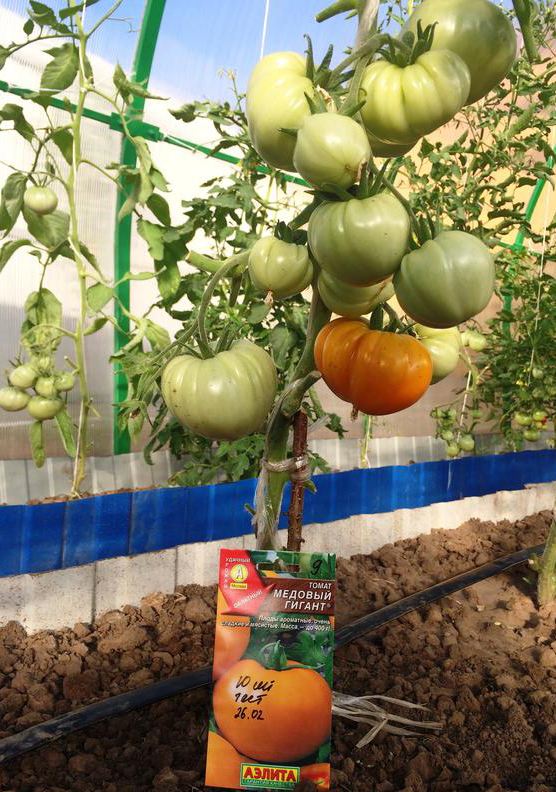
Comparison of the Honey Giant tomato variety with other varieties in the table
| Variety | Ripening period (number of days from full germination to ripening)
Yield of commercial fruits |
Brief description | Fetus |
| Honey Giant | 110-115 days
750-800 c/ha (greenhouse and under film) |
An early-ripening indeterminate variety for open ground and greenhouses. Requires staking and shaping. Suitable for salads. | Flat-round, ribbed, medium density, orange, 250-300 g. Good taste. |
| Mikado Orange | 85-100 days
600-700 c/ha |
An early indeterminate variety. Outdoor cultivation is acceptable in warmer regions. In central Russia, greenhouse planting is recommended. Suitable for salads. | Round, ribbed, orange, up to 300 g. Excellent taste. |
| Orange giant | 110-115 days 630-660 c/ha |
A mid-season indeterminate variety for open ground. Requires staking and shaping. Suitable for salads. | Flat-round to round, strongly ribbed, orange, 350 g. Excellent taste. |
| Orange elephant | 100-110 days
690 c/ha |
A mid-early determinate variety for greenhouses. Suitable for salads. | Round, smooth, medium-dense, orange, 130-160 g. Excellent taste. |
| Persimmon | 90-105 days
580 c/ha |
A mid-season determinate variety for open ground and greenhouses. Suitable for salads. | Flat-round, medium-ribbed, orange, 240 g. Excellent taste. |
Gardeners' reviews of the Honey Giant tomato variety
Gardeners' reviews highlight the variety's large fruit and good commercial qualities, making it suitable for growing commercially. Among its disadvantages, they note the difficulty of care, as the bushes require shaping, staking, and removal of side shoots.
Review from Top.tomathouse.com
We sampled the seeds. The variety was growing in less-than-ideal conditions, in a low-light area of the greenhouse, so the yield was likely small.
The first fruits were quite large, then smaller, but all were sweet and tasty.
Let's plant it again, in a brighter place.
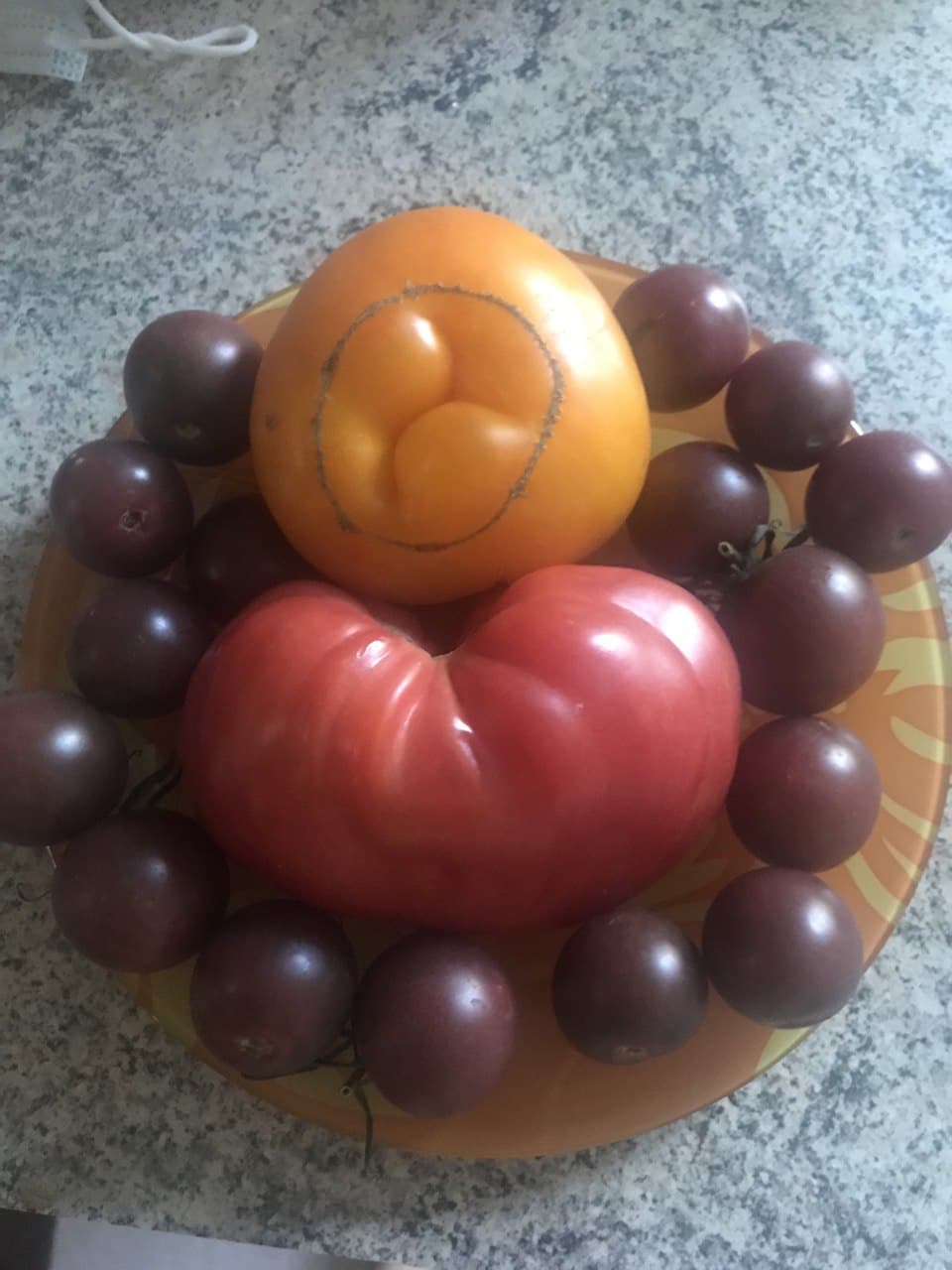
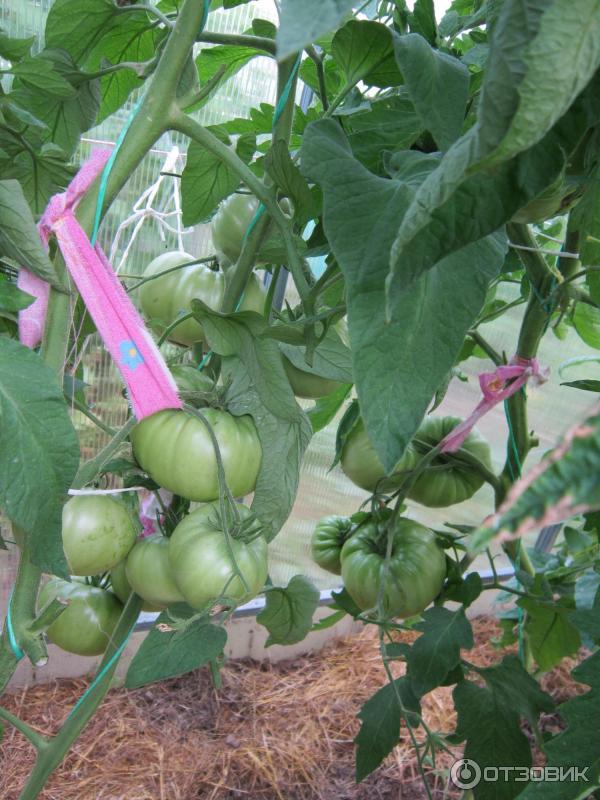
The photo shows the Honey Giant, Raspberry Giant and Black Cherry varieties.
Good day, visitors of Otzovik!
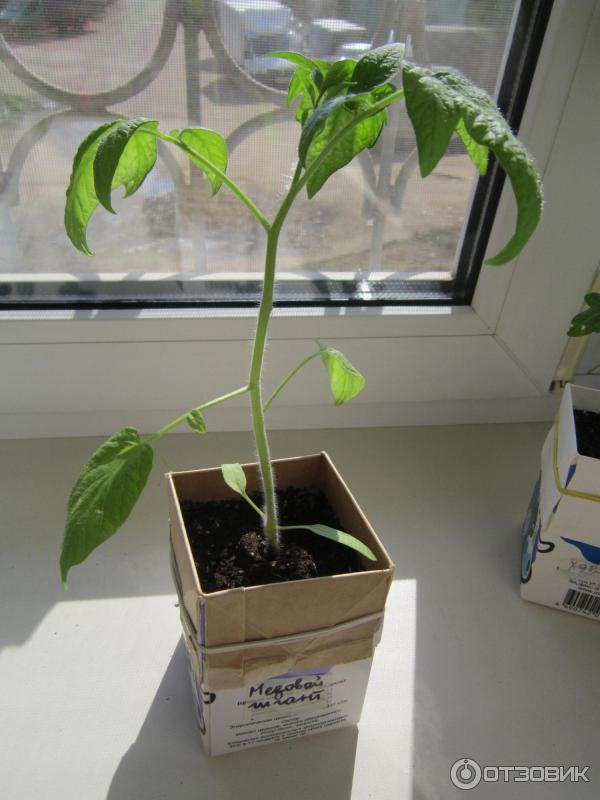
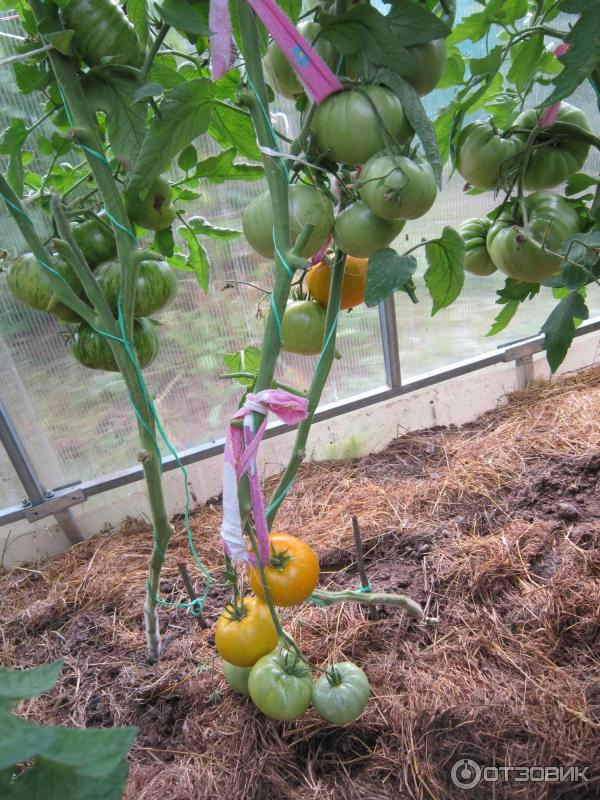
I'll continue my review of the tomato varieties I tested this year. The next variety with yellow fruit is "Honey Giant" from Aelita. Of the fifty bushes planted in the greenhouse, five had yellow fruit. I think that's too many. So, I only planted one bush of each variety for the test.The seedlings were very frail, I thought nothing would come of them.
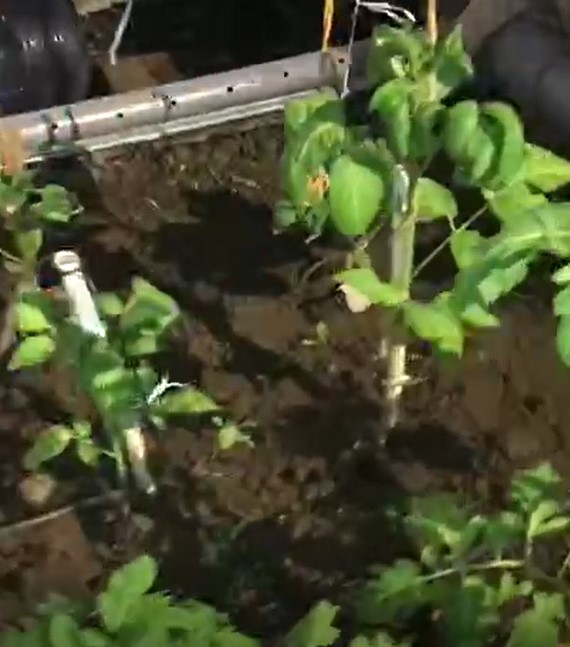
I planted it permanently on May 2nd. It grew in the center of the greenhouse on the east side, closer to the polycarbonate. Freedom is a great strength. The bush quickly began to gain weight and strength. It reached the roof, was well-foliated, strong, but not very wide. This is good. By mid-July, the Honey Giant had clusters like these (the left bush). The clusters are heavy and must be tied up on time. As usual, I'm late with this. I didn't tie up the top clusters, and they all broke off.
This is what the bush looked like on July 25th. The first tomatoes were ripe.
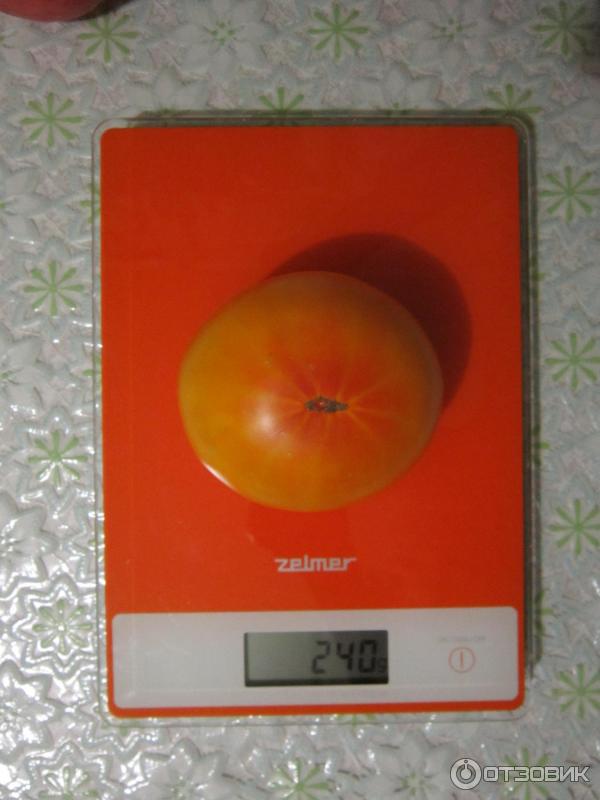
I wouldn't call them giants. The average weight is 200-400 grams.
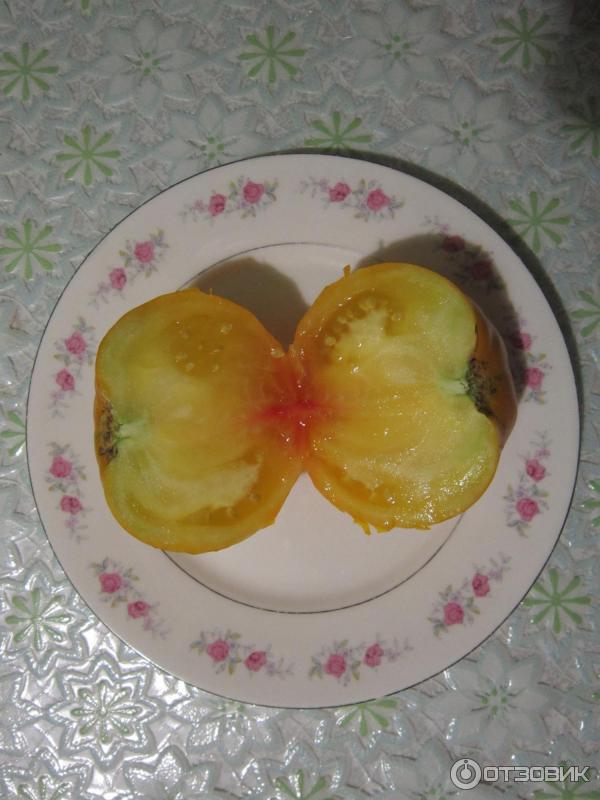
They have a very beautiful yellow color, and when cut, they also have a red center.
It's essential to remove double flowers to prevent ugly ones. This one isn't quite as ugly, but there were signs of it.
The tomatoes are very juicy and sweet. There's almost no tartness. But the "Honey Spas" tomatoes, which I wrote about earlier, are tastier for me. And compared to another orange variety, "Orange Elephant" from Gavrish, which I also reviewed, the "Honey Giant" was tastier.
The yield wasn't exceptional, just average. It produced almost no fruit, and was tolerably sensitive to heat. It had good foliage right up until the very end, and didn't get blight.
For lovers of yellow tomatoes, I recommend trying this variety and forming your own opinion.
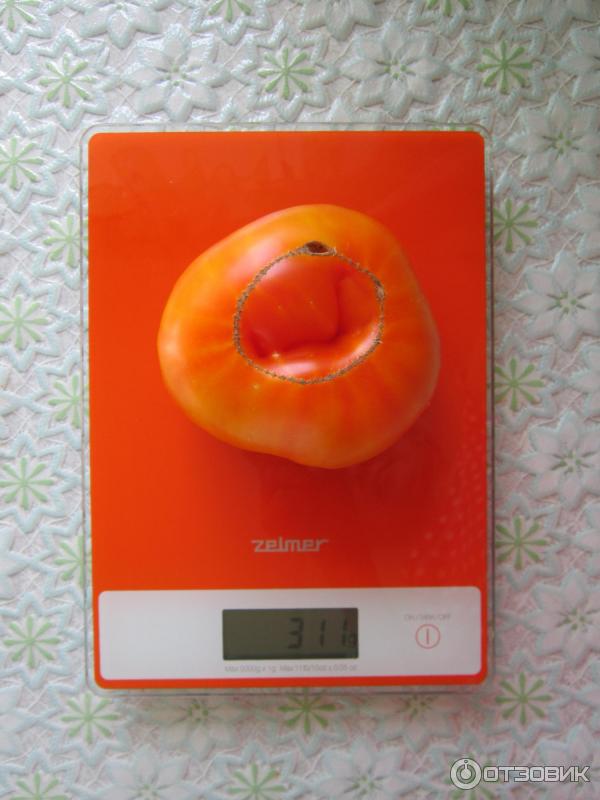
Read more about the Honey Giant tomato variety in the articleHoney Giant tomato variety: characteristics in a table, photos, reviews.
Tomato variety Fig Honey
It boasts incredibly tasty and aromatic flesh. Although the manufacturer recommends eating the tomatoes fresh, they can also be used for tomato processing.
Characteristics of the Fig Honey tomato variety in a table
| Characteristics | Description |
| Description | Indeterminate mid-season variety for greenhouses and film shelters. |
| Ripening time | 100-110 days. |
| Fetus | Pear-shaped, slightly ribbed, yellow. |
| Fruit weight | 200-250 g |
| Productivity | 9.2-9.7 kg/sq. m. |
| Application | Salad. |
| Product indicators | Average. |
| Immunity and infection prevention | Good. |
| Agricultural technology | Formation, garter. |
| Growing regions | Any. |
| 2019 | |
| Originator | LLC "GAVRISH". |
Photo gallery of the tomato variety Fig Honey
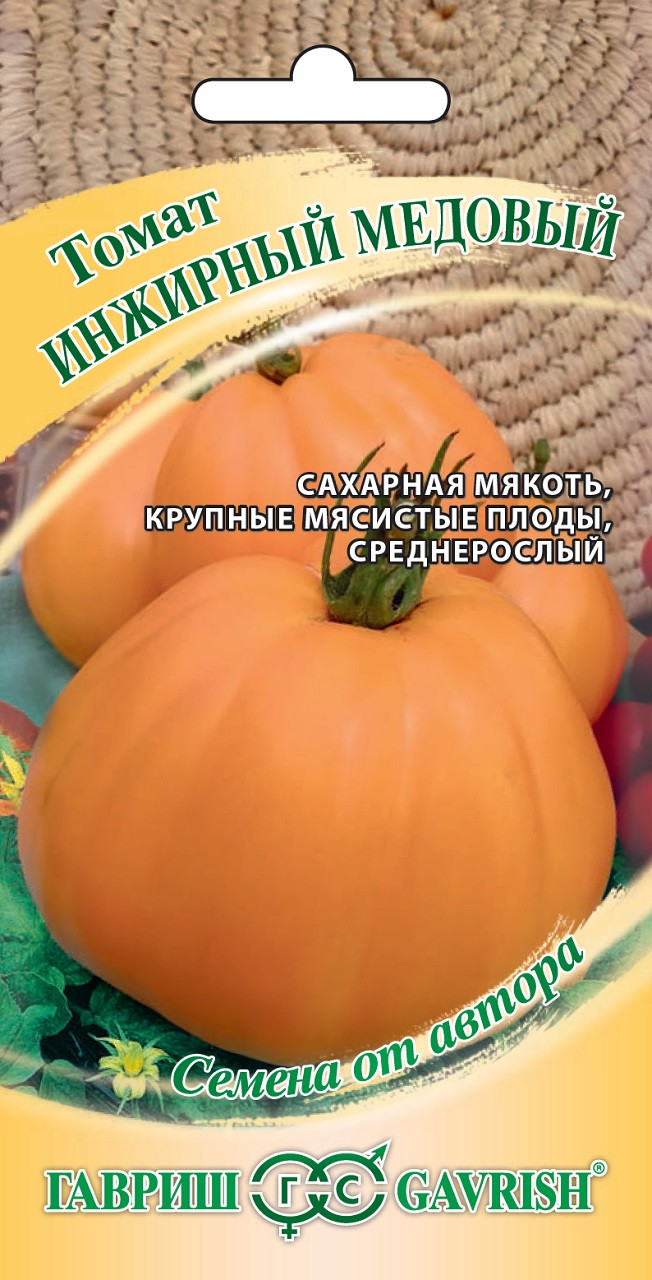
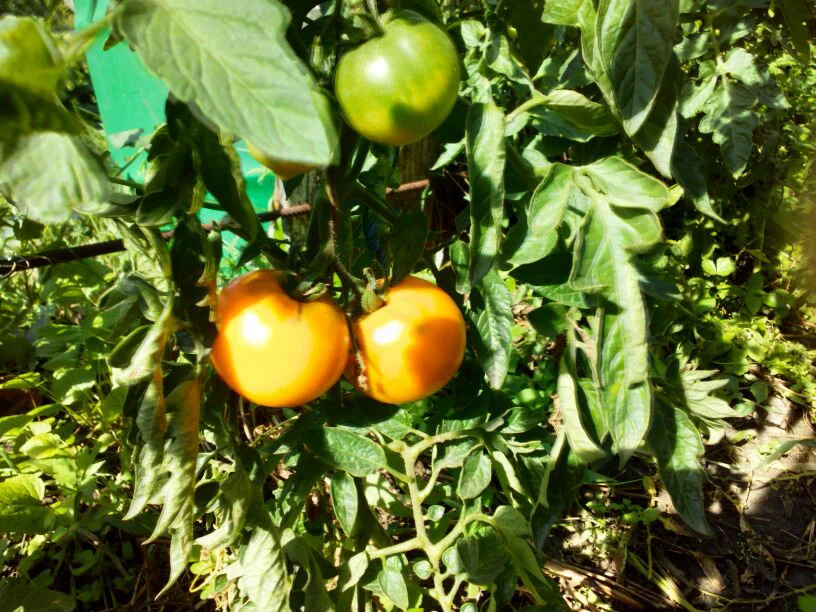
Comparison of the Fig Honey tomato variety with similar varieties in the table
| Variety | Ripening period (number of days from full germination to ripening)
Yield of commercial fruits |
Brief description | Fetus |
| Fig Honey | 100-110 days
920-970 c/ha |
An indeterminate, mid-season variety for greenhouses and plastic shelters. Requires staking and training. Suitable for salads. | Pear-shaped, slightly ribbed, yellow, 200-250 g. Excellent taste. |
| Figs | 100-105 days
700 c/ha |
A mid-early indeterminate variety for open ground and greenhouses. Requires staking and training. Suitable for salads, canning, and processing into tomato products. | Flat-round, large, strongly ribbed, fleshy, red, 350-450 g. Excellent taste. |
| Honey drop | 100-105 days
880-950 c/ha (greenhouse and under film) |
A mid-early indeterminate variety for greenhouses. Suitable for salads. | Pear-shaped, medium density, without ribbing, yellow, 40-50 g. Good taste. |
| Midas | 105-115 days 700-1000 c/ha |
A mid-season indeterminate variety for open ground and greenhouses. Suitable for salads, canning, and drying. | Pear-shaped, smooth, orange, 60-80 g. Good taste. |
| Orange miracle | 100 days
900-1100 c/ha |
An early-ripening indeterminate variety for open ground and greenhouses. Suitable for salads. | Pear-shaped, smooth, orange, 150 g. Good taste. |
Gardeners' reviews of the Fig Honey tomato variety
In their reviews, farmers note that the tomatoes have a unique flavor and are large in size. This makes them suitable for making tomato paste and juice. They have a fairly strong skin, making them suitable for long-distance transportation. They also have a good bite.
Fig Honey Tomato. Included in the register of the Russian Federation for cultivation in plastic greenhouses and under plastic shelters on private farms. This is a mid-season salad variety. The plant is indeterminate. The leaves are medium-length, green. The inflorescence is simple. The peduncle is articulated. The fruit is pear-shaped, medium-dense, with slight ribbing near the peduncle. The color of the unripe fruit is light green, while the ripe fruit is yellow. The number of nests is more than 6. Fruit weight is 200-250 g. The taste is good. The yield of marketable fruits in plastic greenhouses was 9.2-9.7 kg/sq.m.
The Fig Honey tomato was included in the register of approved varieties in 2019.
Approved for use in the regions: All regions.
The originator of the Inzhirnyy Medovyy tomato variety is: OOO SELEKTSIONNAYA FIRM GAVRISH
Fig Honey Tomato (Medium-season variety with incredibly tasty and aromatic flesh. Indeterminate, suitable for growing in plastic greenhouses and under plastic shelters on private farms. The pear-shaped fruits, ribbed at the base, are large, fleshy, and multi-chambered, weighing up to 300–350 g. The flesh is juicy, tender, and sweet, with a rich tomato flavor. An excellent choice for fresh summer salads, tomato juices, and home canning. This variety has comprehensive resistance to tomato diseases. Planting pattern: 40x60 cm.
Tomato variety Honey Cascade
This variety is relatively new, added to the registry in 2021. However, it is already rapidly gaining popularity among private tomato growers.
Table of characteristics of the Honey Cascade tomato variety
| Characteristics | Description |
| Description | A mid-season indeterminate variety for open ground, greenhouses and temporary film shelters. |
| Ripening time | 95 days. |
| Fetus | Pear-shaped, smooth, yellow. |
| Fruit weight | 15-18 years |
| Productivity | 3.6-3.8 kg/sq. m. |
| Application | Fresh, whole fruit canning. |
| Product indicators | Good ones. |
| Immunity and infection prevention | Many nightshade diseases can be treated with regular preventative measures. |
| Agricultural technology | Standard. |
| Growing regions | Any. |
| 2021 | |
| Originator | LLC "Heterosis Selection". |
Photo gallery of the Honey Cascade tomato variety
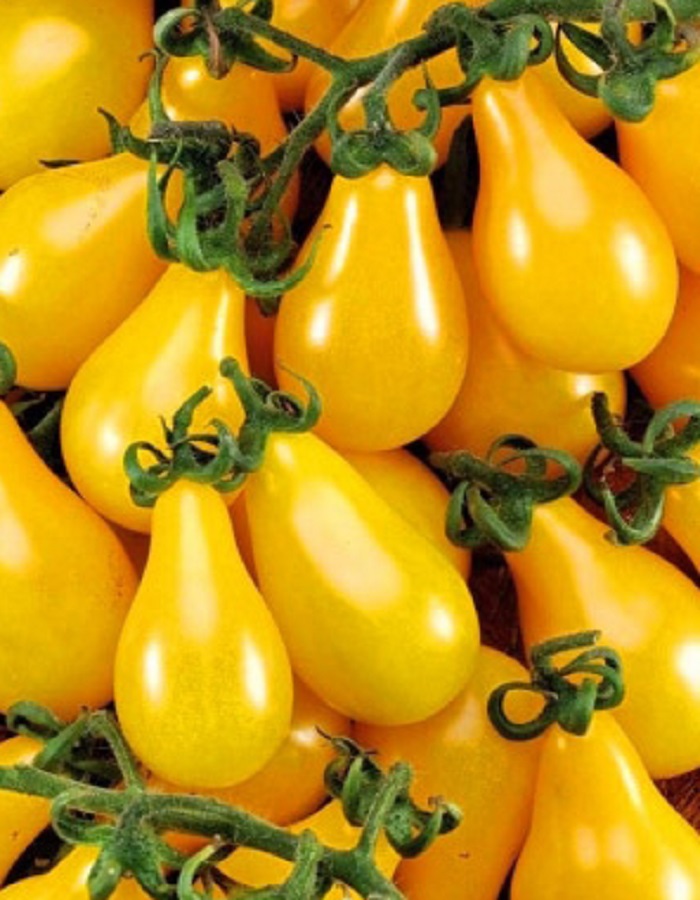
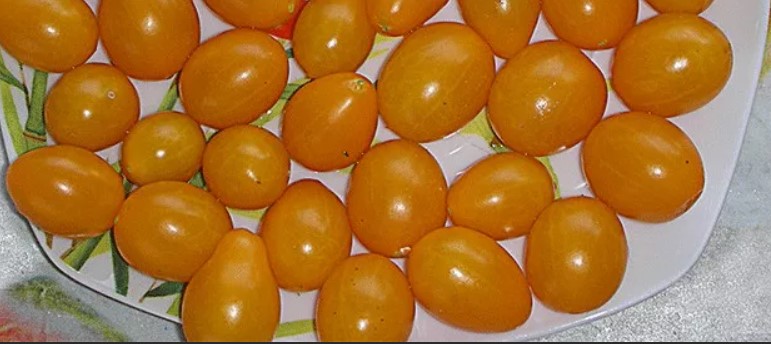
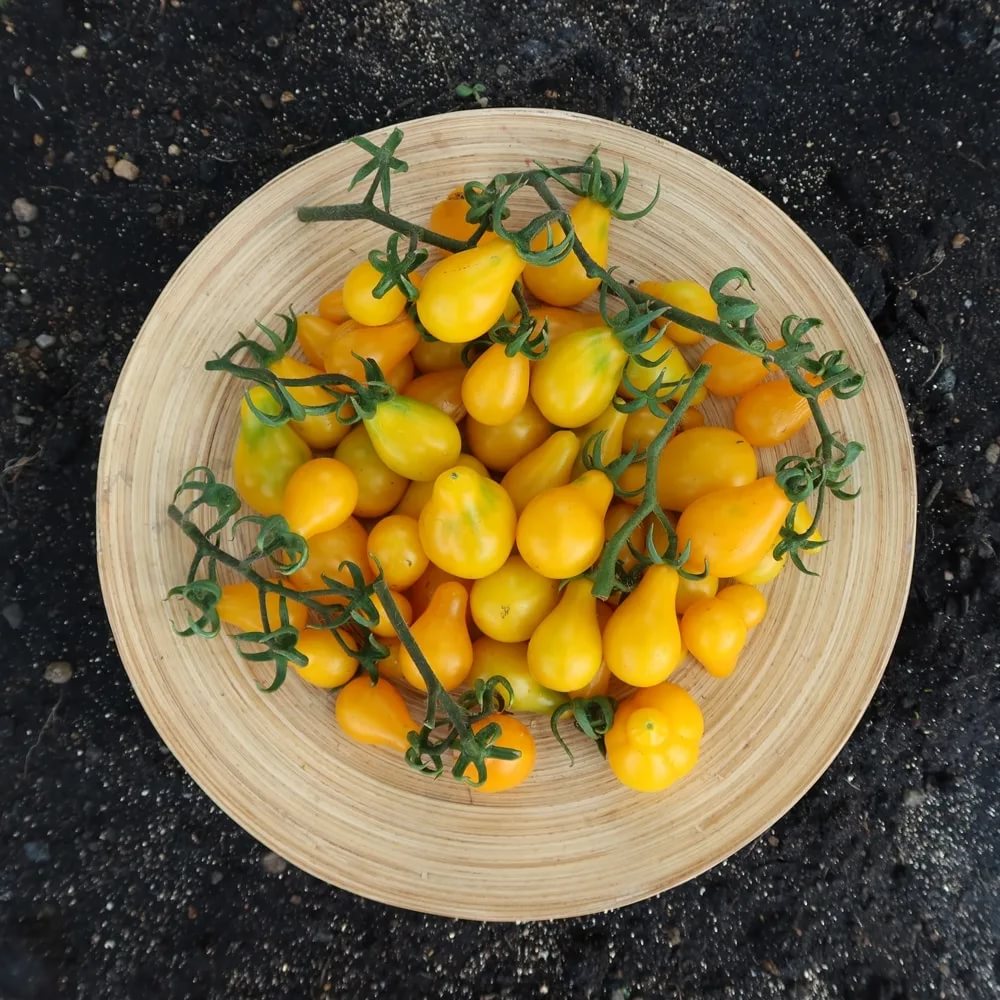
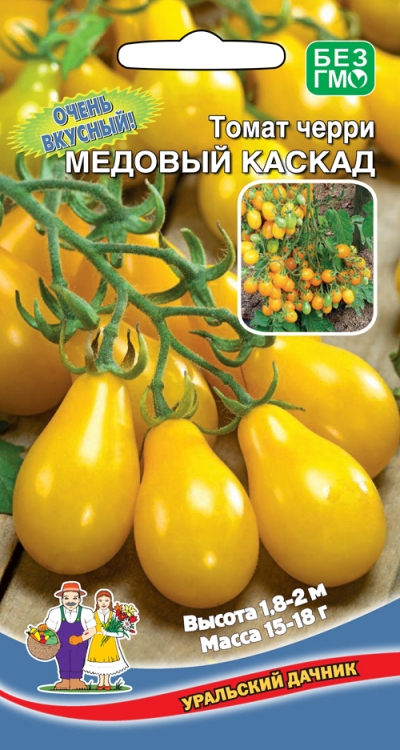
Comparison of the Honey Cascade tomato variety and other cherry tomato varieties in the table
| Variety | Ripening period (number of days from full germination to ripening)
Yield of commercial fruits |
Brief description | Fetus |
| Honey Cascade | 95 days 360-380 c/ha |
A mid-season indeterminate variety for open ground, greenhouses, and temporary plastic shelters. Suitable for salads, fresh eating, and whole-fruit canning. | Pear-shaped, smooth, yellow, 15-18 g. Good taste. |
| Yellow cherry | 95-96 days
300-400 c/ha (1 kg per plant) |
An early-ripening indeterminate variety for open ground. Requires staking, pinching, and side shoots above the third or fourth cluster. Suitable for salads and whole-clump canning. | Round, yellow, smooth, 15-20 g. The taste is good and excellent. |
| Honey drop | 100-105 days
880-950 c/ha (greenhouse and under film) |
A mid-early indeterminate variety for greenhouses. Suitable for salads. | Pear-shaped, medium density, without ribbing, yellow, 40-50 g. Good taste. |
| Rapunzel's golden braids | 89-94 days
1700 c/ha |
An early-ripening indeterminate variety for open ground and greenhouses (greenhouses only, according to the register). Requires staking and training into two stems. Suitable for salads, pickling, whole-fruit canning, drying, and curing. | Round, small, orange, 15-18 g. Excellent taste. |
| Sweet cherry | 75-83 days 900-1200 c/ha |
An ultra-early indeterminate variety for greenhouses. Suitable for salads, first and second courses, and canning. | Spherical, smooth, red, yellow or orange, 20-30 g. Excellent taste. |
| Yellow date palm | 130 days
Up to 1.8 kg. |
A mid-late semi-determinate variety for open ground and greenhouses. Requires staking and shaping into 3-4 stems. Suitable for salads, garnishing, and canning. | Oval, smooth, yellow, 20 g. Excellent taste. |
| Sweet date | 120-130 days
3-4 kg per bush. |
An early-ripening indeterminate variety for greenhouse cultivation. In the south, it can be grown uncovered. It requires staking and training into 3-4 stems. Suitable for salads, garnishing, and canning. | Oval, smooth, orange, 8-10 g. Excellent taste. |
| Orange date palm | 120-130 days
Up to 1.8 kg per bush. |
A mid-late indeterminate variety for greenhouses. In southern regions, it can be planted outdoors. Requires staking and training into 3-4 stems. Suitable for salads, garnishing, and canning. | Oval, bright orange, 15-20 g. Excellent taste. |
Gardeners' reviews of the Honey Cascade tomato variety
In their reviews, gardeners write that this is perhaps the sweetest of all tomatoes. Among the downsides, they point out the low yield, making the variety unsuitable for commercial cultivation.
Honey Cascade Tomato. An early-ripening, high-yielding, indeterminate variety, a cherry tomato. The fruits are bright yellow, small tomatoes weighing 20-30 g, with up to 15 on a single cluster. The pear-shaped fruits also resemble teardrops, yet hang in massive cascades, hence the variety's name. The prefix "honey" in the name refers to the unusually sweet flavor for a tomato—this variety is considered the sweetest of all tomatoes.
You can purchase it in our official online store.
Tomato variety Honey Million
Another variety developed by specialists at Heterosis Breeding LLC. It was added to the registry relatively recently, in 2021.
Table of characteristics of the Honey Million tomato variety
| Characteristics | Description |
| Description | An early indeterminate variety for greenhouses and temporary film shelters. |
| Ripening time | 95 days. |
| Fetus | Elliptical in shape, smooth, reddish. |
| Fruit weight | 15-16 years |
| Productivity | 5.5-6.2 kg/sq. m. |
| Application | Fresh. |
| Product indicators | Good ones. |
| Resistance to infections | Verticillium and fusarium wilt, root-knot nematodes. |
| Agricultural technology | Formation. |
| Growing regions | Any. |
| 2021 | |
| Originator | LLC "Heterosis Selection". |
Photo gallery of the Honey Million tomato variety
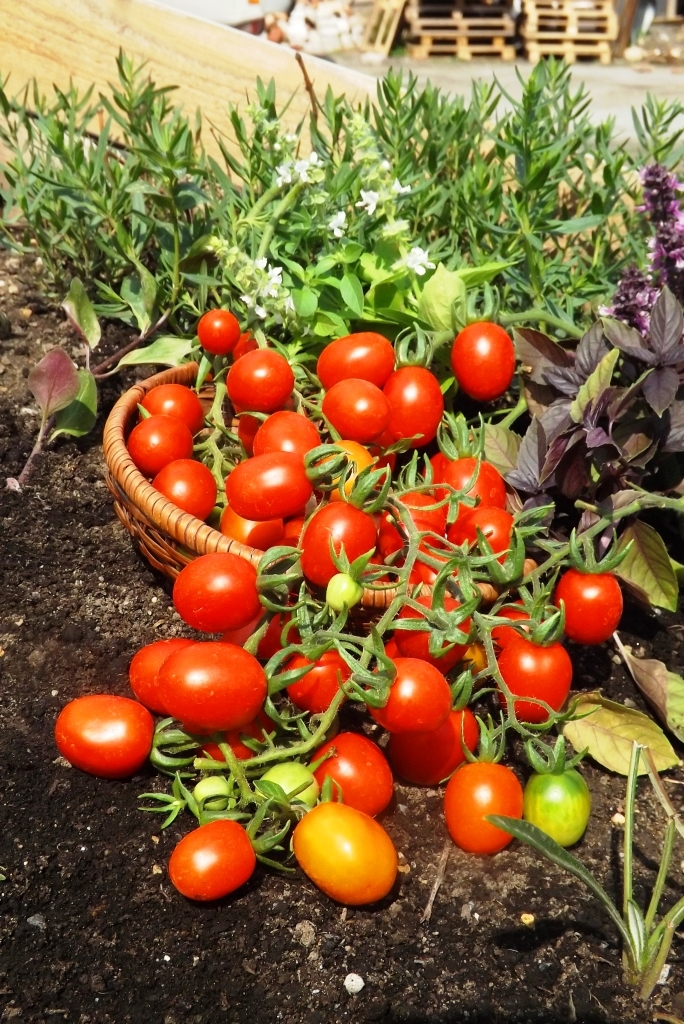
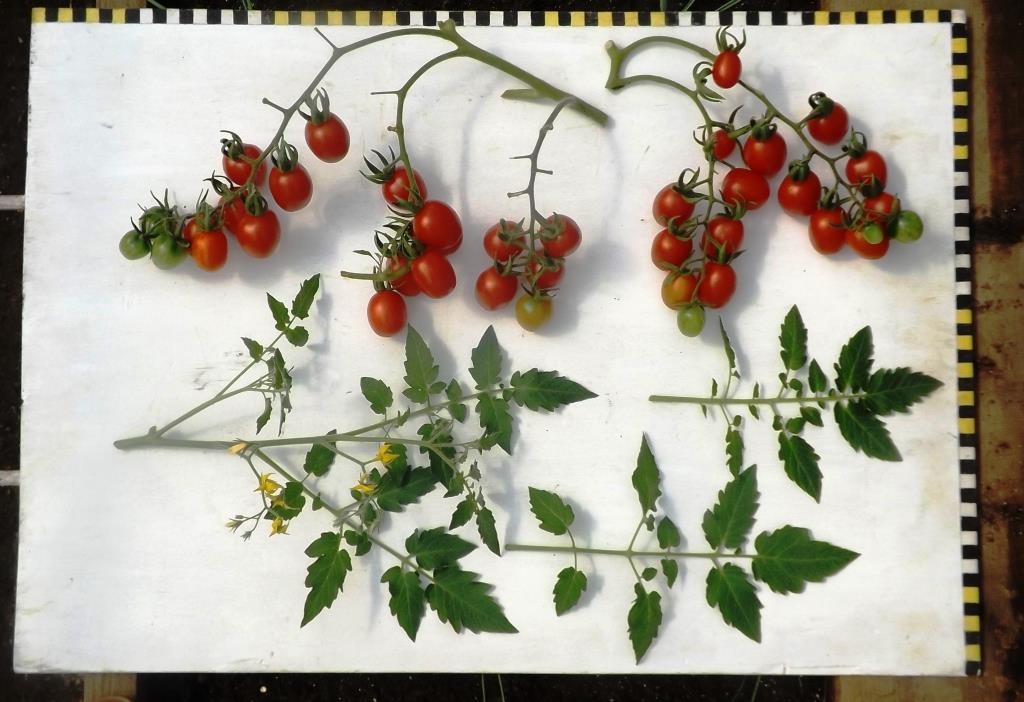
Comparison of the Honey Million tomato variety and other cherry varieties in the table
| Variety | Ripening period (number of days from full germination to ripening)
Yield of commercial fruits |
Brief description | Fetus |
| Honey Million | 95 days
550-620 c/ha |
An early, indeterminate variety for greenhouses and temporary plastic shelters. Suitable for salads and fresh eating. | Elliptical, smooth, reddish, 15-16 g. Good taste. |
| Red cherry | 95-102 days
300-400 c/ha (1 kg per plant) |
An early-ripening indeterminate variety for open ground and greenhouses. Requires staking, pinching, and side shoots above the third or fourth cluster. Suitable for salads and whole-clump canning. | Round, red, smooth, 15-20 g. The taste is good and excellent. |
| Sugar-coated cranberries | about 80 days
230-280 c/ha (greenhouse and under film) |
An early-ripening, determinate, standard variety for open ground and greenhouses. Suitable for salads and whole-fruit canning. | Round, dense, slightly ribbed, red, 15 g. Good taste. |
| Pinocchio | 105-110 days
300-450 c/ha (1-1.5 kg from one plant). |
A mid-season, determinate, standard variety for indoor flowerpots and balconies. Suitable for salads. | Flat-round, smooth, small, red, 15-20 g. The taste is good and excellent. |
| Button | about 90 days
400-450 c/ha (greenhouse and under film) |
An early-ripening, determinate, standard variety for open ground and greenhouses. Suitable for salads, pickling, and whole-fruit canning. | Round, smooth, medium density, red, 10-15 g. Excellent taste. |
| Sweet cherry | 75-83 days
900-1200 c/ha |
An ultra-early indeterminate variety for greenhouses. Suitable for salads, first and second courses, and canning. | Spherical, smooth, red, yellow or orange, 20-30 g. Excellent taste. |
| Sweet bunch | 90-100 days
The yield of commercial fruits under film shelters is 3.5 kg/sq.m. |
An early-ripening indeterminate variety for open ground and greenhouses. Requires staking and training. Suitable for salads and whole-fruit canning. | Round, smooth, dense, red, 20-30 g. Good taste. |
| Sweet Million | 95-100 days
Commercial yield 4.8-7.0 kg/sq.m. |
An early-ripening, indeterminate, medium-sized variety for greenhouses. Suitable for salads. | Round, smooth, red, 15-20 g. Excellent taste. |
| Sweet fountain | 100-105 days
650 c/ha (greenhouse and under film) |
An early-ripening indeterminate variety for greenhouses. Suitable for salads. | Elliptical, medium density, smooth, red, 18-20 g. Good taste. |
| Red date palm | 120-130 days
1.5 kg per bush. |
A mid-late semi-determinate variety for open ground and greenhouses. Requires staking and shaping into 3-4 stems. Suitable for salads, garnishing, and canning. | Elongated-oval, can be round, ovoid, conical, smooth, red, 8-20 g. Excellent sweet taste. |
| Siberian date palm | About 100 days
1.5-2 kg per bush. |
A determinate, early-ripening variety for open ground and greenhouses. Requires staking and shaping into 3-4 stems. Suitable for salads, garnishing, and canning. | Plum-shaped, red, up to 20 g. Excellent taste. |
Gardener reviews of the Honey Million tomato variety
Reviews highlight crack resistance and heat resistance as advantages. The need for shaping is noted as a disadvantage.
Honey Million (Tomato) is included in the register of the Russian Federation for cultivation in plastic greenhouses and under temporary plastic shelters on private farms. This is an early-ripening salad variety. The plant is indeterminate. The leaves are medium-length and green. The inflorescence is complex. The peduncle is articulated. The fruit is elliptical, medium-dense, and smooth. Unripe fruits are green with a spot near the peduncle; ripe fruits are red. The number of locules is 2. Fruit weight is 15-16 g. The taste is good. The yield of marketable fruits in plastic greenhouses was 5.5-6.2 kg/sq.m.
Year of inclusion in the register of admitted: 2021
Region: Northern, Northwestern, Central, Volga-Vyatka, Central Black Earth Region, North Caucasian, Middle Volga, Lower Volga, Ural, West Siberian, East Siberian, Far Eastern
Originator(s): Heterosis Selection LLC
Honey Million (Tomato) is a very early variety for protected soil, reaching biological maturity in 95 days. The plant is tall and formed into two stems. The fruits are oval-elliptical, red, weighing 15-20 g. Harvesting is done in whole clusters or individual fruits. It is resistant to cracking and heat. It is resistant to verticillium wilt, fusarium wilt, and root-knot nematodes.
Tomato variety Honey Filling
An excellent variety for those who don't want to spend a lot of time in the garden, as it's low-maintenance. It only requires pinching and staking.
Table of characteristics of the Honey Filling tomato variety
| Characteristics | Description |
| Description | Indeterminate mid-season variety for planting under film cover. |
| Ripening time | 110-115 days. |
| Fetus | Ovoid, slightly ribbed, orange. |
| Fruit weight | 150-170 g. |
| Productivity | 8.8-9.5 kg/sq. m. |
| Application | Salad. |
| Product indicators | Tall. |
| Disease resistance | High. |
| Agricultural technology | Need for pinching and tying. |
| Growing regions | Any. |
| 2015 | |
| Originator | LLC "GAVRISH". |
Photo gallery of the Honey Filling tomato variety
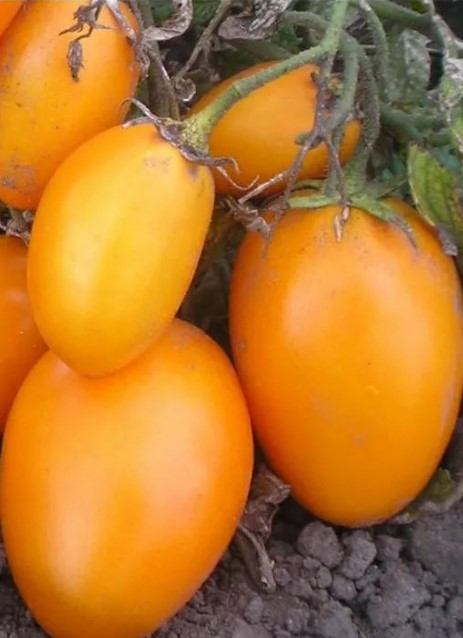
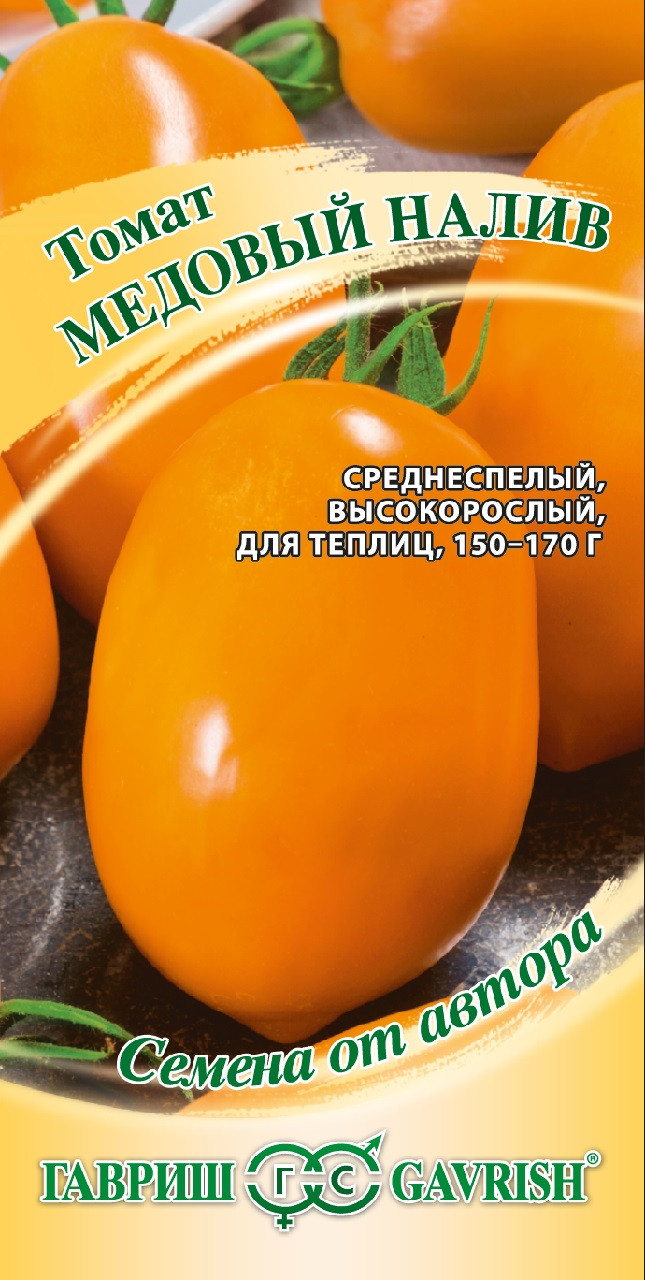
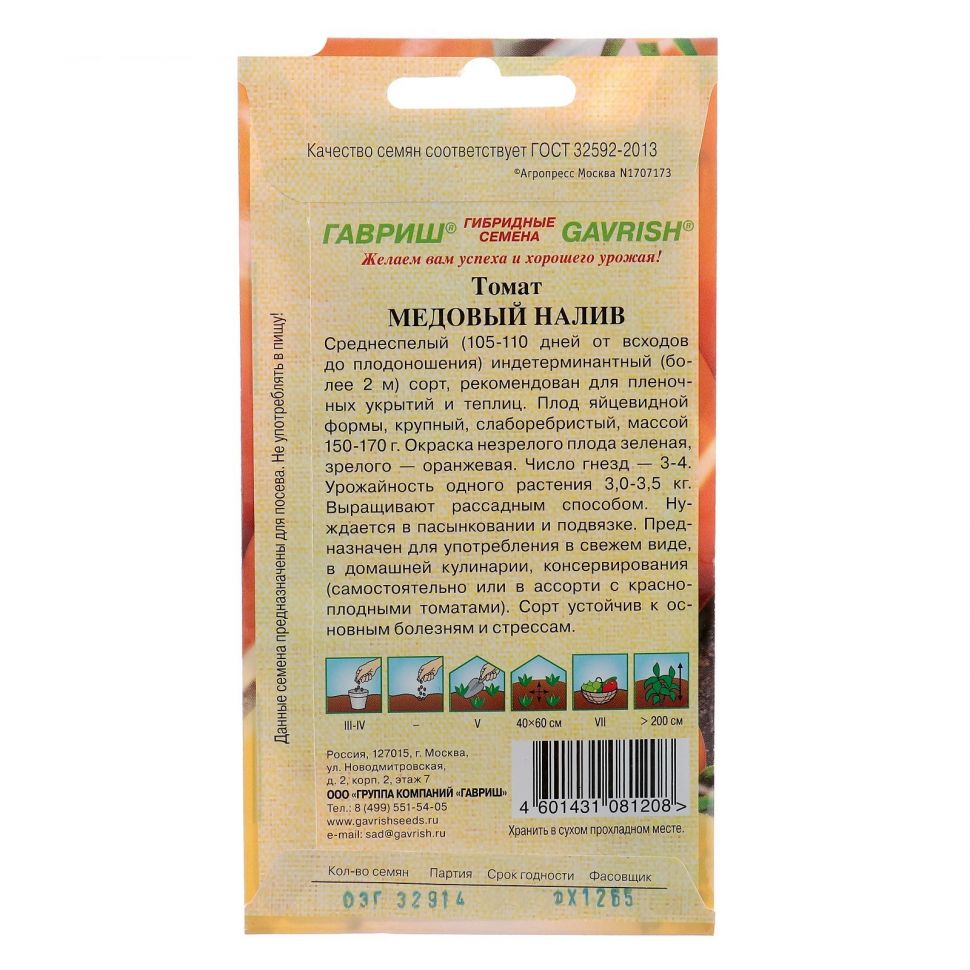
Comparison of the Honey Filling tomato variety with other varieties in the table
| Variety | Ripening period (number of days from full germination to ripening)
Yield of commercial fruits |
Brief description | Fetus |
| Honey filling | 110-115 days
880-950 c/ha (open ground), 1400 c/ha (greenhouse and under film) |
An indeterminate, mid-season variety for planting under plastic cover. Requires staking and shaping. Suitable for salads. | Ovoid, slightly ribbed, orange, 150-170 g. Excellent flavor. Fruit stores well. |
| Goose egg | about 100 days
700-800 c/ha |
A mid-season indeterminate variety for open ground and greenhouses. Requires staking and shaping. Suitable for salads and pickling. | Ovoid, large, orange-red, 200-300 g. Good to excellent taste. |
| De Barao yellow | 110-120 days
1200 c/ha |
An indeterminate plant with a bush up to 200 cm tall. Recommended for growing under plastic cover. The bushes are formed into two shoots and require staking. This versatile tomato is well-suited for whole-fruit canning and can be used in dietary menus. | The fruits are round-oval with a smooth surface and a slight indentation at the base. Ripe fruits are bright yellow or golden in color, weighing 80-90 g. The flavor is excellent. |
| De Barao orange | 110-130 days
1000-1200 c/ha |
Grows well in open ground. In cooler regions, it can be planted in unheated greenhouses. This indeterminate, late-ripening variety grows up to 200 cm. It requires staking and training. It is suitable for salads and all types of canning. | The fruits are small, ovoid, with smooth, glossy skin. The flesh and skin are orange, weighing 120 g. The flavor is excellent. |
| The Golden Fleece | 98 days
600 c/ha (greenhouse and under film) |
An early-ripening determinate variety for open ground and greenhouses. Suitable for salads and whole-fruit canning. | Ovoid, smooth, medium density, yellow, 90-100 g. Good taste. |
| Wonder of the World | 120 days
550-620 c/ha |
A late-ripening indeterminate variety for open ground. Requires staking and shaping. Suitable for salads and pickling. | Obovate, slightly ribbed, yellow, 80 g. Good taste. |
Gardeners' reviews of the Honey Filling tomato variety
In their reviews, gardeners note the tomatoes' remarkable taste, resistance to many diseases, and tolerance to sudden temperature changes.
Tomato variety Honey Salute
This variety has incorporated all the latest advances in 21st-century tomato breeding. The result is very large and tasty tomatoes that can be grown anywhere.
Table of characteristics of the Honey Salute tomato variety
| Characteristics | Description |
| Description | Indeterminate mid-early variety for film shelters. |
| Ripening time | 115-120 days. |
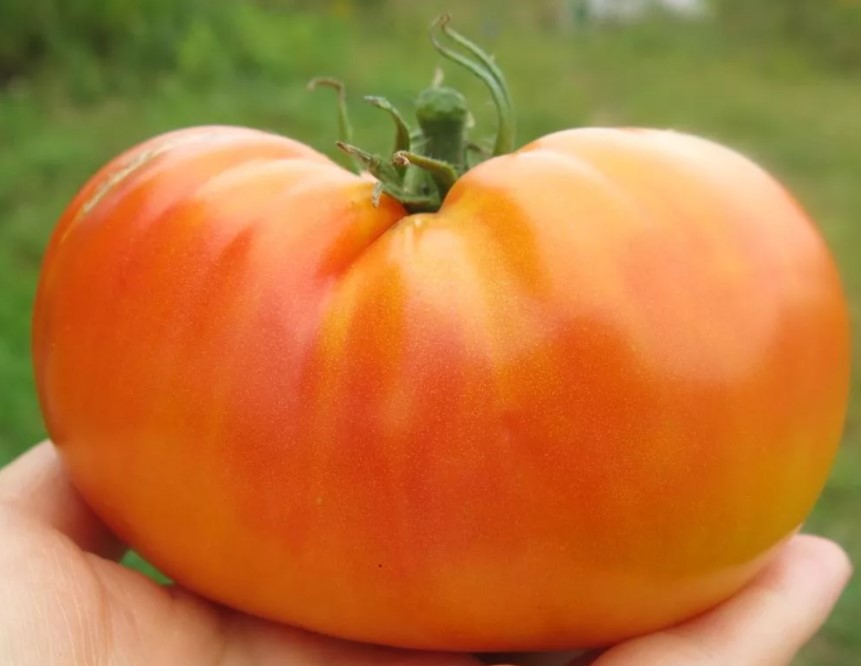
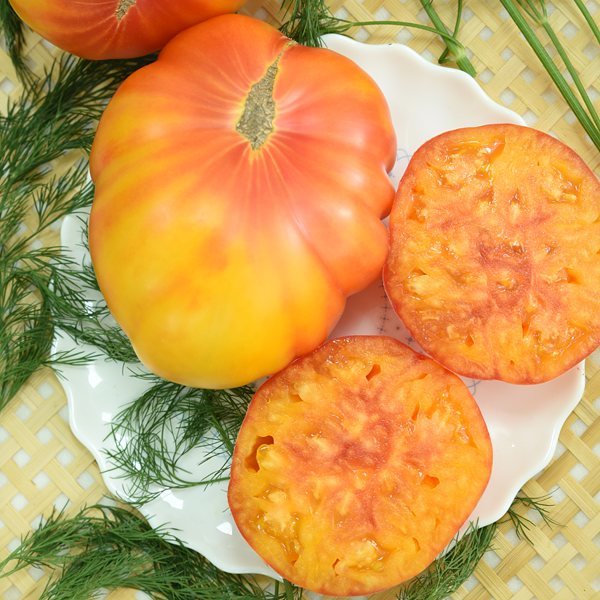
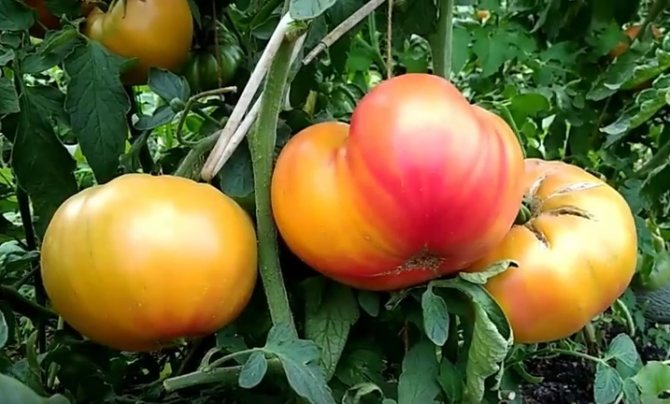
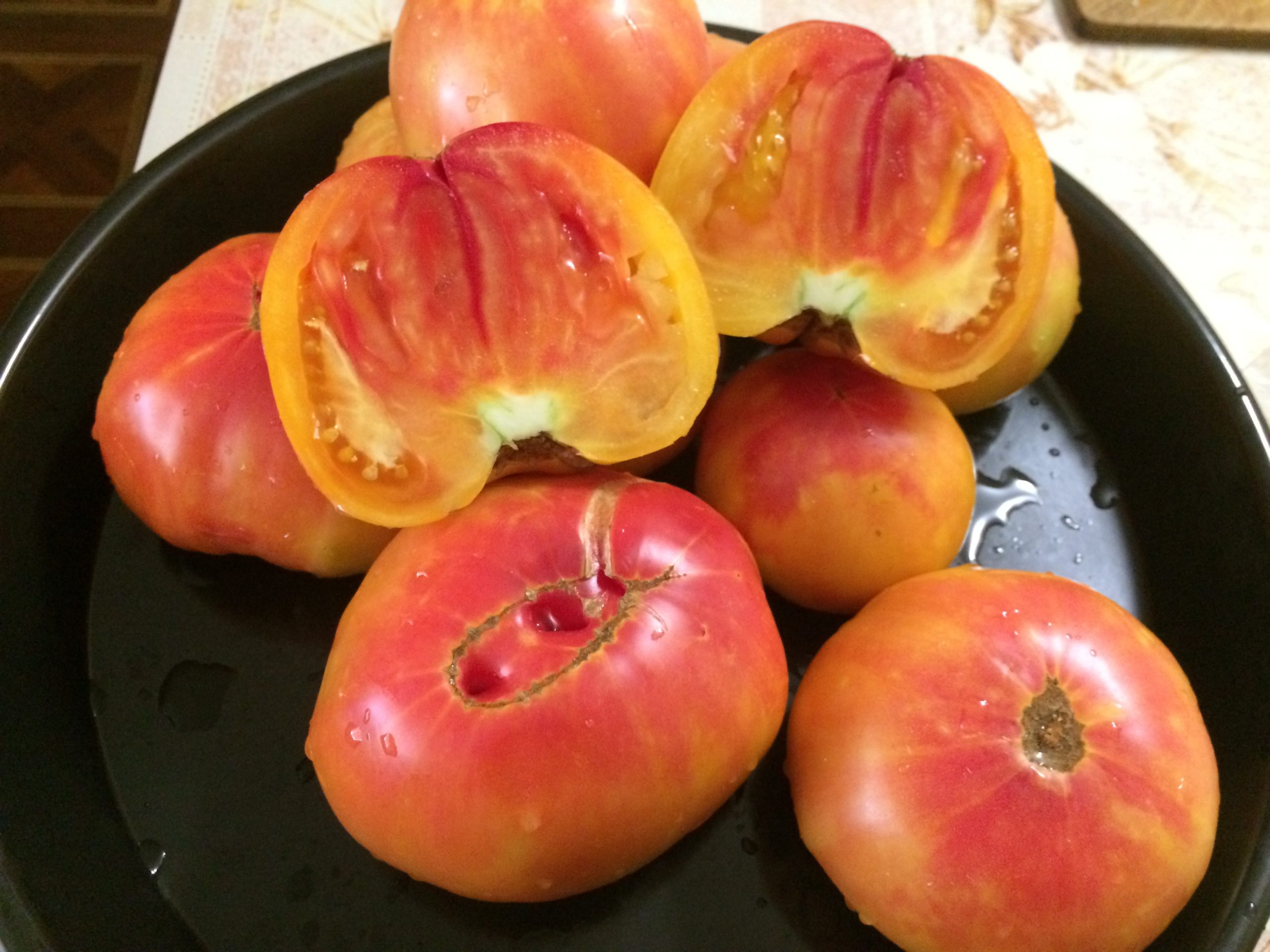
| Fetus | Flat-round, strongly ribbed, yellow. |
| Fruit weight | 320-450 g. |
| Productivity | 6.9 kg/sq. m. |
| Application | Salad. |
| Product indicators | Good ones. |
| Immunity and infection prevention | TMV. The greatest threat comes from insect pests. They are controlled using pyrethroids, neonicotinoids, and other modern insecticides. |
| Agricultural technology | Garter and shaping. |
| Growing regions | With any climatic conditions. |
| 2015 | |
| Originator | LLC "AGROFIRM POISK" |
Photo gallery of the Honey Salute tomato variety
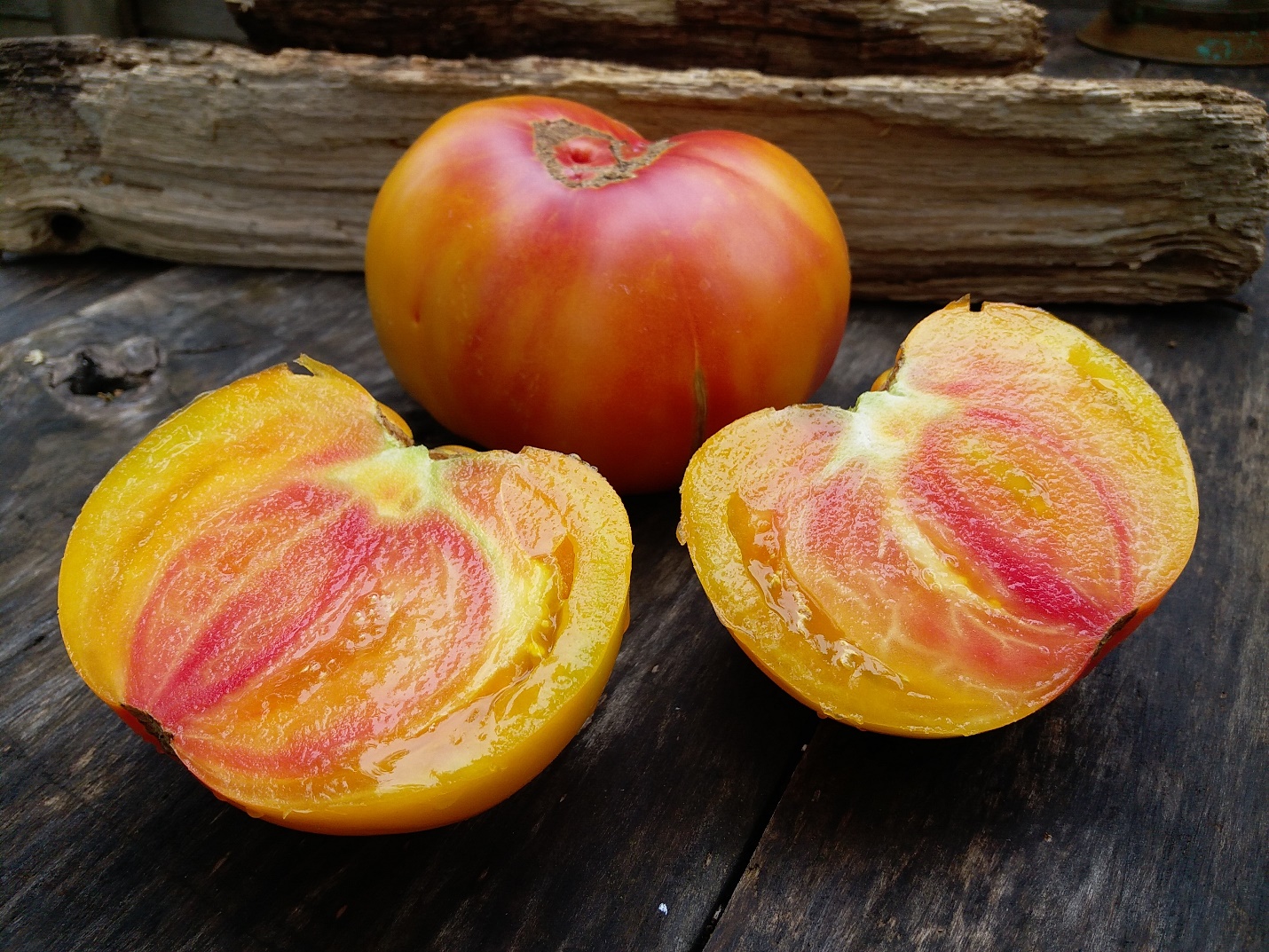
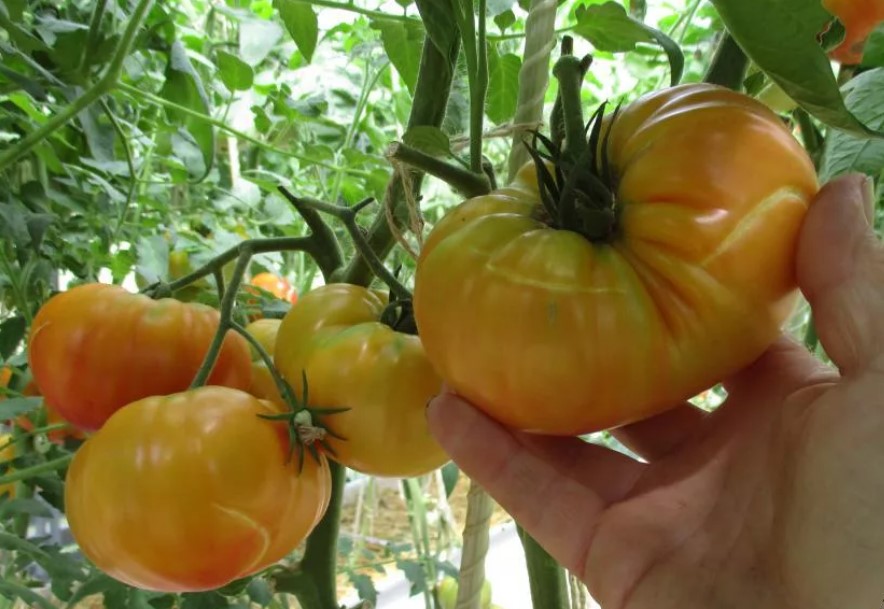
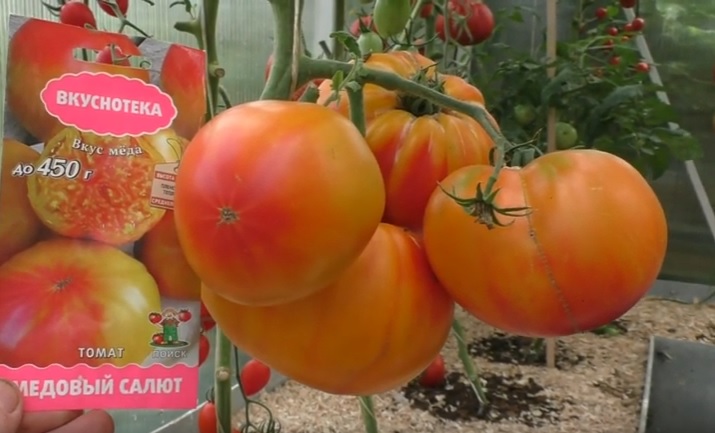
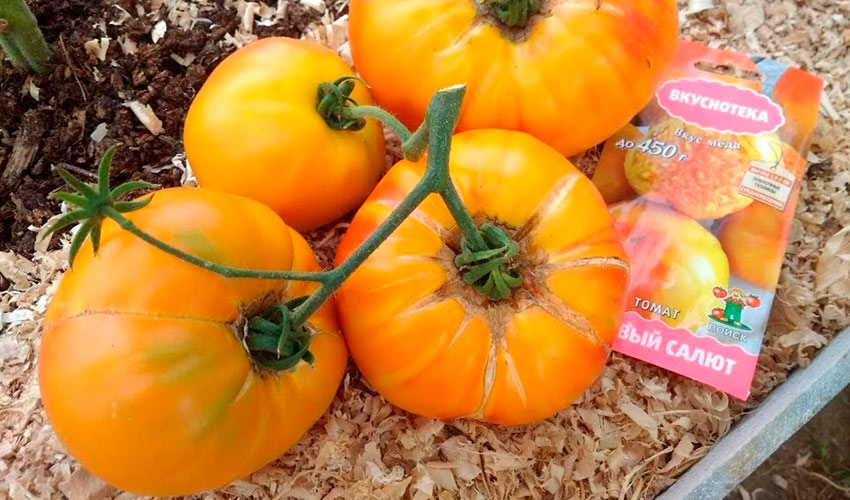
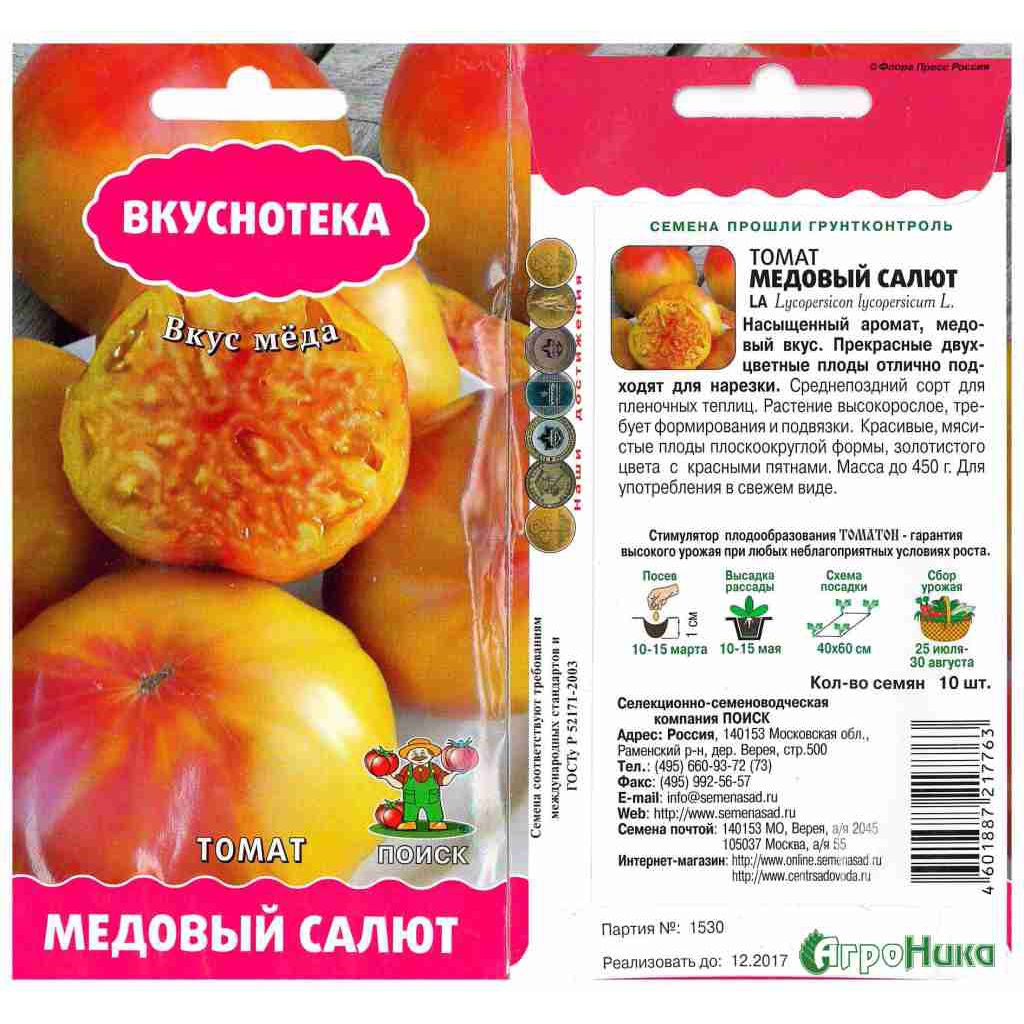
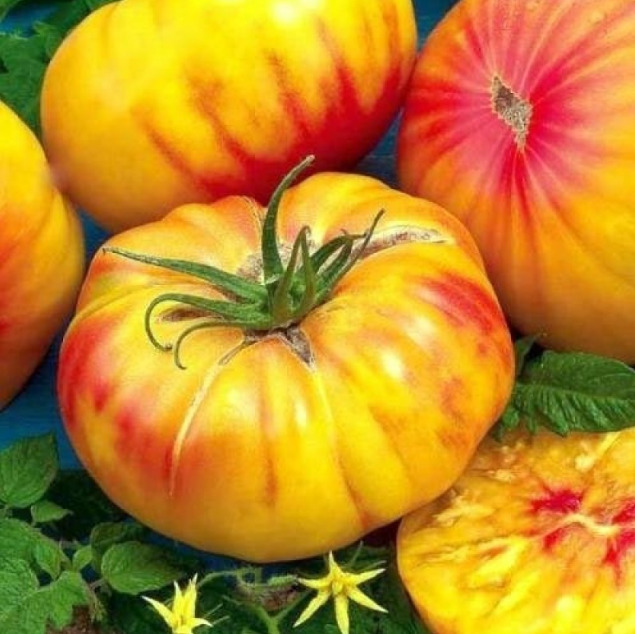
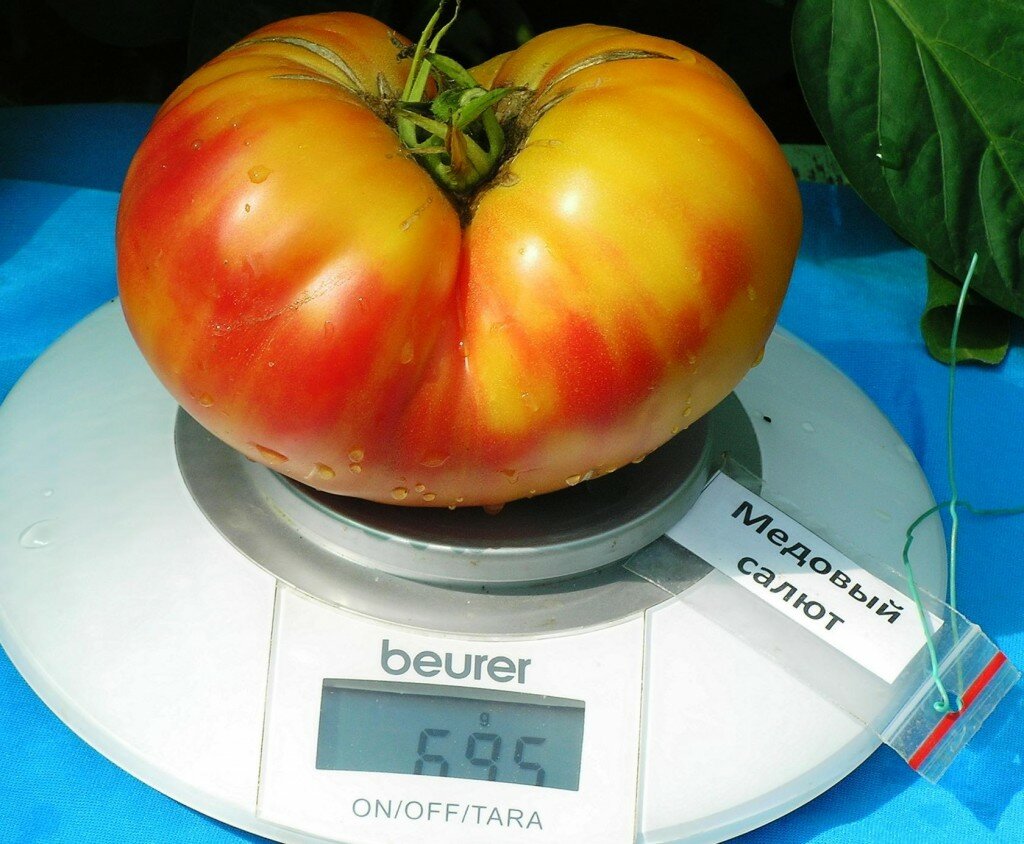
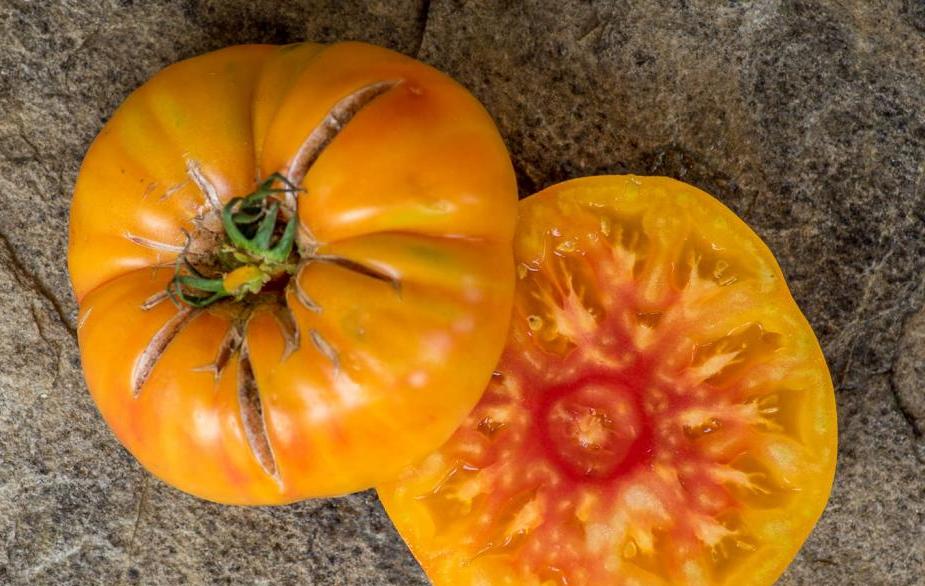
Comparison of the Honey Salute tomato variety with similar varieties in the table
| Variety | Ripening period (number of days from full germination to ripening)
Yield of commercial fruits |
Brief description | Fetus |
| Honey salute | 116-120 days
690 c/ha |
A mid-season indeterminate variety for greenhouses. Requires staking and shaping. Suitable for salads. | Flat-round, very large, ribbed, medium density, yellow, 320-450 g. Excellent taste. |
| Lemon giant | 110-120 days
610-670 c/ha |
A mid-season indeterminate variety for open ground and greenhouses. Requires staking and shaping. Suitable for salads. | Flat-round, medium-ribbed, fleshy, yellow, 350-380 g. Good taste. |
| King of the Giants | 120 days
800-1400 c/ha depending on the region |
A mid-late indeterminate variety for open ground and greenhouses. Suitable for salads, appetizers, and processing into tomato products. | Flat-round, slightly ribbed near the stem, red, rarely yellow and pink, 400 g (up to 800 g). Good to excellent flavor. |
| Malachite box | 110-120 days
430 c/ha (open ground), 1510 c/ha (greenhouse and under film) |
A mid-season indeterminate variety for open ground and greenhouses. Requires staking and training. Suitable for salads. Marketability is 97%, and the yield of ripe marketable fruits is 75%. | Flat-round, smooth, thin skin, yellow, 250-300 g. Good to excellent taste. |
| Mikado Yellow (Gold) | 110-120 days
600-800 c/ha |
A mid-early standard indeterminate variety for greenhouses. Suitable for salads and juice. | Round, flattened, slightly ribbed, yellow, 500 g. Good taste. |
Gardeners' reviews of the Honey Salute tomato variety
The tomatoes have a truly excellent taste, as evidenced by numerous reviews from farmers. One drawback noted is that the fruits can crack if the soil or air is too humid.
In the spring of 2018, as a novice gardener, I bought a greenhouse and decided to plant tomatoes. After looking around the stores, I decided to buy seeds from the Agrofira "Poisk" variety and the tomato variety "Honey Salute." I planted seedlings in early February. Some might say it was too early, but it was my first time planting tomatoes.
I can say it was a success. The seeds germinated quickly. After about five days, sprouts appeared. The seedlings grew by leaps and bounds. They grew strong and didn't outgrow their roots. In early May, I planted them in the greenhouse. The tomato started to take root, but two weeks after planting, I was so busy, I forgot to open the greenhouse. And May this year was hot, 25-27 degrees Celsius. I remembered about it only around noon. I walked in and saw the half-dead tomatoes, and tears came to my eyes. Realizing it was my own fault, I sprayed them with epin that evening, watered them, and waited...
I waited for two and a half weeks. The tomatoes started to return to normal. New leaves appeared, and the tomato started growing. I was overjoyed! The tomato started producing double flowers, two per cluster. Fruit started to appear…
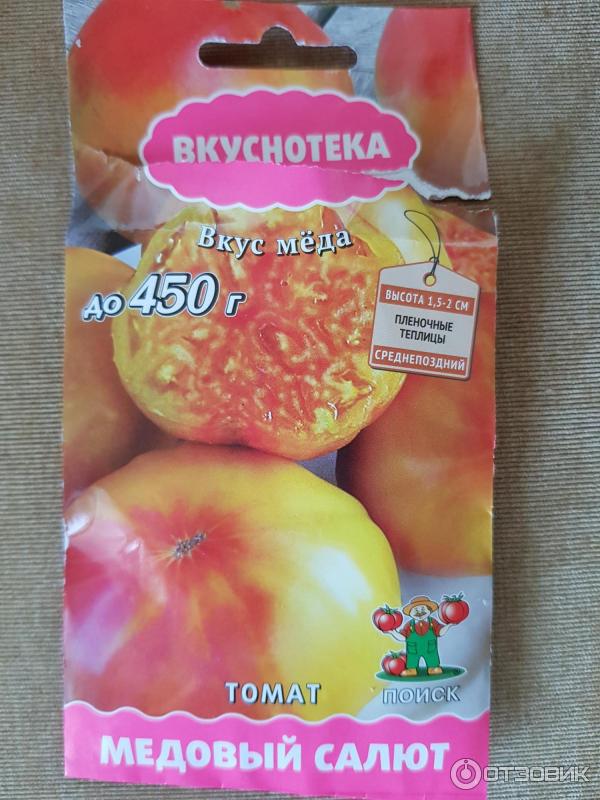
The fruits were very large, as stated on the package: up to 450 grams. But mine were larger. Beautiful orange, red underneath, with bright stripes.
They'd split on the vine, so I had to pick them slightly underripe. The tomatoes tasted very sweet and fleshy, without any tartness, and had few seeds. When they were in a salad, it seemed like they always needed more salt due to the strong flavor.
It was disease-resistant, and there's no sign of apical rot. The bush itself is tall, about 1.5 meters. I trained it into two stems. It requires staking and pinching, as it has a lot of side shoots.
I don't know if I'll plant it next year; I want to try other varieties and hybrids. But I collected some seeds, in case I want to. In any case, I highly recommend it!
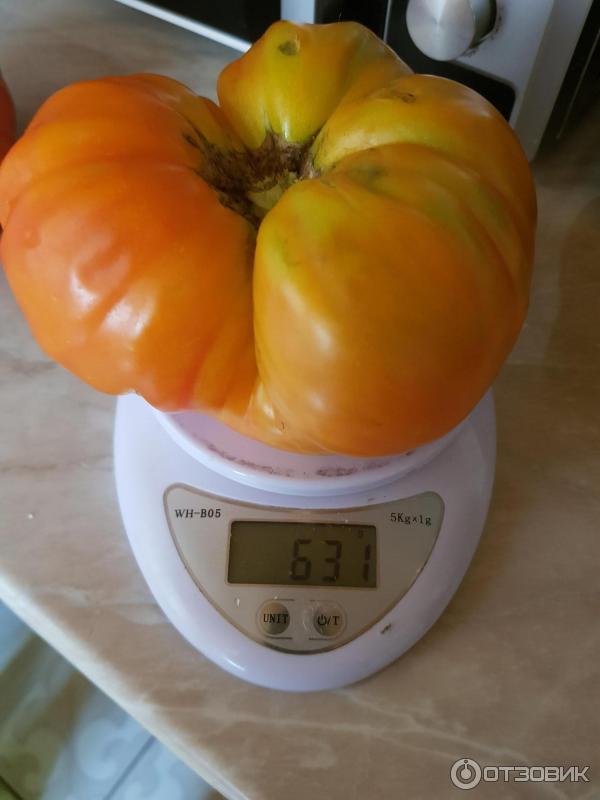
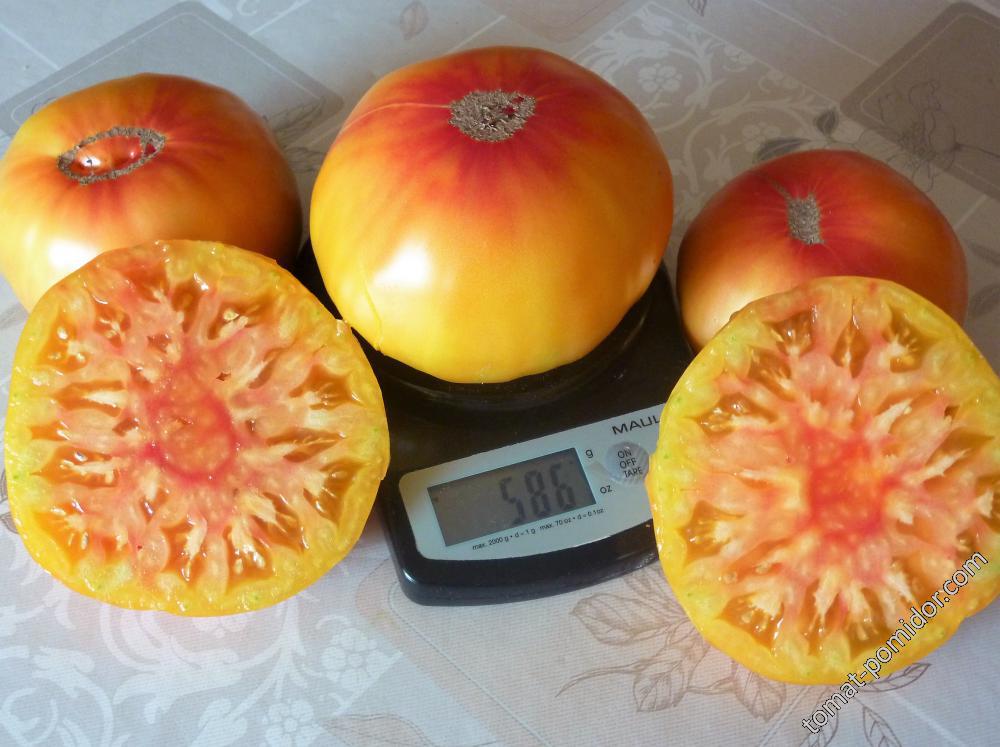
This tomato plant produced some of the largest fruits in my greenhouse. The photo shows a tomato that weighed 772 grams. It's a shame I didn't photograph the largest one. One tomato like this is enough to feed a whole family with salad.
The tomato had two stems. It didn't form clusters. It produced large fruits even on the third cluster. It's very beautiful in cross-section, with iridescent colors ranging from yellow to red. It's fleshy. The seed chambers are small. There are enough seeds in the tomato to save for planting in future years. When well ripened, it becomes sweet and aromatic.
The skin is thin. It can be stored for about a week, no more, as the tomato becomes soft when ripe.
There are 10 seeds in the packet.
Cons: under the stalk (sepals) there is rough tissue that has to be cut out.
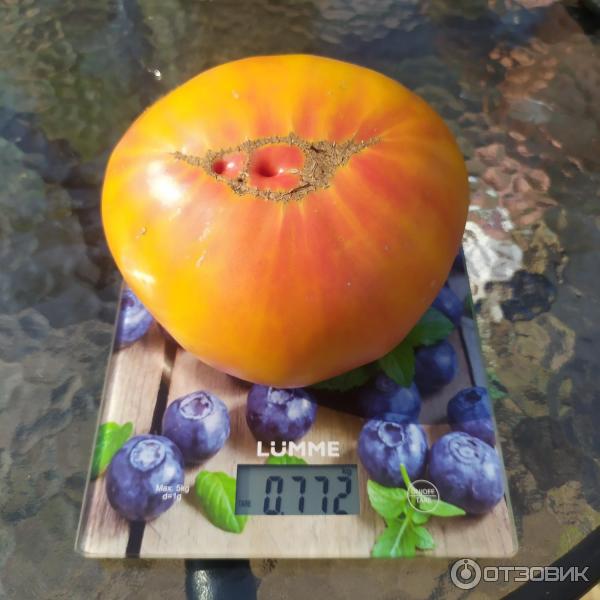
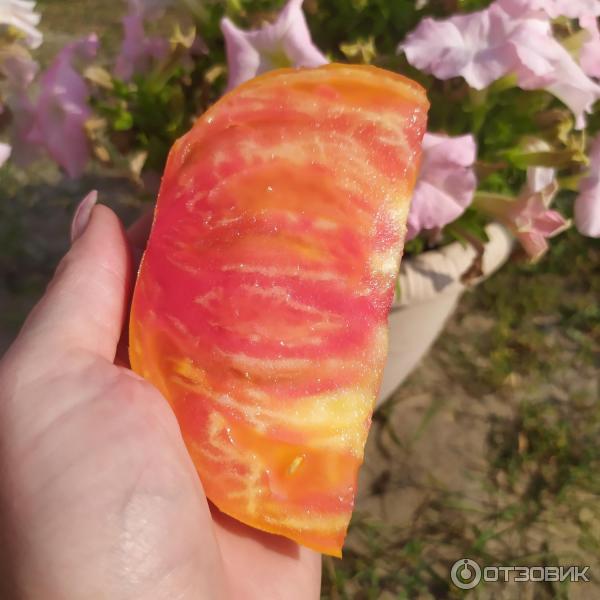
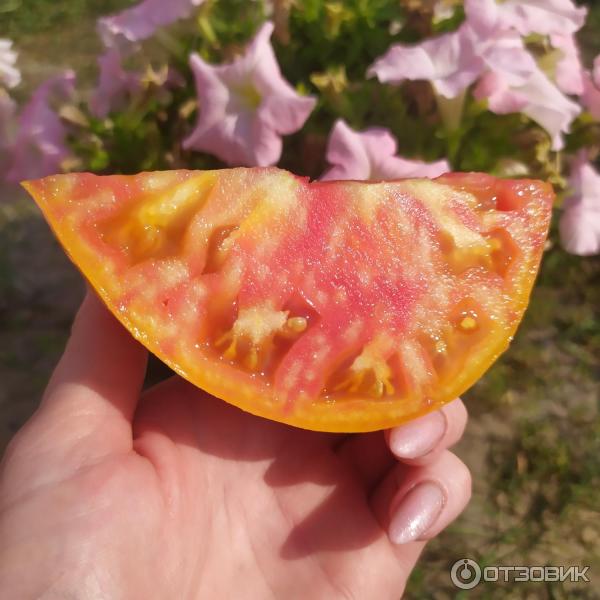
I've been planting this variety for two years. This handsome fellow lives in our greenhouse. I really love large-fruited tomatoes. They don't require any special care. Nine to 12 fruits ripen on a vine. In 2020, the largest fruit weighed 900 grams. In 2021, a truly magnificent tomato grew, weighing 1 kg 190 grams, and there were nine more on the vine (of course, the subsequent ones weighed less). If you love large, fleshy, sweet tomatoes, plant Honey Salute.
Tomato variety Honey Spas
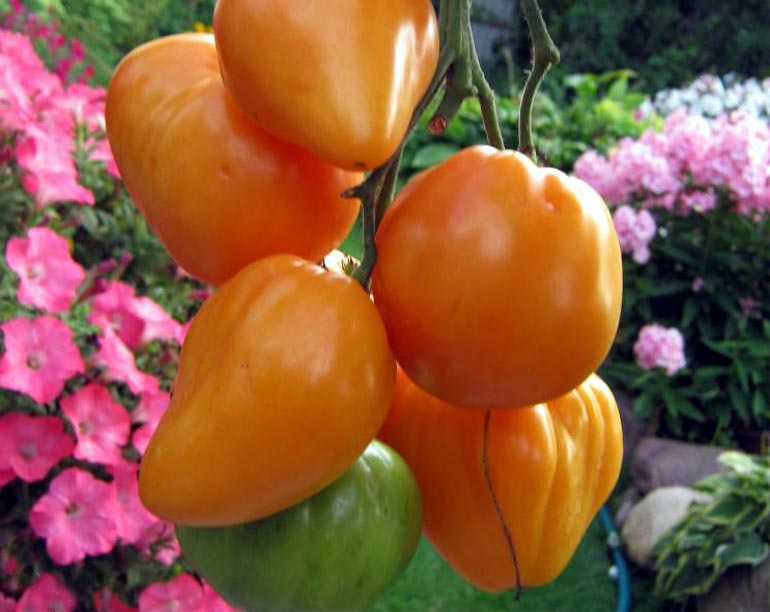
This orange tomato has a higher sugar content. The fruit has a sweet flavor without any hint of acidity or harshness.
Table of characteristics of the Honey Spas tomato variety
| Characteristics | Description |
| Description | Indeterminate mid-season variety for beds and film shelters. |
| Ripening time | 110-120 days. |
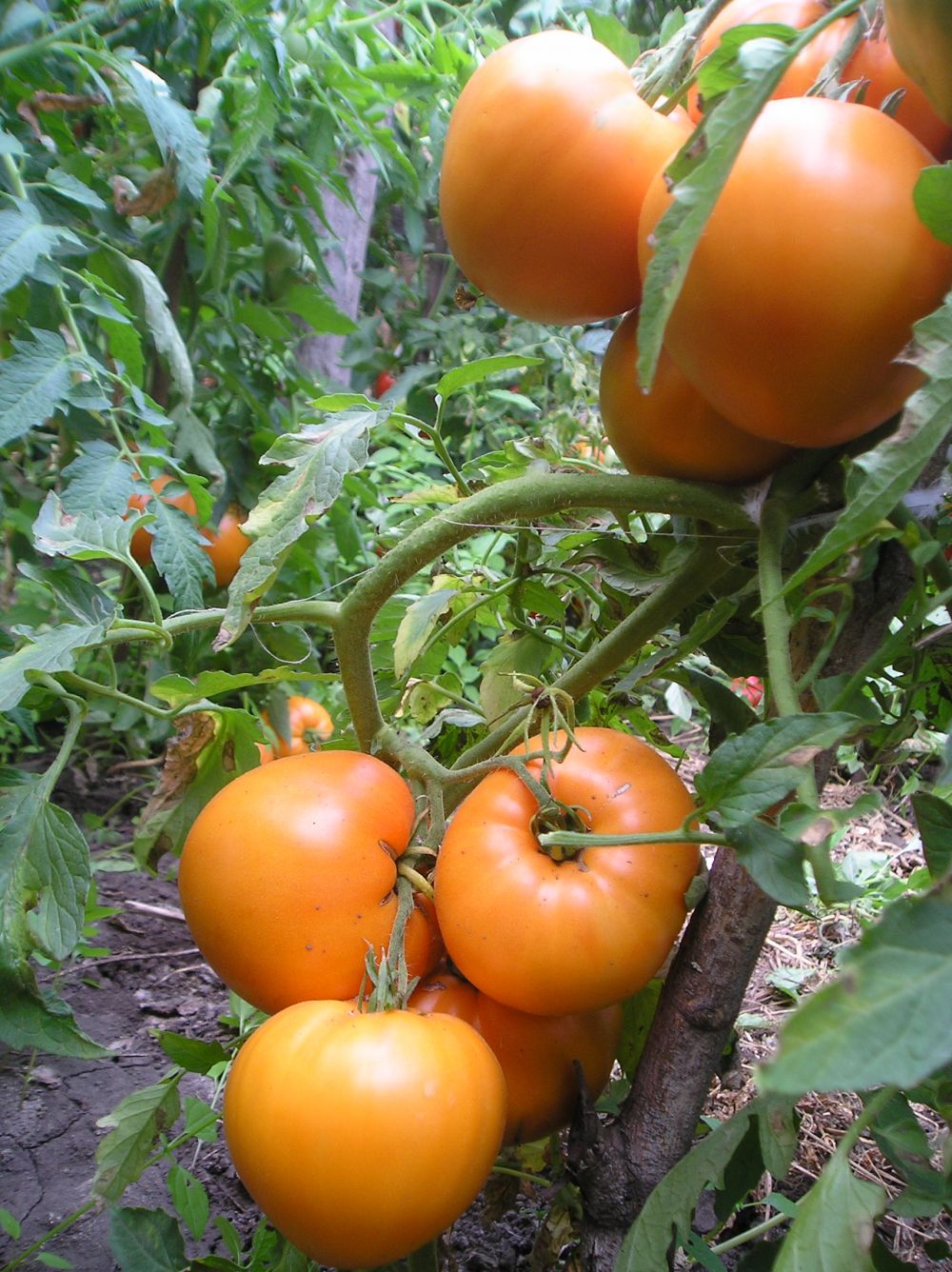
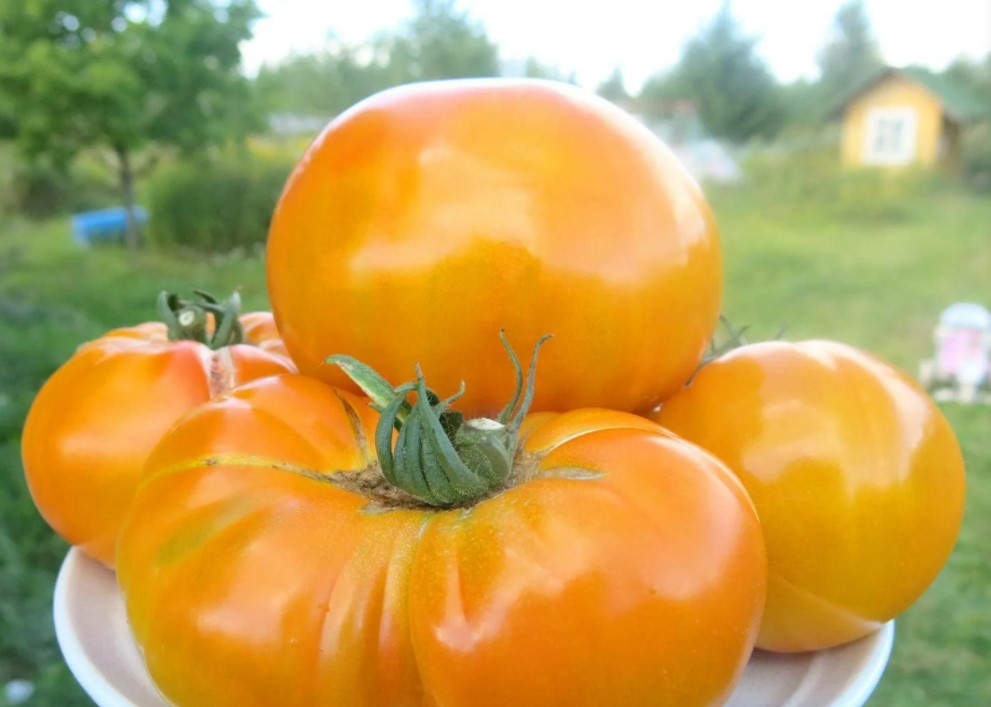
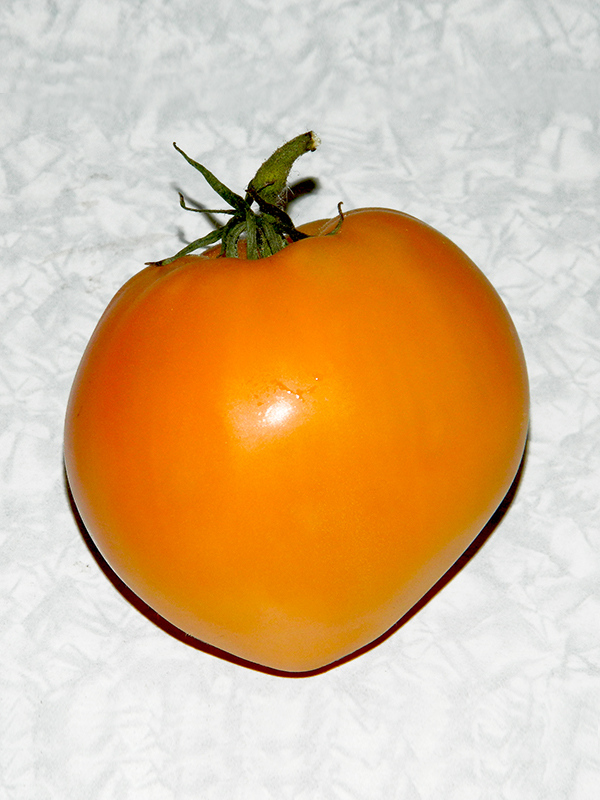
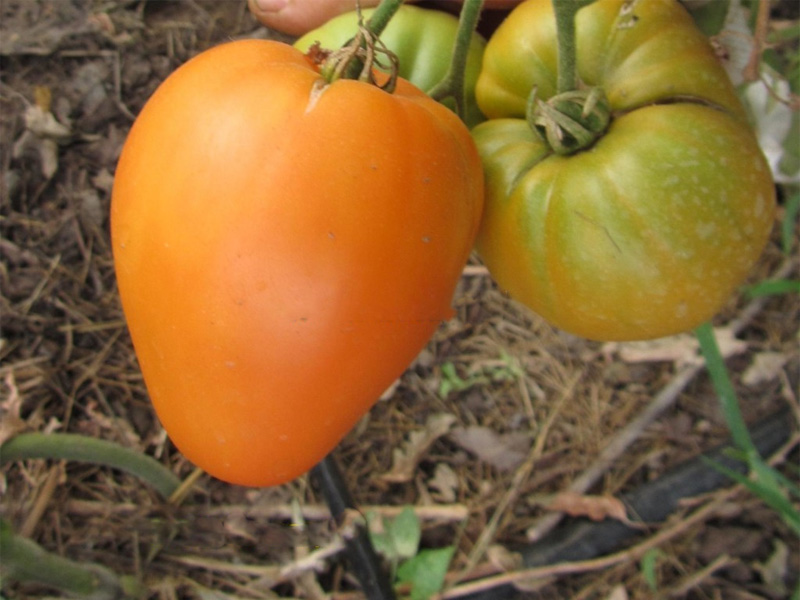
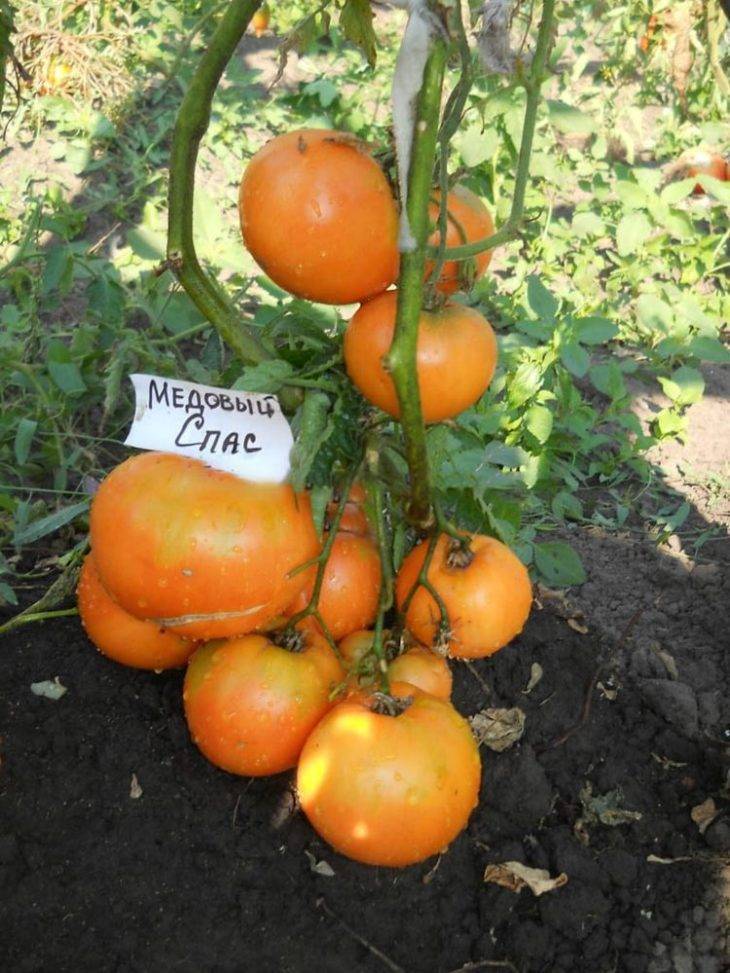
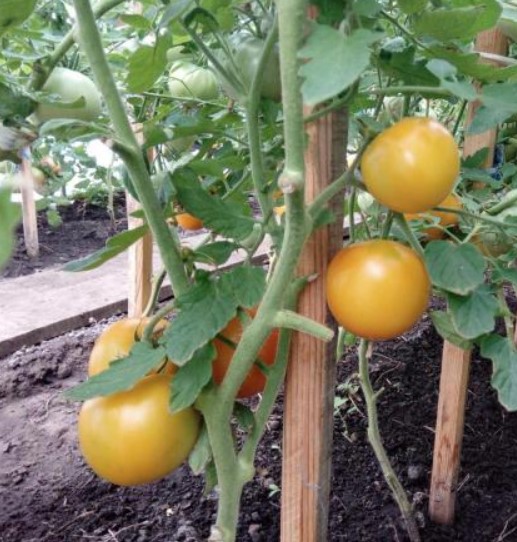
| Fetus | Round, smooth, orange. |
| Fruit weight | 160-218 BC |
| Productivity | 5.6 kg/1 sq. m (on beds), 14 kg/1 sq. m (under film). |
| Application | Salad. |
| Product indicators | The yield of marketable fruits is up to 98%. The fruits retain their characteristics for a long time during storage. |
| Immunity and infection prevention | High. |
| Agricultural technology | Garter and shaping. |
| Growing regions | Any. |
| 2006 | |
| Originator | IP "DEDERKO VLADIMIR NIKOLAEVICH." |
Photo gallery of the Honey Savior tomato variety
Comparison of the Honey Spas tomato variety with other varieties in the table
| Variety | Ripening period (number of days from full germination to ripening)
Yield of commercial fruits |
Brief description | Fetus |
| Honey Savior | 110-115 days
560 c/ha (open ground), 1400 c/ha (greenhouse and under film) |
A mid-season indeterminate variety for open ground and greenhouses. Requires staking and shaping. Suitable for salads. Marketability is 98%, and the yield of ripe marketable fruits is 74% (Novosibirsk Region). Tolerant of adverse growing conditions, heat-resistant, and easy to transport. | Round, smooth, orange, 160-218 g. Excellent flavor. Fruit stores well. |
| Altai orange | 110-115 days
up to 1000 c/ha (under film) |
A mid-season indeterminate variety for open ground and greenhouses. Requires staking and shaping. Suitable for salads. | Flat-round, slightly ribbed, medium density, orange, 250-350 g. Good taste. |
| Orange | about 110 days
490-520 c/ha |
A mid-season indeterminate variety for open ground and greenhouses. Requires staking and shaping. Suitable for salads. | Round, smooth, fleshy, orange, 180-230 g. Excellent taste. |
| Mandarin duck | 106-113 days
860-980 c/ha |
A mid-early indeterminate variety for greenhouses. Requires staking and training into two stems. Suitable for salads, pickling, and salting. | Round, orange, 100-110 g. Excellent taste. |
| Mikado Orange | 85-100 days
600-700 c/ha |
An early indeterminate variety. Outdoor cultivation is acceptable in warmer regions. In central Russia, greenhouse planting is recommended. Suitable for salads. | Round, ribbed, orange, up to 300 g. Excellent taste. |
| Orange giant | 110-115 days
630-660 c/ha |
A mid-season indeterminate variety for open ground. Requires staking and shaping. Suitable for salads. | Flat-round to round, strongly ribbed, orange, 350 g. Excellent taste. |
| Orange elephant | 100-110 days
690 c/ha |
A mid-early determinate variety for greenhouses. Suitable for salads. | Round, smooth, medium-dense, orange, 130-160 g. Excellent taste. |
Gardeners' reviews of the Honey Spas tomato variety
Reviews of the variety are overwhelmingly positive. Gardeners note that the tomatoes are so attractive in appearance and taste that even if they don't achieve the stated yield, they will still be grown.
Good day, dear readers of my review!
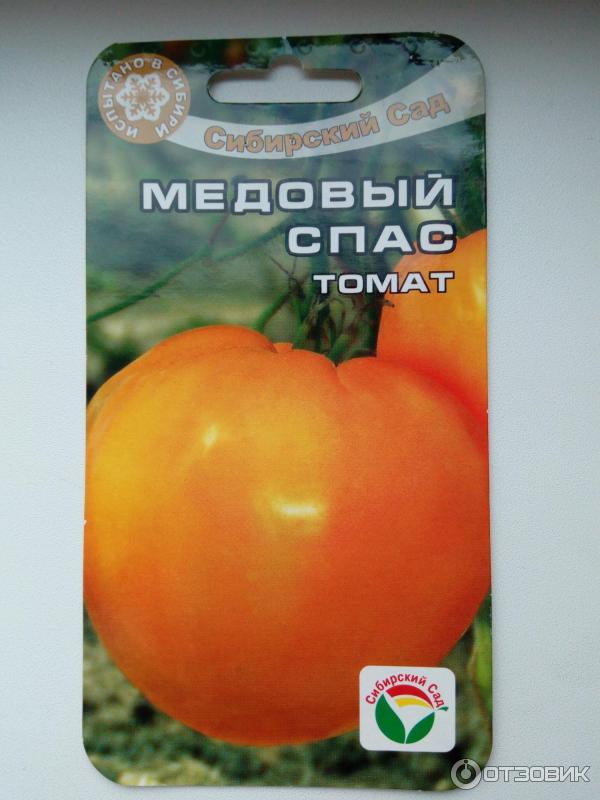
I've decided to dedicate this review to the tomato seeds with the sweet name "Honey Spas." The producer is the Russian company "Sibirsky Sad," whose seeds I've been buying for several years now.
The topic of gardening is very interesting, because I myself enjoy growing various vegetables on my plot and learning something new from more experienced gardeners.
One of my favorite vegetables is the tomato. Everyone in my family loves fresh tomatoes because they're so healthy. They contain a large amount of vitamins, minerals, and organic acids. Thanks to the antioxidant lycopene, they protect the body's cells and help prevent cancer.
I also make various preserves for the winter from fresh tomatoes, so I try to plant as many as possible every year.
Among the various tomato varieties planted this year, the yellow tomatoes "Honey Savior" took a worthy place.
This mid-season variety is suitable for growing in greenhouses and open ground. It is recommended to plant one or two stems, tied to a support, and requires pinching.
I sowed the seeds at the end of March, and in mid-May I planted the seedlings in the greenhouse.
The first tomatoes began to be picked in mid-July.
The fruits are medium-sized, almost identical in size, and have a round shape.
I liked this variety because the pulp of these fruits tastes very sweet, without any acidity.
We use it mainly for food, fresh.
I make healthy summer salads from tomatoes of this variety.
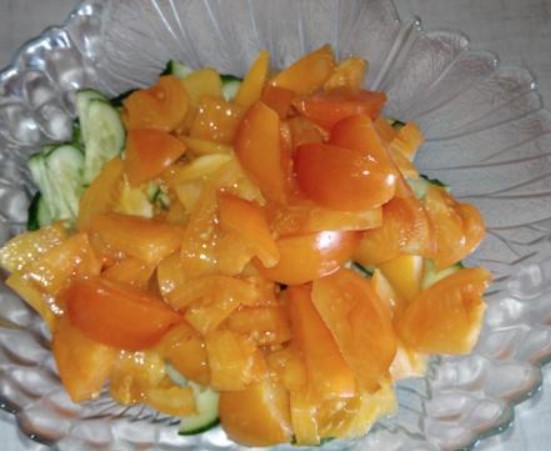
Honey-yellow tomato slices look beautiful in salads.
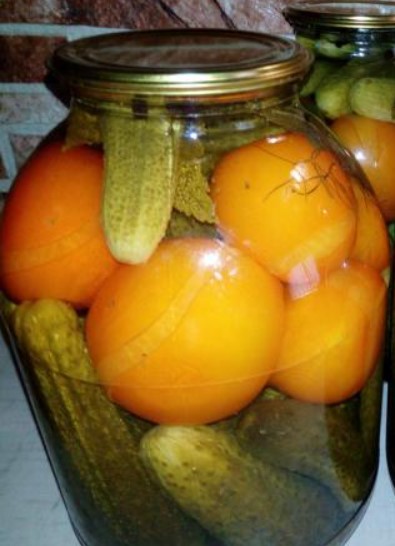
This variety is a salad type and is not intended for canning, but I still decided to use them in pickling.
I made several jars of assorted vegetables along with cucumbers.
The skin is thin and not dense enough, so when poured with boiling brine, it cracks.
Therefore, it is better to give preference to other varieties intended specifically for canning.
It is much healthier to eat these tomatoes fresh, especially for people suffering from gastrointestinal diseases.
Be healthy!

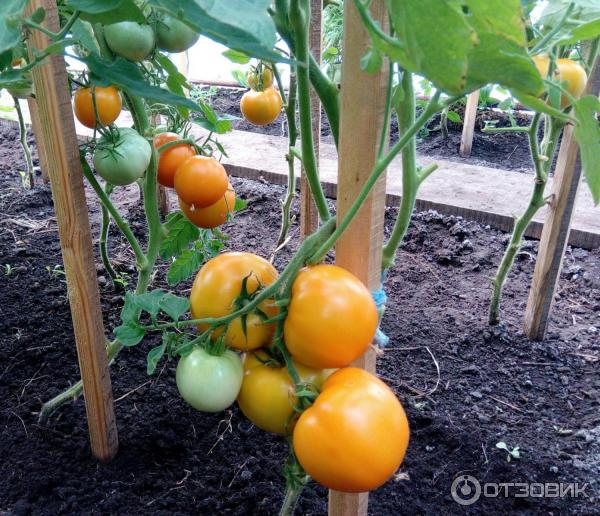
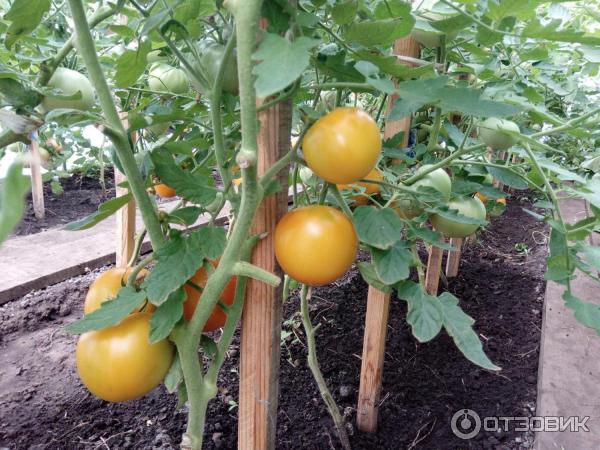
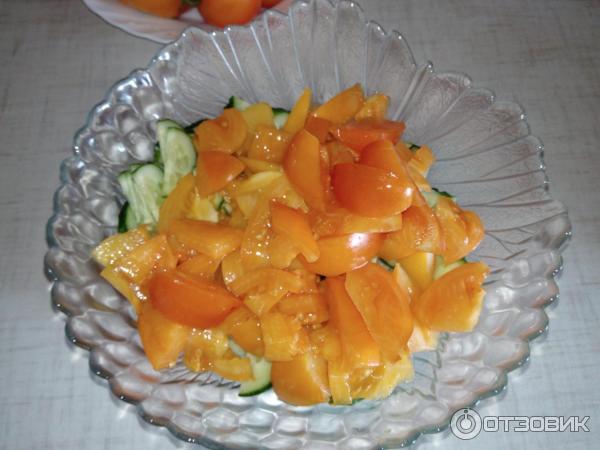
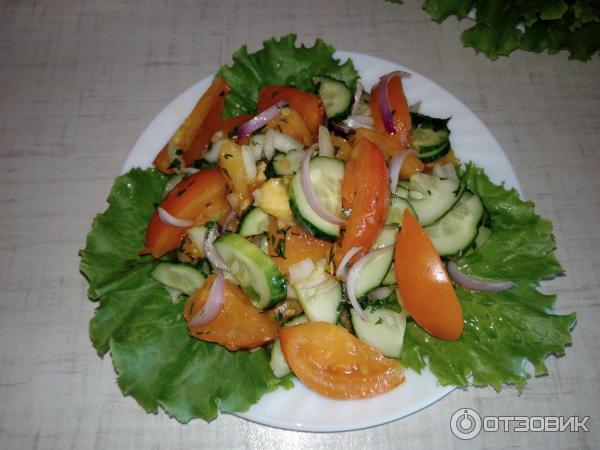
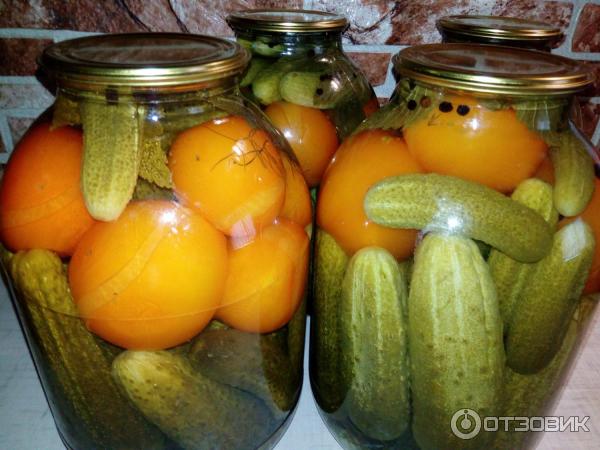
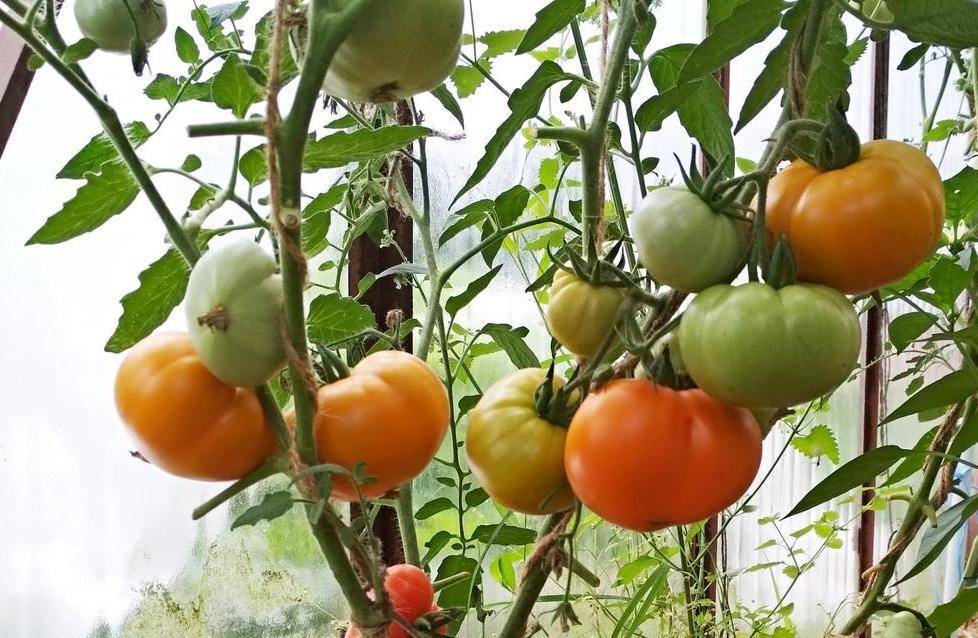
The season for testing new tomato varieties is coming to an end. This year, I had 42 of them, mostly varieties whose seeds I acquired from collectors. But I couldn't pass up the varieties from the Siberian Garden. Today, I'll write about my impressions of the "Honey Spas" variety. I'll say right away – IMPRESSED! As always, I grew the seedlings myself at home. I planted one bush in a polycarbonate greenhouse. I described in detail how I arrange the tomato bushes in the greenhouse in my review of the "Siebenburgen Giant" variety. If you're interested, you can check it out. The "Honey Spas" tomato is an indeterminate variety, with a tall bush; mine reached the ceiling of the greenhouse. At the same time, the bush is very compact, with small, not splayed-out leaves. I trained it into two trunks, like most tall tomatoes. This variety didn't ripen early. I picked the first ripe tomato on July 20th.
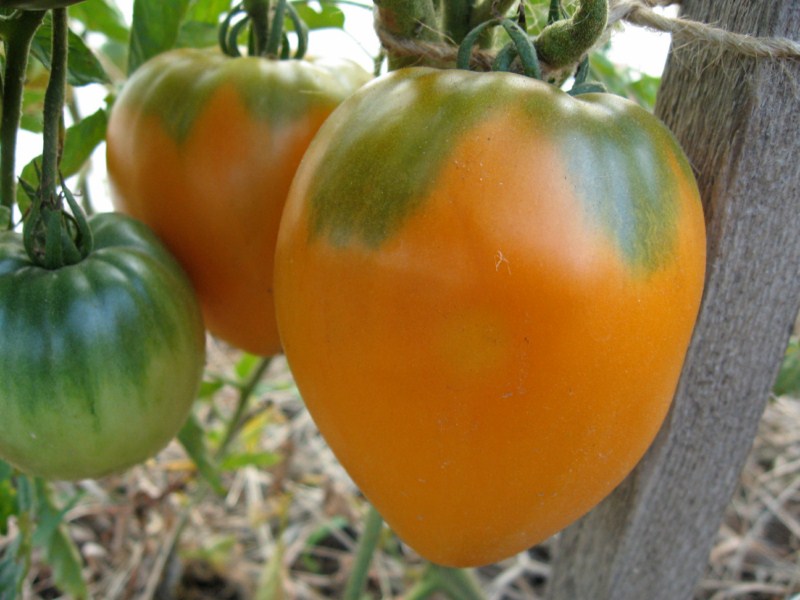
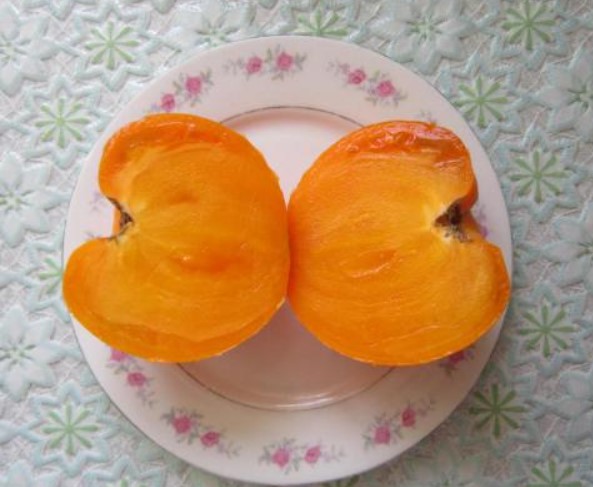
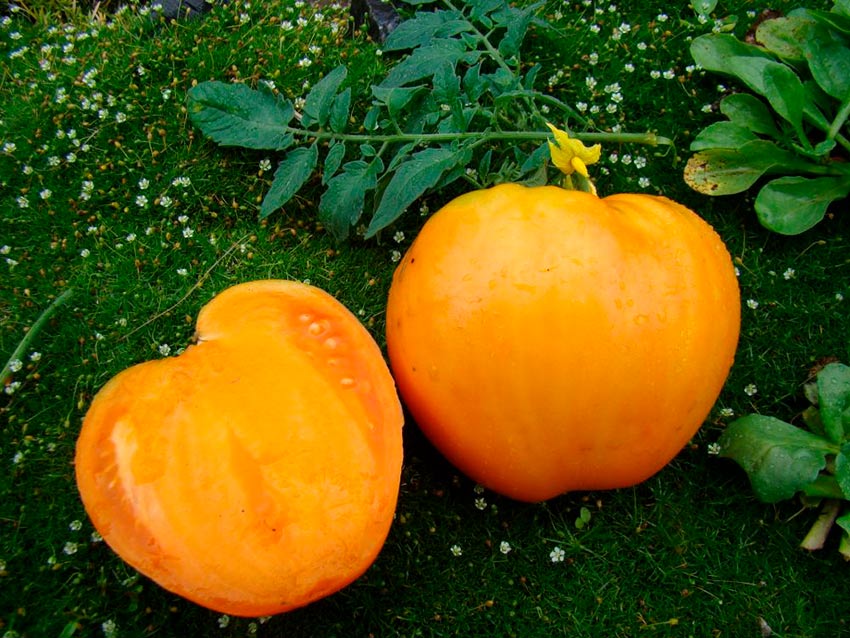
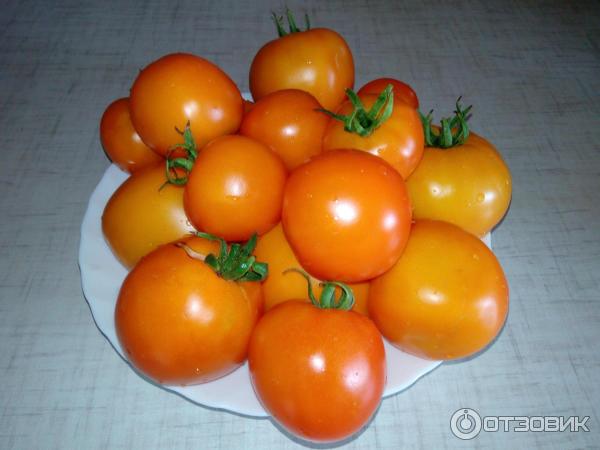
And what a beautiful color these tomatoes have! I'd call it the color of a ripe persimmon. The tomatoes are heart-shaped, and some of the smaller ones look very much like persimmons. My tomatoes ripened very unevenly. The first one was on the bottom cluster, the next ones on the second, and then on the third, even though the tomatoes on the bottom clusters weren't ripe yet. Three of my clusters set well, but the next ones had gaps. Fruit set is highly dependent on the temperature in the greenhouse. When the heat started, it stopped setting. Large and medium-sized tomatoes weigh over 200 grams.
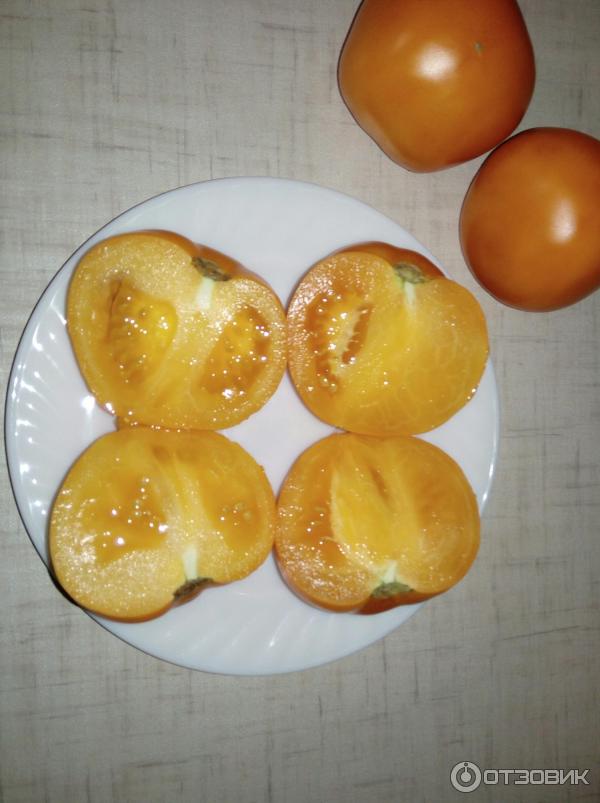
We used them in salads and preserves, but only sliced. The tomatoes have a thick skin, but not hard. They store very well and don't get soft. Since this is a variety, not a hybrid, I made my own seeds. I don't know if this is good or bad, but there are almost no seeds, just pulp.
If you like sweet tomatoes without the acidity, this is the variety for you. There are tomatoes without acidity and some that are bland. But these aren't like that; they're very tasty, truly honey-like. The "Honey Giant" tomato is similar, but not as sweet. I give this variety a solid A. If you haven't tried it yet, I recommend planting it. I'll definitely be growing it again in the future.This year I also planted yellow tomatoes such as “Orange Elephant” from the Gavrish company, “Banana Legs,” and “Orange Strawberry.”
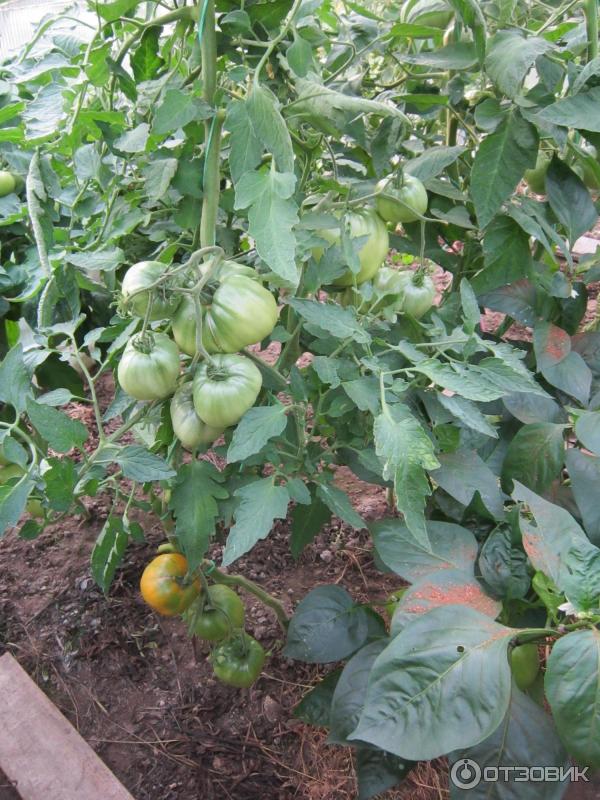
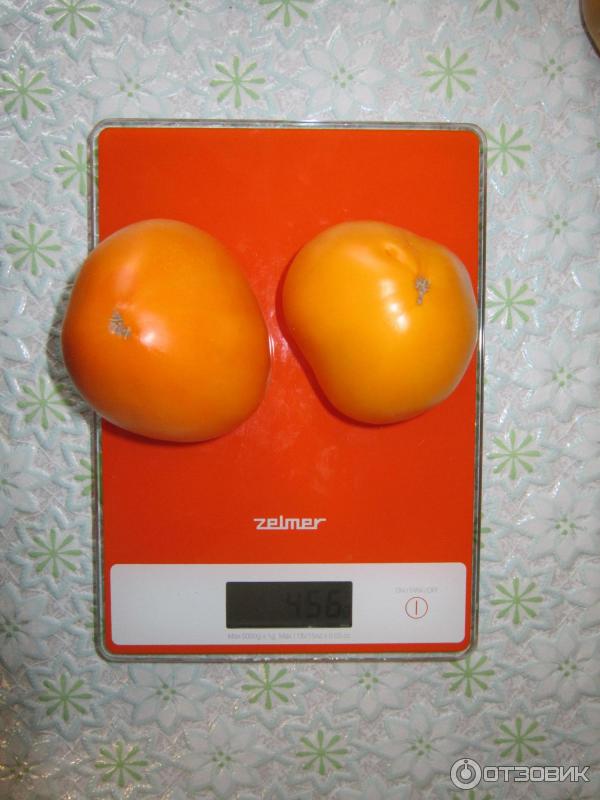
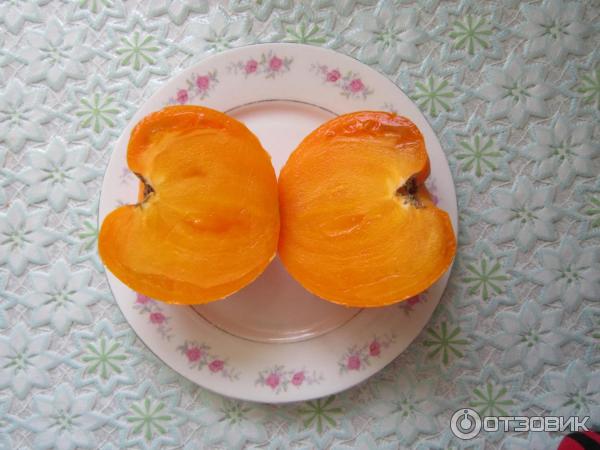
Read more reviews of the Honey Spas tomato variety, a detailed description of the tomato, and information on growing and caring for it in the article. Honey Giant tomato variety: characteristics in a table, photos, reviews.