The Mikado tomato variety is familiar to many gardeners. However, not everyone knows that its fruit comes in more than just the classic red. It comes in a variety of colors, but until recently, only the Pink Mikado was included in the State Register. Only in 2020-2021 were the Chocolate and Brown varieties added. Let's take a closer look at the characteristics of each variety based on their color.
Content
- 1 The history of the Mikado tomato variety and its varieties
- 2 Mikado Pink
- 2.1 Characteristics of the Mikado Pink tomato variety in a table
- 2.2 Photo gallery of the tomato variety Mikado Pink
- 2.3 A detailed description of the Mikado Pink tomato
- 2.4 Advantages and disadvantages of the Mikado Pink tomato variety
- 2.5 Growing the Mikado Pink tomato variety
- 2.6 Real reviews from gardeners about the Mikado Pink tomato variety
- 3 Mikado White
- 3.1 Table of characteristics of the Mikado White tomato variety
- 3.2 Photo gallery of the Mikado White tomato variety
- 3.3 A detailed description of the Mikado White tomato variety
- 3.4 Growing the Mikado White tomato variety
- 3.5 Advantages and disadvantages of the Mikado White tomato variety
- 3.6 Real reviews from gardeners about the Mikado White tomato variety
- 4 Mikado black (brown) and chocolate
- 4.1 Table with characteristics of tomato varieties Mikado black (brown) and Mikado chocolate
- 4.2 Photo gallery of tomato varieties Mikado Black (brown) and Mikado Chocolate
- 4.3 Detailed description of tomato varieties Mikado black (brown) and Mikado chocolate
- 4.4 Advantages and disadvantages of tomato varieties Mikado black (brown) and Mikado chocolate
- 4.5 Features of growing tomato varieties Mikado black (brown) and Mikado chocolate
- 4.6 Real reviews of the Mikado Black tomato variety
- 5 Mikado Red
- 5.1 Characteristics of the Mikado Red tomato variety in a table
- 5.2 Photo gallery of the Mikado Red tomato variety
- 5.3 A detailed description of the Mikado Red tomato
- 5.4 Advantages and disadvantages of the Mikado Red tomato variety
- 5.5 Growing the Mikado Red tomato variety
- 5.6 Real reviews from gardeners about the Mikado Red tomato variety
- 6 Mikado Sibiriko
- 6.1 Characteristics of the Mikado Sibiriko tomato variety in a table
- 6.2 Photo gallery of the Mikado Sibiriko tomato variety
- 6.3 A detailed description of the Mikado Sibiriko tomato
- 6.4 Advantages and disadvantages of the Mikado Sibiriko tomato variety
- 6.5 Growing the Mikado Sibiriko tomato variety
- 6.6 Real reviews from gardeners about the Mikado Sibiriko tomato variety
- 7 Mikado gold (yellow)
- 7.1 Photo gallery of the tomato variety Mikado yellow (golden)
- 7.2 A detailed description of the Mikado yellow (golden) tomato variety
- 7.3 Advantages and disadvantages of the Mikado yellow (golden) tomato variety
- 7.4 Growing the Mikado Yellow (Golden) tomato variety
- 7.5 Real reviews from gardeners about the Mikado Yellow tomato variety
- 8 Mikado Orange
The history of the Mikado tomato variety and its varieties
The variety is believed to have been first cultivated in 1886. There is evidence that it was a French selection. Its creator is believed to be Peter Henderson, a renowned breeder. This was a white variety. It is now known as Micado Blanc. The breeder himself named it Shah. A red variety appeared that same year. News of it quickly spread among gardeners. This was not surprising, as larger varieties had never been seen at the time.
It's unclear exactly where the pink Mikado variety was bred. It's believed that its seeds were brought from the Czech Republic, after which they were further bred in Russia.
A group of breeders spent several years developing the Mikado Pink variety. Several people contributed to the development: S. F. Gavrish, V. V. Mreev, E. V. Amcheslavskaya, T. V. Degvtsova, O. A. Volok, G. M. Artemyeva, and T. A. Redichkina.
In 2013, the variety was ready for testing. It was immediately accepted into testing by 12 breeding stations. Study of its characteristics and features continued for two years. In 2015, it was included in the Register of Breeding Achievements. The applicant and originator of the variety is Gavrish Selection Firm LLC.
Breeders then used Mikado Pink as a basis and developed variations on it. This resulted in new varieties with a variety of colors.
The Mikado variety is also known as "Imperial." It produces large, fleshy fruits with a very pleasant flavor. A distinctive feature is its wide, potato-like leaf blades.
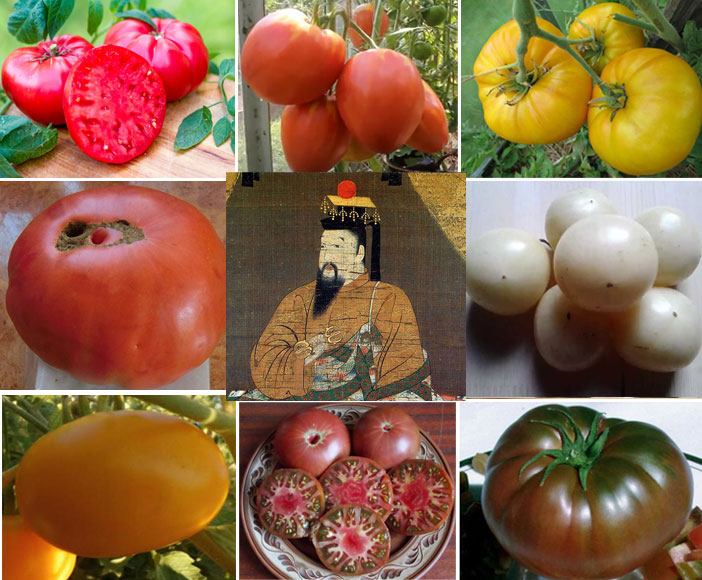
The fruit can be white, pink, golden, orange, red, and even almost black, as you can see from the photos. That's why this variety is usually divided into subgroups based on the color of the tomatoes.
Mikado Pink
This variety was the first to be registered, so it's believed that other Mikado varieties were developed from it. For many tomato growers, this particular tomato is considered the epitome of flavor and aroma, reminiscent of childhood. This variety isn't a hybrid, so you can grow your own seeds from it.
Characteristics of the Mikado Pink tomato variety in a table
| Characteristic | Description |
| Ripening time | 90-95 days. |
| Description of the plant | Mid-early indeterminate variety for greenhouses on private plots. |
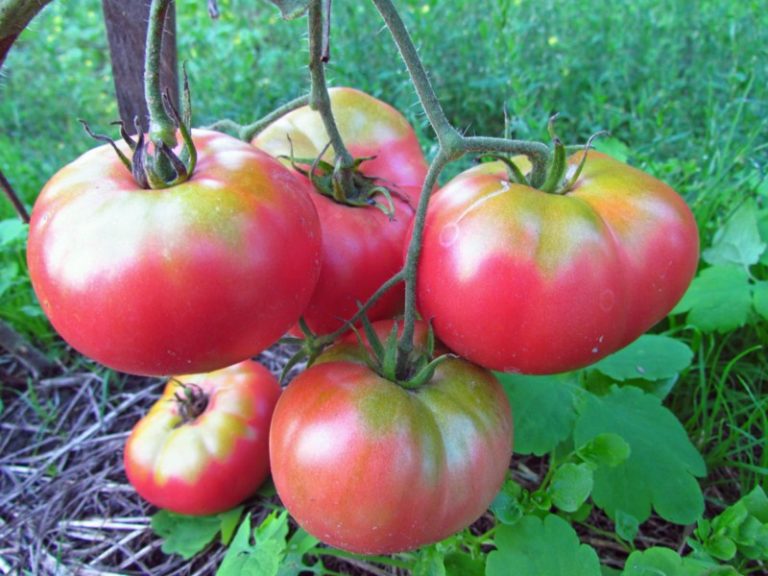
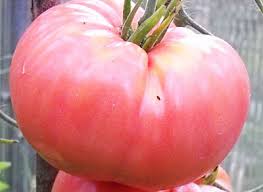
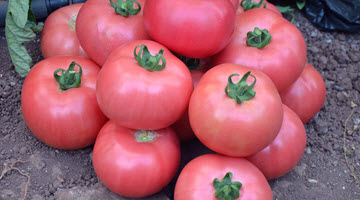
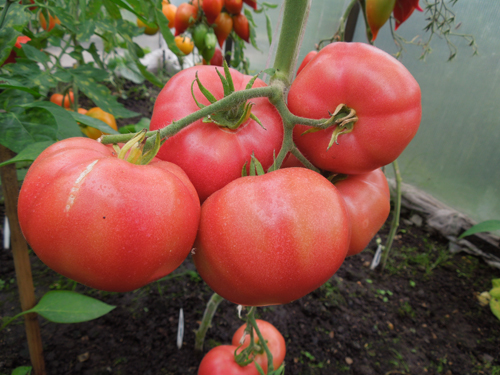
| Description of the fruit | Pink, round, strongly flattened, with pronounced ribbing. |
| Fruit weight | 300-350 g, up to 500 g. |
| The taste of the fruit | Great. |
| Usage | Salad. |
| Productivity | 5-6 kg/sq. m. |
| Shelf life | Good. |
| Resistance to infections | May be susceptible to late blight. |
| Agricultural technology | Requires formation into 1-2 stems. |
| Growing regions | Any. |
| 2015 |
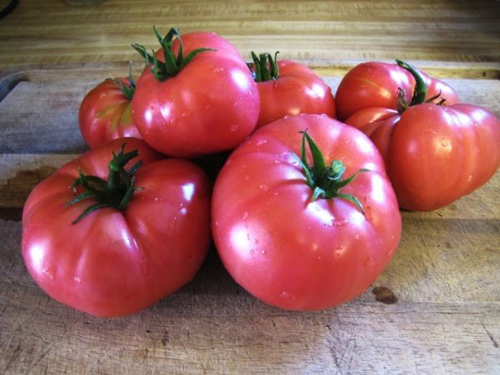
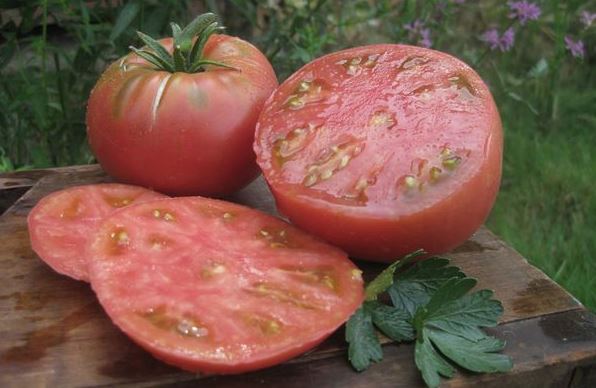
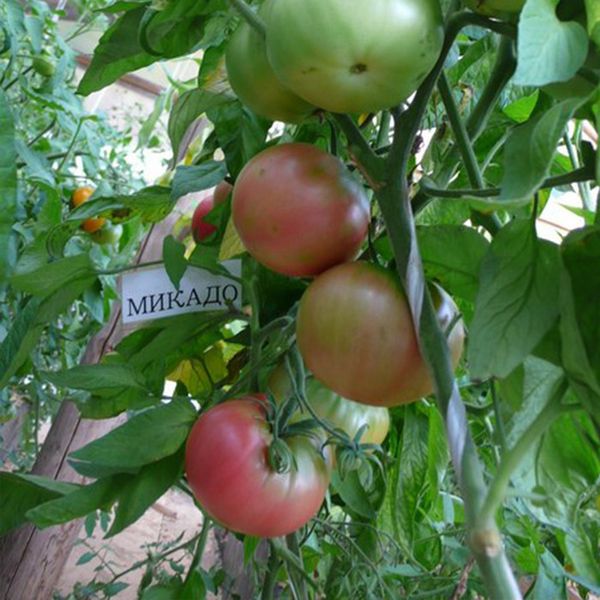
Photo gallery of the tomato variety Mikado Pink
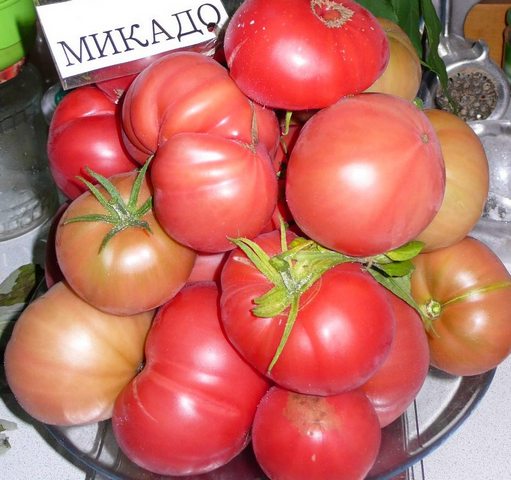
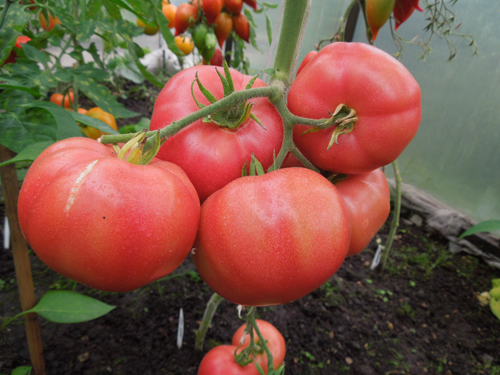
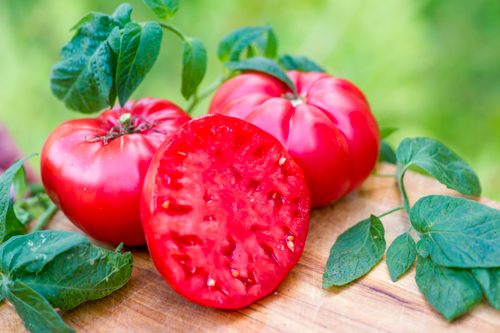
A detailed description of the Mikado Pink tomato
This subspecies is valuable for industrial cultivation, as it is in demand among consumers.
Forms tall bushes. In open ground, they can grow up to 1 m, and in greenhouse conditions, up to 2.5 m.
This subspecies is renowned for its large fruits, averaging 300g. However, in a greenhouse, fruits weighing up to 500g can be grown. They have a round, strongly flattened shape with ribbing near the stalk.
Tomatoes have very tender and juicy flesh. When ripe, it turns pink. Although the skin is quite thin, it is strong and does not crack.
The ripening period is mid-early. The time between the first shoots and harvest is just over 3.5 months. The yield is relatively low—500-600 c/ha. Assuming three bushes can be planted in this area, each bush yields 2-3 kg.
Advantages and disadvantages of the Mikado Pink tomato variety
| Advantages | Flaws |
|
|
Growing the Mikado Pink tomato variety
Sow seeds for seedlings in early or mid-March, depending on the weather in your region. Keep in mind that the seedlings will need to be planted in their permanent location in the garden within two months. This variety is demanding of soil, so it's best to purchase it from specialized garden centers.
If this is not possible, you can prepare the soil mixture yourself from:
- ½ of garden soil taken from the bed;
- ½ humus and peat;
- a small amount of river sand;
- handfuls of wood ash;
- 1 tbsp. l. superphosphate.
Before using homemade soil, it's recommended to disinfect it. This can be done by watering it with a potassium permanganate solution or baking it in the oven. Afterwards, place the soil outside for two weeks to air out.
Before sowing, seeds need to be prepared. To do this:
- sort, discarding those that are too small or damaged;
- place in a salt solution (those that float to the surface should be thrown away, as they will not germinate);
- soak in a light pink solution of potassium permanganate for 20 minutes;
- treat with growth stimulants;
- Place on damp gauze at a temperature of +20 °C, before hatching, put in the refrigerator 5 times for stratification.
If the seeds are purchased from a store or garden center, no preparation is required.
After germination, the seeds are planted at a depth of 1 cm. Leave a distance of 3 cm between adjacent holes. No more than 2 seeds can be placed in one hole.
Seedling care is standard. They are planted in open ground from mid-March to early June at 40 days of age. No more than three plants can be planted per square meter.
Care after planting in the beds consists of:
- regular and proper watering;
- complete feeding;
- pinching out stepsons and forming 1-2 stems;
- garter;
- loosening and removing weeds.
The harvest can be either ripe or green. It will ripen further during storage without losing its flavor.
Read more about the Mikado Pink tomato variety in the articleMikado Pink Tomato + 5 More Varieties: Reviews, Description, Photos
Real reviews from gardeners about the Mikado Pink tomato variety
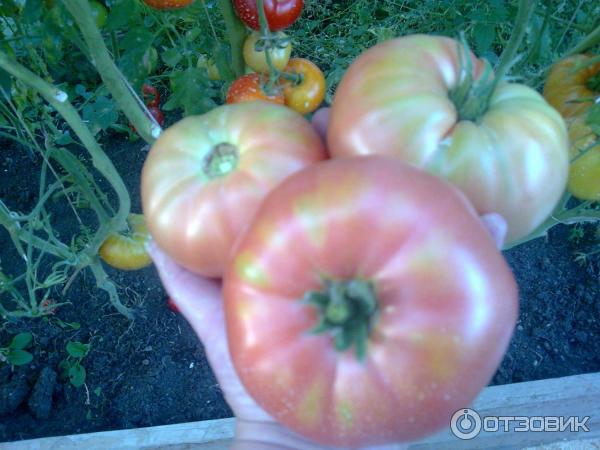
Mikado Pink is a tomato variety that's very popular among gardeners. So, after reading rave reviews of this wonderful variety, I decided to try it on my 11 acres last blessed year.
I'll say right away that I was pleased with the appearance of the fruits and their taste: large, pink, fleshy and sweet.
But there is no perfection in the world!
These tomato plants were among the first to be affected by cladosporiosis, so by mid-season they had charred leaves. Fortunately, the first two or three clusters had time to set and ripen.
Judging by the ovaries, this variety is truly very productive, which means I would recommend it to those who have new greenhouses that haven't yet been plagued by numerous tomato diseases.
Back to the topic of "seeds." I'm excited to tell you about another tomato variety, which is also very tasty!
I use seeds of this variety from Agrofirm "Aelita".
If you haven't gotten a fake, the seeds will germinate perfectly! I haven't encountered any fakes yet.
Tomato variety "Mikada Pink" is a mid-early variety.
Looks very appetizing!
The plant itself is certainly tall. The fruits are flat-round, pink, and delicious, weighing 250-350 grams. They're quite large tomatoes!
The yield is quite high!
This variety is resistant to the main tomato diseases - this is a big "+" for the tomato!
Fresh tomato is incredibly delicious! It's also great for making various salads and winter appetizers. You can even make tomato juice!
I cut it up and preserved it for the winter. Even though I cut it up, the tomato was still delicious!
I recommend the Mikada Pink tomato variety to everyone!
You'll be pleased with the taste! And the yield, too!
I've been growing Mikado Pink for three years now. Like every variety, it has its advantages and disadvantages. But first things first... The first thing I liked was the unrivaled taste of this tomato—sweet, juicy, and simply perfect for salads.
Mikado also makes delicious and sweet tomato juice, but it's not suitable for canning due to its rather large fruits, weighing between 300 and 700 grams. It's also good that it's not a hybrid. I bought a packet of seeds to try, and the following year I grew seedlings from my own seeds. I planted the seedlings both in a greenhouse and in the open ground, using supports, using a 50/60 pattern; they only need to be trained into a single stem!
I tried two varieties—the yield was lower, the fruit was smaller. The downsides are a tendency for the fruit to crack (even watering every 10 days through drip tape helps) and late blight (I pluck off all the leaves down to the first cluster).
The most delicious tomato I have ever grown.
A mid-season indeterminate variety. It's considered an early-ripening tomato with a ripening period of 90-95 days.
It's best to train them into a single trunk, but I've also tried two. A cluster produces 3-4 tomatoes, but they ripen at 400-600 grams. The largest fruit I've grown was 1,100 grams. A single bush can yield up to ten kilograms of delicious fruit. The fruit is fleshy when cut, almost seedless. The seeds are small. The flavor is excellent. Recommended for fresh use and for salads. I plant three plants in a polycarbonate greenhouse; this is enough to feed a family of four, and the excess is used to make ketchup. They are not suitable for pickling due to their thin skin. I've been planting them for three years now.
It is unpretentious even if you don’t water it and it doesn’t get sick.
The only thing I don't like about him is his height. He keeps growing and growing.
Mikado White
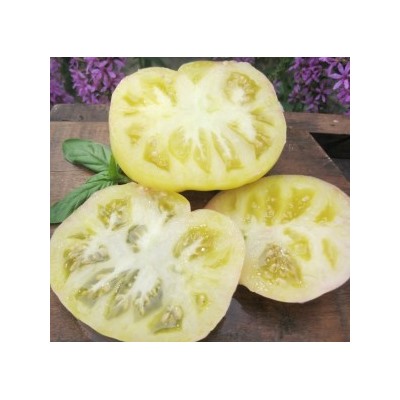
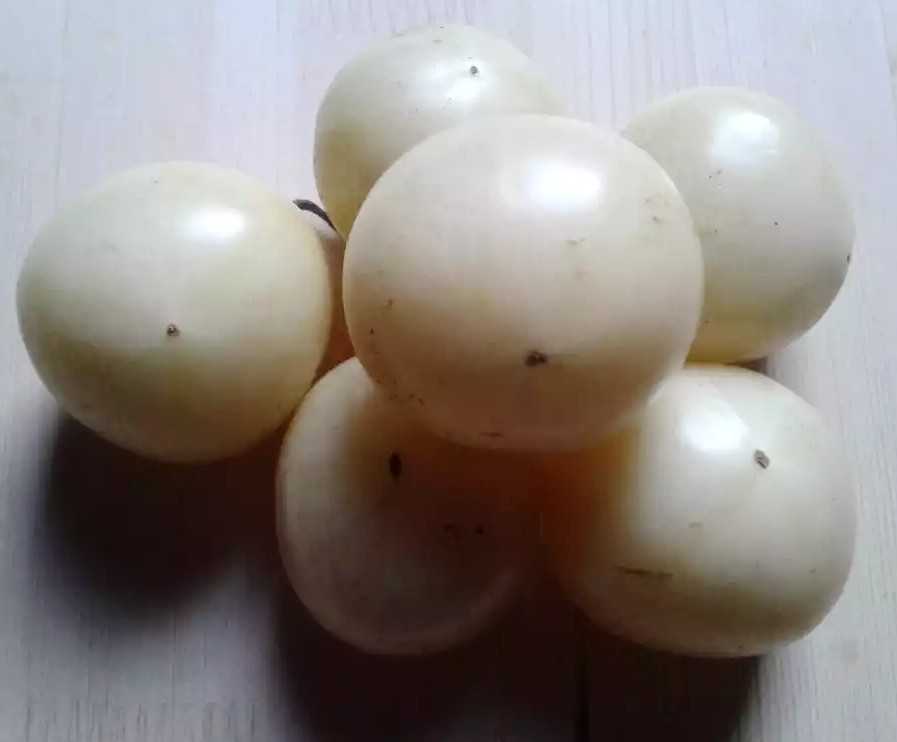
Of all the varieties, Mikado dates back to the earliest period of cultivation. The description describes it as a rare, aromatic, and unusual exotic variety with high yields and fruity, sweet flesh.
Table of characteristics of the Mikado White tomato variety
| Characteristic | Description |
| Ripening time | 90-100 days. |
| Description of the plant | Mid-early indeterminate variety for greenhouses. |
| Description of the fruit | Flat-round, creamy beige. |
| Fruit weight | 200-300 g |
| The taste of the fruit | Sweet, with a fruity taste. |
| Usage | Salad, suitable for canning. |
| Productivity | 800 c/g. |
| Shelf life | Good. |
| Resistance to infections | Tall, but susceptible to late blight. |
| Agricultural technology | Requires shaping and tying to a support. Doesn't tolerate high humidity. In temperate climates, it can only be grown in greenhouses. |
| Growing regions | Any except northern ones. |
| Not included. |
Photo gallery of the Mikado White tomato variety
A detailed description of the Mikado White tomato variety
This indeterminate variety grows up to 2 m tall, with strong, vigorous shoots and potato-like leaves. Approximately 7-8 clusters develop on a single stem. Each cluster contains 3-5 fruits.
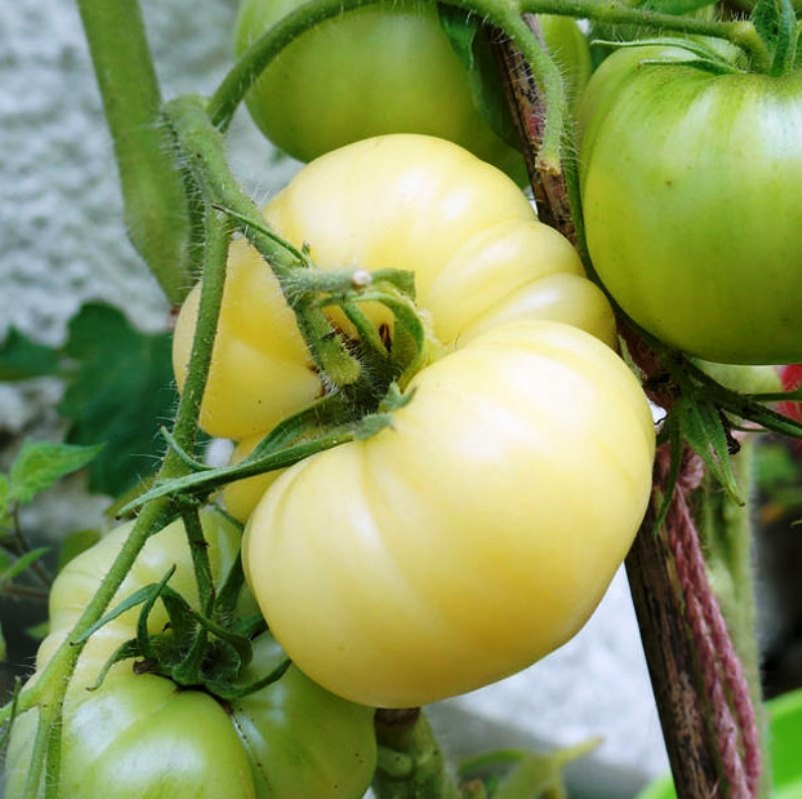
The average weight of a tomato is 200-300 g, the color is creamy beige, the pulp is very tender, but at the same time fleshy,
Growing the Mikado White tomato variety
The variety is grown from seedlings. Planting depth is 2 cm, and temperatures during germination are kept at +20°C.
The bushes are trained into 2-3 trunks, with side shoots removed approximately every 10 days. Water with 7 liters twice a week. When grown outdoors, protect from overwatering. The beds should be mulched.
Fertilize 2-3 times per season, like regular indeterminate tomatoes.
Advantages and disadvantages of the Mikado White tomato variety
| Advantages | Flaws |
|
|
Real reviews from gardeners about the Mikado White tomato variety
Excellent tomato! I've been growing your Mikado for years, and thank you every time! It's the most productive I've ever had. And very sweet.
Yes, the White Mikado tomato is pale and bland in appearance, and some might think it tastes the same way... Nonsense! It's one of the most delicious tomatoes there is!
1. We've been growing this variety since the first year of our farm's existence. We keep some varieties, remove others, but the White Mikado tomato, like the Honey Drop, for example, will always be with us. Its yield is incredible!
2. Sweet! A truly tomato-like juiciness, yet it doesn't go limp. It's fantastic in salads. And in the jars, these tomatoes don't turn to mush either; they're quite firm, living life to the fullest, and begging to be served with boiled potatoes.
3. For pickling, it's best to use tomatoes from the very top clusters: they're smaller and almost round. And almost white. For salads, use tomatoes from the lower clusters.
white tomato Mikado
4. You can tell if a White Mikado tomato is ripe by gently feeling it. If it's not firm, it's ready. When cut, it should have a slight pink tint to the core.
5. We usually grow it in a greenhouse. In 2018, it was growing in the open ground—superb! But that summer was very hot. In the greenhouse, it was about 1.6 m tall; in the open ground, it was no taller than 1.5 m.
6. Mulch, no watering at all, and fertilizing with grass, ash, and fish. These are the ingredients for the tomato's sweetness and the incredible yield of this variety.
7. It doesn't crack! But then again, we don't water it at all. Try slapping your hands when you want to water it. Will you like the result?
For beautiful salads and pickle jars, plant Farmer's Black
Mikado black (brown) and chocolate
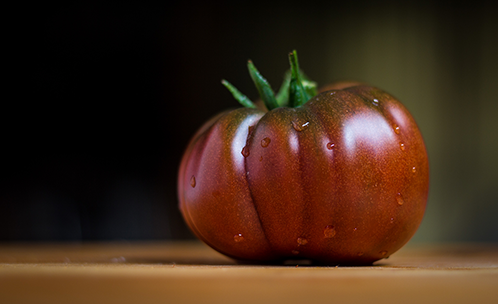
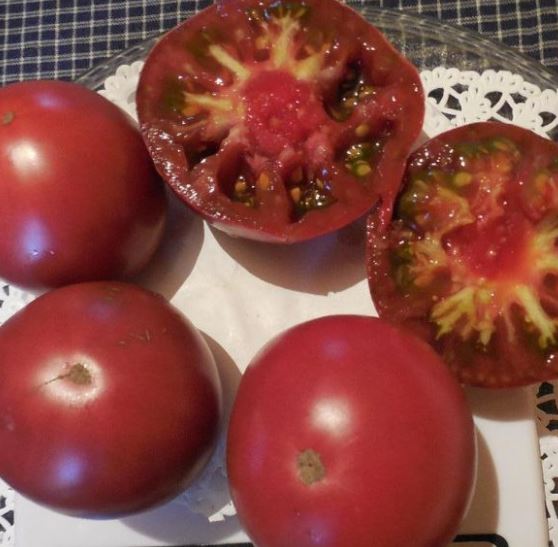
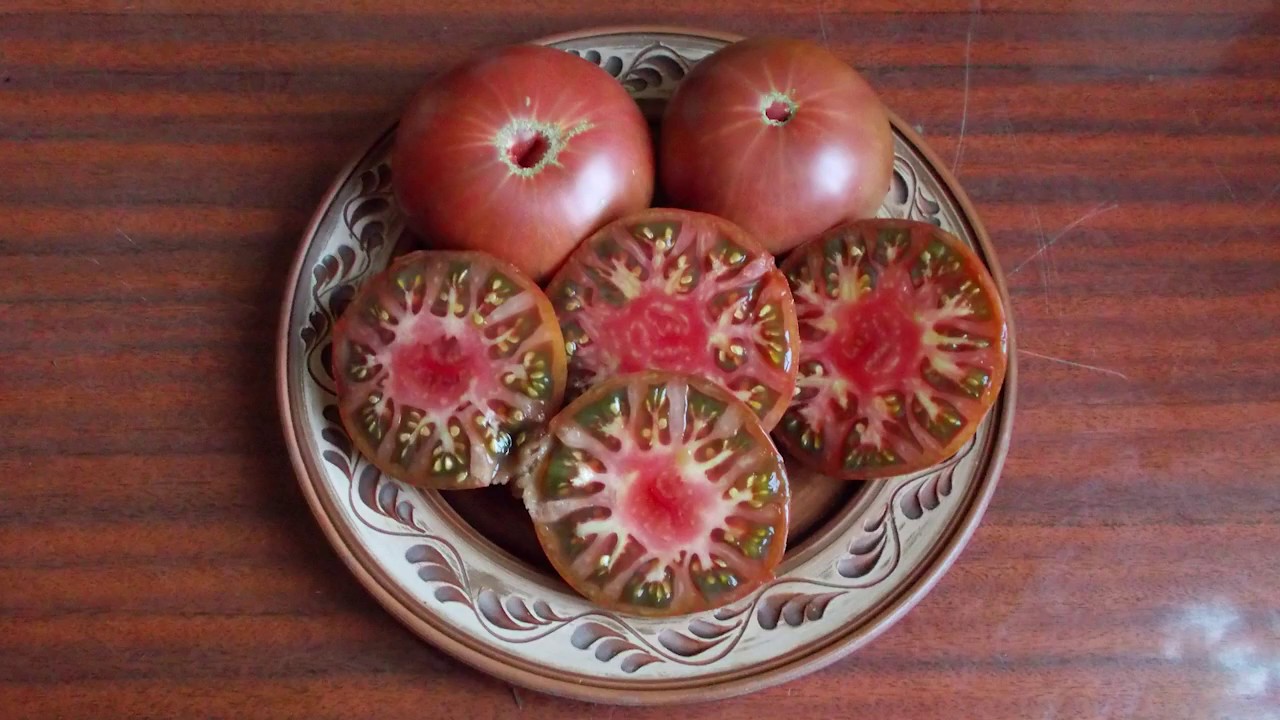
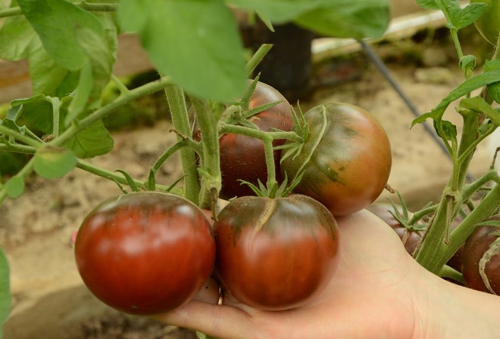
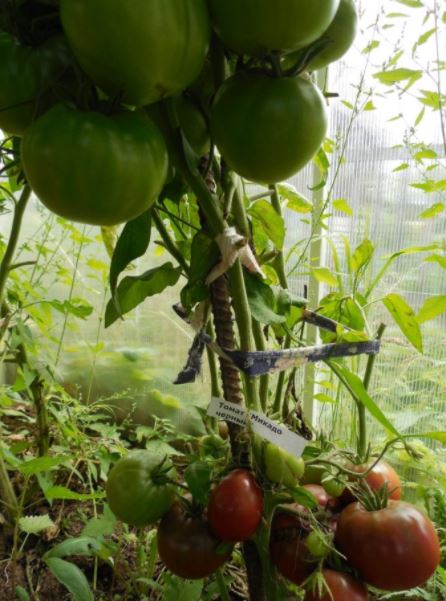
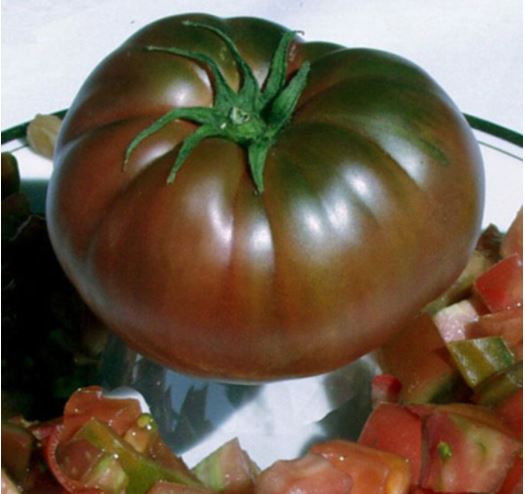
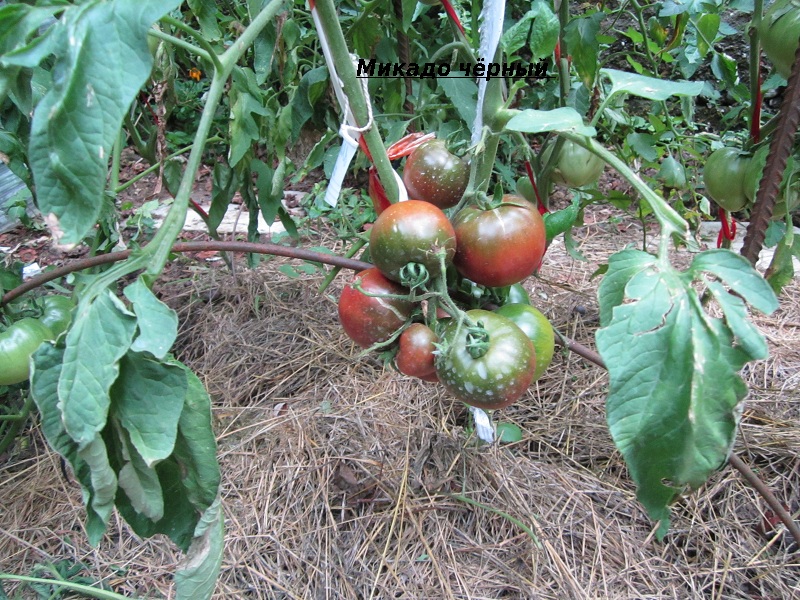
In 2020 and 2021, two new varieties of Mikado Black were released: Chocolate and Brown. They have similar characteristics. The only difference is the color. The first variety has reddish-brown fruits, while the second has brown ones.
Table with characteristics of tomato varieties Mikado black (brown) and Mikado chocolate
| Characteristic | Description of Mikado Black (Brown) | Description of Mikado Chocolate |
| Description | Mid-season indeterminate standard tomato for open ground and greenhouses. | |
| Ripening period | 96-105 days | 90-110 days |
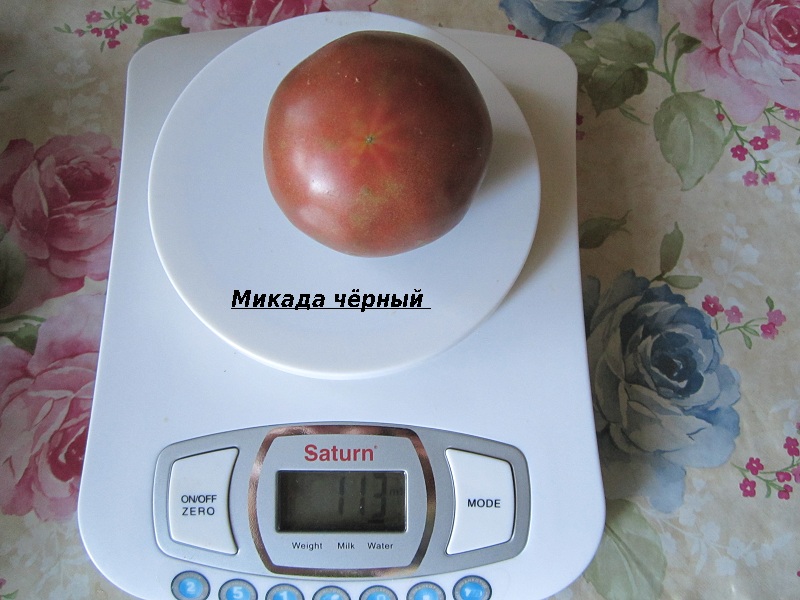
| Fruit weight | On average 200 g. | On average 250 g. |
| Description of the fruit | The fruits are round, slightly flattened, dark brown in color, sometimes dark crimson, with medium ribbing. | The fruits are flattened, round, slightly ribbed, chocolate-brown in color. |
| Productivity | Up to 8.7 kg/sq.m. | Up to 9 kg/sq.m. |
| Usage | In salads, fresh, for tomato processing. | |
| Growing regions | It grows successfully in different regions; in the Urals, Siberia and the Far East it grows successfully only in greenhouses. | |
| Disease resistance | It has a strong immune system, but if care is not taken properly, it can be affected by late blight and brown rot. It is also susceptible to brown spot. | |
| Agricultural technology | The bushes need to be trained and supported. Tomatoes require plenty of sun for best fruit quality. | |
| 2020 | 2021 | |
Photo gallery of tomato varieties Mikado Black (brown) and Mikado Chocolate
Detailed description of tomato varieties Mikado black (brown) and Mikado chocolate
These varieties are beloved by gardeners for their unusual fruit color. However, they don't quite live up to their name.
The bushes are indeterminate standard plants; in open beds they grow slightly higher than 1 m, and in a greenhouse – up to 2 m.
The fruits are not black, but dark brown or reddish-brown. They have a flattened, rounded shape. Ribbed areas, resembling folds, are present near the stem. Each fruit averages 200 g, but tomatoes can grow larger. Mikado brown tomatoes are smaller than chocolate tomatoes, and the latter is darker in color.
The skin of both subspecies is thin but strong. The flesh is tasty and juicy. They can contain up to 8 chambers, but the seeds are small. The dry matter content is no more than 5%.
The ripening period is mid-early. The fruits ripen 110-115 days after the first shoots appear. With proper care, up to 9 kg of yield can be harvested per square meter.
Advantages and disadvantages of tomato varieties Mikado black (brown) and Mikado chocolate
| Advantages | Flaws |
|
|
Features of growing tomato varieties Mikado black (brown) and Mikado chocolate
Planting and care are similar to those for the Mikado Pink variety. In 2020-2021, two varieties of this subspecies were registered: brown and chocolate. Care for them is the same.
For more information on the varieties of Black Mikado and how to care for it, read the article Mikado Tomato Black (Brown) and Chocolate + 5 More Varieties: Photos, Comparison, Reviews.
Real reviews of the Mikado Black tomato variety
The Mikado Black variety has received many positive reviews from gardeners, who note its ease of cultivation, high yield, and excellent tomato flavor. However, it requires a lot of light for the tomatoes to plump up and acquire their distinctive brownish hue.
Let me address those who have grown or are growing Mikado tomatoes.
I got a black Mikado from V.D. Popenko, then last year I got yellow, red, and pink varieties from Ukraine. The black and pink ones have potato-like leaves, while the yellow and red ones have regular tomato leaves. Please, anyone who grows Mikado (it's definitely worth it), let me know. Maybe we can all collect all the possible varieties of the real Mikado.
It turns out the Mikado topic is so broad and interesting that it's easily worth writing not only a PhD thesis, but also a doctoral dissertation! Here are a few interesting facts: the first mentions of the variety date back to the 1870s, when it was discovered by the Henderson Seed Company (USA). This is how the pink Mikado came into being.
And in 1886, the same company produced the Shah Micado variety. Someone called it White Mikado, someone - Brandywine. But the main thing: the variety is early and has potato leaf - a must!
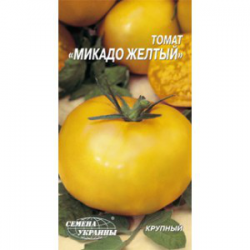
Our tomato encyclopedia (I can't remember where) says this variety was imported from Sakhalin in 1974, but amateur breeders in Odessa claim they developed Mikado. The company "Semena Ukrainy" produces Mikado Yellow and Mikado Red, both late-ripening varieties with tomato-like leaves. Clearly, these varieties are not related to Mikado.
Someone here has written that the US claims the real Mikado has been lost, while others refute these claims, citing competition. Perhaps we can summarize the results and determine what the REAL Mikado is?
Mikado Black - with a potato leaf - grew in the open air this year, produced good fruit, and produced large fruits, but was inferior in taste to the Dark Queen - it turned into ketchup.
I can’t say anything about other varieties - I have no experience growing them.
Mikado Ch. is a favorite. It's trouble-free—even here. It's not tall, and I grew it in three stems. This year, I didn't have a lot of room for it—I was trying a lot of new "black" varieties.
This Japanese vine is new this year. I pulled it out yesterday and it was covered in green tomatoes. I liked it. It's a salad vine. I also planted an African vine – they're like twins.
Mikado part


Mikado Red
This variety is famous for its taste characteristics.
Characteristics of the Mikado Red tomato variety in a table
| Characteristic | Description |
| Ripening time | 115-120 days. |
| Description of the plant | Mid-early indeterminate variety for greenhouses and open beds. |
| Description of the fruit | Dark pink or burgundy, round, flattened, ribbed. |
| Fruit weight | On average 270 g. |
| The taste of the fruit | Great. |
| Usage | Universal. |
| Productivity | 7-9 kg/sq.m. |
| Shelf life | Good. |
| Resistance to infections | Good resistance to nightshade diseases. |
| Agricultural technology | Formation in 1-2 stems. |
| Growing regions | Any, except Siberia and the Far East region. |
| Not included. |
Photo gallery of the Mikado Red tomato variety
A detailed description of the Mikado Red tomato
Bush characteristics: Reaches 1 m in height. Leaves are wide, like those of a potato. Distinguished by its dense fruit set.
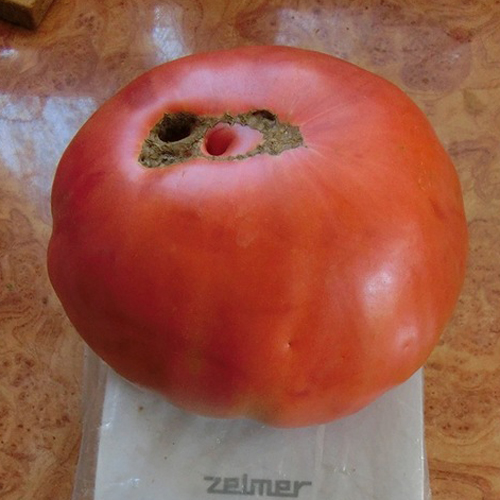
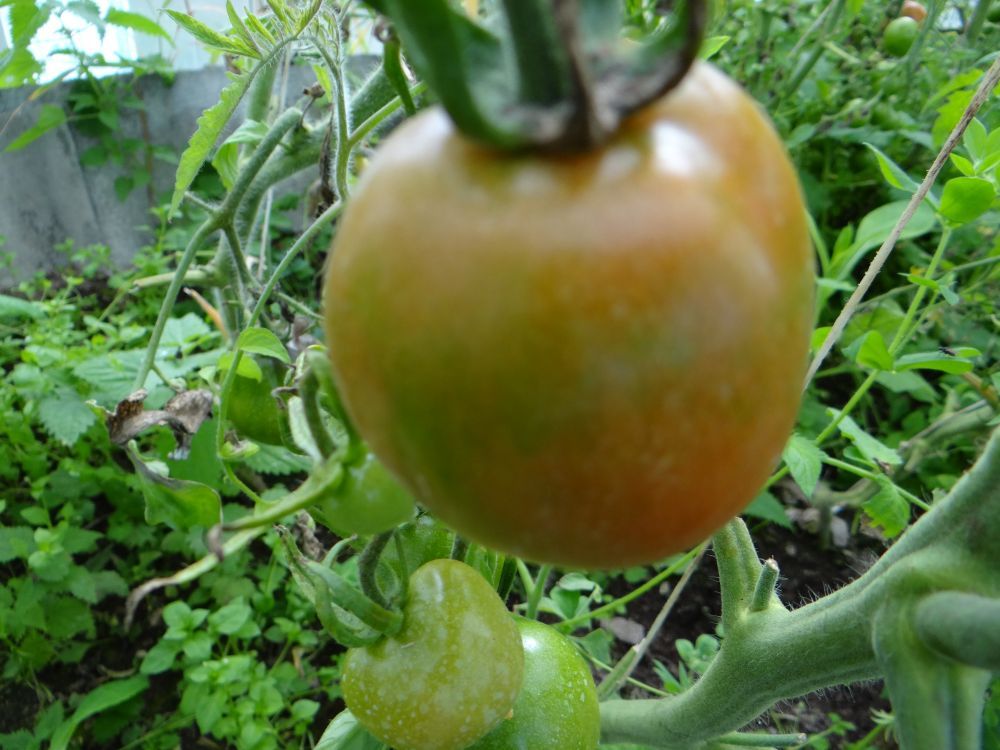
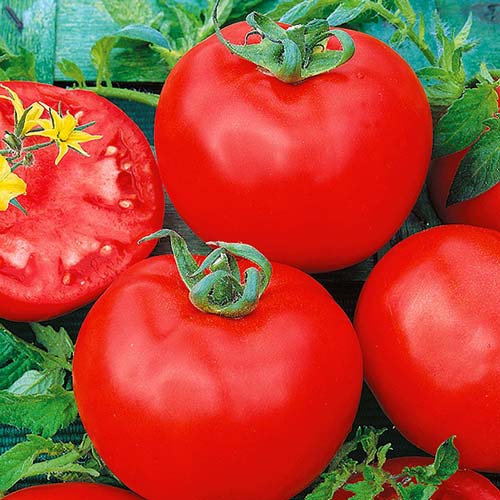
The fruit's color doesn't quite match its name. Once ripe, they take on a dark pink or burgundy hue. They have a round, flattened shape with large folds at the base.
The flesh is dense. It can contain up to 10 seed chambers. It contains no more than 6% dry matter.
Ripens in 115-120 days. Yield: 700-900 c/ha.
Advantages and disadvantages of the Mikado Red tomato variety
| Advantages | Flaws |
|
|
Growing the Mikado Red tomato variety
The cultivation technique is similar to standard. Seedlings are planted in their permanent location at 55-70 days of age. Watering is done exclusively with warm water, avoiding the above-ground parts; instead, water should be applied directly to the roots. The first fertilizing is done two weeks after transplanting (5-10 g of ammonium nitrate and superphosphate per square meter). The next fertilizing cycle can alternate between organic and mineral fertilizers.
Real reviews from gardeners about the Mikado Red tomato variety
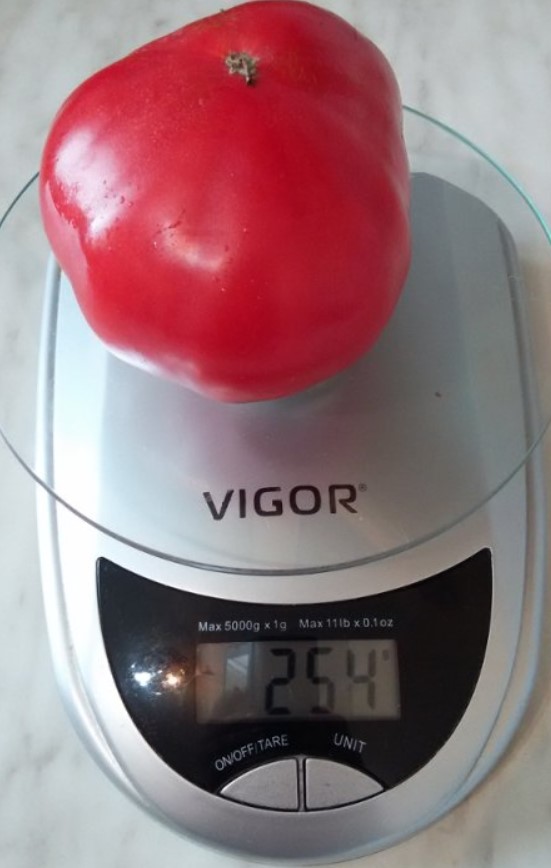
Red mikado. I really like mikado of any color. Pink ones tend to crack more for me, and I haven't grown yellow ones yet. But black, red, and pink ones are all productive, healthy, and delicious.
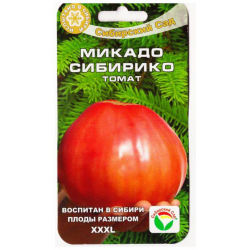
Mikado Sibiriko
This subspecies is not inferior in popularity to the previous one.
Characteristics of the Mikado Sibiriko tomato variety in a table
| Characteristic | Description |
| Ripening time | 90-95 days. |
| Description of the plant | Mid-season indeterminate variety for open and closed ground. |
| Description of the fruit | Heart-shaped, pink, ribbed at the point where the stalk attaches. |
| Fruit weight | 400 g (maximum 600 g). |
| The taste of the fruit | Great. |
| Usage | Salad and tomato processing. |
| Productivity | 800 c/g. |
| Shelf life | Not intended for long-term storage. |
| Resistance to infections | Tall, but susceptible to late blight. |
| Agricultural technology | Requires shaping and tying to a support. |
| Growing regions | Any, including Siberian gardens. |
| Not included. |
Photo gallery of the Mikado Sibiriko tomato variety
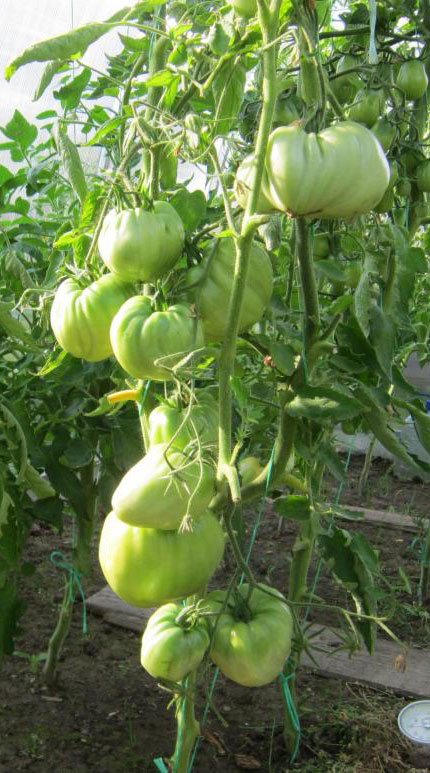
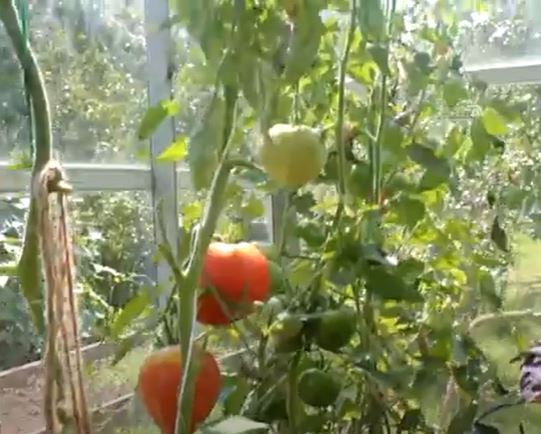
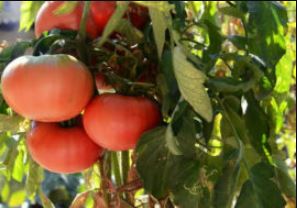
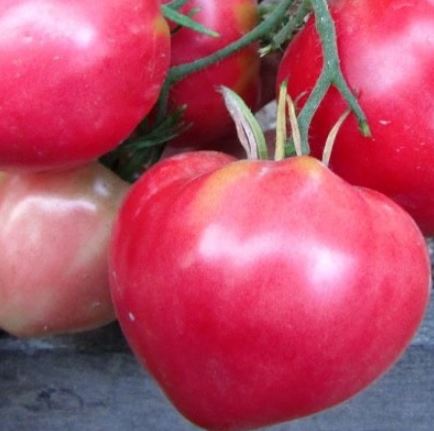
A detailed description of the Mikado Sibiriko tomato
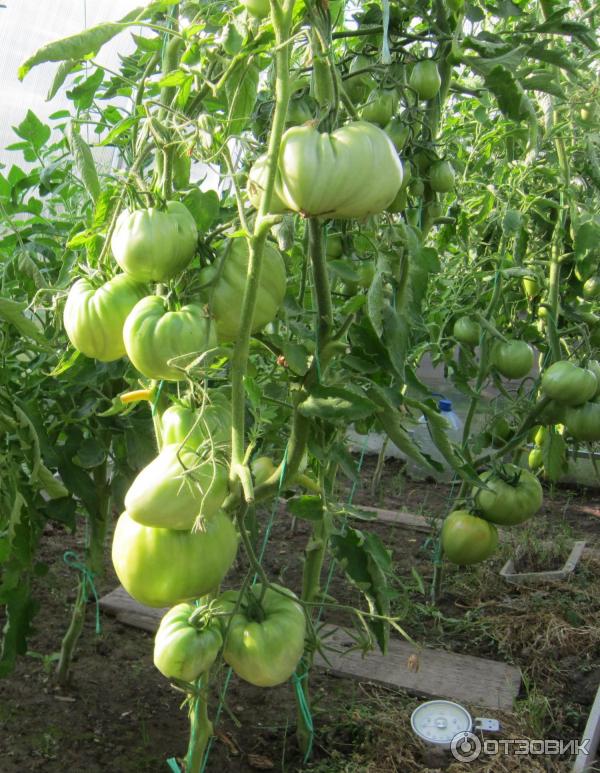
Mikado Sibiriko bushes reach 1.8 m in open ground and 2 m in a greenhouse. Tall bushes require staking.
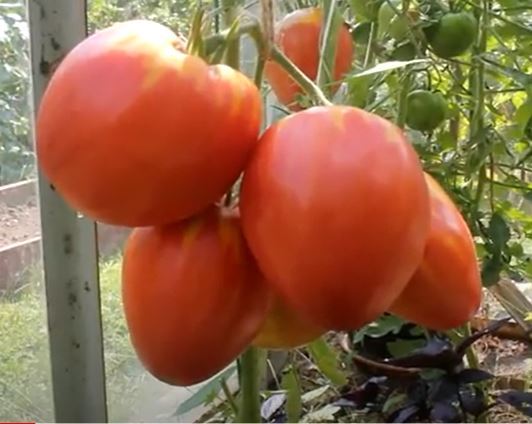
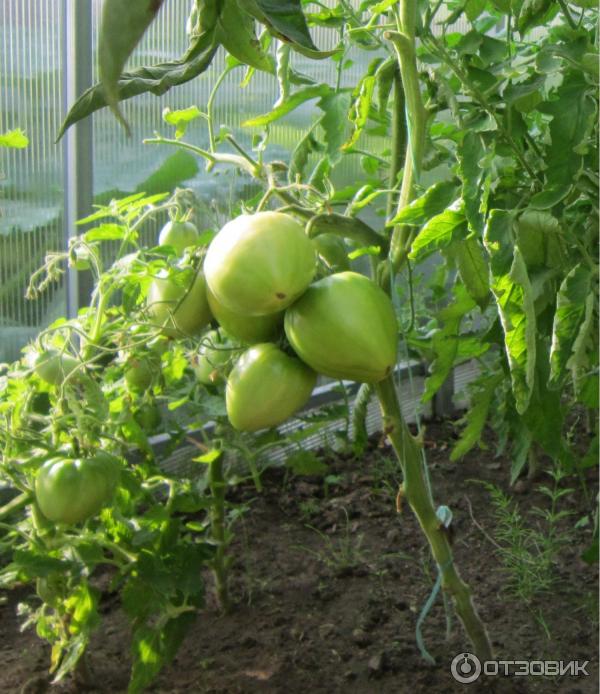
Like the previous subspecies, the fruits turn pink when ripe. However, they are heart-shaped rather than round. Ribbed areas are present near the stalk. They average 400 g in weight, but giants can reach up to 600 g.
The flesh is meaty and very tasty, and there are virtually no seeds. The skin is strong, preventing cracking during storage.
It ripens earlier than Mikado Pink, approximately three months after the first shoots emerge. The yield is high. One bush can yield 8 kg, and 24 kg per square meter.
Advantages and disadvantages of the Mikado Sibiriko tomato variety
| Advantages | Flaws |
|
|
Growing the Mikado Sibiriko tomato variety
Growing is done using seedlings. This tomato is an indeterminate variety, so it requires training into 1-2 stems. Due to the large size of the fruit, the shoots can break under the weight of the harvest, so staking is required. The rest of the care is standard. It's important to remember to apply preventative treatments against common nightshade diseases.
For more information on tomato diseases and how to control them, read the article.57 tomato diseases with photos and treatment tables + 19 resistant varieties.
Read the article about heart-shaped tomatoes.Heart of Siberia Tomato (photo, reviews) + 11 heart-shaped varieties of Siberian selection.
Real reviews from gardeners about the Mikado Sibiriko tomato variety
I've been growing tomatoes for a long time, but due to the lack of a greenhouse, I always chose low-growing varieties for open ground. But finally, two years ago, I installed a polycarbonate greenhouse. And so the search began for varieties with different characteristics. The bushes should be tall, with large fruits and high yields, and the tomatoes should be sweet, juicy, and fleshy. I chose several varieties from the Siberian Garden, including the Mikado Sibiriko. I first planted it in the greenhouse in 2016.
I grew the seedlings myself on an east-facing window, without additional lighting. I sowed all greenhouse varieties in early March. Seed germination was good, and there were no problems growing the seedlings. I planted them in the greenhouse on May 1st. Since I wanted to try as many varieties as possible, I mainly grew two bushes of each variety in the greenhouse. I trained the bush with two stems, as I do with all indeterminate (tall) varieties. The bush, like all heart-shaped varieties, was rather frail than vigorous, not spreading, compact, and about two meters tall. It didn't take up much space. It needs to be tied well, as ropes may not support the heavy weight of the clusters. Fruit can weigh 400 grams or more. The fruit is clustered throughout its entire height without gaps. The beautiful heart-shaped fruits are bright pink, not sour, rather bland, and very fleshy, with few seeds. Perfect for salads and juice, though I'd be sorry to waste it on the juice. It's too large for canning, unless you slice it.
The variety is very similar to the Batyanya variety from Siberian Garden, which I also planted in 2016. My review of the Batyanya tomato. The only difference was that the fruits were larger. Mikado Sibiriko, like Batyanya, was one of the early ones. Perhaps the hot summer played a role. Another advantage of Mikado Sibiriko is that it's a variety, not a hybrid, and you can take seeds from your own tomatoes for further cultivation and adapt the variety to your conditions.
Mikado gold (yellow)
This species is also not listed in the registry, and its creators are unknown. It is not a hybrid.
| Characteristic | Description |
| Ripening time | 111-120 days. |
| Description of the plant | A mid-early indeterminate variety for greenhouses. In the south, it can also be grown outdoors. |
| Description of the fruit | Yellow, round, strongly flattened, ribbed. |
| Fruit weight | Up to 500 g. |
| The taste of the fruit | Great. |
| Usage | Salads, juice. |
| Productivity | 6-8 kg/sq.m. |
| Shelf life | Good. |
| Resistance to infections | Good. |
| Agricultural technology | Shaping and garter. Does not tolerate high humidity. |
| Growing regions | Any, except northern ones. |
| Not included. |
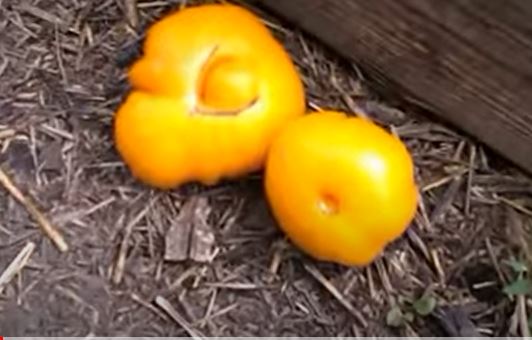
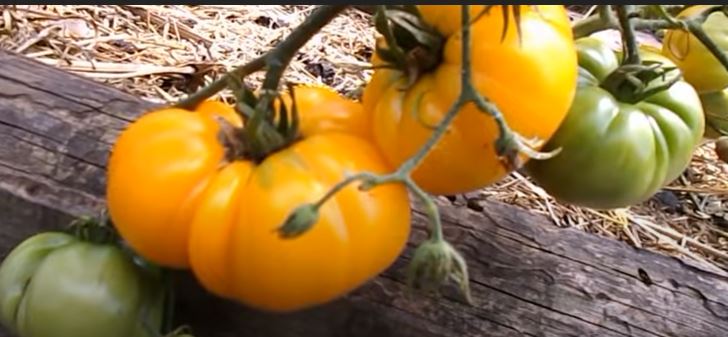
Photo gallery of the tomato variety Mikado yellow (golden)
A detailed description of the Mikado yellow (golden) tomato variety
This variety is recommended for cultivation in the south. However, it can also be grown in a greenhouse in central Russia.
The bushes form tall, indeterminate shrubs. They are trained with one or two stems and must be tied to a support.
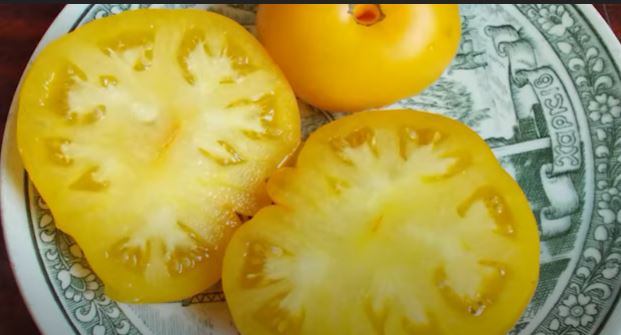
The fruits are yellow, round, and very flattened. Ribbing is also present near the stalk, but it is subtle.
Ripening occurs in 111-120 days. The variety is high-yielding—up to 18 kg per square meter.
Advantages and disadvantages of the Mikado yellow (golden) tomato variety
| Advantages | Flaws |
|
|
Growing the Mikado Yellow (Golden) tomato variety
A 30x50 cm planting pattern is recommended. Fertilize at least three times during the growing season. Be sure to follow a watering schedule and avoid overwatering, as excessive moisture can cause fruit cracking.
Real reviews from gardeners about the Mikado Yellow tomato variety
I'd like to tell you about a mid-late yellow tomato variety. I planted this variety already this season and really liked it. It has good flavor, firm flesh, and looks unique in a salad. We're all used to seeing red tomatoes, but I read somewhere that yellow tomatoes contain more vitamins than red ones. I recommend buying "Mikado Yellow" seeds from "Semena Ukraina"—you won't regret it. This variety is tall, growing 150-250 cm tall, and produces large, fleshy, firm, yellow fruits weighing 300-600 g. The fruits have a long shelf life; I still have a couple of them in my drawer among the red ones.
It's true that there are still some small ones left, but they are no different in quality.
One packet of seeds contains only 0.2 g, so you need to buy several packets. I like the germination rate.
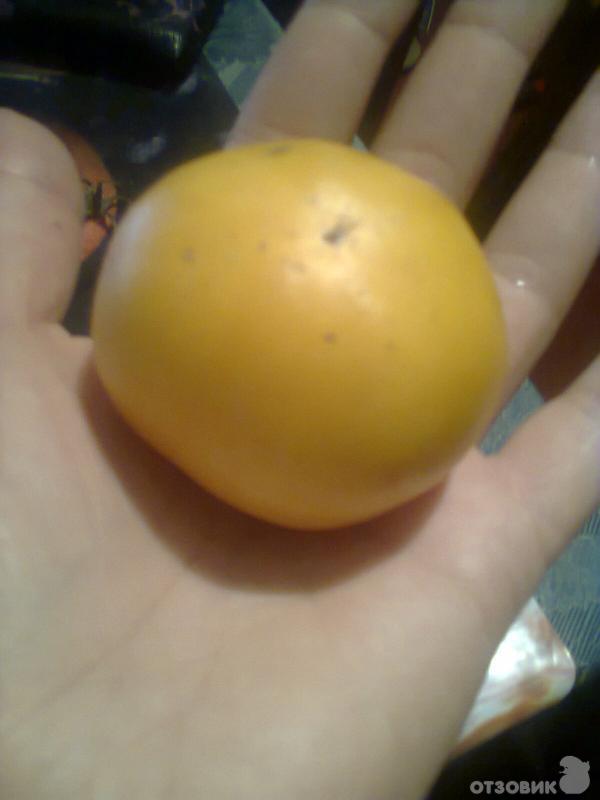
I love growing tomatoes of different colors. I especially love the yellow-fruited varieties because they're so sweet. You break open a ripe tomato, and the flesh is sugary and crumbly... Oh, delicious! But I'm getting sidetracked by memories, so I'll move on to the seeds.
I like the "Mikado Yellow" variety for its flavor, color, and yield. This year, I bought seeds from the "Golden Hundred of Altaya" producer and have already planted them. Germination was excellent, the seedlings were strong, producing two leaves each, and they tolerated transplanting well. The packet contains quite a lot of seeds, all neat and clean. I was very pleased with the quality and will continue to buy tomato seeds from this producer.
Growing the "Mikado Yellow" variety is easy. The plants are tall and require support. The yield is good, but the tomatoes aren't particularly large. However, one is enough for a salad. The color is beautiful, and these tomatoes are in high demand at the market, so I plant a lot. I recommend this variety to all amateur gardeners as it's tasty, productive, and disease-resistant. It ripens outdoors.
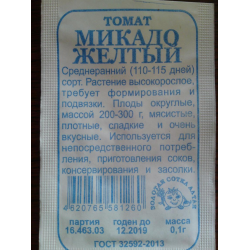
Our neighbors, seasoned gardeners, brought us the seeds of this tomato. Honestly, I'd never eaten or even seen yellow tomatoes before. I'd seen and eaten black and red ones called "Black Prince." But yellow ones were new to us this year. Each package contains about 10-12 seeds, 20 grams. You need to buy several packages at once to get the most out of them.
They grow like regular red tomatoes. I've never had any problems with them. These tomatoes grow tall, and the fruits are flat and round, large and fleshy, dense, and very beautiful. The tall bushes are somewhat convenient. There are only a few seeds per tomato. Cutting up a salad with red and yellow tomatoes, cucumbers, bell peppers, and herbs is a real treat. However, yellow tomatoes, although juicy, aren't very tasty; red tomatoes are much tastier. It's no wonder people prefer them.
They're great for pickling, but mostly for aesthetics. I planted some this year as a trial, and next year I'll plant more and make adjika with them. They have a tart, juicy flavor, so they should be excellent.
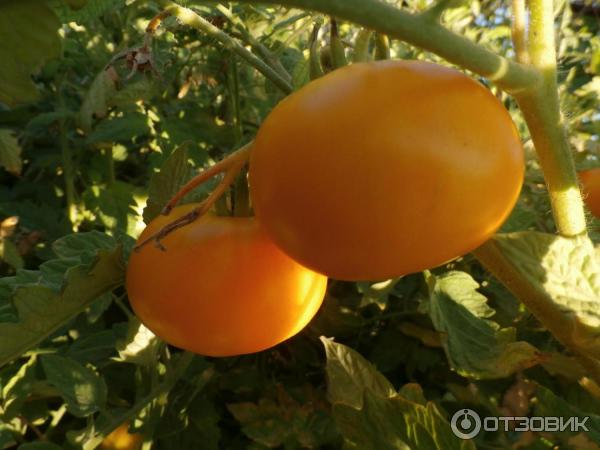
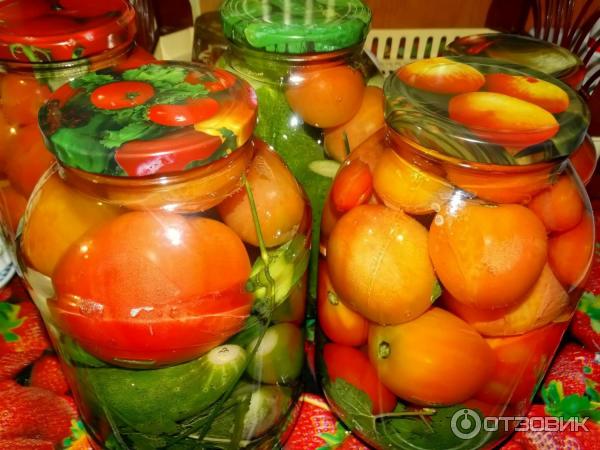
Try growing this interesting variety in your garden to put you in a good mood.
The Mikado Yellow tomato resembles a sun that has migrated to the plant's branches. This mid-season variety has a growing season of 135 days from germination to fruiting. The bushes are tall, growing from 150 to 250 centimeters. The tomatoes themselves are quite large, weighing from 300 to 500 grams (one even reached 600 grams). They are flat-round, fleshy, firm, and yellowish in color. The taste is excellent! The fruits have a long shelf life, which is important. These tomatoes are best used in salads; they are not suitable for canning.
Mikado Orange
The variety appeared thanks to the selection of the agricultural company Aelita.
| Characteristic | Description |
| Ripening time | 85-100 days. |
| Description of the plant | An early indeterminate variety for open ground in the south and greenhouses in central Russia. |
| Description of the fruit | Round, ribbed, orange. |
| Fruit weight | Up to 300 g. |
| The taste of the fruit | Great. |
| Usage | For salads. |
| Productivity | 600-700 c/ha. |
| Shelf life | Average. |
| Resistance to infections | Average. |
| Agricultural technology | Standard for indeterminate bushes. |
| Growing regions | Any except northern ones. |
| Not included. |
A detailed description of the Mikado Orange tomato variety
This is a cultivar, not a hybrid. The bushes are tall and indeterminate. They require shaping and support.
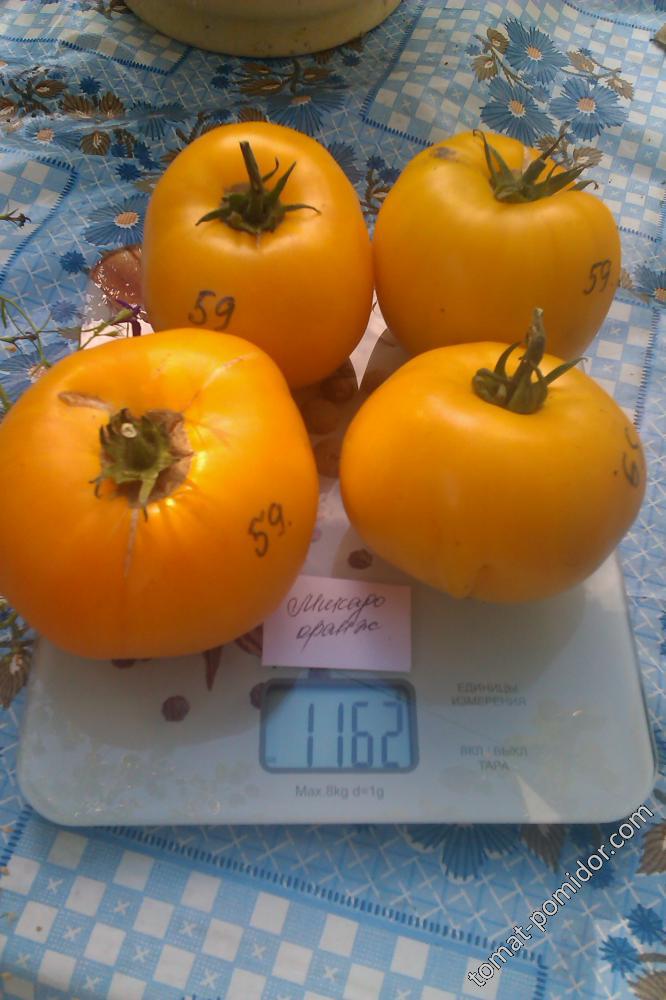
The fruits are orange, round, and ribbed. They have an excellent flavor and are used in salads. They are not suitable for long-term storage, as they are prone to cracking.
Fruits appear in 85-100 days. The yield is not very high—about 6 kg per square meter. Therefore, this variety is not used for commercial purposes.
Advantages and disadvantages of the Mikado orange tomato variety
| Advantages | Flaws |
|
|
Growing the Mikado Orange tomato variety
The variety produces many ovaries, but it's recommended to leave about three. Otherwise, care is standard.
Real reviews from gardeners about the Mikado Orange tomato variety
Marinessa shared the seeds of this variety with me (on the old forum). The unusual name "Mikada" was coined by the company "Aelita," as far as I remember.
Grew in a greenhouse, leading to two stems. Potato-like foliage. Height is about two meters (after that, growth and fruiting cease, at least that's what happened to me). Ripening time is closer to early, constantly filling out the fruit, ripening, and growing new clusters. The flavor is mild, with a noticeable sweetness, but not bland. The fruits are fleshy, juicy, and aromatic, weighing 250-350 g, although larger ones are available, of course. The clusters are "sprawling"—not dense, loose, with many flowers. In my opinion, it's best to thin them out, leaving the first 3-4 ovaries.
Mikada Orange and Mikado Pink
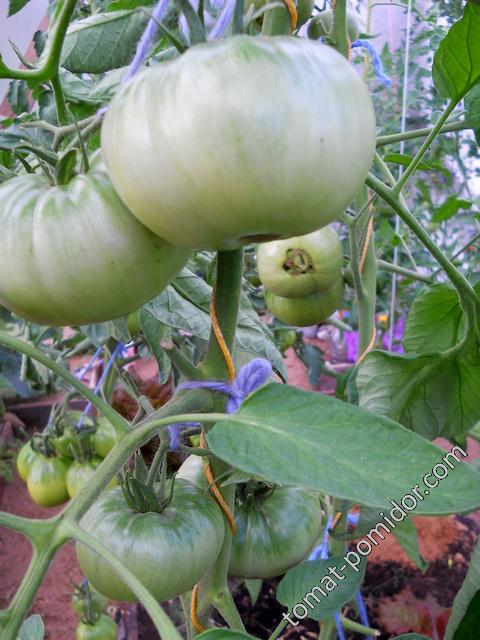
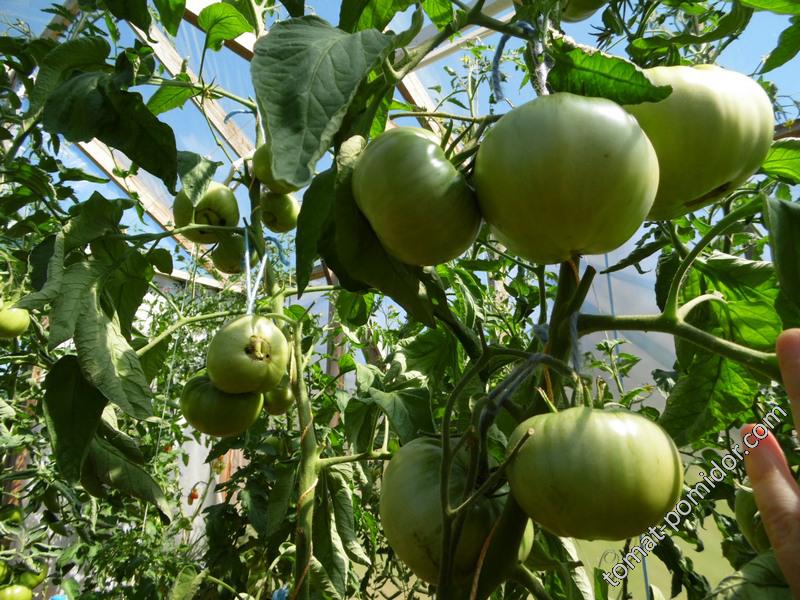
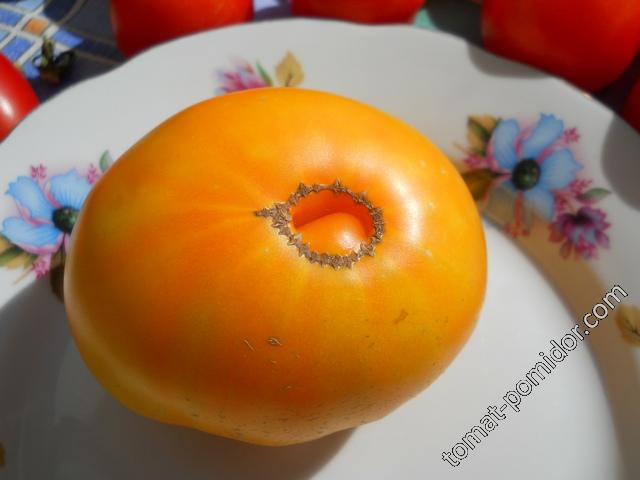
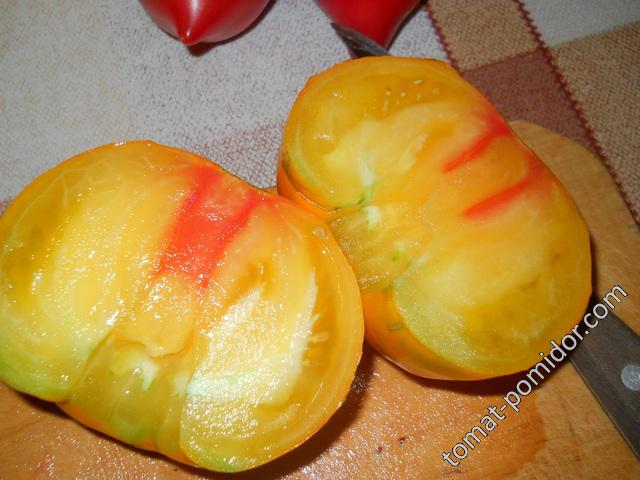
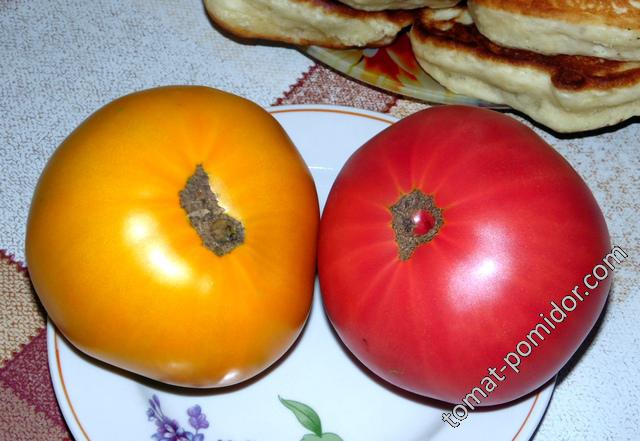
I couldn't pass by Mikad...
I really like this variety, the orange one was especially delicious, one of the most delicious this season.
Ninulya sent me the seeds. :thx:The Black Mikado is there too.
For the 2015 season, I bought “Mikado White” from Dukhov.

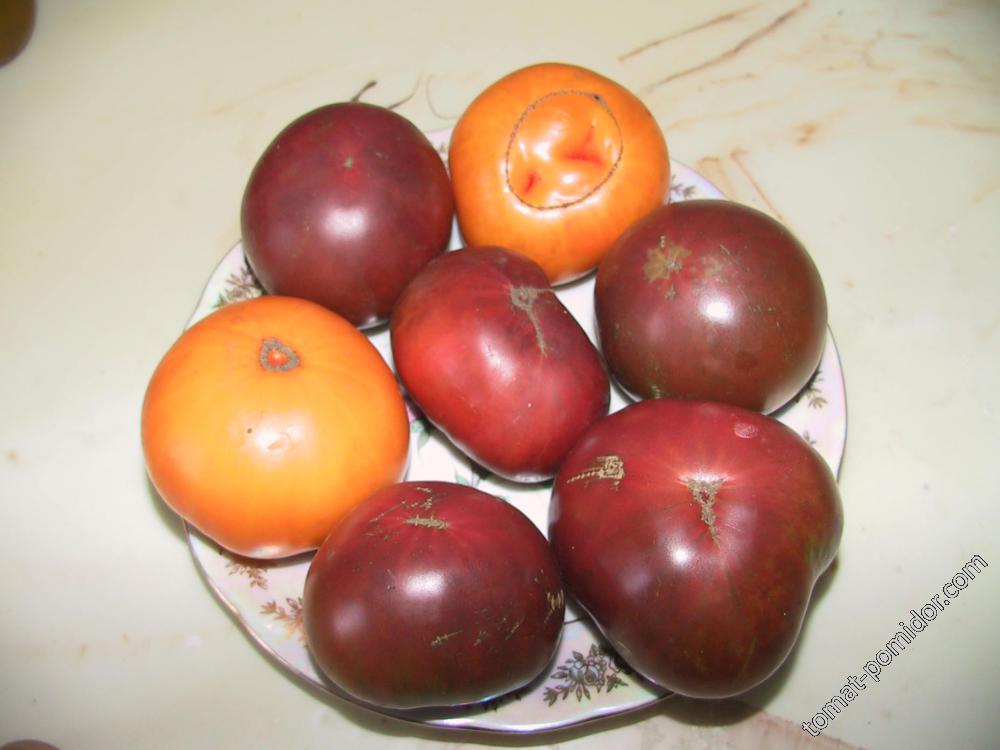
I have this variety from Gali-64 :thx:
fell in love with him. :yep:
beautiful, juicy, fleshy, fruitful. :yep: :niam:
but there was no tie. :dnt: and the sheet is ordinary. about 1.2 m.
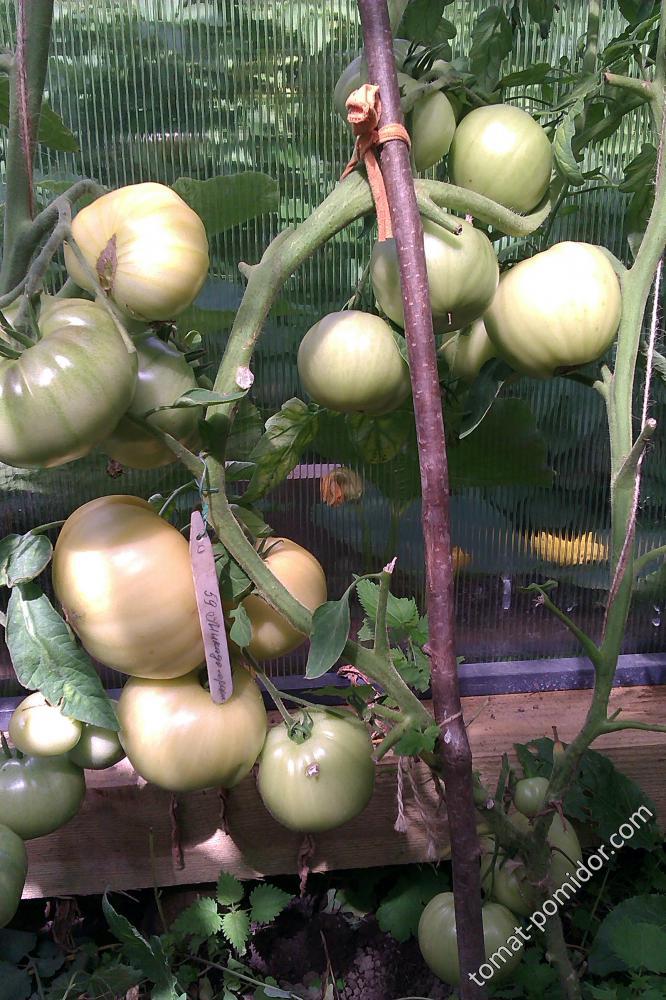
It's no wonder the Mikado tomato series is so beloved by gardeners. This variety produces large, tasty fruits with excellent marketability. Finally, I'd like to point out that seeds should only be purchased from specialized stores and garden centers (such as those from SeDeK). Otherwise, you risk receiving the wrong variety or low-quality seeds, which will ruin your overall impression of Mikado.