Many amateur varieties are as good as those developed by major breeding companies. The Kosmonavt Volkov tomato is one of them. It's popular for its high yield and excellent flavor. It's suitable for greenhouse cultivation in cooler regions. In the south, it can be planted in open beds.
Content
- 1 Table with characteristics of the tomato variety Cosmonaut Volkov
- 2 The history of the tomato variety Cosmonaut Volkov
- 3 A detailed description of the tomato variety Cosmonaut Volkov
- 4 Advantages and disadvantages of the tomato variety Cosmonaut Volkov
- 5 Growing the Cosmonaut Volkov tomato variety
- 6 Harvesting, using, and storing the tomato variety Cosmonaut Volkov
- 7 Comparison of the tomato variety Cosmonaut Volkov with other varieties in the table
- 8 Gardeners' reviews of the tomato variety 'Cosmonaut Volkov'
Table with characteristics of the tomato variety Cosmonaut Volkov
| Characteristic | Description |
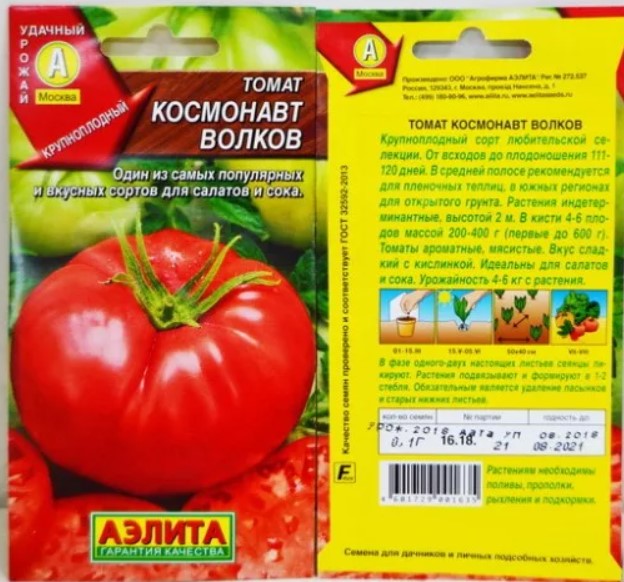
| Description | Mid-season indeterminate variety for open and closed ground. |
| Ripening period | 111-120 (115-125) days. |
| Fruit weight | Up to 600 g. |
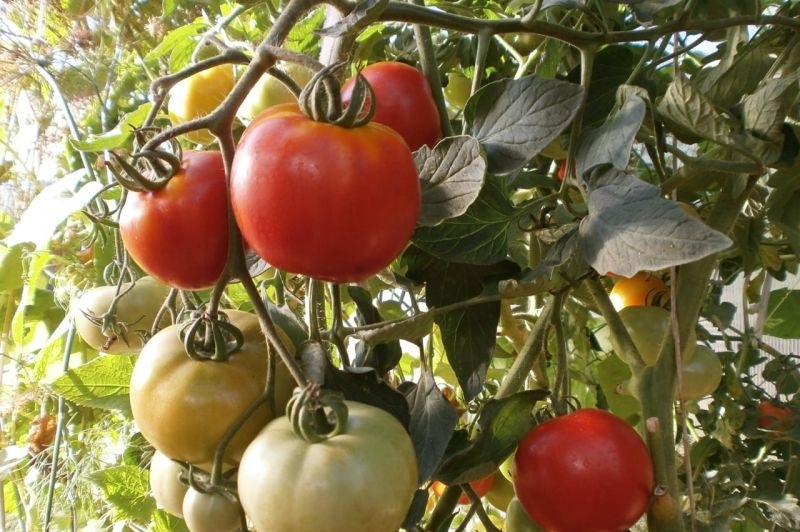
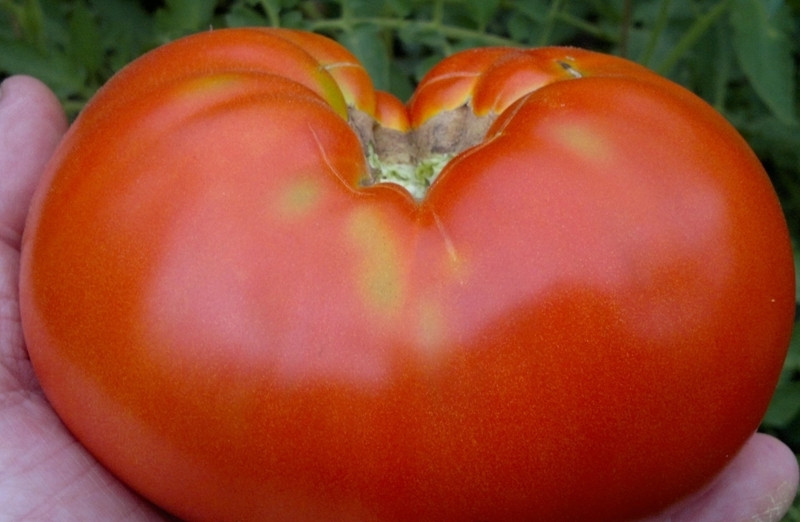
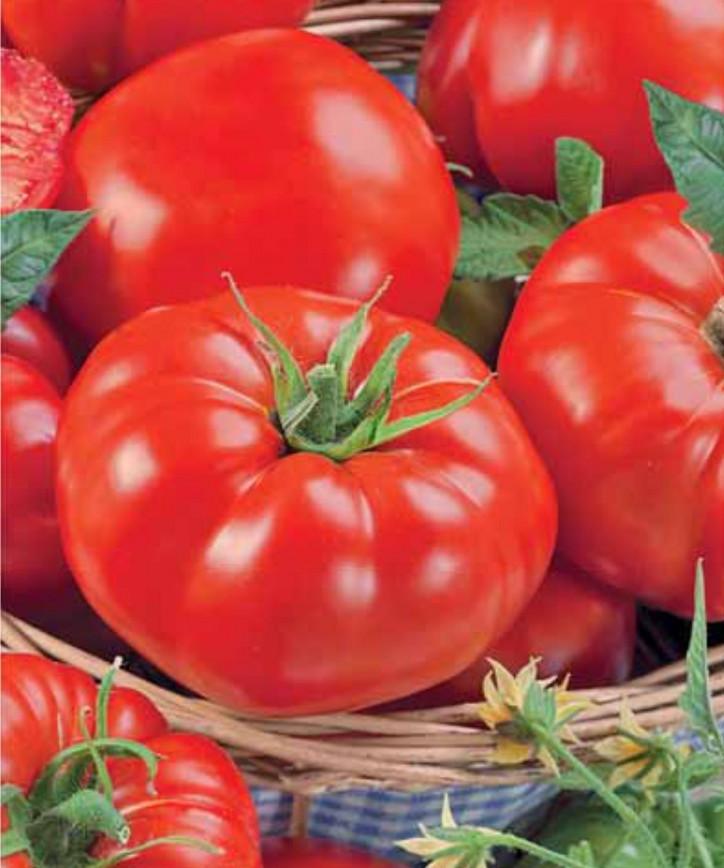
| Description of the fruit | Flat-round, scarlet, with slight to medium ribbing. Sweet taste. |
| Productivity | 15,000 c/ha |
| Usage | Universal. Except for whole-fruit canning due to the large size of the fruit. |
| Preferred growing regions | It was bred for growing in greenhouses, but in southern regions it can be planted in open ground. |
| Disease resistance | High. |
| Agricultural technology | Shaping and garter. |
| Growing regions | Any. |
| Amateur selection. Not included. | |
| Originator | I. M. Maslov. |
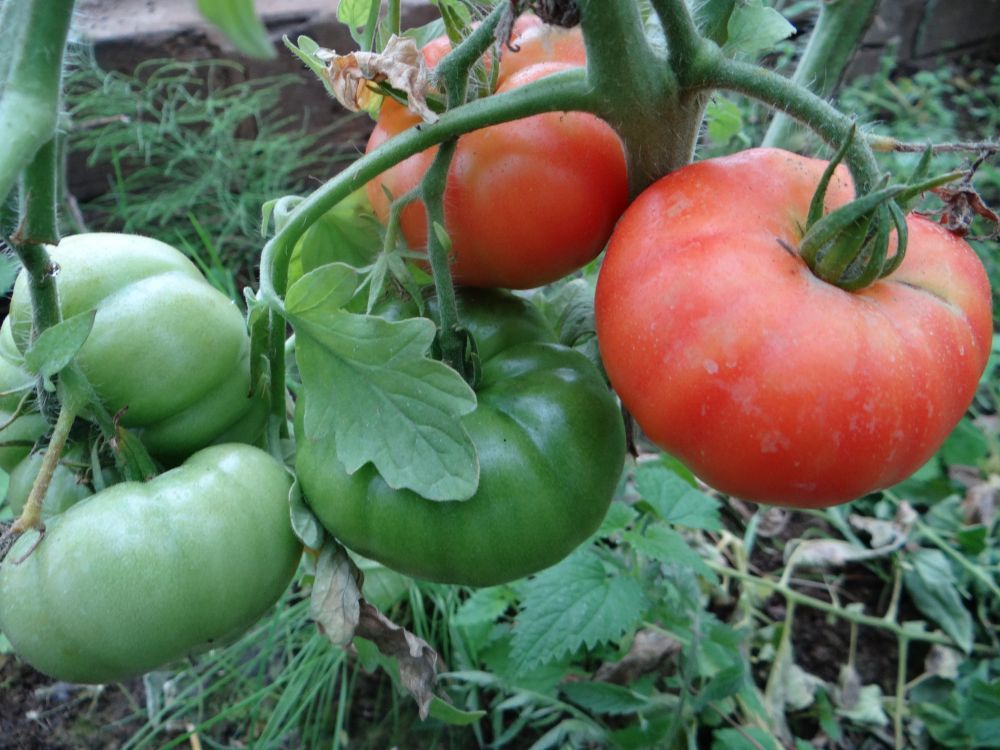
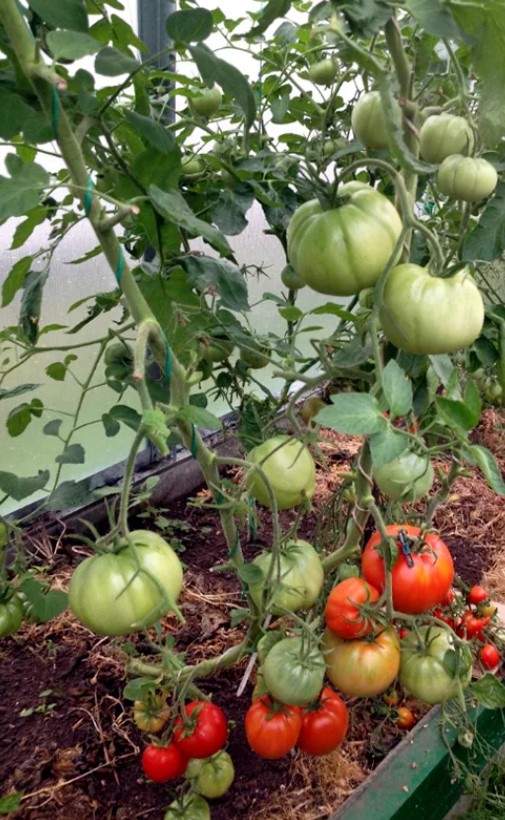
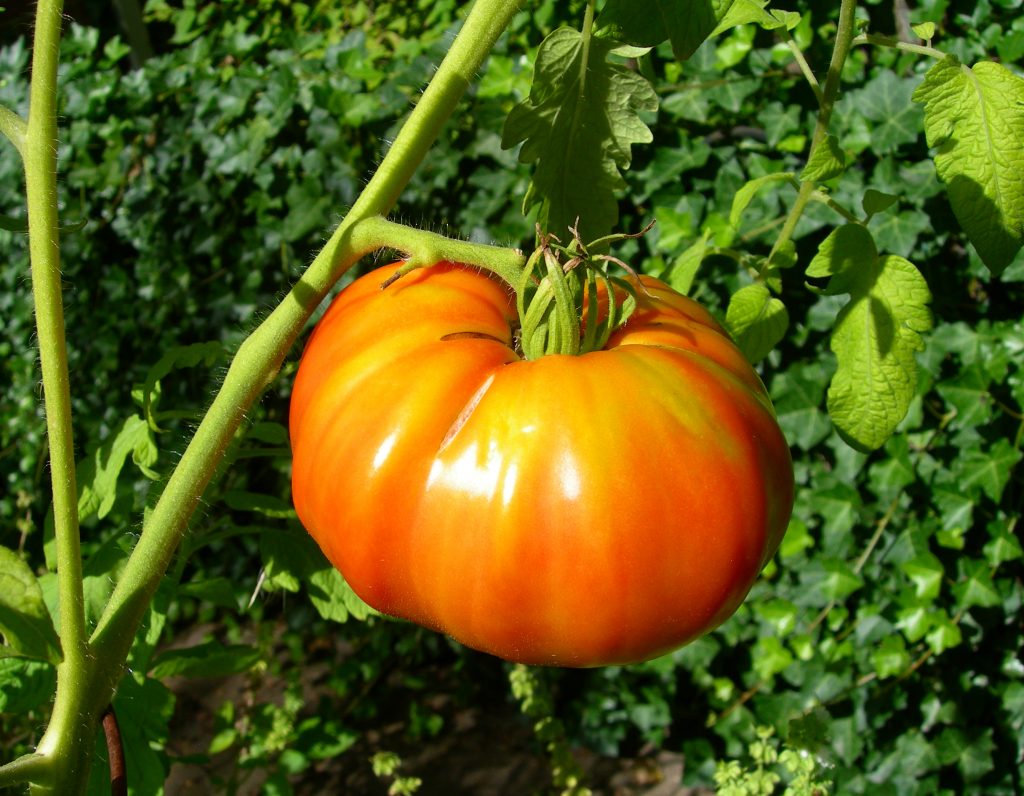
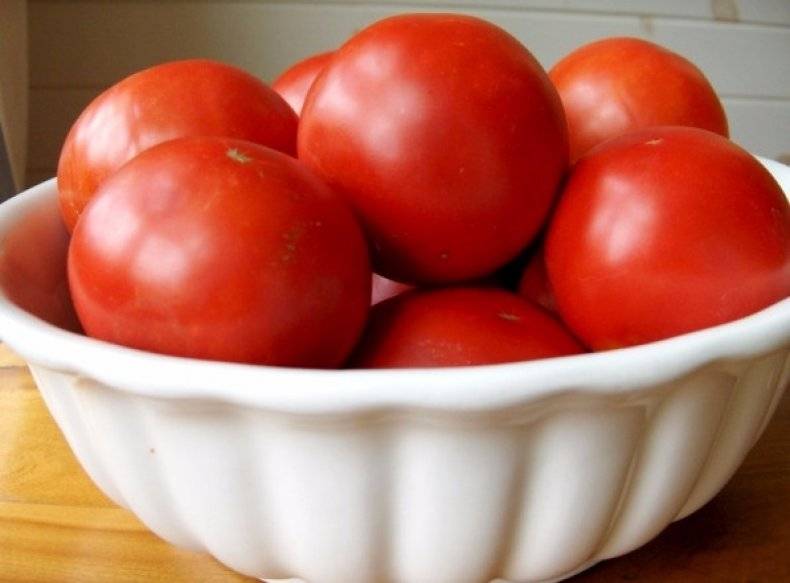
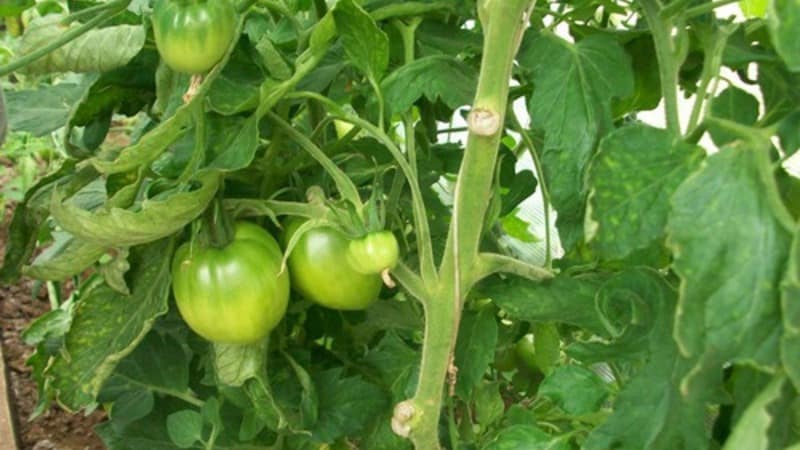
Photo gallery of the tomato variety Cosmonaut Volkov
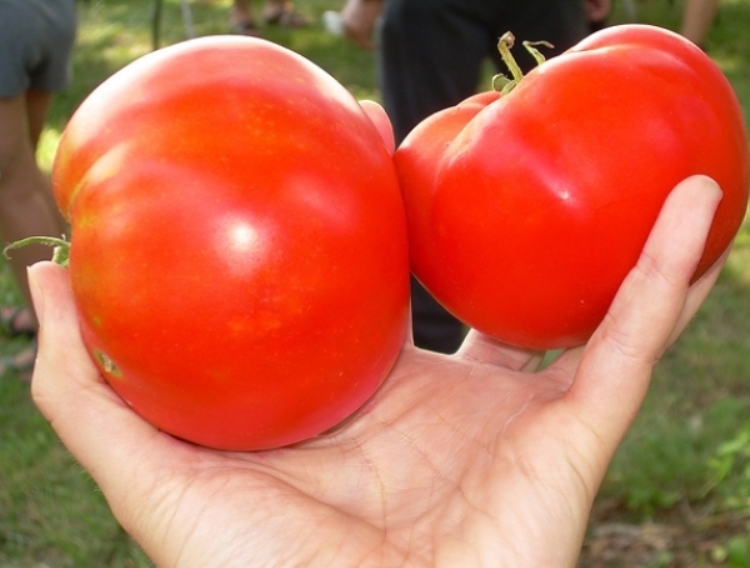
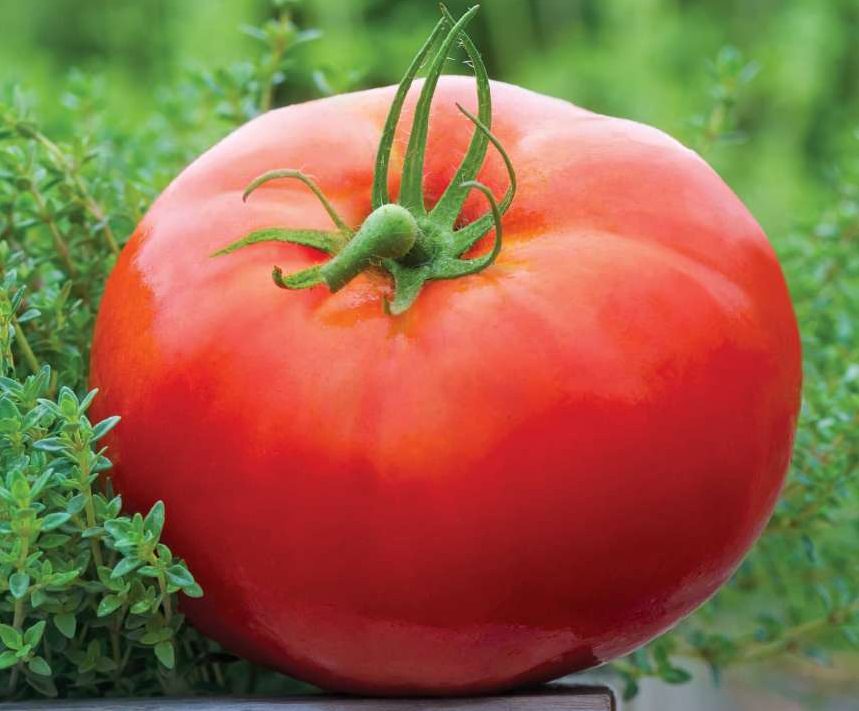
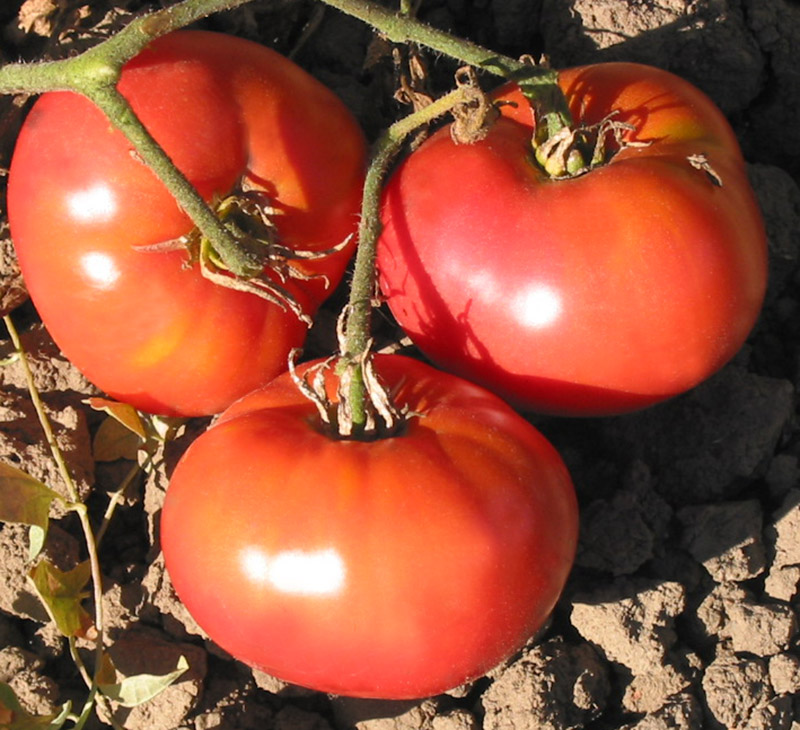
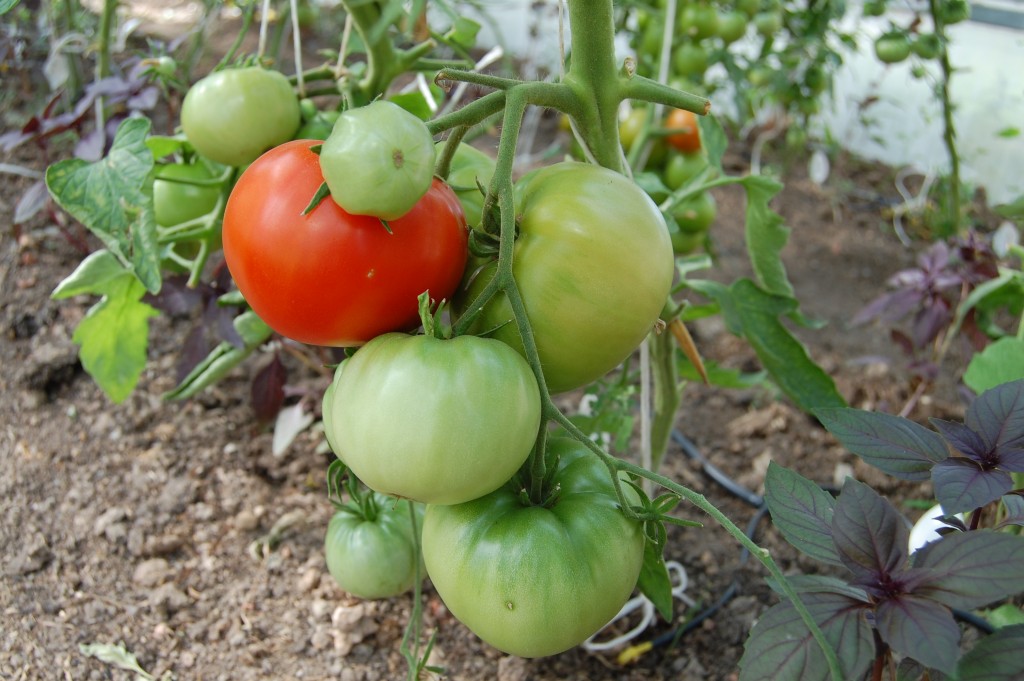
The history of the tomato variety Cosmonaut Volkov
The originator is believed to be the amateur breeder I. M. Maslov, who worked in the field of cosmonautics. He named his creation in honor of a cosmonaut friend who died in 1971 on the Soyuz 11 spacecraft.
The variety quickly gained popularity among gardeners thanks to its pleasant flavor and good yield. However, it has not yet been included in the registry.
A detailed description of the tomato variety Cosmonaut Volkov
NOTE! The characteristics and descriptions would be incomplete without information about the seeds. It is recommended to purchase seeds from reputable suppliers or collectors, as there are many mismatched or inconsistent varieties.
Bush characteristics
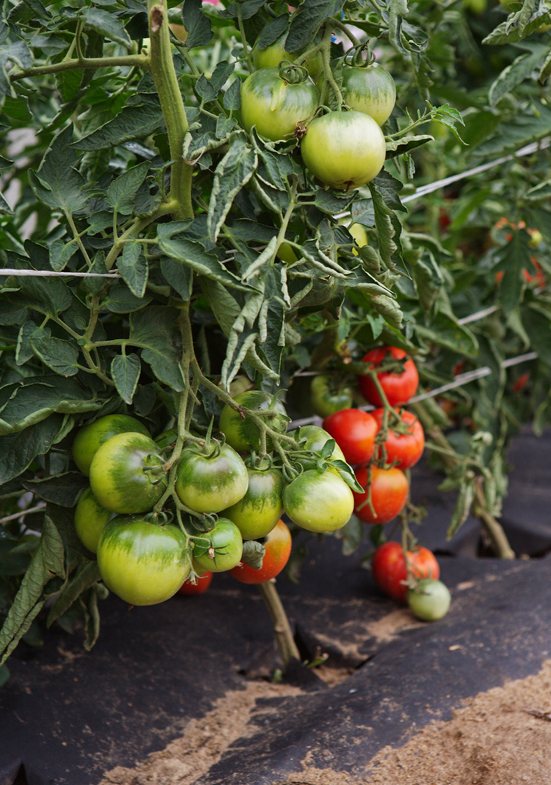
Forms vigorous indeterminate bushes that can reach over 2 m in height. The stems are strong. The first fruit cluster appears above the 8th or 9th leaf. The inflorescences are simple. Six to seven fruit clusters appear on a single stem, each bearing five to six fruits.
Fruit characteristics
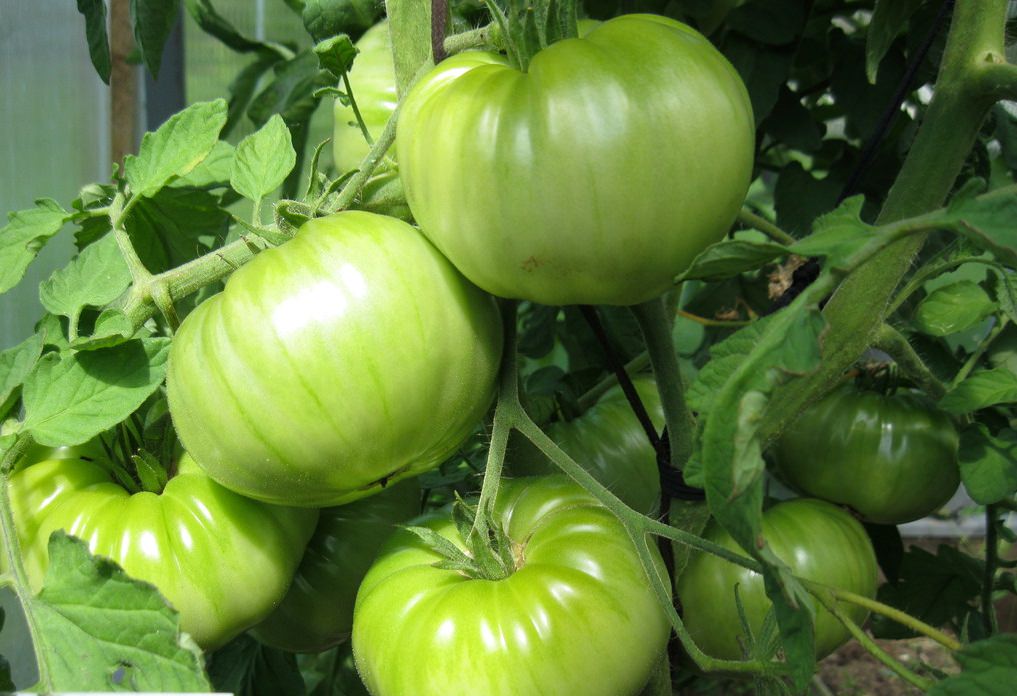
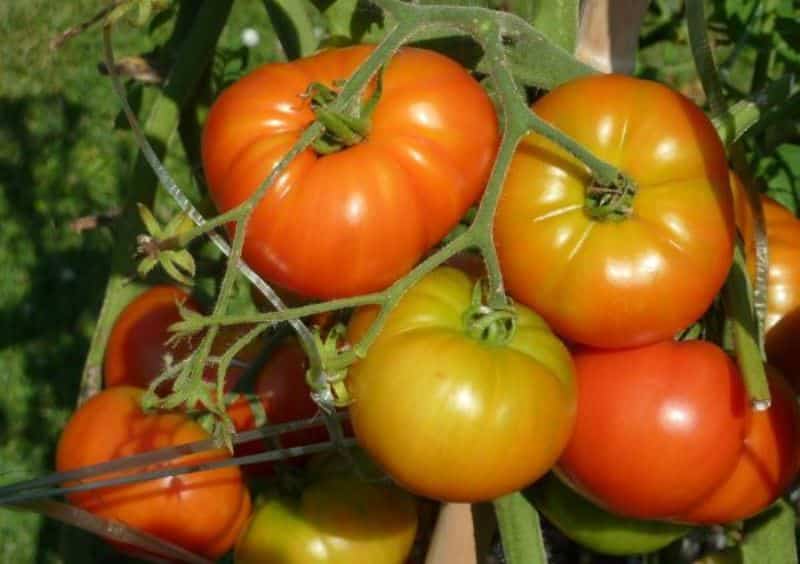
The tomatoes are flat-round in shape with light to medium ribbing. Once ripe, they turn red. The flesh is juicy and fleshy, containing 6-8 seed chambers.
The fruits are large, weighing on average 250-300 g, but can reach up to 600 g.
Ripening time, yield
This variety is considered mid-early. Different producers estimate different ripening times: 111-120 days (Aelita), 115-125 days (Sedek).
The yield is good. One bush yields 5-6 kg. The yield per square meter is 15 kg.
Advantages and disadvantages of the tomato variety Cosmonaut Volkov
The variety has a large number of advantages:
- abundant fruiting;
- excellent taste;
- excellent disease resistance;
- large-fruited.
Among the disadvantages, one can point out the need for shaping and tying. Another relative disadvantage is the impossibility of whole-fruit canning due to the large size of the fruit. However, many other varieties are suitable for this purpose.
Growing the Cosmonaut Volkov tomato variety
They are grown from seedlings. In central Russia, once temperatures stabilize and the risk of night frosts has passed, seedlings are planted in greenhouses or open beds. In colder climates, growing under plastic cover is recommended.
Sowing seeds and growing seedlings
Before sowing, seeds should be disinfected to minimize the risk of blackleg and other infectious diseases. To do this, soak them for half an hour in a light pink solution of potassium permanganate.
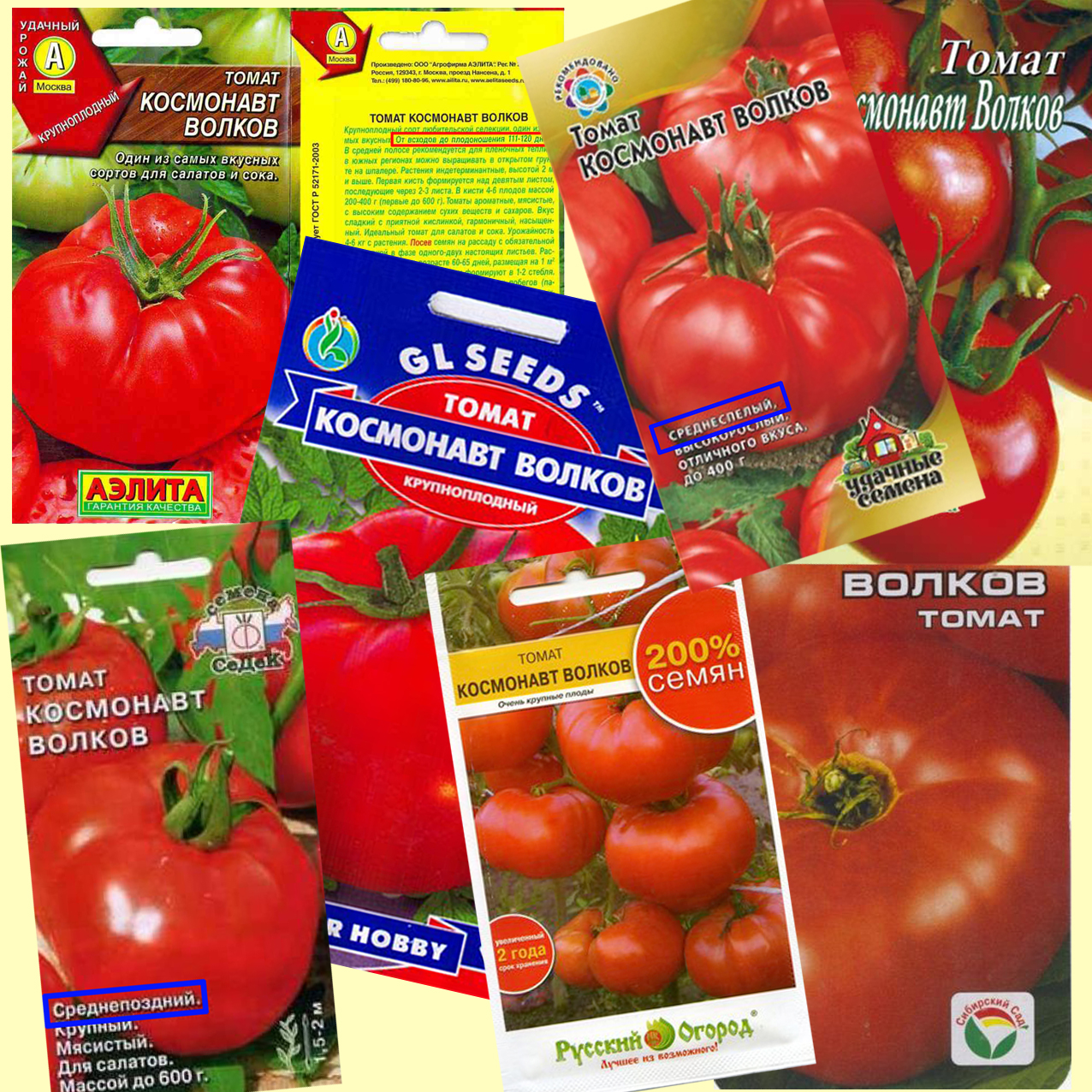
Sowing takes place in late February or early March. Humus and turf mixed in equal quantities are best.
The soil also needs to be disinfected. You can bake it in the oven or spray it with a fungicide solution.
The soil is poured into plastic containers. Drainage holes must be made to remove excess water. The seeds are sown in furrows to a depth of 1-1.5 cm.
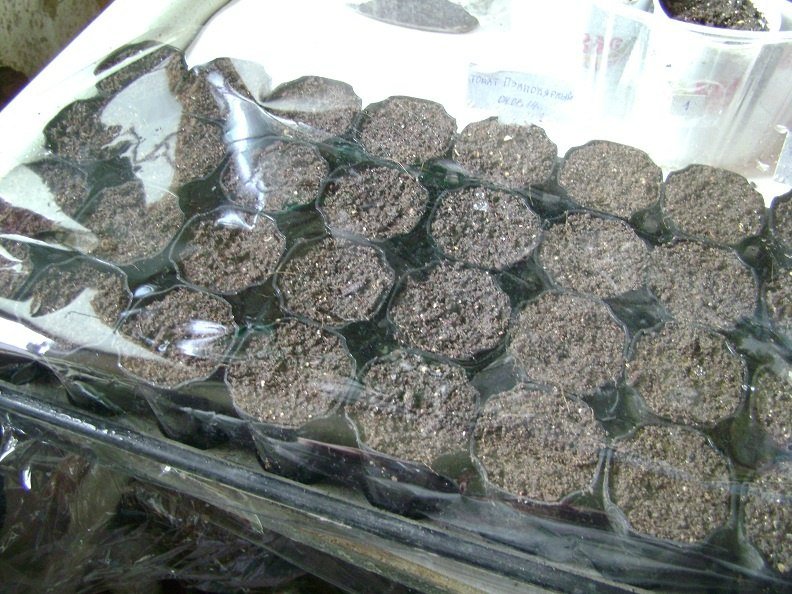
Spray gently with a spray bottle and cover with plastic wrap or glass. To encourage sprouting, place the seedlings at a temperature of 23 to 25°C. In this case, the seedlings will emerge within 5 to 7 days.
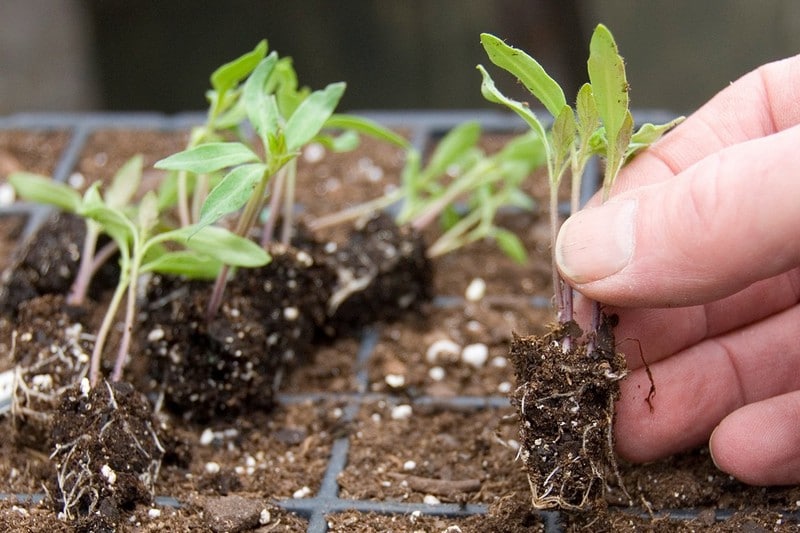
When the seedlings have two true leaves, transplant them into separate containers. Place them in the sunniest spot possible, preferably near a south- or west-facing window. Water periodically with warm, settled water.
The seedlings need to be hardened off 1-1.5 weeks beforehand. To do this, move them outdoors, gradually increasing the time.
Planting in the ground
This is done when the seedlings are 55-60 days old (early or mid-May, when the soil warms up to +13°C). The planting beds should be well fertilized with manure, compost, and mineral mixtures. Digging with these components should be done in the fall. Immediately before planting, add a cup of wood ash to the holes. Plant no more than 3 bushes per square meter.
Care features
Agrotechnical rules for caring for the tomato variety Cosmonaut Volkov:
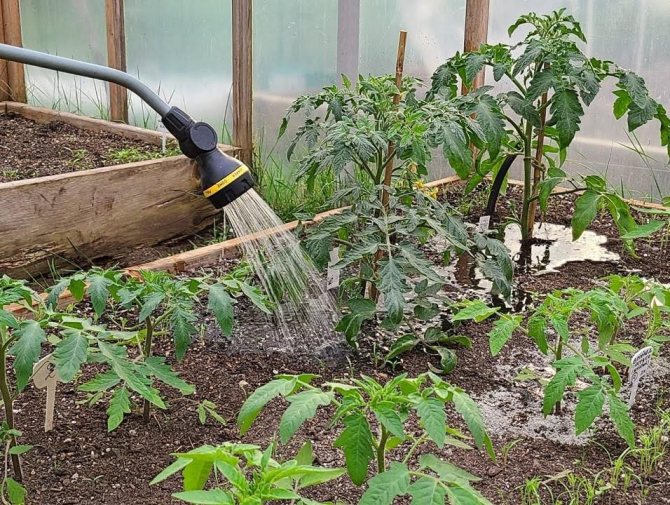
- Moderate watering. 3-4 times a week. Approximately 6-9 liters of water are required per square meter.
Fertilize once every 12-14 days. Use organic matter, phosphorus-potassium fertilizers, and complex mineral mixtures.
Shaping. This is done in 2-3 stems. Excess shoots are removed. - Loosening. This is done once every 1.5 weeks. Weeds are removed at the same time.
- Mulching. Peat, compost, hay, or straw can be used for this. The mulch layer should be 10-12 cm thick. This will protect the roots from cold and overheating and will retain moisture and nutrients in the soil longer.
Nitrogen fertilizers should be used before flowering. During tomato set and fruiting, switch to phosphorus-potassium mixtures.
Resistance of the tomato variety Cosmonaut Volkov to diseases and pests
The variety exhibits good resistance to bacterial and fungal infections. However, preventative measures should not be neglected. To reduce the risk of disease, twice-monthly treatment with Fitosporin is recommended. To prevent fungal growth, the use of whey is also recommended.
If signs of pests are detected, treat the bushes with insecticides. Alternatively, you can use an infusion of garlic, wormwood, or tobacco.
Harvesting, using, and storing the tomato variety Cosmonaut Volkov
Tomatoes are versatile. They're perfect for salads and fresh appetizers. They're also processed into tomato products. The fruits have firm flesh, making them suitable for canning when sliced.
Comparison of the tomato variety Cosmonaut Volkov with other varieties in the table
Please note! How can you easily convert centners/ha to kg/sq.m? Simply divide by 100! For example, the Abakansky Pink tomato yields 400 centners of marketable fruit per hectare. This equals 4 kg per square meter. It's that simple! Also, keep in mind that typically no more than 3-4 plants are planted per square meter. This way, you can calculate the yield per bush. In the case of the Abakansky Pink, it's about 1 kg.
| Variety | Ripening period (number of days from full germination to ripening)
Yield of commercial fruits |
Brief description | Fetus |
| Cosmonaut Volkov | 110 days
1500-2000 c/ha |
A mid-early indeterminate variety for greenhouses. Suitable for salads, appetizers, and processing into tomato products. | Flat-round, slightly ribbed, red, 300-500 g (up to 700 g). Excellent taste. |
| Kostroma | 105-110 days 1350-1500 c/ha |
A mid-season determinate variety for greenhouses. Requires staking and training. Suitable for salads, whole-fruit canning, and processing into tomato products. | Flat-round, slightly ribbed, glossy, red or orange, 80-150 g. Good taste, sweet and sour. |
| Silver spruce | 90-100 days
1500-1800 c/ha |
A mid-early determinate variety for open ground and greenhouses. Requires staking and training into 2-3 stems. Suitable for salads and canning. | Flat-round, slightly ribbed, with a little pubescence, red, 300 g. The taste is good and excellent. |
| Mikado Sibiriko | 90-95 days
800 c/ha |
An early indeterminate variety from Siberian breeders. For salads, juice, and pasta. | Heart-shaped, ribbed, pinkish, 400-600 g. Excellent taste. |
| Abakan pink | 120 days or more
400 c/ha |
A late-ripening determinate variety for open ground and greenhouses. Requires staking and training. Suitable for salads and processing into tomato products. | Flat-round, slightly ribbed, medium density and pink in color, 200-500 g. Good taste. |
| Agatha | 98-113 days 583-676 c/ha |
An early-ripening, determinate, non-standard variety for open ground and greenhouses. Suitable for salads. | Flat-round, smooth, red, 77-99 g.
Taste qualities 3.8-5 points. |
| Agatha Plus | 98-113 days
301-798 c/ha |
An early-to-mid-early determinate variety for open ground. Suitable for salads. | Round, smooth, medium density, red, 128-190 g.
The taste is good and excellent. |
| Alyosha Popovich | 125-130 days 600-640 c/ha |
A mid-season indeterminate variety for open ground and greenhouses. Requires staking and training. Suitable for salads. Easy to transport. Resistant to adverse growing conditions. | Round, slightly ribbed, medium density, red, 150-200 g. Good taste. |
| Big Momma | 85-95 days (greenhouse), about 100 days (open ground)
700-900 c/ha |
A mid-early determinate variety for open ground and greenhouses (greenhouses only, according to the register). Suitable for salads, canning, pickling, and juice. | Round, large, slightly ribbed, medium density, red, 200-250 g. Excellent taste. |
| Big Dipper | 100-110 days
1150-1450 c/ha |
An early-ripening indeterminate variety for open ground and greenhouses. Requires staking and shaping. Suitable for salads. | Flat-round, slightly ribbed, medium density, pink, 210-260 g. Good taste. |
| The pride of the feast | 90-100 days
1200-1400 c/ha (in a greenhouse) |
An early-ripening indeterminate variety for open ground and greenhouses. Suitable for salads. | Flat-round, dense, strongly ribbed, red, 320-330 g. Excellent taste. |
| Siberian big guy | 90-100 days 900-1200 c/ha |
An early-ripening indeterminate variety for open ground and greenhouses. Suitable for salads, processing into tomato products, and preparing first and second courses. | Flat-round, slightly ribbed, red, 500 g. Good to excellent taste. |
| Siberian giant | 115-120 days
The commercial yield of fruits was 9.0-11.0 kg/sq.m. |
A mid-early indeterminate variety for greenhouses. Suitable for salads. | Flat-round, large, medium-ribbed, loose, red, 400-500 g. Excellent taste. |
| Siberian early ripening | 98-108 days
289-543 c/ha (open ground), 20-43% of the total yield ripens in 15 days of fruiting, 630-950 c/ha (greenhouse and under film), in the first month of fruiting 240-580 c/ha. |
An early-ripening, determinate, low-growing variety for open ground and greenhouses. Suitable for salads. | Round and flat-round, slightly ribbed, medium-sized and large, red, 62-114 g. The taste is satisfactory. |
| Siberian kilogram | 116-120 days
600-1000 c/ha |
A mid-season indeterminate variety for greenhouses and open ground. Suitable for salads and processing into tomato products. | Round, slightly ribbed, red, 600-1500 g. Good to excellent taste. |
Gardeners' reviews of the tomato variety 'Cosmonaut Volkov'
Gardeners note the variety's excellent resistance to infections, excellent yield and taste, but among its disadvantages, they point out the need for tying and shaping, which takes time.
Greetings to everyone visiting my page. Today I'll be talking about the old, time-tested tomato, "Cosmonaut Volkov."
The name speaks for itself. This variety was developed in Russia and added to the register in 2001. We've been planting this tomato for 10 years. It's resistant to fungal diseases and tolerates hot weather well.Although the plant is tall and recommended for greenhouses, I grow it outdoors, where it performs well. I don't train the bush, only removing the lower leaves that touch the ground and the lower shoots. Many may wonder why I don't train the bush, but I'll tell you right away: in hot summers, you can't bare the bush; you could end up without tomatoes—I've proven this repeatedly.
At the end of August, I pinch the top (the growing point). I fertilized them three times over the summer, watering them once a week. I'm pleased with the yield and size of the tomatoes; some were 600-700 grams. The taste is sweet and tart, very pleasant. I should note that frequent watering will reduce the sugar content.
This variety is late-ripening rather than mid-season, as the manufacturer claims. I'm sowing tomato seedlings from seeds collected from a plant. Unfortunately, I don't have a photo from my dacha; I had to buy seeds at the store to show you. This is a good, proven tomato variety that's gotten lost in the sea of new varieties on the market. It makes delicious juice and lecho, and it's also great in salads.
Year of manufacture/purchase: 2020
The Cosmonaut Volkov tomato is an excellent heavyweight, unmatched. This easy-to-grow variety always pleases me with a bountiful yield. It's virtually immune to late blight. If the season is rainy, I spray it with disease control, but if the weather is dry and sunny, I try to grow a clean tomato.
The plant is medium-sized but requires support because it produces large, abundant fruits. This is a salad tomato variety. The fruits are large, smooth, crack-free, and very tasty without being sour. They have an excellent marketable appearance.
The seedlings of these plants can be disconcerting. They appear weak and wilted. But this is only until they are transplanted into the ground; afterward, they take root and begin to grow vigorously. This tomato variety is easy to grow and is perfect for beginning gardeners.
Tanya, I grew Kosmonavt Volkov tomatoes this year. The tomatoes are very large (about three hundred grams) and delicious. But I only got about fifteen from a single plant. I grew them in a greenhouse. Maybe I did something wrong… I want to try again next year.
You got it right. Cosmonaut Volkov has large fruits, but there aren't many tomatoes on his bush.
That's why I don't grow it. I see it growing in my friend's mother's greenhouse. She's been cherishing it for a long time, back when KV and Novikov's Giant were large-fruited and disease-resistant.
Olesya,
Of the varieties mentioned, I grew two of them about 10 years ago, and for several years in a row. These are Kosmonavt Volkov and Anna German. Both are tall and highly productive.
Anna German has a very beautiful, slender, Christmas tree-like bush and medium-sized, neat tomatoes. It requires almost no pinching.
On the large-fruited Kosm. Volkov, up to 2 meters tall, I once managed to get a record for myself—a fruit weighing about 800-900 grams.
But it's worth noting that these are old varieties. I don't know what's on sale now. I got the seeds from successful gardeners I know.I can't say anything about diseases. I didn't know what they were back then. We had spacious, dry greenhouses, no cucumbers, melons, or peppers nearby. The plantings weren't densely packed. The book-based technology was followed meticulously, with the use of scales and thermometers during seed preparation and beyond. My experience working in a chemistry lab paid off.
I can add about "Cosmonaut Volkov".
In the "Tomato Leaves Curling" thread, I shared a photo of a tomato plant (the only one in the greenhouse out of 10 varieties) with severely curled leaves. It was "Cosmonaut Volkov."
I only have one of this variety, and I should add that it's not a large-fruited variety, but it produces a lot of fruit. Only this variety has dark spots on the skin. I'm not sure what it is; maybe it's not late blight, as it doesn't affect the taste (there are no off-flavors). But other varieties are tastier...
In general, I won’t be growing the Cosmonaut for now.