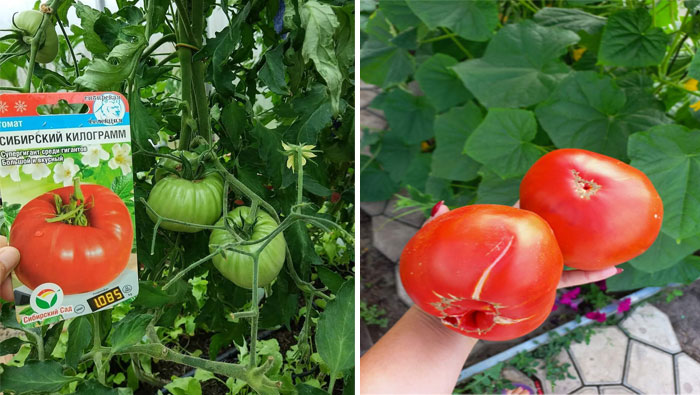
The Siberian Kilogram is rightfully considered the leader among giant Siberian-bred tomatoes. It is renowned not only for its large fruits, often weighing over 1 kg, but also for its abundant harvest.
Content
- 1 Table of characteristics of the Siberian Kilogram tomato variety
- 2 Photo gallery of the Siberian Kilogram tomato variety:
- 3 The origin of the Siberian Kilogram tomato variety
- 4 A detailed description of the Siberian Kilogram tomato variety
- 5 Advantages and disadvantages of the Siberian Kilogram tomato variety
- 6 Growing the Siberian Kilogram tomato variety
- 7 Resistance of the Siberian Kilogram tomato variety to diseases and pests
- 8 Harvesting, using and storing the Siberian Kilogram tomato variety
- 9 Comparison of the Siberian Kilogram tomato variety with other varieties in the table
- 10 Gardeners' reviews of the Siberian Kilogram tomato variety
Table of characteristics of the Siberian Kilogram tomato variety
| Characteristic | Description |
| Description | A mid-season, indeterminate tomato variety intended for growing in greenhouses or open ground. |
| Ripening period | 116-120 days |
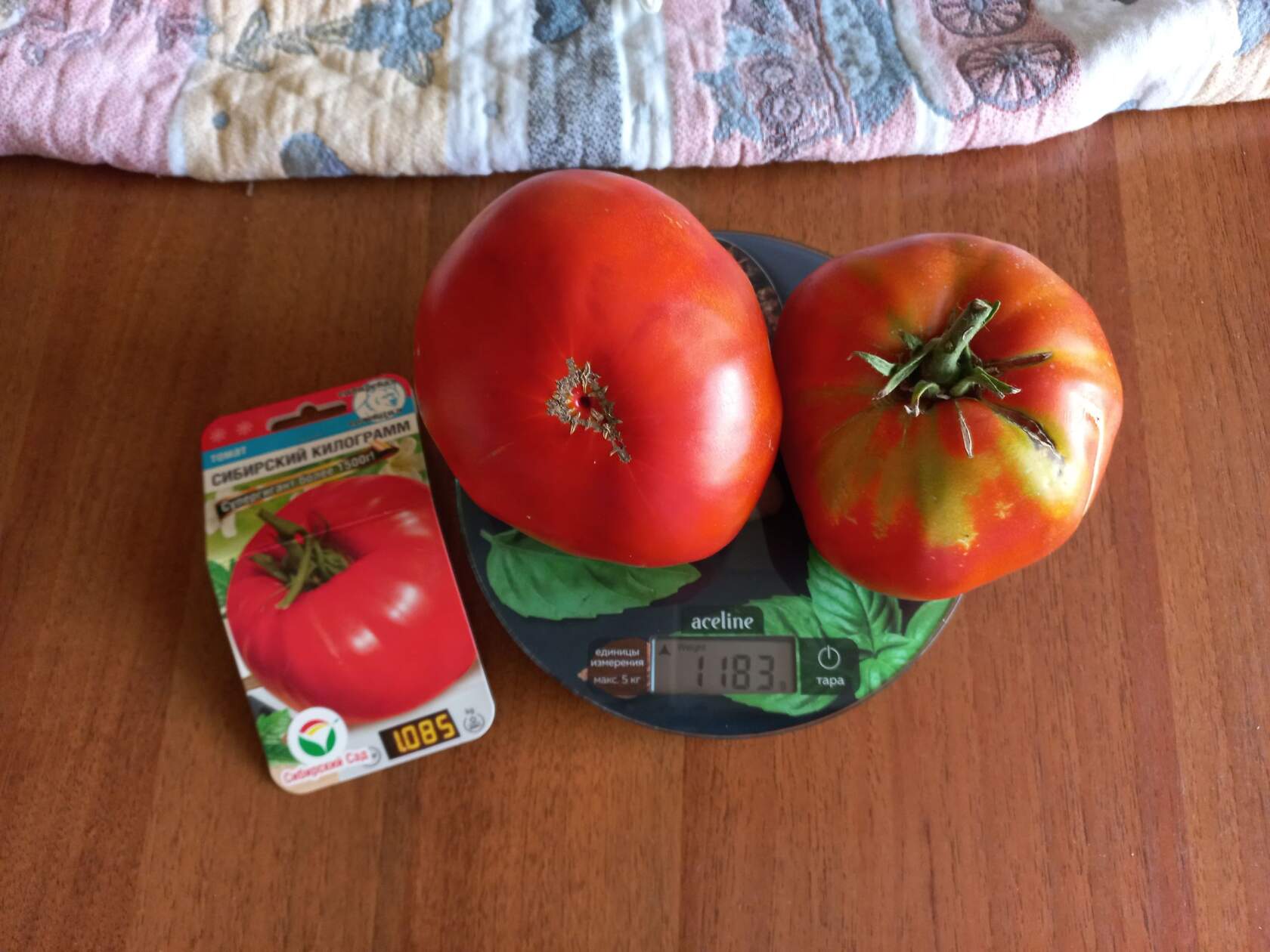
| Fruit weight | 600-1500 g |
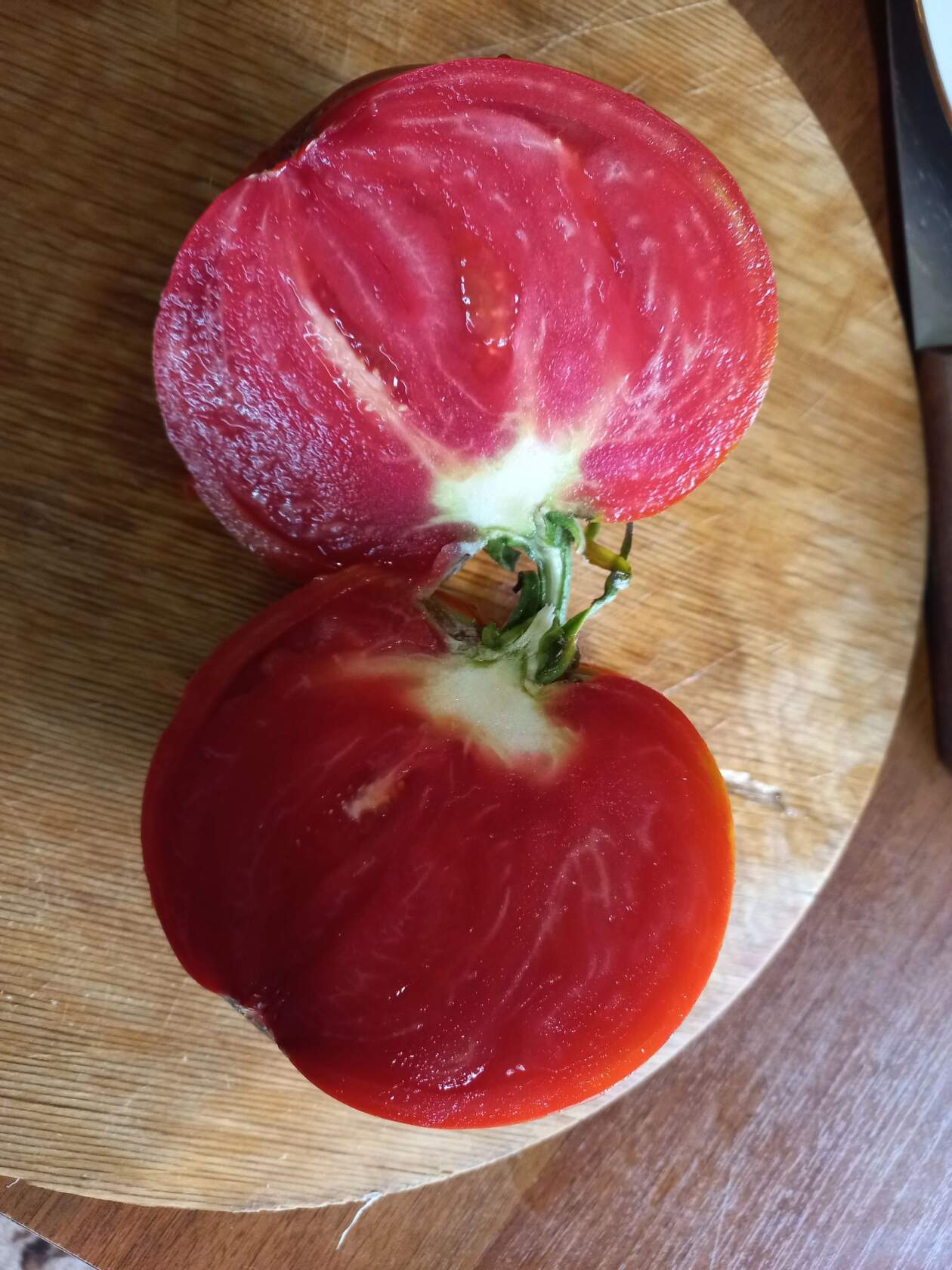
| Description of the fruit | Large, bright red fruits with minimal ribbing. The flesh is juicy and sweet, with very few seeds inside. |
| Productivity | Up to 5 kg per bush |
| Usage | Tomatoes are used to prepare salads, add to various dishes, and also for processing into paste, juice, and sauces. |
| Preferred growing regions | All regions, including Siberia |
| Disease resistance | They have excellent immunity and are resistant to all tomato diseases. |
| Agricultural technology | They need to be tied up and form 1-2 shoots. |
| Not included | |
| Originator | Russia, Siberian Garden agrofirm |
Photo gallery of the Siberian Kilogram tomato variety:



The origin of the Siberian Kilogram tomato variety
The Siberian Giant tomato is a newcomer to the tomato market. It was developed relatively recently by breeders from the Siberian Garden agricultural firm, who have long been cultivating vegetables suitable for growing in harsh Siberian conditions.
A detailed description of the Siberian Kilogram tomato variety
The Siberian Kilogram variety is distinguished by its high yield and massive fruits, which, with proper agricultural technology, can reach a weight of 1.5 kg.
Bushes
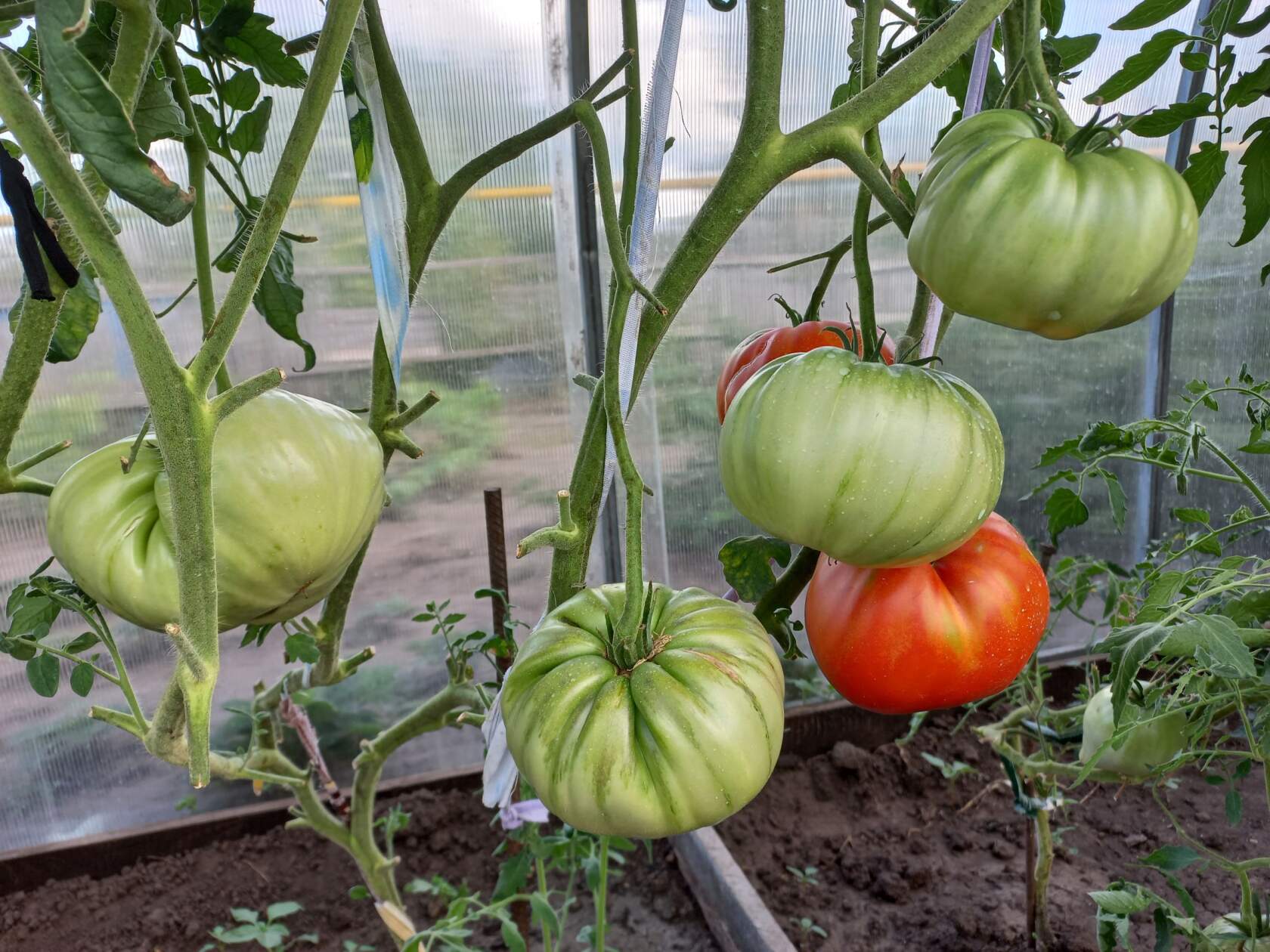
The tomato is considered indeterminate. Its shoots can grow up to 2.2 m long. It has medium foliage. As the fruit ripens, the leaves at the base are removed.
Due to the tomato's tall growth, it is essential to provide it with support and tying.
The bush is trained to produce 1-2 shoots. This will determine the fruit weight—the denser the bush, the lighter the fruit weight.
Fruit
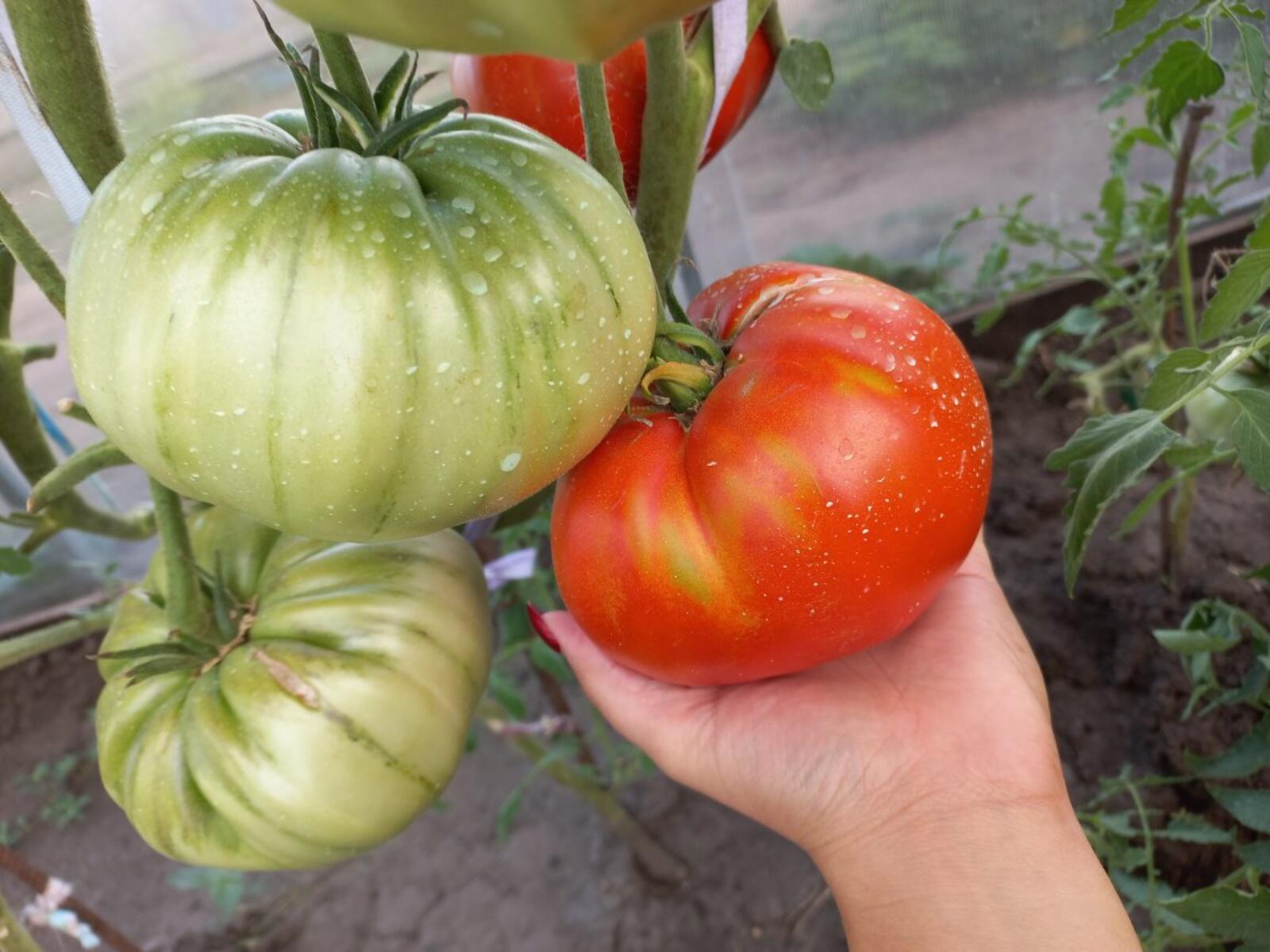
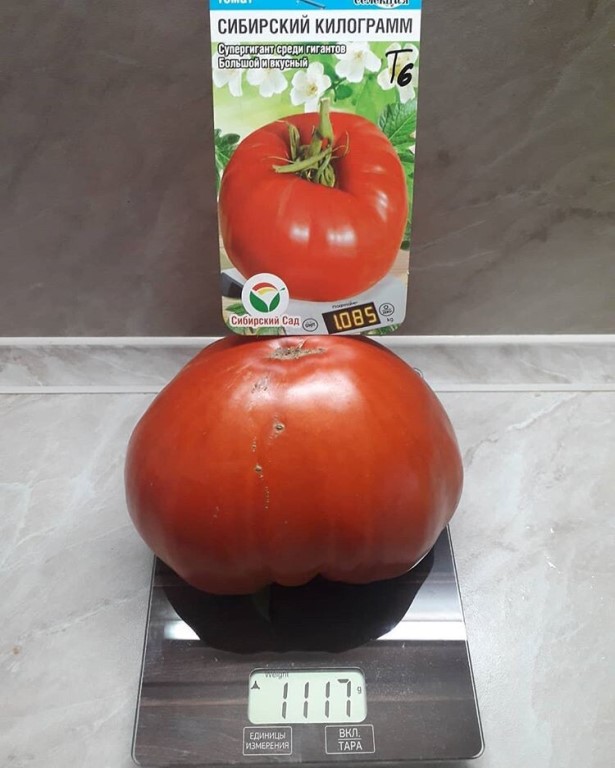
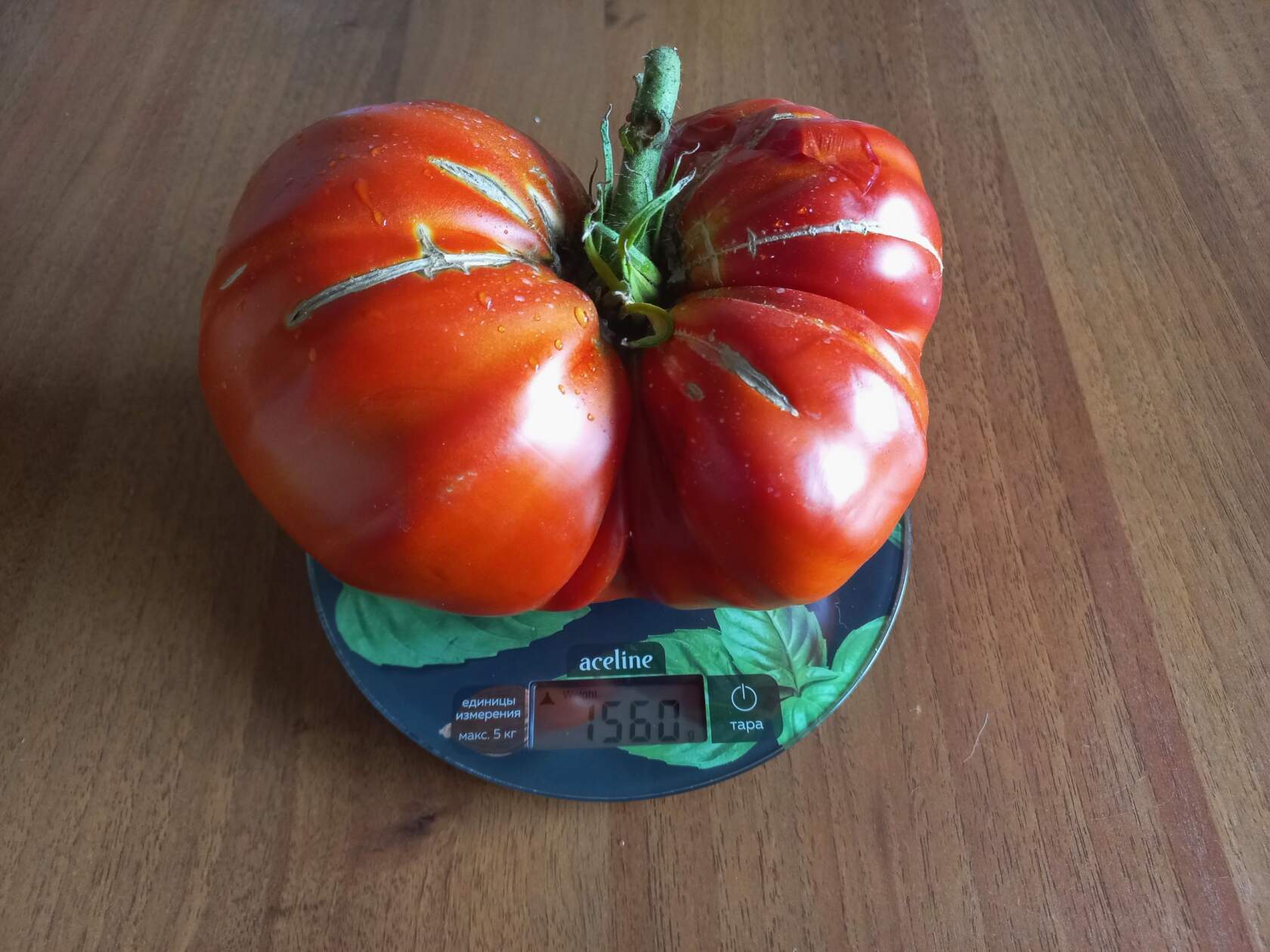
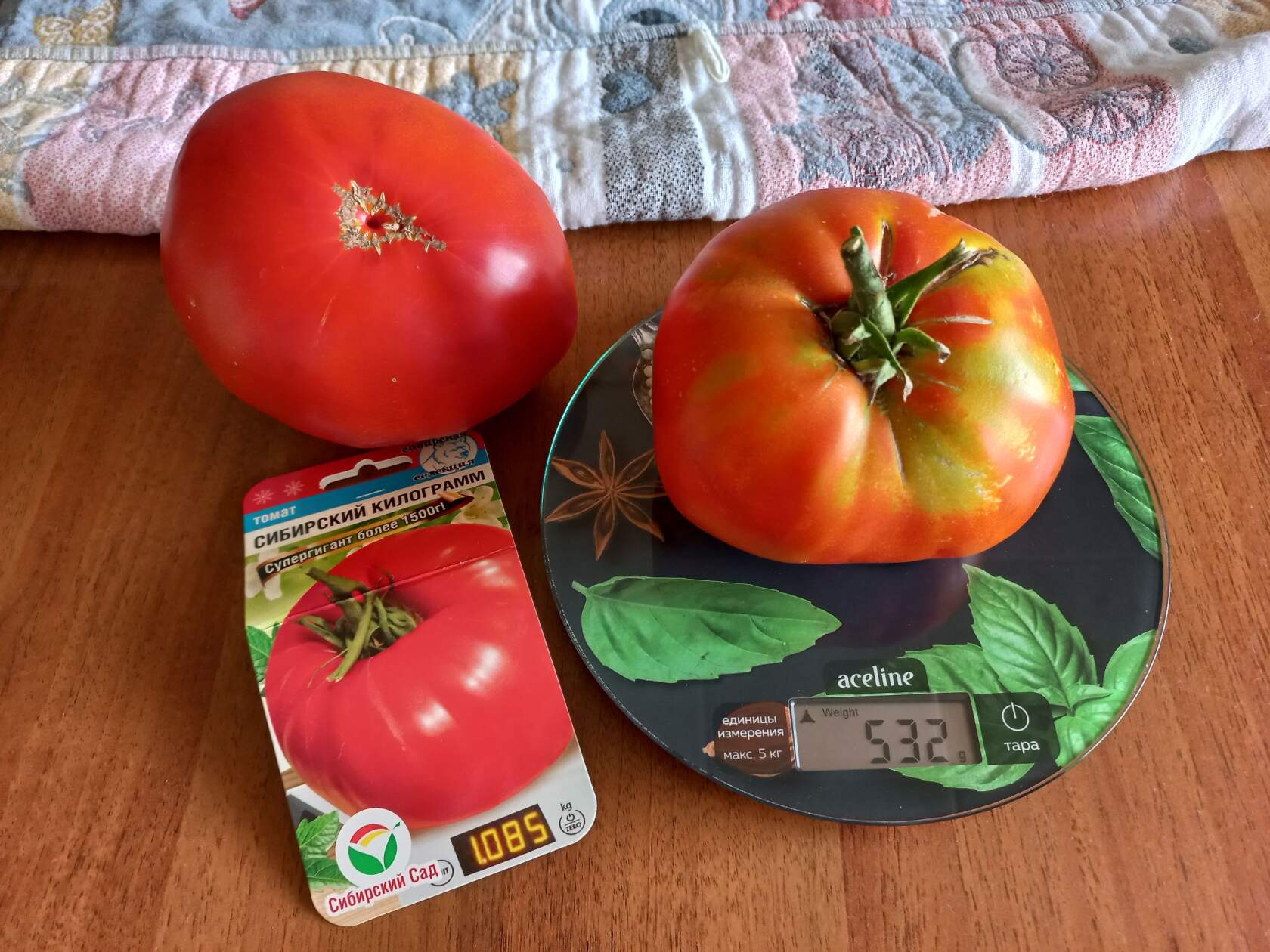
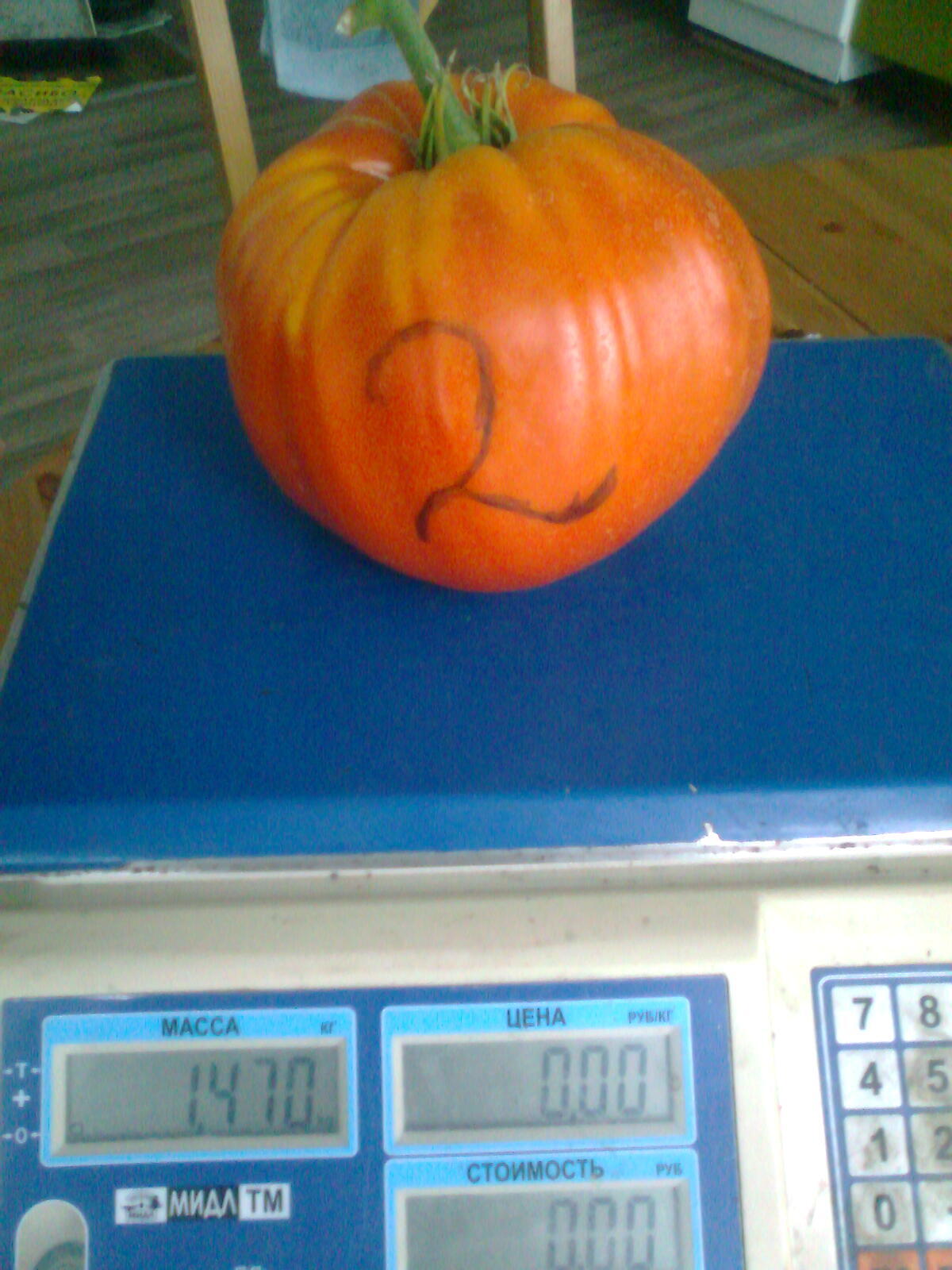
The Siberian Kilogram tomatoes are very large, truly leaders among giant varieties. Their weight ranges from 600 to 800 grams, but if trained into a single shoot and all care instructions are followed, the tomatoes can grow up to 1.5 kg in weight.
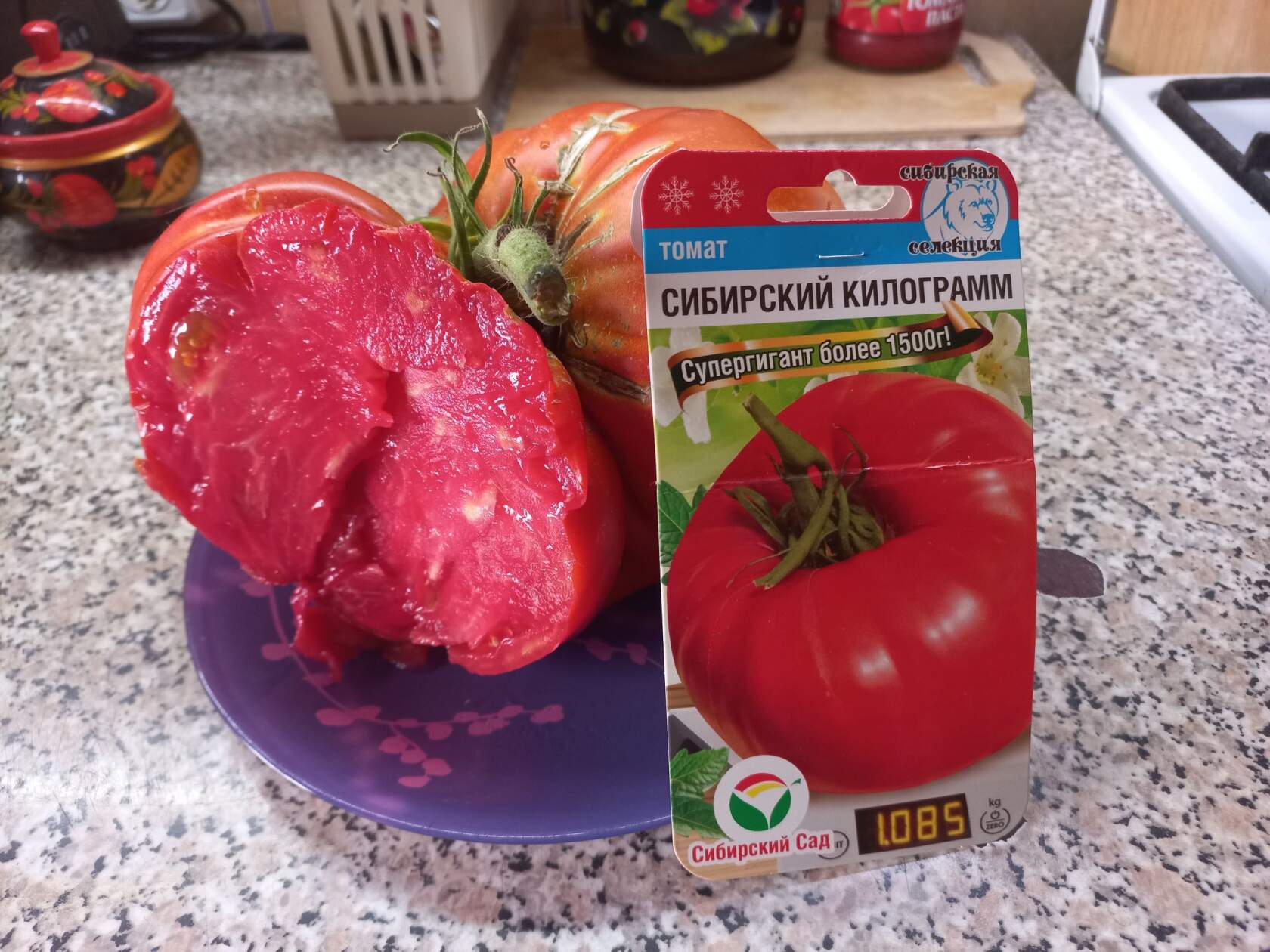
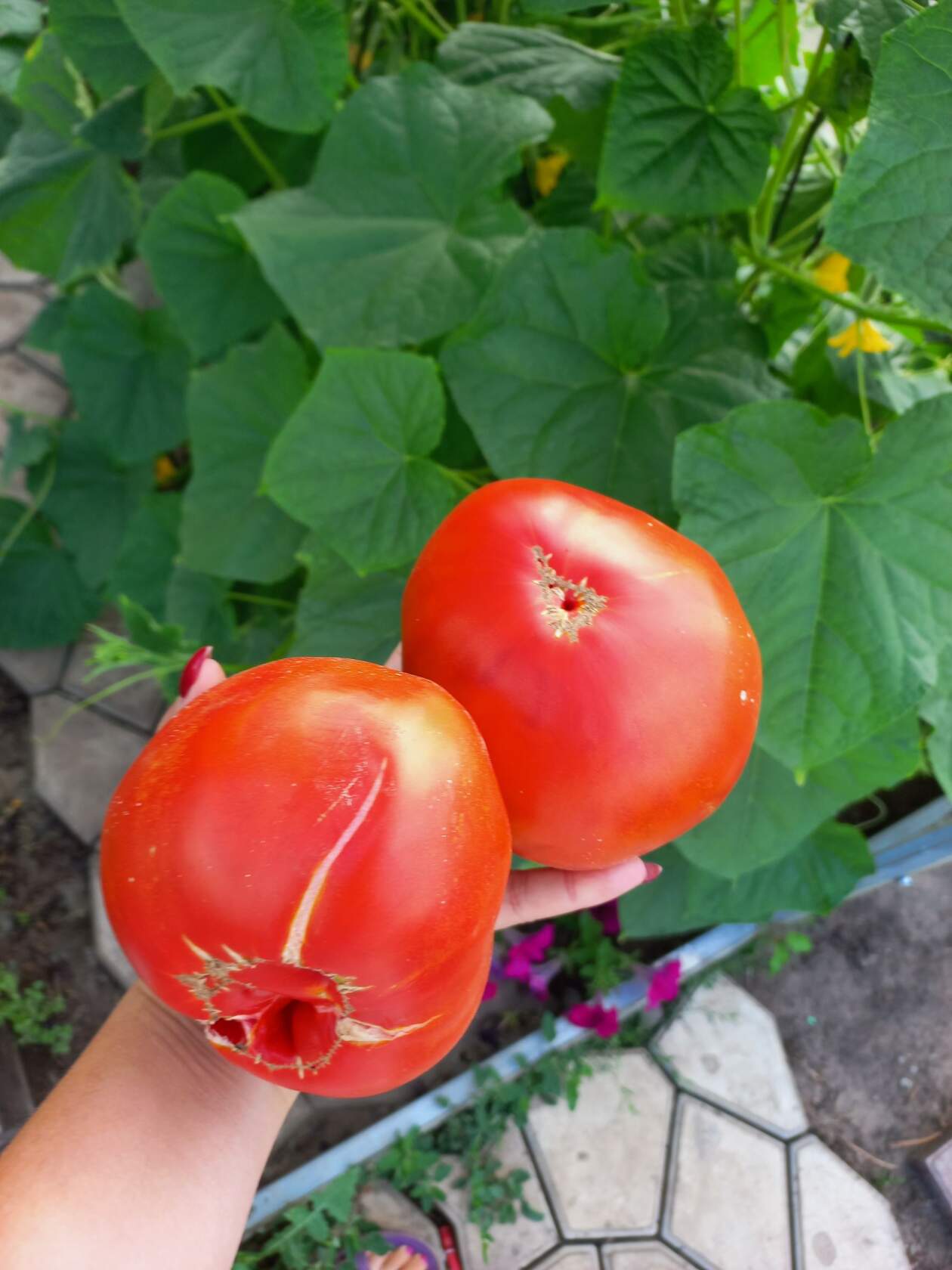
They are round in shape, with subtle ribbing. The color is bright red, the flesh is juicy and sweet, and there are very few seeds inside. Consumers rate them highly.
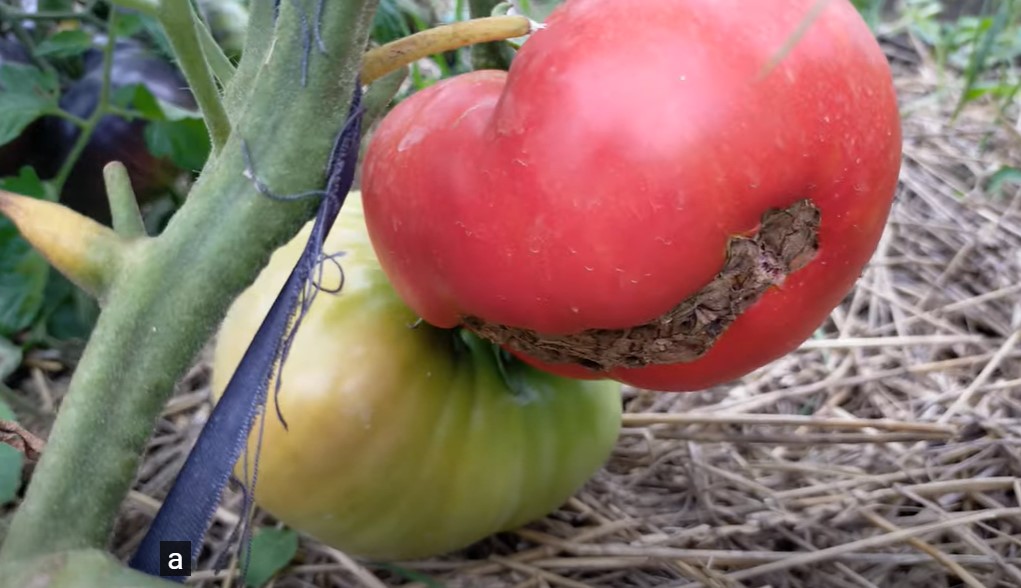
The skin is quite thick, which helps the tomatoes maintain their shape and prevent them from cracking on the vine. Each bunch produces 3-4 tomatoes.
Productivity
The Siberian Kilogram variety produces a higher yield when grown in a greenhouse. On average, a bush can yield about 5 kg of ripe fruit.
Ripening time
The variety is considered mid-season; tomatoes can be harvested 116-120 days after emergence.
Advantages and disadvantages of the Siberian Kilogram tomato variety
The Siberian kilogram has its advantages and disadvantages, which are described in the table below.
| Advantages | Flaws |
|
|
Growing the Siberian Kilogram tomato variety
The Siberian Kilogram tomato is easy to care for and requires little effort during cultivation. Simply water it regularly, shape the bush properly, and feed the plants at different stages of growth.
Sowing seeds and growing seedlings
It's best to purchase varietal tomato seeds from reputable producers to avoid buying low-quality products. You can harvest them yourself, but ripe tomatoes contain only a few seeds, and they are very small in size.
Before planting, it is recommended to treat the planting material, only if the manufacturer has not done this before you.
First, disinfect the seeds by soaking them in a weak solution of potassium permanganate for 20 minutes. Next, they are immersed in a stimulating solution, such as Epin. After this, the seeds are wrapped in a damp cloth and placed in a warm place for 48 hours to germinate.
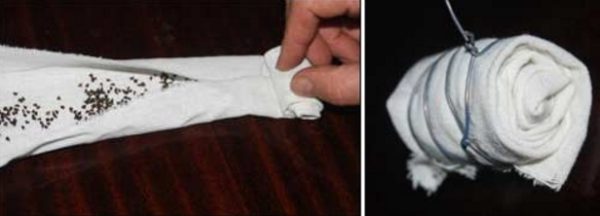
The manufacturer often indicates the possibility of dry planting, but experienced gardeners insist on pre-sprouting to speed up germination.
Tomato and pepper seedling soil, available at any garden supply store, is ideal for the Siberian Kilogram. However, you can mix your own soil using equal parts garden soil, compost, peat, and sand. This soil mix is often diluted with 10% vermiculite to control moisture levels.
Fill the selected container halfway with soil, sprinkle the seeds on top, and cover with a 1-2 cm layer of soil. Next, water gently with a spray bottle, then cover the container with glass or plastic wrap.
The resulting mini-greenhouse is placed in a well-lit room with a temperature of 24°C. Periodically, remove any condensation that has accumulated inside and check the soil for moisture.
As soon as the seedlings stretch and begin to support the cover, it should be removed. To minimize stress on the plants, it's best to do this gradually.
After this, the container is moved to a cooler location with a temperature of 20–22°C. When the seedlings are large enough, transplant them into individual containers. At this stage, it's important to provide the plants with adequate light using a phytolamp.
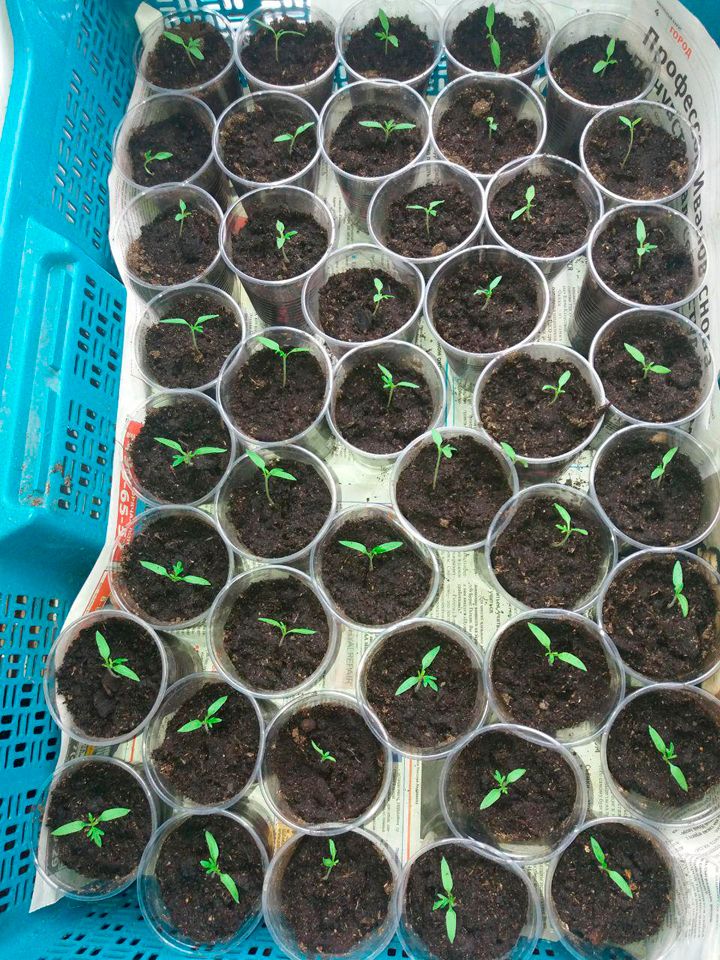
Watering is carried out as needed, but there is no need to add fertilizer yet - the plant has enough of the nutrients that were originally contained inside the seed.
From the moment of sowing tomatoes until they are transplanted into open ground, about 60 days pass.
Planting in the ground
The Siberian Kilogram tomato can be planted both in a greenhouse and in open ground (in southern regions).
The soil is prepared in the fall, dug up together with fertilizers, so that in the spring all that remains is to dig it up again without any extra hassle.
Tomatoes react sharply to unsuitable predecessors; they can only be planted in the ground after cabbage, greens, cucumbers, or legumes.
Seven to 10 days before transplanting tomatoes to the garden, it's recommended to begin hardening off the seedlings. This helps them adapt better to the new conditions and strengthen their immunity. Initially, the seedlings are placed outside or on the balcony for a few hours, then increased to 8 to 10 hours per day.

Planting is recommended in the afternoon. Holes are dug 60 cm apart and up to 25 cm deep. The distance between rows is 70 cm.
The tomatoes, along with the root ball, are placed in the garden bed, covered with soil, and left for 10 days. Only after this time can you begin applying fertilizer.
Care, watering and fertilizing
As the plant grows, tie up the bush and train it into 1-2 shoots. The fewer shoots, the larger the harvest.
The completed bed should be mulched to protect the roots and retain moisture. Mulch also helps control weeds. It should also be removed as needed, combining this with weeding.
It is recommended to water tomatoes with settled water in the afternoon or late afternoon. Each plant requires approximately 4 liters of water. During flowering, the volume and frequency of watering may need to be increased.
You can begin fertilizing 10 days after replanting. Specialized complex fertilizers, such as Signor Tomato, Aquarin Vegetable, and others, are very effective.
Organic lovers can make a mixture of mullein (500 ml) and water (10 l), or infuse weeds or ash.
Fertilizers are applied at intervals of 14 days three times per season: during the growth period, at the time of flowering and during fruit filling.
Resistance of the Siberian Kilogram tomato variety to diseases and pests
The Siberian Kilogram variety has a strong immune system and is virtually immune to tomato diseases. However, preventative treatment is still recommended. To reduce the risk of various fungi and rot bacteria, spray with Bordeaux mixture or Fitosporin.
Harvesting, using and storing the Siberian Kilogram tomato variety
The fruits ripen 116-120 days after germination. The grower allows tomatoes to ripen further when they are picked from the vine while still green. However, this should only be done in extreme cases, as the process can take several weeks.
Tomatoes are not suitable for whole-fruit canning, but they make excellent juices, pastes, and sauces.
In addition, the fruits will be an excellent addition to any dishes and salads.
Comparison of the Siberian Kilogram tomato variety with other varieties in the table
Please note! How can you easily convert centners/ha to kg/sq.m? Simply divide by 100! For example, the Abakansky Pink tomato yields 400 centners of marketable fruit per hectare. This equals 4 kg per square meter. It's that simple! Also, keep in mind that typically no more than 3-4 plants are planted per square meter. This way, you can calculate the yield per bush. In the case of the Abakansky Pink, it's about 1 kg.
| Variety | Ripening period (number of days from full germination to ripening)
Yield of commercial fruits |
Brief description | Fetus |
| Siberian kilogram | 116-120 days
600-1000 c/ha |
A mid-season indeterminate variety for greenhouses and open ground. Suitable for salads and processing into tomato products. | Round, slightly ribbed, red, 600-1500 g. Good to excellent taste. |
| Siberian big guy | 90-100 days
900-1200 c/ha |
An early-ripening indeterminate variety for open ground and greenhouses. Suitable for salads, processing into tomato products, and preparing first and second courses. | Flat-round, slightly ribbed, red, 500 g. Good to excellent taste. |
| Siberian garland | 90-95 days 1700-1900 c/ha |
An early-ripening indeterminate variety for open ground and greenhouses. Suitable for salads. | Flat-round, large, smooth, dense, red, 260 g. Excellent taste. |
| Siberian Shan'gi | 100-110 days
The yield of commercial fruits in open ground was 5.6 kg/sq.m. |
A mid-season determinate variety for open ground and greenhouses. Suitable for salads. | Flat-round, medium density, slightly ribbed, raspberry, 157 g. Excellent taste. |
| Siberian early ripening | 98-108 days
289-543 c/ha (open ground), 20-43% of the total yield ripens in 15 days of fruiting, 630-950 c/ha (greenhouse and under film), in the first month of fruiting 240-580 c/ha. |
An early-ripening, determinate, low-growing variety for open ground and greenhouses. Suitable for salads. | Round and flat-round, slightly ribbed, medium-sized and large, red, 62-114 g. The taste is satisfactory. |
| Siberian tiger | 110-120 days
Up to 1200 c/ha |
A mid-season indeterminate variety for open ground and greenhouses. Requires staking and training into 1-2 stems. Suitable for salads and processing into tomato products. | Flat-round, ribbed, dark pink with dark purple streaks, 150-250 g. Excellent taste. |
| Siberian giant | 115-120 days
The commercial yield of fruits was 9.0-11.0 kg/sq.m. |
A mid-early indeterminate variety for greenhouses. Suitable for salads. | Flat-round, large, medium-ribbed, loose, red, 400-500 g. Excellent taste. |
| Silver spruce | 90-100 days
1500-1800 c/ha |
A mid-early determinate variety for open ground and greenhouses. Requires staking and training into 2-3 stems. Suitable for salads and canning. | Flat-round, slightly ribbed, with a little pubescence, red, 300 g. The taste is good and excellent. |
| Mikado Sibiriko | 90-95 days
800 c/ha |
An early indeterminate variety from Siberian breeders. For salads, juice, and pasta. | Heart-shaped, ribbed, pinkish, 400-600 g. Excellent taste. |
| Abakan pink | 120 days or more
400 c/ha |
A late-ripening determinate variety for open ground and greenhouses. Requires staking and training. Suitable for salads and processing into tomato products. | Flat-round, slightly ribbed, medium density and pink in color, 200-500 g. Good taste. |
| Alyosha Popovich | 125-130 days
600-640 c/ha |
A mid-season indeterminate variety for open ground and greenhouses. Requires staking and training. Suitable for salads. Easy to transport. Resistant to adverse growing conditions. | Round, slightly ribbed, medium density, red, 150-200 g. Good taste. |
| Altai masterpiece | 110-150 days
up to 1000 c/ha (under film) |
A mid-season indeterminate variety for open ground and greenhouses. Requires staking and shaping. Suitable for salads. | Flat-round, medium-ribbed, medium density, red, 300-400 g. Good taste. |
| Grandma's secret | 100-115 days
1690 c/ha |
A mid-season indeterminate variety for open ground and greenhouses. Requires staking and shaping. Suitable for salads. | Flat-round, ribbed, dense, pink, 354 g. Excellent taste. |
| Big Momma | 85-95 days (greenhouse), about 100 days (open ground)
700-900 c/ha |
A mid-early determinate variety for open ground and greenhouses (greenhouses only, according to the register). Suitable for salads, canning, pickling, and juice. | Round, large, slightly ribbed, medium density, red, 200-250 g. Excellent taste. |
| Big Dipper | 100-110 days
1150-1450 c/ha |
An early-ripening indeterminate variety for open ground and greenhouses. Requires staking and shaping. Suitable for salads. | Flat-round, slightly ribbed, medium density, pink, 210-260 g. Good taste. |
| The pride of the feast | 90-100 days
1200-1400 c/ha (in a greenhouse) |
An early-ripening indeterminate variety for open ground and greenhouses. Suitable for salads. | Flat-round, dense, strongly ribbed, red, 320-330 g. Excellent taste. |
| Kostroma | 105-110 days
1350-1500 c/ha |
A mid-season determinate variety for greenhouses. Requires staking and training. Suitable for salads, whole-fruit canning, and processing into tomato products. | Flat-round, slightly ribbed, glossy, red or orange, 80-150 g. Good taste, sweet and sour. |
Gardeners' reviews of the Siberian Kilogram tomato variety
The Siberian Kilogram variety is relatively new, but has already gained consumer interest. Consumers have noted its excellent yield and superb taste. However, ripening can sometimes take too long, and after harvesting, it can even drag on indefinitely.
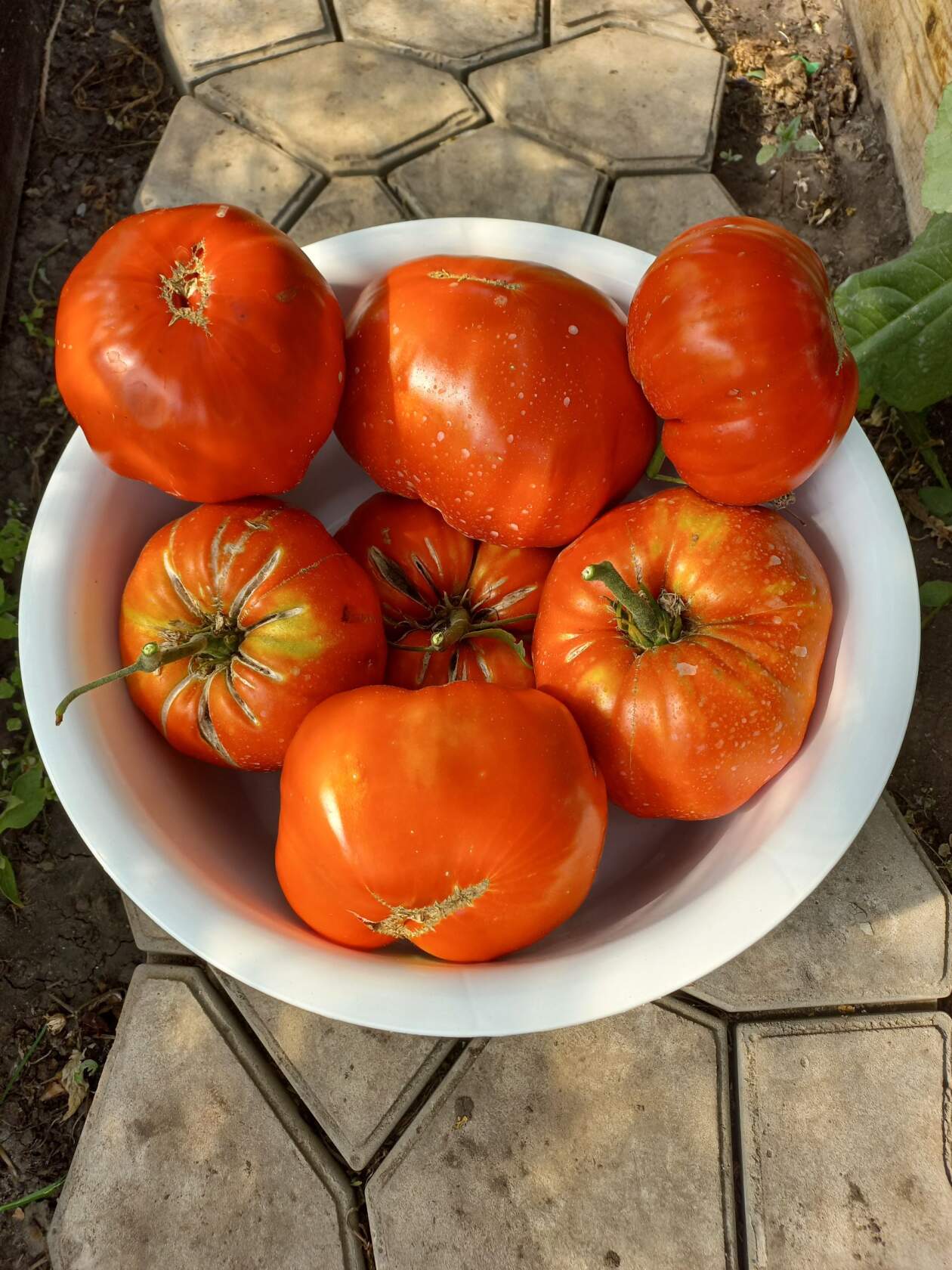
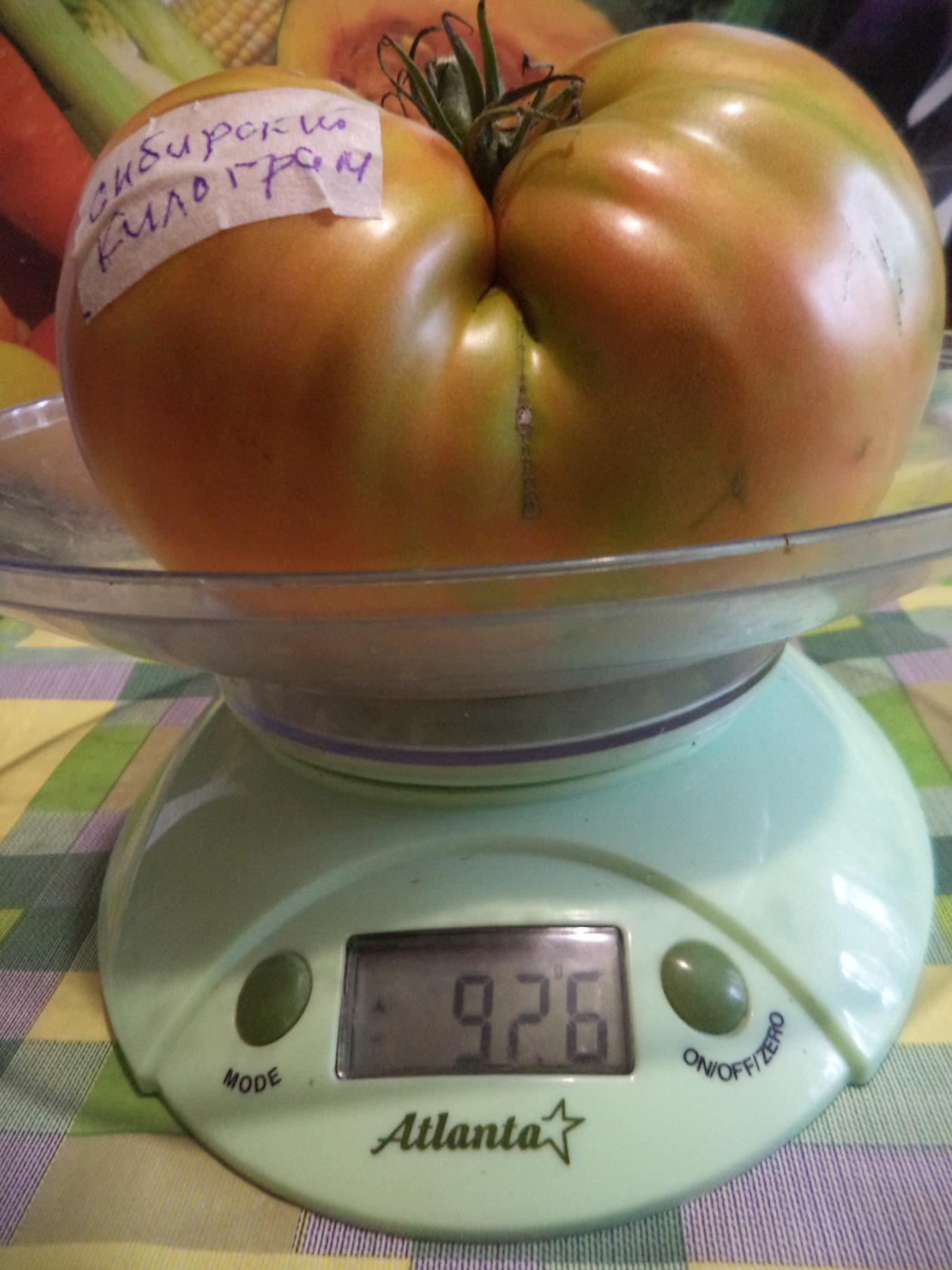
Novosibirsk, our largest tomato was 926g.
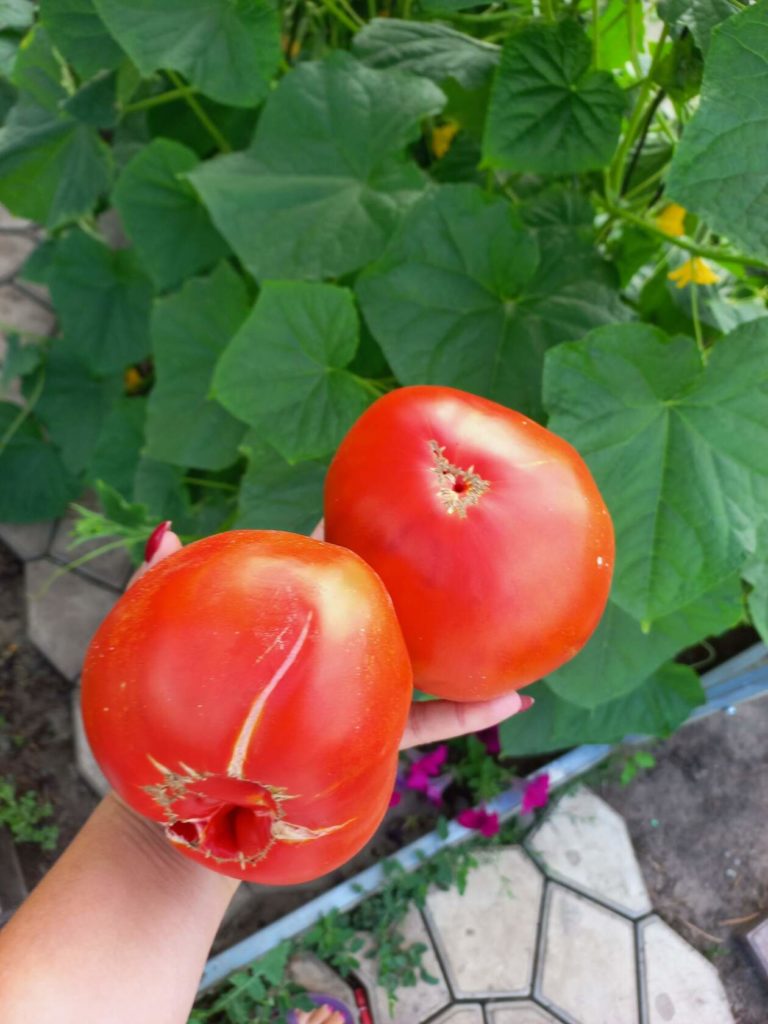
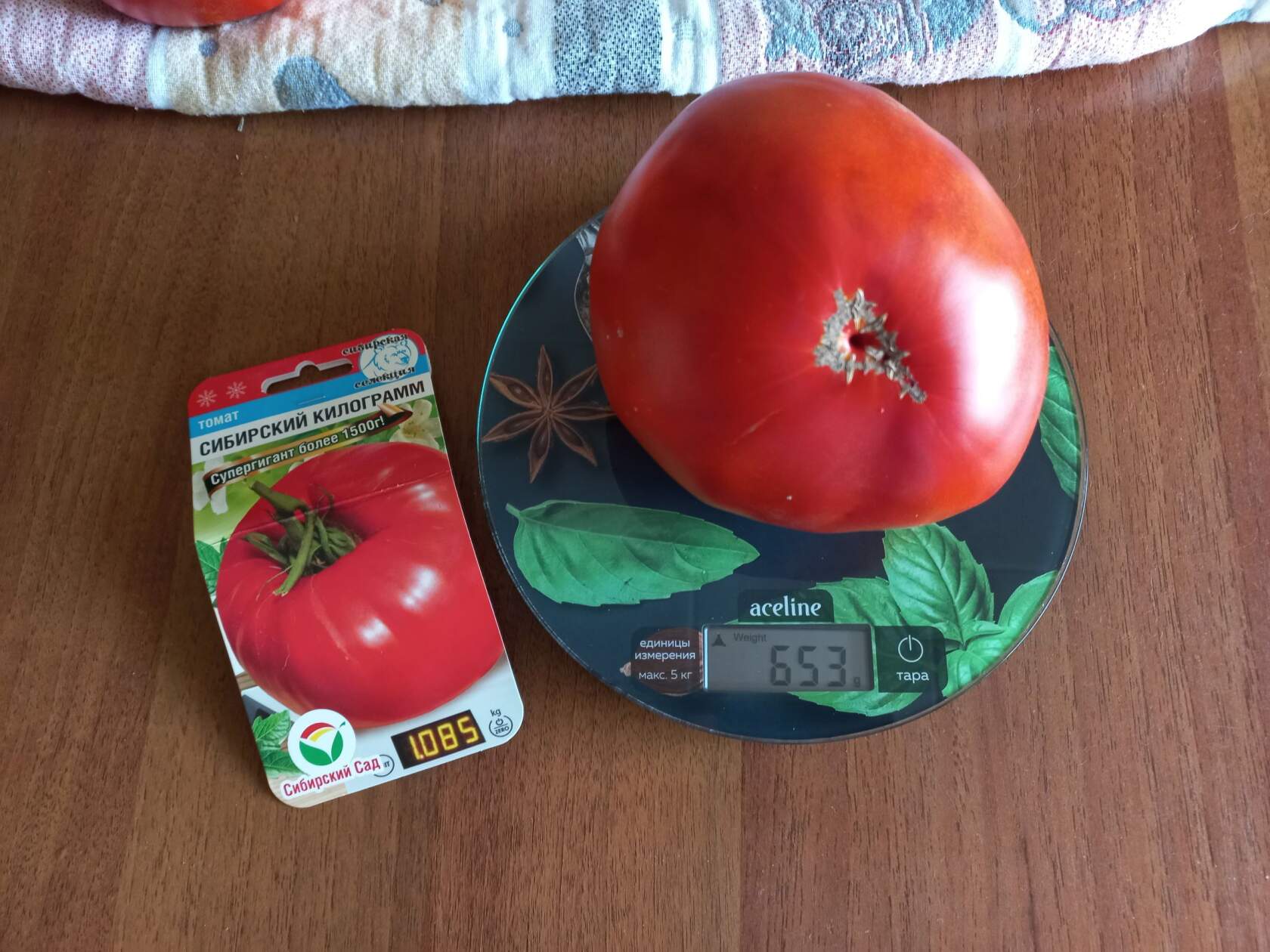
These are the smallest tomatoes that have ripened.
To avoid any unnecessary speculation, I duplicated the weight of the tomato in the store in front of customers.
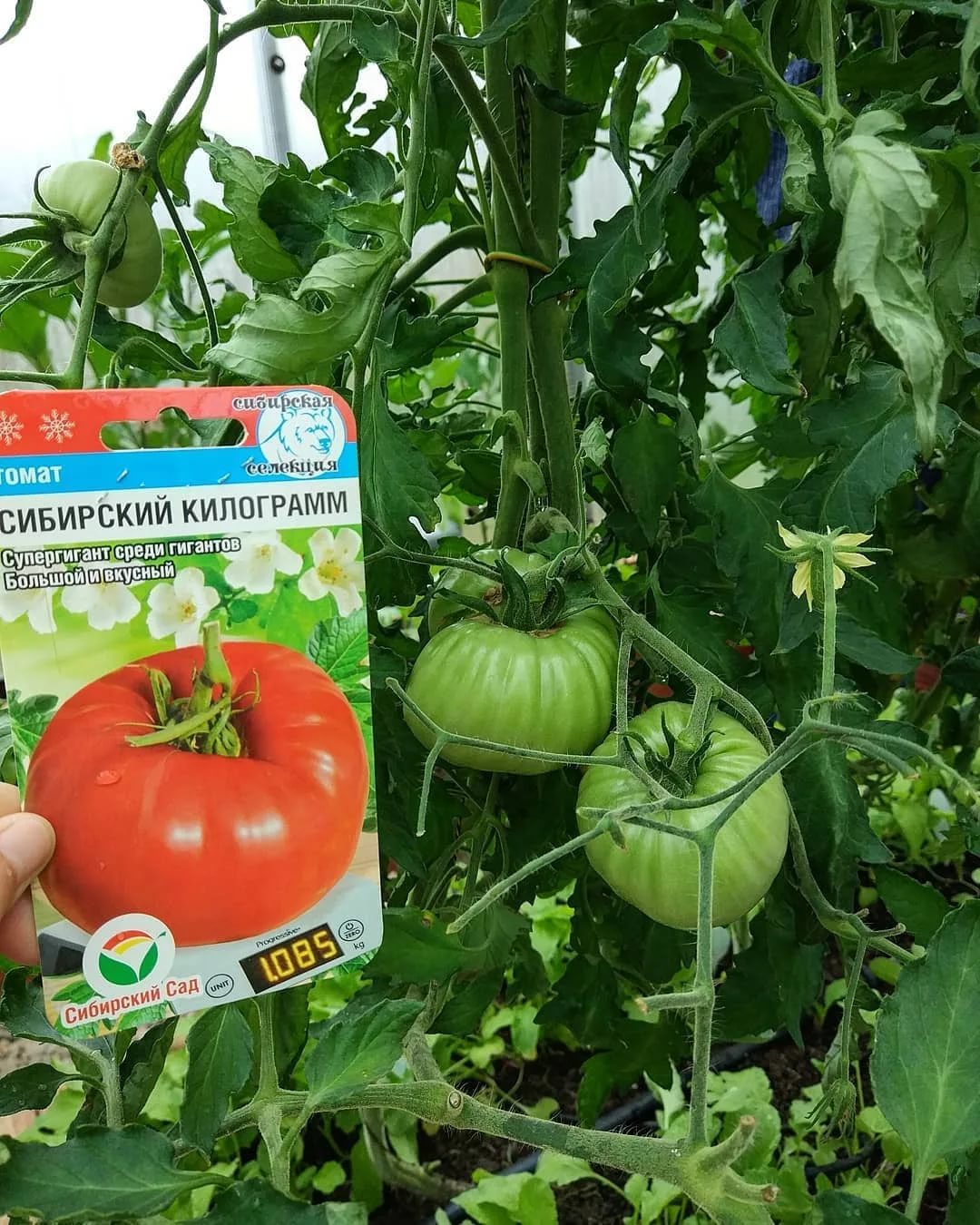
Siberian Kilogram ~ from @agrofirma_sibsad, permanent resident in a greenhouse since April 24th. Just now starting to set fruit???? The bushes in the greenhouse have become elephants???? It's a pleasure to look at them.