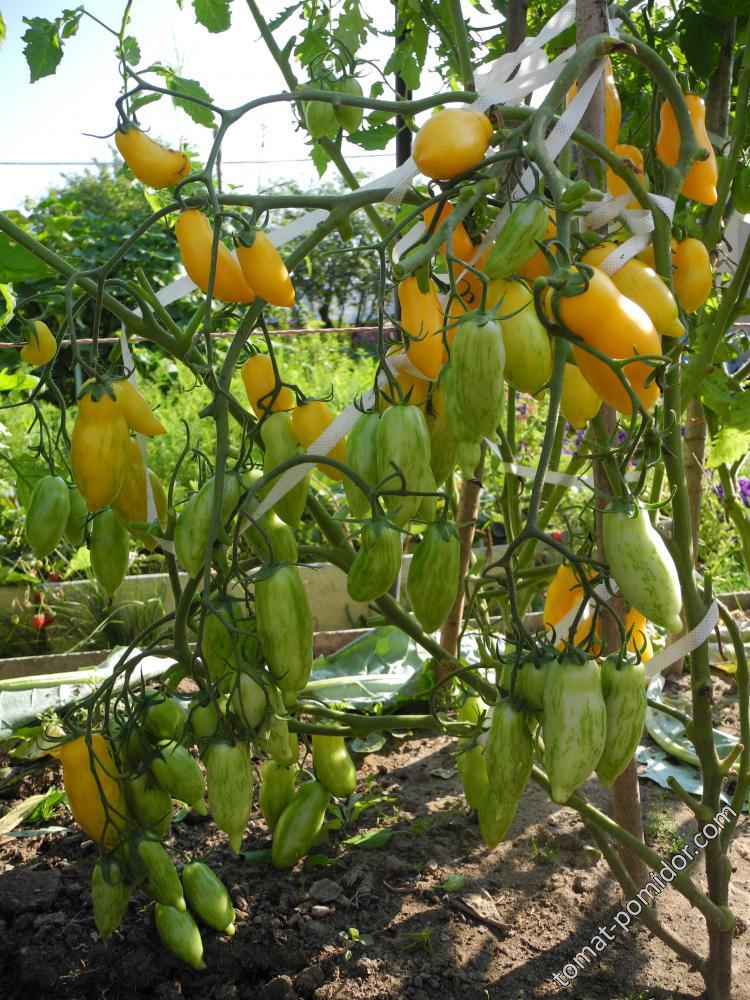
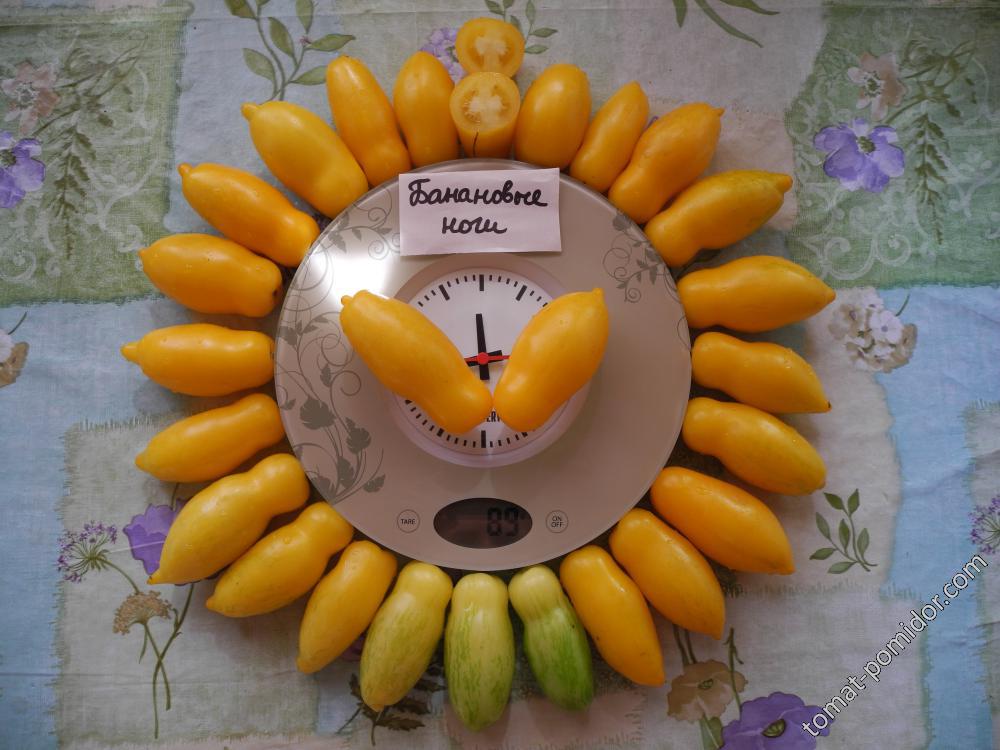
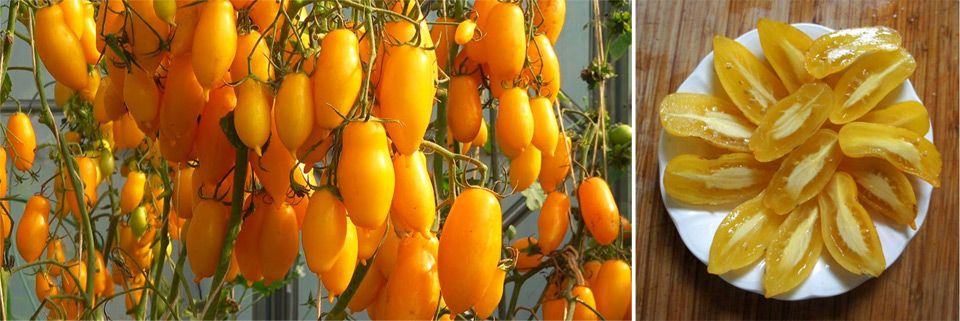
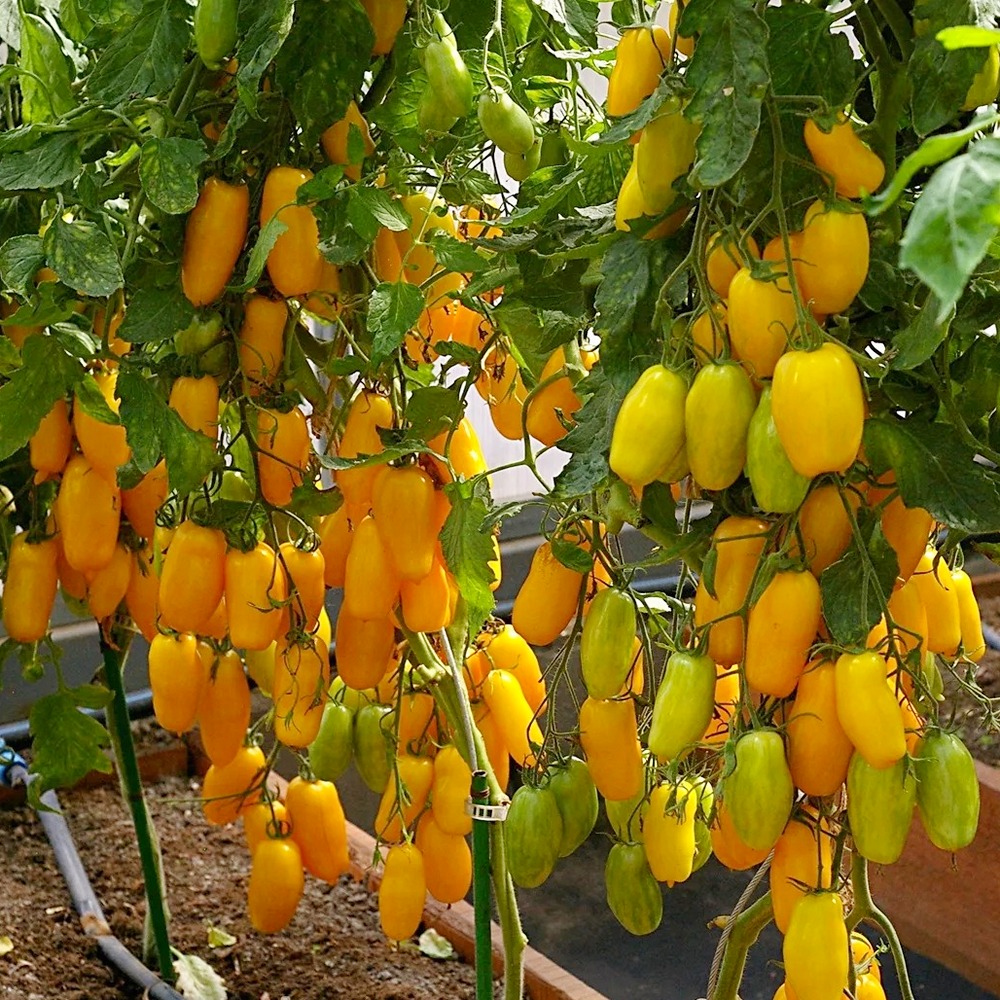
The Banana Legs tomato has amazed gardeners with its abundant yield. With proper cultivation techniques, the bushes are literally covered with yellow fruits, which from a distance resemble small bananas.
Content
- 1 Characteristics of the Banana Legs tomato variety in a table
- 2 The history of the Banana Legs tomato variety
- 3 A detailed description of the Banana Legs tomato variety
- 4 Advantages and disadvantages of the Banana Legs tomato variety
- 5 Growing the Banana Legs tomato variety
- 6 Resistance of the Banana Legs tomato variety to diseases and pests
- 7 Harvesting, using and storing the Banana Legs tomato variety
- 8 Comparison of the Banana Legs tomato variety with other varieties in the table
- 9 Gardener reviews of the Banana Legs tomato variety
Characteristics of the Banana Legs tomato variety in a table
| Characteristic | Description |
| Description | The plants are large, indeterminate, with fairly large and very thin leaves. The shoots grow up to 1.5 m. |
| Ripening period (number of days from full germination to maturity) |
105-110 days |
| Fruit weight | 80-100 g |
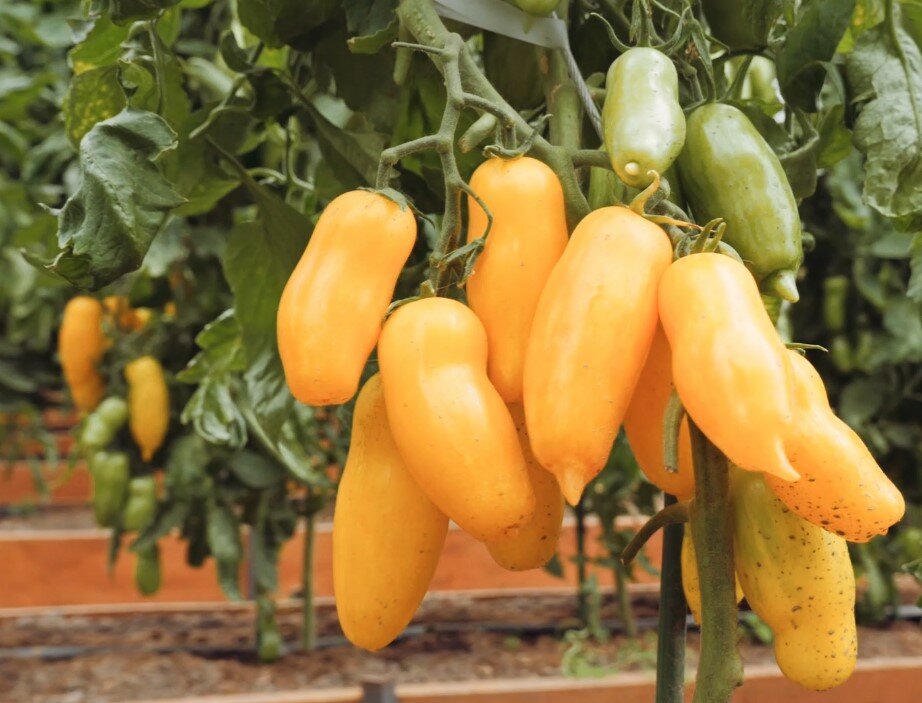
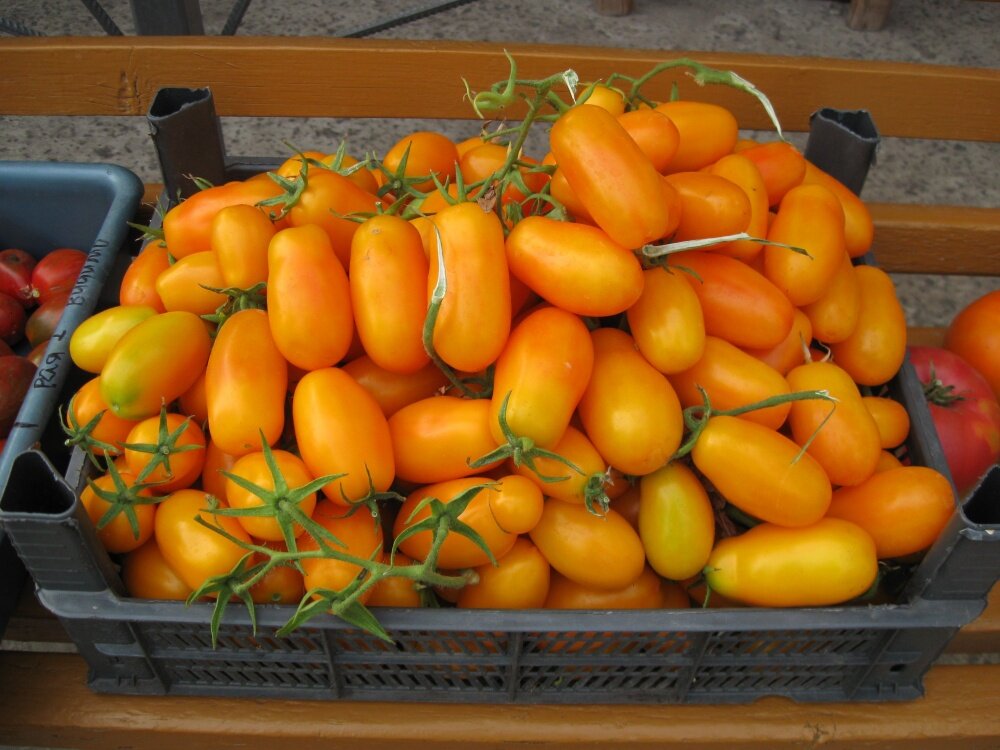
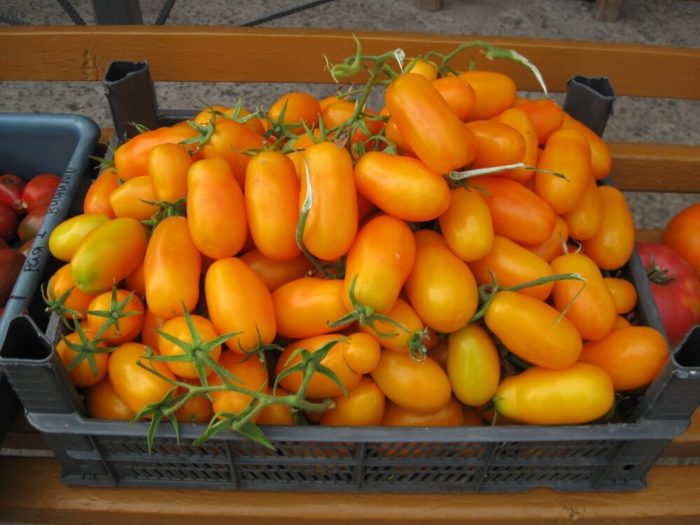
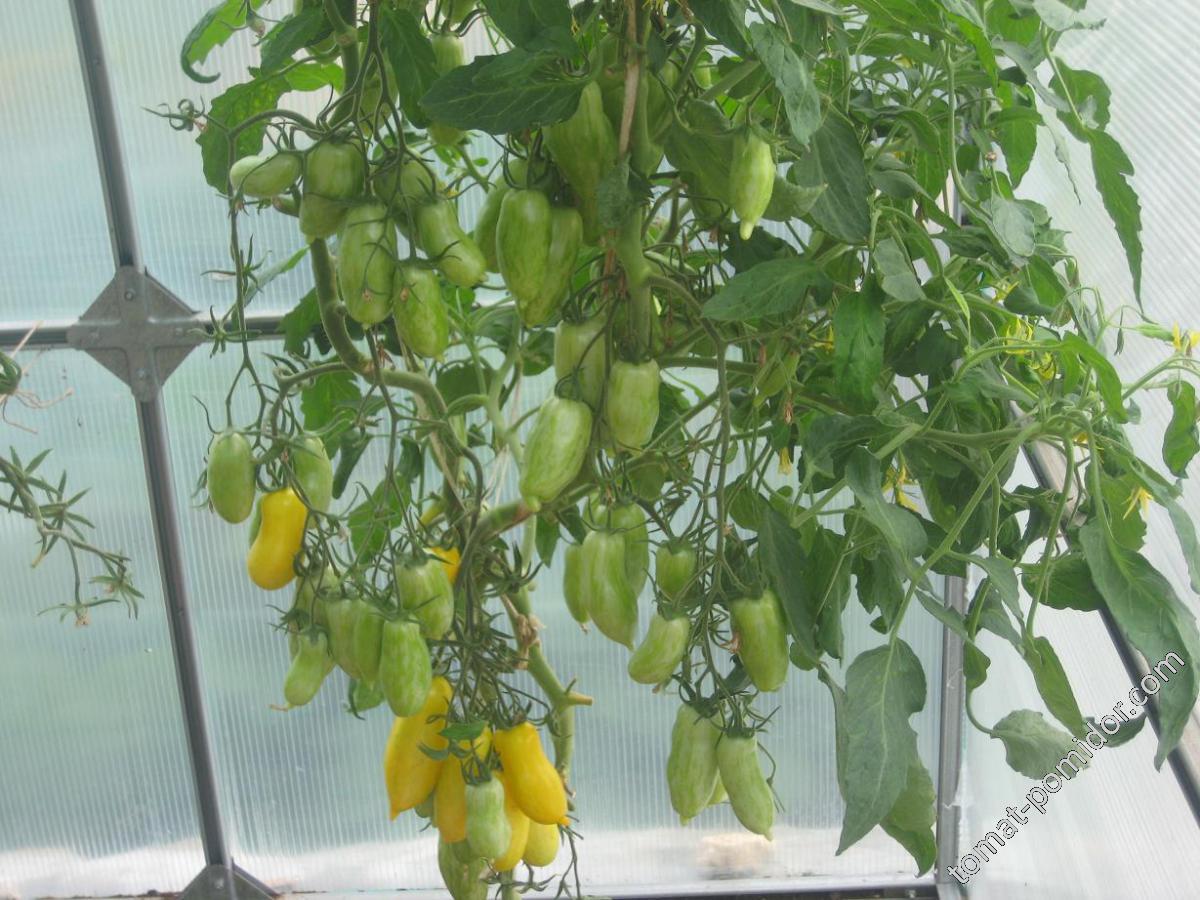
| Description of the fruit | The fruits are elongated, cylindrical, and pointed at the base. They are bright yellow in color. The flesh is juicy and sweet. Inside are two cysts containing small seeds. |
| Yield of commercial fruits | 17.8 kg per square meter |
| Purpose | Salad. |
| Disease resistance | Complex resistance to tomato diseases. |
| Agricultural technology | Designed for growing in film greenhouses. |
| Growing regions | All regions |
| 2019 | |
| Originator | Vasily Ivanovich Blokin-Mechtalin |
Photo gallery of the Banana Legs tomato variety
The history of the Banana Legs tomato variety
The Banana Legs tomato is a relatively new and unusual variety for most regions. It was bred specifically for greenhouse cultivation in harsh climates. However, the variety has proven so popular with those who have tried it in the temperate zone that it is considered one of the most popular yellow-fruited tomatoes. Its creator, Vasily Ivanovich Blokin-Mechtalin, filed an application for patent protection in 2017, and it was only two years later, in 2019, that the tomato was granted a patent.
Read about other varieties from Parter in the articlePartner tomatoes: a catalog with photos and descriptions.
A detailed description of the Banana Legs tomato variety
The Banana Legs tomato doesn't have any remarkable plant features; it's similar in appearance to all other tomatoes. The main attraction is the fruit.
Characteristics of the bush
The bushes are determinate. Often, shoot growth continues even at 1.5 meters. Foliage is moderate. The leaf blades themselves are quite large and very thin, appearing to grow downwards.
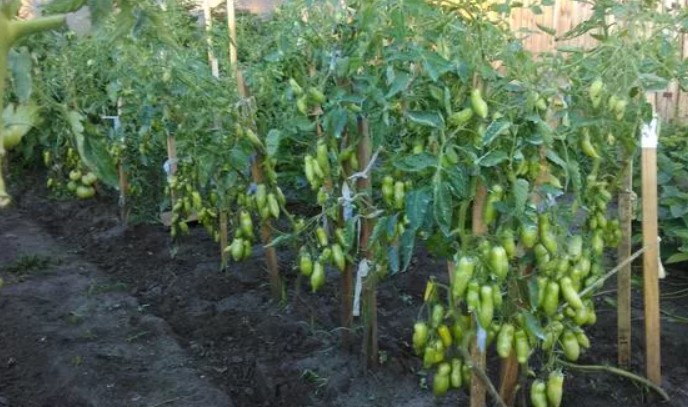
The plant requires staking and training into 2-4 stems. It's believed that this variety rarely produces side shoots. However, in practice, gardeners admit that side shoots do occur, and they need to be removed promptly to prevent the bush from becoming overgrown.
Fruit characteristics
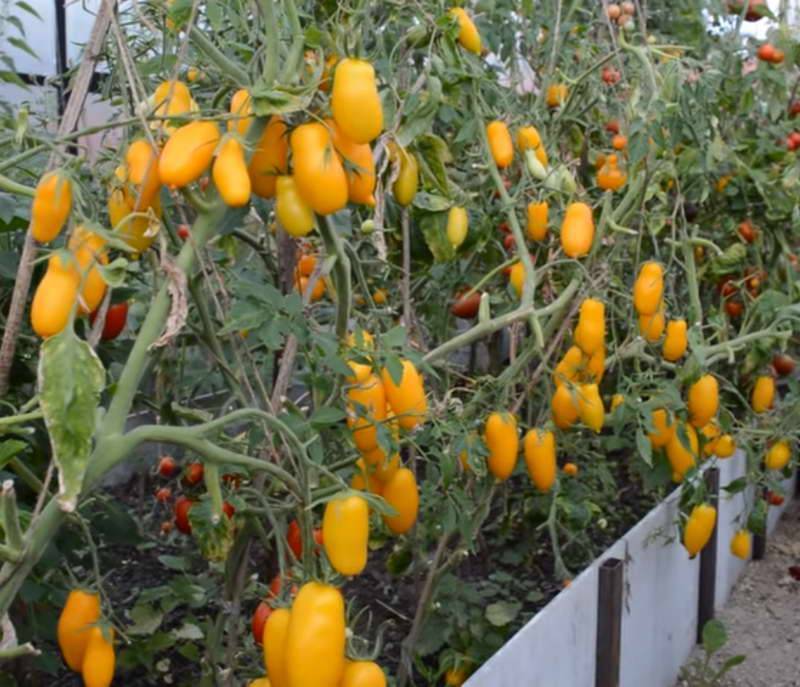
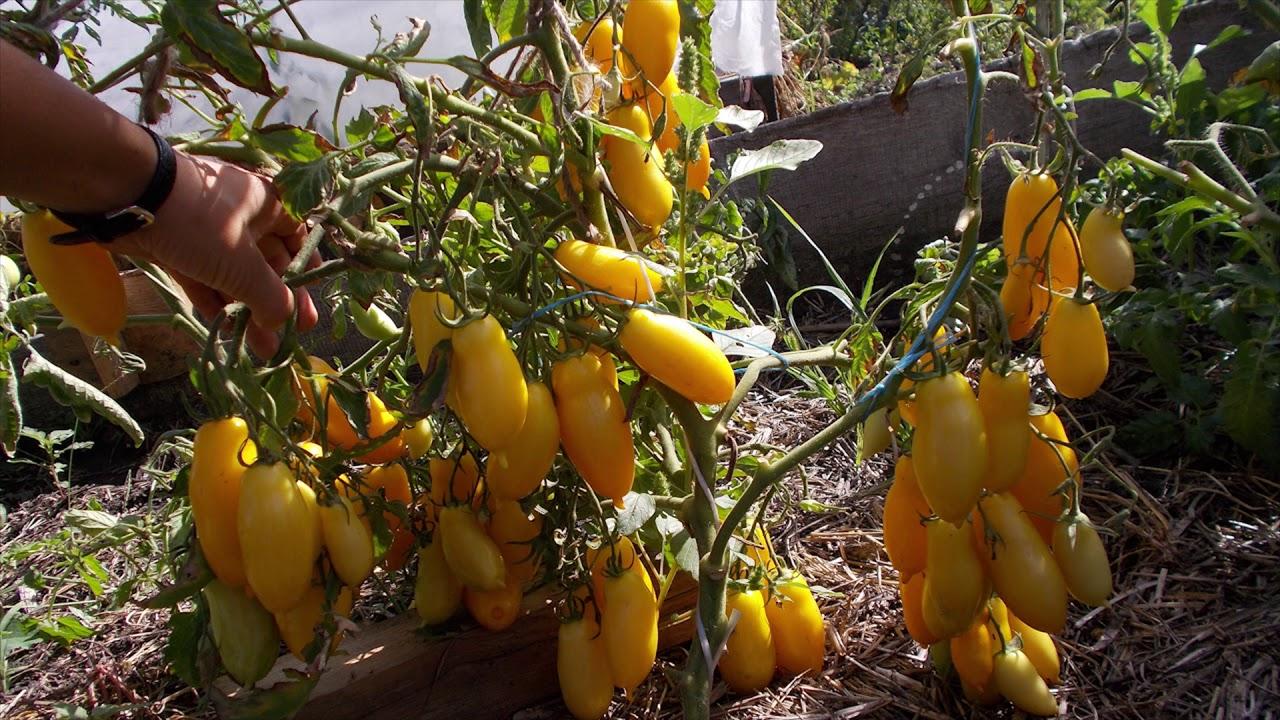
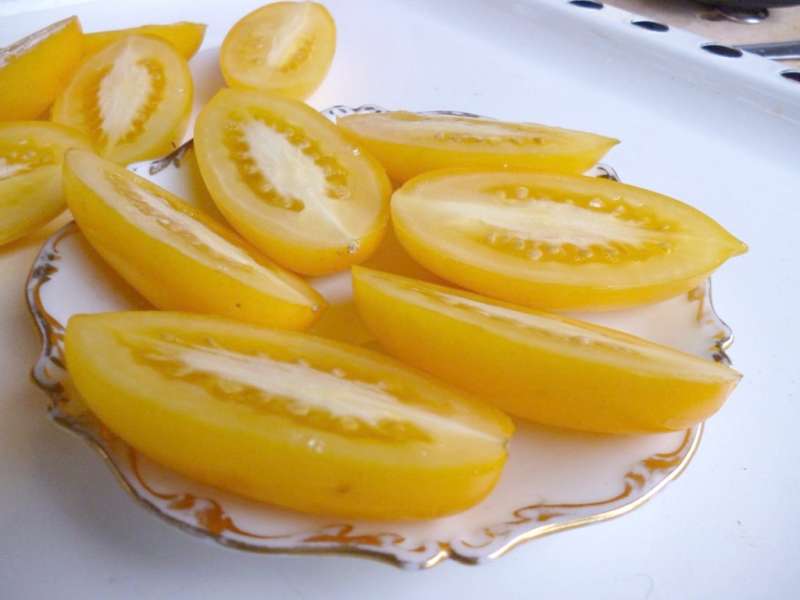
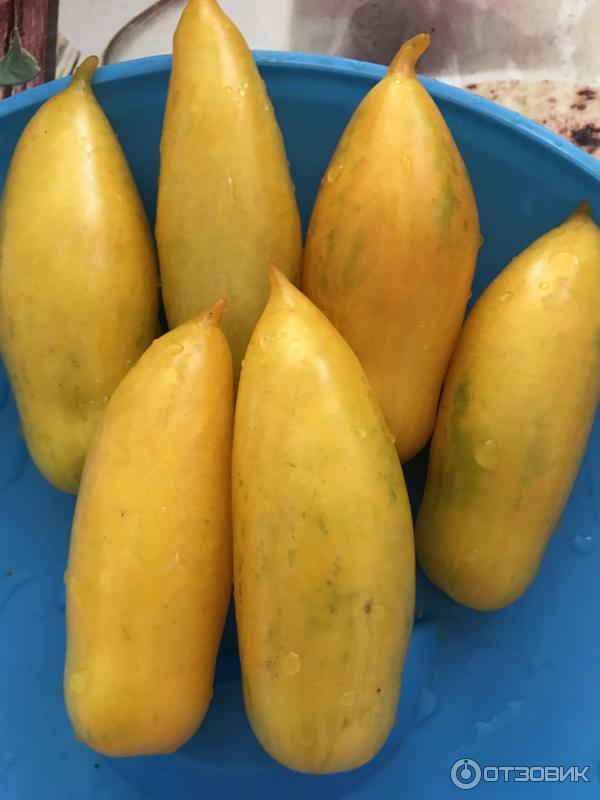
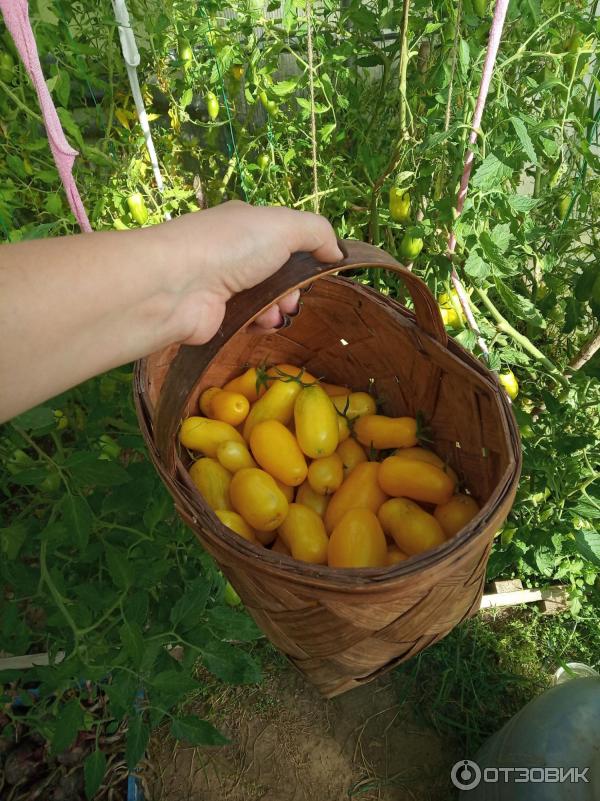
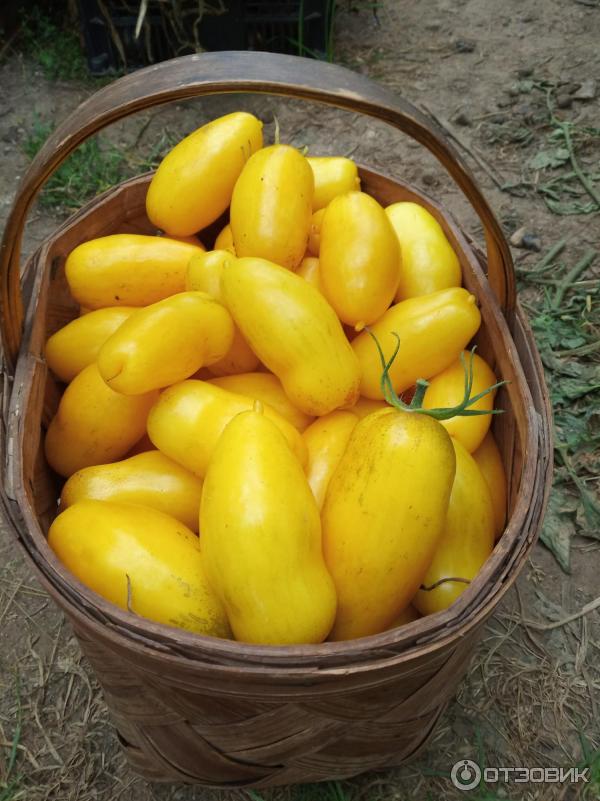
Tomatoes have an elongated cylindrical shape with a pointed base. They range in length from 9 to 12 cm and weigh 90-110 g. They are bright yellow in color. The flesh is aromatic, sweet, and juicy. Gardeners note an unusual citrus aftertaste. The seeds are small, contained in small chambers, typically no more than two per tomato.
In open beds, the weight of fruits ranges from 60 to 80 g.
The purpose is salad, but many gardeners use tomatoes not only for fresh eating, but also for canning.
Ripening time
The Banana Legs variety is distinguished by its early ripening period. From the moment the first shoots emerge until the tomatoes are ready to harvest, it takes no more than 110 days.
Productivity
This variety is characterized by high yields, reaching 17 kg per square meter. With proper cultivation techniques, each plant can yield up to 5 kg of tomatoes.
Advantages and disadvantages of the Banana Legs tomato variety
The Banana Legs tomato has minor drawbacks and numerous advantages. These are listed in the table below.
| Advantages | Flaws |
|
|
Growing the Banana Legs tomato variety
The Banana Legs tomato is grown using standard agricultural practices for this crop.
Sowing seeds and growing seedlings
Banana Legs tomatoes can be grown using either seedlings or direct-seeding methods. The latter is suitable for heated greenhouses and regions with early, warm springs.
You can collect the seeds yourself, but it is inconvenient to do this because of their size – they are very small.
Homemade seeds must be disinfected in a weak solution of potassium permanganate or Fitosporin to reduce the risk of pathogenic microorganisms growing. Afterwards, the seeds should be rinsed in water to remove any traces of the disinfectant.
To strengthen the immune system, it is recommended to soak the seeds in any stimulating solution, for example, Epin or Kornevin.
Experienced gardeners swear by pre-sprouting the seeds to ensure successful germination. Tomato seeds are placed between layers of damp cloth and stored in a warm place. The cloth is moistened periodically, and as soon as the sprouts emerge, they can be planted.

It's important to follow the manufacturer's instructions. If the packaging states that the seeds have undergone the necessary treatment, there's no need to disinfect or soak them. Moreover, such procedures will harm the tomatoes, as they will destroy the existing protective coating.
There may be many landing options:
- In a peat tablet.
- In peat cups.
- In rolls.
- In boxes, etc.
Everyone chooses the method that suits them best. The main thing is not to plant the seeds too deep in the container and remember to moisten the planting site as it dries out.
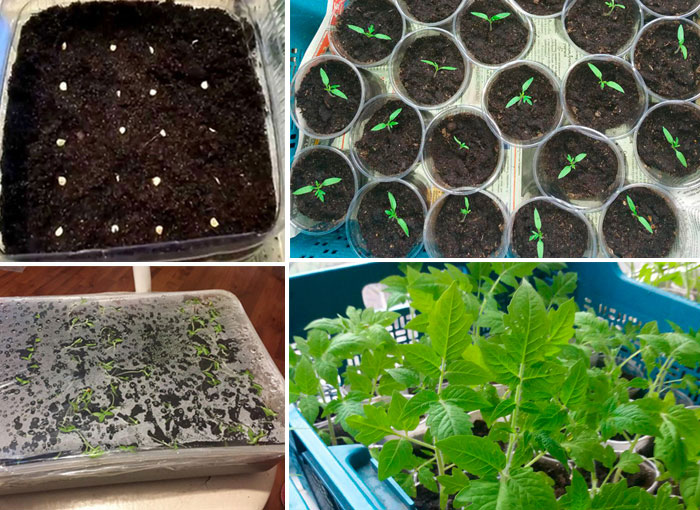
Planted seeds are kept in a warm place until germination occurs. Any containers containing future seedlings must be covered with glass or plastic film, which is removed after germination.
When 2 true leaves form on the shoots, the tomatoes are transplanted into separate pots or cups.
Planting in the ground
Hardening off tomatoes is considered a beneficial procedure. This is done 10-14 days before transplanting them to their permanent beds. This involves moving the seedlings outdoors or opening windows, increasing the exposure time each day.
Transplanting of Banana Legs tomatoes begins approximately 55-65 days after planting. The exact date will vary by region. Considering that in temperate climates, sowing begins in mid-March, transplanting tomatoes to the greenhouse should be done no earlier than mid-May.
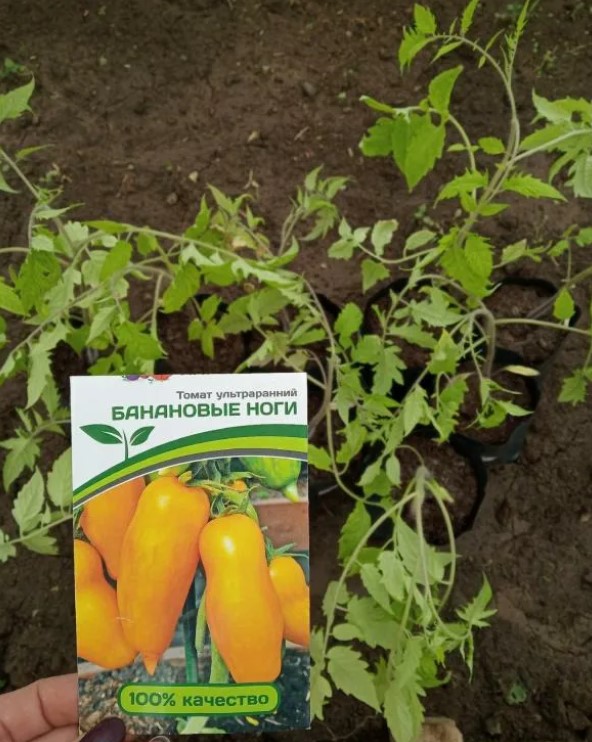
It's recommended to plant no more than 3-4 bushes per square meter. Leave a 50 cm distance between them, and the same amount should be left between rows.
The plants are planted in pre-prepared holes, where the tomatoes are placed together with a lump of soil on the roots from the cup to minimize the risk of damage to the delicate root system.
After planting, water and mulch the bed (if desired), after which the seedlings remain dormant for the next two weeks.
Care
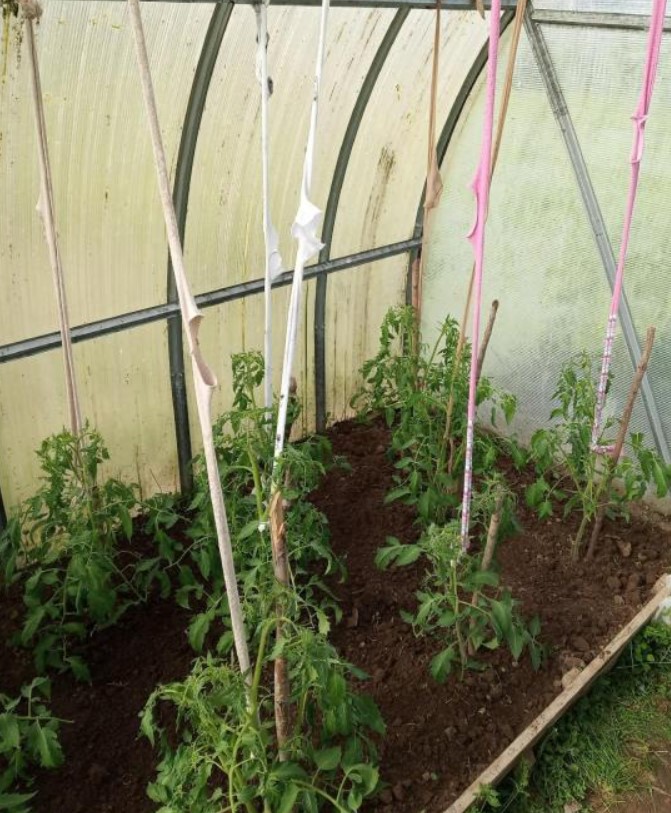
Banana tomato plants require staking. Many gardeners use a piece of twine, burying one end of the twine in the hole along with the plant during transplanting, and tying the other end under the greenhouse roof. This method prevents stem damage, which can occur when the support rope is tied too tightly.
As stepchildren appear, they will have to be removed from the bush, otherwise the harvest will be small and not so abundant.
As weeds appear, weeding and loosening of the bed is carried out, which improves aeration within the soil and reduces the risk of insect pests.
The first watering is done two weeks after replanting. It is recommended to combine this with additional fertilizing. You can use either complex or organic fertilizers (mullein, weed infusion, wood ash, etc.).
To prevent the occurrence of diseases, spraying with Bordeaux mixture or Fitosporin is used three times per season.
Resistance of the Banana Legs tomato variety to diseases and pests
The Banana tomato is designed for cultivation even in regions with less favorable climates, so the breeders made every effort to strengthen the plant's genetic immunity. The plants are virtually disease-free and can withstand temperature fluctuations and mild cold snaps.
If you suspect aphids or whiteflies, you can wipe the leaves of the bushes with a soapy solution or spray them with Bordeaux mixture. To kill whiteflies, hang specialized traps around the perimeter of the greenhouse.
Harvesting, using and storing the Banana Legs tomato variety
Banana Legs tomatoes are considered early; harvesting begins 105-110 days after germination. They are eaten fresh, added to salads, and sometimes canned as small tomatoes. While the skin is thick, they can be stored for no more than 5-7 days.
Comparison of the Banana Legs tomato variety with other varieties in the table
Please note! How can you easily convert centners/ha to kg/sq.m? Simply divide by 100! For example, the Abakansky Pink tomato yields 400 centners of marketable fruit per hectare. This equals 4 kg per square meter. It's that simple! Also, keep in mind that typically no more than 3-4 plants are planted per square meter. This way, you can calculate the yield per plant.
| Variety | Ripening period (number of days from full germination to ripening)
Yield of commercial fruits |
Brief description | Fetus |
| Banana legs | 80-85 days (greenhouse), 90-100 (open ground) 1780 c/ha |
An early-ripening indeterminate variety for open ground and greenhouses. Suitable for salads. | Cylindrical, dense, slightly ribbed, yellow, 80-100 g. Good taste. |
| Valentina | 97-98 days
345-439 c/ha |
An early-ripening, determinate, non-standard variety for open ground. Requires staking and pinching. Suitable for salads and whole-fruit canning. Marketability is 94-97%. Drought-resistant. | Medium size, smooth, elongated-oval, red-orange, 82-86 g. Good taste. |
| Goldfish | about 120 days
870 c/ha |
A mid-season indeterminate variety for open ground and greenhouses. Requires staking and training. Suitable for salads and whole-fruit canning. | Cylindrical, smooth, orange, 90 g. Good flavor. The fruit has a high carotene content. |
| Moon fountain | 100-105 days
420-490 c/ha (greenhouse and under film) |
An early-ripening indeterminate variety for greenhouses. Suitable for salads. | Cylindrical, dense, slightly ribbed, creamy, 12-17 g. Good taste. |
| Minusinsk glasses | 110-112 days Up to 1200 c/ha |
A mid-season indeterminate variety for greenhouses. Suitable for salads, canning, and processing into tomato products. | Oval, smooth, orange, pink or red, up to 400 g. Good taste. |
| Siberian bananas | 105-110 days
Up to 1500 c/ha |
A mid-season semi-determinate variety for open ground and greenhouses. Suitable for salads and canning. | Banana-shaped, smooth, yellow, 150-180 g. Good to excellent taste. |
| Siberian miracle | 110-115 days
The yield of commercial fruits under film covers is 10 kg/sq.m. |
A mid-season indeterminate variety for open ground and greenhouses. Requires staking and shaping. Suitable for salads. | Ovoid, smooth, medium density, red, 150-200 g. Good taste. |
| Siberian Troika | about 120 days
600 c/ha |
A mid-season determinate variety for open ground. Suitable for salads and canning, including whole-fruit preserves. Heat-resistant. | Cylindrical with a spout, smooth, dense, red, 80-100 g (up to 200 g). Excellent taste. |
| Southern tan | 110-120 days 1380 c/ha (greenhouse and under film) |
A mid-season indeterminate variety for open ground and greenhouses. Requires staking and shaping. Suitable for salads. | Cylindrical, smooth, medium density, orange, 211 g. Excellent taste. |
Gardener reviews of the Banana Legs tomato variety
A very easy-to-grow tomato that doesn't require any special growing techniques. The yield is excellent, with greenhouse tomatoes yielding significantly more than the grower claims.
Today I'd like to share my experience growing tomatoes from the company "Partner," which bear the amusing name "Banana Legs." I bought the seeds two years ago, and I remember seeing this variety heavily advertised on social media back then. People talked about how productive it was, how easy it was to grow, and how delicious it was, if not exactly banana-flavored. The price surprised me: I paid 100 rubles for 10 seeds. I usually buy cheaper varieties, but I was really excited to try these much-vaunted tomatoes.
The tomato itself is yellow (I like yellow tomatoes because they are less allergenic and have a more delicate taste than red ones), medium-sized, the fruits are universally suitable for both canning and fresh consumption.
I sowed them for seedlings quite late, in April, right after I bought them. I planted them in the greenhouse at the end of May. The tomatoes grew well, and there were no significant diseases.
It really didn't grow very tall, and the stem wasn't very thick (that year all my tomatoes were skinny, as I later found out, there wasn't enough nitrogen in the soil, I corrected that in the fall by adding manure).
I liked that the tomatoes grow in clusters and ripen at the same time.
After tasting the variety, I noted that it was practically not sweet, yet aromatic and without any tartness, but lacked the sweetness I'm accustomed to from my greenhouse tomatoes. This left me somewhat disappointed...
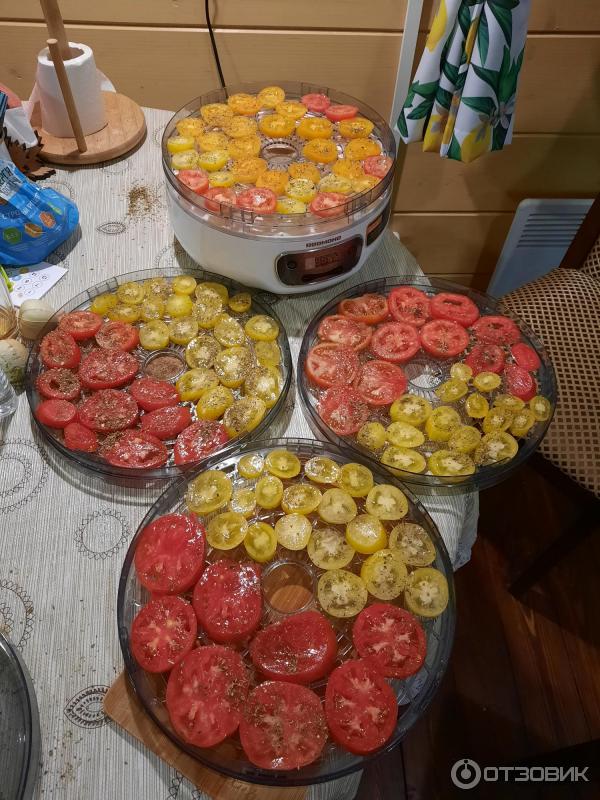
However, tomatoes with this oblong shape are very easy to cut for the dehydrator. They make excellent sun-dried tomatoes! And I love the combination of red and yellow; they look great in the jar.
In conclusion, I wouldn't recommend these seeds, as there are sweeter and tastier varieties available for less. However, the "Banana Legs" ripened evenly without cracking, making them perfect for drying.
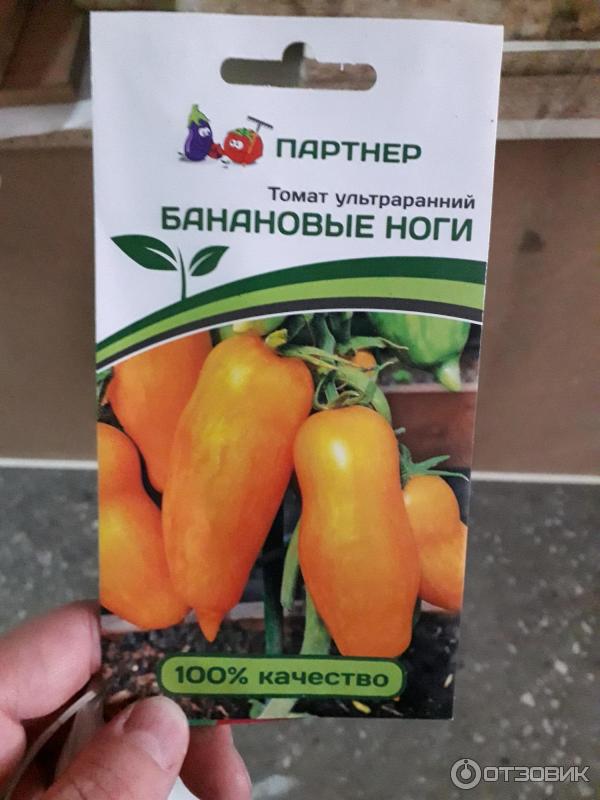
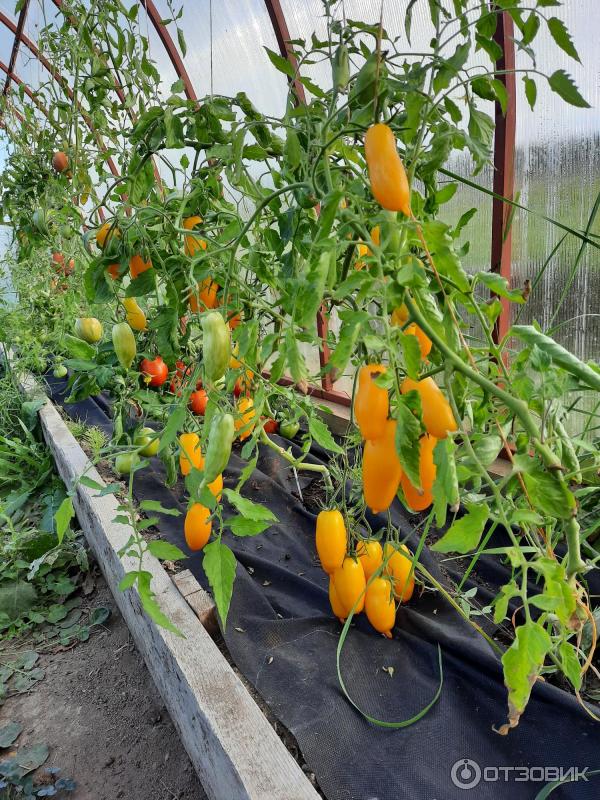
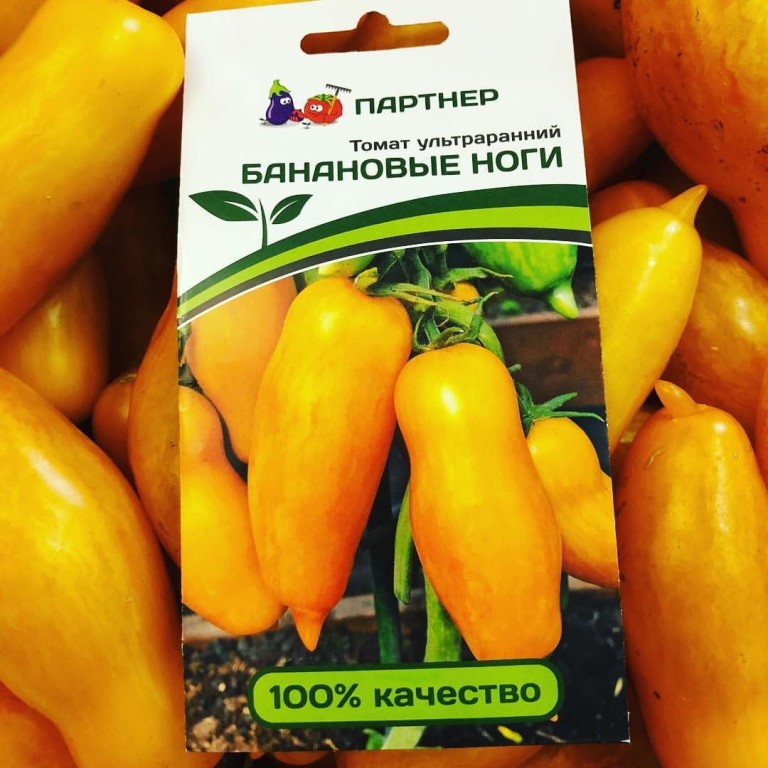
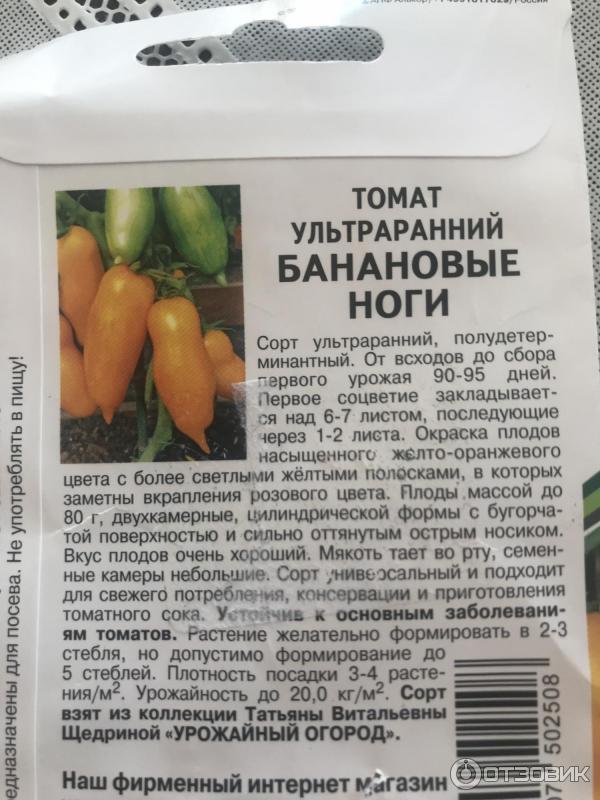
Hello everyone! I've got another gardening review coming up. Today it's about the "Banana Legs" tomatoes. I saw these seeds on the WB website at an incredibly high price. But the name intrigued me; I imagined long, banana-like, and banana-sweet yellow tomatoes. The package has a picture of similar tomatoes.
As usual, there's a description of the variety on the back. I liked that they're ultra-early; I prefer planting these varieties to ensure I have time to harvest tomatoes before late blight hits.
There is information that this variety is from Shchedrina’s collection “Harvest Garden”.
I didn't plant all the seeds, I planted five. The tomatoes took longer to sprout than the others, and only two of the five seeds sprouted. Maybe they didn't like the soil or other conditions. But two plants were enough for me because I always plant a lot of varieties, curious to see what will grow from each.
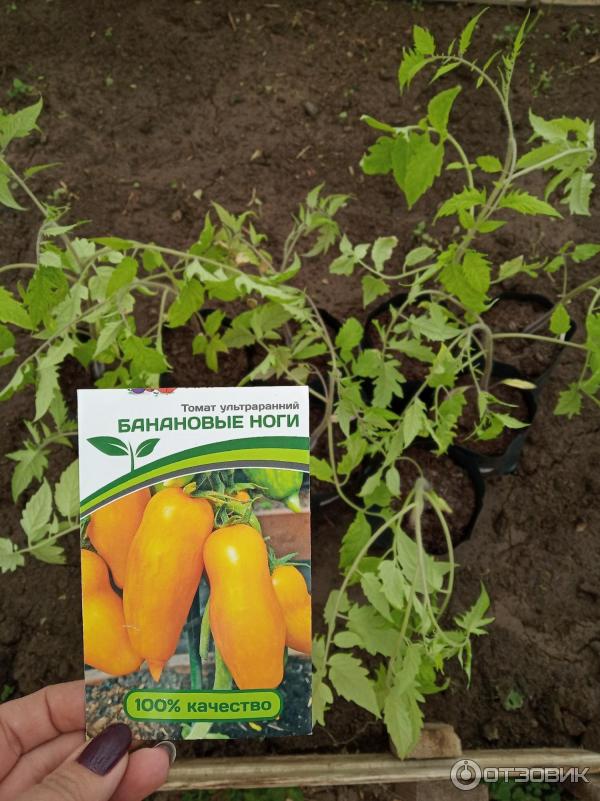
The seedlings looked frail, but when transplanted into the ground, they strengthened and began to develop rapidly. There are plenty of tomatoes on the bush, and they're still showing color. The fruits look just like the picture on the package. But they're probably not big enough to deserve the name "Banana Legs." They weren't ultra-early for me. The earliest tomatoes were the Mongolian Dwarf.
By the way, I added photos to the review; it’s a very unusual variety.
Now about the taste. The skin is a bit thick, the flavor is good, sweet, but something is missing. I think the tomatoes lacked certain elements in the soil to show their full beauty. I didn't have time to properly care for them and fertilize them. Perhaps if I had taken better care of them, they would have ripened earlier, been tastier, and larger.
Nevertheless, I'm happy with the tomatoes, even though I saw what this variety with the funny name looks like. I'll definitely save the seeds and plant a couple next year.
I recommend these seeds with a 4-star rating. I don't recommend buying seeds from WB, as the prices there are simply outrageous. It's better to buy seeds from any seed store, including online ones, where the prices are reasonable.
Thanks for reading the review! Bye!
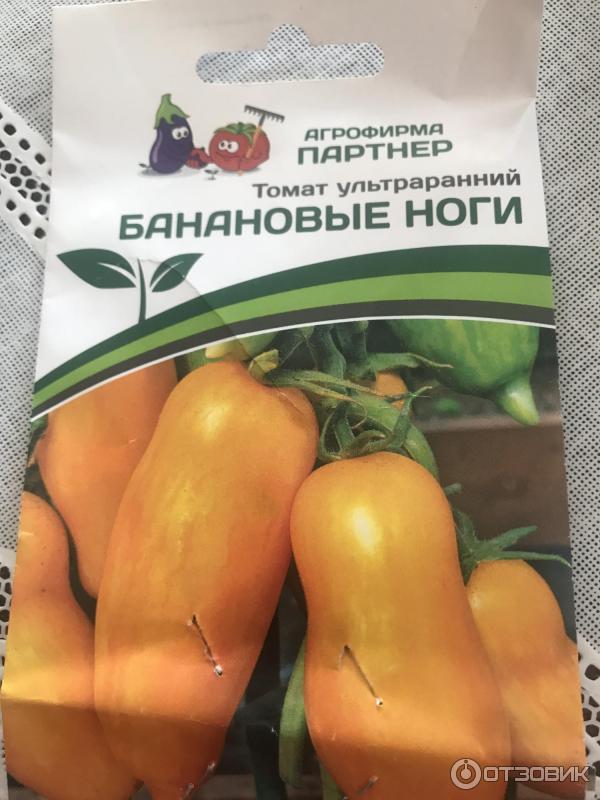
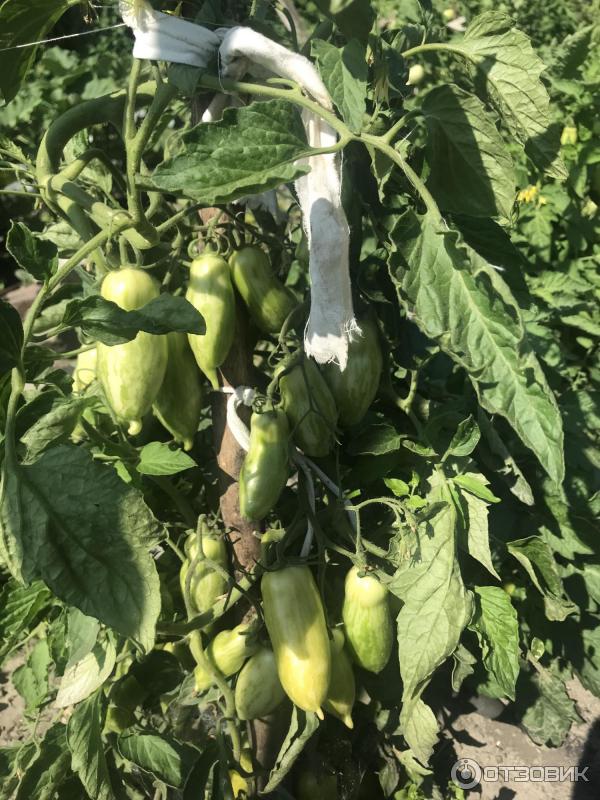
Hi all!
Last year I became incredibly interested in the Banana Legs tomato.
YouTube was absolutely full of videos of yellow, elongated tomatoes. And I wanted some too.
Partner seeds are usually sold in small packages and are expensive. This tomato is no exception—the package contains 10 seeds and costs 99 rubles. I bought two packets, just in case it doesn't sprout.
My fears were unfounded; as it turns out, the price is completely justified—the germination rate is 100%. I ended up planting almost half the greenhouse with Banana Legs and even gave a few bushes to a friend.I planted the seedlings in mid-March (I think it was the 15th)
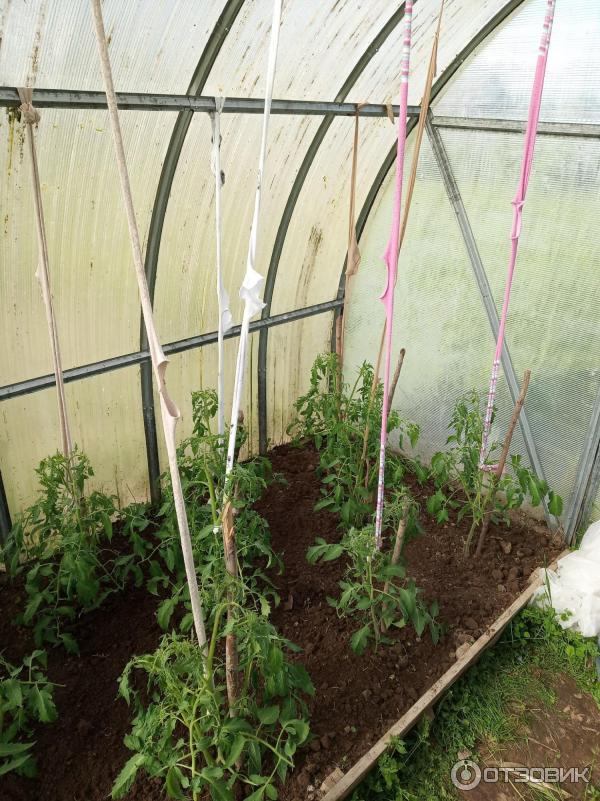
And in the photo it’s already May 11th – this is exactly how I brought the grown and strengthened seedlings into the greenhouse.
After planting, I tied up the bushes.
It's already the end of May.
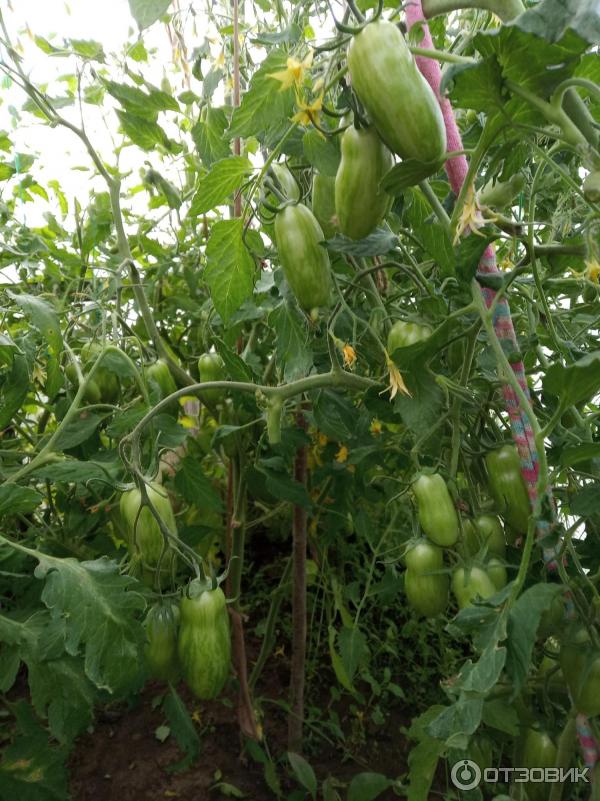
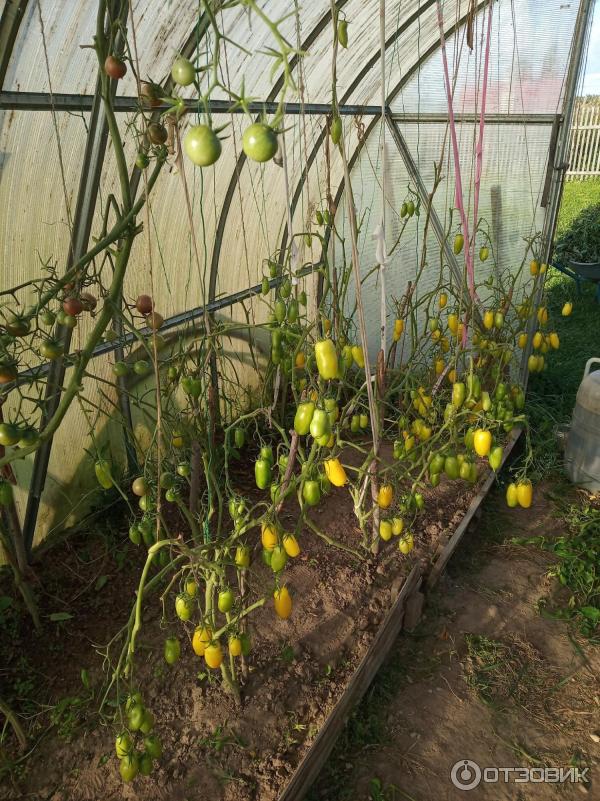
And here is a picture from July 20th - an incredible amount of leaves, lots of green tomatoes and flowers, flowers.
Banana legs are a cultivar, not a hybrid. Therefore, if desired, you can collect your own seeds and plant them later.
The instructions don't require pruning, but since it's impossible to grow any branches, I kept the bush to 4-6. You could probably leave more branches if you have the space, but I didn't have that option.
I systematically trimmed excess leaves and branches to give the plant plenty of space and allow the breeze to blow freely through the greenhouse.
From the beginning of August, we started picking a basket of tomatoes almost every day. There were so many, so obscenely many.
Many people write that this variety is hard and tasteless. I disagree. If you want to eat banana legs fresh, let them hang and ripen. Yes, the skin is still quite tough, but the inside will be soft.
In general, I think this variety is ideal for pickling and canning.
The taste is excellent, especially with garlic, and it looks very elegant in the jar.
This variety isn't particularly resistant to late blight. On August 27th, I discovered black spots on the branches and curled leaves. I immediately cut them off, completely. This saved the unripe tomatoes from the disease. That's how they ripened on the bare vines and ripened successfully.
To sum it up, I'm absolutely happy with the tomatoes and the harvest. Last year's summer weather was, to put it mildly, terrible, and if it weren't for Banana Legs, there wouldn't have been much to put in the jars.
This year I also bought seeds, but only one packet. I planted 10 seeds, and they all sprouted. I hope they'll delight me this year too.
I wish everyone excellent harvests=)
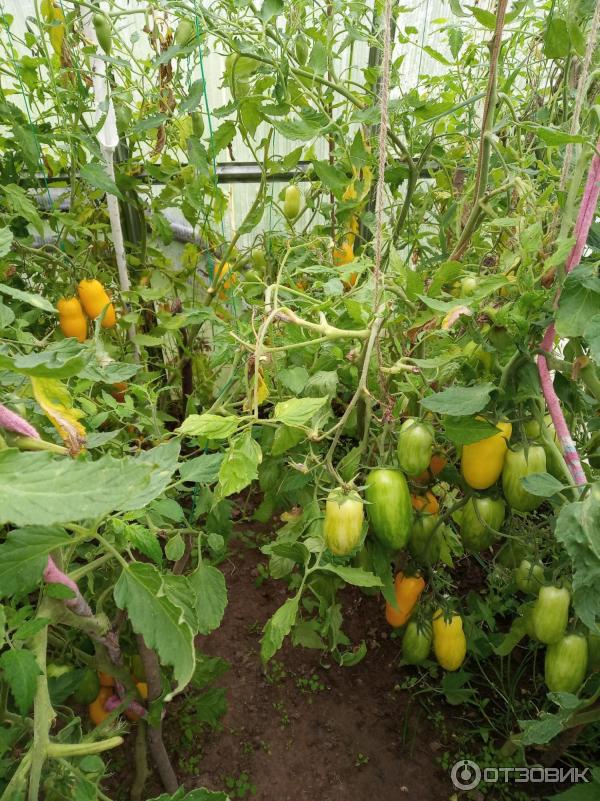
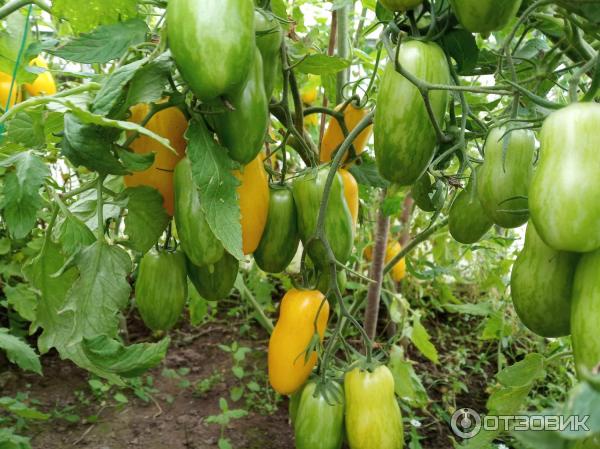
An early-ripening determinate tomato variety (grown up to 80 cm in a greenhouse).
The plant is spindly, with thin branches and delicate, lacy leaves (two trunks in one hole coexisted beautifully). The icicle-shaped fruits are 4-8 cm long, bright lemon-colored with green stripes; the stripes fade and disappear as the fruit ripens. There are few seeds.
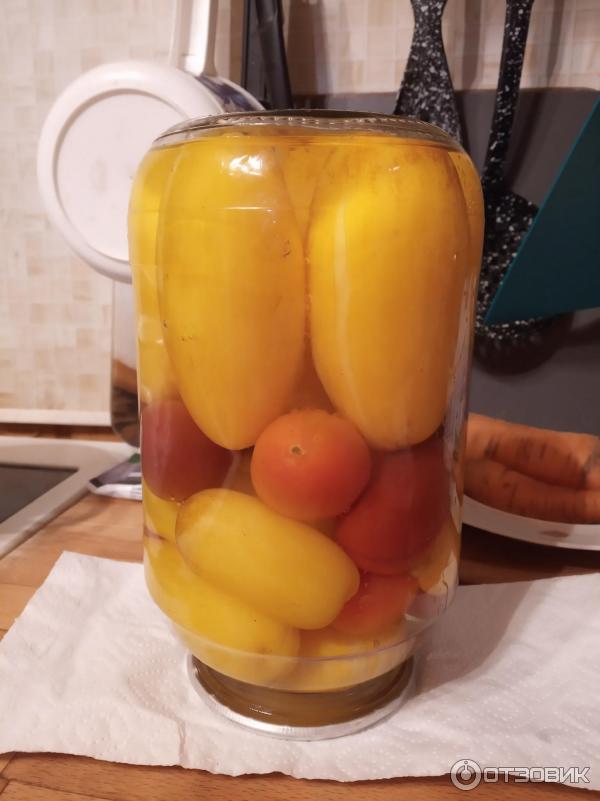
Since the fruit has low acidity, they weren't particularly impressive fresh, but canned they were very good: dense, fleshy, tasty, with a thick skin.
Today I opened a jar of tomatoes in their own juice, Banana Legs
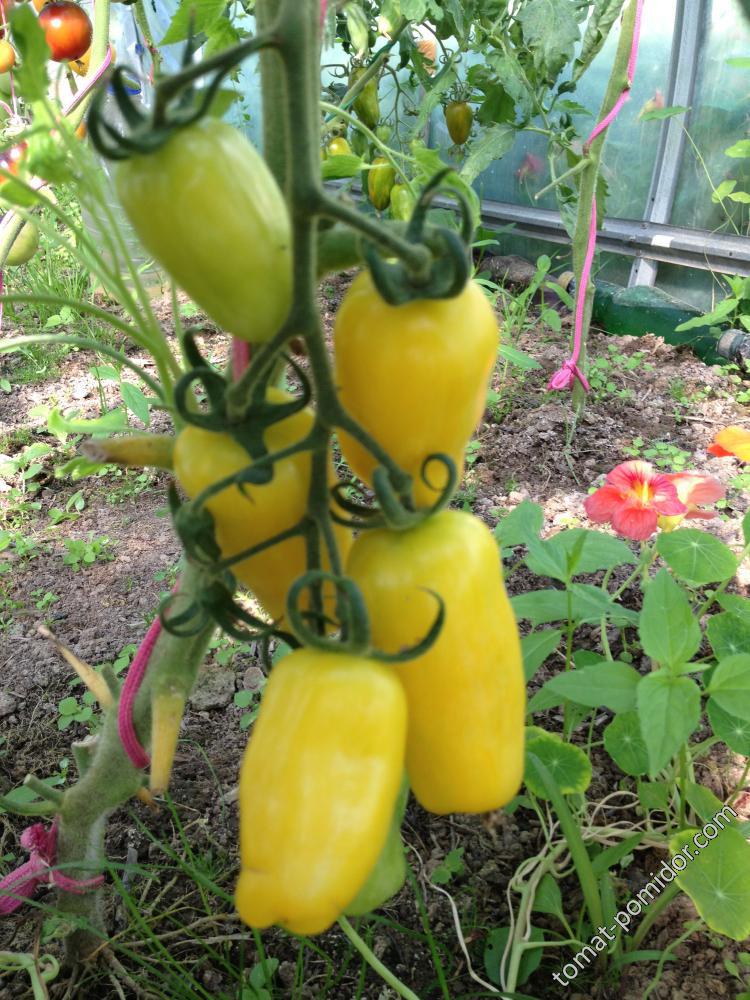
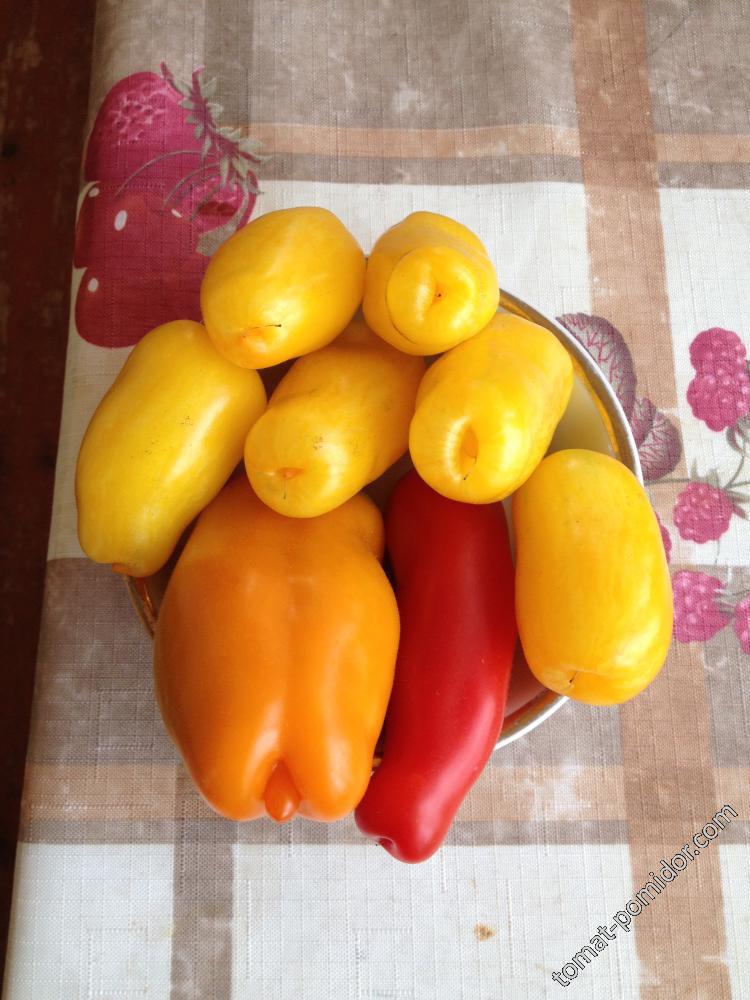
Larisa, I agree with you. I'm very happy with this variety. Mine were 50-80g. They grew better in the open ground! :yep:
seeds from Redko.
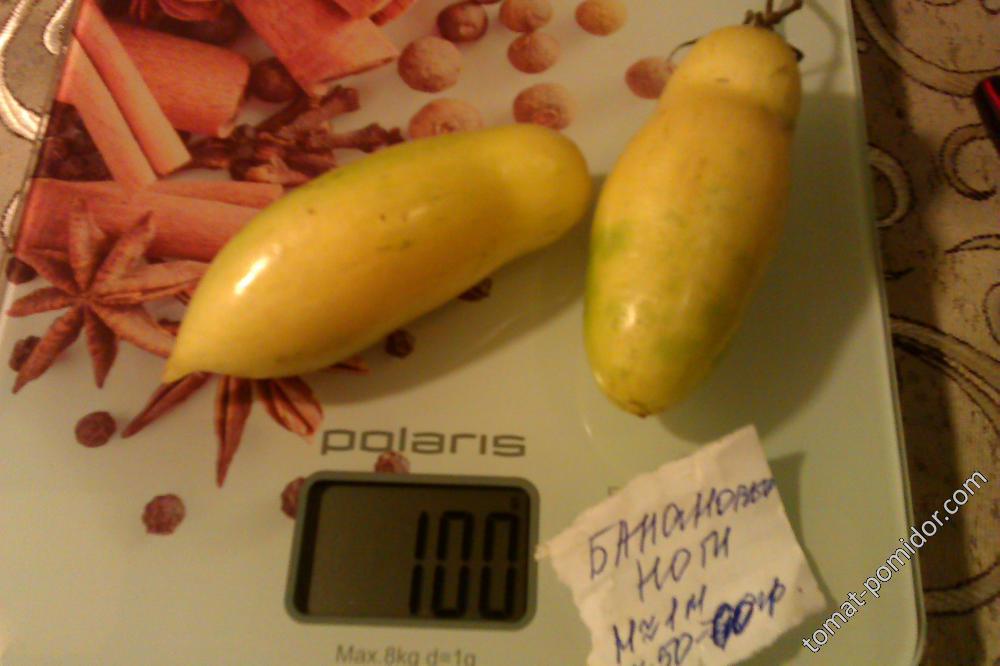
I grew Banana Legs last year. Seeds from Natasha-Yaroslavna.
I really liked this variety! I grew it with two stems, then read that it doesn't need side shoots. I stopped removing the side shoots, and it immediately affected the yield. So I concluded that this variety requires moderate side shoots, meaning you can leave two, three, or four stems.
But you can’t leave it to its own devices; it will immediately become overgrown with leaves, the tomato will become smaller and the leaves will be smaller.
and this is when she stopped step-sonning

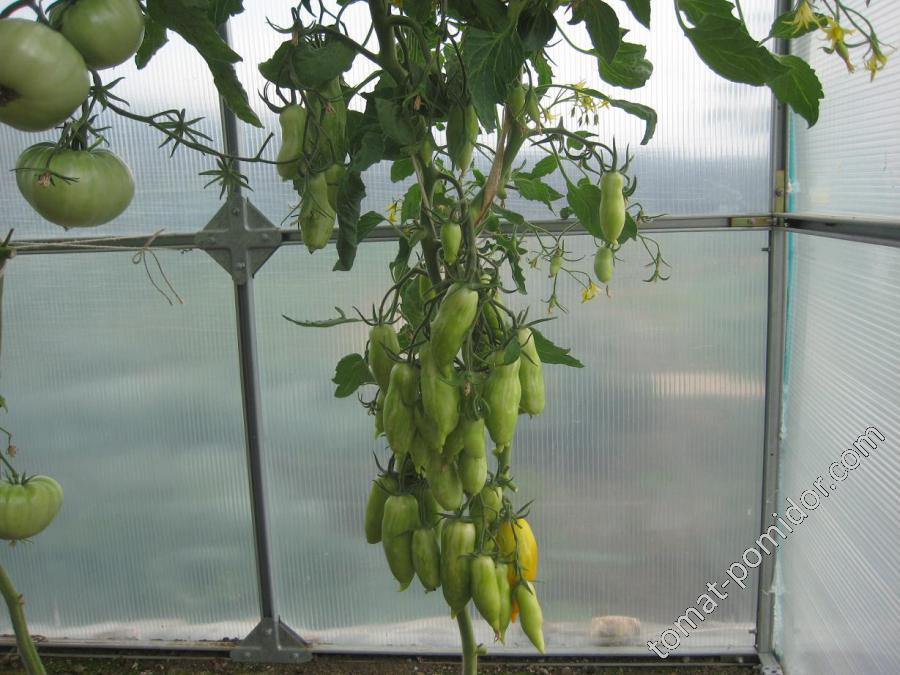
I've been planting this for two years now, thanks to Yaroslavna for the seeds of this wonderful variety! :thx:
In the open ground I hardly take any stepsons, the height of the bush is about 60-70 cm, very productive! :hey: Mid-season.
The fruits are moderately dense, great for jars :yep: Well-ripened fresh ones are also tasty