The Siberian Troika tomato is prized by gardeners and small farms. This is due to its adaptability to any climate and its undemanding cultivation techniques. Furthermore, these tomatoes boast a distinctive shape, sweet flavor, and relatively high yield. Let's take a closer look at all the characteristics of this variety.
Content
- 1 Siberian Troika tomato characteristics in the table
- 2 Photo gallery of the tomato variety Siberian Troika:
- 3 The history of the Siberian Troika tomato
- 4 A detailed description of the Siberian Troika tomato variety
- 5 Pros and cons of the Siberian Troika tomato variety
- 6 Features of sowing and planting the Siberian Troika tomato variety
- 7 Caring for the Siberian Troika tomato variety
- 8 Harvesting, using and storing Siberian Troika tomatoes
- 9 Comparison of the Siberian Troika tomato variety with other varieties in the table
- 10 Real reviews from gardeners about the Siberian Troika tomato variety
Siberian Troika tomato characteristics in the table
| Characteristic | Description |
| Description |
A mid-season, determinate variety for private plots, homesteads, and small farms. Suitable for unprotected soil. |
| Ripening period | About 120 days |
| Fruit weight | Up to 200 g |
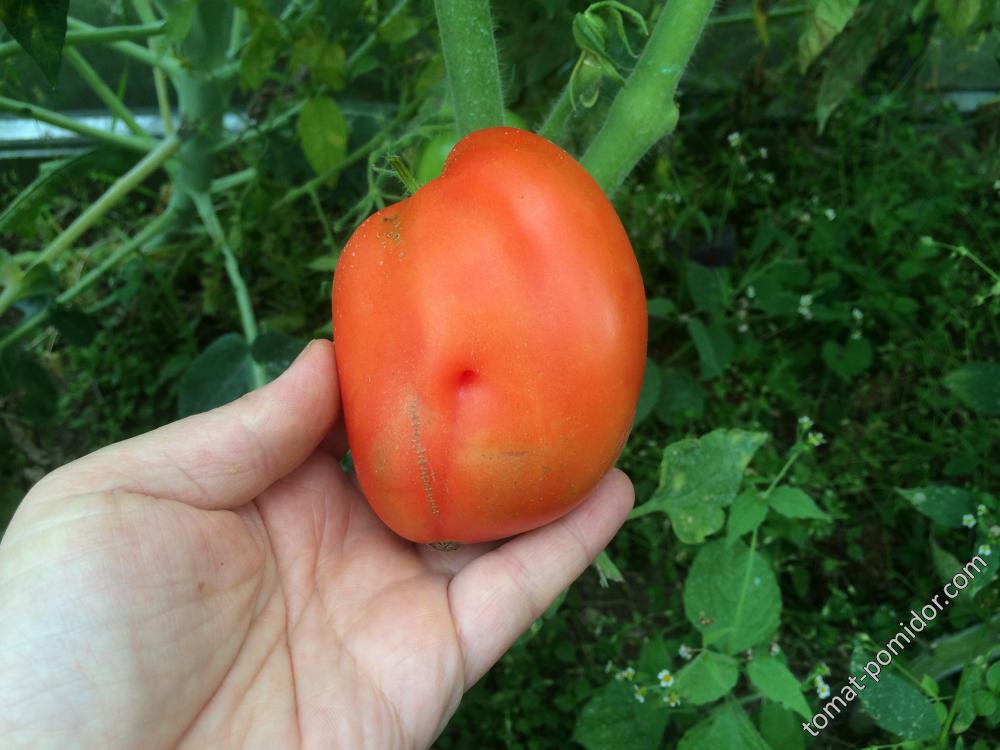
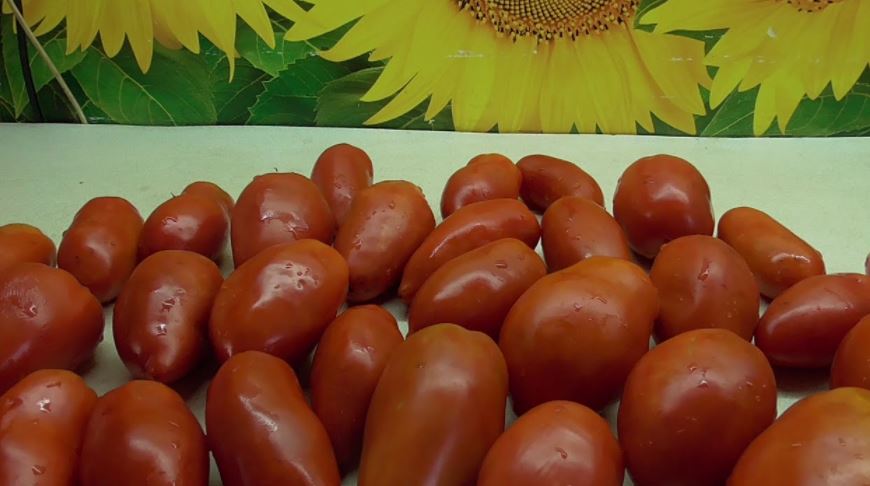
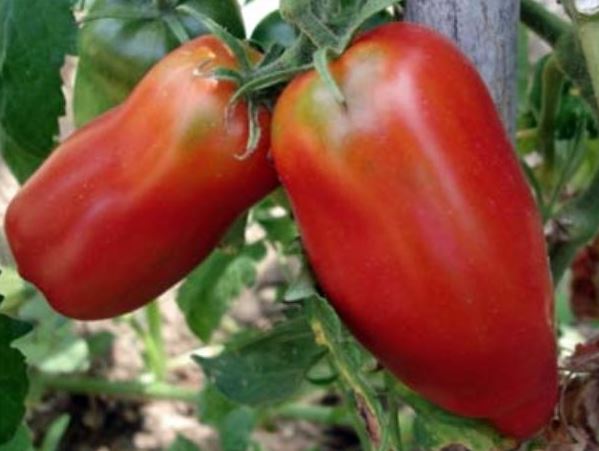
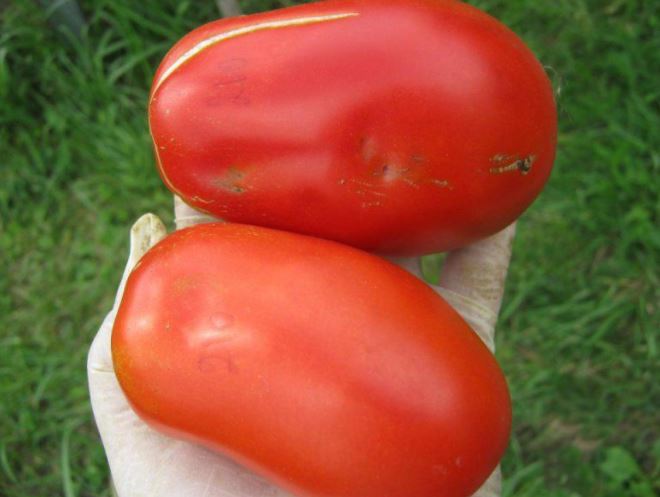
| Description of the fruit | Cylindrical, with a spout, smooth, scarlet. The taste is excellent. |
| Productivity | 600 c/ha |
| Usage | For salads, canning, including whole. |
| Preferred growing regions | Can be grown in different regions of the country. |
| Disease resistance | The tomato is resistant to many nightshade diseases. |
| Agricultural technology | Standard |
| 2004 | |
| Originator | Russia, Novosibirsk, Vladimir Nikolaevich Dederko, “Siberian Garden” |
Photo gallery of the tomato variety Siberian Troika:
The history of the Siberian Troika tomato
The Sibirskaya Troika tomato was developed by breeders V. N. Dederko, O. V. Postnikova, and A. A. Yabrov of the Sibirsky Sad agrofirm. The variety is successfully grown in virtually all regions of Russia, as well as in neighboring countries. It was added to the State Register in 2004.
Originally intended for cultivation in private plots, this variety is often planted in larger vegetable farms due to its good transportability and shelf life while maintaining its marketable appearance.
This tomato is not a hybrid, meaning it can be grown from seeds collected in your own garden.
This will allow you to save money, since the price of high-quality seed material can be quite high.
A detailed description of the Siberian Troika tomato variety
Let's take a look at the Siberian Troika tomato variety and learn about it in detail.
Characteristics of the bush
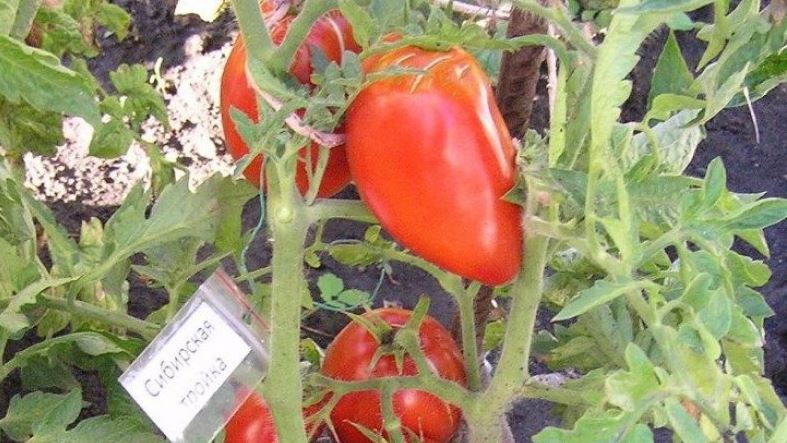
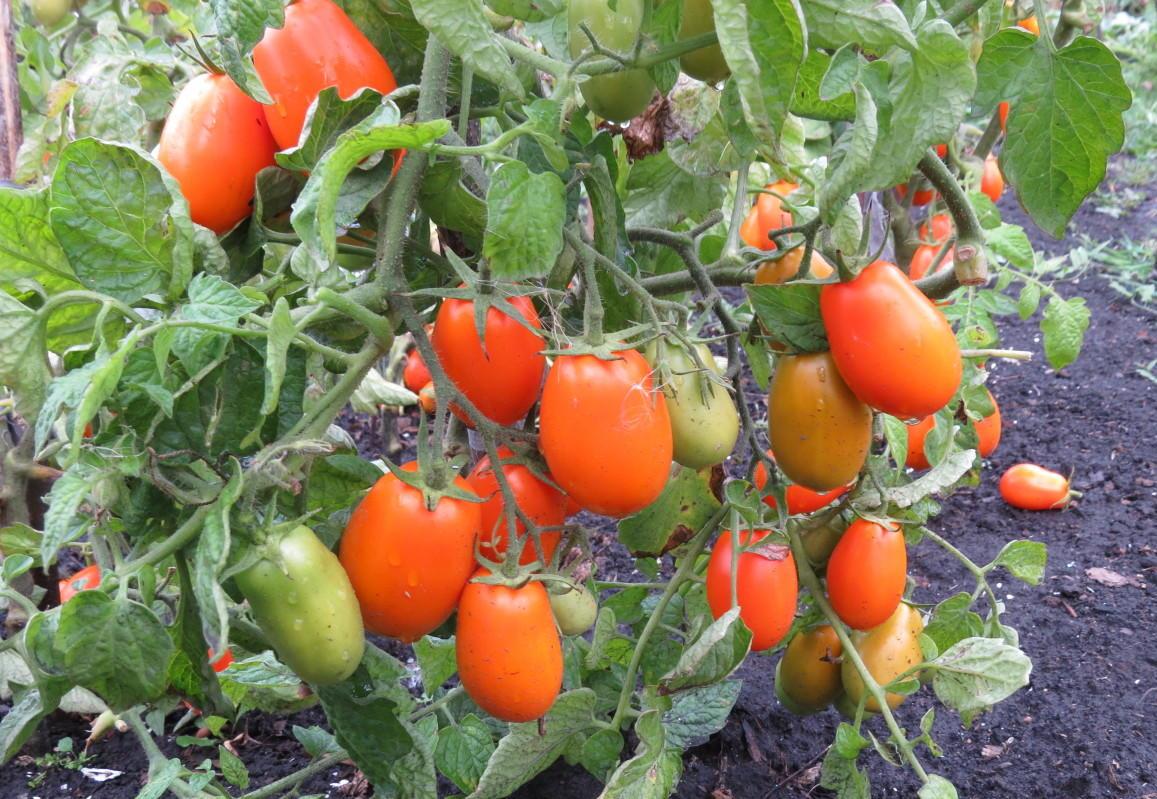
The bushes are determinate, meaning they have limited growth, reaching a height of no more than 0.6 m. The stems are thick and strong, so staking is only necessary as the fruit grows in size, to prevent the shoots from breaking under the weight.
The emerald foliage grows almost parallel to the ground. The first fruit cluster appears above the ninth leaf. Subsequent fruit clusters grow every other leaf blade. The main stem stops growing after 10-12 clusters have formed.
Characteristics of fruits
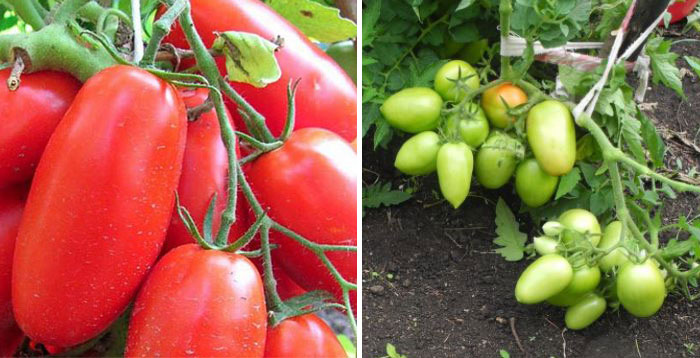
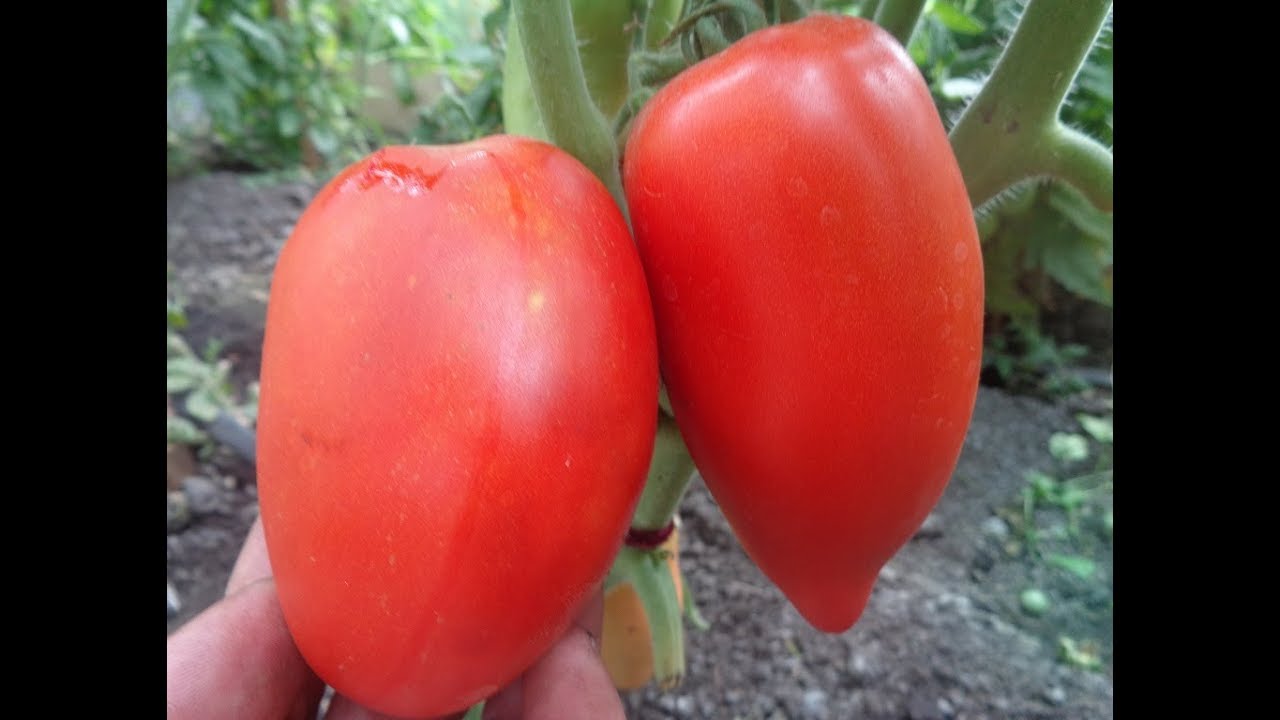
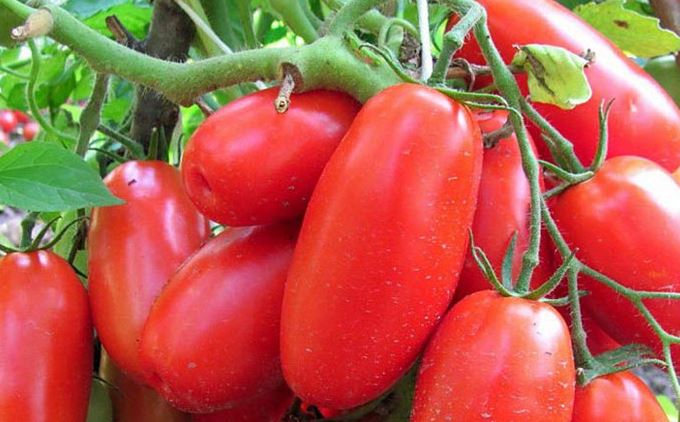
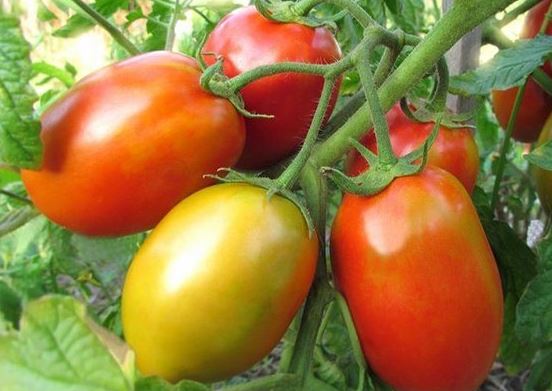
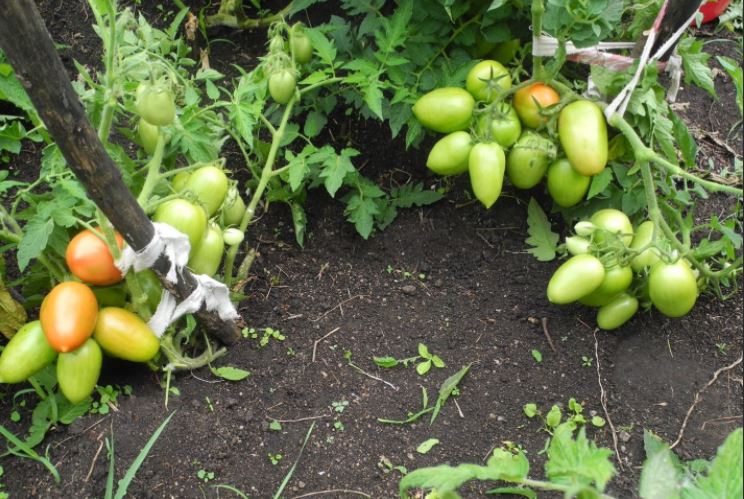
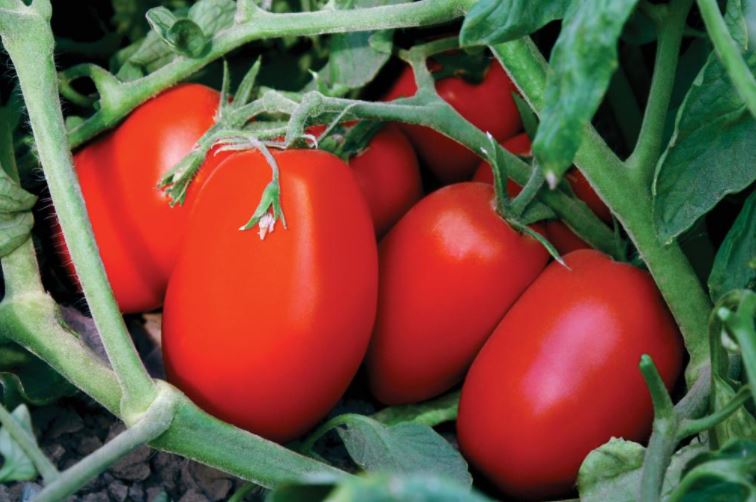
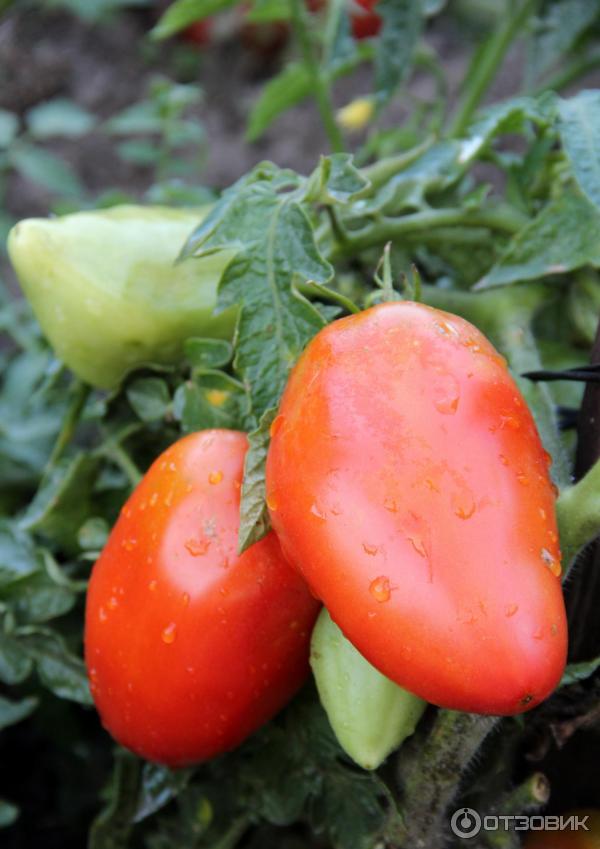
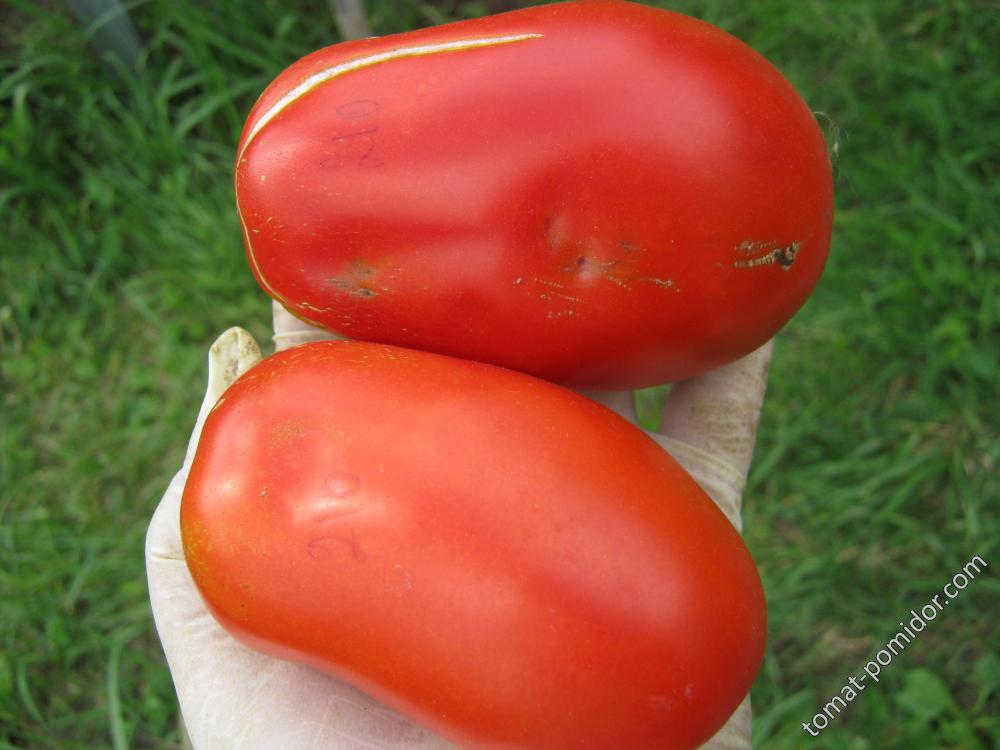
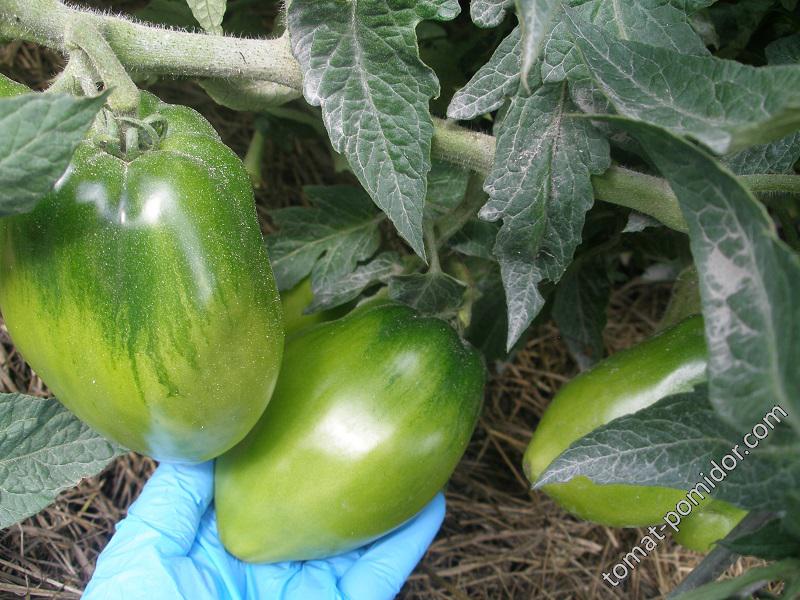
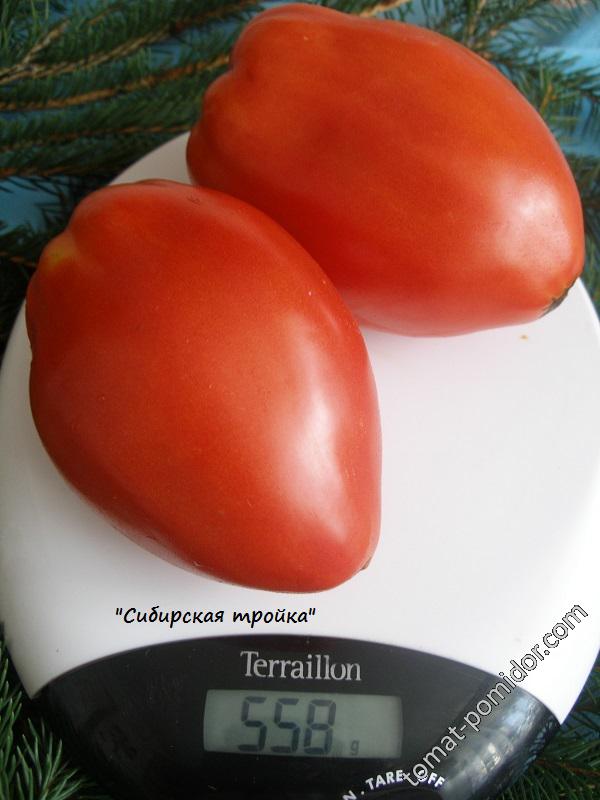
Tomatoes have an unusual cylindrical or pepper-shaped form with a spout at the end.
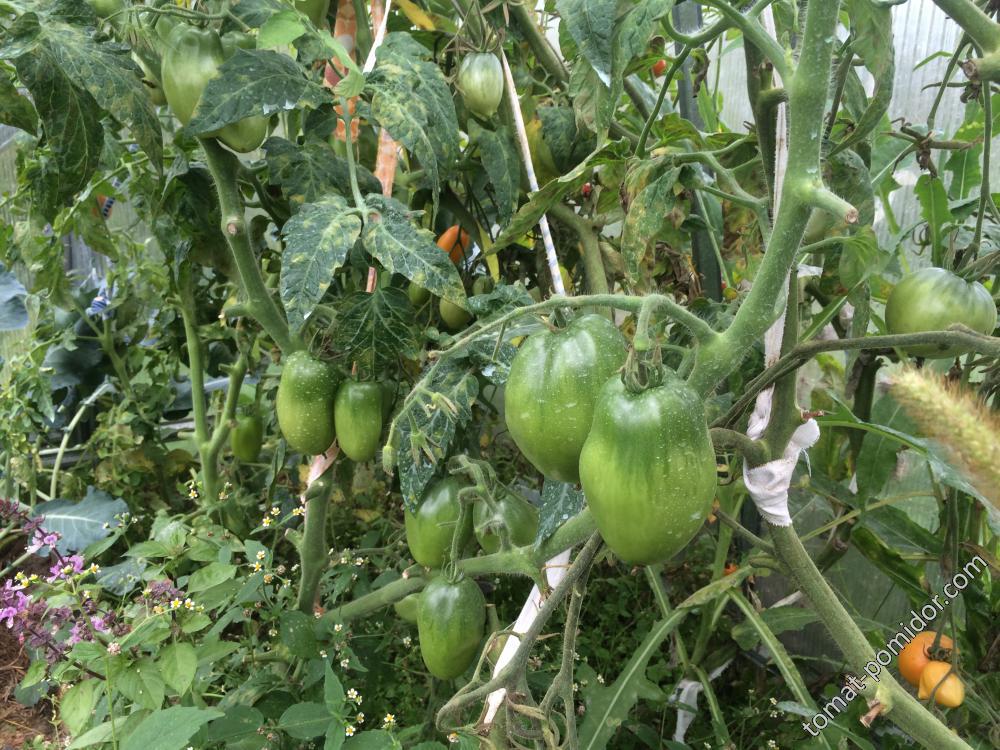
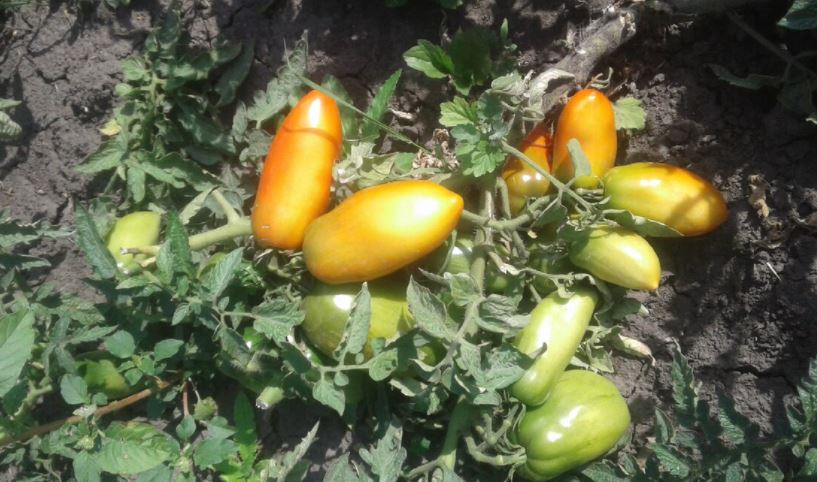
They are 15 cm long and can weigh up to 200 g. Initially, the tomatoes are light green. As they ripen, they turn brown, and when they reach technical maturity, they turn red.
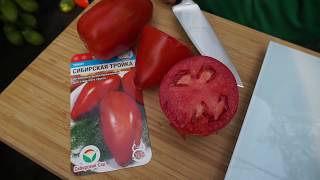
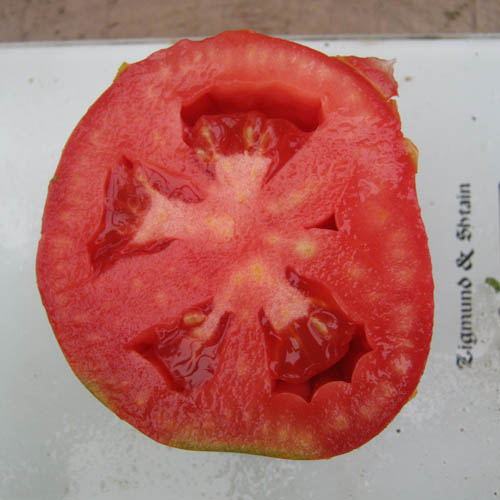
The skin of the fruit is quite thick and does not crack during transportation or storage. However, it is tender, making it suitable for salads. The flesh is sweet and delicious. Inside are 3-4 chambers filled with juice and seeds.
The fruits contain large amounts of vitamin C, lycopene, and other beneficial substances, which are preserved even after cooking.
Ripening time and yield
This is a mid-early variety. Fruiting begins 110-120 days after germination. According to the registry, the yield is up to 6 kg per square meter. However, gardeners who have grown this variety in their own plots claim that, with proper agricultural practices, they can get up to 15-20 kg per square meter.
Pros and cons of the Siberian Troika tomato variety
The Siberian Troika tomato has its advantages and disadvantages.
| Advantages | Flaws |
|
|
Features of sowing and planting the Siberian Troika tomato variety
This variety is very easy to care for, and is typically grown from seedlings. Let's take a closer look at how to do this.
Sowing seeds and growing seedlings
The direct-seeding method is rarely used, as in this case, seeds can be sown in late May or early June. Approximately four months pass from germination to harvest. This means the fruits will not have time to ripen before the first frost.
To ensure tomatoes ripen, they are planted as seedlings in late February or early March. You don't have to worry about the seedlings stretching due to lack of sunlight. The variety tolerates low light levels well.
Step-by-step sowing:
- Disinfect the seeds. Place them in a potassium permanganate solution for 20-25 minutes.
- Soak in growth stimulator according to instructions.
- Spread evenly over the soil so that there is a distance of 1.5-2 cm between the seeds.
- Carefully moisten the seed material with warm water from a spray bottle so that it does not wash away.
- Cover with soil (5-10 mm layer).
- Cover the crops with film or glass to create a greenhouse effect.
- Transfer the container to a temperature of +24…+25 °C.
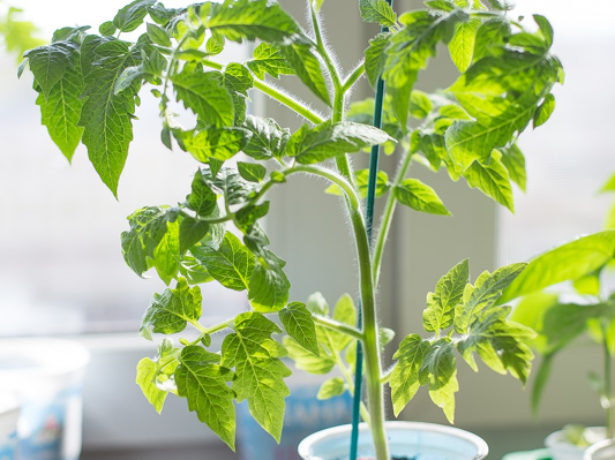
The seedlings will emerge in 4-6 days. After this, remove the cover and lower the temperature to 16°C. When the seedlings have 2-3 true leaves, transplant them into separate pots filled with fertile soil. Fertilize 10-15 days after transplanting.
Planting in the ground
Although this variety is intended for open ground, it can be transplanted into both garden beds and greenhouses, as it tolerates heat well.
Harden off the seedlings first. To do this, begin placing them outside 10 days before transplanting. On the first day, just half an hour of exposure is sufficient, gradually increasing the time to a full day.
The soil at the planting site should be nutritious and loose. Leave 0.5 m between rows and 0.4 m between plants in the same bed. Water the bushes at the roots with warm, settled water.
Caring for the Siberian Troika tomato variety
After transplanting and watering, the bushes are not disturbed for 1.5 weeks.
Watering and fertilizing
Then, every 10-14 days you need to add fertilizer:
- during active growth of green mass and fruit growth - nitrogen mixtures;
- During the ripening period of tomatoes - potassium-phosphorus fertilizers.
Water as the top layer of soil dries. At the same time, loosen the soil to allow moisture, oxygen, and nutrients to better reach the roots.
Pest and disease control
The only threat to this variety is blossom-end rot. This disease develops due to poor soil composition, specifically a calcium deficiency.
To reduce the risk of disease, it is recommended to place eggshells in the planting holes. Spraying with calcium-containing preparations is also recommended.
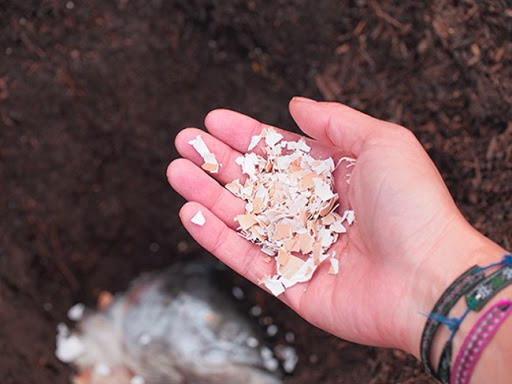
Don't skip preventative treatments. You can use the following products according to the instructions:
- potassium humate;
- sodium humate;
- Epin.
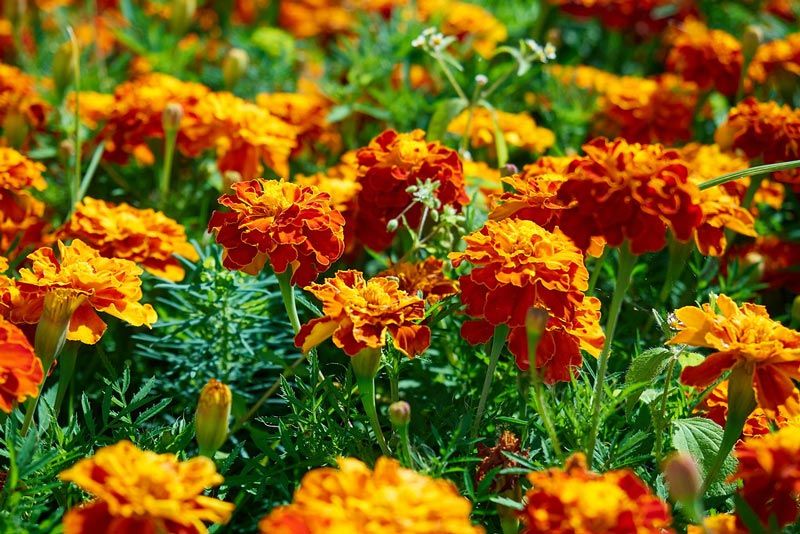
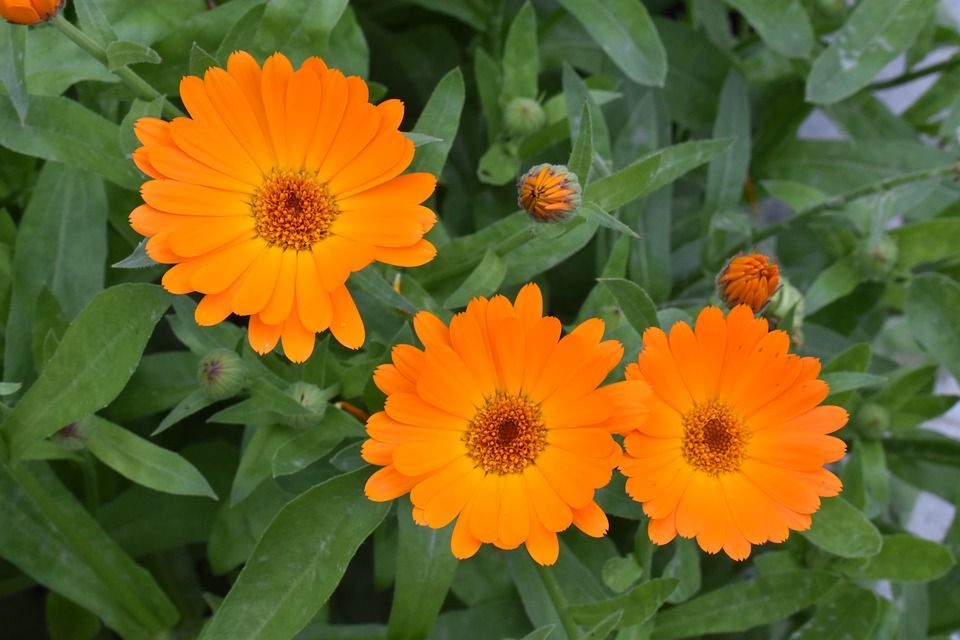
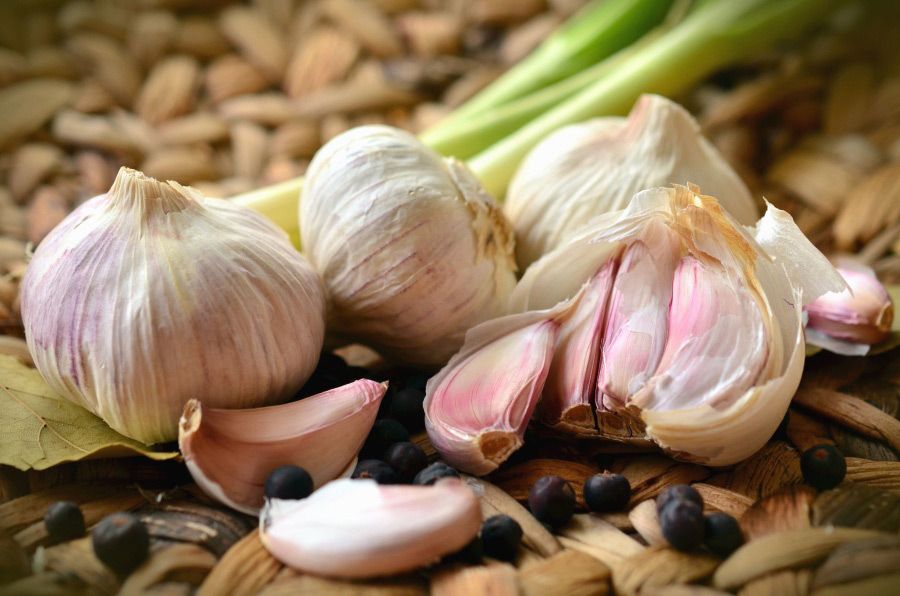
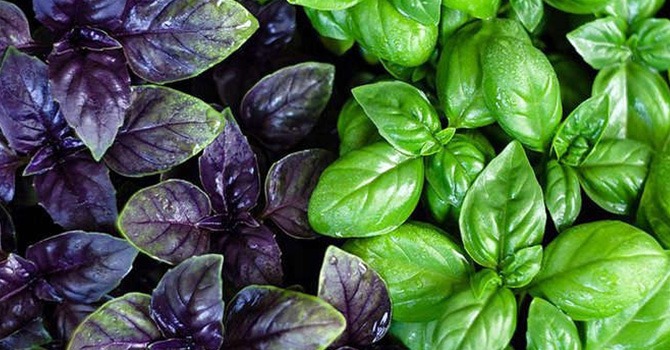
Crop rotation will also help reduce the risk of disease. Tomatoes should not be planted in the same spot two years in a row, nor after potatoes, eggplants, peppers, or physalis. Marigolds, calendula, garlic, and basil make good neighbors. Their pungent aroma repels insects.
Harvesting, using and storing Siberian Troika tomatoes
If you grow tomatoes using seedlings and sow the seeds in the second ten days of February, the harvest will be collected in mid-summer.
Tomatoes can be called universal; they do not lose their flavor whether eaten fresh or when preserved or heat-treated.
Ripe tomatoes can be stored for a long time in a cool place. Their thick skin prevents them from cracking.
Comparison of the Siberian Troika tomato variety with other varieties in the table
Please note! How can you easily convert centners/ha to kg/sq.m? Simply divide by 100! For example, the Abakansky Pink tomato yields 400 centners of marketable fruit per hectare. This equals 4 kg per square meter. It's that simple! Also, keep in mind that typically no more than 3-4 plants are planted per square meter. This way, you can calculate the yield per bush. In the case of the Abakansky Pink, it's about 1 kg.
| Variety | Ripening period (number of days from full germination to ripening)
Yield of commercial fruits |
Brief description | Fetus |
| Siberian Troika | about 120 days
600 c/ha |
A mid-season determinate variety for open ground. Suitable for salads and canning, including whole-fruit preserves. Heat-resistant. | Cylindrical with a spout, smooth, dense, red, 80-100 g (up to 200 g). Excellent taste. |
| Adelina | 82-109 days 242-447 c/ha, maximum 669 c/ha |
A mid-season determinate variety for open ground. Suitable for salads, whole-fruit canning, and processing into tomato products. Heat- and drought-resistant. | Egg-shaped, smooth, transportable red, 59-83 g. The taste is good to excellent. |
| Amur tiger | 108-112 days
1100-1150 c/ha |
A mid-season indeterminate variety for open ground and greenhouses. Suitable for salads and canning, including whole-fruit preserves. | Flat-round, large, slightly ribbed, medium density, brown, 240 g. Good taste. |
| Ladybug | about 80 days
900 c/ha |
An ultra-early maturing determinate variety for open ground and greenhouses. Requires staking and training. Suitable for salads, whole-fruit canning, and pickling. | Round, smooth, dense, red, 10-12 g. Excellent taste. |
| Ladies' man | 110 days
1000 c/ha (greenhouse) |
A mid-season indeterminate variety for open ground and greenhouses. Requires staking and training. Suitable for salads, whole-fruit canning, and pickling. | Cylindrical, with a spout, smooth, very dense, resistant to cracking, red, 45-60 g. Excellent taste. |
| De Barao | about 125 days 500-600 c/ha |
A late-ripening indeterminate variety for open ground and greenhouses. Requires staking and training. Suitable for salads and whole-fruit canning. | Ovoid, smooth, red, 30 g. Excellent taste. |
| Iron Lady | 100-115 days
700 c/ha (greenhouse and under film) |
A mid-season determinate variety for open ground and greenhouses. Suitable for salads and whole-fruit canning. | Elliptical, smooth, very dense, red, 60-80 g. Good taste. |
| Countryman | 96-98 days
348-468 c/ha, maximum 778 c/ha (Omsk region) |
An early-ripening, determinate, non-standard variety for open ground cultivation. Suitable for salads and whole-fruit canning. | Plum-shaped, glossy, red, 66-89 g. Good taste. |
| Kiss of the Geranium | 90 days
Up to 1000 c/ha |
An early-ripening determinate variety for open ground and greenhouses. Suitable for salads, canning, pickling, and processing into tomato products. | Oblong with a drop-shaped appendage at the end, smooth, red, 15-35 g. The taste is good to excellent. |
| Rio Grande | 110-115 days 1500-1800 c/ha |
A mid-season determinate variety for open ground and greenhouses. Suitable for salads, processing into tomato products, and canning. | Plum-shaped, slightly ribbed, pinkish-red, 100-115 g. The taste is good to excellent. |
| Shuttle | 82-121 days
226-269 c/ha (Central region), 220-441 c/ha (Volga-Vyatka), 160-412 c/ha (West Siberian), maximum 792 c/ha (Omsk region). |
An early-ripening, determinate, low-growing standard variety for open ground. Suitable for salads, pickling, and whole-fruit canning. | Elongated-oval, smooth, top with a spout, red, 23-55 g. Good taste. |
| Easter Egg | 100-103 days
2000 c/ha |
A mid-early indeterminate variety for open ground and greenhouses. Suitable for salads and canning. | Plum-shaped, slightly ribbed, two-colored red-orange, up to 60 g. The taste is good and excellent. |
| Rocket | 122-129 days
328-618 c/ha |
A mid-early determinate variety for open ground. Suitable for canning. Requires increased doses of potassium fertilizer. | Elongated plum-shaped with a tapering top, smooth, red, 34-58 g. Good taste. |
| Roma | 110-120 days 400-1600 c/ha depending on the growing location |
A mid-early determinate variety for open ground and greenhouses. Suitable for pickling and processing into tomato products. | Plum-shaped, smooth, red, 55-90 g. The taste is good to excellent. |
| Nugget | 110-115 days
2400-3200 c/ha |
A mid-season determinate variety for open ground and greenhouses. Requires staking and training into two stems. Suitable for salads, processing into tomato products, drying, and canning. | Plum-shaped, smooth, yellow, 25-50 g. Good taste. |
| Sugar plum | 88-95 days
600-900 c/ha |
An early-ripening semi-determinate variety for open ground and greenhouses. Requires staking and training. Suitable for salads, canning, and processing into tomato products (juice). | Plum-shaped, smooth, red, 25-40 g. Excellent taste. |
Real reviews from gardeners about the Siberian Troika tomato variety
Reviews of the Siberian Troika variety are positive, noting the unusual shape and pleasant taste of the fruit, as well as its ease of care.
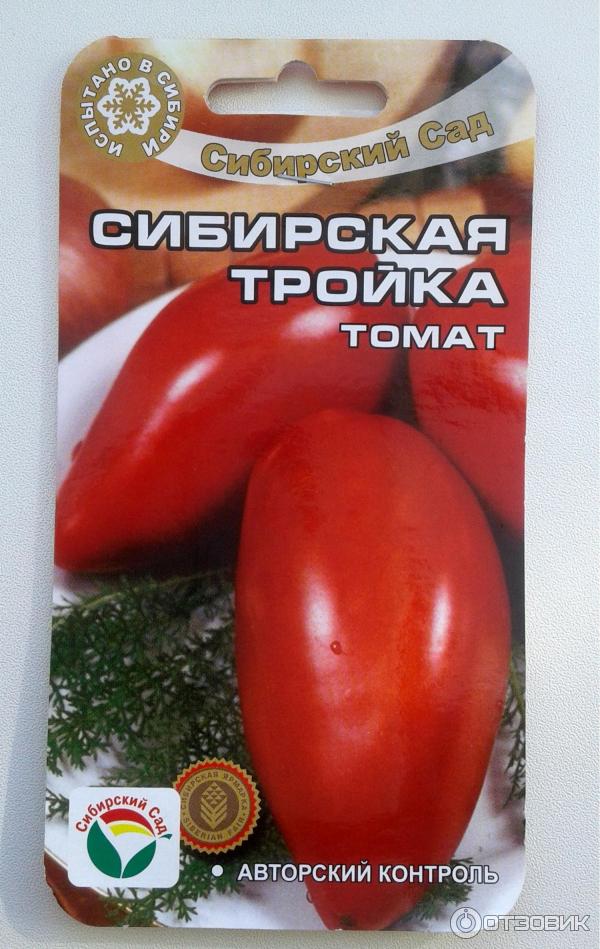
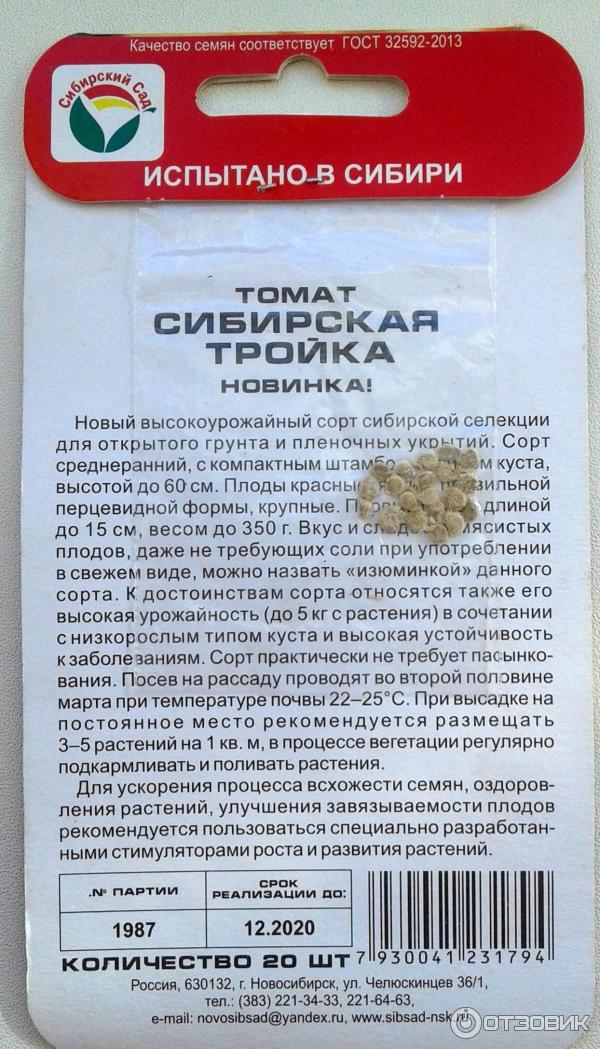
I always ask for "Sibirskaya Troika" tomato seeds first in stores because they're in demand and disappear quickly. One year, I couldn't find them anywhere, and I remember being very upset. Now I buy them in advance whenever I see them, regardless of the time of year. For some reason, I've always found the seeds from "Sibirskmy Sad" in Novosibirsk. The packaging is colorful, with a description of the variety and a small plastic bag containing exactly 20 seeds.
I don't know where this variety was bred, but it's very well suited to harsh conditions, and it has a Siberian name. I've been growing it for a long time, and it's never let me down. It pleases me with abundant and uniform ripening of fruits. The bush is compact and doesn't spread much, reaching only 60 cm in height. The stem is thick, emerging confidently and firmly from the ground, but it's best to tie it up. The foliage is beautiful and curly. This variety is designed for outdoor cultivation, but also thrives in a greenhouse. It's virtually disease-resistant.
I sow the seeds in early March; germination is always good. I transplant them after about 10-12 days. I transplant them into the greenhouse in the first ten days of May, and into the open ground after June 10th.
The variety doesn't require any special care; I just water it and loosen the soil; I don't use any mineral fertilizers.
This mid-season variety ripens in early July, approximately 110-120 days after the first shoots emerge. The fruits are arranged in large clusters on the plant.
The fruit is elongated and pepper-shaped, weighing up to 250g. The tomatoes are bright red, fleshy, and small-chambered. They are excellent for both salads and canning. They look beautiful when sliced, forming even, consistent rings. When ripe, they can be stored in the refrigerator for a long time.
I consider this variety's main advantage to be its distinct tomato flavor. These red tomatoes, with their sweet and sour taste, are captivating and simply impossible to ignore.
Therefore, I can confidently and confidently recommend the Siberian Garden seeds of the "Siberian Troika" variety. It's impossible not to fall in love with them!
I live in Siberia, and although Khakassia is in the southern part of the Krasnoyarsk Krai, I try to plant tomatoes from Siberian breeders at my garden plot. I have excellent varieties from the Novosibirsk company Sibirsky Sad, which annually delight me with their harvest, but every year I try to plant a new variety. This year I planted Sibirskaya Troika tomatoes. The seedlings turned out very well; the plants didn't outgrow their roots and were strong with thick stems. This is a standard, low-growing variety, with plants 50-60 centimeters tall. I grew them in the ground in a sunny spot.
The grower recommends growing the plants without support, but I tied them to small stakes because the abundance of fruit causes the bushes to collapse, leaving the fruit lying on the ground and beginning to rot. Care is very simple; this tomato variety doesn't require pinching. The fruit is abundant, all roughly the same size, uniform and beautiful, and almost the entire crop ripens on the vine. Small tomatoes are typically intended for canning and can have a slightly tart flavor, but these small fruits are very sweet and fleshy. They have thick walls and few seeds. Plant this variety closer together than other varieties, but keep away from taller varieties, otherwise they may shade shorter ones.
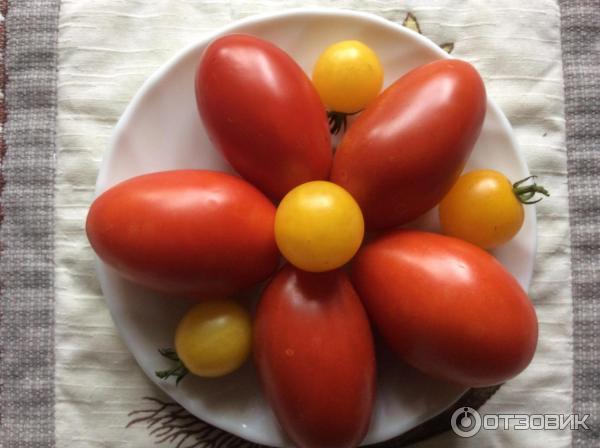
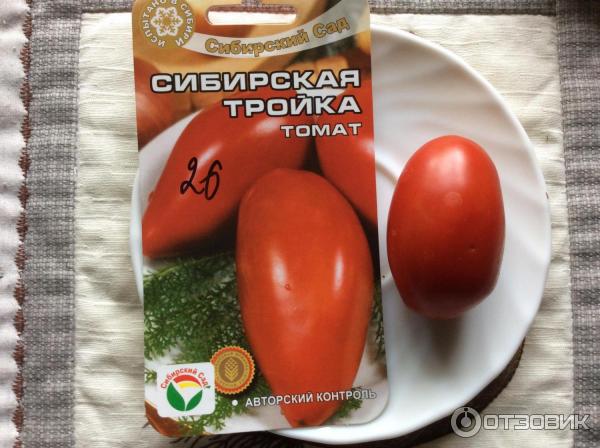
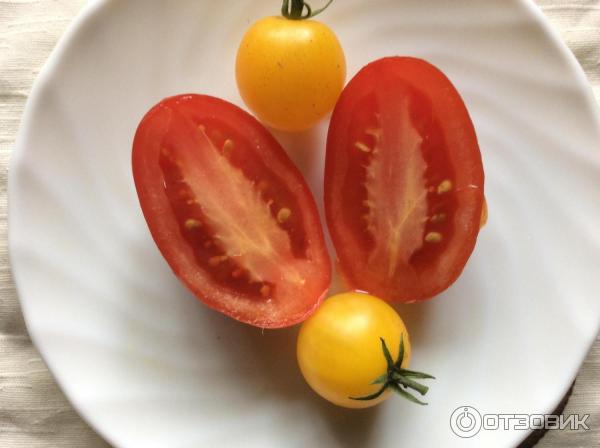
Good day, dear reader!
Among the various varieties of tomatoes that I use in my garden, I decided to take this new variety from a well-known seed producer.
A brightly illustrated cardboard box with detailed information on the back and a small packet of seeds. I won't attempt to describe the qualities of the fruits themselves, as I can't recall this tomato variety in my gardening history, but I'm willing to share my opinion regarding the seeds.
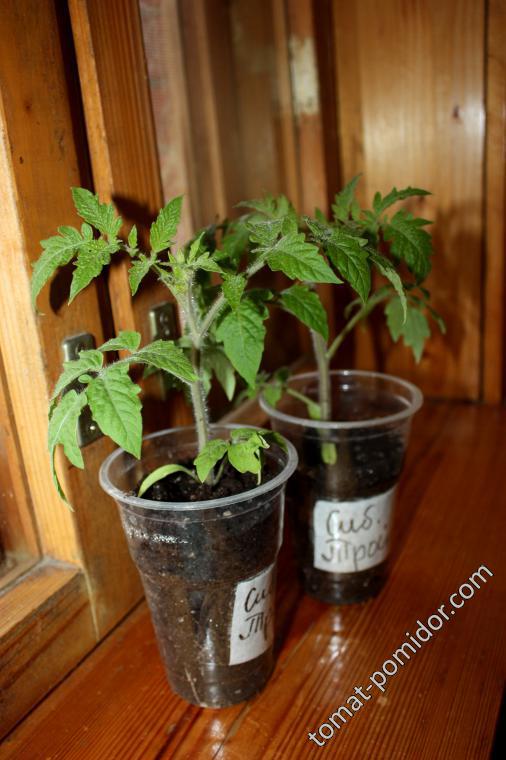
I planted them two weeks ago. The conditions on the windowsill aren't ideal, but you can still see the results. They germinated well.
The stems are stocky. I got eighteen seedlings from one packet of seeds, which are ready for transplanting two weeks after planting.
Happy shopping!
Thank you for your attention.
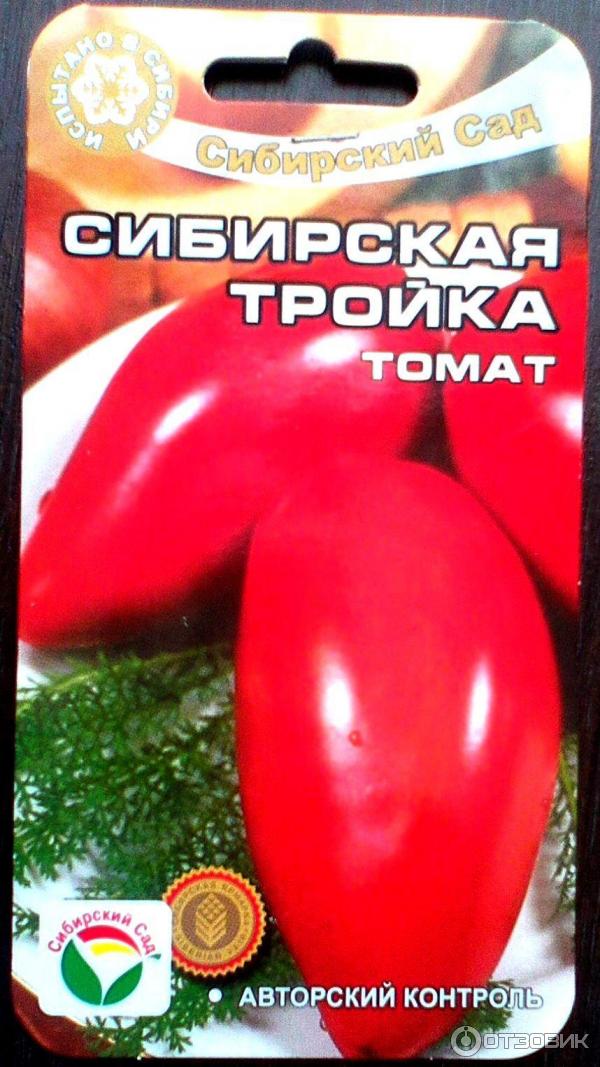
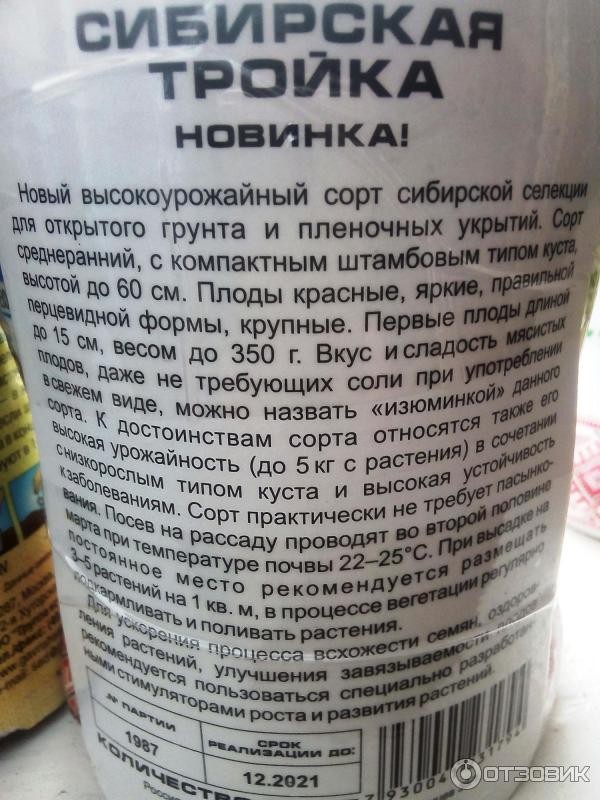
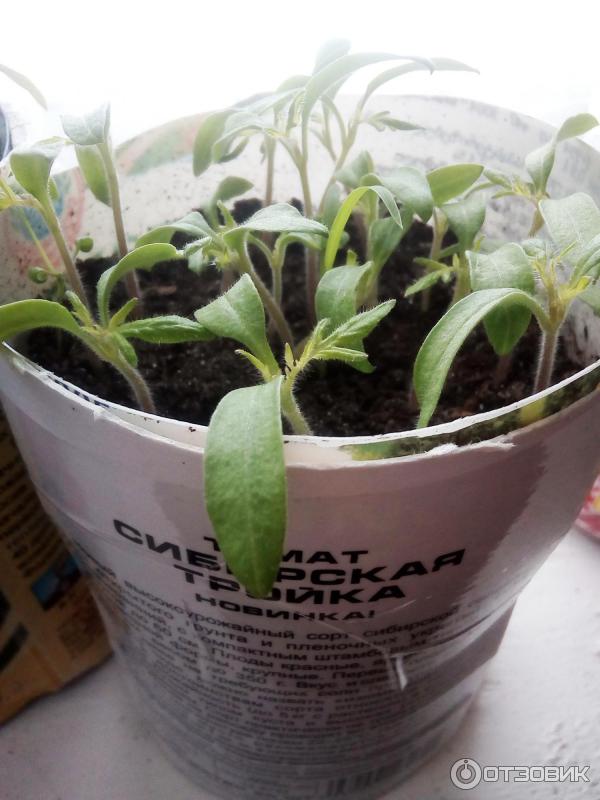
I'd heard about the "Siberian Troika" tomato variety for a long time, from friends and acquaintances, and I was ready to buy it. I was amazed by the germination rate: 24 out of 25 seeds sprouted. The seedlings were dark green and sturdy, not stretching like some varieties. After planting them in open ground, they became so shaggy that I had to remove the lower shoots. The bush isn't tall, only 50-70 centimeters. But for some reason, I wasn't happy: the plants were blooming, but the tomatoes weren't appearing. I wondered if they'd been raving about it, or if they were just disappointing. But after another weeding, I parted the shaggy bush, and there they were, covered in tomatoes, already starting to ripen. The fruits were large, elongated, and firm.
The taste is excellent, crumbly, with a sweetish flavor, a very good variety for growing in open ground and for canning.
This variety really scared our summer residents during the cold summer of 2017.
Many who liked it rushed to fill their gardens with the Siberian Troika tomato. As usual, the chores begin in March. Finding suitable soil, waiting for the seedlings to sprout, waiting for them to shed their caps, picking, languishing as seedlings, and finally, planting. If it's open ground, finding stakes and tying them in place is essential; if it's a greenhouse, watering, fertilizing, and shaping are added.
Many people rely on their favorite variety and don't realize that summer is not always the same, and varieties react differently to weather conditions.
Those of our gardeners who had planted a lot of Siberian Troika were in shock at the end of July: the tomatoes were growing, but not setting fruit. They were afraid they would be left without any tomatoes at all.Here in the photo from early August, on the left is the Southern Tan bush I wrote a review about, and on the right is the Siberian Troika, which is almost fruitless.
But that's not all. With the arrival of long-awaited warm weather in our region, this variety began actively setting and producing fruit. And they were so tender and juicy, I couldn't bring myself to chop them into a salad.
They're pink, plum-shaped, and taste simply superb. They didn't produce a large harvest—they didn't have time—but they did delight with their flavor. And our gardeners calmed down. It was a lesson for everyone: we're not in the south, and we need to plant a variety of varieties and not shy away from hybrids.
I forgive him everything for his taste and I tried it again this year.
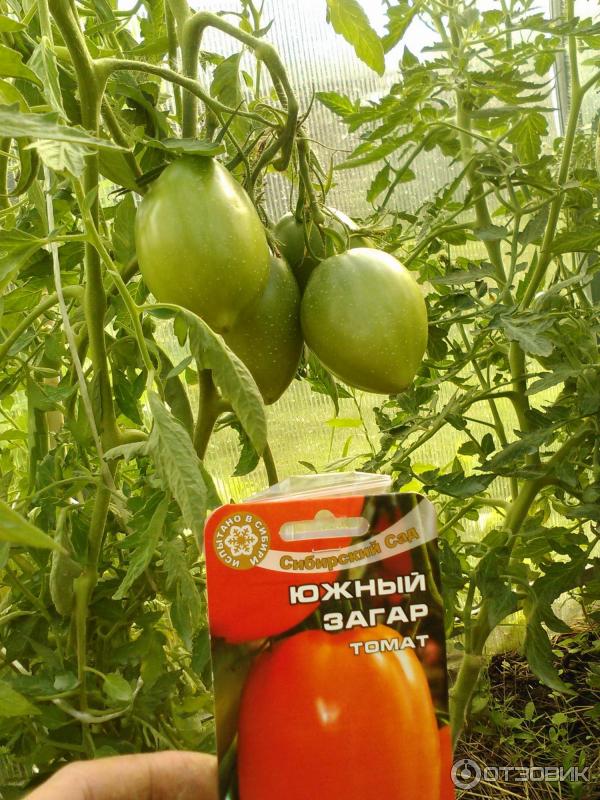
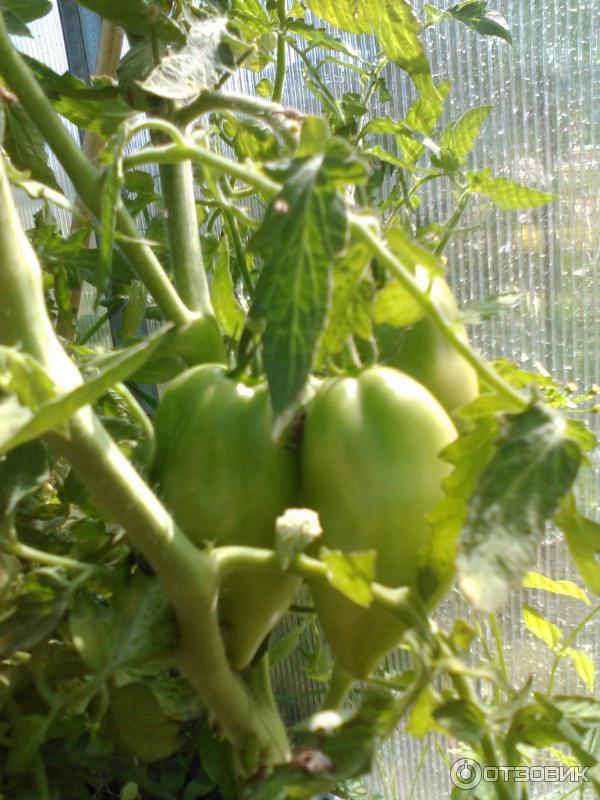
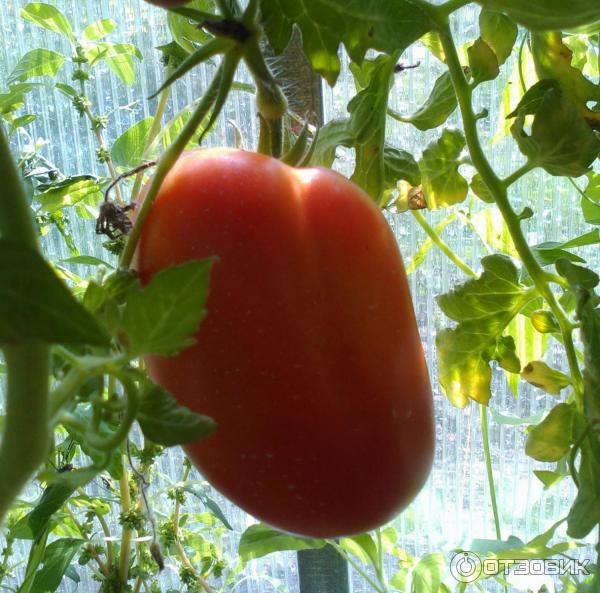
The Siberian Garden "Siberian Troika" tomato seeds have a good germination rate. They are easy to care for and grow in good conditions. We transplanted the seedlings to a greenhouse and watered them twice a week, as needed. The tomatoes grew beautifully. They taste sweet. They are smooth and compact, all perfectly matched. This year, we'll be planting only these tomatoes. This variety is also suitable for outdoor planting. You'll be pleased with the results, too. "Siberian Troika" tomatoes are good for both fresh eating, especially tasty straight from the ground, and for preserves. The fruit is firm and doesn't crack. Both the seeds and the ripened tomatoes are excellent! We highly recommend them!
Another tomato has joined my collection. Last year, I purchased tomato seeds from the Siberian Garden company, called "Siberian Troika." This variety amazed me with its consistent germination and high yield.
I start seedlings from seeds. I do this in March, when there's still snow outside. I buy special seedling soil, fill it into transparent containers, make furrows, and scatter the seeds in them. I cover the containers with clear glass and place them near a sunny window. My seedlings grow there until spring.
Siberian Troika tomatoes are small bushes. They are compact, low, and bushy. Ripe fruits are oval, bright red, and very large. Their size is simply astounding. The tomatoes I grew were about fifteen centimeters long and weighed about 400 grams.
This variety delights me with its quick ripening and abundant harvest. The fruits are firm and delicious. They are versatile. I eat them fresh, pickle them for the winter, preserve them, and use them in cooking. Overall, Siberian Troika tomatoes are tasty, large, and productive. I recommend them to everyone.
This variety is mid-season. In my region (Kuzbass), it doesn't have time to produce a good harvest due to the short summer.
The price of seeds is affordable: 25 rubles for 20 seeds. Germination rate is 70%. Seedlings do not stretch.
By the end of August, only the lower cluster is set and ripens (in the greenhouse).
The bush itself is quite vigorous. The leaves are large. The fruits weigh 300 grams or less.One of the most delicious varieties. Tomatoes harvested for ripening store and ripen well.
The flesh is meaty and slightly sweet. It has a distinct tomato flavor. We eat tomatoes fresh and in salads.
The Siberian Troika is perfect for all types of canning.
Despite the small harvest (during our short summer), I will not give up on this variety.
I plant this variety in open ground every year and am always pleased with these tomatoes; I never miss a harvest. Since these tomatoes are short, I plant them in the first row, facing the sun, and then plant taller ones in the next row. I don't tie them to stakes right after planting; you can insert a stake nearby and tie them in when the tomatoes grow and the fruit begins to develop. The fruit grows quickly. I pick the large, unripe ones to speed up the formation of new fruit. Summers are short in Siberia, so I try to get the most out of the tomatoes, storing the harvested tomatoes in boxes to ripen. I pickle them and always choose this variety straight from the jar; I love the taste of salted tomatoes.
Girls and boys!
Has anyone planted the Siberian Troika variety from Sibsad?
Today my neighbor and friend asked about this variety, she said that the taste has notes of strawberry and is sweet (she was told about it).
Please share your impressions.
I planted it this year, it wasn’t very productive, it had a sweet taste…
There was a top. A bit late. Side-sonned before the first cluster, probably about 60 centimeters high, grew in a greenhouse.
Not a bad tomato, but I won't plant it again.
Unfortunately, there are no photos.
I planted this year in both a greenhouse and in the open ground. I had a higher yield in the open ground, but there were varieties with higher yields.
In seedlings it does not stretch out like other varieties – it grows strong.
Delicious, sweet, I won’t say anything about the strawberries - I don’t remember such details anymore.
I'll plant more.
By the way, it seems to me to be very similar to the Petrusha-Ogorodnik variety from Sib.Sad. Only larger.
I planted Siberian Troika for several years before installing a greenhouse and switching to indeterminate varieties. It's a unique variety... most importantly, it's not as hardy as its hybrid descendants. In a warm and hot summer, it will produce a good harvest in the open ground, and it will be tasty and sweet. It's a bit late, but in the open ground, it can ripen on the vine. In a rainy summer, it will be bland and watery, as confirmed not only by me but by all my friends. I can't speak for the strawberry flavor, but when it's right, it's truly one of the sweetest tomatoes in the open ground.
I haven't planted it in the greenhouse; it's a shame to take up space. It only resembles the gardener's Petrushka in shape, nothing else.
Unfortunately, there are no photos either, as I never had the habit of photographing tomatoes before joining the forum.
Description from the pack:
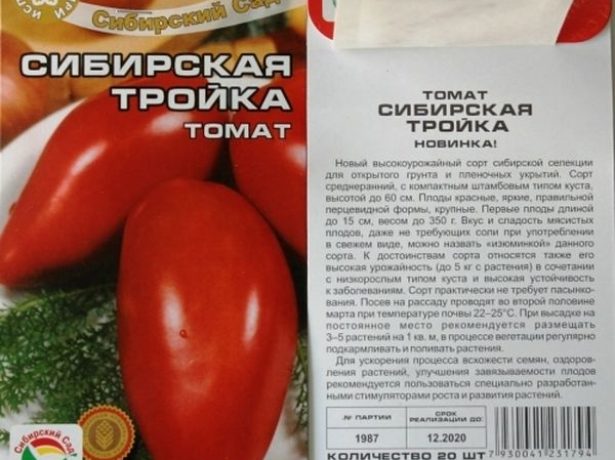
This mid-early variety boasts a compact, standard-type bush, reaching a height of up to 60 cm. The fruits are red, bright, and large, with a perfect pepper shape. The first fruits are up to 15 cm long and weigh up to 350 g. The flavor and sweetness of the fleshy fruits, which require no salt when eaten fresh, are a defining characteristic of this variety. Other advantages include its high yield (up to 5 kg per plant) combined with its low-growing habit and high disease resistance. This variety requires virtually no pinching.
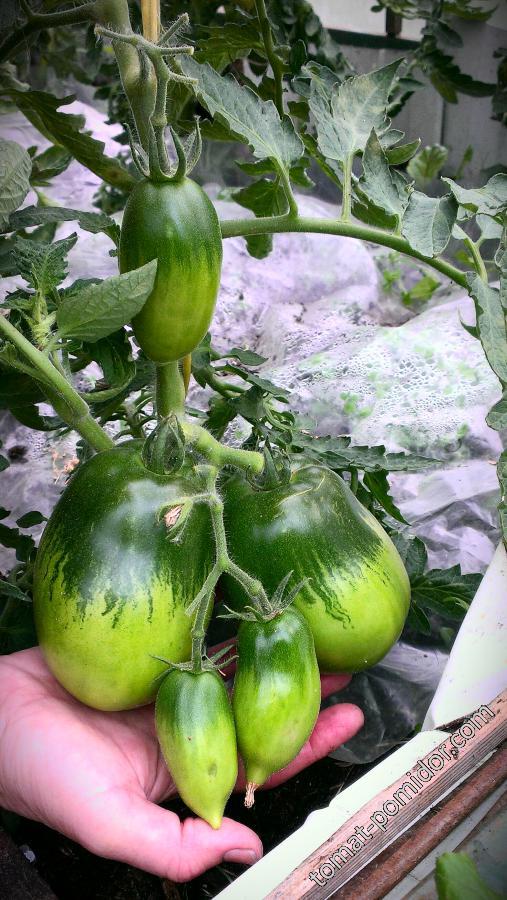
I've been growing Siberian Troika for a long time, almost 10 years now... It's a proven, reliable variety for our climate zone. It's not at all late-ripening—even in this capricious summer, it has remained true to its worthy qualities.
I grew it in open ground, in beds - plants can be planted at a distance of 40-45 cm, removing the lower shoots coming from the root.
The variety is disease-resistant—the foliage was strong and healthy all summer, without any signs of... However, I tried to dust the plants with ash frequently, especially after rains and cold nights.
The fruits are large (especially the first ones), have a regular pepper shape, the flesh is thick and tasty (I didn’t notice any strawberry flavor), but the taste of the fruits can be rated at 5!
Seeds from the Siberian Garden.
This is a composite description, based primarily on reviews from our forum (I wrote the description myself before sowing). Standard (needs side-sonning), mid-season, pepper-shaped, weighing up to 350g, productive, red, good for pickling, disease-resistant.
Clever girl! I had it growing in a bucket in the open ground. It formed several tassels early. The largest ones were at the bottom, smaller ones at the top. Very tasty! It ripened on the bush! Even though it was growing in open ground, the weather was terrible all summer—cold and rainy. Plus, I didn't put the buckets in the best spot. But still. I'll definitely plant it next year and in buckets again.
The bush is not tall, but not low either, about 60 centimeters. Strong.
But there’s something wrong with the weight of the fruits; the largest one on my scales was up to 100 grams.
He wasn't sick with anything. He was pulled out at the end of September.
I planted the Troika in a greenhouse. The bush was about 1 meter tall. The yield was average. The fruits were tasty, sweet, juicy, and fleshy.
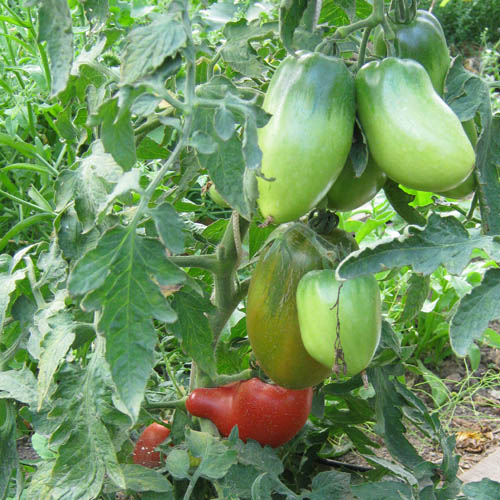
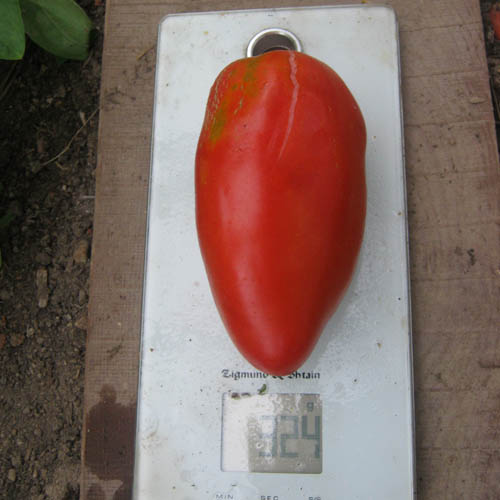
I repeated the process in 2016. In a greenhouse. The yield was very average, late-ripening, and the tomatoes were fleshy and tasty. The tops of the tomatoes (the only ones in the greenhouse) were partially damaged, but the last one to catch cladosporiosis was at the end of August. I collected seeds, but I don't plan to repeat the process yet; I want more fruit. The bushes were about 80 cm tall, vigorous, wide, with dark green foliage. Compared to the heart-shaped tomatoes growing nearby, they were simply monsters!