The Malinka tomato has won the favor of gardeners thanks to its low maintenance and ease of care. It requires no staking or shaping, and the harvest will impress any gardener.
Content
- 1 Table with characteristics of the Malinka tomato variety
- 2 The origin of the Malinka tomato variety
- 3 A detailed description of the Malinka tomato variety
- 4 Advantages and disadvantages of the Malinka tomato variety
- 5 Features of growing the Malinka tomato variety
- 6 Resistance of the Malinka tomato variety to diseases and pests
- 7 Storage and use of Malinka tomatoes
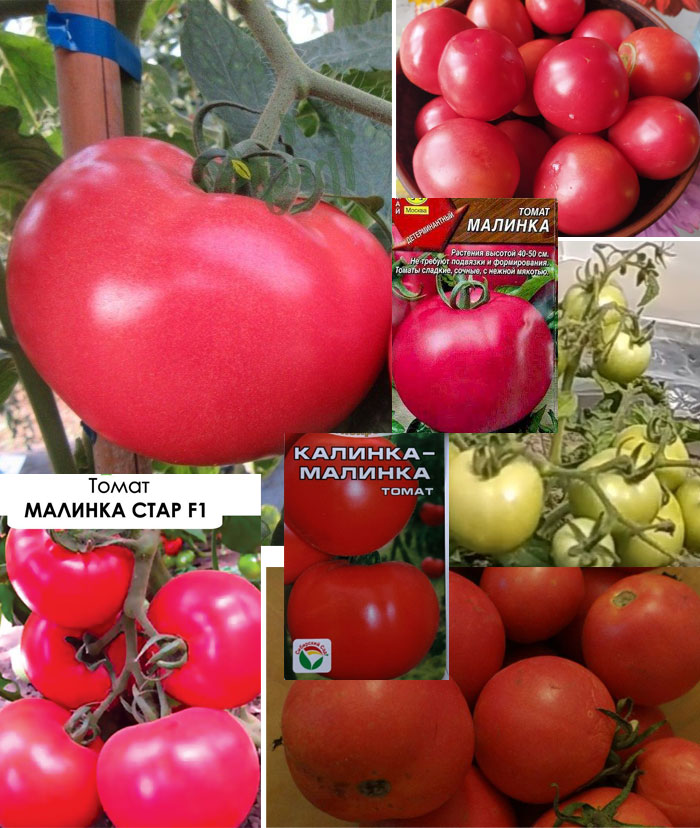
- 8 Two varieties with similar names: Malinka Star F1 and Kalinka-Malinka
- 9 Comparison of tomato varieties Malinka, Malinka star F1 and Kalinka-Malinka with other varieties in the table
- 10 Reviews from gardeners about the tomato variety Malinka, Malinka star F1 and Kalinka-Malinka
Table with characteristics of the Malinka tomato variety
| Characteristic | Description |
| Description | A late-ripening, standard tomato variety. Suitable for greenhouse cultivation and open-ground planting. |
| Ripening period | 110-120 days |
| Fruit weight | 110-130 g |
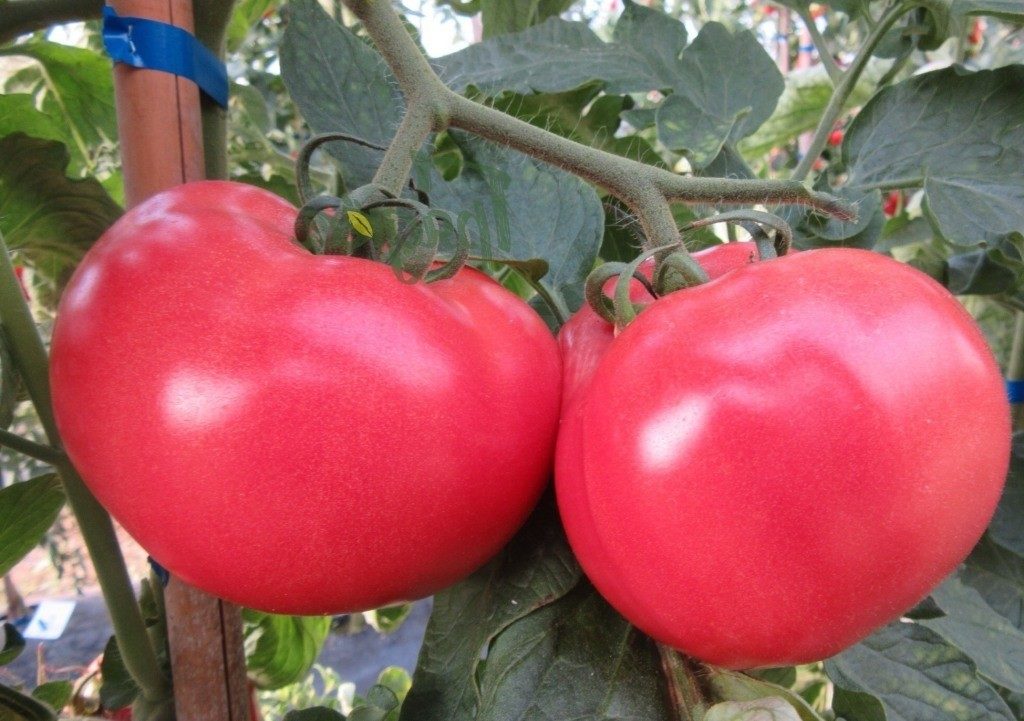
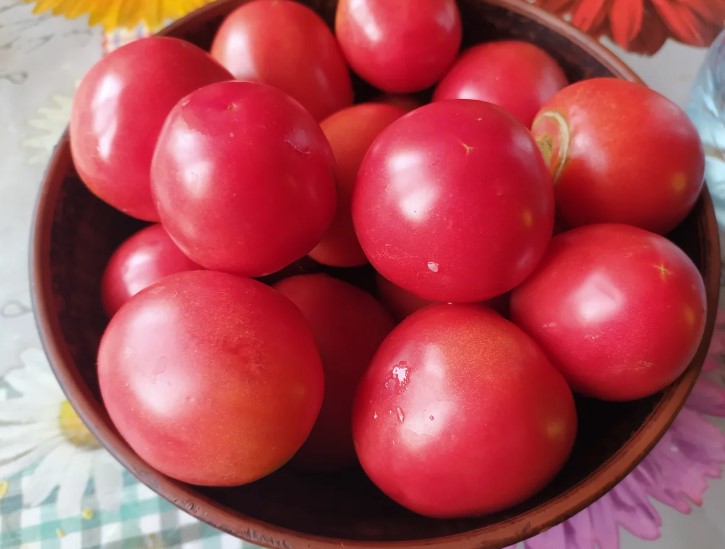
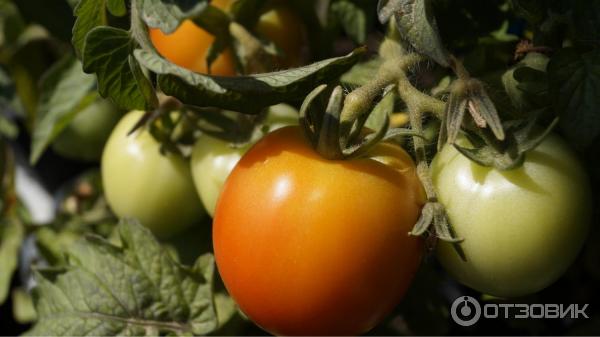
| Description of the fruit | The fruits are round, with a dense, smooth skin. The flesh is loose with six seed chambers. The color is raspberry. |
| Taste | The taste is excellent, slightly sweet. |
| Productivity | Up to 3 kg/sq.m |
| Usage | A salad tomato variety, suitable for preserving small fruits, as well as for processing into sauces and juices. |
| Preferred growing regions | Suitable for all growing regions, including northern ones. |
| Disease resistance | It is resistant to many tomato diseases and is not prone to various types of rot, powdery mildew and corky roots. |
| Agricultural technology | The bushes are low, growing up to 50 cm, so they do not need tying. |
| 2007 | |
| Country of origin | Federal State Budgetary Scientific Institution 'Federal Scientific Center of Vegetable Growing' |
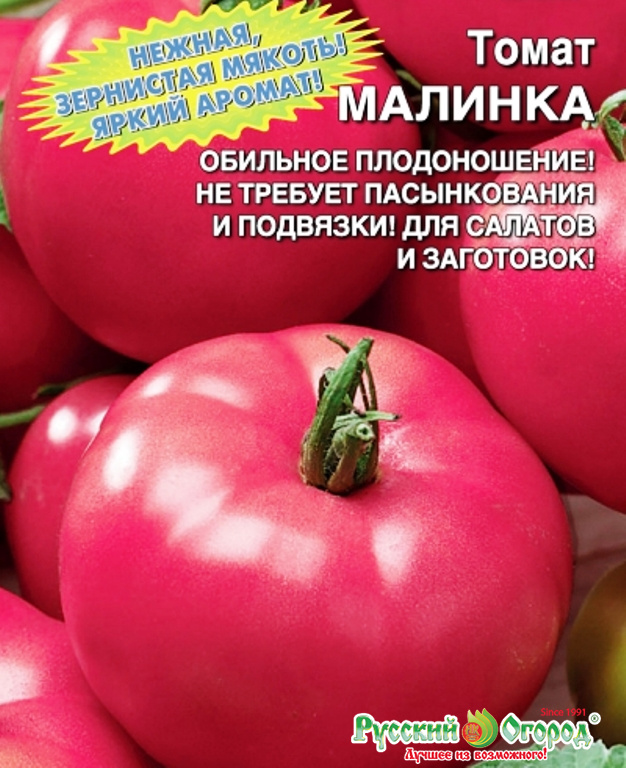
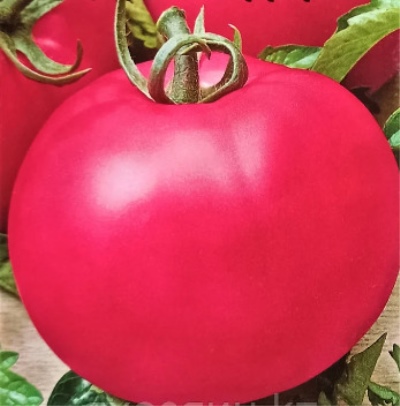
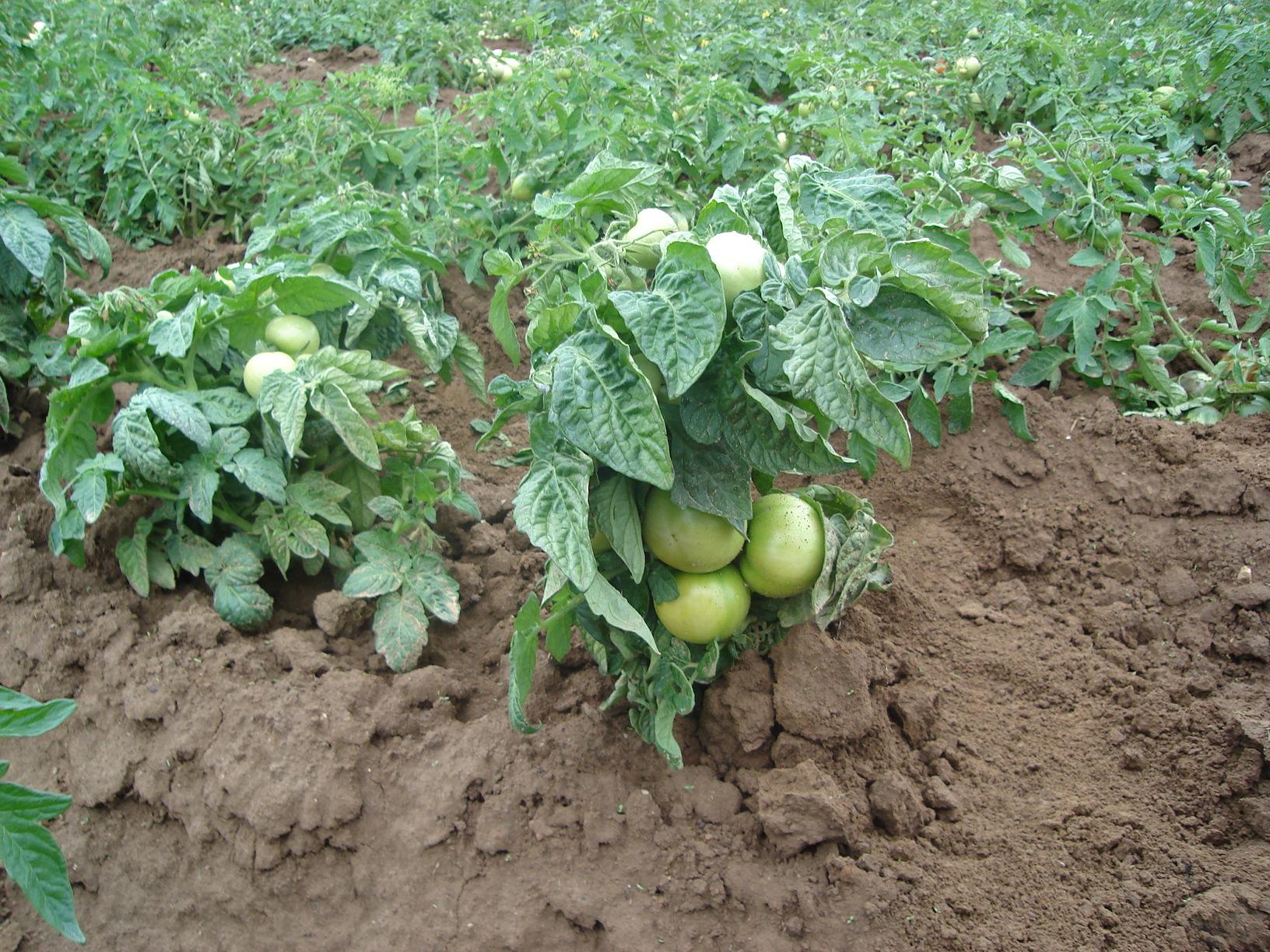
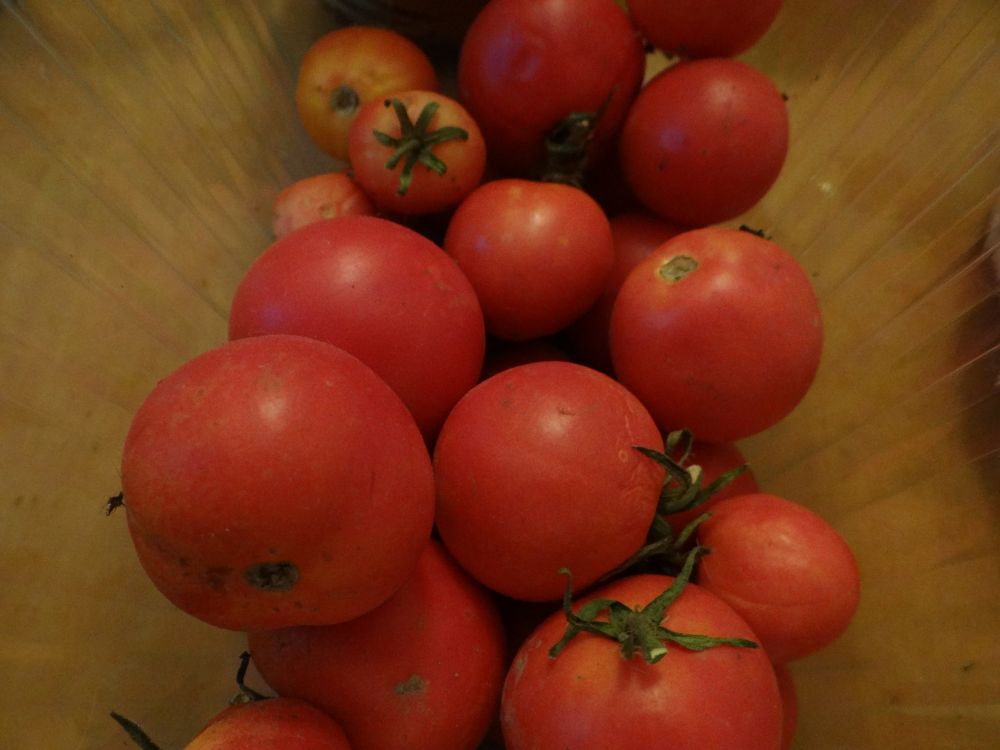
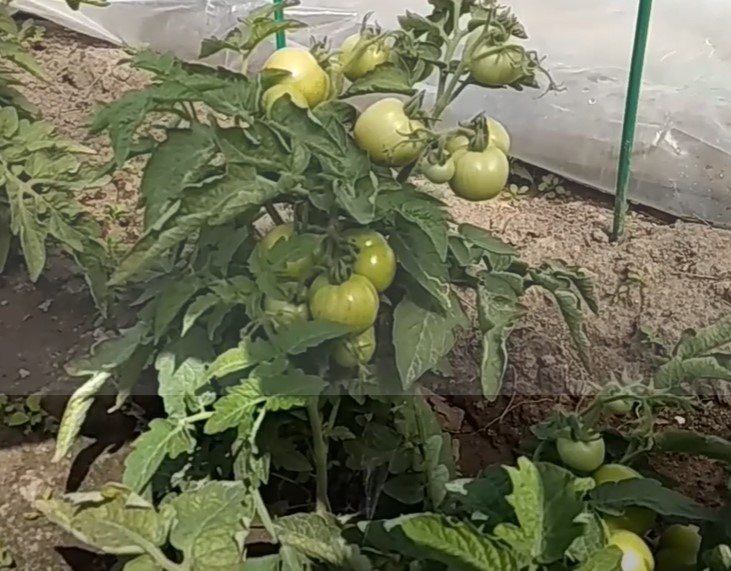
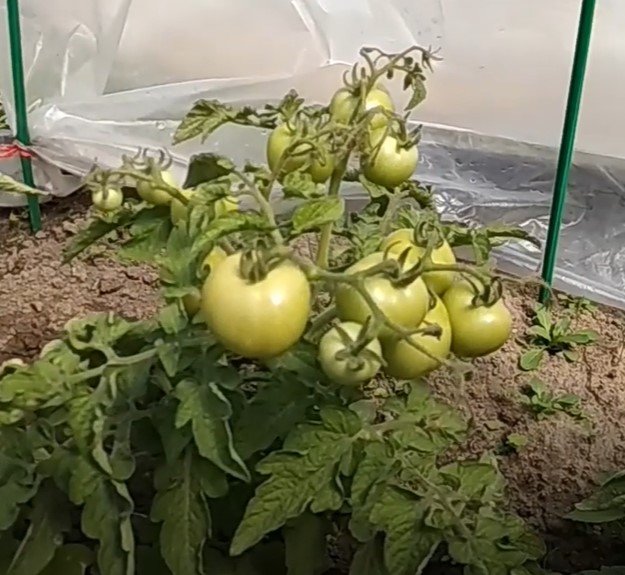
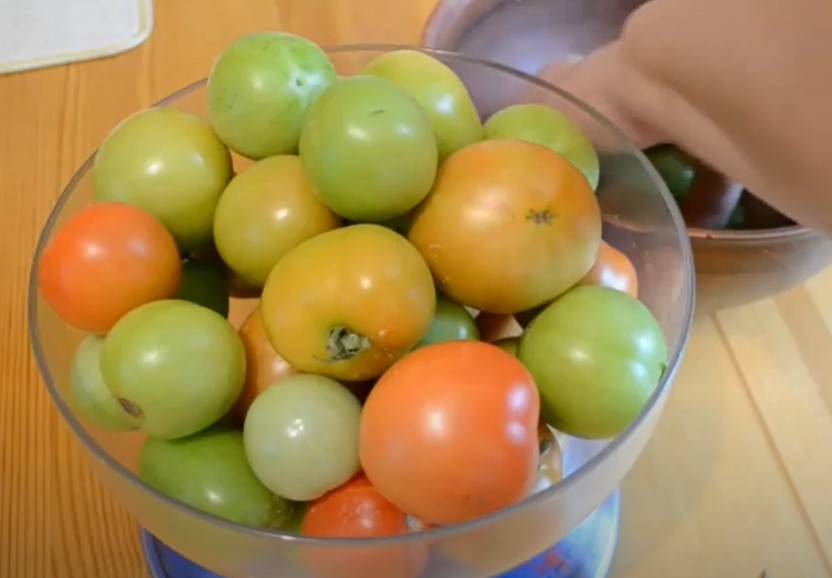
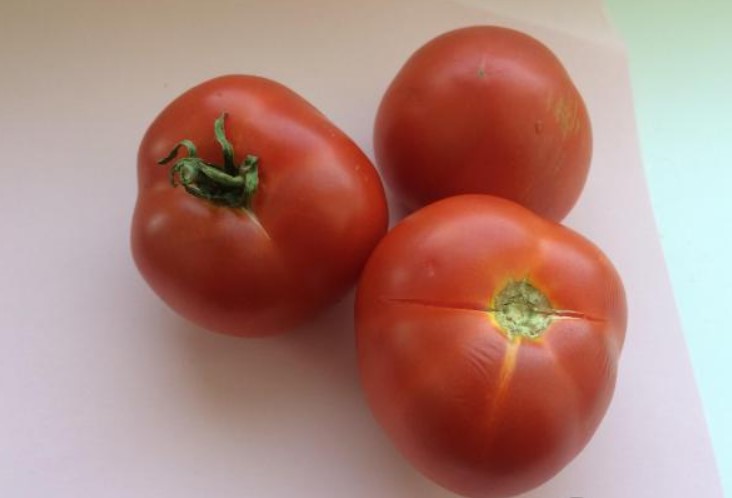
Photo gallery of tomato variety Malinka

The origin of the Malinka tomato variety
The Malinka tomato was born thanks to the hard work of breeders at the Federal Scientific Center for Vegetable Growing. Their goal was to create a compact tomato with excellent yields and the ability to grow in a variety of conditions. In 2006, an application for registration of this variety was submitted, and the Malinka tomato was officially included in the registry a year later, in 2007.
A detailed description of the Malinka tomato variety
Malinka is a late-ripening tomato with strong immunity and compact bushes.
Bushes
The small bushes grow only 40-50 cm tall, so they don't require staking or training. The leaves are medium-sized, with only a few on the shoots. After the first fruit appears, you can periodically remove one leaf at a time, starting from the bottom.
Fruit
The Malinki variety ripens evenly. They are round and smooth, with firm, purple skin. They weigh between 110 and 130 grams.
Productivity
The yield of the Malinka tomato depends on growing conditions. In a greenhouse, it's slightly higher than in the open ground, at around 3 kg per square meter.
Ripening time
The Malinka variety is considered late; the fruits ripen 110-130 days after the first shoots appear.
Advantages and disadvantages of the Malinka tomato variety
The Malinka variety has a number of advantages and disadvantages.
| Advantages | Flaws |
|
|
Features of growing the Malinka tomato variety
The Malinka tomato is planted according to a pattern familiar to gardeners, typical for late-ripening varieties.
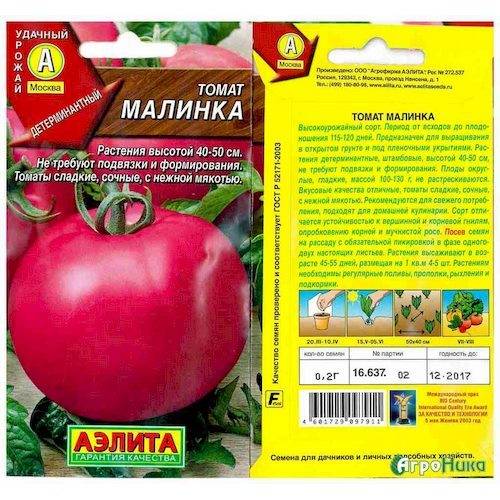
Sowing seeds and growing seedlings
The exact sowing date depends on the growing region. Typically, it takes 60-65 days from sowing to planting.
The Malinka variety is not a hybrid, although you can now find Malinka labeled F1 on the shelves, but this is a different variety of tomato, called Malinka Star.
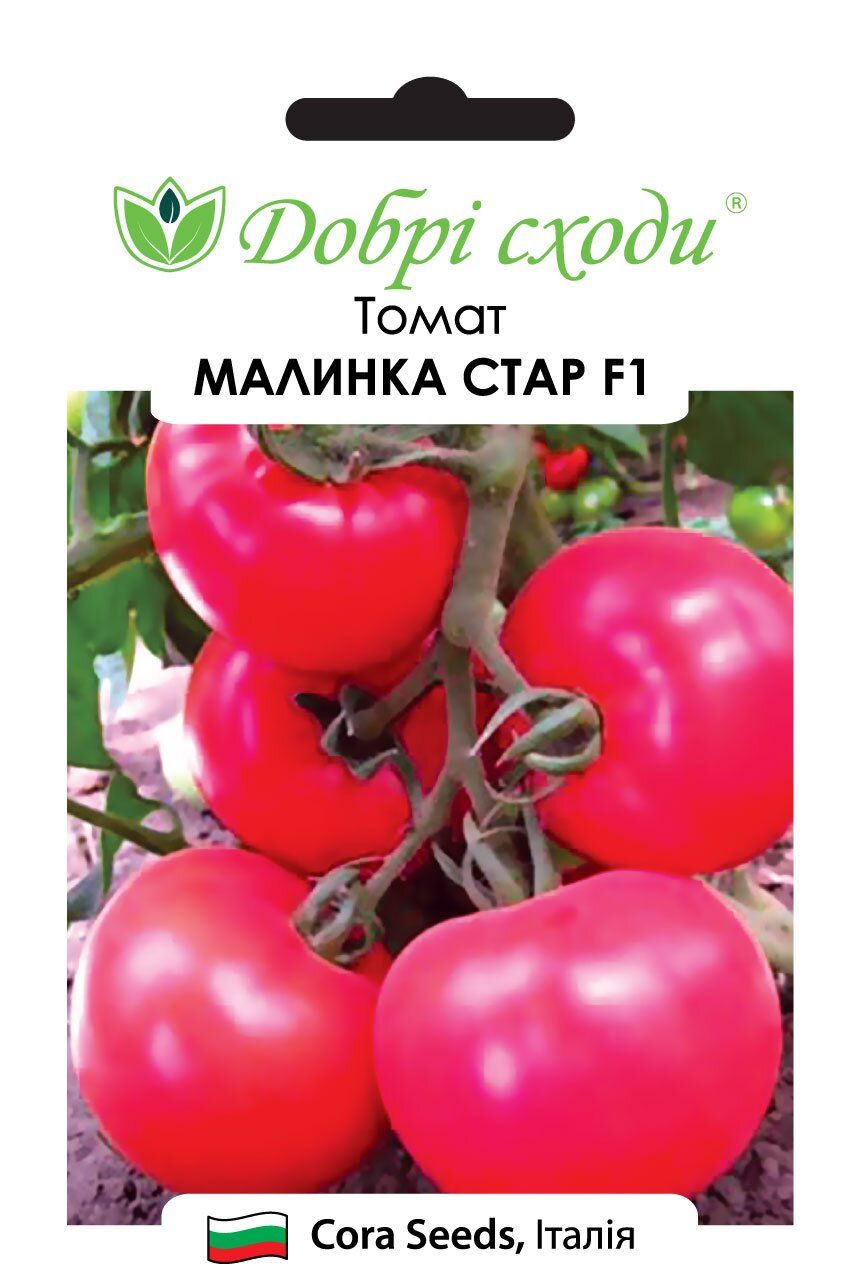
You can collect the seeds yourself, but it is easier and more reliable to purchase them from a trusted producer.
If the packaging doesn't indicate treatment, seed preparation is necessary. This involves several steps:
- HardeningThe seeds are wrapped in a tightly sealed cloth or cheesecloth bag and placed in the refrigerator overnight. The next day, they are removed and stored in a warm place. Then, they are placed in the refrigerator for the final night.
- DisinfectionThe seeds are placed in a weak solution of potassium permanganate for 20-25 minutes, after which they are washed with water.
- SoakBefore planting, for better germination, it is recommended to soak the seeds in any stimulating solution (Epin, Aquamix) for 8 to 12 hours.
Any suitable plastic or wooden container can be used for planting. Peat pots are the most convenient, as they minimize the risk of root damage when transplanting the seedlings.
Store-bought soil is ideal for Malinka tomatoes, as its composition is already perfectly balanced. However, if desired, you can mix your own soil. To do this, take one part garden soil that hasn't been used for a while, add an equal amount of sand, and 1 teaspoon of nitroammophoska per kilogram of the resulting soil.
Plant the seeds in furrows 2.5 cm apart. The furrow depth should not be more than 1 cm; seeds can be placed in peat pellets to a depth of 2 cm.
After planting, the soil is carefully watered and the container is covered with film or glass, after which the seedlings are placed in a warm place.
After the sprouts appear, the cover is removed and the tomatoes are transferred to a cooler room.
As soon as the second leaf opens on the shoots, they are transplanted into individual containers.
Two weeks before replanting, you can begin hardening off the plants. Tomatoes are placed outside or on the veranda, increasing the duration of this "walk" by 30-50 minutes daily.
Planting in the ground
Tomato transplantation is carried out when the threat of night frosts has passed and the soil has warmed up sufficiently (12-14 degrees).
The soil should be dug over in the fall, adding fertilizer. In the spring, the bed is dug over, simultaneously preparing the holes. Since the Malinka variety is very compact, the bushes can be planted 50 cm apart, leaving a 60 cm gap between rows. Experienced gardeners recommend staggering the planting.
After the procedure is complete, water the tomato plants and mulch the surface of the bed. This will help protect the tomato roots from sunlight and frost and reduce weeds.
Care, watering and fertilizing
The first watering of tomatoes should be done no earlier than 10-14 days after transplanting. It's best to water tomatoes less frequently, but more thoroughly. Excessive moisture can lead to late blight and other diseases. In normal weather, tomatoes are watered once a week at a rate of 1 liter per plant. Malinka tomatoes tolerate heat well, but if temperatures reach critical levels, you can increase the frequency of watering to 3-5 times a week.
If the soil was initially poor, you'll need to provide additional fertilizer. This should be done three times per season.
The first feeding is done 2 weeks after planting using mullein or green infusion.
Further fertilizing is carried out before the ovaries appear and during fruit formation. Here, it's best to opt for specialized fertilizers. You can dilute a teaspoon of potassium sulfate and superphosphate in 10 liters of water and apply 2-3 liters of the mixture under each bush after watering.
When the bush is completely covered with reddening tomatoes, then no more additives need to be added.
Resistance of the Malinka tomato variety to diseases and pests
The Malinka tomato is highly resistant to various types of rot, root cork, and powdery mildew. However, if the plants receive too much water, especially cold water, late blight may occur. For prevention, it is recommended to treat the plants with a Bordeaux mixture solution or Fitosporin three times per season, at 10-14 day intervals.
If pests appear, only specialized treatments will help. If the tomatoes haven't yet produced fruit, it's best to immediately resort to the heavy artillery of fungicides.
Storage and use of Malinka tomatoes
Malinka tomatoes ripen in 110-120 days from germination. Thanks to their thick skin, they can be stored for a week without losing their flavor. They also travel well.
The fruits are intended for fresh consumption, as well as for canning and processing.
Two varieties with similar names: Malinka Star F1 and Kalinka-Malinka
Let's look at two varieties with similar names in the tables.
Table with characteristics of the tomato variety Malinka Star
| Characteristic | Description |
| Description | A hybrid indeterminate tomato variety with early ripening. Suitable for cultivation in open ground and greenhouses. |
| Ripening period | 60-70 days |
| Fruit weight | 97-120 g |
| Description of the fruit | The fruits are round, large, and pink. The skin is thick and smooth. This prevents the tomatoes from cracking and makes them suitable for long-distance transportation. |
| Productivity | 10-12 kg/sq.m |
| Usage | Tomatoes are suitable for fresh eating, as well as for processing into various tomato products. |
| Preferred growing regions | Suitable for all growing regions. |
| Disease resistance | It has high resistance to tomato mosaic, fusarium, and verticillium wilt. Due to its early ripening, it is rarely susceptible to late blight. |
| Agricultural technology | The bushes are formed in 1-v stems, the planting pattern is 50x70. |
| 2019 | |
| Originator | Cora Seeds, Italy |
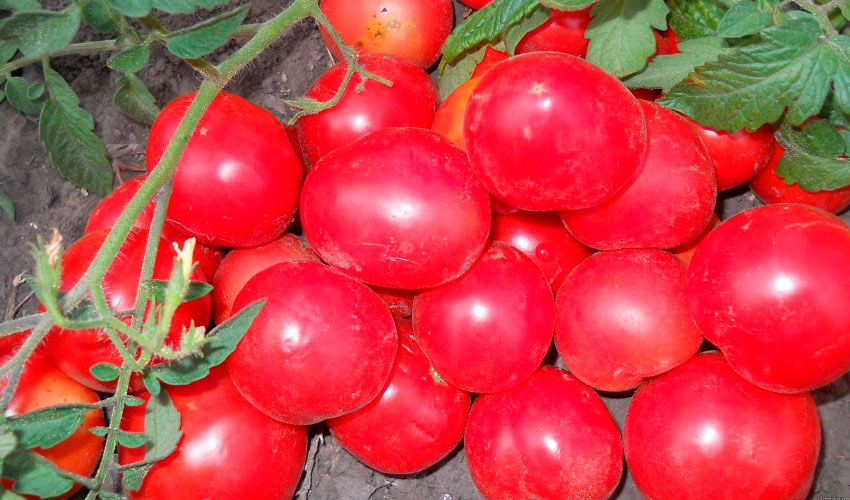
Photo gallery Malinka star F1
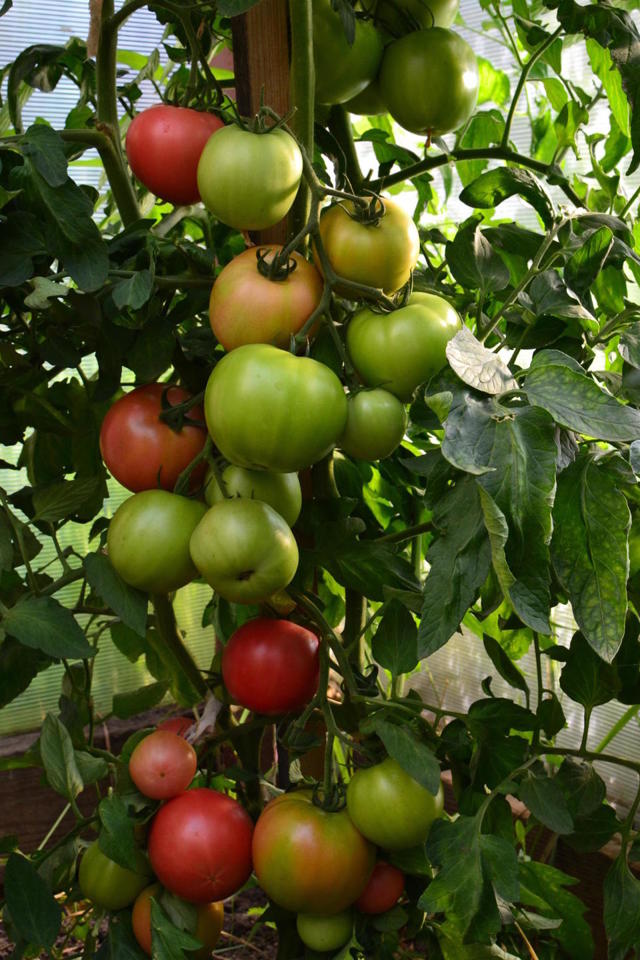
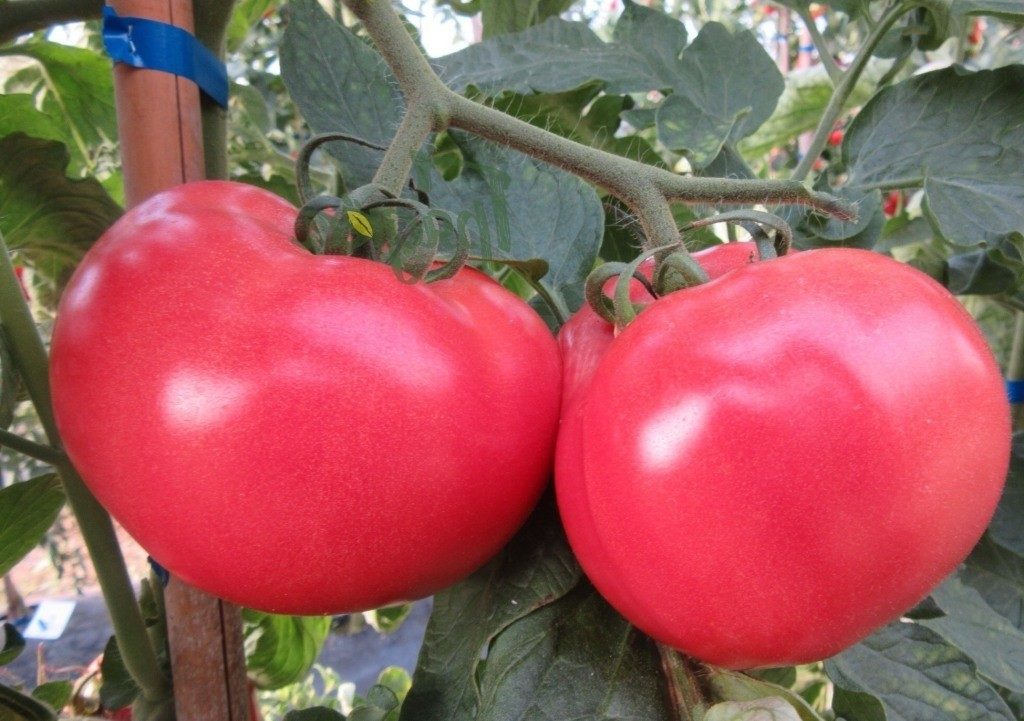
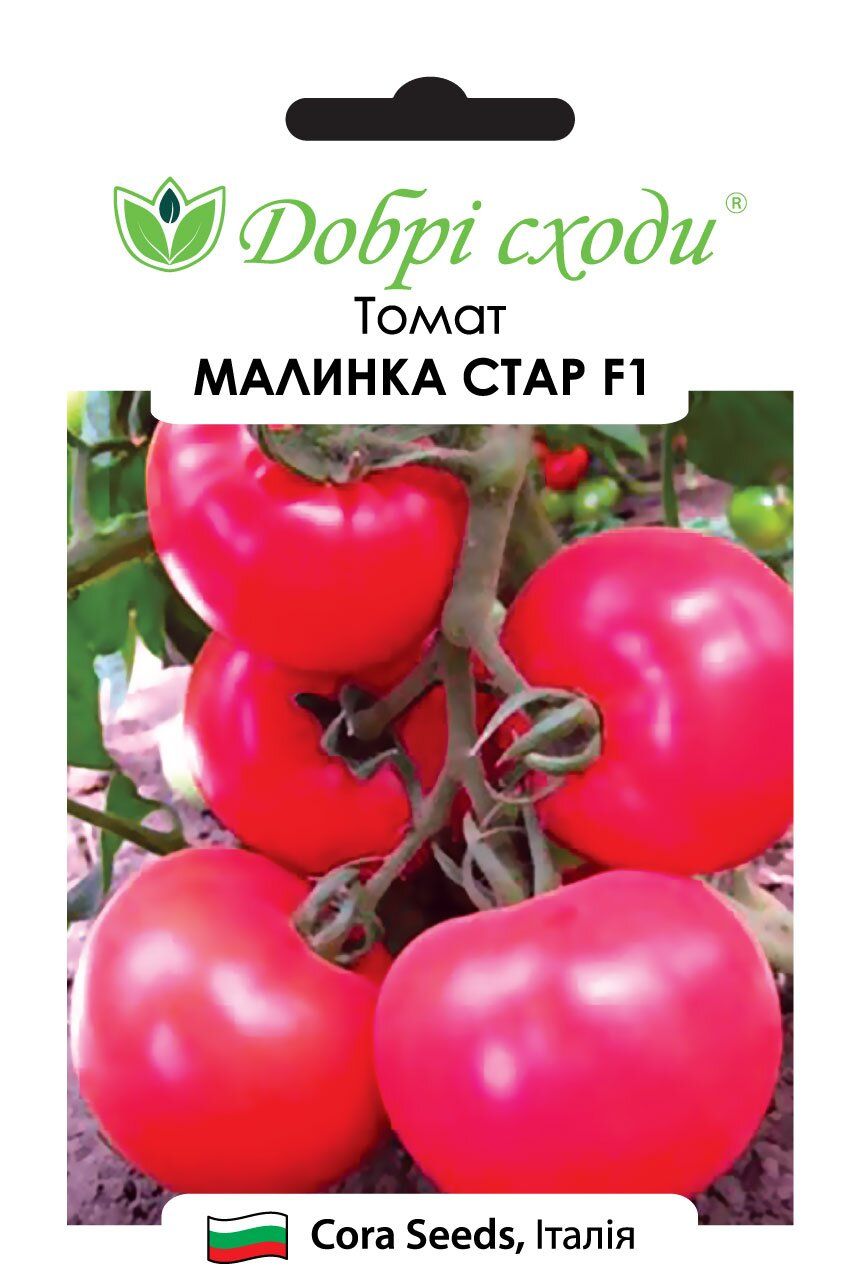
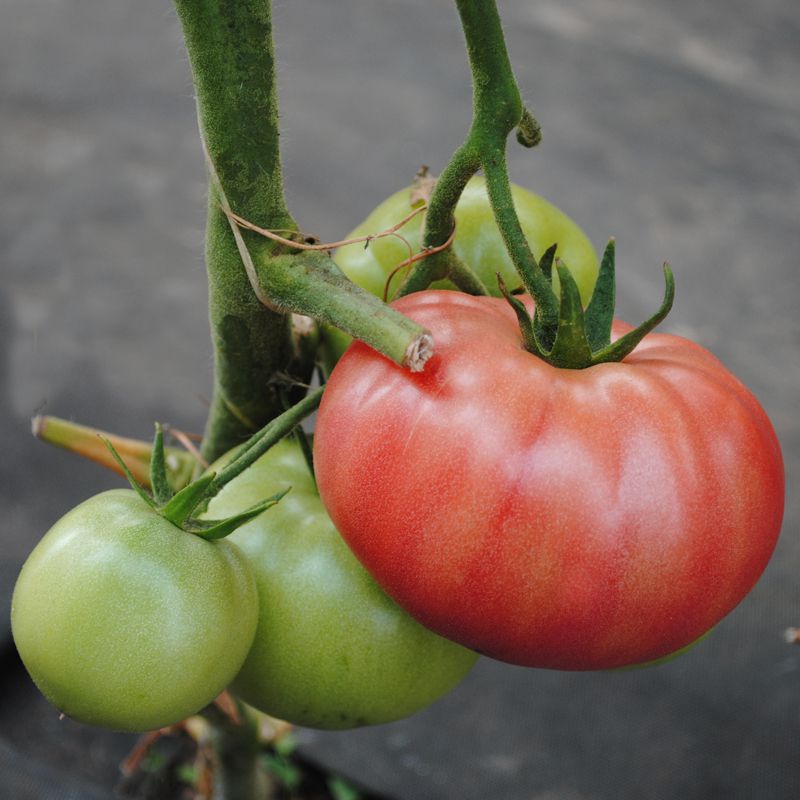
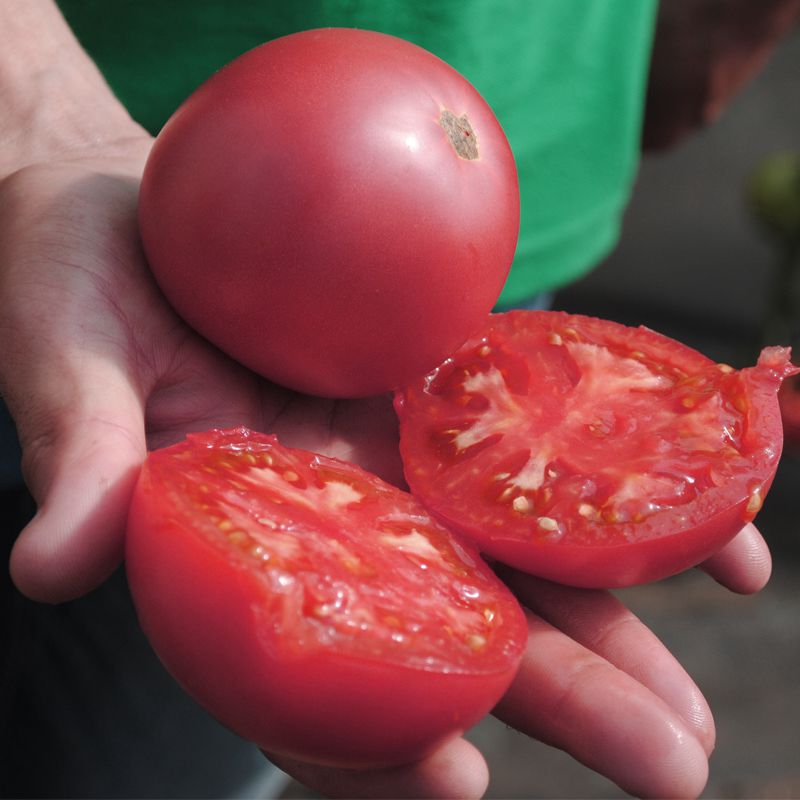
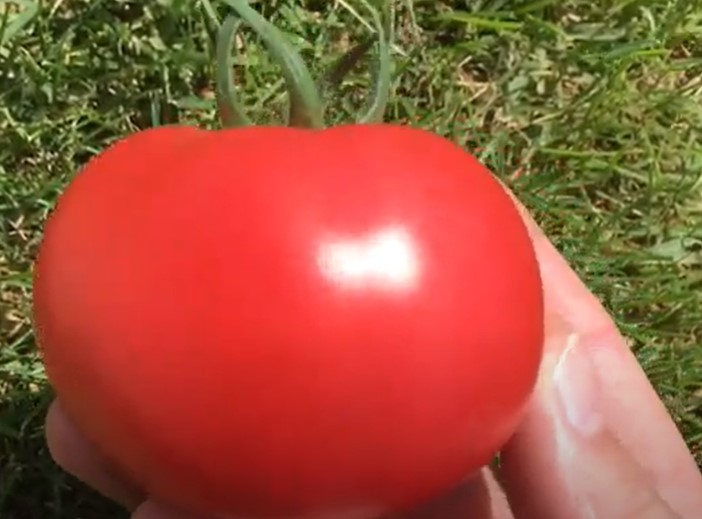
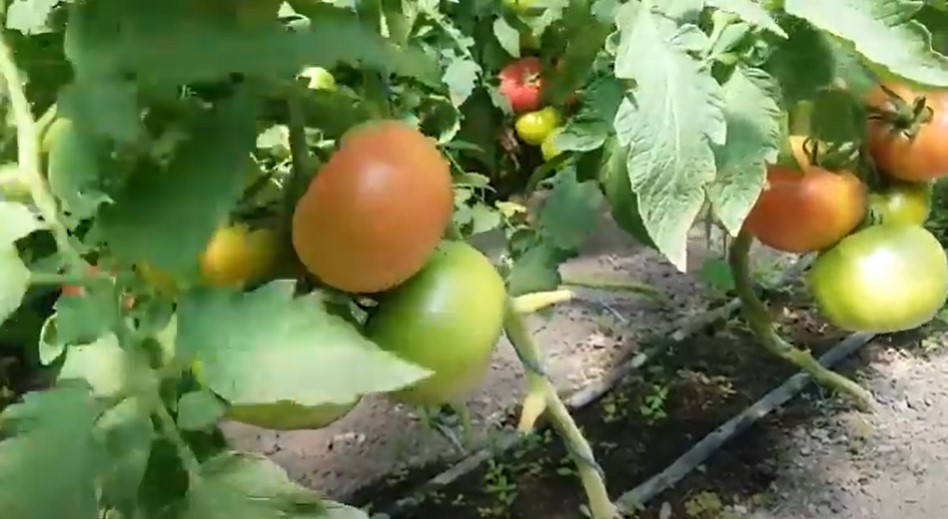
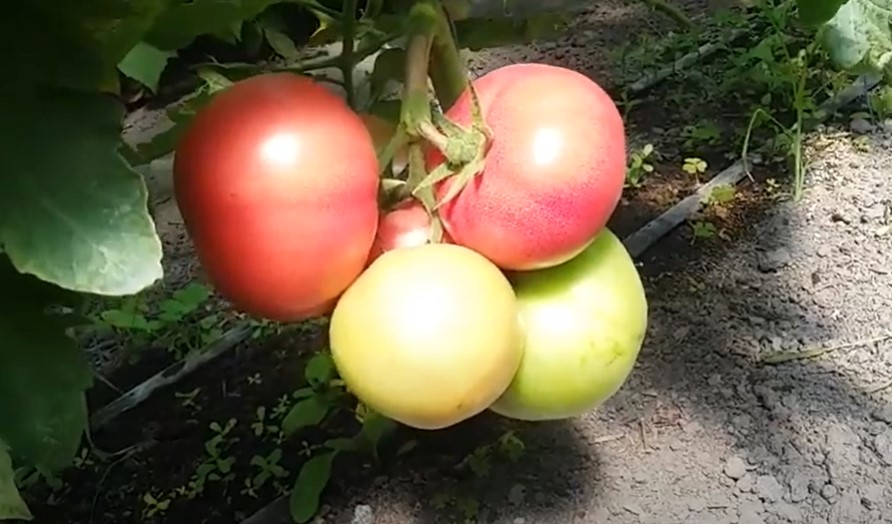
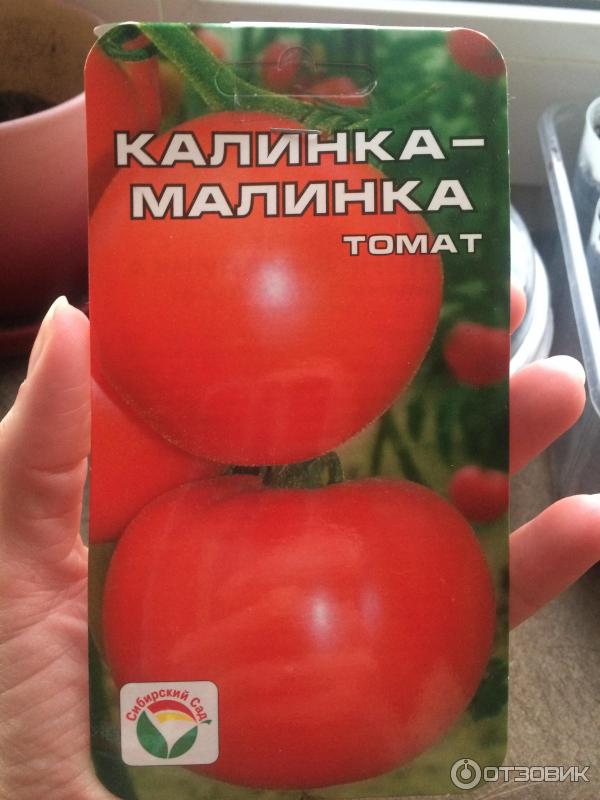
Table with characteristics of the tomato variety Kalinka-Malinka
| Characteristic | Description |
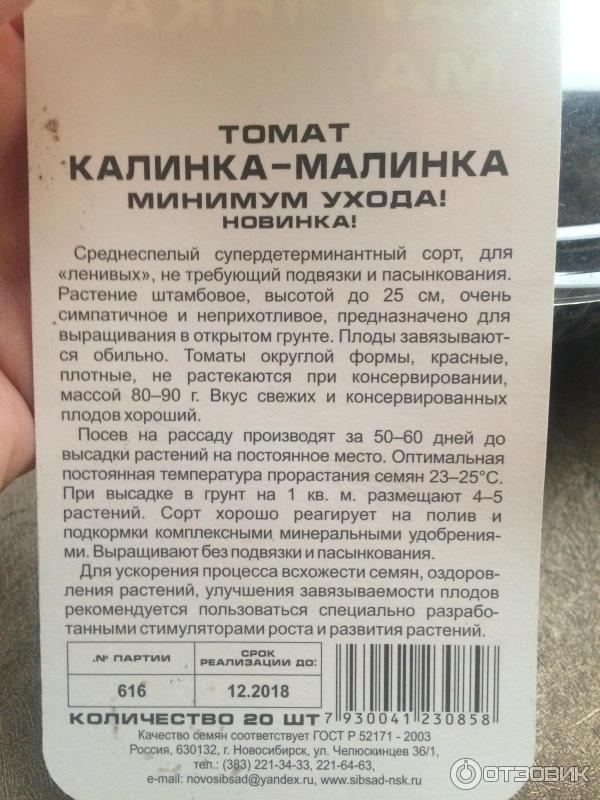
| Description | Standard superdeterminate tomato with medium ripening time. |
| Ripening period | 111-115 days |
| Fruit weight | 52 g |
| Description of the fruit | The fruits are small, smooth, and round. The flesh and skin are very dense, making them excellent for transportation and storage. |
| Productivity | Up to 2.6 kg/sq.m |
| Usage | An ideal tomato variety for whole-fruit canning and pickling. |
| Preferred growing regions | It grows well in all regions, but in harsh climates it is recommended to plant tomatoes in a greenhouse. |
| Disease resistance | It has a strong immune system and is rarely affected by late blight. |
| Agricultural technology | The height of the shoots rarely exceeds 30 cm, so the bush does not need to be tied up. |
| 2007 | |
| Originator | Postnikova Tatyana Nikolaevna. |
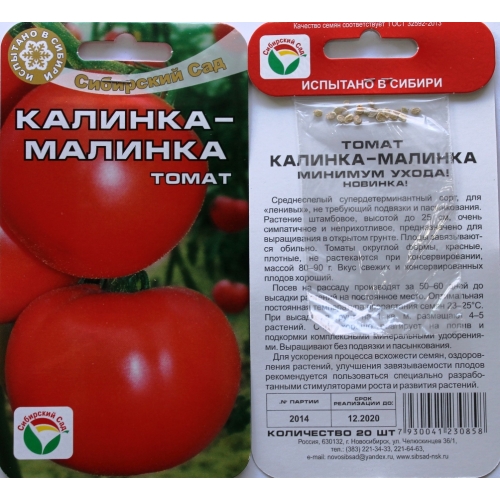
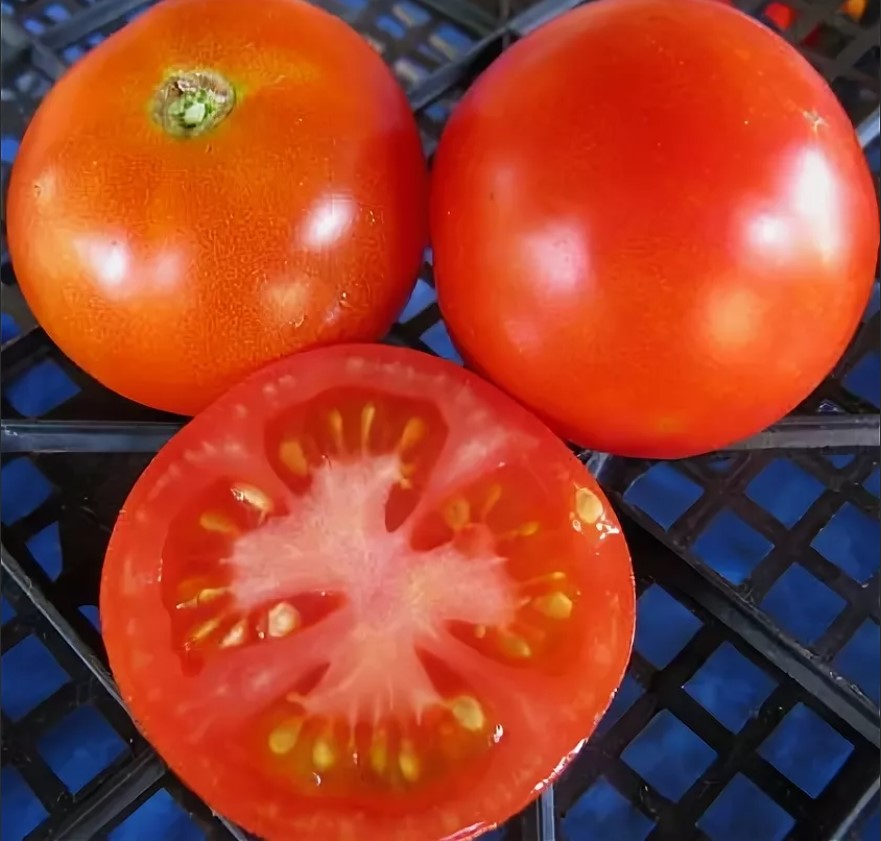
Photo gallery Kalinka-Malinka
Comparison of tomato varieties Malinka, Malinka star F1 and Kalinka-Malinka with other varieties in the table
Please note! How can you easily convert centners/ha to kg/sq.m? Simply divide by 100! For example, the Abakansky Pink tomato yields 400 centners of marketable fruit per hectare. This equals 4 kg per square meter. It's that simple! Also, keep in mind that typically no more than 3-4 plants are planted per square meter. This way, you can calculate the yield per bush. In the case of the Abakansky Pink, it's about 1 kg.
| Variety | Ripening period (number of days from full germination to ripening)
Yield of commercial fruits |
Brief description | Fetus |
| Raspberry | 110-120 days
300 c/ha |
A late-ripening, determinate, standard variety for open ground and under plastic shelters. Suitable for salads. | Round, smooth, loose, raspberry, 100-130 g. Good taste. |
| Malinka Star F1 | 85-95 days 12,600 c/ha |
An early-ripening indeterminate variety for open ground and greenhouses. Suitable for salads. | Flat-round, medium ribbed, pink, 97-120 g, reaches 300 g. Good taste. |
| Kalinka-Malinka | 105-115 days
260 c/ha |
A mid-season, determinate, standard variety for open ground and under plastic shelters. Suitable for whole-fruit canning. | Round, smooth, dense, red, 52 g. Good taste. |
| Abakan pink | 120 days or more
400 c/ha |
A late-ripening determinate variety for open ground and greenhouses. Requires staking and training. Suitable for salads and processing into tomato products. | Flat-round, slightly ribbed, medium density and pink in color, 200-500 g. Good taste. |
| St. Andrew's surprise | about 120 days
800 c/ha |
A late-ripening indeterminate variety for greenhouses (can be grown outdoors in the south). Suitable for salads, juices, and tomato paste. Seedlings tolerate low light conditions well. | Flat-round, smooth, medium density, pink, 150-230 g. Excellent taste. |
| Bobcat | 120-130 days 224-412 c/ha |
A late-ripening, determinate variety for open ground. Suitable for salads and processing into tomato products. Marketability 75-96%. | Flat-round, ribbed to strongly ribbed, dense, red, 90-226 g. The taste of the fruit is good, the tomato juice is good to excellent. |
| Red and pink bull | 110-120 days
385-392 c/ha |
A late-ripening determinate variety for open ground and greenhouses. Suitable for salads. Marketability: 89.5-90.3%. | Large, medium-ribbed, flat-round, red with a dark spot near the stalk and pink, 305-310 g. |
| Mushroom basket | 115-120 days
630 c/ha |
A late-ripening, indeterminate, standard variety for open ground and greenhouses. Requires staking and shaping. Suitable for salads. | Flat-round, very strongly ribbed, medium density, pink, 250 g. Good taste. |
| Russian size | 125-127 days
700-800 c/ha |
A late-ripening indeterminate variety for greenhouses. Suitable for salads. | Flat-round, slightly ribbed, red, 630 g. Excellent taste. |
| Siberian early ripening | 98-108 days 289-543 c/ha (open ground), 20-43% of the total yield ripens in 15 days of fruiting, 630-950 c/ha (greenhouse and under film), in the first month of fruiting 240-580 c/ha. |
An early-ripening, determinate, low-growing variety for open ground and greenhouses. Suitable for salads. | Round and flat-round, slightly ribbed, medium-sized and large, red, 62-114 g. The taste is satisfactory. |
| Wonder of the World | 120 days
550-620 c/ha |
A late-ripening indeterminate variety for open ground. Requires staking and shaping. Suitable for salads and pickling. | Obovate, slightly ribbed, yellow, 80 g. Good taste. |
Reviews from gardeners about the tomato variety Malinka, Malinka star F1 and Kalinka-Malinka
Gardeners note the excellent taste of Malinka tomatoes, as well as their ease of cultivation, due to their low bushes.
In the spring, I was looking for tomato seeds to plant on the balcony. Later, I found cherry tomatoes like Manul 'Arctic' and Gavrish 'Bonsai,' but first, someone recommended this tomato, 'Kalinka-Malinka.' They're low-growing and don't require staking.
As a result, I didn’t plant them at home, but planted them in a greenhouse at my dacha.
The germination rate of the seeds was excellent; it seems that more than 20 of the promised seeds sprouted.
The seedlings were very beautiful, strong, and indeed low-growing.
The bushes didn't grow that low in the greenhouse—some were 60-70 cm tall, and others were even a meter tall. They probably would have been smaller in a cramped pot on the balcony.
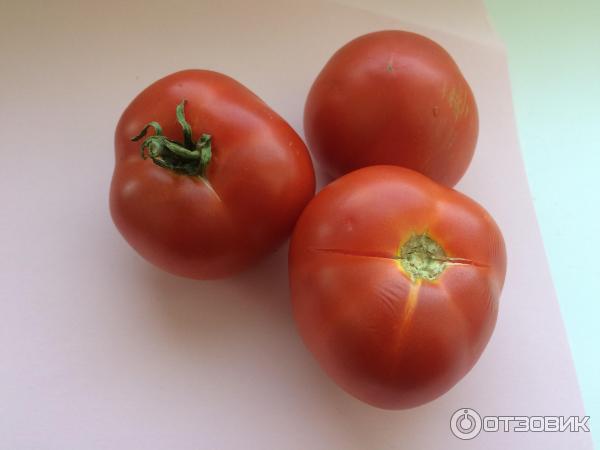
The fruits turned out almost exactly like the picture—small, round, and beautiful. Honestly, the taste is nothing special. The skin is a bit thick, and the fruits themselves are slightly tart without a strong tomato flavor. They're perfect for a salad; there's not much liquid or seeds inside the fruit, which I like.
The tomatoes are quite decent and unpretentious, but in my opinion there are better ones, for example, “bull’s heart” or “mazarini”.
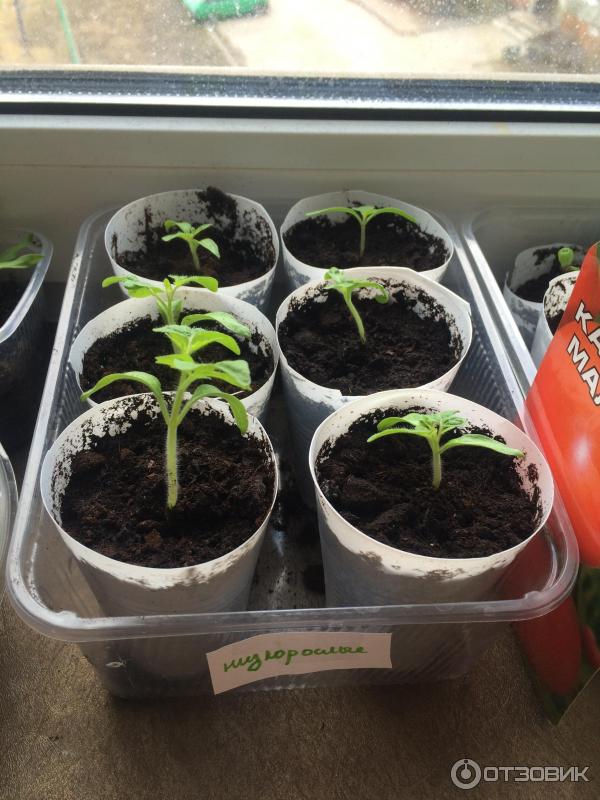
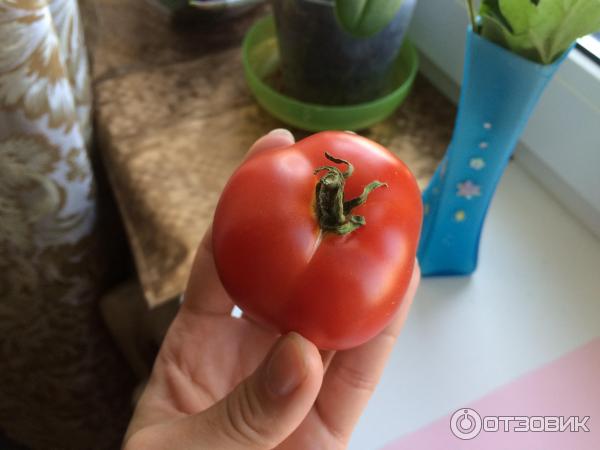
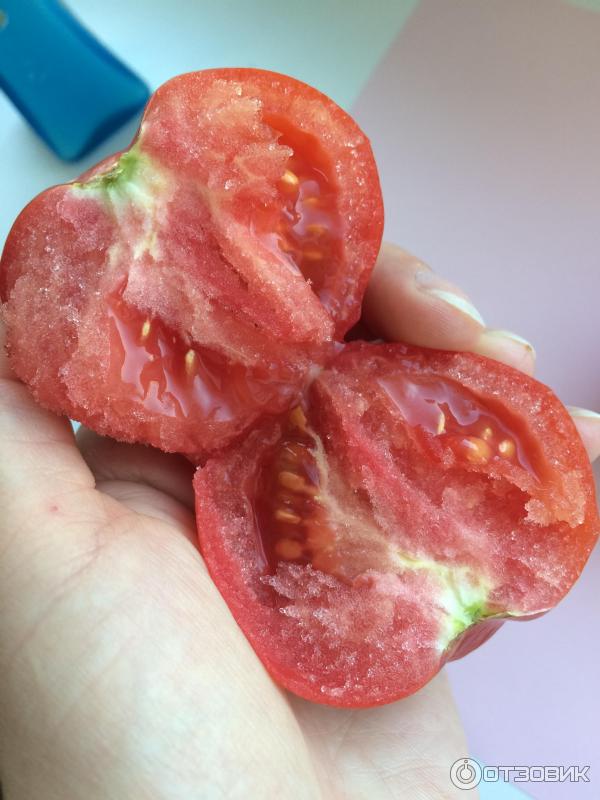
I love experimenting, so I experimented with tomatoes too. I decided to grow them outside of my garden, which is currently occupied and filled with building materials, and I planted the seeds in a regular tray. I planted two varieties: "Boets," a undemanding variety. The other was "Kalinka-Malinka," a "Buyan" variety, of course. Eleven shoots sprouted from 15 seeds. Of the 15 seeds from "Kalinka-Malinka," only one stem sprouted. Frankly, I didn't think there would be a harvest, but no such luck! That single stem yielded a kilogram of tomatoes.
The dissimilarity was apparently due to poor-quality seeds. Otherwise, the leaves appeared to be of good quality, dark green in color and with a carpenter-like texture.
The shoot sprouted quickly.
A very successful variety; no side shoots or staking are required, and the most important thing is to remember to water. This excellent variety is ideal for growing on a balcony; the shoots reach up to 25 centimeters in height; mine was 22 centimeters.
And the rod is very dense, fleshy, thick.
It pollinates itself, there were lots of little tomatoes, and the blooms were perfect, with no empty flowers. As soon as it finished blooming, round tomatoes immediately appeared.
Here you can see how one bush is strewn with small tomatoes, and there were several such clusters.
They taste sweet, the skin is thin, in general an ideal variety, whether for a garden or a balcony, it takes root anywhere.
Even if only one stem sprouted out of 15 seeds, this variety still deserves 5 points; the seeds were obviously old, and the tomato variety itself is excellent.
I love plants that don't require much fuss, and this variety is perfect for the lazy. I recommend it to gardeners—a small, neat, and productive tomato plant.
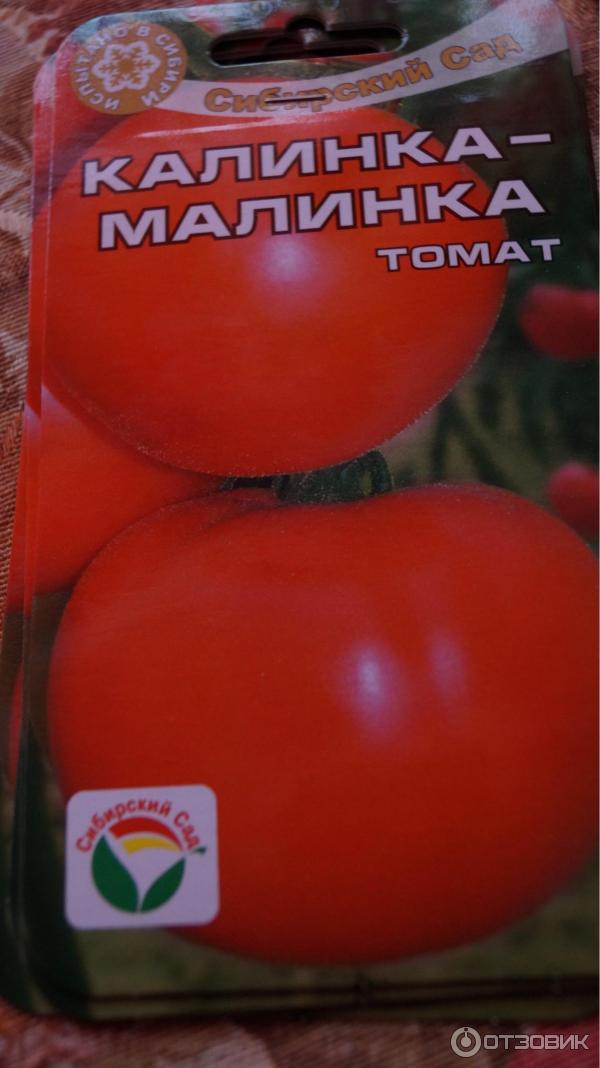
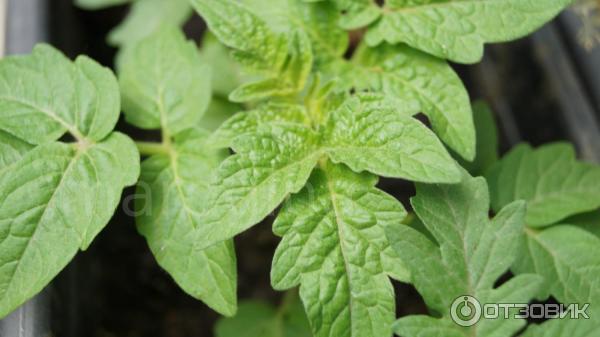
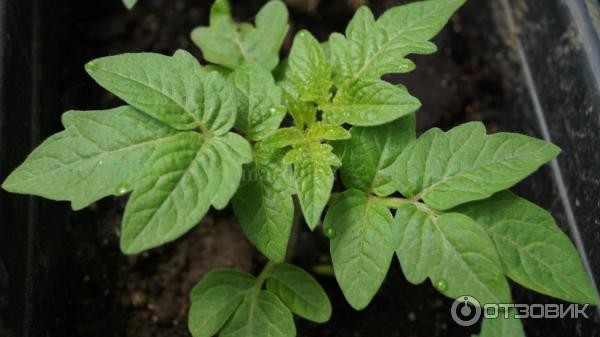
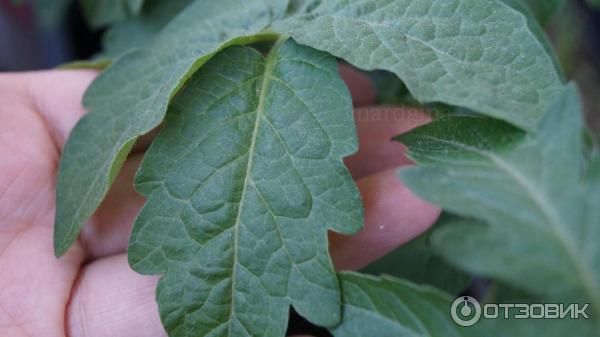
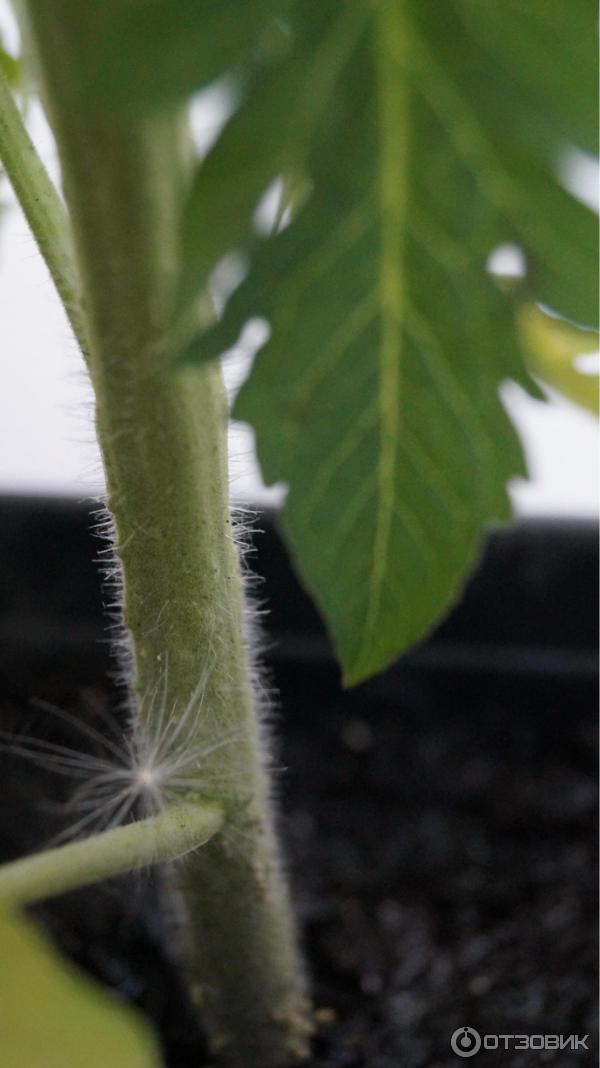
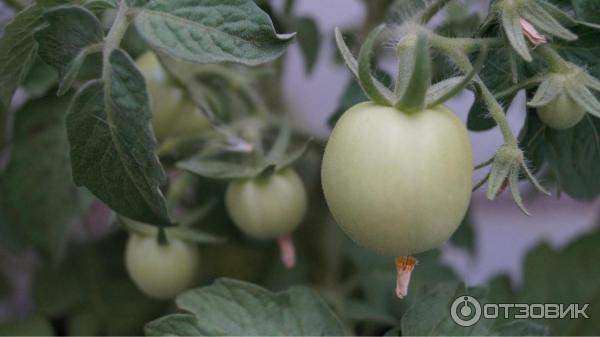
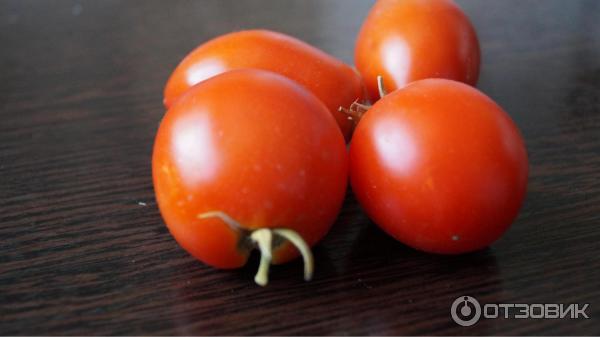
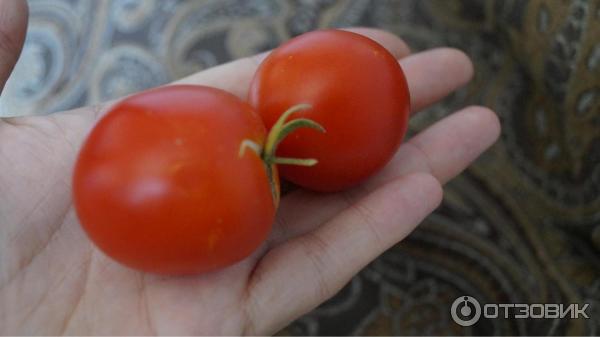
I love tomatoes and grow them in my garden. I've tried many varieties. This year, I grew Kalinka-Malinka seedlings from seeds. I really liked this variety. These tomatoes are mid-season and superdeterminate. They are short, but covered in fruit. This variety doesn't require staking or pinching. The average plant height is about 25 centimeters.
These tomatoes are recommended for growing outdoors, but I planted them in a greenhouse and got a double harvest. Each plant produces numerous medium-sized tomatoes, each weighing an average of about 90 grams. The tomatoes are round, bright red, and great in salads, canned, and make excellent juice.
They're not very expensive. I bought a pack of seeds for 25 rubles. It contained exactly 20 seeds. I was pleased with their germination rate. More than half of them sprouted. Tomatoes require regular watering and loosening the soil to grow well. The seedlings should be fed with fertilizer. I use only organic matter. For this, I ferment grass and chicken manure in a barrel.
Malinka Star F1 – unrivaled color and excellent resistance to cracking.
Early ripening. Indeterminate plant, medium vigor. Produces very uniform, deep pink fruits weighing 200-250 g (sometimes up to 300 g). Excellent flavor (true pink tomato flavor). The internal structure is fleshy, seven-chambered. The hybrid is resistant to cracking and disease, and is easy to transport.
Note: The hybrid is resistant to fusarium and verticillium wilt and tomato mosaic virus.
Elena, we received Malinka Profi packs under the name JAIRO F1, Italy, and so did your source. My clients and I grew them last season—a decent hybrid, raspberry red, quite tasty. There's also Malinka Star F1, Italy, but I still haven't figured out if they're the same thing.