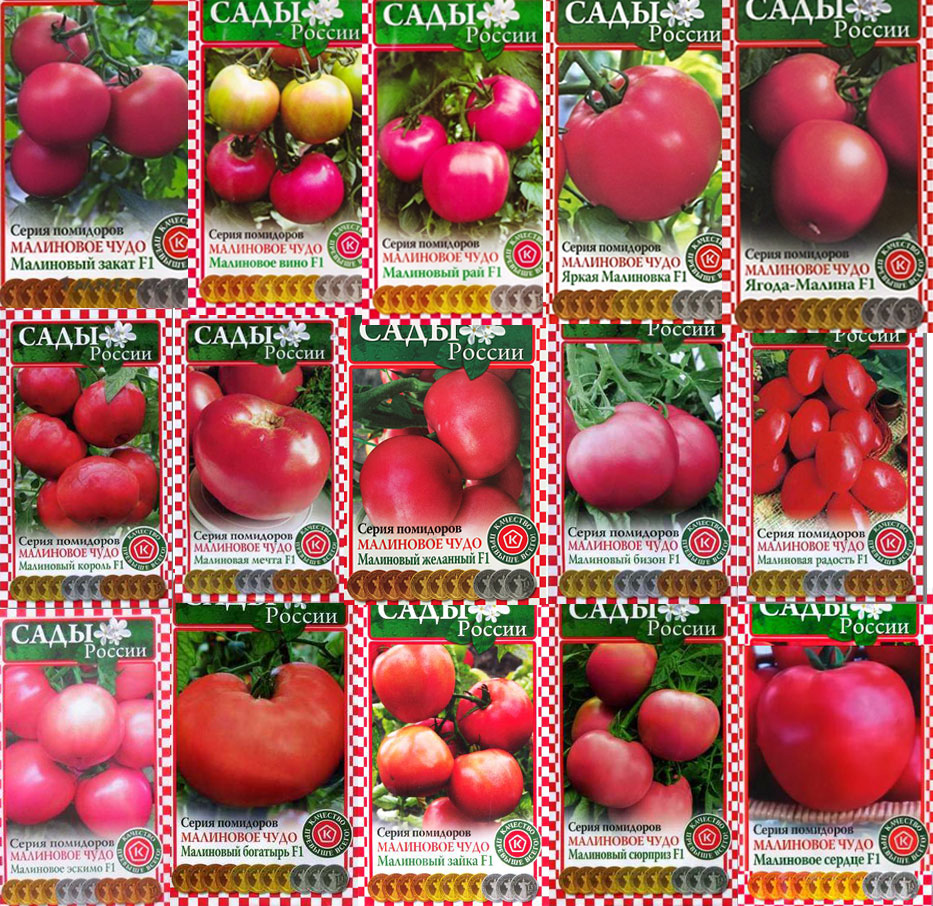
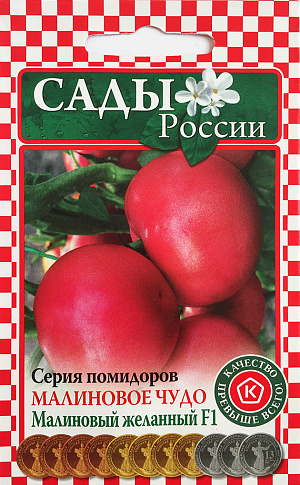
The Raspberry Miracle tomato isn't just one variety of tomato, but an entire line consisting of 15 cultivars. They are distinguished by their attractive appearance, excellent flavor, and ease of care. Let's explore the growing process of Raspberry Miracle tomatoes and a detailed description of their cultivars.
Content
- 1 General characteristics of the Golden Raspberry Miracle variety line in the table
- 2 The history of the Golden Raspberry Miracle tomato variety line
- 3 The first series of the Golden Raspberry Miracle tomato variety line
- 3.1 Crimson sunset
- 3.2 Photo gallery of the Raspberry Sunset tomato variety
- 3.3 Raspberry wine
- 3.4 Photo gallery of the Raspberry Wine tomato variety
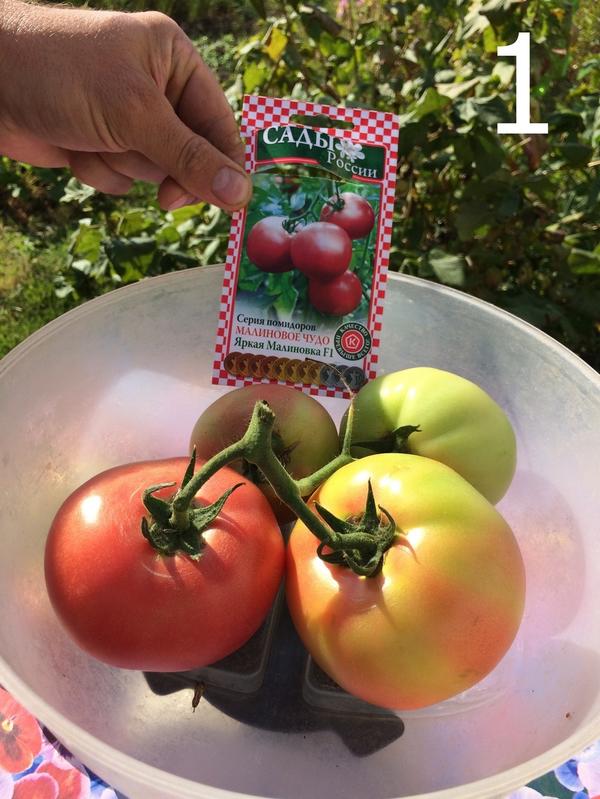
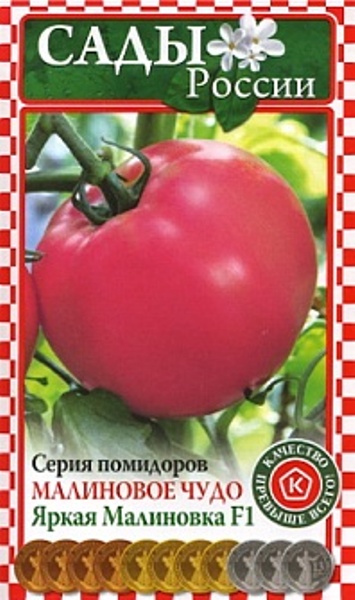
- 3.5 Bright robin
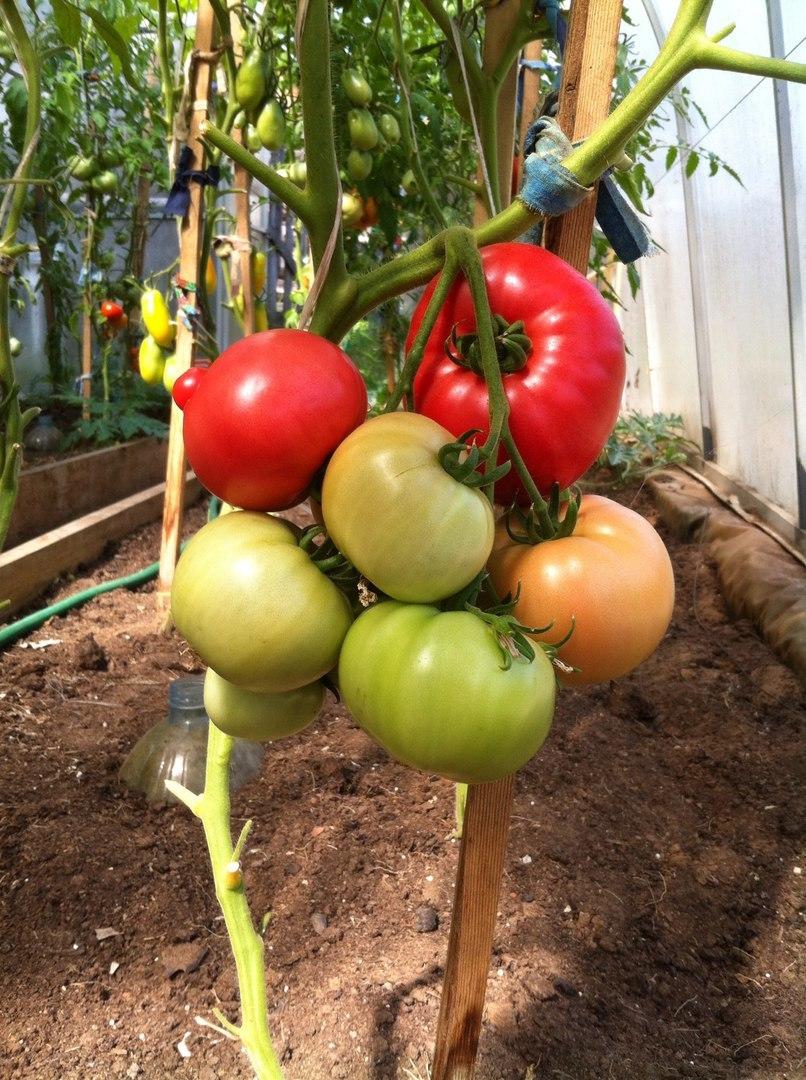
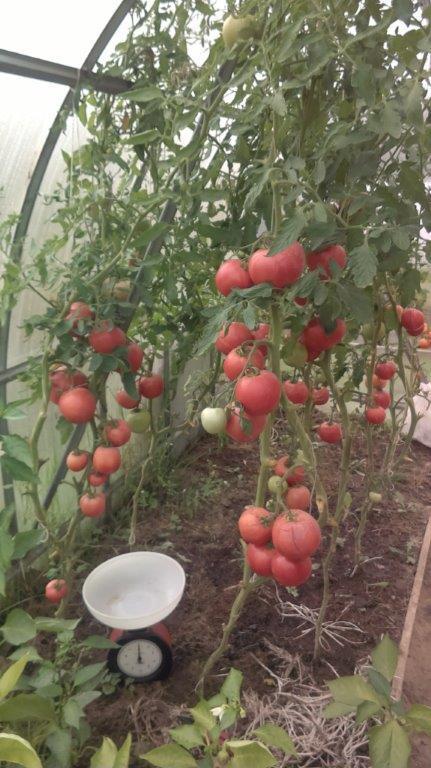
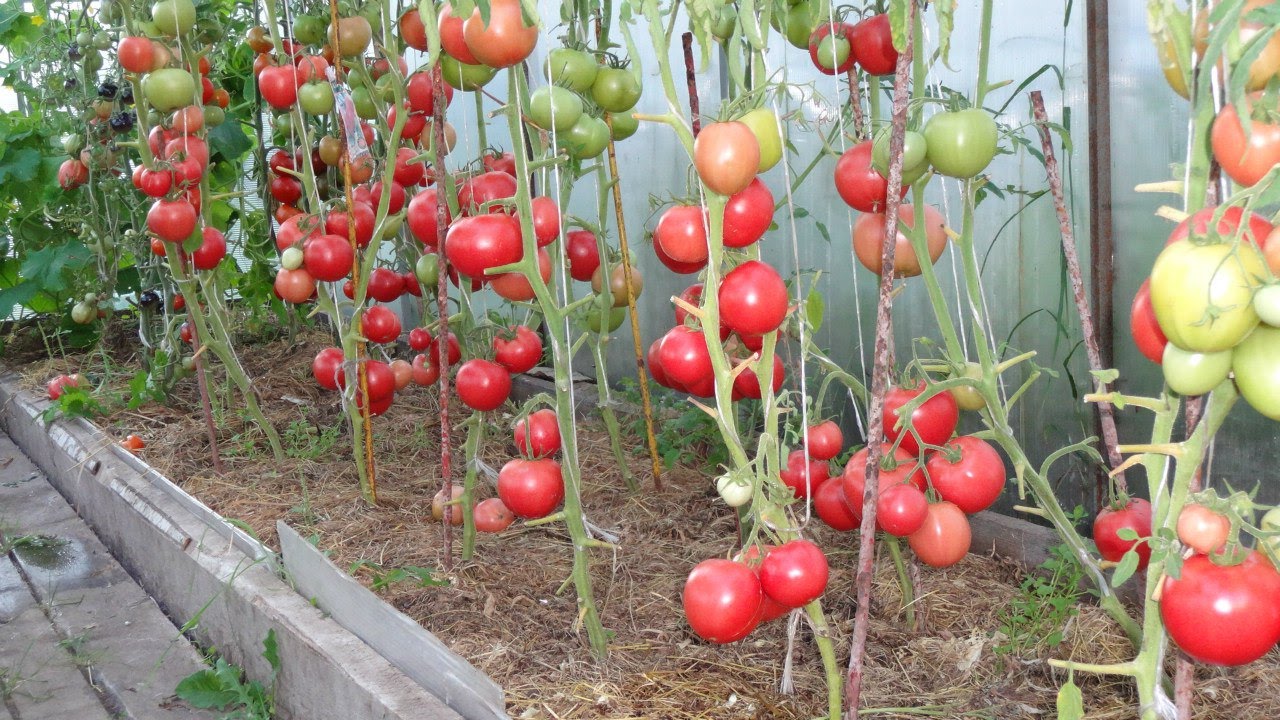
- 3.6 Photo gallery of the tomato variety Bright Malinovka
- 3.7 Raspberry berry
- 3.8 Photo gallery of the tomato variety 'Raspberry Berry'
- 3.9 Raspberry Paradise
- 3.10 Photo gallery of the Raspberry Paradise tomato variety
- 4 The second series of the Golden Raspberry Miracle tomato variety line
- 4.1 Raspberry Joy
- 4.2 Photo gallery of the Raspberry Joy tomato variety
- 4.3 Crimson Bison
- 4.4 Photo gallery of the Raspberry Bison tomato variety
- 4.5 Crimson King
- 4.6 Photo gallery of the Raspberry King tomato variety
- 4.7 Raspberry Dream
- 4.8 Photo gallery of the Raspberry Dream tomato variety
- 4.9 Raspberry Desired
- 4.10 Photo gallery of the Raspberry Desirable tomato variety
- 5 The third series of the Golden Raspberry Miracle tomato variety line
- 5.1 Raspberry Popsicle
- 5.2 Photo gallery of the Raspberry Eskimo tomato variety
- 5.3 Raspberry Heart
- 5.4 Photo gallery of the Raspberry Heart tomato variety
- 5.5 Raspberry bunny
- 5.6 Photo gallery of the Raspberry Bunny tomato variety
- 5.7 Raspberry Surprise
- 5.8 Photo gallery of the Raspberry Surprise tomato variety
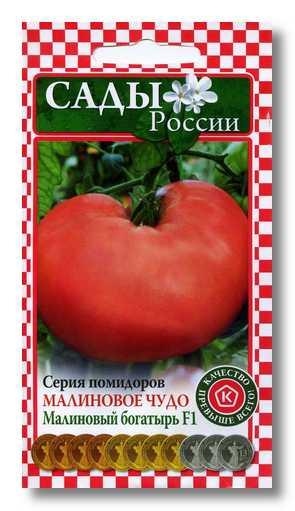
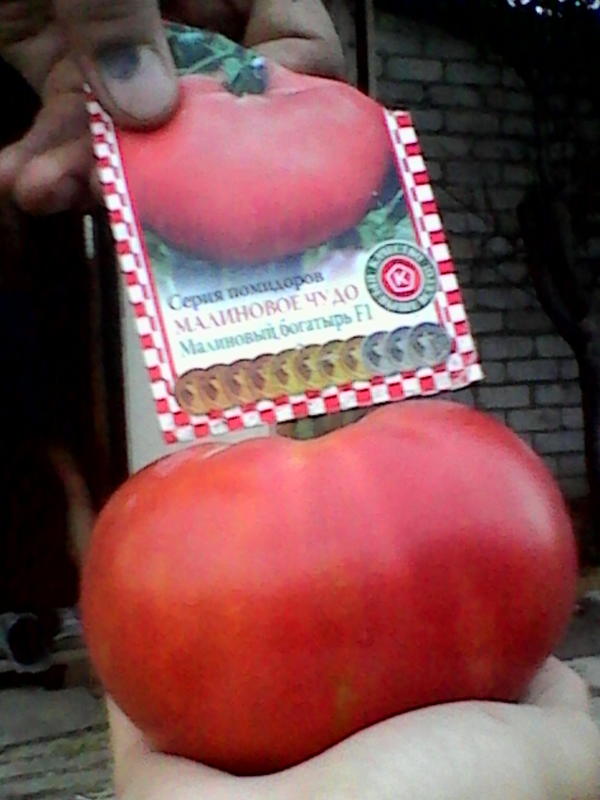
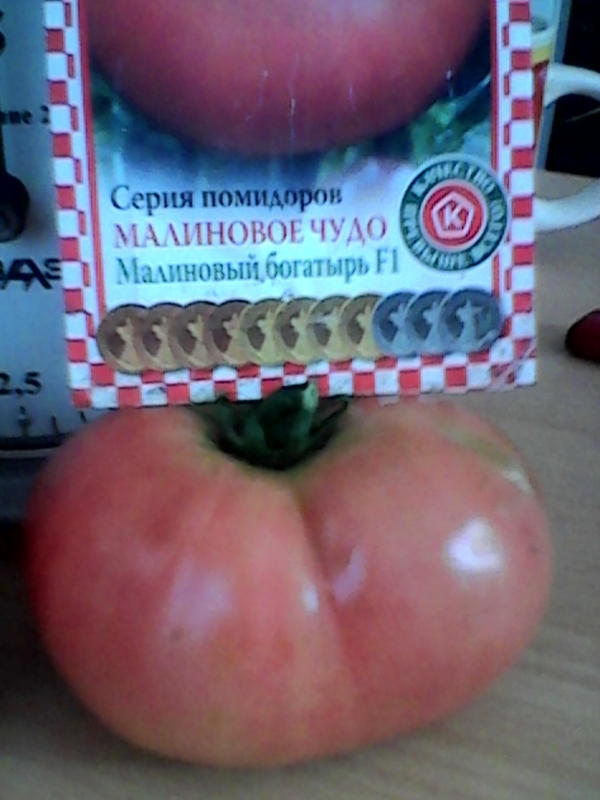
- 5.9 Crimson Bogatyr
- 5.10 Photo gallery of the tomato variety Raspberry Bogatyr
- 6 A general, detailed description of the Golden Raspberry Miracle tomato variety line
- 7 Advantages and disadvantages of the Golden Raspberry Miracle tomato variety line
- 8 General planting features of the Golden Raspberry Miracle tomato variety
- 9 General care for Raspberry Miracle tomato varieties
- 10 Harvesting and storing tomatoes from the Raspberry Miracle line
- 11 Comparison of tomato varieties of the Golden Raspberry Miracle line with each other and other varieties
- 12 Real reviews from gardeners about the Golden Raspberry Miracle tomato series
- 13 A gardening competition for growing tomatoes from the Golden Raspberry Miracle tomato variety line.
General characteristics of the Golden Raspberry Miracle variety line in the table
| Characteristic | Description |
| Description | Mid-early determinate variety for open ground and greenhouses. |
| Ripening period | 90-95, sometimes 100 days |
| Fruit weight | 100-500 g |
| Description of the fruit | They can be flat-round, round, heart-shaped, raspberry-colored, ribbed or smooth. |
| Productivity | 1200-1500 c/ha |
| Usage | Suitable for salads, canning, and processing into tomato products. Excellent flavor. |
| Preferred growing regions | It can be grown in all regions of the country, including the Far East, Siberia and the Urals. |
| Disease resistance | Most diseases of nightshades. |
| Agricultural technology | The bushes require staking and training. In warmer regions, they can be grown outdoors, while in cooler climates, they thrive in greenhouses. |
| 2015, 2017 | |
| Country of origin | Russia, Agrofirm "Gardens of Russia" |
The history of the Golden Raspberry Miracle tomato variety line
The Raspberry Miracle tomato was bred by the agricultural firm "Sady Rossii." Work on the variety line was completed over 13 years ago. Three series were developed, each comprising five varieties with distinct characteristics.
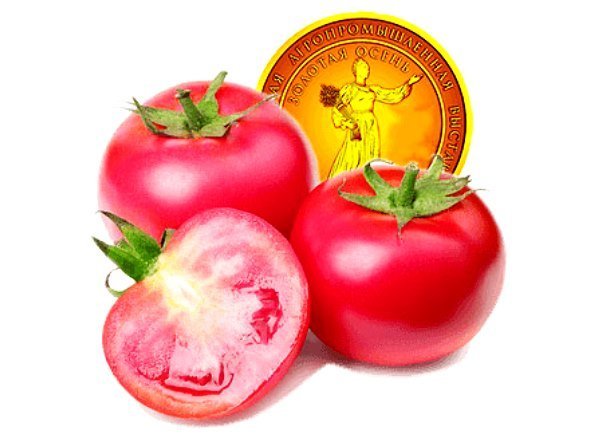
In 2014, the line participated in an agricultural exhibition, where it won first place (hence its nickname, the Golden Raspberry Miracle). It was then added to the register the following year. A second and third series were then developed and added to the register in 2017. These varieties are characterized by resistance to many nightshade diseases, thrive well, and produce abundant harvests with minimal care.
The Raspberry Miracle tomato line includes three series of five subvarieties. They differ in size, flavor, and yield.
The first series of the Golden Raspberry Miracle tomato variety line
The first series includes varieties that are easy to care for, adapt well to a variety of climates, are high-yielding, and virtually disease-free. Let's take a closer look at the characteristics of the Raspberry Miracle Series 1 tomatoes.
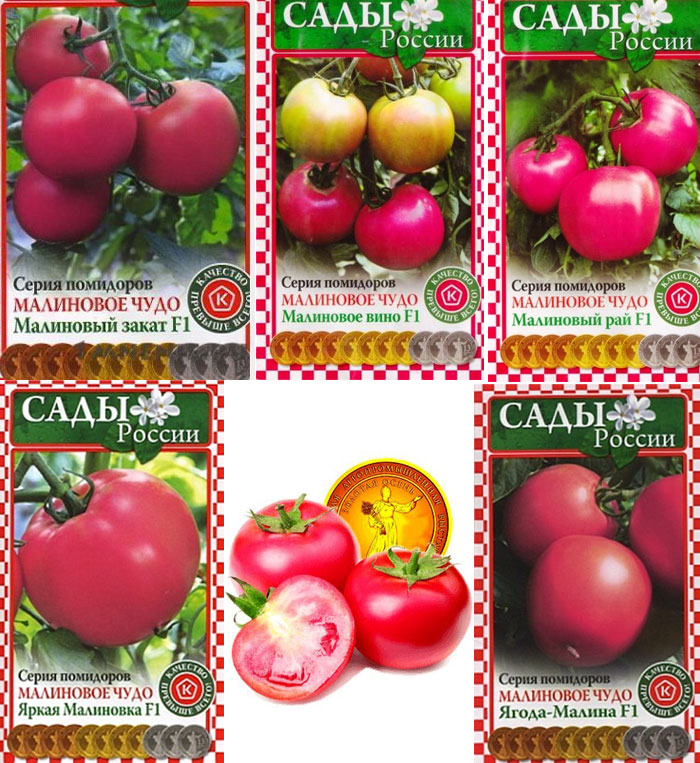
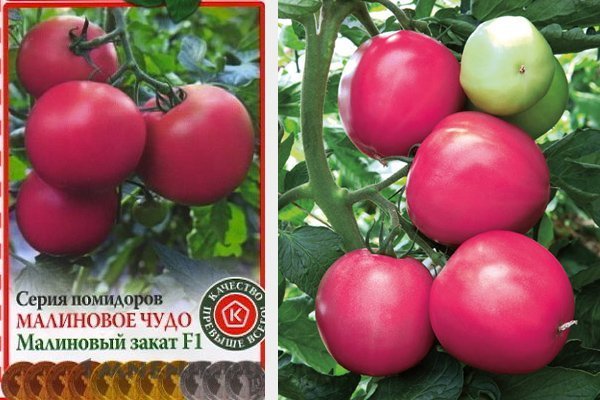
Crimson sunset
| Characteristic | Description |
| Description | Early ripening, tall variety. |
| Ripening period | 90 days |
| Fruit weight | 340 g |
| Description of the fruit | Round, pinkish, ribbed. |
| Productivity | 1200 c/ha |
| Usage | Suitable for salads. Excellent taste. |
| Marketability, shelf life | Good |
| Immunity | To late blight. |
| Agricultural technology | Garter, shaping. |
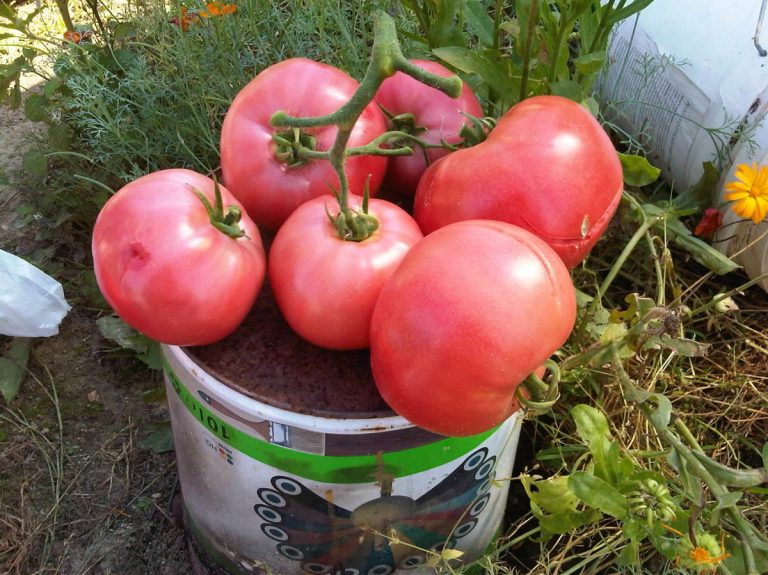
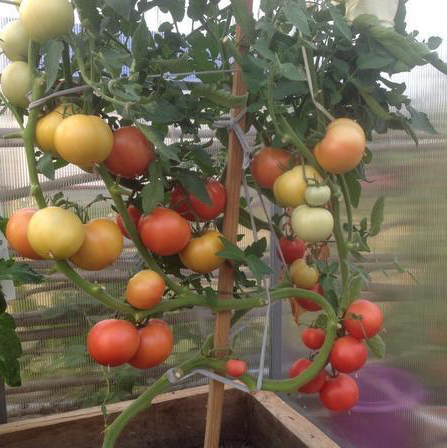
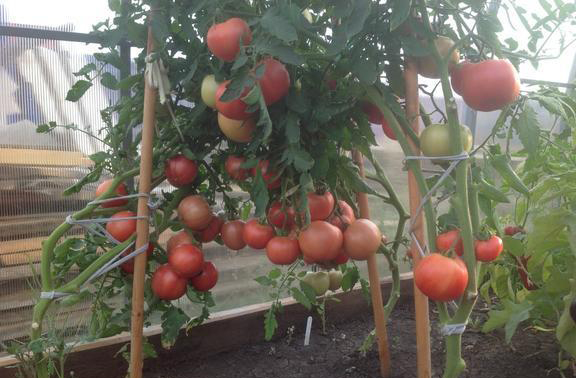
Photo gallery of the Raspberry Sunset tomato variety
Raspberry wine
| Characteristic | Description |
| Description | Low-growing, early-ripening variety. |
| Ripening period | 90 days |
| Fruit weight | 300-400 g |
| Description of the fruit | Round, crimson, ribbed. |
| Productivity | 1200-1400 c/ha |
| Usage | Fresh. The taste is pleasant. |
| Marketability, shelf life | High. |
| Immunity | To late blight. |
| Agricultural technology | Increase watering during fruiting. |
Photo gallery of the Raspberry Wine tomato variety
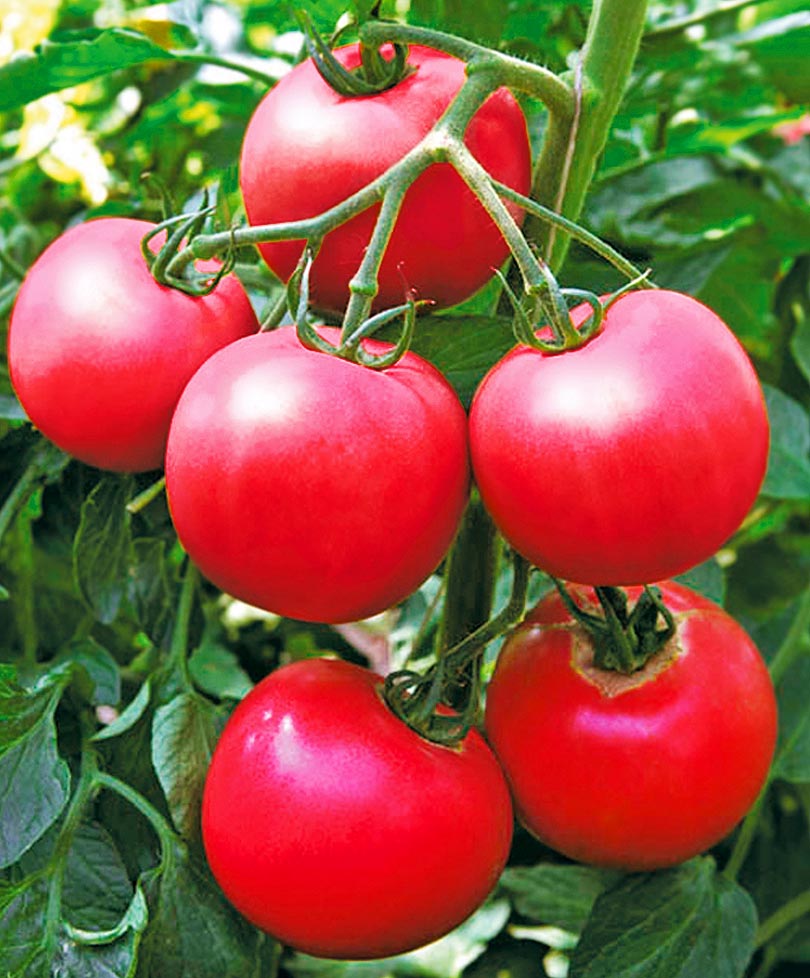
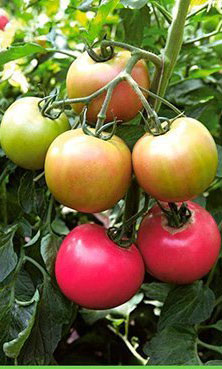
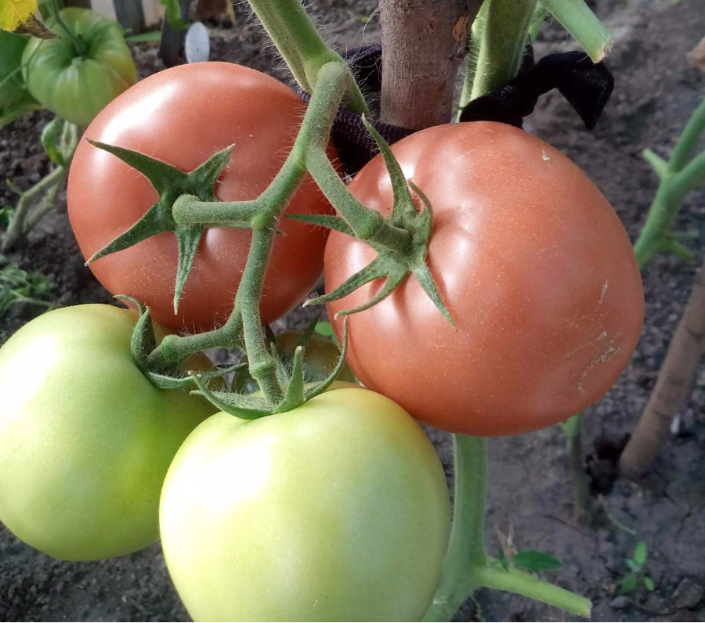
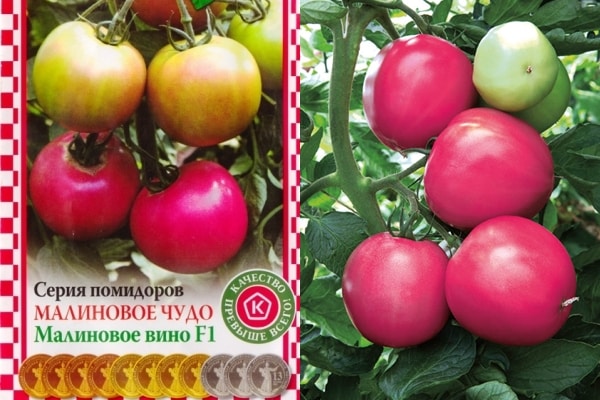

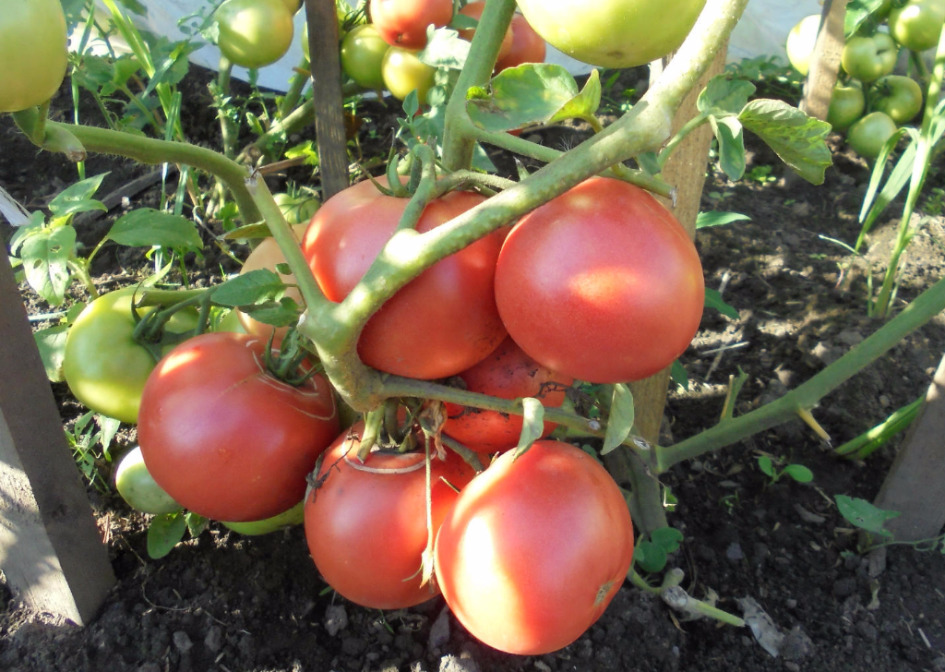
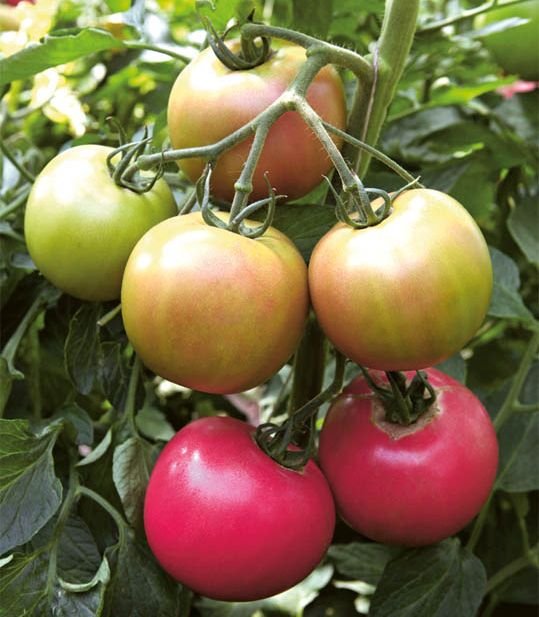
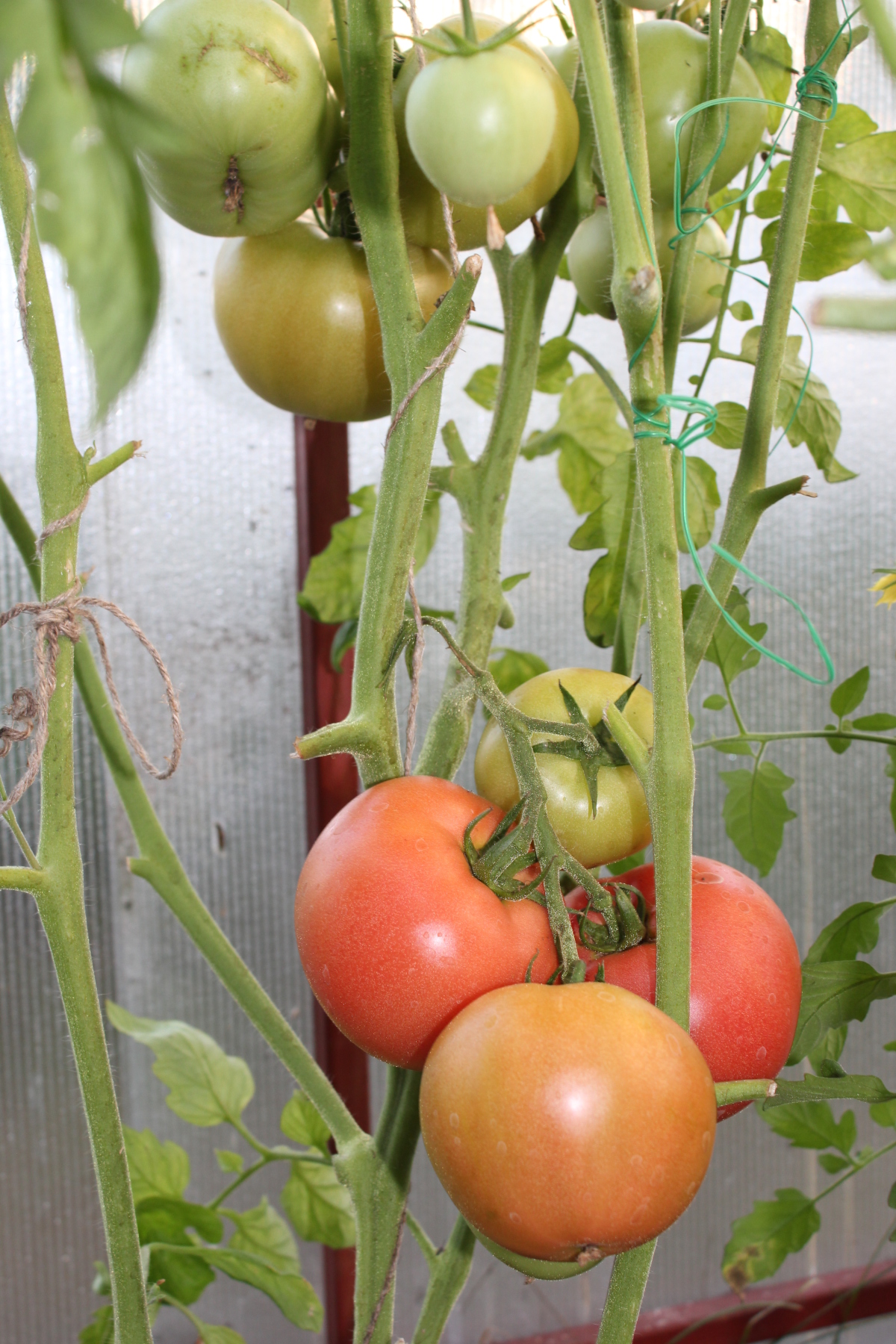
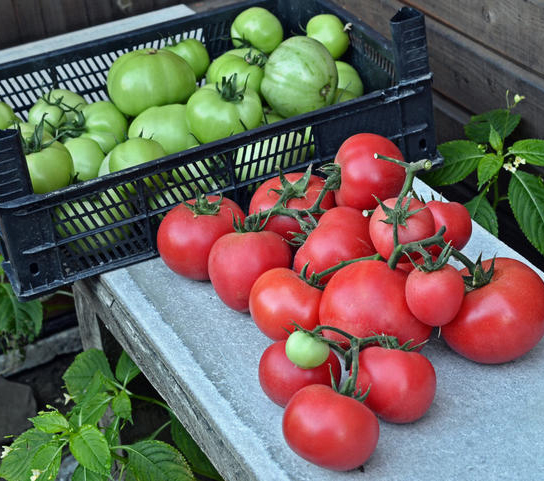
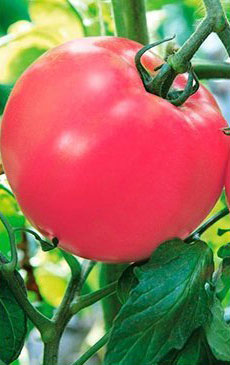
Bright robin
| Characteristic | Description |
| Description | An early maturing, low-growing variety of determinate type. |
| Ripening period | 90 days |
| Fruit weight | 400 g |
| Description of the fruit | Round, crimson, with slight ribbing. |
| Productivity | 1200 c/ha |
| Usage | For salads. Rich flavor. |
| Marketability, shelf life | Excellent. |
| Immunity | To most dangerous diseases. |
| Agricultural technology | Standard. |
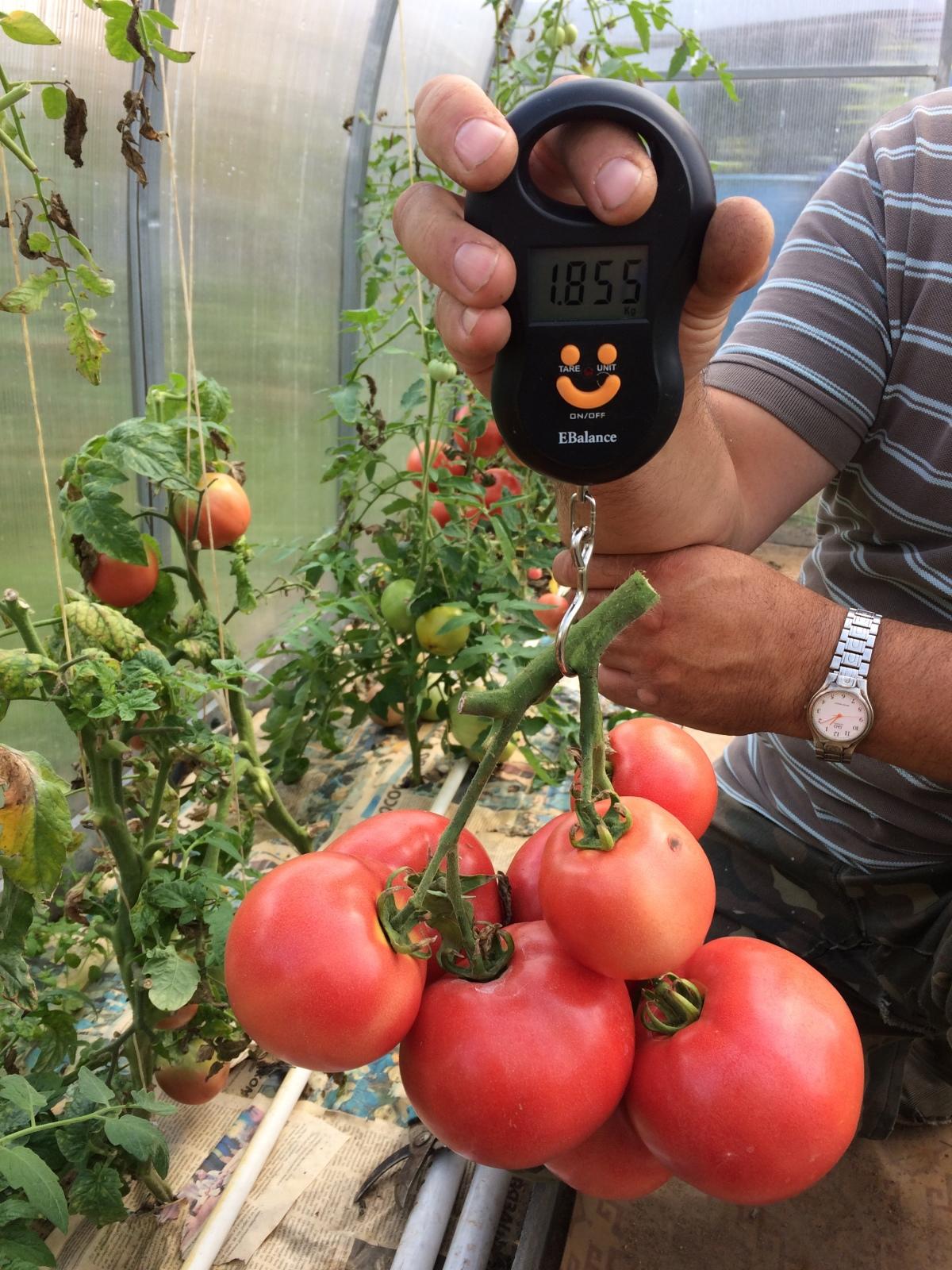
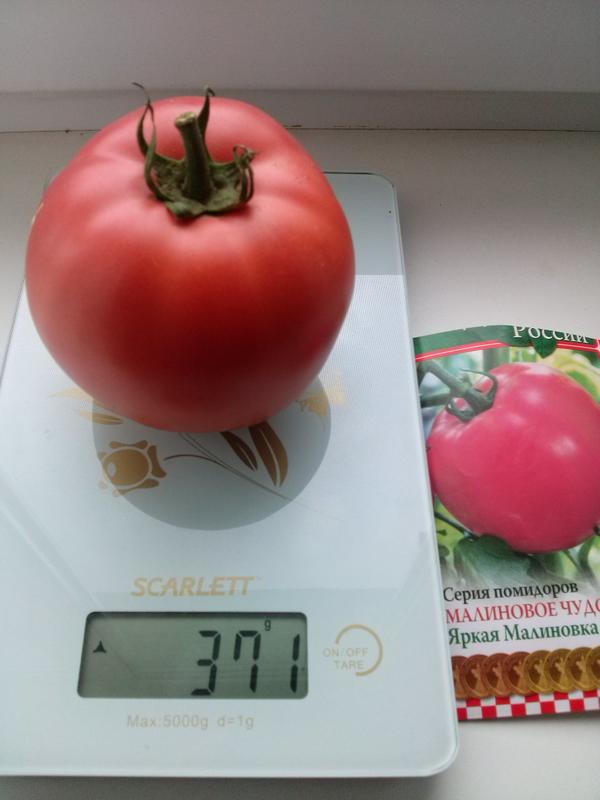
Photo gallery of the tomato variety Bright Malinovka
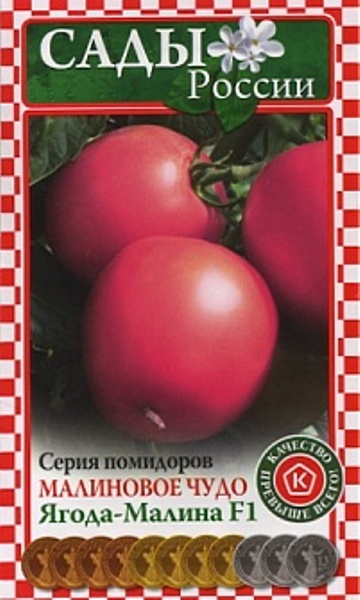
Raspberry berry
| Characteristic | Description |
| Description | Low-growing (no more than 60 cm), mid-season variety. |
| Ripening period | 95 days |
| Fruit weight | 400 g |
| Description of the fruit | Round, pink, ribbed. |
| Productivity | 1300 c/ha. |
| Usage | Making vegetable salads. The taste is excellent. |
| Marketability, shelf life | Good |
| Immunity | Most diseases. |
| Agricultural technology | Standard. |
Photo gallery of the tomato variety 'Raspberry Berry'
Raspberry Paradise
| Characteristic | Description |
| Description | Mid-early, low-growing variety. |
| Ripening period | About 3 months. |
| Fruit weight | 500 g |
| Description of the fruit | Round, large, smooth, medium density. |
| Productivity | 1000-1200 c/ha |
| Usage | Versatile. Excellent taste. |
| Marketability, shelf life | Good |
| Immunity | Late blight. |
| Agricultural technology | Increase watering during fruit set. Support and shape. |
Photo gallery of the Raspberry Paradise tomato variety
The second series of the Golden Raspberry Miracle tomato variety line
Let's look at the features of the second series, which focuses on the shape of the tomatoes and their taste.
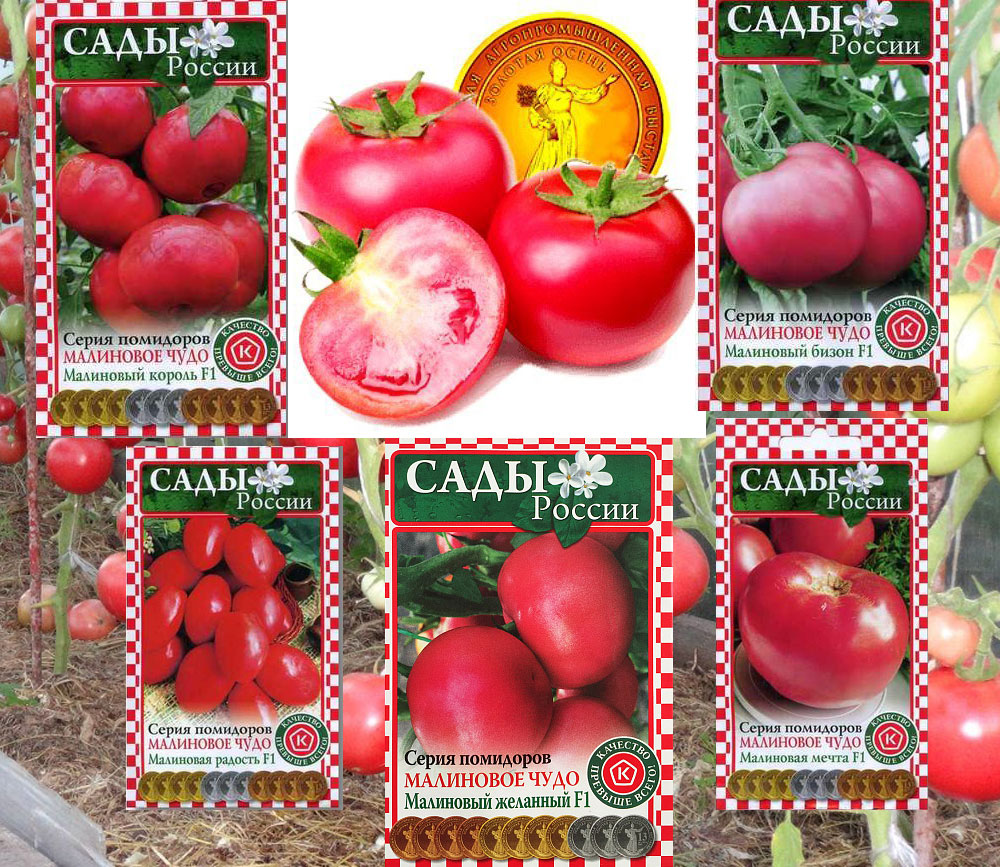
Raspberry Joy
| Characteristic | Description |
| Description | Low growing determinate variety. |
| Ripening period | 90-95 days |
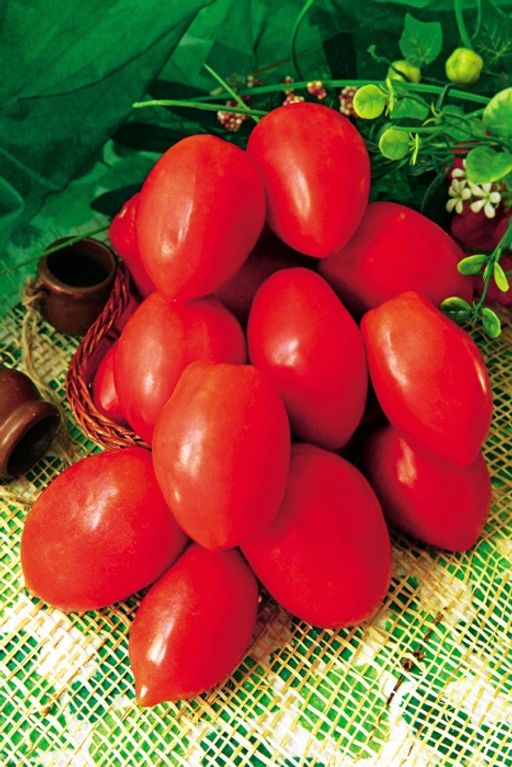
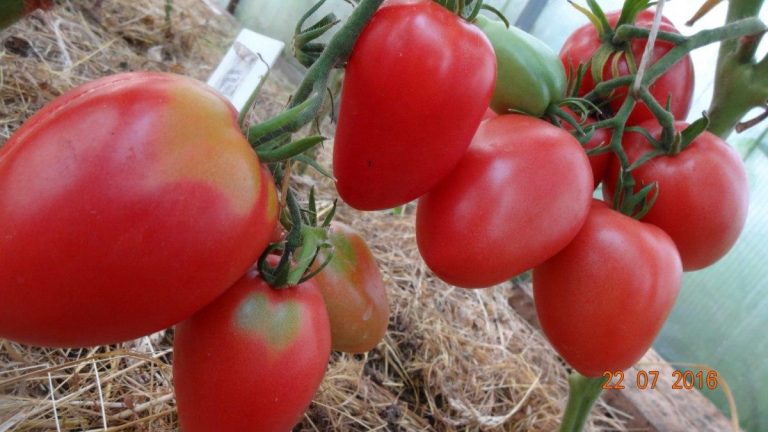
| Fruit weight | 100-150 g. |
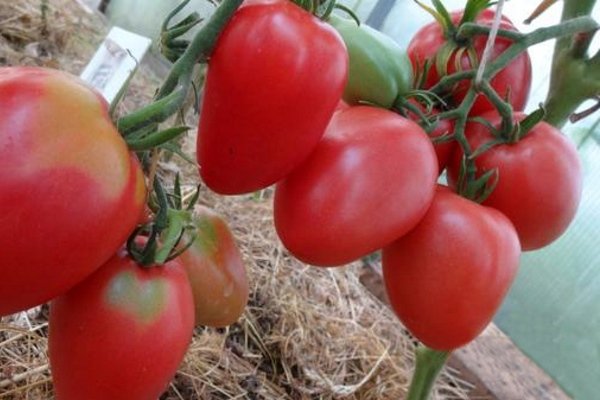
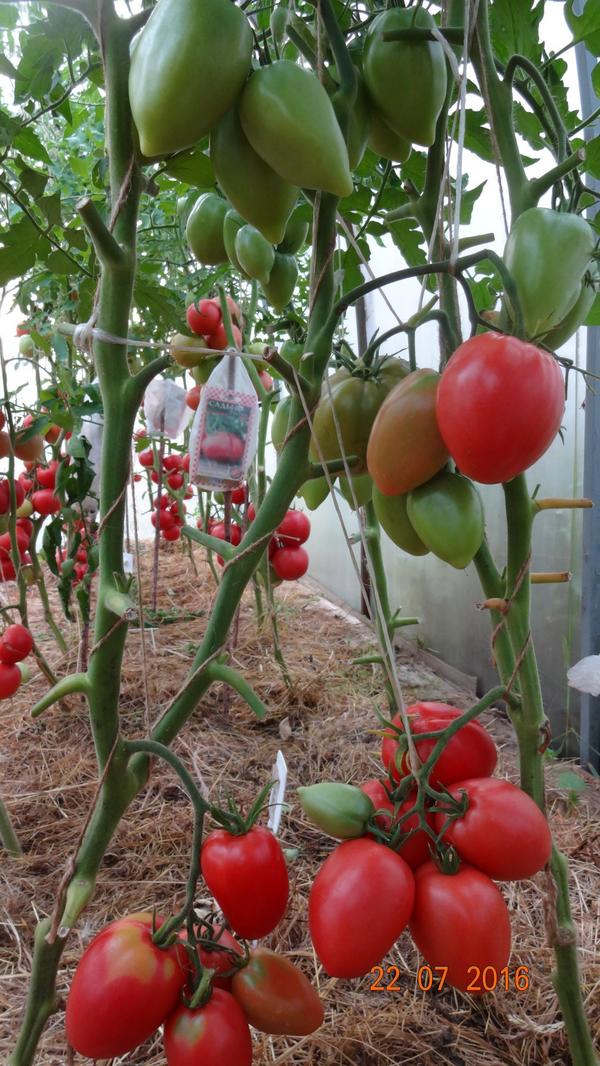
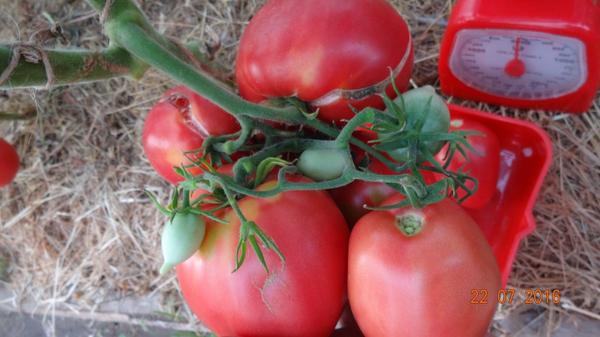
| Description of the fruit | Ovoid, bright pink, ribbed, with a dense skin. |
| Productivity | 1400 c/ha |
| Usage | For salads and preserves. Tomato flavor. |
| Marketability, shelf life | Good, tall. |
| Immunity | To most diseases of nightshades. |
| Agricultural technology | Standard. |
Photo gallery of the Raspberry Joy tomato variety
Crimson Bison
| Characteristic | Description |
| Description | The bushes grow up to 100 cm. Mid-early, limited growth variety. |
| Ripening period | 95 days |
| Fruit weight | 350 g |
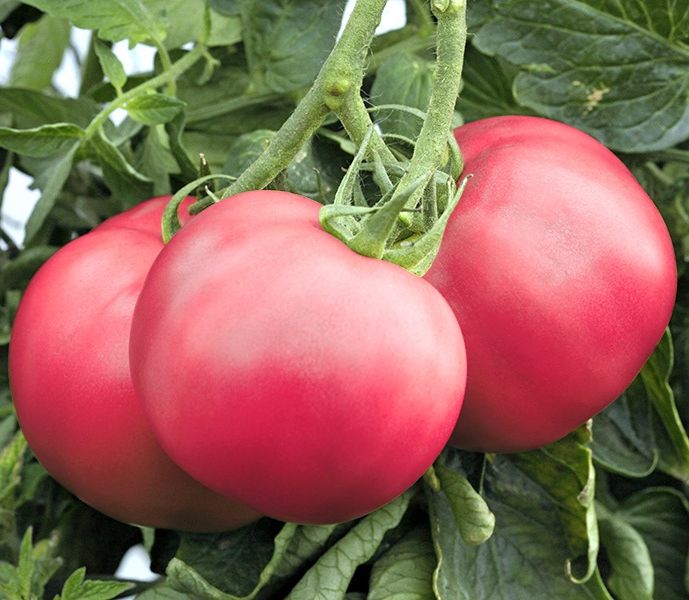
| Description of the fruit | Round, raspberry-colored, with dense flesh and smooth skin. |
| Productivity | 1200 c/ha |
| Usage | Suitable for salads, pickling, and processing into tomato products. Sweetish flavor. |
| Marketability, shelf life | Good |
| Immunity | Strong. |
| Agricultural technology | Typical for determinate tomatoes. |
Photo gallery of the Raspberry Bison tomato variety
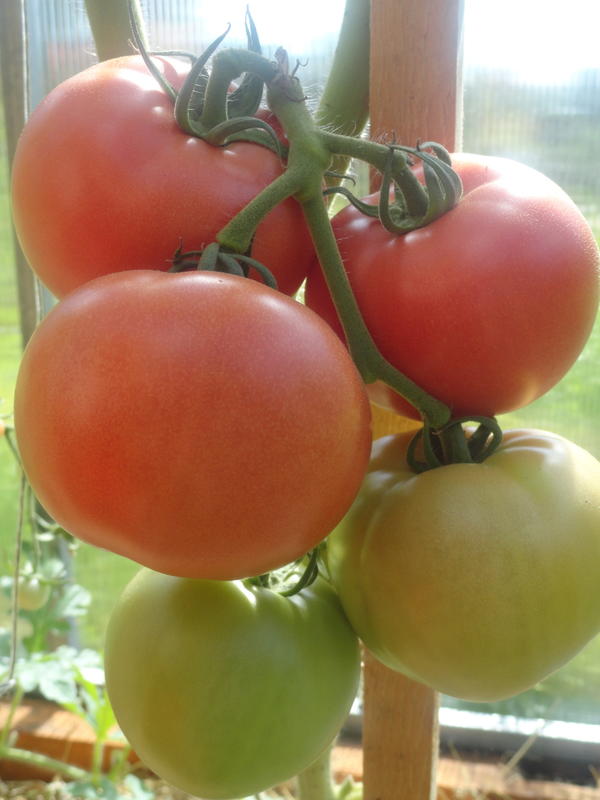
Crimson King
| Characteristic | Description |
| Description | Mid-early, determinate variety, 1 m in height. |
| Ripening period | 95 days |
| Fruit weight | 300-350 g |
| Description of the fruit | Flat-round, pinkish. |
| Productivity | 1000 c/ha |
| Usage | Fresh salads. The taste is excellent. |
| Marketability, shelf life | Good |
| Immunity | Good. |
| Agricultural technology | Increase watering during fruiting. |
Photo gallery of the Raspberry King tomato variety
Raspberry Dream
| Characteristic | Description |
| Description | Early maturing, low-growing variety. |
| Ripening period | 90 days |
| Fruit weight | 350 g |
| Description of the fruit | Flattened-rounded, raspberry-colored, medium-ribbed. |
| Productivity | 1400 c/ha |
| Usage | Universal. Good taste. |
| Marketability, shelf life | Excellent, high. |
| Immunity | Good. |
| Agricultural technology | Increase watering during fruiting. |
Photo gallery of the Raspberry Dream tomato variety
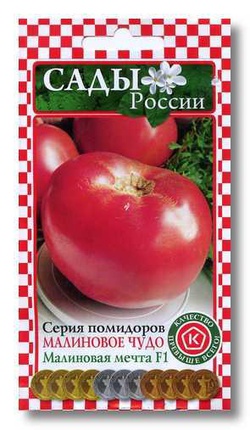
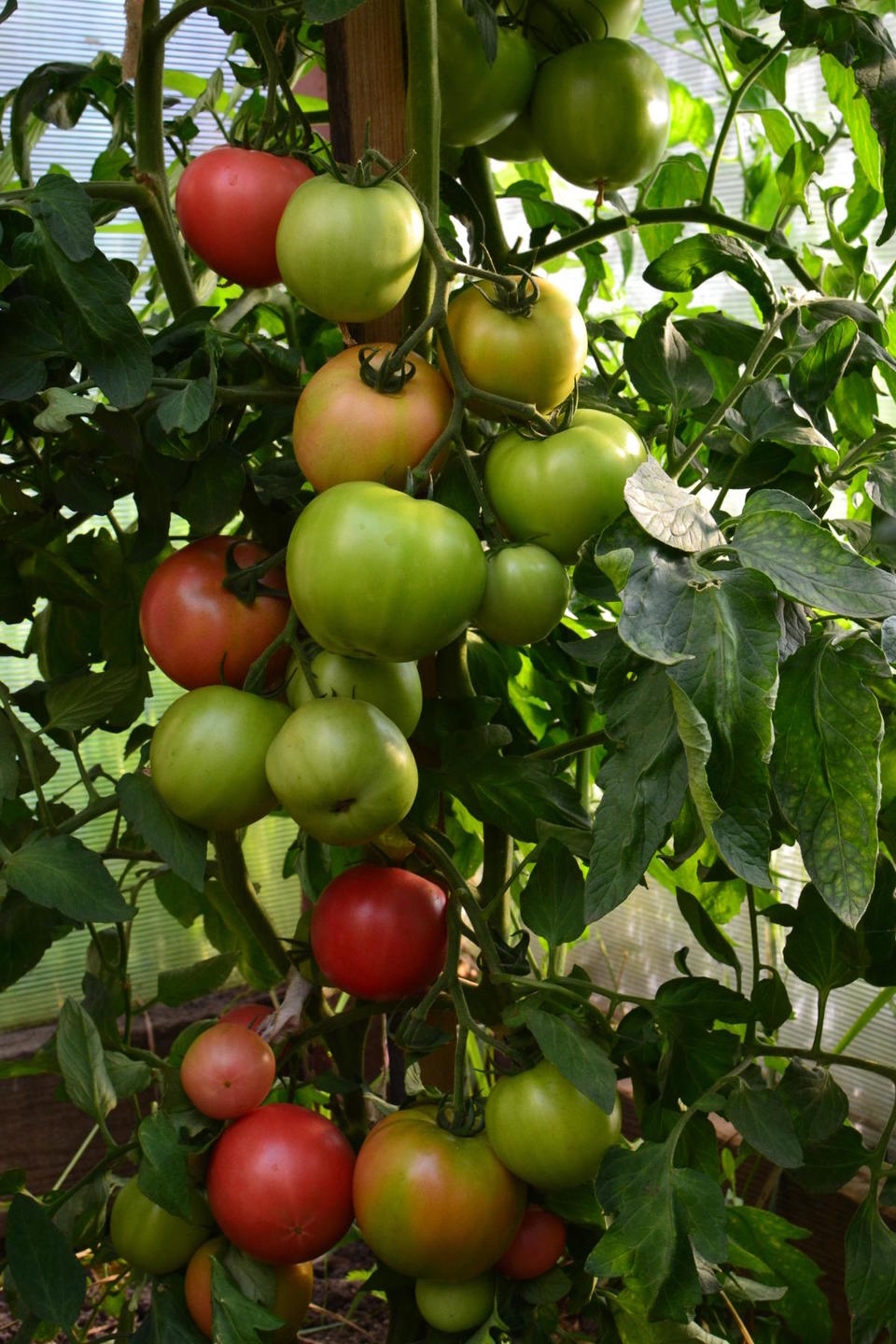
Raspberry Desired
| Characteristic | Description |
| Description | Mid-early, determinate variety. |
| Ripening period | 95-100 days |
| Fruit weight | 300-400 g |
| Description of the fruit | Flat-round, ribbed, deep pink. |
| Productivity | 1300 c/ha |
| Usage | Salad. The taste is excellent. |
| Marketability, shelf life | Good |
| Immunity | Average. |
| Agricultural technology | Typical for determinate tomatoes. |
Photo gallery of the Raspberry Desirable tomato variety
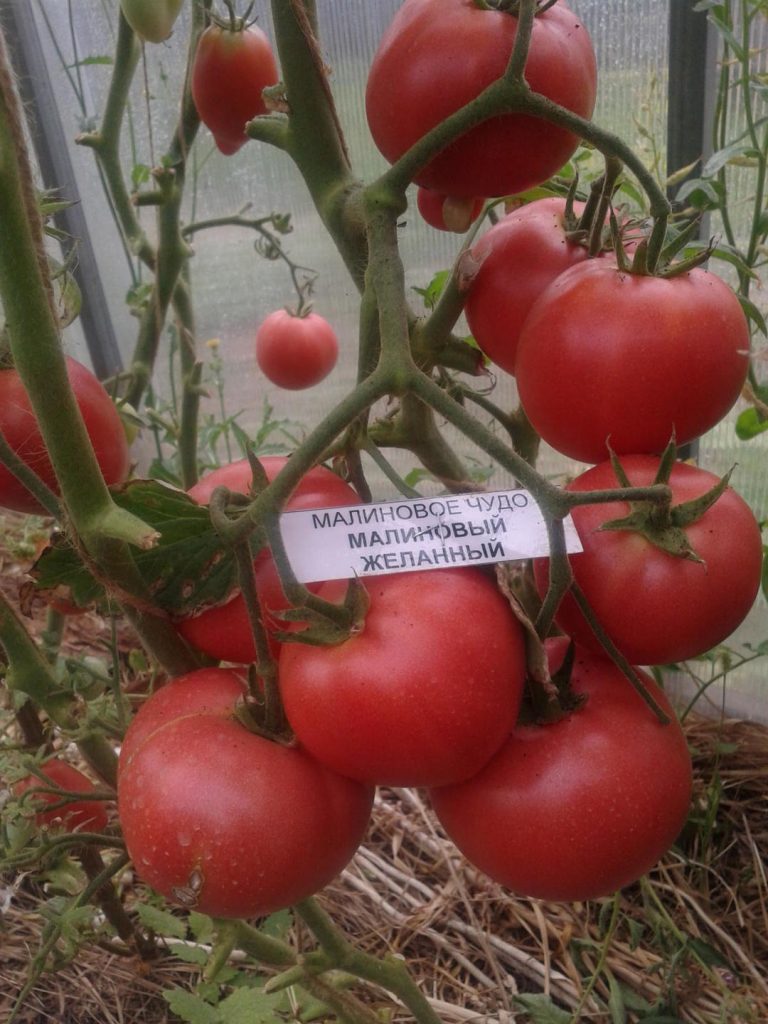
The third series of the Golden Raspberry Miracle tomato variety line
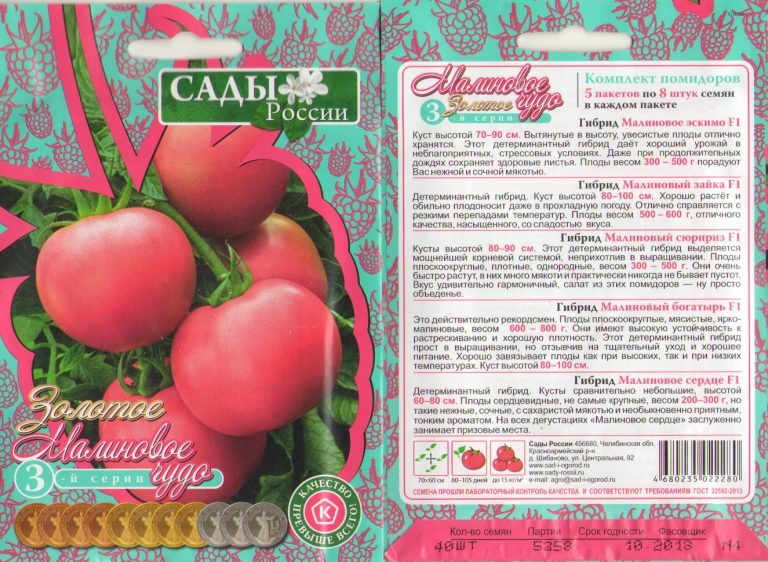
Let's look at the main characteristics of the third series. It is distinguished by its large fruits, provided proper agricultural practices are followed.
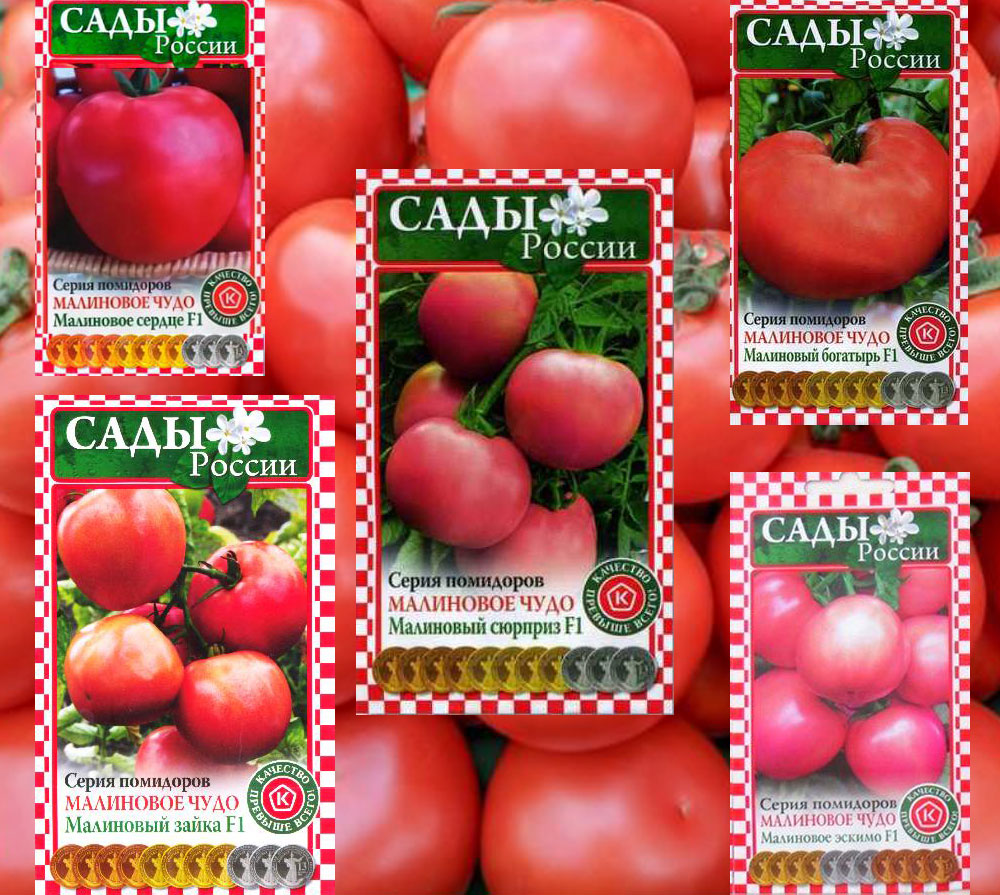
Raspberry Popsicle
| Characteristic | Description |
| Description | Mid-early, low-growing (up to 90 cm) variety. |
| Ripening period | 95-100 days |
| Fruit weight | 300 g |
| Description of the fruit | Flat-round, crimson, slightly ribbed. |
| Productivity | 1300 c/ha |
| Usage | For salads, canning, and processing into tomato products. Excellent taste. |
| Marketability, shelf life | Good |
| Immunity | To fungal infections. |
| Agricultural technology | Mandatory gartering and pinching. |
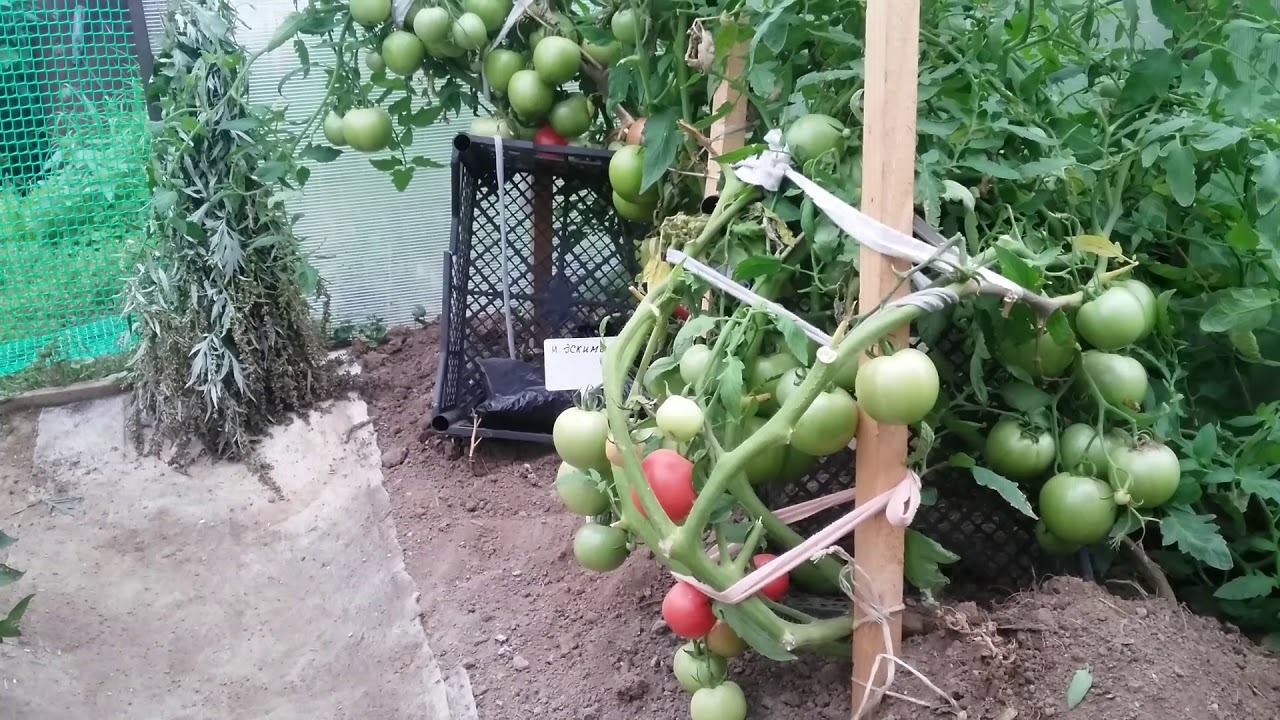
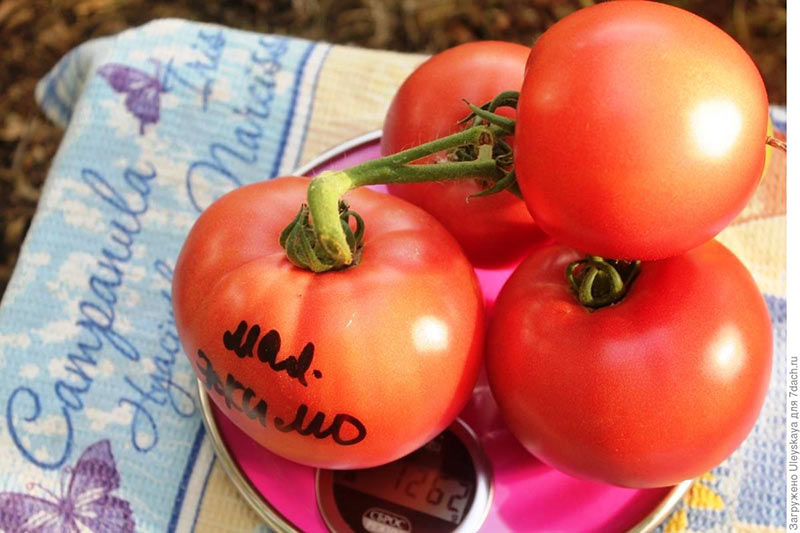
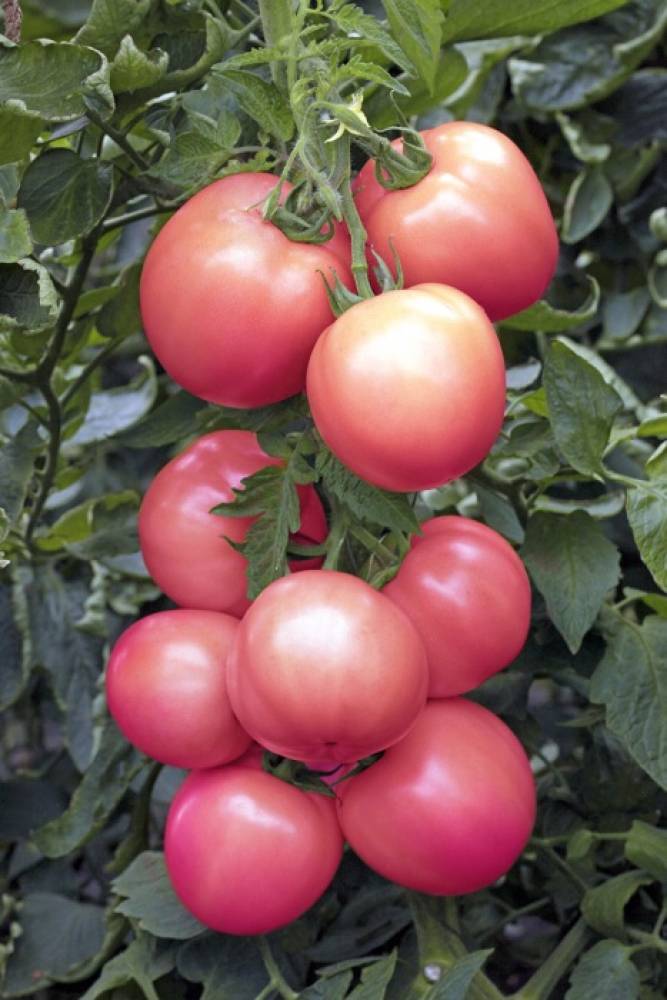
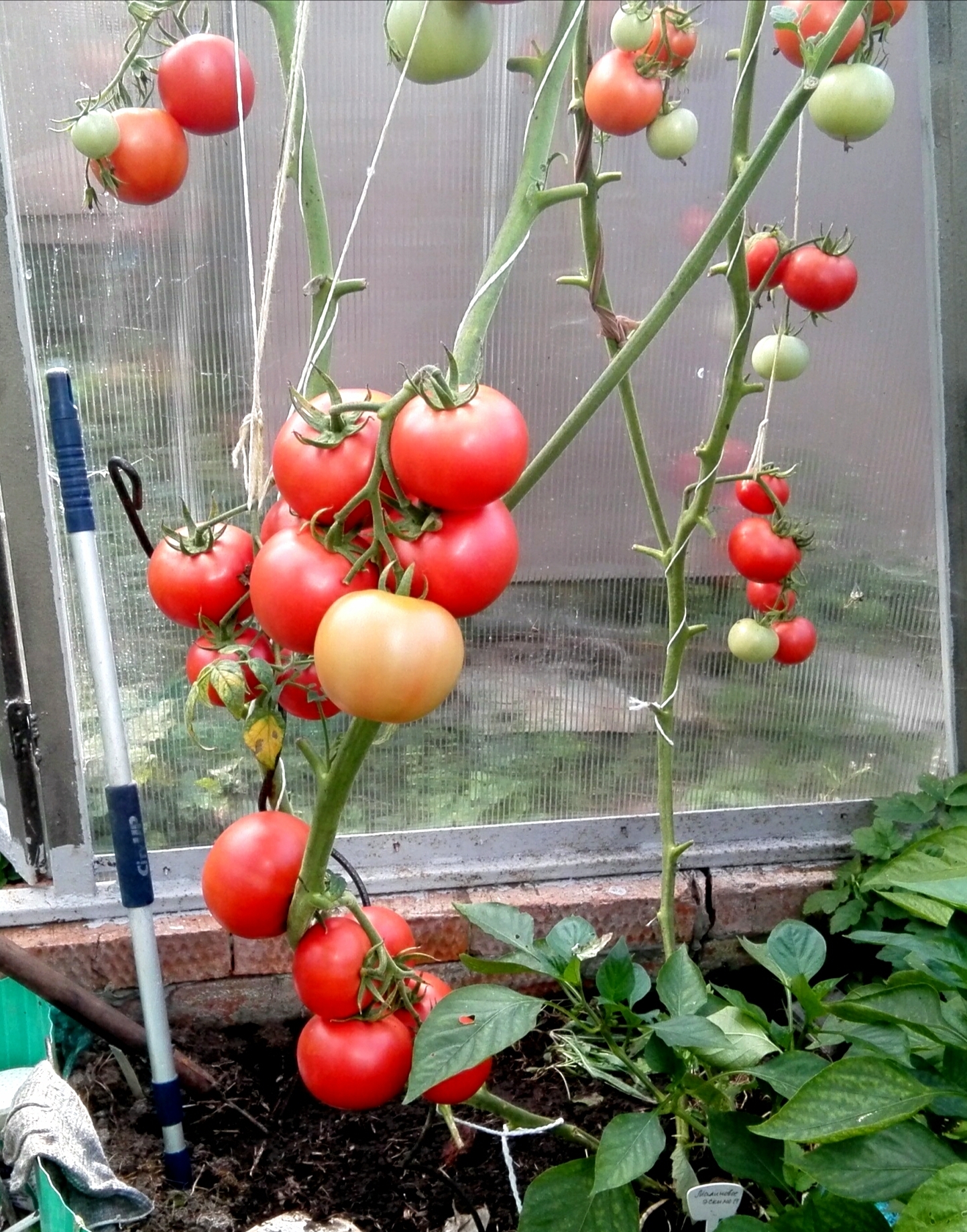
Photo gallery of the Raspberry Eskimo tomato variety
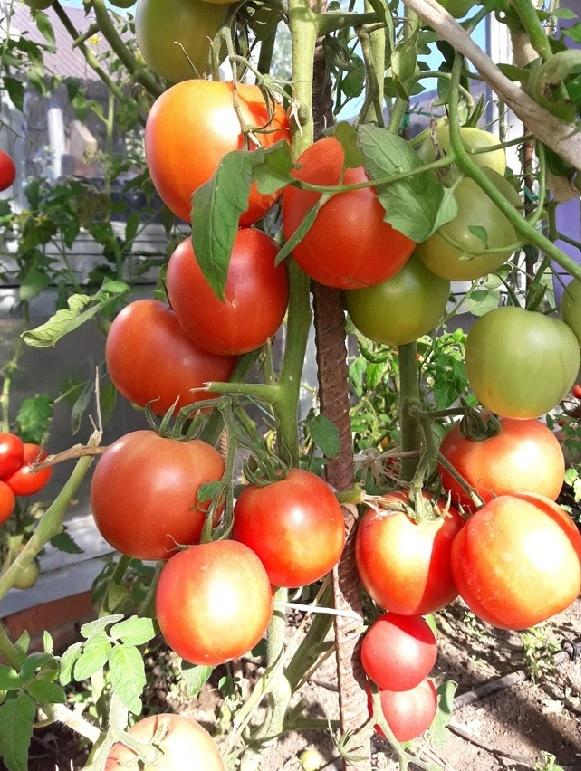
Raspberry Heart
| Characteristic | Description |
| Description | Mid-early, not very tall (up to 80 cm) variety. |
| Ripening period | 95-100 days |
| Fruit weight | 300 g |
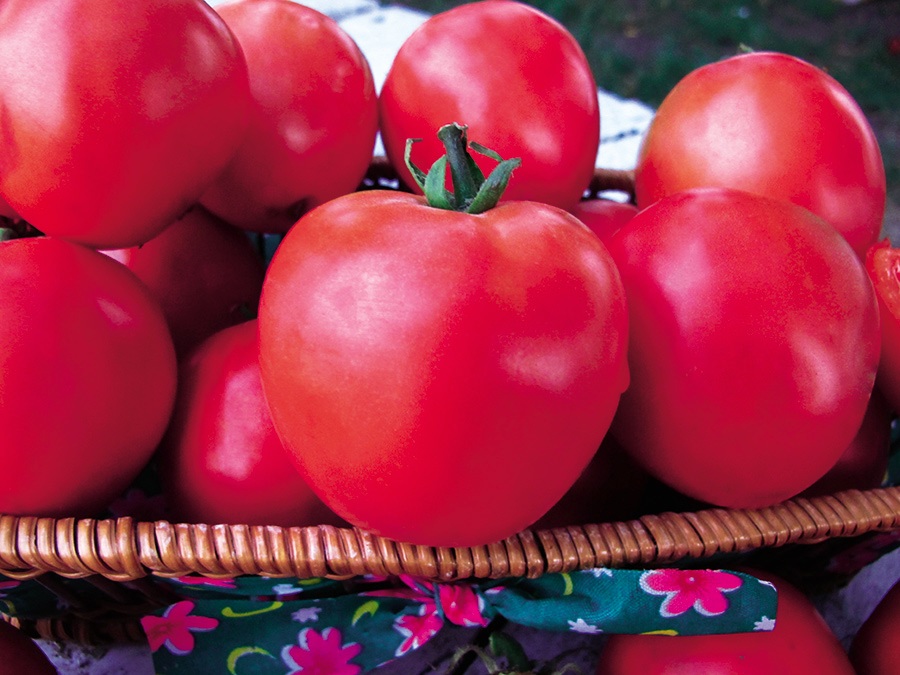
| Description of the fruit | Heart-shaped, raspberry. |
| Productivity | 1300 c/ha |
| Usage | Versatile. Excellent taste. |
| Marketability, shelf life | Good |
| Immunity | Good. |
| Agricultural technology | Standard. |
Photo gallery of the Raspberry Heart tomato variety

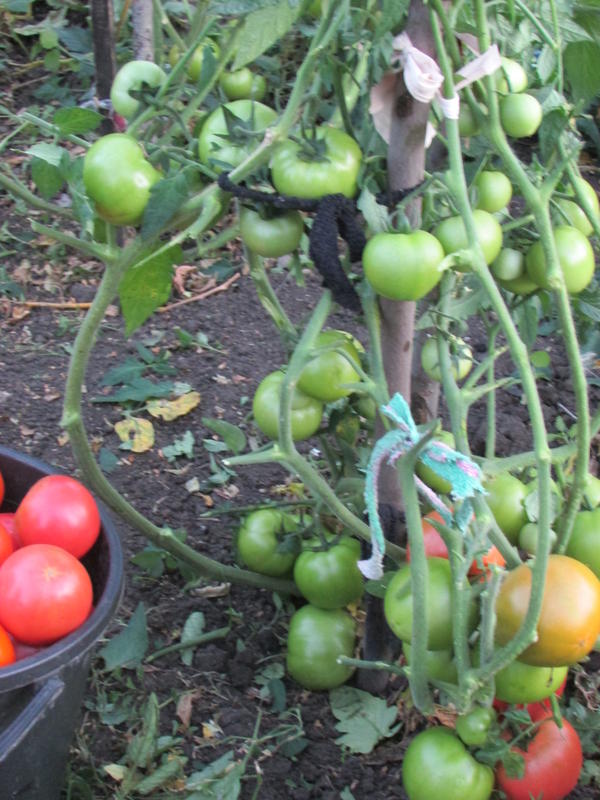
Raspberry bunny
| Characteristic | Description |
| Description | Mid-early, determinate variety with frost resistance. |
| Ripening period | 95 days |
| Fruit weight | 350 g |
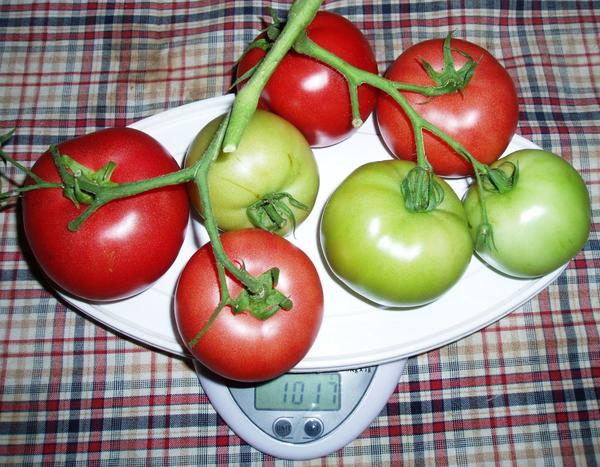
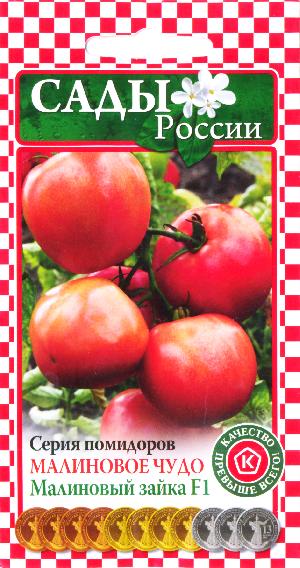
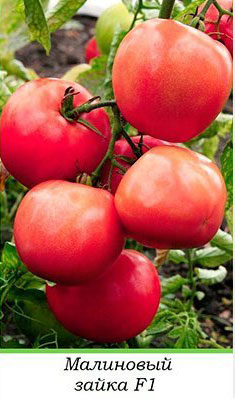
| Description of the fruit | Flat-round, crimson, ribbed. |
| Productivity | 1200 c/ha |
| Usage | Suitable for salads. Excellent taste. |
| Marketability, shelf life | Good |
| Immunity | Strong. |
| Agricultural technology | Garter, pinching out side shoots. |
Photo gallery of the Raspberry Bunny tomato variety
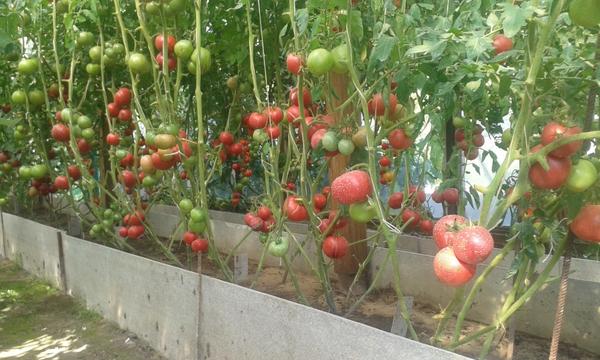
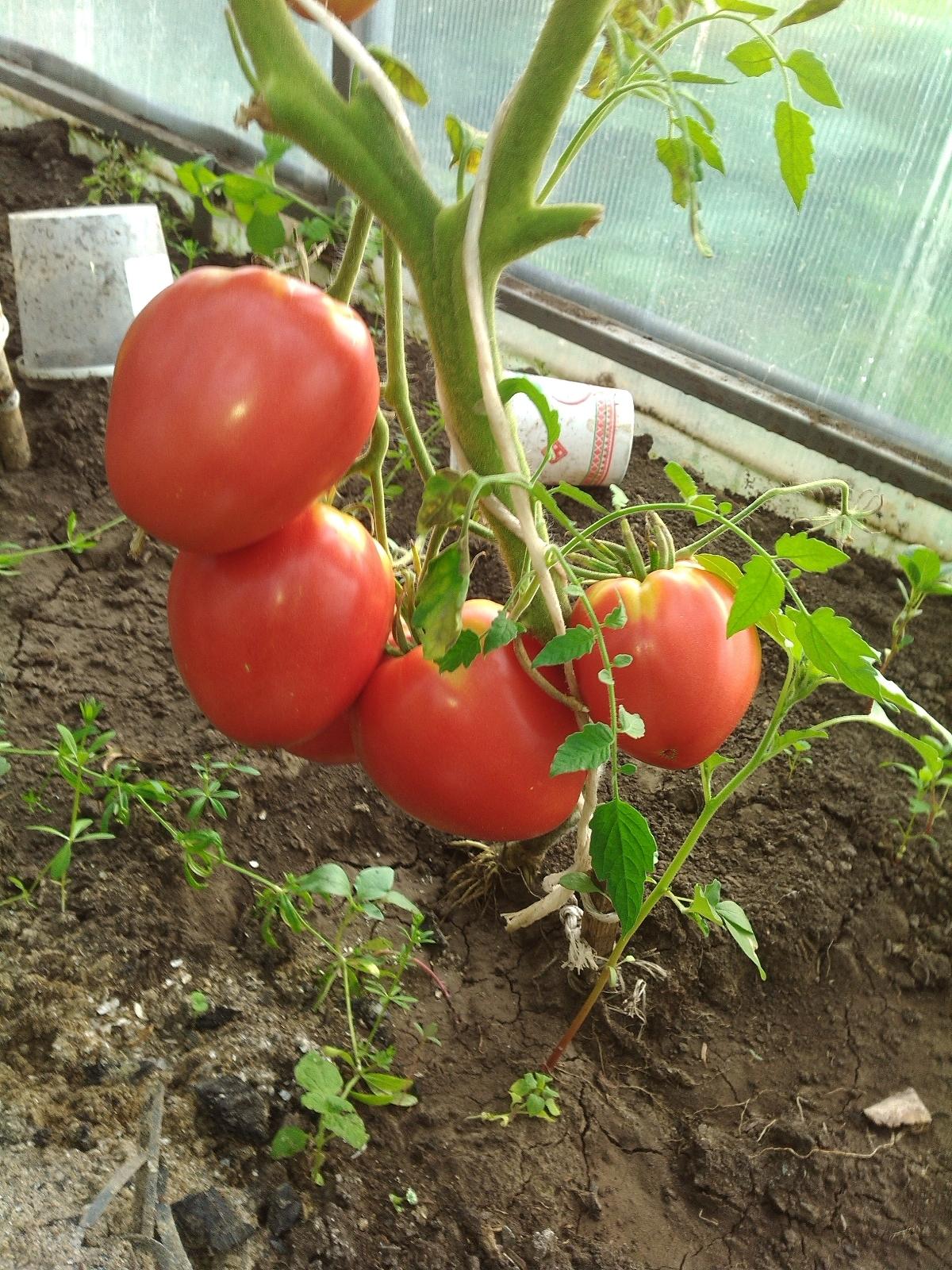
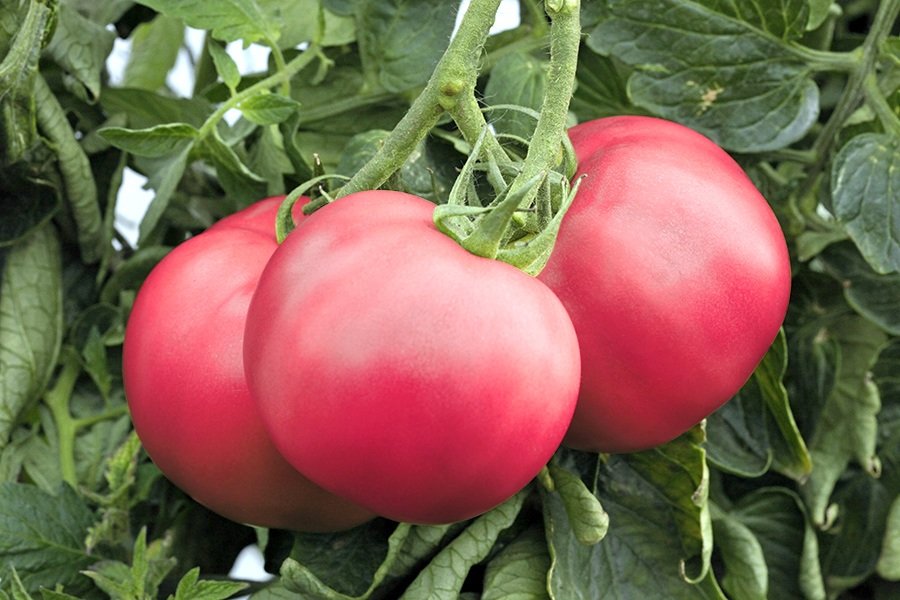
Raspberry Surprise
| Characteristic | Description |
| Description | Mid-early, low-growing variety. |
| Ripening period | 95 days |
| Fruit weight | 350 g |
| Description of the fruit | Flat, round, raspberry. |
| Productivity | 1400 c/ha |
| Usage | For salads, canning, and processing into tomato products. Excellent taste. |
| Marketability, shelf life | High. |
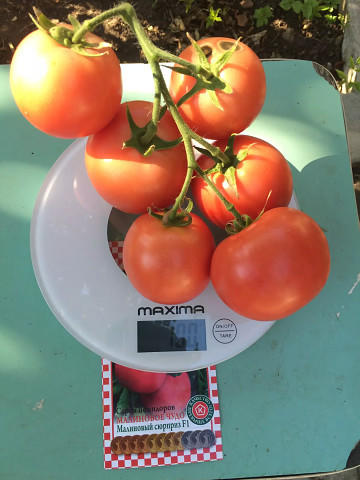
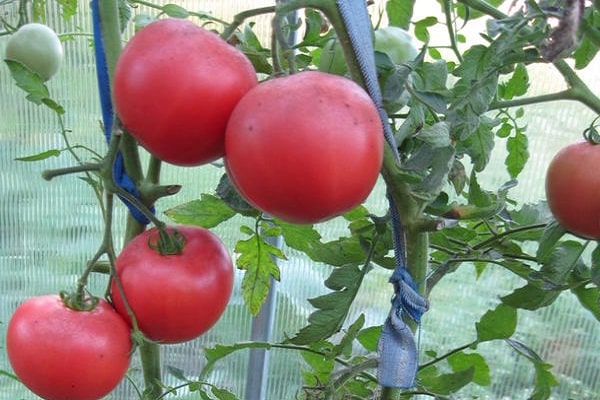
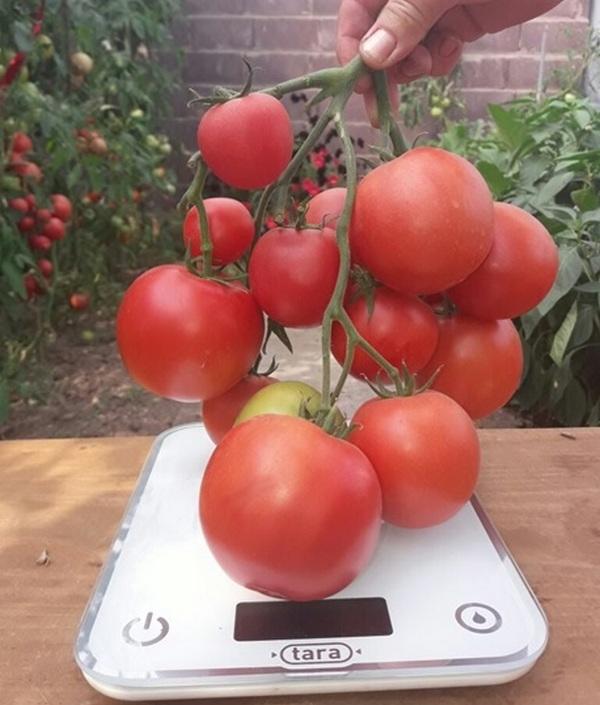
| Immunity | Good. |
| Agricultural technology | Increase watering during fruiting. |
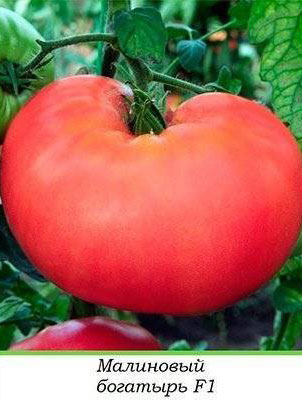
Photo gallery of the Raspberry Surprise tomato variety
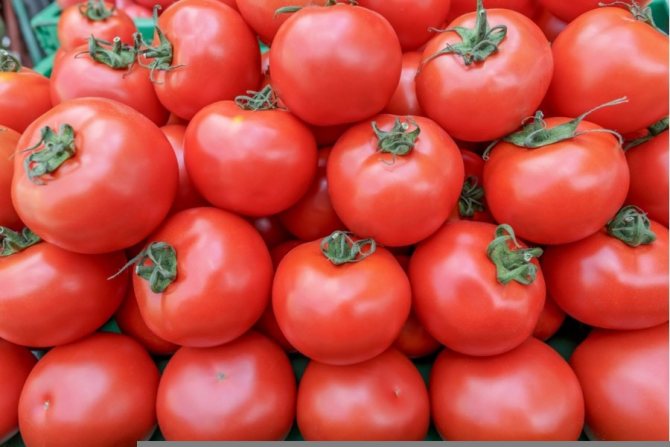
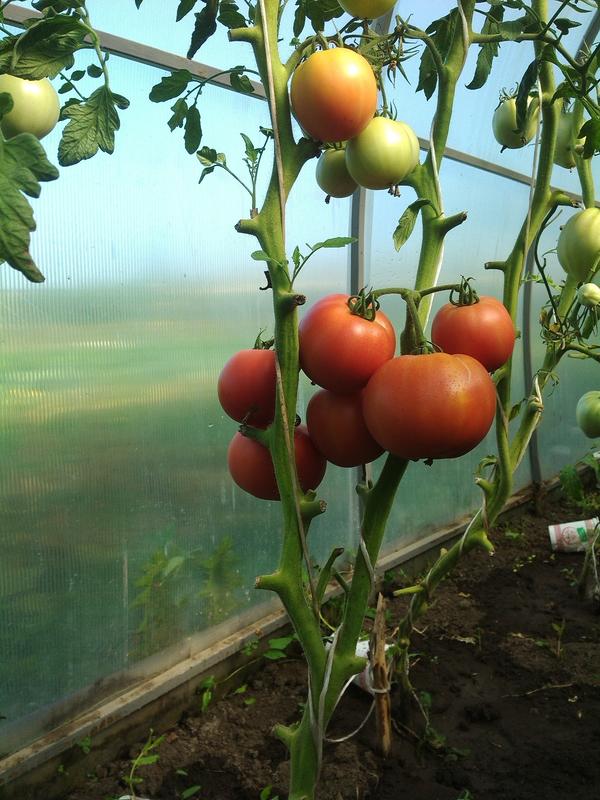
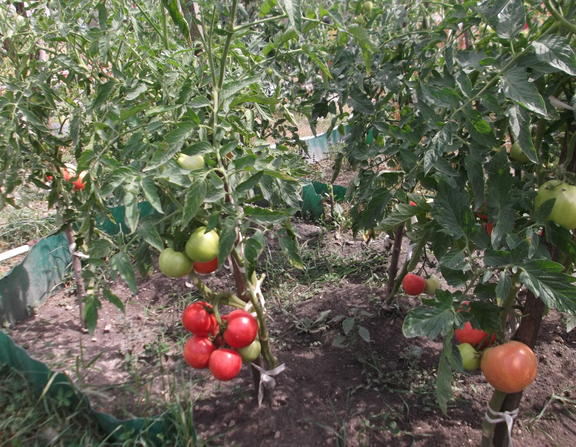
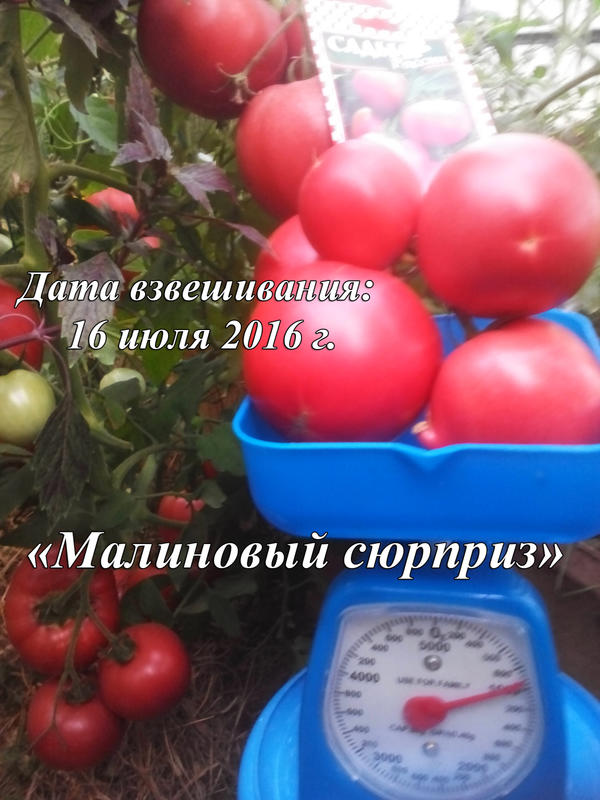
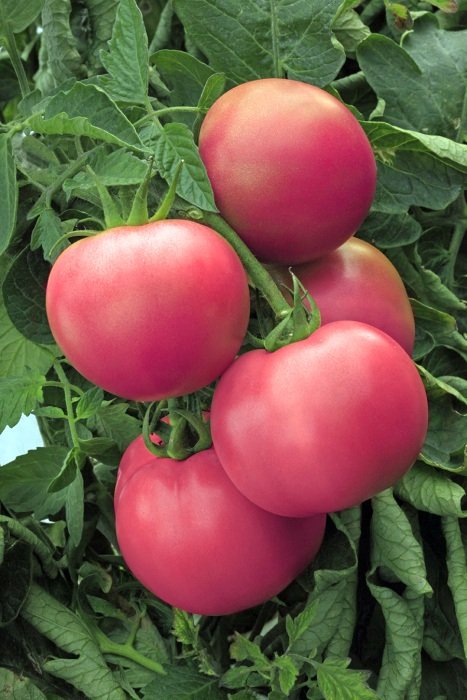
Crimson Bogatyr
| Characteristic | Description |
| Description | Mid-early, low-growing variety for open and protected ground. |
| Ripening period | 95 days |
| Fruit weight | 500 g |
| Description of the fruit | Flattened-round, raspberry-colored, does not crack. |
| Productivity | 1500 c/ha |
| Usage | Great fresh or in salads. Excellent taste. |
| Marketability, shelf life | Good. |
| Immunity | Good. |
| Agricultural technology | Garter, shaping. |
Photo gallery of the tomato variety Raspberry Bogatyr
A general, detailed description of the Golden Raspberry Miracle tomato variety line
Forms low, determinate bushes that do not exceed 1 m. Suitable for both open and closed ground.
General characteristics of fruits
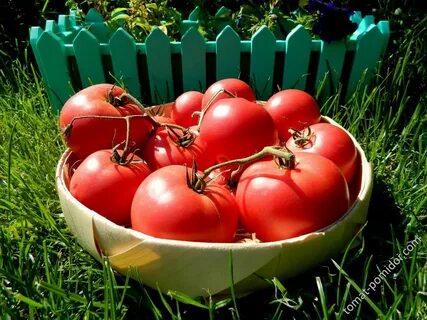
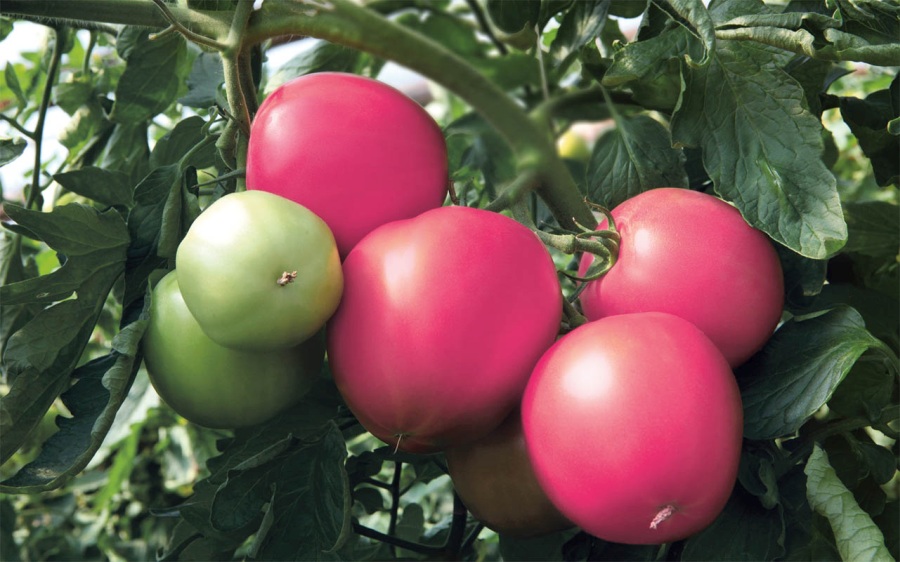
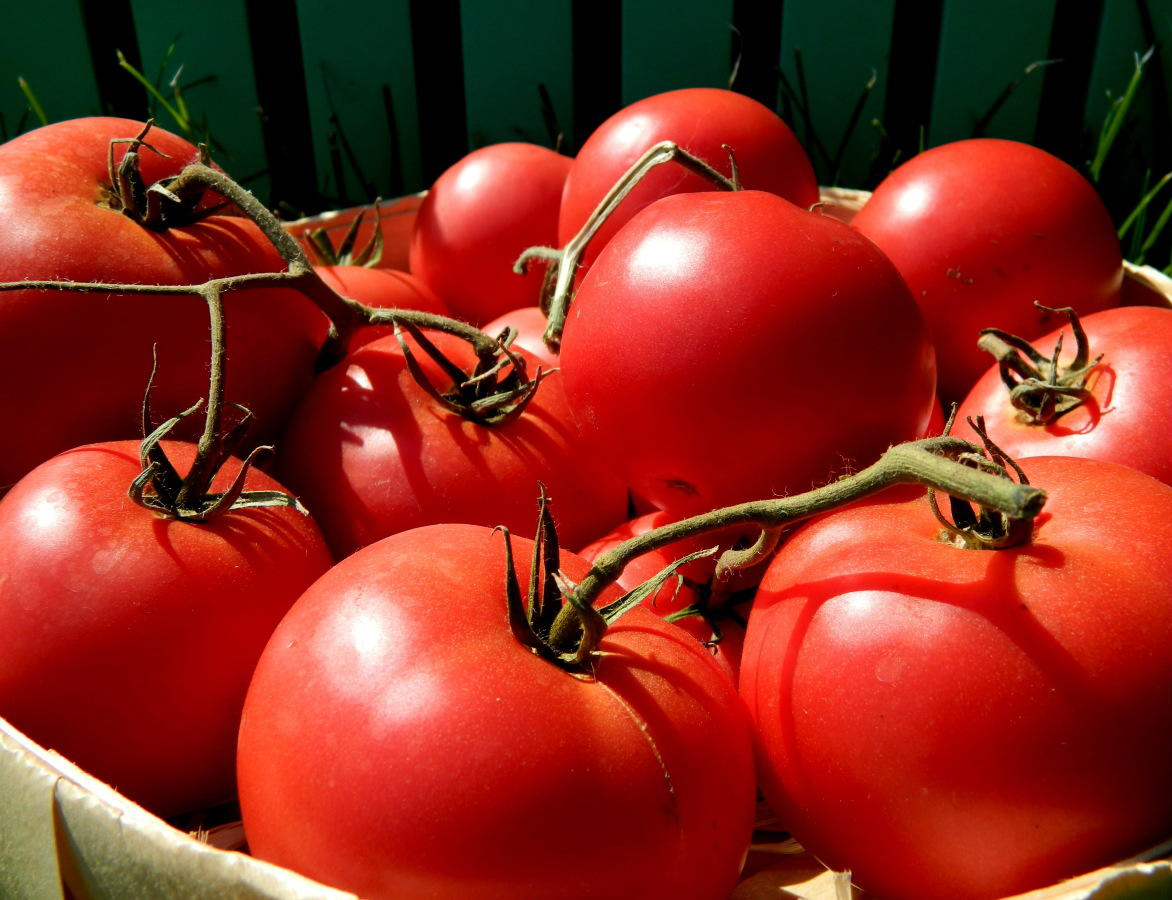
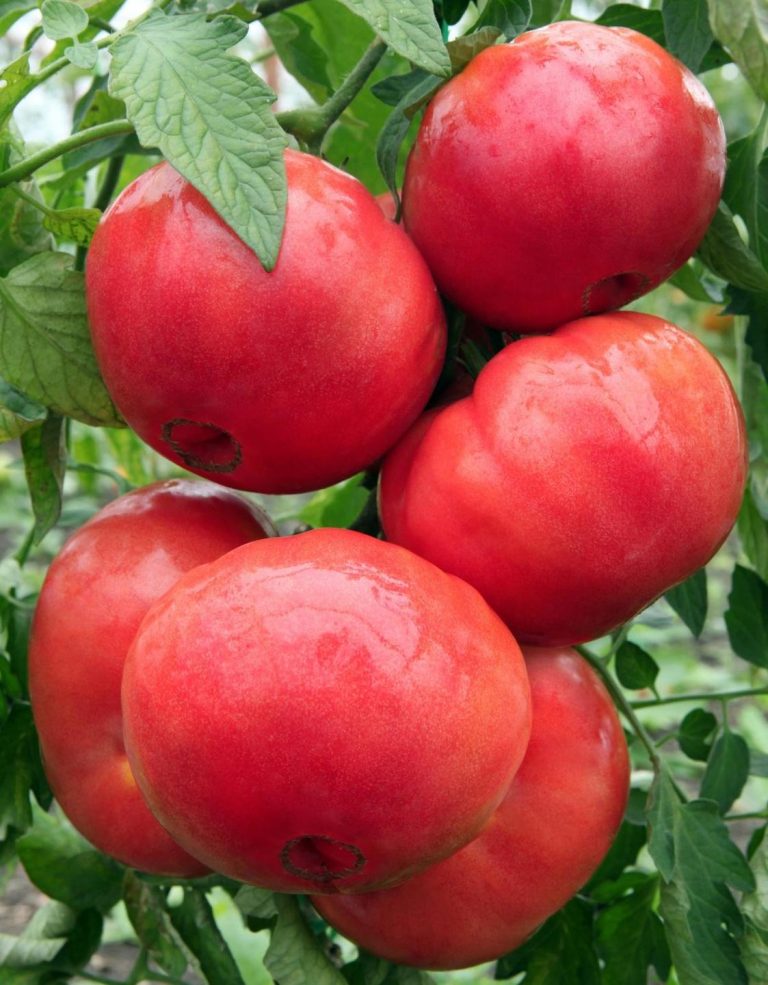
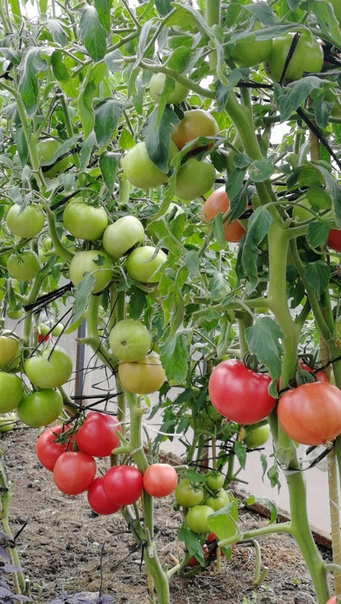
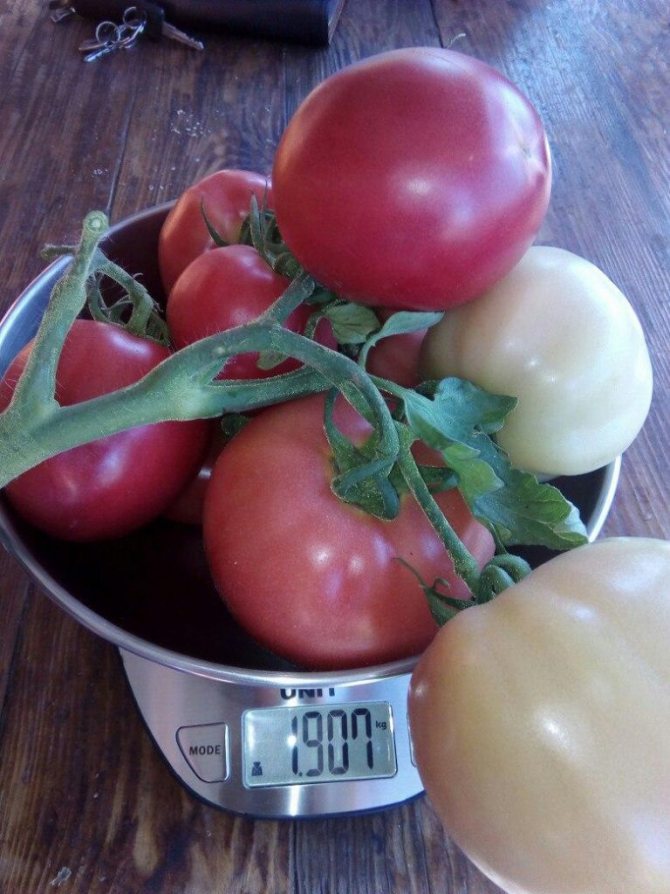
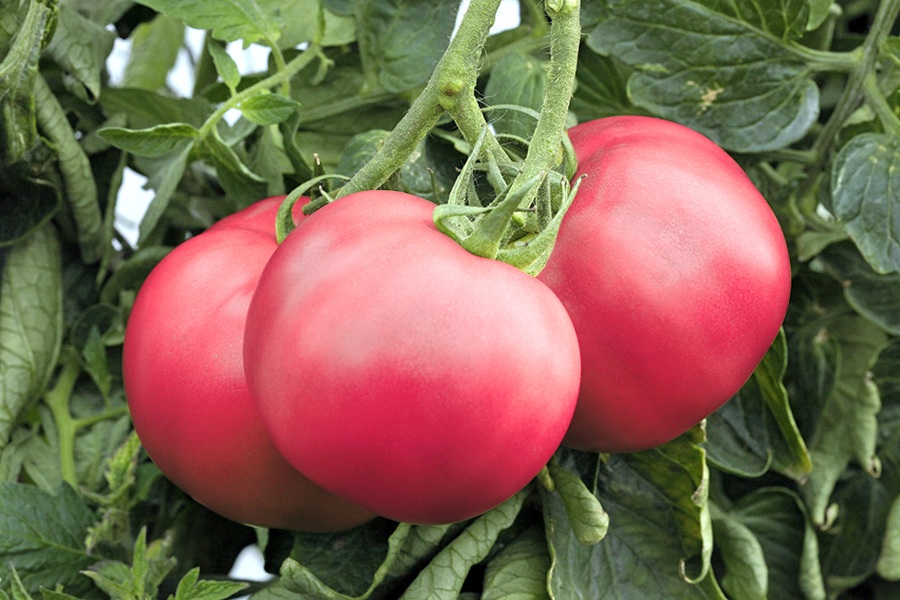
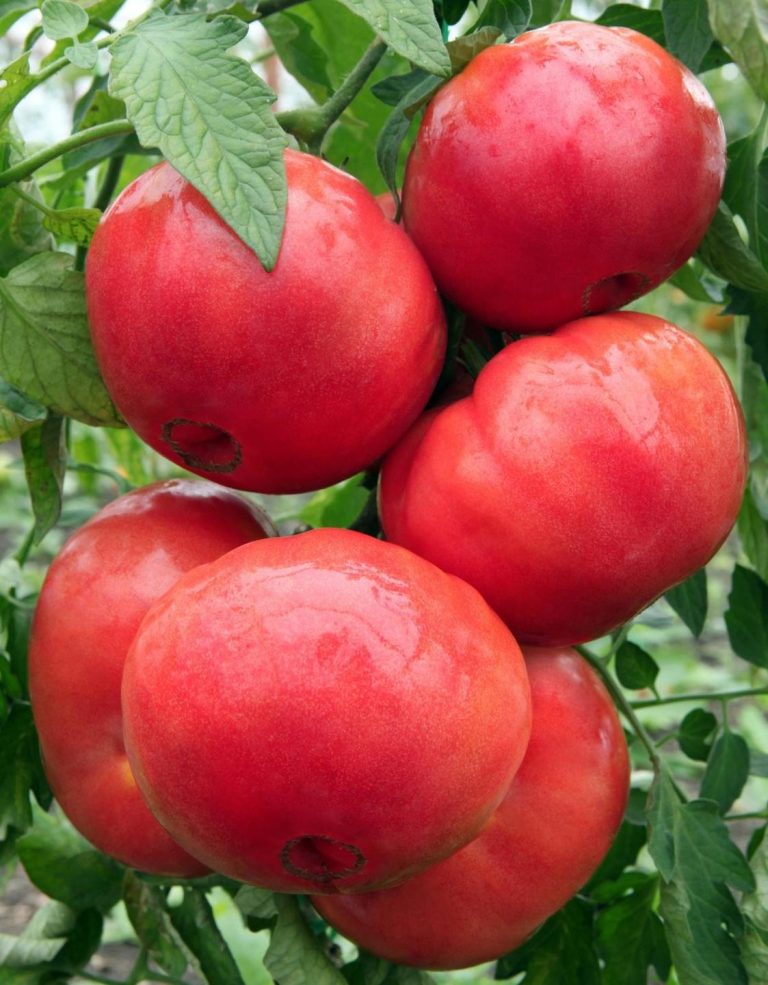
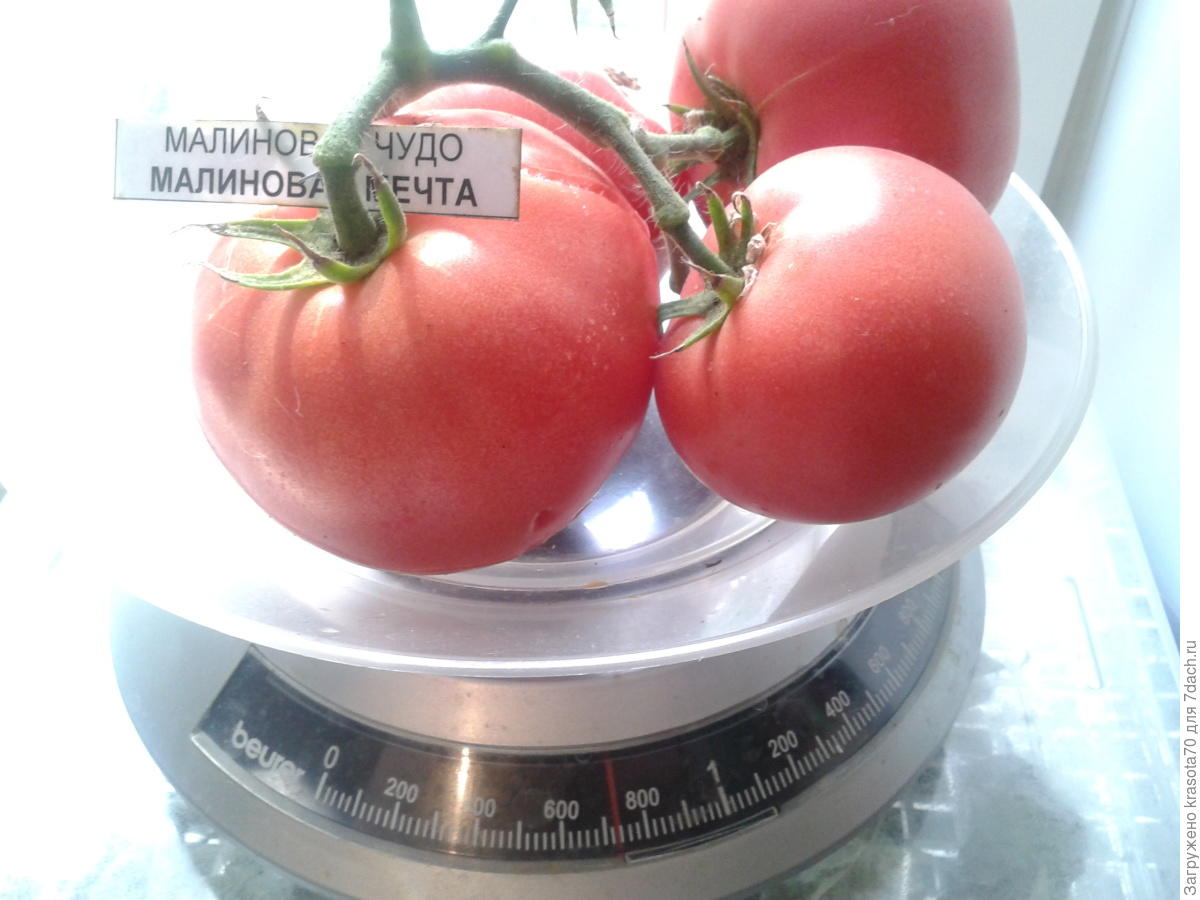
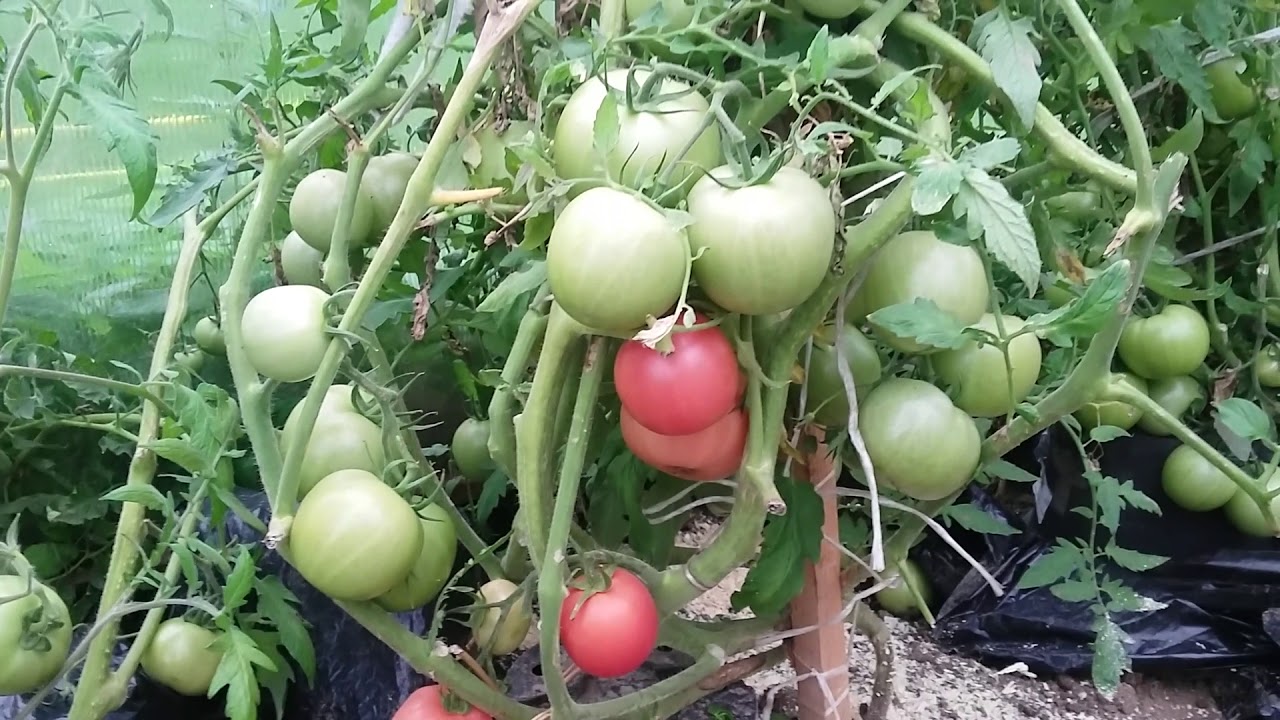
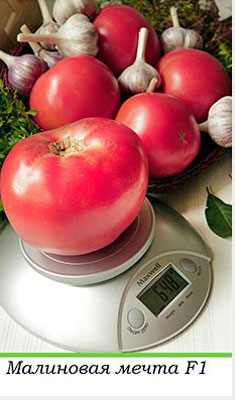
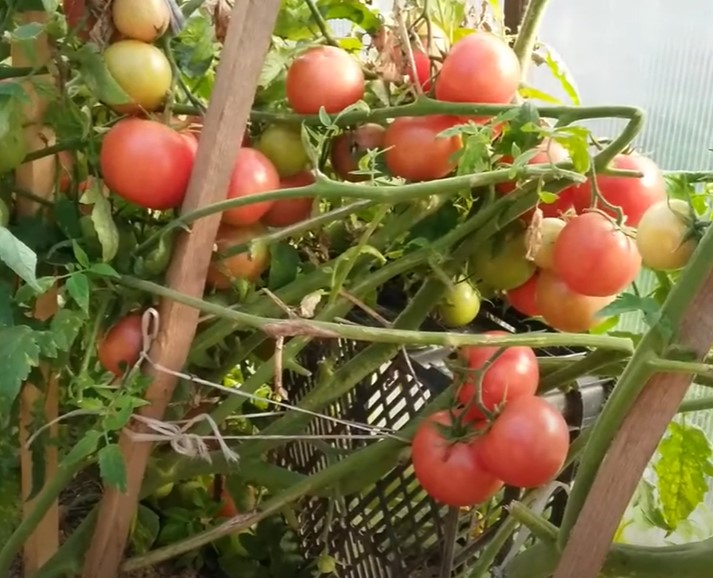
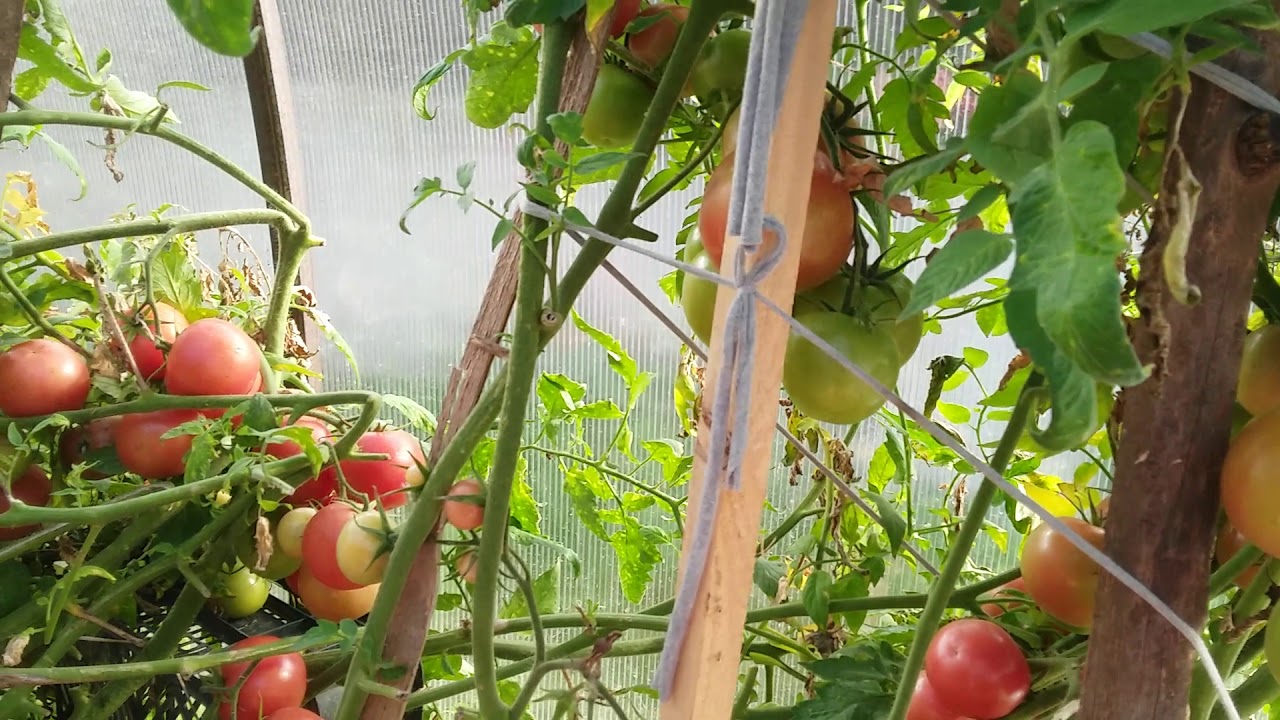
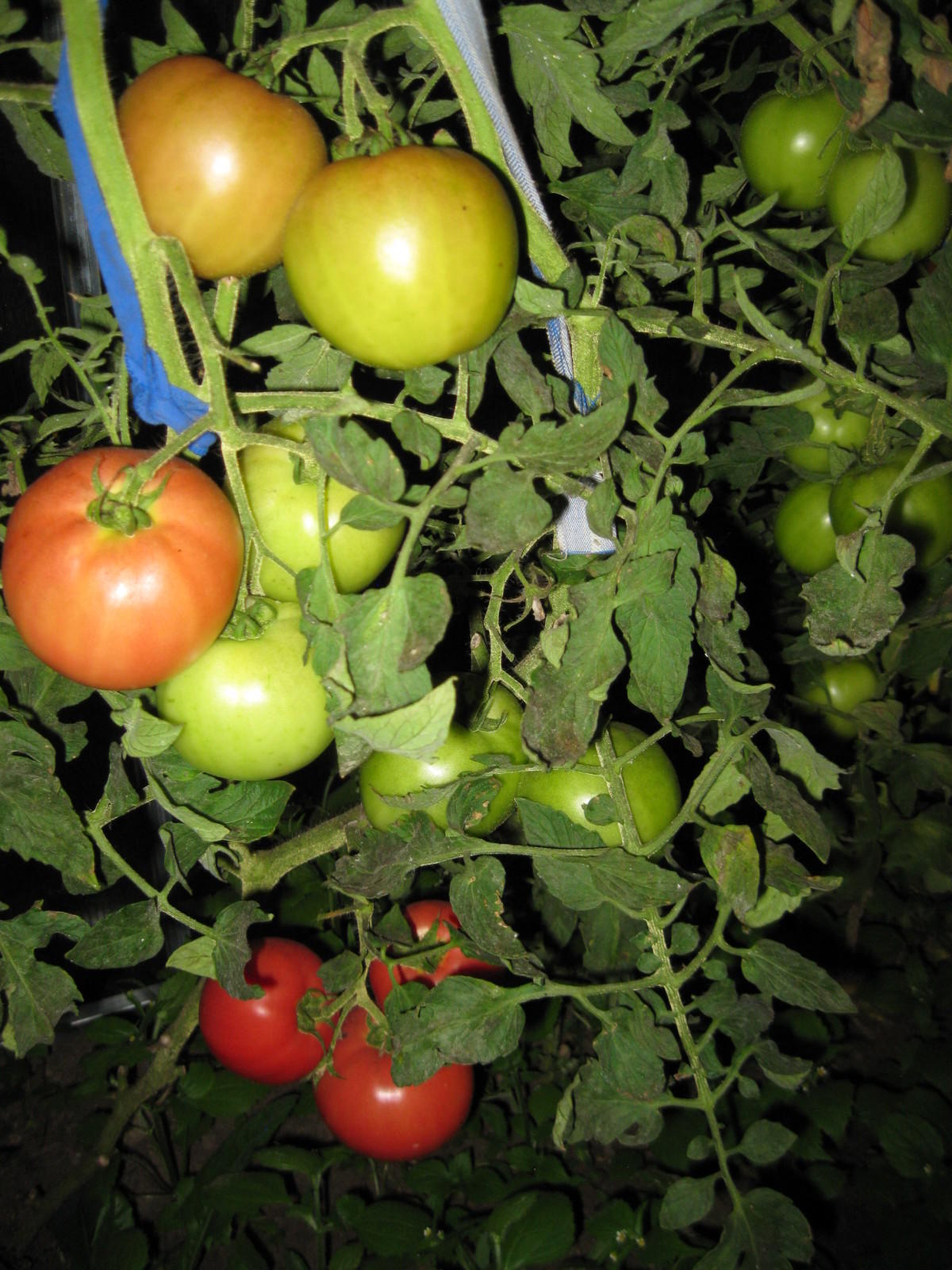
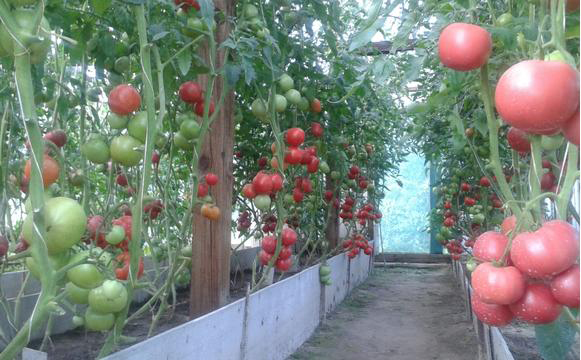
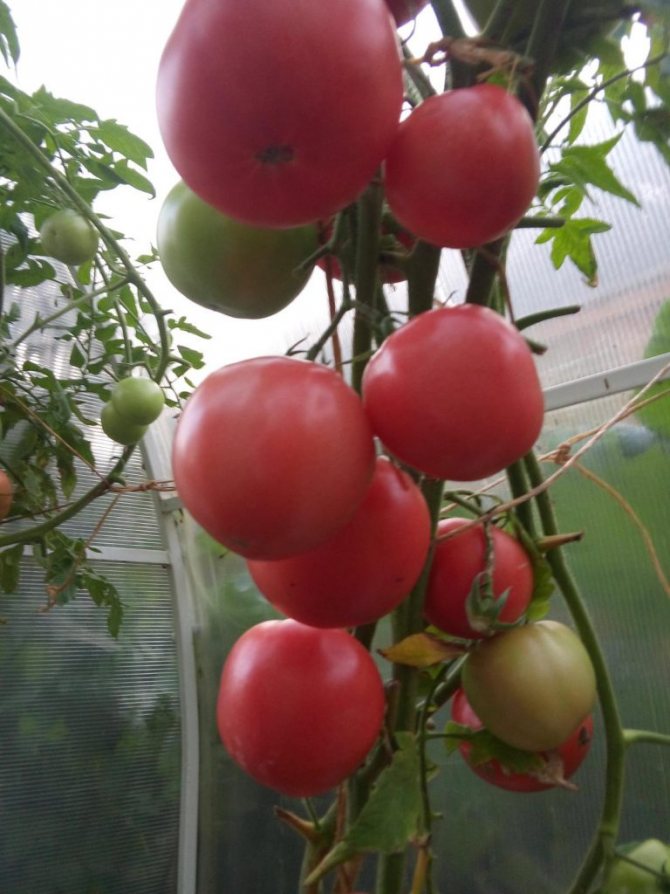
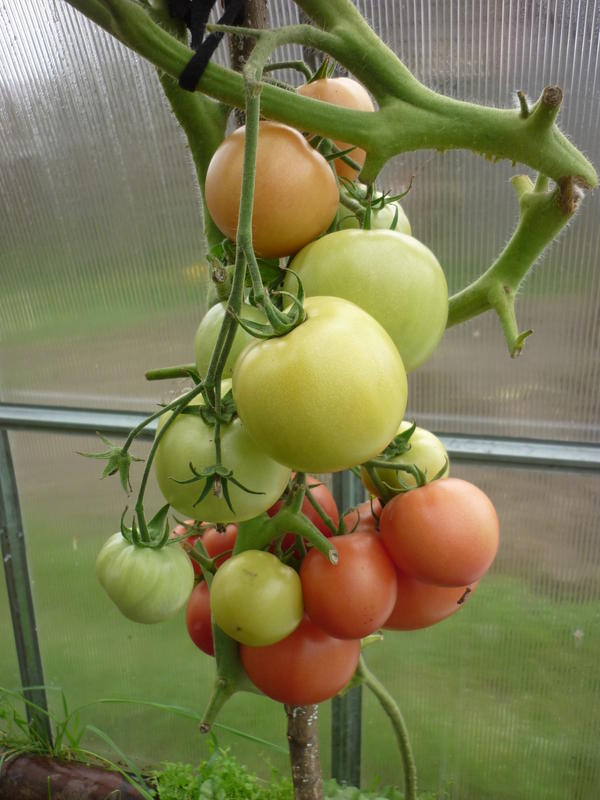
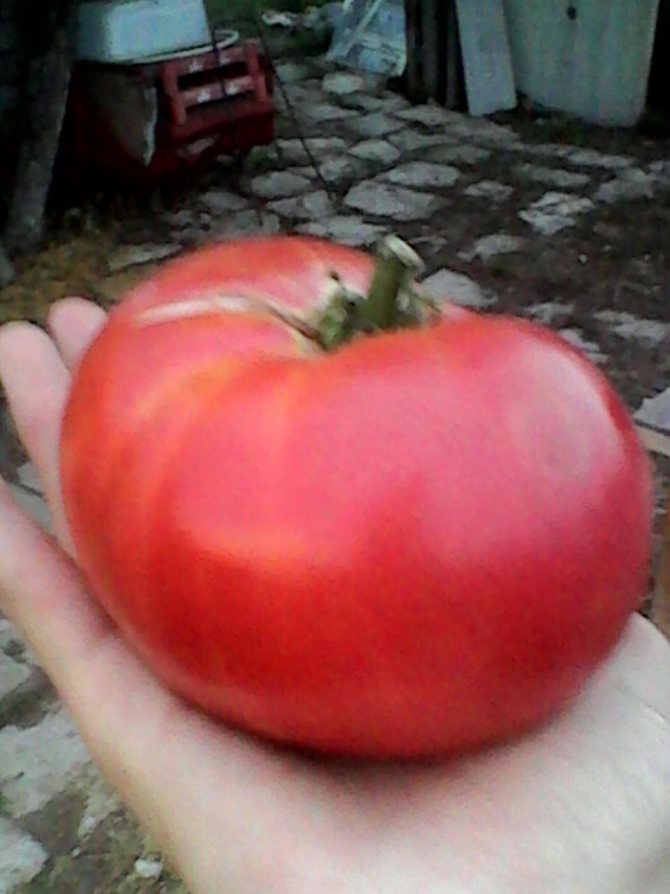
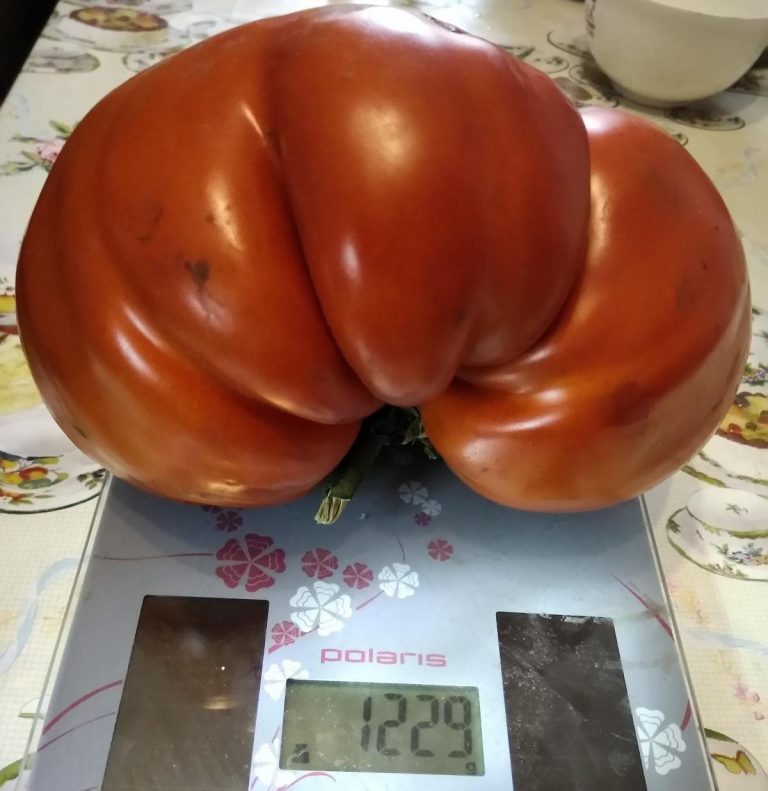
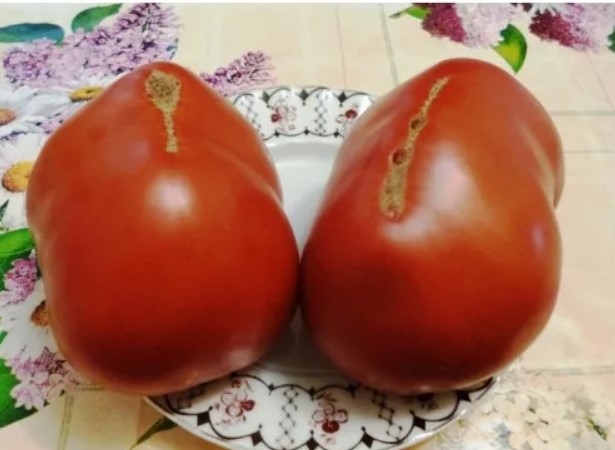
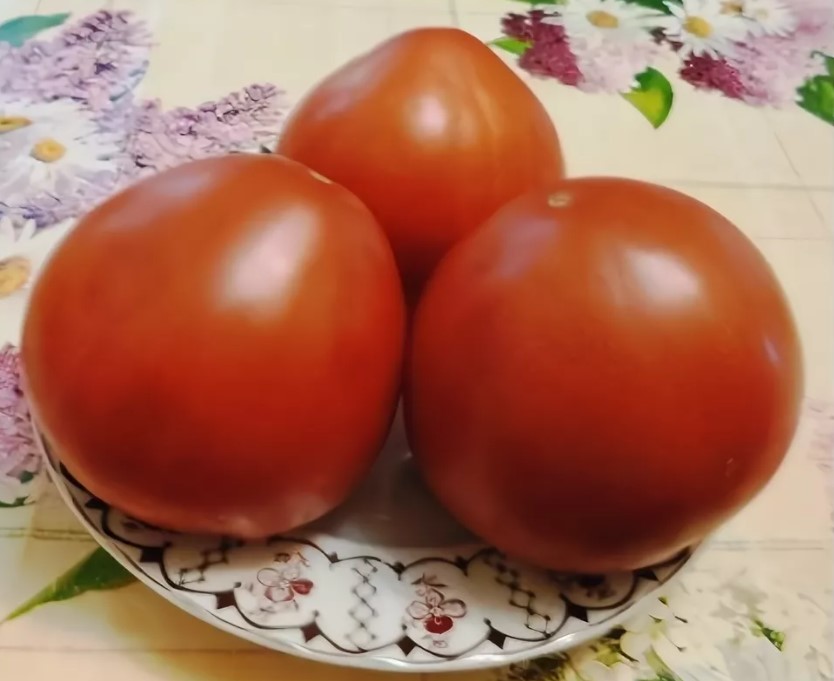
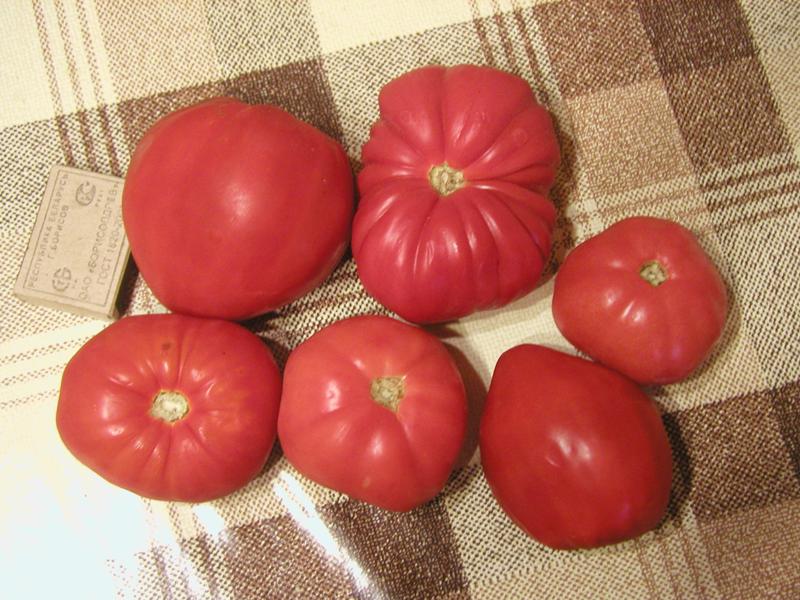
The fruits are medium to large, weighing 100-500 g. The flesh is fleshy and contains few seeds. The raspberry-colored, ribbed skin is fairly dense, preventing cracking. The fruits contain a high amount of dry matter. The largest tomatoes are found on the lower branches, while medium and small ones are found on the upper branches. You can see what they look like in the photo.
Fruiting and yield
If standard agricultural practices are followed, a single bush can yield 5-10 kg of fruit during the growing season. Moreover, this fruiting occurs regardless of weather conditions, including sudden cold snaps. Furthermore, tomatoes don't care where they're planted (or what type of soil they're in).
Usage
They are consumed in salads and sliced. The tomatoes store well. This variety is excellent for processing into juices, pastes, dressings for various dishes, and sauces. They can also be used for canning, including whole tomatoes, and for winter preserves.
Gardeners eat their tomatoes themselves and sell them. This is due to the high yield, meaning they have enough for themselves and others.
Resistance to diseases and pests
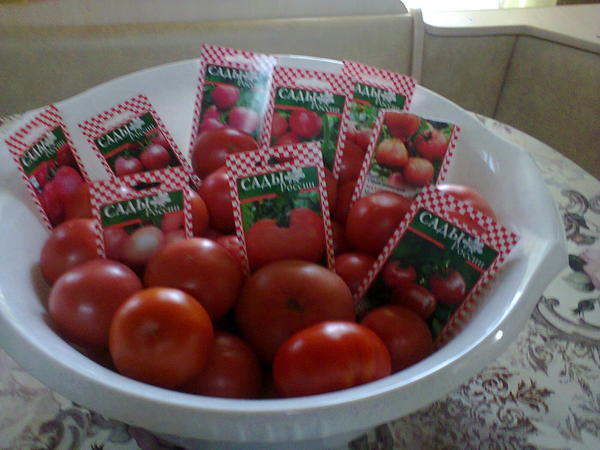
All varieties in this line demonstrate good resistance to late blight. However, preventative treatment is always necessary.
To prevent pests, remove lower leaves from the bushes, weed them regularly, and loosen the soil. Furthermore, avoid planting after potatoes, eggplants, and bell peppers. These plants shouldn't even be nearby, otherwise the yield will decrease.
Advantages and disadvantages of the Golden Raspberry Miracle tomato variety line
Advantages:
- large tomatoes;
- rich pulp;
- ease of care;
- ability to adapt to any conditions;
- resistance to infections;
- peel that does not crack;
- attractive appearance;
- high yield rate.
The downside is that the Raspberry Miracle tomato only sells seeds in sets. Another downside is that the tomatoes become smaller with each new fruiting.
General planting features of the Golden Raspberry Miracle tomato variety
Growing doesn't require much time or effort. It's recommended to sow the seeds first to create seedlings, then transplant them to their permanent location.
Sowing seeds and growing seedlings
First, you need to open the seed packet, inspect them, and discard any damaged ones. They won't germinate anyway. After that, pre-planting preparation is necessary:
- Soak the seeds in a light pink solution of potassium permanganate for half an hour.
- Treat with Ecosil, Baikal EM-1 according to the instructions.
- Dry the seeds naturally.
The optimal time for sowing is the first ten days of March. Choose a warm, sunny day.
Please note! Selecting seeds should be done responsibly. It is advisable to purchase them directly from the "Gardens of Russia" agrofirm or its partners. This way, you can be sure that the selection is pure, meaning the variety will fully meet the stated characteristics.
Basic requirements for soil mixture and planting container:
- The soil should be fertile and soft. You can buy it ready-made at the store or make your own from garden soil, peat, sand, humus, or compost. If compost is needed, the soil mixture needs to be disinfected. To do this, pour boiling water over it or steam it in the oven.
- The planting container should be shallow but wide. It should be chosen so that after sowing, it can be covered and stored in a warm place.
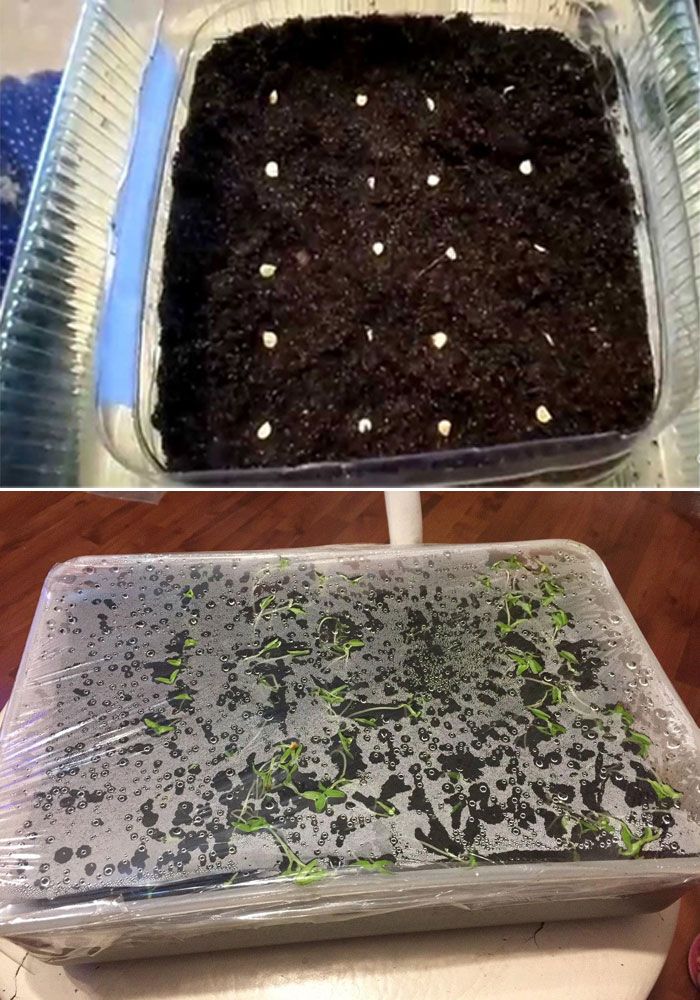
Step-by-step sowing:
- Make holes 0.5-0.7 cm deep.
- Place 20 seeds in each.
- Cover them with a 1 cm layer of soil.
- Moisten with a spray bottle.
- Cover with film or glass.
- Place the container at a temperature of +18…+25 °C.
Remove the cover daily for ventilation and moisture. The first shoots should appear within 1-1.5 weeks.
When the first fruit sets, remove diseased and weakened plants. Thin the rows if necessary. This should leave 7-10 strong, healthy plants, spaced 10 cm apart. If you don't want to thin the plants, you can transplant them into separate pots.
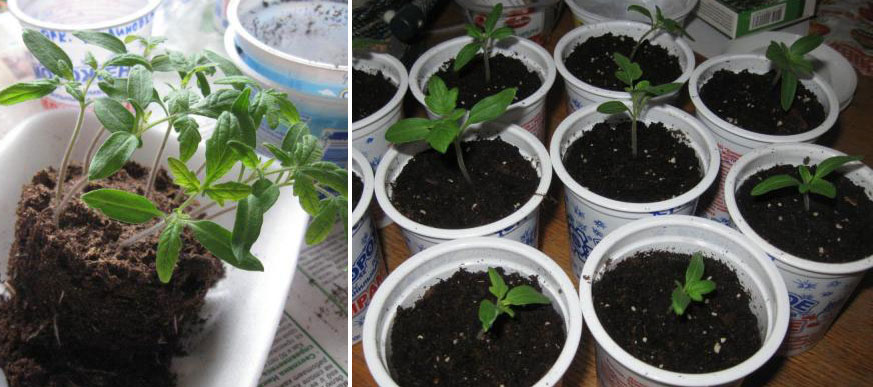
The following conditions must be provided for seedlings:
- temperature — +18…+25 °С;
- humidification - spraying from a spray bottle 1-2 times a day;
- The lighting is good, so place the containers on the southern windowsill.
Please note! If the room is too dark, supplemental lighting with phytolamps is necessary. Without sufficient light, the seedlings will not develop well and will wilt.
Planting in the ground
The soil should be prepared in the fall. It can be made by mixing sand, compost, and garden soil in equal parts. Store the soil mixture in a cool basement until spring.
Before planting, disinfect the soil with a light pink solution of potassium permanganate or freeze it. Transplanting the seedlings can begin when the risk of night frosts has passed. In temperate climates, this occurs in late May or early June. If this rule is not followed, the root system will freeze, and the bushes will not bear fruit.

Step-by-step transfer:
- Dig holes 12-15 cm deep.
- Place fertilizer on the bottom.
- Water generously.
- Replant the bush and install a vertical support nearby.
- Cover the root system with soil and water.
- After a week, tie the bush to a support.
Please note! When planting, maintain a distance of 0.6 m between bushes in the same bed. Leave 0.7 m between rows.
General care for Raspberry Miracle tomato varieties
The bushes grow quickly. They need to be trained into two stems. Care instructions:
use a drip irrigation system;
- After each moistening of the soil, loosen it;
- use superphosphates, manure, peat, wood ash as fertilizer;
- tie the plant to trellises and other supports.
We must also not forget about weed control and preventative treatment against diseases and pests.
Prevention and control of diseases
Dry brown spot, brown spot, and blossom-end rot pose a threat to these varieties. The first disease is characterized by the appearance of dark spots on the above-ground portions of the bushes. To reduce its risk, it is recommended to cover the plants with agrofibre at night.
Blossom-end rot affects unripe fruits, causing their tops to rot. To prevent the disease, it's recommended to sprinkle 1 tablespoon of calcium nitrate and a handful of wood ash into each hole when planting. You can also spray green tomatoes with calcium nitrate.
Brown spot can be identified by its brownish-red spots and a gray, velvety coating. To combat the disease, spray the bushes with copper sulfate.
Read more about tomato diseases and how to control them in the article.57 tomato diseases with photos and treatment tables + 19 resistant varieties.
The following pests pose a danger:
- tomato moth;
- whitefly;
- spider mite;
- root-knot nematode;
- aphid.
To get rid of insects, spraying with biochemical preparations is done.
Harvesting and storing tomatoes from the Raspberry Miracle line
The harvest is from June to August. The first fruits are the largest, so they are sold or used for salads, slicing, and processing. Subsequent tomatoes are smaller and are usually canned. If the temperature drops to 13°C, the entire crop should be harvested, as the flavor will deteriorate later.
Ripe tomatoes can be stored for up to 3 days. If they need to ripen further, keep them in a warm place for about a week.
Seeds for further planting can be collected from the largest fruits. They have a long germination period of 10 years.
Comparison of tomato varieties of the Golden Raspberry Miracle line with each other and other varieties
Please note! How can you easily convert centners/ha to kg/sq.m? Simply divide by 100! For example, the Abakansky Pink tomato yields 400 centners of marketable fruit per hectare. This equals 4 kg per square meter. It's that simple! Also, keep in mind that typically no more than 3-4 plants are planted per square meter. This way, you can calculate the yield per bush. In the case of the Abakansky Pink, it's about 1 kg.
| Variety | Ripening period (number of days from full germination to ripening)
Yield of commercial fruits |
Brief description | Fetus |
| Golden Raspberry Miracle | 90-95 days, sometimes 100 days
1200-1500 c/ha |
Mid-early determinate variety for open ground and greenhouses. Suitable for salads and processing into tomato products. |
They can be flat-round, round, heart-shaped, or ovoid. All are raspberry or pink, ribbed or round, weighing 100-500 g. The taste is excellent. |
| Crimson sunset | 90 days
1200 c/ha (greenhouse and under film) |
An early-ripening, tall variety. Requires staking and shaping. Suitable for salads. | Round, pinkish, ribbed, 340 g. Excellent taste. |
| Raspberry wine | 105 days
1200-1400 c/ha (greenhouse and under film) |
An early-ripening determinate variety for open ground and greenhouses. Requires staking and shaping. Suitable for salads. | Round, large, smooth, medium density, raspberry, 350 g. Excellent taste. |
| Bright robin | 90 days
1200 c/ha (greenhouse and under film) |
An early-ripening, low-growing, determinate variety. Requires staking and shaping. Suitable for salads. | Round, raspberry, with slight ribbing, 400 g. Rich taste. |
| Raspberry berry | 95 days
1300 c/ha (greenhouse and under film) |
A low-growing (no more than 60 cm), mid-season variety. Suitable for salads. | Round, pink, ribbed, 400 g. Excellent taste. |
| Raspberry Paradise | 90 days
1000-1200 c/ha (greenhouse and under film) |
A mid-early, low-growing variety. Increase watering during fruit set. Support and shape. Versatile. | Round, large, smooth, medium density, 500 g. Excellent taste. |
| Raspberry Joy | 90-95 days
1400 c/ha (greenhouse and under film) |
A low-growing determinate variety. Suitable for salads and canning. | Ovoid, bright pink, ribbed, with a dense skin, 100-150 g. Tomato flavor. |
| Crimson Bison | 95 days
1200 c/ha (greenhouse and under film) |
The bushes grow up to 100 cm. This mid-early, growth-limited variety is suitable for salads, pickling, and processing into tomato products. | Round, raspberry-colored, with dense flesh and smooth skin, 350 g. Sweetish taste. |
| Crimson King | 95 days
1000 c/ha (greenhouse and under film) |
Mid-early, determinate variety, 1 m tall. Increase watering during fruiting. Salad variety. | Flat-round, pinkish, 300-350 g. Excellent taste. |
| Raspberry Dream | 90 days
1200 c/ha (greenhouse and under film) |
An early-ripening, low-growing variety. Increase watering during fruiting. Versatile. | Flattened-round, raspberry, medium-ribbed, 350 g. Excellent taste. |
| Raspberry Desired | 95-100 days
1300 c/ha (greenhouse and under film) |
Mid-early, determinate variety. Salad-type. | Flat-round, ribbed, deep pink, 300-400 g. Excellent taste. |
| Raspberry Popsicle | 95-100 days
1300 c/ha (greenhouse and under film) |
A mid-early, low-growing variety (up to 90 cm). Staking and pinching are required. Suitable for salads, canning, and processing into tomato products. | Flat-round, raspberry, slightly ribbed, 300 g. Excellent taste. |
| Raspberry Heart | 95-100 days
1300 c/ha (greenhouse and under film) |
Mid-early, low-growing (up to 80 cm) variety. Universal. | Heart-shaped, raspberry, 300 g. Excellent taste. |
| Raspberry bunny | 95 days
1200 c/ha (greenhouse and under film) |
A mid-early, determinate variety with frost resistance. Staking and pinching are recommended. Suitable for salads. | Flat-round, raspberry, ribbed, 350 g. Excellent taste. |
| Raspberry Surprise | 95 days
1400 c/ha (greenhouse and under film) |
A mid-early, low-growing variety. Increase watering during fruiting. Suitable for salads, canning, and processing into tomato products. | Flat, round, raspberry, 350 g. Excellent taste. |
| Crimson Bogatyr | 95 days
1500 c/ha (greenhouse and under film) |
A mid-early, low-growing variety for both open and protected ground. Support and shape. Great for fresh growing and salads. | Flattened-round, raspberry-colored, does not crack, 500 g. Excellent taste. |
| Mom's Raspberry Heart | 112-120 days
1200-1500 c/ha |
A mid-season indeterminate variety for greenhouses and open ground. Suitable for salads and canning. | Heart-shaped, ribbed, pink, 300-600 g (up to 1200 g). Excellent taste. |
| Abakansky | 110-120 days
600 c/ha |
Mid-early, determinate, large-fruited, suitable for growing in open ground in regions with a temperate climate; in the middle zone it is grown under cover or in greenhouse conditions. Requires staking and shaping. Suitable for salads and processing into tomato products. | Heart-shaped, slightly ribbed, loose, pink in color, 150-200 g. Good taste. |
| Raspberry Empire | 95-110 days
2000 c/ha |
An early-ripening indeterminate variety for greenhouses. Suitable for salads and pickling. | Heart-shaped, medium density, medium-ribbed, raspberry, 150-200 g. Excellent taste. |
| Raspberry Liana | 85-90 days
700 c/ha |
An early (ultra-early) determinate standard variety for open ground and greenhouses. Suitable for salads, canning, and processing into tomato products. | Round, smooth, raspberry-pink, 65-90 g. Good taste. |
| Potato raspberry | 100-105 days
up to 1800 c/ha |
A mid-season, indeterminate, standard variety for open ground and greenhouses. Requires staking and training. Suitable for salads, canning, and processing into tomato products. | Flattened-round, raspberry, 700-800 g. Excellent taste, sugary, rich. |
Real reviews from gardeners about the Golden Raspberry Miracle tomato series
Reviews of the variety line from garden owners are mostly positive, noting that the varieties are very easy to care for, while producing a rich harvest.
I'm a long-time customer of the Chelyabinsk company; I've purchased and will continue to order seeds for various crops. I'd like to share my impressions of the "Raspberry Miracle" tomato variety.
I grow tomatoes in a polycarbonate greenhouse using seedlings. These seeds have a good germination rate (sometimes excellent, depending on the variety package), but the only downside is that they can be infested with thrips. And, of course, they're more expensive than buying other seeds at your local garden center.
I plant the seeds of one variety in a wide bowl, then transplant them individually.
In the first case, the soil is Vermi, in the second - Veltorf.
Unfortunately, thrips infestations on seedlings are not uncommon, but I don't even spray the plants; I simply pick off the affected leaves. The key is to spot them before most of the seedlings are infected.
In May, I plant it in a greenhouse and add a handful of Vermi biohumus to the hole (I’ll write a review about it).
"Raspberry Miracle" in early July.
In August, I process tomatoes into juice. There's practically no water left, just pulp.
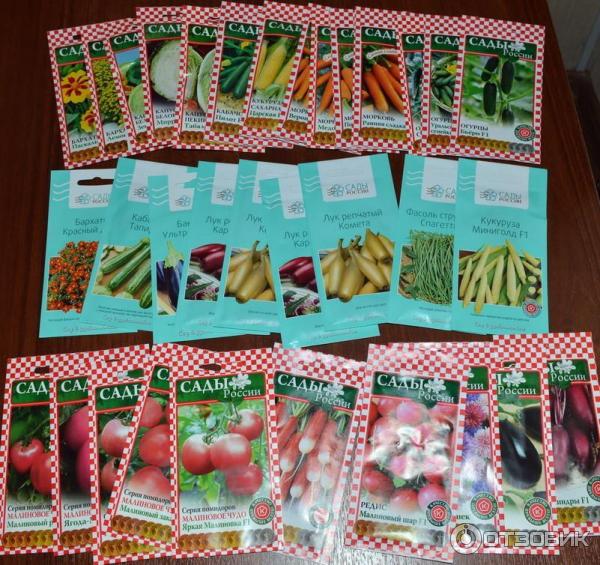
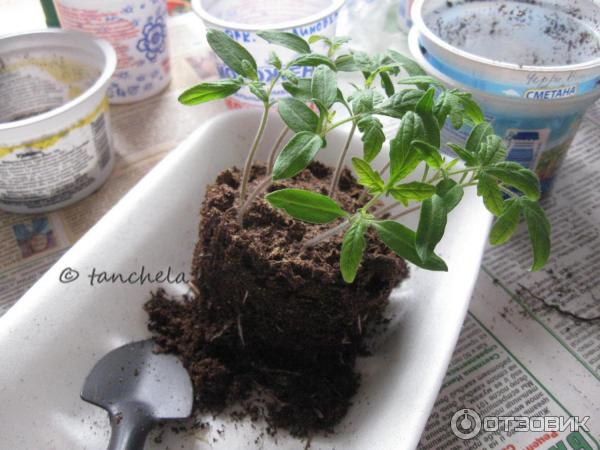
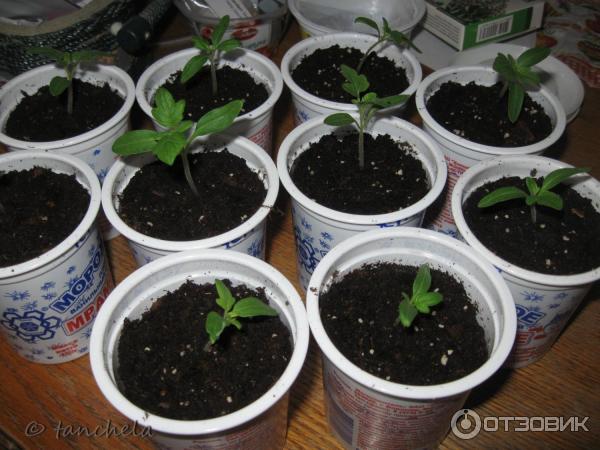
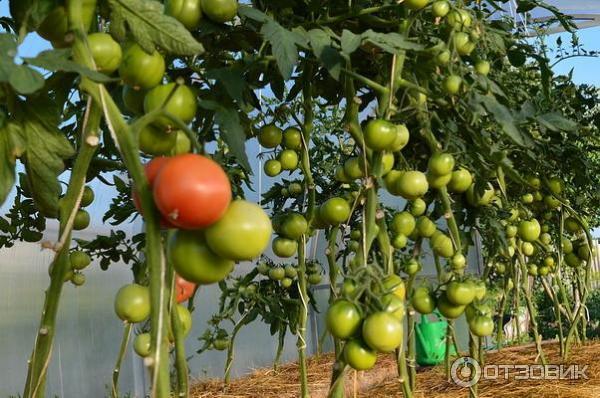
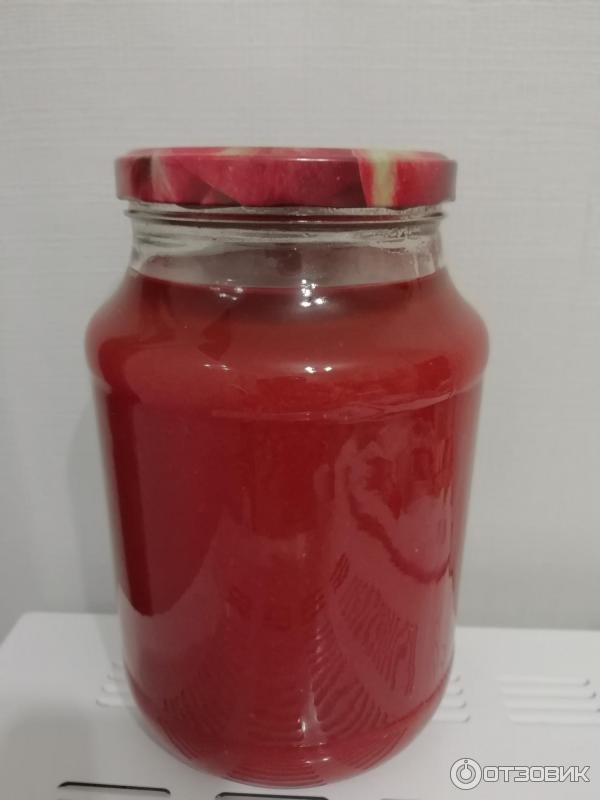
Last year, I planted five of each tomato variety from all three Raspberry Miracle series. I liked almost all of them: they were smooth, tasty, disease-free, yielded a decent harvest, and were easy to transport. They didn't crack and lasted for two weeks without overripening.
I also liked them. I planted Raspberry Bogatyr and Raspberry Dream, Raspberry Bison, and Raspberry Joy. This year I'll be planting a different series. But I didn't understand Dekabrist and Sochalnik for long-term storage. They ripened like the others and didn't want to sit around at all. I also liked Apricot. I've been planting their tomatoes for open ground for three years. They're very good. I already showed photos here.
I didn't really take care of the greenhouse, as we only went there on weekends. I was pleased that their plants didn't have any blight.
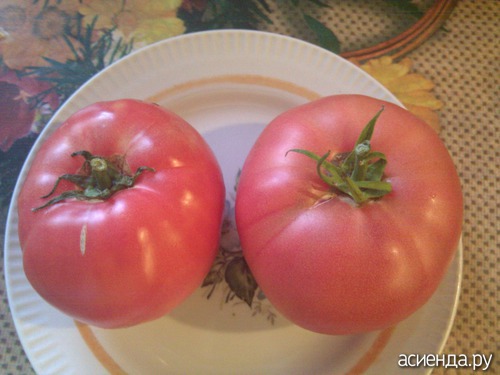
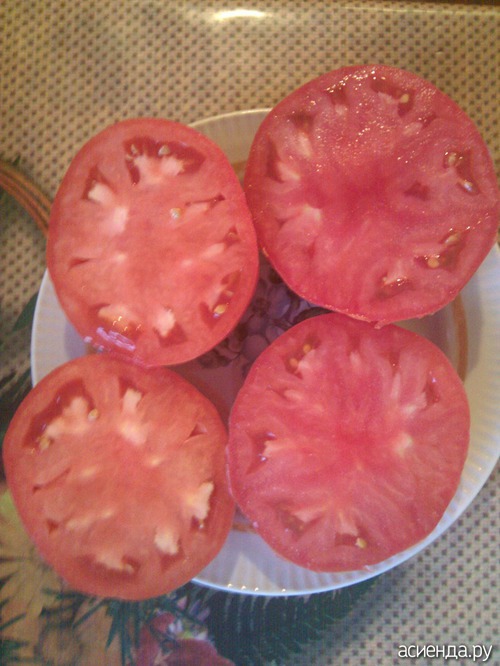
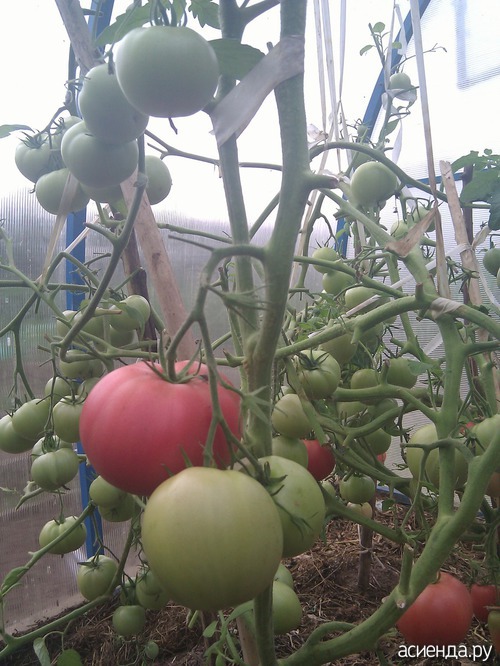
Last year, I planted five varieties. I only liked "Raspberry Bunny." It produced a plentiful supply of fruit, all uniform and delicious. They grew in open ground in the northern Southern Urals and in a greenhouse. I trained them to have two trunks and pinched out the side shoots. I'll be planting this variety again this year.
I planted them and really liked them. They were delicious and the yield was impressive. Raspberry Miracle, Series 2: Raspberry King, Raspberry Dream, Raspberry Desired, Raspberry Bison, Raspberry Joy. Of all of them, the only one I wasn't happy with was the bison, which didn't produce a good harvest. I won't be planting any more this year because the girls from the hacienda sent so many seeds that there simply won't be enough room for Russian gardens. Good luck growing them.
Hello everyone! I grew the Raspberry series in 2015-16, and also gave some side shoots to my mom for an experiment in the countryside. The Raspberry was incredibly good in the open ground, and in the greenhouse, I loved the Raspberry Wine and Raspberry Sunset. My mom is absolutely delighted with the Raspberry "miracles"—perhaps because she alternated vermicompost with bird droppings in her greenhouse.
Also, I always sow tomatoes quite late, at the end of March, or even without seedlings. I think in most cases, the Golden Raspberry Miracle simply didn't have time to open up. I'll continue the experiment, as I still have some seeds left. This season, I'll grow them in raised beds, alternating organic and mineral fertilizers and mulching. I'll also provide irrigation.
In principle, I agree, the Gardens of Russia's marketing ploy was successful, but it left many disappointed. After all, it's one thing to nurture and care for a couple dozen specific plants (especially for a competition with an impressive prize fund), and quite another to grow tomatoes among other vegetables.
But I agree about the taste of the Raspberries—they weren't impressive. But I was impressed by the Sochal'naya (it sat for a month and then ran out), the Zolotaya Moshcha (I highly recommend it), and the Swan Princess—it was simply amazing. I made a sauce with the Zolotaya Moshcha for the winter, and it's flying off the shelves. The Swan Princess was used for canning and lecho—the fruits were so juicy and vibrant. The Sochal'naya (Christmas Eve) impressed me with the beauty of the bush, the fruit, and the yield. I grew it in a greenhouse, so I didn't have to tie it up or remove any side shoots.
I've been ordering tomatoes for several years now and I love them. I'll be checking out the Raspberry Miracle series this year. Last year, I really liked the Dekabrist tomatoes—we finished them in March, so I planted them again.
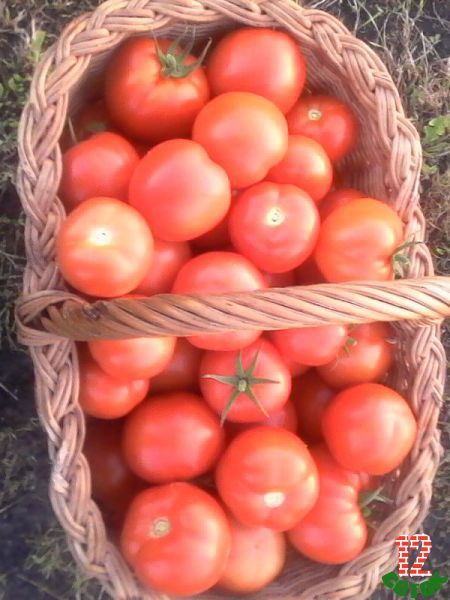
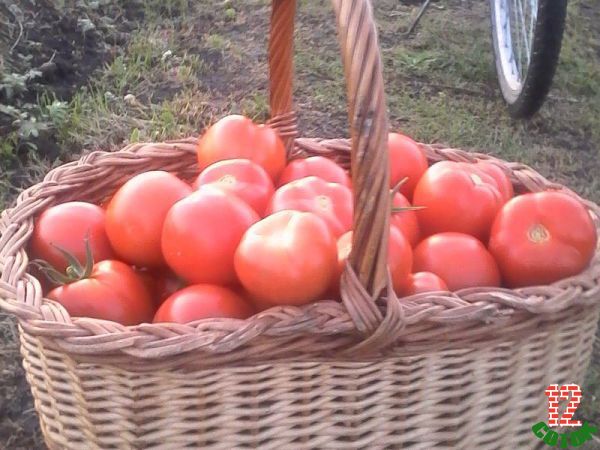
I ordered three batches of Raspberry Miracle two years in a row. The tomatoes are good and robust. They don't suffer from late blight; even during the cold St. Petersburg summer of 2015, they didn't have any problems. I liked them.
«Has anyone grown the "Golden Raspberry Miracle" series hybrids from "Gardens of Russia"?»
I grew it in the open ground. I waited a long time for seeds. It set well. The fruits are medium-sized and have a sweet and sour taste. They're mainly used for pickling. I was expecting more, but Vakh Vakh didn't work out. I have seeds if I can share them; I won't be planting them this year.
By the way, these tomatoes were not affected by late blight.Zulfiya, to be honest, I can't write beautifully like everyone else on this forum. There's not much information about them. I saw the ad and ordered a full set. By the way, late blight ate all my neighbors' tomatoes, and these ones stayed on the bush until the very end. But my family, to be honest, didn't like them; they were as hard as apples. I planted them on March 8th, like all the other tomatoes. Honestly, there wasn't enough space in the greenhouse. So, along with Torbay, Pink Honey, and Petrushka, I planted them in the open ground. I formed three stems at the end of July and cut off the tops because the lower clusters had already filled out. They grew without any buds, fed them with mash and mulched. I planted them around May 25th-26th under arches. Then the heat set in, so I removed the arches. They set a lot of fruit, and the clusters were gorgeous. They are turning a beautiful, even pink color. The weather, by the way, didn't affect them. The skin is thick, so they're great for pickling. I had 15 plants, three of each variety. I picked about six buckets of good tomatoes from this bed. If you want to try them, I can give you some seeds.
We ate the last tomato in November)) I like large and soft ones, after all, hybrids are not as tasty. I pulled out the bushes in October).
Diana, you write well! :hat: I get it! They didn't get enough warmth in our open-air garden this summer. More ash—they'll be sweeter. When did you finally pull out the bushes?
Gardens of Russia announced a competition for the "Best..." award, so Yandex Video has many video reports. The taste is praised in the open-top (1m tall) in the Orenburg Region, in greenhouses in the central part of the country, and even in Vologda (2m tall). Weights range from 300g to 400g.
Thanks for the warning about the firm texture. I also love the semi-soft, varietal-like Pinks from Sakata, but they don't last more than a month when ripe.
This year I planted the entire series, but not all the photos in the album. I planted them directly in the open ground. They grew nice, strong plants, set well, and produced large fruit. I trained them with 3-4 stems, but I was stingy and didn't trim off the extra side shoots. But I'm not much of a gardener yet, so I picked the tomatoes green in early August because I was afraid of foxtail rot. They took a long time to ripen, but the ones I left on the vine didn't get sick and ripened well, faster than those I picked. The flavor is fine, sweet when cut, I liked them, even though they were firm.
A gardening competition for growing tomatoes from the Golden Raspberry Miracle tomato variety line.
Many gardeners are participating in the competition to grow the Golden Raspberry Miracle tomato line.