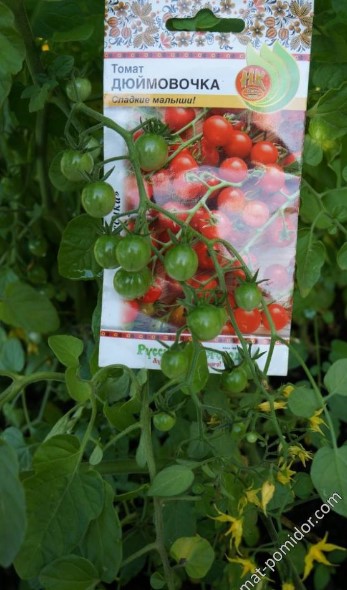
Thumbelina is one of the few varieties that thrives both in the open ground and in a greenhouse, as well as on a windowsill or balcony. This tomato is distinguished by its early ripening period and low maintenance requirements. Let's take a closer look.
Content
- 1 Main characteristics of the Thumbelina tomato variety
- 2 The history of the Thumbelina tomato variety
- 3 A detailed description of the Thumbelina tomato variety
- 4 Advantages and disadvantages of the Thumbelina tomato variety
- 5 Growing Thumbelina Tomatoes in the Ground
- 6 Growing the Thumbelina tomato variety at home
- 7 Disease and pest resistance of the tomato variety Thumbelina, prevention
- 8 Harvesting, using and storing the Thumbelina tomato variety
- 9 Comparison of the tomato variety Thumbelina with other varieties in the table
- 10 Gardeners' reviews of the Thumbelina tomato variety
Main characteristics of the Thumbelina tomato variety
|
Characteristics |
Description |
|
Ripening period |
90-95 days. |
|
Description |
An indeterminate early-ripening variety for unprotected soil and film shelter. |
|
Fetus |
Round, smooth, dense, red. |
|
Fruit weight |
15-25 years |
|
Taste |
Excellent, sweet. |
|
Application |
Suitable for salads and whole-fruit canning. |
|
Marketability |
Good. |
|
Shelf life |
|
|
Productivity |
470 c/ha. |
|
Disease resistance |
To alternariosis, TMV, septoria. |
|
Agricultural technology |
Needs garter and shaping. |
|
Regions |
Northern, Northwestern, Central, Volga-Vyatka, Central Black Earth District, Northern Caucasus, Middle and Lower Volga, Ural, Western and Eastern Siberia, Far East. |
|
|
2009 |
|
Originator |
LLC "Agrofirm POISK" |
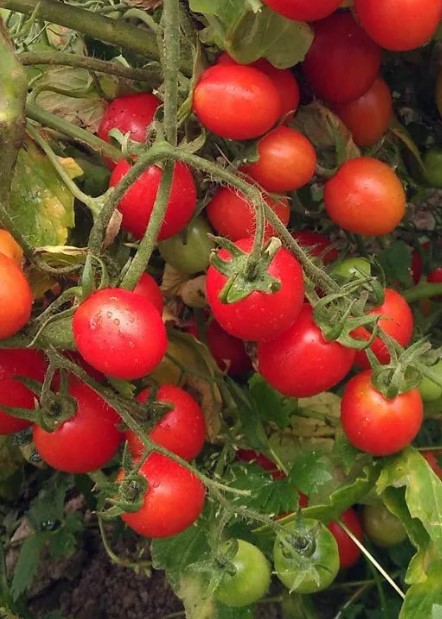
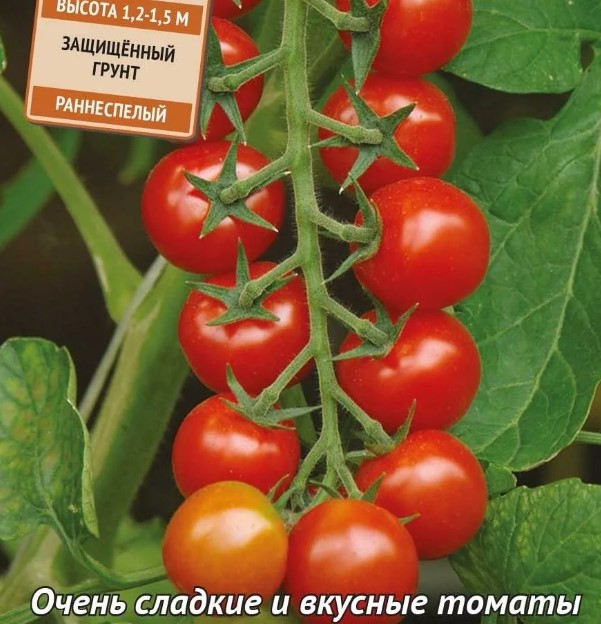
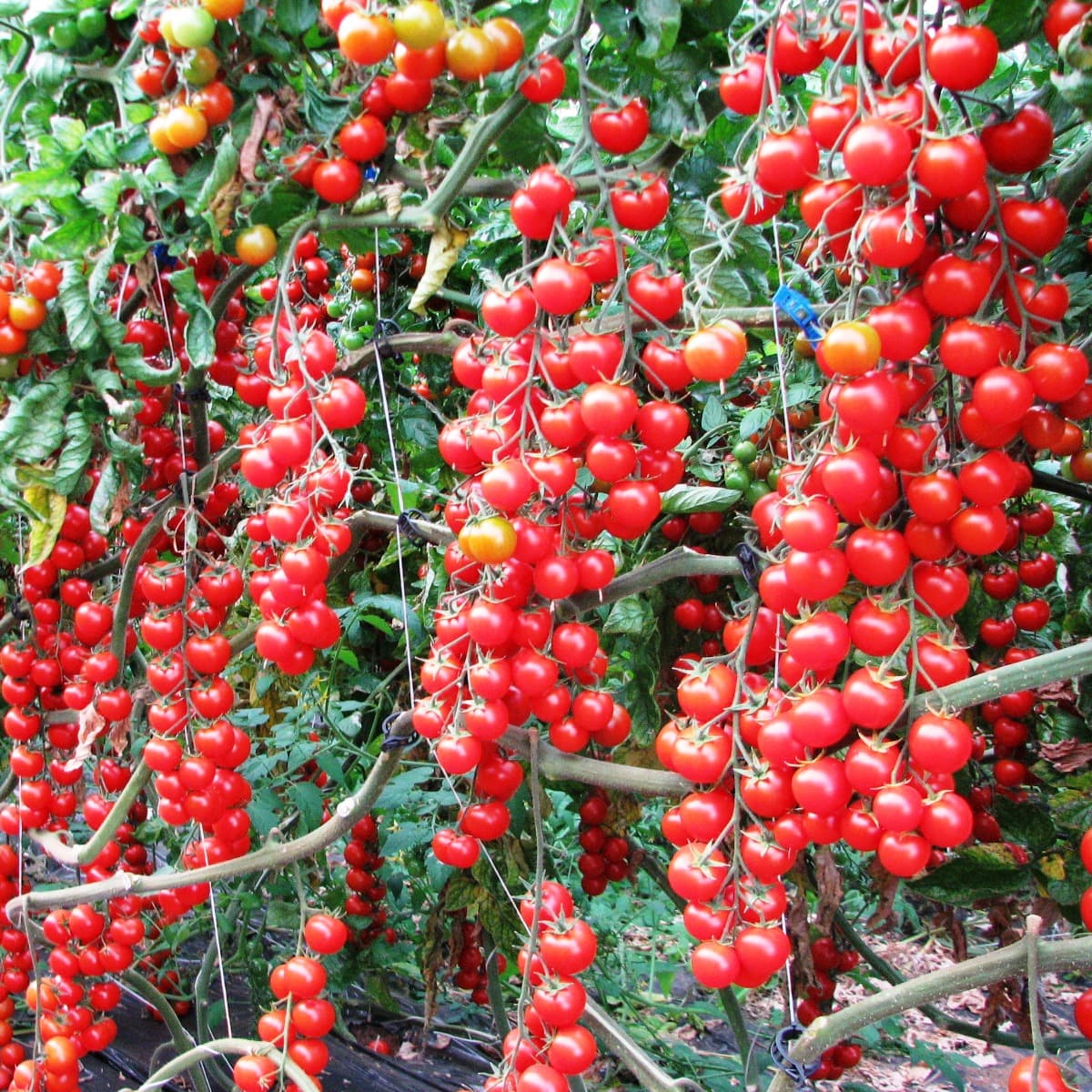
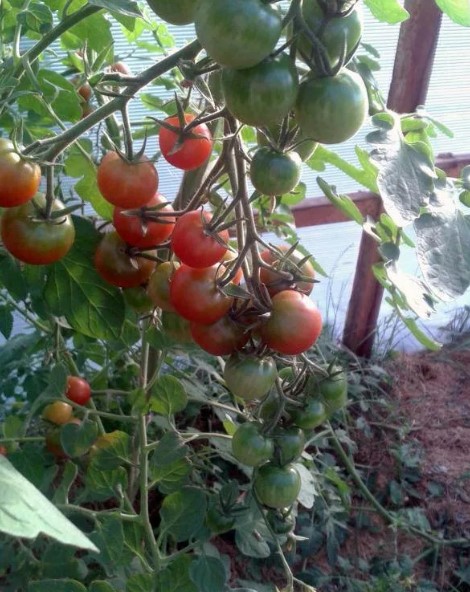
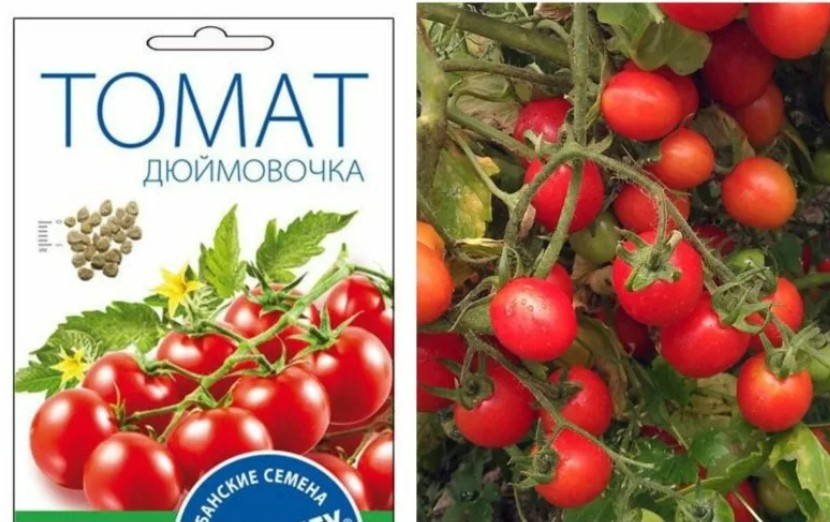
Photo gallery of the tomato variety Thumbelina
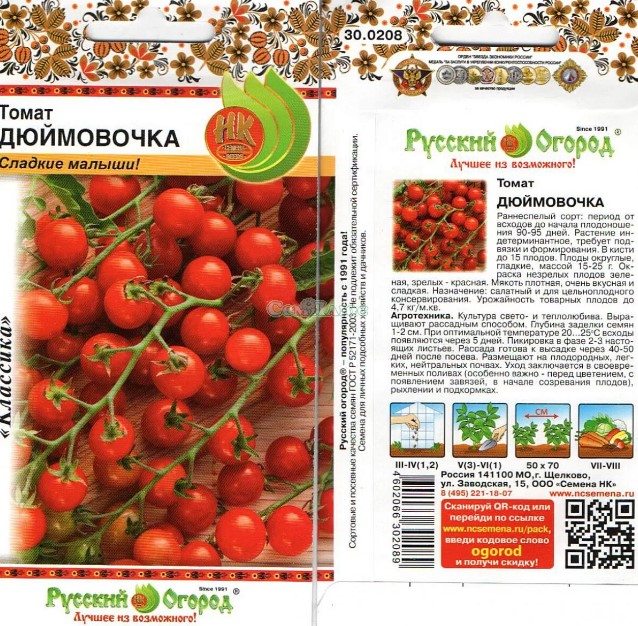
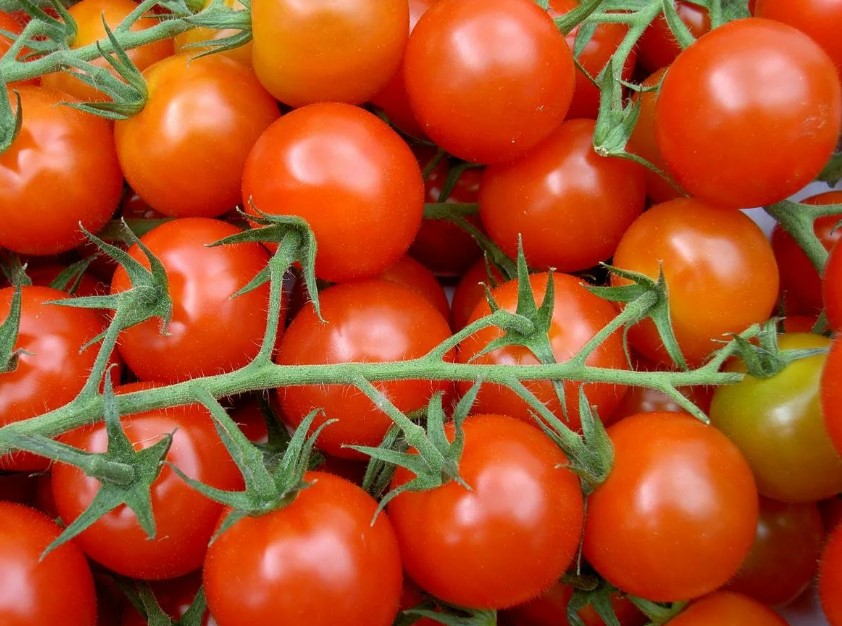
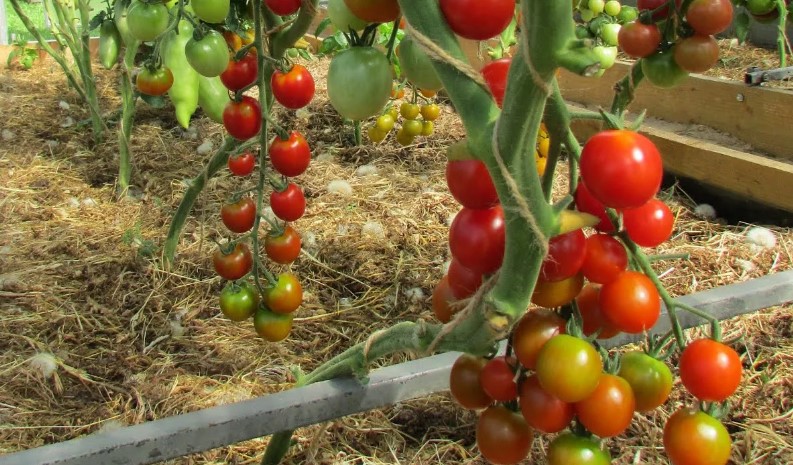
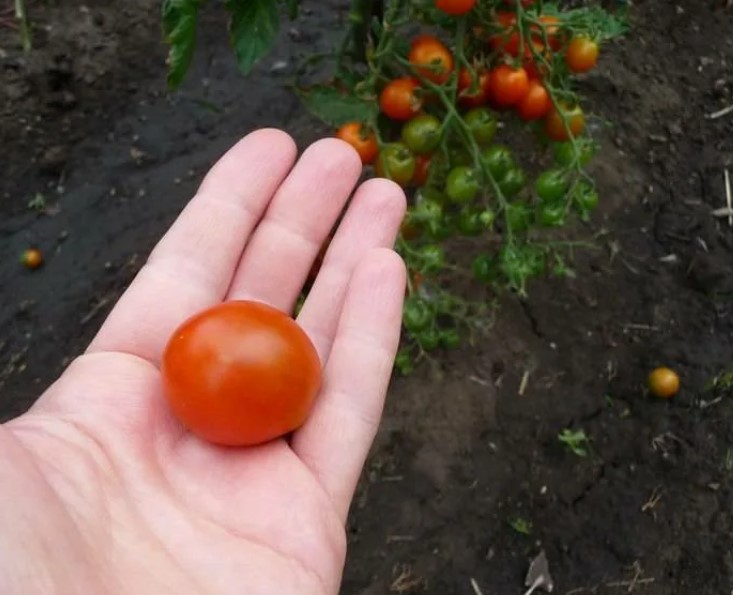
The history of the Thumbelina tomato variety
The variety was bred by Tereshonkova T. A., Klimenko N. N., Kostenko A. N. from Agrofirma POISK LLC in 2008. In 2009, it was included in the Russian State Register of Breeding Achievements.
A detailed description of the Thumbelina tomato variety
Breeders worked on developing this variety for several years, which resulted in the tomatoes achieving excellent performance characteristics.
Characteristics of bushes
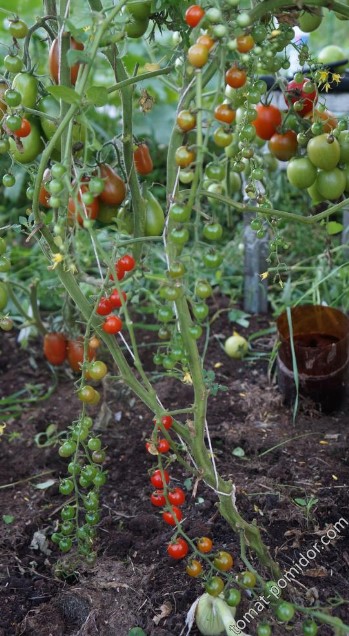
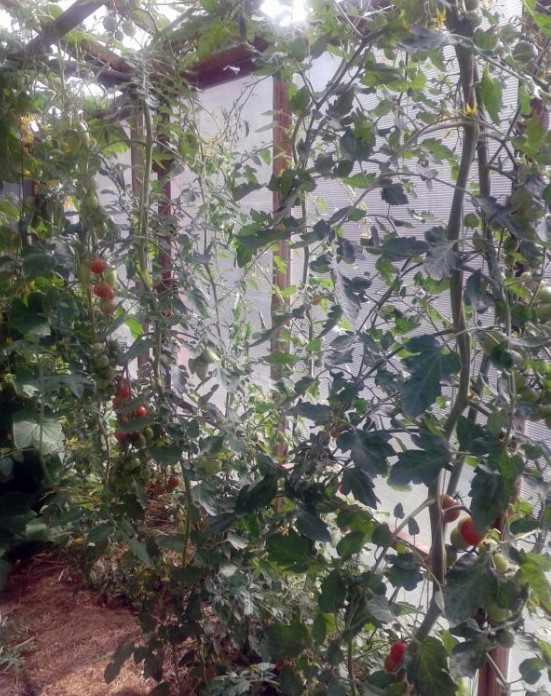
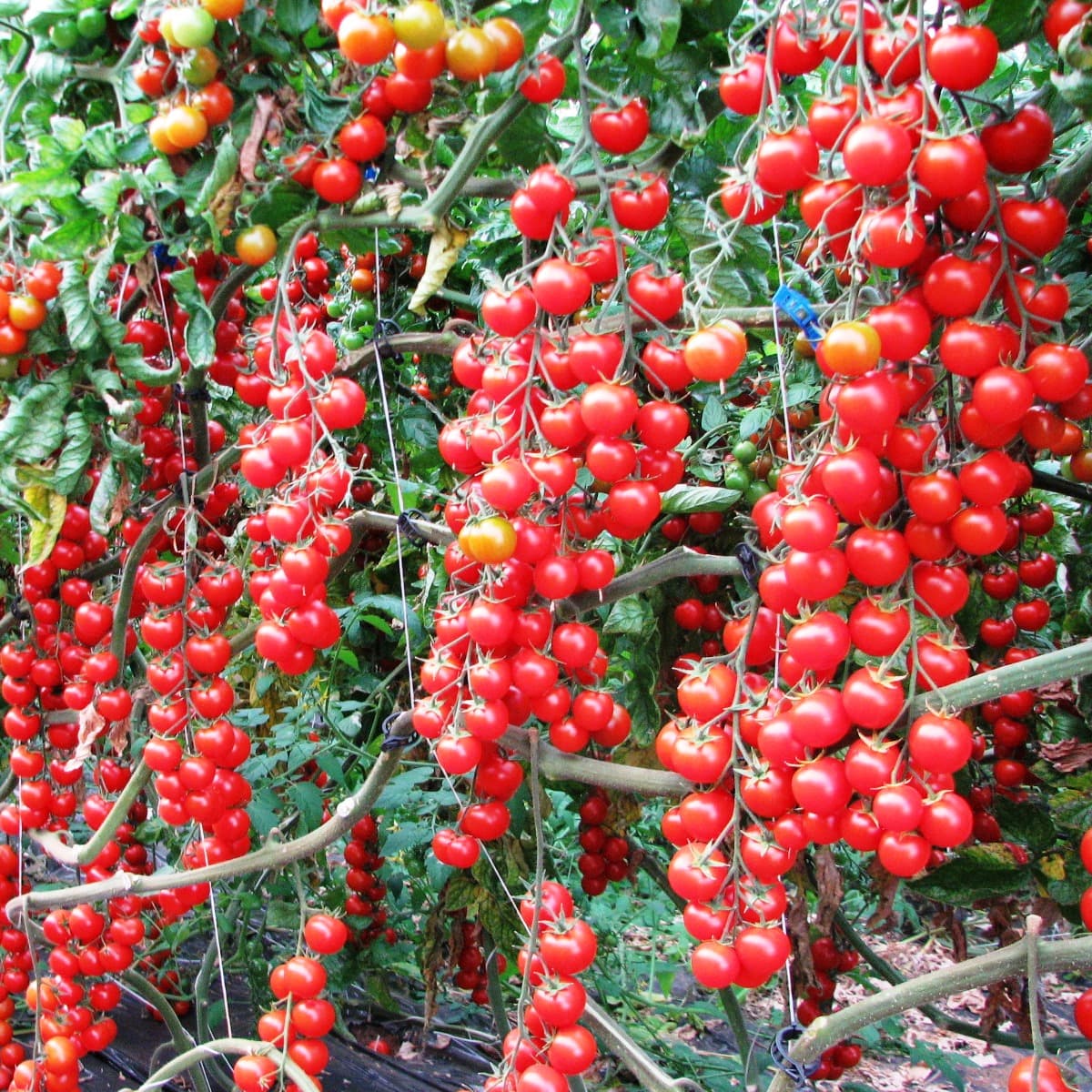
The bushes are indeterminate and tall, reaching 120-150 cm. They are characterized by moderate density, large, richly green leaf blades, strong shoots, and powerful roots.
Fruit characteristics
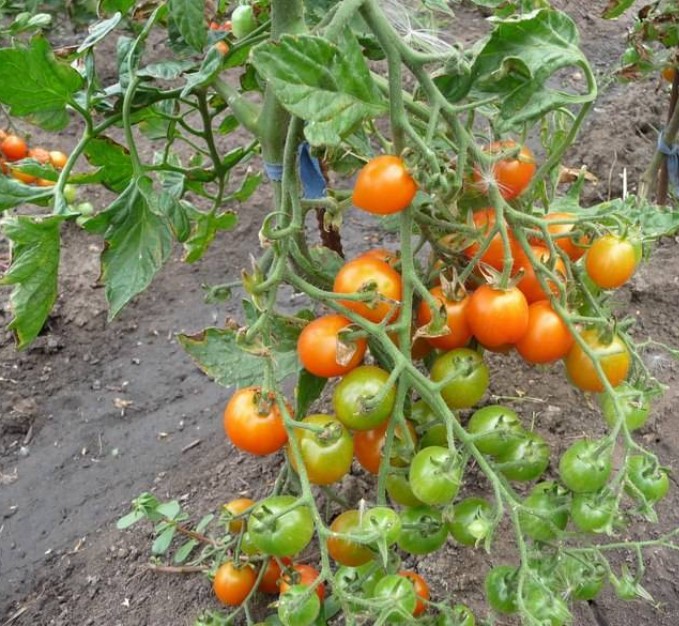
Miniature in size, tomatoes rarely weigh more than 15-25 g. When unripe, the fruits are green, turning red as they ripen.
The skin is dense, with a characteristic glossy sheen. This sufficient density prevents the tomatoes from cracking during transportation and storage.
Productivity and ripening time
The harvest can be completed three months after the sprouts emerge. This may be delayed by a few days depending on the climate of the growing region.
This variety boasts high yields. With proper cultivation practices, 4.7 kg of tomato yield can be harvested per square meter. On average, one bush produces 4 kg of tomatoes over the entire growing season.
Advantages and disadvantages of the Thumbelina tomato variety
|
Pros |
Cons |
|
Does not require complex care. |
Intolerance to low temperatures and sudden temperature changes. |
|
It pollinates itself, which makes it possible to grow the variety in a greenhouse or apartment. |
|
|
The root system is robust but doesn't spread much. This makes it suitable for growing tomatoes in pots or containers. |
|
|
Shows good resistance to most dangerous infectious diseases. |
|
|
It is distinguished by its early harvest period. |
|
|
The fruits ripen together. |
Growing Thumbelina Tomatoes in the Ground
If tomatoes are planned to be planted in open ground, they are grown using seedlings.
Sowing seeds and growing seedlings
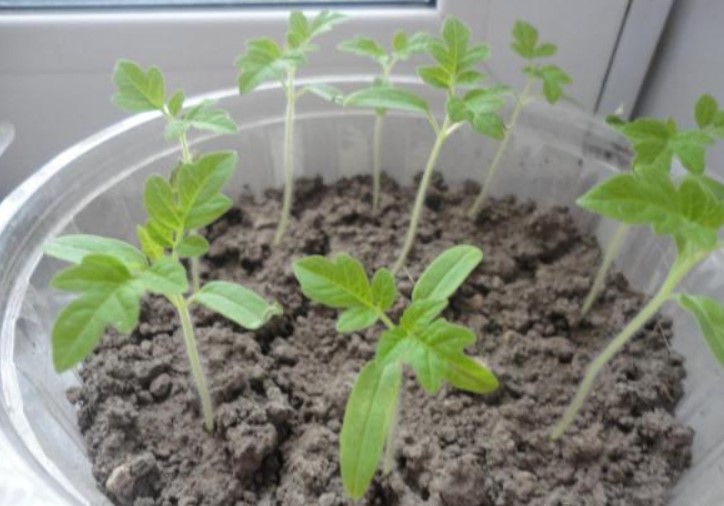
Seedlings are sown in the first half of spring. Seedling containers filled with loose, nutritious soil are used. The seeds are planted 1-2 cm deep in a 2 x 4 cm spacing. Cover the seedlings with glass or plastic. If the seedlings are kept at a temperature of 20 to 25°C, the first shoots will appear within 5 days.
Once the seedlings emerge, remove the cover and move the containers to a well-lit area with a temperature of 18°C. Provide moisture with a spray bottle. When the seedlings reach 2-3 true leaves, transplant them into separate containers.
After 1.5 weeks from picking, apply complex mineral fertilizers:
- urea 5 g;
- superphosphate 30 g;
- potassium salts 15 g.
Dissolve the listed ingredients in a bucket of water. The resulting solution is used for watering. After a couple of weeks, add a similar solution, but at double the dosage.
A week before transplanting, the seedlings need to be hardened off. To do this, take them outside for increasing periods of time each day. On the last day, the seedlings should spend the night on the balcony or outside.
Planting in the ground
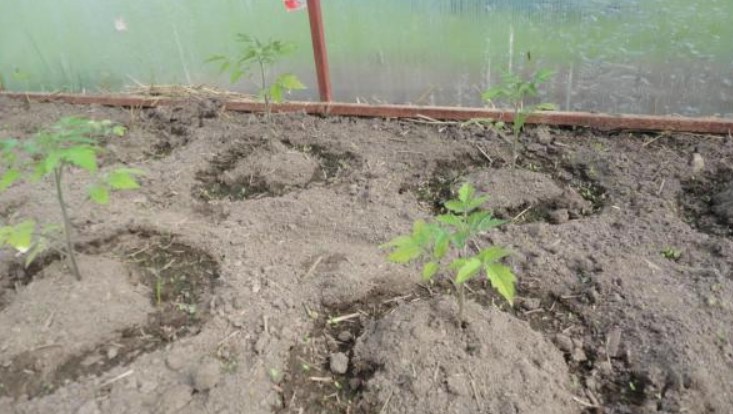
Transplanting to a permanent location occurs from late May 20th to June 10th. Tomatoes should be planted in beds with light, fertile, neutral soil. The planting pattern is 50 x 70 cm.
Read about sowing and planting dates and favorable dates for the current year in the Lunar Calendar.
Care
Care consists of the following manipulations:
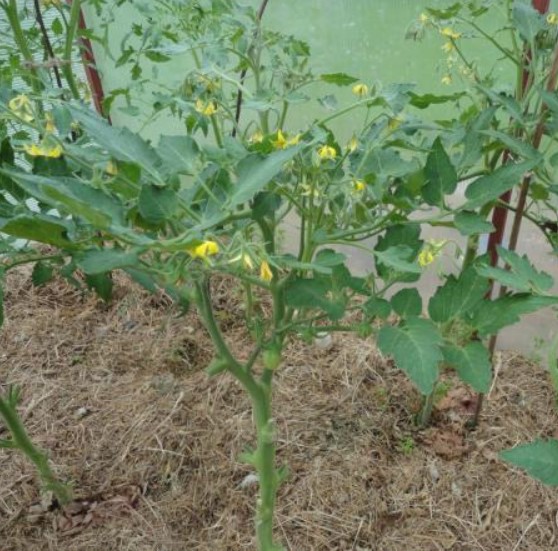
- Formation. This variety produces numerous side shoots, leading to very dense bushes. This promotes disease, pest infestation, and fruit rot. To prevent this, the bushes are formed into a single stem, removing side shoots longer than 5 cm. Side shoots are removed once every 10 days, early in the morning. Pruning should be done with a disinfected knife or scissors. The cut areas are treated with a 1% solution of potassium permanganate.
- Staking. While shaping the bushes, tie them up to prevent the branches from breaking under the weight of the fruit.
- Fertilizing. The first application is made 10 days after transplanting the seedlings to their permanent location (15 g of nitrophoska diluted in a bucket of water). The second application is made during the period of mass flowering (500 ml of bird droppings infusion, 15 g of potassium sulfate per 10 liters of liquid). The third application is made when ovaries are forming (5 g of potassium sulfate per bucket of water). The final application is made during the formation of tomatoes (15 g of superphosphate, 30 g of ash per 10 liters of liquid).
- Watering should be infrequent but abundant. Maintain a humidity level of 90%. Excessive moisture leads to a decrease in fruit sugar content and the development of fungal diseases. It is recommended to water the bushes 1-2 times a week. The application rate is 3-5 liters per plant.
By following these simple requirements, you will be able to grow a strong crop that will delight you with good fruiting.
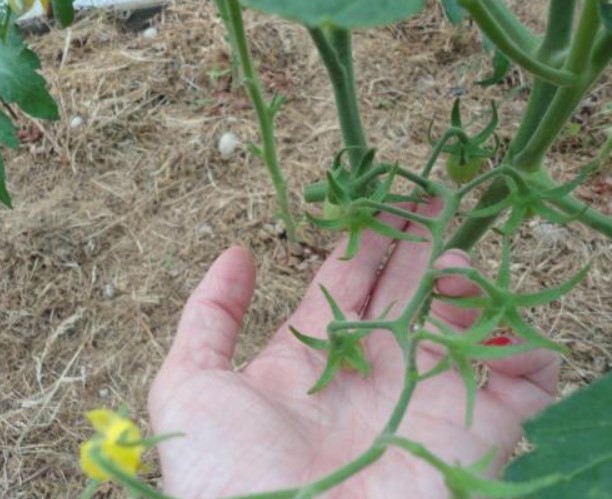
How to care for tomatoes in a greenhouse More details can be found on the website: Top.tomathouse.com.
Growing the Thumbelina tomato variety at home
First, you need to prepare the soil for planting. You can buy it at the store or make your own. Here are several ways to do this:
- mix turf soil, humus and peat (1:1:1);
- Mix sand and peat in a 1 to 1 ratio, add 2 parts of leaf soil.
At the stage of 2-3 true leaves, the seedlings need to be transplanted into spacious pots with a capacity of 3 liters.
Please note! Each specimen is transplanted into a separate container.
Tomatoes grown indoors require more careful care. They grow in a confined space and receive fewer nutrients.
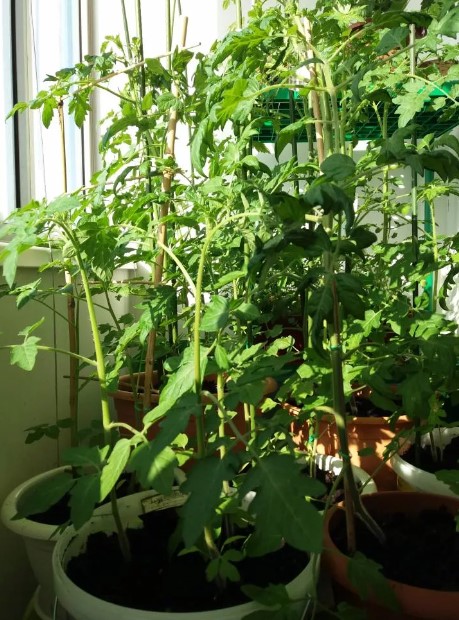
Watering should be done once every 1-1.5 weeks. Use warm, settled water.
You know that Tomatoes can be grown in buckets not only at home, but also on the street.
When growing plants on a balcony, it's important to monitor the air temperature. It should be between 18 and 22°C during the day and between 15 and 17°C at night. The room or balcony should be regularly ventilated, while protecting the plants from drafts. Fertilizing, shaping, and tying are similar to growing outdoors.
Disease and pest resistance of the tomato variety Thumbelina, prevention
Despite the high resistance to infections and pests, preventative measures should not be forgotten.
|
Disease |
Stability indicator |
Preventive measures |
|
TMV |
High. |
It thrives in poor air circulation, high humidity, and densely populated areas. The infection is also spread by aphids and thrips. At the first sign of symptoms, treat the bushes with a 10% whey solution with added micronutrients. |
|
Average. |
There are no treatments that can completely cure the disease. Therefore, preventative treatments should not be neglected. The plant should be treated with Fitosporin, Gamair, and Alirin. It is recommended to spray the bushes when fruit set. In the fall, it's necessary to remove plant debris from the area that could be contaminated. Also, thoroughly treat the greenhouse in the spring. |
|
|
Alternaria |
High. |
Preventive measures consist of compliance with agricultural technology requirements. |
|
Septoria |
||
|
Powdery mildew |
Average. |
About various tomato diseases, how to prevent and combat them Read on Top.tomathouse.com.
Harvesting, using and storing the Thumbelina tomato variety
Harvesting can begin three months after the seedlings emerge. Since the fruits ripen simultaneously, they can be picked directly by the bunch.
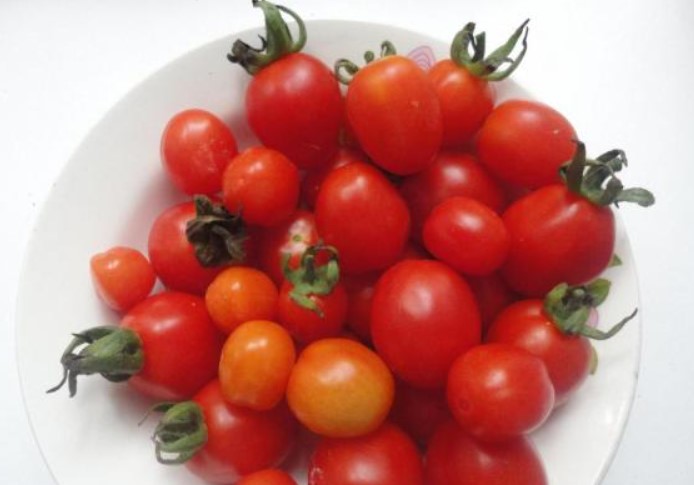
These tomatoes have a slightly sweet flavor. Their small size makes them ideal for salads and canning.
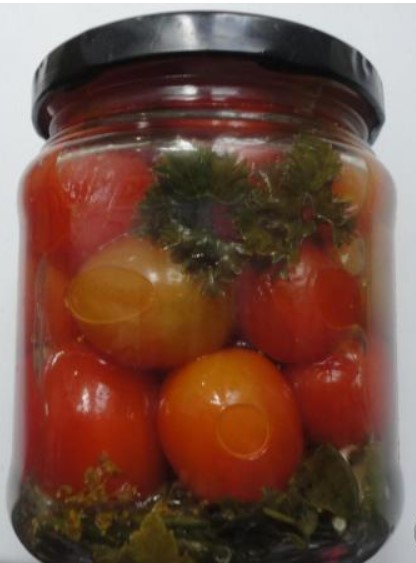
For information on growing cherry tomatoes at home, read the following articles:
Comparison of the tomato variety Thumbelina with other varieties in the table
Please note! How can you easily convert centners/ha to kg/sq.m? Simply divide by 100! For example, the Abakansky Pink tomato yields 400 centners of marketable fruit per hectare. This equals 4 kg per square meter. It's that simple! Also, keep in mind that typically no more than 3-4 plants are planted per square meter. This way, you can calculate the yield per bush. In the case of the Abakansky Pink, it's about 1 kg.
| Variety | Ripening period (number of days from full germination to ripening)
Yield of commercial fruits |
Brief description | Fetus |
| Thumbelina | 90-95 days
470 c/ha (greenhouse and under film) |
An early-ripening indeterminate variety for open ground and greenhouses. Requires staking and training. Suitable for salads and whole-fruit canning. | Round, smooth, dense, red, 15-25 g. Excellent taste. |
| Raspberry Fountain | 100-105 days
520-610 c/ha (greenhouse and under film) |
An early-ripening determinate variety for greenhouses. Suitable for salads. | Elliptical, medium density, slightly ribbed, raspberry, 20-27 g. Good taste. |
| Raspberry Farmer | 85-90 days
1000 c/ha |
An early-ripening determinate variety for greenhouses. Suitable for salads. | Round, dense, slightly ribbed, cocktail, raspberry, 50-60 g. Good taste. |
| Crimson Flame | 90-95 days
620 c/ha |
An early-ripening determinate variety for greenhouses. Requires training into three stems. Suitable for salads. | Obovate, smooth, pink, 50 g. Taste is good to excellent. |
| Raspberry Liana | 85-90 days
700 c/ha |
An early (ultra-early) determinate standard variety for open ground and greenhouses. Suitable for salads, canning, and processing into tomato products. | Round, smooth, red, 65-90 g. Good taste. |
| Madeira | 85-90 days
440-700 c/ha |
An early-ripening indeterminate variety for greenhouses. Suitable for salads. | Round, smooth, red, 20-25 g. Good taste. |
| Little Red Riding Hood | 85-90 days
180 c/ha |
An early-ripening, determinate, standard variety for greenhouses. Suitable for salads. | Round, smooth, soft, red, 15-20 g. Excellent taste. |
| Sugar-coated cranberries | about 80 days
230-280 c/ha (greenhouse and under film) |
An early-ripening, determinate, standard variety for open ground and greenhouses. Suitable for salads and whole-fruit canning. | Round, dense, slightly ribbed, red, 15 g. Good taste. |
| Pinocchio | 105-110 days
300-450 c/ha (1-1.5 kg from one plant). |
A mid-season, determinate, standard variety for indoor flowerpots and balconies. Suitable for salads. | Flat-round, smooth, small, red, 15-20 g. The taste is good and excellent. |
| Button | about 90 days
400-450 c/ha (greenhouse and under film) |
An early-ripening, determinate, standard variety for open ground and greenhouses. Suitable for salads, pickling, and whole-fruit canning. | Round, smooth, medium density, red, 10-15 g. Excellent taste. |
Gardeners' reviews of the Thumbelina tomato variety
Reviews of this variety are overwhelmingly positive. They note the large number of fruits on each bush, which ripen uniformly in clusters, their pleasant flavor, and their marketable appearance.
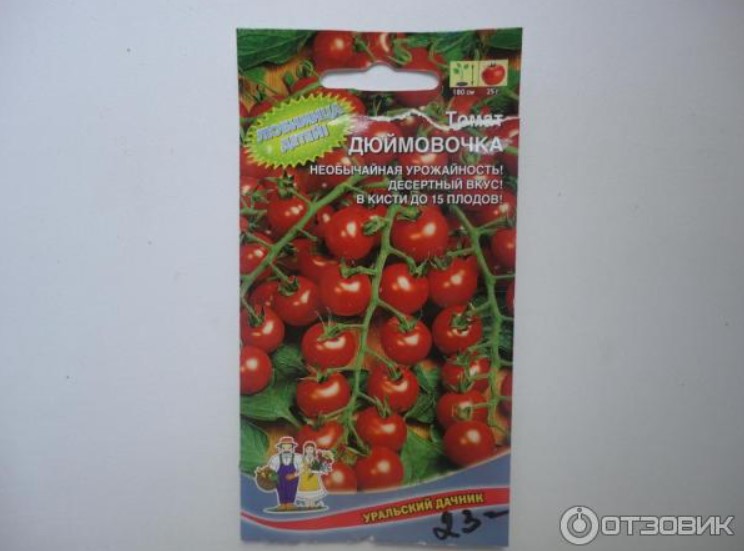
This is the second year I've been buying "Thumbelina" tomato seeds. Last year, I bought them from "Poisk." I really enjoyed canning them. And it's also nice to treat myself to a long stem full of tiny tomatoes. So, I decided to plant them again. This year, I came across "Thumbelina" from "Uralsky Dachnik." This is my first time buying seeds from this company. I'm not disappointed. And the price is reasonable—only 23 rubles.
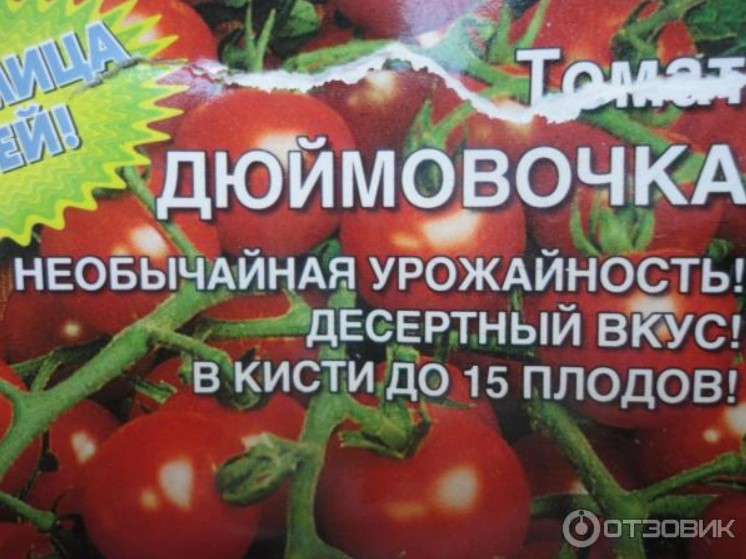
This is a cherry tomato variety. The manufacturer promises exceptional yields and a dessert-like flavor.
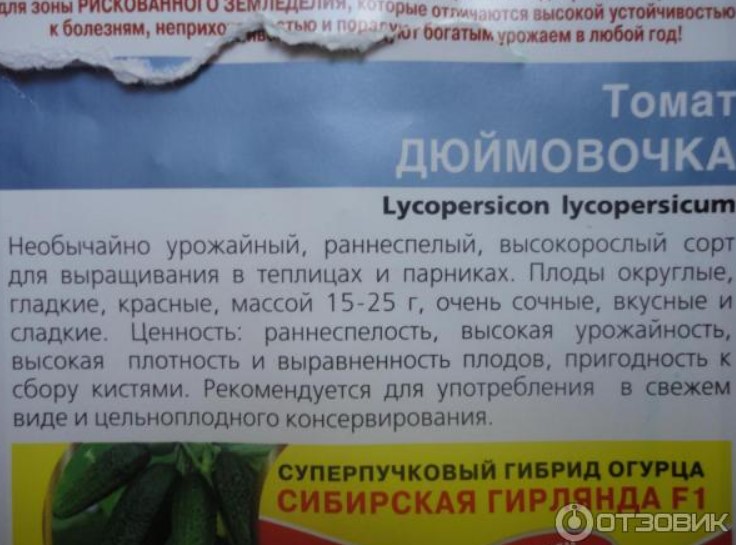
The seeds are perfect for our zone. As the package says, they're for risky farming. Admittedly, our farming was too risky this year—the cold weather lasted all spring and summer.
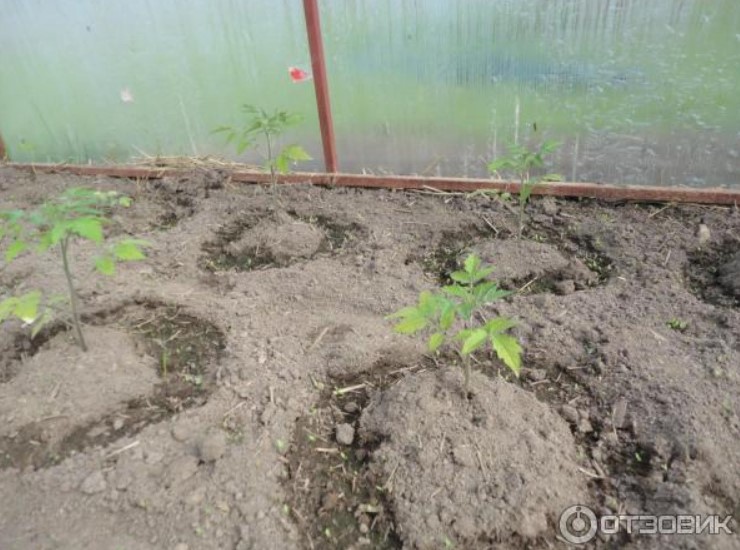
I planted the sprouted seeds in a container like this, where I kept them waiting for warm days to transplant them into the greenhouse. They had to wait a long time. And even after they were planted, I covered them with plastic containers to protect them from the night frosts.
I barely saved them. I planted them like this.
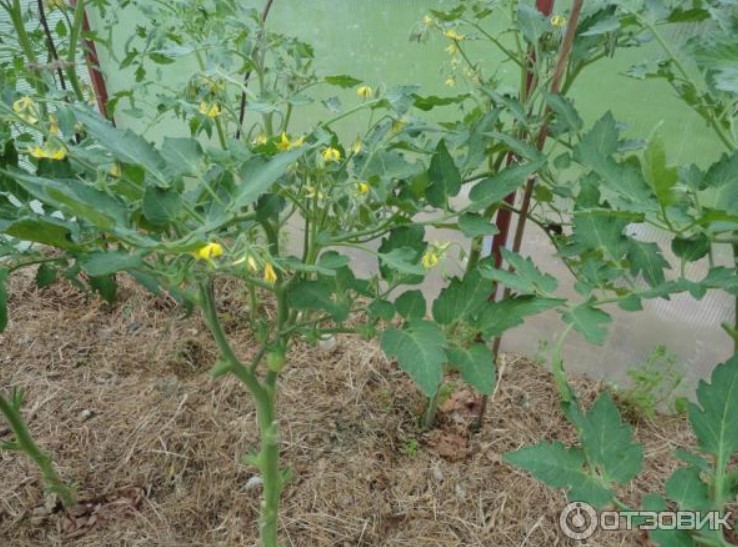
Once the nighttime cold and frosts subsided, and after some additional fertilizing, they began to grow well. The trunk thickened, the leaves became plumper. Flowering began.
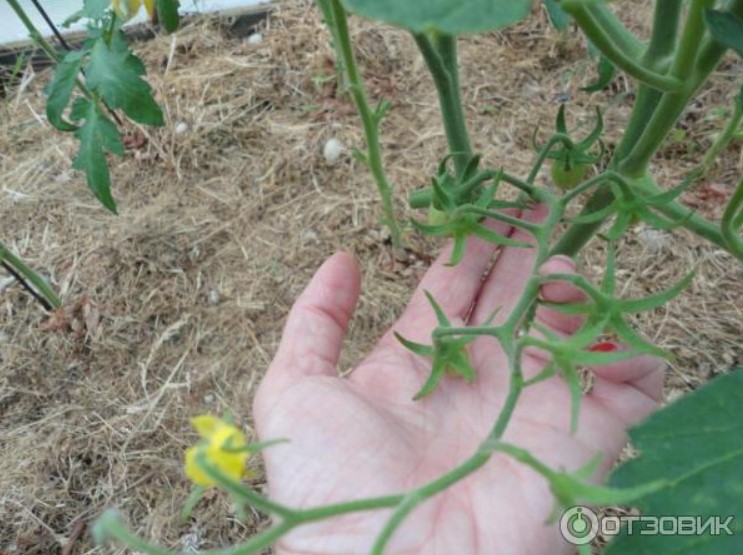
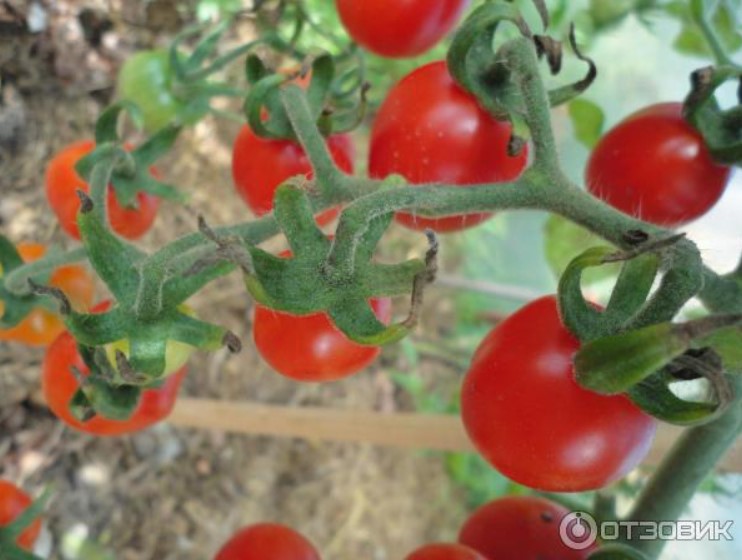
And here are the first branches with tomatoes.
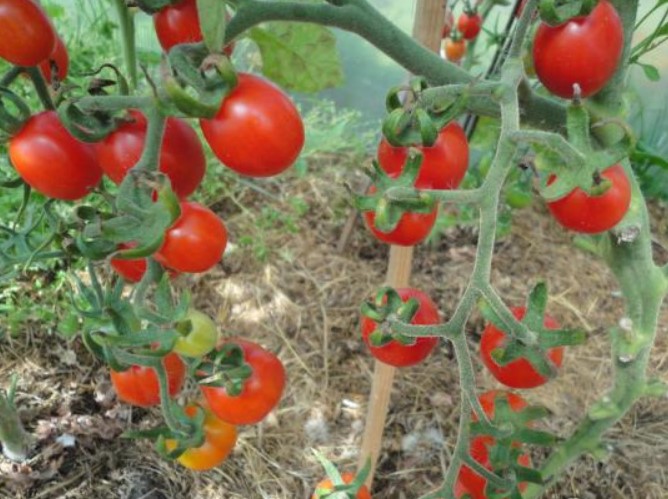
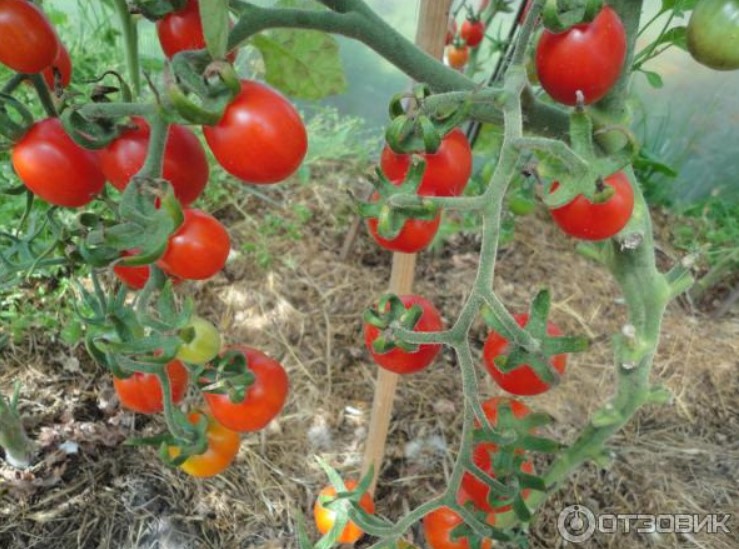
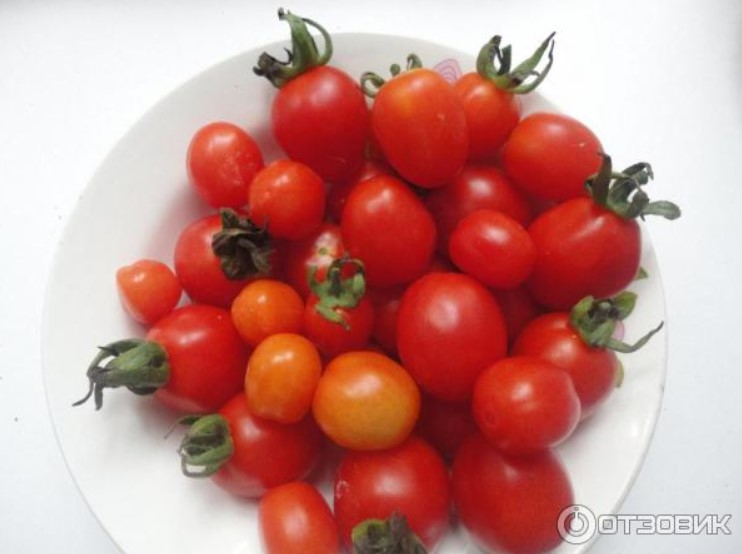
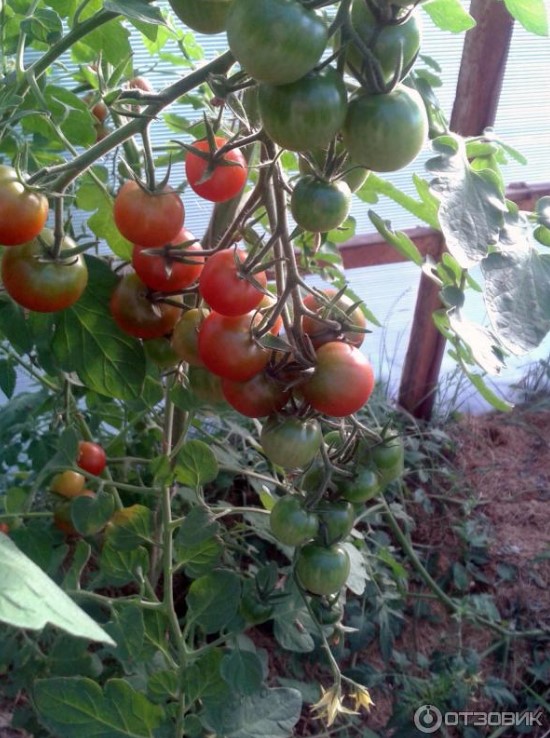
Now the picture is more serious. )) The fruits, as indicated on the package, are round, not ribbed, and red. Almost the entire branch ripened simultaneously over a period of several days—first at the base of the branch, and the last to turn red were the fruits located at the end.
I didn't pick them individually, but cut them from whole branches. This is the only variety of the eight I planted that ripened fully in the greenhouse—I picked the other varieties unripe this year. Each branch contains 10-15 tomatoes.
The smaller ones grew at the very end of the branch. The larger fruits grew at the base. They were delicious tomatoes, with a sweetness to them. I'd pop them in my mouth like sunflower seeds as I passed them in the kitchen. They're good for garnishing dishes and making preserves.
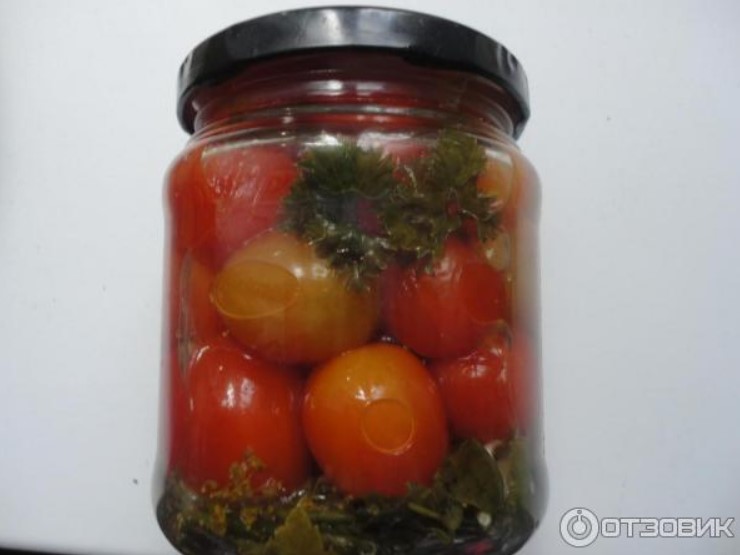
Here's one of the final stages of the "Thumbelina" life. In addition to cherry tomatoes, I also use "Vzryv" tomatoes for canning. They're medium-sized and firm (I cut them in half).
I don't plant many Thumbelina tomato plants. Five or six are enough. I like to add variety, along with salad tomatoes. If you're canning, I recommend this variety. The choice of grower wasn't important to me: the main thing is that the Thumbelina variety produces fruits that aren't too small or too large.
I really love my dacha. I grow flowers and trees, and I'll be growing vegetables this year. I planted cucumber, pepper, and tomato seedlings. I bought some "Thumbelina" tomato seeds and really want to grow some small cherry tomatoes.
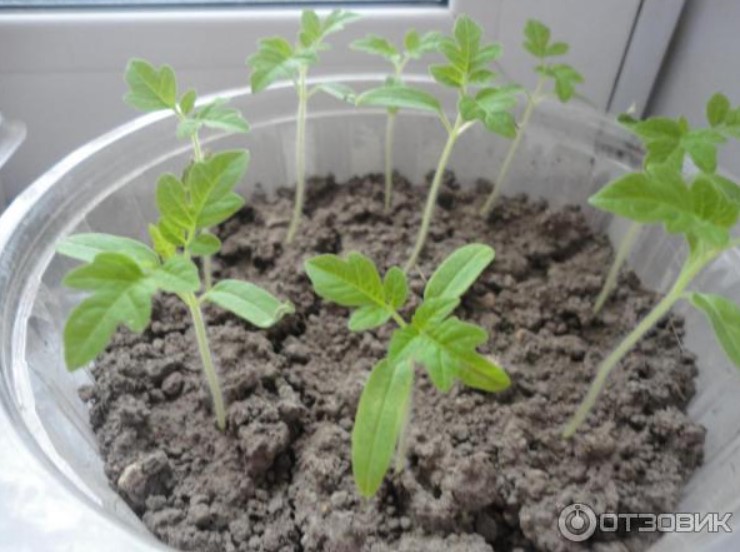
The label contains growing instructions. I planted all the seeds from the 26-seed packet. I didn't know how many would sprout, but they all did! But then I discarded three of them—they were weak.
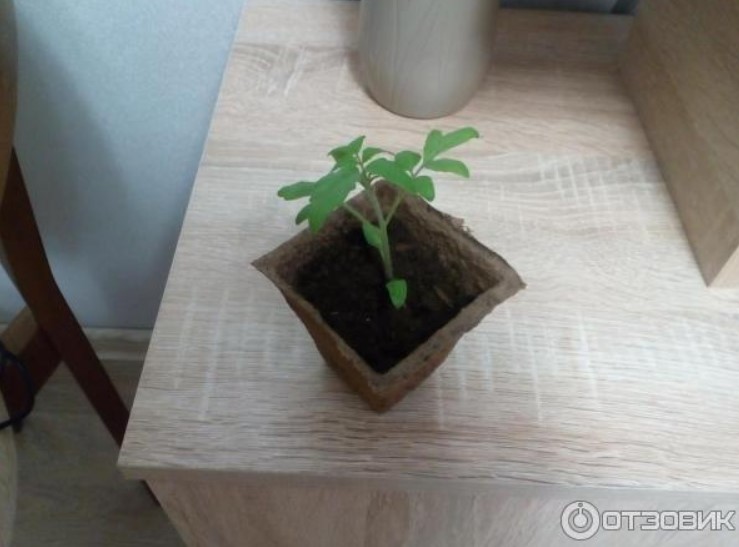
I transplanted the seedlings later than the established deadlines and spent a long time buying peat pots (I didn’t have time to buy them).
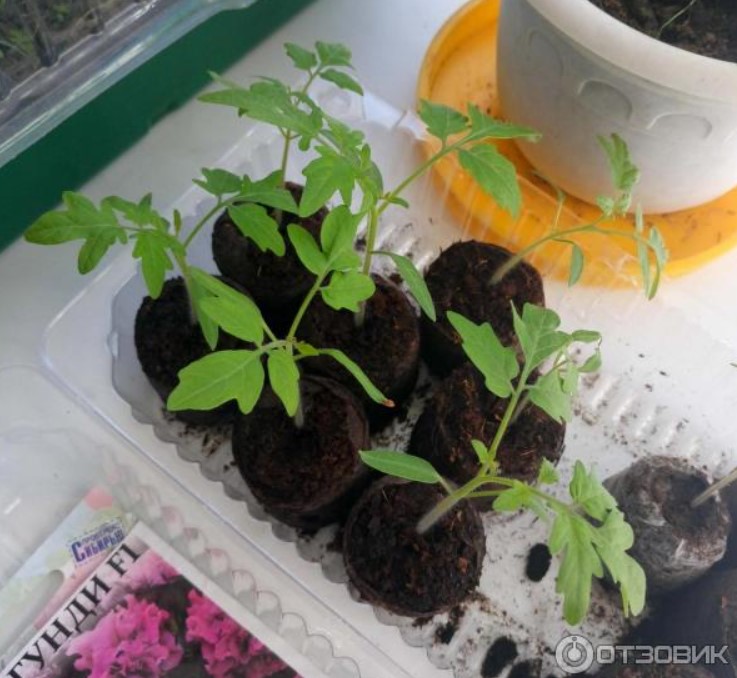
After transplanting, the seedlings recovered in a couple of days and here is my result, about a month, I forgot the date when I planted, I’m not in the habit of writing everything down yet.
Hello dear readers!
Spring is here, summer is coming soon, and it's time to share reviews of successful seeds and plants! It's mid-April, which means it's not too late to sow tomato seeds.
I'm a beginner gardener; I've never planted tomatoes before. My mother-in-law does it for me. She plants a little extra, just in case, and then gives me the extra. I planted what they gave me, and when it grew, we ate it. I'm not picky; I don't have any particular preferences when it comes to tomatoes. I've known two varieties since childhood: Oxheart and Black Prince. That's where my knowledge ends.I know my sister loves cherry tomatoes. A friend grew some once and raved about them. So why not give it a try?
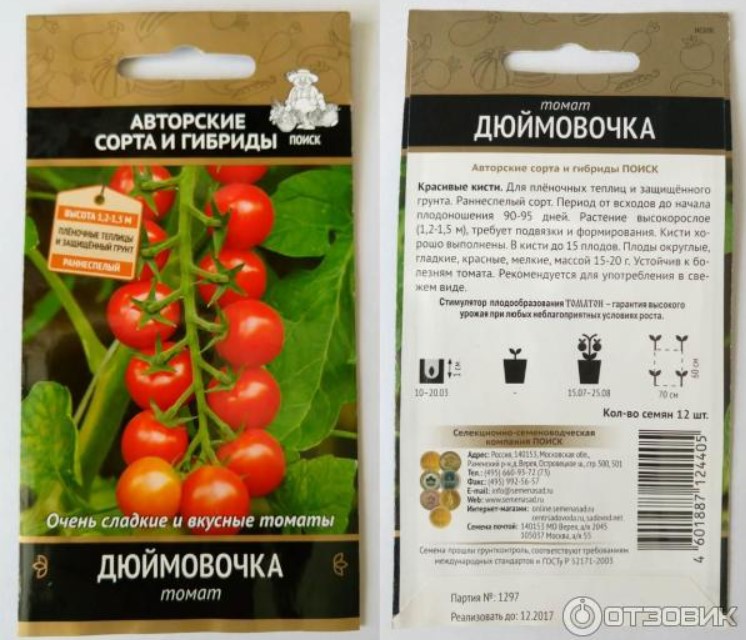
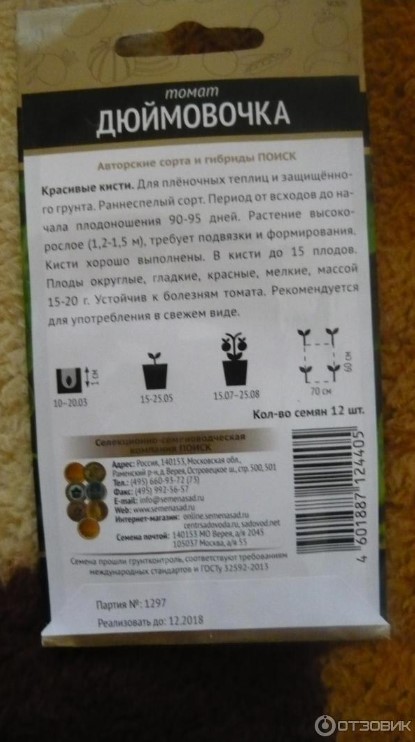
To try out, I bought "Thumbelina" tomato seeds from the Poisk agricultural firm.
The picture on the package is beautiful, the tomatoes are as smooth as peas, the clusters are long. It's an early-ripening variety, suitable for greenhouses, sweet and tasty. Basically, just what I needed.
I sowed six seeds in peat pellets without soaking them, and they all sprouted within a week and a half. The seedlings grew strong. Once they had four leaves, I transplanted them into cups.
In early May, we transplanted the seedlings into the greenhouse. We could have done it later, of course, but Grandma sowed early, and by May, the seedlings begin to outgrow their roots. The seedlings survived the frosts well, but I have an excellent polycarbonate greenhouse, and we covered them with a covering material during the frosts; they probably would have had a hard time under plastic.
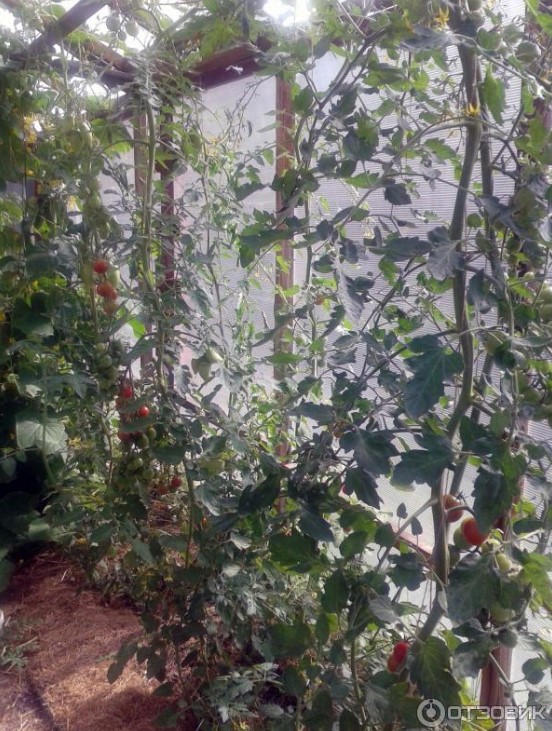
These tomatoes are tall. Search results suggest 1.2-1.5 meters. All my tomatoes grow under the greenhouse roof, which is about 2.4 meters at the ridge. Therefore, I always train them, usually into two trunks, and tie them up. This staking is necessary until August.
My tomatoes have grown tall and strong. Their fruiting clusters are very long, over 30 cm long. Ripe tomatoes are already hanging at the top of the cluster, green ones are ripening in the middle, and the flowers are still blooming at the tip. They began bearing fruit in mid-June. Here and there, a single red tomato hung. Last year, June was hot, and my greenhouse was poorly ventilated, making it very hot, so pollination and fruit set on the tomatoes temporarily stopped. In June, everything returned to normal, and we finally had our fill of cherry tomatoes.
They turned out to be truly delicious and sweet. It was as if they weren't a regular tomato, but an exotic berry. The taste of store-bought cherry tomatoes doesn't compare to Thumbelina's. Store-bought cherry tomatoes are dull and tasteless. My mother-in-law really loved these tomatoes; they were so delicious that she couldn't resist eating a couple while she was opening the greenhouse. This year, I asked if I could plant a couple of seedlings for her. My mother also really liked these tomatoes. They produced very well for her, even though she planted them in the greenhouse around mid-June. In July, she picked more tomatoes than I did! I also planted two for my mother this year. My sister is a real cherry tomato lover; she devoured them with gusto. My husband and daughter aren't fond of tomatoes, but they both agreed that this variety is delicious and worth trying.
These tomatoes can be eaten fresh, dried for the winter in a dehydrator, sun-dried and preserved in oil, or canned. I've done all of these things with them. They've all been eaten this winter.
Mom dried these tomatoes too. Her little grandson got to the dehydrator with the dried tomatoes, gobbled them all up, then came to grandma and said it was delicious, let's have more!
In September, I clean out the greenhouse and pull out everything growing in it. I bring the remaining green tomatoes home to ripen. These tomatoes aren't as tasty as freshly picked ones, of course, but they're perfect for a salad or scrambled eggs. We ate these cherry tomatoes almost until November.
I don't know how many you can get from a bush in a season; I haven't weighed them. We just stole a few throughout the season for salads and just to eat. I think there were a lot of them.
I highly recommend planting it, you won’t regret it!
Amazingly, Europe didn't know about small cherry tomatoes until 1980! Tomatoes actually came to us from the Indians, who also grew these little ones. But how cherry tomatoes arrived in the Old World is a mystery! But these small, cherry-like tomatoes were initially only discovered in a few corners of Europe, and even then, they were used as a garnish for dishes.
And then something happened... A British businessman put out a call for tomatoes with a long shelf life, sweetness, and a neat shape for his stores. So the Israeli and British "Michurins" scrambled to find the answer and... developed the current "cherry" variety from a tiny Indian tomato. This small tomato from the American jungle became sweet, very shelf-stable, and a popular variety.
And by the end of the 20th century, breeders began to refine their cherry tomato clones, producing yellow and orange varieties with varying ripening times. Here's "Thumbelina," a signature product of the Moscow-based agrofirm "Poisk."
This is an early-ripening tomato, exclusively for plastic greenhouses. It grows tall, over 2 meters, with countless curling branches! I'm tired of tying up this beauty!
It ripens really quickly, with the first "berries" beginning to turn red in July. The tomatoes are a perfect size, weighing an average of 17 grams! A single cluster typically contains up to 13 tomatoes.
They don't all ripen at once, so picking them is a bit tricky—they're so tiny! It'll be exhausting to pick out as many as you need! But they're delicious! By the way, you can cut them off by the stem and store them in a cool place in the fall; they keep for a long time.
The Thumbelina bush itself does not tolerate cold, so it is better to grow it in a greenhouse.
Well, here they are, whole and small compared to regular tomatoes. A small thing...)))
Growing cherry tomatoes in your garden is pure indulgence. They're great as decoration, sure, but it's much more satisfying to pick a tomato that feels like a treasure when you hold it in your hand!
And it's wonderful to cut into a salad - cut in half and it's ready!)))
Well, what can I say, the seeds germinated beautifully, and the bushes bore fruit faithfully. I'll be planting... just one bush, for beauty, but for preserves and eating—no, I don't want to, they're too small! You can pick the "Ox Ears" and you'll be full with just one ear! So I recommend them either to those who love ornamental plantings or to those who are exclusively fond of cherry tomatoes! But the seeds are worthy! The germination rate is excellent! The seedlings are growing well too, practically bursting to the sky!
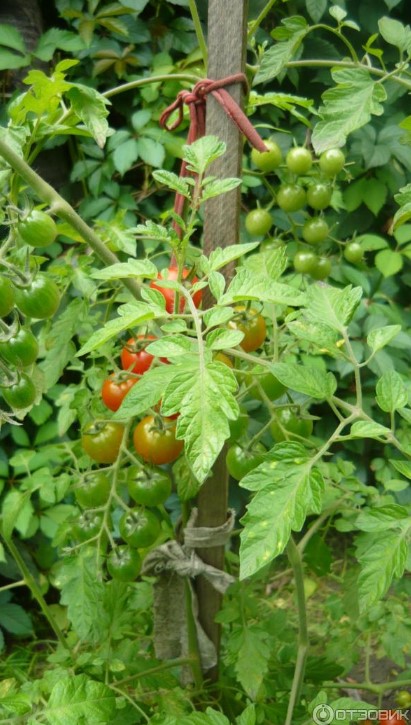
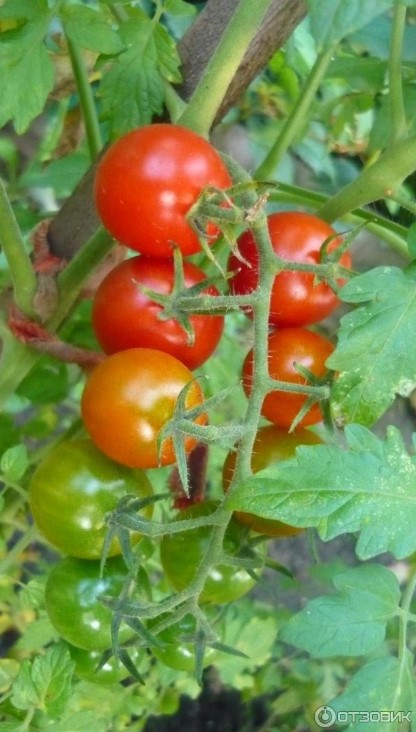
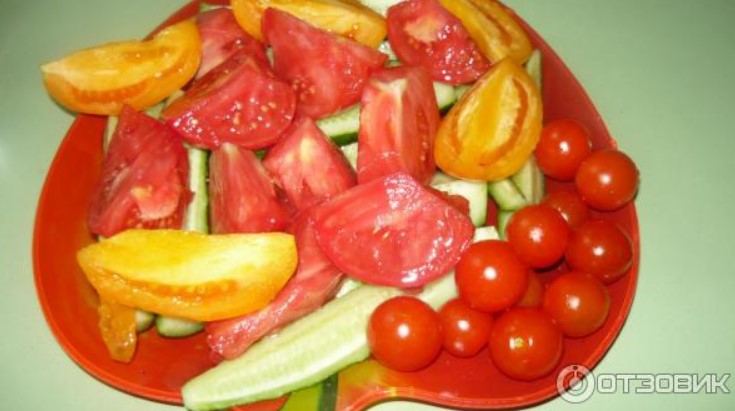
My Thumbelina is completely different—cherry, indeterminate. Early. Fruits weigh 15-20g. Round. :dnt:
Author's seeds from Poisk.
Here is their description:
Quote
An early-ripening indeterminate variety for protected cultivation. The period from germination to fruiting is 90-95 days. The plant requires staking and training. The clusters are well-formed, with up to 15 fruits per cluster. The fruits are round, smooth, red, and small, weighing 15-20 g with an excellent dessert flavor. Resistant to TMV. Recommended for fresh consumption and canning.
Published August 1, 2015
This cold and damp year, my Thumbelina tomatoes grew super tiny. They're nano-tomatoes. The bushes are tall, and they're simply covered in clusters of tiny fruits. My grandson really liked them.
I'll plant more for him. But this time in the flower bed, because the bush is very beautiful, but it requires a lot of space. So let it grow there; it's a joy to behold.
The fruits set and grow very quickly. The clusters begin with small fruits, and the flowers bloom in the middle. As in this photo:
Published August 12, 2016
This year, Thumbelina gave me these long tassels:
My grandchildren adore these little peas. :-*
And the bush is very decorative. I planted these tomatoes along the fence. The lacy foliage and currant-sized tomatoes are very unusual and decorative.
And yet, Thumbelina is the smallest cherry cherry of those I have planted.I like to freeze them. :yep: In winter, when I make a salad, I throw in a handful of these nano-tomatoes. While I'm dressing it, bringing it to the table, and arranging it on plates, the tomatoes defrost to just the right consistency. And Thumbelina tomatoes have the best consistency for this, since the skin holds its shape well. And they're just the right size for a tooth.