Tomatoes are a rather demanding crop. Gardeners should pay special attention to growing conditions before planting. To obtain early, ripe fruits, they are grown in greenhouses, hotbeds, and other protected areas. A bountiful harvest requires considerable effort, time, and money. The rewards will be felt in the fall.
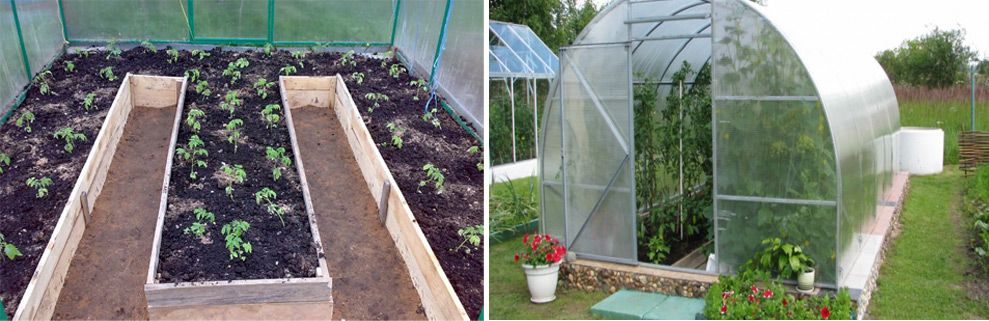
By growing tomatoes in a greenhouse on your own plot, you get vegetables that are free of harmful chemical compounds.
Tomatoes are eaten fresh and canned. The harvested fruits are used to make preserves, various salads, and tomato juice. They are often added to hot dishes.
Content
Types of greenhouses
Greenhouses vary in design. Each type has its advantages and disadvantages. Arched greenhouses are best for growing tomatoes, as they provide good lighting. The material the greenhouse is made from also matters.
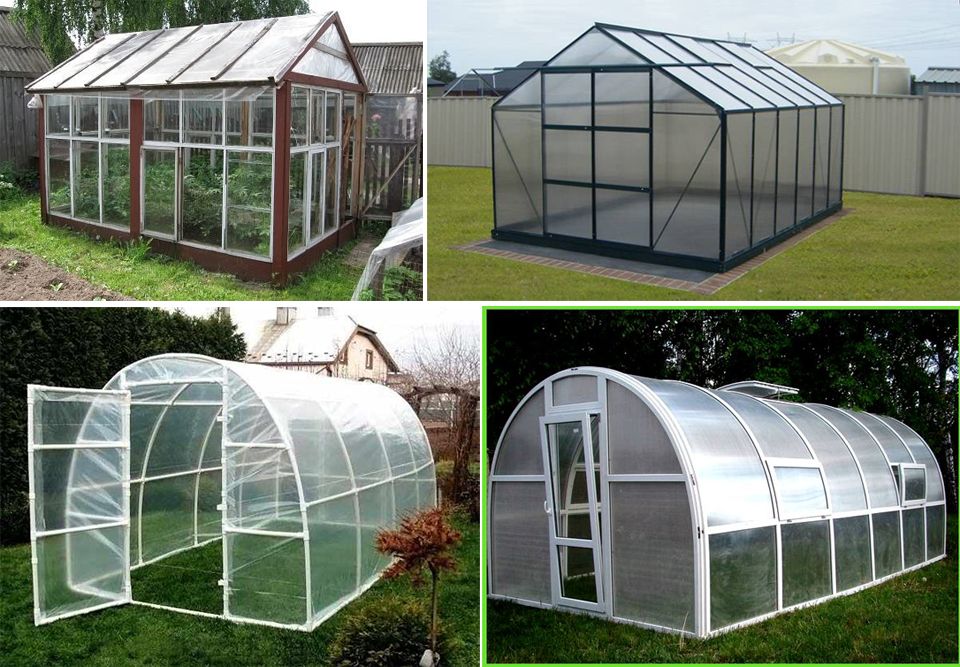
In most cases, this is polycarbonate or film. The former is preferable. When choosing a film structure, consider the number of layers. There should be two. The second layer is removed after the temperature reaches 18 to 20°C.
Benefits of growing tomatoes in a greenhouse
Gardeners who choose this method are guided by the following advantages:
- Temperature regulation. Tomatoes are sensitive to this factor. It's also worth noting that they don't tolerate excessive humidity well. Thanks to a film cover and a well-designed ventilation system, the planted crop won't be harmed by adverse weather conditions.
- Increased yield. If all necessary requirements are met, it will increase by 2-3 times.
- Faster ripening of vegetables.
- Resistance to late blight. This disease rarely affects tomatoes grown in greenhouses.
- Improved taste qualities.
To ensure the end-of-season harvest doesn't disappoint, gardeners will need to consider many nuances. Caring for tomatoes planted in a greenhouse is quite challenging. Without the proper knowledge and proper care, the risk of seedling failure is quite high.
Autumn and spring preparation of the greenhouse
This step is especially important. It all starts with cleaning the room. This should be done at the end of each season.
- Remove any remaining fruit and tops from the greenhouse. This reduces the risk of fungal diseases. Pathogens can be found in various parts of the soil, including the upper layers.
- After removing the residue, wash the greenhouse with a soap solution.
- The next step is to clean, prime, and paint the damaged areas. This is necessary to prevent corrosion and improve the structure's appearance.
- Wooden parts are treated with antibacterial and antifungal agents. Copper sulfate is a prominent example. These mixtures can be purchased at a specialty store or made at home. After using sulfur-containing products, the metal frame may darken. This is due to the properties of this substance. Therefore, products containing such compounds should be avoided. In these circumstances, the structure should be coated with a solution of chlorinated lime. The mixture of water and the active ingredient should be left to sit for 4-5 hours. Wear gloves and a respirator when treating the greenhouse.
Before you start digging, you must:
- remove the top layer of soil;
- disinfect the soil with a solution of copper sulfate;
- add mineral and organic fertilizers.
The nutrient mass prepared from organic matter is added to a depth of 2-3 cm 14 days before planting tomatoes in the greenhouse.
Natural green manures are often used when preparing the soil. The richest sources of green manure include beans, phacelia, lupine, rapeseed, sweet clover, oats, mustard, alfalfa, and barley.
By taking soil from plots where these crops were previously grown, gardeners can reap a bountiful harvest. Harvesting takes place in the fall. The remaining work can be completed in the spring.
Two weeks before planting the seedlings, the soil must be loosened and weeds removed. This will ensure good aeration. If the soil is not fertile enough, it is fertilized with organic matter. 2-3 kg of organic matter is required per square meter. The beds are formed according to the following parameters:
- height – 40 cm;
- width – 90 cm.
The distance between trenches or holes should be at least 60 cm. Tomatoes require good light, so the greenhouse should be located in an open area facing east to west. Even slight shade can reduce yield.
The beds are formed 10 days before planting the seedlings. To insulate the chosen area, straw, sawdust, or pine needles are placed under the soil. The layer should be at least 10 cm thick. Then compost and soil are added. In winter, the soil should be covered with snow to prevent it from freezing. An additional benefit is that it keeps the soil moist in the spring.
Growing and caring for seedlings
For greenhouses, choose hybrid, self-pollinating varieties. One of the most popular is Verlioca.
Preparation of seeds, soil, and containers
The first step is seed preparation. They are treated with Fitosporin-M. This procedure usually takes about 20 minutes. A growth stimulator is then applied.
It's strictly forbidden to plant seeds in untreated soil. To ensure strong seedlings, follow a specific procedure:
- They collect turf soil from the area.
- They leave the bags on the street or on the balcony.
- A month before planting, the seedlings are brought into a warm room. The soil is sifted, cleared of debris, and watered with clean water.
- The treated soil is placed in a cool place. This procedure is called freezing. This eliminates parasites and pathogens. To enhance the effect, the soil is steamed. To do this, it is kept in a water bath for several hours.
- Prepared soil is mixed with humus and peat. All components are taken in equal proportions. Water, ash, coarse sand, and superphosphate are added to the mixture. Store-bought soil does not contain any additional ingredients. The soil should be loose and nutritious.
Disinfect the seedling containers and rinse them with running water. The minimum height is 7 cm. Place the potting mix in the selected containers. Water it. Leave the containers undisturbed for 10-14 days.
Read more about preparing tomato seedlings at home. here.
Sowing seeds for seedlings
Tomatoes are sown between February and March. The procedure is quite simple:
- Moisten the soil in the boxes.
- They make grooves, the depth of which does not exceed 1.5 cm.
- Place seeds in them, leaving equal spaces between them.
- Sprinkle the seed material with soil.
- Cover the box with transparent plastic film. Leave it there until sprouts appear. Periodically, lift the film slightly for ventilation.
- Seedling containers are placed in a room where the air temperature is 22°C or higher. Once the seedlings emerge, this temperature drops to 18°C.
- Seedlings grown in trays and boxes require picking. Timely picking will ensure good root development. The first picking of tomatoes should be done 7-10 days after the leaves emerge. Do not water the seedlings before this procedure.
Plants should be moved to a separate container with extreme caution. Otherwise, the root system may be damaged. To help tomatoes establish root quickly in the soil, harden them off for several weeks before planting. The containers can be moved outdoors if the air temperature is above 12°C.
Also read The best time to sow seeds for seedlings according to the lunar calendar.
We plant seedlings in a greenhouse
Tomatoes are sensitive to cold, so it's important to prepare raised beds before planting. To speed up the warming process, cover the soil with dark plastic. The air temperature inside the greenhouse should be at least 20°C. Seedlings are planted according to a carefully considered pattern, determined based on the tomato variety. Particular attention should be paid to the spacing between seedlings:
- low-growing and branched – not less than 40 cm;
- low-growing, forming one stem – 25 cm;
- tall – more than 60 cm.
Tomatoes are planted in a checkerboard pattern in a greenhouse. Following all recommendations, follow the following algorithm:
- Dig holes. Their depth should be greater than the height of the container.
- The holes are filled with a pre-prepared solution.
- Carefully remove each plant along with its lump of native soil. If the tomatoes were planted in peat pots, this step can be skipped.
- Tomatoes are planted in holes. Several important points should be taken into account. For overgrown seedlings, you'll need to dig deeper holes. They don't need to be completely filled. The soil should completely cover the root system. Once the root system has settled, add fertile soil mixture to the hole. The soil level should rise by 12 cm.
Tomatoes are transplanted in the evening or morning. The weather should be cloudy.
The planting date is chosen based on the type of structure and the varietal characteristics. Tomatoes are planted in heated greenhouses in late April. If the plastic cover is not equipped with an additional insulation system, transplanting is carried out between May 20 and 25. The optimal soil temperature ranges from 12°C to 15°C. The structure will need to be insulated with an additional layer of plastic during periods characterized by sharp temperature fluctuations at night.
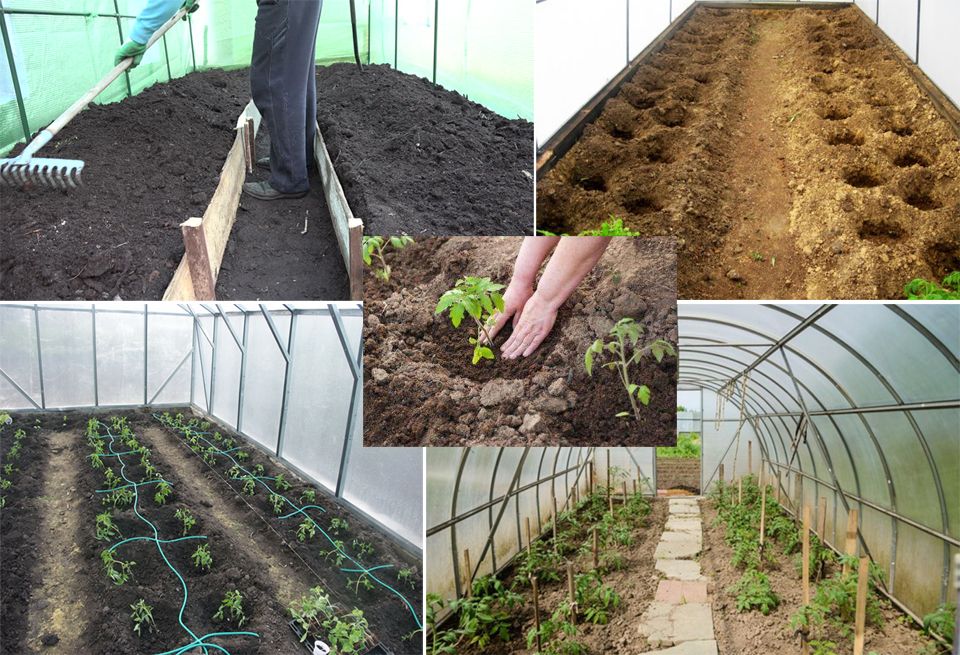
Experienced gardeners often plant several varieties in a single greenhouse. They are arranged in separate rows. The first row is near the edge of the structure. Determinate, early-ripening varieties are typically planted here. The second row is formed near the inner aisle. Standard varieties and tall, giant varieties are planted here.
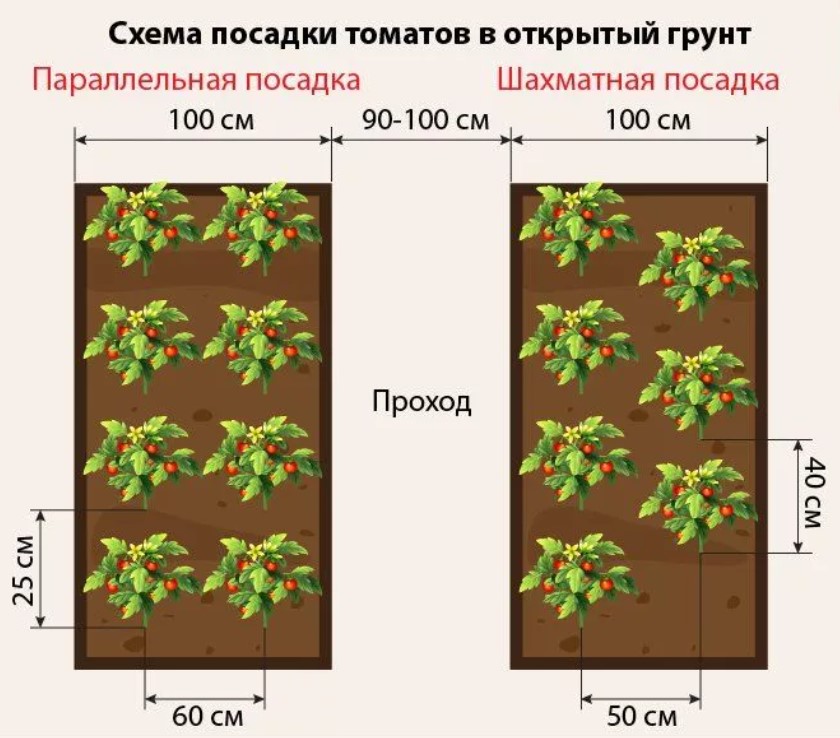
Tomato planting patterns can be either parallel or staggered. In the former case, the plants are spaced 60 cm apart between rows, with seedlings spaced 30 cm apart. In the staggered case, the spacing is 50 cm by 40 cm.
Regardless of the varietal characteristics, the following rules must be observed:
- The best age for transplanting is between 45 and 50 days. At this stage, plants are tolerant of greenhouse conditions.
- Tomatoes need to be watered well before planting.
- Seedlings that have grown a lot should have their lower leaves removed.
- To ensure that the root system is evenly distributed throughout the hole, the hole should be filled with water.
- The soil around the plant needs to be compacted and mulched.
Another essential step is prevention against late blight. For this, you can use a solution of copper and water, as well as Bordeaux mixture. A week after planting, the soil should be loosened. This will ensure sufficient oxygen supply to the rhizome.
If the variety's characteristics include tall growth, tie-downs should be installed near the planting hole. Otherwise, root damage is inevitable.
The summer resident can use one of the following methods:
- Stakes. These are made from rebar scraps, thin plastic pipes, wooden stakes, and metal rods. This method is considered the most durable. The stakes are driven 25-30 cm into the ground. The stems of medium-sized tomatoes are wrapped in the prepared material. These stakes are driven in along the row. Steel wire and strong twine are stretched across them. The distance between stakes should be at least 40 cm. The presence of lateral shoots increases the yield.
- Trellis. They are most often used to support indeterminate varieties. Under favorable conditions, tomatoes can reach 5-6 meters. Using trellises can save space. 1 m² is enough for 3-4 plants.
Seedlings, which range in height from 25 to 35 cm, are grown vertically. When planting, do not bury the stems too deeply. Otherwise, additional roots will develop, significantly slowing the plant's growth. Another negative consequence may be the shedding of inflorescences from the first cluster.
The greenhouse should have vents, preferably at the top and sides. These ensure thorough ventilation. To attract bees and other insects, place a saucer of honey inside. If the weather is good, open the windows and doors slightly.
Caring for tomatoes in a greenhouse
Yield depends on how and when the necessary agricultural practices are carried out. Tomatoes are crops that require special care. These procedures are mandatory.
Watering
The first watering is carried out 5-10 days after planting. The water should be warm (around 20°C). 5 liters of water are required per 1 m². If the soil is too wet, the quality of the tomatoes will significantly deteriorate.
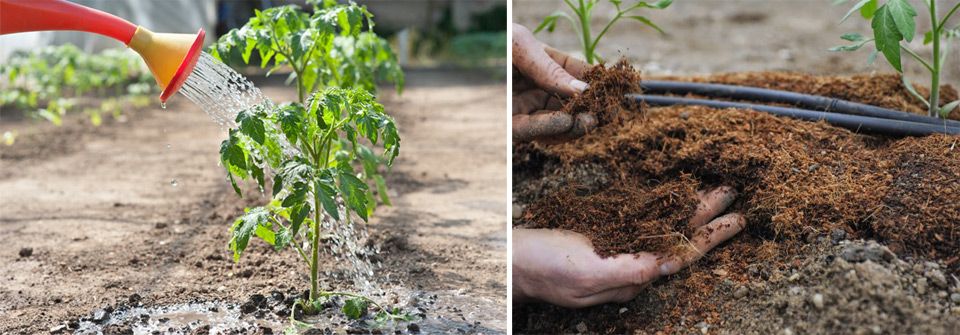
They will become watery and sour.
Top dressing
Fertilization is performed several times per season, using a pre-prepared schedule. It is determined based on the initial soil composition and varietal characteristics. The first application is carried out two weeks after the seedlings are planted. The fertilizer should be liquid. The solution is made from water, mullein, and nitrophoska. One liter of the solution is applied under each bush. The second application is carried out 10 days after the first. In this case, dissolved potassium sulfate is used. 5 liters per square meter are applied. After 14 days, the bushes are watered with a solution made from ash and superphosphate. After the fruiting period begins, sodium humate is added to the soil.
Ventilation
Regular ventilation helps gardeners regulate temperatures. This should be done 2-3 hours after watering. Daytime temperatures in the greenhouse should be between 18 and 26°C, and nighttime temperatures should be between 15°C and above. An effective ventilation system will prevent condensation.
Garter
Special equipment is used to prevent damage caused by the weight of the fruit and foliage. Stems are tied to stakes and trellises using plastic clips, fabric strips, twine, and string. The trellis should be approximately 2 meters high.
Pinching out side shoots
This procedure is performed to ensure stem formation without side branches. These are called side shoots. They grow from the leaf axils. Due to the large amount of green mass, maturation time is prolonged and the bushes are shaded. Additional disadvantages include the prevalence of fungal diseases. With proper care, the risk of these is virtually eliminated.
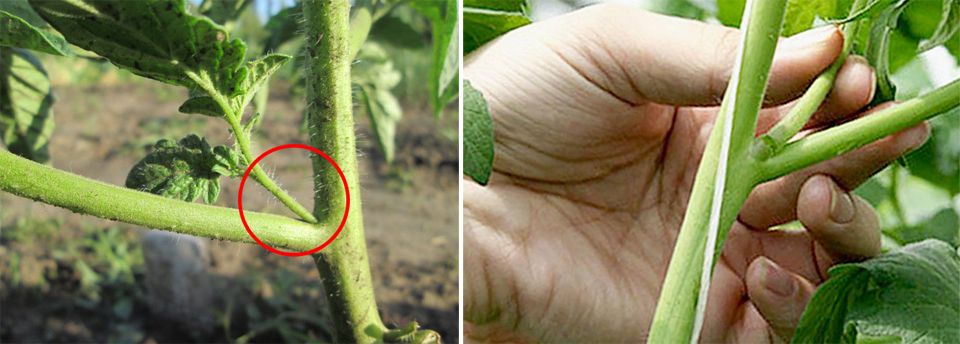
The side shoots are removed using two fingers. The length of the side shoots should not exceed 5 cm. Otherwise, the plant will become unhealthy for a long time. Many gardeners use the cut off parts to create new plants. This is especially true for exotic varieties. The side shoots are replanted after they develop roots.
Tomatoes grown in a greenhouse should have their side shoots removed as they develop. Side shoots should be removed no more than once a week. With proper plant care, the stems should reach 2-3 cm in height.
Pollination
Tomatoes are considered self-pollinating crops. To speed up the process, gently shake the flower clusters. The same effect can be achieved by tapping the stems. The next step is watering, which can be done with a watering can or a drip system.
Once the fruit has ripened, gardeners should remove the lower leaves. This will help reduce air humidity and effectively ventilate the greenery.
During stem formation, no more than 8 clusters should be left. During sudden cold snaps, containers of hot water should be placed in the greenhouse. To enhance the effect, cover the seedlings with a non-woven material.
Top.tomathouse.com provides tips on growing tomatoes in a greenhouse.
When caring for tomatoes, you need to consider the following recommendations:
- To prevent diseases and other negative effects, bushes are often treated with garlic infusion. It is prepared from 10 liters of water and 40 g of garlic, which is pre-crushed.
- When regulating the temperature, the plant's development phase should be taken into account. For example, during the fruiting period, the greenhouse should have a daytime temperature of 24 to 26°C and a nighttime temperature of 17 to 18°C. The optimal humidity is 60-65%.
- It is recommended to water tomatoes early in the morning with water that has had time to settle.
When fertilizing tomatoes, alternate between mineral and organic fertilizers. To increase the concentration of vitamin C, add boric acid to the fertilizer. - To maximize yield, ventilate the tomato garden after watering. Weeding and loosening the soil should be done only the following day.
- Healthy tomatoes have vibrant colors. The same can be said for the corollas during flowering. Leaf blades curl slightly during the day and straighten out at night.
- If the fruits have turned brownish, they should be picked before they ripen. Otherwise, both their appearance and taste will suffer.
Harvesting and storage
The harvest should be completed before daytime temperatures drop to 8°C. To determine the harvest date, consider the stage of ripeness. Tomatoes are initially green, then turn pink, milky, or brown. At this stage, the fruits acquire a rich color. It's best to harvest in the morning, as tomatoes are firmer at this time.
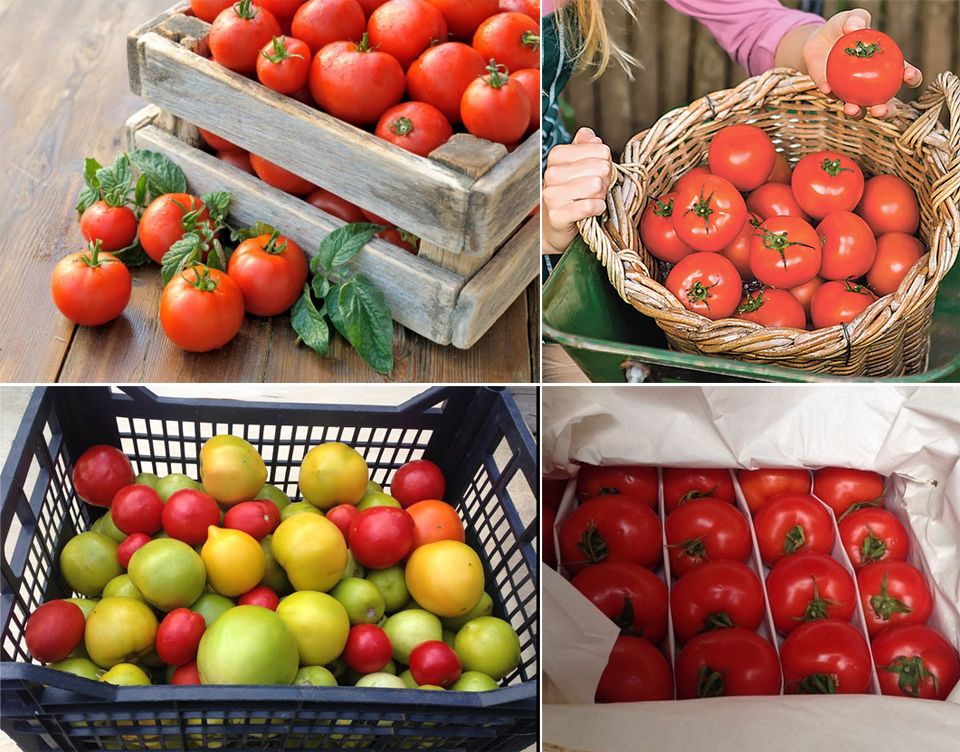
The tomatoes are placed in fabric-lined baskets or buckets. After sorting, they are packed into wooden crates. These typically hold 8-12 kg. The shelf life of tomatoes depends largely on ripeness and skin color. For example, bright red and fleshy tomatoes only last 5-7 days. Brown tomatoes are most often used for preserves, so storing them for more than 12-14 days is strictly prohibited.
If long-term storage is planned, the fruits should be harvested at the initial stage of ripeness.
Unripe tomatoes are placed in three layers. Several ripe tomatoes should be placed next to them. Tomatoes should be stored at a temperature of 10 to 12°C. Humidity should not exceed 80-85%. Otherwise, the tomatoes will rot. The ripening process usually takes 2-3 months.
Many gardeners use a rather original storage method. A week before the first frost, unripe tomato plants are dug up and hung on nails in the basement. The air temperature ranges from +1 to -5°C. The roots, located above, should still have soil on them. This way, the tomatoes begin to ripen at the beginning of winter, extending the ripening period to about a week.
Late-ripening varieties have the longest shelf life. To extend their shelf life, line wooden boxes with birch sawdust and peat chips. Wrap each tomato in soft paper before storing. Refrigerating them is strictly prohibited, as this will affect their flavor. Exposing tomatoes that have already ripened to direct sunlight is not recommended.
Many gardeners prefer to store harvested tomatoes frozen.
Mistakes when growing tomatoes in a greenhouse
If a gardener makes mistakes, problems may arise when growing a crop. The cause is determined by looking at the accompanying symptoms.
Excessive amounts of organic and nitrogen fertilizers, insufficient light, and excessive watering are indicated by accelerated growth. Additional signs include weak flower clusters, fattened vegetative mass, and a lack of yield.
To cope with these problems, you should:
- avoid watering for 7-10 days;
- change the temperature regime;
- apply superphosphate as a top dressing.
Particular attention must be paid to pollination of plants. This agricultural practice is carried out by hand shaking and is performed only in favorable weather conditions.
Flower and fruit drop occurs due to poor ventilation, dry soil, and sudden temperature increases. To revive the plant, it's necessary to restore the ventilation system, ensure adequate watering, and stabilize the temperature. The bushes will produce a good harvest if they are healthy.
If there are no large, ripe fruits on the side trusses, you should harvest tomatoes that are almost ripe. The next step is to water the soil thoroughly. Pruning foliage and side shoots is not recommended. Effective measures also include lowering the temperature by a few degrees. To do this, open doors and windows. If done correctly, the tomatoes that have formed on the side trusses will begin to ripen. Tomatoes harvested from the main truss are kept on the windowsill for several days.
Weakened plants are unable to produce a good harvest. This problem can arise for many reasons, including low light levels inside the greenhouse. Tomatoes thrive on light, so berry bushes and trees should be avoided near the structure. Ignoring this can lead to a sharp decline in yield and loss of flavor.
Tomatoes shouldn't be planted in the same spot for several years in a row. To avoid soil depletion, they should be alternated with cucumbers. Many gardeners divide their greenhouse into two sections. This may be necessary due to different agricultural requirements. Cucumbers require lower humidity and temperatures. If a gardener wants a bountiful harvest, they will need to create all the necessary conditions.
Because of root rot, gardeners will have to change the soil annually, at least the surface layer, which is about 12 cm thick. Treatment with a special solution will quickly help resolve problems with seedlings. The spray solution is prepared using Oxychom and copper sulfate. To prevent the spread of diseases, ensure proper hand hygiene when handling both diseased and healthy plants. Otherwise, the entire harvest will suffer.
If preventative measures aren't taken in a timely manner, crop losses can be prevented with silicon-containing preparations. These are available in both liquid and tablet form. When using these preparations, follow the instructions for use, which are always included with the product.
To protect seedlings from the bright spring sun, whitewash the glass windows of the greenhouse. This will prevent the seedlings from overheating, otherwise they will burn under the scorching rays.
When shaping tomatoes, a gardener can choose one of the following options:
- 2-3 stems – abundant harvest, slower ripening time;
- 2 stems and a shoot located under the first brush;
- 3 stems and the strongest stepson.
When growing tomatoes, it's important to use biological control methods. Don't forget about organic soil cultivation. Knowing all the intricacies will help reduce the labor involved. To prevent late blight and other diseases, it's necessary to:
- choose early ripening varieties;
- plant seedlings according to a predetermined pattern;
- carry out preventive measures aimed at eliminating the pathogens causing the disease.
Experts do not recommend applying high-nitrogen fertilizers to the soil until the first clusters have set. If there is an imbalance of mineral and organic compounds, adjustments may be necessary. Before planning your planting schedule, read the instructions on the seed packaging and consult the lunar calendar. Keep in mind the size of your greenhouse. The deadline for harvesting tomatoes is September.
Tomatoes are a staple in every kitchen. Therefore, planting them is unlikely to be a waste of time. By following some simple guidelines and providing proper care, you can have tomatoes grown in your own garden on your table as early as mid-June. Moreover, gardeners have a much wider selection than the average consumer. At a specialty store, you can easily find a variety that meets all your needs. In favorable weather conditions, the harvest will not be long in coming.