Healthy seedlings are essential for a bountiful tomato harvest. Since tomatoes are incredibly popular, boast numerous beneficial properties, and produce a large number of unique and delicious fruits, proper cultivation of tomato seedlings is crucial.
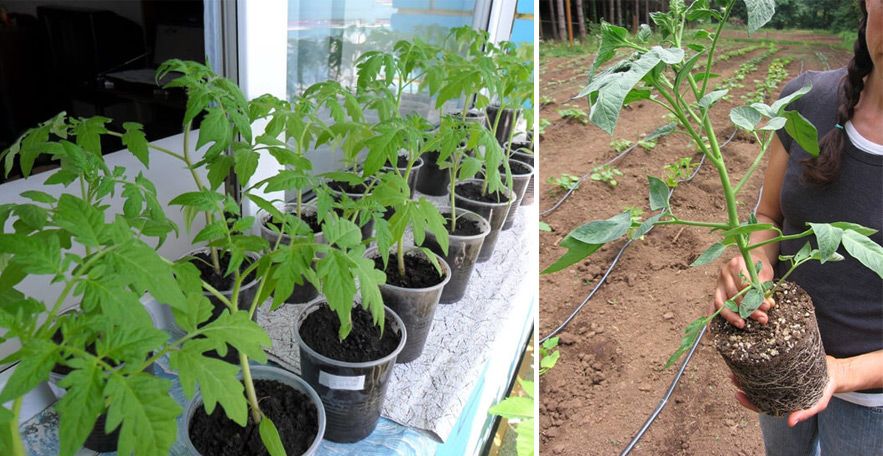
Due to a lack of experience and knowledge, many gardeners often make mistakes when purchasing or growing seedlings. This negatively impacts plant development and subsequent fruiting.
Content
When purchasing mature seedlings, it's quite difficult to assess their quality. The lush green mass can often be deceiving. Those who decide to plant their own tomatoes have the opportunity to choose the seeds they need.
Timing for planting tomato seedlings
Based on ripening time, tomatoes are classified as very early (ultra-early), early (early ripening), mid-early (mid-season), late (late ripening), and very late. However, the number of days depends on growing conditions and may vary.
Conditional growing periods:
- Very early - 75-95 days;
- Early - 95-115;
- Mid-early - 110-120;
- Late - 120-130;
- Very late - 130-150 and more.
The ripening date is indicated on the packaging. To determine the planting date, add 10-15 days. This period is necessary for the crop to adapt. When making calculations, consult the recommendations of experienced gardeners and seed producers. When choosing suitable varieties, consider local climate conditions.
Deadlines for different regions
| Region | Tomatoes for open ground | Tomatoes for greenhouses |
| Southern, North Caucasian | Midwinter. | End of January. |
| Belarus, Volga region | The second half of March. | The beginning of spring. |
| Central, Northwest | End of March. | The middle of the first month of spring. |
| Ural | Beginning of April. | End of March. |
|
Siberian and Far Eastern |
Another important factor is the date of production. To ensure good germination, purchase seeds that were produced no more than two years ago.
For more information on the timing of planting seedlings, read the article.Lunar calendar for sowing seeds for seedlings in a table (planting seedlings).
Preparing the soil for sowing seeds for seedlings
Tomatoes don't grow well in acidic soils. To lower and stabilize the pH, add lime, superphosphate, or organic fertilizer. Soil cultivation begins 7-10 days before planting. The soil is disinfected with potassium permanganate. The soil used for planting tomatoes must be warmed up. This can be done in an oven or steamed in a double boiler.
Experts recommend collecting soil from the area where the seedlings will be planted. This will facilitate the adaptation process. Using commercial soil significantly delays the establishment process.
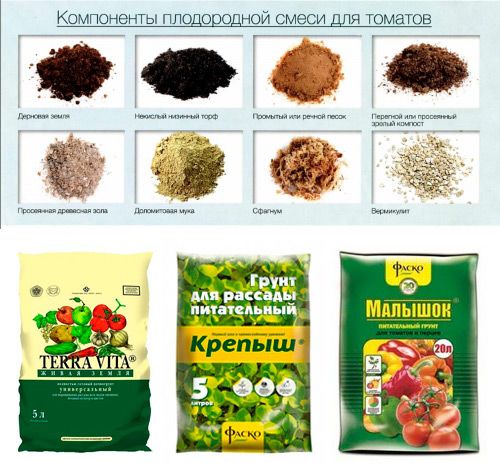
There are many options for soil mixtures, among them compositions made from the following ingredients stand out:
- peat, mullein, turf soil;
- steamed sawdust, mullein, peat;
- turf soil, peat, humus.
Additional components include: river sand, urea, ammonium nitrate, potassium sulfate, superphosphate, ash, potassium chloride.
When using purchased soil, you need to observe the following nuances:
- The main ingredient in the soil mixture is peat. This composition is characterized by low permeability and high acidity.
- To achieve a good result, you need to mix the purchased soil with a nutrient substrate.
- To reduce acidity, you can use crushed chalk or dolomite flour.
- Potassium or nitrogen fertilizers are used immediately before planting.
Containers for seedlings
At the first stage, tomatoes are sown in a small box. Afterwards, the plants are placed in individual cups. The order of operations depends directly on the gardener's personal preference, available space, and the number of seedlings.
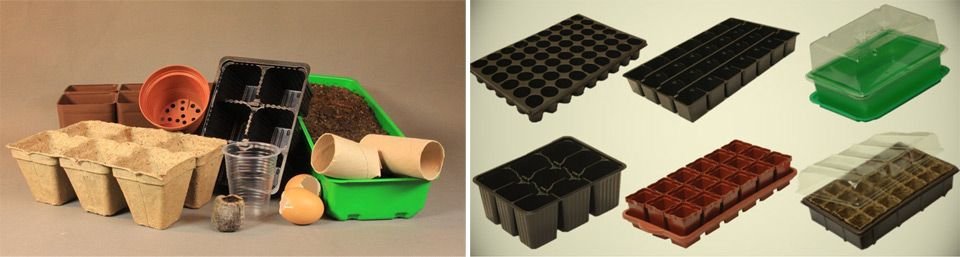
Until the end of the first stage, the seedlings can be kept in cardboard boxes that previously held juice or milk. Creating these containers doesn't take much time. After transplanting, the seedlings should be placed in larger containers. Medium-sized peat pots are the best option. Their disadvantages include their high cost and the large space they require. The depth of the containers should be at least 8 cm.
Preparing seeds for planting
To obtain a bountiful harvest, the seed must be disinfected. To do this, follow a specific procedure:
- The seeds are placed in gauze.
- Prepare a disinfectant solution. To obtain the liquid, add 2.5 grams of potassium permanganate to one glass of warm water.
- Place the seed in it and leave it there for half an hour (no more).
- Rinse tomato seeds under running water.
- They are dried.
The next step is to germinate the treated tomatoes. To do this, place them on a plastic tray. A regular saucer can be used as a stand. The seeds are placed in a plastic bag or on a paper towel. In either case, they should be protected from direct sunlight. To prevent drying out, moisten the seeds regularly. It is not recommended to plant seeds that have not sprouted.
To increase germination, use growth stimulants (Epin, Zircon, or others). Soak the seeds for 30 minutes. Folk remedies (honey, aloe juice – 1 teaspoon per 200 g) are also used.
Caring for seedlings at home
Tomato boxes are usually placed on sunny windowsills. A table is unlikely to be suitable under these circumstances. If necessary, structures designed to provide additional lighting can be constructed.
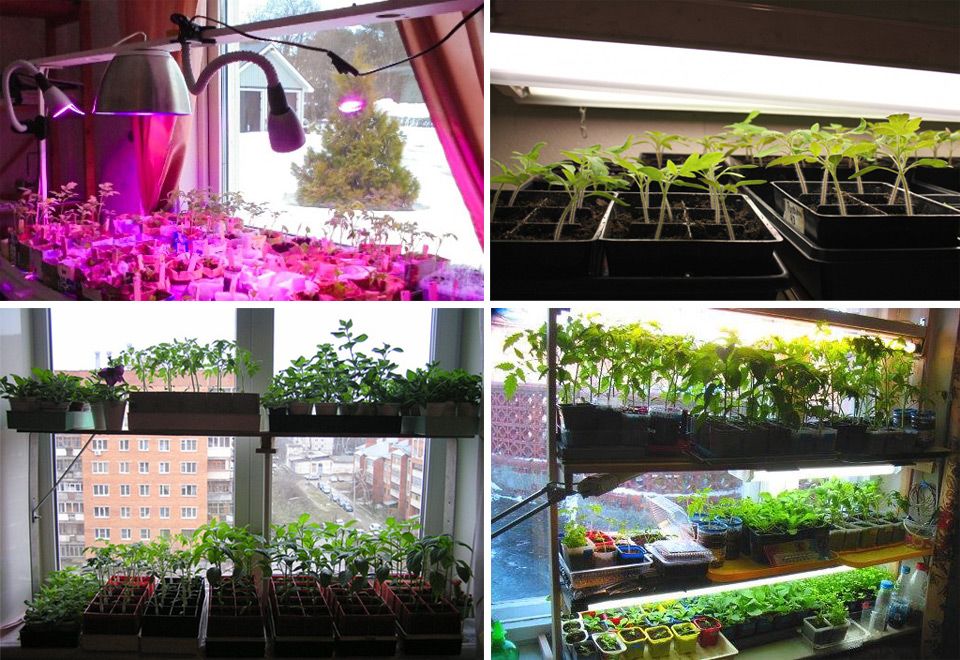
Seedlings require regular feeding, watering, picking, hardening, and ventilation. After planting in open ground, the list of agricultural practices is supplemented by hilling and bush shaping.
Growing conditions
| Factor | Condition |
| Location | The window sill should be located on the south, southwest or southeast side. |
| Lighting | When planting seedlings in the first months of spring, provide them with sufficient ultraviolet rays. If light is insufficient, use foil, mirrors, LED lights, or phytolamps. |
| Temperature conditions | During the first few days, temperatures should reach 20°C, and during the rest of the year, from 18 to 22°C. At night, temperatures should be a few degrees lower. |
| Watering | Avoid using too much water. Excessive moisture will lead to waterlogging, root rot, and the development of fungal diseases. Seedlings should be watered with water ranging from 25 to 30°C. This should only be done when the soil begins to dry out. In the final stages, watering should be done daily. |
| Top dressing | Fertilizers are applied according to a schedule. The first application is done before the first leaves appear. The second application is done two weeks after transplanting. The fertilizer schedule is tailored to the soil conditions. |
Picking seedlings
The first leaf blades emerge from the stems within 7-10 days. Pricking out may be necessary if the gardener has planted too many seeds in one container. If the proper conditions are met, the first pricking out can be omitted. The second procedure is carried out two weeks after planting. During this procedure, the seedlings are transferred to cups with a capacity of at least 200 ml. A simple formula is used: one plant requires 1 liter of potting soil.
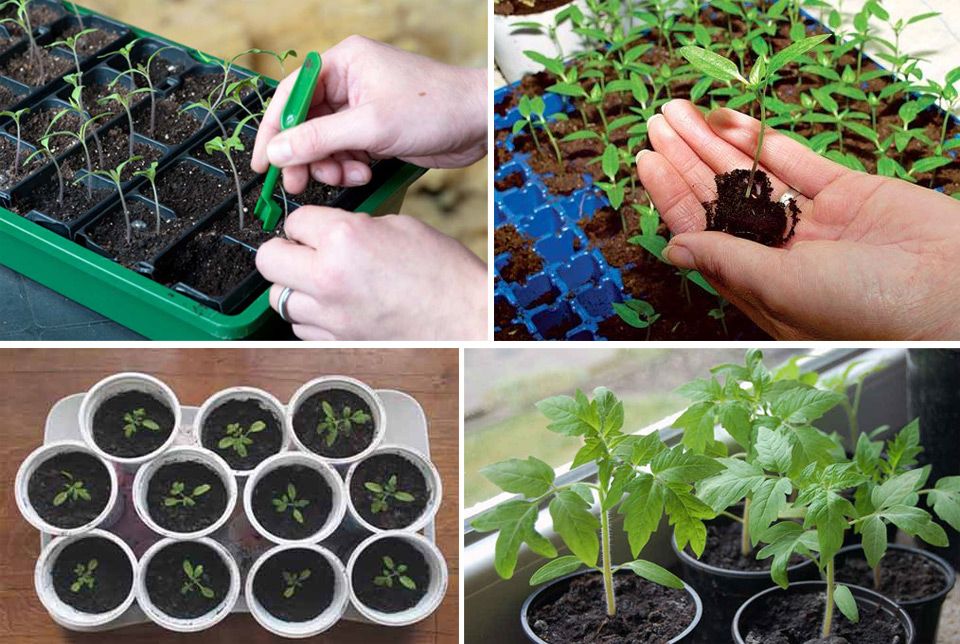
The seedlings are transferred from one container to another along with the soil. Contrary to popular belief, pinching the main root is strictly prohibited. Otherwise, the plant's development will be delayed by one week.
If the plant is left in small compartments, the yield will be significantly reduced.
Hardening off seedlings
This agricultural technique will make tomatoes more tolerant of the negative effects of temperature fluctuations, direct sunlight, and strong drafts. Hardening off begins 15 days before transplanting. The initial airing lasts no more than 2 hours. Subsequent treatments gradually increase in duration. Finally, the plants in trays are moved outdoors. At this point, the seedlings reach a height of approximately 35 cm.
Planting in open ground occurs around the beginning of June, and in a greenhouse a little earlier. By this time, tomatoes will have developed thick stems and large leaves. There are two planting techniques: vertical and horizontal. The latter is used for plants with a strong root system. Before planting, deep holes must be dug. The seedlings are transplanted into these holes after the prepared holes have been disinfected. There should be at least 30 cm between the seedlings. Many people use steamed beds instead. These structures speed up the ripening process of tomatoes.
Diseases and pests of seedlings
With proper seedling care, the risk of disease is minimal. Therefore, if symptoms appear, it's important to review your crop management practices.
| Pest/disease | Signs | Elimination |
| Blackleg | Stem darkening and thinning, rapid death of seedlings. This occurs due to excessive cold water and dense planting. | There is no cure; affected plants must be removed. As a preventative measure, the soil is treated with a potassium permanganate solution. Healthy seedlings are replanted in clean soil. |
| White spot | Light spots appear on the leaf blades, which darken over time. | Fungicides are used, including Ridomil Gold and Bordeaux mixture. |
| Fusarium wilt | The stems become darker and less elastic. The plant stops growing and wilts. The leaves curl and fall off. | Diseased seedlings cannot be saved. To prevent further damage, treat the sprouts with Fitosporin-M and Trichodermin. |
| Mosaic | It all starts with uneven coloring of the leaf blades. Then they die. | Affected plants are removed. A 3% urea solution is required for prevention. |
| Brown spot | The first symptom is yellow spots. Subsequently, the plant wilts and its leaves die. | Copper-containing medications are used. Among the most effective are Bordeaux mixture and Hom. |
| Thrips | Traces resembling bites appear on the vegetative parts. | Seedlings need to be sprayed with Fitoverm, Actellic and garlic infusion. |
| Aphid | Damage to the lower part of leaf blades. |
Top.tomathouse.com warns: mistakes when growing seedlings
Growing tomatoes doesn't require significant investment. However, if you're inexperienced, the following problems may arise:
- excessive elongation of sprouts – insufficient amount of sunlight;
- mass shedding of seedlings - dense sowing;
- slowing down of seedling growth - temperature changes;
- change in leaf color - nitrogen starvation, poor lighting;
- rapid wilting and death - excessive or insufficient moisture.
To grow tomatoes, a gardener must have basic skills.
Before planting, you should consider the location and seedlings. When purchasing seedlings, pay attention to the condition of the root system. If all standards and requirements are met, fresh tomatoes will be on the table as early as the end of June.