Growing tomatoes in individual containers (e.g., buckets) has been known since the mid-20th century. This technology was first described in a book by F. Allerton, published in 1957. Using such portable planting containers is suitable in regions with unfavorable conditions for the growth and fruiting of this crop—it allows for the plants to be moved to protected areas during night frosts or heavy rains.
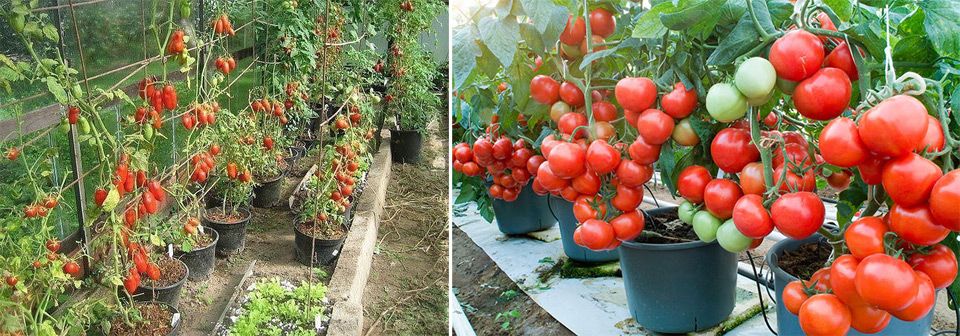
In addition to the ability to grow tomatoes in areas prone to recurrent frosts or weather conditions that cause late blight, several other advantages of this method have been discovered. Yields increase by 20% or more, and fruit ripens 2-3 weeks earlier than the typical ripening time for each variety.
Gardeners who use this technology are pleased with the results and leave many positive reviews. Tomatoes planted in buckets can be placed outdoors or in greenhouses. Both methods are effective.
Content
- 1 Pros and cons of growing tomatoes in containers
- 2 Preparing to plant tomatoes for growing in containers
- 3 Preparing a container for planting tomatoes
- 4 Sowing seeds and preparing seedlings
- 5 Technology of planting tomatoes in buckets
- 6 Caring for tomatoes in a permanent location: greenhouse or open ground
- 7 Top.tomathouse.com recommends: unusual options for growing tomatoes in buckets
Pros and cons of growing tomatoes in containers
The advantages of this type of cultivation include:
- The plantings are more compact (especially important in small garden areas) and can be easily moved to another location (under a canopy in rainy weather, to a shaded area in hot weather).
- Easy to water—all the moisture goes directly to the plant, rather than seeping into the soil. Less water is required, but you'll need to water more frequently than with regular soil, as the soil dries out faster in buckets.
- All applied fertilizers are completely absorbed by plants and are not spread throughout the garden bed.
- Weeds are not as annoying as in open ground, and it is easier to loosen the soil around the bushes.
- The soil in buckets warms up faster, which accelerates the development of rhizomes and, consequently, the above-ground portion of tomatoes. In hot regions, dark buckets are not recommended, as the soil quickly overheats and becomes unfavorable for plants. In cold climates, on the contrary, darkened containers promote rapid soil warming, which promotes good root development.
- In closed containers, the risk of spreading infections is reduced, and plants are protected from mole crickets and other pests.
- The yield increases, the fruits grow larger and 2-3 weeks earlier than under normal conditions.
- When autumn frosts appear, tomatoes can be moved to a greenhouse or other room to extend the fruiting period.
There are not many disadvantages, but they do exist:
- At the initial, preparatory stage, a lot of labor is required to prepare the container and fill it with soil.
- The soil in the buckets needs to be changed every year.
- More frequent watering is required.
Preparing to plant tomatoes for growing in containers
To properly grow tomatoes in a separate container, you need to choose the right varieties, the right container, and prepare the soil.
What varieties of tomatoes can be grown in buckets?
You can choose low-growing varieties (for outdoors, when there is a need to move the plants to other places) and tall varieties (mainly for greenhouses, where tomatoes will be kept in a permanent location).
The best varieties for this method are those with compact root systems and a relatively small above-ground portion. Tomatoes with narrow, sparse leaves that are well-ventilated are best grown.
By planting ultra-early varieties, you can get a harvest even faster.
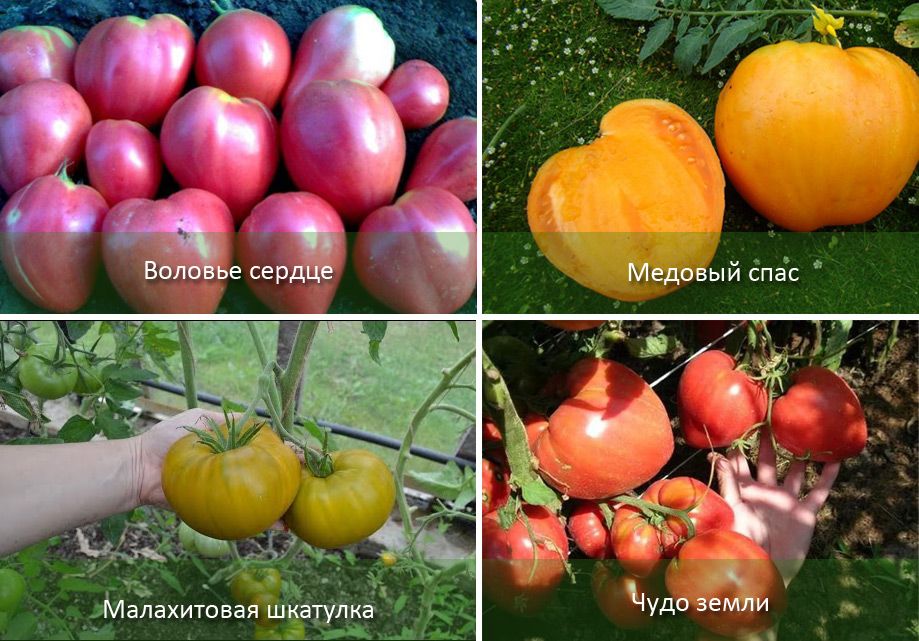
Among the tall varieties, the following are planted: Honey Spas, Miner's Glory, Yantarevsky, Ox's Heart, Kobzar, Miracle of the Land, Malachite Box.
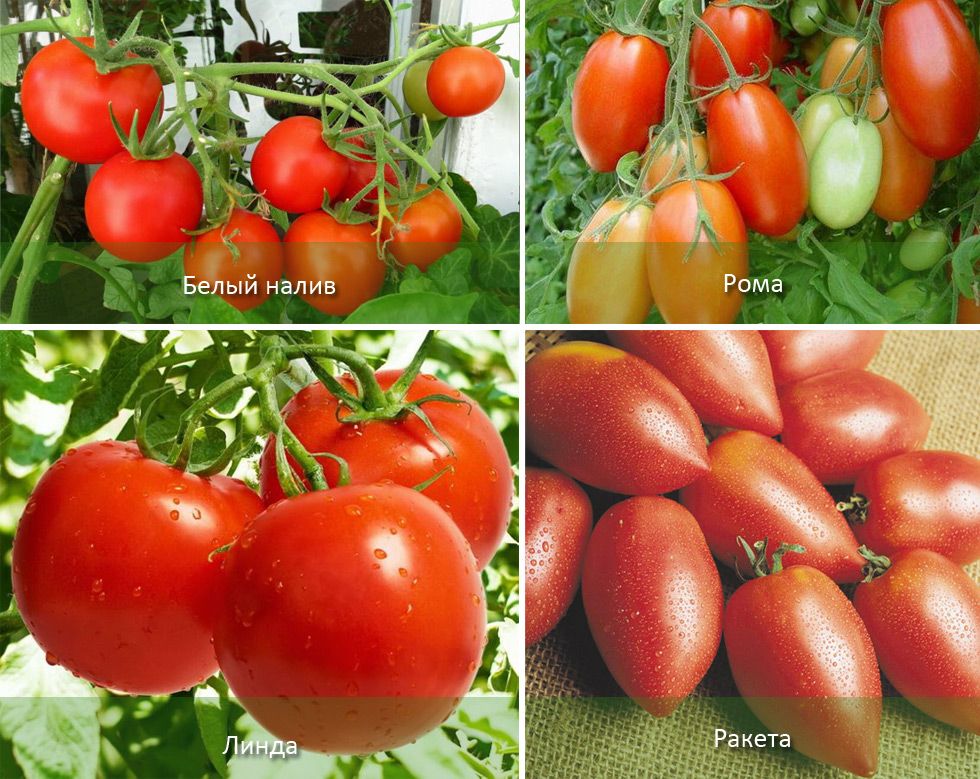
Low-growing and medium-growing varieties: Linda, Raketa, Roma, Nevsky, La La Fa, Medovo-sakharny, Belaya Naliv.
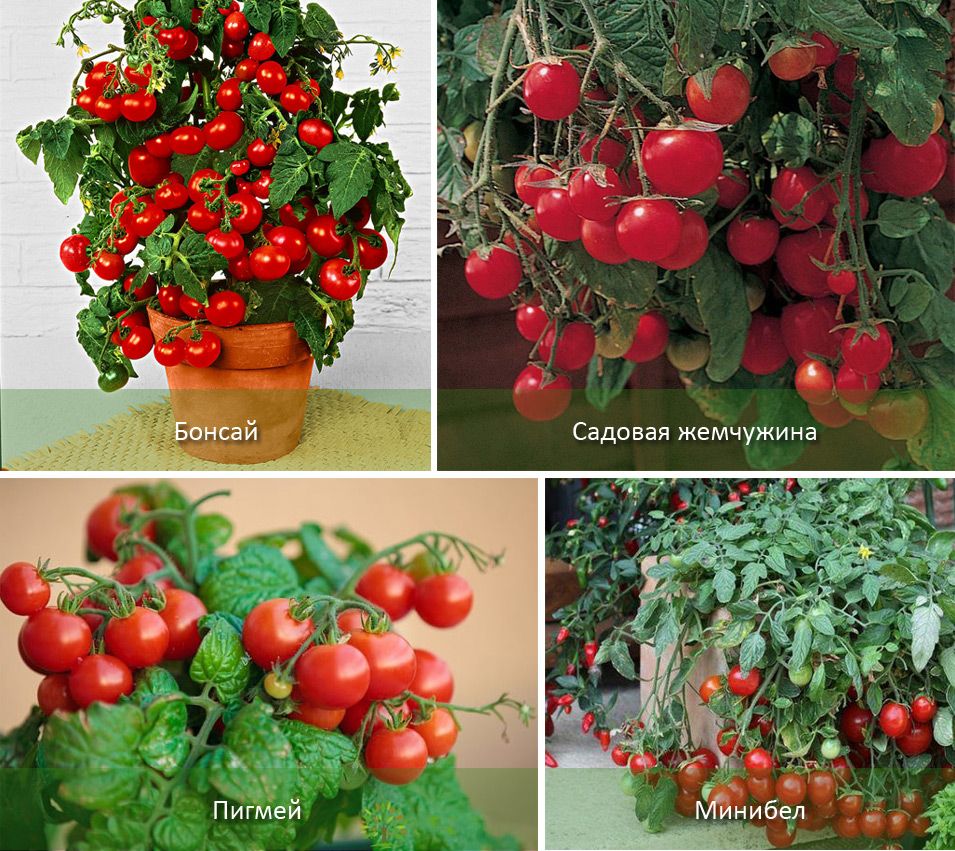
Cherry - Bonsai, Pygmy, Garden Pearl, Minibell.
When growing early varieties suitable for canning and getting a bountiful harvest before canning, you can pickle green tomatoes or ripe ones in barrels. Cold-preserving tomatoes with the addition of herbs and spices will enrich your diet with additional nutrients.
What kind of buckets can be used?
Buckets or other containers should have a capacity of at least 10 liters. Metal, plastic, and even wooden tubs are suitable.
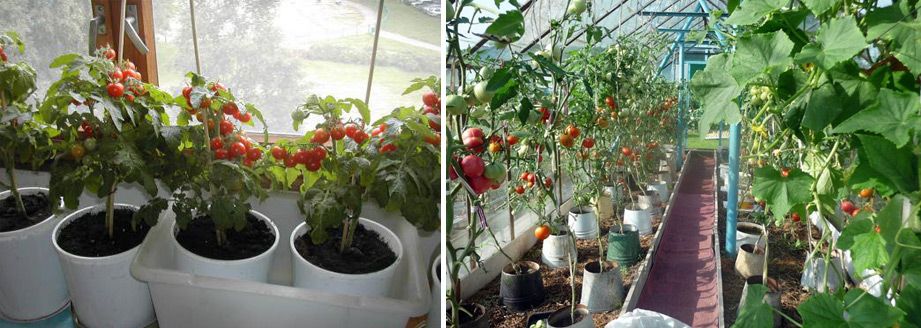
But metal containers will last the longest. The container should either be bottomless or have multiple holes in the bottom, as well as a dozen on the sides to improve soil ventilation. Since dark buckets heat up faster, it's recommended to paint them lighter colors.
Suitable soil for planting tomatoes in containers
Fertile loamy soil is best for tomatoes. A mixture of soil (preferably from a cucumber garden), peat, sand, humus, and ash is prepared.
The soil is disinfected by watering it with a solution of potassium permanganate. Additionally, ready-made mineral fertilizers for tomatoes should be added.
Preparing a container for planting tomatoes
The container for planting is prepared in the fall.
- Before use, the container should be disinfected by treating it with a solution of potassium permanganate or Bordeaux mixture. This procedure should be performed annually before replacing the soil in the container.
- A 5 cm layer of expanded clay or other drainage material is poured into the bottom of the bucket. Then the prepared soil is added.
- They need to be stored in a greenhouse or outdoors in a 30 cm deep hole.
The soil is watered generously once after filling the buckets, and then no watering is required until spring.
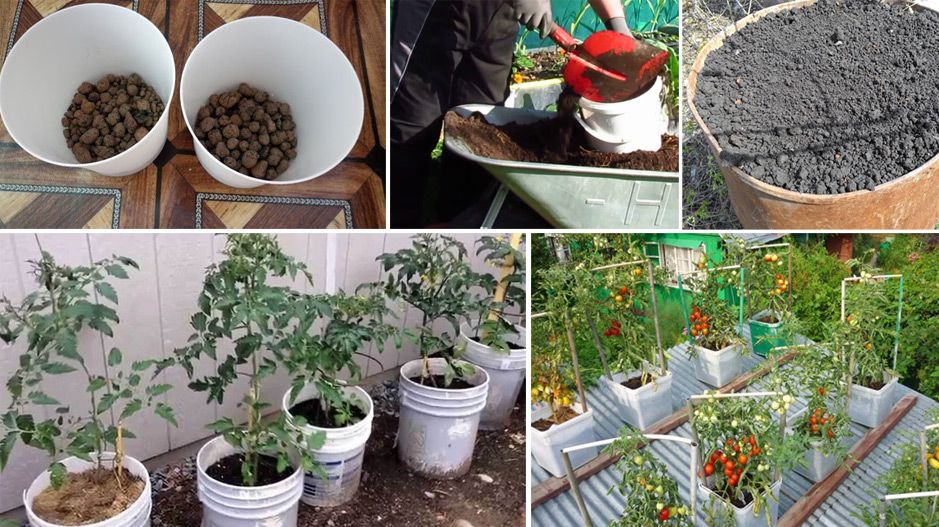
But if the container is stored in a greenhouse, then it is necessary to regularly add snow on top so that it is better saturated with moisture by spring.
Sowing seeds and preparing seedlings
Tomato seedlings can be purchased or grown independently. All preparation procedures, including growing seeds for seedlings, are carried out as for regular tomato plantings in open ground or greenhouses. The sowing time for the seeds should be two months before the expected planting date.
The seeds are calibrated, selecting the largest and most undamaged ones, and tested for germination in salted water. They are then disinfected, soaked for germination, and hardened at low temperatures.
Sow in containers with nutrient-rich soil to a depth of no more than 2 cm and place in a warm location. When the first shoots appear, move the containers to a well-lit area.
- The picking is done after the first two true leaves appear, deepening them into the soil to the level of the cotyledons.
- Provide regular watering from a spray bottle, and fertilize every 10 days after germination.
- Plant when the plant has formed approximately 10 leaves.
Technology of planting tomatoes in buckets
For this method, seedlings should be grown to a mature size, around two months old. They can be planted two weeks earlier than usual if they will be kept in a greenhouse initially, or, if possible, moved indoors if frost returns.
Place one in each bucket.
- Make a hole 15 cm deep.
- The prepared hole is watered with a solution of potassium permanganate (1 g per 10 liters of water).
- Plant the bush. It's recommended to plant it deep enough to reach the bottom pair of leaves to ensure better rooting.
- They fill it with soil, compact it, and water it.
Caring for tomatoes in a permanent location: greenhouse or open ground
When growing tomatoes in buckets, the most labor-intensive part is preparing the containers and planting. Subsequent care for these plants involves the same steps as for regular tomato growing, only much simpler than in garden beds:
Weeding is kept to a minimum because in such a small space weeds do not grow as quickly as in open ground.
- It's easier to loosen the soil and hill up the bushes. To make this easier, the lower leaves are cut off.
- Mulching is recommended to better retain moisture in the soil and protect against infections.
- Step-sonning is carried out in a timely manner, except for varieties that do not require such a procedure.
Due to the rapid drying of the soil in containers, watering is required more frequently, but in smaller quantities than in the beds.
- Tall varieties are tied up 10 days after planting, and low-growing varieties – 15 days after planting.
- When growing in greenhouses, regular ventilation is necessary.
- Disease prevention is carried out in the same way as in regular beds - after planting in a permanent place, before flowering and after.
- Fertilizers are applied 3 times during the growing season.
Growing tomatoes in buckets not only saves space, but also allows you to get a more abundant and earlier harvest of tasty, large (for their varieties) fruits from the bush.
Such unusual plantings can even serve as a decorative addition to a garden plot.
Top.tomathouse.com recommends: unusual options for growing tomatoes in buckets
There are other ways to grow tomatoes in buckets. To save space, some gardeners plant tomatoes in hanging baskets, where the seedlings grow downwards from a hole in the bottom of the container. This method maintains good yield, flavor, and other characteristics of the variety.
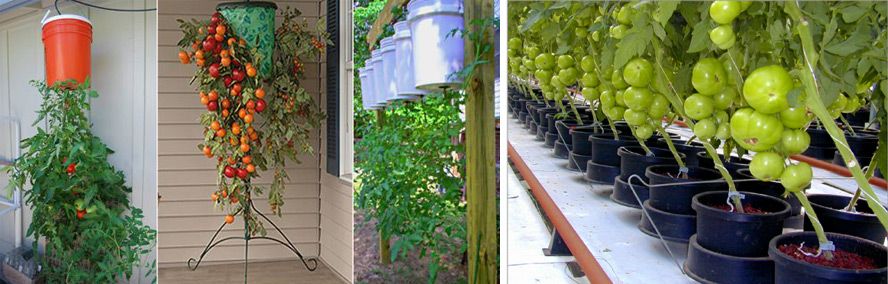
While hydroponic cultivation can be successful in containers, it's only suitable for greenhouses. Special technologies have been developed for these two methods, allowing for excellent results.