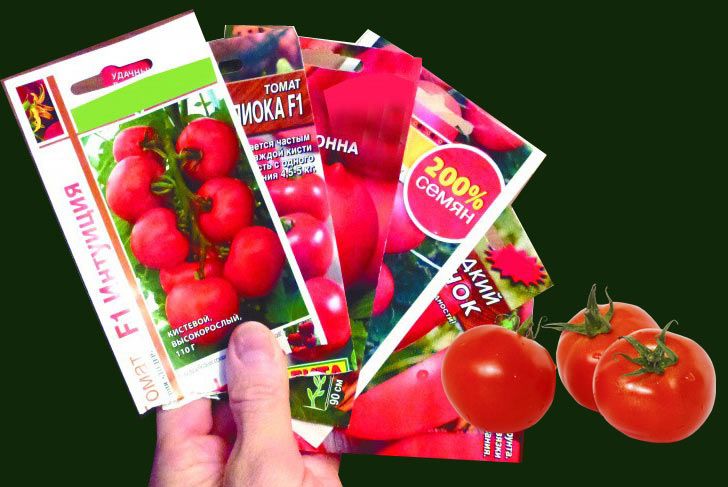
The "F1" marking is often found on packages of various vegetable seedlings. Not everyone knows what it means. Let's explore why the manufacturer includes this information.
F1 varieties
The F1 designation indicates that these are hybrid seeds, an artificial cross between two of the best crops. The letter F comes from the Latin word for "children"—filii—and the number 1 denotes the generation number.
These seeds inherit the very best qualities from their "parents." They boast nearly 100% germination, excellent yields, and resistance to many diseases. However, these qualities are not passed on to offspring, and there is no guarantee that the fruits of the next generation will be as good. This is the main difference between hybrid varieties and naturally selected ones, which develop their characteristics over years and pass them on from generation to generation.
Advantages of hybrid seeds
- Resistant to many diseases.
- They produce increased yields.
- Have a high germination rate.
- Not sensitive to temperature changes.
- They tolerate picking and planting well.
- They are predominantly self-pollinating.
Because the process of developing hybrid seeds on an industrial scale is quite expensive, they are more expensive than conventional varieties. However, planting them guarantees excellent seed germination and a bountiful harvest of juicy, healthy fruit.
Disadvantages of F1 varieties
- High cost of seeds.
- Hybrid fruits cannot produce seeds with the same qualities as their progenitors. Crossbred fruits only yield their best to one generation of harvest.
- Hybrid plants reveal their properties only with sufficient care.
- Although the fruits of hybrid plants are quite uniform and visually attractive, have a long shelf life and are easily transported, their taste is not always better than that of natural varieties.
Growing hybrid seeds
To produce a hybrid seed variety, breeders select the best vegetable crops. Crossbreeding is typically done manually. Specialists carefully select the "parent" varieties, ensuring that the resulting hybrid inherits only the best dominant traits from them. Therefore, it's essential to combine as many beneficial properties as possible from different varieties into one.
One variety, for example, might be resistant to disease or temperature fluctuations, while another might produce high-yielding, vibrantly flavored fruit. As a rule, the resulting hybrids will be even better.
The main condition for obtaining a high-quality hybrid is the use of self-pollinating varieties.
Over the course of several months, one flowering plant, its stamens removed beforehand, is pollinated using pollen collected from another plant using a special method. This is a highly demanding and painstaking process, and the selected varieties are kept strictly confidential by producers. This explains the high price of seeds bred this way, known as "F1" seeds.