The Raspberry Bell tomato is one of the most popular pink tomato varieties. Scientists have found that pink tomatoes contain significantly more nutrients than their red-cheeked counterparts. Therefore, these tomato varieties are increasingly appearing in gardens across our country.
Content
- 1 Table of characteristics of the tomato variety Raspberry Bell F1
- 2 Photo gallery of the tomato variety Raspberry Bell F1
- 3 The origin of the tomato variety Raspberry Bell F1
- 4 Detailed description of the tomato variety Raspberry Bell F1
- 5 Advantages and disadvantages of the tomato variety Raspberry Bell F1
- 6 Growing the Raspberry Bell F1 tomato variety
- 7 Resistance of the tomato variety Malinovy Zvon F1 to diseases and pests
- 8 Using tomatoes Raspberry Ringing F1
- 9 Comparison of the tomato variety Malinovy Zvon F1 with other varieties in the table
- 10 Gardeners' reviews of the Raspberry Bell F1 tomato variety
Table of characteristics of the tomato variety Raspberry Bell F1
| Characteristic | Description |
| Description | A determinate, early-ripening (according to the register) hybrid variety that can be grown in a greenhouse or in open ground. |
| Ripening period | 115-120 days |
| Fruit weight | 150-250 g |
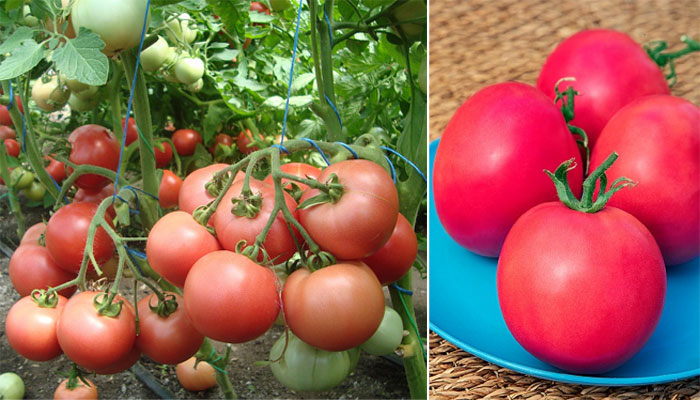
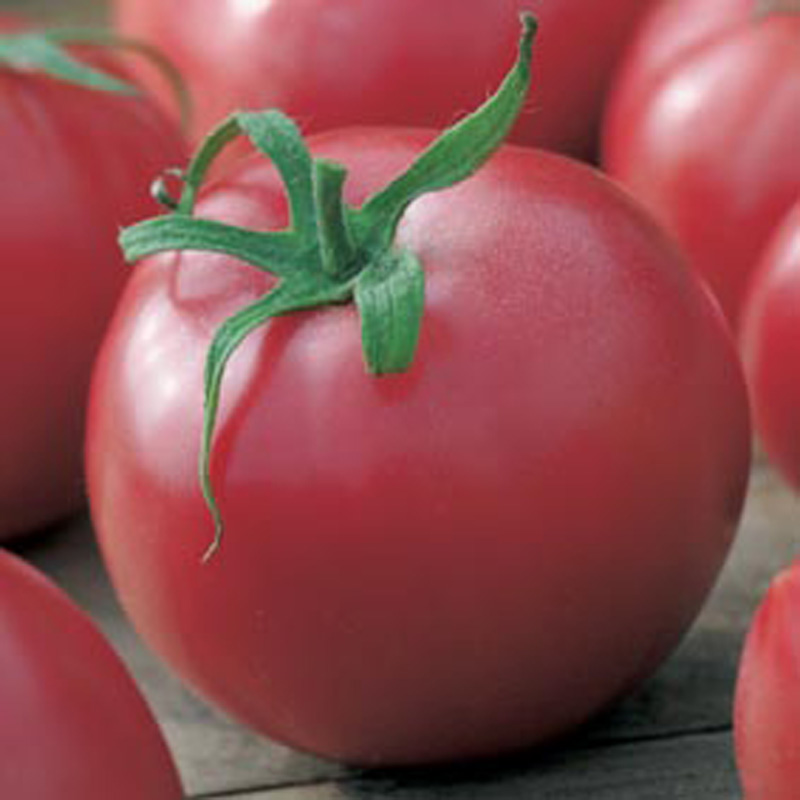
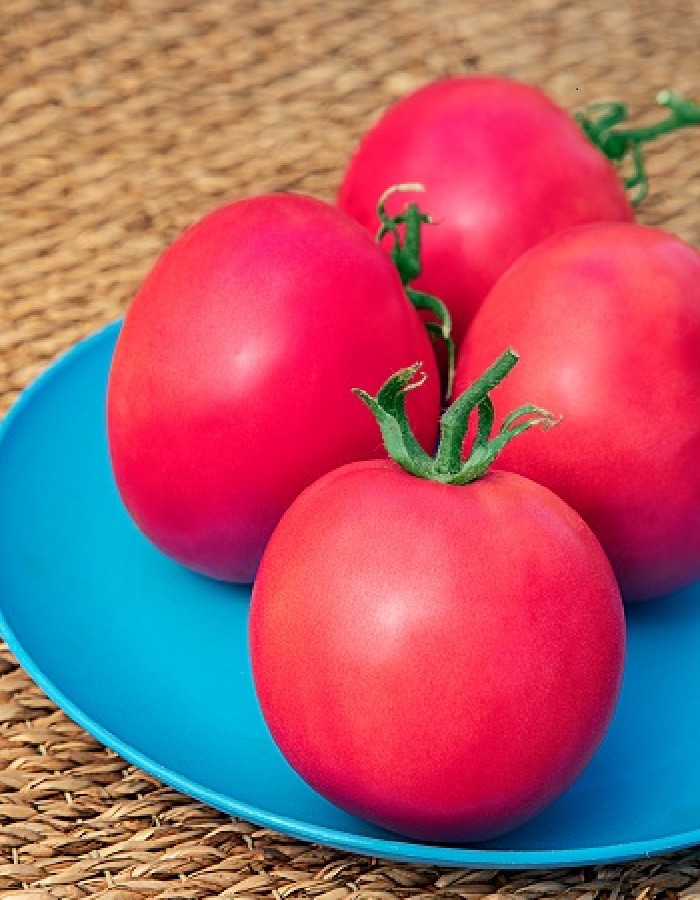
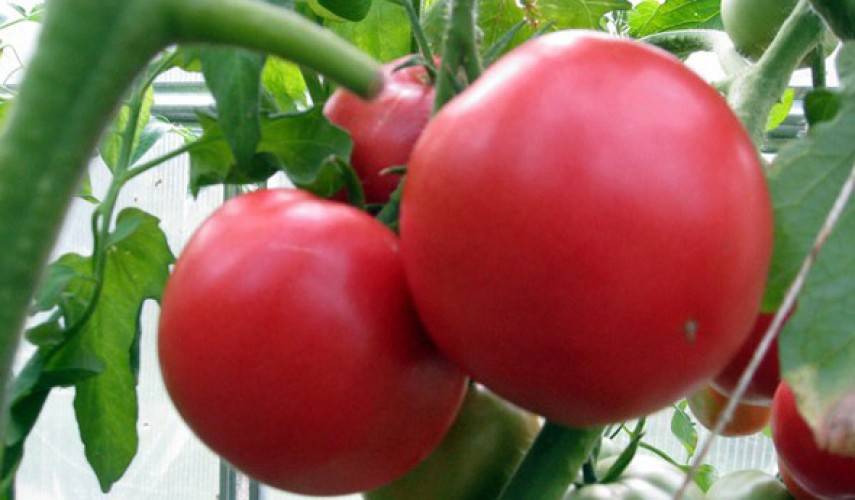
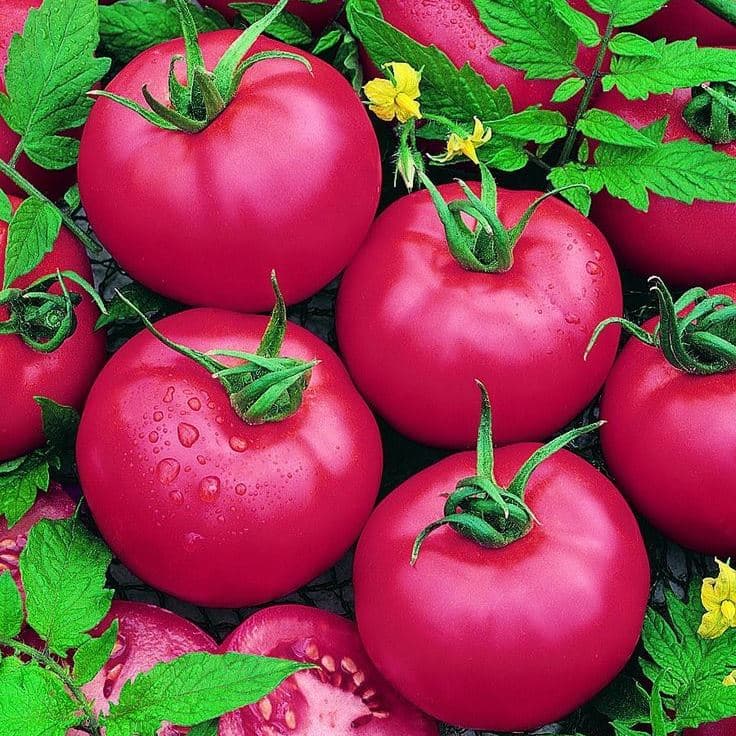
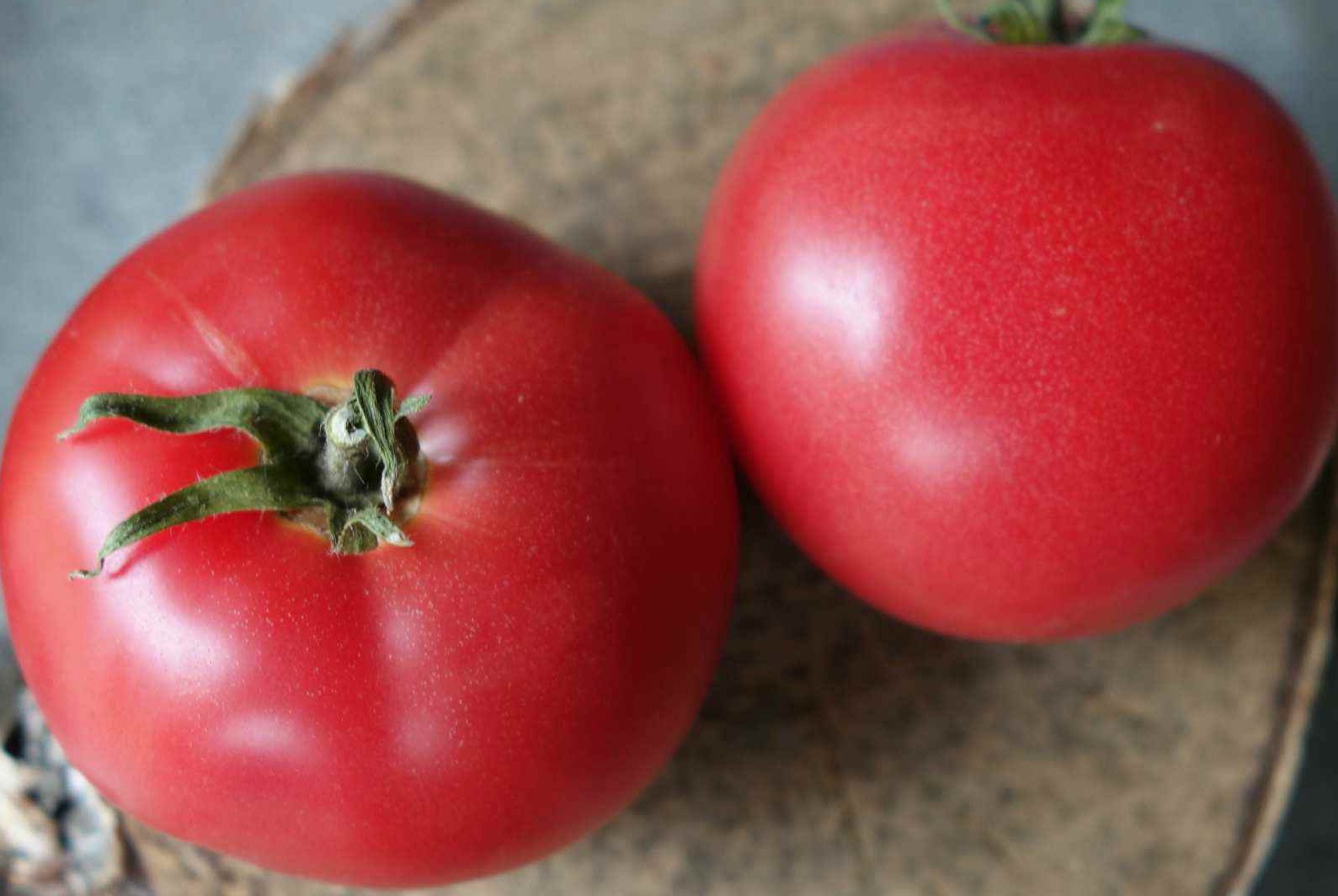
| Description of the fruit | The fruits are round, smooth, fleshy, and pink in color. |
| Productivity | Up to 450 c/ha |
| Usage | It is considered a salad variety, but can be used for preparing tomato paste, ketchup, adjika and other sauces. |
| Preferred growing regions | It can be grown in all regions of the country, including the Far East, Siberia and the Urals. |
| Disease resistance | It has a strong immune system that allows it to resist late blight, fusarium, tobacco mosaic, alternaria, and viral mosaic. |
| Agricultural technology | The bushes require staking and training. In warmer regions, they can be grown outdoors, while in cooler climates, they thrive in greenhouses. |
| 2009 | |
| Country of origin | Russia, JSC Scientific and Production Company Russian Seeds |
Photo gallery of the tomato variety Raspberry Bell F1
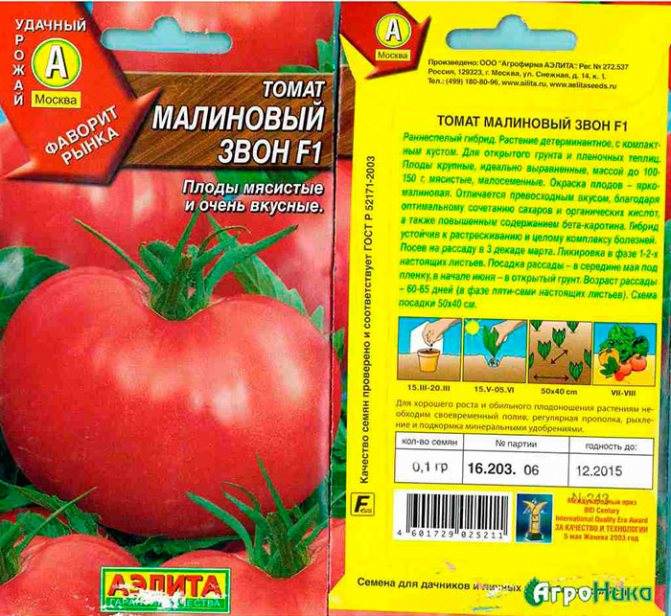
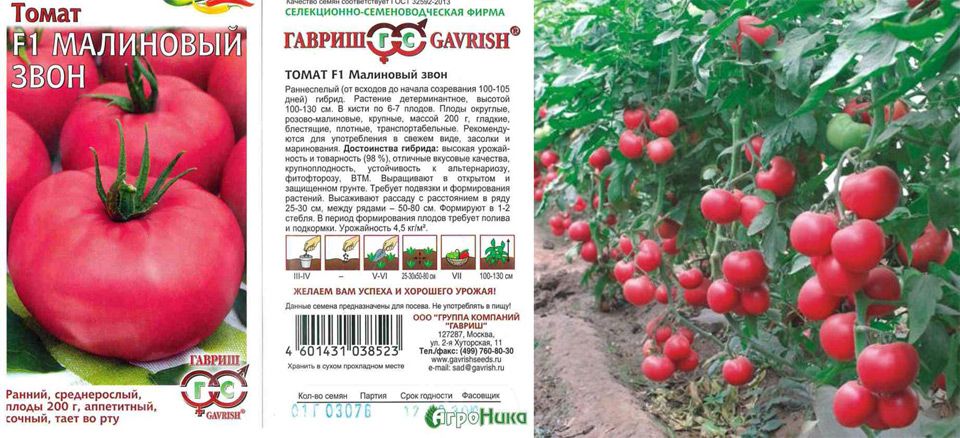
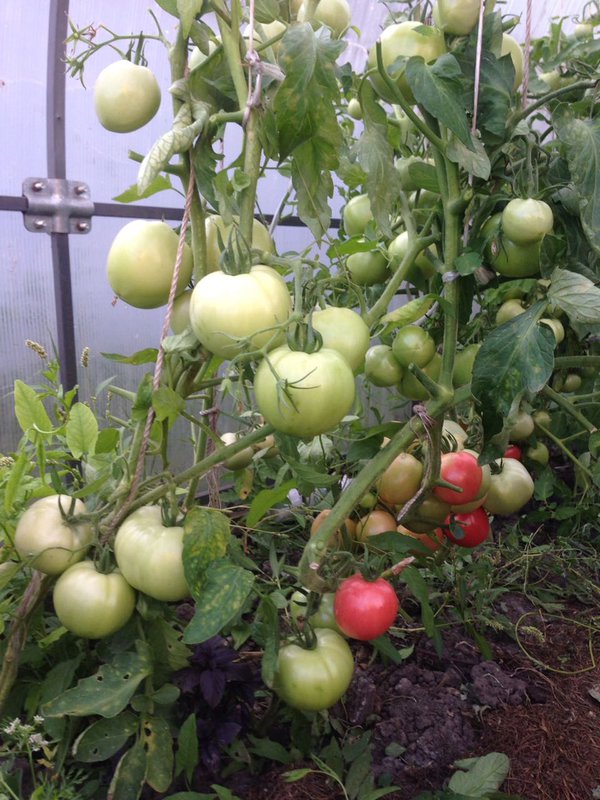
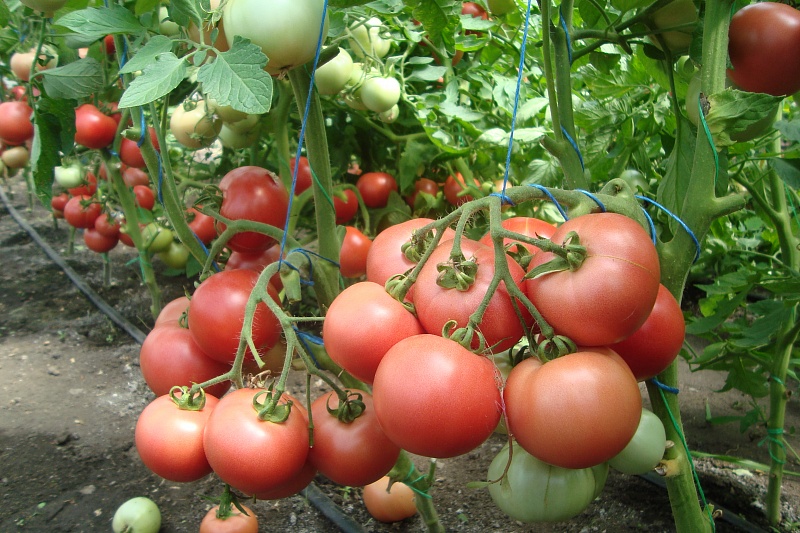
The origin of the tomato variety Raspberry Bell F1
Pink tomatoes have become popular among gardeners for their excellent flavor and nutritional value. Thanks to the efforts of breeders, a wide selection of these tomatoes is now available on store shelves.
The Raspberry Zvon variety was developed by breeders from the Russian Seeds company. By 2007, it was already in full cultivation and yielding a rewarding harvest, but it only received official recognition in 2009, when it was added to the register.
Detailed description of the tomato variety Raspberry Bell F1
Raspberry Ringing ripens in approximately 115 days. Despite its strong immunity, this hybrid requires gardeners to follow proper growing practices and special care.
Bushes
Raspberry Bell is a first-generation hybrid. You won't be able to obtain your own seeds from the fruits; you'll have to purchase them anew.
Shoots grow from 60 to 120 cm, this figure depends on growing conditions.
The root system does not go deep into the garden bed, but spreads out under a thin layer of soil, which can complicate the care of tomatoes.
The shoots need to be tied up, and during the period of fruit formation, it is necessary to think about support so that they do not crack under the weight of the harvest.
There are few leaves, they are small in size, without pubescence, with slightly pronounced wrinkling.
The first inflorescences are formed above the sixth leaf, then they appear at intervals of 2 leaves.
Raspberry bell has to be formed into 2 stems during growth, and the side shoots also have to be pinched periodically.
Fruit
The fruits ripen approximately 115 days after planting. They are borne in clusters, each containing 6 to 8 tomatoes. They are round, smooth-surfaced, weighing up to 200 g and about 10 cm in diameter. The skin and flesh are pink or pinkish-raspberry. The typical greenish spot near the stalk is absent.
The flesh is dense, meaty, aromatic, and slightly sweet, containing 3-4 seed chambers with a small number of seeds. Despite the relatively thin skin, the fruits do not crack and can be stored for a long time at temperatures of 20 to 22°C.
If necessary, tomatoes can be picked from the bush and left to ripen at home; this will not affect the quality of the fruit in any way.
Productivity
Full ripening occurs within 115-120 days from germination. Each bush yields 4-5 kg of ripe tomatoes, and with proper care and favorable conditions, each can weigh up to 250-300 g.
The average yield is 450 c/ha.
Ripening time
The originator claims a ripening period of 115 to 120 days from germination. However, consumers report that in some cases, tomatoes can be harvested in as little as 95 days.
Advantages and disadvantages of the tomato variety Raspberry Bell F1
The Raspberry Bell variety has a number of advantages and disadvantages.
| Advantages | Flaws |
|
|
Growing the Raspberry Bell F1 tomato variety
The Raspberry Bell tomato is a hybrid, so it requires a more careful approach to cultivation and care. Specific cultivation techniques for this tomato are described below.
Sowing seeds and growing seedlings
The Raspberry Bell variety can be grown with equal success both in a greenhouse and in open ground.
The sowing time depends on the region, varying in the south, central Russia, Siberia, and the Urals. The key is to allow about 60 days for germination; this will allow the seedlings to become strong enough for planting.
It's best to buy seeds directly from the manufacturer; don't be fooled by cheap prices—low prices can mean poor quality.
If the manufacturer indicated that the seeds have undergone special pre-sale treatment, disinfection of the planting material is not necessary. However, some gardeners prefer to be on the safe side and soak the seeds in a weak solution of potassium permanganate for 20 minutes, placing them in a cloth bag. It should be noted that if the seeds have been treated with stimulants, these substances will dissolve in the potassium permanganate.
Next, dry the seeds by spreading them out on a table. After this, you can begin sprouting. Before sprouting, you can treat the seeds with Epin or Fitosporin. Then, place them in damp cheesecloth and place them in a warm place for 7-14 days.
For planting, it's best to use wooden boxes, which are easy to make yourself. However, many gardeners prefer plastic containers.
If the same container is used annually, it must be rinsed with a manganese solution before reuse.
You can buy ready-made soil specifically for seedlings. But if this isn't available, you can easily mix it yourself using equal parts garden soil, sand, and humus.
Fill the selected container halfway with slightly moistened soil. Make furrows 3 cm apart. Place the seeds in these furrows, 2-3 cm deep, and cover them with soil. Water the plant thoroughly, using only warm, settled water.
After planting, cover the box with plastic or glass and place it in a warm place. As soon as seedlings begin to emerge, gradually remove the covering.
When most of the seeds have sprouted on the surface, the seedlings are transferred to a well-lit place with a temperature no higher than +22 °C.
The first watering can be done 10 days after sowing. Tomatoes do not tolerate excess moisture, as this leads to slow growth and disease. Apply water directly to the roots in a thin stream, avoiding contact with the stems and leaves.
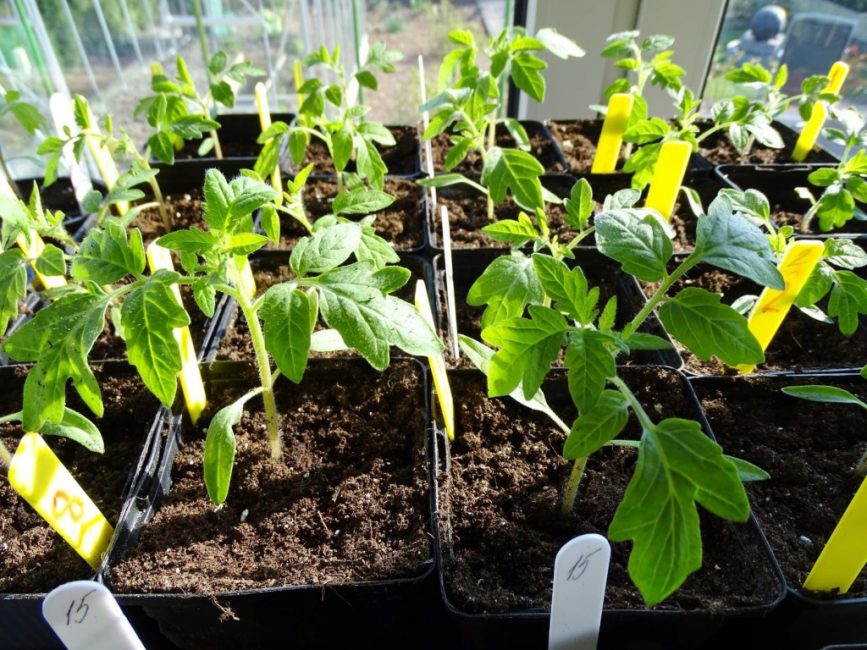
A week or two before planting, especially if outdoors, it's important to begin hardening off the seedlings. First, take them out onto the balcony or outside for a few hours, then leave them there for the entire day.
Some gardeners recommend giving tomatoes a kind of massage—periodically touching the leaves, as if stroking them. It's believed this will help the tomatoes develop resistance to mechanical damage.
Planting in the ground
The timing of planting in open ground and greenhouses will vary greatly. For example, in southern regions, tomatoes can be planted in a greenhouse in early April, while in northern regions, this may not happen until early June.
In any case, the soil should warm up to 15°C. To speed up this process, some gardeners cover it with black film.
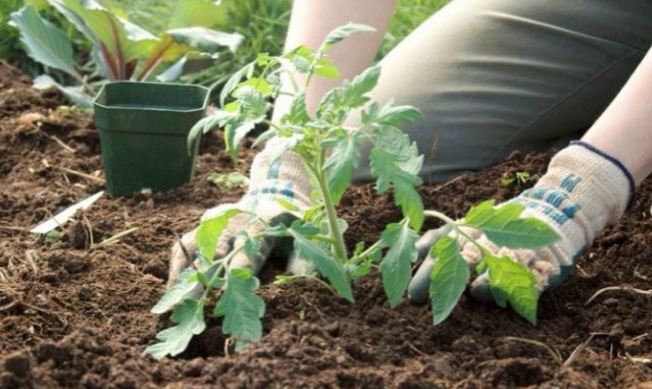
When planting, gardeners adhere to the following rules:
- The depth of the hole should be slightly larger than the size of the cup.
- The holes should be 50 cm apart.
- The passage between rows is 70 cm.
Because the root system is located on the surface, it's recommended to mulch tomatoes to prevent the roots from freezing or, conversely, from being fried in the midday sun. Mulch also helps retain moisture in the soil and prevent excessive weed growth.
Caring for the Raspberry Bell F1 tomato variety
The Raspberry Bell tomato will delight gardeners with an excellent harvest, provided proper care is taken.
Yields directly depend on the quality of watering. Watering should be done approximately once a week using sun-warmed water, but weather conditions should be taken into account: in hot weather, this period may be shortened by a couple of days. It's crucial not to overwater the plants, as this can lead to late blight. Furthermore, if the watering intervals are not met, with plants initially experiencing severe water shortages and then being overwatered, cracks in the skin may occur. The ideal solution for the Raspberry Bell variety is a drip irrigation system, which can be built using household items.
Periodically, it is necessary to weed and loosen the plantings, but this must be done extremely carefully so as not to damage the roots located close to the surface of the bed.
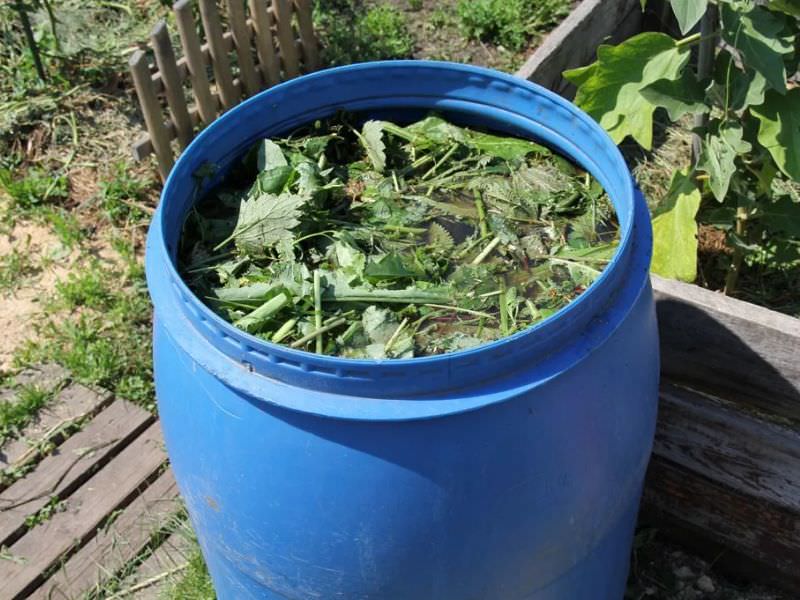
To ensure tomatoes have enough nutrients for the entire season, proper fertilizing is essential, even if the soil was prepared in the fall. The first fertilizer applications are made 20 days after planting. Gardeners strongly recommend using nettle infusion; tomatoes respond very gratefully to it. During the initial growth stage, you can feed tomatoes with nitrogen-containing fertilizers, which will help boost vegetative mass. Subsequent applications are made after 2-3 weeks, but the nitrogen is no longer used.
Resistance of the tomato variety Malinovy Zvon F1 to diseases and pests
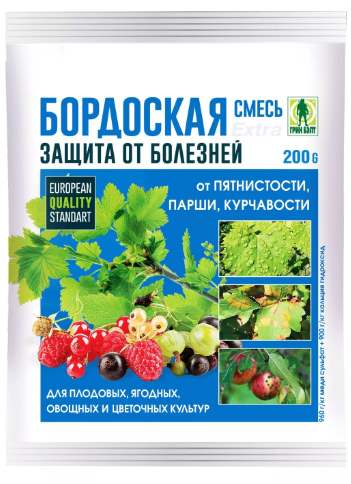
The Raspberry Ring hybrid has excellent immunity, which helps it successfully resist common diseases. With proper care, it is even resistant to late blight. However, this doesn't mean preventative treatments are unnecessary. Weather conditions are impossible to predict, so it's best to support the plantings in advance by spraying with Bordeaux mixture.
Using tomatoes Raspberry Ringing F1
The tomato harvest is characterized by its rather large size, which precludes the possibility of whole-fruit canning.
But juicy and flavorful tomatoes are the perfect complement to any dish. The originator defined the fruit as a salad vegetable. But tomatoes can also be used to make tomato paste, ketchup, adjika, and other sauces.
Comparison of the tomato variety Malinovy Zvon F1 with other varieties in the table
Please note! How can you easily convert centners/ha to kg/sq.m? Simply divide by 100! For example, the Abakansky Pink tomato yields 400 centners of marketable fruit per hectare. This equals 4 kg per square meter. It's that simple! Also, keep in mind that typically no more than 3-4 plants are planted per square meter. This way, you can calculate the yield per bush. In the case of the Abakansky Pink, it's about 1 kg.
| Variety | Ripening period (number of days from full germination to ripening)
Yield of commercial fruits |
Brief description | Fetus |
| Raspberry ringing | 115-120 days
450 c/ha |
An early-ripening determinate variety for open ground and greenhouses. Requires staking and shaping. Suitable for salads. | Round, smooth, medium density, pink, 150 g. Excellent taste. |
| Raspberry Viscount | 95-105 days
500-600 c/ha |
A mid-season determinate variety for greenhouses. Suitable for salads. | Flat-round, large, slightly ribbed, medium density, raspberry, 220-260 g. Excellent taste. |
| Raspberry Giant | 105-110 days
590 c/ha |
An early-ripening determinate variety for open ground and plastic greenhouses. Requires staking and training. Suitable for salads. | Round, slightly ribbed, medium density, raspberry, 200-300 g. Excellent taste. |
| Raspberry wine | 105 days
1200-1400 c/ha (greenhouse and under film) |
An early-ripening determinate variety for open ground and greenhouses. Requires staking and shaping. Suitable for salads. | Round, large, smooth, medium density, raspberry, 350 g. Excellent taste. |
| Raspberry Farmer | 85-90 days
1000 c/ha |
An early-ripening determinate variety for greenhouses. Suitable for salads. | Round, dense, slightly ribbed, raspberry, 50-60 g. Good taste. |
| Crimson Dawn | 110-115 days
790 c/ha |
A mid-season indeterminate variety for open ground and greenhouses. Requires staking and shaping. Suitable for salads. | Heart-shaped, loose, ribbed, raspberry, 350-400 g. Good taste. |
| Raspberry Strongman | 112-116 days
880-900 c/ha |
A mid-season indeterminate variety for open ground and greenhouses. Suitable for canning. | Pear-shaped, large, smooth, medium density, raspberry, 150-190 g. Good taste. |
| Crimson Elephant | 110-120 days
650 c/ha |
An early-ripening determinate variety for greenhouses. Suitable for salads. | Round, slightly ribbed, medium-dense, pink, 150-200 g. Excellent taste. |
| Abakan pink | 120 days or more
400 c/ha |
A late-ripening determinate variety for open ground and greenhouses. Requires staking and training. Suitable for salads and processing into tomato products. | Flat-round, slightly ribbed, medium density and pink in color, 200-500 g. Good taste. |
| Agatha Plus | 98-113 days
301-798 c/ha |
An early-to-mid-early determinate variety for open ground. Suitable for salads. | Round, smooth, medium density, red, 128-190 g.
The taste is good and excellent. |
| Manych | 92-97 days
610 c/ha |
Early maturing determinate variety for greenhouses. Suitable for salads. | Flat-round, slightly ribbed, dense, red, 200 g. Good taste. |
| Bear's paw | 110-115 days
710 c/ha |
A mid-season determinate variety for open ground. Requires staking and shaping. Suitable for salads. Marketability: 93.0% (Altai Krai). Heat-resistant. | Flat-round, smooth, fleshy, red, 115-300 g (up to 500 g). Excellent taste. |
| Michurinsky | 90-95 days
800-1000 c/ha |
An early-ripening determinate variety for open ground and greenhouses. Suitable for salads, canning, and processing into tomato products (ketchup and sauce). | Round, smooth, red, 80-100 g. The taste is good and excellent. |
| Potato raspberry | 100-105 days
up to 1800 c/ha |
A mid-season, indeterminate, standard variety for open ground and greenhouses. Requires staking and training. Suitable for salads, canning, and processing into tomato products. | Flattened-round, raspberry, 700-800 g. Excellent taste, sugary, rich. |
| Perseus | 108-115 days
600-800 c/ha |
A mid-season determinate variety for open ground and greenhouses. Suitable for salads and canning. | Flat-round, smooth, red, 110-180 g. Good taste. |
| Petrusha the gardener | 111-115 days
640 c/ha (open ground) |
A mid-season, determinate, standard variety for open ground. Suitable for salads. | Cylindrical with a pointed top, smooth, medium density, raspberry, 150-180 g. Good taste. |
| Pink miracle | 70-90 days (in a greenhouse and in open ground)
230 c/ha |
An ultra-early determinate variety for open ground and greenhouses. Requires staking and shaping. Suitable for salads. | Round, smooth, medium density, raspberry, 100 g. Excellent taste. |
Gardeners' reviews of the Raspberry Bell F1 tomato variety
Gardeners strongly recommend purchasing seeds only from an official producer, although finding them can be difficult. This is a hybrid variety, so you won't be able to grow your own seeds. However, all consumers report excellent fruit flavor and excellent yields.
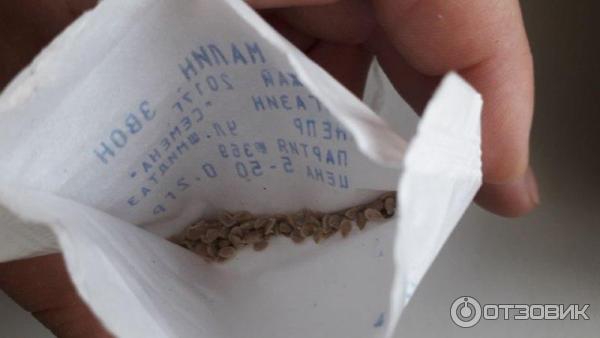
Good afternoon! For me, there's nothing more delicious than pink tomatoes. They're the sweetest, the juiciest, the most beautiful! So I decided I had to grow them myself. There's a store called "Semena" in Dnipro (opposite Ozerki), where I bought the "Raspberry Bell" tomato seeds.
This simple-looking packet contains a lot of seeds, which will definitely be enough for me for next year.
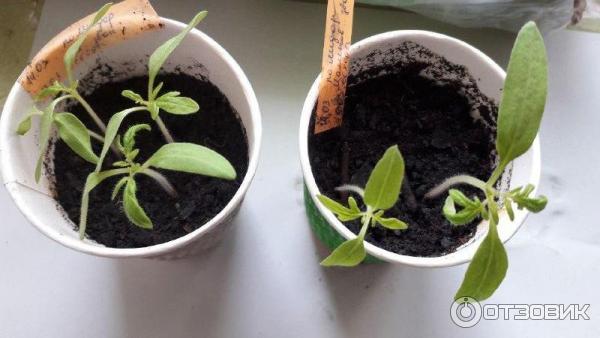
I sowed the seedlings on March 14th, and the first shoots appeared five days later, on March 19th. The seedlings quickly began to grow, and today, 10 days after germination, they look like this:
I think I'll be able to grow some good pink tomatoes. If you live in Dnipro or are passing through, be sure to check out this store. I highly recommend these seeds!
I planted the tomato "Raspberry Bell" several times.
The plant is medium-sized and vigorous. The clusters produce numerous fruits, each weighing 150-200 grams. Toman ripens mid-season. The fruits are smooth, without significant defects. A green ring does not form around the stalk. It is not susceptible to severe cracking due to excess moisture.
The sturdy clusters don't break under the weight of the fruit. They can be trained into either a single stem or multiple stems, depending on the available planting space. They fruited until frost. They are easy to transport. The flavor is excellent.
It is not very susceptible to late blight.
There is one drawback: when cold weather sets in, soft rot may appear on the fruit. This disease has not been observed during warmer weather.
Overall, the variety is good for such an affordable price.
...there's a weak one in the seedlings - it's Raspberry Bell F1, I'll only select a few good specimens from it for permanent residence, the rest I'll just throw away.
I had a Raspberry Zvon F1 once. I don't remember it growing as a seedling, and it didn't perform well in the greenhouse. Neither in growth nor in yield. It didn't give me a better chance. (But that's just my opinion, not a rule.)
I can also confirm about the Raspberry Ringing. It's completely indistinct.
Lyuda, don't forget to collect the seeds, I'll beg you for some pink tomatoes in the fall.
I love large pink ones :|: This year, my pink ones include the rather obscure Raspberry Zvon F1 and a Polish Det (probably 40-50 cm tall, tops). The Polish variety is called Raspberry, and it's so stocky in the seedlings, it's a real beauty. We'll see what grows.