The Pink Elephant is annually included in the list of the best Russian tomato varieties. It is prized for its large fruits, interesting flavor, and long-lasting fruiting. Many private farmers grow it specifically for sale, as it is in demand.
Content
- 1 Characteristics of the Pink Elephant tomato variety in a table
- 2 The history of the Pink Elephant tomato variety
- 3 A detailed description of the Pink Elephant tomato variety
- 4 Advantages and disadvantages of the Pink Elephant tomato variety
- 5 Growing the Pink Elephant tomato variety
- 6 Resistance to infections and insects of the tomato variety Pink Elephant
- 7 Harvesting, using and storing the Pink Elephant tomato variety
- 8 Comparison of the Pink Elephant tomato variety with other varieties in the table
- 9 Gardener reviews of the Pink Elephant tomato variety
Characteristics of the Pink Elephant tomato variety in a table
| Characteristic | Description |
| Description | A semi-determinate, mid-season variety for private gardens, smallholdings, and small farms. Recommended for cultivation under plastic cover. |
| Ripening period | 112 days. |
| Fruit weight | 280 g. |
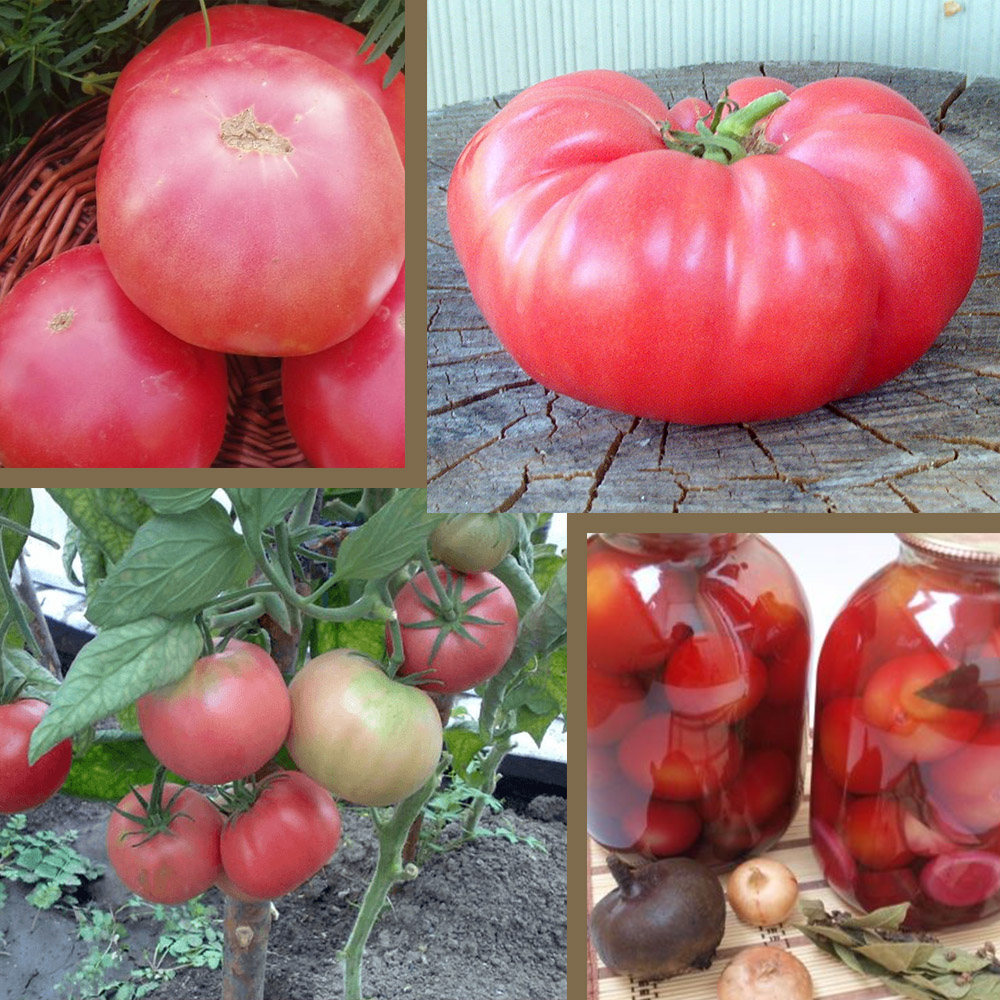
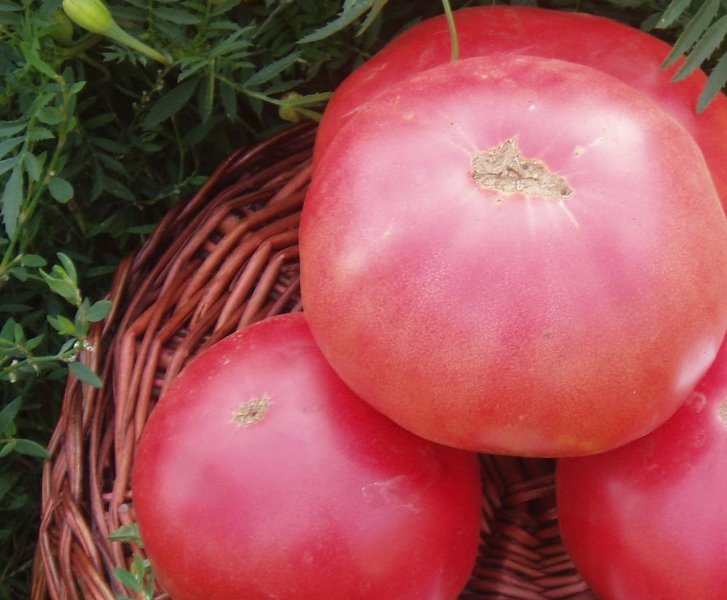
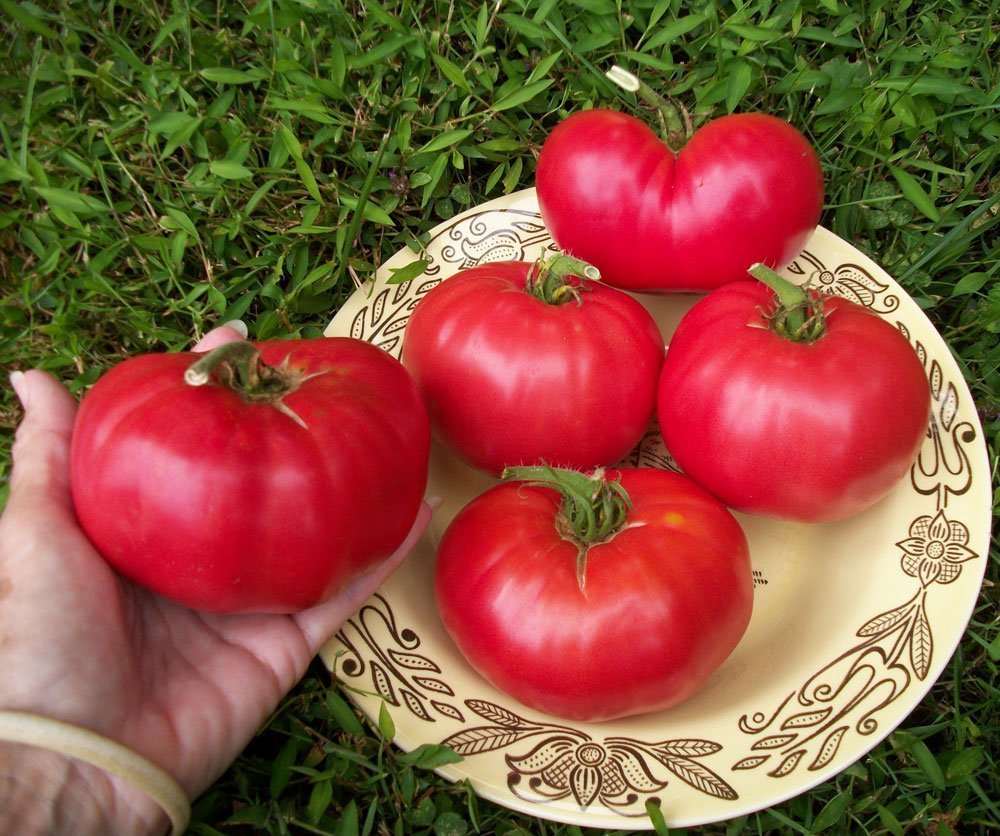
| Description of the fruit | Flat-round, fleshy, pink, with medium to strong ribbing. The top is notched or smooth. The flavor is excellent. |
| Productivity | 6.2-8.2 kg/1 sq. m. |
| Usage | Consumption fresh. |
| Disease resistance | Late blight, fusarium, alternaria. |
| Agricultural technology | garter; formation; pinching out stepsons. |
| Recommended regions for planting | Northern, Northwestern, Central, Volga-Vyatka, Central Black Earth District, North Caucasian, Middle and Lower Volga, Ural, Western and Eastern Siberia, Far East. |
| 1998 | |
| Originator | TOMAGROS LLC |
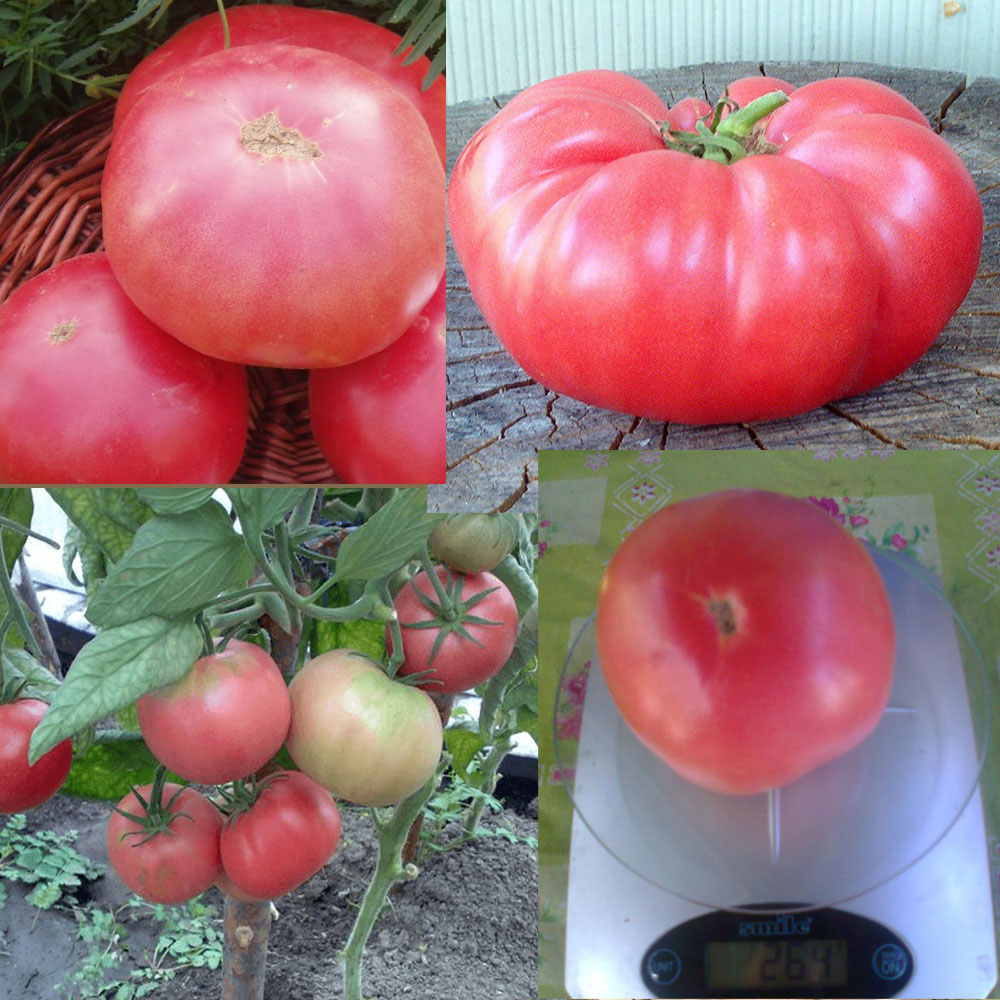
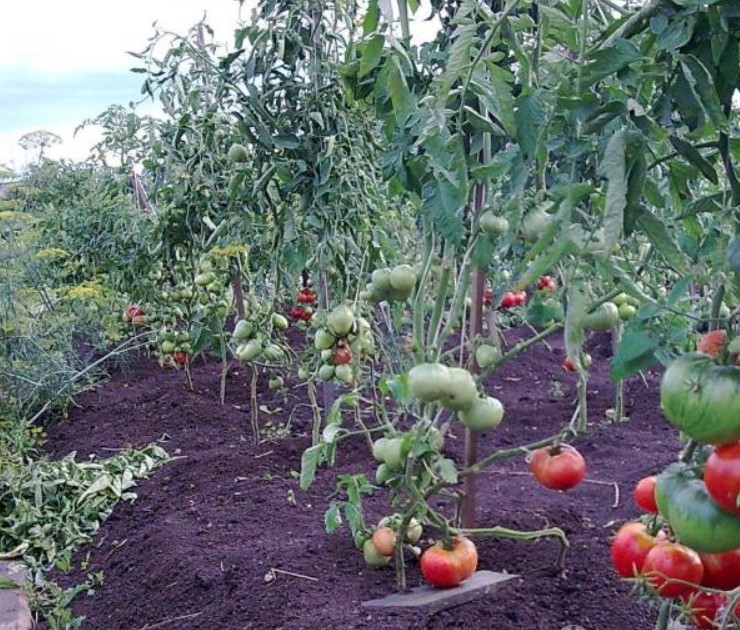
Photo gallery of the Pink Elephant tomato variety

The history of the Pink Elephant tomato variety
The variety was created by Tomagros breeders E. N. Andreeva, E. A. Sysina, S. L. Nazina, K. B. Bogdanov, and M. I. Ushakova. An application for inclusion in the register was submitted in 1997. The variety was included in the State Register in 1998.
A detailed description of the Pink Elephant tomato variety
Let's take a closer look at the characteristics of the variety.
Characteristics of bushes
Forms medium-height bushes, 1.2-1.7 m tall, with strong, upright shoots. Branches are strong and spreading, with medium foliage. The leaf blades are large, potato-like, and green.
The inflorescences are intermediate. The first appears after the 7th to 10th leaf. Subsequent inflorescences form after 2-3 leaf blades. After 8-12 inflorescences appear, development stops. A single cluster contains 6-8 tomatoes. If more fruits are left, there won't be enough nutrition for all of them, and they won't have time to ripen.
Fruit characteristics
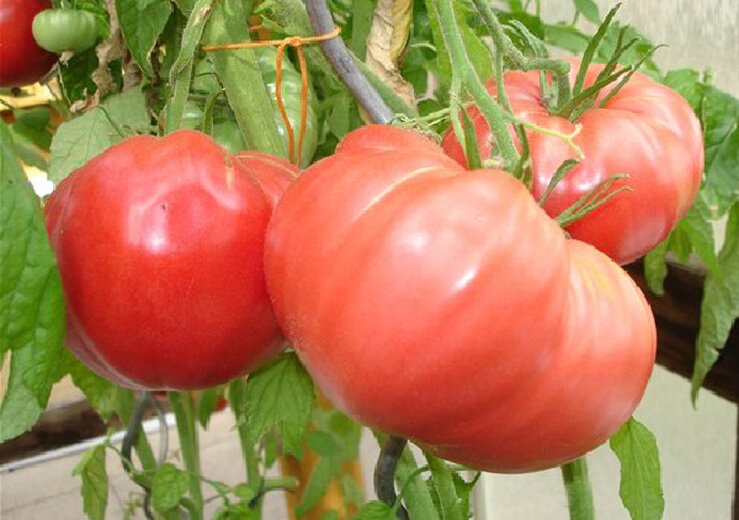
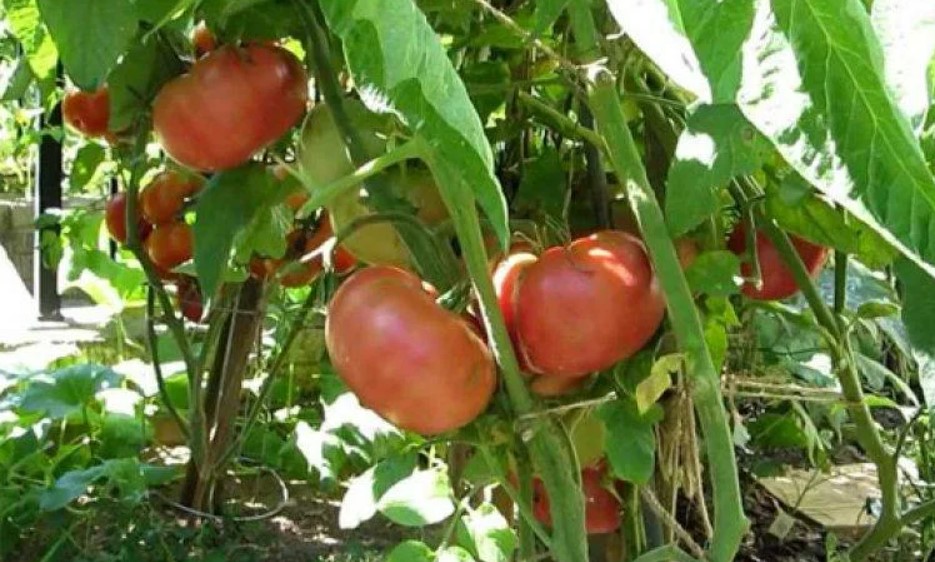
The fruits are large, averaging 280 g, but can grow to giant sizes, weighing up to 1 kg. They are flat-round, slightly flattened, with medium to strong ribbing at the base. Their color is pinkish.
The flesh is meaty, juicy, and sweet. It contains a large amount of potassium and dietary fiber. The taste is sweet with a slight tartness. The skin is glossy and thin, but not prone to cracking. Tomatoes are suitable for transportation and stored in a dry, cool, and dark place for up to 1 month.
Ripening time, yield
It takes 112 days from germination to harvesting ripe tomatoes. The harvest continues until late autumn.
One bush produces 2.5-3 kg of tomatoes. Fruit weight depends on the quality of care. The lower tomatoes are the largest, while the upper ones weigh up to 150 g.
Advantages and disadvantages of the Pink Elephant tomato variety
The advantages include:
- good resistance to late blight;
- long fruiting period until the first frost;
- large-fruited;
- excellent taste;
- long-term storage;
- possibility of long-distance transportation.
Among the disadvantages, one should point out the difficulty of care. Pink Elephant tomatoes require staking, shaping into 1-2 stems, and pinching out side shoots. Furthermore, the stems of the tomatoes can crack during ripening, making them unsuitable for commercial cultivation.
Growing the Pink Elephant tomato variety
Mainly grown from seedlings.
Sowing seeds and growing seedlings
Sow seeds in mid-March in containers at a depth of 2 cm. Containers must have drainage holes. It's also important to ensure that after sowing, the containers can be covered with glass or film to create greenhouse conditions. The seedlings are then transferred to a warm location (23 to 25°C).
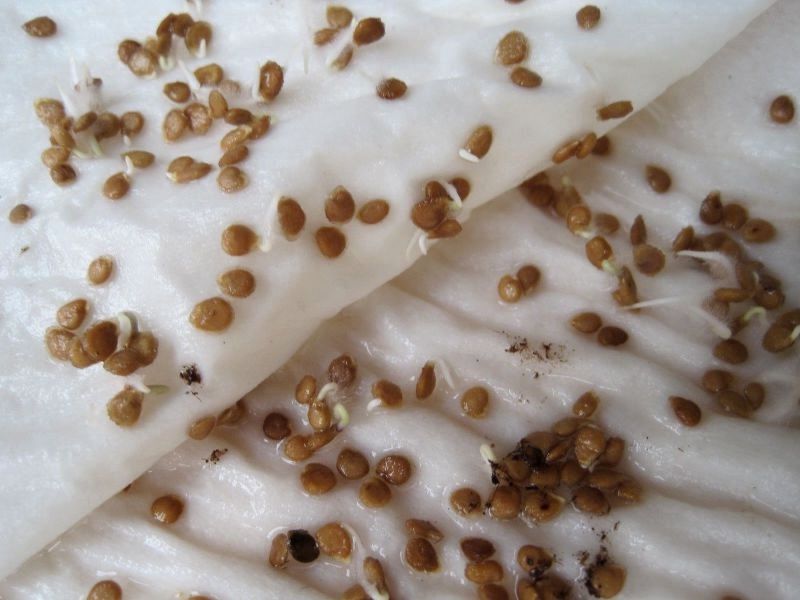
The cover is completely removed after the first sprouts emerge. To prevent blackleg, it is recommended to water the soil with a light pink solution of potassium permanganate or a store-bought solution of Fitosporin.
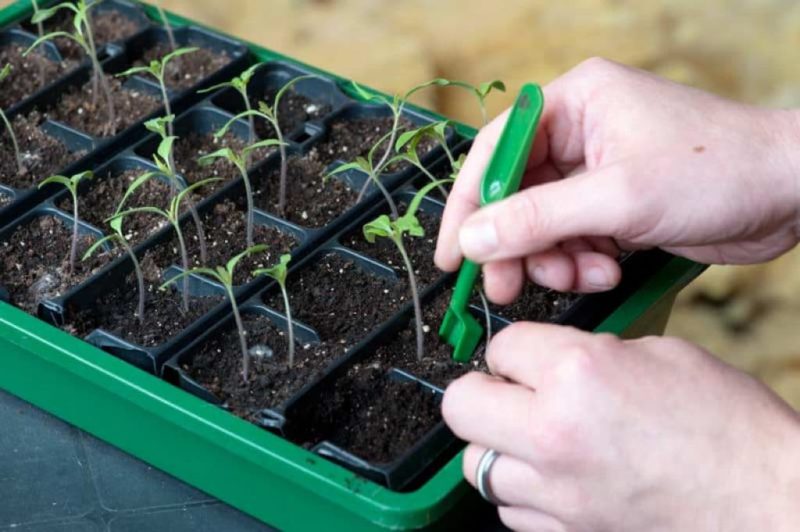
When two true leaves form, the seedlings are transplanted into different containers. Complex mineral mixtures are added.
Planting in the ground
This is done at 50-60 days of age. If the tomatoes will be grown in a greenhouse, this occurs in mid-May. If, despite the manufacturer's recommendations, the crop is planned for planting in uncovered beds, planting occurs in early June. It is important that the soil has time to warm up to +10°C (in a greenhouse) and +15°C (in open ground).
The planting site should be prepared in advance, starting in the fall. Dig the area, adding compost and humus. Add a complete fertilizer according to the package instructions and 1 cup of wood ash to the prepared holes.
With further formation into a single stem, up to 4 plants can be planted per square meter. If two shoots are left, it is recommended to plant no more than two plants.
Tomato care
This variety typically produces numerous lateral shoots. Therefore, it requires frequent side shoot removal, which should be done several times a week. Water the bushes thoroughly in the evening, and remove excess shoots in the morning. Also, during budding, remove some flowers. Leave 3-4 buds on the first two clusters, and 4-6 on the third. Pinch off the tips as subsequent clusters form.
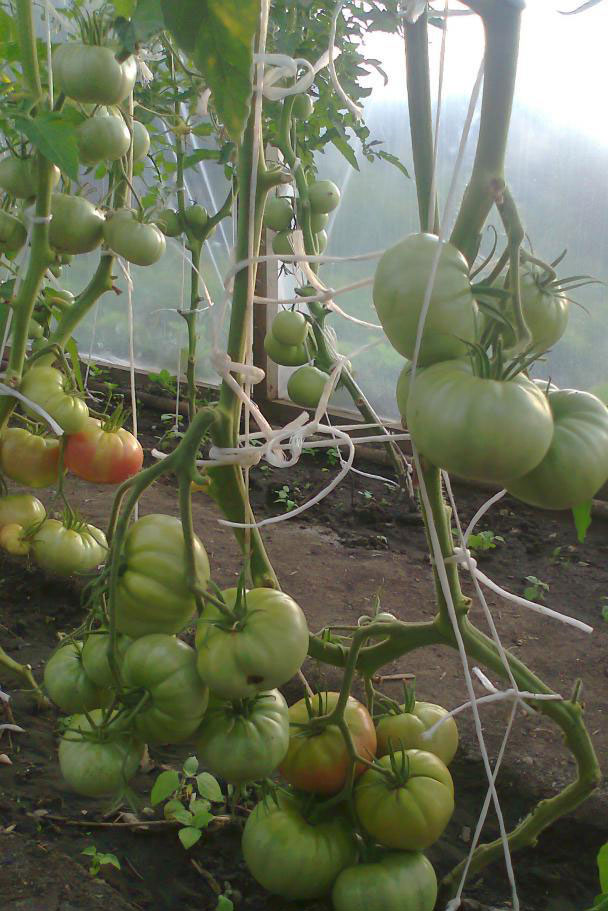
A disadvantage of growing tomatoes in a greenhouse is that they pollinate poorly under cover. Therefore, they require assistance. This requires regular ventilation of the greenhouse and shaking of the plants. When grown in open beds, this isn't necessary. Tomatoes handle pollination themselves.
Manufacturer's recommendationsNo more than 5-8 fruits should be left on a single bush. The bushes simply won't have the strength to bear more. It's recommended to leave no more than 3 fruits on each cluster (although gardeners disagree with this approach).
After the ovaries have formed, the lower leaves are removed, but no more than 1-2 leaves at a time.
Fruit clusters must be tied up. In open ground, if the weather is cold, it is recommended to cover the beds with covering material.
Water the roots with warm, settled water. In a greenhouse, this should be done approximately once every three days. Apply 5-6 liters of water per plant. In garden beds, the frequency of watering can be reduced during periods of rain. After moistening, loosen the soil and apply mulch.
Tomatoes are large-fruited, so special attention should be paid to fertilizing. The first feeding should be two weeks after planting. Apply organic and complex nitrogen-containing fertilizers before and during flowering. Stop applying these fertilizers when the second cluster appears. After flowering, apply nitrogen-free fertilizers containing potassium, calcium, and phosphorus.
Resistance to infections and insects of the tomato variety Pink Elephant
The variety exhibits good resistance to late blight, early blight, and fusarium. However, it is susceptible to insect attack.
Pepper or garlic infusions can be used against slugs and aphids. Spraying with a soap solution also helps against these pests. The commercially available product "Medvetoks" protects against mole crickets. For spider mites, whiteflies, and thrips, store-bought insecticides and concentrated infusions of onion skins, chamomile, and celandine are recommended.
To repel pests, you can plant mint, celery, marigolds, and parsley near your plants. Insects dislike their smell.
Harvesting, using and storing the Pink Elephant tomato variety
Tomatoes are best eaten fresh, sliced, or in salads. They also make a delicious tomato paste and soup dressing.
Comparison of the Pink Elephant tomato variety with other varieties in the table
Please note! How can you easily convert centners/ha to kg/sq.m? Simply divide by 100! For example, the Abakansky Pink tomato yields 400 centners of marketable fruit per hectare. This equals 4 kg per square meter. It's that simple! Also, keep in mind that typically no more than 3-4 plants are planted per square meter. This way, you can calculate the yield per bush. In the case of the Abakansky Pink, it's about 1 kg.
| Variety | Ripening period (number of days from full germination to ripening)
Yield of commercial fruits |
Brief description | Fetus |
| Pink elephant | 112 days
620-820 c/ha |
A mid-season semi-determinate variety for greenhouses. Suitable for salads, canning, and processing into tomato products. | Flat-round, fleshy, medium- to strongly ribbed, notched to smooth top, pink, 280 g. Excellent taste. |
| Pink spam | 99 days 2560 c/ha |
An early-ripening indeterminate variety for greenhouses. Suitable for salads and canning. | Heart-shaped, firm, smooth, pink, 190 g. Excellent taste. |
| Pink honey | 111-115 days
380 c/ha (open ground) |
A mid-season determinate variety for open ground and greenhouses. Suitable for salads. Marketability is 96%, and the yield of ripe marketable fruits is 90%. | Round, ribbed, pink, 160-200 g. Excellent taste. |
| Abakan pink | 120 days or more
400 c/ha |
A late-ripening determinate variety for open ground and greenhouses. Requires staking and training. Suitable for salads and processing into tomato products. | Flat-round, slightly ribbed, medium density and pink in color, 200-500 g. Good taste. |
| Rosy cheeks | 110-112 days
550 c/ha |
A mid-early determinate variety for greenhouses. Requires staking and training. Suitable for salads and processing into tomato products. | Flat-round, slightly ribbed, pink, 180-260 g. Excellent taste. |
| Pink giant | 115-125 days 580-640 c/ha |
A mid-season indeterminate variety for open ground. Requires staking and shaping. Suitable for salads. | Flat-round, strongly ribbed, pink, 350 g. Excellent taste. |
| Pink heart | 110-120 days
610 c/ha |
A mid-season indeterminate variety for open ground and greenhouses. Requires staking and shaping. Suitable for salads. Produces good fruit. | Heart-shaped, slightly ribbed, medium density, resistant to cracking, pink, 200-230 g. Excellent taste. |
| Wild rose | 110-115 days
600 c/ha |
An early-ripening indeterminate variety for open ground and greenhouses. Requires staking and training. Suitable for salads. Heat- and salinity-tolerant. | Round, smooth, pink, 300-350 g. Excellent taste. |
| Favorite holiday | 105-110 days
750 c/ha |
An early-ripening determinate variety for open ground. Suitable for salads. | Heart-shaped, slightly ribbed, medium density, pink, 350 g. Good taste. |
| Mikado Pink | 90-95 days 500-600 c/ha |
A mid-early indeterminate variety for greenhouses. Suitable for salads. | Flat-round, large, ribbed, medium density, pink, 300-360 g. Excellent taste. |
| Pink Paradise | 100-110 days
390 c/ha |
A mid-season indeterminate variety for open ground and greenhouses. Requires staking and shaping. Suitable for salads. | Flat-round, slightly ribbed, dense, pink, 125-140 g. Excellent taste. |
| Wind rose | about 100 days
600-700 c/ha |
An early-ripening, determinate, standard variety for open ground. Requires staking and shaping. Suitable for salads. Drought-resistant. | Round, smooth, pink, 140-160 g. Excellent taste. |
| Sweet Million | 95-100 days
Commercial yield 4.8-7.0 kg/sq.m. |
An early-ripening, indeterminate, medium-sized variety for greenhouses. Suitable for salads. | Round, smooth, red, 15-20 g. Excellent taste. |
| Chinese pink | about 110 days up to 1500 c/ha (open ground), up to 2000 c/ha (greenhouse) |
A mid-early semi-determinate variety for open ground and greenhouses. Requires staking and training. Suitable for salads and processing into tomato products. | Heart-shaped, fleshy, sweet, pink, 300-350 g. Excellent taste. |
| The Pink King | 100-112 days
680 c/ha (greenhouse and under film) |
A mid-season indeterminate variety for open ground and greenhouses. Requires staking and shaping. Suitable for salads. | Flat-round, ribbed, medium density, pink, 200-300 g. Excellent taste. |
Gardener reviews of the Pink Elephant tomato variety
Gardeners appreciate this variety for its large fruits and pleasant taste, but its downsides include the difficulty of care and the large size of the bushes, which means they take up a lot of space.
It's no wonder I experiment with new seeds every year. I've finally found one that suits me completely.
I started planting in March. I did it closer to the end, because I don't have UV lights for illumination, and early-planted seedlings can get very stretched without them. As a result, they'll be frail, fragile, and sickly.
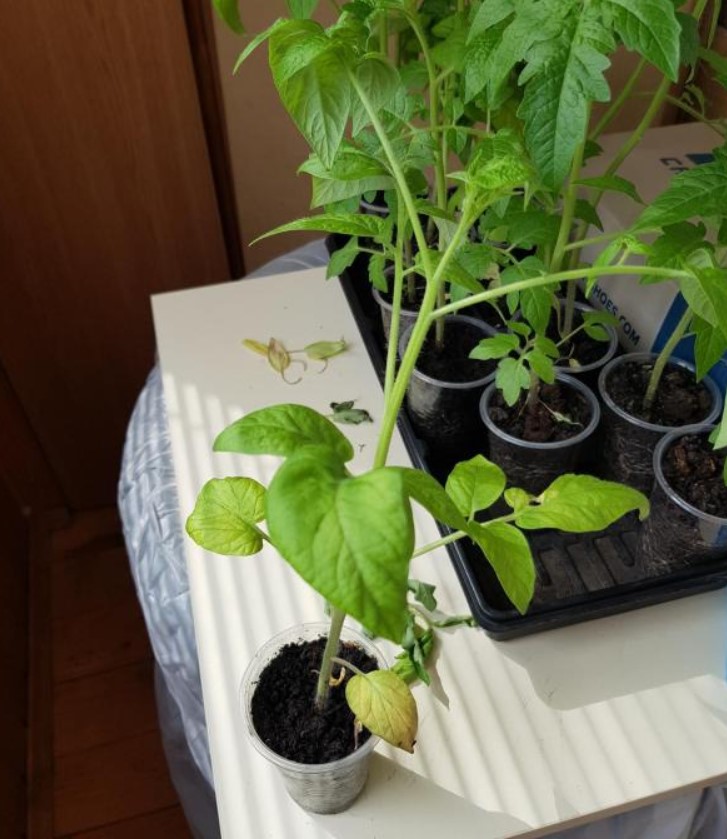
By the end of April, the seedlings were quite large, and the 200 ml plastic cup clearly wasn't enough. The lower leaves were starting to wilt, and the tomato's appearance was clearly showing that it was in poor health and needed to be transplanted to its permanent location.
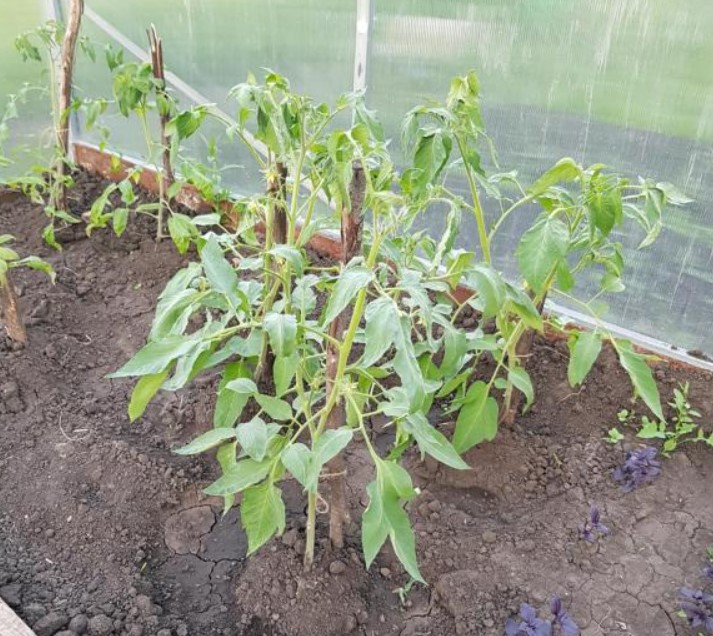
I planted tomatoes in the greenhouse in early May. And since the variety is easy to grow, all the seedlings took root without any problems and didn't get sick. After that, all I had to do was water, feed, and remove excess fruit.
By mid-June, I could already see a large number of green tomatoes, but it took a month for them to turn red. I didn't even expect the ripening process to take so long. Something must have been missing.
But once one started to grow, the rest followed. The fruits were a sight to behold. And the taste was simply amazing! There are certain Rostov tomatoes that we eagerly await on store shelves and markets. Well, my "pink elephant" is in no way inferior in taste to the Rostov ones. They are fleshy, sweet with a slight tartness. Very tasty. I had no idea that tomatoes of such quality could be grown in our region.
Late blight didn't spare my greenhouse, but the "pink elephant" survived. Some varieties were affected, others weren't.
I usually picked tomatoes before they turned a deep red, so the plant would devote all its energy to ripening the remaining fruit. The tomatoes I picked early quickly gained color and flavor on the sunny windowsill.
Later, I realized I'd done the right thing, because I saw what happens if you don't pick tomatoes from the vine early. It was a period of prolonged rain, high humidity, and low temperatures, so I was afraid to properly ventilate the greenhouse. One day, when I walked into the greenhouse, I saw that many red tomatoes had cracked right on the vine. There's no point in storing or preserving such fruits; they should only be eaten, and preferably immediately.
I don’t know whether this should be considered a disadvantage, rather an unfortunate combination of weather conditions.
I highly recommend this variety! The best tomatoes I've ever grown in my gardening experience.
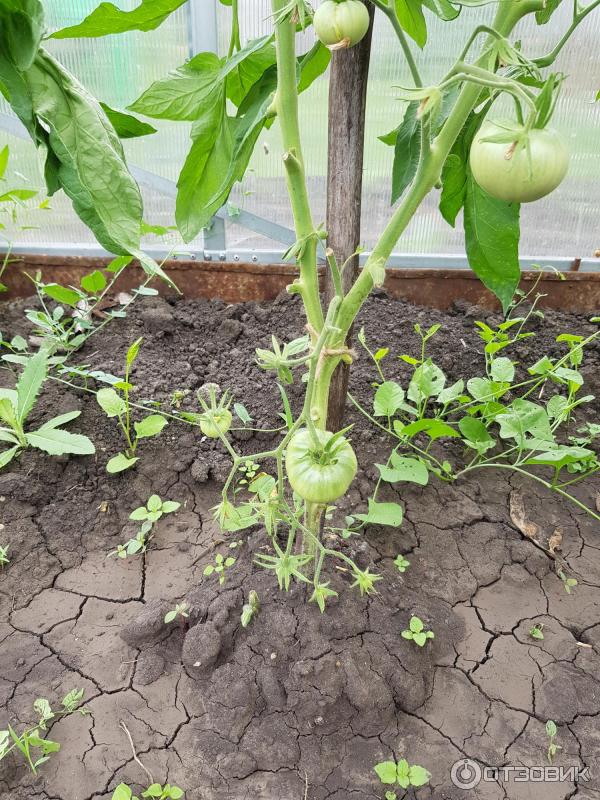
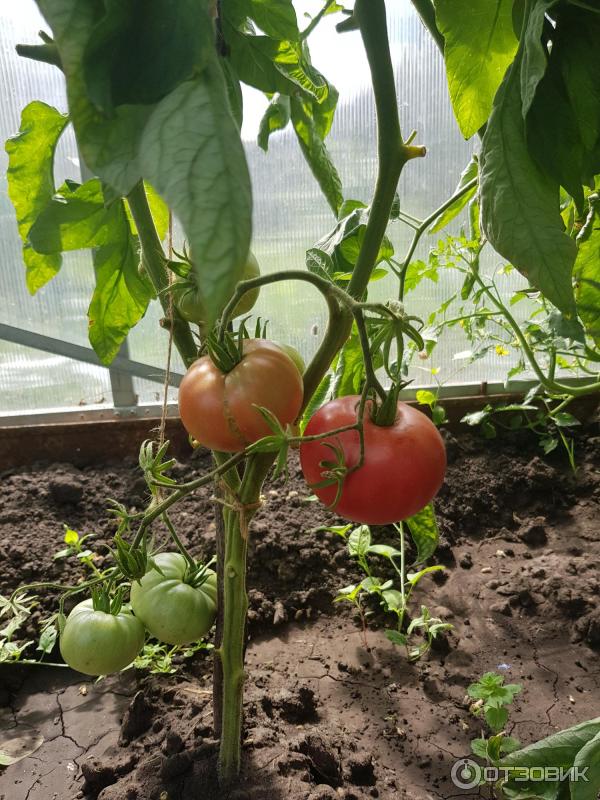
Good afternoon, readers of my review!
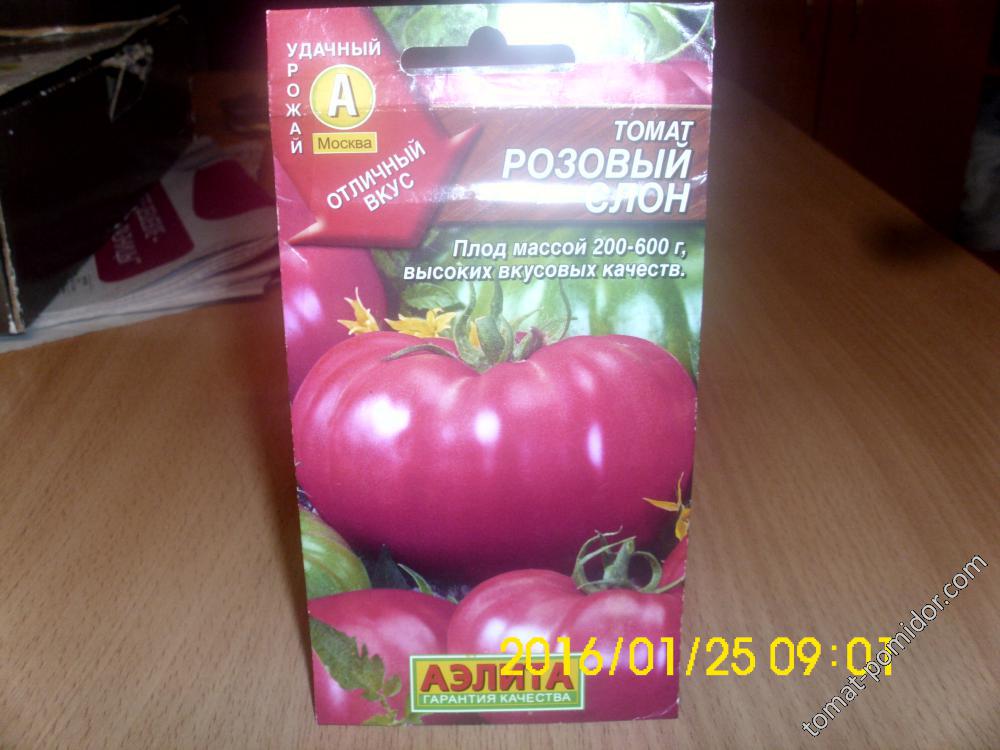
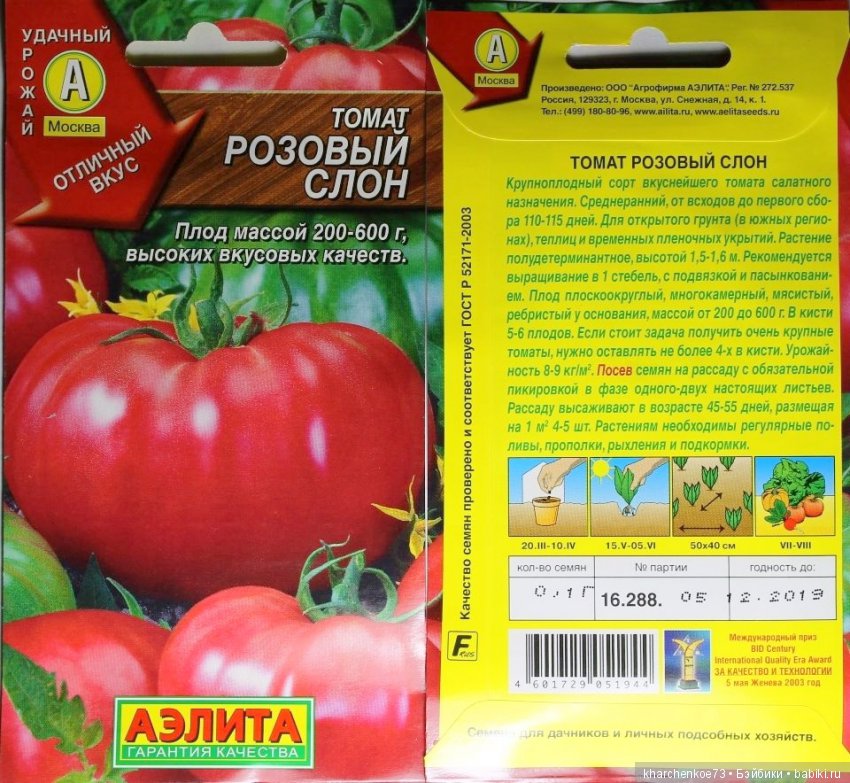
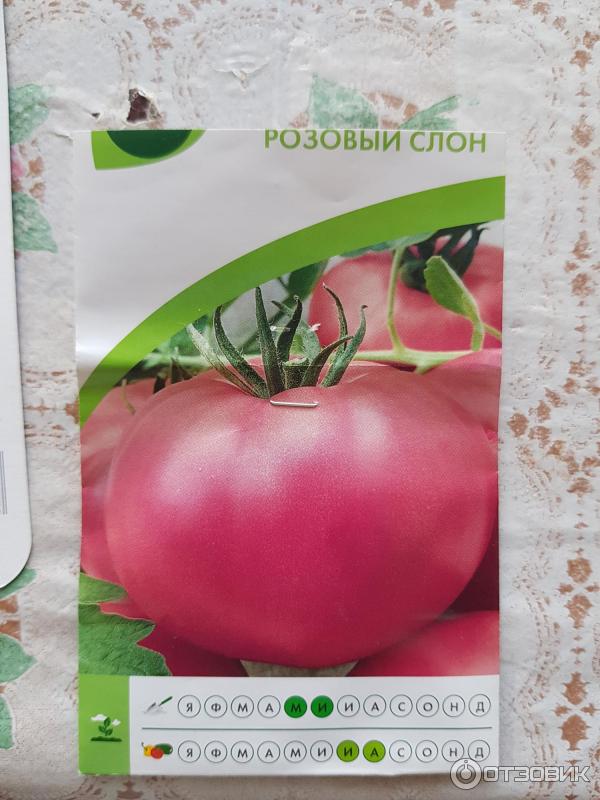
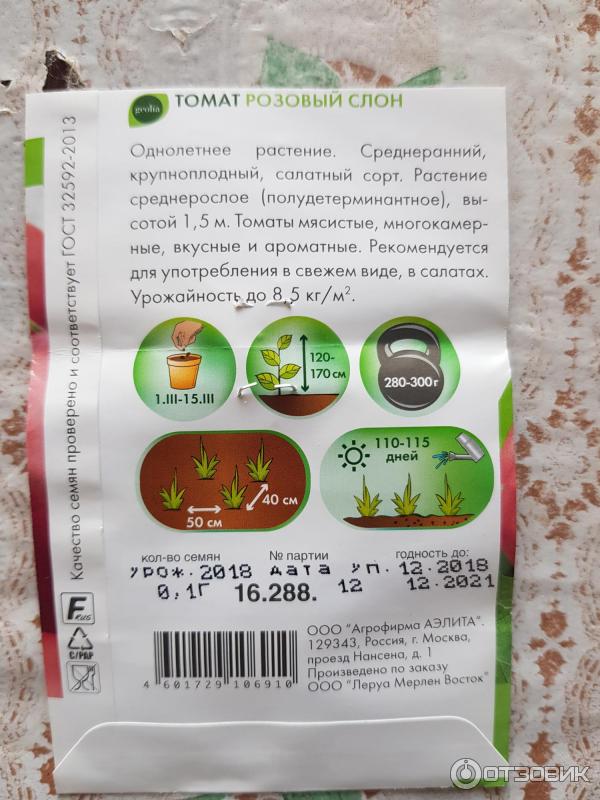
Tomato seeds Aelita "Pink Elephant", an unpretentious large-fruited variety.
I always plant several bushes in the greenhouse, like “Bull’s Heart” and “Altai Masterpiece”
The variety received its name due to its size; the average fruit weight is three hundred grams.
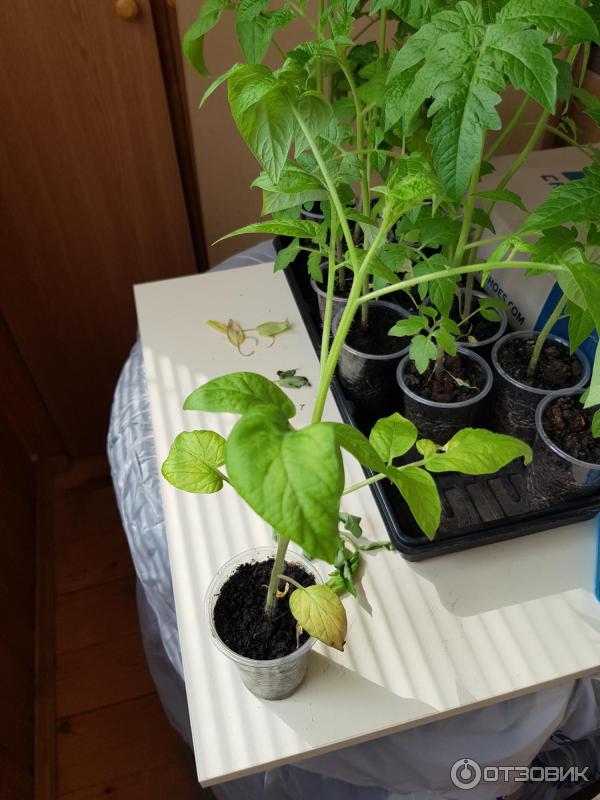
I plant seedlings in February in containers with plastic lids.
I moisten the soil well and close the container. This creates a greenhouse effect and
the seedlings germinate quickly.
Picking at the stage of two true leaves.
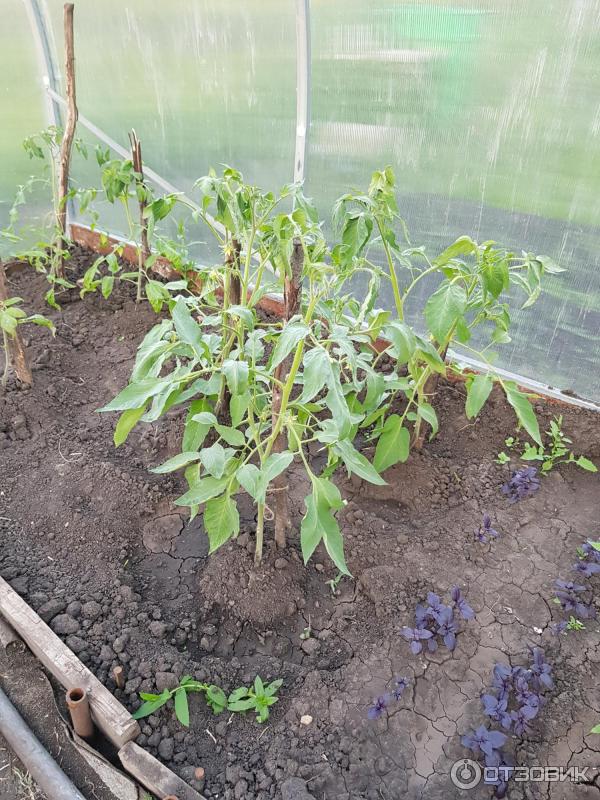
I plant it in a greenhouse in May.
The germination rate of seeds in this series is good.
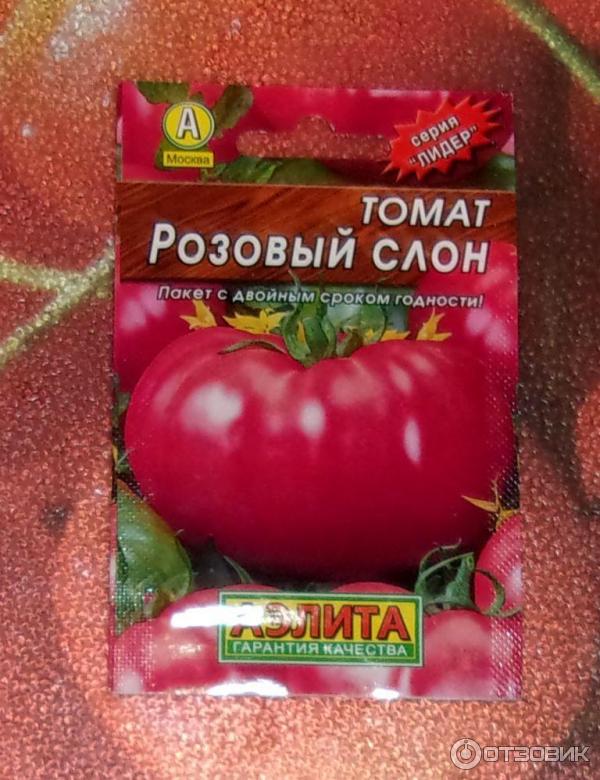
The pink-fruited tomato variety "Pink Elephant" from Aelita has been a regular in my garden for the past four years. I'm currently preparing to plant tomatoes for seedlings, and I've already set aside seeds of this variety as a candidate for this year's crop.
I'm now collecting my own 'Pink Elephant' tomato seeds, and everything is working out perfectly; this variety hasn't changed its varietal qualities at all yet.
The seedlings always turn out strong, with large, wide leaves, very healthy, and not prone to damage. I generally like this variety's resilience, compared to other large-fruited varieties, especially pink ones.
In my conditions, the "Pink Elephant" doesn't get sick and can withstand hot summers without any problems. Rain is rare here, but other similar tomato varieties still manage to get sick from time to time. There was a year when everyone's tomato plants at our dachas started dying en masse that summer. I experienced the same thing, but the "Pink Elephant" was among the varieties that survived, even though it was surrounded by diseased varieties. Moreover, I never use chemical pesticides on my beds.
The "Pink Elephant" tomato variety is very impressive, among the largest and heaviest. They're incredibly appetizing, and the vine produces a profusion of them. We have a fairly early spring and a long autumn almost every year, and this variety has every opportunity to produce fruit and ripen fully. I'd classify this variety as early-mid-season; the fruit ripens immediately after early varieties and continues to fill out until autumn.
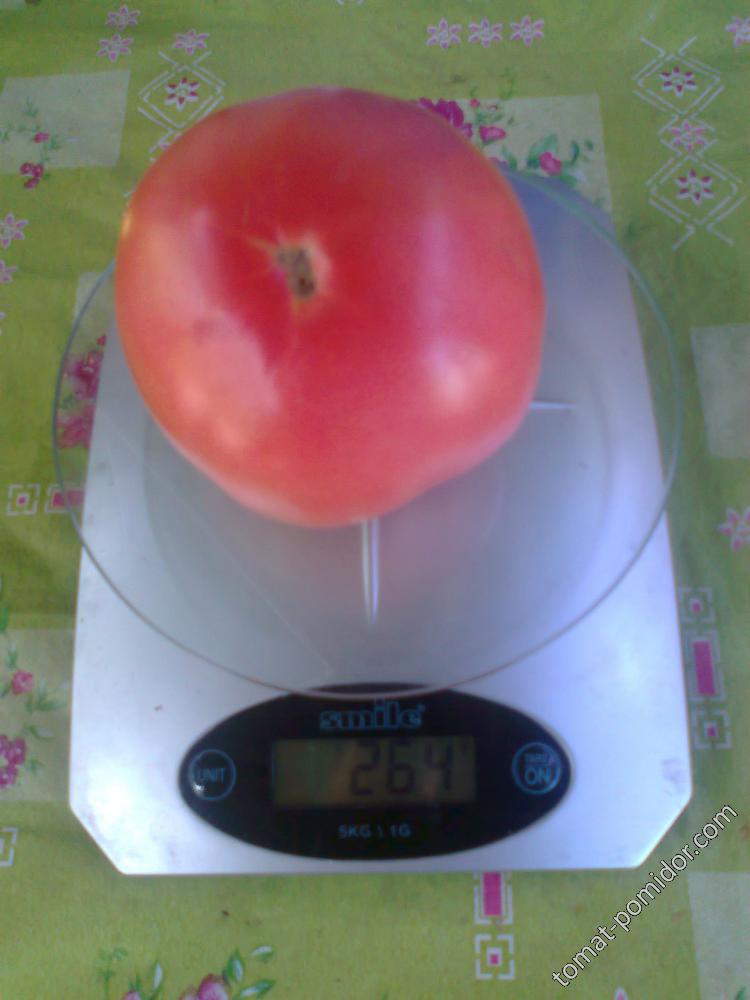
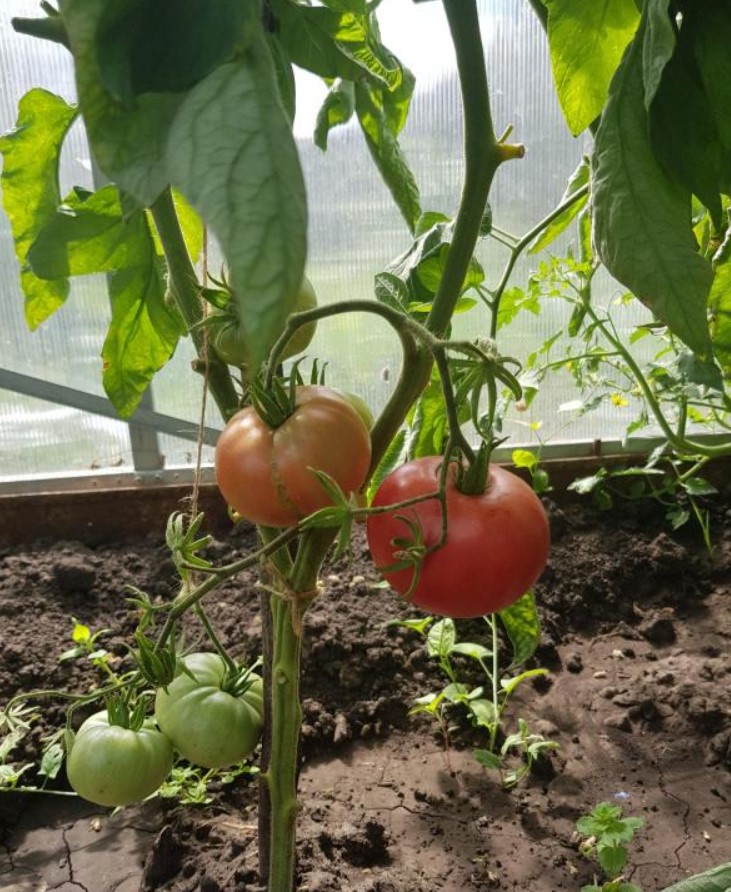
I still managed to capture one such handsome fellow in a photo last summer.
Here he is, a handsome man.
This tomato can be eaten right away, it is not at all sour, but you can also let it sit for a couple of days to ripen completely, then the pink color will become deeper.
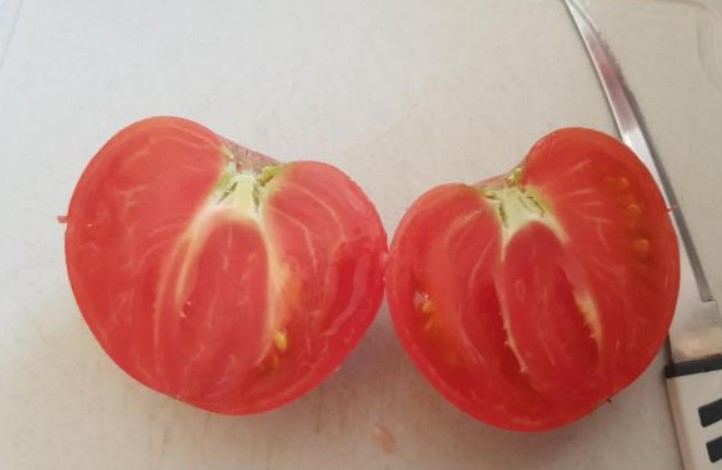
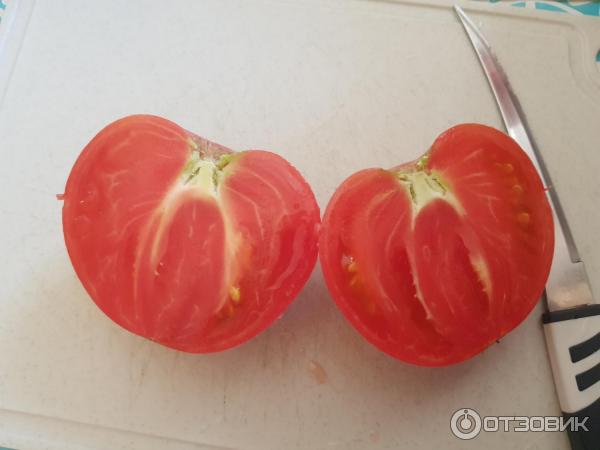
The inside color of the pulp is darker than the outside color; if you make tomato juice from the Pink Elephant tomato variety, the juice will not be too light, but rather raspberry-colored.
If you find seeds of this variety, take them, you won’t regret it.
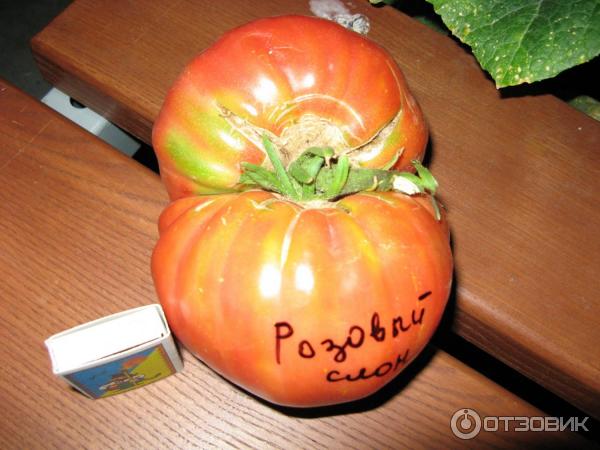
The Pink Elephant variety earned its appealing name for its enormous pink fruits. Those who appreciate giant fruits will certainly love it, and perhaps even grow a fruit weighing over a kilogram.
This beauty has been growing in my garden for a long time. I don't grow it every year, but I return to it periodically. I've been wanting to find a worthy replacement, one that produces huge fruits with countless numbers per bush, and one that doesn't taste so watery.
But, as you know, the larger the tomato, the fewer fruits on the bush.
Although it can’t be called a poor harvest, since a dozen Pink Elephant tomatoes will fill a bucket.
The fruits are distinguished not only by their size but also by their pleasant taste—rich in meat and few in seeds. They make excellent tomato juice.
Pink Elephant is a mid-early variety, which means it can be grown both indoors and outdoors.
In a good summer, the first two clusters ripen successfully in our Perm region. The rest have to be ripened indoors.
The bushes are tall, reaching the ceiling in the greenhouse, so pinching is necessary as early as the 20th of July. In the ground, they reach 1.5 meters in height. They require pinching.
Although the manufacturer claims the variety is resistant to late blight and other diseases, Pink Elephant, like other large-fruited varieties, is susceptible to various tomato diseases.
But this doesn't mean you should give up growing delicious tomatoes! You just need to follow proper tomato growing practices: treat the bushes with phytosporin for preventative purposes, tie them up promptly, and remove leaves that touch the ground.
Despite all the difficulties of growing large and tasty tomatoes, a true gardener will never trade them for unpretentious woody hybrids.
Plant the Pink Elephant tomato in your garden, and it will become a beautiful addition. Your neighbors will peer over the fence and gasp at the beauty.
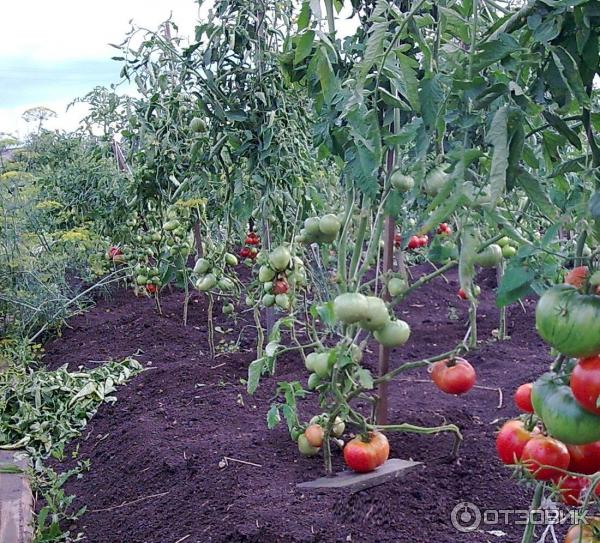
I planted Pink Elephant tomato seeds this year. These tomatoes are early (from sowing to harvesting takes 93-95 days), reaching a height of 190-230 cm. The first tomatoes form above the 6th or 7th leaf, and the next ones appear after 1-2 leaves. The fruits of this tomato have reached a weight of 200-250 g, are pink in color, and round in shape. The fruits have an excellent taste, and the juice they make is simply delicious... These tomatoes are excellent for transporting. I grew these tomatoes
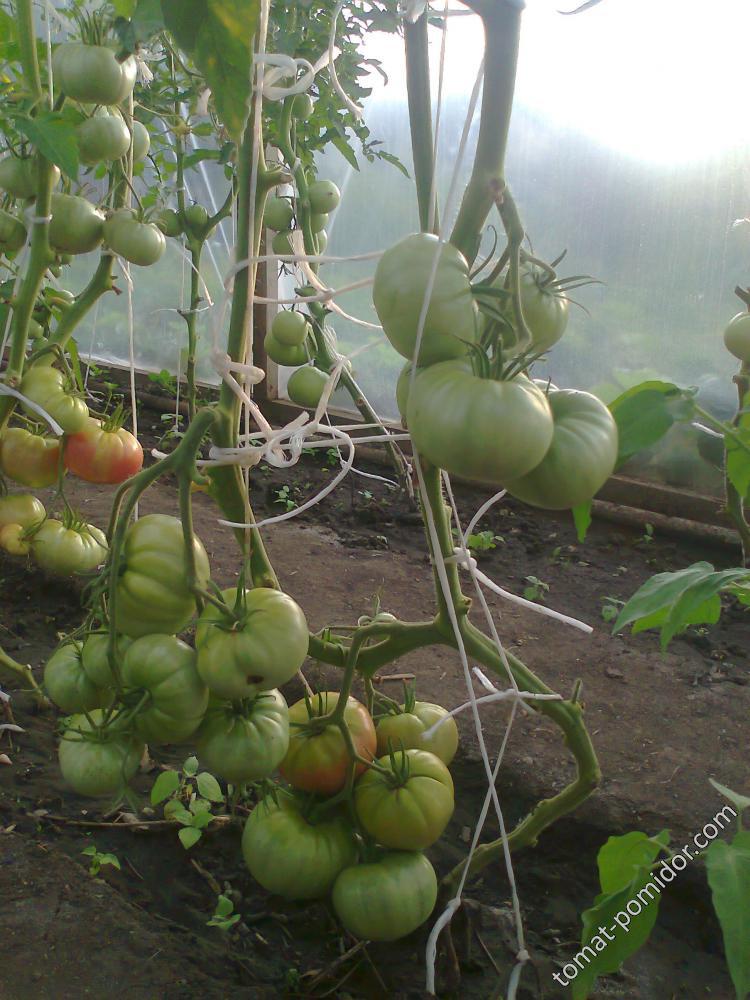
In open ground, plant 1-2 stems using supports and always pinching out side shoots. The best predecessors are legumes, pumpkins, and green manure. According to the instructions, sowing the seeds should be done from early to mid-March. Photos taken in mid-July.
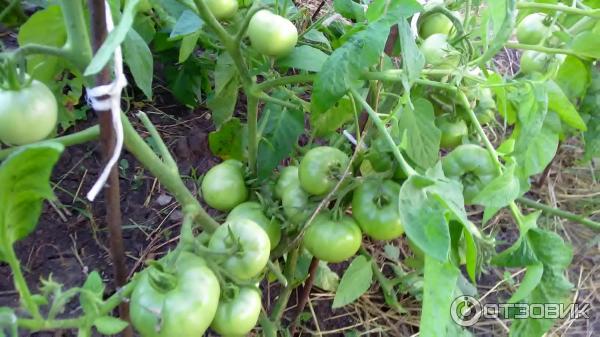
This year, I planted Pink Elephant in both the greenhouse and the open field. The greenhouse yielded very few tomatoes, but the open field yielded impressively. They were large in both places, much larger than the description indicated. What's even better is that the outdoor ones were very dense and arrived safely in a triple-layered cardboard box to Chelyabinsk (it took almost three days). So, while this variety is excellent for outdoor use, in the greenhouse I've been able to produce three tomatoes per plant.
I've been growing Aelita's Pink Elephant for two years. On the packaging, it's a rich pink, but mine turns out paler. Overall, I like the variety; the tomatoes are beautiful and even. Some are large, around 400 grams, but mostly smaller. The skin is thin and doesn't store well. The flavor is good, with a sweet crispness. A true salad tomato, with a slight tartness. Maybe it will perform better in a good summer, but for now, it's not very sweet in cold weather.
Pink Elephant was a favorite of mine in 2015. From the time I was a seedling, I admired its strong stems and beautiful leaves. When I planted it in a plastic greenhouse, it immediately started growing. It's a very beautiful tomato with gorgeous clusters. It's best not to grow it as a single trunk; two or three are better, as the clusters are very heavy and need to be tied up. Even though it was grown in a greenhouse with early varieties and hybrids, the first tomato ripened on it.