To ensure tomatoes grow vigorously and delight gardeners with large, sweet fruits, they require careful care.
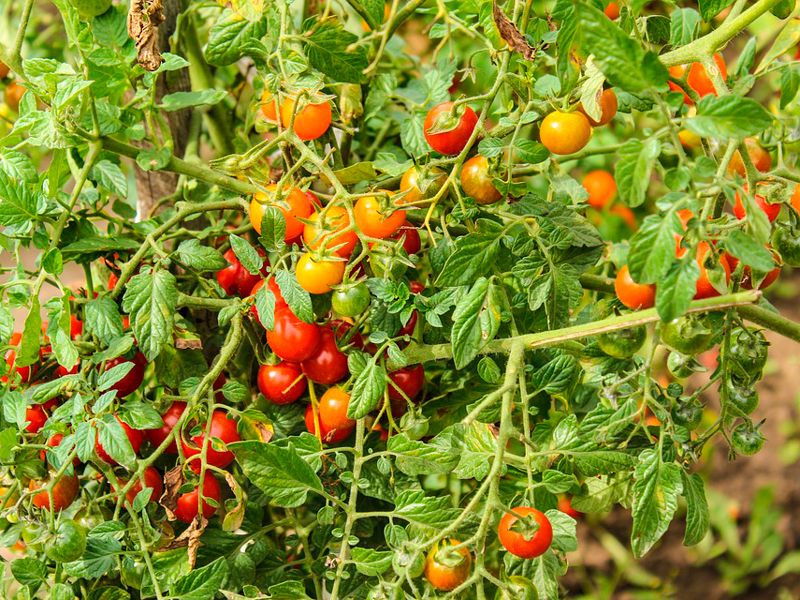
Correctly selected and timely applied fertilizers will have a positive effect on the condition of the plant.
Content
- 1 Fertilizing tomatoes: increasing yields with fertilizers
- 2 Fertilizing in autumn
- 3 Fertilizers for young seedlings
- 4 How to fertilize tomatoes in open ground
- 5 How to fertilize tomatoes in a greenhouse
- 6 Fertilizing during flowering
- 7 Fertilizing during fruiting
- 8 Folk remedies for feeding tomatoes
- 9 Top.tomathouse.com informs: how to determine what tomatoes lack by their appearance
Fertilizing tomatoes: increasing yields with fertilizers
Tomatoes expend a lot of energy during fruit formation, so they require nutrient support. Yields can be increased with mineral fertilizers. It's important to pay attention to the nutrients included in these solutions. Potassium, for example, is essential for the plant, as it provides vitality, enhances resilience, and increases fruit production. Urea, in small doses, also promotes rapid ripening and high-quality tomatoes.
Springtime fertilization is essential for young plants. By adding organic matter to the soil, you can achieve a bountiful harvest with delicious pulp. Furthermore, fertilizers lay the foundation for the development and formation of branches, which will later bear fruit.
Fertilizing in autumn
Preparations for growing tomatoes should begin in the fall, so it's important to decide on the location of the beds and cultivate the soil in that area. It's also important to determine what crops have been grown there in the past few years, as potatoes or eggplants often accumulate harmful bacteria in the soil, leading to serious diseases related to tomatoes. The plant requires fertile, rich, black soil rich in naturally occurring nutrients, which it's recommended to supplement with your own. For example, mullein, compost, and bird droppings mixed with the soil will provide an excellent foundation for future tomatoes.
Loamy soil should be amended with more peat or organic matter. Wood sawdust, coal dust, and finely chopped bark are excellent options. Tomatoes do not grow well in highly acidic soil, so such areas should be avoided. However, you can manually improve the soil's condition by adding small amounts of slaked lime or crushed limestone. If the acidity is moderate, adding chalk or ash powder is sufficient.
Fertilizers for young seedlings
Before planting, seeds must be thoroughly disinfected. This is done using a 5% salt and water solution. This process lasts about 10 minutes, after which the seeds should be carefully rinsed and left in clean, settled water for another 15-20 hours to allow them to swell and take root faster.
You can purchase ready-made soil substrates, which eliminate the need for additional fertilizing. Alternatively, it's recommended to water the soil with a weak solution of potassium permanganate beforehand and let it dry completely for 2-3 weeks. This type of soil will prevent harmful infections, and the plant will grow healthy and strong.
After planting, apply a general-purpose tomato fertilizer; liquid complex solutions are especially effective. It's best to avoid overdoing it with organic fertilizers, limiting the use to peat pellets and wood ash. Once the seedlings have established themselves and the first leaves begin to form, water the soil with weak herbal infusions (nettle, coltsfoot, plantain, etc.), which will improve the tomatoes' hardiness and disease resistance.
How to fertilize tomatoes in open ground
A few weeks before planting young seedlings in the garden, a number of steps should be taken. For example, thoroughly till the soil and mix it with compost. It is recommended to apply mineral fertilizers, especially nitrogen- and phosphorus-containing ones in small doses, to promote rapid adaptation and acclimation of the plants to the new soil.
When growing tomatoes, it's best to feed them with organic matter, specifically a solution of manure and water. It's quite simple to prepare: fill a bucket about a third of the way, then pour in the liquid, mixing thoroughly. Add part of the solution to 10 liters of water, then apply it to the soil. Bacteria begin to metabolize the infusion within 5-7 days. For a higher yield, tomatoes can be fed with urea in limited quantities.
How to fertilize tomatoes in a greenhouse
Fertilizing greenhouse plants requires its own subtleties. First and foremost, pay attention to the soil, which should be well-drained. It's recommended to sprinkle the soil with turf, sand, and humus, adding a tablespoon of potassium sulfate. This mixture will make the soil highly nutritious, providing the plant with a comfortable environment throughout the growing season.
To maintain the health of young tomatoes during the first 2-3 weeks, various products such as Plantafol and Epin-Extra can be used. Other mineral solutions containing phosphorus and potassium, which are important in the early stages of plant development, can also be used. If root fertilization is ineffective, foliar feeding should be considered. For this purpose, calcium nitrate is used at a concentration of 1 tablespoon per 10 liters of liquid.
In a greenhouse, tomatoes often begin to branch out excessively, but the fruits remain small and stop developing. To prevent this, add a superphosphate solution to the soil at a rate of 3 tablespoons per bucket of water.
Fertilizing during flowering
During flowering, pay special attention to choosing a fertilizer, as the wrong solution can have detrimental effects. It's best to use a general-purpose fertilizer (Kemira, Universal). You can make your own: mix no more than 1 tablespoon of potassium sulfate, 0.5 liters of liquid manure, and 7-9 liters of running water. Apply this infusion to the roots about twice.
A good alternative to mineral fertilizers is nitroammophosk, 1 spoon of which is enough for a bucket of liquid.
Organic fertilizers, especially wood chips and a weak humus solution, have a positive effect. Among folk remedies, yeast, herbal, iodine, and ash infusions are good during this period.
Fertilizing during fruiting
As soon as the fruits begin to appear, you need to move on to the next stage of fertilizing:
- For the first two weeks, it's recommended to use superphosphate at a concentration of 1 tablespoon per bucket. This will help young tomatoes develop properly and significantly speed up the ripening process.
- Next, you need to add a mineral complex containing as many trace elements as possible, iodine, and boron, which affect the taste of the pulp. This infusion can be prepared at home: mix boric acid dissolved in boiling water with 10 ml of 5% iodine and 1-1.5 liters of ash purified from impurities, and pour the resulting mixture into 10 liters of running water. One liter of the enriched complex is sufficient for each bush.
- However, it is recommended to use commercially available universal fertilizers; in such cases, the risk of chemical burns due to incorrect dosage of substances is eliminated.
It is important not to exceed the frequency of fertilizing, especially during the fruiting period, since most of the applied components are absorbed by the roots and end up in the ripening tomatoes, affecting their structure and taste.
Folk remedies for feeding tomatoes
Gardeners have developed numerous alternative methods for fertilizing tomatoes, which in some cases are much more effective than store-bought ones. Using readily available substances can help avoid unnecessary financial costs, and most importantly, you can know exactly what's in the fertilizer.
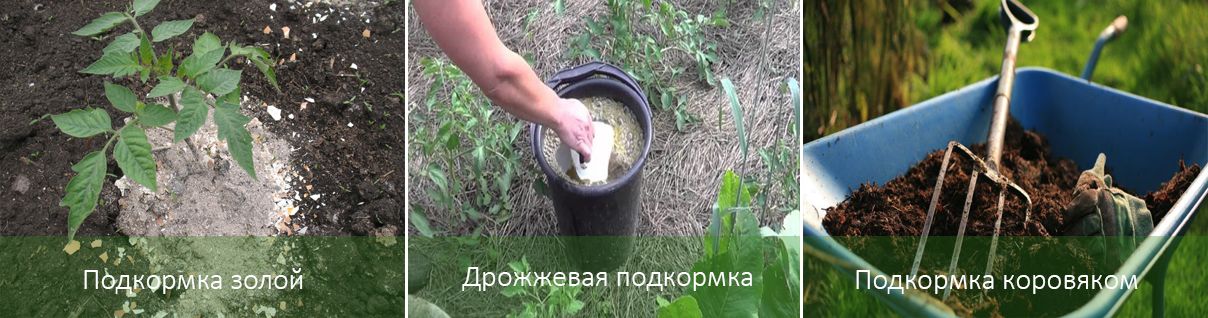
Ash
It's considered a complex fertilizer because it contains numerous micronutrients (potassium, magnesium, calcium, sodium), which affect various parts of the tomato plant, providing it with vitality. In dry form, it's used when planting—sprinkling it over planting holes, and also added in small quantities to the soil when cultivating seedlings.
To do this, the ash must first be sifted to remove debris and other impurities. Otherwise, it's recommended to prepare an ash solution, which is absorbed much more quickly by tomatoes. To do this, mix about 7 liters of water with 250 g of ash. This infusion is usually used as a root dressing.
Leaves, shoots, and young fruits are treated with a different mixture: 250-300 g of ash should be added to 3 liters of water, then the resulting mixture should be boiled for at least 30 minutes. The next day, add another 7 liters of liquid to the solution and mix thoroughly. After straining, the infusion is ready for use.
Yeast feeding
This method has become very popular among Russian gardeners due to its effectiveness. To do this, soak 100 g of yeast in 7 liters of water and then stir. It's recommended to water the soil immediately with this solution, as it works faster. If the yeast is dry, mix it with settled water at a ratio of 10 g per 10 liters. Then let the infusion sit overnight.
Before use, you can add another 3-4 tablespoons of sugar. This method primarily affects tomato growth by activating vitality. However, it's disadvantageous because it doesn't provide the plant with the beneficial mineral components necessary for normal growth. Therefore, fertilizing with yeast alone is not recommended, as it will cause the tomatoes to become diseased from a lack of micronutrients.
Mullein
One of the best organic fertilizers, it has been in use for a long time. It is rarely used in its pure form; solutions are most often prepared. Regular feeding is not recommended due to its strong impact on the soil. The solution is very simple to prepare: mix 5 liters of water with 3-4 liters of manure until the bucket is completely filled. After mixing, cover the container and store it in a warm, dark place for 7-10 days. After the fertilizer has set, it will harden, so before watering, add more liquid at a 1:10 concentration. Depending on the size of the bush, 0.5 or 1 liter of this fertilizer is sufficient.
Nettle infusion
A healthy natural decoction made from this herb is highly nutritious, as nettles contain a large supply of vitamins and minerals, including potassium and magnesium, which increase crop yields and provide plant resistance to infectious diseases.
To begin, gather the unflowered nettles; only the green parts are used in the solution. Then, soak the nettles in warm water, cover the container with a lid, and leave in a dark place for about three weeks. You can speed up the fermentation process by placing the bucket in direct sunlight, but this will require thoroughly stirring the infusion every two days.
A characteristic odor will develop, which can be eliminated by sprinkling crushed valerian rhizome on the tomatoes. After applying the infusion to the roots, water the tomatoes generously. It is recommended to use it no more than once a week.
Feeding with chicken manure
It's considered a complex fertilizer because it contains large amounts of mineral microelements. Manure is rich in phosphorus and nitrogen, which accelerate the maturation process. The solution is prepared from fresh manure. Manure is placed in a bucket at a ratio of 1/3 of the total volume, then the remaining space is filled with liquid. The infusion should be left outdoors in a shaded area for 1-2 weeks, then thoroughly mixed and a little more water added if needed. 5 liters of solution is sufficient for one bush.
Iodine supplementation
It is specifically designed to promote rapid growth and development. Unlike organic fertilizers, which act in a complex manner, iodine solution primarily accelerates fruit formation. It is also often used as a treatment for late blight, a common tomato disease.
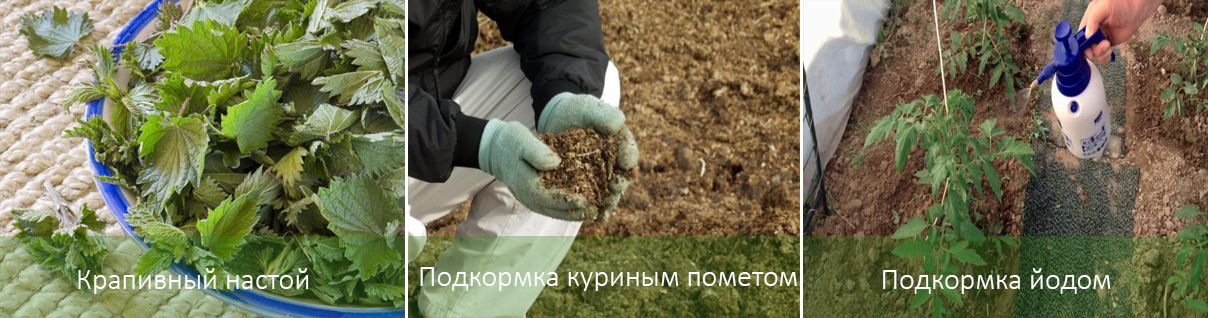
The tincture is easy to prepare and applies immediately: add 4-5 drops of iodine to a bucket of liquid. It is recommended to apply this solution by watering the roots. You can begin fertilizing 2-3 weeks after planting the seedlings outdoors, once they have adapted. Use no more than 2 liters per plant.
Serum supplementation
As a fertilizer, whey isn't the most effective option. However, it is used to prevent late blight, a common tomato disease. Preparing the solution doesn't take much time. Add 1 liter of whey to a bucket of water. You can also add 20-30 drops of iodine and mix thoroughly. This infusion is used for foliar feeding. Spraying is recommended in the evening.
Top.tomathouse.com informs: how to determine what tomatoes lack by their appearance
Although tomatoes are a relatively low-maintenance crop, they require proper care, including vitamins and microelements added through fertilizer. Sometimes, the condition of the plant can easily indicate what additional nutrients the plant needs.
So, with a low nitrogen content, the leaves darken, flowering slows down, and with a high content, the bush is too lush, but ovaries do not form.
If the leaves have acquired a light purple color, it means the tomatoes lack phosphorus; if there is an excess, the green parts turn yellow and dry out.
When potassium is supplied to the plant in excessive quantities, matte marks appear on the branches. If the leaves curl, provide the tomatoes with nitrogen-rich fertilizer.