I don't think it's surprising that tomatoes are often picked unripe and then left to ripen.
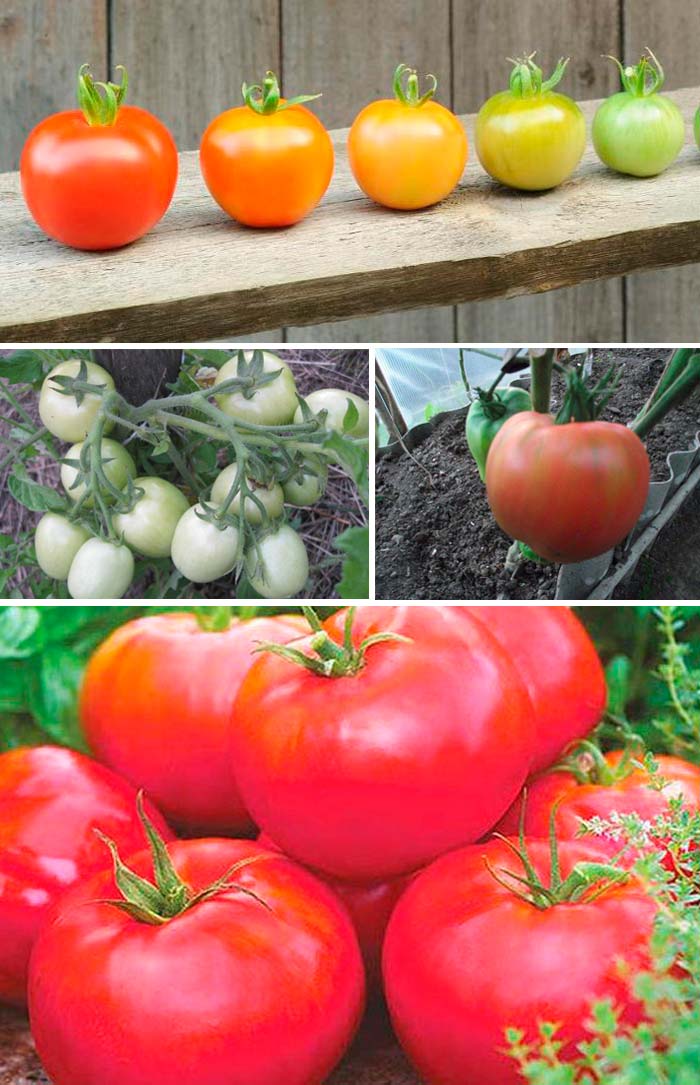
What about the degree of ripeness?
They suggest understanding the degree of ripeness of tomatoes:
- Milky stage occurs when tomatoes reach the average size for their variety (or slightly larger), but have a greenish or whitish color.
- Brown ripeness is also called blanched due to the uneven coloring of tomatoes; pigmentation will completely end in a week or a week and a half (it is most noticeable on unripe dark tomatoes and elongated fruits);
- pink coloring or cream for yellow ones is a transitional stage from brown to technical ripening, which takes 5-6 days.
When harvesting, I always focus on ripeness. In the greenhouse, I try to pick all the pink and cream-colored fruits. Incidentally, they don't burst during blanching, look beautiful in the jar, and stay plump.
I pick brown ones outside and put them on the terrace or on the windowsill at home. Today I'll tell you how to properly harvest and ripen them.
Peculiarities of tomato harvesting
Based on personal experience and mistakes made, I have developed several rules for myself:
- Tomatoes harvested in bright sunshine wilt faster and quickly lose their marketable appearance. I harvest every 5-7 days, depending on the weather.
- In open ground, it's best to harvest all the fruit when the nighttime temperature drops to +5°C. I leave only the small shoots on the upper flowering branches on the bush. If I have time, I wrap each top with a covering material. If I can create temporary shelter from the cold and rain, I can leave the tomatoes on the vines to ripen.
- I even store whole fruits from diseased bushes separately. Late blight is insidious and doesn't show up on the fruit right away. Tomatoes with spots from condensation or insect excrement should also not be stored for long periods.
- I cut part of the harvest in bunches for long-term ripening, and immediately place them in cardboard boxes in only one layer (in winter, I pick up the containers from the nearest store; they are used to pack dairy products and baby food).
- I place the fruits in shallow buckets so as not to damage the ripest ones.
If a tomato breaks off with a sepal, I don't pluck it off intentionally. Fruits from many large varieties fall off on their own.
Storage and ripening features
When my greenhouse was small, I spent a year soaking all my tomatoes in hot water before storing them. Then I realized that healthy tomatoes don't need such temperatures. I only heat-treat the suspect ones with a potassium permanganate solution. I ripen them only indoors, on windowsills, so the light kills any surviving bacteria.
I put the rest, without sorting, in boxes, large bowls, and on trays. One year, I sorted them by ripeness. It took a lot of time, but the result wasn't impressive: they couldn't be used together anyway. Since then, I don't bother myself with unnecessary work.
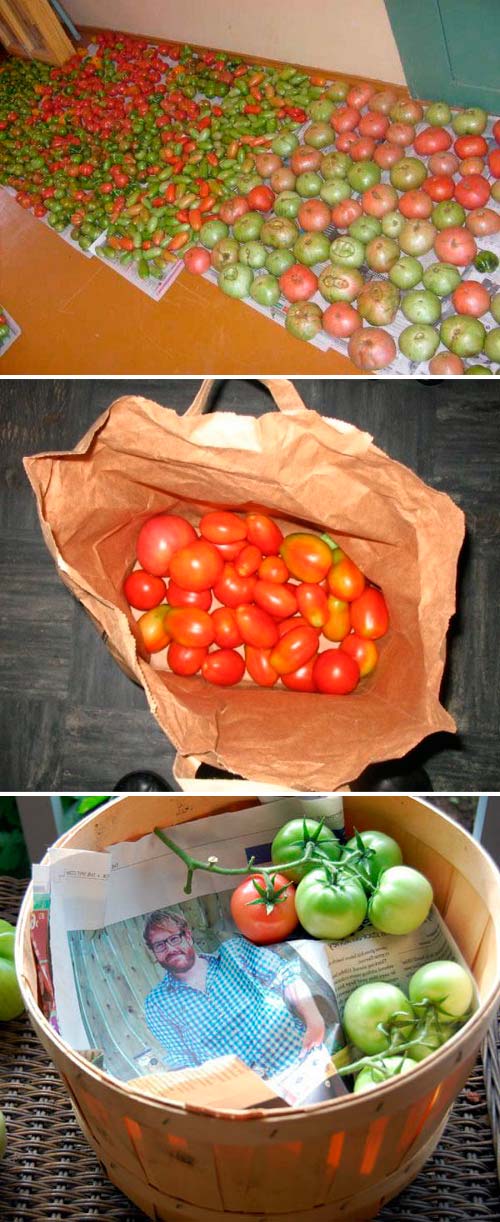
I place filled containers and bins in two, maximum three rows, wherever possible: under furniture, on shelves in the pantry, on cabinets.
When I have time, I make paper spacers out of old newspapers. But even without them, the tomatoes don't interfere with each other. If there was no late blight or other fungal diseases in the greenhouse before the mass harvest, there won't be any rotten tomatoes at all, only ripe, soft ones that happen when you don't check the container in time.
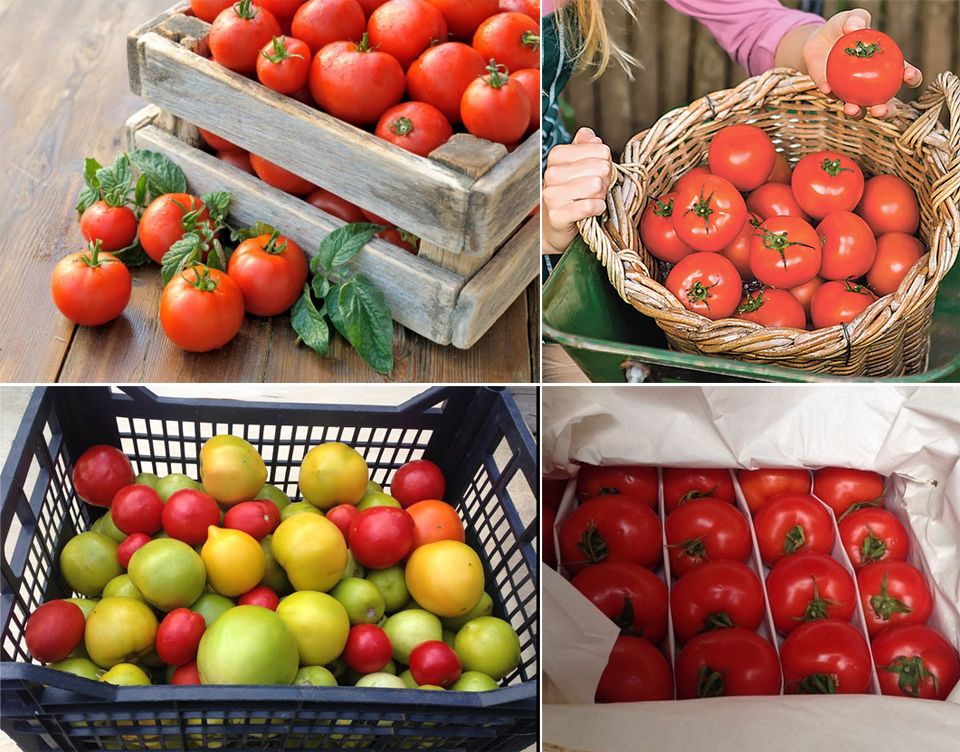
I usually store 1/3 of the harvest on the glassed-in balcony, in seedling jars. I arrange them in tiers, on the floor, and in a row on a shelf. They keep perfectly until the frost. Then I bring the unripe remains into the apartment and scatter them among the empty trays and boxes.
I cover the tomatoes tightly with cloth, each container and box separately. I use scraps of old bedding, folding them in several layers. I recommend always covering the harvest, otherwise fruit flies will plague you. Flies can even get into closed boxes, and a cloth layer is an excellent barrier.
Every 4-5 days I check for spoiled tomatoes and select ripe fruits.
I tried storing some of the harvest in the cellar; the tomatoes lasted well until New Year's, with little rot. But I didn't want to eat them fresh; they looked so-so, and neither did they taste good. My experiment with the refrigerator ended similarly. But they were such a nuisance! Now I only put tomatoes that have ripened elsewhere in the apartment in the vegetable bin.
I noticed that:
- tomatoes ripen faster if you add a couple of apples to them, even when the apples are next to a box of tomatoes, the fruits reach technical ripeness faster;
- in the light they become flabby faster;
- Tomatoes ripen much faster at home than on the balcony.
I tried ripening tomatoes in bags, hanging them on the balcony and in the pantry. Frankly, it's much easier to remove ripe tomatoes from jars and boxes. And then, you can't prevent condensation in the bags. When I noticed moisture, I placed a few paper towels in each bag.
I'd be glad if my experience is useful to you. Happy harvests to everyone!