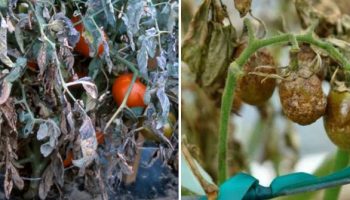
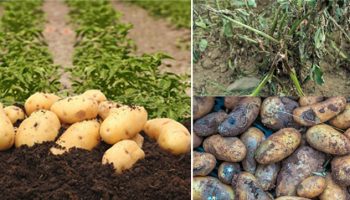
Late blight is a disease caused by fungi-like microorganisms from the Phytophthora family. The name of the disease translates from Greek as "plant-destroying." There are 70 known species of these parasites. Signs of infestation can be seen on trees, grass, and shrubs. Mycelial organisms inhabit the surfaces of garden tools, the soil, and the above-ground and underground organs of affected plants.
Types of late blight
Known species include:
- Phytophthora infestans Mont de Bary. Affects potatoes and other nightshades, active from May to August;
- Phytophthora fragariae Hick. There are two forms (var. Rubi, var. Fragariae). Microorganisms of this type can destroy crops of raspberries, strawberries, and buckwheat;
- Phytophthora cactorum Schroet. Symptoms indicating infection appear on trees from the Rosaceae and Beech families.
If you know how to fight this disease, you can save your crop from this disease.
Read the article about potato late blight.
Symptoms of late blight
To choose control methods, a diagnosis is necessary. Typically, the examination is limited to a visual inspection of the plant.
It should be noted that the best therapy in any case is timely prevention.
A gardener should be concerned if:
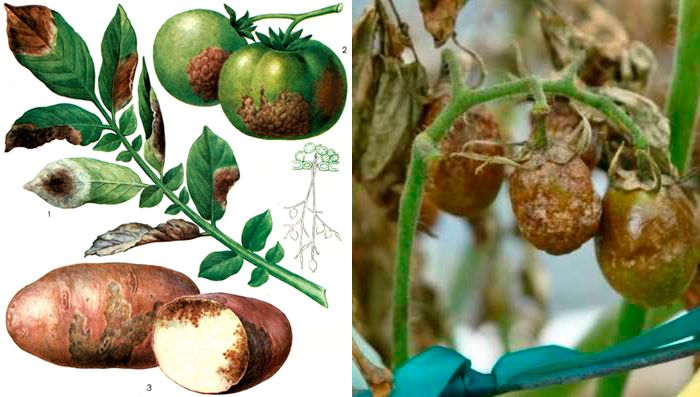
- The following spots of gray, brown, black or purple-brown color appeared on the stems, leaves and roots;
- a whitish coating appeared on the back side of the leaf blades, and a characteristic pigmentation formed on the front side;
- the inflorescences darkened and fell off;
- The fruits first became spotted and then turned black.
The latter symptom often occurs as a reaction to improper cultivation of agricultural and horticultural crops. Saving an affected plant is quite difficult, depending on the stage at which the disease is detected.
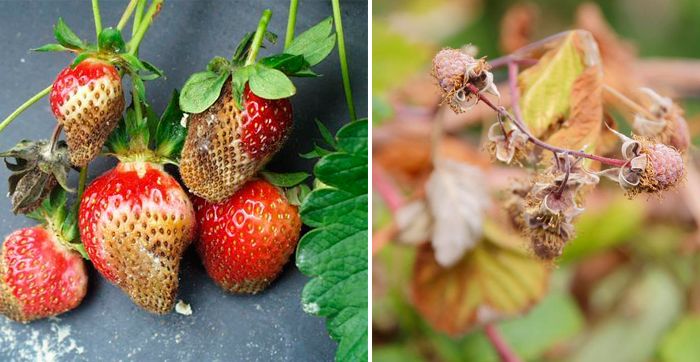
Difficulties arising at this stage are caused by a latent infection or the negative impact of abiotic factors. The seedling remains susceptible to Phytophthora fungi throughout the growing season. Rot caused by late blight is characterized by a dry, hard surface. If left untreated, the affected plant will gradually dry out.
Phytophthora can develop due to the following factors:
- insufficient amount of air;
- the presence of protective shelter;
- condensation formation;
- ignoring the optimal temperature regime;
- incorrect crop rotation;
- excessive planting density;
- excess nitrogen and lime in the soil;
- lack of manganese, potassium, iodine and copper.
Late blight is called an infectious plant eater. The disease initially attacks the lower leaf blades. Gradually, the spots spread to healthy tissue. As a result, the plant rots or dries out. Dark spots appear on infected tubers, which initiate decay.
Late blight lesions on fruits spread both in depth and width. Both green and mature vegetables are at risk.
Causes of late blight
Late blight is transmitted from diseased plants to healthy ones through direct contact, soil, and wind. Harmful spores are carried throughout the garden by the gardener's shoes. Pets and insects should also be considered. They can also carry the infection.
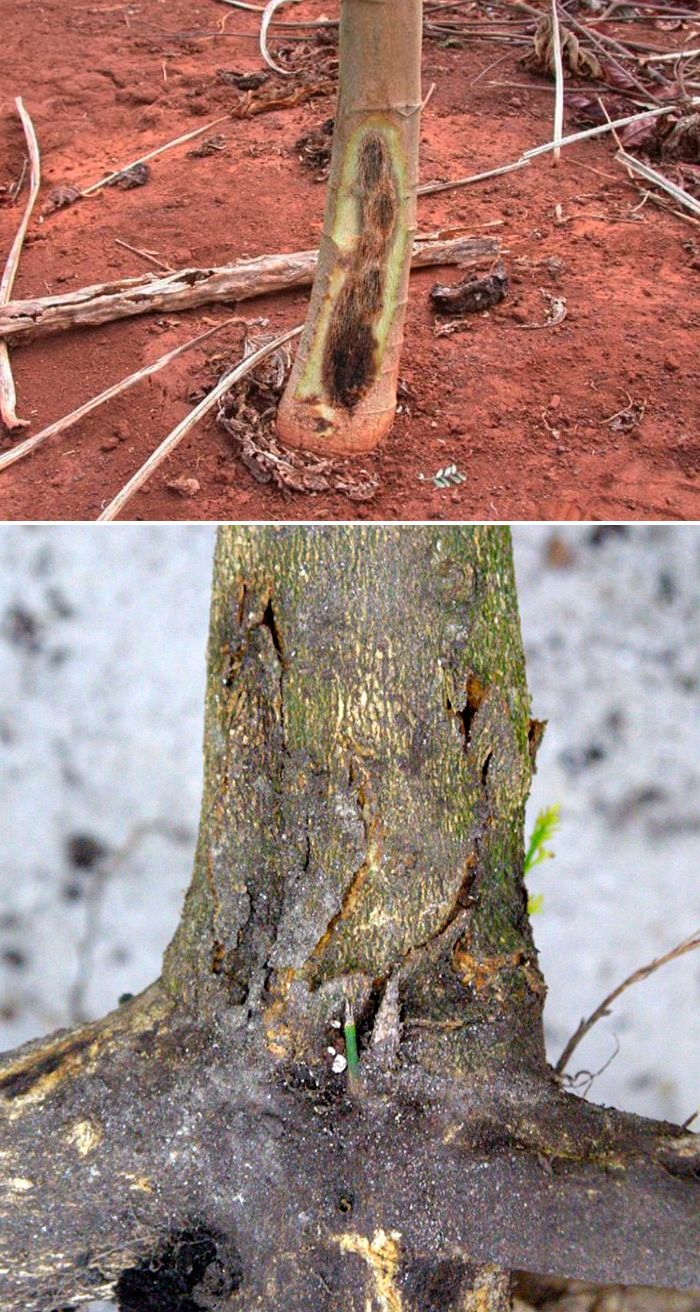
The pathogen can survive in the soil for several years. In this case, it will become active when favorable conditions arise. The disease can be cured using chemicals and traditional methods.
Prevention of late blight infestation in open ground
This is one of the most important stages. Preventive measures include:
- Purchasing varieties that are resistant to late blight. It's best to choose early-ripening hybrid varieties;
- etching the material before planting;
- Selecting a suitable location. This should be based on the needs of the crop being planted;
- following the recommended sowing dates;
- Maintaining crop rotation. For example, tomatoes should not be planted after other members of their family. Their close proximity is also unacceptable;
timely implementation of agricultural procedures (loosening, mulching, fertilizing, pruning, tying up bushes); - planting suitable neighbors. For tomatoes, this includes garlic, pole beans, onions, peas, corn, and marigolds;
- Proper watering. Water should be applied to the roots, avoiding contact with leaves and fruit.
Read about late blight on tomatoes.
If the lime content is high, add onion peels and peat moss to the hole. The soil around the bush should be covered with sand.
Plants should not be planted too close to each other.
By using immunomodulators, gardeners can increase the resistance of crops. However, they should not neglect to remove debris and waste from the soil, which can become sources of infection.
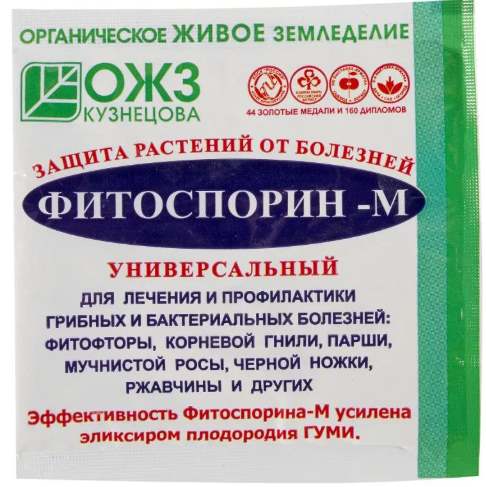
Preventive treatment often includes spraying with Trichodermin and Fitosporin-M.
There are many methods for protecting or curing plants from late blight. It's important to carry out treatment in dry weather. However, delays are not limited to precipitation. Strong winds are another factor that can cause damage. Air temperature should also be considered.
How to cultivate the land
For this purpose, microbiological preparations and fungicides are used. The latter are applied to the soil in the spring (4 weeks before planting) and in the fall.
It should be noted that chemical treatment is contraindicated during the flowering period. This is due to the high risk of bee damage.
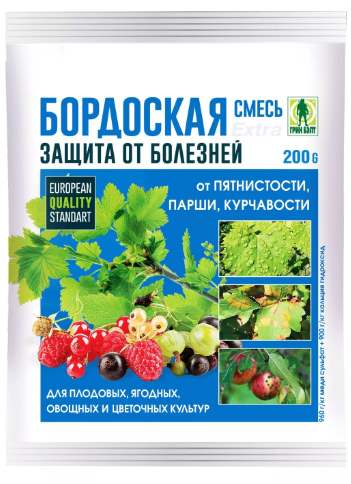
The following preparations are especially popular among gardeners: Ordan, copper sulfate, Trichodermin, Bordeaux mixture, Fitosporin-M.
Preventive measures in the greenhouse
To prevent plants in shelter from suffering from this disease, the gardener must monitor the temperature and humidity.
The list of recommended measures also includes:
- Disinfect equipment and the area before planting. Sulfur checkers can be used at this stage. This process must be carried out in full compliance with safety regulations.
- Compliance with agricultural requirements. Watering should be infrequent but abundant.
Neglecting these measures can lead to the loss of the entire crop. Regular preventative treatments minimize the risk of late blight.
Actions in case of infection in a greenhouse
Late blight is a disease that cannot be completely cured. Agricultural crops can be protected from it by suppressing the activity of harmful microflora. The treatments for plants planted in greenhouses and outdoors are the same. In any case, multiple treatment sessions are necessary; otherwise, the beneficial effects of chemical compounds and traditional remedies are unlikely to be realized.
It's important to note that the risk of poisoning is much higher when treating late blight in a greenhouse than when treating outdoors. To avoid this, gardeners must take all necessary precautions.
How to treat a greenhouse against late blight
All agrochemicals and pesticides used in agriculture are listed in the State Catalog. To get rid of late blight, you will need the following products:
- Consento - fenamidone, propamocarb hydrochloride;
- Sectin Phenomenon – mancozeb, fenamidone;
- Previkur Energy – fosetyl, propamocarb;
- Thanos – cymoxanil, famoxadone.
Hom is especially popular among gardeners. This fungicide contains copper oxychloride.
Many people use Furacilin, Metronidazole and Trichopolum as a treatment.
Fitosporin is the leading pesticide. It can be combined with other products. Ordan is a Class 3 fungicide. The frequency of application is determined by the duration of the therapeutic effect. The solution is prepared according to the included instructions.
You can also use potassium permanganate, calcium chloride, brilliant green, boric acid, Bordeaux mixture, copper sulfate and calcium nitrate.
Fighting late blight with folk remedies
The list is quite extensive. To achieve maximum effect, folk remedies should be used in conjunction with chemical treatments.
| Means | Preparation and use |
| Garlic infusion | Add 100 g of crushed flower heads to one glass of water. Let it steep for 24 hours. Strain and add to a 0.1% potassium permanganate solution. At least 12-14 days should pass between sprayings. |
| Ash | It's used both for dusting and for preparing a solution. The latter is made from 5 kg of ash and 10 liters of liquid. Liquid soap is added to enhance the adhesion effect. |
| Acetic acid | You'll need a bucket of water and half a glass of vinegar. Treat the plants whole. |
| Toothpaste | Use one tube per 10 liters of liquid. Spray the entire bush, preferably after rain. |
| Rotted hay | You'll need 1 kg of rotted hay, 100 g of urea, and 10 liters of heated liquid. Let the mixture steep for 3 days. |
| Copper wire | Before planting, the roots of the seedlings are carefully wrapped with copper wire, which is pre-heated. |
Gardeners can choose any of the methods listed above. The key is to carry out prevention and treatment promptly. Otherwise, late blight will quickly spread throughout the plot and ruin the entire crop.