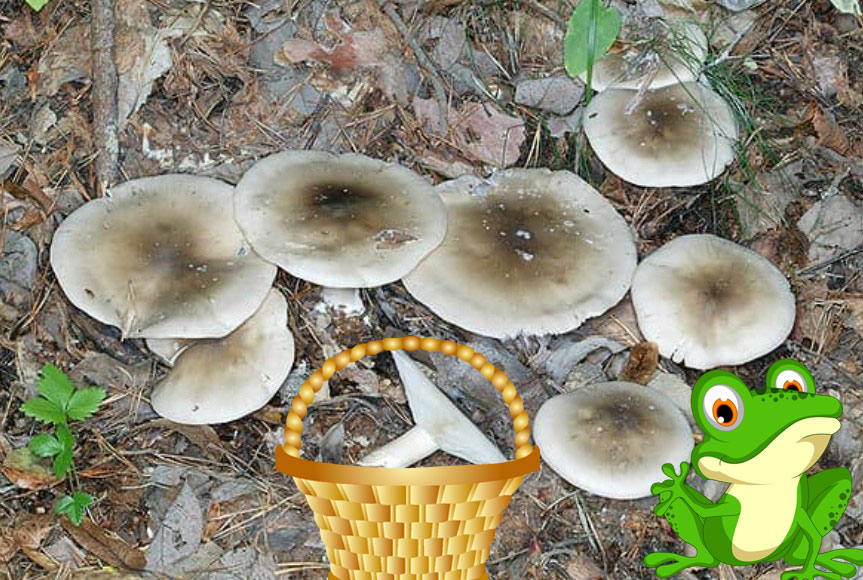
The smoky or gray talker (Clitocybe nebularis) is one of the edible varieties of talkers. When picking it, it's important not to confuse it with its poisonous relatives, of which there are many. This article will tell you how to avoid these mistakes, when to start picking, and what benefits these mushrooms offer.
Content
- 1 Description of the smoky (gray) talker mushroom
- 2 Where and when does the smoky talker grow?
- 3 How to distinguish between the smoky (gray) talker: 5 dangerous look-alikes + lots of photos
- 4 Edibility of the grey talker
- 5 Nutritional value of smoky talker
- 6 The benefits and harms of the smoky talker
- 7 The medicinal use of the smoky talker
- 8 How to cook smoky talker
- 9 Growing talker or smoky rowan on your own
- 10 Reviews of mushroom pickers about the gray and smoky talker
Description of the smoky (gray) talker mushroom
The smoky talker (Clitocybe nebularis) belongs to the Tricholomataceae family and has several other names: smoky talker, smoky-gray talker or gray talker.
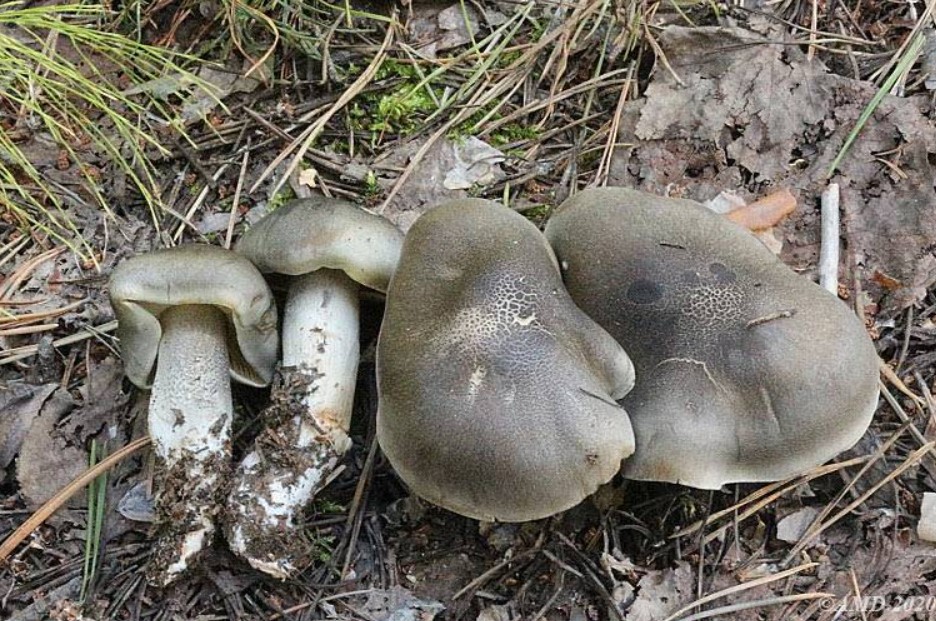
hat
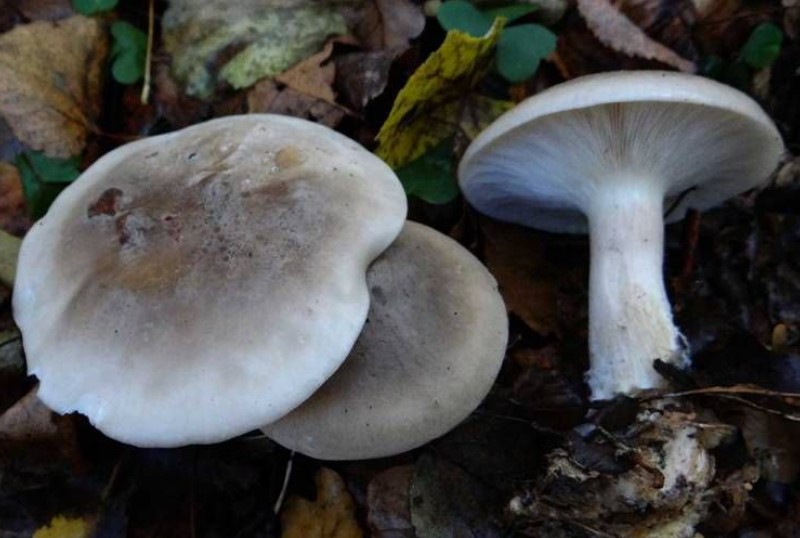
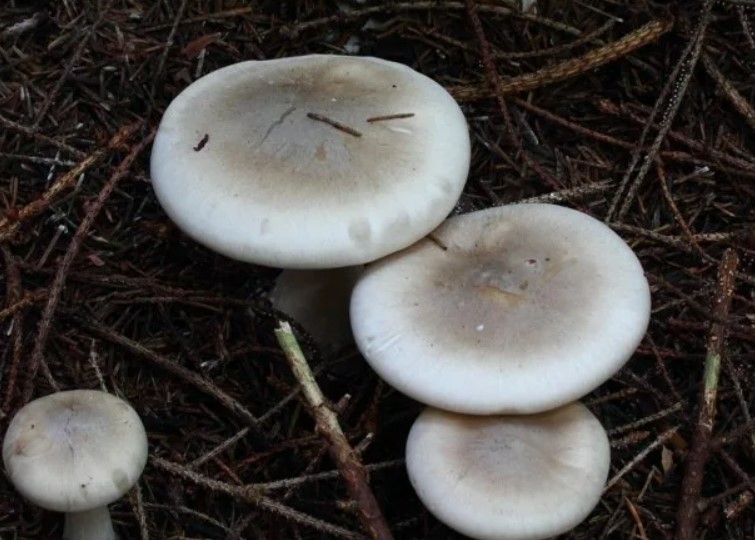
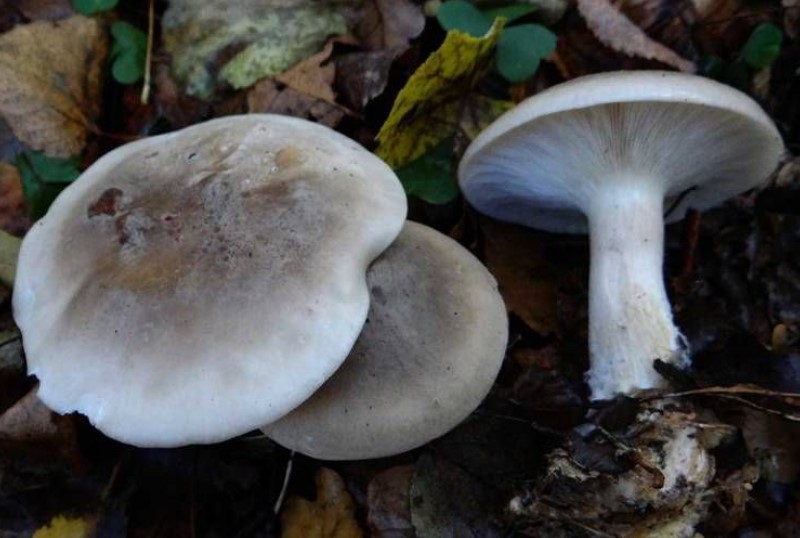
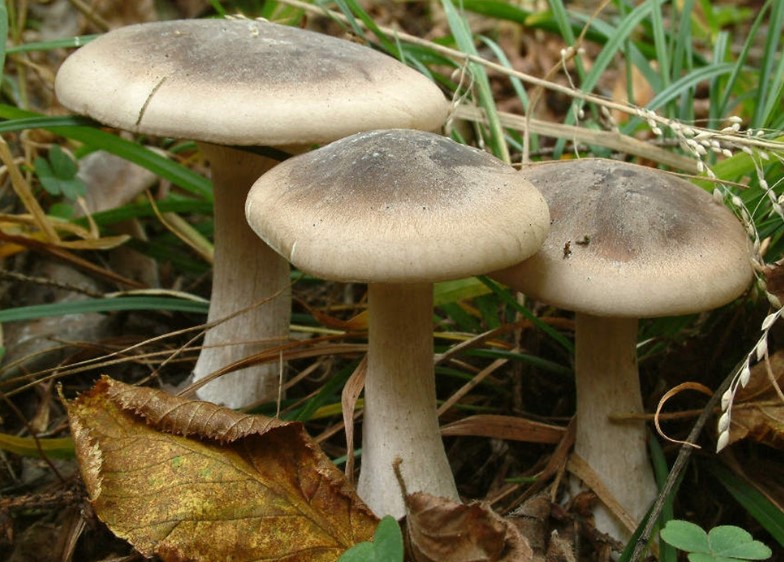
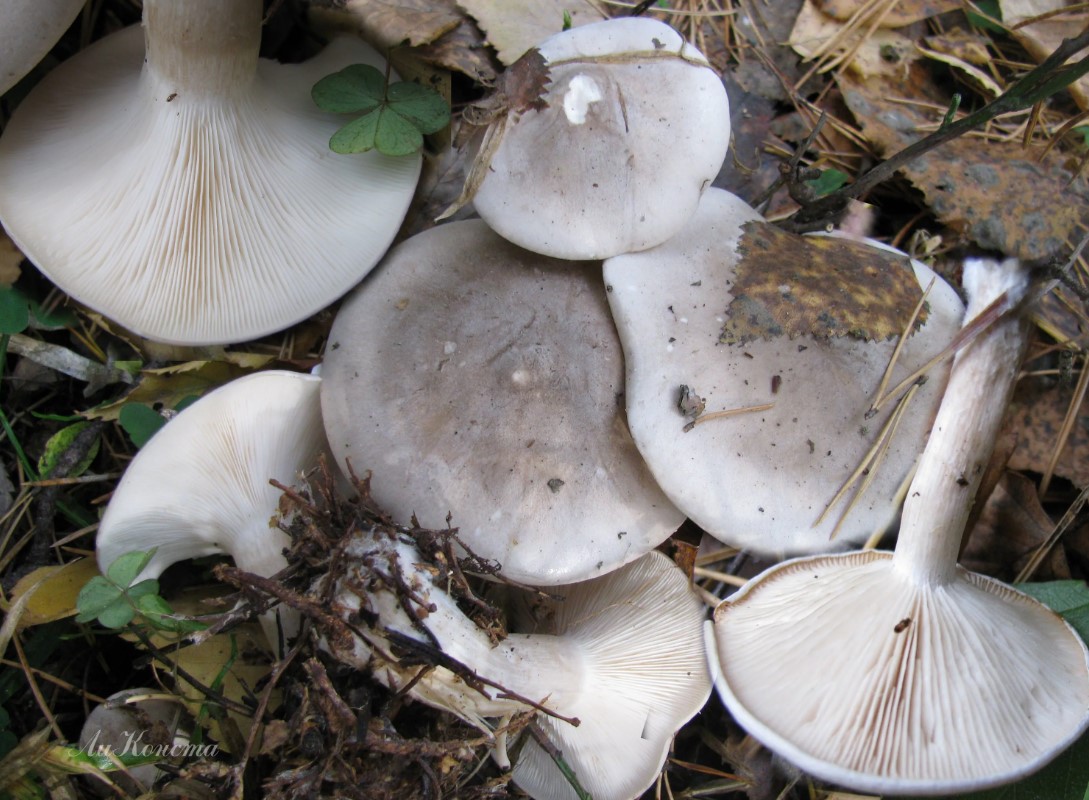
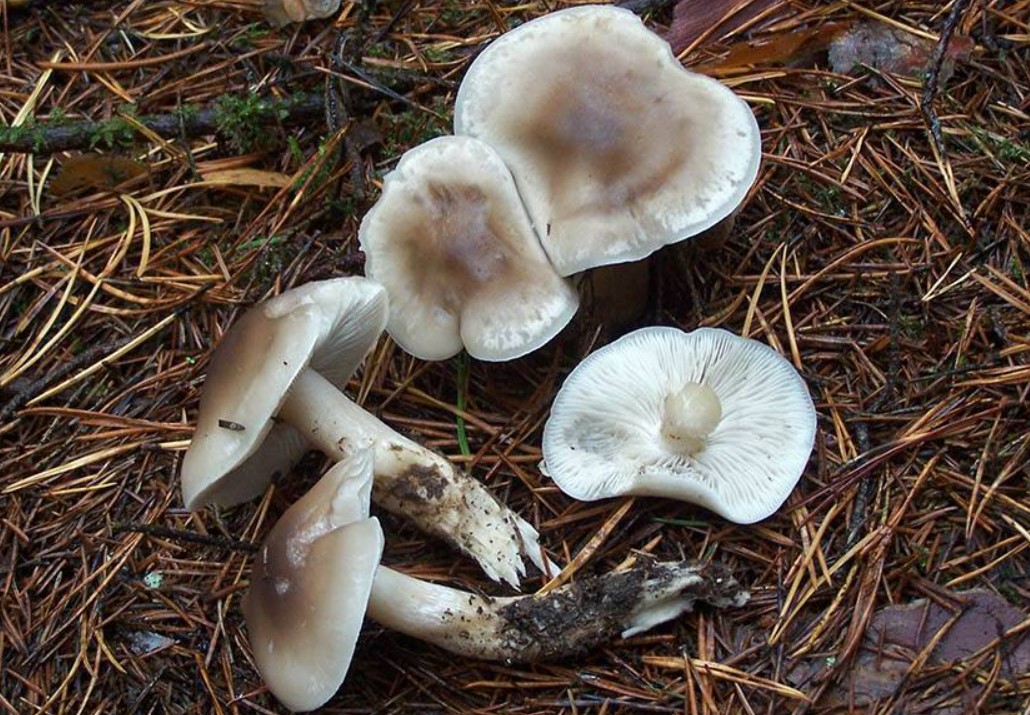
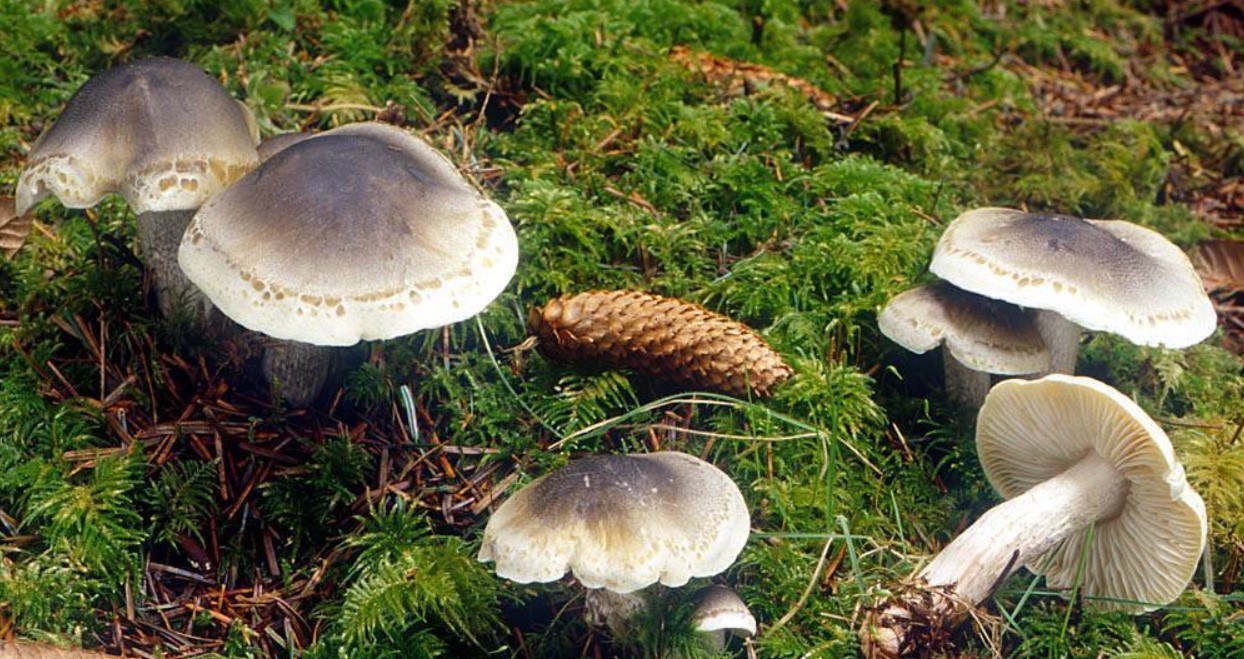
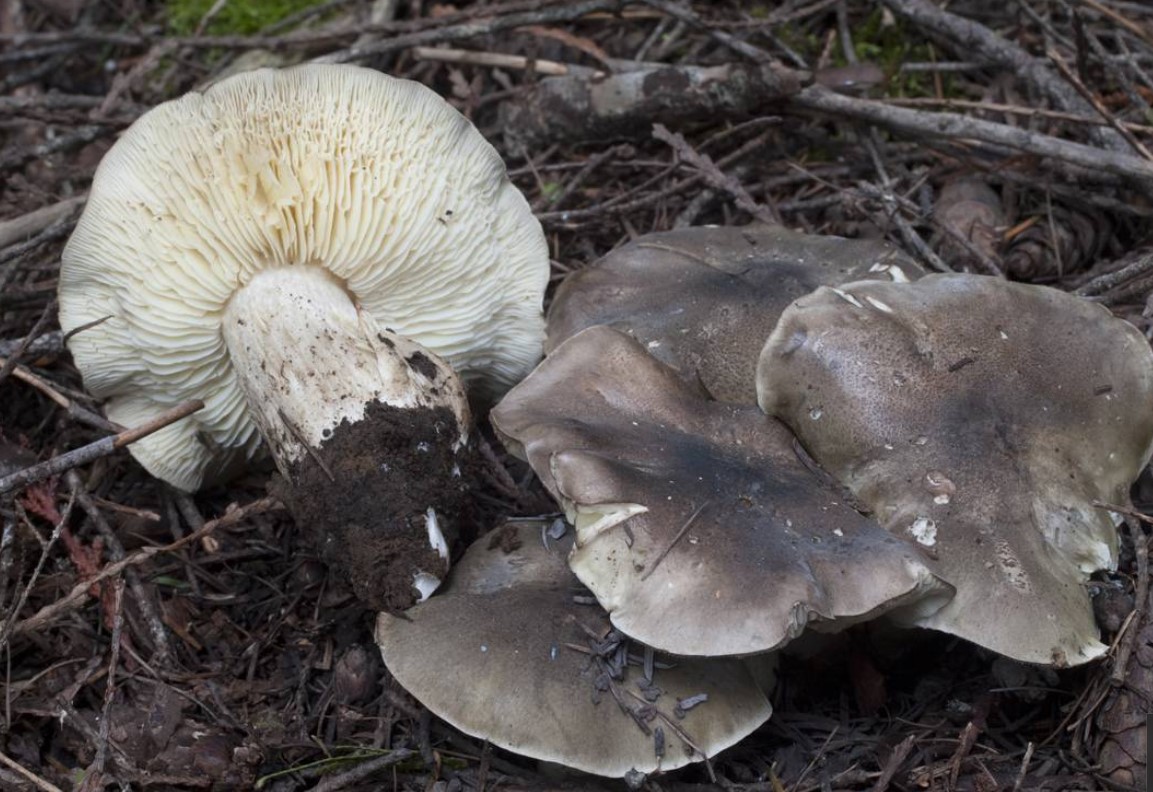
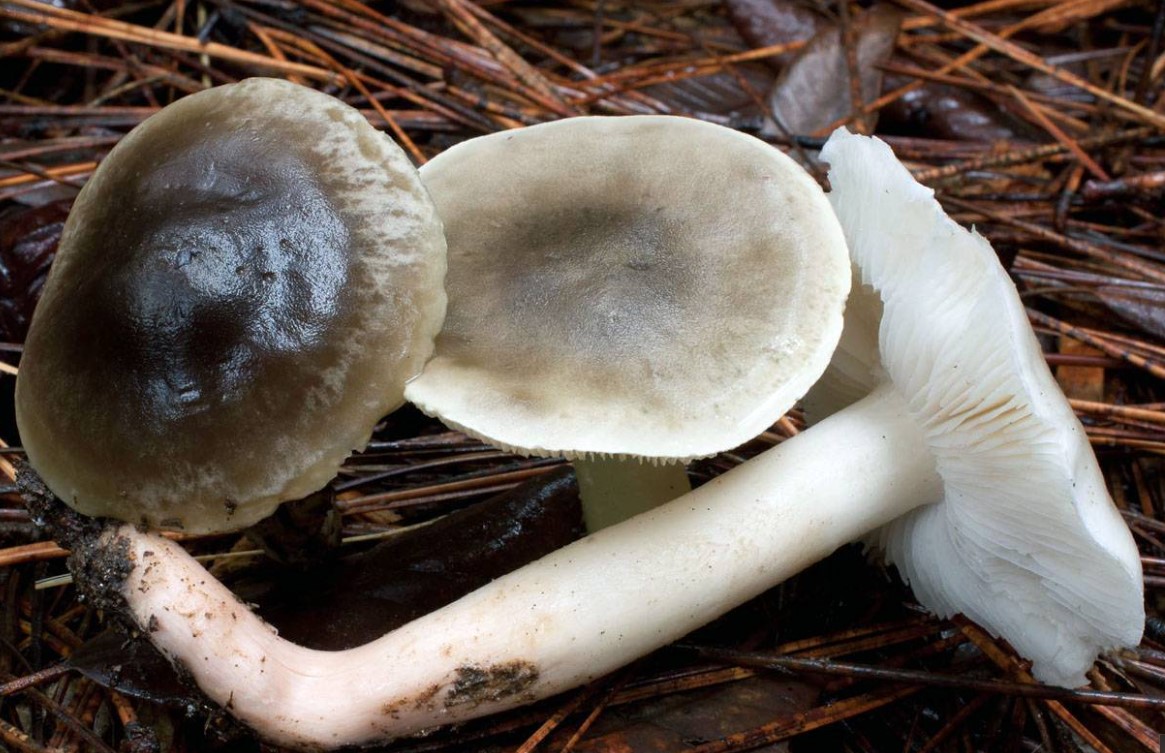
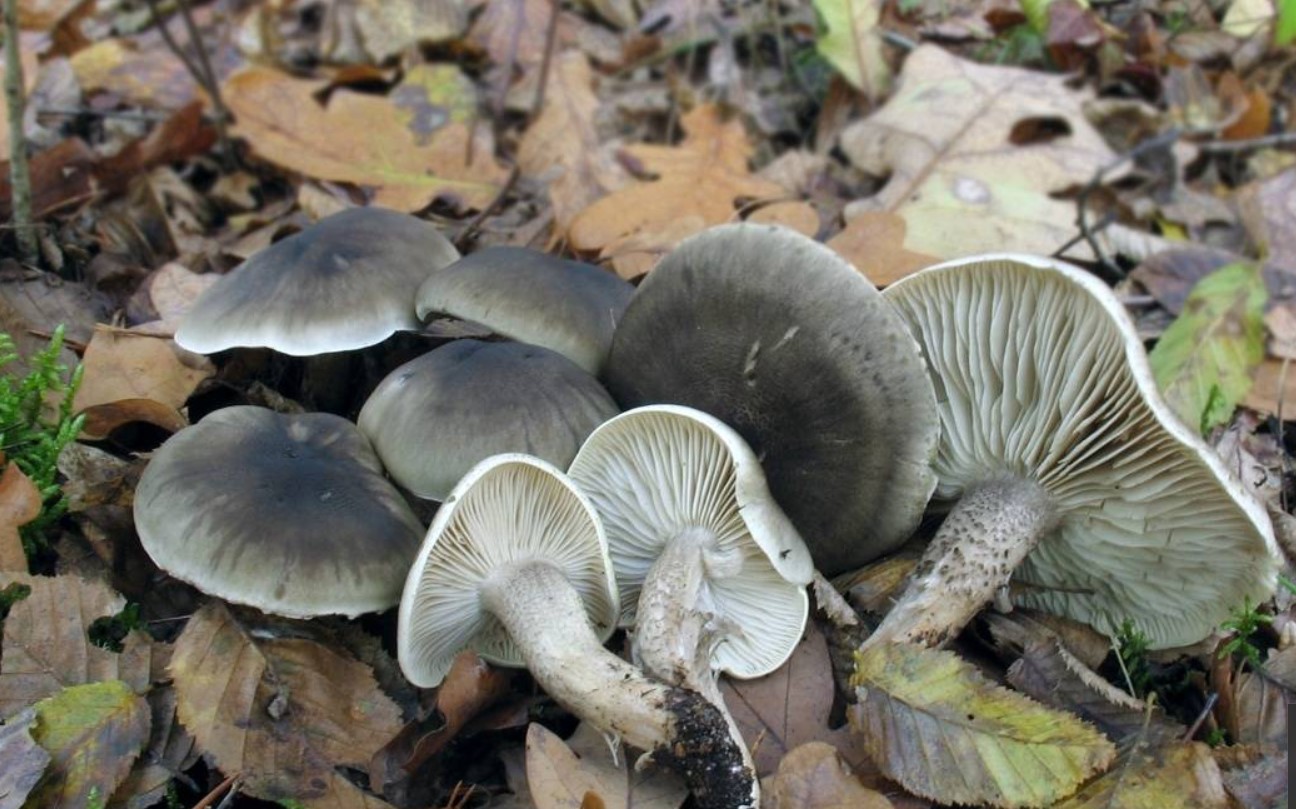
The caps of the smoky talkers are quite large, ranging from 10-15 cm in diameter, sometimes reaching 25 cm, with edges always curled under. In the early stages of development, the shape is hemispherical, later becoming semi-prostrate. The older the mushroom, the flatter its cap will be.
The cap is gray, but may have an ash or yellowish tint. The center is usually darker than the edges. The skin is covered with a powdery coating.
Hymenophore
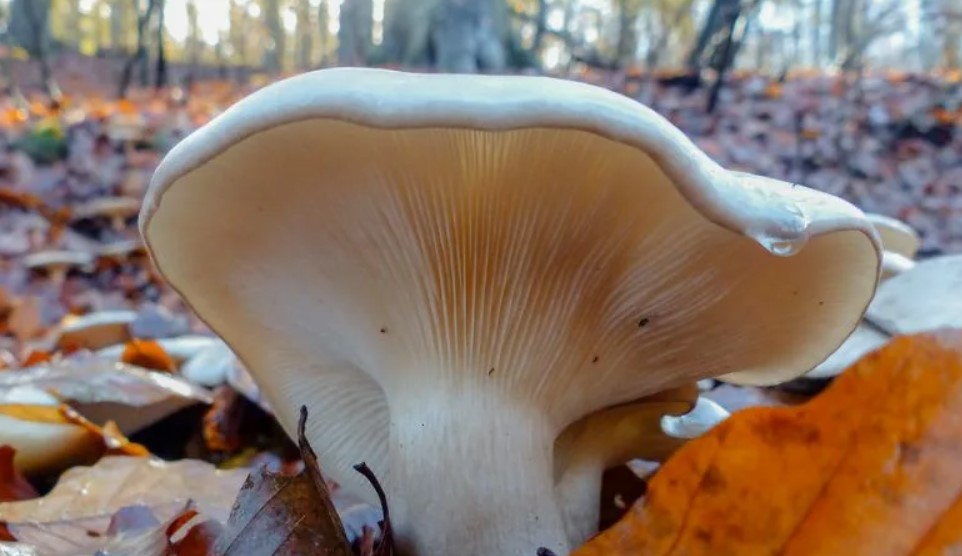
The fruiting body of the smoky talker is its main distinguishing feature from poisonous varieties. The gills, located on the underside of the cap, are light or slightly yellowish in color. They are located quite closely together and always descend onto the stem, giving the mushroom a resemblance to milk mushrooms and chanterelles.
Pulp
The flesh is very aromatic, with a floral-fruity scent that lingers when cooked. The texture is firm, becoming more fluffy as the mushroom matures. The color is white.
Leg
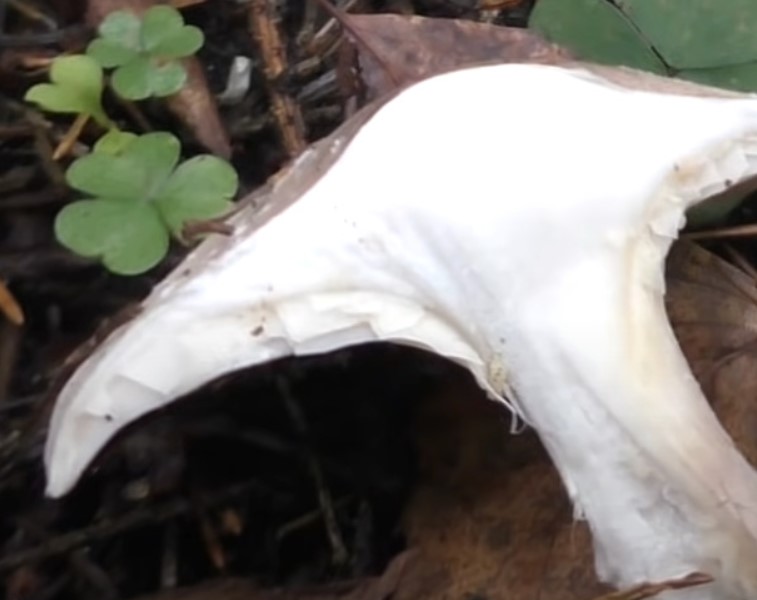
The stem is cylindrical. As it grows, a widening develops at the base. It is white in color and reaches a height of 6-10 cm. Its diameter reaches 3 cm. It is believed that the age of the smoky talker can be determined by the cleanliness of the stem: the less leaves, pine needles, and sand adhered to it, the older the mushroom.
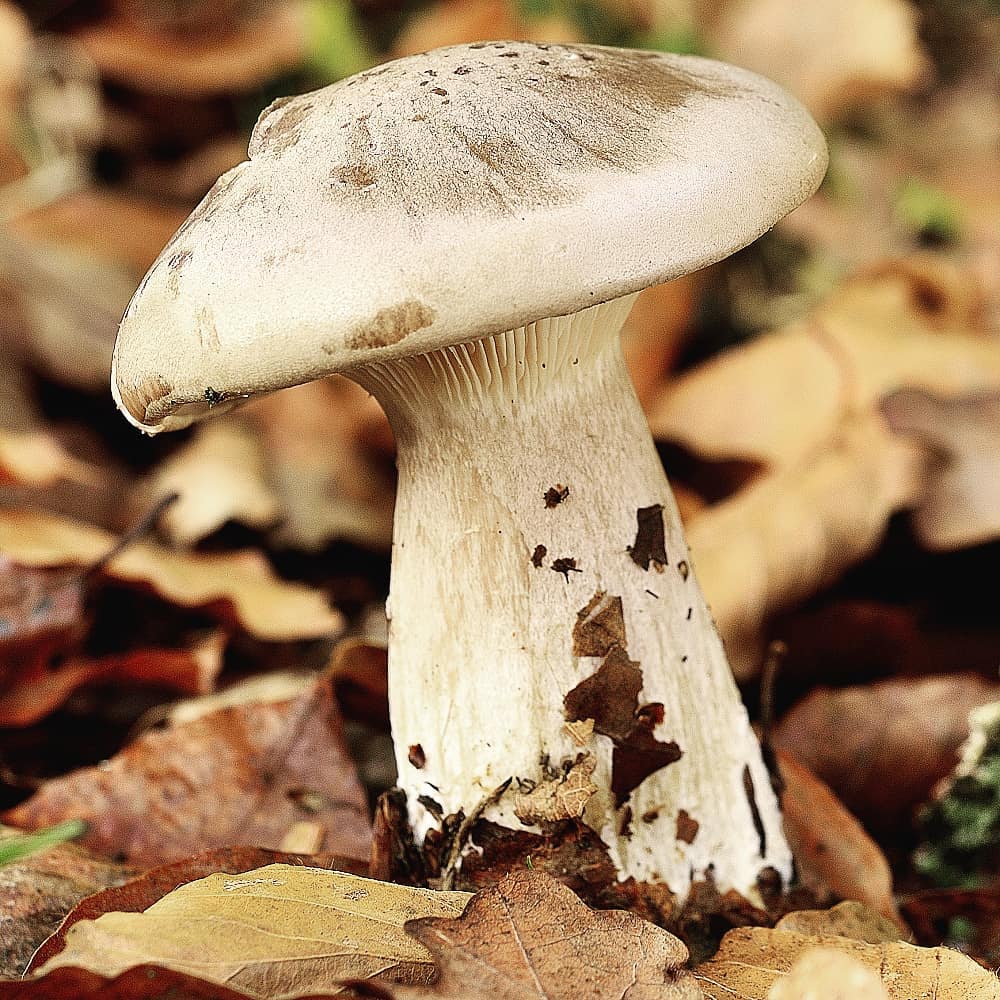
Photo gallery of the smoky rowan
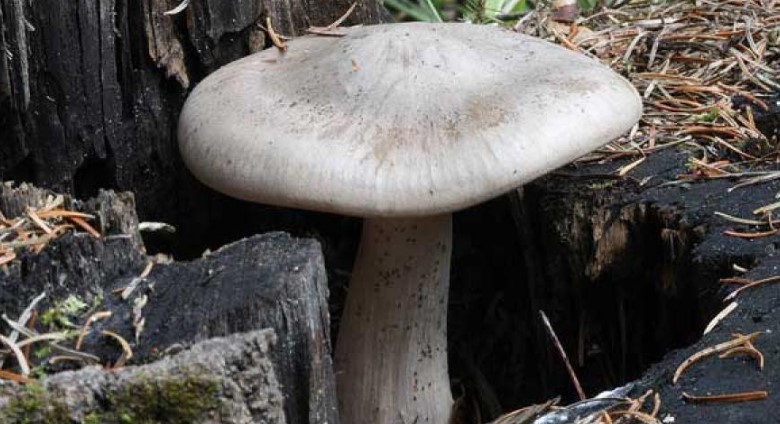
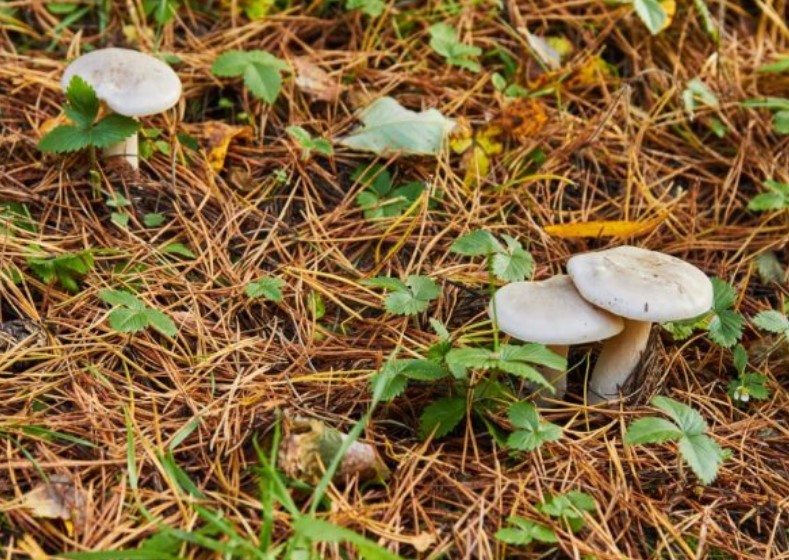
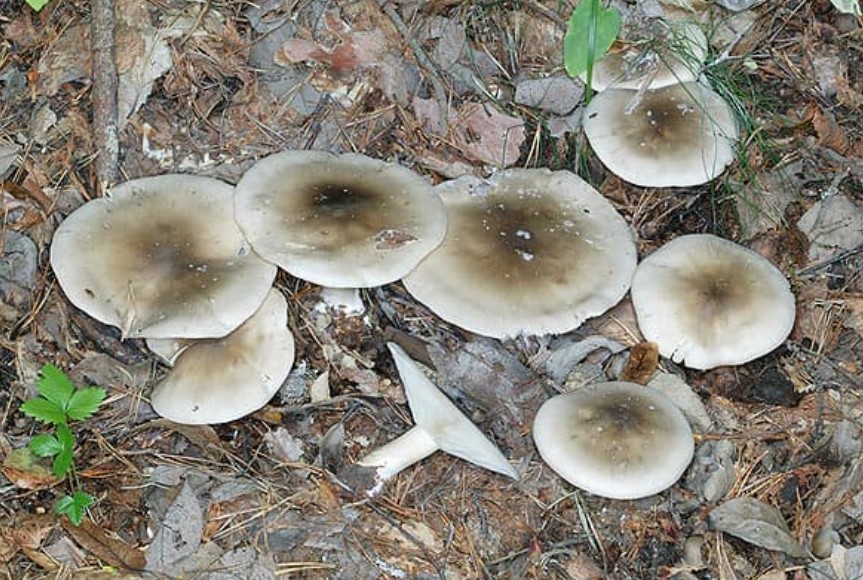
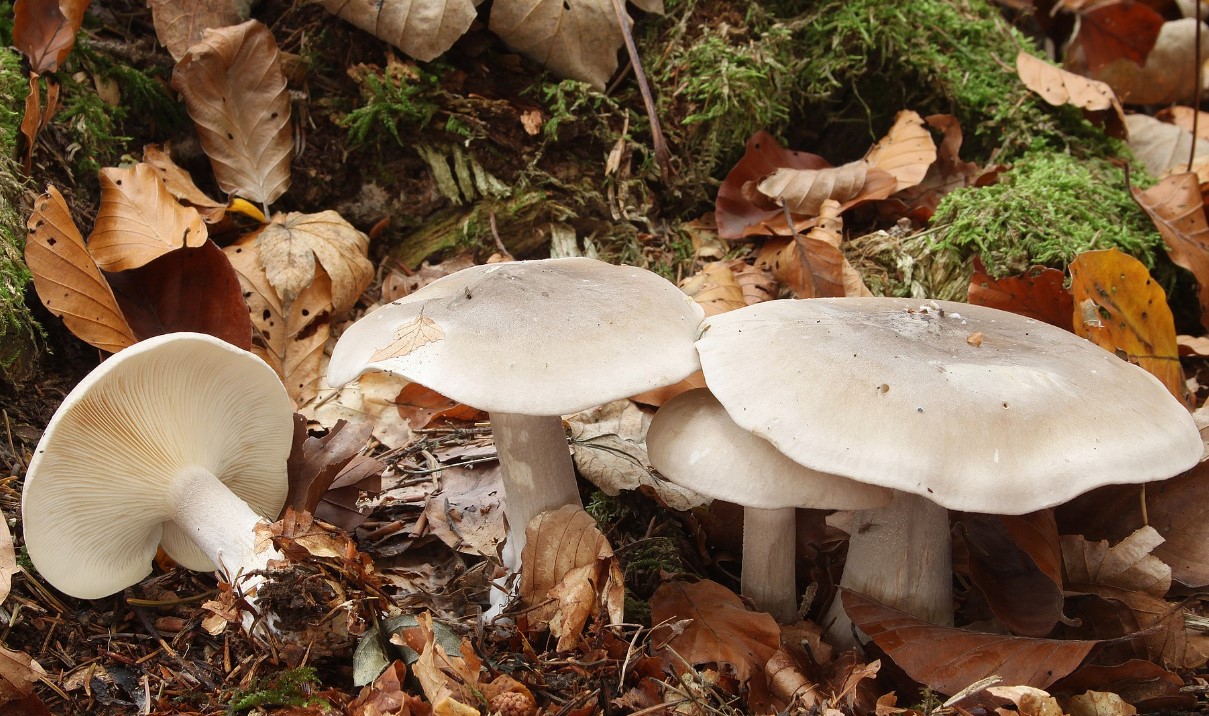
Where and when does the smoky talker grow?
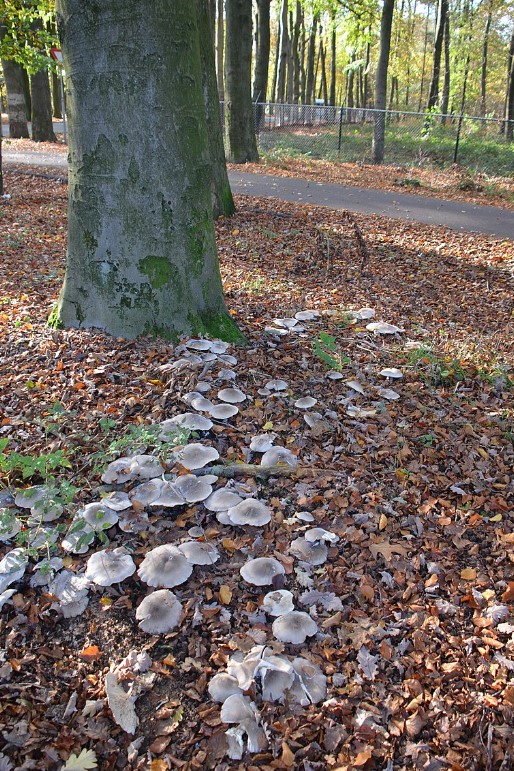
The smoky talker prefers coniferous and mixed forests. Mushrooms can be found along country roads, at forest edges, and in clearings—in other words, anywhere there's a bed of damp leaves and decaying pine needles. They grow in tightly packed groups, or "fairy circles."
The habitat is quite wide; these mushrooms are found throughout the Northern Hemisphere.
How to distinguish between the smoky (gray) talker: 5 dangerous look-alikes + lots of photos
The smoky talker does not have any outstanding features, so it is extremely easy to confuse it with its deadly relatives.
The most important thing every mushroom picker should remember is the characteristic gills of the smoky talker—they always extend down the stem from the underside of the cap. If this isn't the case, you're definitely not looking at a smoky talker.
Another important point is that edible mushrooms are very popular with worms and other forest creatures, so their presence is the first sign that the find is safe.
Below we will look at the most common look-alikes of the smoky talker, which are most often found in our forests.
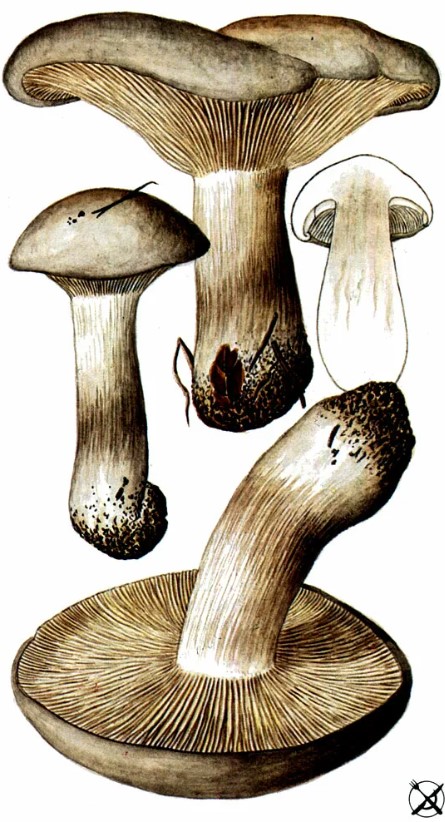
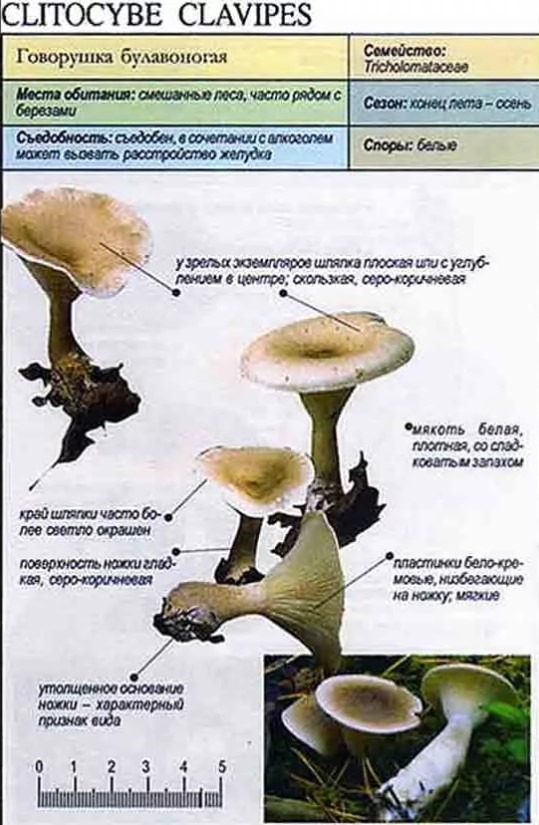
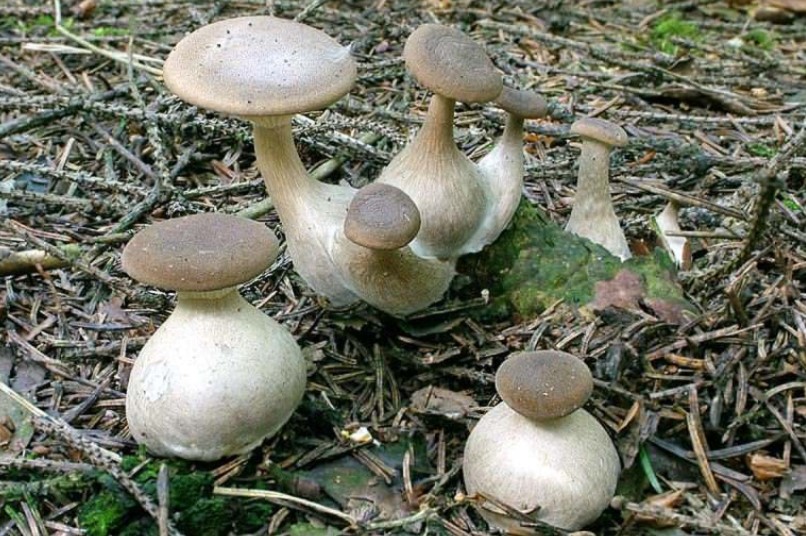
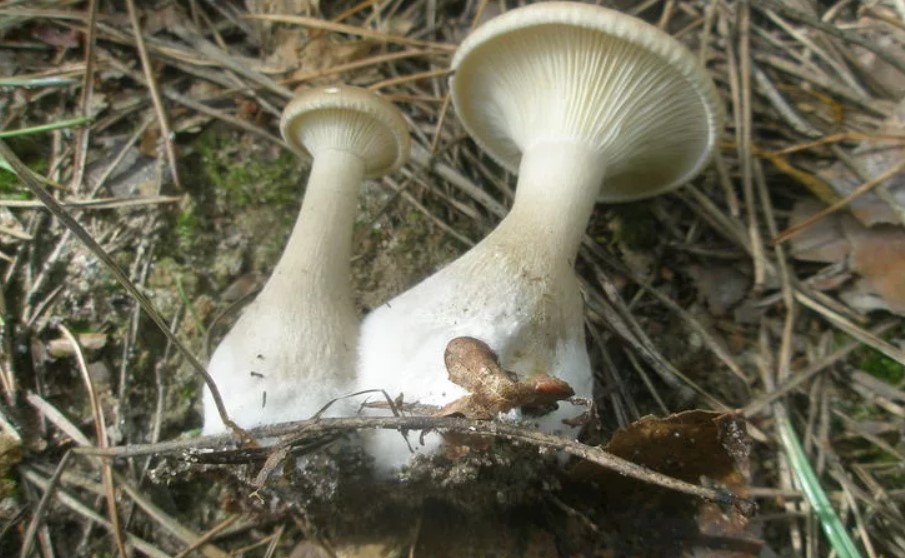
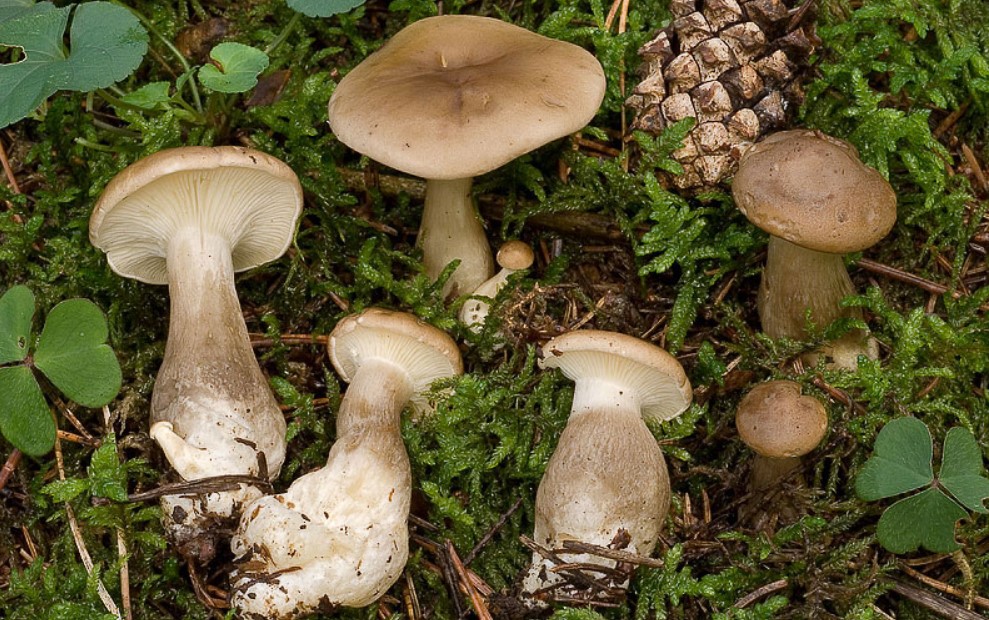
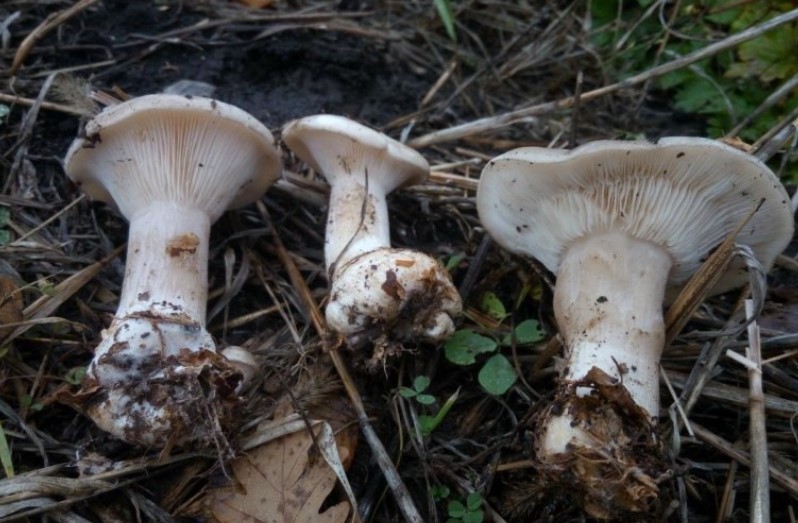
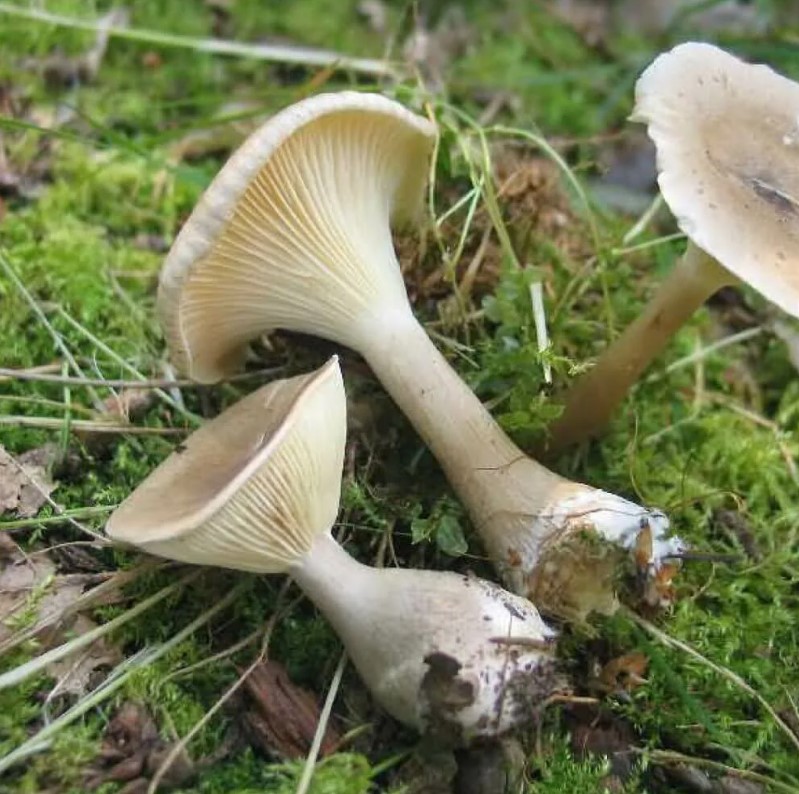
Club-footed talker (Clitocybe clavipes)
Distinctive features of this mushroom:
- The fruits are significantly smaller than those of the smoky talker.
- The cap has a distinct funnel shape.
- The plates do not come off the stem and are cream-colored.
- No powdery coating.
- There is a fringe at the base.
- The pulp exudes a sweetish aroma.
Photo gallery of the club-footed talker
Entoloma sinuatum
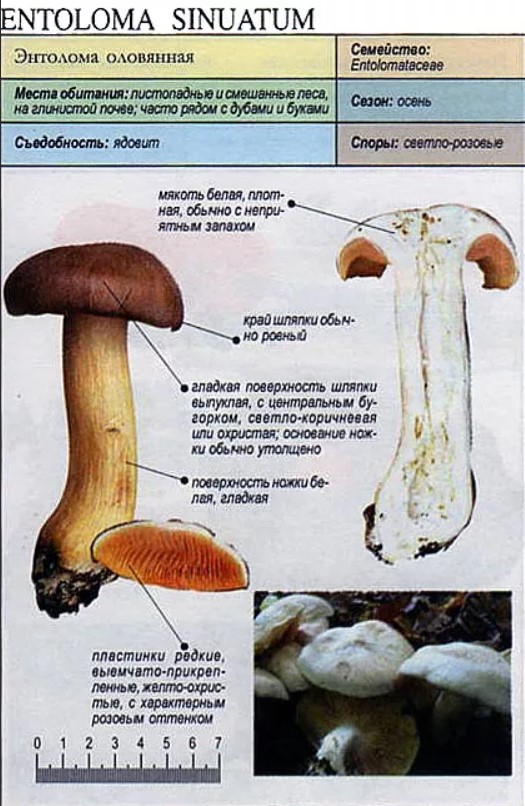
The following distinctive features will help you recognize this species:
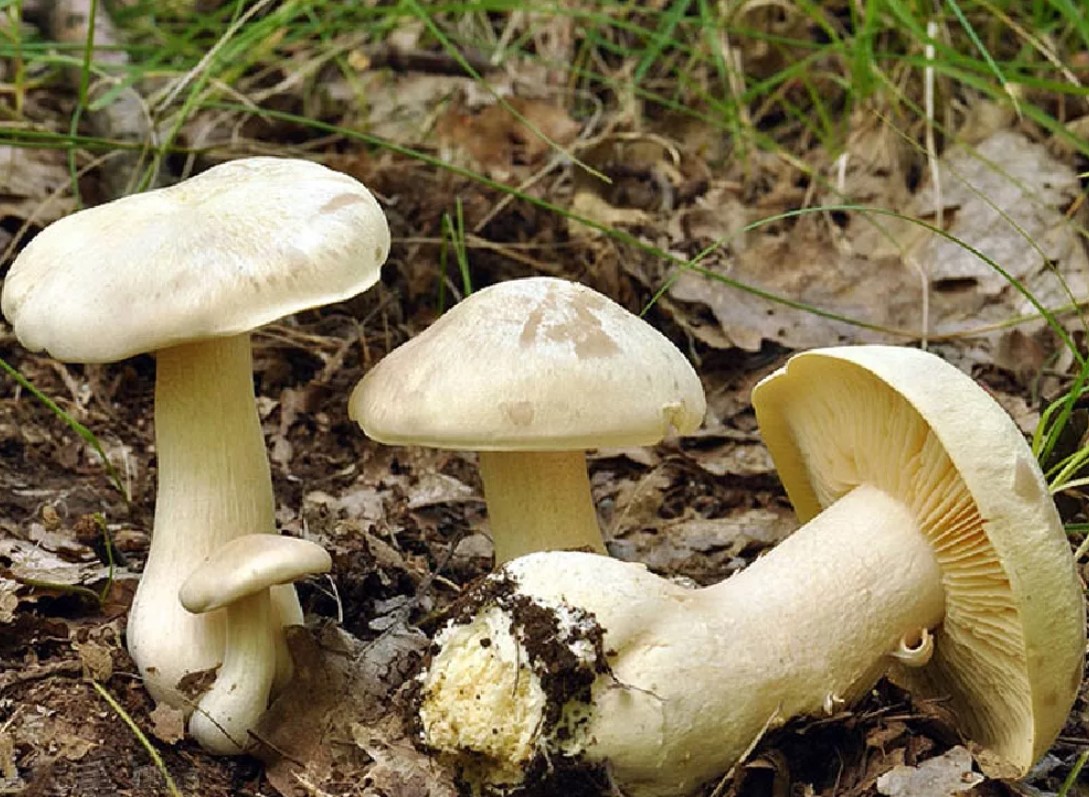
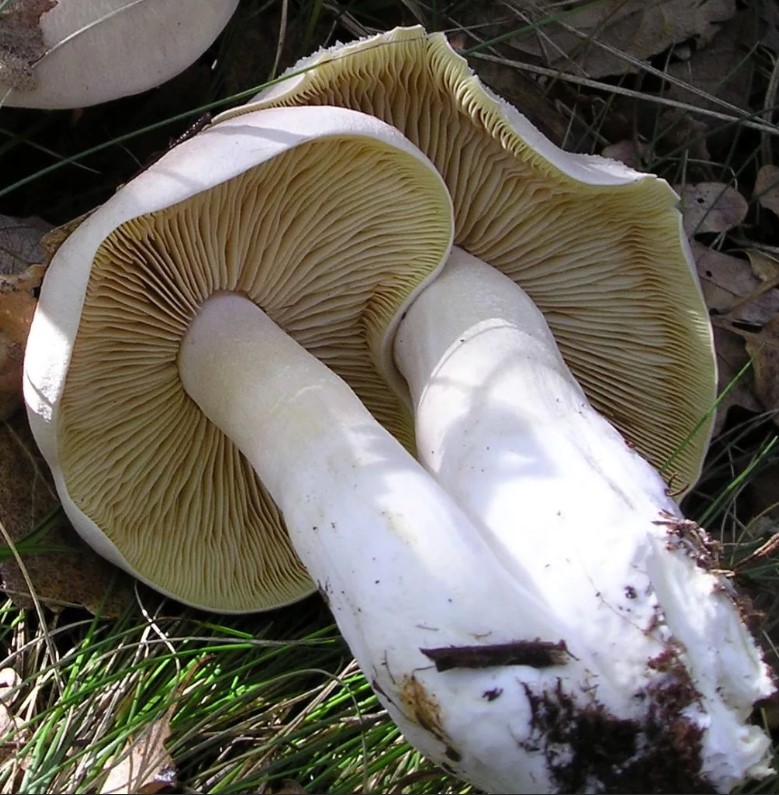
- The cap is smooth, silky, without bloom.
- The color of the mushrooms is brown or yellowish.
- The leg is shiny.
- The plates have a pinkish tint.
- The pulp is dense, thick, with an unpleasant aroma.
Photo gallery of Entoloma tinctoria
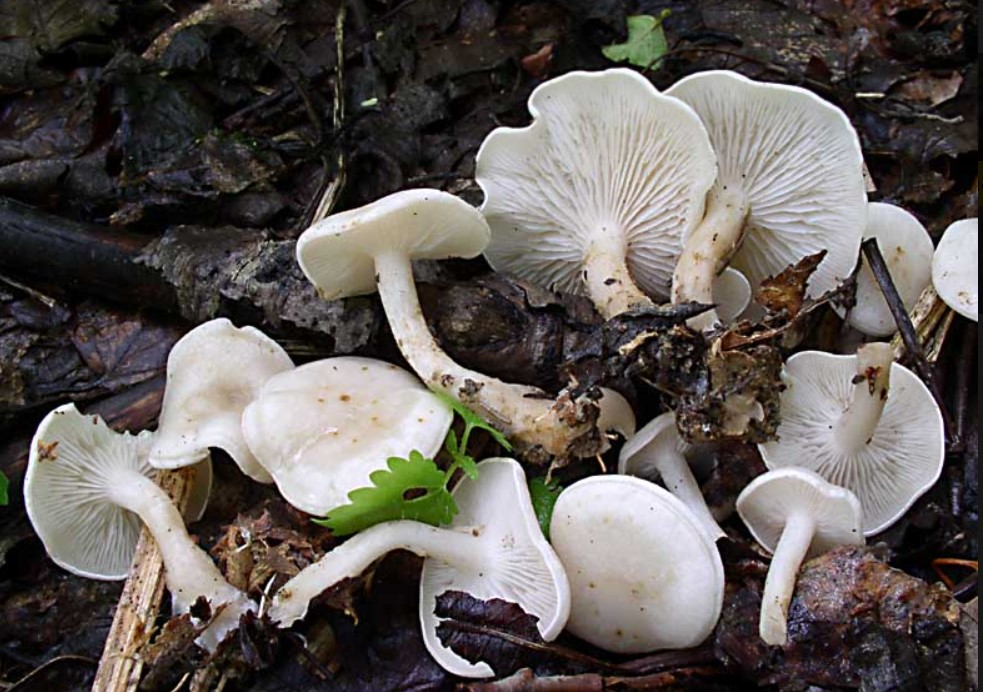
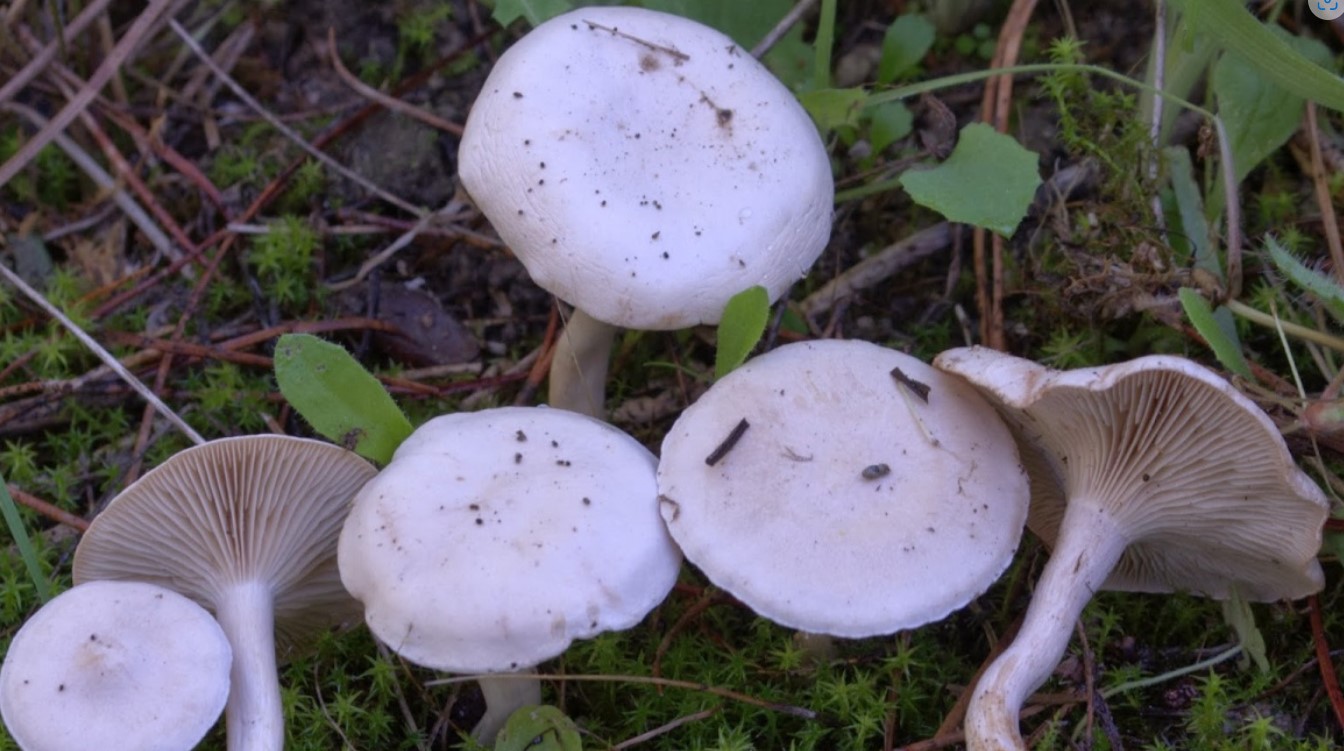
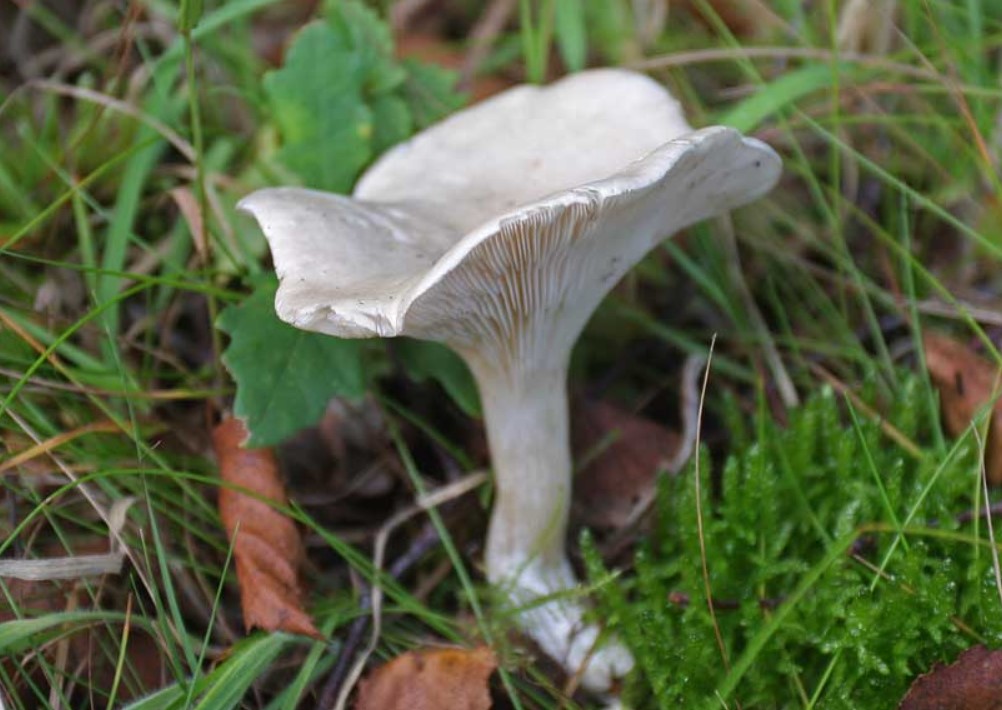
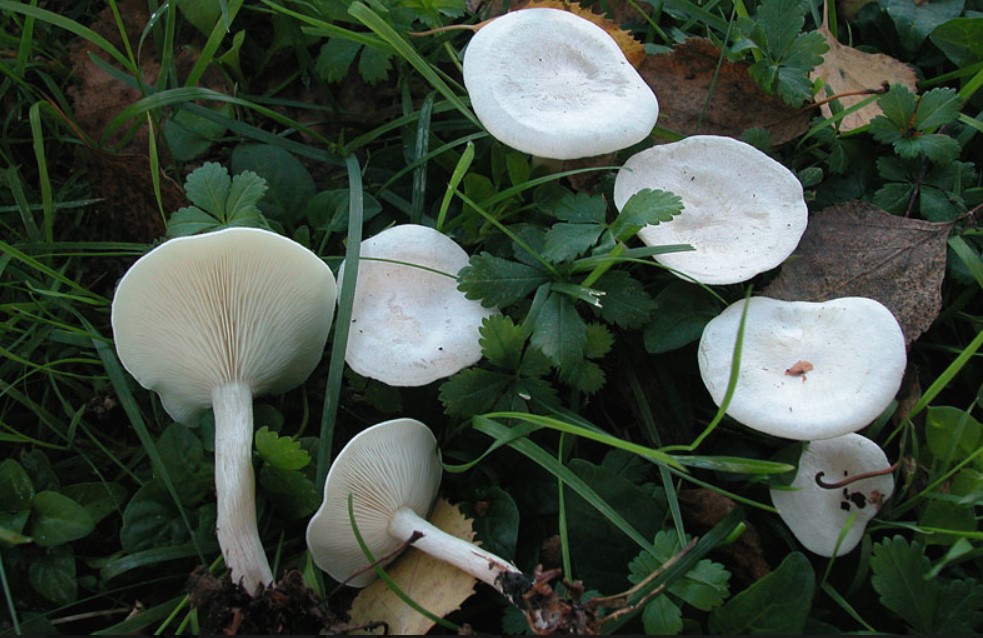
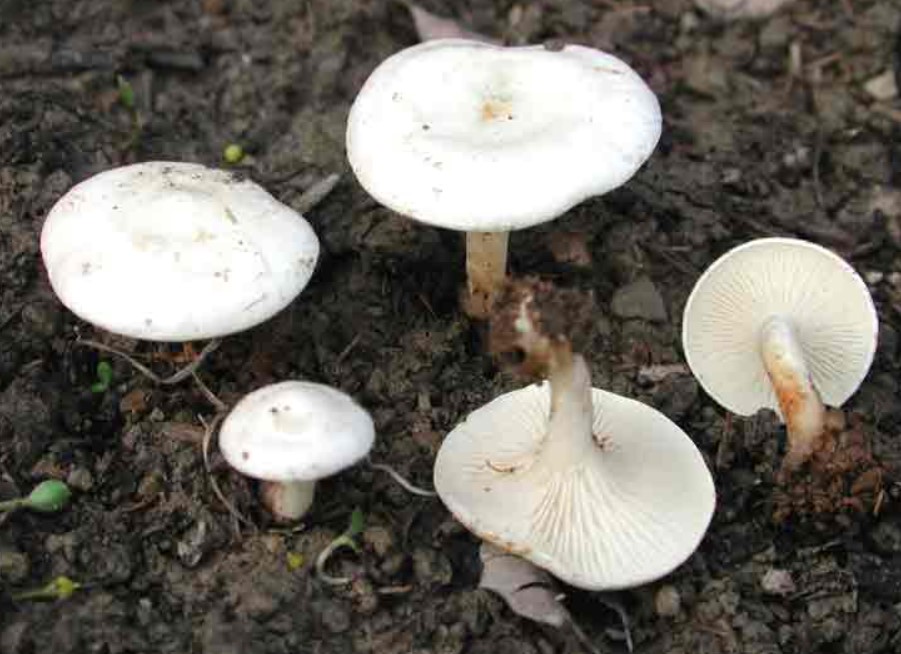
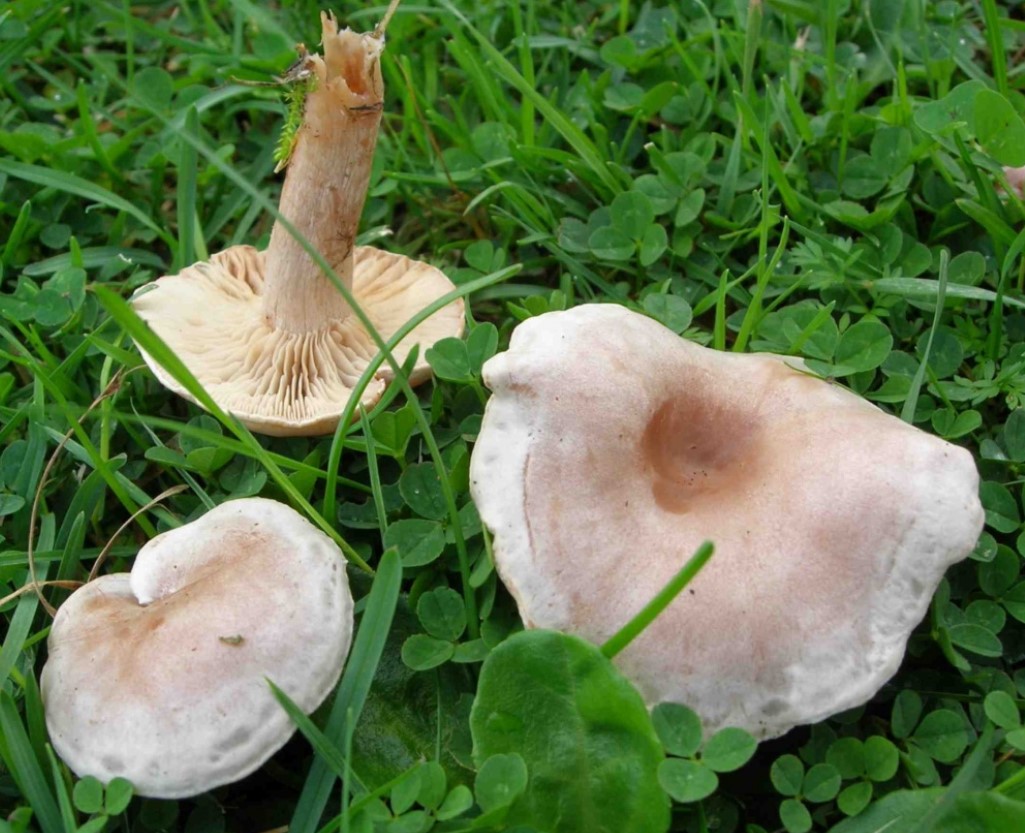
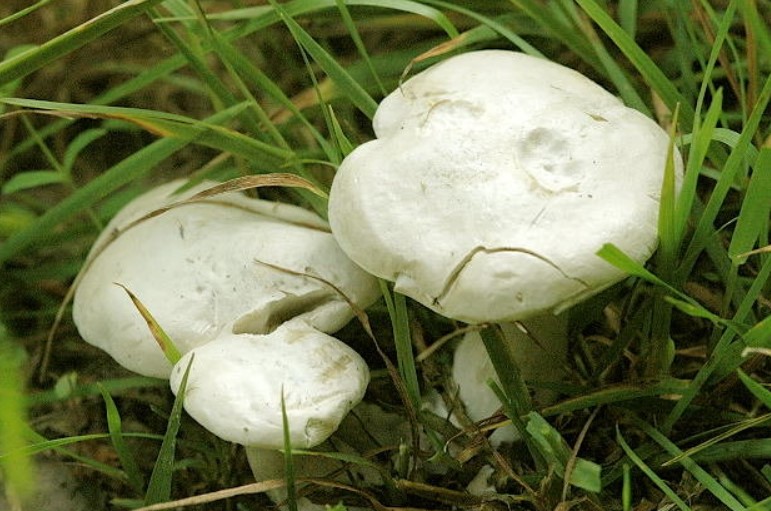
White talker (Clitocybe rivulosa)
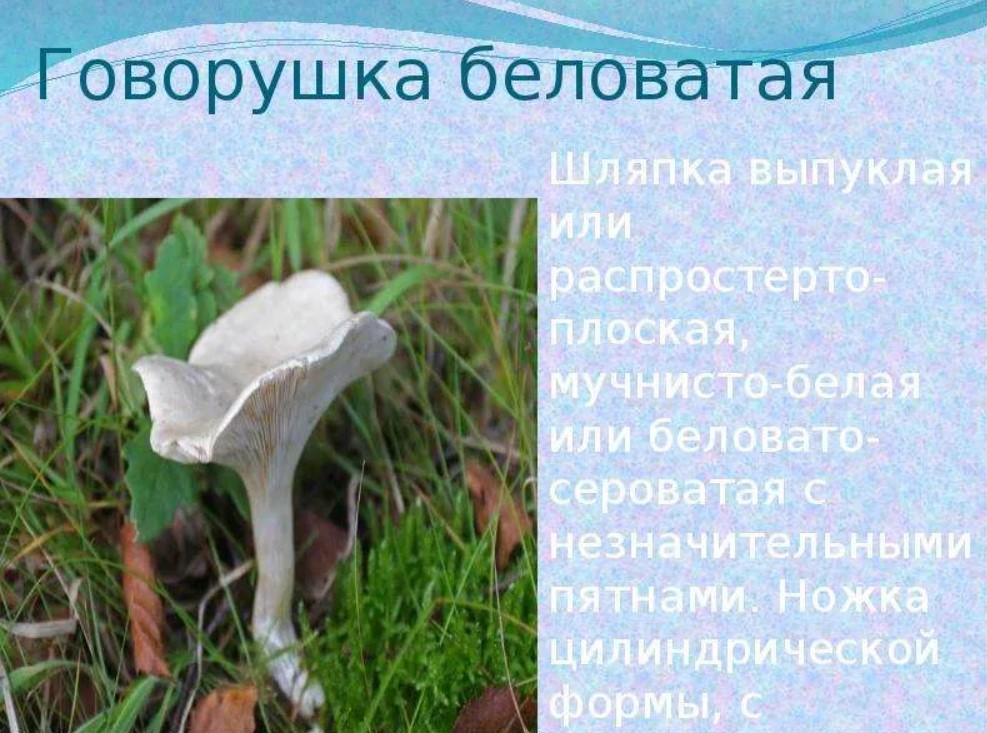
Distinguishing features of the toxic white talker:
- The mushrooms are very small in size, with a cap from 2 to 6 cm in diameter.
- The pulp is fibrous, thin, but elastic.
- The stem is very thin, tapering towards the base, with light brown spots on the surface.
- With age, the caps become flattened and depressed, and may develop a wavy edge.
The mushroom is poisonous, eating it can end badly.
Photo gallery of the white talker
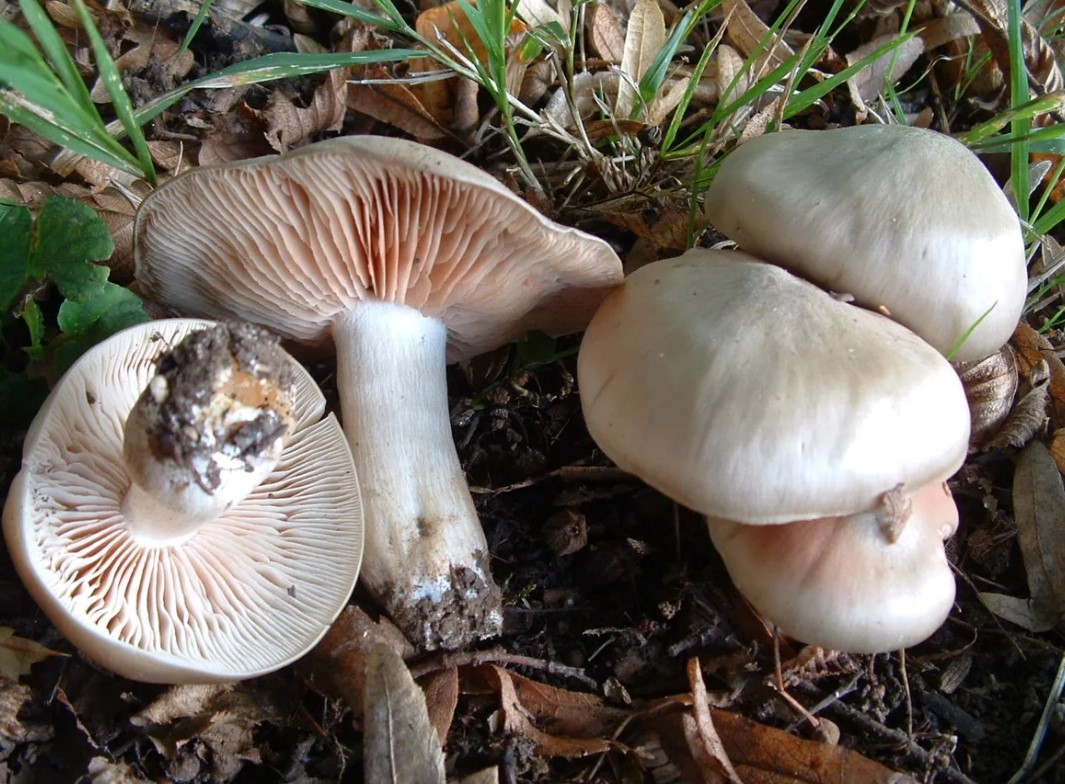
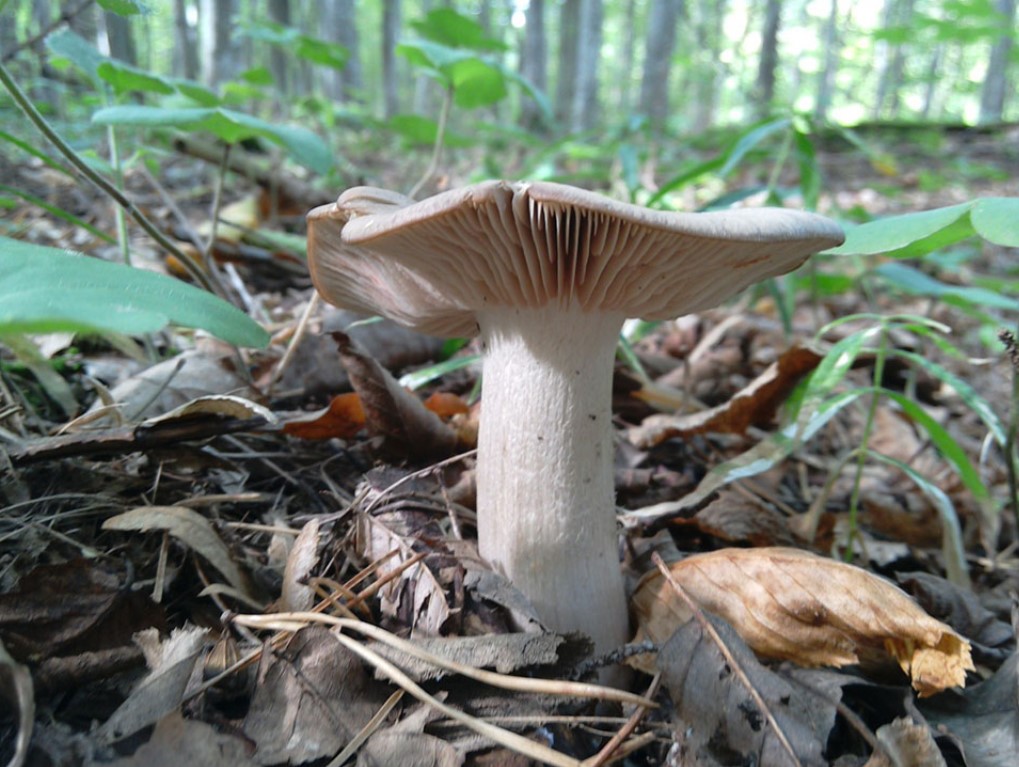
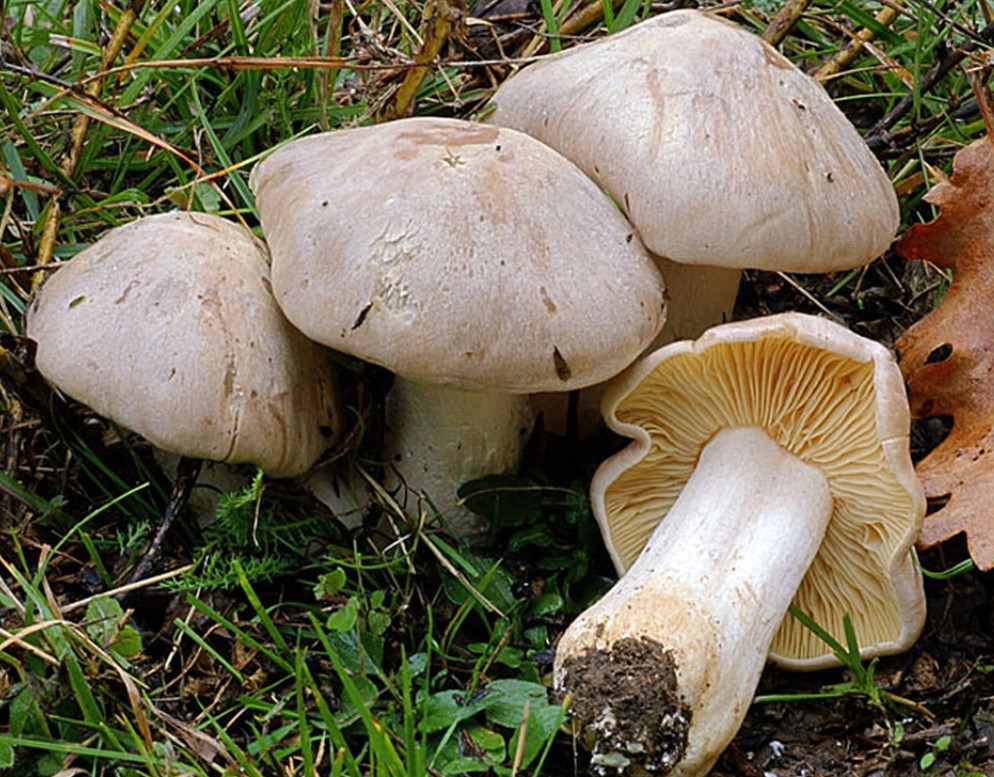
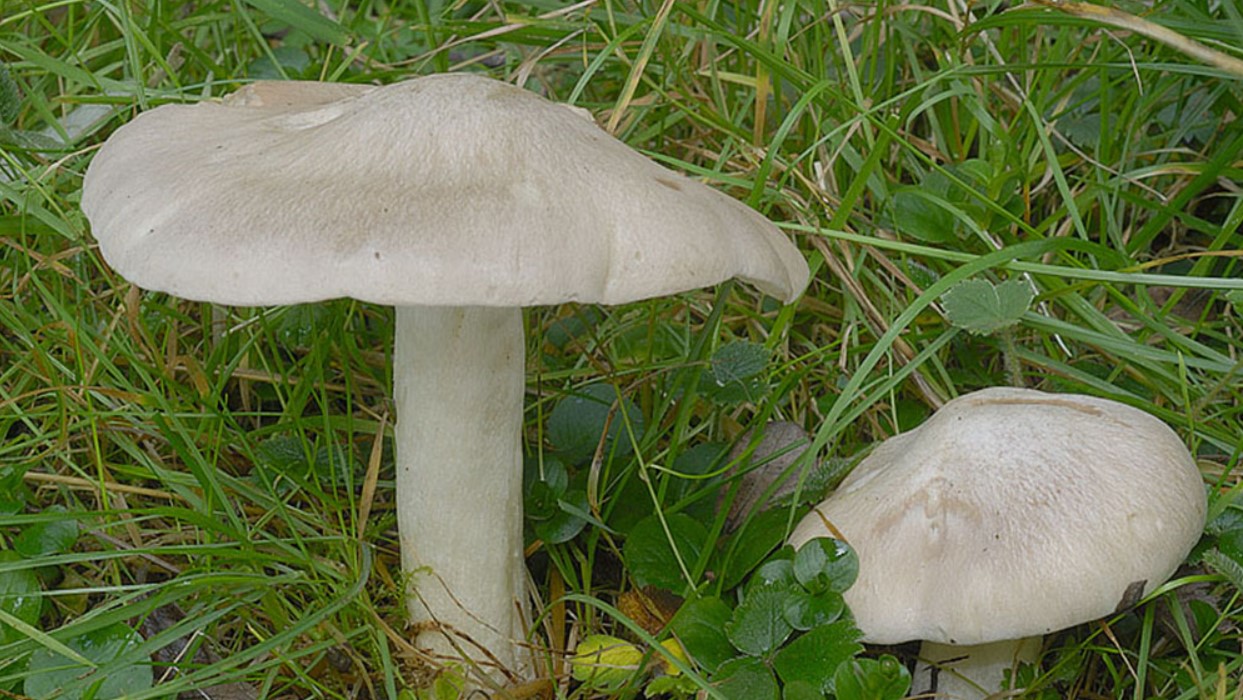
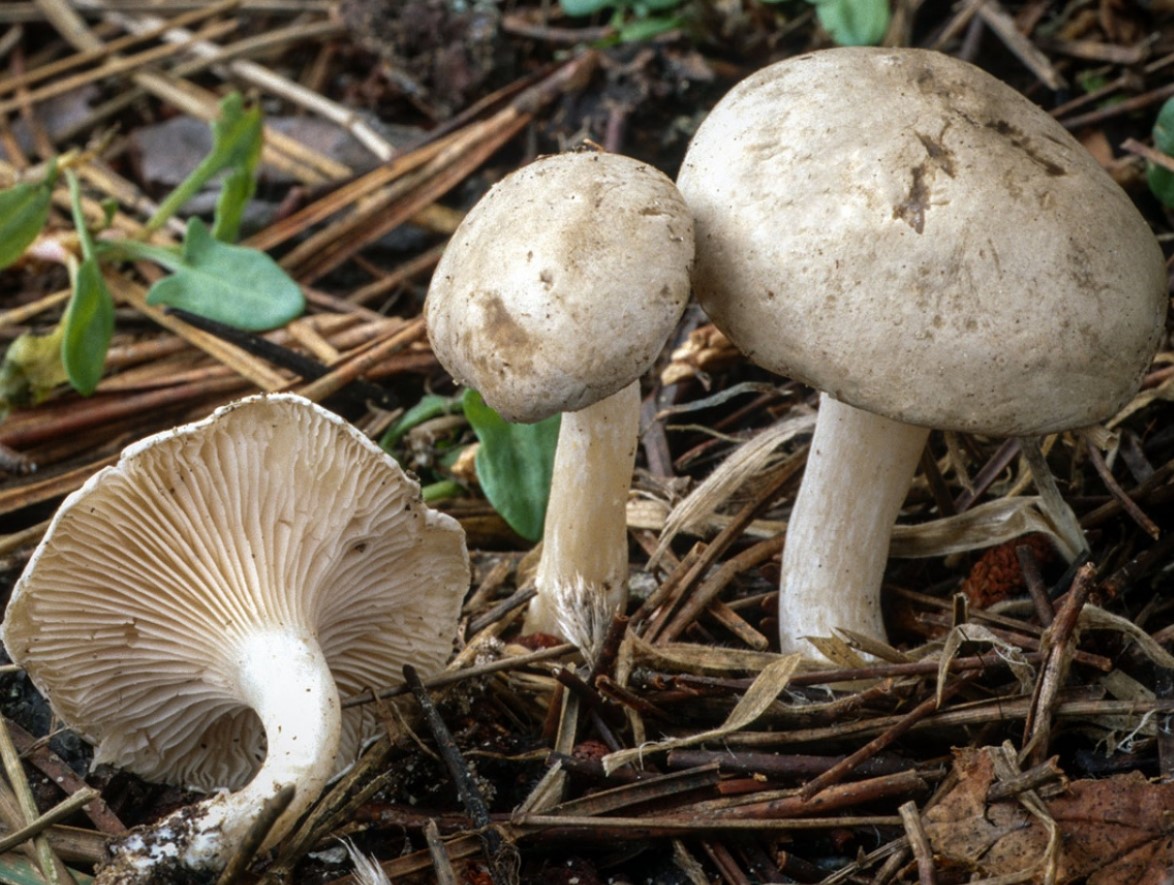
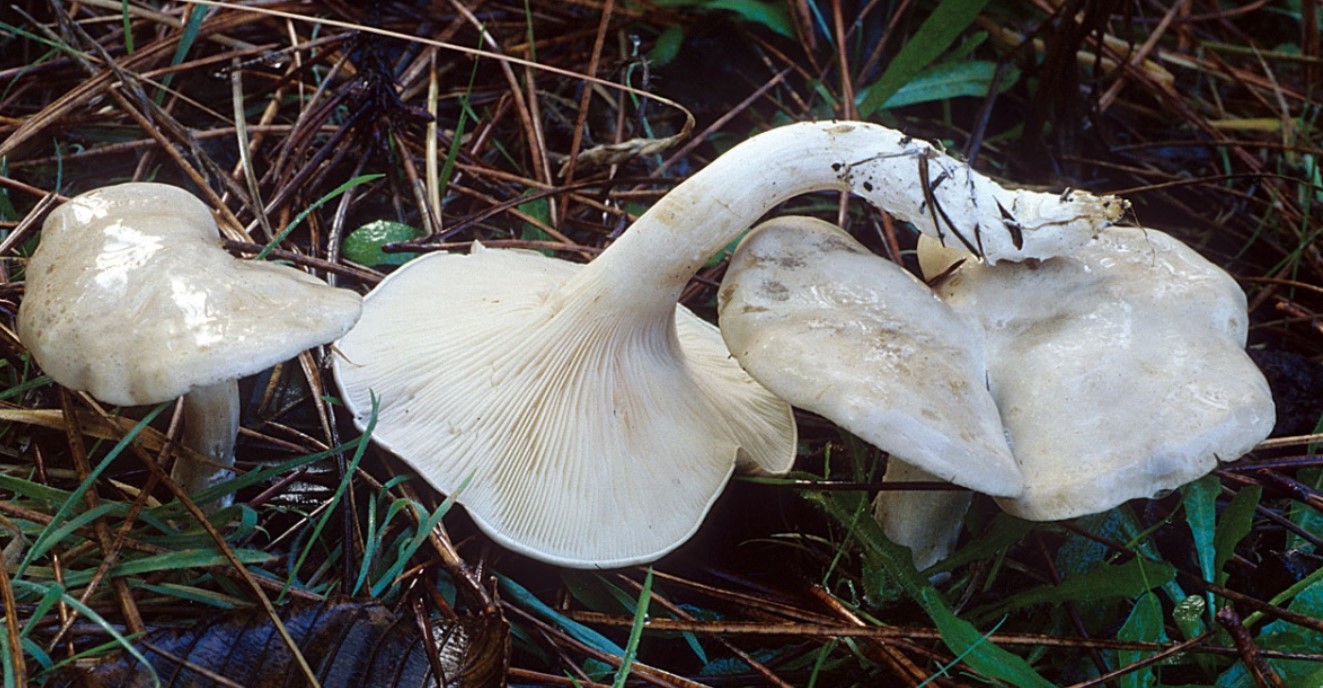
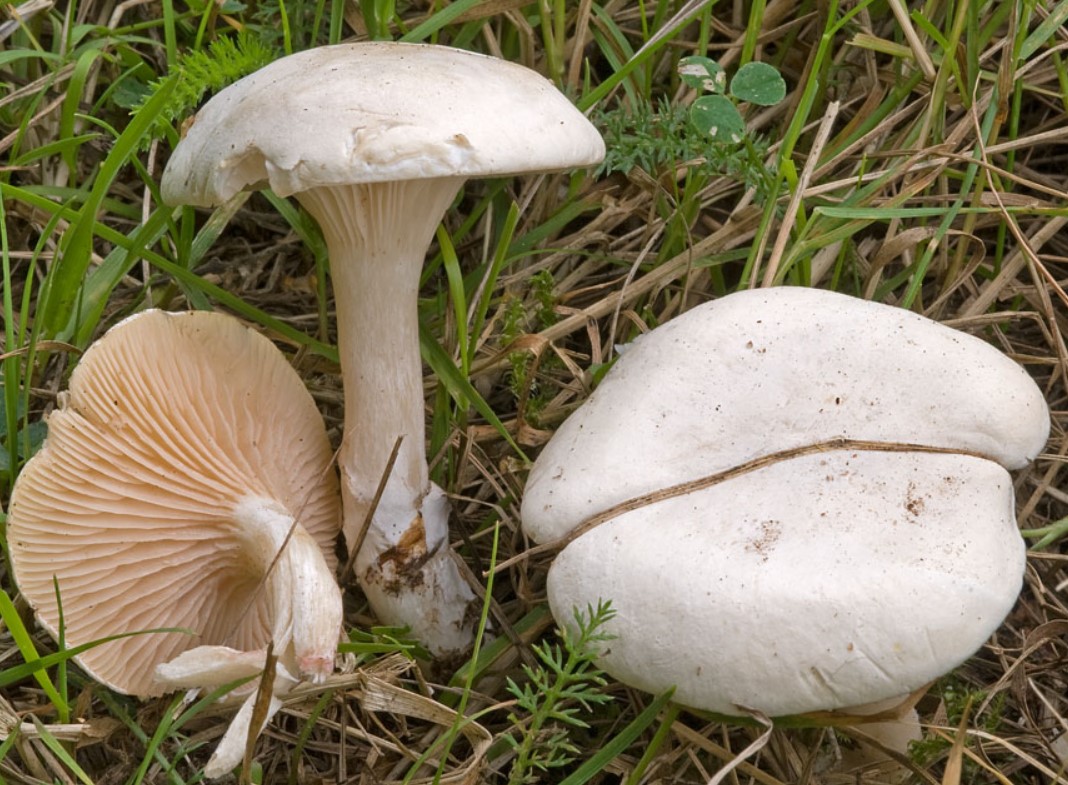
Podvishennik or Podvishen (Clitopilus prunulus)
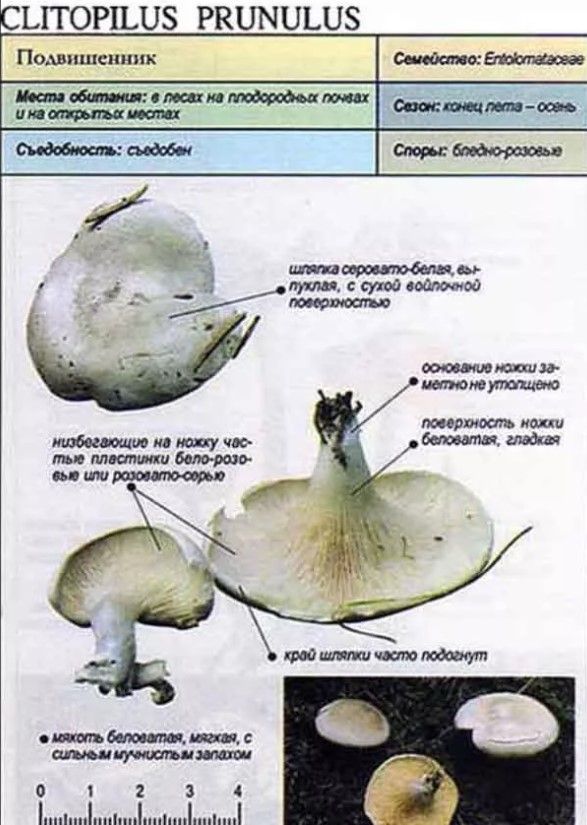
The smoky chanterelle is considered an edible mushroom; it's safe to eat; it contains no toxins. Therefore, confusing it with the smoky chanterelle is not a problem. In fact, distinguishing them is actually quite difficult. However, the smoky chanterelle has a couple of distinctive features:
- It grows near apple and cherry trees, forming mycorrhiza with them.
- Fruiting begins in July and lasts until September.
Photo gallery of the podvishennik
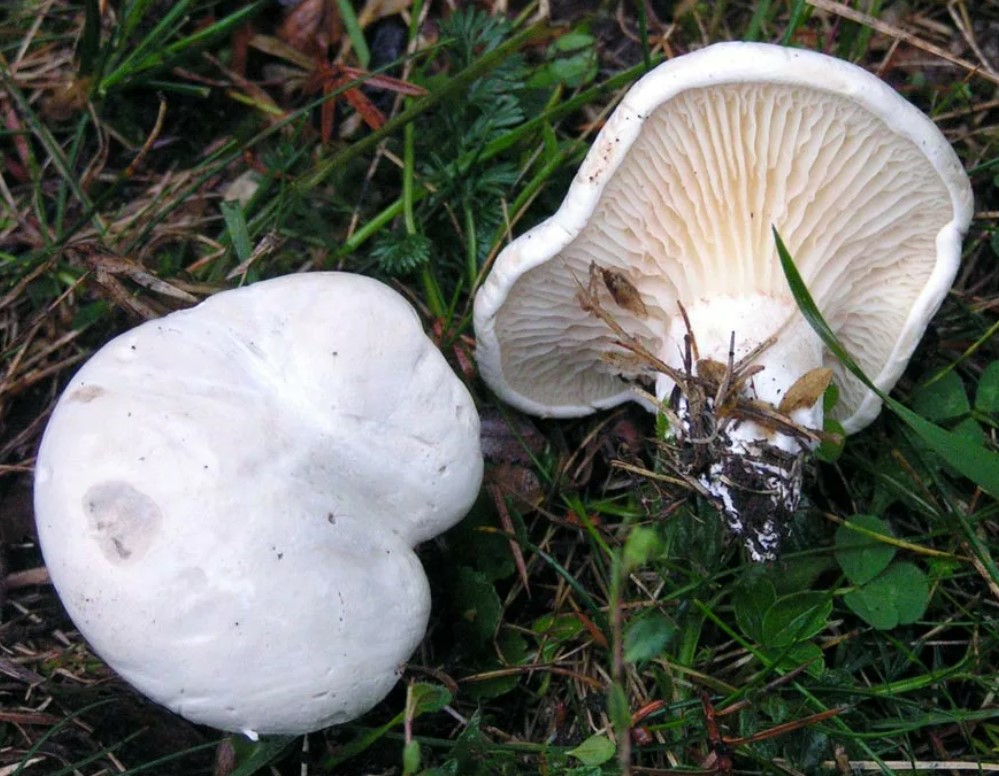
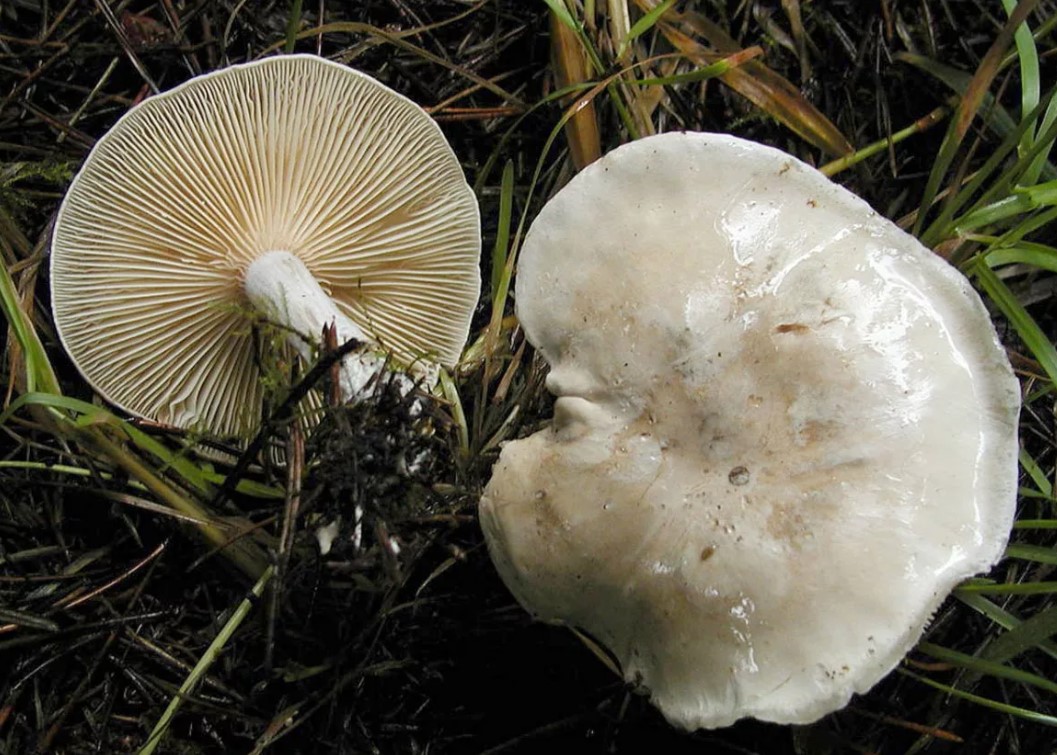
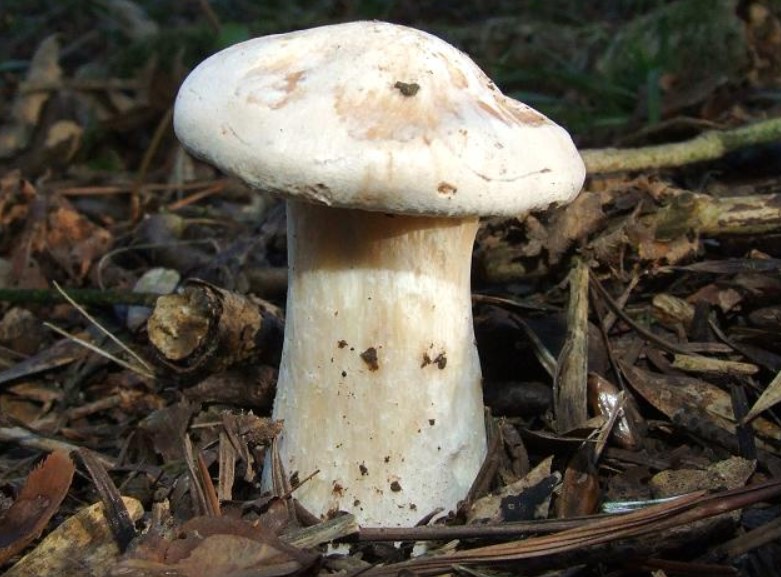
Soapwort (Tricholoma saponaceum)
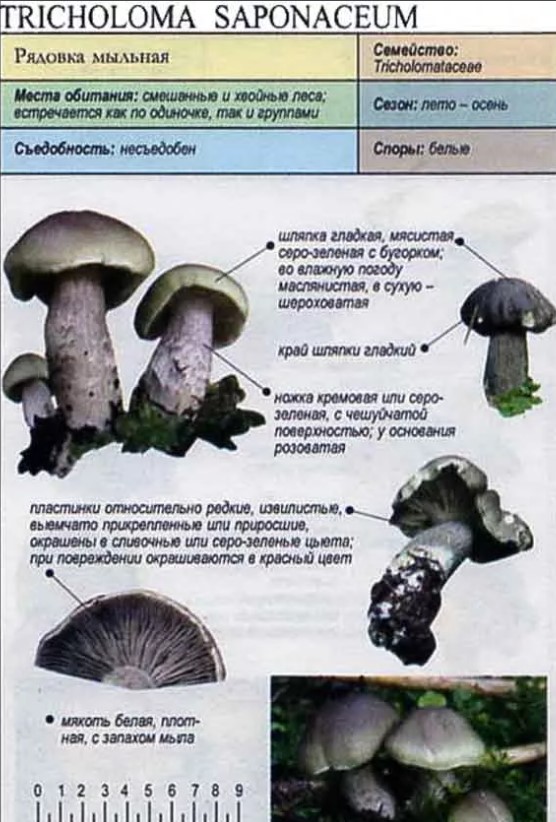
A conditionally edible mushroom that can be eaten after prolonged cooking. It differs from the smoky talker in the following ways:
- The surface of the cap is covered with wrinkles and cracks, and the central part is much darker than the edge.
- The cap has fibrous edges.
- The stem is narrowed towards the base, and there are many black scales on its surface.
- The pulp is bitter and turns red when cut.
- The fruits smell like soap.
Photo gallery of soapberry
Edibility of the grey talker
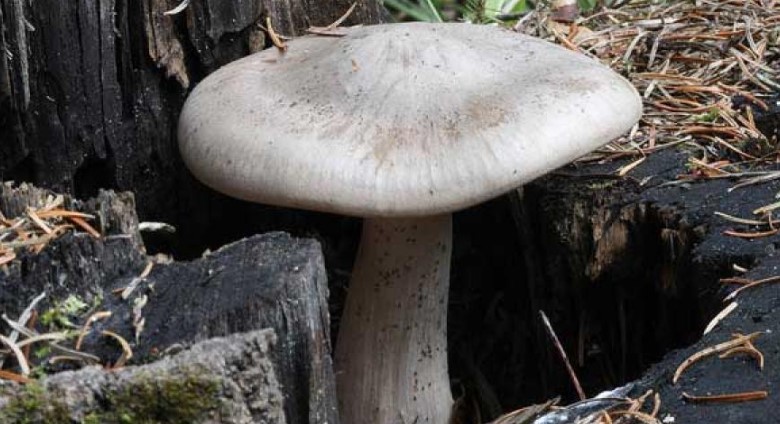
The grey talker is considered conditionally edible. This means that when fresh, the flesh contains toxic substances, in this case, nebularin. This is neutralized by cooking the mushroom. However, it is still not recommended to overindulge in this type of food.
Only the caps of talkers are edible; the stems are too fibrous and difficult to digest. Moreover, their flavor is completely bland. Only young mushrooms should be used, as the amount of toxins accumulated during their growth increases.
Nutritional value of smoky talker
Talking mushrooms are considered a dietary product; 100 g of mushrooms contain only 30 kcal.
The nutritional value of mushrooms is distributed as follows:
- Proteins – 3.7 g.
- Fats – 1.7 g.
- Carbohydrates – 1.1 g.
The benefits and harms of the smoky talker
Talking mushroom has a whole range of useful properties:
- Strengthening the body's defenses.
- Improving the functioning of the digestive system.
- Reducing the likelihood of developing neoplasms.
- Strengthening enamel and bones.
- Stimulation of brain function.
- Removal of toxins.
- Muscle recovery after physical activity.
- Simulation of metabolic processes in the body.
Excessive consumption of talkers can be harmful to the body:
- Poisoning occurs, accompanied by bowel problems and nausea.
- The pulse rate increases and blood pressure changes.
The medicinal use of the smoky talker
Talkers contain a toxic component called nebularin. Considered a natural antibiotic, it is widely used in pharmacology.
Smoky talkers often become ingredients for the following products:
- Extracts for the prevention and treatment of urolithiasis and colds.
- Regenerating ointments for skin restoration.
Contraindications for the use of smoky talker
The following people are strictly contraindicated from consuming mushrooms:
- Pregnant and lactating women.
- Children under 14 years old.
- People with chronic gastrointestinal diseases, epilepsy, heart failure.
How to cook smoky talker
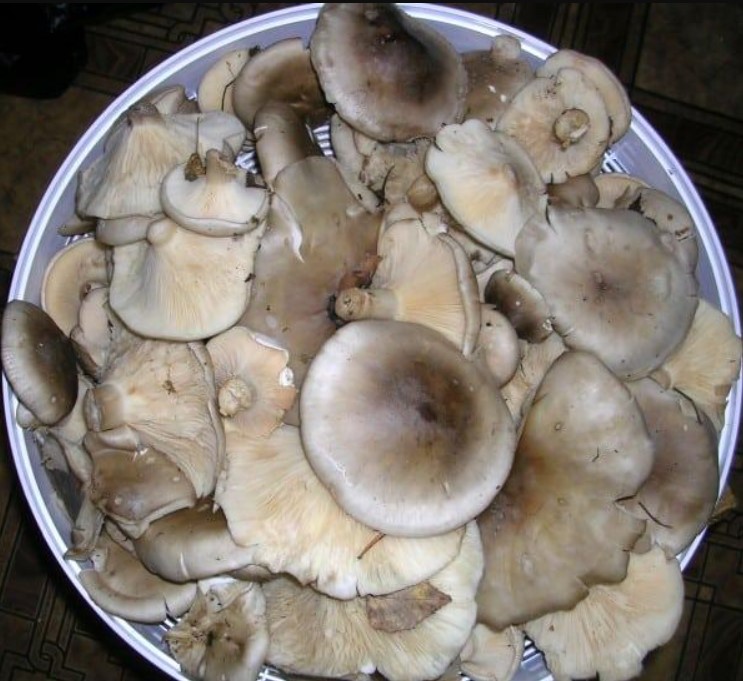
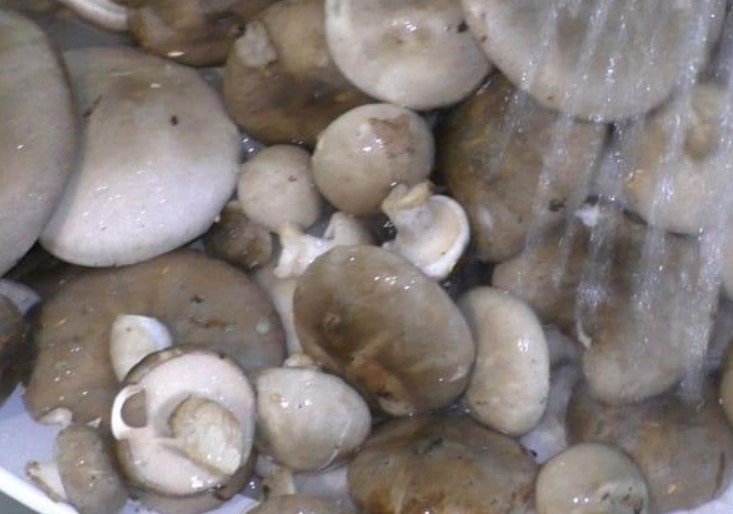
To prepare absolutely any dish, the smoky talker, or more precisely, its caps, must first be boiled. This will form the basis of the rest of the meal.
- Boiling. Clean the talkers of any debris and leaves, place them in a saucepan, cover with water, and cook for about 25 minutes after boiling. Keep in mind that they lose about half their weight during this process.
- Pickling. 1 kg of mushrooms will make a liter-sized jar of preserves. Pickled mushrooms acquire a unique flavor thanks to the pepper and bay leaf. The recipe is up to you.
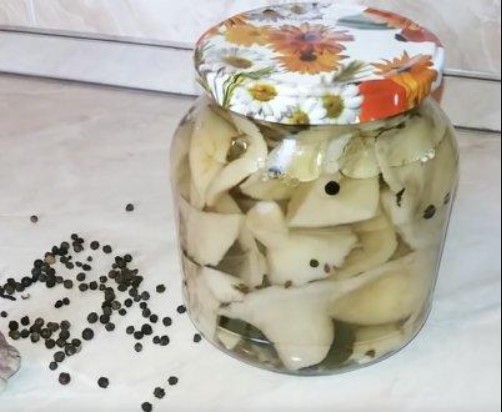
- Pickling. You can choose any recipe, but the main rule is to pick only young, small mushrooms. They will retain their texture and be ready to eat after 40 days.
- Freezing. After cooking, the mushrooms should be dried slightly, placed in prepared containers, and placed in the freezer.
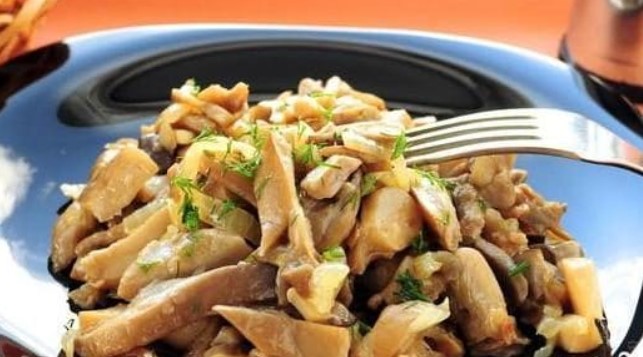
- Frying. Boil the mushrooms and sauté them with onions until golden brown, about 10 minutes. You can add them to any side dish: potatoes, pearl barley, or rice.
Growing talker or smoky rowan on your own
You can purchase mycelium for mushroom cultivation at a specialty store, or you can dig up ready-made mycelium in the forest. Planting is recommended only in warm weather, when daytime temperatures do not drop below 15 degrees Celsius and nighttime temperatures do not drop below 0 degrees Celsius.
Make a hole about 15 cm deep under a tree in a warm, humid spot in the garden. Place the mycelium in the hole and cover it with soil. Water the plant with warm water.
After each harvest, it is recommended to re-sprinkle the mycelium with soil.
Reviews of mushroom pickers about the gray and smoky talker
Gray talker, smoky talker Clitocybe nebularis
Many mushroom pickers avoid this mushroom because of its distinctive fruity aroma, which intensifies when cooked. But I consider the fruity aroma to be a welcome addition, and I enjoy picking it when the opportunity arises. I don't come across it often (not along the paths you read about online), and not only in pine forests.
The mushroom is quite large. The cap is up to 15-20 cm in diameter, flat-convex, cushion-shaped, fleshy, smooth, dry, gray, lighter at the edges.
The flesh is dense and white. It is looser at the stem.
Stem: spongy, tapering toward the top, becoming hollow as it matures, with a slightly fibrous surface. Color ranges from whitish to light gray.
Gills: frequent, weakly descending, white, often with a pinkish tint, then yellowish. Spore powder is whitish.
Habitat: Grows on the ground from late September to November in deciduous and coniferous forests.
In Russia, the mushroom is considered edible. Unlike in the West, where, "According to some foreign authors, it is conditionally edible or even poisonous: it temporarily disrupts digestion and respiration and significantly accumulates heavy metals."
But opinions are divided on the mushroom's deliciousness. I'll give you some
A delicious edible mushroom (4 categories), used fresh (boiled for about 15 minutes) in main courses, salted and marinated when young (a delicacy appetizer)
It is considered a conditionally edible mushroom of low quality and is eaten after preliminary heat treatment (15 minutes of boiling).Although this mushroom is edible, it's not very tasty. We only eat the young fruiting bodies, which are mainly used for pickling.
Edible mushroom of the fourth category: This mushroom is not well-tolerated or easily digestible and may cause indigestion. Consume only after mandatory pre-heating.
I marinated it in a platter. It tasted quite good in it!!
My husband's favorite mushroom; he was looking for it in the pine forest last year. I've boiled it and fried it in a pan with onions, and it's not bad, and I've also pickled it. I liked the pickled version better, and it looks beautiful in jars.
Assembled today.
I haven't had a chance to try it marinated yet, but it tastes good after boiling.
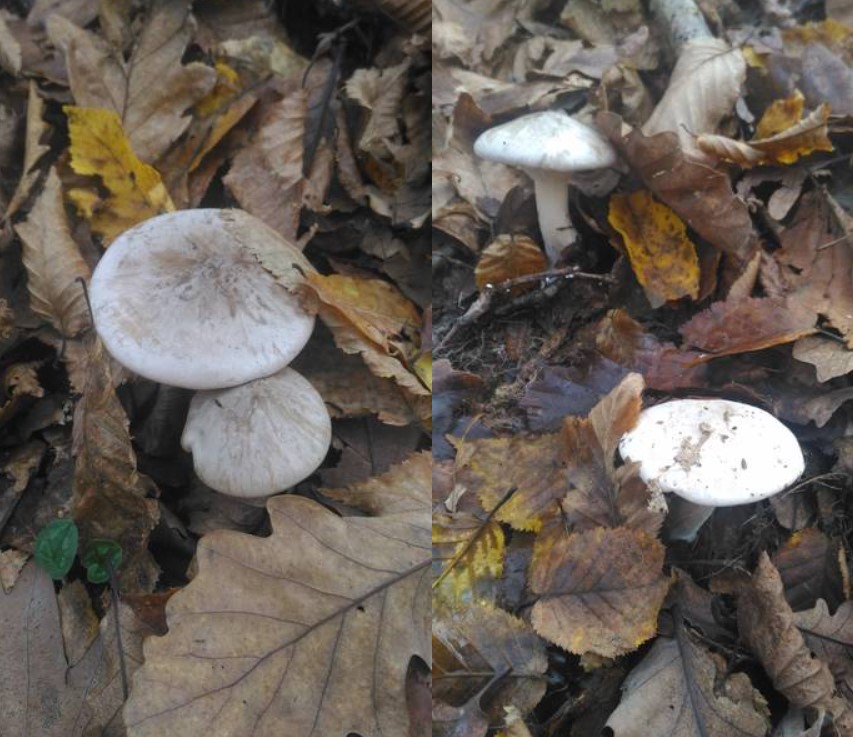
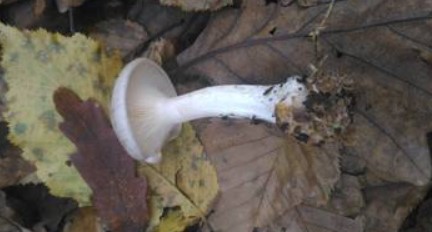
Hi everyone! I'll also report back on this mushroom. I picked it for the first time and posted it in the "Identify Mushrooms" section. In my case, there's no perfume scent, but it does have a strange smell when fresh. I soaked it in cold water for 24 hours, rinsed it, and boiled it twice. The first time, I boiled it for 10 minutes, and it turned dark brown. The second time, I boiled it for 10 minutes, and it was already thin. It was about 50% reduced.
I fried them with onions, they fry perfectly without falling apart, they taste very good, and they brown to a golden color.
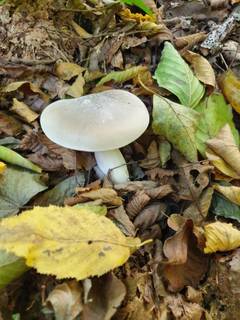
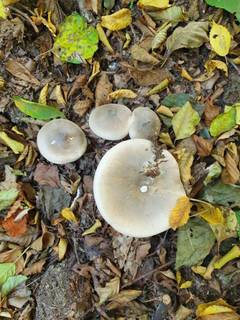
Edited by Ol (Monday, October 7, 2019 9:45:50 PM)
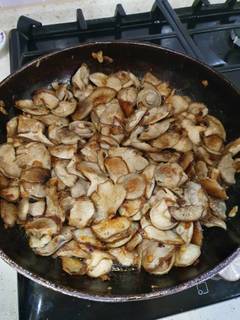
I ate a very tasty fried mushroom; I ate 70% of the pan, as pictured. But it's not morning yet; I don't recommend eating any mushrooms for people with stomach, liver, or intestinal problems. Mushrooms are difficult to digest.
Overall, I'd like to say that these are excellent, tasty mushrooms; I had no upset stomachs or negative effects. I also read that they shouldn't be combined with alcohol, but in my case, everything was fine. Perhaps the combination with alcohol will have a different effect on others. I'll be buying these mushrooms from now on.
Read about other types of talkers in the article Talker mushrooms: 6 species with descriptions in tables + 91 photos, when and how to collect.