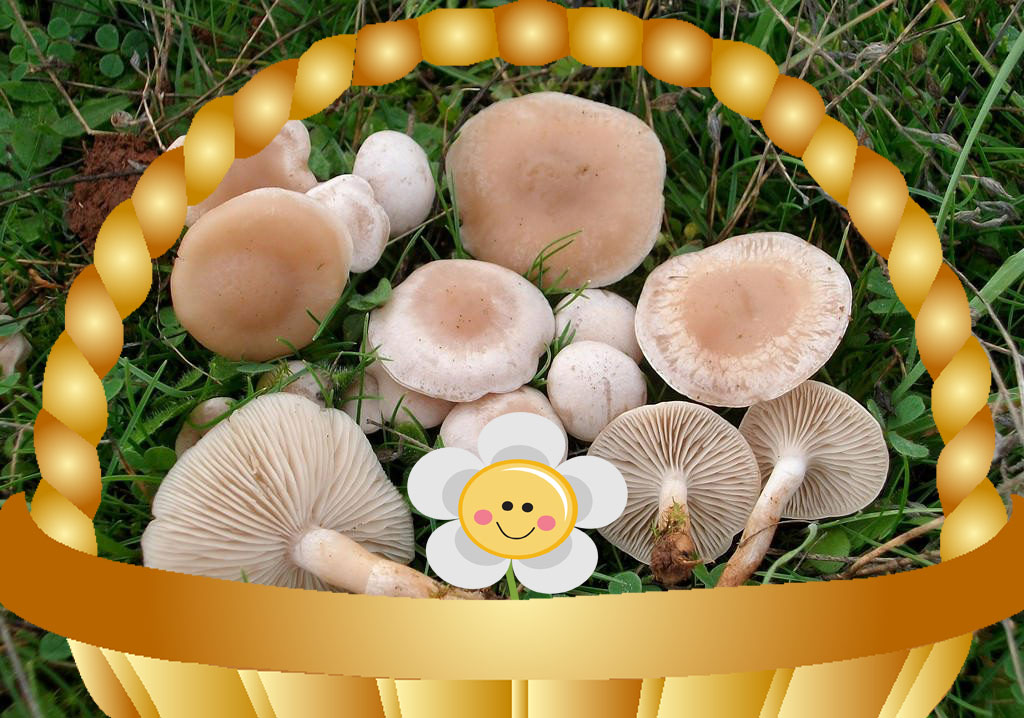
The talker is an interesting and tasty mushroom, but many mushroom pickers prefer to avoid it, unsure of its edibility. Indeed, there are both safe and poisonous varieties of talkers. Distinguishing them is difficult; a good understanding of mushrooms is required.
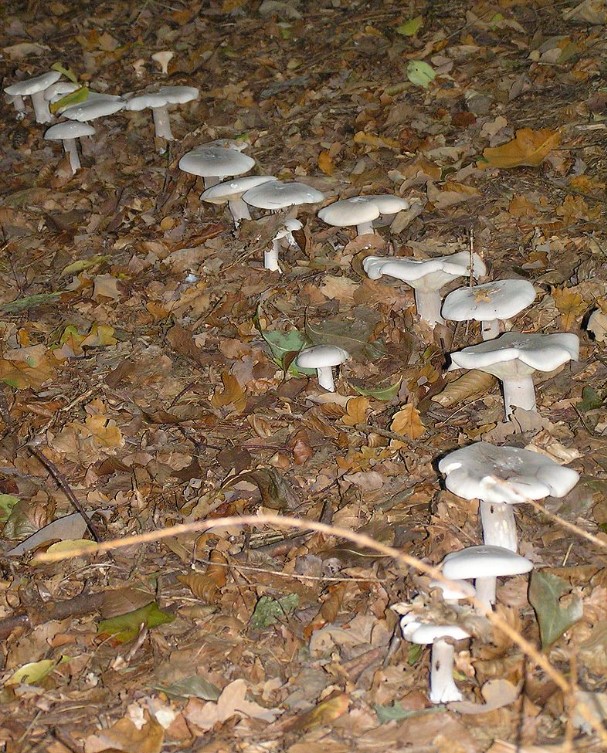
The etymology of the name is uncertain, but some believe it comes from the way the mushrooms grow in dense clusters, like a group of talkative friends. They form a circle, and for a long time, such circles of talkers were considered cursed places, "witch circles."
In this article, we'll discuss how to use talkers and their main varieties, which will help you distinguish an edible specimen from a deadly one.
Content
- 1 Where talkers grow
- 2 When to collect talkers
- 3 Description of the talker mushroom
- 4 6 edible species of talkers with photos and descriptions in tables
- 5 7 Poisonous Talkers and Their Lookalikes + Photos and How to Tell Them Apart
- 6 How to properly collect talkers
- 7 Nutritional value of talkers
- 8 The benefits and harms of talkers
- 9 Contraindications for the use of talkers
- 10 Talker poisoning and control methods
- 11 How long does it take to cook talker mushroom soup?
- 12 Recipes using talkers
- 13 How to grow talker mushrooms in your garden
Where talkers grow
Talkers grow in large clumps, so large that stumbling upon one could fill an entire bucket. You can encounter this mushroom in a variety of locations, depending on the species. For example, the Crimean forests are dotted with reddish talkers, which grow in abundance in open, sunny clearings. The whitish variety is most often found near birch and spruce stands, and is especially abundant in Siberia and the Urals. Smoky talkers prefer decaying foliage beneath pine and spruce trees.
When to collect talkers
The talker mushroom's growth period begins with the onset of warm weather and high humidity. In some regions, the mushroom can be found as early as midsummer, but its peak activity occurs in September and October. Under favorable conditions, it can grow until November.
Description of the talker mushroom
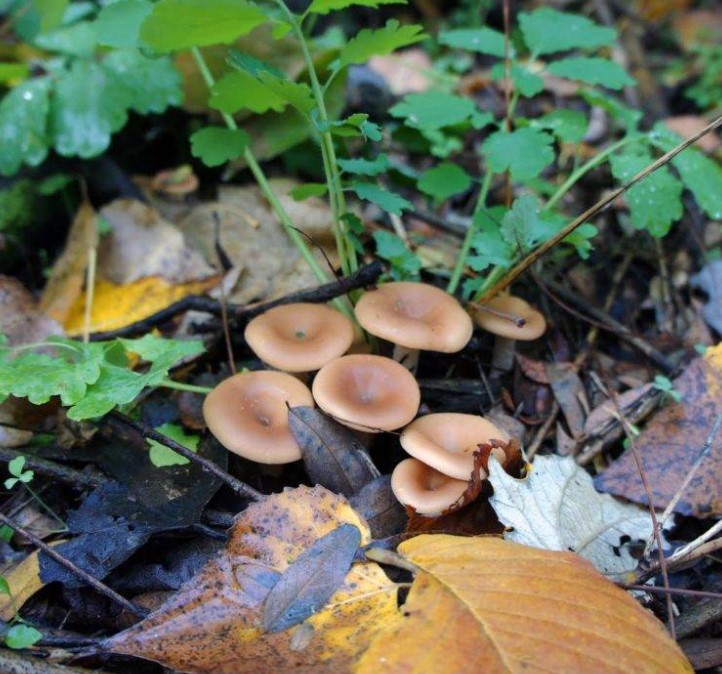
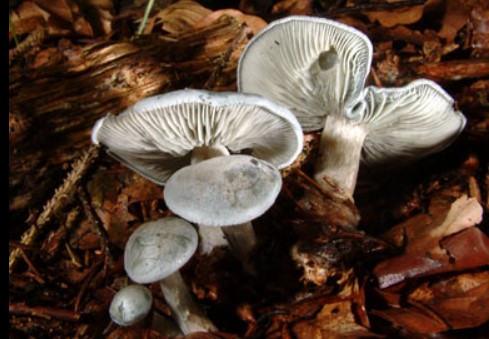
Talkers belong to the family Ryadaceae. They are small, with a cap diameter no larger than 6 cm. Their color can be grayish-brown, white, or fawn. The surface is dry and smooth, without slime. A depression may be present in the center. The stem is cylindrical, ranging in diameter from 0.5 to 1 cm. The gills are very light in color, as is the spore powder.
6 edible species of talkers with photos and descriptions in tables
There are currently approximately 250 species of talkers, of which about 60 can be found in our country. The most common edible species are described below.
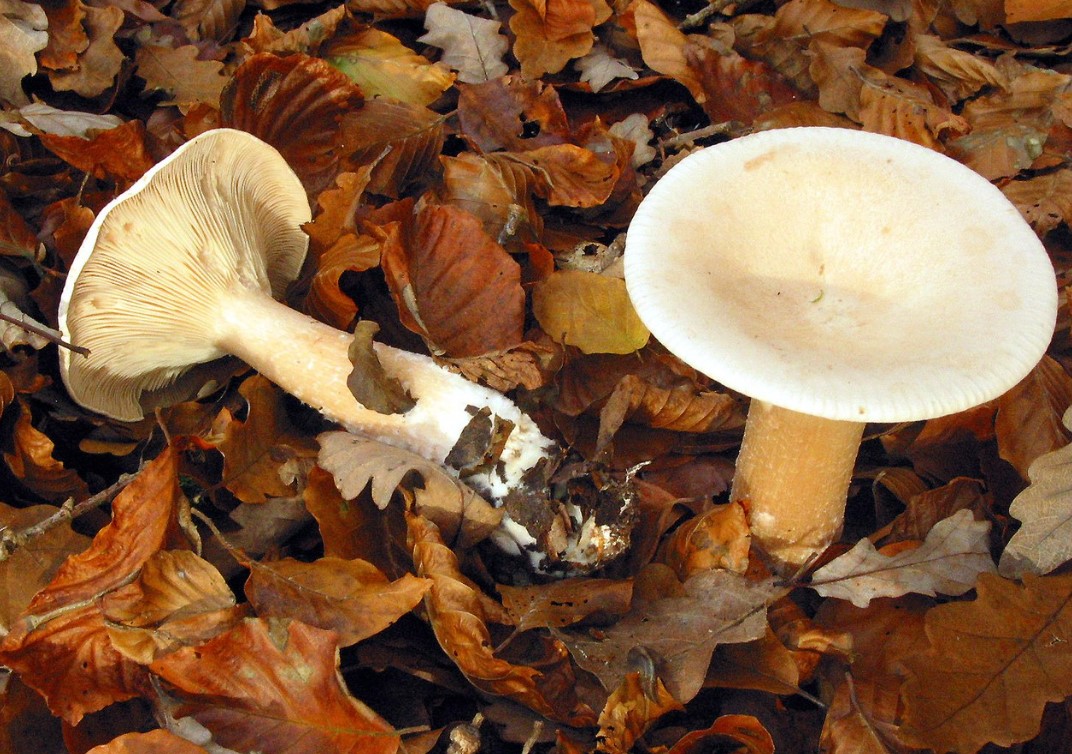
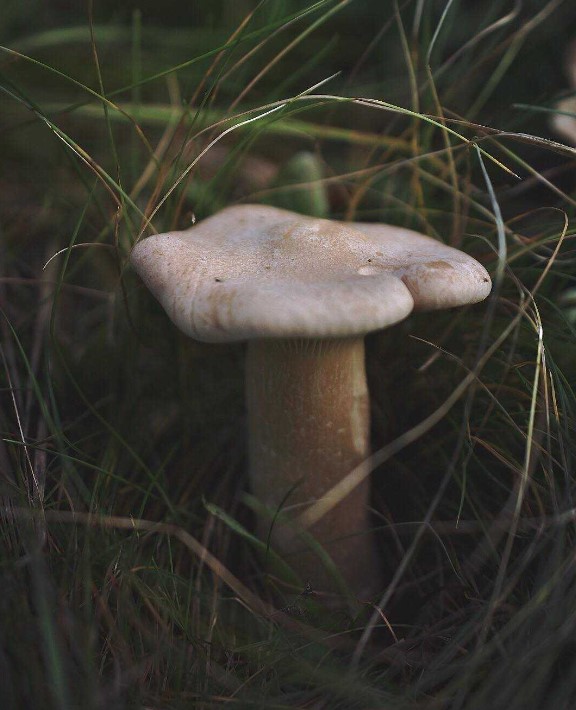
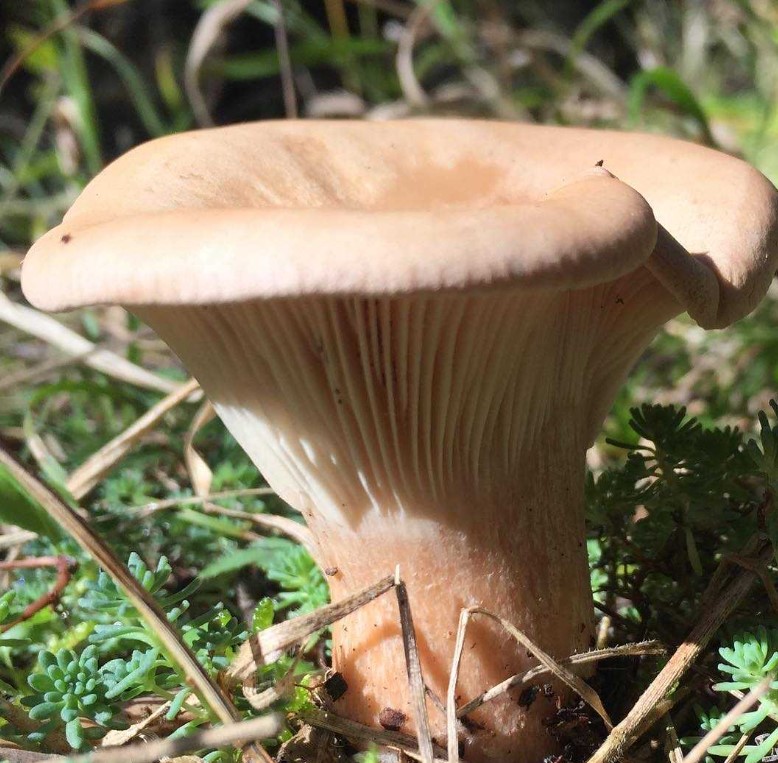
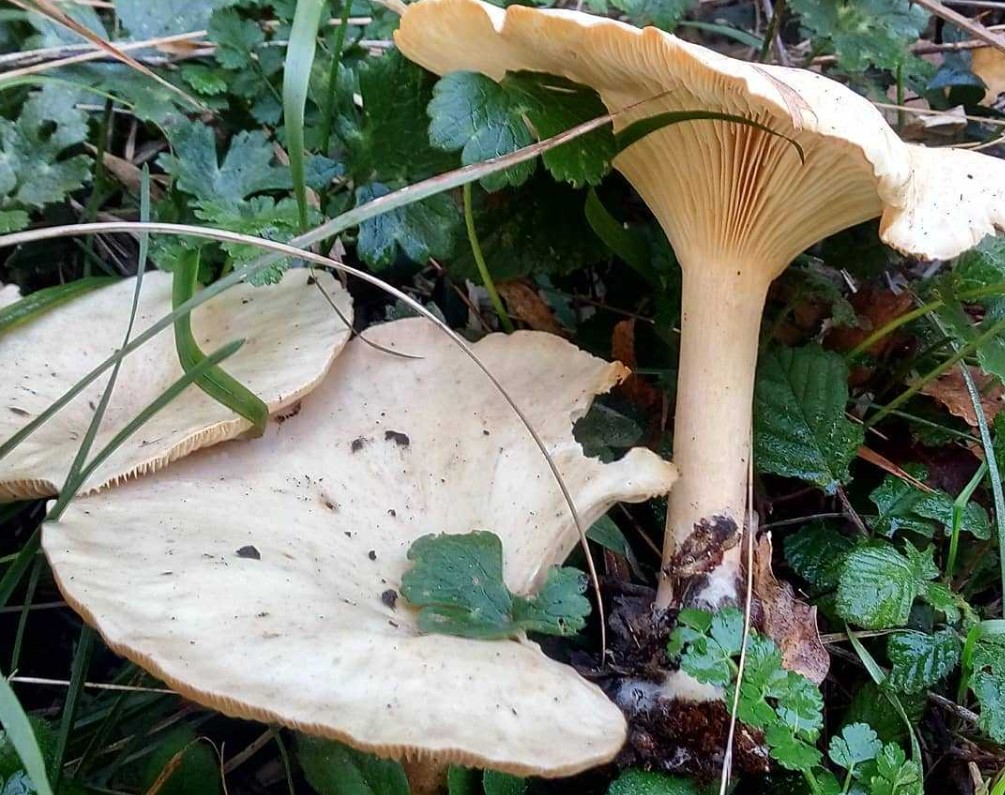
The bent talker, the red-headed talker, the red-brown talker (Clitocybe geotropa)
| View + photo | Description | Edibility | Distribution area |
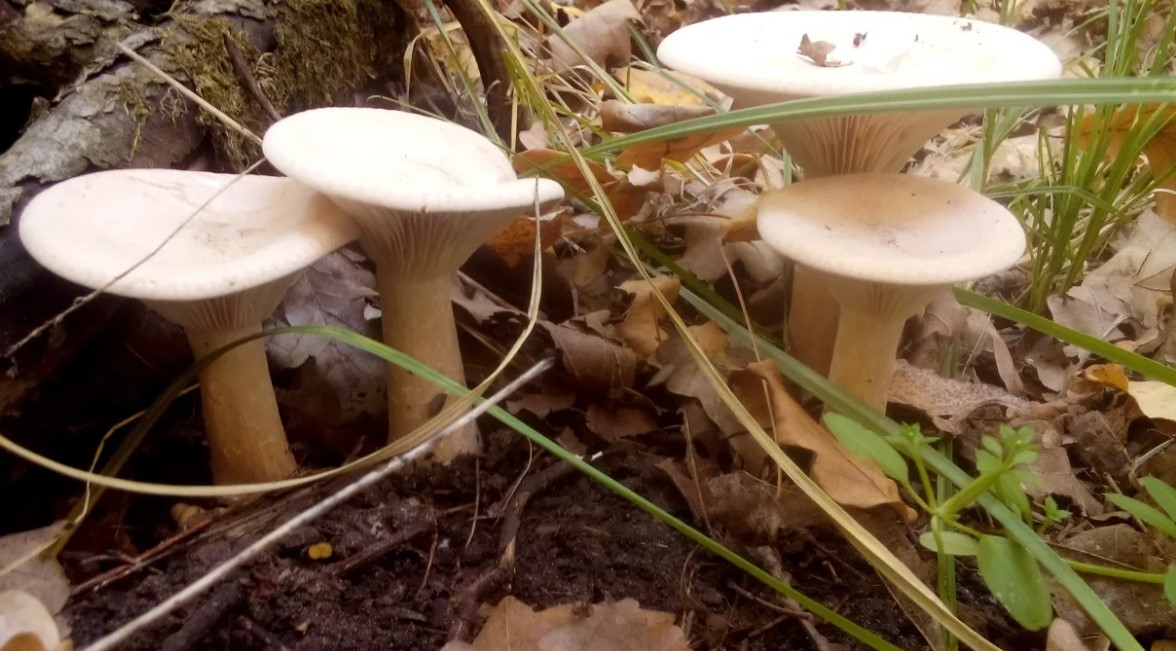
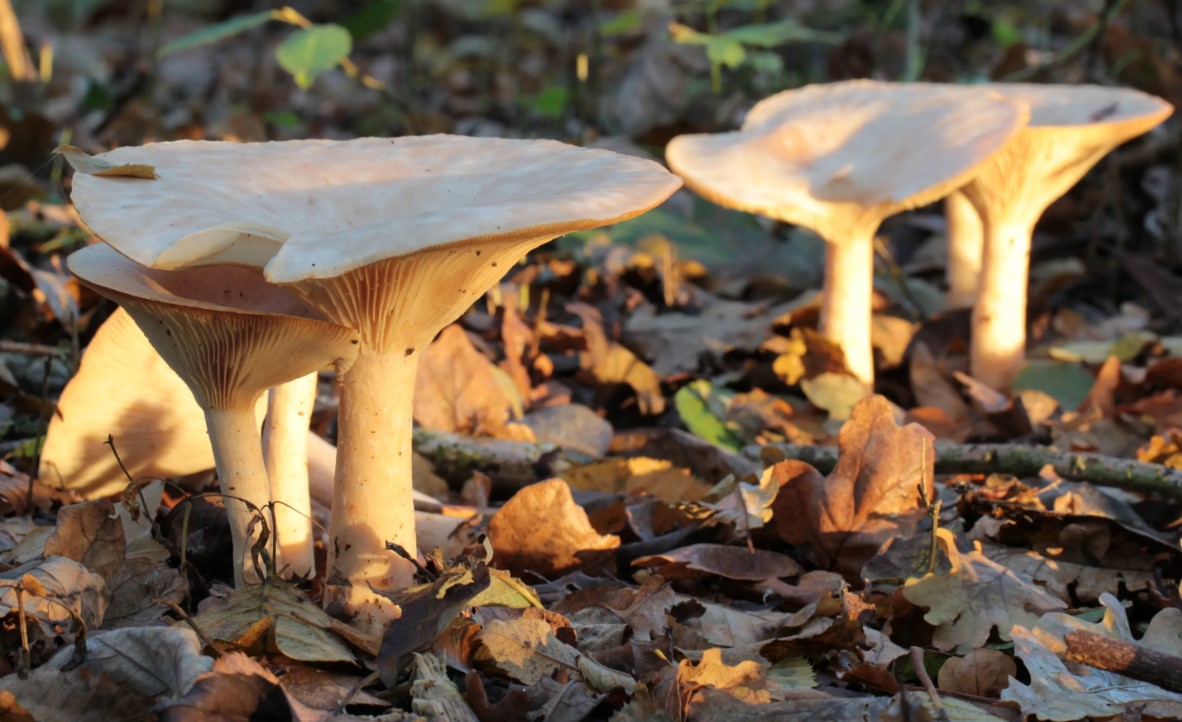
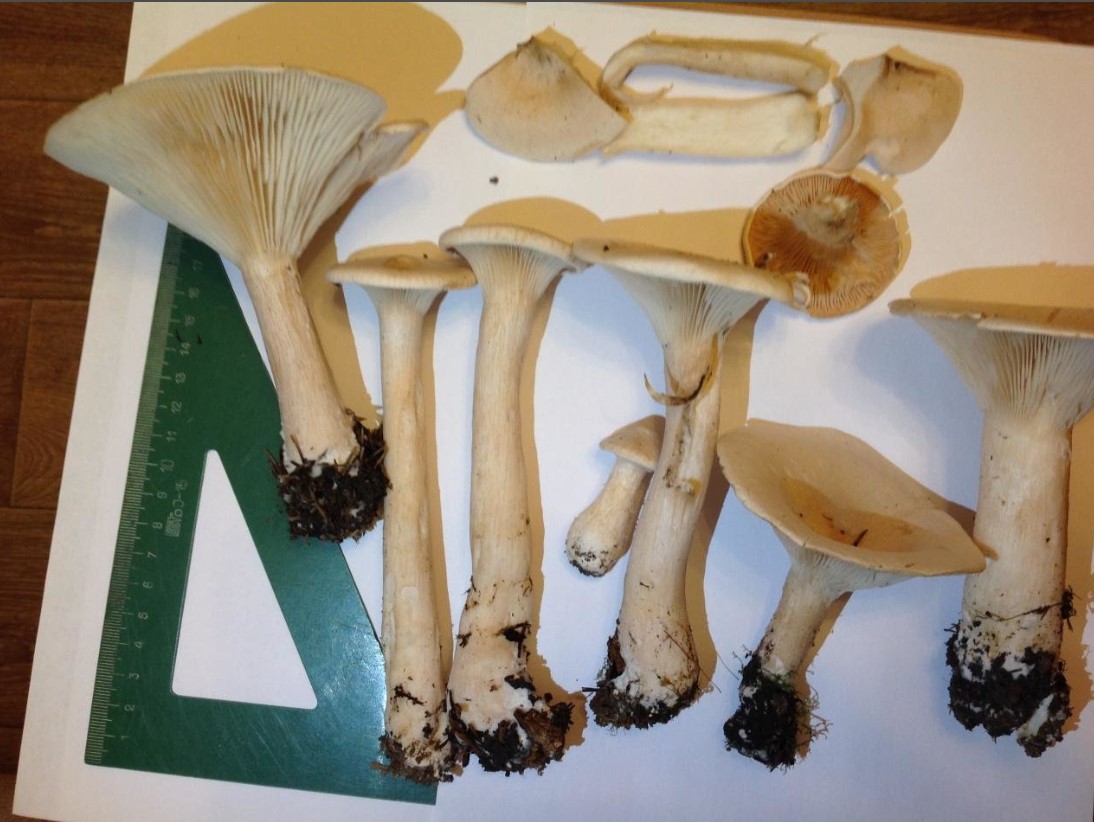
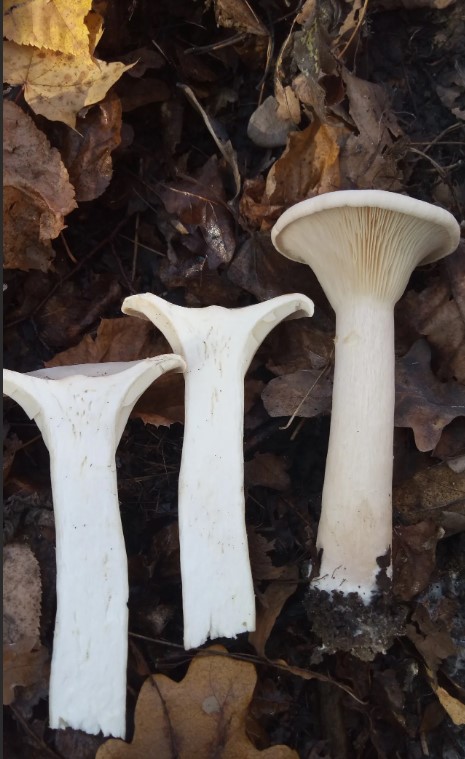
| Bent-over talker | The cap ranges in diameter from 4 to 12 cm, with some specimens growing up to 20 cm. The color is brown or reddish, fading over time, with thin, curled edges. The stem, up to 10-15 cm tall, is light yellow, brownish at the base. | Edible, only the caps can be eaten. | Grows in wide rows or "witch circles". |
Photo gallery of the bent talker
Funnel-billed Talker (Citocybe gibba)
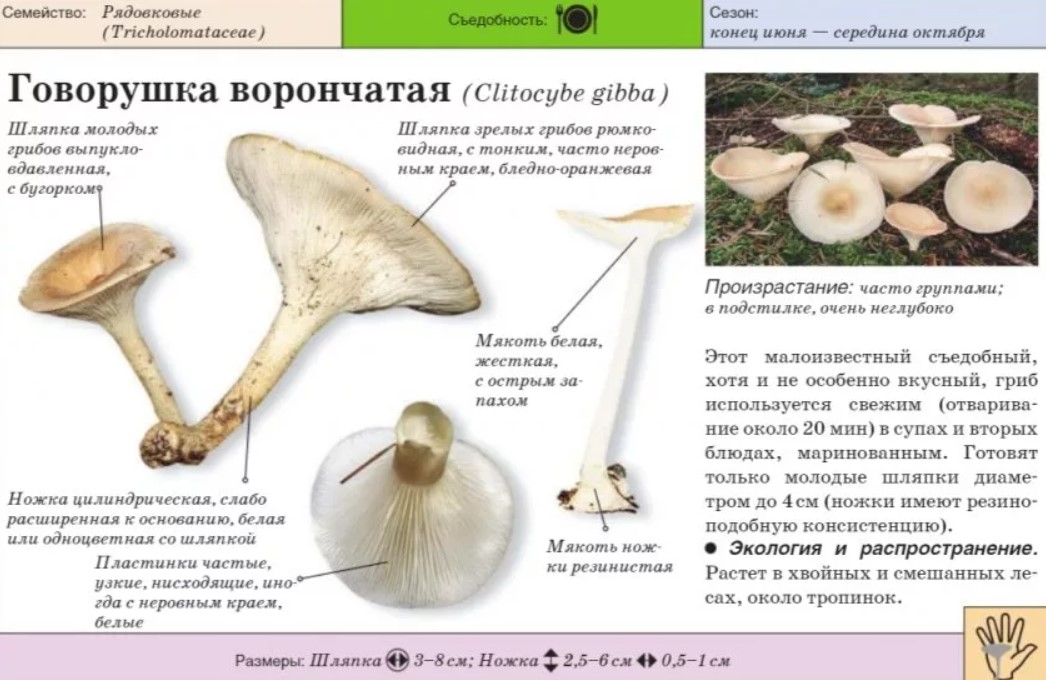
| View + photo | Description | Edibility | Distribution area |
| Funnel talker | The cap is 3-7.5 cm in diameter and funnel-shaped. The color is pinkish, but as the mushroom matures, it fades to almost white. The stem is up to 6.5 cm tall, white, and smooth. | Edible. | It can grow in different forests and is often found on forest edges and roadsides. |
Photo gallery of the Funnel-necked Talker
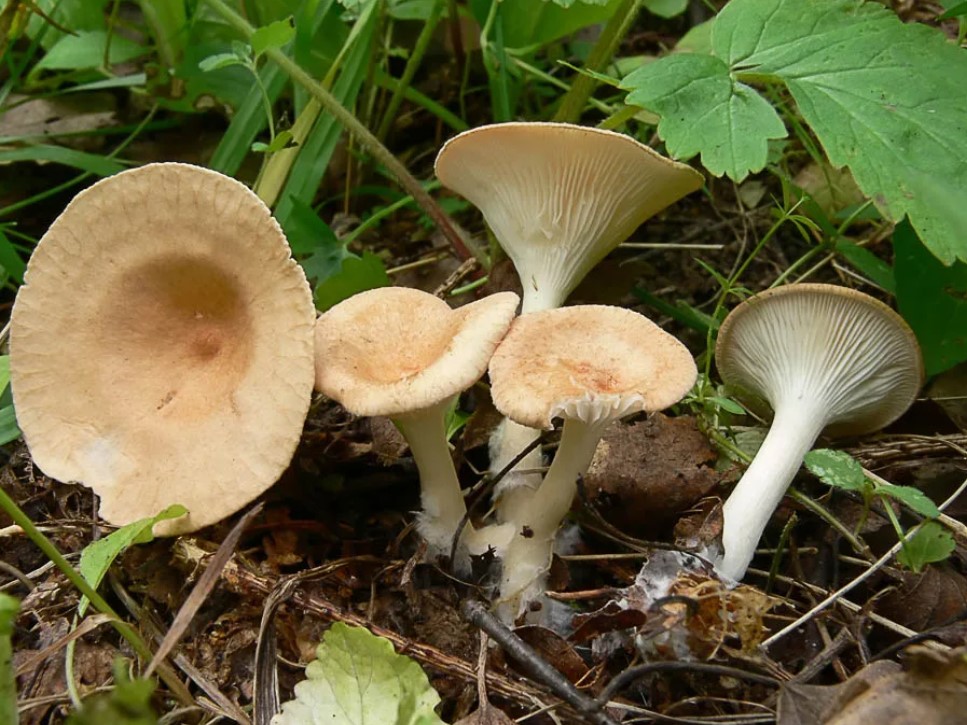
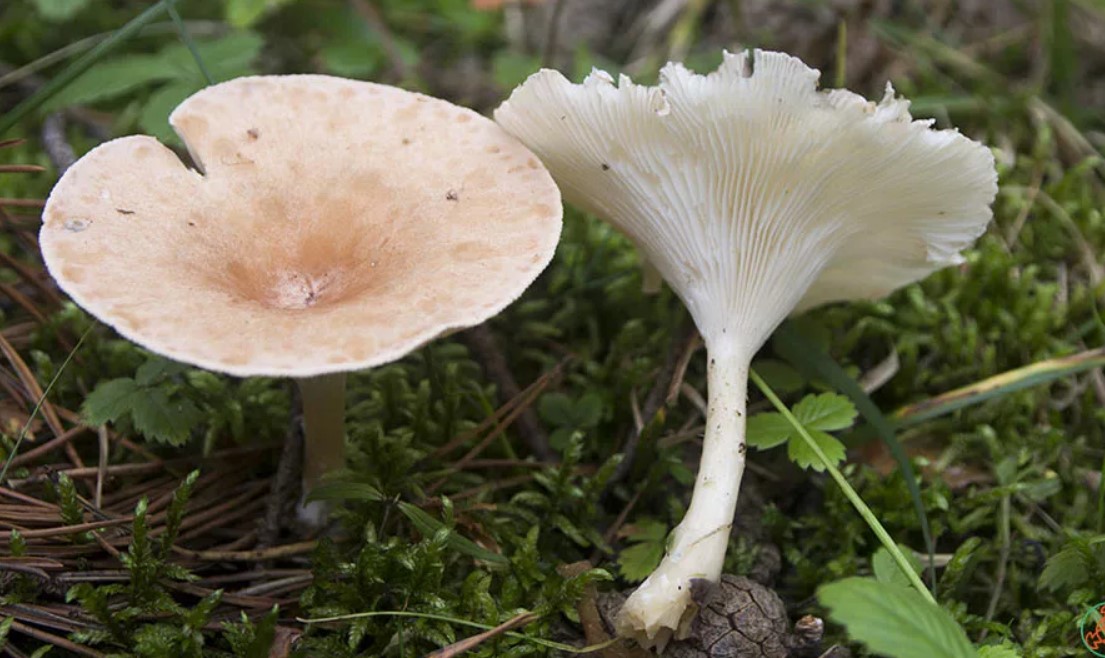
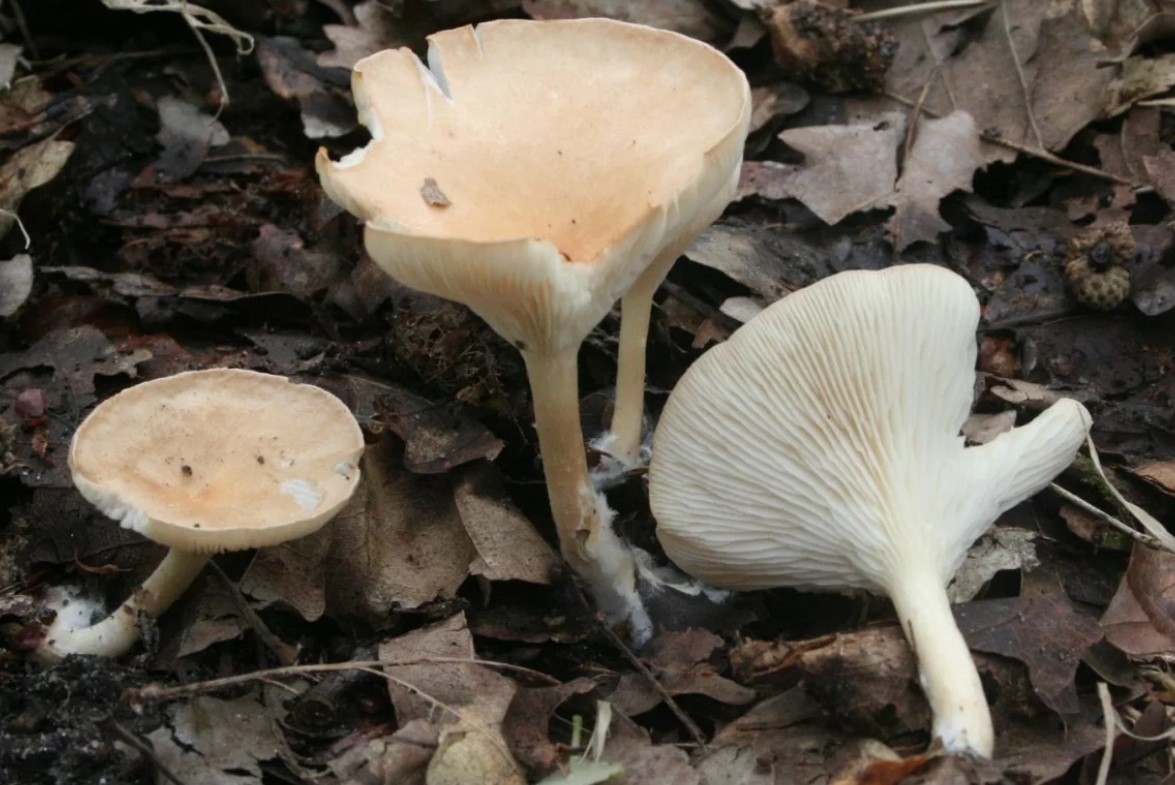
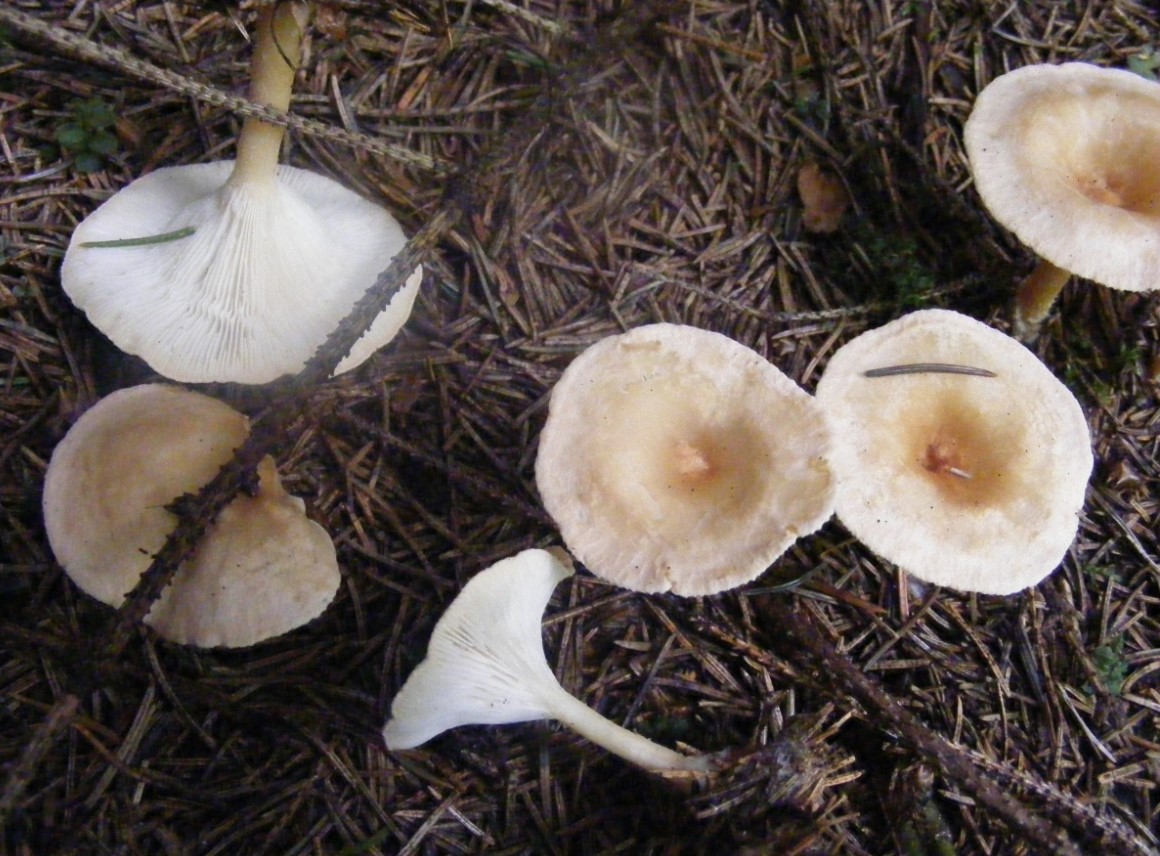
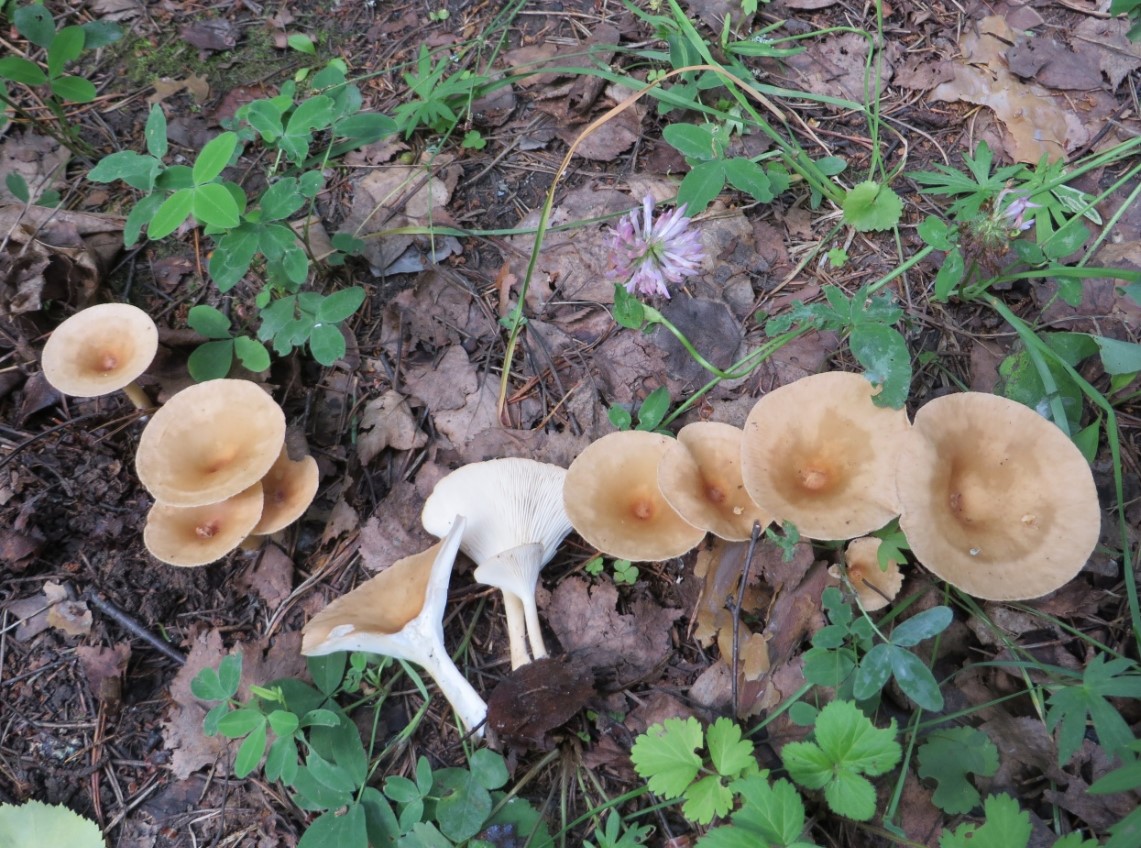
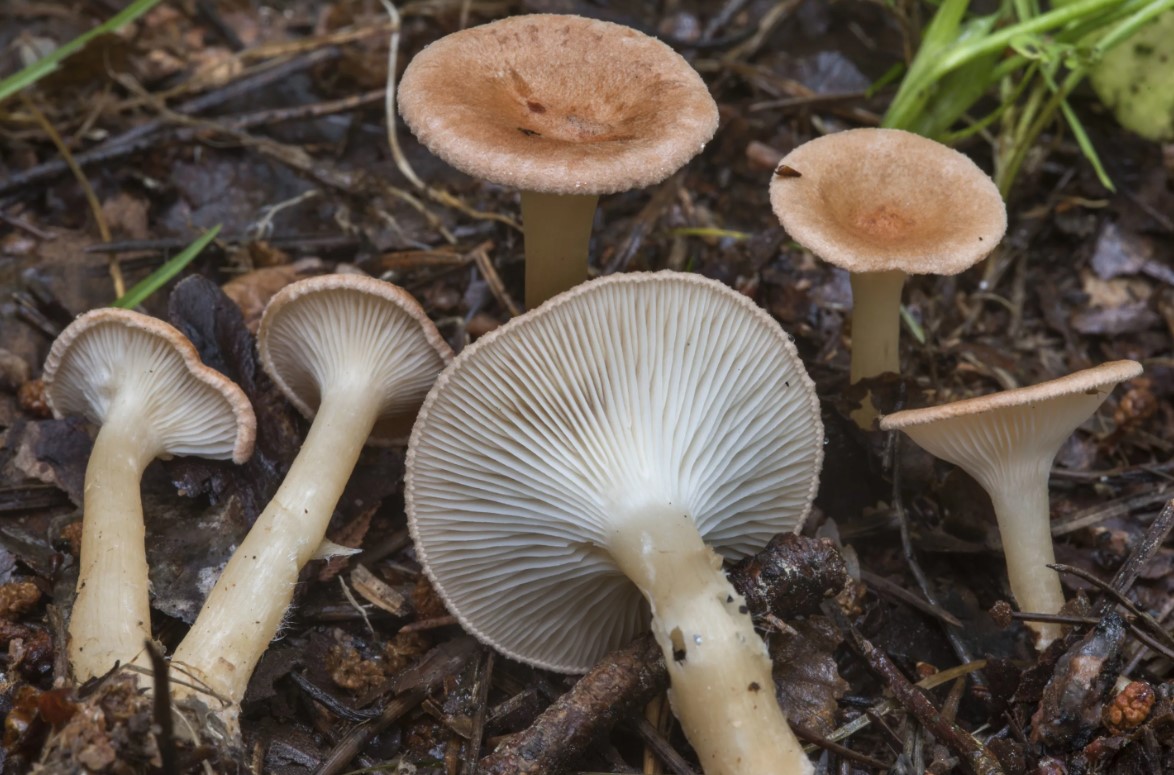
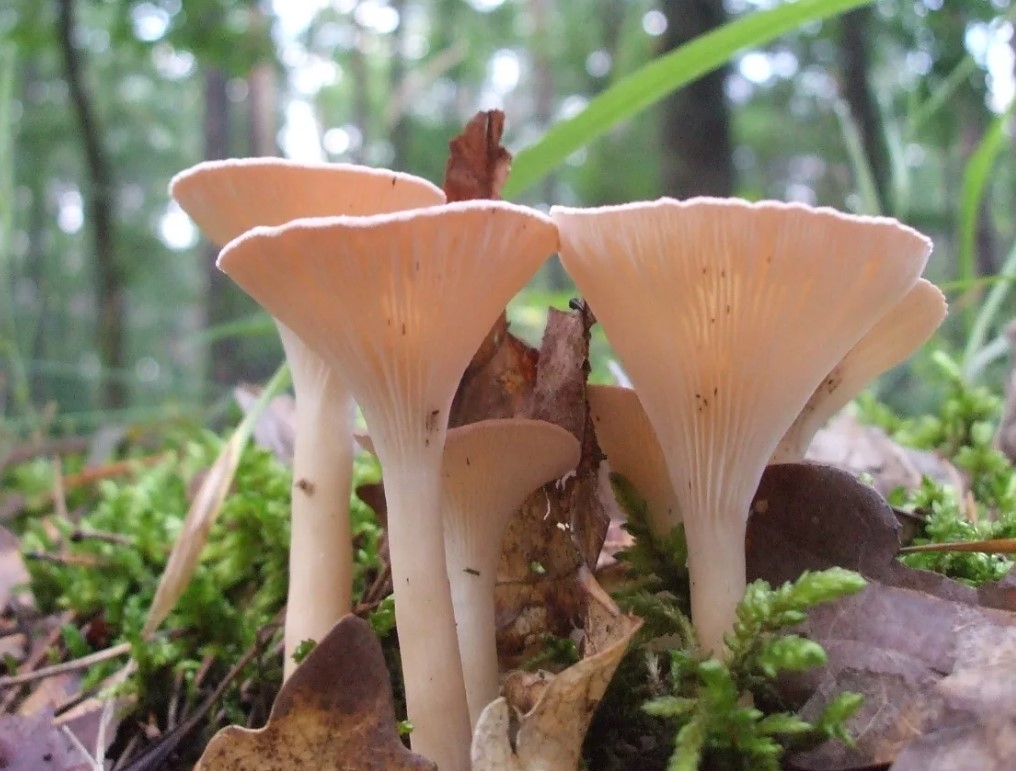
Smoky talker (Clitocybe nebularis)
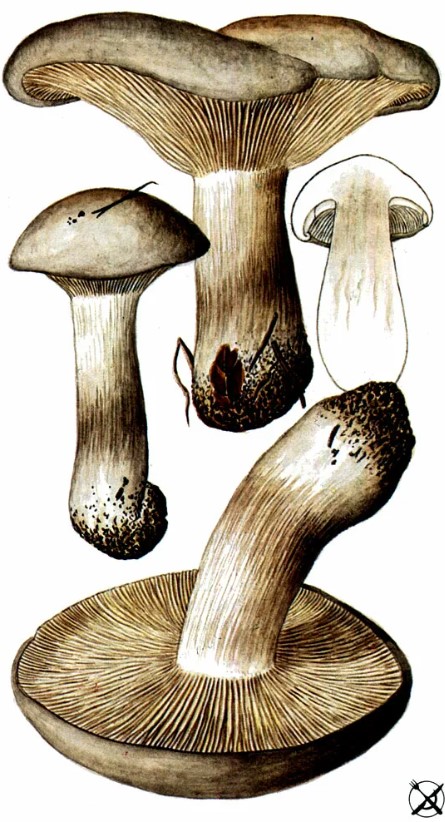
| View + photo | Description | Edibility | Distribution area |
| Smoky talker | The mushroom is relatively large, with a cap diameter ranging from 5 to 25 cm. The edges are wavy, and the cap can be spread out or slightly depressed in the center. The color is ash-gray or light brown. However, in rainy weather, it darkens to a yellow-brown. The bloom on the cap's surface in mature mushrooms remains only in the center. The stem is 6 to 15 cm long and up to 3 cm in diameter. | Conditionally edible. Only young mushrooms that have undergone extensive heat treatment are edible. However, the taste is not very good. | It has a wide habitat. It prefers various places (forest edges, parks, forests, etc.) where there is a moist substrate of pine needles or leaves. |
Photo gallery of the smoky rowan
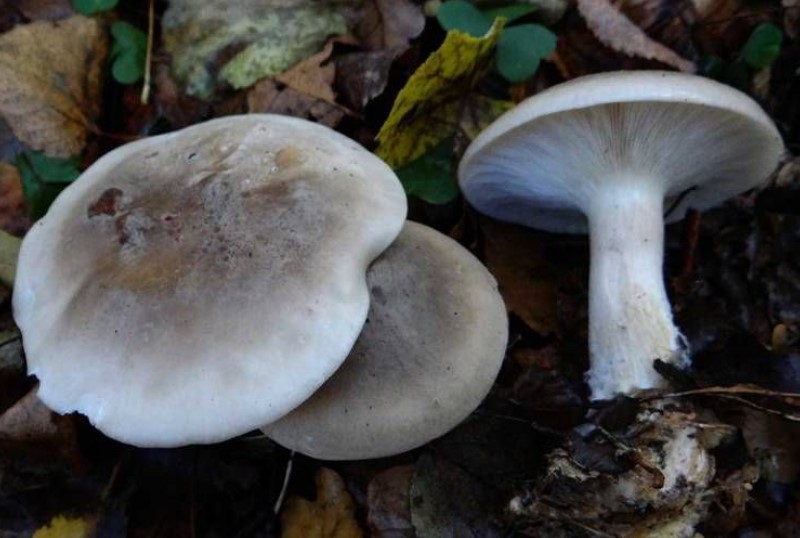
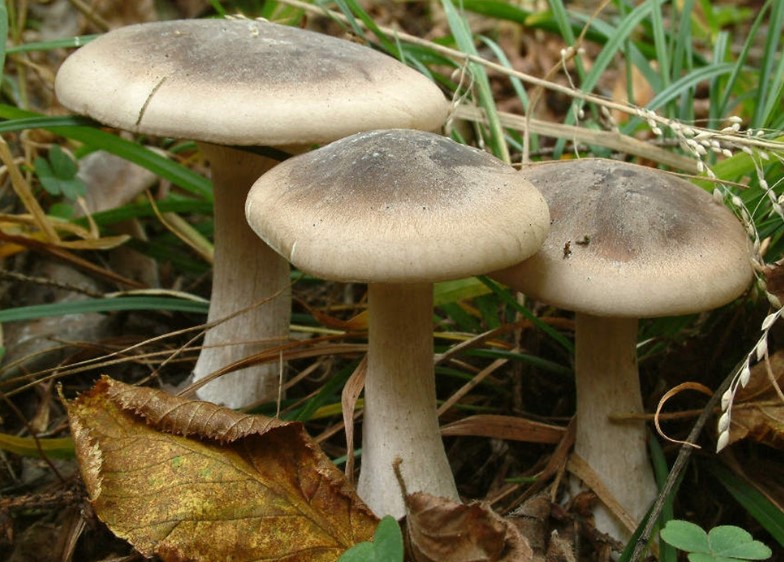
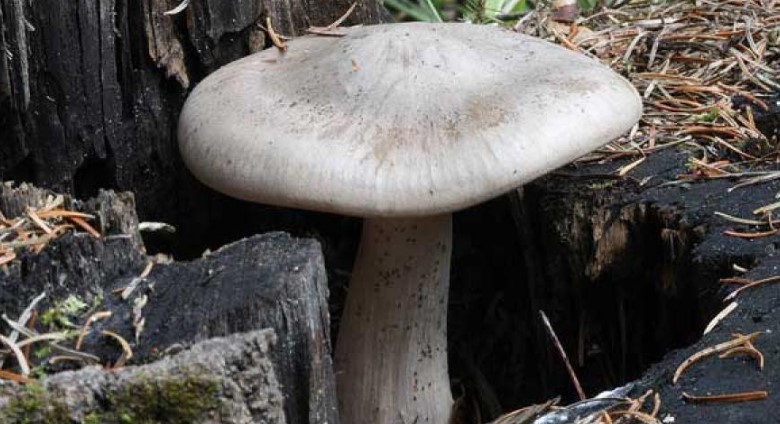
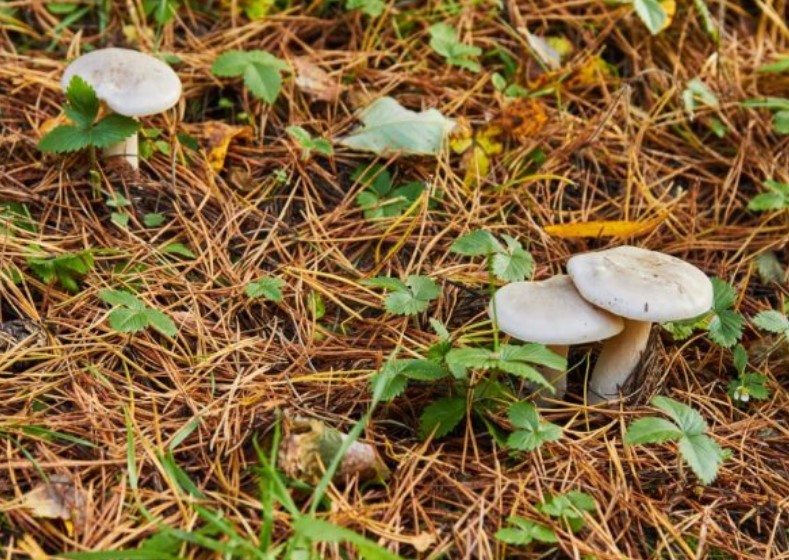
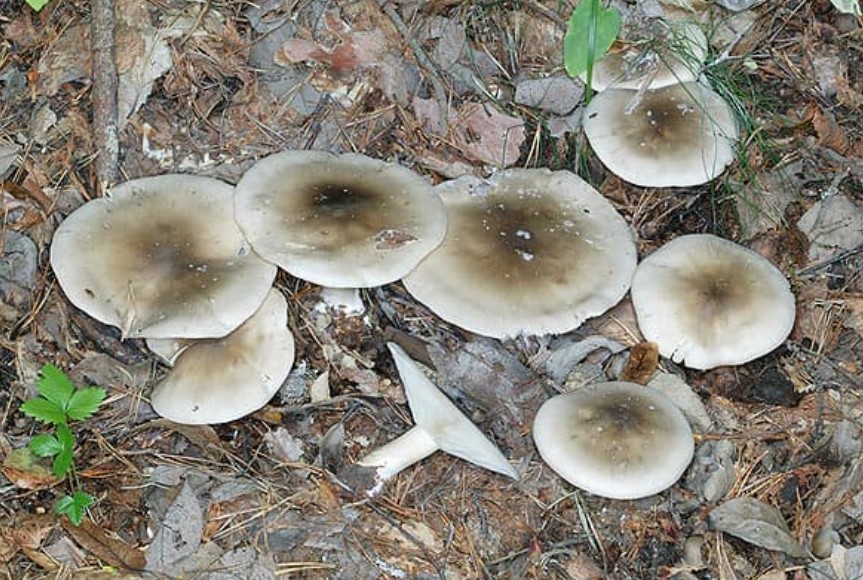
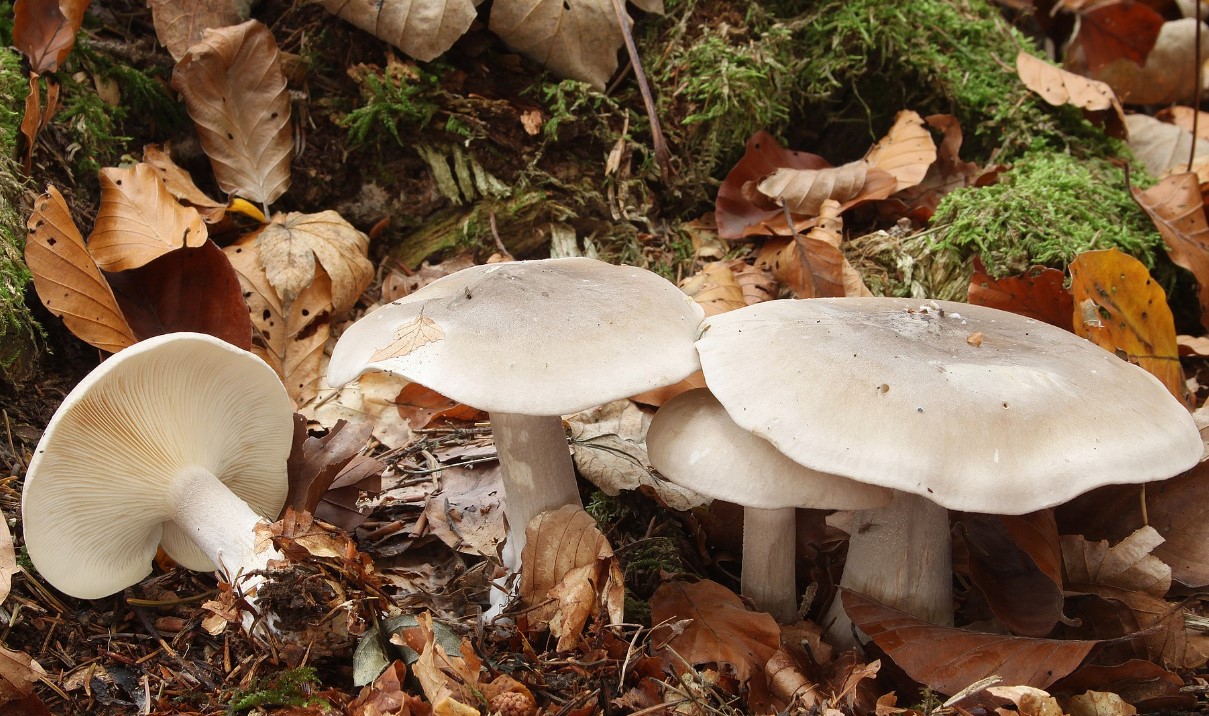
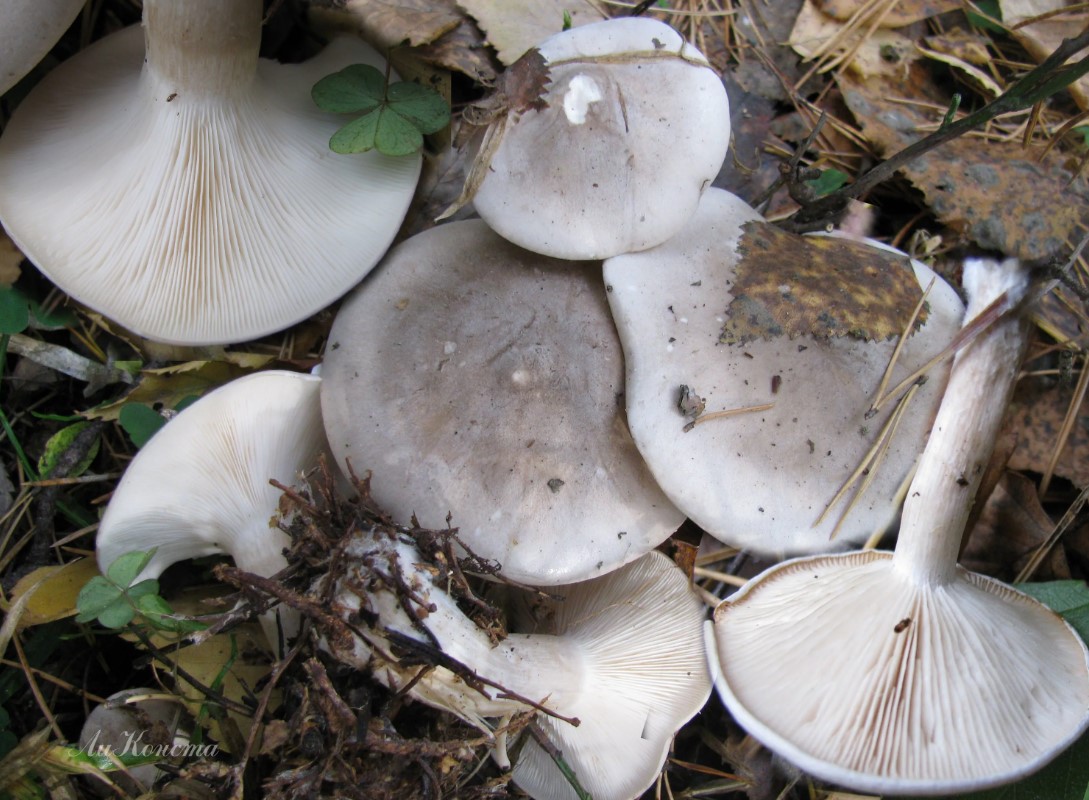
Read more about the smoky talker in the articleTalker or smoky rowan (gray): 59 photos, description, 5 dangerous lookalikes, how to cook.
Clitocybe odora
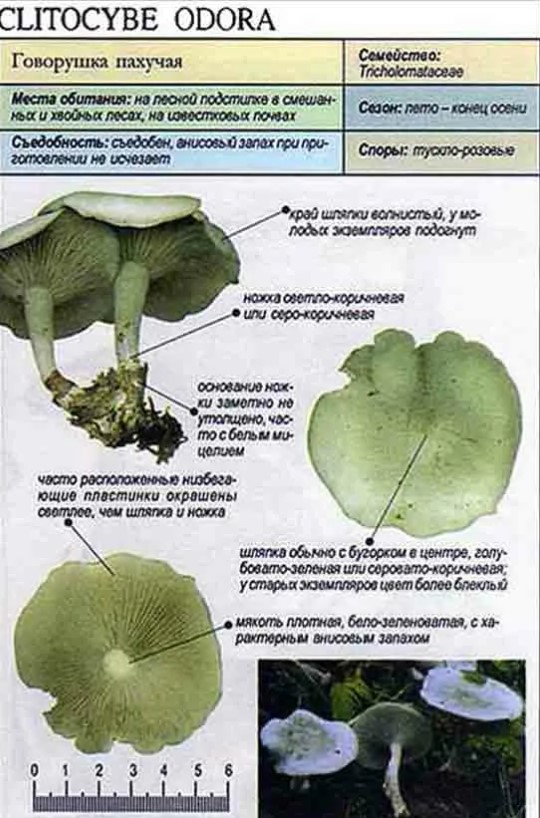
| View + photo | Description | Edibility | Distribution area |
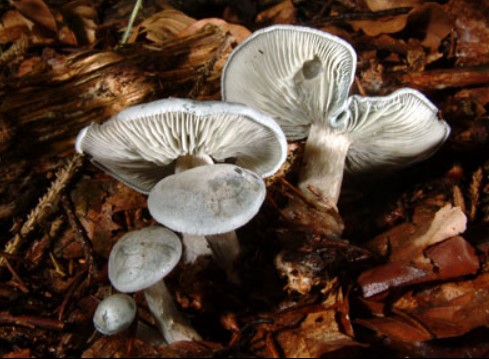
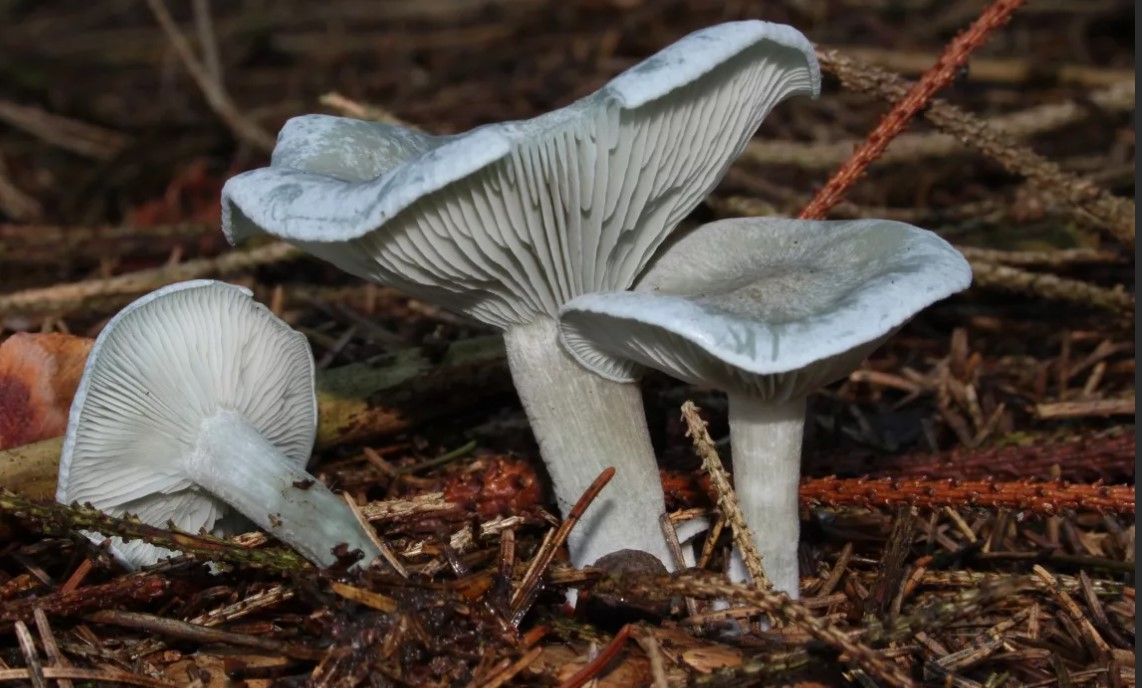
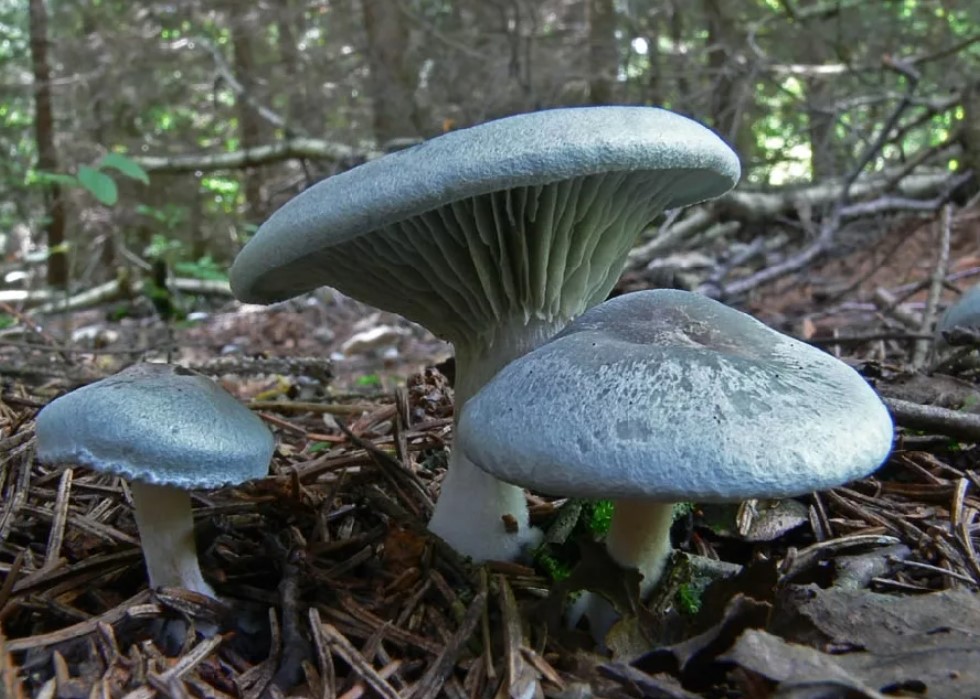
| Smelly talker | The cap is 3 to 8 cm in diameter, bluish-green in color, with wavy edges and a shape that ranges from flat to depressed. The stem is up to 6 cm tall and slightly widened at the base. | An edible mushroom, but most often used dried as a seasoning. | Grows in broadleaf forests. |
Photo gallery of the odorous talker
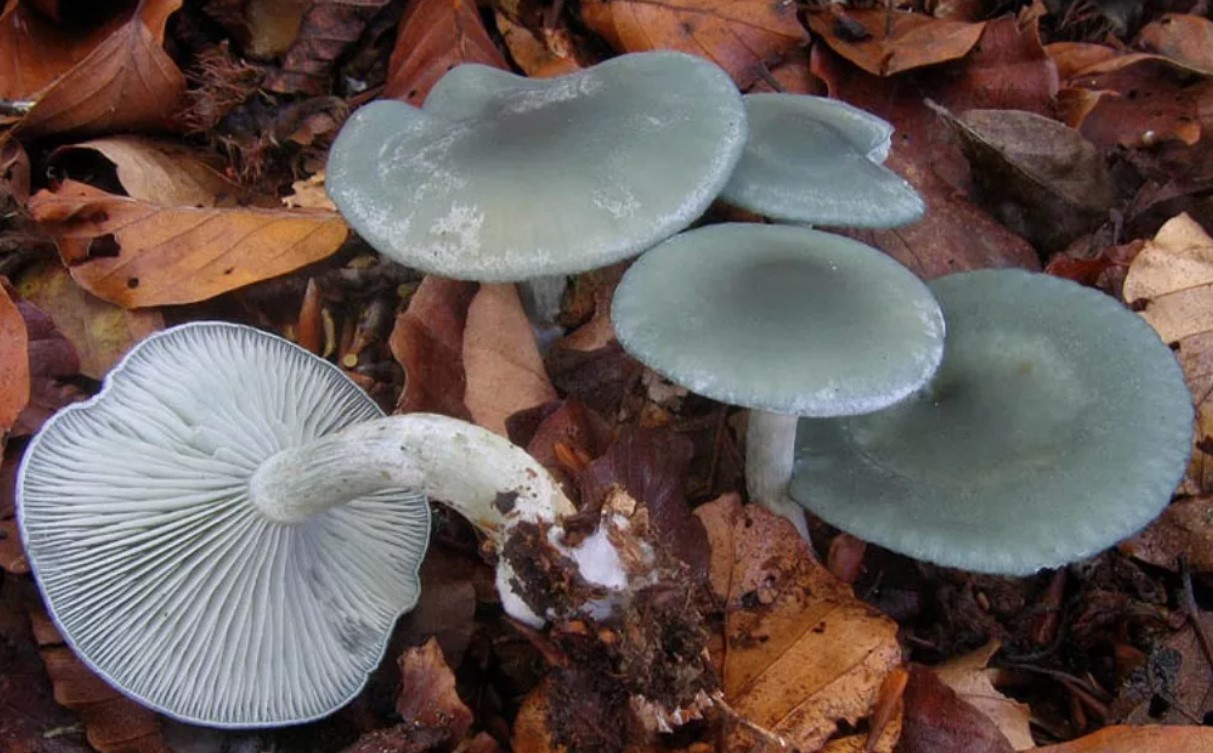
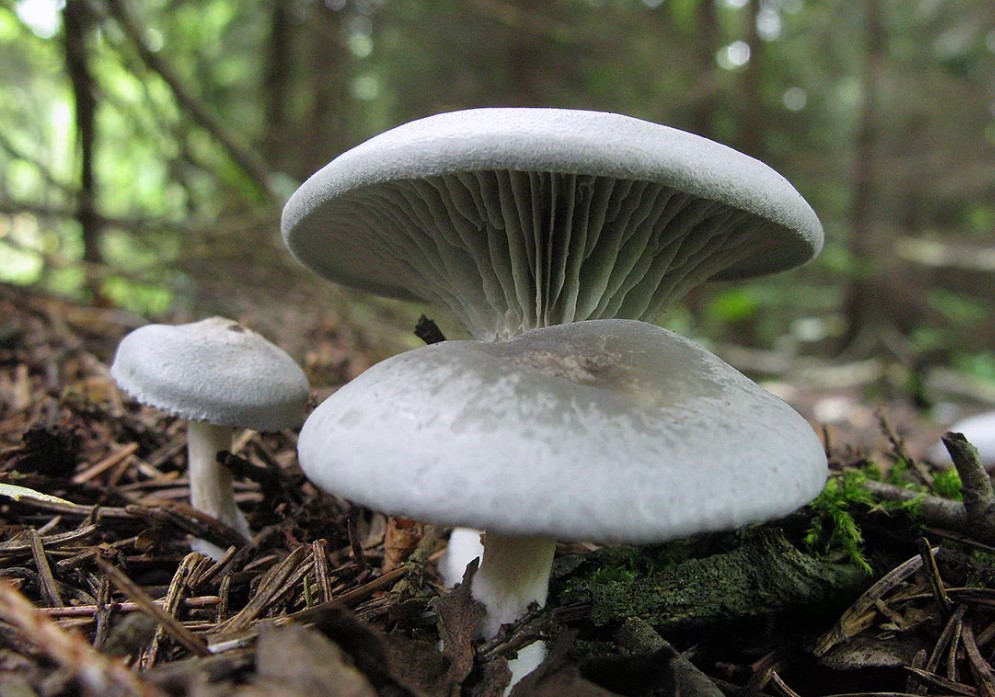
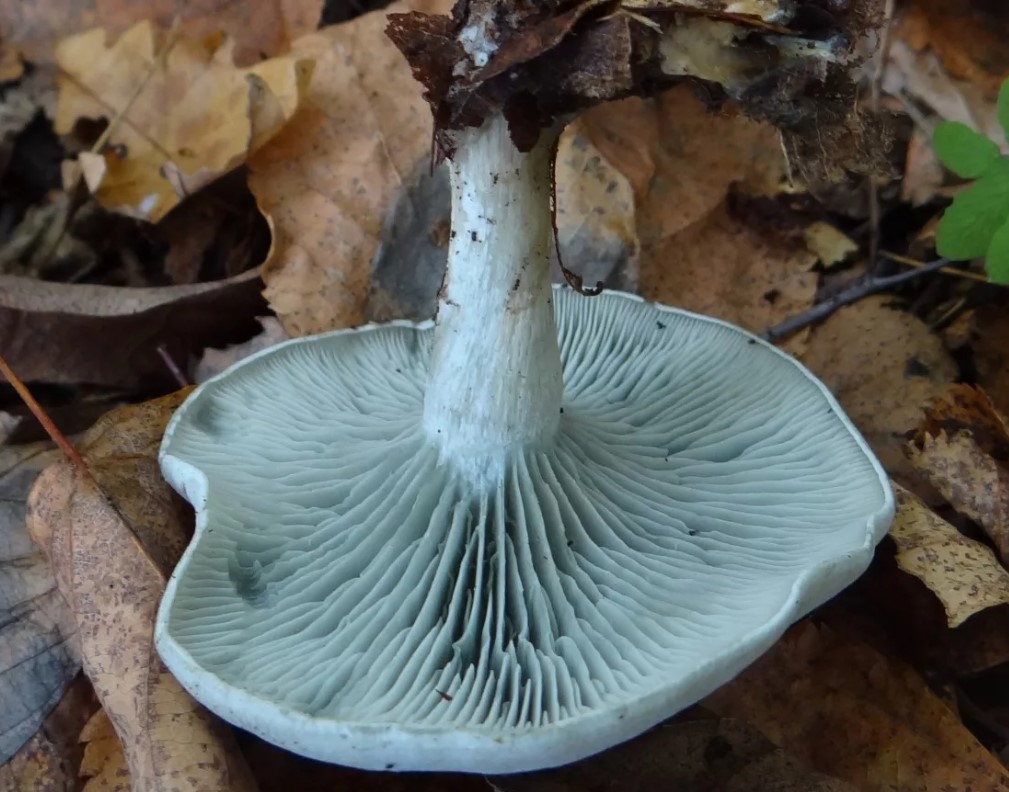
Snow talker (Rhizocybe pruinоsa)
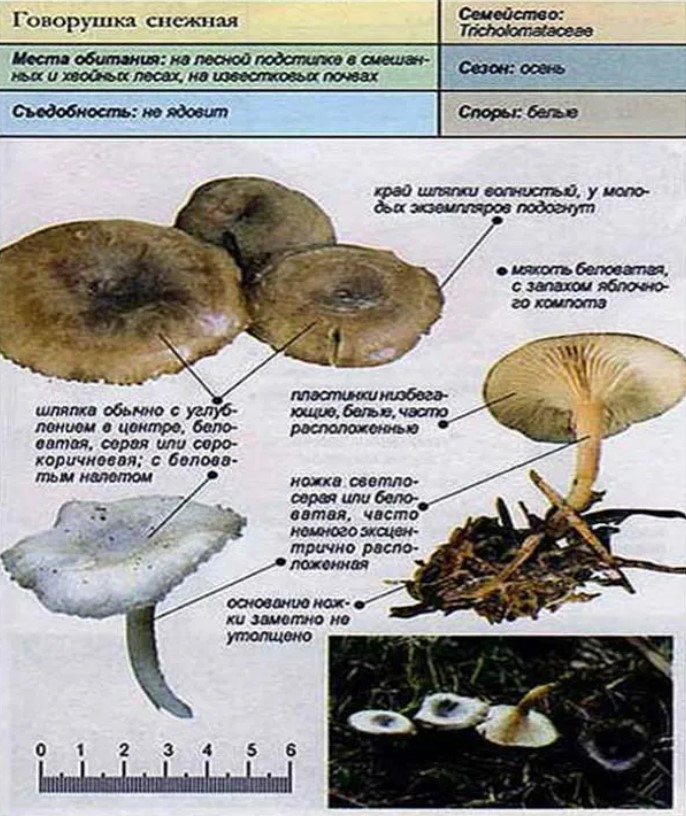
| View + photo | Description | Edibility | Distribution area |
| Snow talker | The cap is 4 cm in diameter, grayish-brown in color, and slightly depressed. It is covered with a white bloom. The stem is up to 0.4 cm in diameter and about 4 cm long, creamy or reddish in color. | Edible. | It appears as early as May, prefers coniferous forests, and grows in circles or even rows. |
Photo gallery of the snow talker
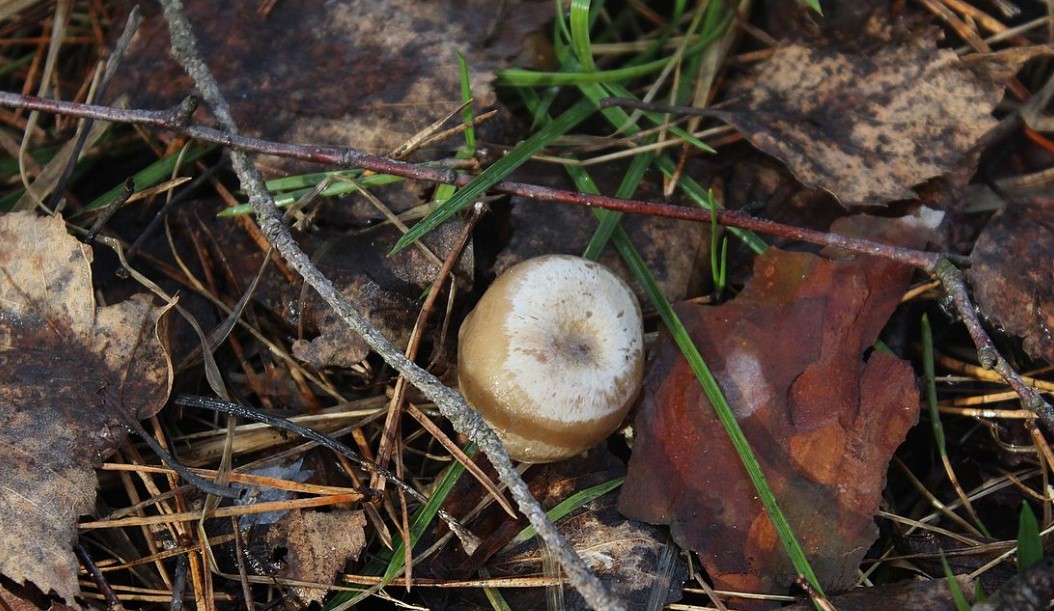
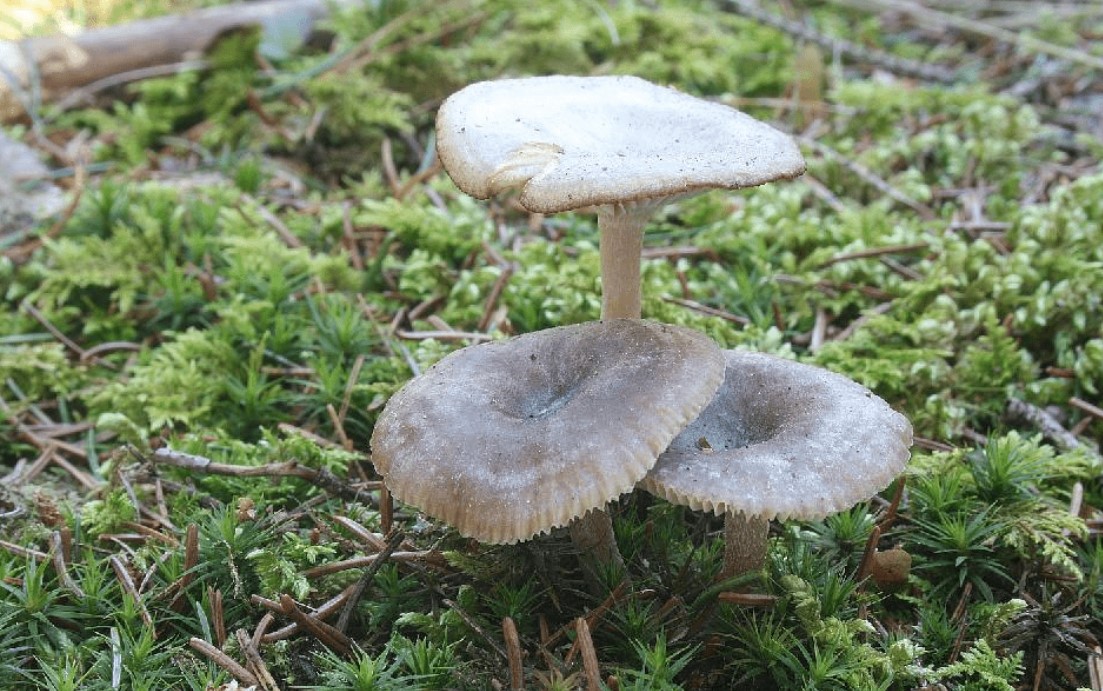
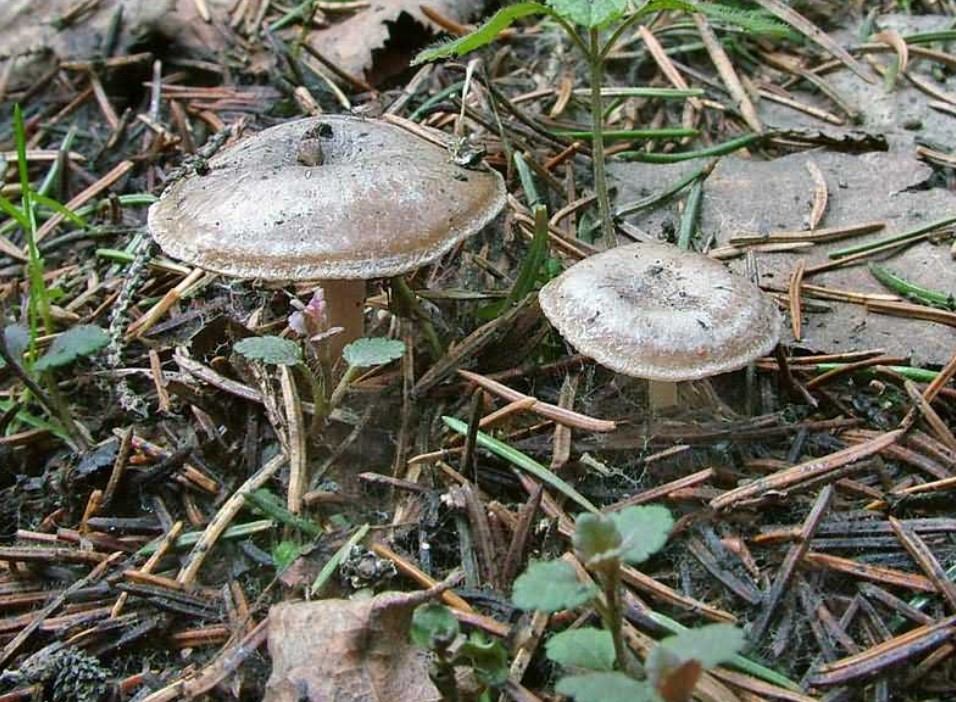
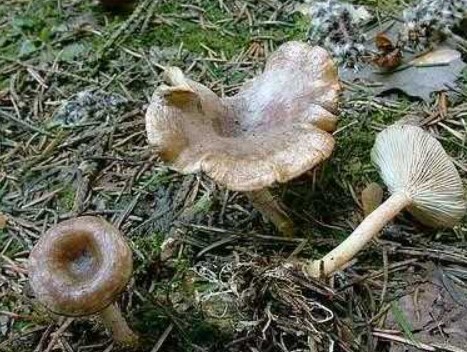
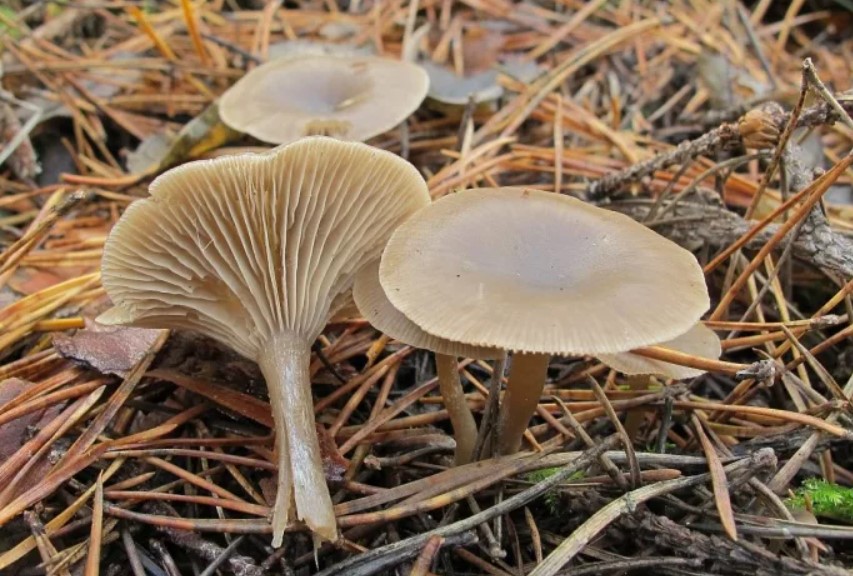
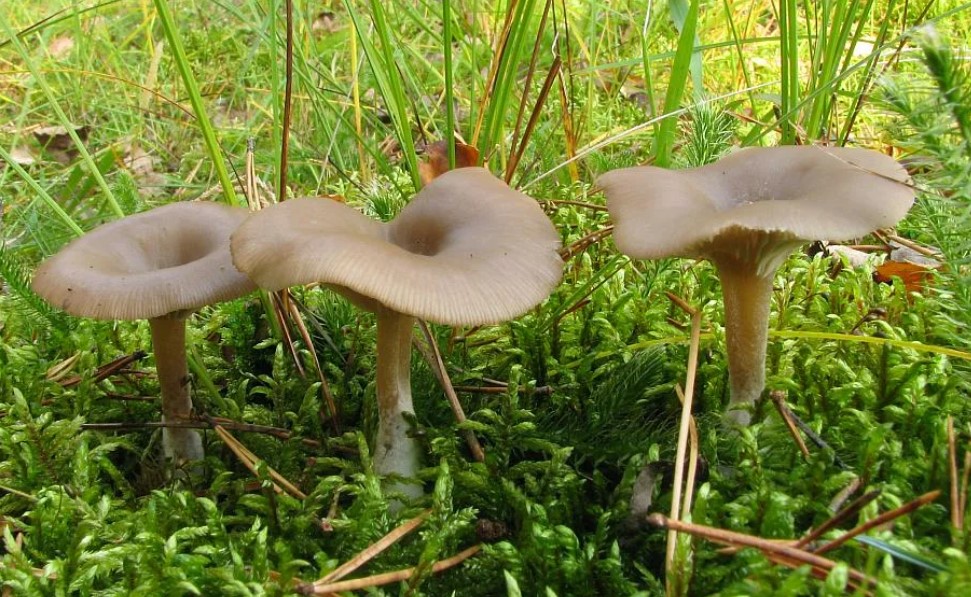
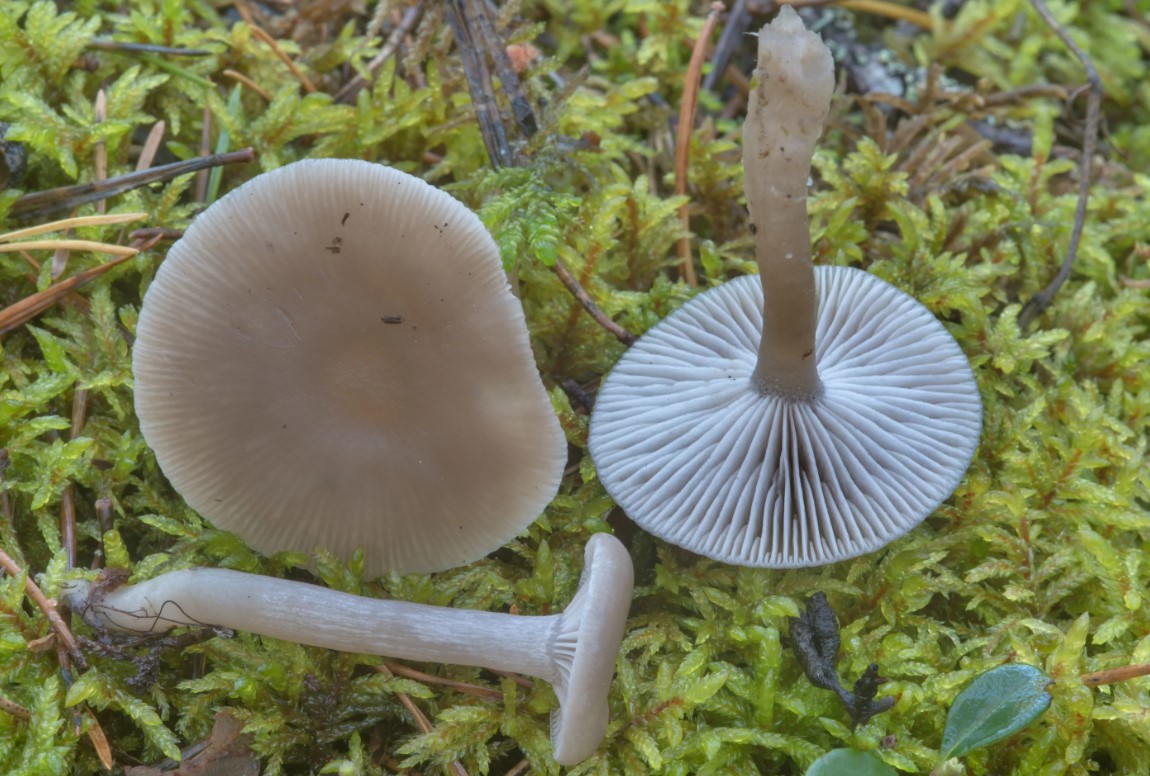
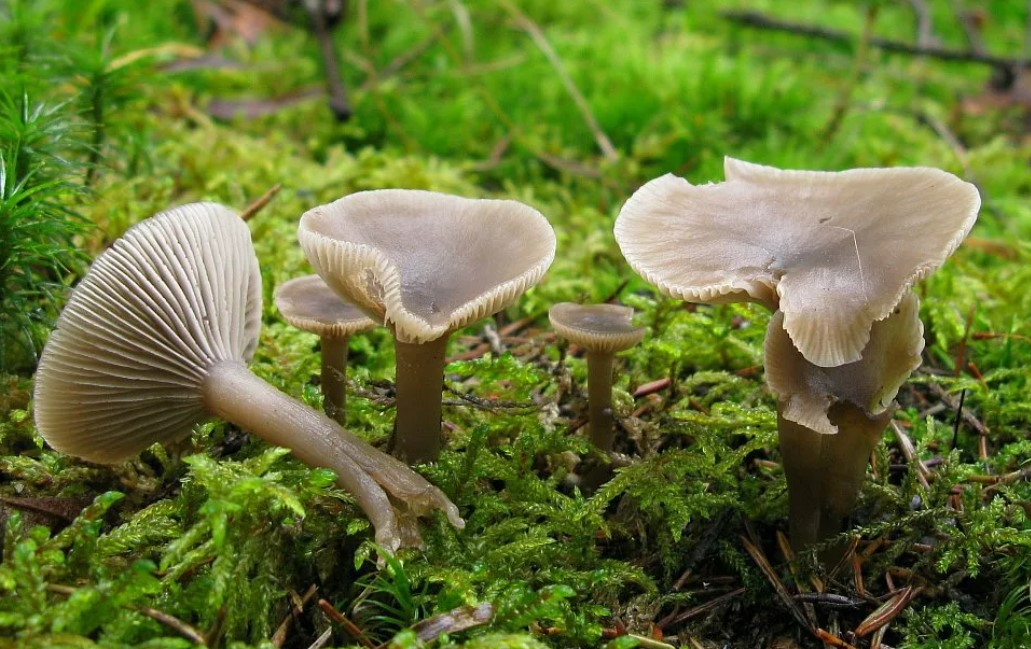
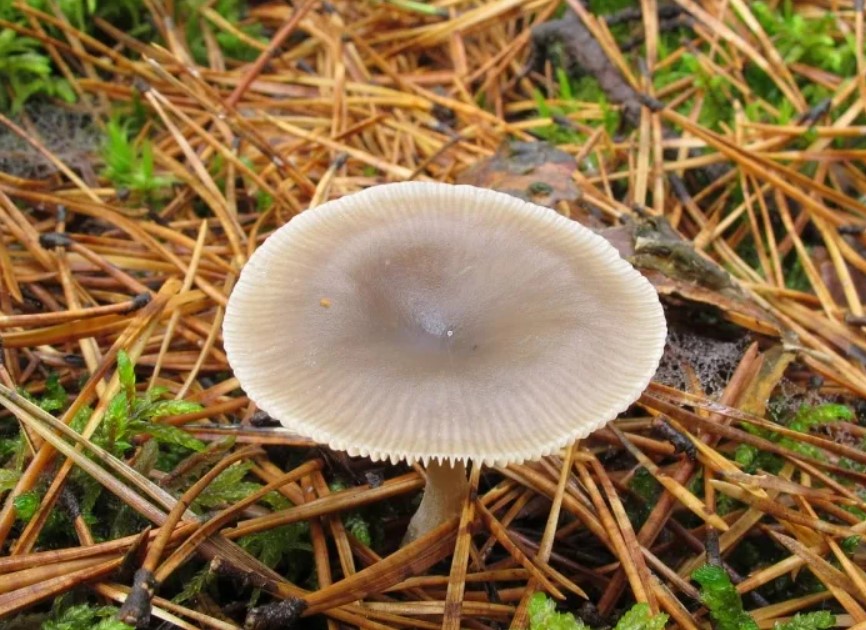
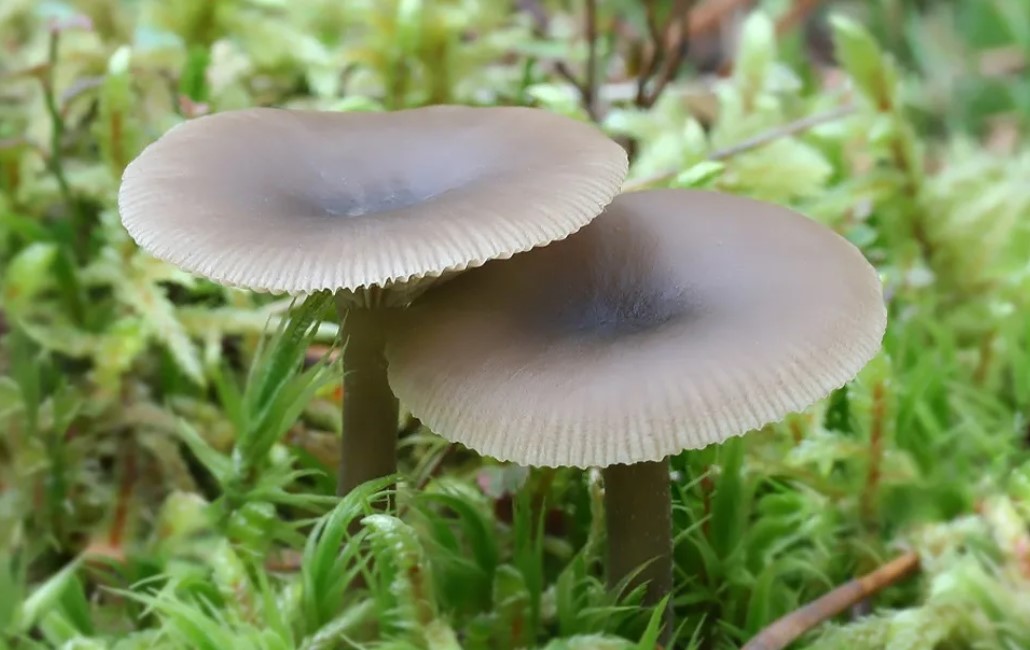
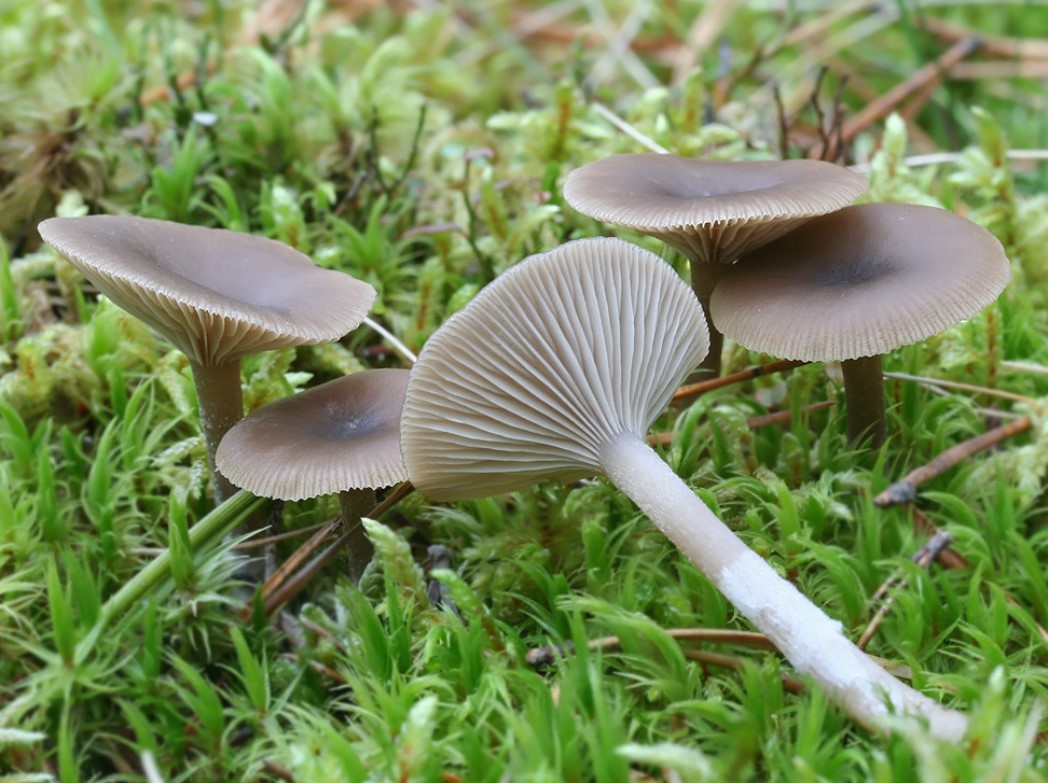
The grooved or grayish talker (Clitocybe vibecina)
| View + photo | Description | Edibility | Distribution area |
| The grooved talker, or grayish talker | The cap diameter varies from 1 to 5 cm, becoming funnel-shaped as it grows, with translucent edges. The stem is up to 7 cm long and cylindrical. The overall color of the mushroom is grayish-brown. | The mushroom is edible, but due to the difficulty of identifying it, many mushroom pickers prefer not to mess with it. | It grows in a circle, forming “fairy rings” in all the forests of Eurasia where there are rotting leaves and needles. |
Photo gallery of the grooved talker
7 Poisonous Talkers and Their Lookalikes + Photos and How to Tell Them Apart
Edible talkers have poisonous lookalikes, some of which are deadly. It's important to distinguish between them to avoid poisoning. It's best to avoid picking talkers yourself unless you're accompanied by experienced mushroom pickers.
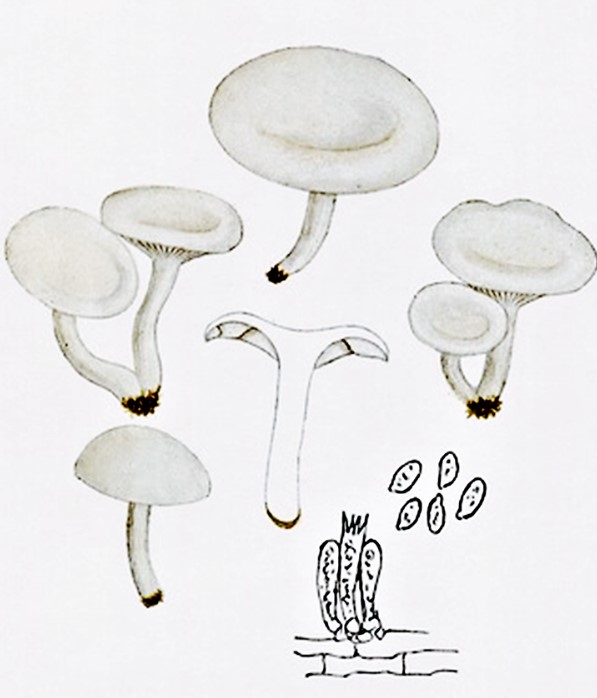
The translucent talker (Clitocybe diatreta)
| View + photo | Description | Edibility | Distribution area |
| Translucent talker | The cap is 3 to 4 cm in diameter, beige in color, and smooth and dry. At high humidity, slime may appear, and the color becomes slightly darker. The center of the cap is depressed, and the edges are very light, almost transparent. The stem is up to 3.5 cm tall and is always slightly lighter in color than the cap. | An inedible mushroom due to its muscarine content. | From May to September the mushroom can be found in birch forests. |
Photo gallery of the translucent talker
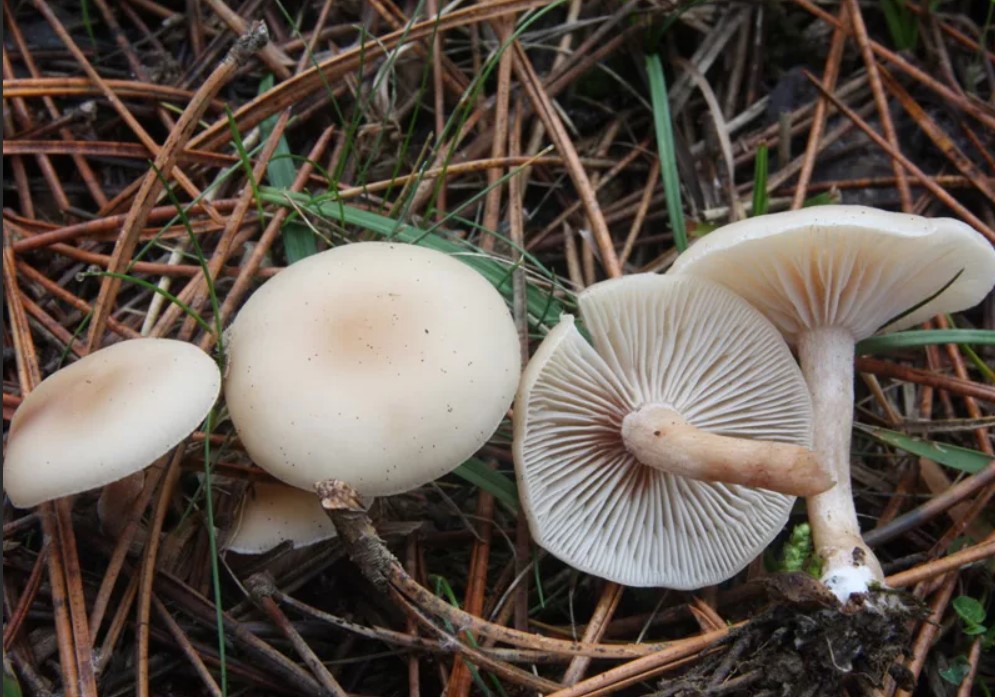
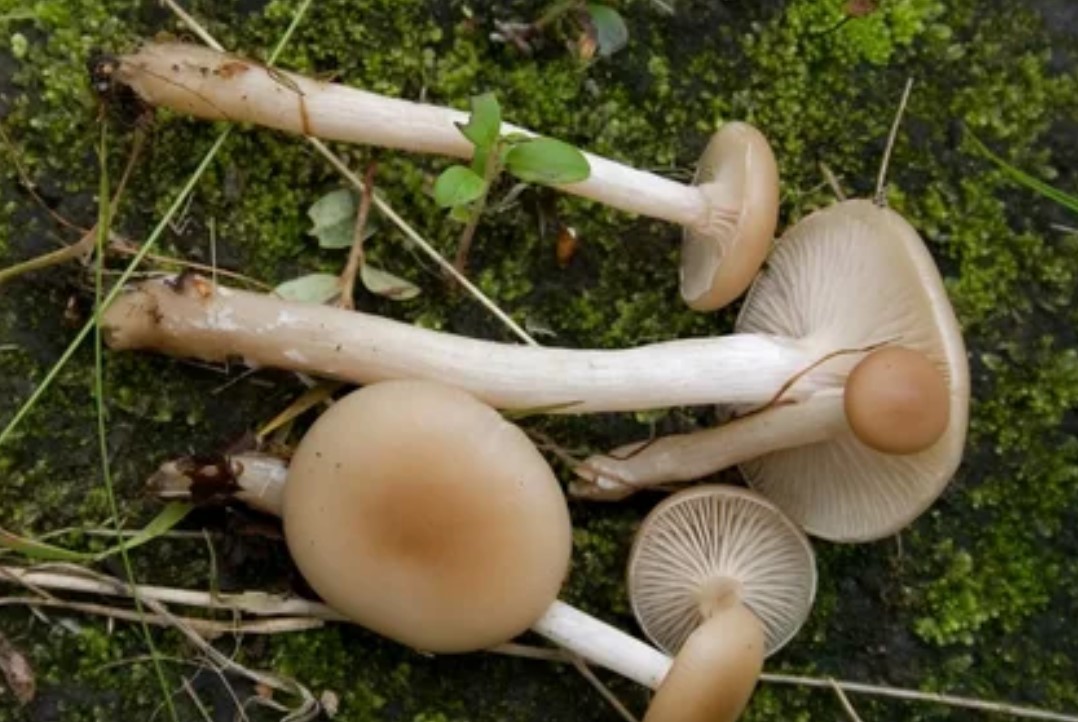
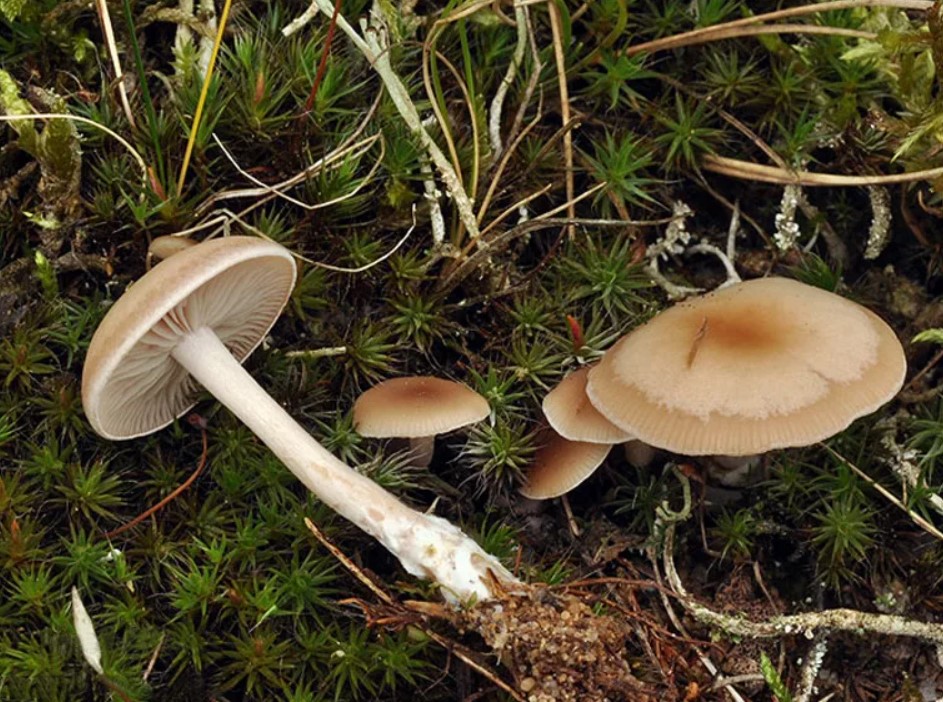
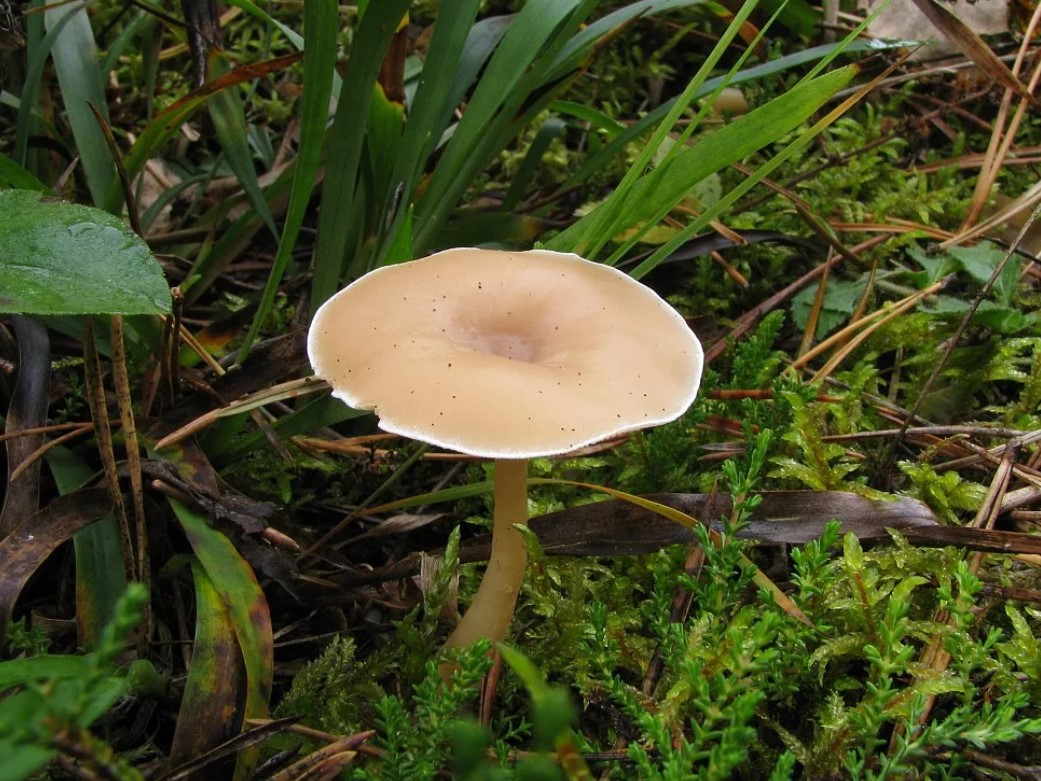
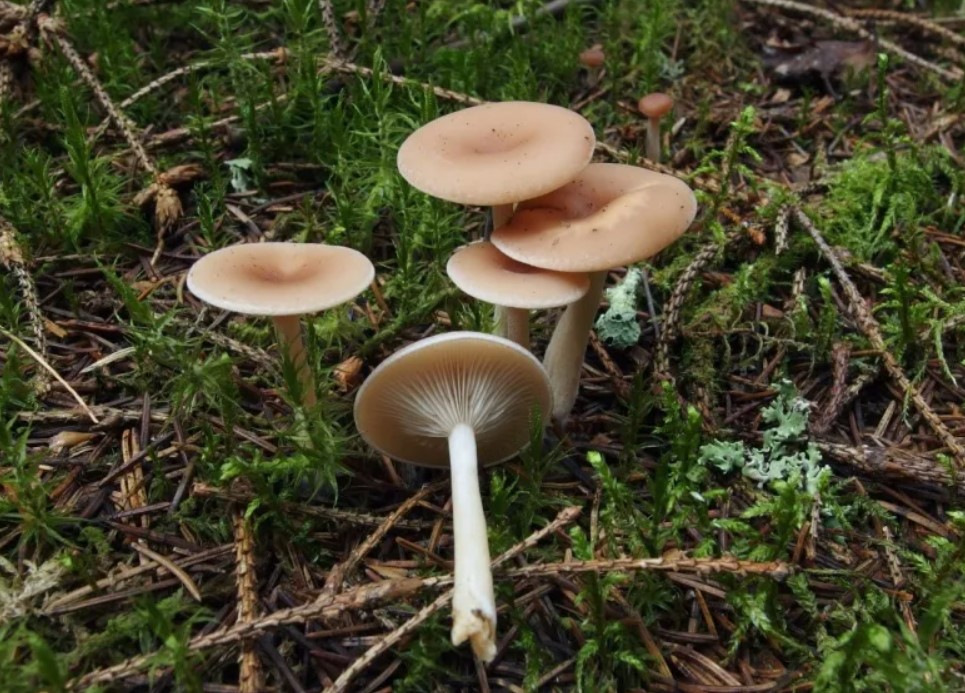
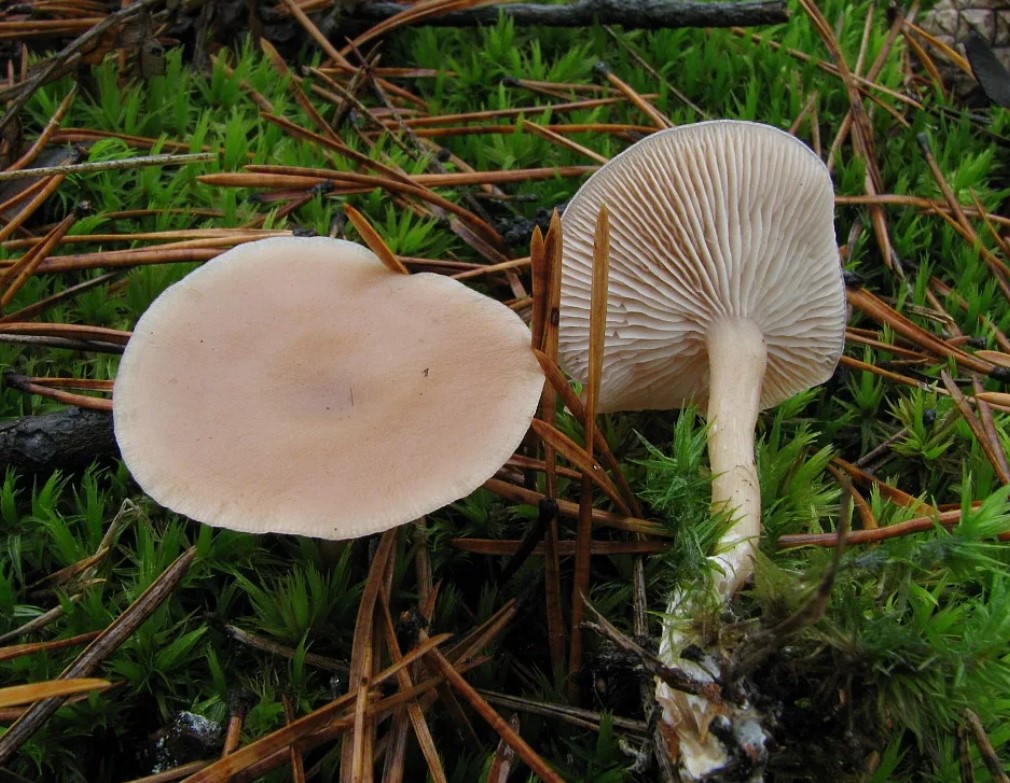
Clitocybe ditopa
| View + photo | Description | Edibility | Distribution area |
| Low-smelling talker | The cap is beige or brownish in color, up to 6 cm in diameter. Initially, it is convex, later becoming funnel-shaped. The stem is about 6 cm long, cylindrical, slightly flattened, and slightly lighter in color than the cap. | Poisonous. | It is found in winter in regions with a temperate climate, preferring mixed and pine forests. |
Photo gallery of the weak-smelling talker
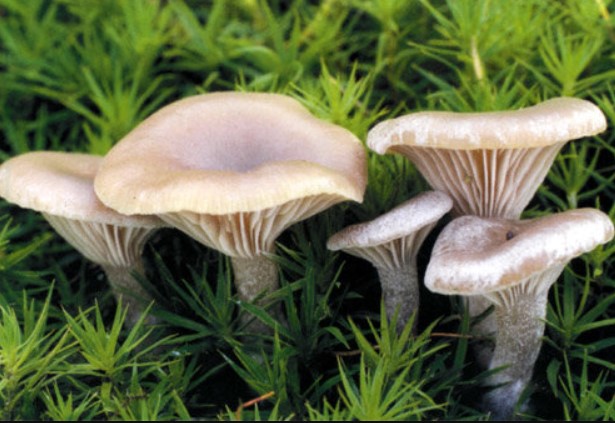
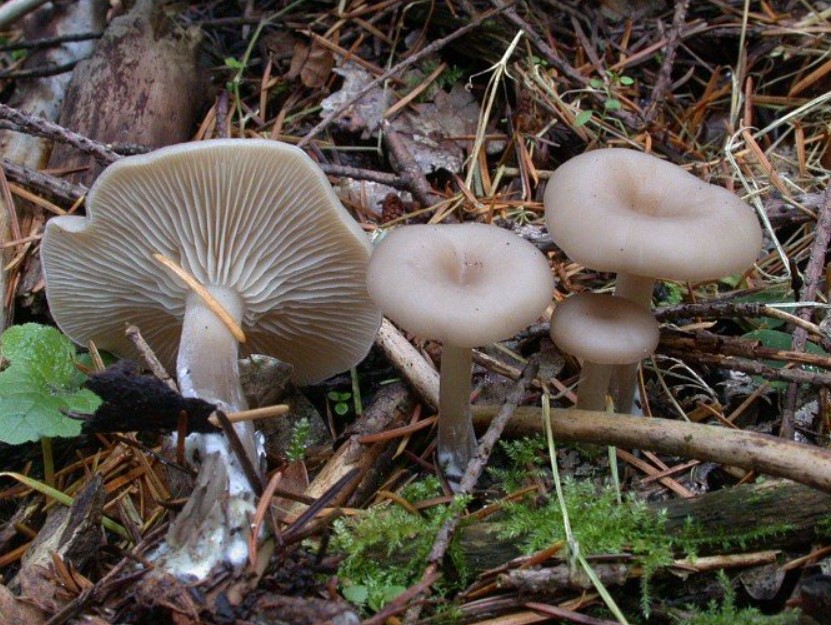
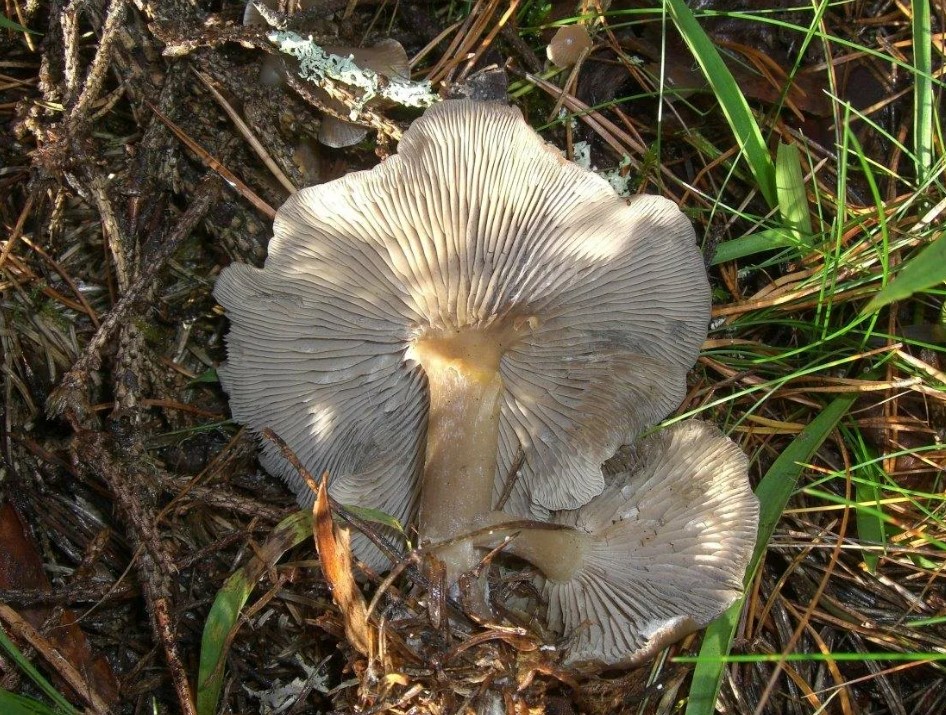
Leucocybe candicans
The species was previously classified in the genus Govorushki (Clitocybe), now included in the genus Leucócybe. Similar to the species Clitocybe rivulosa, synonym Clitocybe dealbata (see below).
| View + photo | Description | Edibility | Distribution area |
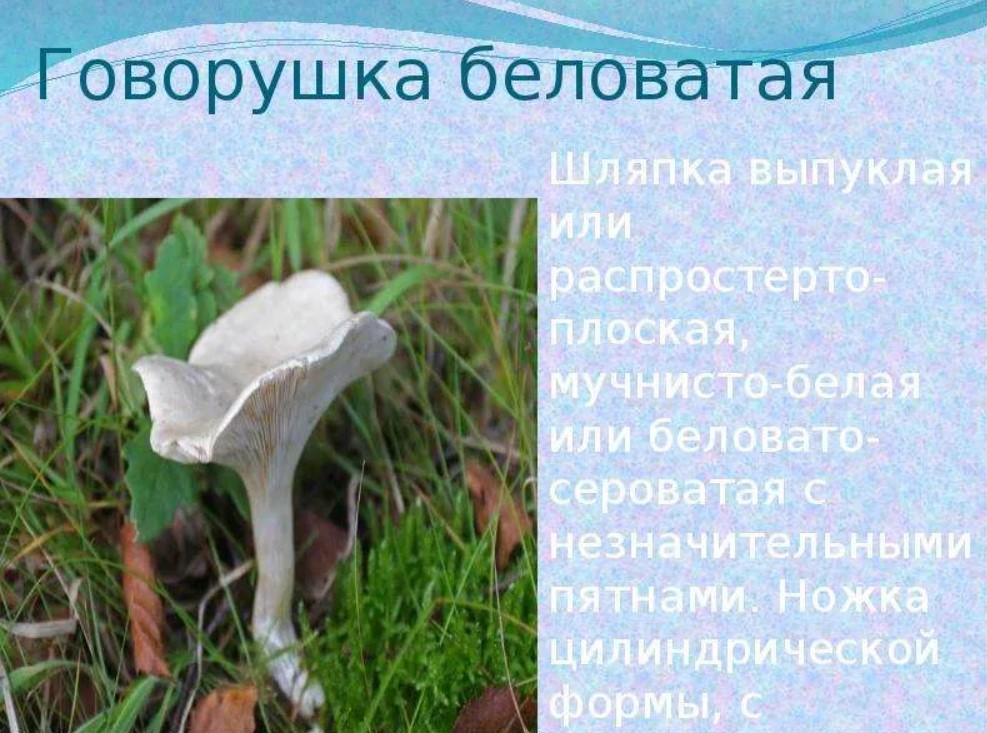
| Talker whitish, whitish | A cap-stem mushroom, lamellar, without a veil. The cap is 1-4 cm in diameter and initially flat. Later, a small indentation appears in the center. The color ranges from light gray to pale red. The flesh is watery, has a pungent odor, and a bitter taste. The stipe grows to 2-4 cm in length and is similar in color to the cap, with a smooth surface. | Inedible, the mushroom contains a dangerous alkaloid - muscarine. | Mainly mixed and deciduous forests, extremely rare in coniferous forests. |
Photo gallery of the whitish talker
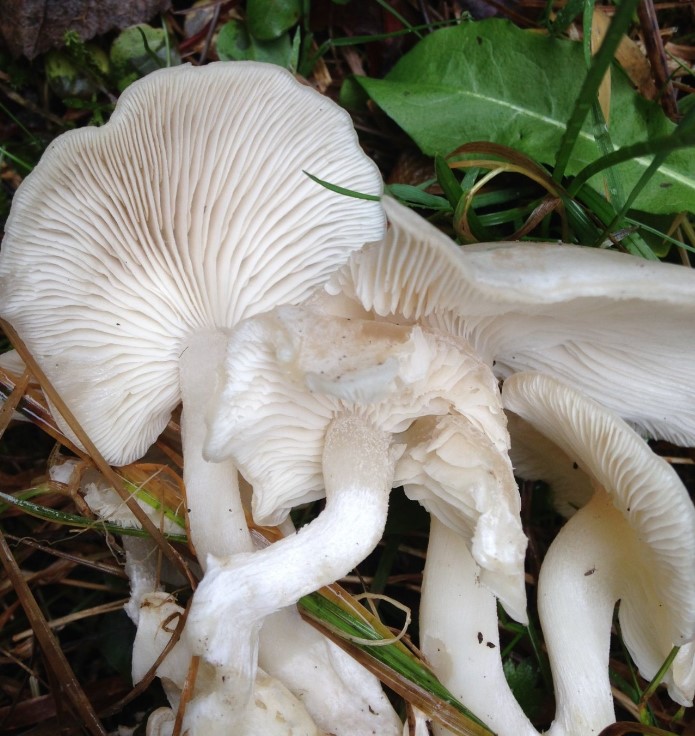
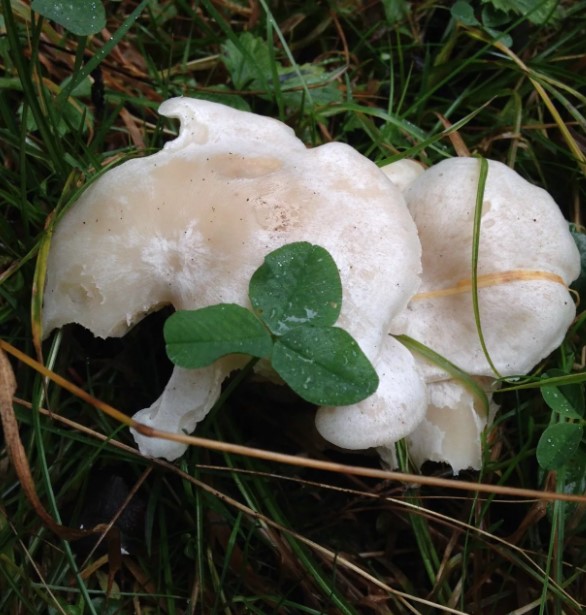
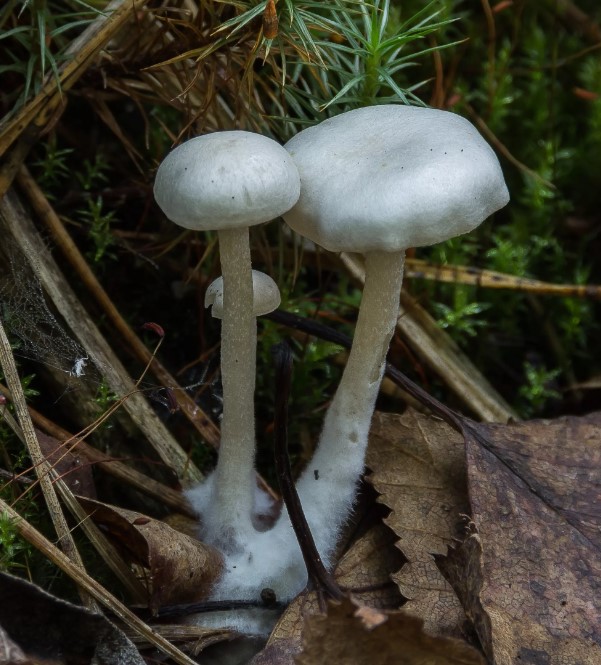
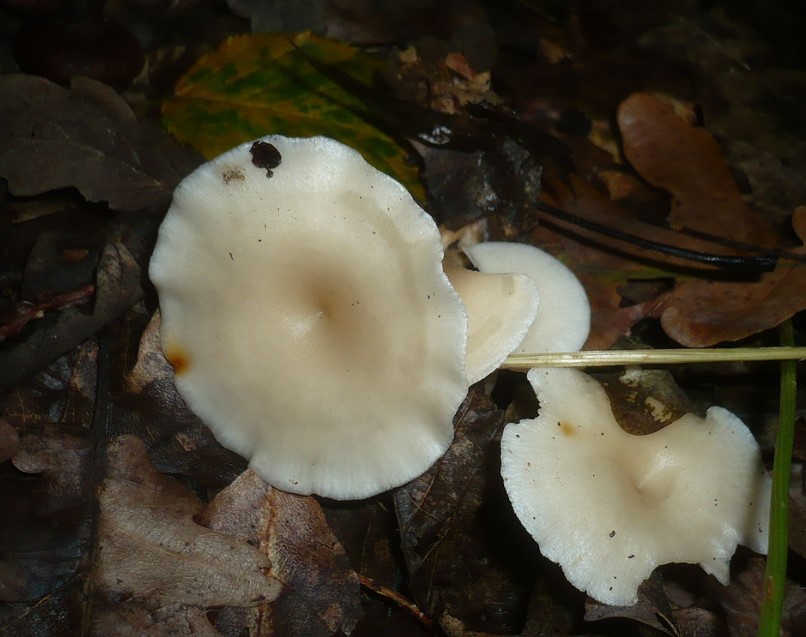
Clitocybe rivulosa, synonym Clitocybe dealbata
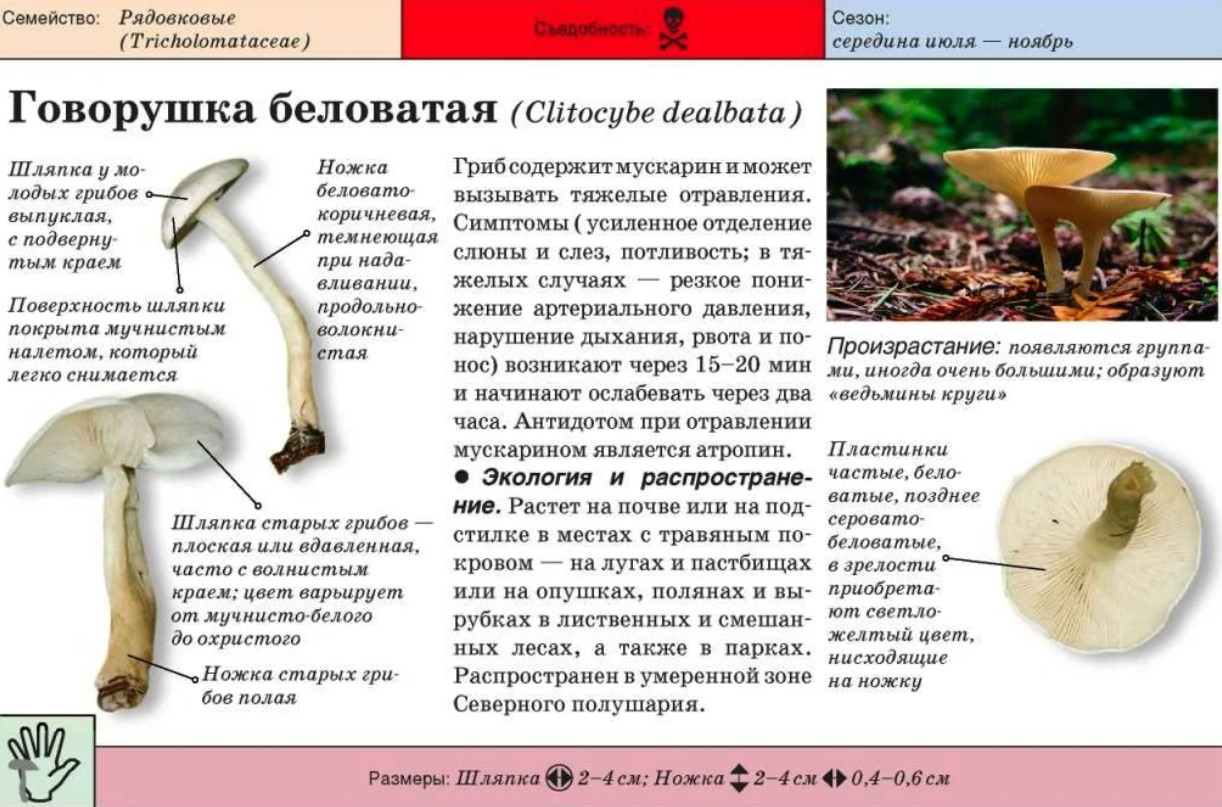
| View + photo | Description | Edibility | Distribution area |
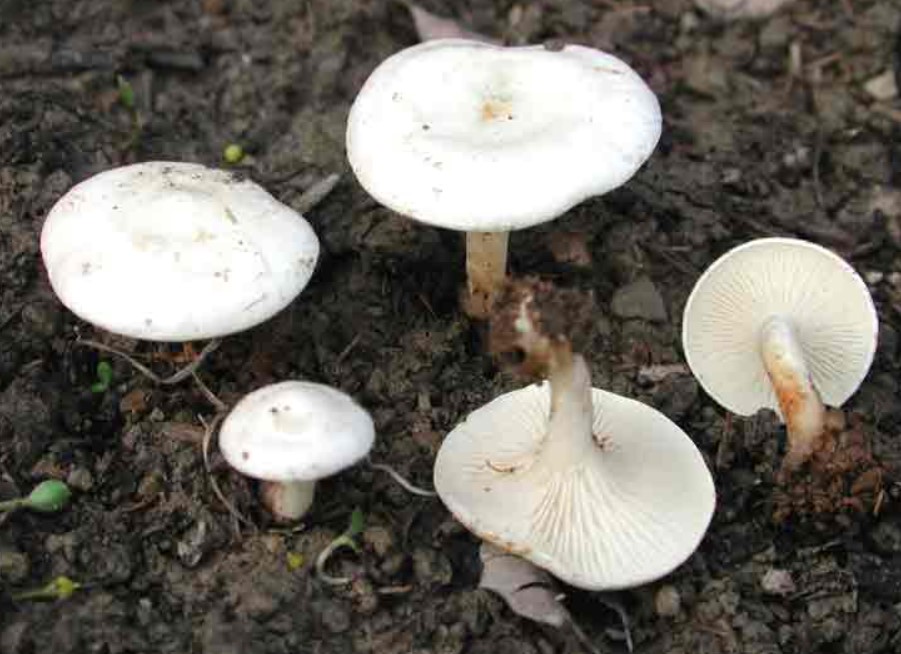
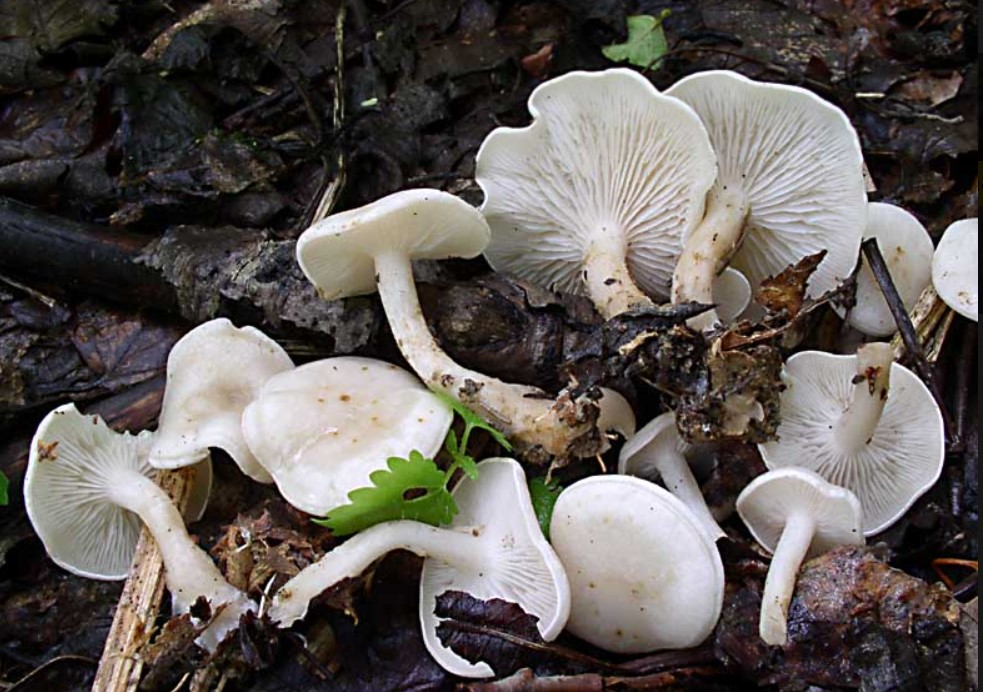
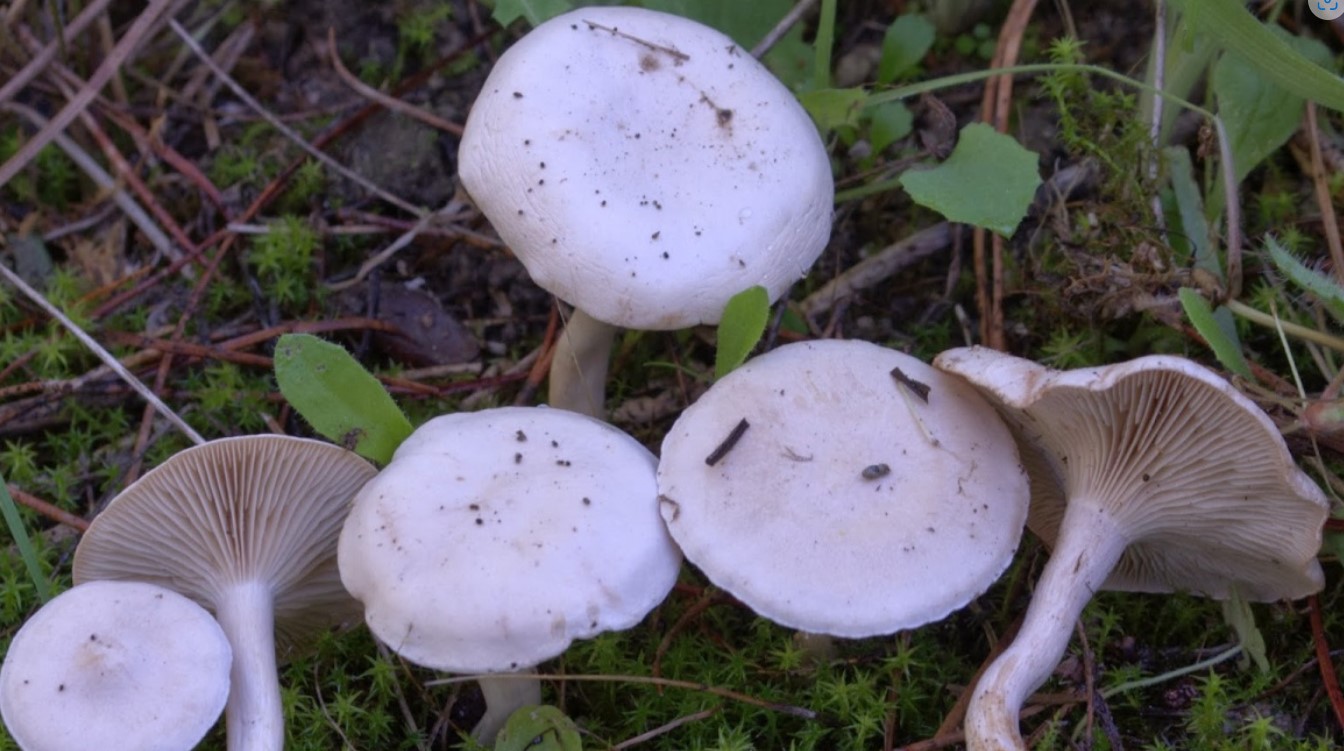
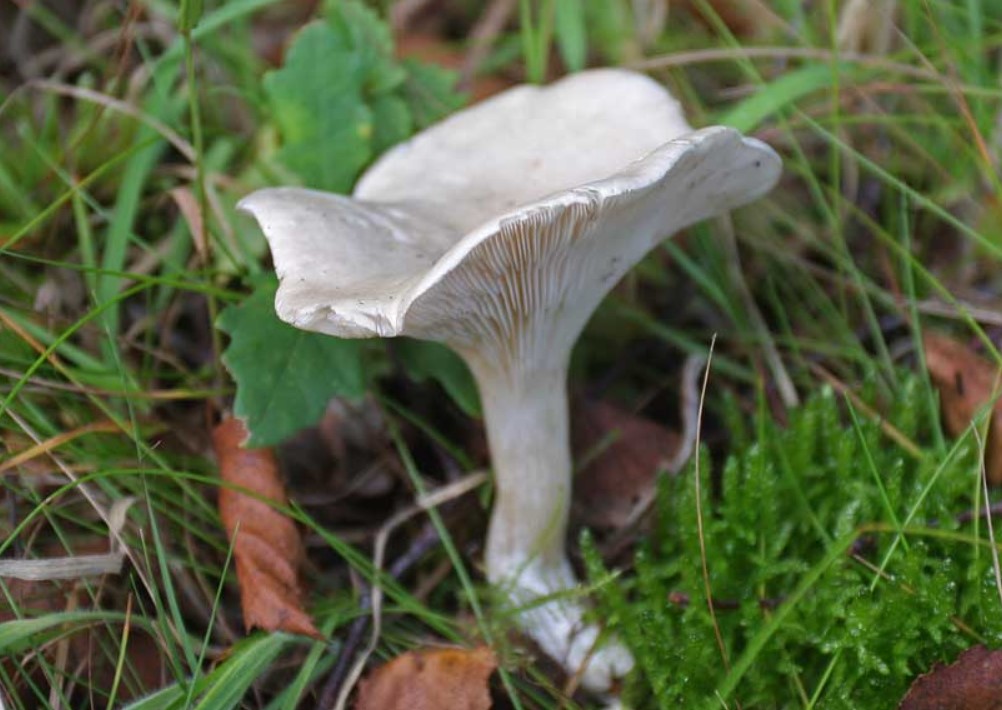
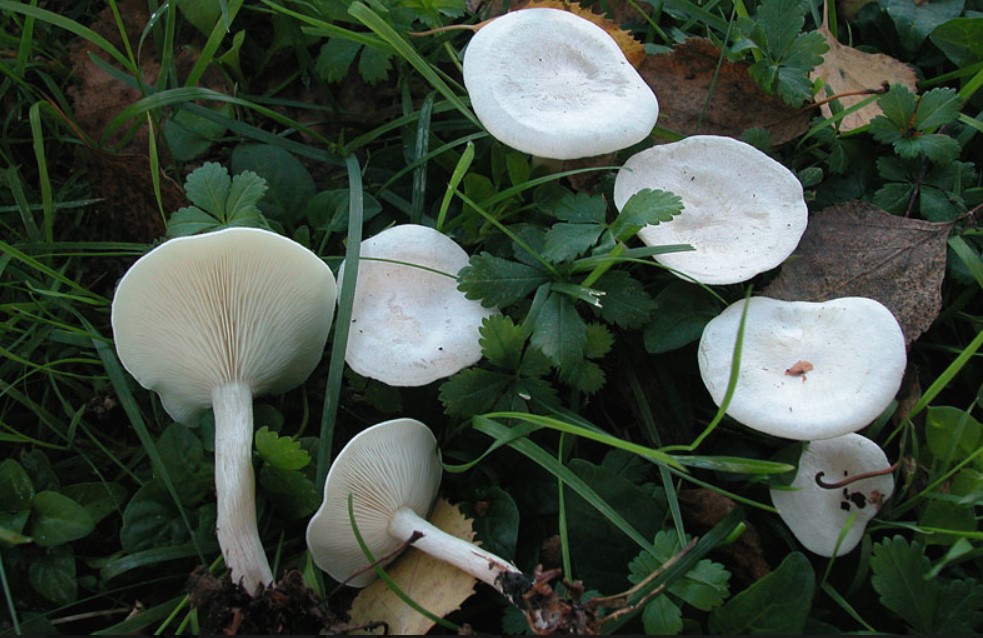
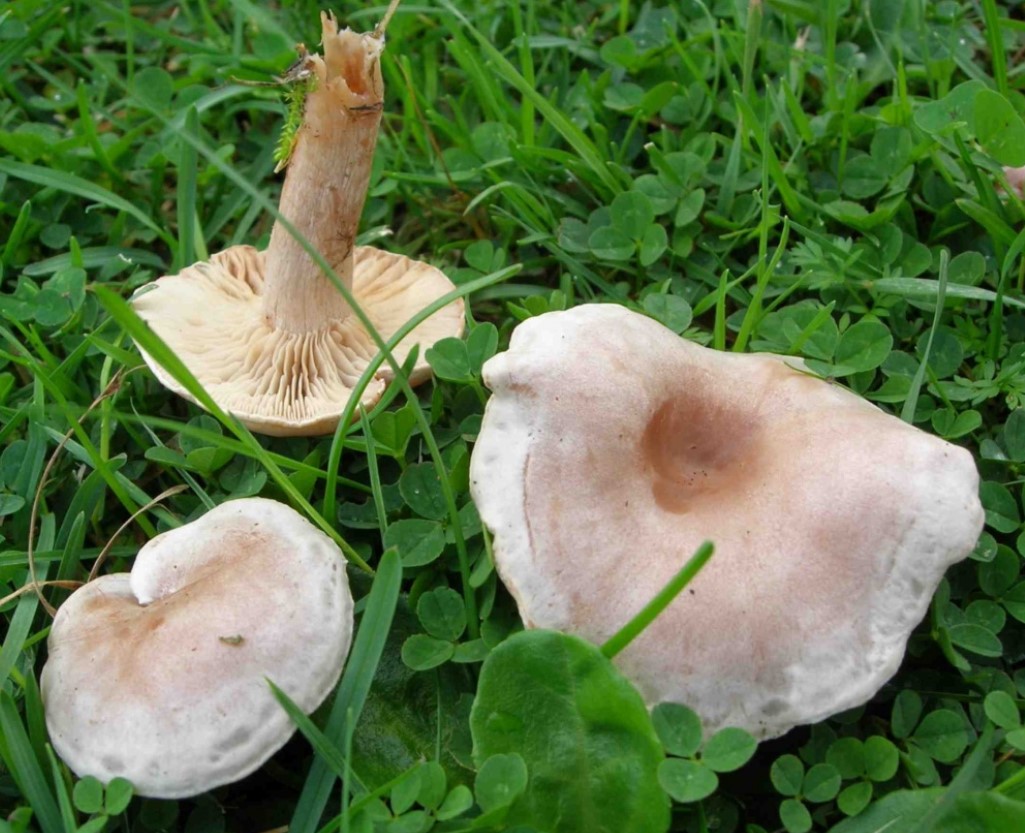
| Talker reddish, grooved, whitish | The mushroom is small, with a cap diameter of up to 6 cm. Young talkers have a convex or prostrate cap, light in color with a pinkish or grayish tint. As they mature, the color changes to pinkish-brown or ocher, and the cap becomes sunken. The flesh is firm and does not change color after cutting. The stem is up to 4 cm high and no more than 0.8 cm in diameter. The color is grayish, with light brown spots on the surface that darken when pressed. | A very dangerous mushroom with a high toxin content. | Found in mixed and deciduous forests, parks, meadows, and anywhere there is rotted grass. |
Photo gallery of the reddish and whitish talker
Wax talker (Clitocybe cerussata)
| View + photo | Description | Edibility | Distribution area |
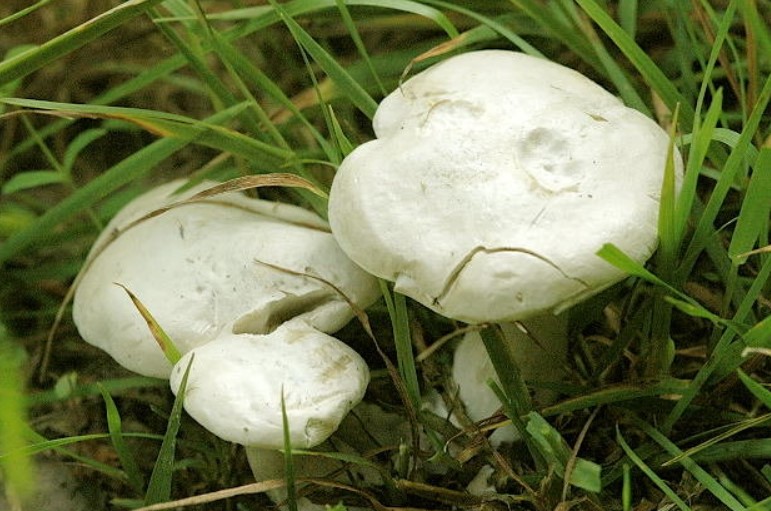
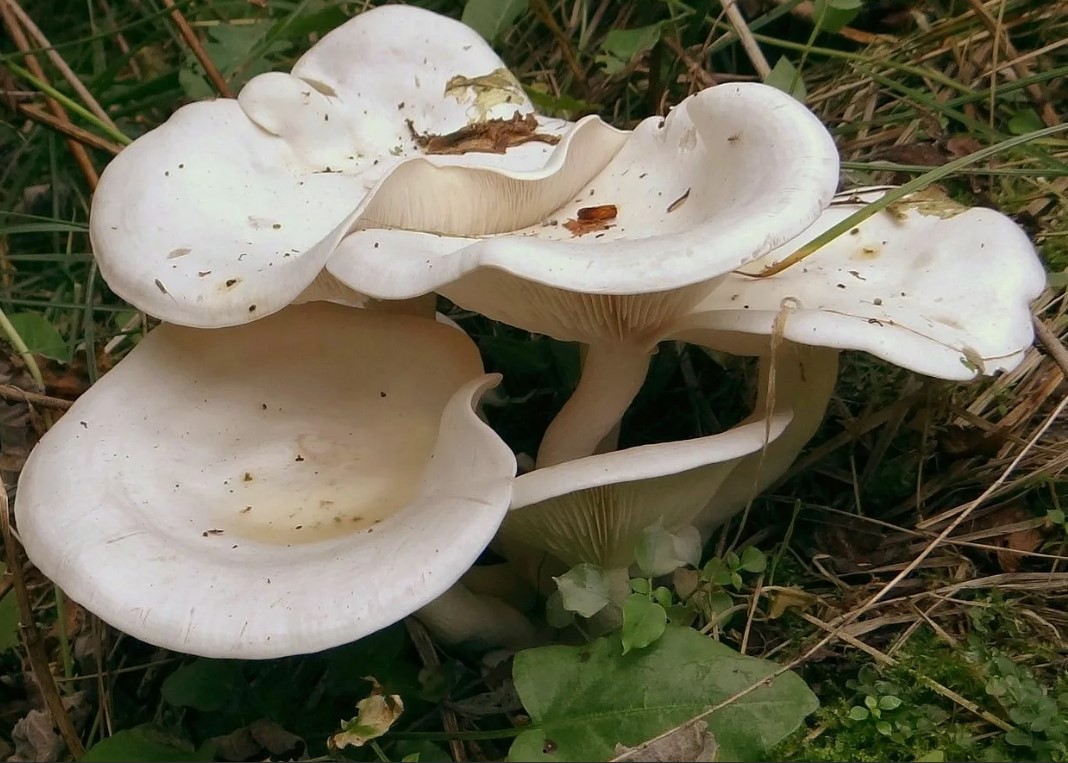
| Waxy talker | The mushroom is white. The cap is approximately 10 cm in diameter. Young mushrooms have a convex cap. As the mushroom ages, the cap becomes more spread out. The cap has a hump-shaped bump in the center and watery circles. The cap has wavy, turned-up, sometimes torn, and fluffy edges. The flesh is dense and white, with a pleasant aroma and flavor. The gills are descending along the stem, frequent, narrow, white or grayish. The spore powder is white. The mushroom has a dense stem about 8 cm long and 0.5-1.5 cm thick. |
Deadly poisonous! | Coniferous, mixed forests, August-September. |
Photo gallery of the waxy talker
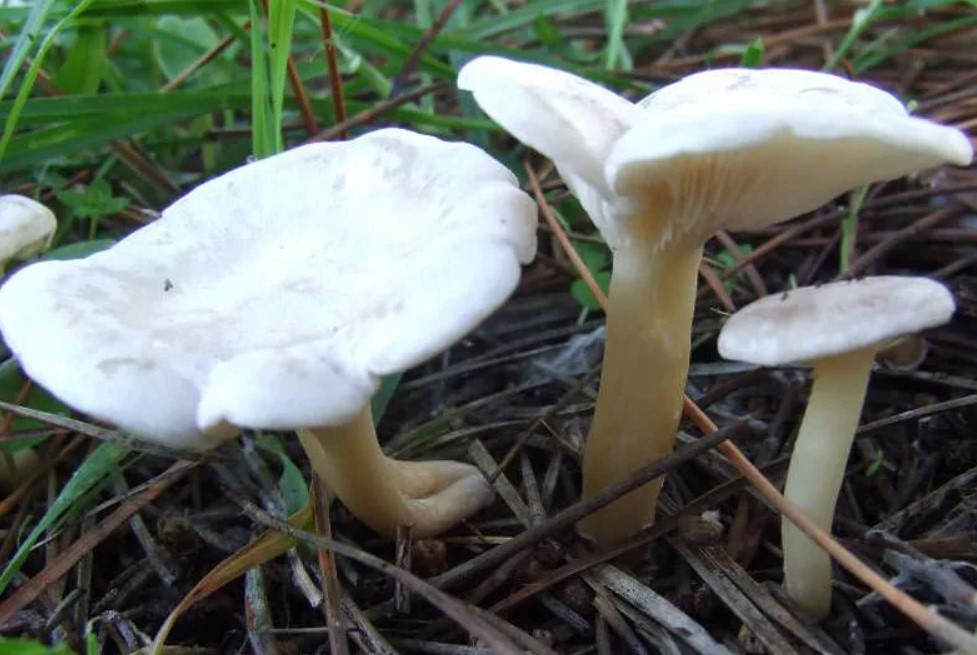
Pale-colored talker (Clitocybe metachroa)
| View + photo | Description | Edibility | Distribution area |
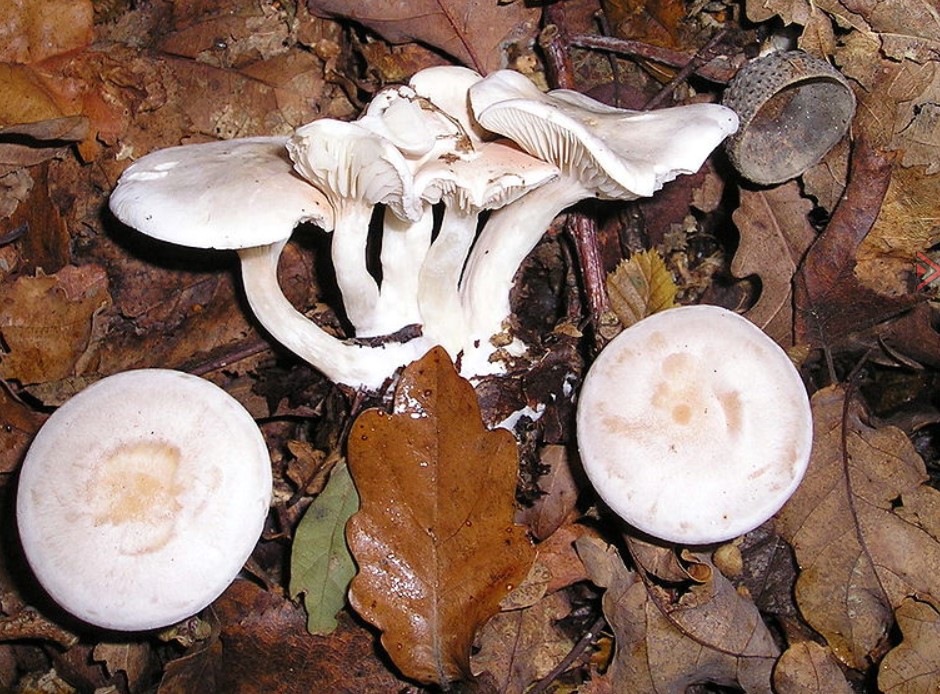
| Pale-colored talker | The cap reaches 5 cm in diameter and is brown or light beige in color. The stem is 3 to 6 cm tall, pale brown, and slightly widened at the base. | Inedible. | Grows in small groups or alone in broadleaf forests. |
Photo gallery of the pale-colored talker
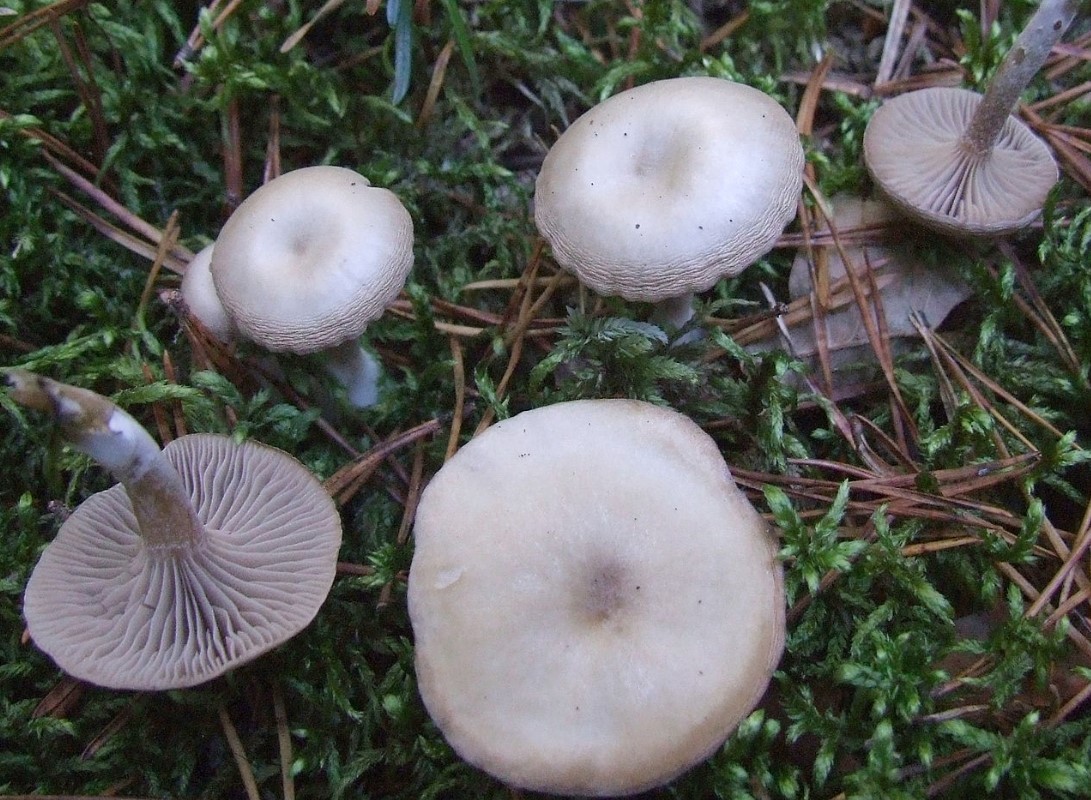
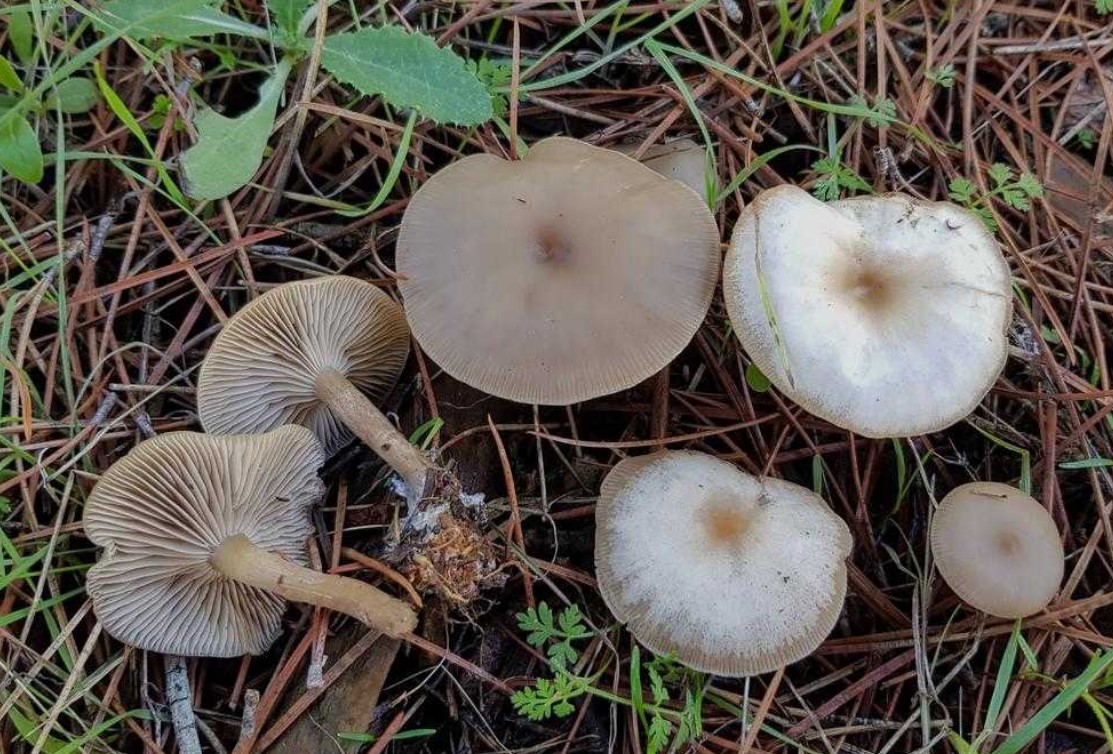
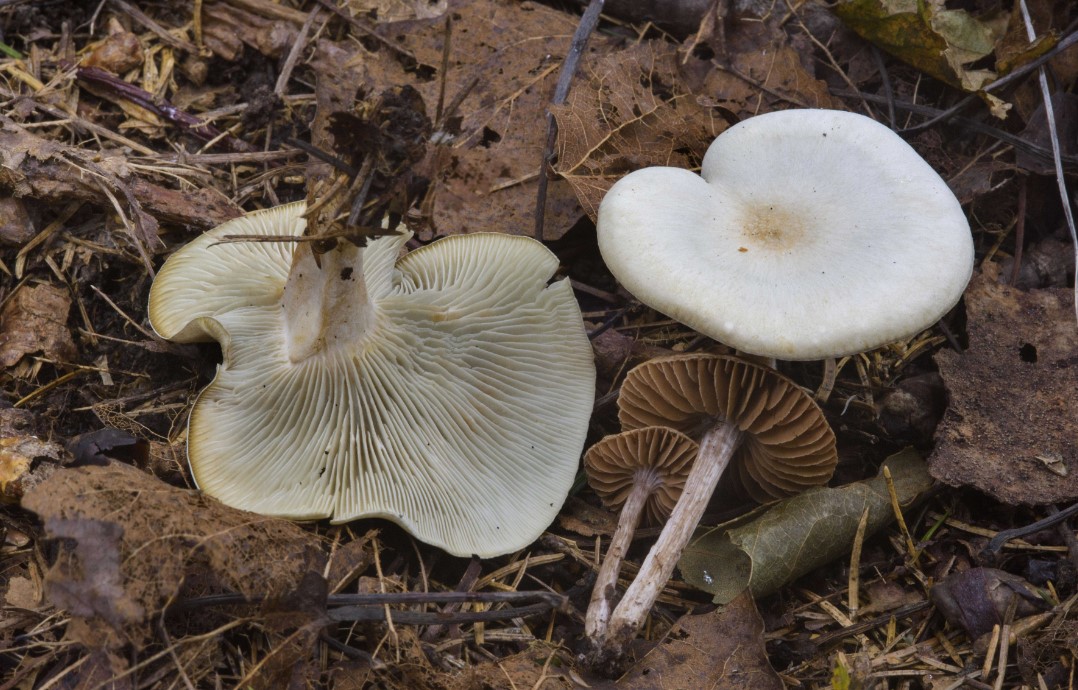
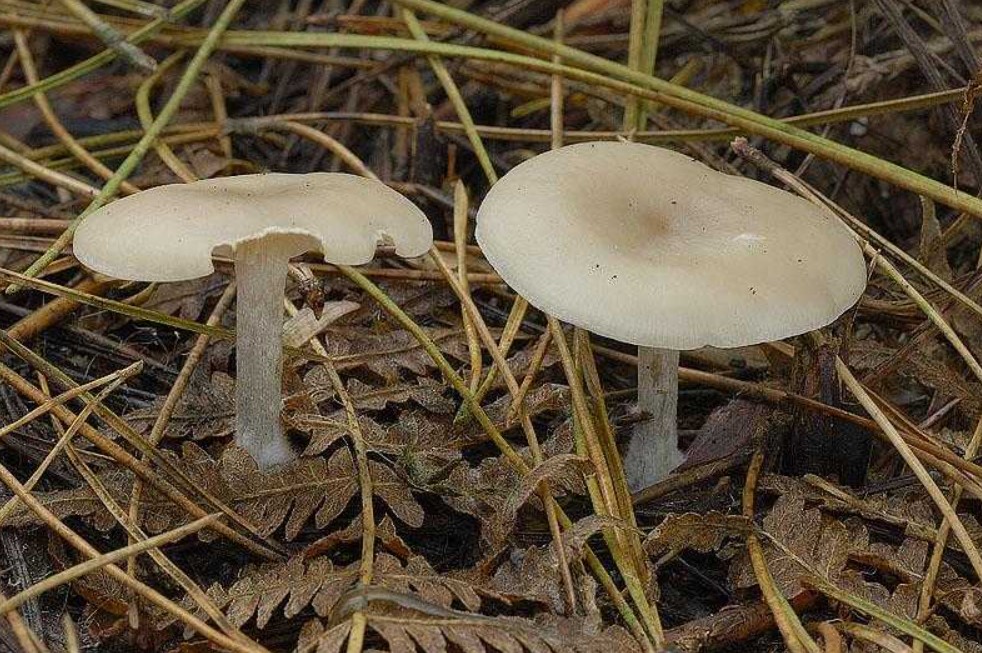
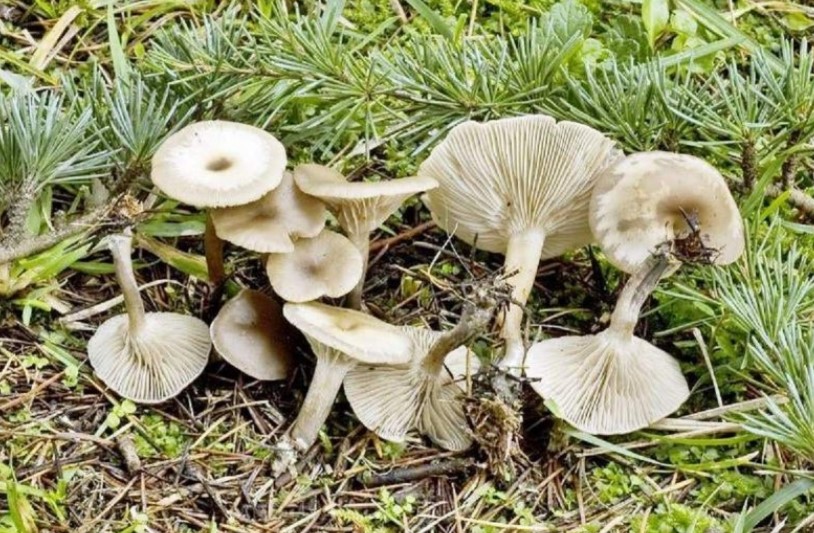
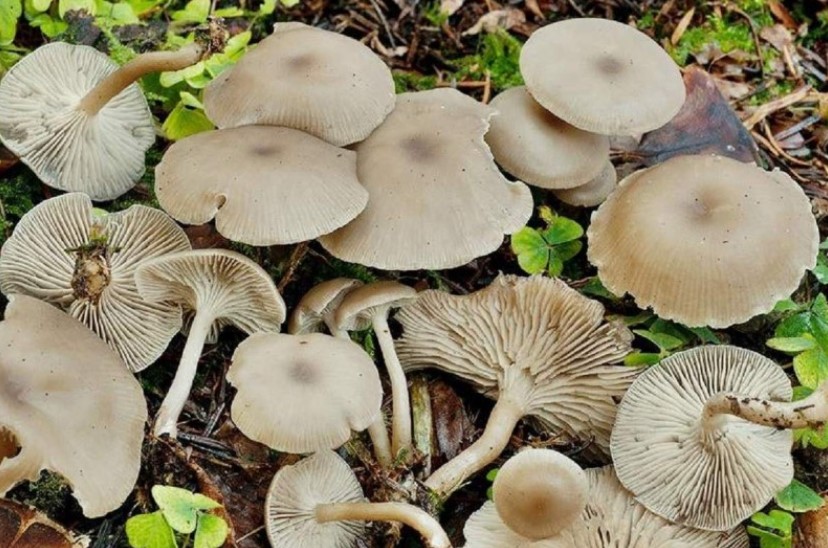
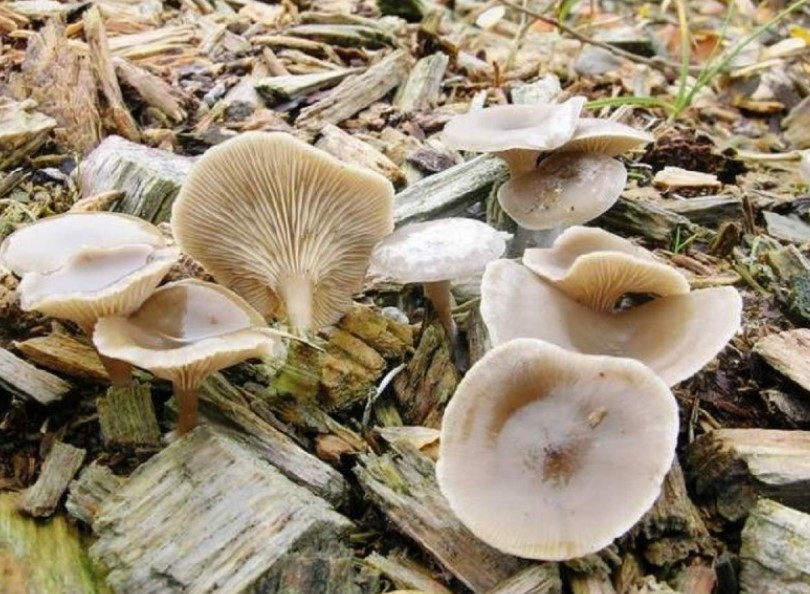
Leaf-loving talker (Clitоcybe phyllophila)
| View + photo | Description | Edibility | Distribution area |
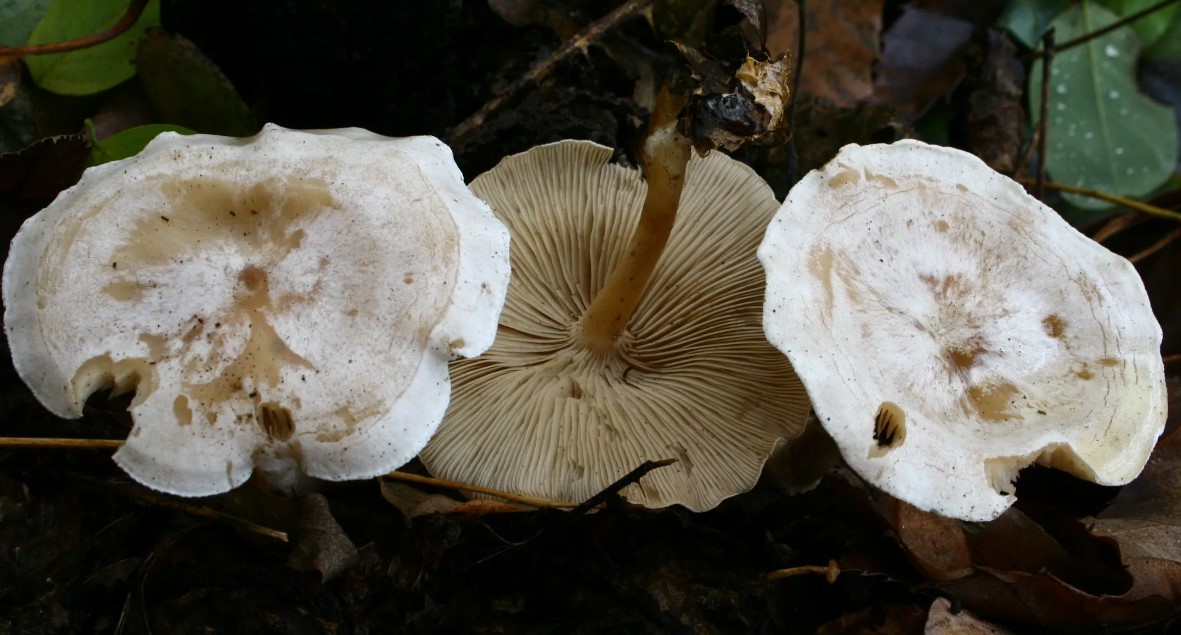
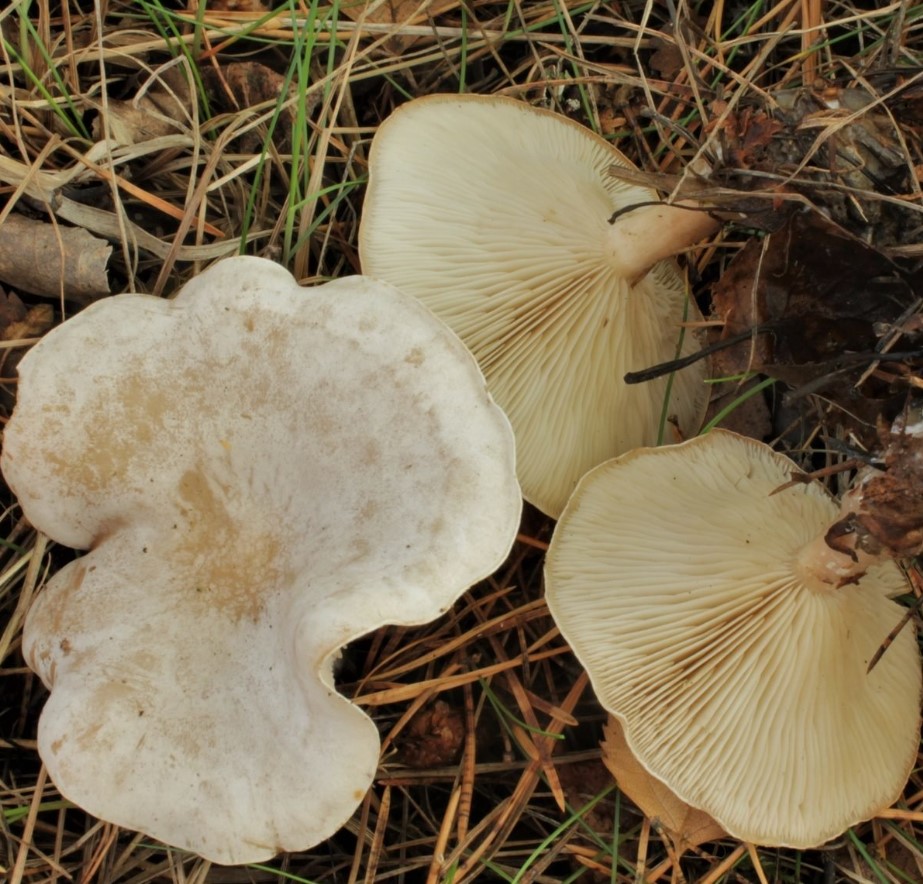
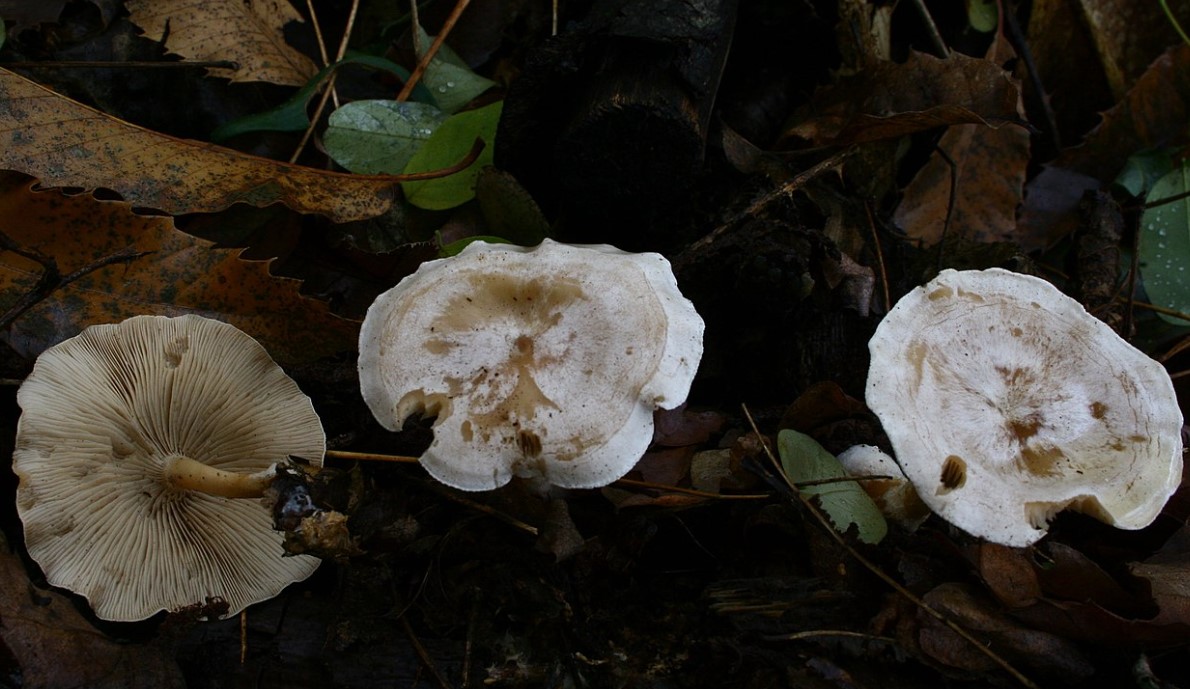
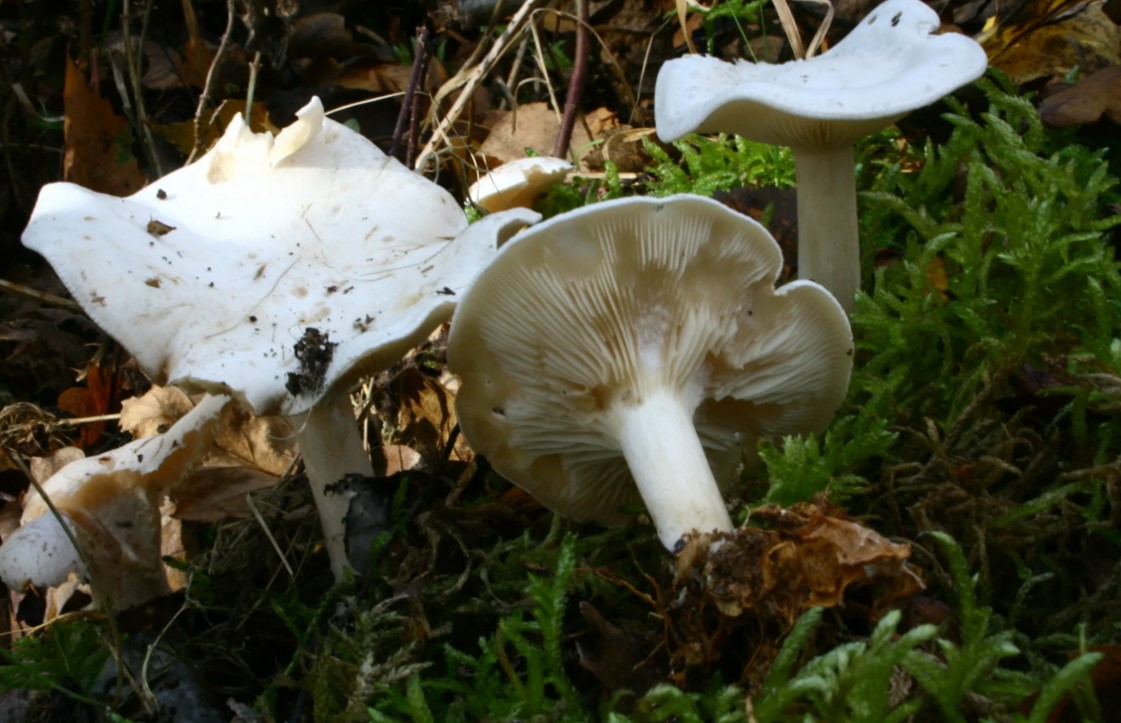
| Leaf-loving talker, foliar talker | The cap is funnel-shaped with inverted edges, ranging from 2 to 11 cm in diameter. The color is creamy or grayish, with pinkish-brown spots on the surface. The stem is up to 7 cm high and up to 1.5 cm in diameter. The flesh has a spicy aroma. | Poisonous. | It grows in very dense groups, preferring rotten substrates of needles and leaves in coniferous and broad-leaved forests. |
Photo gallery of the leaf-loving talker
How to properly collect talkers
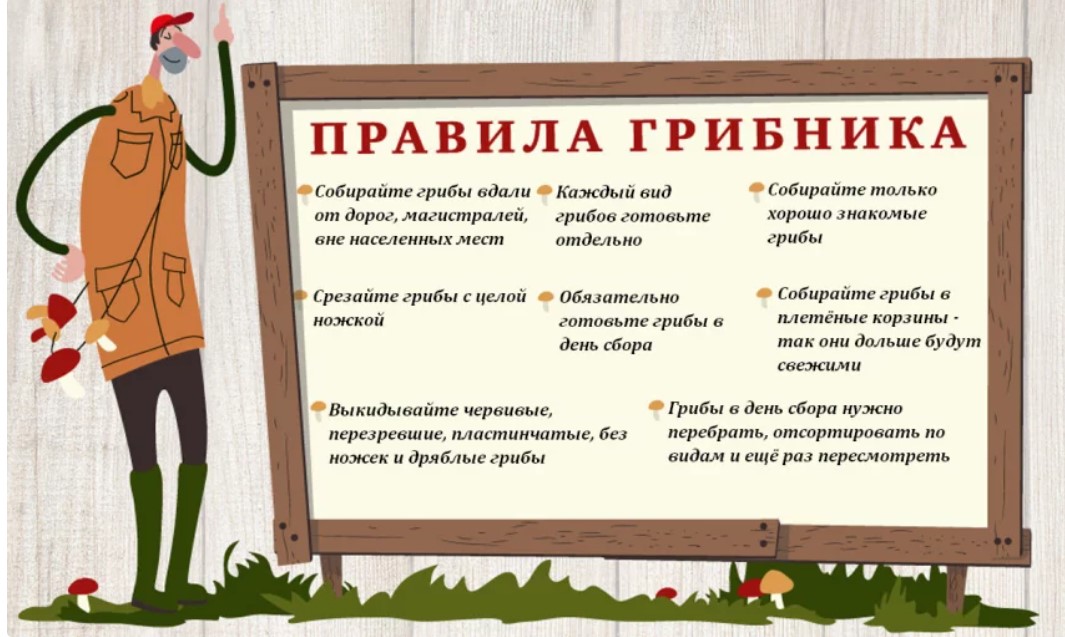
Talkers should be collected with extreme caution, as they have many poisonous and deadly look-alikes. Talkers are most often identified by their orderly rows or "fairy circles." They grow in almost every forest, and the most common are the reddish and funnel-shaped talkers (see description and photo above).
Nutritional value of talkers
Talking mushrooms are a low-calorie product, with 100 grams of raw product containing only 34.5 kcal. They also contain:
- proteins - 3.7 g;
- carbohydrates - 1.1 g;
- fats - 1.7 g.
In addition, mushrooms contain B vitamins, plant fibers, minerals and amino acids.
The benefits and harms of talkers
Due to the high content of useful substances in mushrooms, they have a beneficial effect on the body:
- Strengthen the immune system.
- Normalizes blood pressure.
- They help improve the functioning of the gastrointestinal tract.
- Stimulate the heart muscle.
- Increase productivity.
- They slow down the aging process of cells.
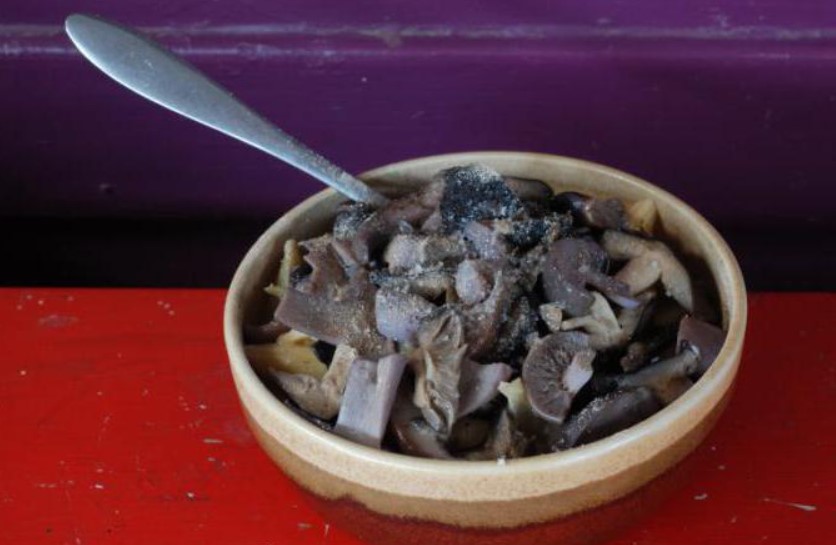
But talkers also have a downside: under certain conditions, they can be harmful. For example, if a person has allergies or chronic genitourinary and gastrointestinal diseases. In such cases, the following may occur:
- A severe allergic reaction occurs.
- Gastroenterological problems are getting worse.
- The stool is disturbed.
- Vomiting and nausea appear.
- The tone of the bladder increases, which increases the number of visits to the toilet.
Contraindications for the use of talkers
Talking mushrooms have a number of contraindications for consumption, which are important to consider for anyone planning to enjoy them:
- Epilepsy.
- Blood pressure disorder.
- Gastritis or peptic ulcer.
- Chronic diseases of the gastrointestinal tract and nervous system.
Pregnant and breastfeeding women and children under 14 should avoid talking mushrooms. Elderly people should also exercise caution when eating mushrooms, as they are not the easiest on the stomach.
Talker poisoning and control methods
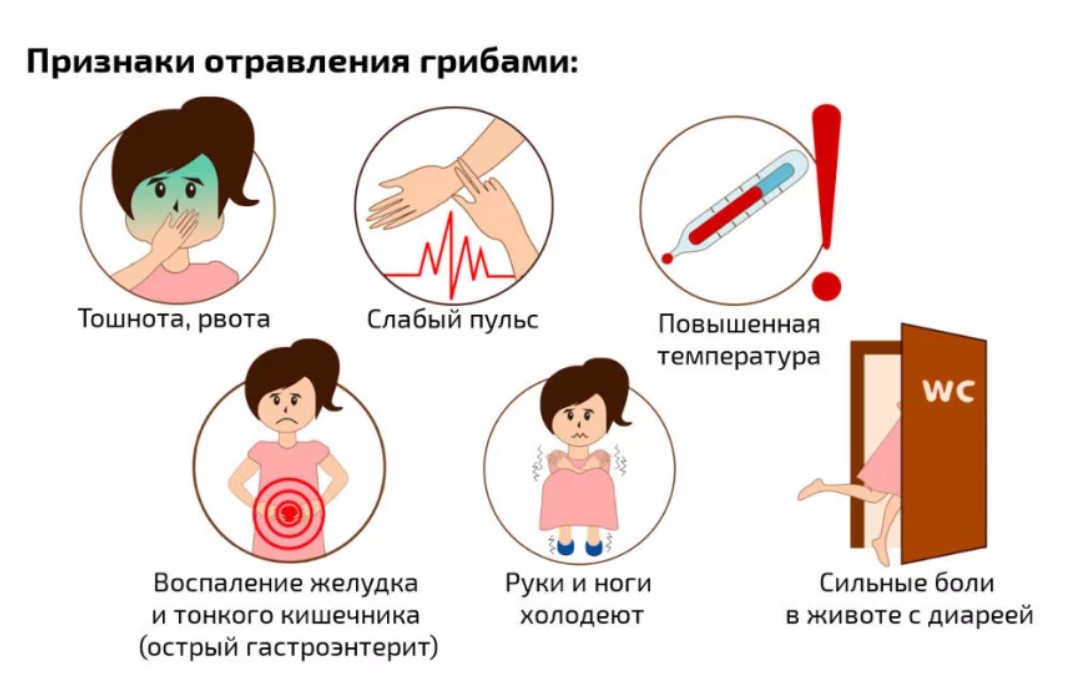
Talker poisoning manifests itself as follows:
- The face begins to turn red.
- The pulse quickens.
- A spasm of the bronchi occurs, which leads to a disruption of respiratory function.
- Saliva and sweat begin to be secreted intensively.
- The body temperature rises.
- The concentration of oxygen in the blood decreases.
- Hallucinations occur.
- Vision deteriorates.
- Chills appear.
If appropriate measures are not taken, a person may die within a few hours.
You can help the victim in the following way:
- Take him to the hospital immediately.
- Rinse the stomach by giving the person a large amount of water to drink (if the portion of mushrooms eaten was small).
Methods for preparing talkers
It's believed that only the caps of talker mushrooms are edible; the stems are unpalatable due to their fibrous texture and are difficult for the stomach to digest. However, they can be dried and ground to make an excellent seasoning for first and second courses.
How long does it take to cook talker mushroom soup?
To make talkerushki soup, you'll need standard ingredients: carrots, onions, potatoes, and vermicelli. For a richer broth, it's best to add a meaty bone. The mushrooms themselves don't have a very strong flavor. Furthermore, talkerushki are added to the soup after they've been cooked, so they don't contain any toxic substances.
The first time, they are rinsed and boiled for about 25 minutes from the moment they come to a boil. Some cooks prefer to boil them in a second batch of water for another 10-15 minutes before adding them to the soup.
Recipes using talkers
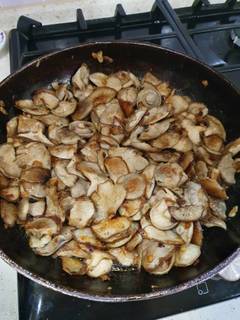
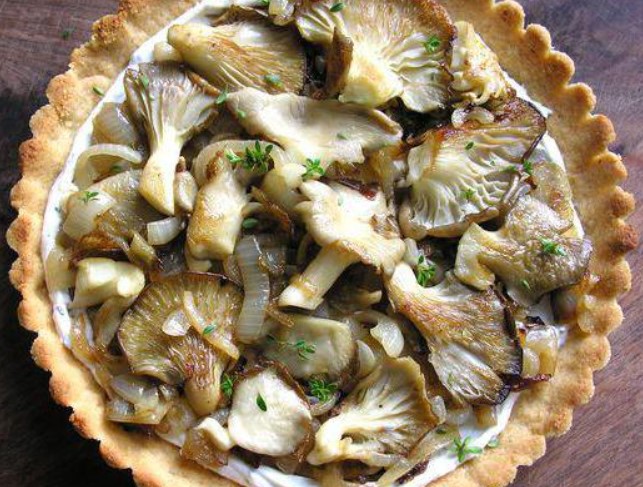
Govorushki mushrooms are delicious salted and pickled. They can be added when making mushroom or even squash caviar.
Dried talkers are ground and made into seasonings. Whole mushrooms can be used here, but only the caps are used for cooking.
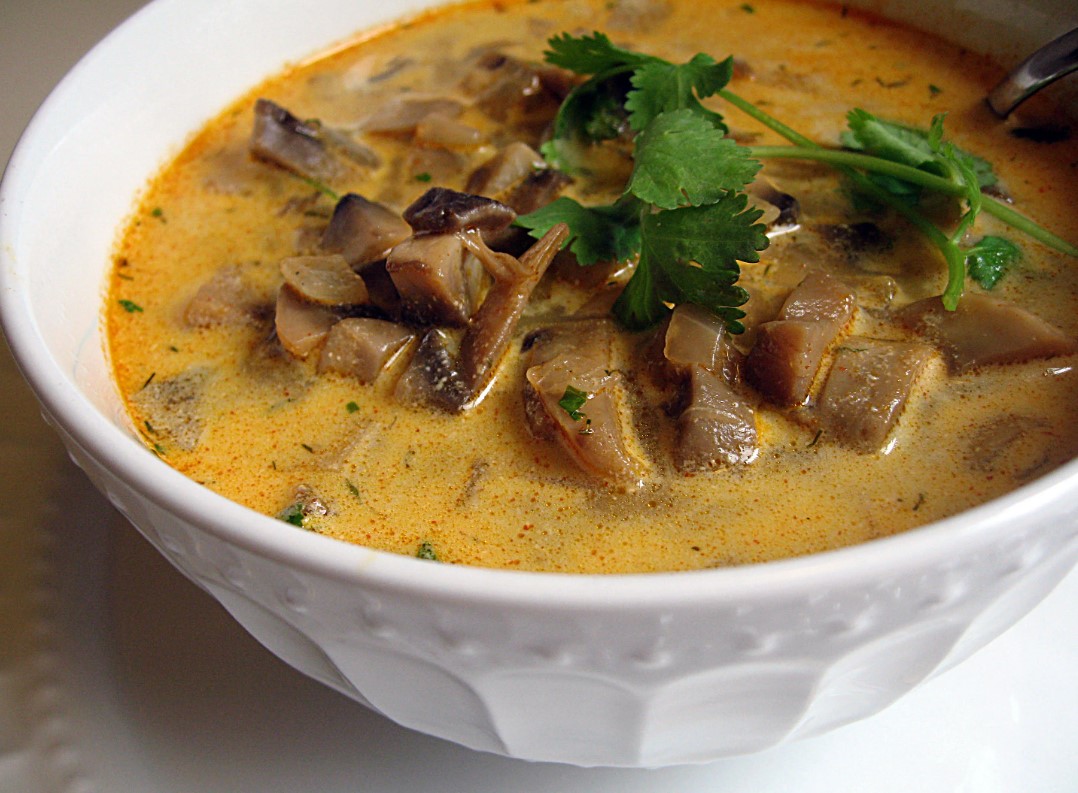
Talking soupThe soup is prepared according to the standard recipe. Boil the mushrooms for 20-25 minutes after boiling. In a separate pan, boil the finely chopped potatoes, carrots, and onions. Once cooked, add the mushrooms, season with salt, and sprinkle with a handful of spider noodles. Cook the soup for another 3 minutes and turn off the heat.
Talkers with rice and vegetables.
Ingredients:
- Talkers - 1 kg.
- Onions - 2 pcs.
- Rice - 200 g.
- Meat broth – 1 l.
- Green peas - 100 g.
- Cheese - 100 g.
- Sweet pepper - 2 pcs.
- Garlic - 2 cloves.
- Greens to taste.
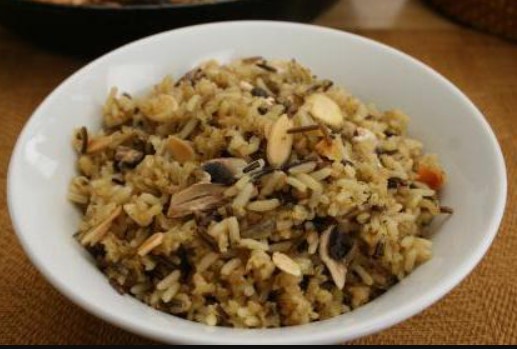
Rinse the talker mushrooms and boil them in salted water for 20-25 minutes, then transfer them to a frying pan and fry until golden brown along with onions and garlic. Next, place the mushrooms, finely chopped peppers, and peas in a large saucepan. Add the broth and simmer for about 15 minutes, until the rice is cooked.
When serving, sprinkle the rice with grated cheese and finely chopped herbs.
How to grow talker mushrooms in your garden
Talking mushrooms prefer moist meadows with a bed of leaves and pine needles. Therefore, when growing them, it's important to find a suitable spot. Next, dig a hole about 20 cm deep and the same diameter. Fill it 2/3 full with potting soil. Place the mycelium on top, cover it with soil and leaves. The mycelium is ready.
All that's left to do is water it with warm water that's been left to stand in the sun. This work is done in late spring or early summer to avoid the risk of frost. The first harvest can be collected the following year.