The black truffle is considered one of the most coveted and exquisite delicacies in the world. It's extremely difficult to find in the wild, and growing it yourself is very expensive.
Let's find out what's so good about this mushroom and what makes it unique.
Content
- 1 General characteristics of black truffles
- 2 What is the difference between a black truffle and a white truffle?
- 3 Where does the black truffle grow and how does it impact the environment?
- 4 7 types of black truffles with photos and descriptions in tables
- 4.1 Summer truffle, Russian (Tuber aestivum)
- 4.2 Winter truffle (Tuber brumale)
- 4.3 Black autumn truffle (Tuber uncinatum)
- 4.4 Chinese truffle (Tuber indicum)
- 4.5 Smooth black truffle (Tuber macrosporum)
- 4.6 Perigord truffle, black truffle, French truffle (Tuber melanosporum)
- 4.7 Himalayan truffle (Tuber himalayensis)
- 5 False black truffles
- 6 The benefits and harms of black truffles
- 7 Proper preparation and use of black truffles
- 8 Use of black truffle in medicine and cosmetology
- 9 Black truffle prices, including in Russia
- 10 How to grow black truffles in your garden
- 11 Different technologies for growing black truffle mycelium
- 12 Step-by-step process of planting black truffle mycelium
- 13 Caring for Growing Black Truffles
- 14 Pests of cultivated black truffles and their control
- 15 Rules for harvesting cultivated black truffles
- 16 How to properly store black truffles
- 17 Conclusion
General characteristics of black truffles
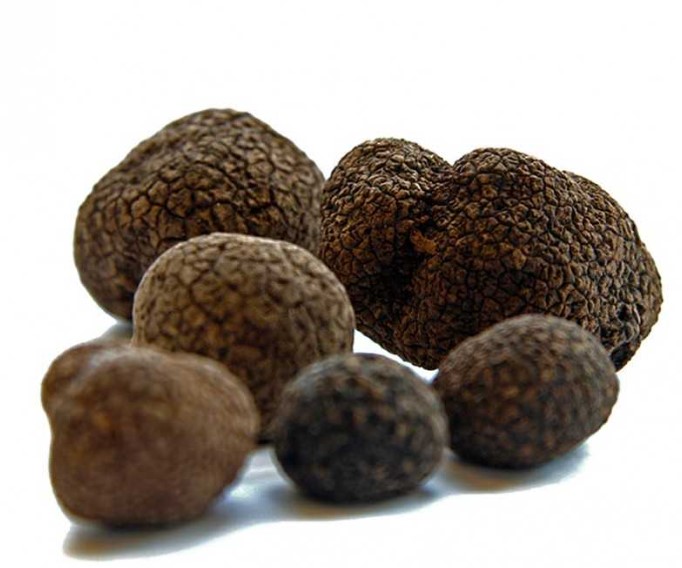
The black truffle has other names, too: prince, diamond, and black gold. Indeed, its great rarity and high price are the reason for these names.
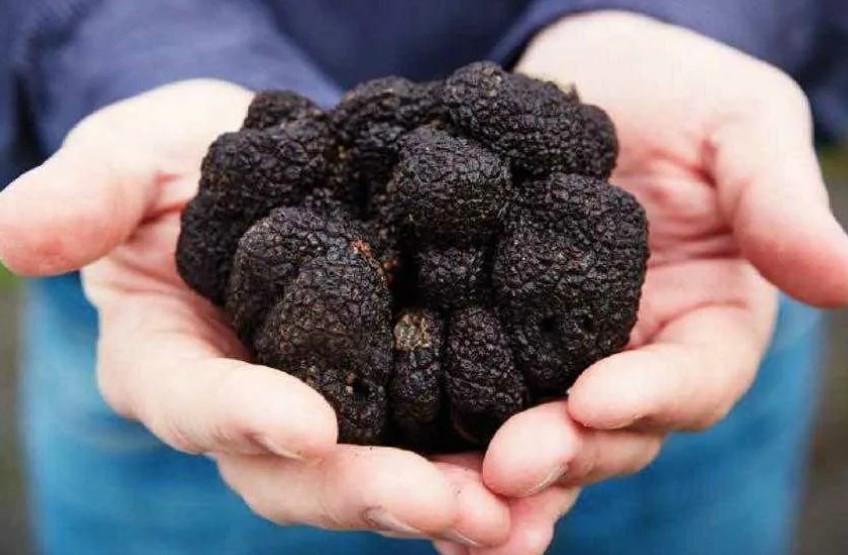
There are relatively few varieties of black truffles, about 30. Even fewer are edible – only 8 species.
The black truffle mushroom is characterized by the following features:
- The mushroom does not have a distinct stem and cap, like classic mushrooms.
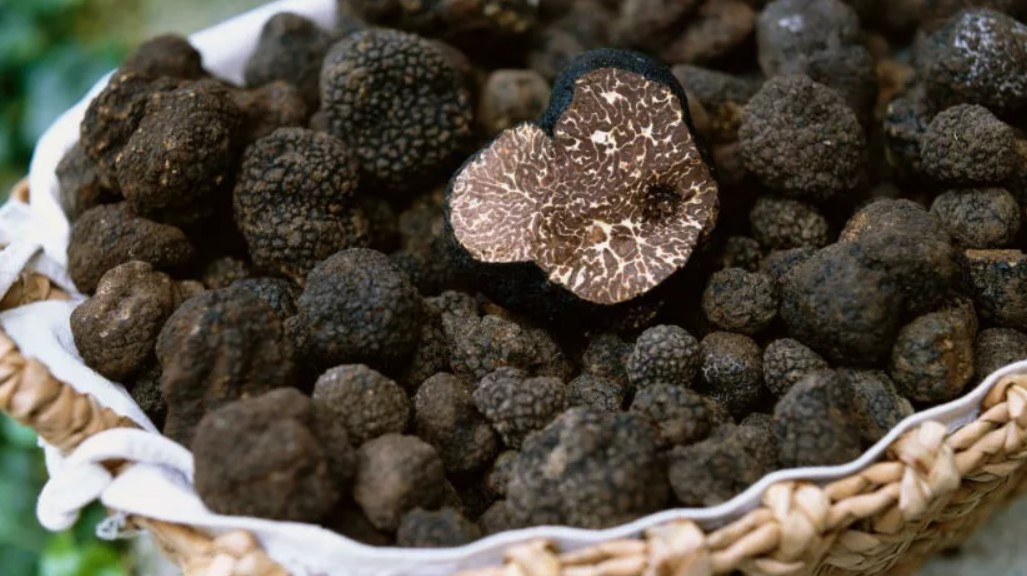
- The body has a tuberous shape with 4 to 6 edges.
- The average diameter is 6-8 cm, but there are specimens up to 30 cm in size.
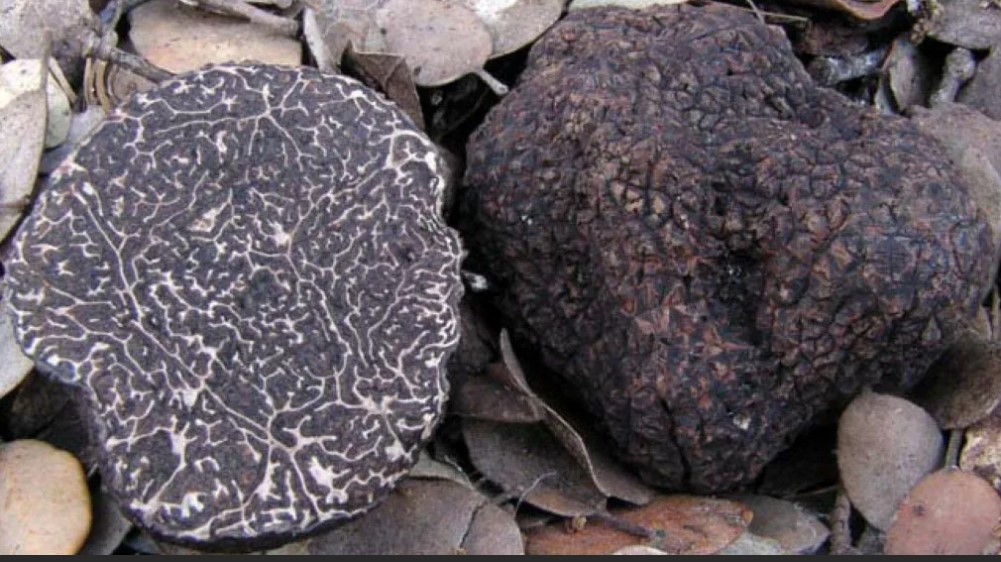
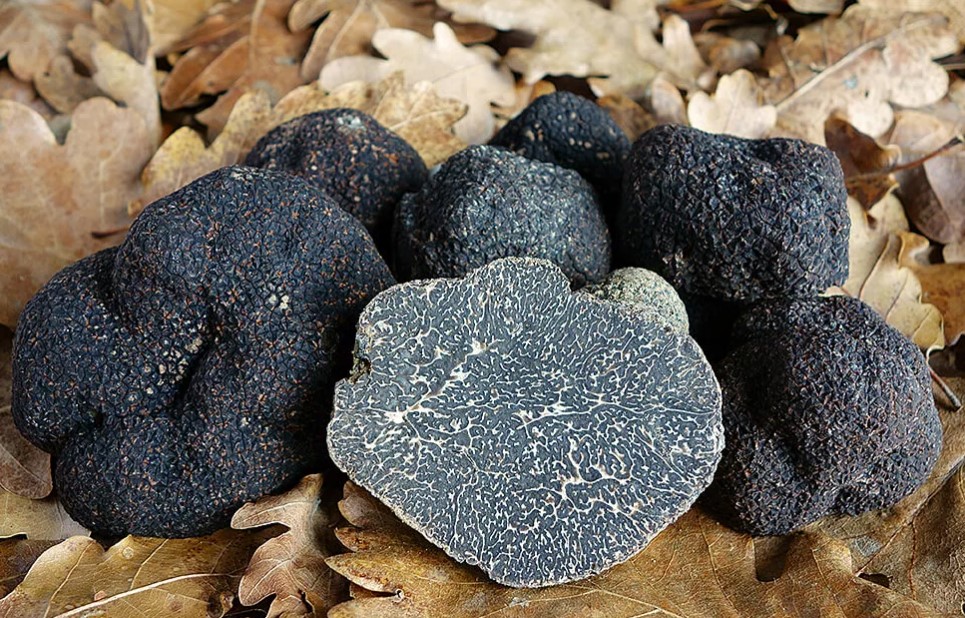
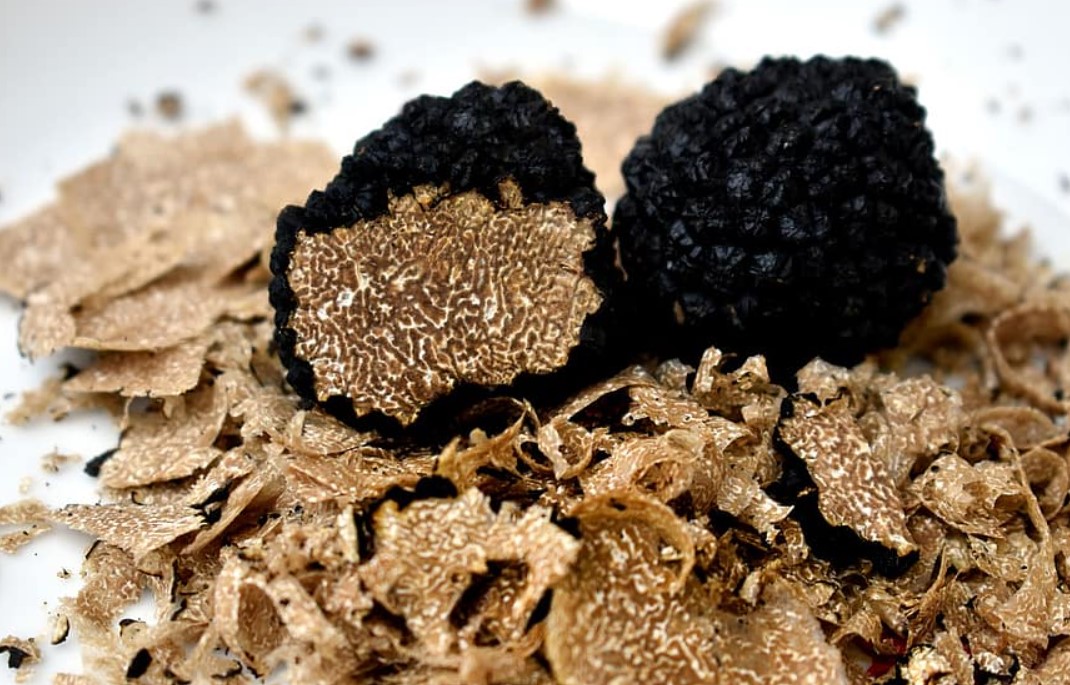
- The surface of the body is wrinkled and warty.
- The flesh is dark with many light veins, which is why it is often compared to marble.
- The spores are dark brown in color and microscopic in size.
What is the difference between a black truffle and a white truffle?
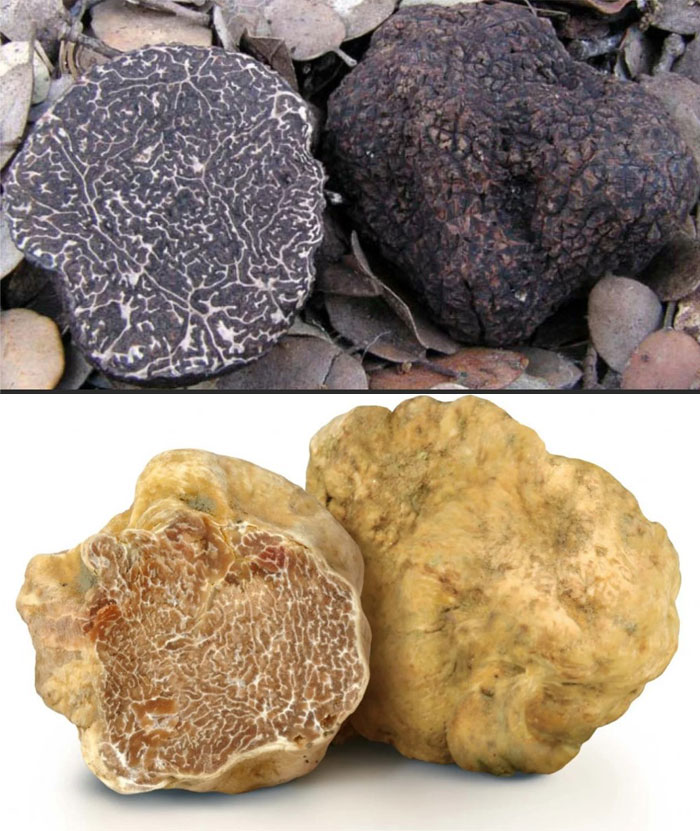
- The white truffle grows in Italy and is much rarer than the black one, which is why its price is several times higher (at least 2000 euros per kg).
- The white truffle has a more elongated shape, the black one is rounded.
- The flesh of the white truffle is always light in color.
- The aroma of black truffle is less pronounced.
Read more about Truffle mushrooms in the articleTruffles: photos, 18 species, where they grow, when to collect them, descriptions in tables, and applications.
Where does the black truffle grow and how does it impact the environment?
Today, truffles are cultivated in various countries, with China rightfully considered the leading seller. In the wild, the fungus is found in Italy, Spain, France, Belarus, and Romania.
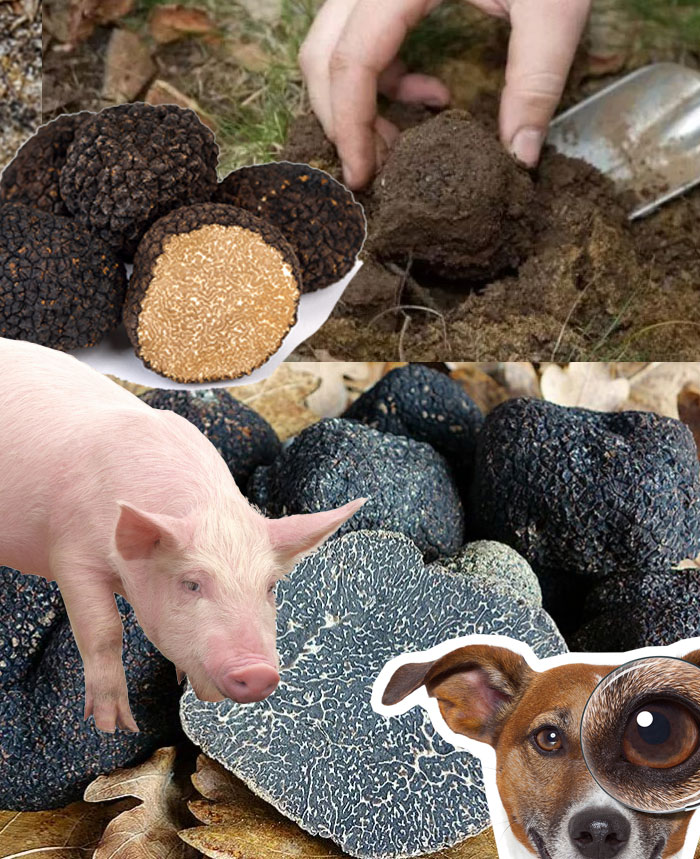
Truffles are located deep in the soil, making them quite difficult to find. Experienced foragers use pigs and dogs for this purpose.
Despite their culinary value, mushrooms have a detrimental impact on the environment. The mycelium destroys all living things in its habitat; there is never any vegetation near a truffle gathering.
7 types of black truffles with photos and descriptions in tables
There are many varieties of truffles, which determine their taste and price. Among the true mushrooms, there are also false truffles, which can easily be confused with the real thing.
Summer truffle, Russian (Tuber aestivum)
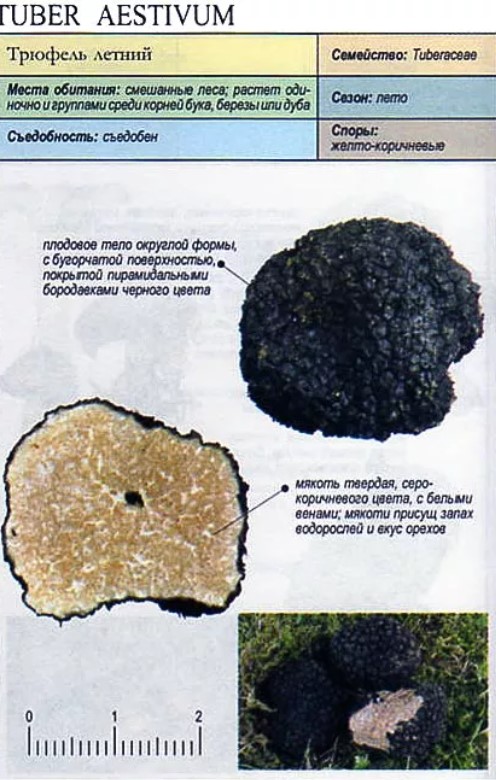
| View | Description | Peculiarities | Harvest season | Regions of distribution |
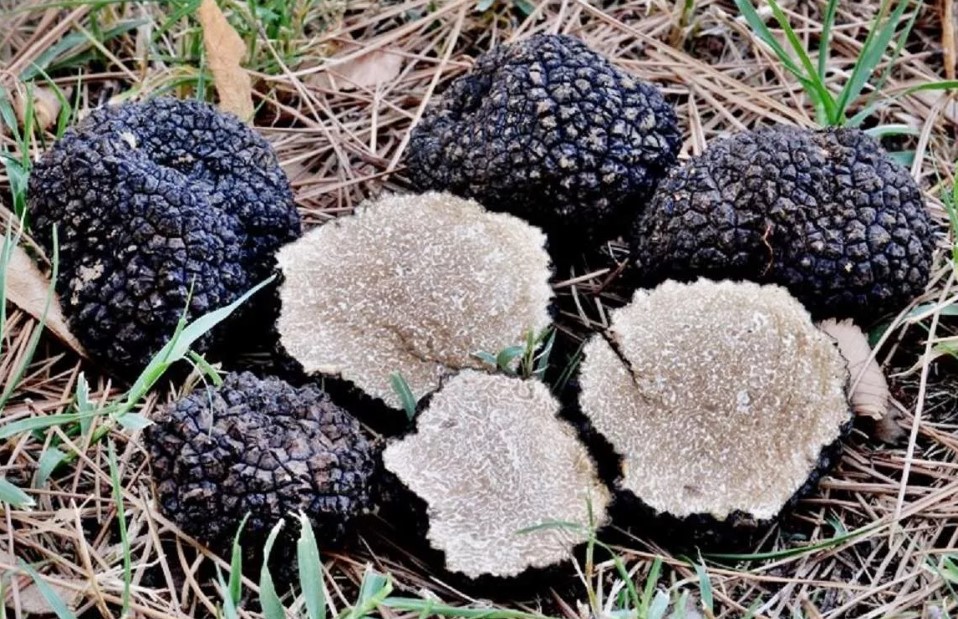
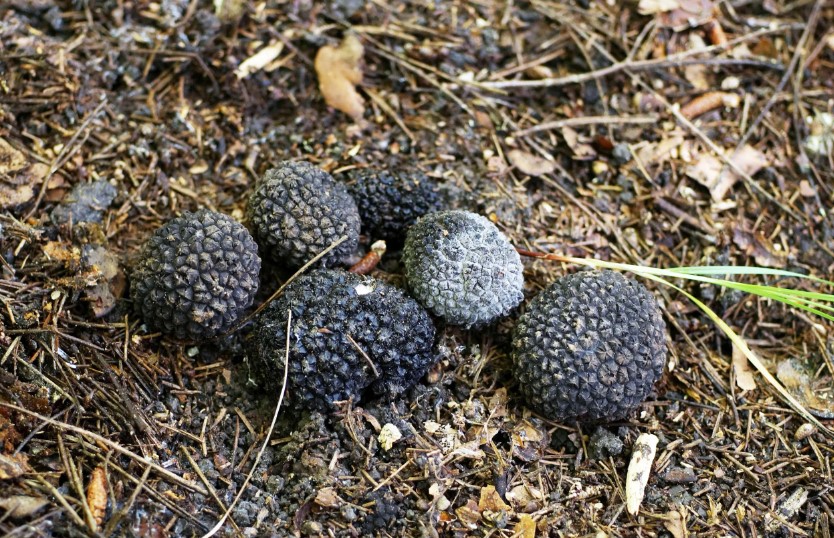
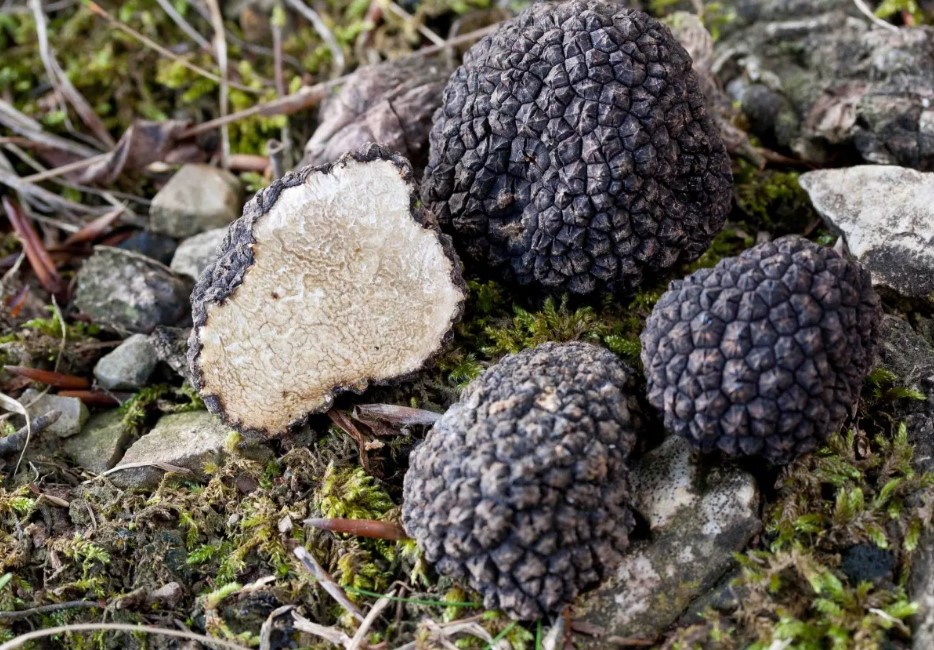
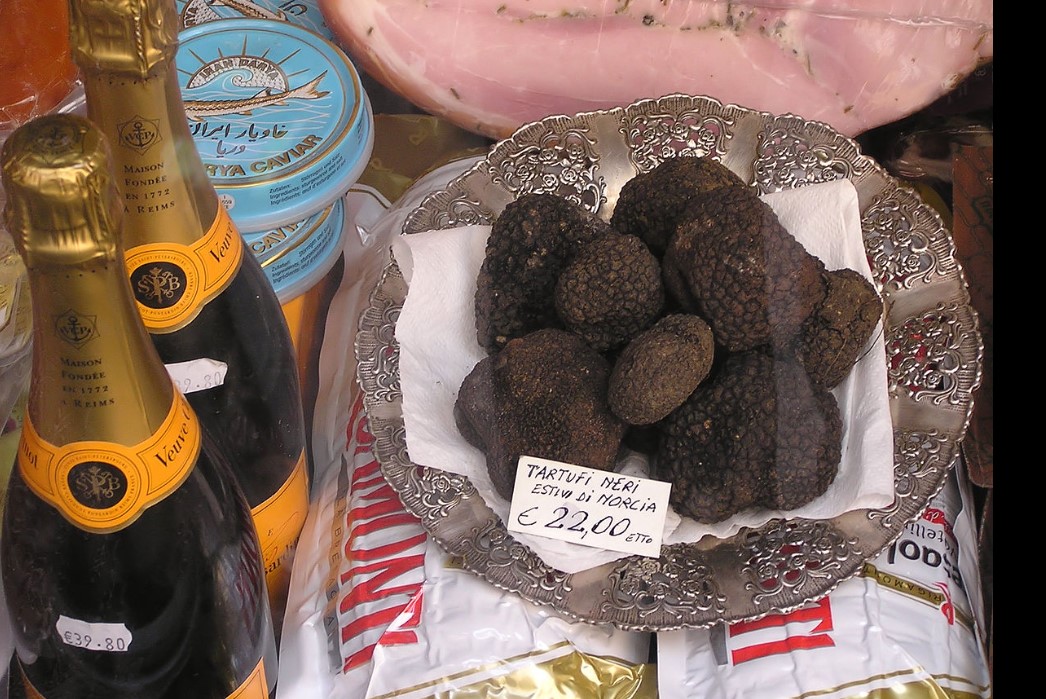
| Summer truffle, Russian (Tuber aestivum) | The mushroom reaches 12 cm in diameter and weighs from 400 to 450 g. The flesh changes from beige to brownish as it grows. | The aroma is nutty, sweetish, with subtle hints of seaweed. | June - October | Found in the Caucasus, Europe and the European part of Russia, and Crimea. |
Photo gallery of summer truffles, black Russian truffles
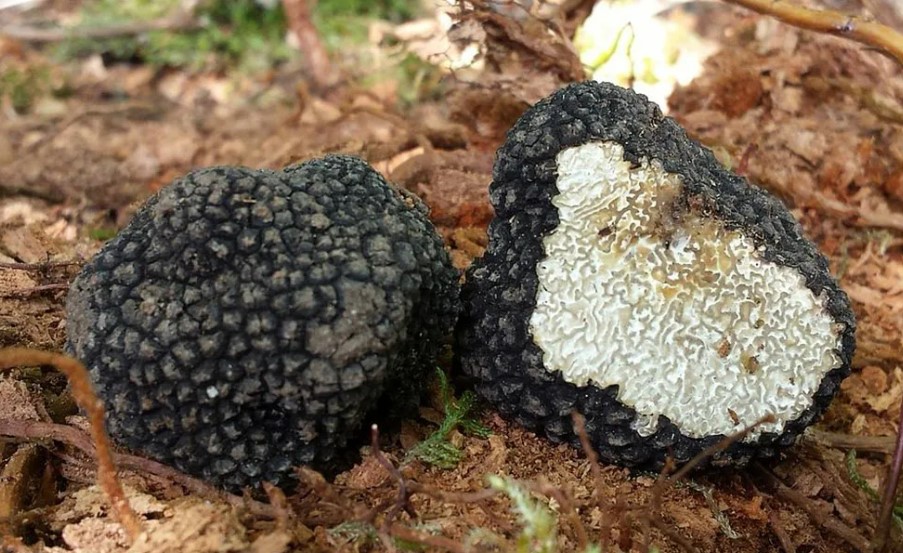
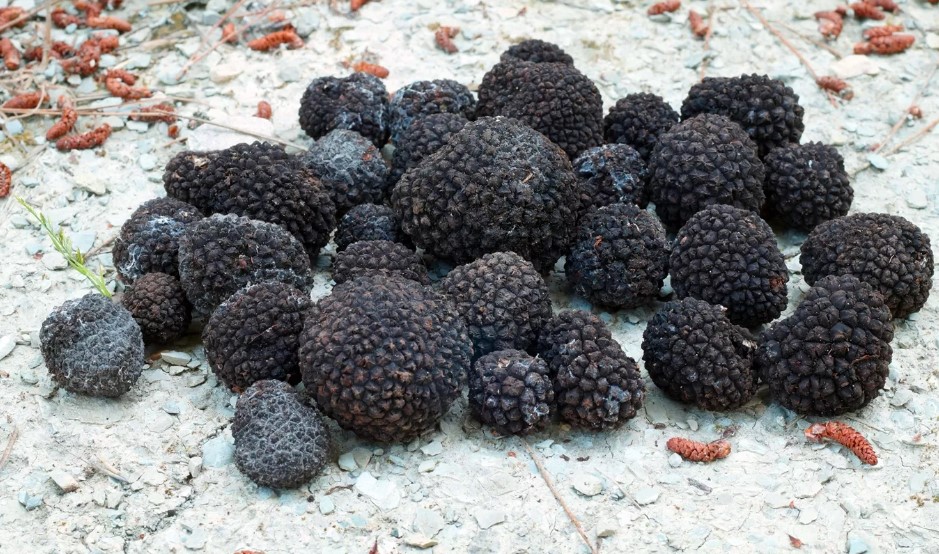
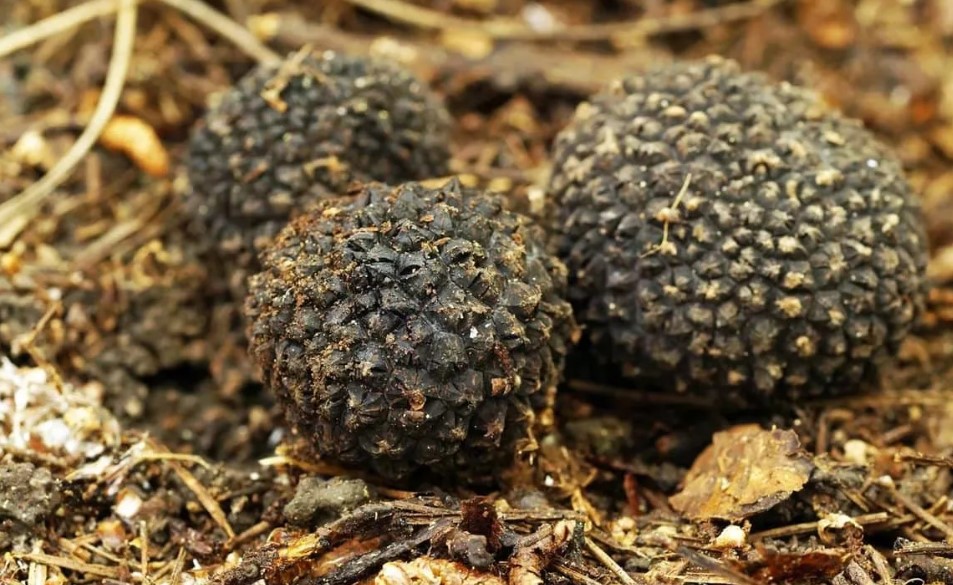
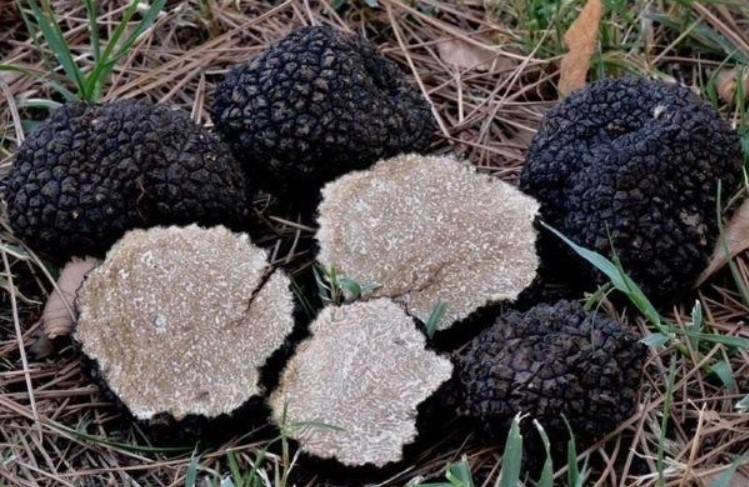
Winter truffle (Tuber brumale)
| View | Description | Peculiarities | Harvest season | Regions of distribution |
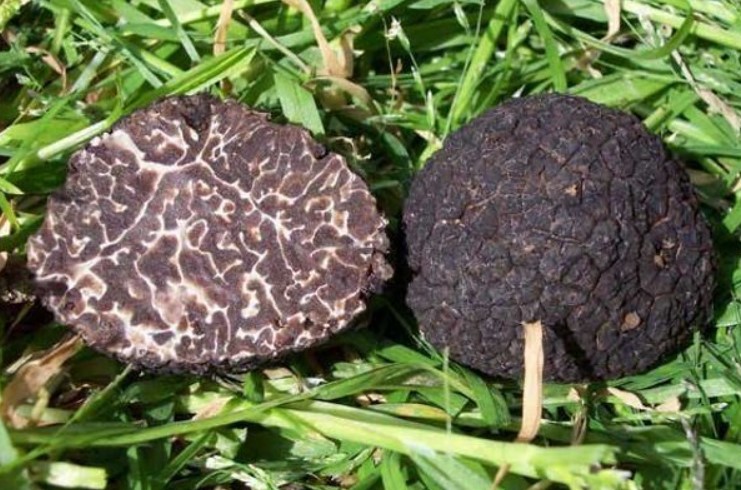
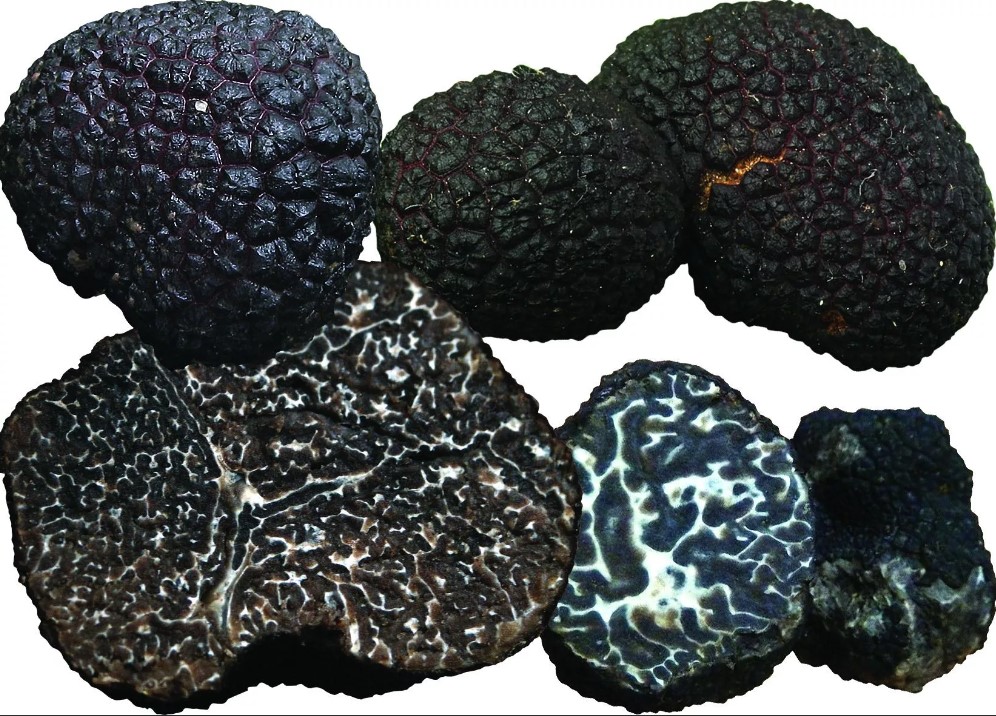
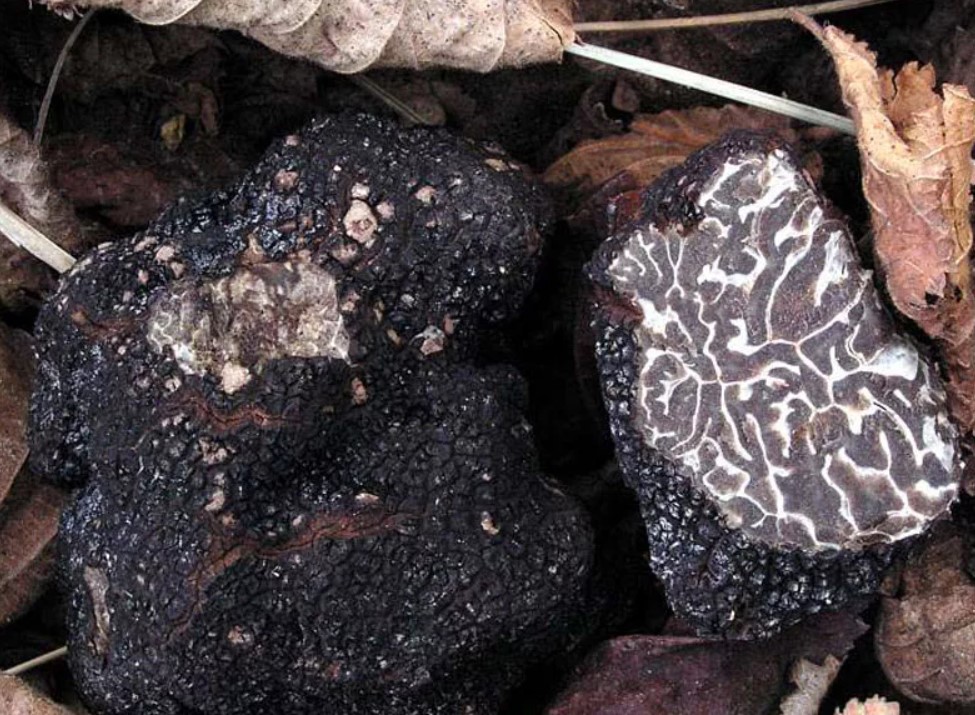
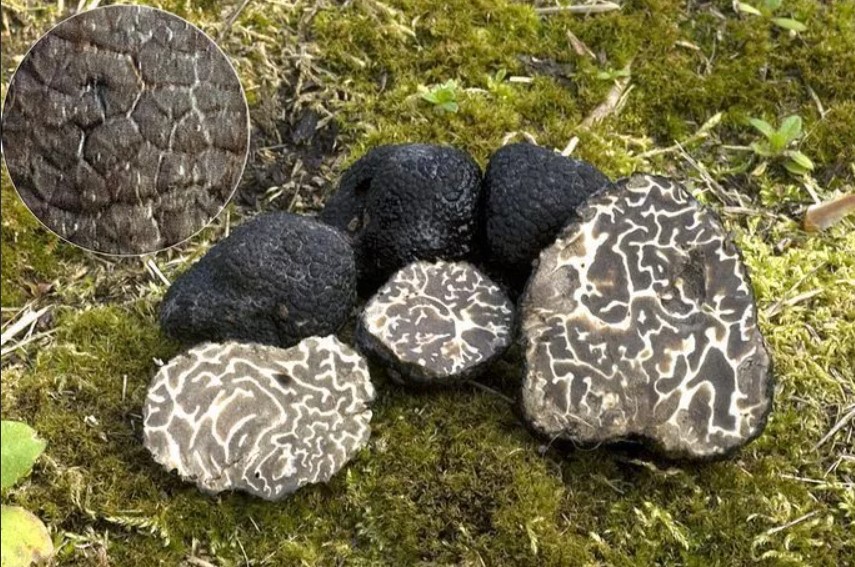
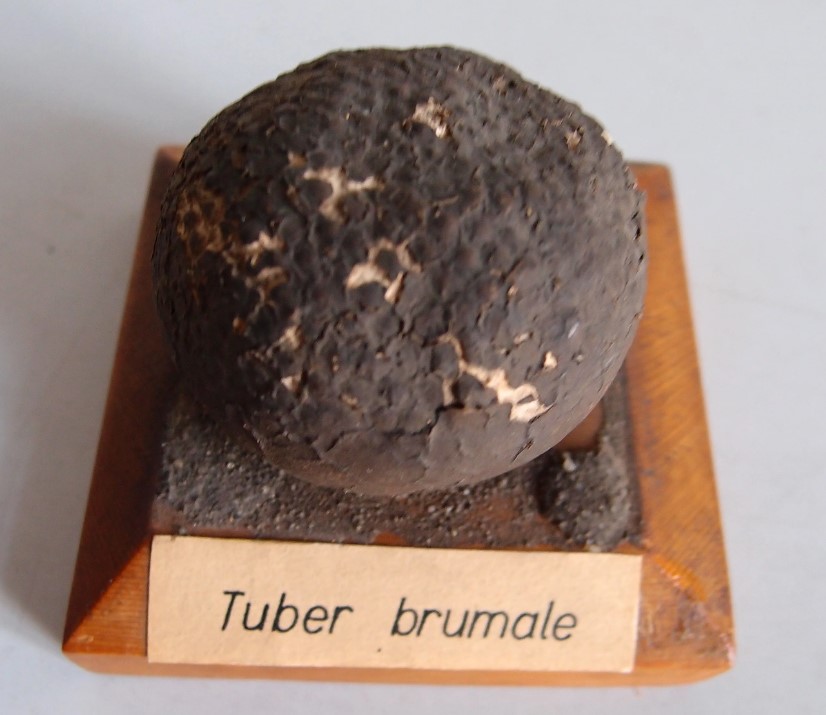
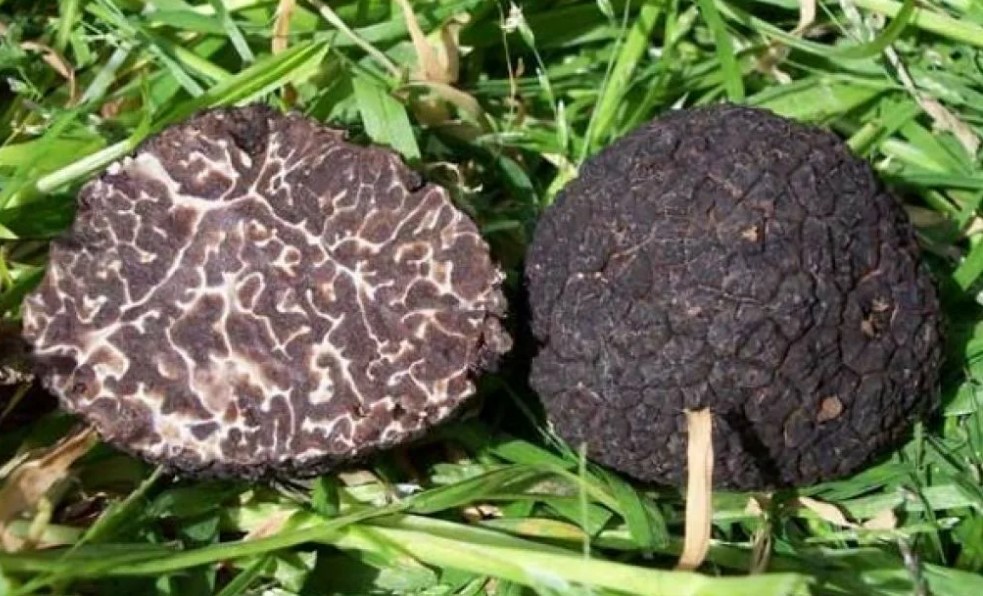
| Winter truffle (Tuber brumale) | The diameter of the spherical mushroom is from 7 to 20 cm, the weight ranges from 120 g to 1.5 kg, the color is purple with reddish highlights. | The scent of musk, there are growths on the body. | November-February | France, Ukraine, Italy, Switzerland. Prefers mixed and deciduous forests. |
Winter truffle photo gallery
Black autumn truffle (Tuber uncinatum)
| View | Description | Peculiarities | Harvest season | Regions of distribution |
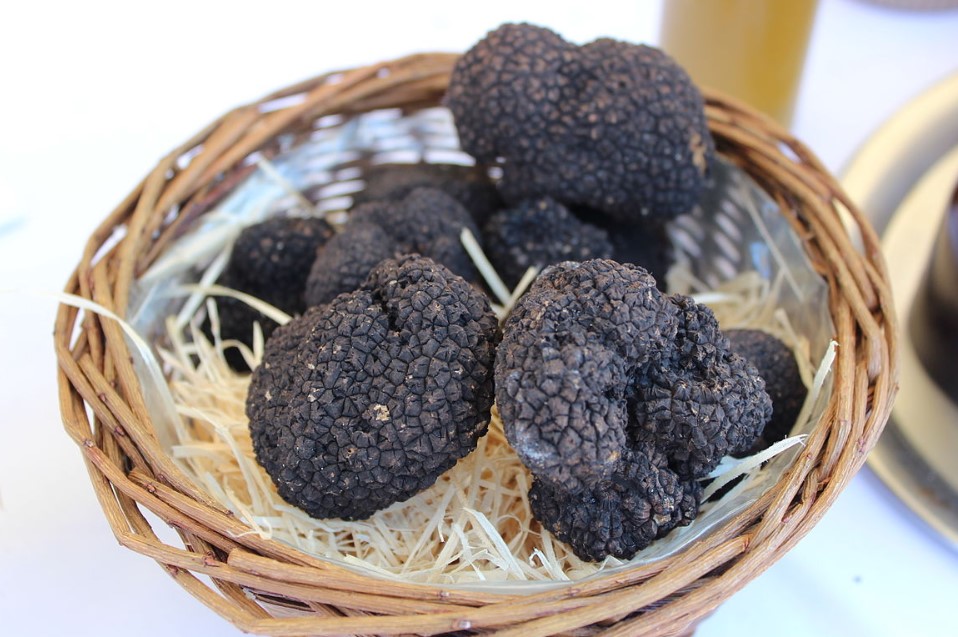
| Black autumn truffle (Tuber uncinatum) | The diameter of the mushroom is 2-12 cm, the weight reaches 400 g. The flesh is dark, with light veins. | It is an ecological variety of summer truffle. | September-January | Crimea, Black Sea coast of the Caucasus. Prefers to grow near oak and hazel trees. |
Photo gallery of the black autumn truffle
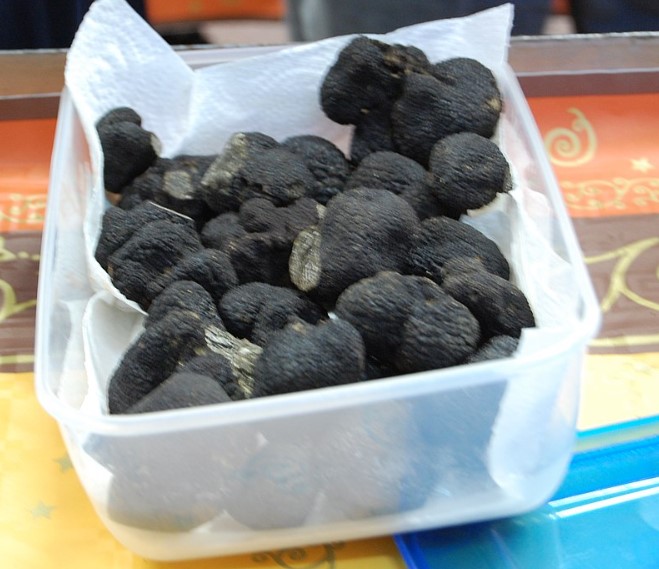
Chinese truffle (Tuber indicum)
| View | Description | Peculiarities | When it ripens | Where to look |
| Chinese truffle (Tuber sinensis) | The tuber is 9 cm in diameter, dark gray or brown in color, and ribbed. The flesh is marbled brown. | It has tough flesh, so it definitely requires cooking. Its flavor is pleasant and nutty, but it's significantly inferior to other members of this species. | December-February. | India, China. Gets along with chestnut, oak, and pine. |
Photo gallery of Chinese truffles
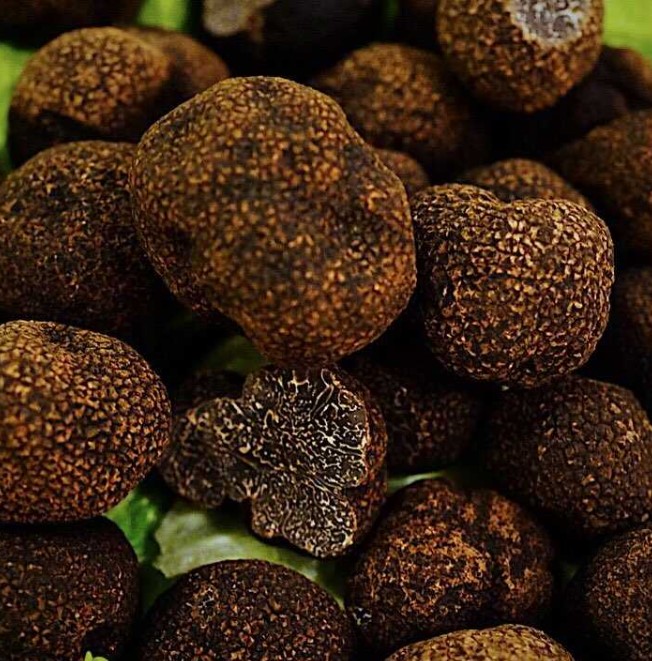
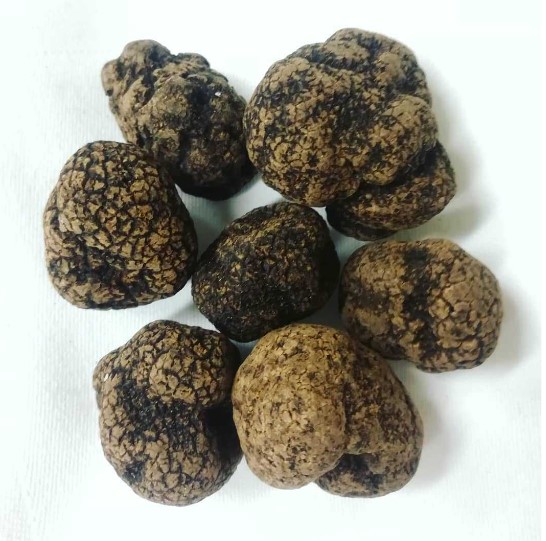
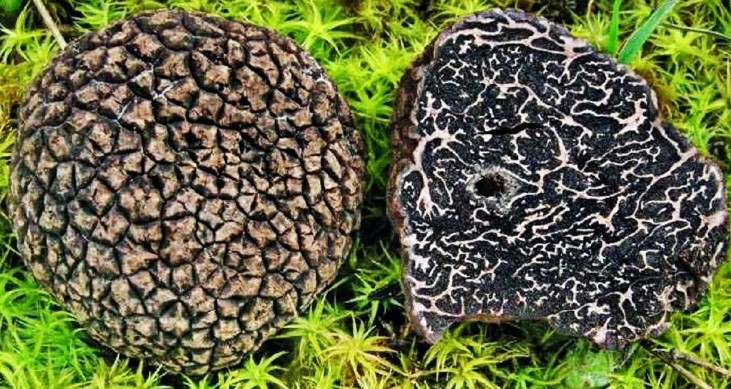
Smooth black truffle (Tuber macrosporum)
| View | Description | Peculiarities | Harvest season | Regions of distribution |
| Smooth black truffle (Tuber macrosporum) | The spherical body is up to 12 cm in diameter and dark brown in color. The flesh contains white veins. | The main distinguishing feature is the almost perfectly smooth surface of the mushroom. | September-December | Italy. |
Photo of a smooth black truffle
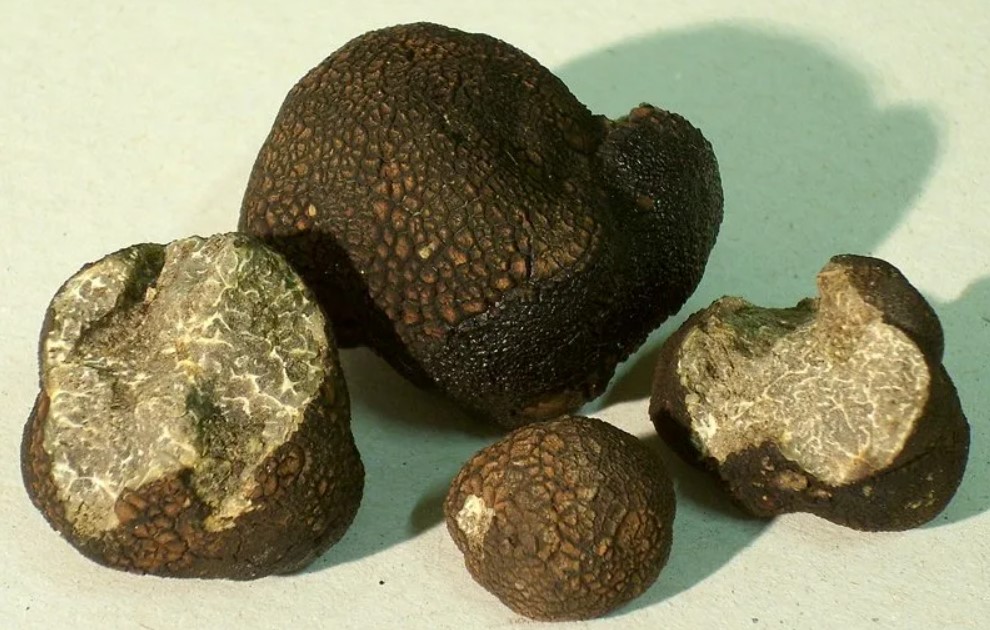
Perigord truffle, black truffle, French truffle (Tuber melanosporum)
| View | Description | Peculiarities | Harvest season | Regions of distribution |
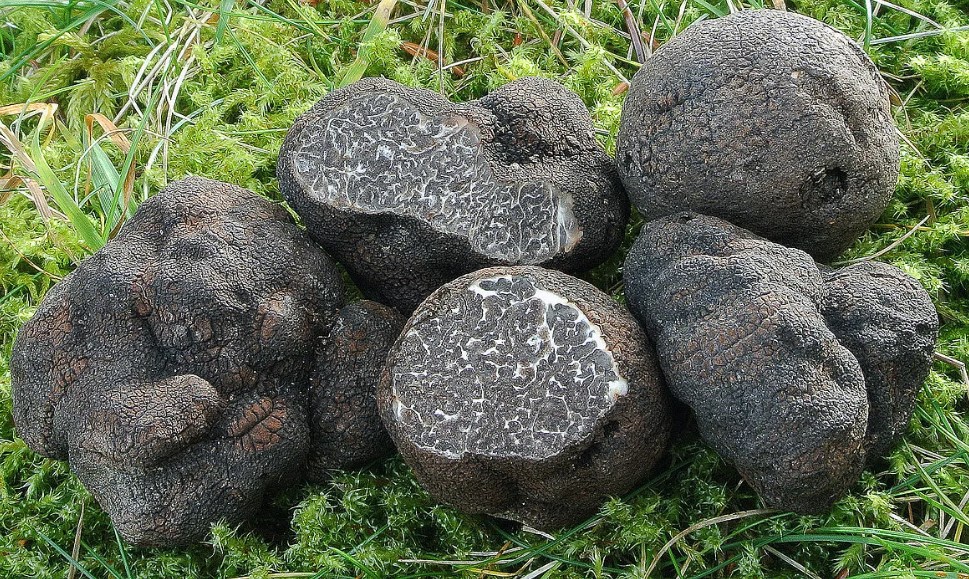
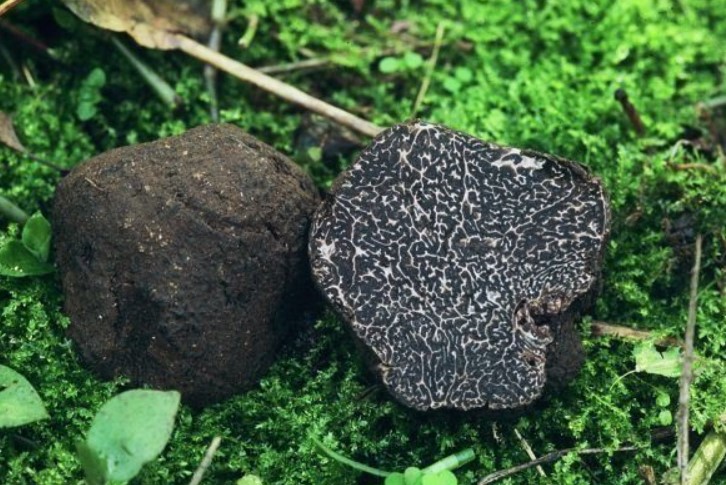
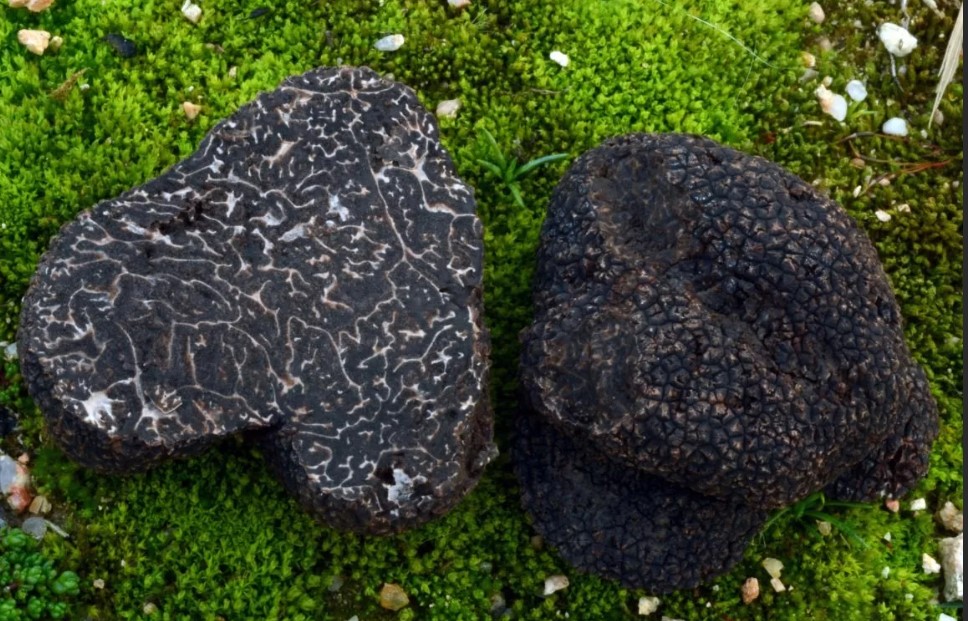
| Perigord truffle, black truffle, French truffle (Tuber melanosporum) | The tuberous body reaches 9 cm in diameter, its surface covered with numerous warts. The mushroom is black, with light-colored flesh that darkens as it ripens. | It is difficult to find, as the mushroom is hidden at a depth of 30 cm. | December-April | Italy, Spain, southeastern France. Prefers exclusively hazel and oak trees. |
Photo gallery of the Périgord truffle
Himalayan truffle (Tuber himalayensis)
| View | Description | Peculiarities | Harvest season | Regions of distribution |
| Himalayan truffle (Tuber himalayensis) | One of the smallest truffles, the diameter does not exceed 2 cm, and the weight barely reaches 50 g. The shape resembles a miniature potato. | The mushroom is very difficult to find, so it is rarely eaten. Its flavor is mild, but it has a distinct aroma that quickly dissipates. | December-February | Tibet, grows near oaks and pines. |
Photo gallery of the Himalayan truffle
False black truffles
False truffles have an obvious resemblance to regular truffles, but they are not edible.
Melanogaster broomeanus
| View | Description | Peculiarities | Harvest season | Regions of distribution |
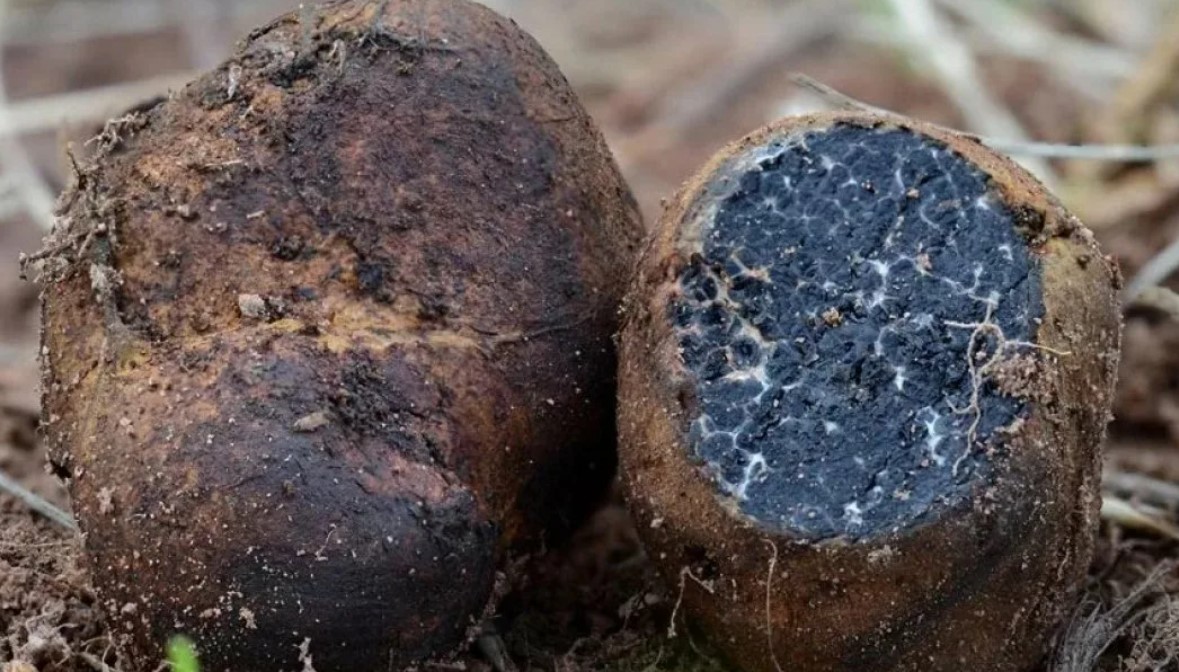
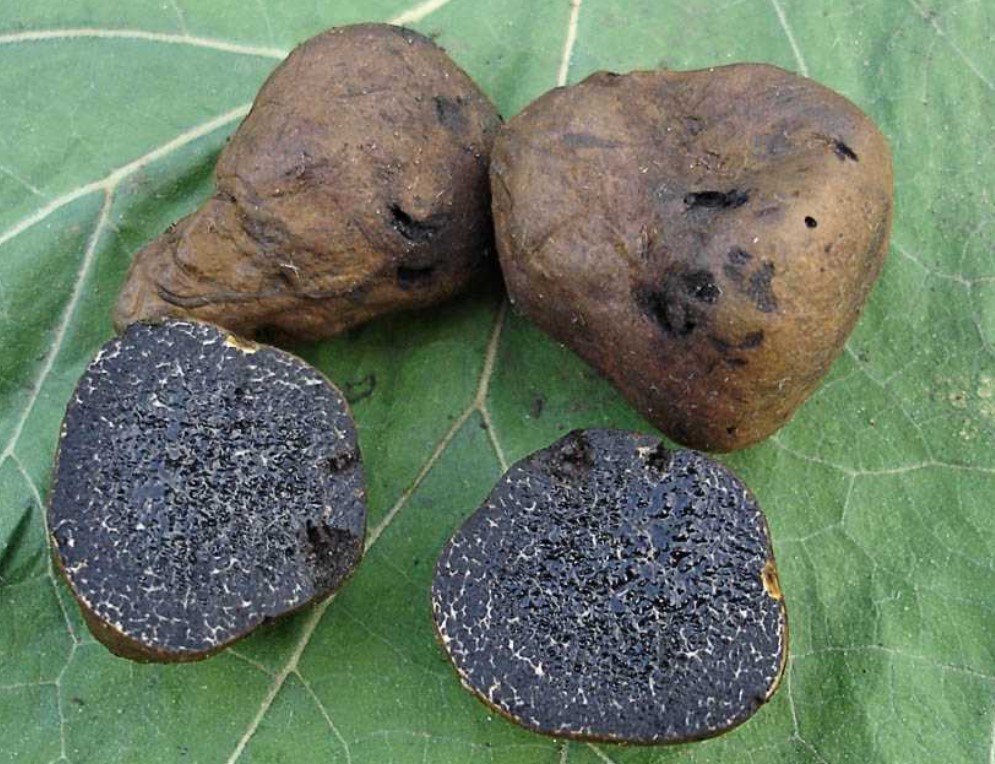
| Melanogaster broomeanus | The shape is spherical, with a diameter of 2 to 8 cm. The color is yellow-brown, becoming darker as it ripens. The surface is smooth or slightly felted. The flesh is dark brown, with yellowish or white streaks. The consistency is gelatinous. | The inedible mushroom was named after the biologist K. Broom who studied it. | June-July | Deciduous forests, grows under fallen leaves. |
Photo gallery of the false truffle Melanogaster bruma
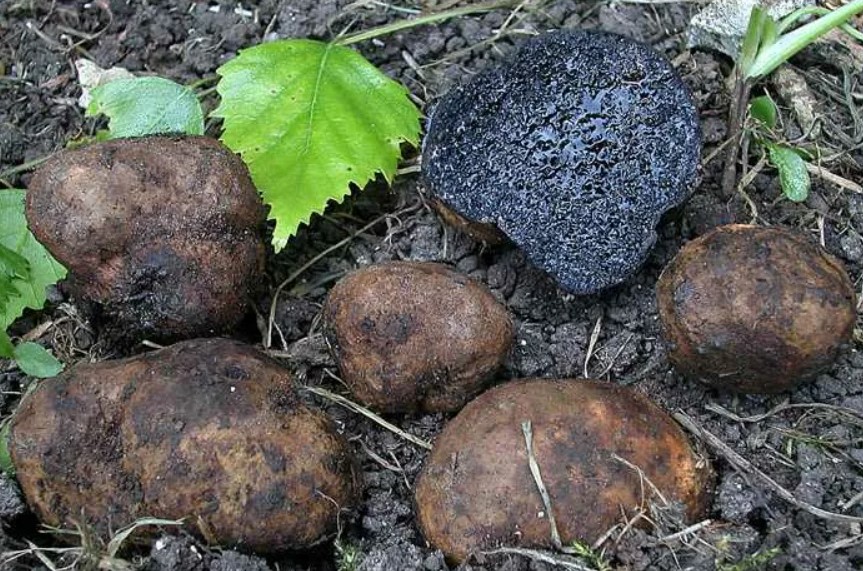
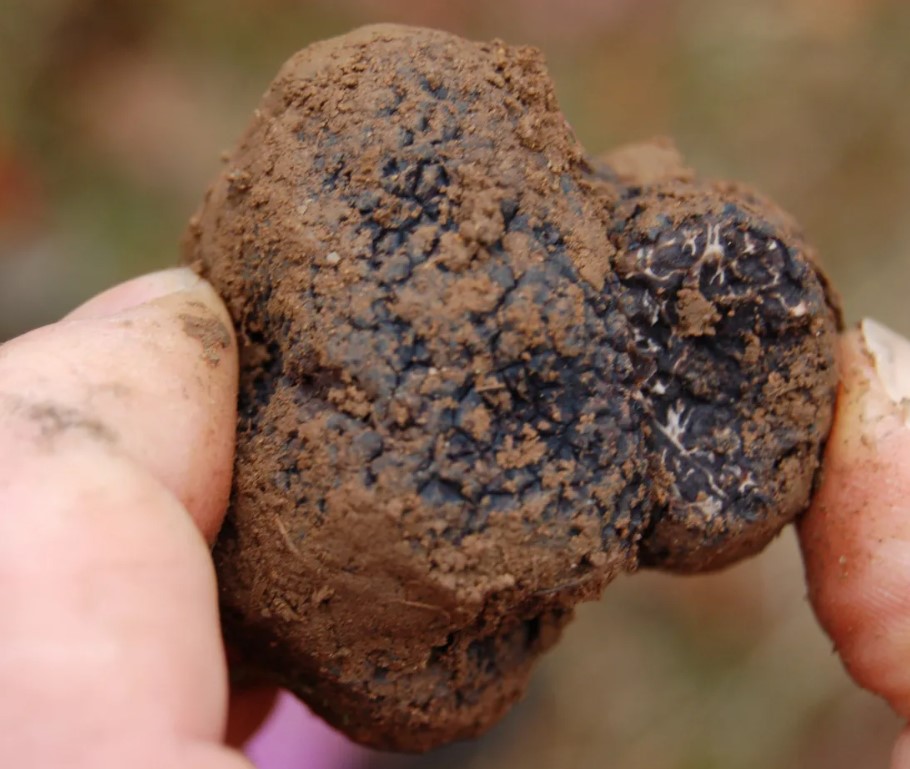
Deer truffle (Elaphomyces granulatus)
| View | Description | Peculiarities | Harvest season | Regions of distribution |
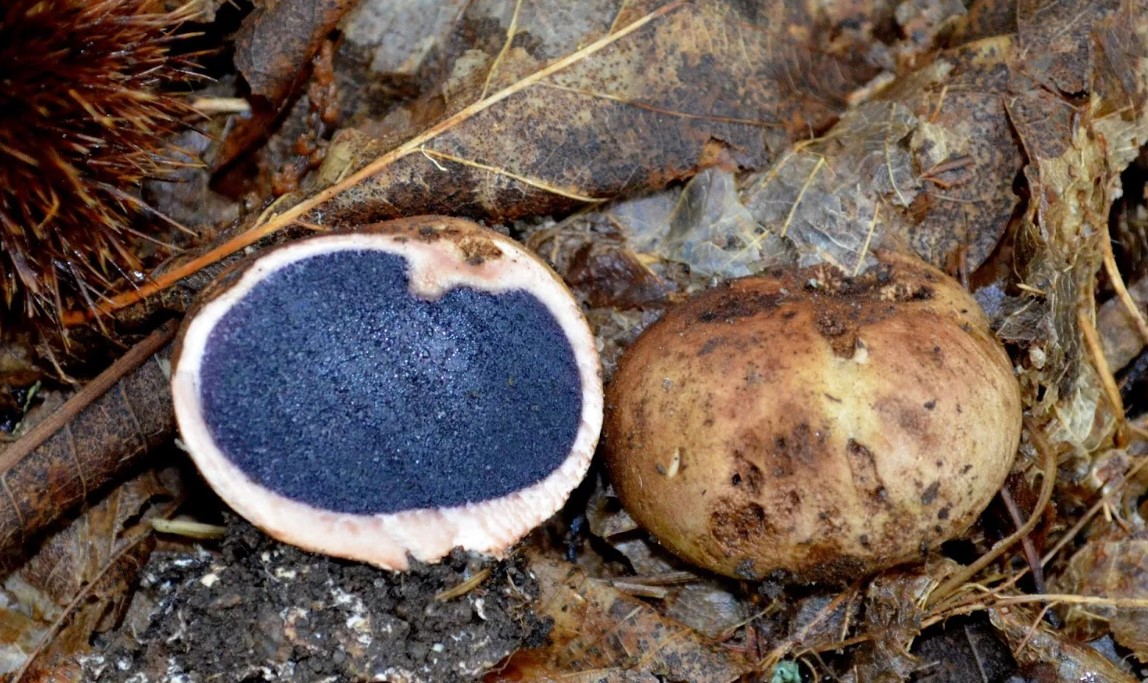
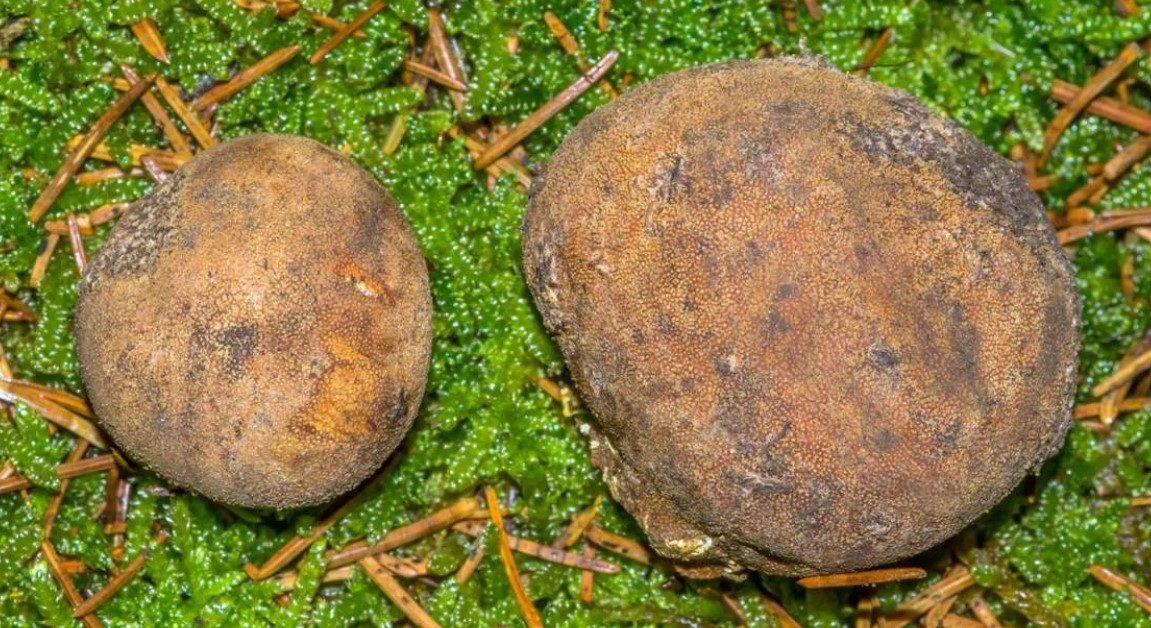
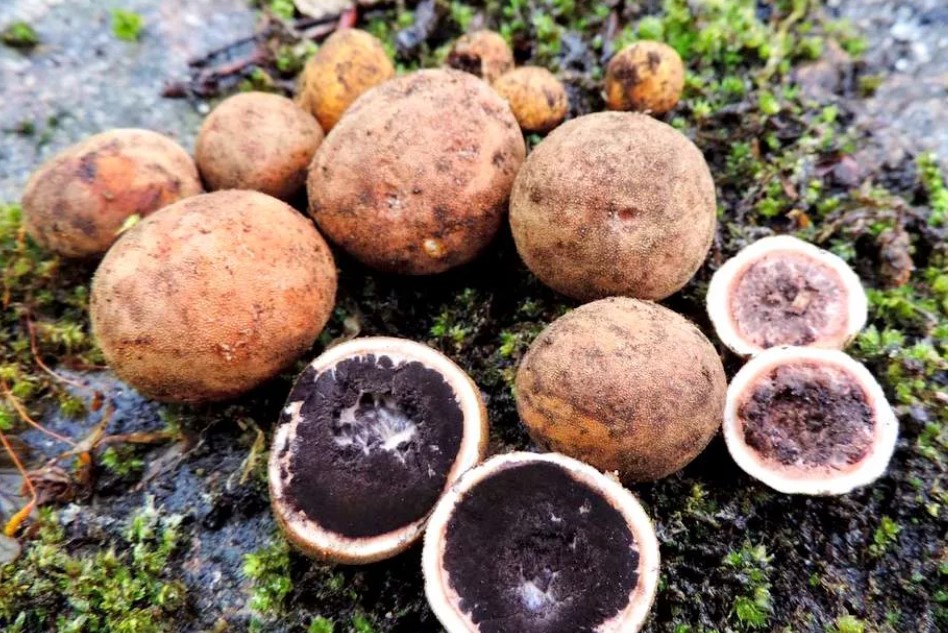
| Deer truffle (Elaphomyces granulatus) | The shape is spherical, with a diameter of 2-4 cm. The color is yellowish-ochre. The surface has a rind up to 2 mm thick. When cut, its white color changes to pinkish-gray. | Inside the mushroom is white flesh, which becomes dark as it ripens. | July-October | Spruce and coniferous forests. Also found in mixed forests, but only under pine and spruce trees. |
Photo gallery of deer truffles
The benefits and harms of black truffles
Black truffles contain a large number of nutrients that have a beneficial effect on the body:
- Strengthen the immune system.
- Reduces sugar levels in diabetics.
- Control cholesterol levels.
- Promotes regeneration of the upper layers of the epidermis.
- They improve the functioning of the nervous, endocrine, cardiovascular systems and adrenal glands.
- Strengthen potency and increase libido.
- Slow down the aging process.
Truffles are not beneficial for everyone; there are a number of contraindications to their use:
- Children's age (up to 12 years).
- Allergic reactions.
- Periods of pregnancy and lactation.
- Ulcerative gastrointestinal disease.
Proper preparation and use of black truffles
Each variety of truffle mushroom has its own unique flavor. It can be musky, nutty, or something else entirely. The key is to cook the mushroom properly to fully develop its aroma.
Stages of truffle preparation:
- Rinse the mushroom under running water to remove any remaining sand from the surface. If necessary, soak the truffle for 30 minutes.
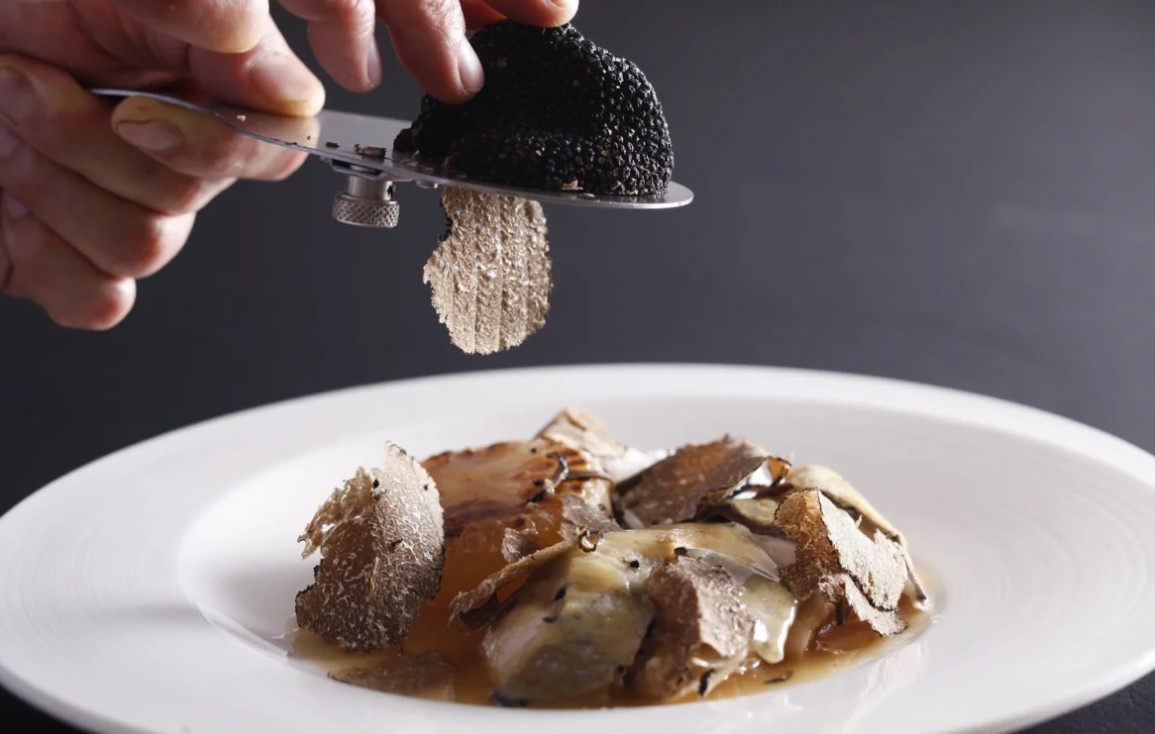
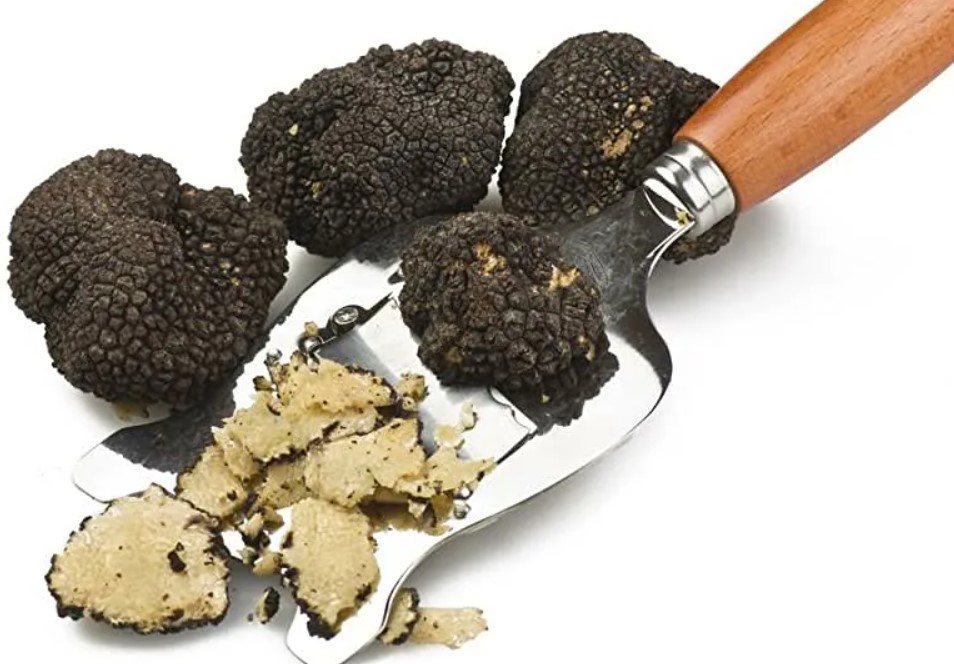
- Cutting with a special knife with a very sharp blade into translucent slices or small pieces.
- Frying or adding fresh mushrooms to prepared dishes to add flavor.
The black truffle is a very expensive mushroom, so it's rarely served as a stand-alone dish. It's added to black caviar, champagne, salads, desserts, pizza, sushi, soups, and even French fries.
Use of black truffle in medicine and cosmetology
Black truffles are used medicinally due to their rich vitamin and nutrient content. They are added to medications aimed at:
- Correction of visual acuity.
- Treatment of joints and gout.
- Restoration of the reproductive system.
- Improving male potency.
- The mushroom is often a component of anti-aging serums, creams, and oils, and is also included in expensive hair care products.
Black truffle prices, including in Russia
Black truffles have always been an expensive treat; in Europe, a kilogram of this mushroom costs around €2,000. In Russia, the price is slightly lower, with gourmets priced around €1,500.
How to grow black truffles in your garden
Growing truffles in a garden is very difficult and expensive. When grown on a large scale, the investment only pays off after 3-4 years.
Location
Each black truffle species requires a specific tree to thrive, otherwise a harvest is impossible. The planting site must meet the following requirements:
- There are no other mushrooms growing nearby and there are no weeds.
- The site is located at least 100 m above sea level.
- The surface has a slope of no more than 13 degrees.
- The soil mixture is poured to a height of 30-50 cm.
- The required trees (birch, oak, etc.) are present, located at a distance of 5-7 meters from each other.
Soil
Planting truffles requires a lot of soil. Its composition should be as follows:
- Garden soil – 60%. You can take it from the forest, but make sure it's free of other myceliums. Before use, it must be disinfected, for example, with a steam generator.
- Sand – 15%. It is added to give the soil a looser structure.
- Sawdust – 15%. It must come only from the symbiotic tree.
- Rotted fallen leaves – 10%.
- Iron, calcium, sulfur, and nitrogen should be used as fertilizer. The soil pH should be maintained at 7-8.
Planting material
Truffle spores can be purchased at specialty stores, from farmers, or ordered online. They come in two types:
- Live – stored for no more than 6 months.
- Dry – the material has an unlimited shelf life.
It takes at least a year for mycorrhizae to develop, but you can purchase mycelium already established in wood. However, it will cost twice as much.
On average, the price for truffle spores ranges from 500 to 1,500 rubles, depending on the variety and the seller's integrity.
Different technologies for growing black truffle mycelium
Truffle cultivation begins in May, as soon as warm weather sets in without any overnight cold spells. This period lasts until the end of August, when daytime temperatures remain at 23-24 degrees Celsius. The key to truffle cultivation is creating the right conditions.
In the greenhouse
Polycarbonate greenhouses equipped with ventilation and heating systems are suitable for growing truffles. The air temperature should not drop below 15 degrees Celsius, even at night, and all cracks should be carefully sealed to prevent drafts.
Another important point is that mycelium does not tolerate exposure to direct sunlight, so you will need to erect a canopy with curtains or dark fabric over it.
In the basement
Before planting mushrooms in the basement, it is necessary to disinfect it:
- Treat the room from insects.
- Whitewash the walls and ceiling with lime.
- Fumigate the basement with a sulfur candle.
- Next, build the racks to hold the myceliums. It's best to use a metal frame, as wood will rot quickly.
- Next, all cracks through which insects can get inside are carefully sealed, and a ventilation system is also thought out.
To grow truffles in the basement you will also need:
- mycelium boxes;
- lamps for additional lighting;
- thermometer;
- hydrometer;
- pipes for irrigation.
In open ground
Growing truffles outdoors is only possible in regions with warm climates; cool weather kills the mycelium. The key requirements for successful truffle cultivation outdoors are:
- Availability of the necessary trees, planted according to the 4x5 scheme.
- The soil moisture level should be between 70 and 75%. To control this process, ensure a drainage layer is in place in advance and mulch the bed after each watering.
- Planting seedlings at a depth of 70 to 80 cm.
- Fertilize the soil with rotted manure once every 60 days, paying special attention to the root circle of the tree.
- Absence of weeds at the site of mycelium laying.
Step-by-step process of planting black truffle mycelium
The process of planting mycelium is practically independent of the place of its cultivation and takes place in several stages:
- The bed is filled with sawdust, and sand, leaves and soil are added on top.
- The mycelium is evenly mixed with the soil mixture and scattered over the surface of the bed.
- The top of the plantings is mulched with a small layer of sawdust.
- For outdoor cultivation, initially dig holes 20 to 60 cm deep, spaced 2 meters apart. These holes are moistened, and then the above steps are repeated.
Important! For the first 30 days, the plants should be covered with plastic film to protect them from freezing and maintain the required humidity level.
Caring for Growing Black Truffles
Caring for truffles involves maintaining moisture levels, periodically loosening the soil, and removing weeds. It's important to avoid shade. Therefore, overgrown branches should be pruned promptly.
To increase soil fertility, it is fertilized with complex preparations containing boron, magnesium, copper and zinc.
Pests of cultivated black truffles and their control
The main pests of truffles are insects that sneak through cracks into the growing area. Cockroaches and weevils are particularly fond of truffles. Chemicals can be used to control them, but this will release harmful substances into the soil. Alternatively, you can use a folk remedy: roll honey and boric acid into balls and scatter them over the mycelium.
Rules for harvesting cultivated black truffles
The harvest can be started as early as one year after the mycelium has been established. A sign of maturity is the presence of gnats hovering over the mushroom and the absence of vegetation in the area.
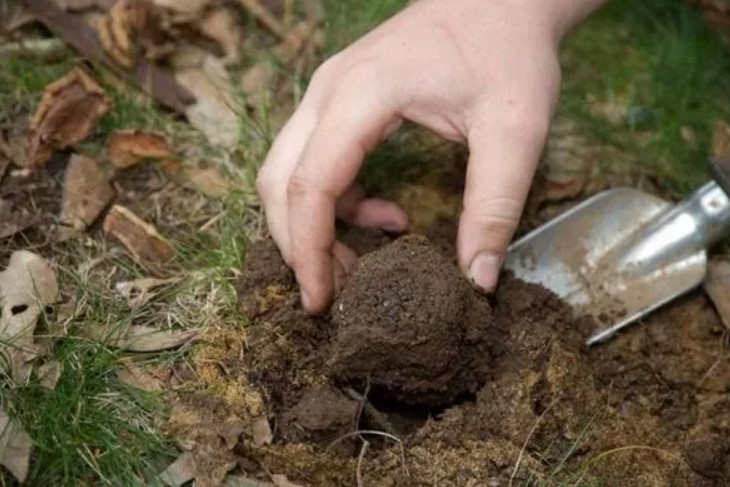
The top layer of soil is dug up with a shovel near the mushroom's presumed location. The truffle is carefully removed from the soil, and the root is cut off.
It is recommended to wash mushrooms immediately before cooking.
How to properly store black truffles
A ripe truffle can be stored in the refrigerator for up to a week. To extend this shelf life, you can wrap each mushroom in a separate napkin and change it daily. However, even in these conditions, the mushroom will last no more than 14 days.
To preserve the truffle for a long time, it needs to be dried:
- The mushroom is cut into thin slices.
- Place in 1 layer on a baking sheet.
- Place in the oven.
- Dry with the door open at a temperature of 50 degrees.
- When the slices become very brittle, you can turn off the oven – the truffle is ready.
Conclusion
As we've seen, there are no particular tricks to growing truffles. The key is to stock up on the right equipment, high-quality planting material, and patience. Then, within a year, you'll be able to sample the first delicacies, and within 3-4 years, truffle production will delight you with the sheer volume of harvests.