Everyone is accustomed to seeing champignons as they appear on store shelves. But the history of these mushrooms goes back many centuries; they originally grew only in the wild and were visually distinct from their domesticated relatives.
Content
- 1 Description of the forest champignon
- 2 Photo gallery of the forest champignon
- 3 Historical facts about the wild mushroom
- 4 Where and when does the wild mushroom grow?
- 5 Is the wild mushroom edible?
- 6 What edible mushrooms can be confused with the wild champignon?
- 7 Poisonous look-alikes of the forest champignon
- 8 The benefits and harms of wild mushrooms
- 9 Cooking wild mushrooms: all the nuances and recipes
- 10 Recipes for cooking dishes with wild mushrooms
- 11 Interesting facts about the wild mushroom
- 12 Mushroom pickers' reviews of wild champignons
Description of the forest champignon
People called wild champignons wolf mushrooms, caps, and blaguskas.
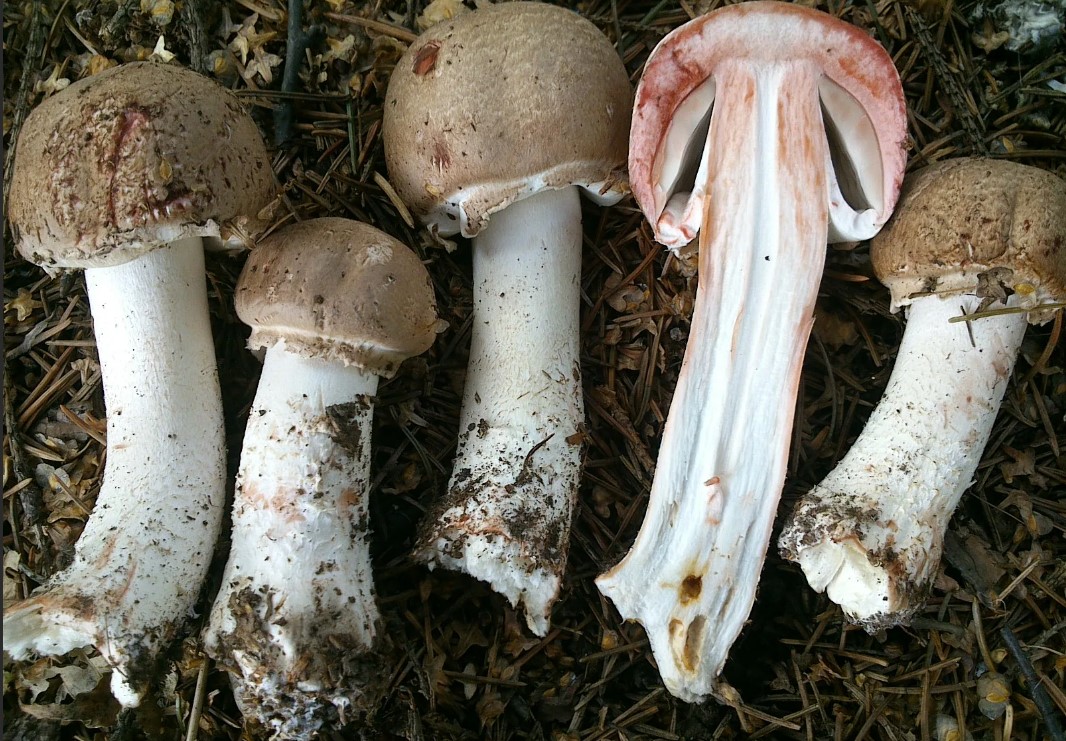
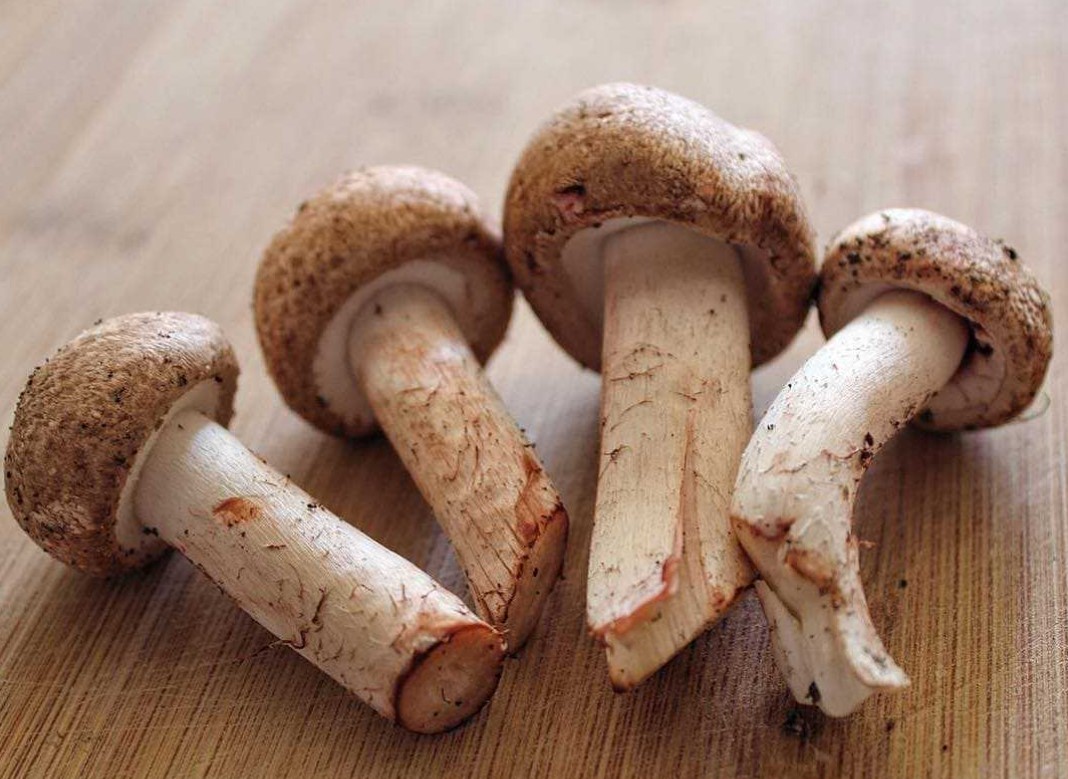
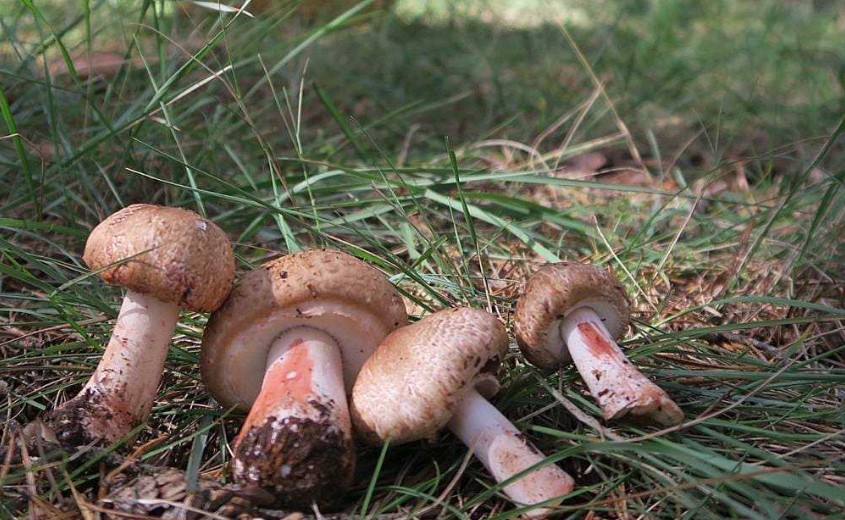
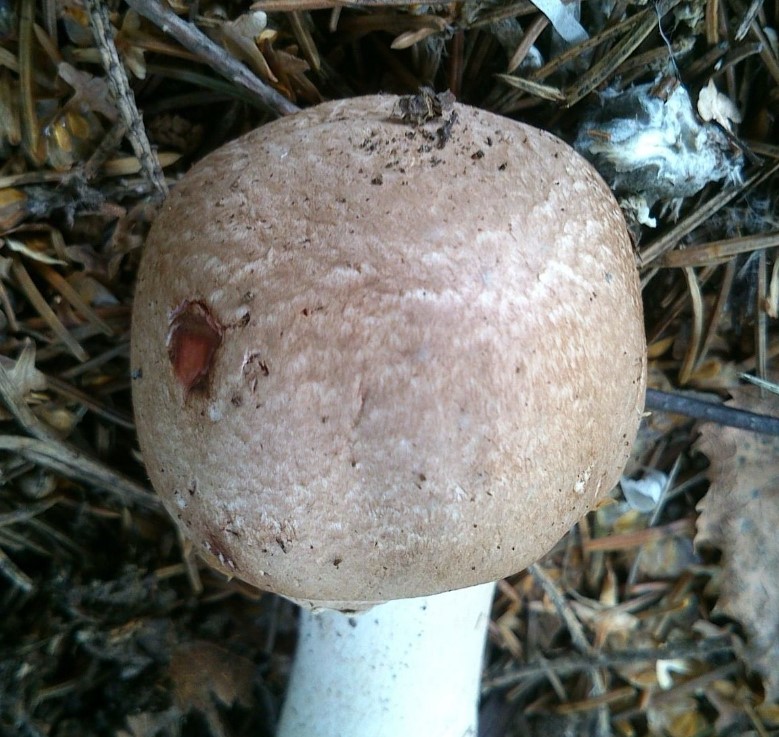
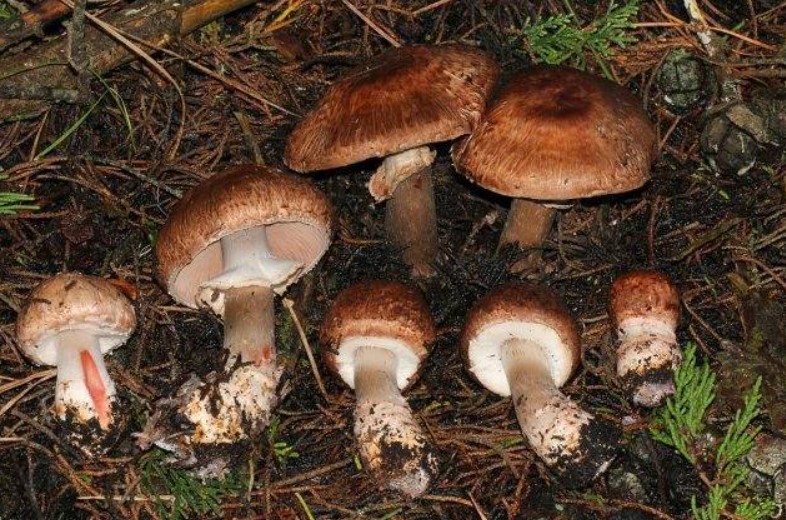
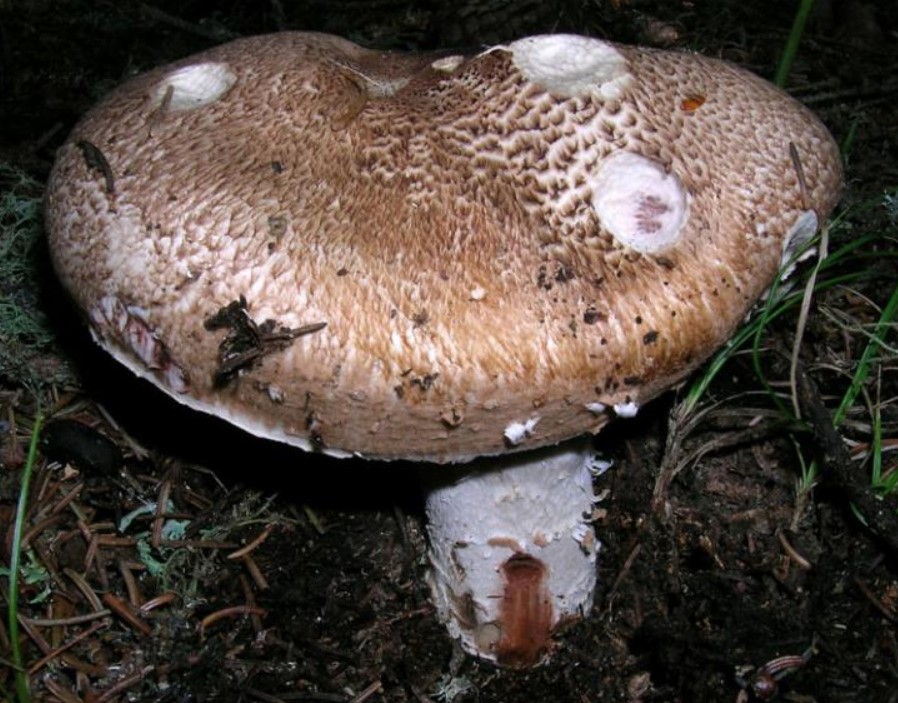
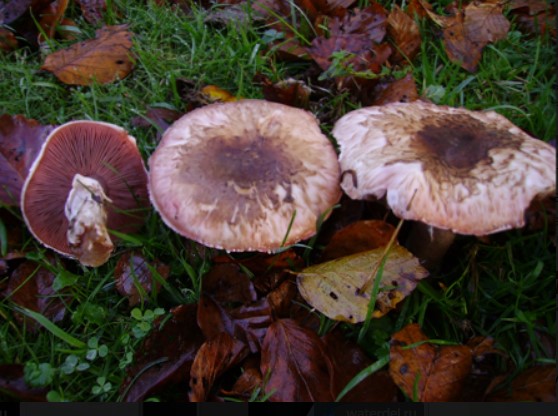
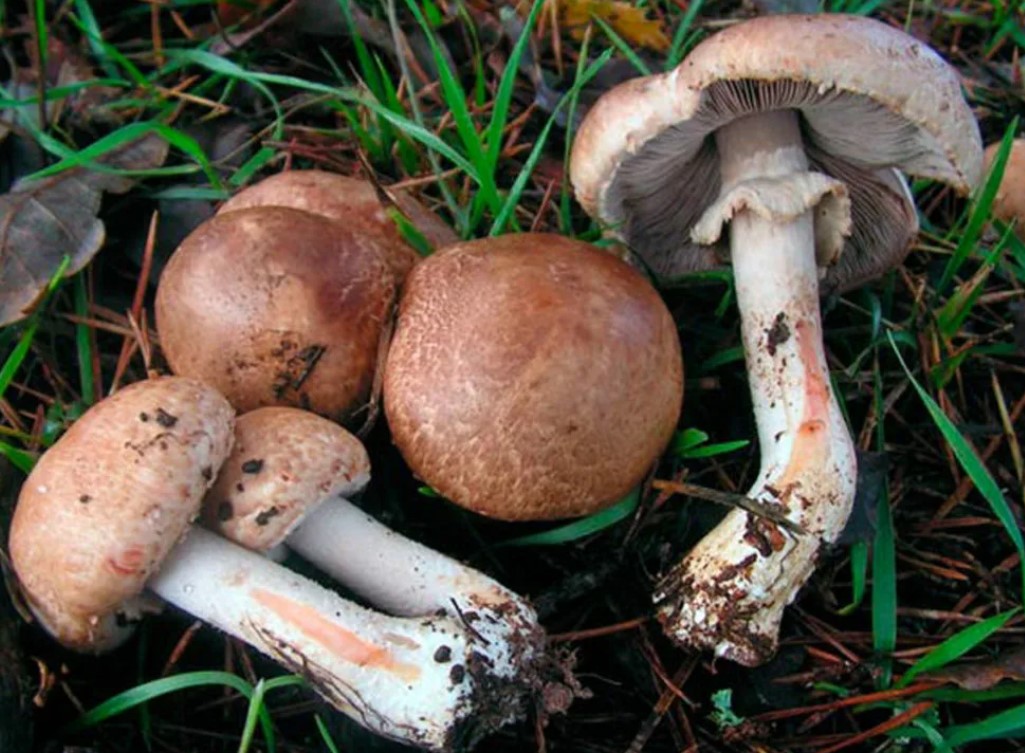
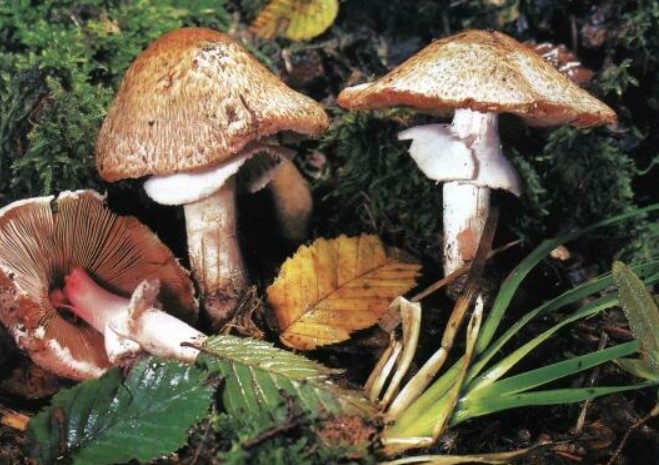
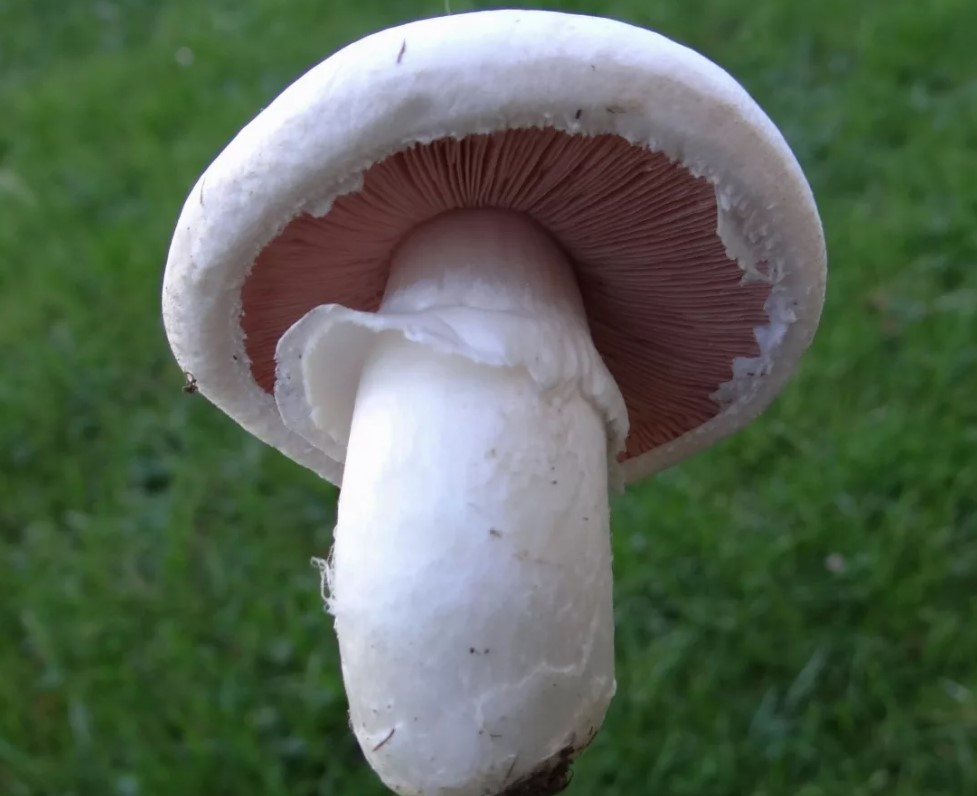
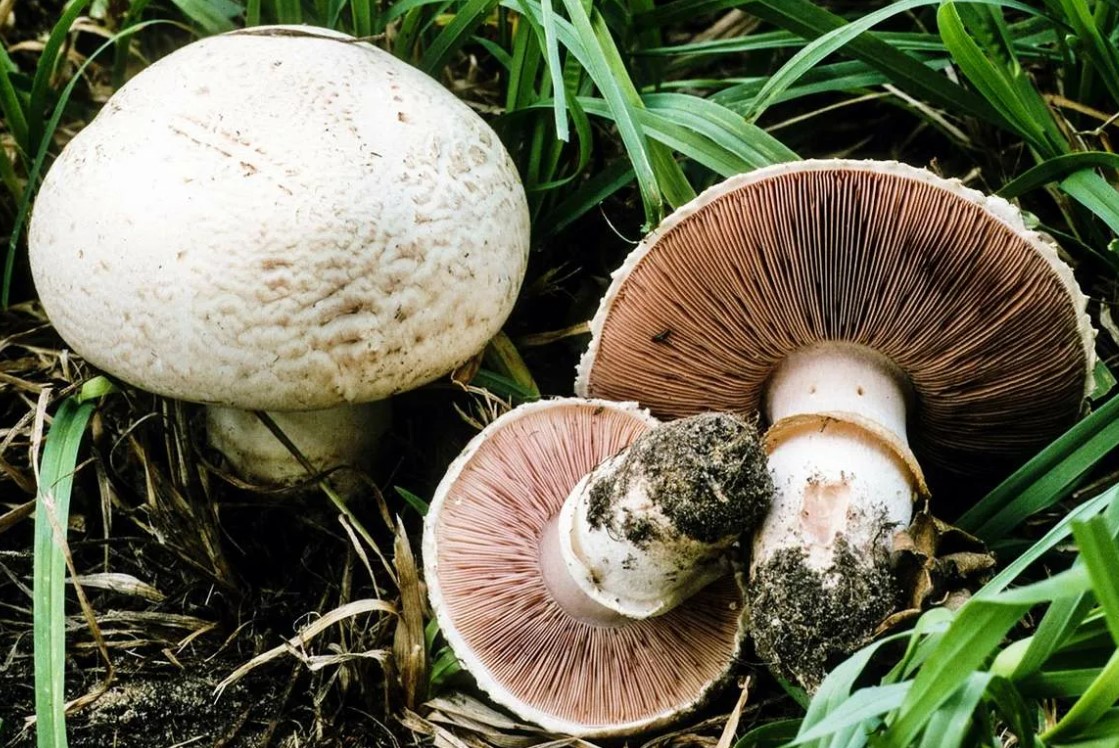
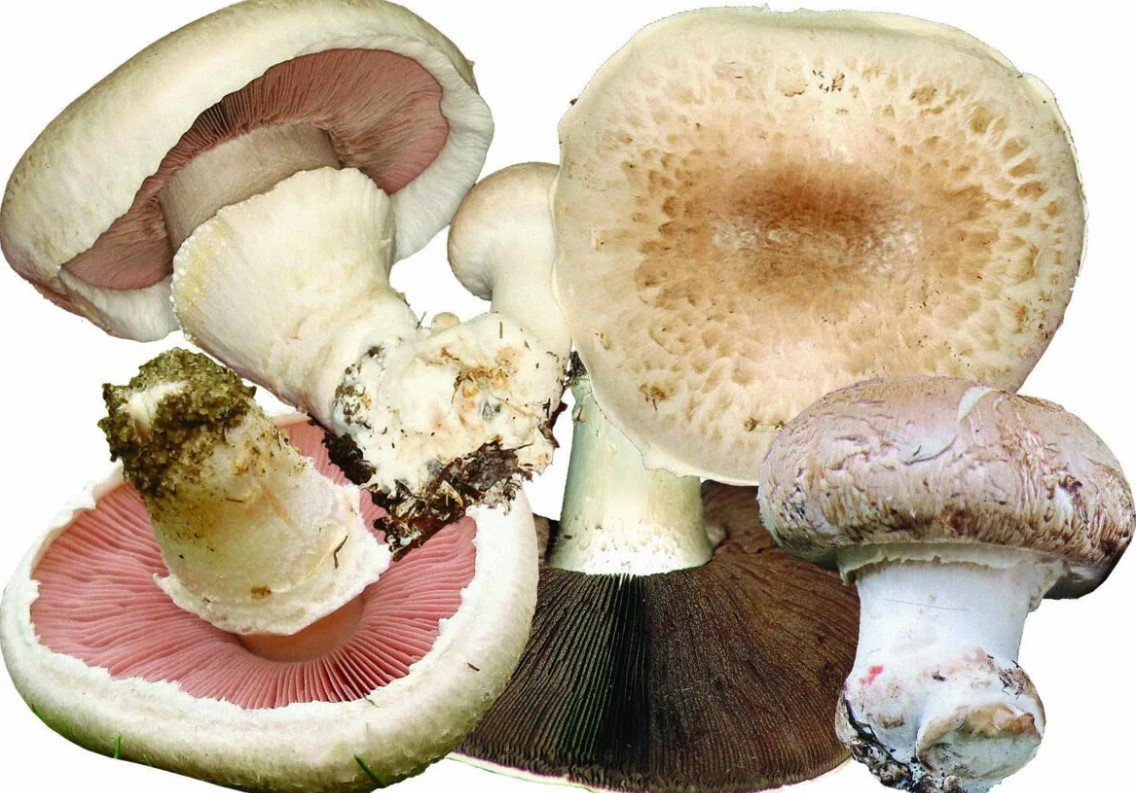
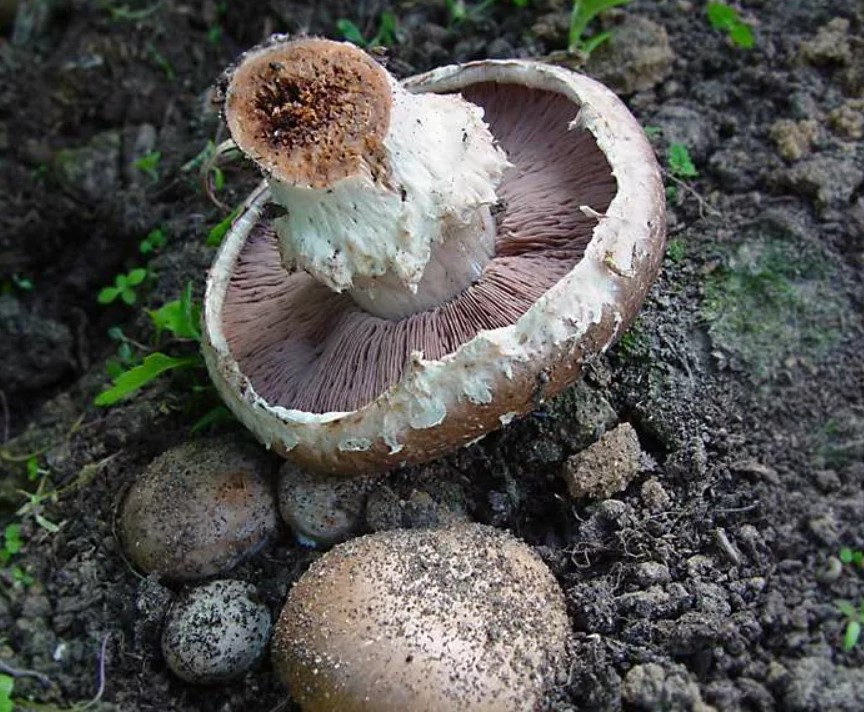
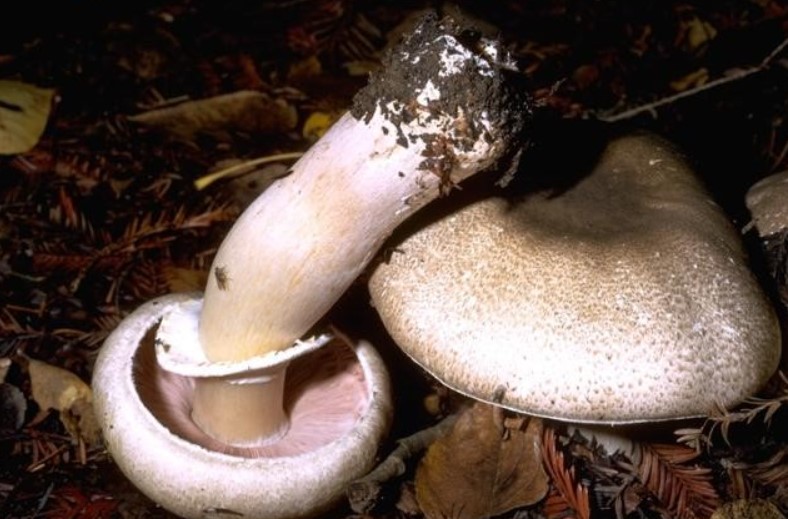
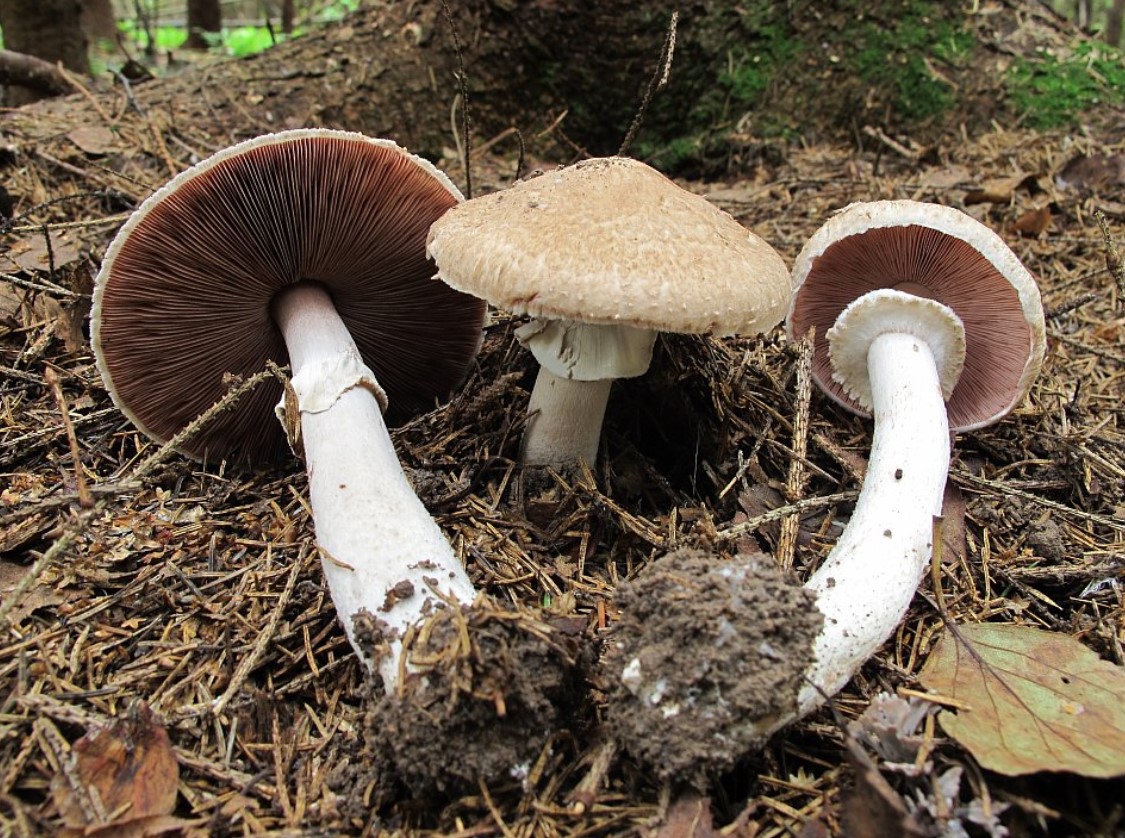
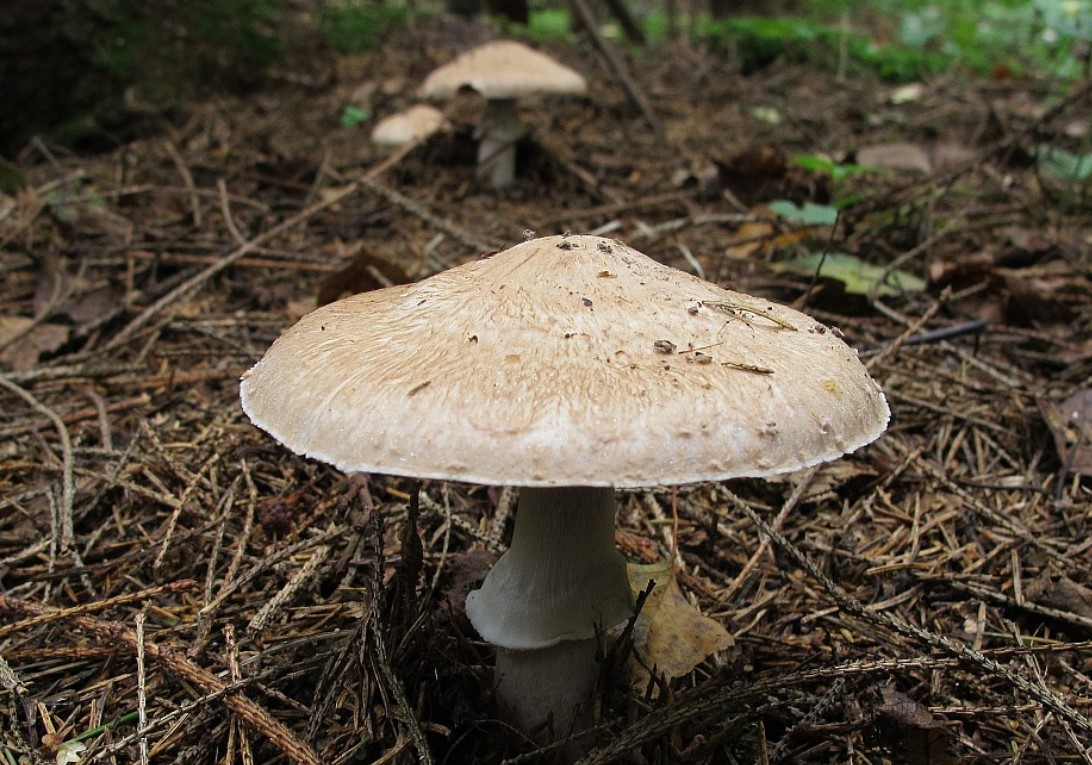
The cap is 7-15 cm in diameter and initially ovoid, but over time it flattens out to become saucer-shaped with a small bump in the center. The color is pinkish-brown, with a slight lilac tint. The skin is thin, dense, and scaly.
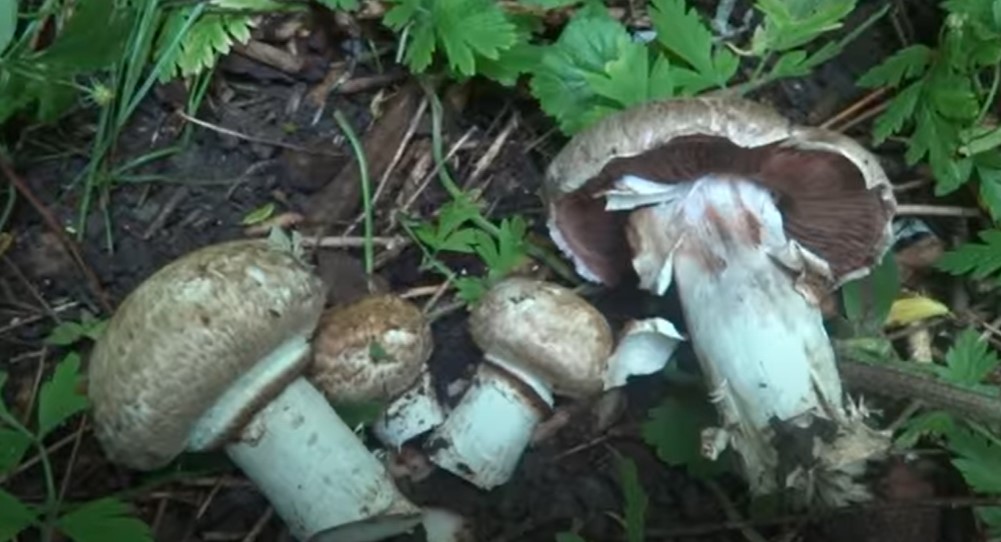
The hymenophore, located on the underside of the cap, is composed of light-colored gills with a pinkish tint. However, in mature mushrooms, it becomes purple-brown.
The flesh is white, but turns pink where cut. Wild mushrooms do not produce milky juice. The aroma is pleasant.
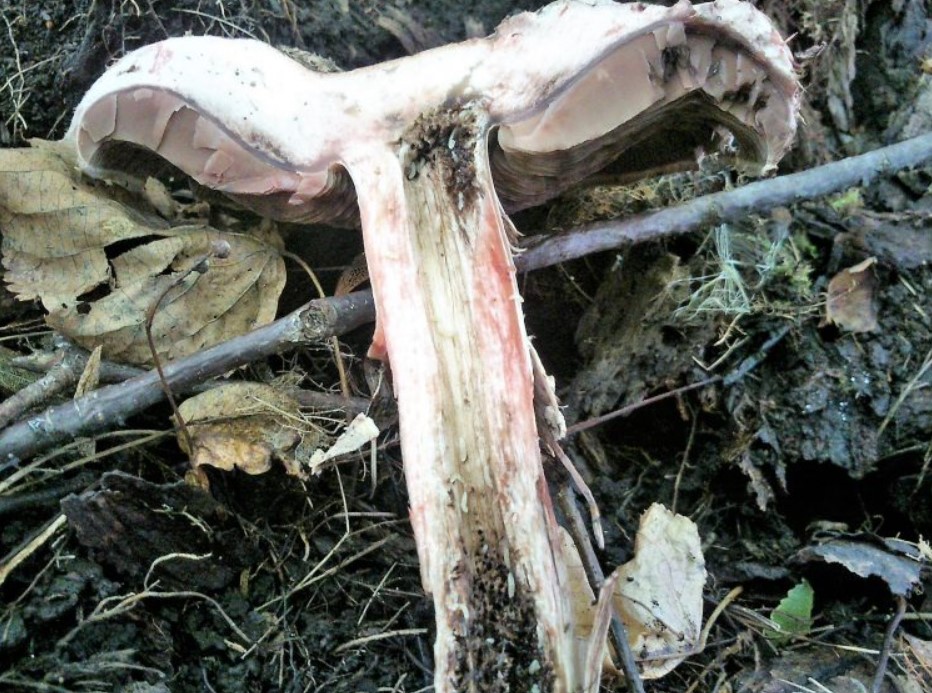
The stem is up to 10 cm long and no more than 2 cm in diameter. It is cylindrical in shape, slightly widening at the base. The color is grayish-white; a membranous ring can be seen at the top of young mushrooms, which disappears with age. The flesh takes on a pinkish tint when cut.
Photo gallery of the forest champignon
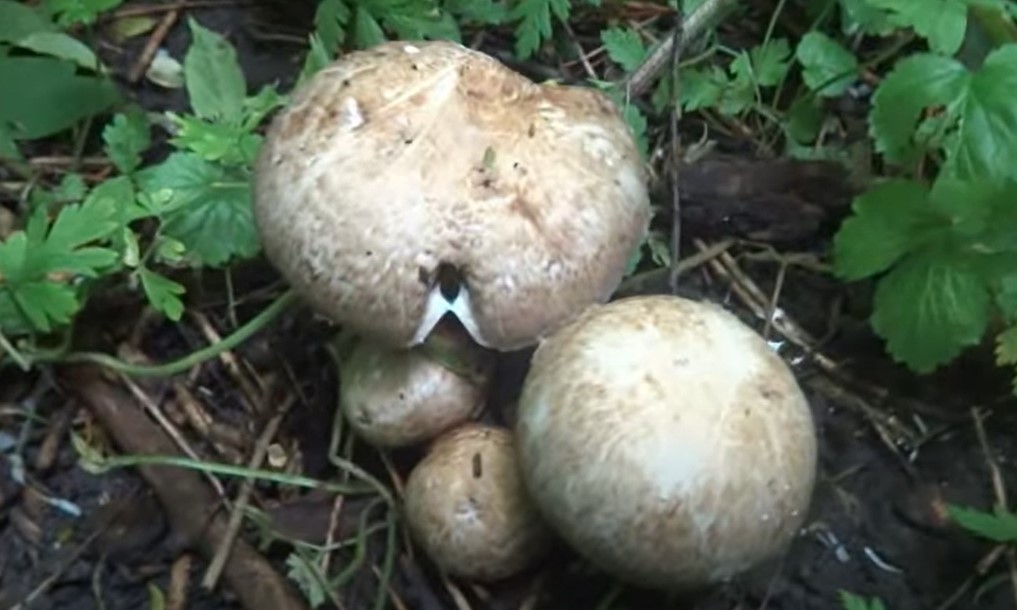
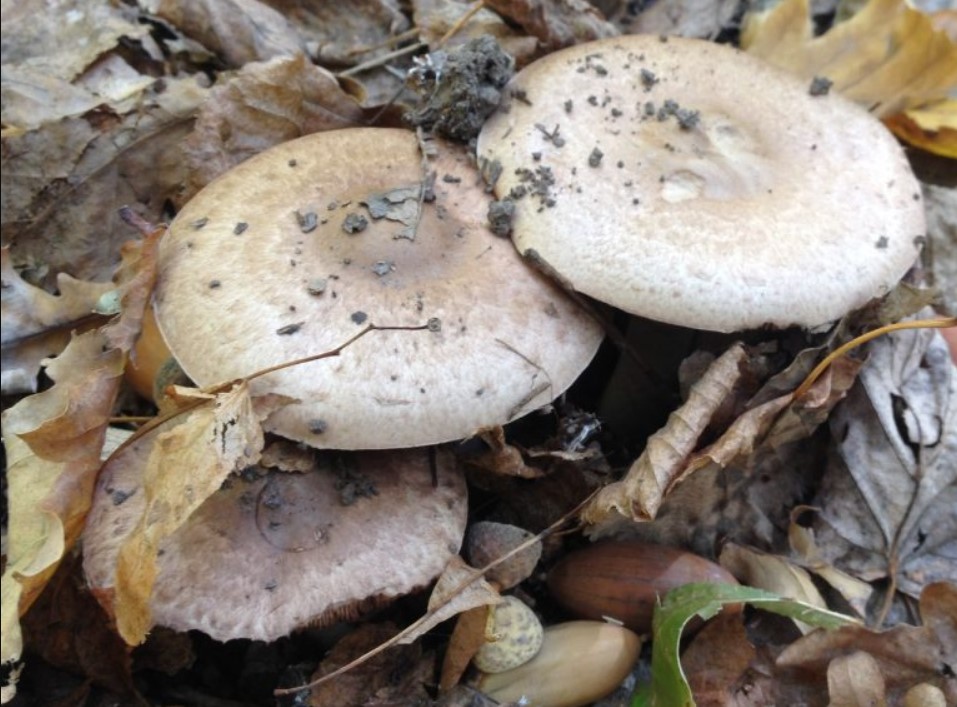
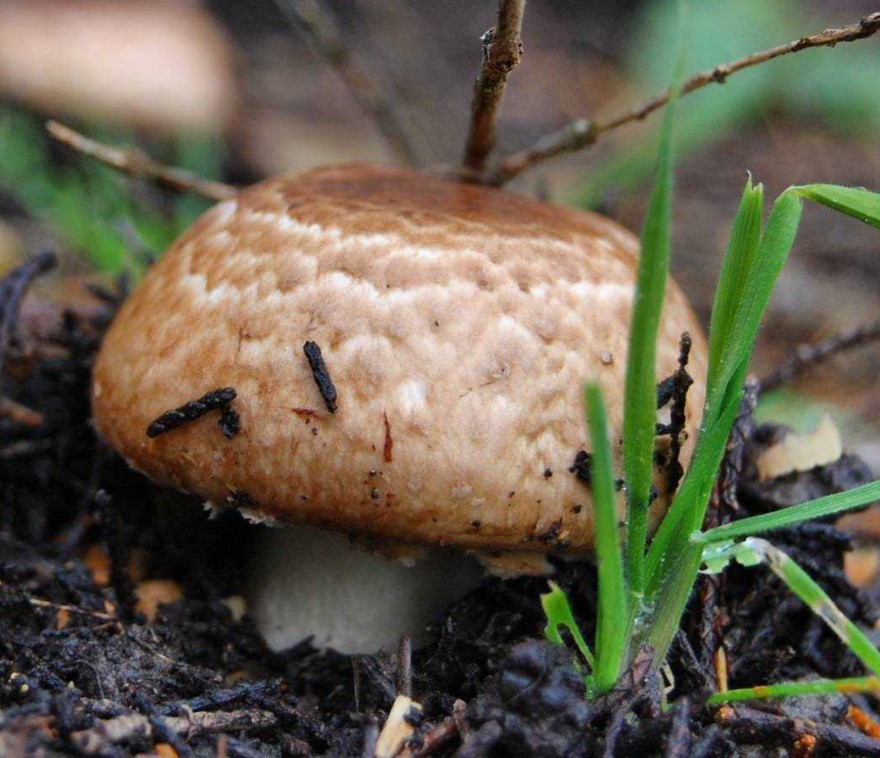
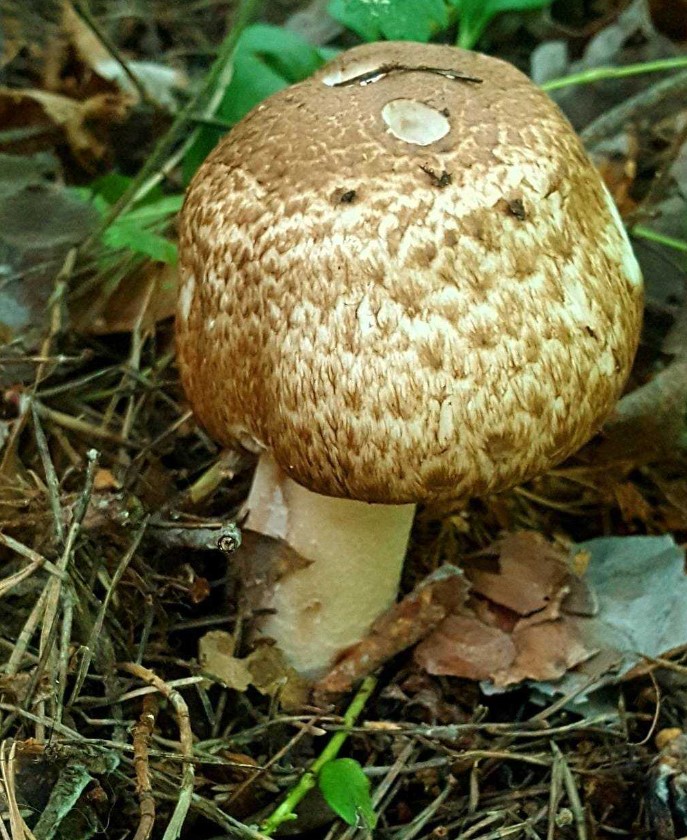
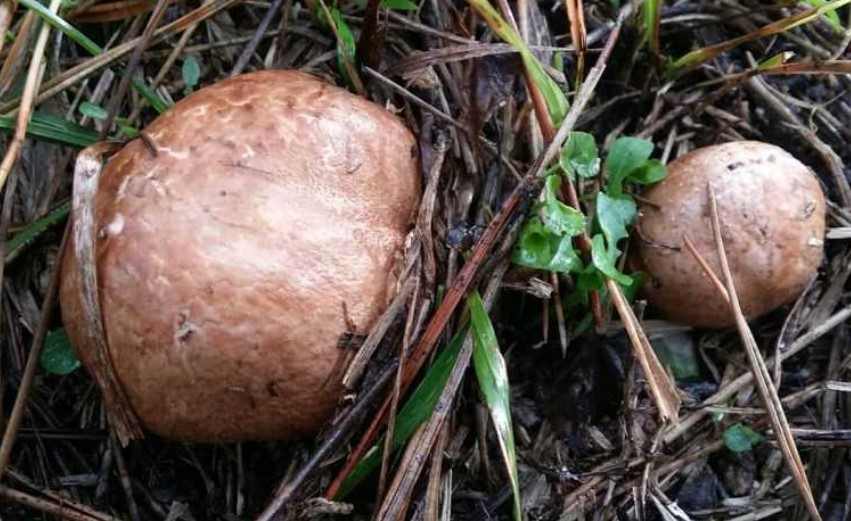
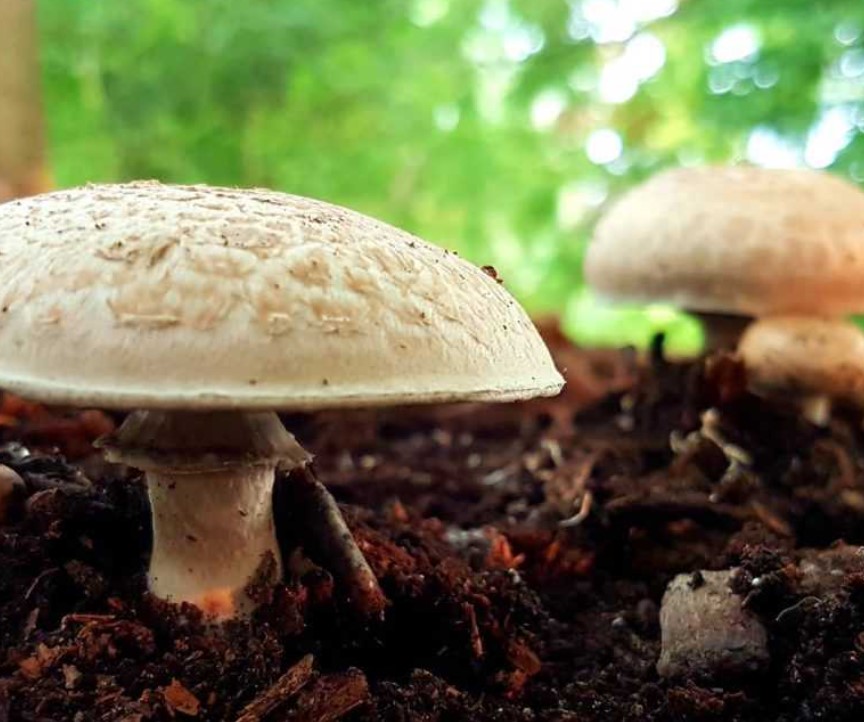
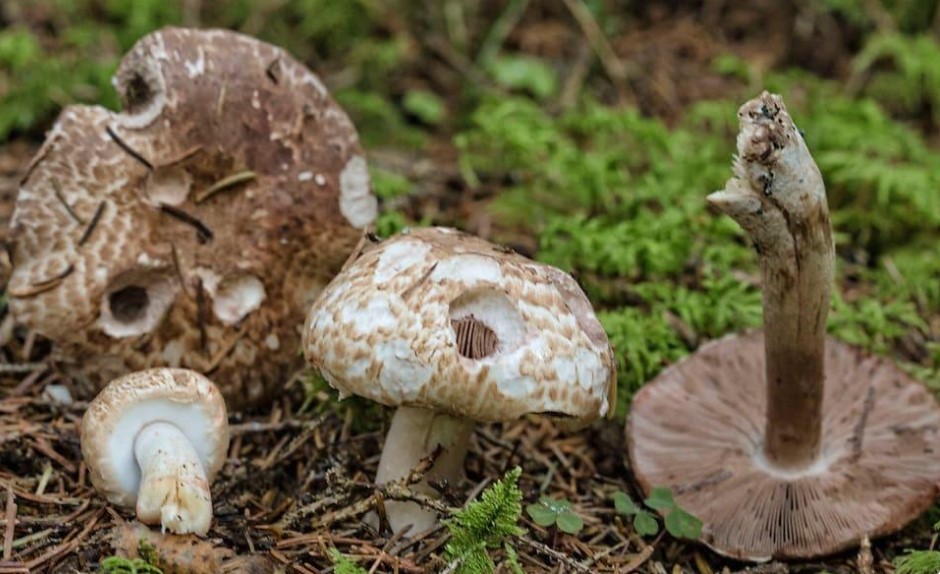
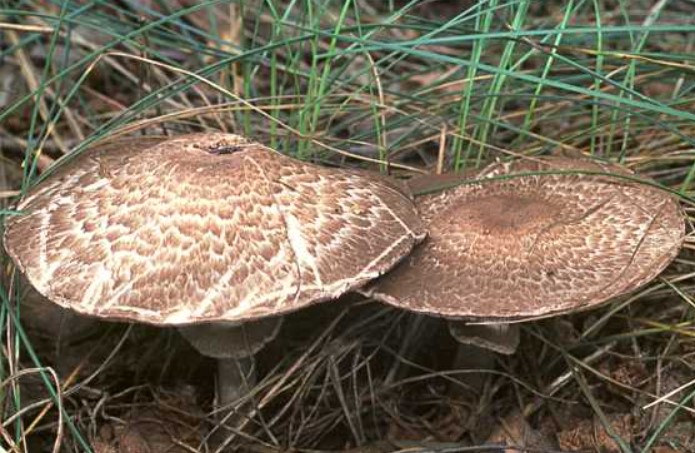
Historical facts about the wild mushroom
The first scientific references to the forest champignon appeared in the works of the German mycologist J.K. Schaeffer in 1762.
There's no definitive answer as to which country is considered the historical birthplace of champignons. Despite the word's French origins meaning "mushroom," Italy remains convinced that champignons were first discovered on its soil.
Just a few centuries ago, champignons were considered a true delicacy and were served only to nobles. Today, you can even grow them yourself without much effort.
Where and when does the wild mushroom grow?
Wild mushrooms prefer mixed and coniferous forests, and are especially common among young spruce trees. Fruiting begins in July and, under favorable conditions, can continue until October or November.
Mushrooms grow in clusters or alone, sometimes forming a fairy ring-shaped pattern with their mycelium. New mushrooms appear cyclically, and a second harvest from the same spot can be harvested in as little as 2-3 weeks.
Is the wild mushroom edible?
Wild champignons are considered edible. However, it's best to pick young specimens; they're less fragile and easier to transport.
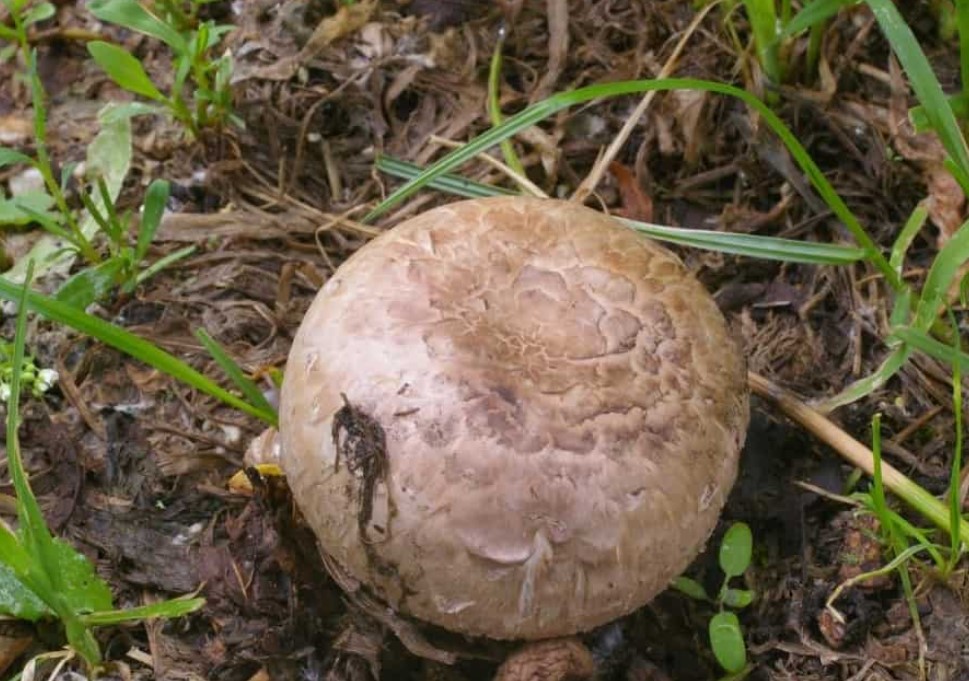
Wild champignons have no distinct flavor or aroma. This makes them a versatile ingredient for many dishes, as the mushrooms don't overpower the flavor.
What edible mushrooms can be confused with the wild champignon?
The forest champignon is confused with the following edible champignons:
- A dark red champignon. It is distinguished by its larger size and thick stem. It prefers deciduous forests rather than coniferous ones, like the woodland champignon.
- The champignon is crooked. The main distinguishing feature is the deep gray stem. When pressed, the flesh turns lemon-colored.
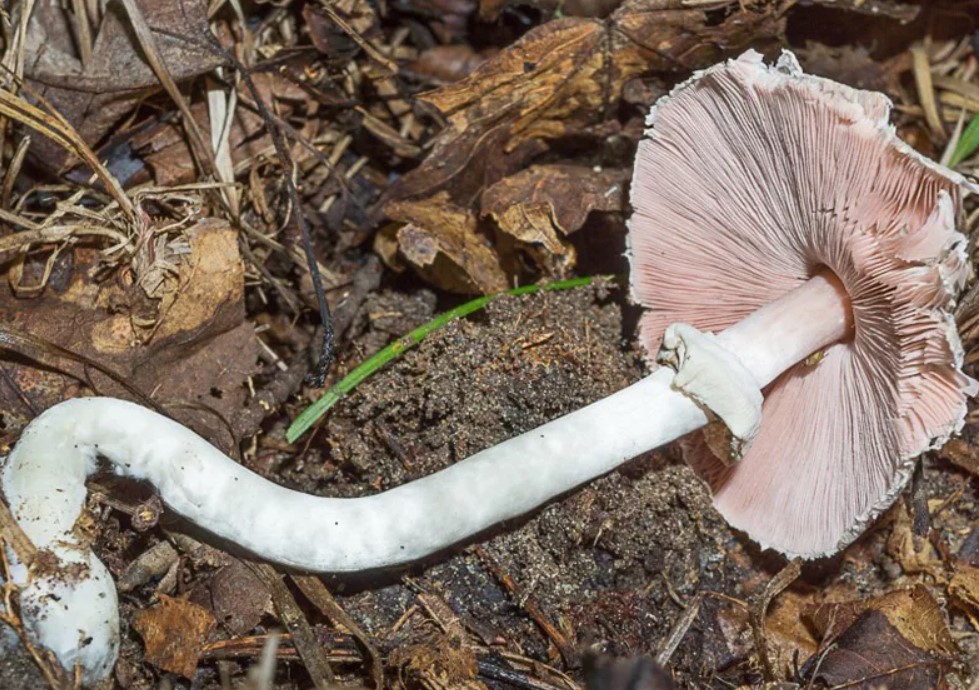
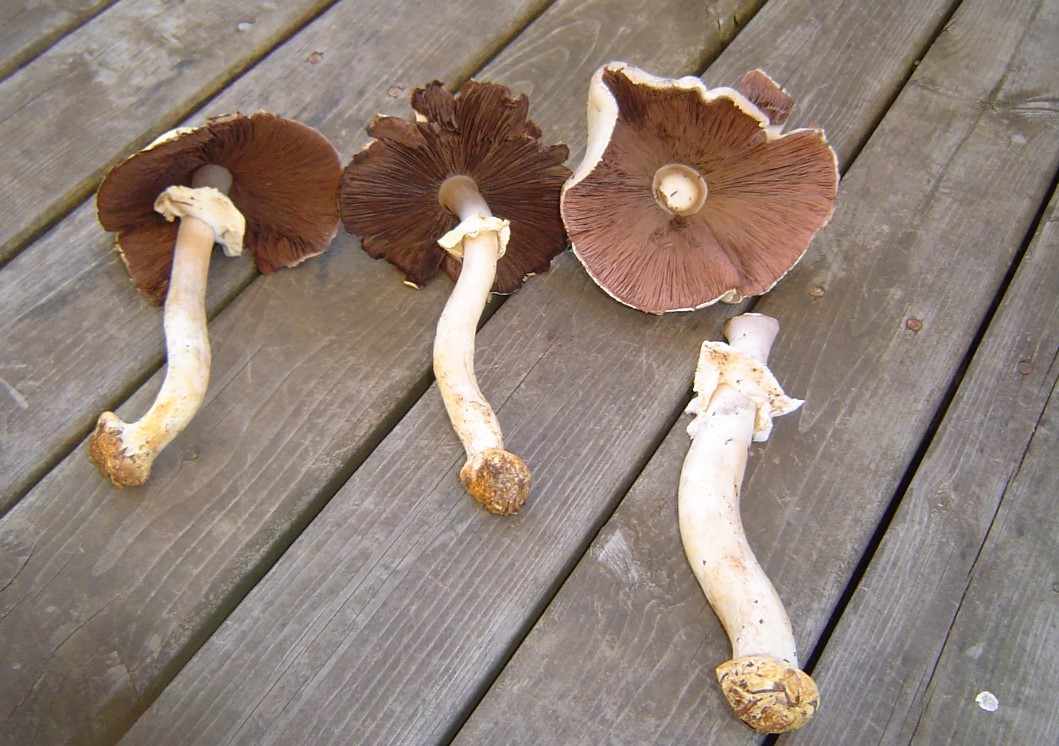
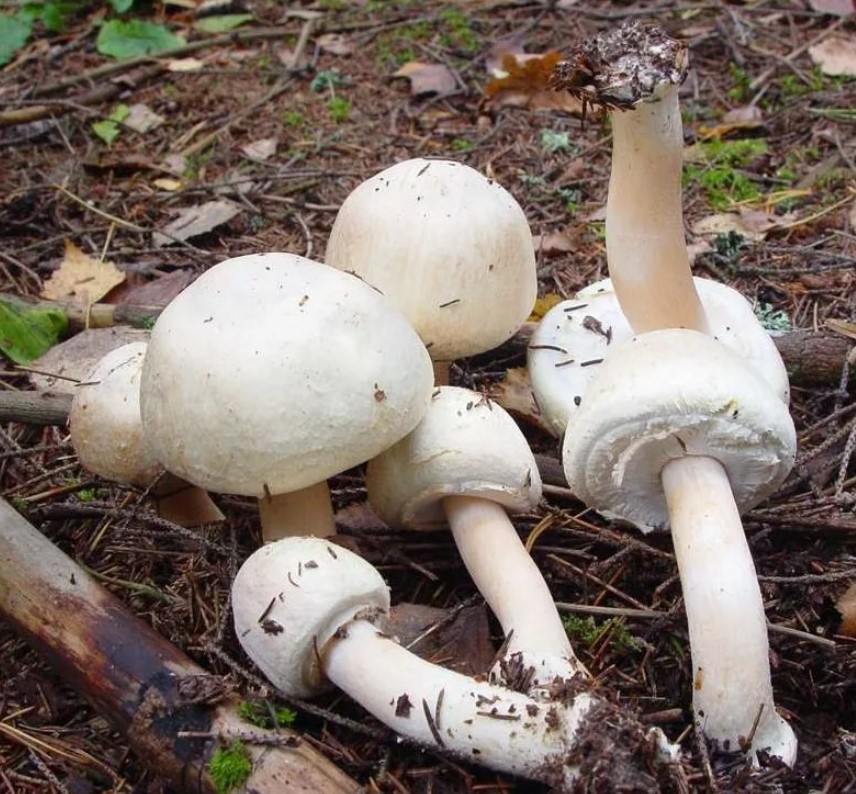
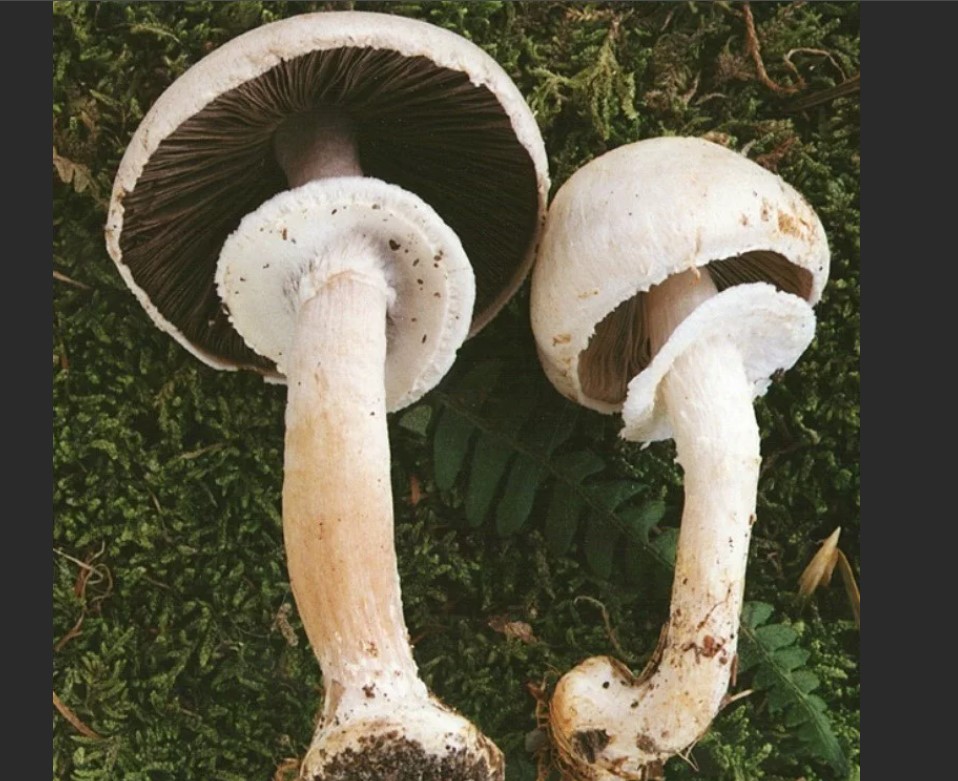
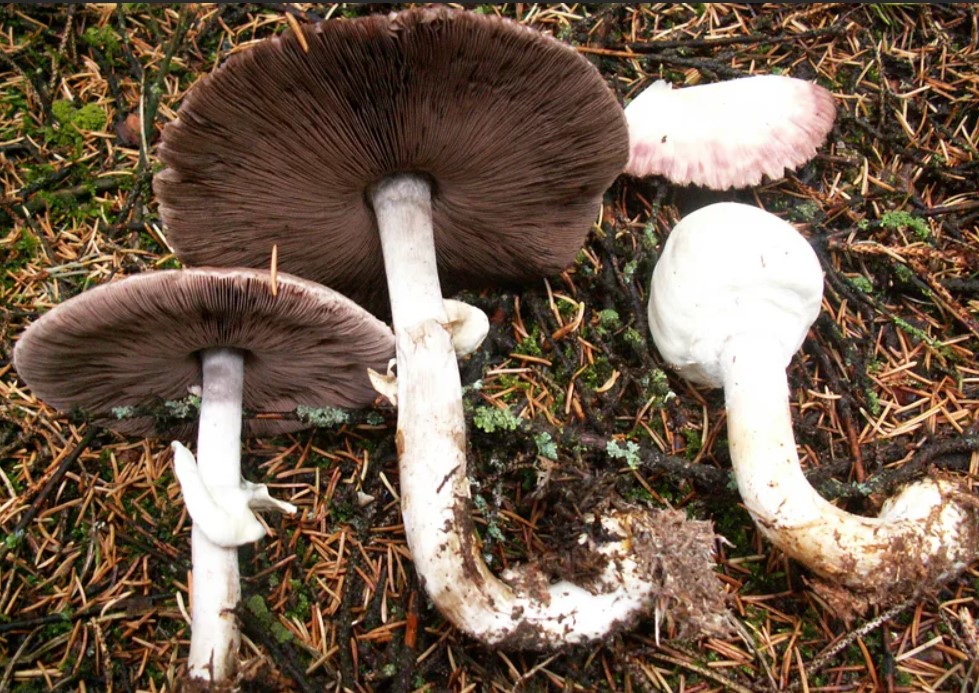
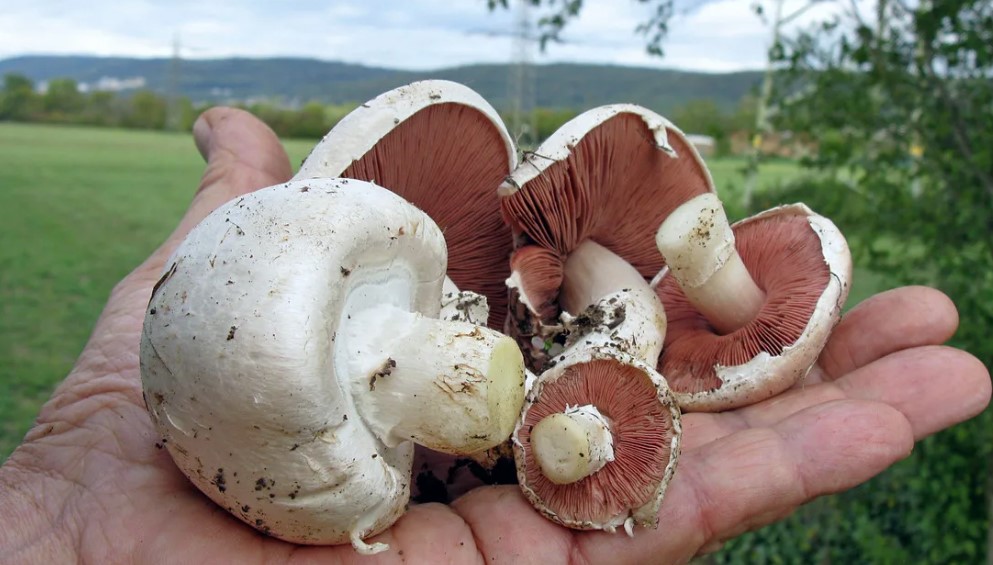
- Agaricus bisporus, a valuable edible mushroom. One of its species is not called royalIt is very rare and prefers to grow in open areas without unnecessary plantings. It is often cultivated for artificial cultivation, even at homeThe mushroom can be identified by the remnants of the veil hanging from the edges of the cap.
Poisonous look-alikes of the forest champignon
The following types of mushrooms are considered dangerous lookalikes of the wild champignon:
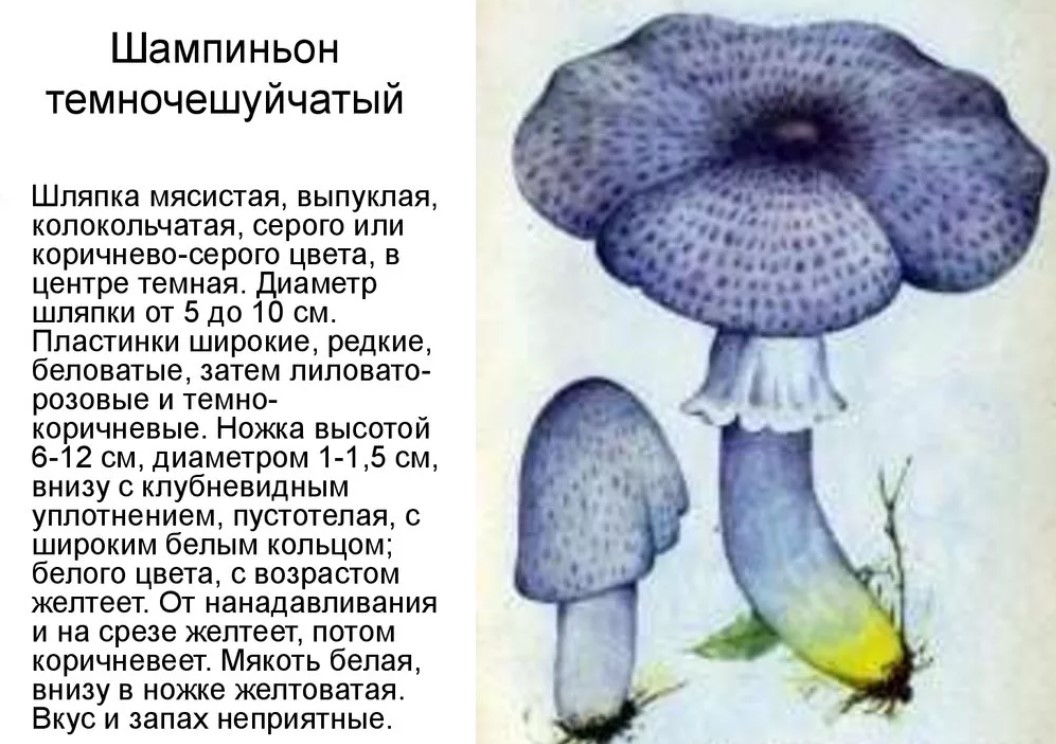
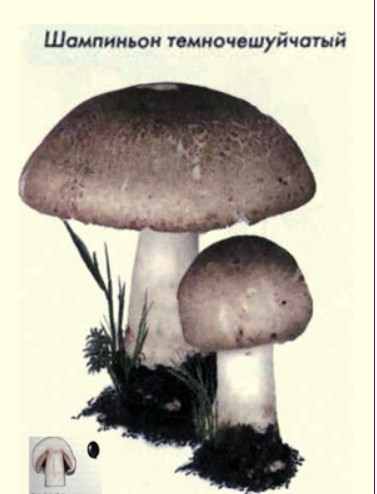
- A dark (dark-scaled) champignon. The mushroom has a pungent odor, and the flesh turns yellow where cut.
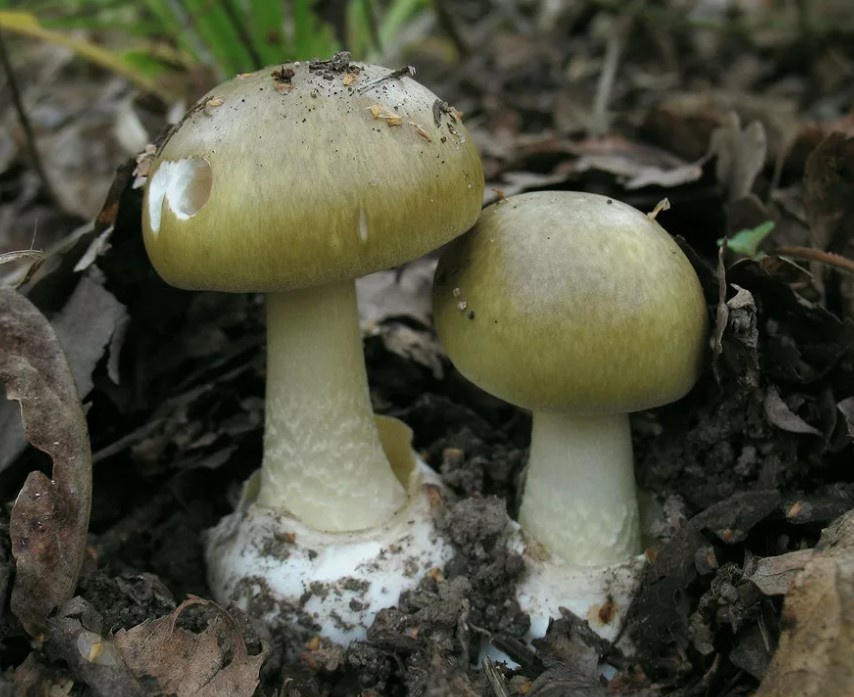
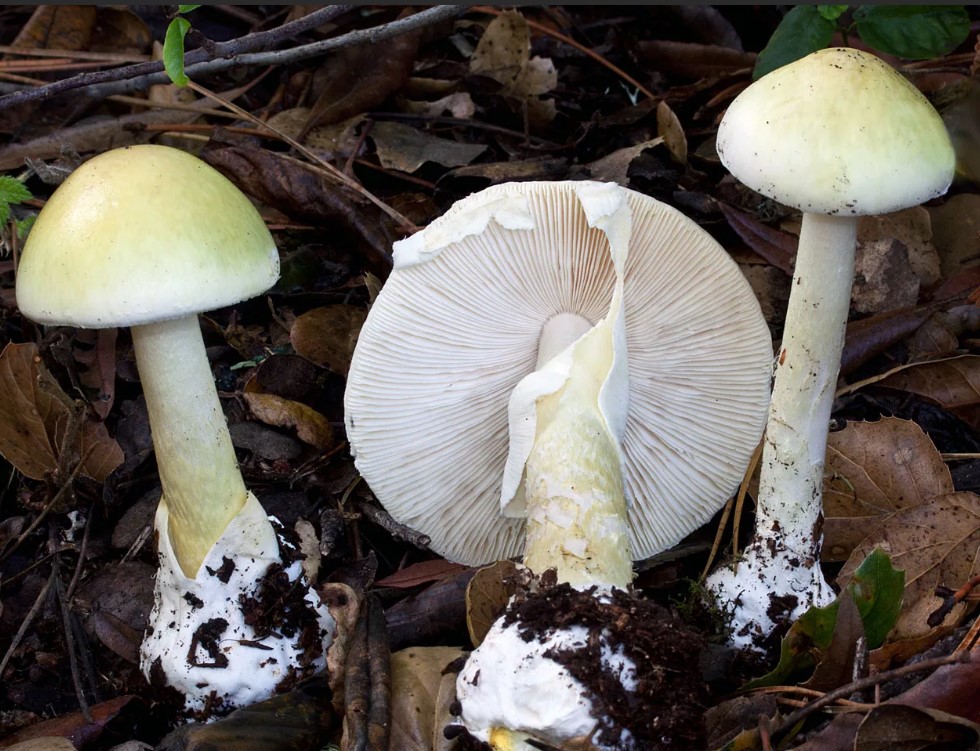
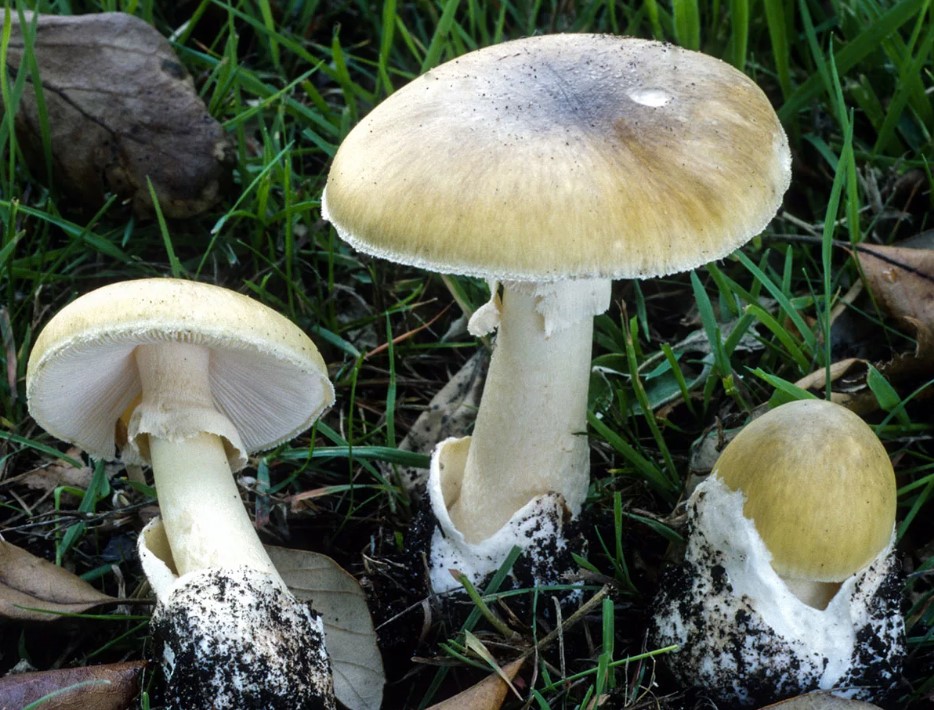
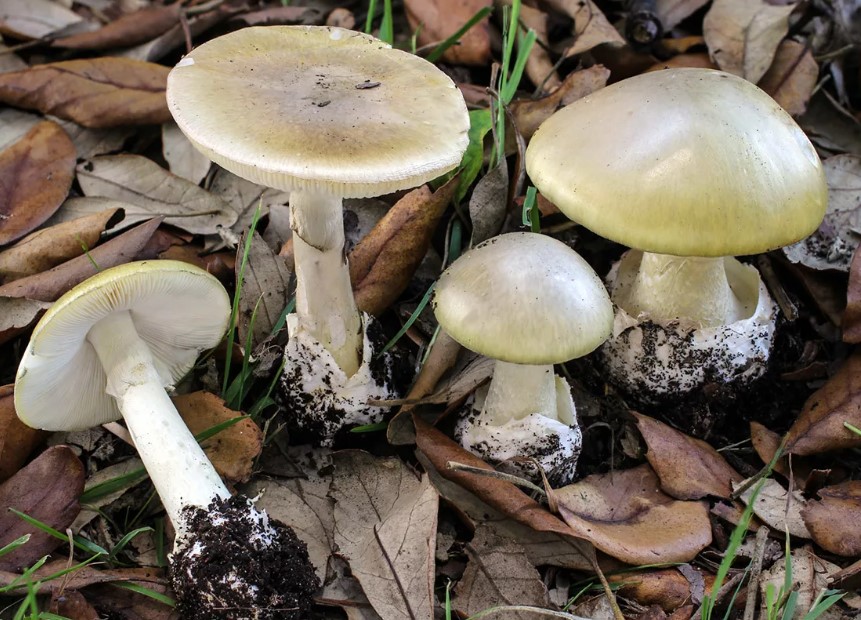
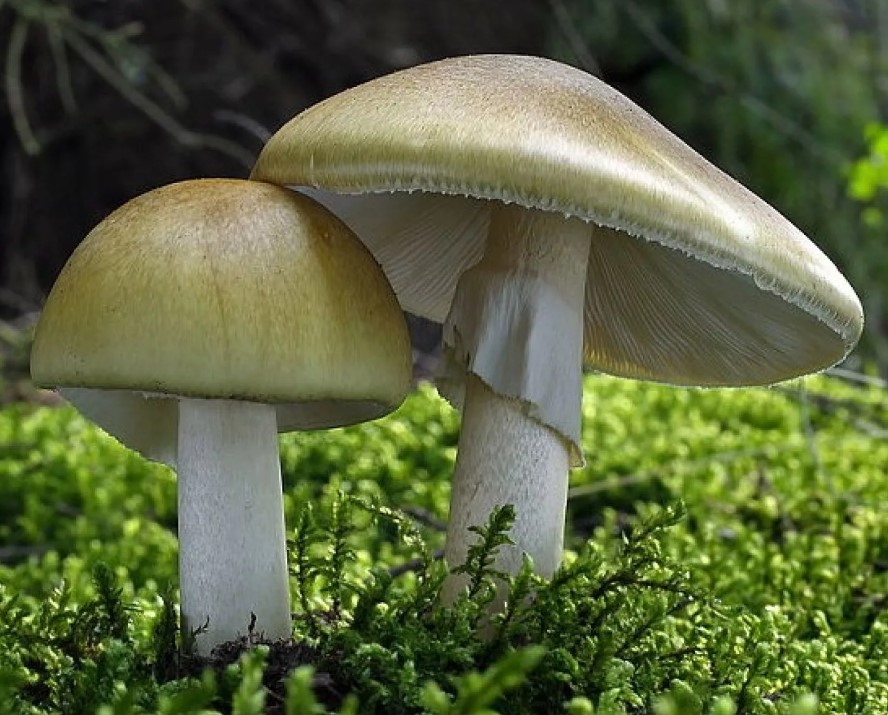
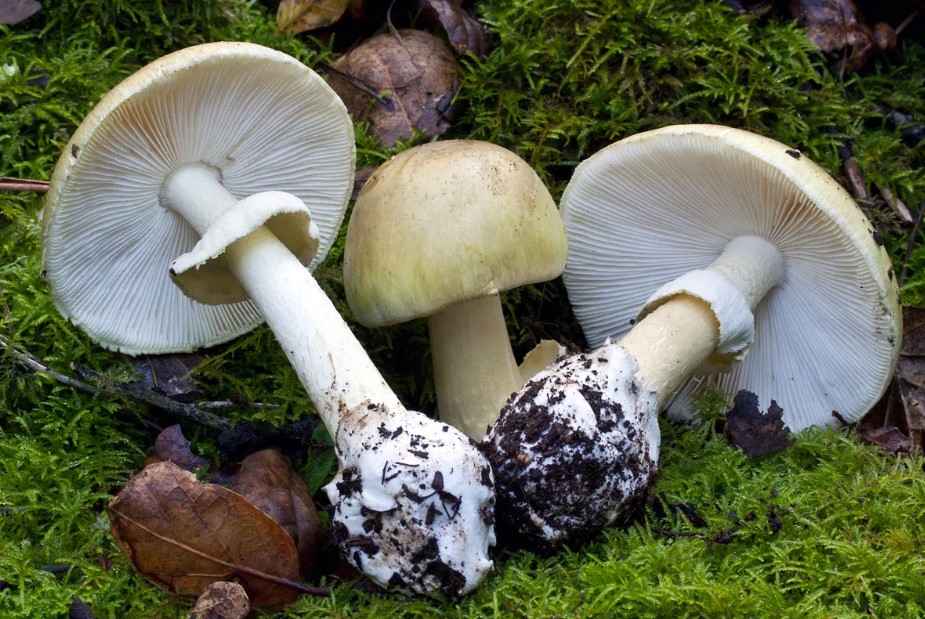
- Death cap. It can be distinguished by its lighter coloring; the flesh remains light when broken, and there is a characteristic ovoid thickening at the base of the stem.
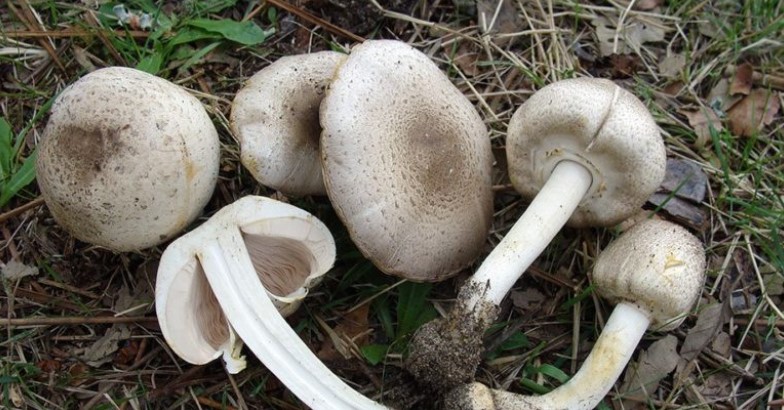
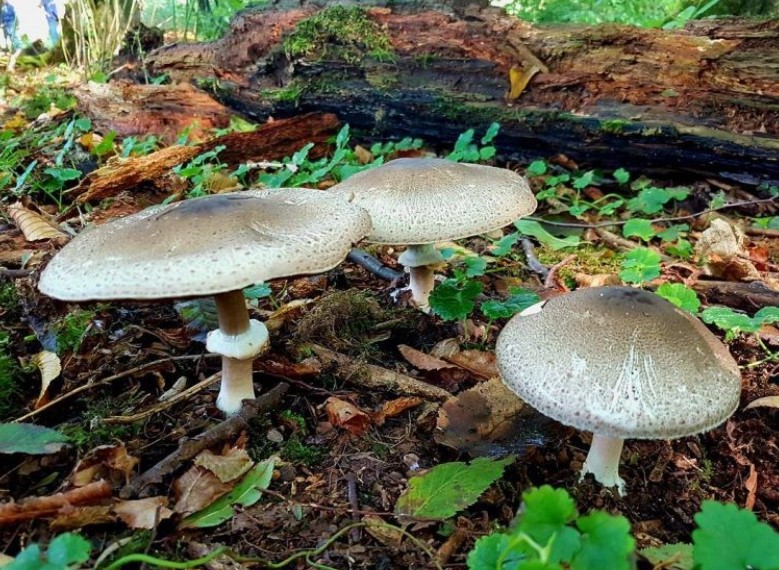
- Variegated champignon. The stem is uneven, the base is swollen, and the color is light with grayish specks. The flesh has a pungent odor and turns yellow where broken.
The benefits and harms of wild mushrooms
Wild champignons are widely used in folk medicine to combat tuberculosis, jaundice, skin diseases, and typhoid. In cosmetology, champignon extract is added to facial masks and serums. Furthermore, mushrooms contain a wealth of beneficial substances that have a beneficial effect on the body.
Only mushrooms harvested in ecologically unsafe areas can cause harm. This is because they quickly become contaminated with toxins from the soil. Such mushrooms should not be used for any purpose.
It is not recommended for children under 10 years of age, as well as people with chronic gastrointestinal problems, to consume mushrooms.
Cooking wild mushrooms: all the nuances and recipes
Before preparing wild mushrooms for food, they need to be prepared properly.
Processing wild mushrooms before cooking
All wild mushrooms go through several basic preparatory stages:
- Cleaning from sand and forest debris with a dry brush.
- Rinse under running water.
- Removal of damaged or wormy areas.
- Trimming the bottom of the leg.
- Cleaning the cap.
How to cook wild mushrooms
Mushrooms are cooked very simply:
- The mushrooms are sliced.
- Water is poured into a saucepan and brought to a boil.
- Mushrooms are placed in it so that they are all covered.
- Cooking time is 5 minutes.
How to fry wild mushrooms
To fry mushrooms, you don’t need to wash them for a long time; simply pour boiling water over the peeled champignons.
- Heat oil in a frying pan.
- Cut the mushrooms and place them in a frying pan.
- Fry over medium heat until the liquid evaporates.
How to marinate wild mushrooms
Marinated wild mushrooms are considered a delicacy.
Before cooking, the mushrooms are washed well, then boiled in boiling water for about 5 minutes.
Next, the mushrooms are placed in a saucepan, filled with 2 liters of water, and the marinade is prepared according to the following recipe:
- Vinegar 30% - 60 g,
- Allspice – 5 pcs,
- Black pepper – 10 pcs,
- Cloves - 4 pcs,
- Bay leaves – 2 pcs,
- Sugar – 1 tsp,
- Salt – 2 tsp.
Add all ingredients to the mushrooms and simmer for about 10 minutes. When the mushrooms sink to the bottom, remove them with a slotted spoon, cool, place in jars, and pour the marinade over them.
How to pickle wild mushrooms
Ingredients:
- Mushrooms – 2 kg.
- Currant leaves – 2 pcs.
- Bay leaves – 3 pcs.
- Cloves – 3 pcs.
- Dill umbrella – 2 pcs.
- Black peppercorns – 4 pcs.
- Salt – 100 g.
- Water 500 ml.
Method of preparation:
- Pour water into a saucepan and cook the chopped mushrooms in it for 10 minutes after boiling.
- When the mushrooms sink to the bottom, add spices.
- After the cooking time has elapsed, remove the mushrooms with a slotted spoon and place them in a colander.
- Once the water has drained, place the mushrooms in jars in layers, sprinkling with salt.
- Place a weight on top.
- When the brine completely covers the mushrooms, close the jars with lids and place them in the refrigerator.
Preserving wild mushrooms in different ways
Preserving wild mushrooms allows you to preserve their flavor and aroma for a long time. Let's look at the main methods for preserving mushrooms.
With dill
Ingredients:
- Mushrooms – 3 kg.
- Granulated sugar – 1 tsp.
- Salt (without iodine) – 150 g.
- Hot pepper – ½ pod.
- Garlic – 3 cloves
- Onion – 3 heads
- Dill seeds – 2 tbsp.
- Vegetable oil – 100 ml.
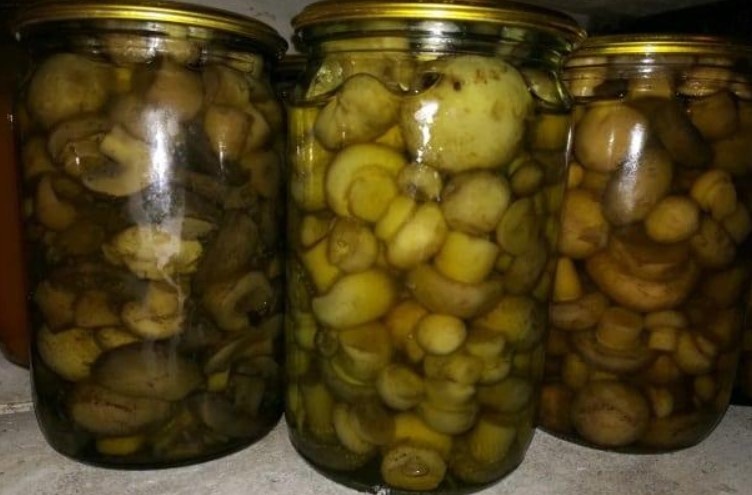
Method of preparation:
- Rinse the mushrooms with water.
- Pour water into a bowl, add salt and soak the mushrooms there for 1.5 hours, shaking the contents periodically.
- Cut the onion into rings, chop the pepper into cubes.
- Place garlic, dill, pepper and onion in layers in jars.
- Place the mushrooms on the bottom with the caps down.
- Then repeat the layers.
- Heat the oil, add sugar, stir and pour over the mushrooms.
- Roll up the lids, turn over twice and leave until ready for 1-2 days.
In tomato sauce
Ingredients:
- Mushrooms – 2.5 kg.
- Onions – 1 kg.
- Salt – 1.5 tbsp.
- Vinegar 9% - 3 tbsp.
- Tomato sauce – 500 mg.
- Vegetable oil – 100 ml.
- Ground black pepper – 0.5 tbsp.
- Ground garlic – 0.5 tbsp.
- Bay leaf – 2 leaves.
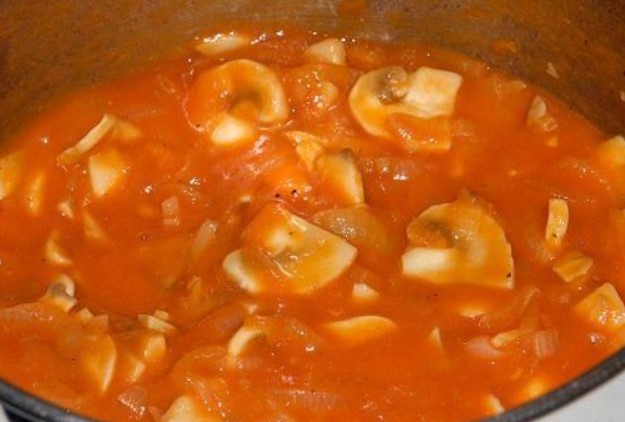
Method of preparation:
- Cut the onion into half rings.
- Pour oil into a frying pan and fry the onion until translucent.
- Add chopped and boiled mushrooms for 5 minutes, fry for 10-15 minutes.
- Add spices, pour in tomato sauce, bring to a boil.
- Reduce heat and simmer covered for 40 minutes.
- Add bay leaves and vinegar and simmer for another 20 minutes.
- Place the mushrooms and sauces in jars, roll up, turn over and cover with a warm cloth.
With horseradish
Ingredients:
- Champignons – 1 kg.
- Water – 150 ml.
- Sugar – 1.5 tsp.
- Salt – 2 tsp.
- Vegetable oil – 100 ml.
- Grated horseradish root – 3 tbsp.
- Vinegar 9% - 3 tbsp.
- Black pepper – 8 peas
- White peppercorns – 6 pcs.
- Garlic – 3 cloves
- Bay leaf – 1 leaf.
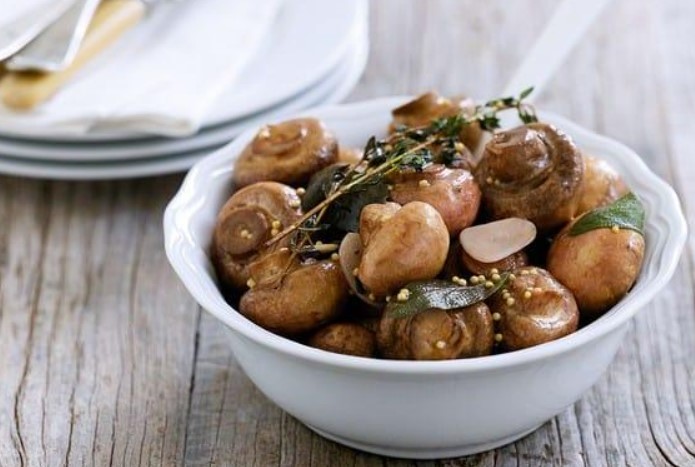
Cooking steps:
- Wash the mushrooms and clean them if necessary.
- Pour water into a saucepan, add sugar, salt, chopped garlic and boil for 3 minutes.
- Slice the mushrooms. Place them in the saucepan and simmer over low heat for 10 minutes.
- Cool, place in jars and roll up.
- Store in the refrigerator for no longer than 3 months.
How to dry wild mushrooms
Before drying mushrooms, don't rinse them thoroughly, let alone soak them. It's recommended to simply clean them with a cloth or brush.
The thickness of the pieces should not exceed 10-15 cm.
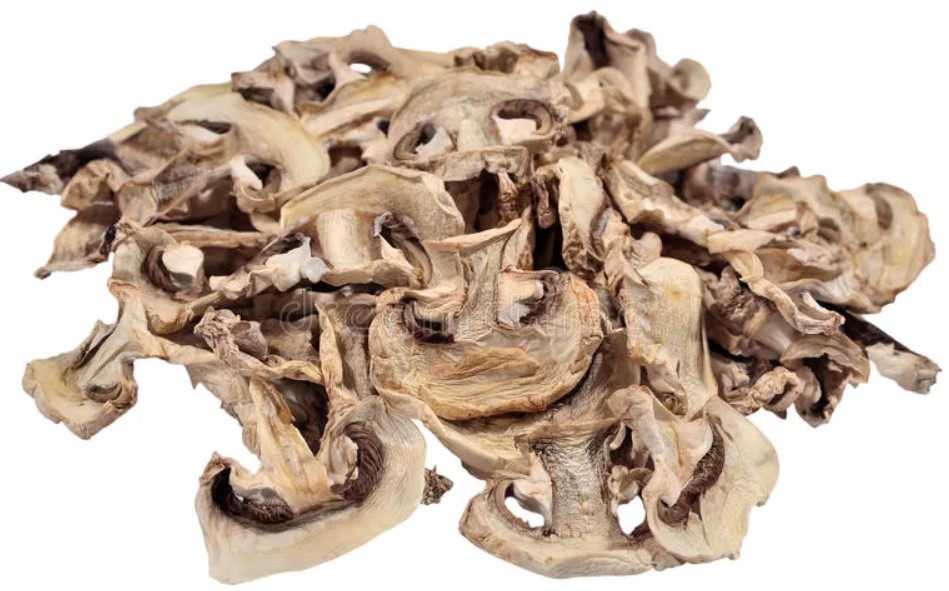
Mushrooms can be dried in several ways:
- Natural. Mushrooms are strung on a string and hung in the attic, or laid out on a dry, clean cloth in a well-ventilated, warm place.
- In an electric dehydrator. Mushrooms are placed on special racks spaced 1 cm apart. The drying power depends on the model and capacity of the unit.
- In the oven. Place the mushroom pieces in a single layer on a tray, set the oven temperature to 40-50 degrees Celsius, and leave the door slightly ajar. Turn the mushrooms every 3 hours.
It is recommended to store dried mushrooms in a cloth bag to prevent mold from forming.
How to freeze wild mushrooms
Before freezing, washed champignons must be dried to remove excess moisture.
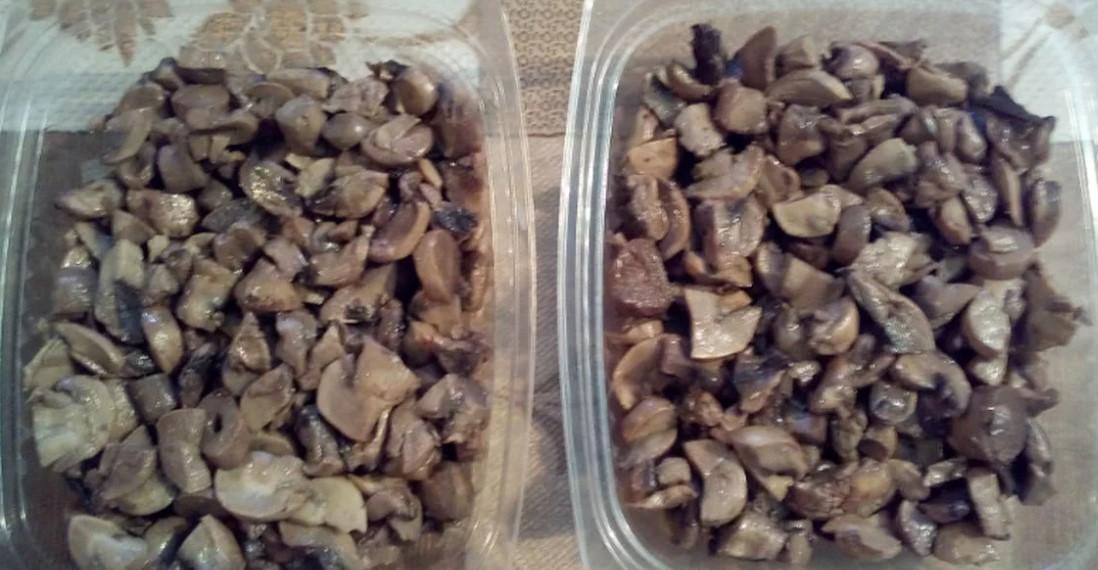
They can be frozen whole or sliced. Be sure to mark the preparation date on the package; fresh champignons will keep for up to a year. Defrosting is not required for cooking.
Recipes for cooking dishes with wild mushrooms
Let's take a look at three excellent recipes using wild mushrooms. We recommend trying them.
Soup
You can make a delicious and aromatic creamy soup with champignons. To make it, you'll need:
- Wild mushrooms – 250 g.
- Dried mushrooms – 10 g.
- Butter – 20 g.
- Onion – 1 pc.
- Garlic – 2 cloves.
- Cognac or brandy – 2 tbsp.
- Cream – 100 ml.
- Bay leaf – 2 leaves.
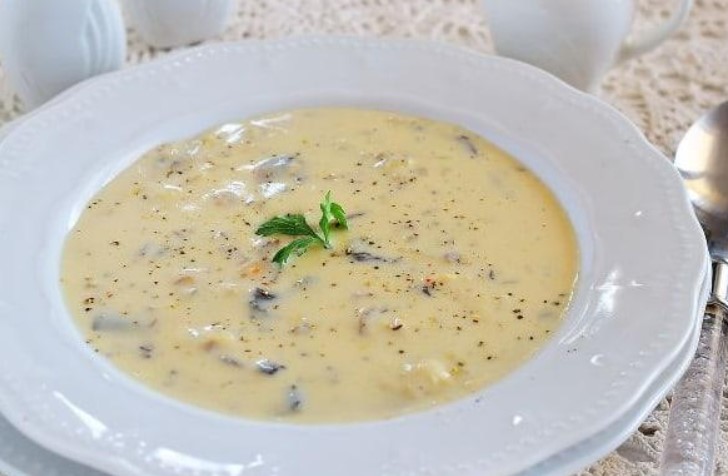
Method of preparation:
- Place oil in a frying pan, heat it and add finely chopped garlic and onion.
- Cut the mushrooms, place them in a frying pan with the onion and garlic, and fry until the liquid evaporates.
- Add cognac and simmer until it evaporates.
- Add salt, pepper, stir and remove from heat.
- Soak dried mushrooms for 1 hour, place in a pan with boiling water.
- Add the mixture of mushrooms and vegetables there, add bay leaves.
- Bring to a boil and cook for 30-40 minutes.
- After the time has elapsed, remove the pan from the heat, remove the bay leaf and mix everything with a blender.
- Add cream and simmer for another 5 minutes.
Julienne
This dish came to Russian cuisine from France and is very easy to prepare. It's best to use individual serving dishes, but many cooks have adapted julienne for larger baking sheets.
Ingredients:
- Champignons – 200 g.
- Butter – 1 tbsp.
- Onion – 1 pc.
- Hard cheese – 50 g.
- Cream – 150 g.
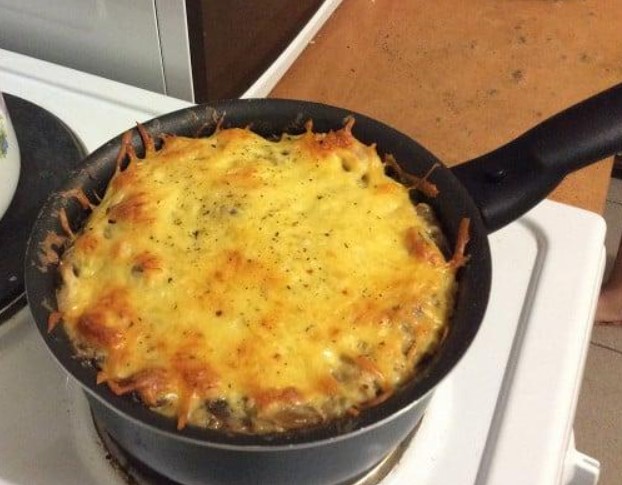
Method of preparation:
- Chop the mushrooms and boil for 5 minutes in boiling salted water.
- Cut the onion into small slices and fry in a frying pan with heated oil.
- Add mushrooms there and fry until the water evaporates.
- Pour the cream into the pan, add salt and pepper.
- Stirring constantly, simmer over low heat for 5-7 minutes.
- Place the julienne into the moulds, sprinkle with grated cheese and place in an oven preheated to 180 degrees for 7 minutes.
Classic recipe
The most popular way to cook champignons is to stew them in sour cream or cream.
Ingredients:
- Forest champignons – 1 kg.
- Butter or ghee (for frying) – 2 tbsp.
- Onions – 2 pcs.
- Cloves – 2-3 pcs.
- Cream or low-fat sour cream - 1 tbsp.
- Greens – to taste.
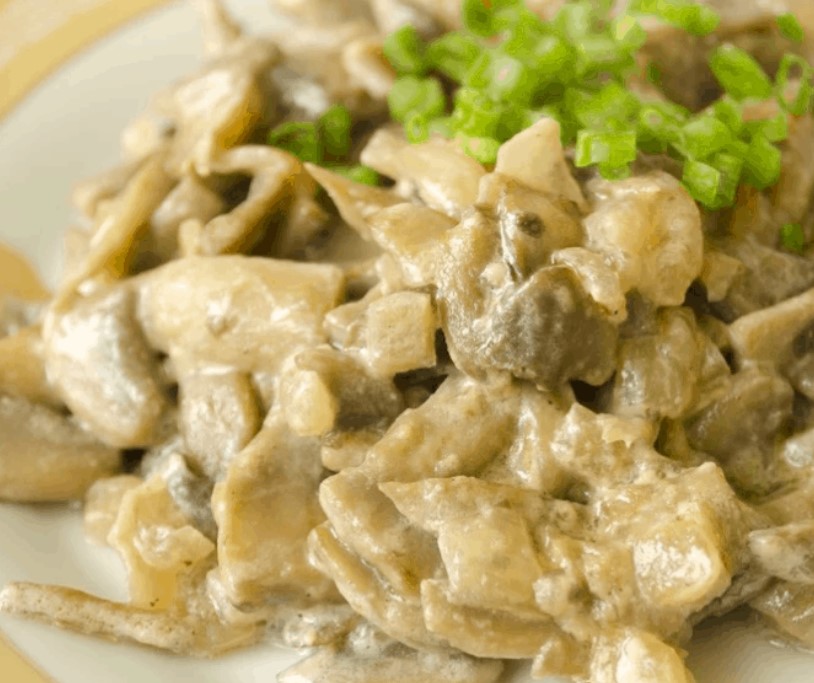
Cooking steps:
- Cut the mushrooms into pieces and boil for 5 minutes in salted water.
- Chop the onion and fry in heated oil until golden brown.
- Add mushrooms to it and fry until the liquid evaporates.
- Pour in sour cream or cream and bring to a boil.
- Add cloves, herbs and simmer for 10-15 minutes, stirring occasionally.
Interesting facts about the wild mushroom
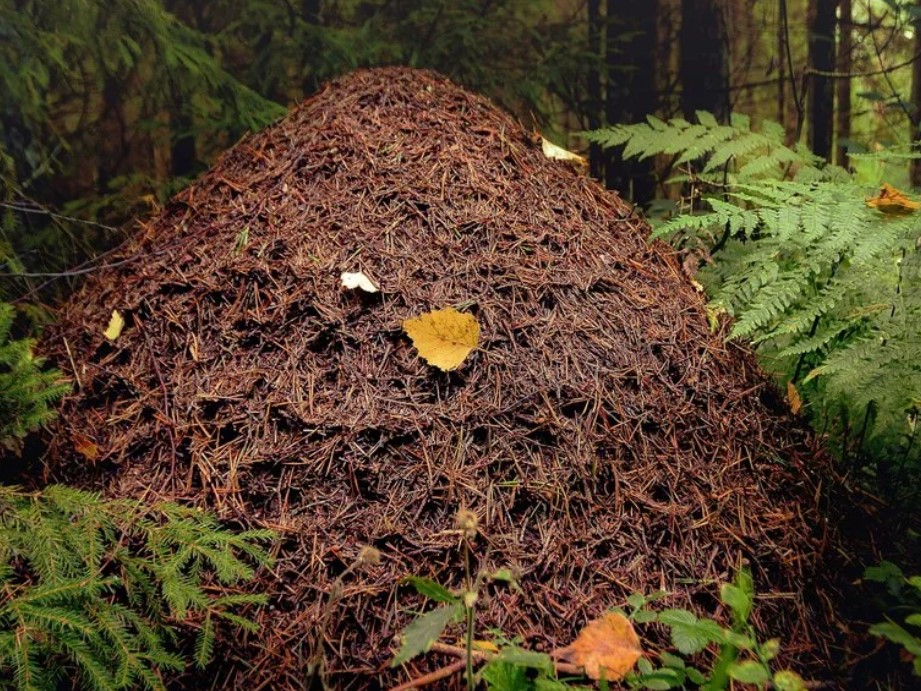
It turns out that humans aren't the only ones who have learned to cultivate mushrooms artificially. Many ant species, particularly South American ones, remove pieces of compost from the mycelium and place them near their habitat. But they aren't interested in the fruiting bodies themselves. On the contrary, the ants prevent them from growing by nibbling on the hyphae. This nibbling results in the formation of a growth—a small tuber rich in protein. This is what provides the insects' primary nutritional value.
Mushroom pickers' reviews of wild champignons
The cap is up to 10 cm in diameter (usually less), from hemispherical to flat, not very fleshy, covered with characteristic brownish scales on a lighter background.
The edge of the cap can be either smooth or pubescent.
The plates are pinkish-gray, darkening to brown with age.
The stem measures up to 10 x 1.5-2 cm, bulbous at the base, and ranges from grayish to dirty beige, with a light patina. The ring is prominent but rather fragile.
It has a pleasant mushroom scent and turns intensely red when damaged.
It inhabits coniferous (primarily spruce) forests. It is common in central Russia and is abundant in some areas.
An excellent edible, and most importantly, truly tasty mushroom, with a real mushroom aroma, not some kind of aniseed one.
Closest appearance: Agaricus phaeolepidotus, a warmer-colored mushroom found in deciduous forests that has an unpleasant iodine odor (considered inedible).
All this is true, the champignon mushroom is certainly wonderful, but I'm personally a bit wary of picking it because I might confuse it with poisonous champignons. At least, I'm not trained to spot them. Here's a link for comparison... they're very similar; you can see that the field, common, and yellowing champignons are very similar. I can't see any difference, and there's a risk of picking a toxic one. Also, it seems to me that this is a field champignon (pictured in Vovan's post), while the common champignon looks slightly different... I might be wrong, but when comparing photos online, in various sources, and in reference books, that's the case.
The second type of champignon that I encountered this past year was the forest champignon AGARICUS SILVATICUS. The mushroom is also called BLAGUSHA.
I first encountered it in the Chibiysky pine forest and immediately recognized it by its characteristic features: a scaly cap and reddened flesh.
The diameter is from 4 and often up to 15 cm. In young mushrooms it is spherical, later convex, and by maturity it is flat-spread, but the fibrous surface of the cap, especially in the central part, is covered with large brown scales, which makes the mushroom appear darker.
The plates are initially white, then reddish and finally dark brown.
Flesh: Light-colored, quickly and clearly reddens when cut or broken; pinkish-brown spots remain over the entire surface of the mushroom when pressed with fingers. Sweetish taste. Smell is sour, pungent, and pleasant.
It grows primarily in coniferous forests (it's often said that it grows with spruce, but I don't think we have any spruce trees here). It loves anthills.
They write that it can also be found in deciduous forests.
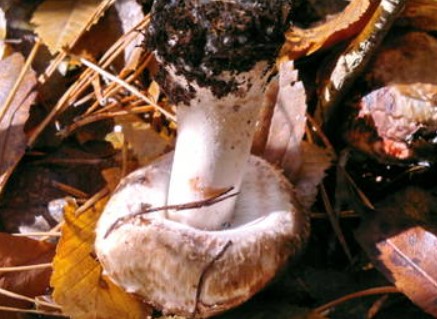
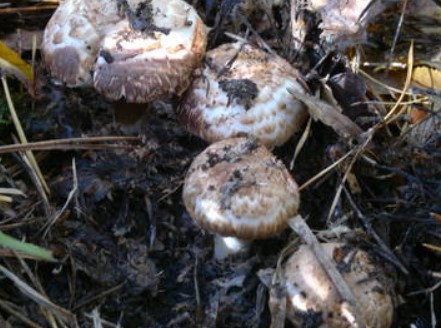
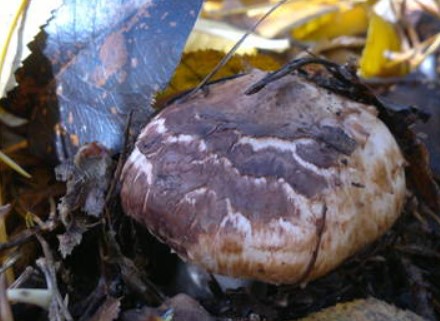
These forest champignons are a little younger, but next to the nest
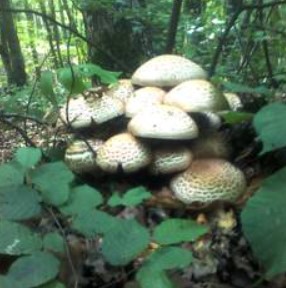
The difference between a field and a common champignon is the length of its stem. The field champignon has a yellowish tint, but to a lesser extent than the wild champignon! The wild champignon is darker with a more scaly cap! And the poisonous yellowing champignon has an unpleasant odor and turns yellow when pressed and at the base of the stem when broken! Go for it, the difference between an edible champignon is its very pleasant smell, and different types grow at different times. For example, the wild champignon grows primarily in spruce forests and only in August-September... and so on.