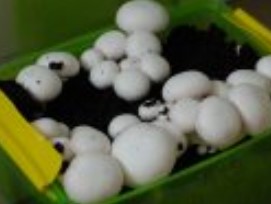
Champignons are considered one of the most easy-to-grow mushrooms. They can be grown at home without spending a lot of money or resources.
Content
- 1 Choosing a type of mushroom for growing in a greenhouse
- 2 The premises required for growing champignons at home
- 3 Preparing the substrate for sowing
- 4 Selecting champignon mycelium for sowing in a greenhouse
- 5 Sowing champignon mycelium
- 6 How to care for champignon mycelium
- 7 Harvesting greenhouse-grown champignons
- 8 Growing mushrooms in a greenhouse as a business
- 9 The best varieties of champignons for growing in a greenhouse
- 10 Reviews and tips on growing champignons from experienced mushroom pickers
Choosing a type of mushroom for growing in a greenhouse
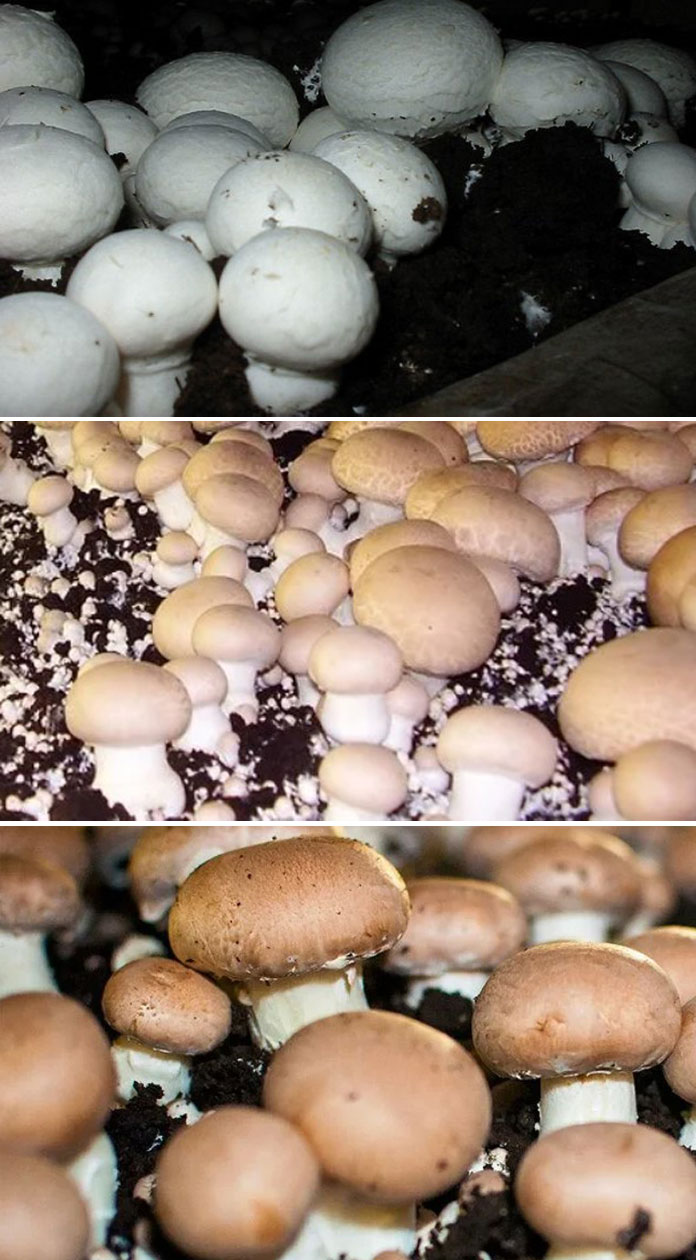
There are three main varieties of champignons: brown, cream, and white. The latter is considered the best choice for home growing, despite being more demanding in terms of care. However, it has a much better flavor and a much higher yield.
The premises required for growing champignons at home
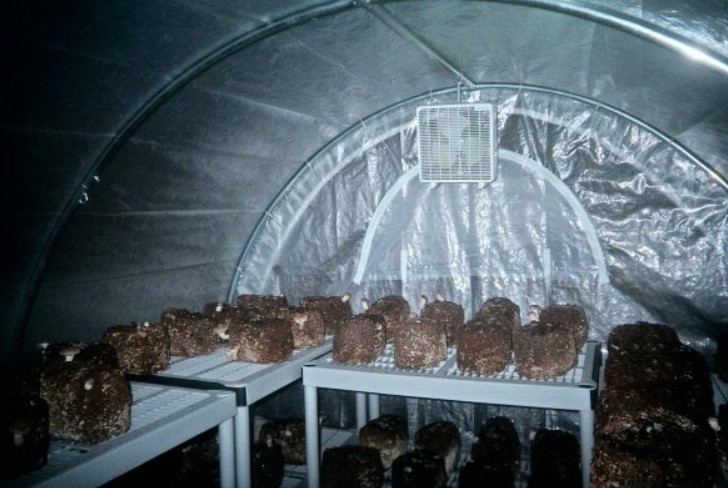
At home, you can choose any suitable space for growing. This could be a basement, cellar, shed, greenhouse, or even a glassed-in balcony. The main thing is that the chosen location meets the following criteria:
- The area must be at least 3 sq.m.
- There should be no drafts, but good air circulation is provided.
- The ability to control air humidity and temperature.
- Possibility of carrying out disinfection treatment without damaging the finish.
Preparing the substrate for sowing
A very important point when growing champignons is the preparation of a high-quality substrate.
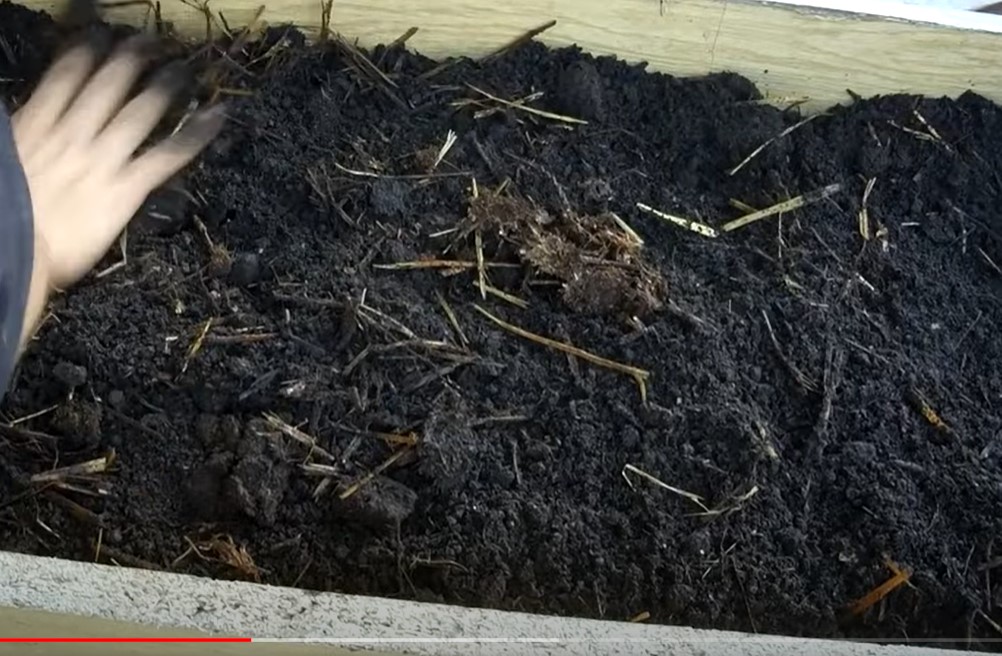
You can buy a ready-made mixture, but it is quite possible to make it yourself from the following ingredients:
- 1 part chalk, plaster or eggshell;
- 1/3 of old leaves;
- 1/3 part of leaf soil;
- 1/3 part sifted ash;
- 1/3 of old branches, straw or sawdust;
- 1/5 part of wheat grains;
- 1/5 part turkey manure;
- 1/5 part phosphates;
- 1/5 of the tops.
Turkey manure can be purchased at a specialty store. If it's unavailable, you can substitute any other manure, adding urea, which contains the nitrogen needed for mushrooms.
All organic matter in the soil must be disinfected, for example, by scalding with boiling water or treating it with a weak solution of potassium permanganate. If this step is ignored, mold will likely develop in the soil mixture, and a harvest will be impossible.
Selecting champignon mycelium for sowing in a greenhouse
High-quality mycelium can only be purchased from a trusted manufacturer; otherwise, you risk buying a counterfeit and losing your harvest.
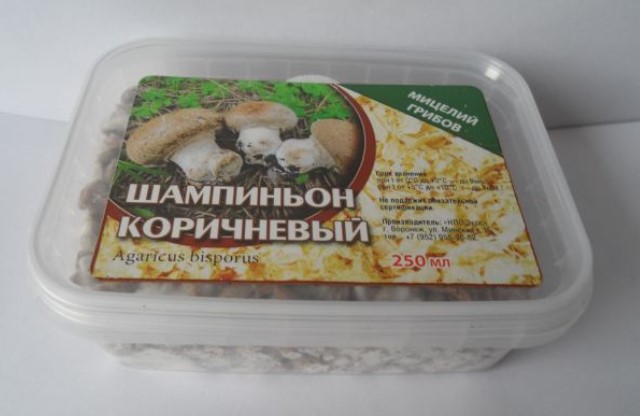
When choosing mycelium, pay attention to the type of mushroom. Brown mushrooms produce less, but they tolerate different growing conditions better. White mushrooms are the most delicious and tender, but are more demanding.
There are two types of mycelium for mycelium:
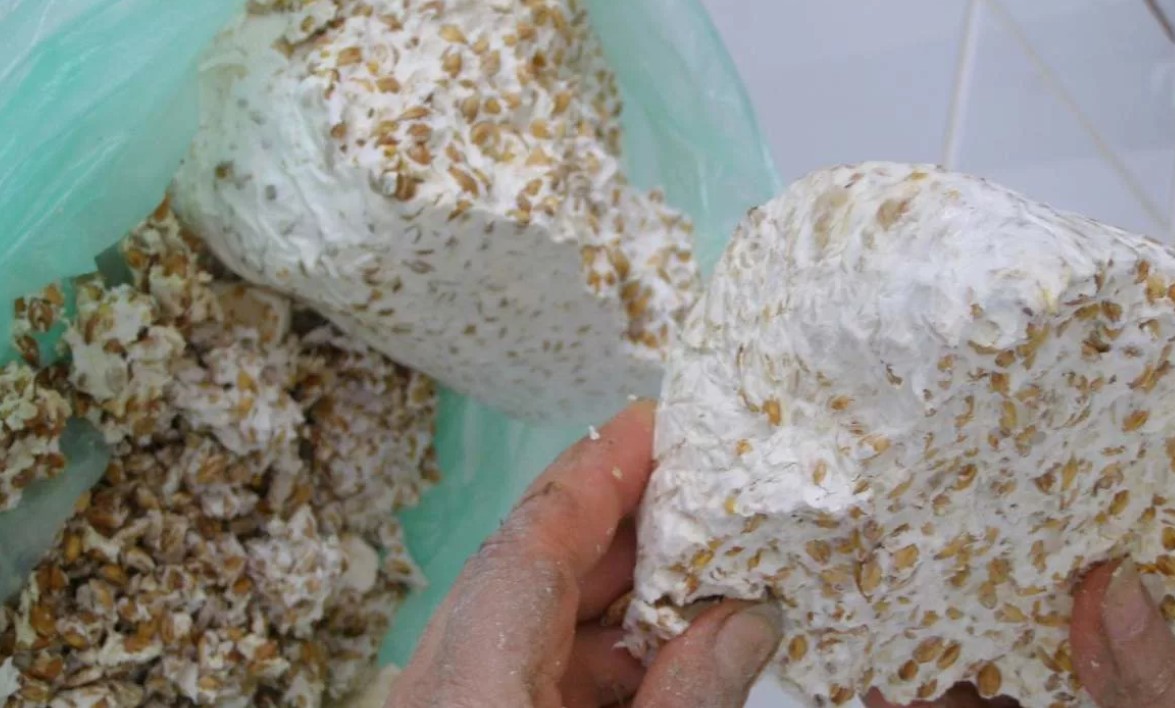
- Grain - packaged in bags, shelf life is short - 6 months at a temperature of 0 to 4 degrees.
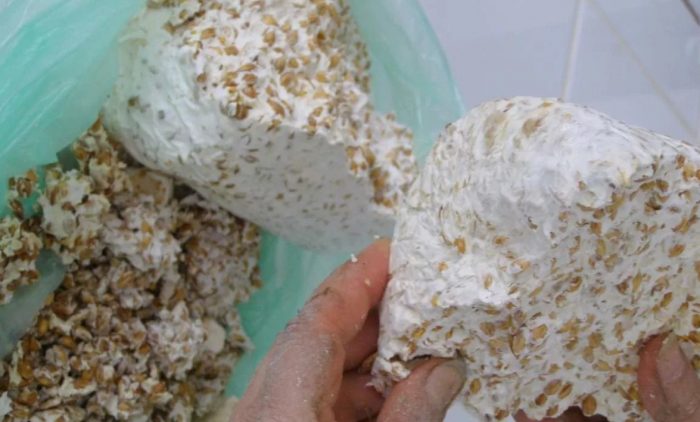
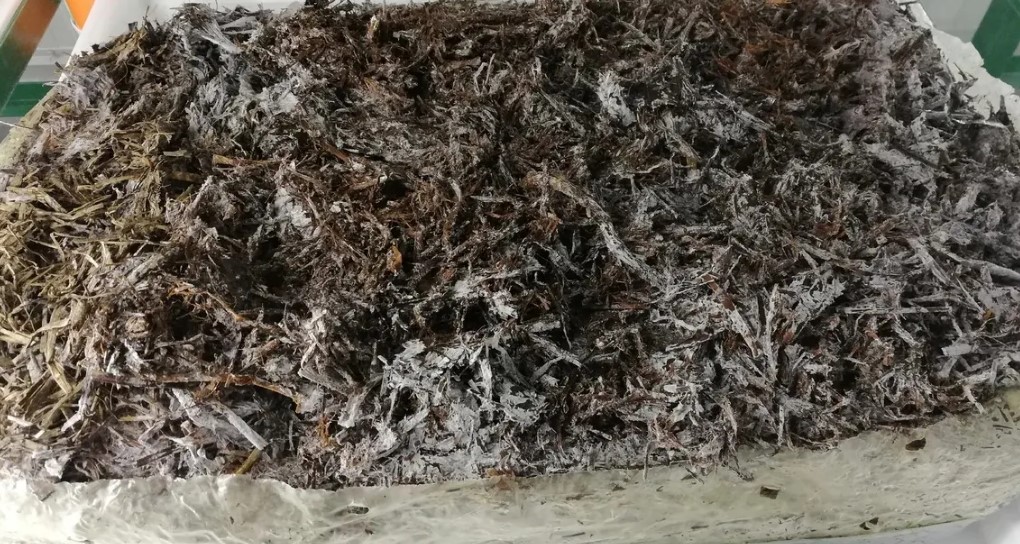
- Compost – packaged in glass containers, tolerates temperature changes well, but has a lower yield.
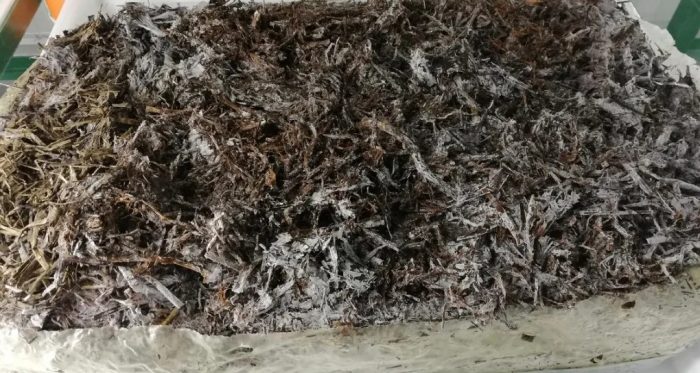
If you can't purchase prepared mycelium, you can collect it in the wild. To do this, find mushroom growing areas in the forest, identify a patch of soil with bluish mycelium, carefully cut it off, and transport it intact to the planting site.
You can collect mushroom spores and make mycelium at home. To do this, take mature, healthy mushrooms, separate the spore-bearing layer from the pulp, and infuse it in oatmeal, carrot, and wort agar.
Sowing champignon mycelium
Sowing mycelium is not difficult even for beginners.
- The substrate is poured into prepared and pre-disinfected containers.
- Watering is carried out with water at room temperature.
- Holes 4 cm deep are made in the substrate at a distance of 15-20 cm from each other.
- Mycelium is placed in them and covered with soil on top.
How to care for champignon mycelium
Maintaining the right humidity and temperature is crucial when growing mushrooms. The first watering is done three days after planting the mycelium.
- During the entire period of mycelium growth, it is necessary to maintain the temperature at 23-25 degrees.
- During crop formation, the temperature should be kept at 14-18 degrees.
- The humidity in the room must be high, for this purpose the substrate is watered regularly.
Mycelial germination occurs within 7 days. Initially, a white web forms underground, then its threads begin to approach the surface. It can be seen after about 3 weeks.
During the period of mycelium development, it is necessary to provide access to oxygen, because mushrooms actively absorb it, releasing carbon dioxide.
To enrich the soil with oxygen, it's necessary to regularly loosen the substrate. This must be done with extreme care to avoid damaging the mycelium.
Harvesting greenhouse-grown champignons
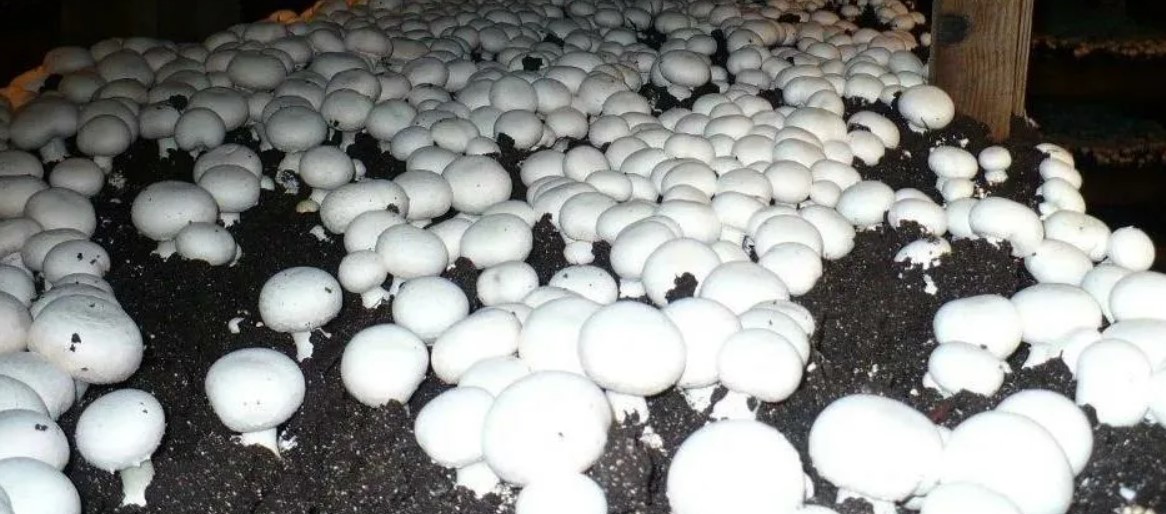
Thirty to forty days after planting the mycelium, the air temperature in the room where the mycelium is located drops to 14-18 degrees Celsius. This stress forces the mycelium to shed its first caps containing spores. Later, mushrooms will begin to develop rapidly from these fruiting bodies. When harvesting, it's important to remember that most of the stem is hidden underground. Leaving it there after harvesting will cause rotting. Therefore, the mushrooms are carefully removed from the soil, being careful not to damage the mycelium.
When mushrooms appear en masse on the surface, the entire harvest must be harvested, otherwise the mycelium will not produce new caps. Even the smallest mushrooms must be collected.
How dry champignons Read on our website.
Growing mushrooms in a greenhouse as a business
Many entrepreneurs are turning mushroom growing into a profitable business. Below, we'll explore the return on investment and all the nuances of this venture.
Business plan
When developing a business plan, the following factors must be taken into account:
- Is there a suitable premises available?
- What equipment is available and what will need to be purchased?
- Will hired workers be involved?
- Mycelium will be purchased or made independently.
- Where will the soil mixture come from?
- How many competitors are there in the area/region?
- What distribution channels are available or can be used?
The Pros and Cons of Growing Mushrooms as a Business
Mushroom growing, like any other business, has its pros and cons. These are listed in the table below.
| Pros | Cons |
|
|
Calculations (income and expenses)
Let's make calculations based on the available planting area of 200 sq.m.
At the initial stage, the following equipment is purchased:
- Shelves – 40,000 rubles.
- A substrate block forming line. This will speed up the process of soil mixture disinfection, mycelium seeding, and briquetting – 230,000 rubles.
- Automatic climate control system – RUB 150,000.
- Air conditioning system – 100,000 rubles.
- Additional fans (power not less than 170 W) – 45,000 rubles (3x15,000 rubles)
- Supply and exhaust ventilation (power not less than 0.5 kW) – RUB 25,000.
- Equipment for washing, processing, and blanching mushrooms – RUB 220,000.
- Packaging machine – 140,000 rubles.
- Refrigeration chambers (power not less than 300 W) – 100,000 rubles (5x20,000 rubles)
The total initial costs are 1.05 million rubles.
- When developing a business plan, variable costs must also be taken into account. These include:
- Substrate. The cheapest option is to purchase a ready-made mixture and then use the equipment to disinfect and inoculate the mycelium. The price is 7,000 rubles per ton, and 20 tons are required, for a total cost of 140,000 rubles.
- Mycelium. For an area of 200 square meters, you'll need 160 kg of mycelium. The wholesale price is approximately 1,000 rubles, bringing the total cost to 160,000 rubles.
- Electricity – about 300,000 rubles.
- Carbon dioxide fertilization – 10,000 rubles per year.
- Air filters – 30,000 rubles (2x15,000 rubles)
The total cost is 0.64 million rubles.
Fixed costs include:
- Labor costs for hired workers. Assuming four people will be responsible for plantation maintenance, each earning 50,000 rubles, the fund will total 2.4 million rubles.
- Advertising campaign costs: RUB 300,000.
The total cost is 2.7 million rubles.
As for revenue, it directly depends on the yield. A 200 square meter plot can yield 24 tons of mushrooms, taking into account six fruiting waves. If the harvest is fully sold, the profit for one year will be approximately 4.2 million rubles.
Subtracting the variable and fixed costs leaves a total of 0.86 million rubles. Therefore, the project will break even in the second year.
How grow oyster mushrooms Read on our website Top.tomathouse.com.
The best varieties of champignons for growing in a greenhouse
Among the champignons for cultivation, there are three main types:
- Porcini mushrooms have thin skin and are light in color. They require precise growing conditions, as they are considered quite finicky. They are known for their high yield.
- Cream – have a characteristic color, the skin is slightly denser, the yield is average
- Brown ones grow in a wide variety of conditions, have thick skin, tolerate temperature fluctuations well, but the yield is low.
Mushrooms are particularly suitable for commercial cultivation. Modern growers build specialized greenhouses for them, equipped with stove, electric, or gas heating. After the mushroom season ends, they can be used for growing vegetables.
You know, Which is better: oyster mushrooms or champignons?We answer this question on our website.
Reviews and tips on growing champignons from experienced mushroom pickers
Sometimes you have unused patches of soil in your greenhouse or hotbed. It's a shame to leave them unseeded, but there's always a solution. These patches can be used for planting mushrooms.
Greenhouse spaces, such as pits or vestibules, are usually empty. This is precisely where mushrooms can be grown. They are undemanding and prefer shade; direct sunlight is harmful. And these dark spots are the ideal place for their growth. Mushrooms require specific humidity and temperature conditions.
Composted mycelium can be purchased at specialty stores or from amateur mushroom pickers. To properly cultivate the soil, you need to make compost. To do this, take 100 kilograms of straw or grass, 300 liters of water, 300 grams of urea, 50 kilograms of manure (preferably horse manure), 3 kilograms of gypsum, and 300 grams of superphosphate.
Layer the straw and manure on the roofing felt bedding, moistening each layer. Turn the pile every four days, repeating this process four times. Add other additives the first time you turn it, and moisten the pile the next time you turn it. After the final turning, let the compost sit for another two to three days. Store the resulting compost in boxes or plastic bags. When planting the mycelium in a greenhouse, the temperature should be between 12 and 30 degrees Celsius. If the temperature is too high, the mycelium will die, and if it's too cold, it won't grow.
Spread the mycelium evenly over the surface and bury it to a depth of 5-7 centimeters. Compact the top layer and cover with paper, keeping it constantly moist. Moisten the greenhouse floor as well. When, after 2-3 weeks, the mycelium begins to grow into a silvery web, reduce the temperature to 15 degrees Celsius and sprinkle a layer of peat and limestone on top. Three weeks after filling the beds, you will be able to harvest your first mushroom crop. Water them very carefully, avoiding overwatering. Mushrooms tolerate drought much better than overwatering.
After several mushroom pickings, the mushroom season begins to decline, then picks up again. When the mushrooms are fruiting, maintain the greenhouse temperature at around 15 degrees Celsius. Harvest the mushrooms when they are fully ripe, specifically when they have a film on the inside. If you have your own garden, don't throw away the used compost.
It's also suitable as a fertilizer for other crops on your plot. Never reuse compost for growing mushrooms, as it may contain pathogens for various dangerous diseases.
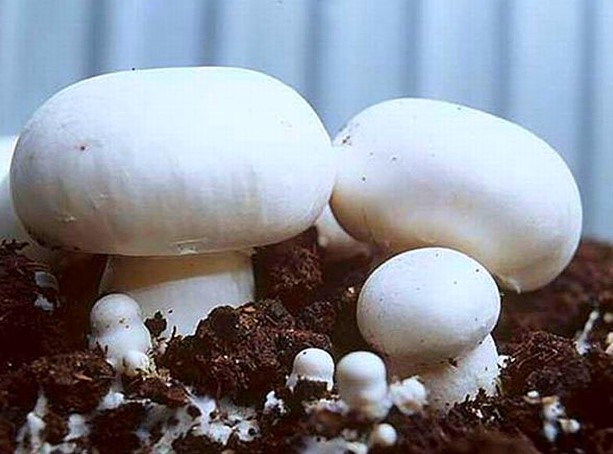
I grew mushrooms. Lots of hassle (with compost and everything else), they're very finicky... It's hard to make a real profit.
A friend of ours grew oyster mushrooms. They can be hung 3 meters high in a small space on plastic bags. The main thing is that there are no problems with sales. Those who sell mycelium provide a list of buyers right away; you let them know when the harvest is, and they'll come straight to you. I'll definitely be doing this starting next year.
And another important point: the spent substrate (sawdust infused with mycelium) becomes feed for pigs – a freebie!
Mushrooms are difficult to grow; they're not like oyster mushrooms or honey mushrooms. But it's certainly possible. It's good to have permanent structures, because temperature control is crucial for mushrooms. The mycelium grows best at 25°C (77°F), but when the fruiting bodies are growing, it's best to maintain a temperature of 15°C (59°F) to 17°C (59°F). Higher temperatures will cause the mushrooms to deviate from their ideal structure (the stems will become elongated).
When temperatures drop below the standard, growth is stunted, and the mushrooms become dense and low. The second requirement for the premises is ventilation. It should allow for good air exchange, but avoid drafts and temperature fluctuations. Mushrooms can grow in the dark. Cowsheds... that's good, but they'll need to be further equipped and divided into sections.
Otherwise, barns are well suited for mushroom cultivation, provided the requirements outlined above are met. And don't forget about disinfection... Incidentally, the humidity will be high, so drainage for liquids will be necessary.
In special mushroom houses for this purpose, the floors are made of concrete.
Mushrooms grow best on horse manure (it should be fresh, preferably two weeks old); for a 10-15 m2 bed you will need a ton of manure and straw up to 5-20% of the substrate volume.
You can replace horse manure with sheep or pig manure. The latter must be pasteurized and enriched. Other types of manure are not suitable. So, as for the feed base, decide for yourself whether it will work or not. You can also use chicken manure mixed with straw, but the results will be less favorable.
Personally, I've never grown mushrooms, and I don't consider myself a gardening expert of that caliber. But my mom says there's nothing particularly difficult about it.
The most unpleasant part is preparing the substrate. In a separate container, mix 50 kg of manure (cow or horse), add 12-13 kg of gypsum, the same amount of lime, and 1.5 kg of urea.
This pile must then be watered, compacted and covered with film, and left for 17-20 days to “mature”.
Once the ammonia smell disappears, you can move the substrate to its permanent growing location. If it's in a cellar, it's a box, but the mother grows in the ground. She digs trenches about 35 cm deep.
The mycelium itself is sold in packages; instructions for planting it in a prepared spot are provided in the instructions. After about two weeks, when a white coating appears at the planting site, sprinkle it again with a light dusting of loose soil.
The air temperature should be no higher than 20 degrees Celsius, and the humidity should be at least 50%. Therefore, it's best to plant in late August or early September, as this will allow for several harvests. Watering is best done with a spray bottle to prevent the soil from becoming compacted. Basically, that's all you need to pickle the vegetables for yourself or freeze some for future use.
The most important thing is the space. If you're building a mushroom business, you need plenty of space—at least 100 square meters. We had a simple solution at the time, as we live in a private house, and we converted an old cowshed to suit our needs. Mushrooms require a temperature of 12°C, good ventilation, and 80% humidity.
Mushrooms don't require much lighting. Growing mushrooms at home in such conditions would require constant renovations; a separate room is the only viable option! The main equipment we needed for growing mushrooms was a fogger; it maintains humidity at the right level and disinfects. We didn't create a business plan for growing mushrooms, but rather solved problems as they arose.
The most important thing is compost. You can make it yourself, but we decided to buy ready-made compost instead of experimenting, afraid to ruin everything due to our inexperience. We placed it in boxes (30 cm deep), measured the temperature with a thermometer, and added the mycelium when it reached 26°C. We waited over a month for the first harvest. The cultivation took two months; you can do 5-6 such cycles a year. We settled on small volumes, but this way, we can increase the yield to an industrial level.
You definitely can't sell that many mushrooms in one place, but if you negotiate with sellers at different locations and sell in small quantities, it's easy. However, there will be transportation costs, which will increase the price of the product. In any business, you first need to assess the market. It doesn't necessarily have to be a market; restaurants, cafeterias, etc. are also viable options. Then, get down to business. Champignons are in high demand, and sales shouldn't be a problem unless you're selling in large quantities.
From a friend's experience. Learn from your mistakes, so to speak... He rented a former cowshed and sealed it: insulated the gates, installed windows, and insulated it... In short, he built a huge (like a mushroom farm) growing facility; all that was left was to pack them in bags and set them up on the floor throughout the mushroom farm. He installed one powerful fan for the entire farm, drawing fresh air into the room and ensuring circulation... He also made compost from cow manure.
I built manure piles (outdoors, on a concrete pad), turned them three times at three-day intervals, and "pasteurized" them outdoors in the piles. I packed the resulting compost into 15-20 kg bags and lined them up in rows indoors. I seeded the bags with mycelium, piercing the holes with rebar stakes. I covered them with peat after a couple of weeks, watered them, and performed a "cold shock"... We harvested 200 kg!!! of mushrooms... instead of at least 15,000 kg (10% of the compost's mass).
Well, I decided it was the large space and the cow manure—nobody uses either of those anywhere—that was to blame. I divided the space into small mushroom farms, each 100-150 meters in size, and made compost from liquid chicken manure purchased from a nearby poultry farm and fresh wheat straw. I got a yield of about 4% (of the compost's mass; at least 20% is considered the norm these days). I called in a specialist, who paid attention to the watering.
We watered from a watering can... dripping... And he says he needs to water with pollen!!! But it's not just about watering. The level of preparation of the room, ventilation, recirculation, etc. The reasons for failure are poor compost and poor watering (improper watering). We experimented for a couple more years with varying success. I came to the following conclusions: 1. You need to buy compost from those who know how to make it or learn how to make it yourself. 2. Half-prepared rooms don't guarantee a harvest—you need to be prepared for all the temperature, humidity, and ventilation conditions required for growing mushrooms. 3. Mushroom diseases must be properly combated; "inadequate disinfection" here can be fatal for the current or future harvests. 4. Mushroom mycelium should also be purchased from those who know how to make it and make it reliably. 5. If you decide to make compost yourself, make a pasteurization chamber or prepare a mushroom house for pasteurizing compost indoors.
The heat chamber (pasteurization chamber) must meet the requirements necessary for compost pasteurization. For example, what's wrong with the compost? He dug a hole, filled it with concrete, installed a slatted floor for ventilation and recirculation, built a ventilation room on the side, and installed a snail fan there. It provided ventilation and recirculation. Heating elements were installed underneath, behind the fan, to heat the air. He made a roof out of foam panels.
The pit allows tractors with manure spreaders to deposit manure through the removable roof. The disadvantages of this type of chamber are obvious: the temperature near the walls can differ by several degrees from the temperature in the center, reducing the quality of the compost. Easy loading into the pit becomes difficult to unload.
A 20-40 ton container used in transportation is well suited for a pasteurization chamber. By insulating the container walls, you can install a slatted floor (or place the container on a foundation and "slat" the floor), add a side ventilation chamber, etc. The quality of the raw material also plays a role. If it's horse manure, then what the horses are fed and what bedding they use are important. Synthetic compost made from chicken manure is also purchased and selected very carefully, as the feed, bedding, and other factors are also important.
To start, you don't need to rent large barns or basements. A small area where you can experiment is sufficient. Only as your business grows can you look for larger premises and continue to pursue a serious and responsible business. Mushrooms are very particular about their growing conditions. Therefore, consider the following points in your barns:
humidity;
proper air supply,
heat supply regulation,
absence of harmful microorganisms,
high-quality substrate.
A basement-type room—a damp, cool, even damp building—is best for successful mushroom cultivation. Mushrooms don't tolerate high temperatures, hot air, or poor ventilation, and direct sunlight adversely affects growth. It's important to have a regular air supply without drafts. If the room isn't designed for ample ventilation, it should be provided. This can be achieved by installing special openings at the base of the walls, and exhaust pipes can be installed along the top. This will ensure the desired levels of heat, humidity, and air are maintained. Built-in fans with a power rating of 25 kW or higher can also be used. You're unlikely to harvest a full, high-quality crop if you grow mushrooms indoors without ventilation and don't properly care for and water them. Humid, cool areas are typically a breeding ground for a variety of insects and microorganisms, which can cause significant damage during mushroom cultivation. If you infect one mushroom, you run a very high risk of infecting nearby mushrooms, and your harvest will simply disappear almost before it's even started. Therefore, be sure to disinfect the area before planting.
Back to top
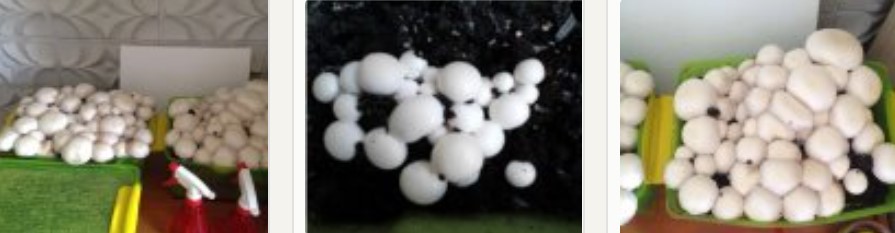
Good afternoon. I was also reading about champignons and came across a website offering a mini-garden for growing champignons. It's not suitable for large-scale production, but you can buy it as a trial. Anyway, I bought it. It's easy, just follow the instructions, and you'll get the promised results.
It looks like this)
Since I spend most of my time at work, they grew in the office :) The main thing is to maintain the humidity and temperature conditions, and follow the instructions, then the result will be like in the photo