Oyster mushrooms and champignons are considered the most common culinary mushrooms. They can be found on store shelves year-round, have a very pleasant taste, and are quite affordable.
But opinions on which mushrooms are healthier and tastier invariably differ.
Content
- 1 Description of champignons
- 2 Description of oyster mushrooms
- 3 Champignons and oyster mushrooms: similarities and differences in a table
- 4 Which mushrooms are tastier, oyster mushrooms or champignons?
- 5 Nutritional value and calorie content of oyster mushrooms and champignons
- 6 The benefits and harms of oyster mushrooms and champignons
- 7 Culinary uses of champignons and oyster mushrooms
- 8 Store-bought champignons and oyster mushrooms
- 9 Methods for preparing champignons and oyster mushrooms
- 10 Contraindications for the consumption of oyster mushrooms and champignons
- 11 Conclusion: Which is better, champignons or oyster mushrooms?
- 12 Comparison of champignons and oyster mushrooms by mushroom lovers
Description of champignons
Champignons are a type of mushroom called agaricus and belong to the Agaricaceae family. The name itself has French roots and refers to a mushroom that grows on organic matter. Indeed, champignons prefer soil rich in organic matter. Sometimes, they grow on anthills and windfalls.
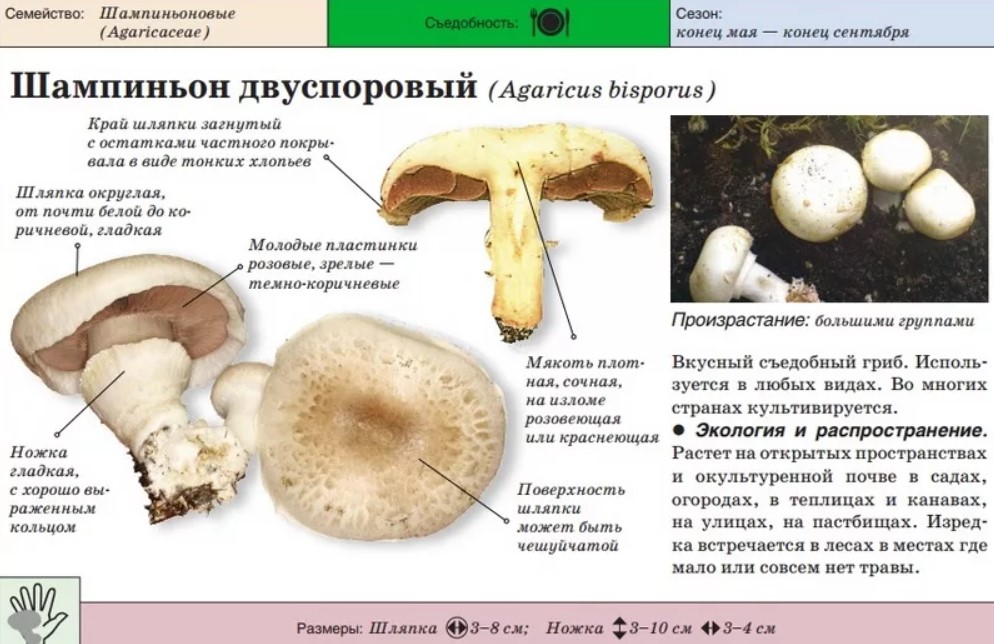
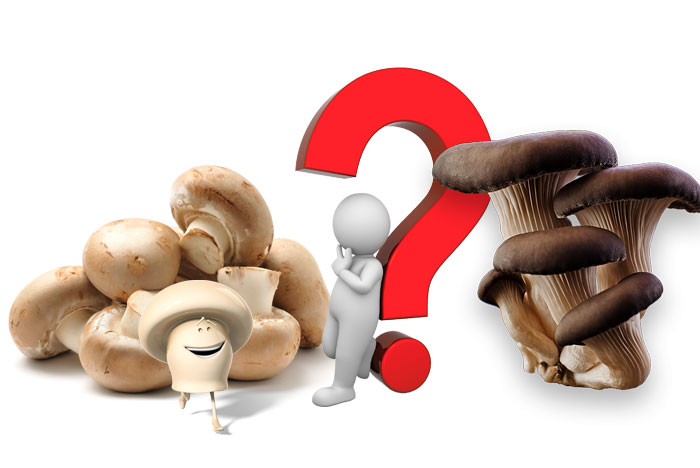
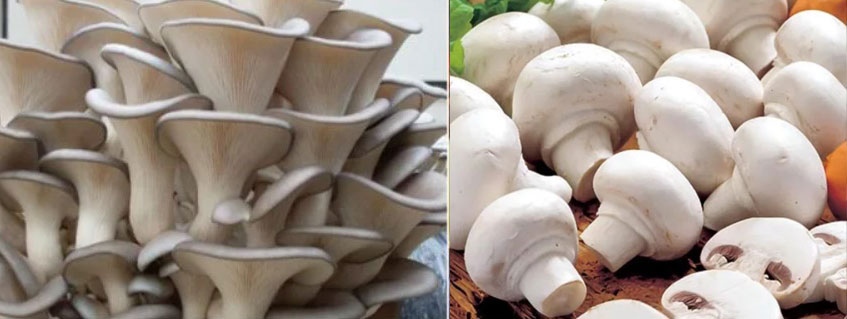
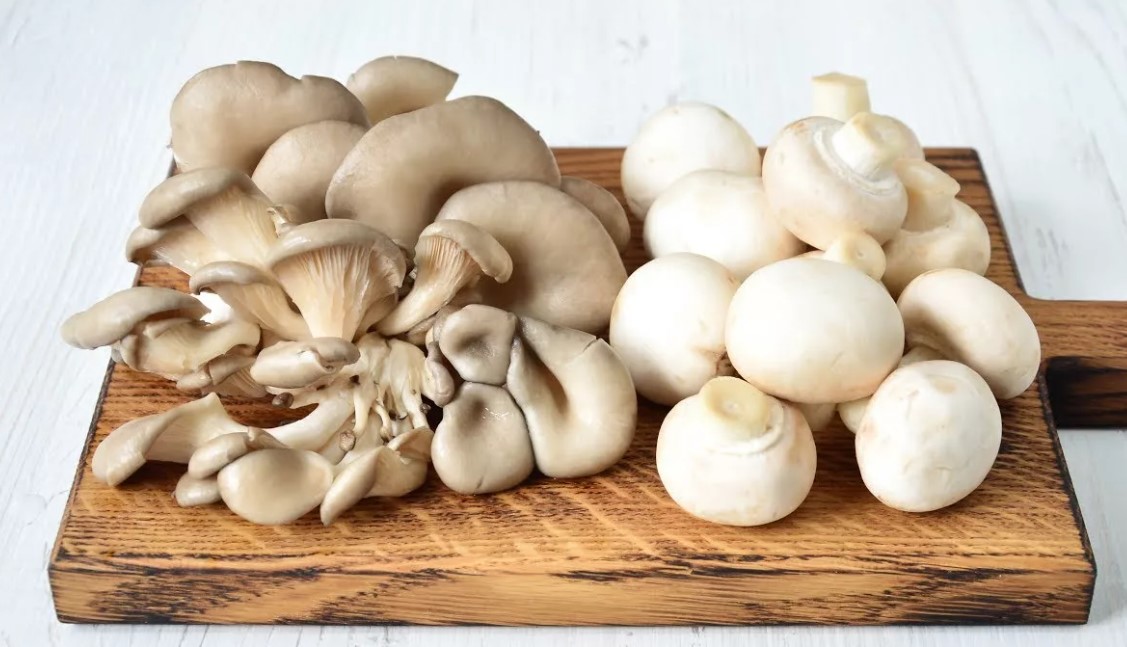
The mushroom cap is spherical, the stem is short and thick. Size varies depending on the mushroom's age. The color is white or light beige, and the aroma is pleasant.
Today, champignons are grown in many countries. In some places, their production is industrialized, while in others, the volumes are quite modest. Regardless, champignon production ranks first among all other mushrooms.
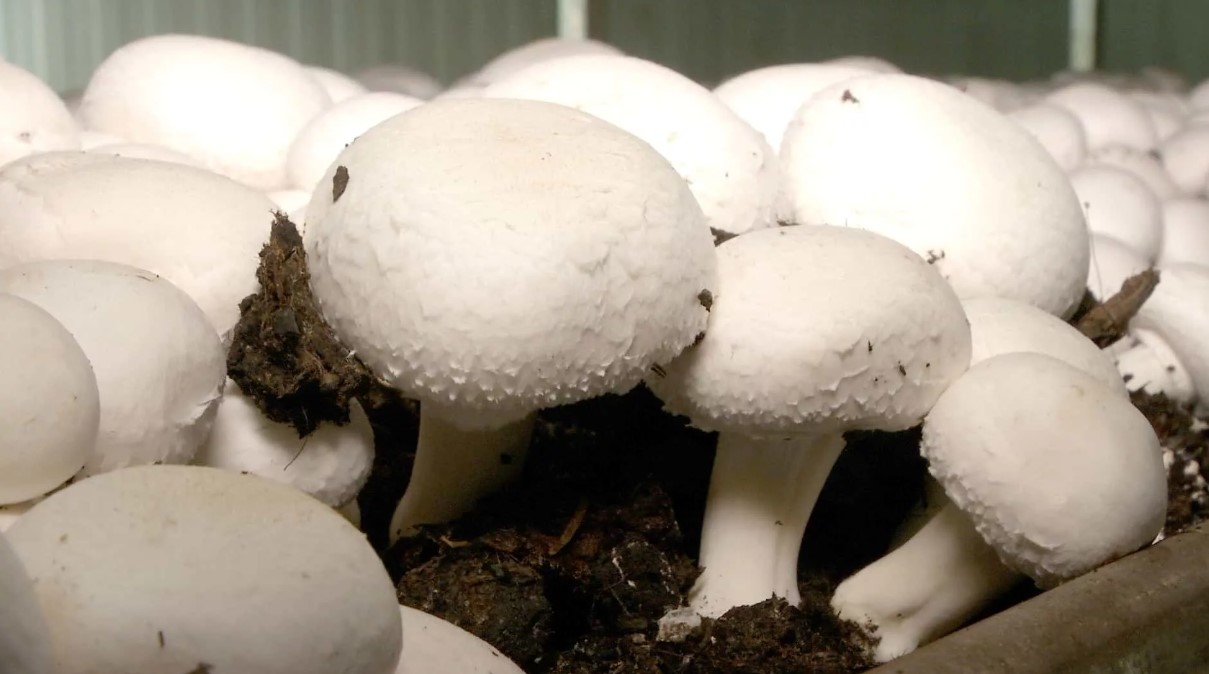
The mushroom arrived in Russia in the 18th century, but it wasn't until a century later that commercial cultivation was established. Today, specialized mushroom pots are available for both home and large-scale production. Anyone with the necessary substrate and mycelium can try their hand at mushroom growing.
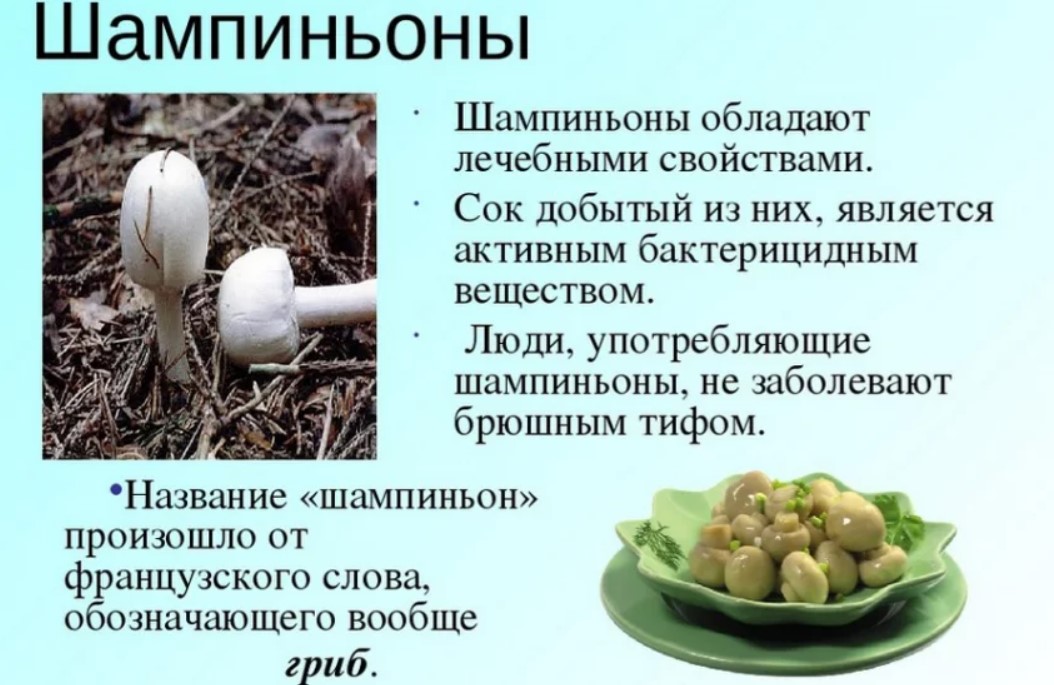
In cooking, champignons can be used not only processed but also fresh. Furthermore, the dried powder is often used as an ingredient in various seasonings.
Description of oyster mushrooms
Oyster mushrooms belong to the Pleurotus family. They prefer to grow on substrates consisting of dead plant parts or dry trunks.
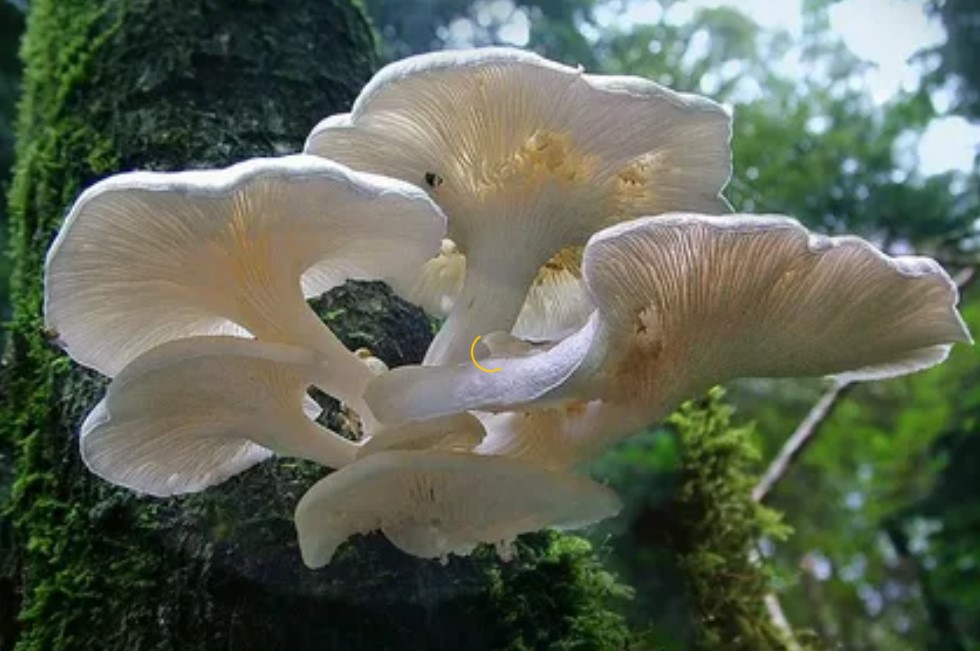
Oyster mushrooms are considered predatory due to the nematoxin they contain. This substance makes them virtually immune to worm infestation, as it paralyzes any insect that attempts to eat them.

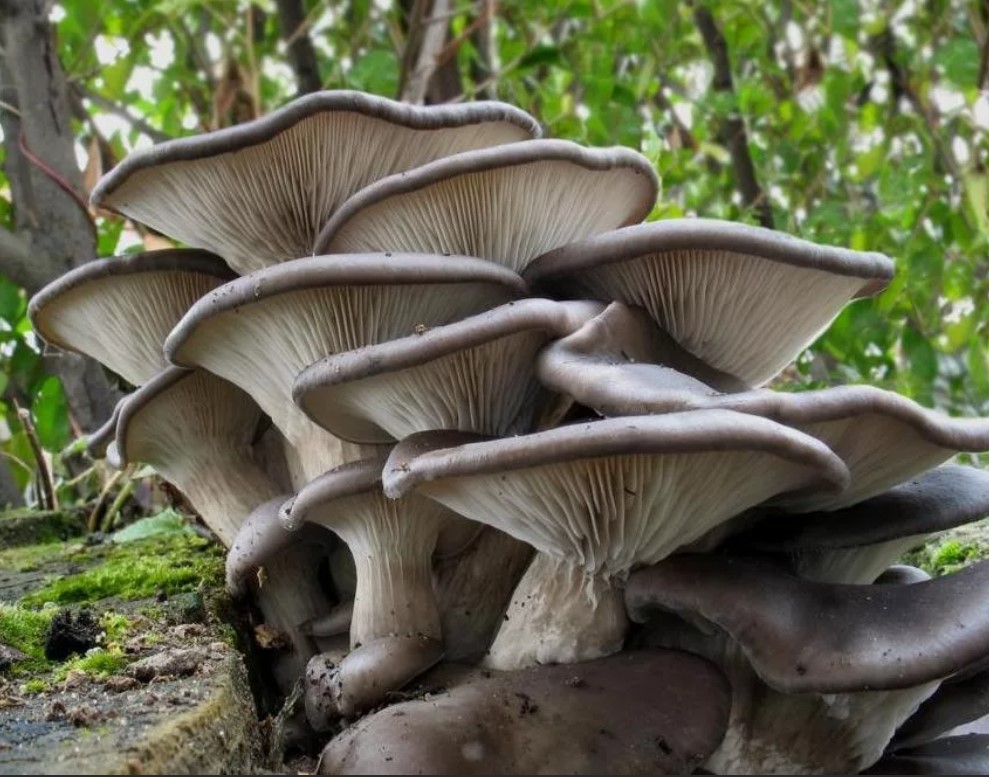
The mushroom's cap is shaped like an ear, with thin edges. Its color varies from grayish-white to brownish. The flesh is firm. The stem is short, smooth, and may widen toward the top.
Oyster mushrooms can be found on dead aspen, willow, or birch trees. They don't tolerate heat well, so they're most common in the fall. Many people grow them at home.
Read more about oyster mushrooms in the articleOyster mushrooms: 12 types with photos and descriptions, where they grow, when to pick them, calorie content, and how to cook them.
Champignons and oyster mushrooms: similarities and differences in a table
Champignons and oyster mushrooms are considered dietary foods due to their low calorie content and low carbohydrate content. They contain no sugar or fat, making them safe for diabetics.
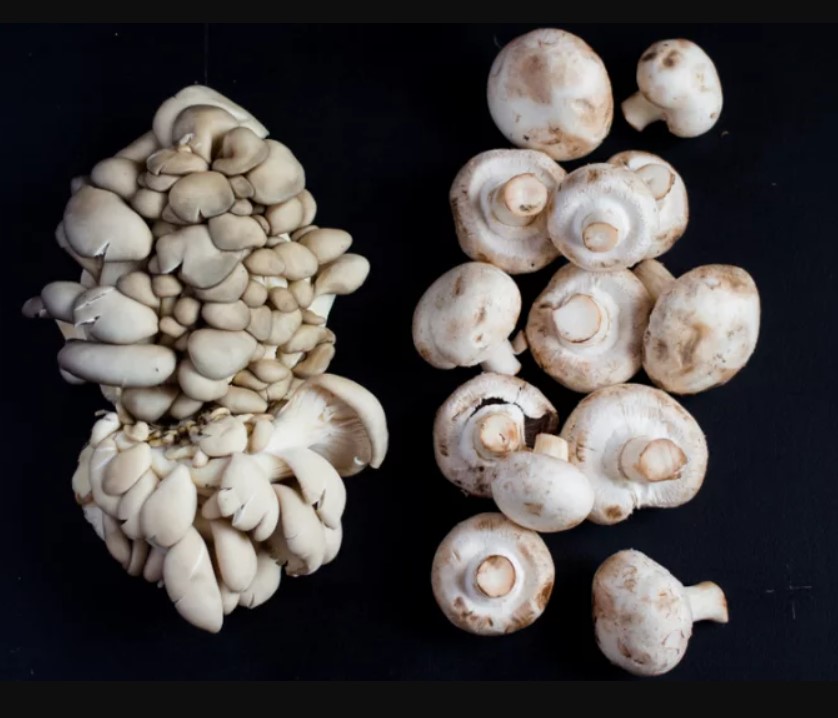
The distinctive characteristics of oyster mushrooms and champignons are given in the table below.
| Characteristic | Champignons | Oyster mushrooms |
| Nutritional properties | Contains a large amount of amino acids, vitamins, and healthy fats | The vitamin composition is similar to meat, containing mineral salts and beneficial substances that help remove radionuclides from the body. |
| Growing | More difficult to grow, sensitive to temperature changes, higher price. | Unpretentious, can even grow outdoors, cheap raw materials. |
| Transportation | They withstand transportation well without losing their shape. | Mushrooms are fragile and may break during transportation. |
| Application | They can even be eaten fresh. | Heat treatment is required |
Which mushrooms are tastier, oyster mushrooms or champignons?
Champignons are very aromatic mushrooms, often overpowering the flavors of other ingredients in dishes. The flesh is juicy, tender, and pleasant. Oyster mushrooms are somewhat firm, and gourmets compare them to chicken. Their flavor is much more subtle, so many consider them less tasty than champignons.
Nutritional value and calorie content of oyster mushrooms and champignons
The table below shows the nutritional value of oyster mushrooms and champignons per 100 g of product.
| Indicator | Oyster mushroom | Champignon |
| Nutritional value (kcal) | 38 | 27 |
| Fats (g) | 0.3 | 1.0 |
| Proteins (g) | 2.5 | 4.3 |
| Carbohydrates (g) | 6.5 | 0.1 |
The benefits and harms of oyster mushrooms and champignons
Champignons and oyster mushrooms have a number of beneficial properties:
Champignons are considered medicinal mushrooms because they contain antioxidants that prevent the formation and growth of tumors. Furthermore, their juice has antibacterial properties, so they can be eaten fresh. Due to their high protein and amino acid content, their composition is similar to that of meat, making them ideal for those on a meat-free diet.
Oyster mushrooms have a unique, balanced composition that helps combat intestinal parasites and remove heavy metals and toxins from the body. They contain many beneficial vitamins, amino acids, and enzymes. Taking mushrooms helps strengthen the cardiovascular system and immune system, as well as maintain weight control.
Mushrooms have one drawback: they are difficult for people with gastrointestinal disorders to digest. Oyster mushrooms and champignons should not be introduced into the diet of children under 5 years of age, and they are also not recommended for the elderly and pregnant women.
Culinary uses of champignons and oyster mushrooms
The main culinary difference between champignons and oyster mushrooms is that they can be used raw in dishes. Oyster mushrooms should always be cooked before consumption!
Mushrooms can be used in almost any way. Cold, they're used as a salad ingredient, and they can be baked, fried, boiled, marinated, or pickled. They're also great for grilling, filling pies, soups, sauces, and even dry rubs.
Oyster mushrooms have a more subtle flavor. They are best used as a side dish. Eating them raw is strictly prohibited.
Store-bought champignons and oyster mushrooms
Store-bought champignons and oyster mushrooms don't need to be soaked in water or rinsed for long periods. These mushrooms grow on the surface and are sand-free. Simply wipe the surface with a cloth or rinse under running water. Any bacteria present will be killed during cooking.
To extend the shelf life of oyster mushrooms and button mushrooms, remove them from the bag or box and place them in a container with a paper towel on the bottom. The paper towel is then used as a lid on the mushrooms.
Neither oyster mushrooms nor button mushrooms need to be peeled before cooking. It's enough to remove the lower part of the stem if there's any soil left. Only button mushrooms are allowed to be eaten raw.
Methods for preparing champignons and oyster mushrooms
Mushrooms are great for soups. You can boil them simultaneously with potatoes and carrots, then add a handful of spider noodles, simmer for 1 minute, and remove from heat.
For marinating, cut the champignons into 4 pieces and fill them with any marinade suitable for the recipe.
Oyster mushrooms don't tolerate prolonged cooking. Fry them for no more than 15 minutes, otherwise the flesh will become tough and rubbery.
Experienced chefs recommend frying champignons and oyster mushrooms in a dry frying pan without oil or salt for 7-8 minutes, then adding a little oil and spices and frying for another 5 minutes. The taste is amazing.
Whole mushrooms can be coated with oil and baked in a hot oven for 15 minutes, then sprinkled with cheese and herbs and served as a separate dish.
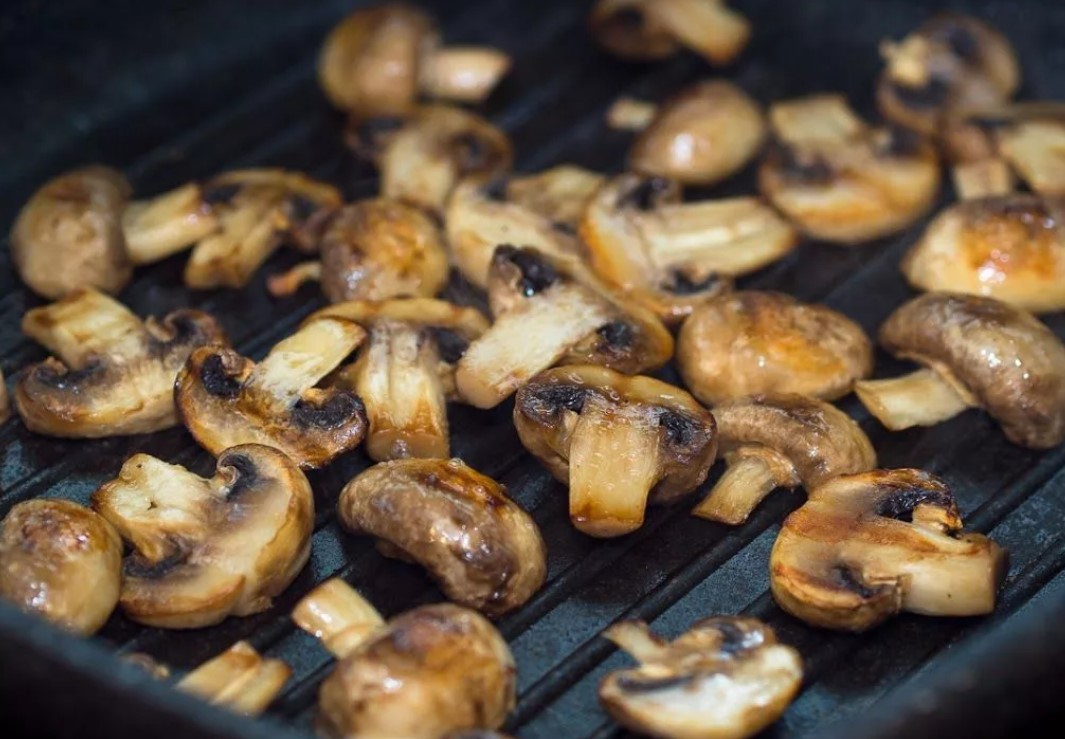
Mushrooms are often used as a salad ingredient. They pair well with potatoes, chicken, eggs, and carrots. They are boiled or fried before adding. In some cases, champignons can be sliced raw.
Mushrooms are widely used as pie and sandwich fillings. They are either added to potatoes or cabbage, or mixed with cheese and egg.
Many gourmets enjoy grilling mushrooms, and button mushrooms are best. Thread them onto a skewer perpendicular to the stem, with a tomato and pepper placed between the mushrooms. Grill for about 15 minutes.
Contraindications for the consumption of oyster mushrooms and champignons
Champignons, oyster mushrooms, and other mushrooms are considered difficult to digest. Therefore, they should not be consumed by people with gastrointestinal conditions.
It is not recommended for children under 5 years of age, elderly people and pregnant women to eat mushrooms.
While champignons can be eaten raw, this is absolutely not the case with oyster mushrooms!
Conclusion: Which is better, champignons or oyster mushrooms?
The objective picture is that button mushrooms are more popular than oyster mushrooms. Indeed, their flavor is richer, their flesh is juicier, and their aroma is more pronounced. But both mushrooms are widely used in cooking, and the health benefits of oyster mushrooms are in no way inferior to those of button mushrooms.
Comparison of champignons and oyster mushrooms by mushroom lovers
I'm a huge mushroom lover. I love picking them and then cooking them into something delicious. In winter and spring, when there aren't any mushrooms yet, I switch to button mushrooms and cook them in a variety of dishes. I especially love mushroom risotto. I fry julienned carrots and half-ringed onions, then add washed and sliced button mushrooms. I simmer them in a deep saucepan, covered, until the mushrooms release a lot of juice. I immediately add washed rice and cook until done.
I once tried oyster mushrooms. And you know, they have a very specific taste. It's an acquired taste. And, as they say, there's no accounting for taste.
Champignons are more tender, more aromatic, and have a more pronounced flavor. Oyster mushrooms are firmer and tasteless when boiled, but fried with onions until golden, they're delicious, perhaps similar to chanterelles or russula. Champignons are more versatile; they can be cooked in any way and added to any dish, while oyster mushrooms are best simply fried.
But oyster mushrooms are easier to grow, and their cost is much lower than champignons.
As the saying goes, "There's no accounting for taste." Anyone would be right if they answered the opposite way to this question.
In my opinion, of the two mushroom varieties, champignons are the tastiest. The best part is that they don't need to be cooked; they can be added raw to salads and other dishes.
Oyster mushrooms, although sold everywhere, are still some kind of strange exotic thing for me.
I might surprise you now, but I like fried russula more than all the above-mentioned mushrooms combined.
To me, champignons have absolutely no flavor and are empty; you can't get enough of them. But oyster mushrooms—they're amazing! They're delicious and filling. I just wash them; there's no need to peel them, since they don't grow in the ground. And they cook in 20 minutes tops. Any longer than that, as the flavor is lost. I love oyster mushroom salad. It's a hit at every holiday. Wash 300-400 g of oyster mushrooms, fry them in butter for 20 minutes, and let them cool. Add 2-3 hard-boiled eggs, a cup of boiled rice, finely chopped onions (or green onions) and mayonnaise.
I like oyster mushrooms - the mushroom spirit and aroma...
and for some reason especially pink ones…
They just need to be boiled or fried a little, but only the caps, the stems are tough and I throw them away... :ik: