Zucchini is a vegetable in the gourd family, native to Mexico. It has excellent flavor and is used in cooking and preserves. It contains minimal calories and is beneficial for both adults and children.
Content
- 1 The best varieties of zucchini for open ground
- 2 Growing and planting zucchini from seeds or seedlings in open ground
- 2.1 Choosing a location for growing zucchini
- 2.2 Is it possible to plant zucchini seeds in open ground?
- 2.3 Preparing zucchini seeds for planting in open ground
- 2.4 How far apart should squash seeds be planted outdoors?
- 2.5 How deep should zucchini seeds be planted?
- 2.6 Growing zucchini seedlings
- 2.7 Planting zucchini seedlings in open ground
- 3 How and when to plant zucchini in the Moscow region: 10 tips
- 4 Top.tomathouse.com recommends: methods for growing zucchini
- 5 Caring for zucchini
The best varieties of zucchini for open ground
There are many varieties of zucchini seeds, differing in shape, skin color, thickness, and flavor. Early, mid-season, and late-ripening varieties are distinguished. Fruiting time depends on the variety chosen, but averages 40 to 50 days.
It is recommended to grow in open ground:
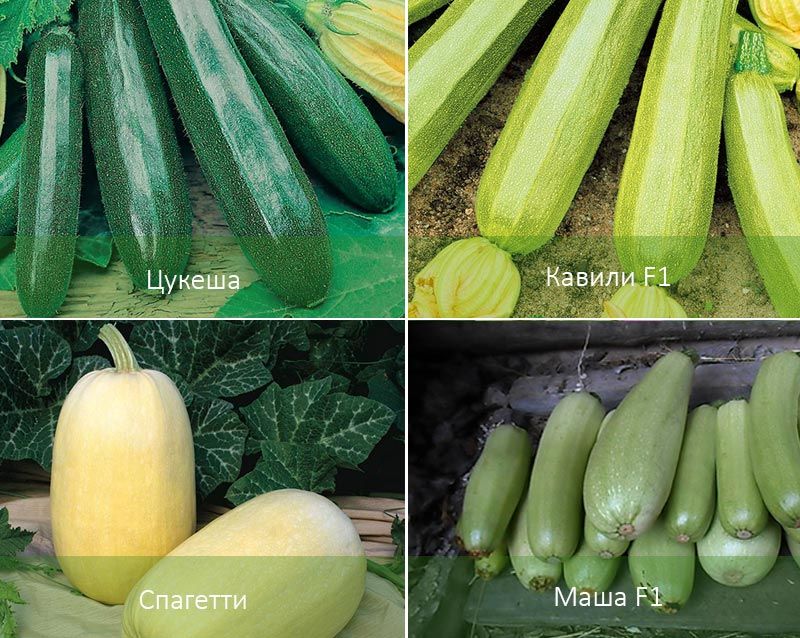
- Kavili F1 is a Dutch hybrid, early maturing, cylindrical, and light green. Plant in May or early June. Fruit appears in 40 days. Disease-resistant. It grows to a maximum of 22 cm in length and weighs 350 g.
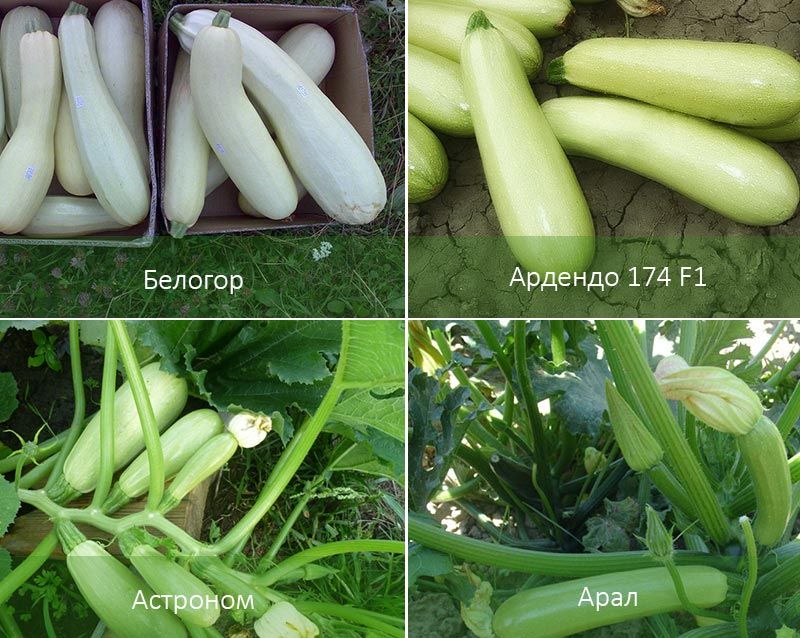
- Aral is a hybrid that can be planted in May without fear of frost. The light green fruits, up to 800 grams in weight, appear in 45 days.
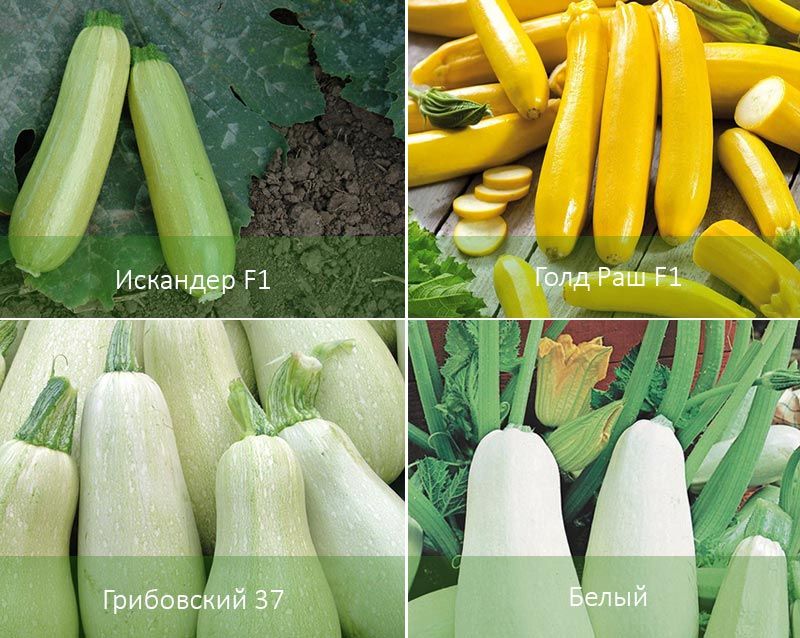
- Iskander F1 is a Dutch variety that is resistant to low temperatures. Sown in April, it grows up to 20 cm tall and weighs up to 600 g. The skin is thin, the flesh is juicy. It ripens in 40-45 days.
- Astronomer is an early bush variety, resistant to powdery mildew, up to 18 cm in length.
- Belogor – cold-resistant, green and white fruits weighing up to 1 kg.
- Tsukesha is a variety of zucchini, an early-ripening cultivar. The fruit is dark green with small spots, up to 30 cm long and weighing 1 kg. It is sown in May and ripens in 45 days.
- Ardendo 174 F1 – from Holland. Fruit is pin-shaped, light green, and spotted. Weight: approximately 600 grams. Ripens in 45 days. Planted in May, it tolerates temperature fluctuations. Requires abundant watering, loosening, and fertilizing.
- White – high-yielding, weighs up to 1 kg, ripens in 40 days, is resistant to powdery mildew, and is suitable for canning.
- Gold Rush F1 – yellow fruit with a sweet, delicate flavor, 20 cm long and weighing 200 grams. Ripens in 50 days, grows compactly, and is resistant to downy mildew.
- Masha F1 ripens even in dry weather and is not susceptible to pests. It weighs approximately 3.5 kg.
- Spaghetti is an unusual variety, similar to pumpkin, the fruits are yellow, and when cooked, the pulp breaks down into fibers similar to pasta.
- Gribovsky 37 – branched stems, cylindrical fruits 20-25 cm, up to 1.3 kg, pale green.
- The roller is resistant to cold, has excellent taste qualities, and is used for preparations.
Growing and planting zucchini from seeds or seedlings in open ground
This easy-to-grow vegetable can be grown in a greenhouse, in the open ground, or by other methods, including from seeds and seedlings. However, achieving a high yield is only possible if all agricultural practices are followed.
Choosing a location for growing zucchini
The choice of planting location for zucchini depends on the growing region.
In temperate climates, plants typically lack light. Therefore, the zucchini bed should be located in a sunny location. Only then will the plants begin to develop female flowers and numerous ovaries.
In the southern regions, the sun is so strong that it can easily destroy any plantings. Therefore, the zucchini bed should be located in a shaded area, protected from direct sunlight.
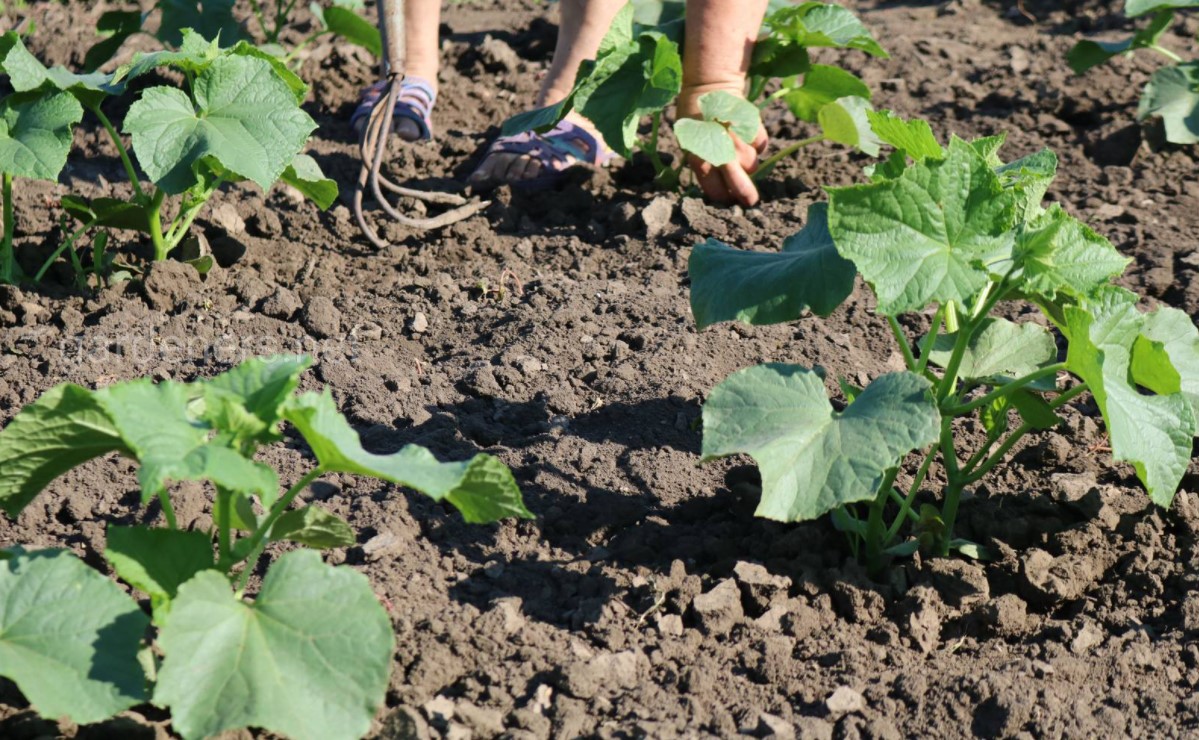
What to plant after zucchini and what to plant after zucchini
Crop rotation is crucial when planting zucchini. Don't neglect it to avoid a poor harvest.
Don't plant zucchini in the same spot as last season. The soil will be poor, and pests can linger in the soil, biding their time.
All members of the pumpkin family (watermelons, squash, melons, and others) will be bad predecessors.
Beets, onions, radishes, turnips—in short, all root vegetables and leafy greens—are considered good predecessors. It's a good idea to have legumes or green manure crops, such as mustard, growing in the garden bed before squash.
Can zucchini and cucumbers be planted together?
Cucumbers and zucchini aren't the best companions. This is because both plants are pome plants. Growing them together increases the risk of cross-pollination, which will negatively impact yields.
Moreover, the shoots and root system of zucchini are very powerful and will draw all the nutrients from the soil, leaving nothing for their neighbors. In this situation, cucumbers will become diseased and wither.
Therefore, it is not advisable to plant these two crops next to each other.
Can pumpkins and zucchinis be planted next to each other?
Zucchini and pumpkin are members of the same family. They have similar soil composition, pH, and light requirements. Therefore, it's logical to assume they'll thrive growing next to each other.
But there are several nuances that will need to be taken into account when placing these crops next to each other.
- Zucchini doesn't require regular watering. It thrives in low-water conditions and needs watering about once every 10 days. Pumpkin is more demanding in terms of moisture. Water the plant at least twice a week, otherwise the fruit will be dry and bland.
- Pumpkin and zucchini are susceptible to the same diseases. Therefore, extensive preventative treatments against viruses, fungi, and insects will be necessary.
- Pumpkin shoots and roots are much stronger than zucchini shoots and roots, so they can easily crowd out their neighbors, taking away nutrients and even part of the garden bed.
- When planting these crops together, there's a high risk of cross-pollination. While this only affects pumpkins by changing their fruit shape (it becomes more elongated), zucchini suffers a significant loss of flavor. The only safe plants for zucchini are butternut squash and hard-shell pumpkins; they never cross-pollinate.
Is it possible to plant zucchini seeds in open ground?
Many crops are not recommended for direct planting in open ground. But zucchini is less demanding. They thrive in the ground, provided there are no critical factors.
These include:
- Weather conditions.
- It's crucial for zucchini to have the soil warmed up well before planting, as they can't tolerate cold. Therefore, the soil temperature at planting should not be below 10-12 degrees Celsius. If the spring in your region is prolonged and the threat of night frosts lingers, the seeds may simply fail to germinate and die. In such cases, it's best to use cover or seedlings. In central Russia, this period doesn't begin until late May or early June, while in southern regions, planting can begin as early as late April.
- Rodents. Small pests are often the primary predators of seeds. They skillfully find them in the soil and eat them, especially during the lean period after winter.
- Heavy rainfall. Heavy rains can wash away the soil, and the water can carry seeds deep into the garden bed, where they will rot and fail to germinate.
Preparing zucchini seeds for planting in open ground
Store-bought zucchini seeds are often already pre-treated by the manufacturer, which should be indicated on the packaging. If not, you'll need to perform the preparatory steps yourself.
The most important procedure is heat treatment. You can leave the seed packet on a radiator for about 12 hours, but it's best to place it in a sunny spot 7 days before planting. Dried seeds will have a better germination rate and stronger immunity.
Many gardeners carry out water procedures with seeds.
It's important to understand that they are only practical when the soil is well warmed and the threat of frost has passed. Otherwise, the damp, sprouted seeds will simply rot in the garden bed.
If there are no such threats in your region, you can do the following:
- Wrap the seeds in a damp cloth and leave them on a windowsill for three days to allow them to swell (but not sprout). Then, place them in the refrigerator for two days. This pre-planting hardening procedure will strengthen the seedlings' immune system and reduce germination time.
- Place the seeds in water at 50 degrees and leave them there for 5-6 hours.
- Soak the seeds in any stimulating solution according to the instructions.
- Sprout the seeds by placing them between two layers of damp cloth. Sprouted seeds are believed to begin bearing fruit earlier.
How far apart should squash seeds be planted outdoors?
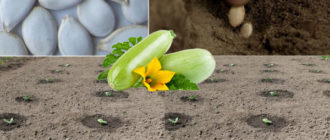
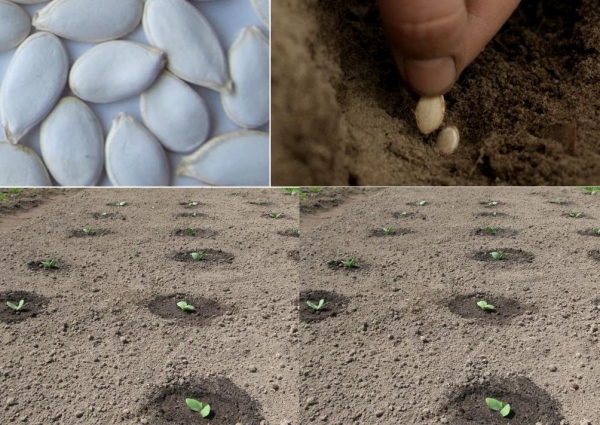
Zucchini is considered a vigorous plant, so don't plant too closely. Dig holes 70 cm apart. Place no more than three seeds in each hole, unless the seeds are sprouted. Only the strongest shoot is left; the others are removed or replanted.
How deep should zucchini seeds be planted?
The optimal planting depth for seeds is considered to be 3-4 cm. Unsprouted seeds are placed on their edges, which helps reduce the risk of rot. Sprouted seeds are placed with the growing end down.
The safest way to grow zucchini is from seedlings: you can harvest the crop earlier, and the survival rate is much higher. However, if the spring is warm and the region has favorable conditions, you can save time and effort by planting the zucchini seeds directly into the ground.
Growing zucchini seedlings
Soil can be purchased specifically for pumpkins or mixed independently using leaf mold, compost, peat, and sawdust (2:2:1:1). Another option is peat, compost, turf, and sawdust (6:2:2:1). The soil is disinfected with a potassium permanganate solution a week before planting.
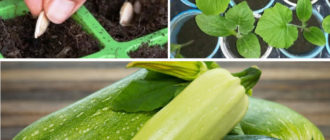
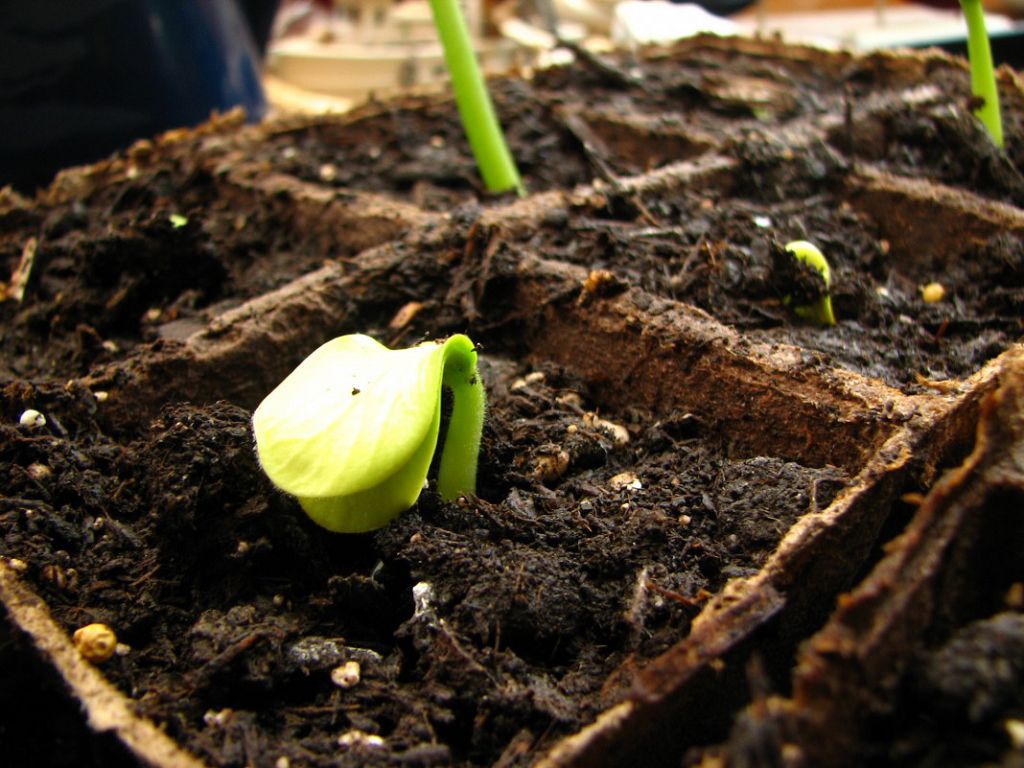
The seeds are first exposed to sunlight for seven days, then soaked in warm water. After a few hours, they are wrapped in a damp cloth. Germination occurs within 2-3 days. Prepared 0.5-liter pots or cups are packed tightly with soil and sown to a depth of 1-3 cm, one seed per pot. If the seeds were not pre-soaked, sow 2-3 seeds at a time. Then, remove any weak seedlings. Water generously and wait for germination within 2-3 days. Set the temperature at 23 to 25°C. If there is insufficient light, provide additional lighting.
After germination, the temperature is lowered to 18–20°C to prevent the seedlings from becoming too tall. A week later, they are fed with urea or a complex fertilizer, and a second time with nitrophoska. After several true leaves have formed, they are transplanted into the garden bed. During this time, the seedlings are hardened off by lowering the temperature for a week.
The timing of sowing zucchini seedlings depends on the region:
- Middle zone – mid-to-late April;
- Moscow region – mid-to-late April, early May;
- Siberia, Urals – mid-to-late April, May, early June (depending on weather conditions).
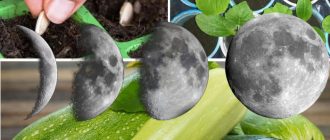
According to the Lunar calendar for 2022, favorable days are April: 3, 4, 8, 9, 15, 25, 26, 27; May: 3, 4, 5, 6, 12, 13, 14, 19, 23, 24, 27, 28; June: 1-5, 9-12, 26, 27.
Unfavorable days – April: 2, 10-14, 19-24, 28-30; May: 2, 7-11, 20, 21, 22; June: 7, 8, 13, 15.
Prohibited – April: 1, 16, 17; May: 1, 15, 16, 30; June: 14, 28, 29.
It should be taken into account that 1-1.5 months after sowing, the seedlings need to be planted in the ground.
Planting zucchini seedlings in open ground
Seedlings are planted in open ground 25-30 days after germination. The exact timing will depend on the variety chosen.
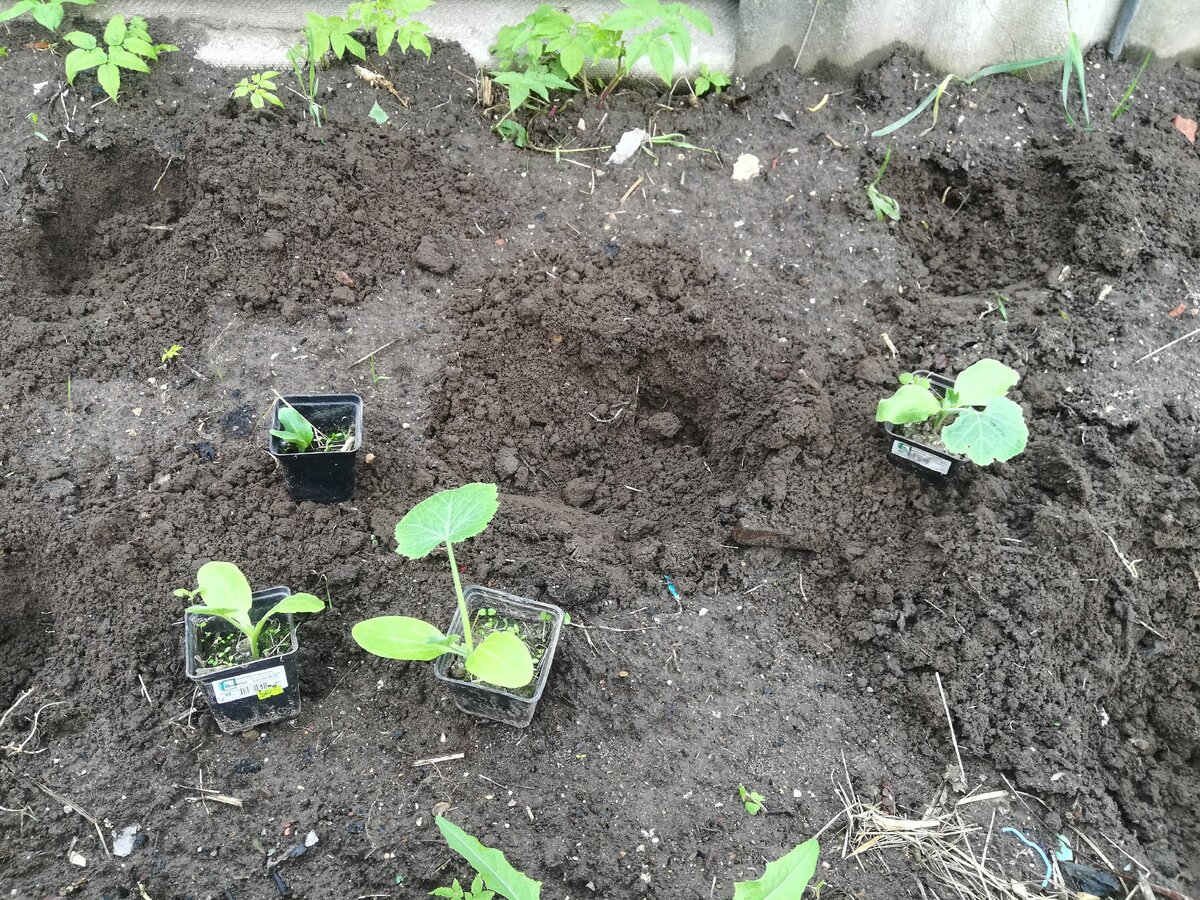
The soil should be prepared in advance by tilling it with fertilizer. Zucchini thrives on organic matter, so compost, cow manure, or humus can be used. You can also use specialized fertilizers or add 30 g of superphosphate, 20 g of potassium sulfate, and 15 g of ammonium nitrate per square meter.
Step-by-step instructions:
- Holes are dug at intervals of 70 cm, leaving a path at least 50 cm wide between rows. Each hole is pre-watered with settled water.
- The plant is carefully transferred into the hole along with a lump of earth, after which it is buried no higher than the cotyledon leaves.
- At the end of replanting, water the plants. It's best to use sun-warmed water to keep the roots warm. Watering should be done directly at the roots.
If there is still a risk of frost in the region after planting, be sure to cover the plants with film or a piece of a 5-liter bottle.
How and when to plant zucchini in the Moscow region: 10 tips
- Make sure the soil has warmed up to at least 10 degrees and that there are no more night frosts.
- Choose a well-lit area with sufficiently moist soil.
- Do not plant more than 2 zucchini per square meter.
- Mulch the surface of the bed to prevent a crust from forming on it.
- If you have a compost heap on your property, you simply can’t think of a better place for zucchini.
- Do not plant zucchini next to cucumbers or after unsuitable predecessors.
- Do not return the zucchini to the previous bed earlier than after 5 years.
- Water with settled warm water.
- Before flowering and during fruit formation, water the zucchini with a solution of specialized fertilizers or organic matter to increase the yield.
- To speed up pollination, which is carried out by bees, spray the flowering plant with honey water early in the morning (2 tablespoons per glass of water).
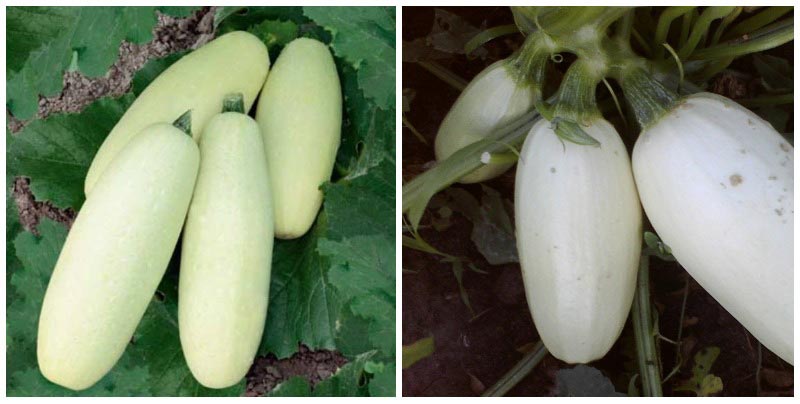 Roller variety
Top.tomathouse.com recommends: methods for growing zucchini
Gardeners know a few secrets for getting a good harvest when space is limited. A new method has emerged: planting seeds in "snails" (polyethylene pots folded in a special way).
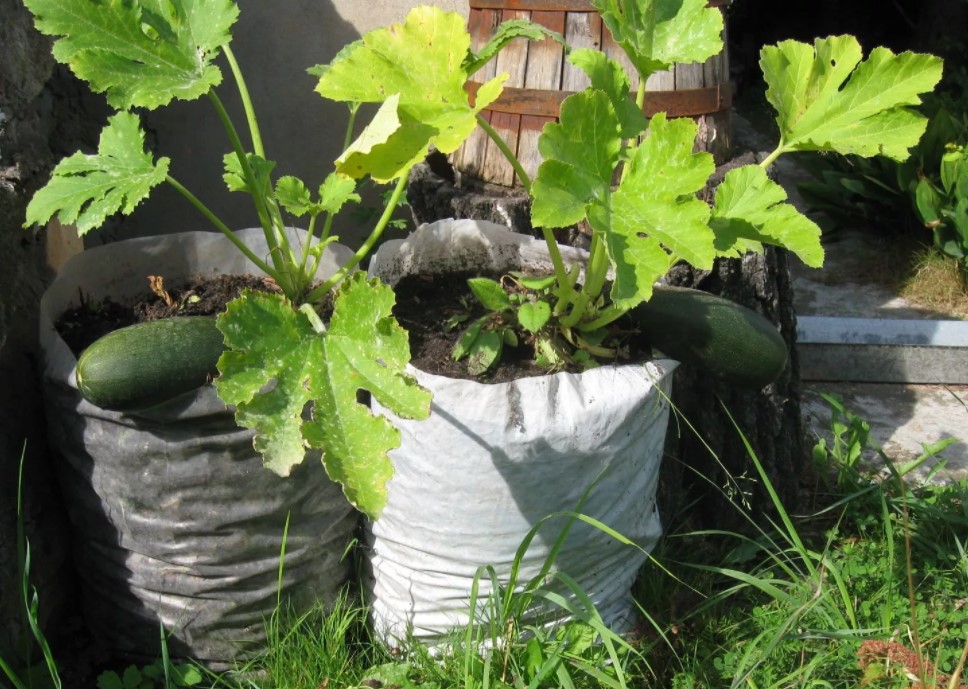
Growing in bags
Use sugar or flour bags, or 120 kg plastic bags. Add organic fertilizer, garden soil, and sawdust. Poke several holes in the bottom. Place one seedling in each bag. Water and add mineral fertilizer. A hollow tube with holes is installed for watering, and a funnel is placed on top.
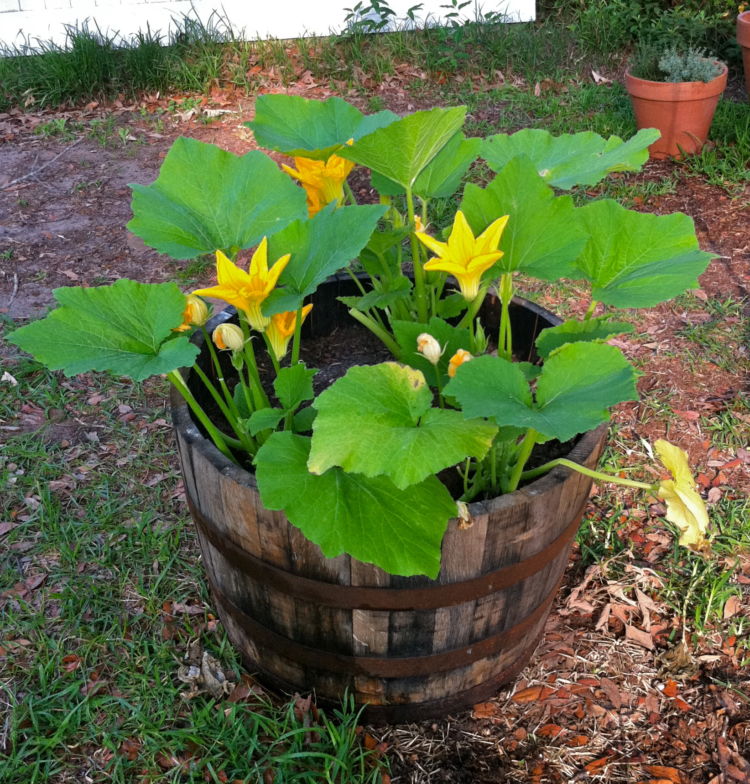
Barrels
Use 150-200-liter barrels with a pipe with small holes installed inside. Pine cones and brushwood are placed at the bottom for drainage. Layers of humus, hay, soil, sawdust, and peat are added on top. Then, add soil from the garden. Seedlings are planted around the edges. Watering is done through the holes in the pipe.
Growing in a cunning way
To do this, prepare the substrate a year in advance. Mow the grass in the garden and pile it into a large circle, 2.5 meters in diameter. Add potato, tomato, and carrot tops. In the fall, after they have rotted, they will reach a height of 0.5 meters. Leave them in this form over the winter. In the spring, turn them over and add soil to a depth of 10 cm. Divide the mixture into three parts and sow the sprouted seeds, 4 seeds in each. Place hay and straw around the edges to prevent the soil from drying out. The zucchini sprouts in 2-3 days.
Caring for zucchini
Proper watering is the key to a good harvest. As the soil dries out, water the plants every ten days, avoiding excess moisture in the morning or evening. During dry summers, water more frequently, otherwise the stems will crack. Water should be warm; direct water from the pump will cause plant rot. It is recommended to stop watering a few days before harvest.
Before the vegetable begins to creep, the soil is loosened and weeds are removed. After 4-5 true leaves appear, the soil is hilled.
When caring for your plants, don't forget about pollination. Several methods can be used to attract insects. Spray the beds with a solution of sugar (0.5 cup) and boric acid (2 grams) per bucket of water. Add diluted honey (1 teaspoon per 250 ml of water). Alternatively, plant marigolds nearby, which attract bees. It's best to choose self-pollinating varieties.
Fertilize 12 days after planting with nitrophoska and water (30 grams per liter) and mullein (diluted in hot water 1:10, then diluted with water 1:5 after 3 hours and watered at the roots). During flowering, use superphosphate with potassium nitrate diluted with water. When fruit appears, use Agricola, nitrophoska, or potassium sulfate with superphosphate and urea. Spray with Bud's solution every ten days.
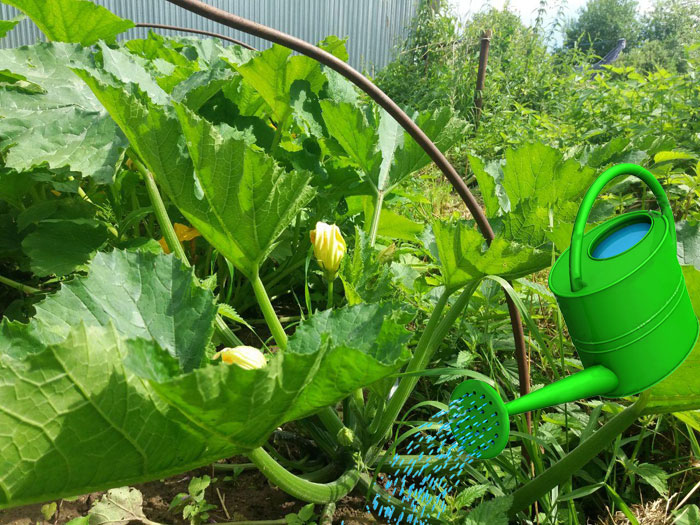
Bush zucchini are not tied up, but the shoots of climbing varieties are grown along a trellis and the tops are pinched.
You can read about watering zucchini in open ground in the articleHow to water zucchini in open ground and a greenhouse so they grow faster and don't rot.
Diseases and pests, prevention and control
Zucchini is sometimes affected by diseases and attacked by pests.
| Problem | Manifestations | Elimination measures |
| Powdery mildew | A loose, grayish-white coating then turns brown. The leaves curl and dry out, and the fruits become deformed. | Spray with colloidal sulfur, Bayleton, Quadris, Topsin-M. |
| Black mold | Yellow-rusty, then black-brown spots appear on the leaves. The fruits don't grow and shrivel. | There is no cure, damaged bushes are removed and burned. |
| Sclerotinia or white rot | White coating on all green parts and ovaries, fruits are softened. | Remove affected parts, sprinkle the cuts with charcoal, and feed with ash, eggshells, and phosphorus mixtures. Spray the soil with Fitolavin and add compost. |
| Peronosporosis (downy mildew) | Oily green-yellow spots that become grey-brown over time. | Copper oxychloride and Metiram help. Stop watering for a few days and feed with potassium fertilizer. |
| Anthracnose | Brownish-yellow spots on the leaves, then they dry out and holes form, the pulp has a bitter taste, the fruits wrinkle and rot. | Spray with 1% Bordeaux mixture, Previkur, Fundazol. |
| Bacteriosis | Small white spots, eventually turning angular-brown, on the fruit develop water-soaked ulcers. | Treat with 1% Bordeaux mixture and copper oxychloride. If this doesn't help, destroy the bushes. |
| Cucumber mosaic | Yellow, white spots, leaves curl, no harvest. | At the initial stage, treat with Aktara or Actellic. As a preventative measure, immediately destroy ants and aphids, which transmit the disease. |
| Whitefly | Sticky coating on the back of leaves that gradually wither. | The stains are washed off with water, the soil is loosened, and then sprayed with insecticides: Komandor, Tanrek, or Oberon. |
| Melon aphid | The above-ground part gradually dries out. | Spray with an infusion of onions, tobacco, garlic, potato tops or Decis, Karbofos |
| Slugs | They eat flowers, shoots, leaves. | Pests are collected by hand, and pepper, ground mustard, and eggshells are scattered around the bushes. In case of a large infestation, copper sulfate is used for treatment and metaldehyde granules are scattered. |
| Spider mite | It attacks the underside of leaf blades, forming yellow spots and webbing. The plant dries out. | An infusion of onions and garlic with the addition of laundry soap is used. Other medications used include 20% chloroethanol and 10% isophene. |