Onions are one of the most common crops grown in home gardens. To ensure a healthy harvest, it's best to choose onion sets. There are many varieties, so before purchasing one, it's important to decide what you want.
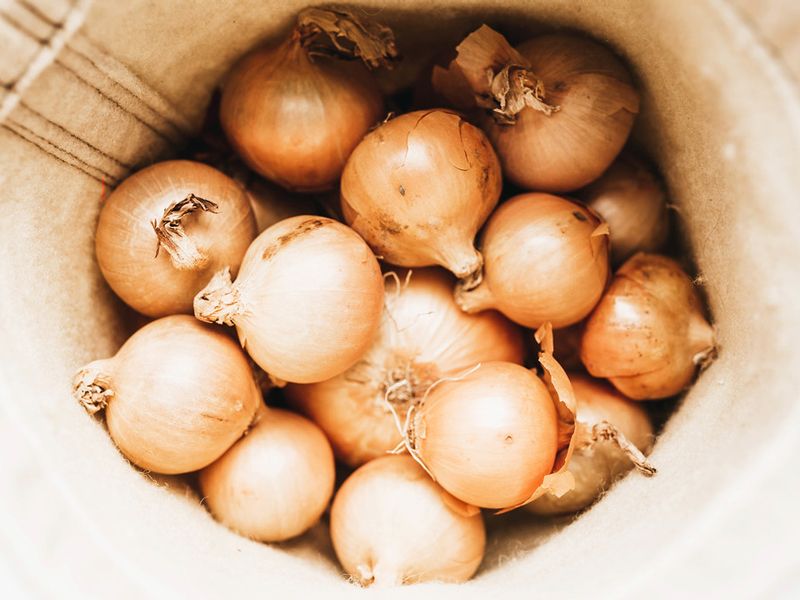
Some inexperienced gardeners don't know what onion sets are. Onion sets are small bulbs produced from tiny seeds called nigella, usually in the second year.
Content
- 1 The best varieties of onion sets: description and characteristics
- 2 Benefits of growing onions from sets
- 3 Planting onion sets
- 4 Choosing a location
- 5 Selecting and preparing onion sets for planting
- 6 Treating onions with salt, potassium permanganate and ash before planting
- 7 Timing for planting onion sets in open ground
- 8 Technology of planting onion sets
- 9 Caring for onion sets in open ground
- 10 Top.tomathouse.com advises: what to do to prevent onions from bolting
The best varieties of onion sets: description and characteristics
| Varieties | Description | Peculiarities |
| Sturon | This variety is one of the best. It ripens early. Each head weighs from 80 to 160 g. It has a fairly high germination rate and yield. It is resistant to various diseases and stores well. | In terms of taste, it has a pleasant taste with moderate spiciness. |
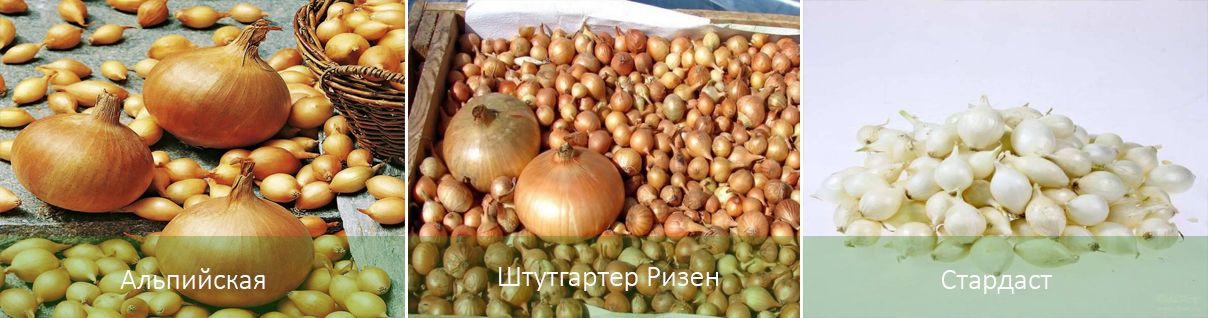
| Stuttgarter Riesen | Produces an early harvest. Bulbs vary in size, from small (50g) to large (300g). It produces a high yield and has a good shelf life. | The disadvantage of this onion set is its low resistance to downy mildew or rot. |
| Orion | An English-bred hybrid. This early-ripening variety produces round bulbs that average about 180 g in weight. | The species keeps quite well and is very popular. |
| Stardust | The variety ripens mid-season. Germination is uniform. The heads store well. | White color of the husk. |
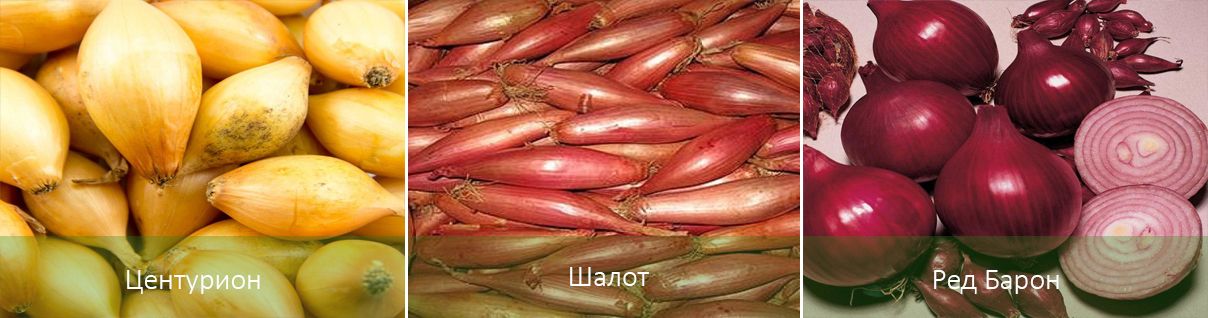
| Centurion | This is a selection of the Stuttgart Riesen variety. The bulbs are slightly elongated and can be stored for up to 8 months. If the plant is provided with favorable conditions, the germination rate can reach 100%. It is resistant to disease and has low bolting rates. | This variety is suitable for producing turnips, but not greens. The flavor is quite pungent. |
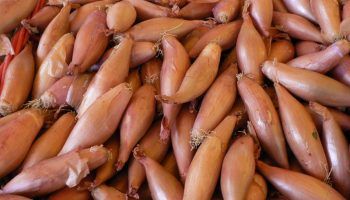
| Shallots | Considered the most elite, the variety's biochemical composition contains a large number of vitamins and minerals. | It has a delicate flavor and juicy fibers. It doesn't cause tears when the bulb structure is broken. It has the most harmonious flavor qualities. |
| Red Baron | Semi-sharp, aromatic and pleasant. Dark red in color. | When growing, it requires careful care - regular watering and weeding of the soil. |
| Exhibition | The bulb of this variety reaches its maximum weight in 130 days, weighing up to 800 g. Shelf life is average, no more than 4 months. | The taste of the pulp is sweet. |
| Kaba | Late-ripening. The head is round with a slight downward taper. The flesh is white, sometimes with a slight green tint. The outer husk is light brown or yellow. | The variety is susceptible to diseases, including downy mildew and onion fly attack. |
Benefits of growing onions from sets
Onion sets are often used as a garden crop due to their advantages:
- vegetation period lasting six months;
- when using two-stage cultivation, it is possible to obtain a fairly good harvest in all regions;
- The plant has a fairly powerful root system, which allows it to avoid damage from neighboring weeds.
Planting onion sets
Onion sets are a low-maintenance plant. They're not fussy, but they do require the right conditions:
- When planting, use the recommended scheme:
- there should be 8-12 cm between two turnips;
- adjacent rows should be placed at a distance of up to 20 cm;
- deepen by 4 cm;
- regularly weed the soil, removing weeds;
- to speed up germination, soak for ½ day in water at a temperature of about 40 °C;
- Just before you stick the bulb into the ground, cut off its top.
Choosing a location
Sowing must be carried out in the correct sequence and with the observance of certain actions:
- Disinfect the seeds with a weak solution of potassium permanganate. It's important to change the solution periodically. There are other methods, which we'll discuss later in the article.
- It's best to choose the earliest possible time for planting. A constant temperature of 15°C is ideal. You can also use the soil thaw as a guide—it should warm to a depth of at least 5 cm.
It's important to remember that onion sets can withstand light frosts when planted, making early care easier. However, onion bulblets cannot withstand frost, so they should only be planted in the soil when there's no risk of frost.
- To make the planting more visible, you can mix it with something light, such as sand or chalk.
- Before planting the seeds in the soil, water the bed with hot water. The recommended seeding rate is 10 g per square meter.
Selecting and preparing onion sets for planting
Before planting onion sets, sort them out and remove any damaged ones. Medium-sized bulbs are best for planting. Large ones are best for green onions.
To plant the tops, carefully remove the tops. Don't worry about damaging the stems or introducing infection into the cut, as the seedling will be treated later.
Treating onions with salt, potassium permanganate and ash before planting
Most often, it is recommended to combine soaking in both growth stimulants and products that will prevent rotting, parasite attacks, or fungal growth.
Recipes:
- Potassium permanganate. Soak the bulbs in the light pink solution for no more than 2 hours to prevent root damage. Then rinse them under running water. This method will prevent rot, fungus, and mold.
- Salt – 1 tablespoon per liter of water. Soak the tubers in the solution for two hours. Rinse is optional. This soaking method helps prevent rotting and mold spore formation.
- Copper sulfate – 1 teaspoon per 10-liter container of water. Soak the bulbs in the solution for 5-8 minutes. This disinfects the bulbs and reduces the risk of disease.
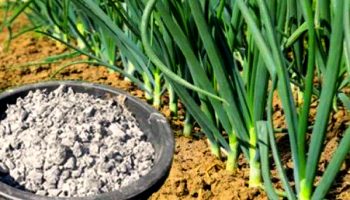
- Ash also prevents the risk of mold growth and reduces susceptibility to disease. It is combined with salt and a potassium permanganate solution. The ratio is as follows: add 2 tablespoons of wood ash and 2 tablespoons of salt to 3 liters of a light pink potassium permanganate solution. The bulbs are soaked for 2 hours.
Treating onions with birch tar before planting to prevent pests
Birch tar is a remedy that can suppress onion fly infestations on vegetables. Simply make a solution of 1 tablespoon of birch tar per liter of water. Soak the bulbs in it for no more than 15 minutes. This solution is also good for watering the roots.
Timing for planting onion sets in open ground
Young onions require warm soil. The optimal time is when the soil temperature is between 12 and 15°C. It's important that the soil is not frozen at a depth of several centimeters.
Although frost can damage the bulb, don't delay planting it too long. After all, newly planted bulbs won't tolerate dry, hot weather well. Furthermore, awakening insects can cause significant damage to the young bulb.
In temperate climates, the bird cherry blossom season is a good time to plant. In warmer regions, planting can begin as early as March.
Important: the return of frost can destroy the bulb.
If you don't want to wait too long, you can simply build a higher bed. This method has proven itself in northern regions.
By raising the ground level a few centimeters above the base layer, you can increase the soil temperature by +5…+8 °C.
Technology of planting onion sets
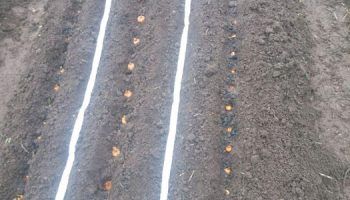
If onion seedlings are planted to produce bulbs, a distance of 10 cm should be left between the bulbs. The distance between rows should be 20 cm.
For greenery, you can use a denser planting option. This way, the bulbs are close together and don't need to be planted as deeply as in the first option.
If you need both turnips and greens, use a staggered planting pattern. The rows are spaced more closely. The bulbs are planted in two adjacent furrows, staggered relative to each other and slightly denser than if you only need turnips.
Steps:
- Make furrows about 5 cm deep.
- Treat the bed with a solution of Fitosporin (1 teaspoon per 10 liters) or simply sprinkle fine salt on the soil. Wood ash can be added for disinfection.
- Then plant the onion sets. Plant them deep enough so that about 1/3 of the bulb is still visible above the soil surface.
- After this, cover the bulb with soil to a depth of about 2 cm.
Caring for onion sets in open ground
Caring for the sets is very simple:
- Weeding will help loosen the soil, which is exactly how this vegetable prefers. This will prevent the soil from becoming crusty or hardened.
- Get rid of any weeds in a timely manner.
- If the green onions begin to turn yellow or white, apply nitrogen-containing fertilizers, but only in May, as their use after this time will stimulate the growth of greens at the expense of the turnips.
- Two weeks after the first feeding, you can add a potassium-containing mixture to enhance the effect.
- If you don’t want to use chemicals, vermicompost, ash, or an infusion of nettles or other herbs will do.
Ammonia can be used instead of nitrogen fertilizers. Simply take two tablespoons of ammonia and dissolve them in a container with ten liters of water. To properly apply this fertilizer, first moisten the bed with clean water and then apply the ammonia solution to the rows.
Top.tomathouse.com advises: what to do to prevent onions from bolting
To prevent the bow from releasing the arrow prematurely, use one of these options:
- Overwintering in a heated room - this option can only be controlled if the bulbs are stored at your home.
- If you're using store-bought bulbs, you can also prevent them from sprouting prematurely. Allow them to acclimate. Keep them near a heating element for 14-15 days, then move them to a heated room.
- A warm bath with water at 40°C can help. Soak the bulbs in it for 8 hours. Most importantly, keep the water warm the entire time. Afterward, dry the bulbs thoroughly and store them in a room-temperature location.
Growing onions isn't difficult. You'll reap a bountiful harvest if you follow the recommendations in this article.