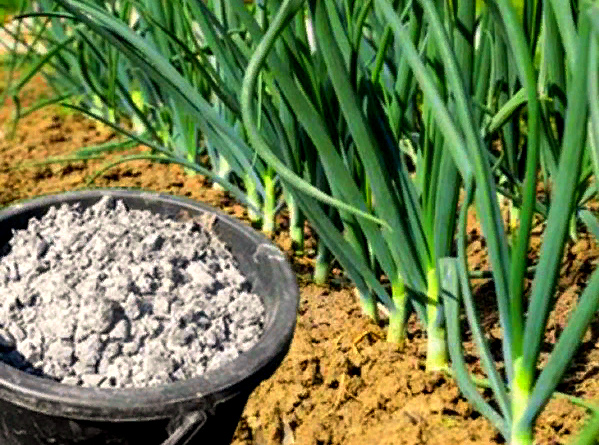
Ash is used for onions as a general fertilizer, but it has its own unique characteristics. In this article, we'll discuss how to apply ash to onions, how often to do it per season, and discuss commercially available products containing this fertilizer.
Content
- 1 The importance of using ash as a fertilizer for onions
- 2 When to use ash
- 3 Comparison of ash with ready-made products from the store
- 4 Which onion fertilizers contain ash?
- 5 When and how to feed onions with ash
- 6 Methods of using ash for onions
- 7 Planting onion sets with ash
- 8 Mistakes in fertilizing onions with ash and advice from Top.tomathouse.com
The importance of using ash as a fertilizer for onions
Wood ash contains approximately 30 micro- and macroelements. Experiments have shown that 1 kg of substrate contains up to 250 g of calcium, 80 g of potassium, and 30 g of phosphorus.
For feeding onions, it is recommended to use ash from straw or deciduous wood:
| Type of ash | Share in % | |||
| Calcium | Potassium | Phosphorus | ||
| From straw: | rye | 8 | 16 | 5 |
| wheat | 6 | 14 | 6 | |
| From birch firewood | 40 | 5-6 | 12-13 | |
| From sunflower stems | 18 | 36 | 3 | |
The ash composition also includes manganese, copper and zinc.
The main advantages of this natural fertilizer include:
- acceleration of natural soil-forming processes (rotting of plant components and formation of humus);
- presence of macronutrients in a form that is easily assimilated;
- no chlorine;
- alkalization of the soil, which is especially important when growing crops on acidic soils;
- increasing plant resistance to temperature fluctuations and water deficiency;
- protection against bulb aphids and pathogenic fungi.
Read the article: Onion sets: planting and care.
When to use ash
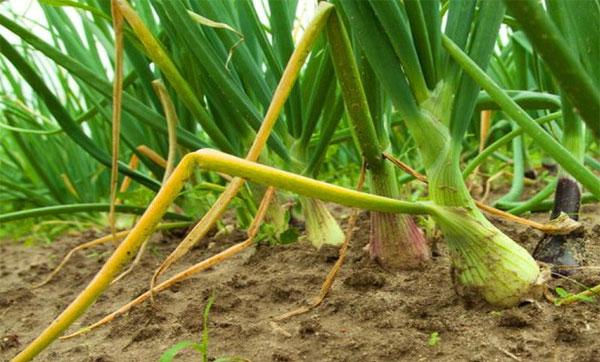
An infusion of wood ash should be used immediately when signs of potassium deficiency appear:
- the appearance of yellowish spots on the leaves;
- curling at the edges of the foliage;
- drying of leaves.
Comparison of ash with ready-made products from the store
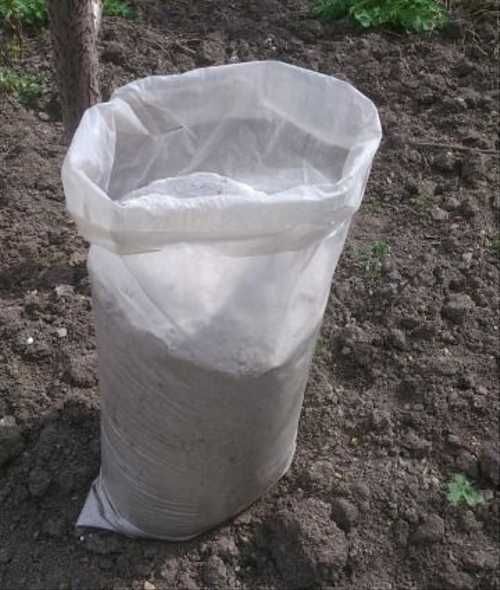
Wood ash is characterized by its lack of nitrogen and high calcium, potassium, and phosphorus content. It is believed that 1 kg of ash is equivalent in elemental composition to 220 g of superphosphate, 0.5 kg of lime, and 240 g of potassium chloride. To compensate for the nitrogen deficiency, it is recommended to combine ash with urea. This combination can be used instead of the industrially produced Agricola-2, which contains phosphorus, nitrogen, potassium, and magnesium in physiologically appropriate proportions.
Which onion fertilizers contain ash?
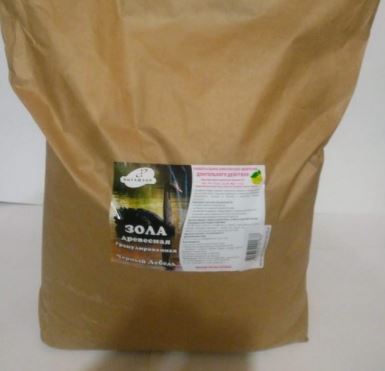
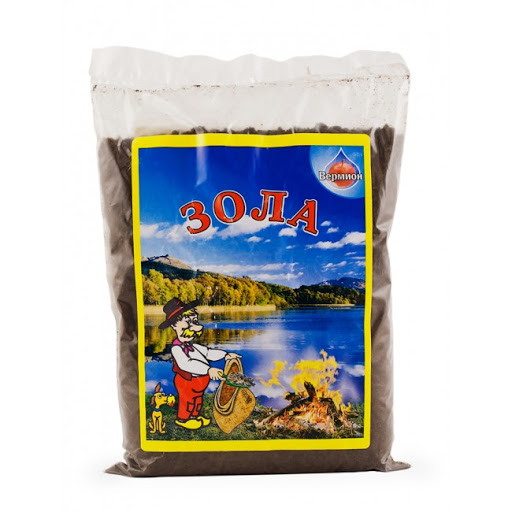
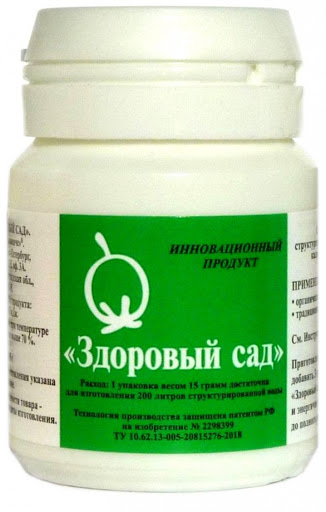
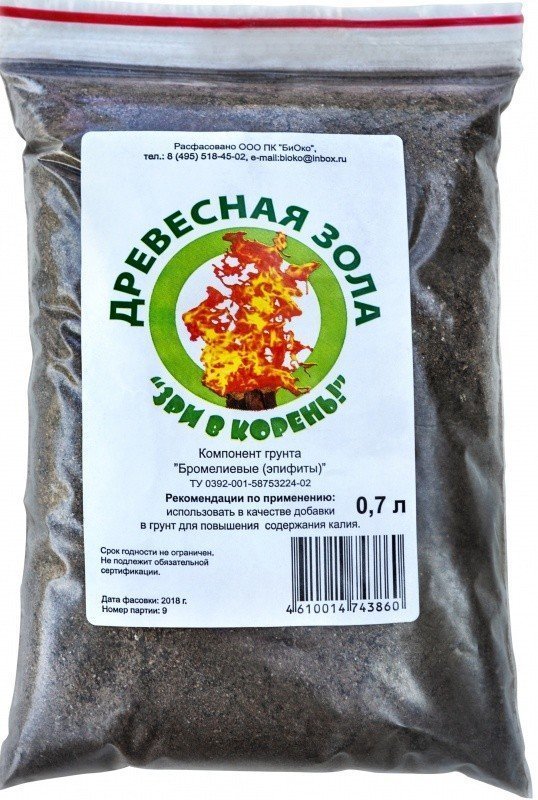
If necessary, you can purchase fertilizers containing various types of wood ash in the store:
| Name | Description |
| Vitaflor
|
Contains ash from deciduous trees. |
| Vermion
|
|
| Healthy Garden
|
One of the components is wood ash. |
| Look at the root
|
When and how to feed onions with ash
Onions begin to be fed from the moment the greenery appears, taking into account the specific characteristics of the plant.
| Top dressing | Onions | Onion on a feather |
| First | Nitrogen-containing fertilizers are added to the soil 10-14 days after planting. Manure or bird droppings can also be used. | Fertilize once 10-14 days after sowing. Complex mineral fertilizers containing phosphorus, potassium, and nitrogen are the preferred fertilizers. Gardeners also recommend a two-stage fertilizer application, alternating ammonium nitrate (or urea) and wood ash at weekly intervals. |
| Second | It is carried out after 4 weeks. To meet the onion's needs for nitrogen, potassium, and phosphorus, ash is used in combination with urea. | |
| Third | This is done in the summer when the bulb begins to form (in July-August). Fertilizing with ash is recommended because the plant requires large amounts of potassium and phosphorus. |
Green onions require nitrogen for vegetation, which promotes the development of green mass, which should be taken into account when choosing fertilizers.
Before planting onions, the beds are treated with wood ash. If the soil contains a lot of sand, it is best to apply fertilizer in the spring; if the soil is heavy, apply it in the fall and spring. In the fall, apply up to 600 g of substrate per 1 m.2, making sure to dig it up. Excessive ash has a detrimental effect on the microflora and earthworms.
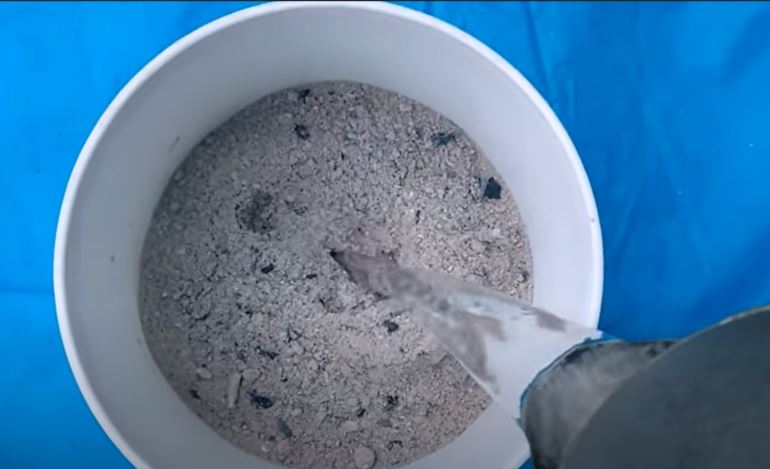
In the spring, if fertilizer was not applied in the fall, approximately 100 g of ash per 1 m is added.2 In powder or infusion form. It's best to cultivate the beds in the evenings. Fertilize at the roots.
Experience shows that the best results can be achieved by alternating ash fertilizers with manure (or poultry manure). Organic fertilizers are added in the fall, and mineral fertilizers are added in the spring.
Methods of using ash for onions
Ash can be used in the form of powder and infusion for:
- root and foliar feeding;
- control of pathogenic fungi and insect pests (dusting or irrigation);
- preparing seeds for sowing and bulbs for planting (seeds are soaked in an ash solution for 4-6 hours; 1 g of ash is infused in 100 g of water for 48 hours);
- alkalization of the soil directly during planting (10 g of wood ash is added to the hole);
- better preservation of seeds and bulbs (sprinkled with dry ash powder).
| A type of infusion | Method of preparation and application | ||
| Ash mass, g | Volume of water, l | Steeping time, hours | |
| For feeding | 250 | 10 (boiling water) | 48 |
| From pests | 100 | 10 | 24 |
| For watering seedlings, soaking seeds and bulbs | 20 | 1 | 48 |
Some gardeners, for foliar feeding, prepare a solution by pouring 300 g of ash into 100 liters of boiling water, adding 50 g of laundry soap and leaving it for 48 hours.
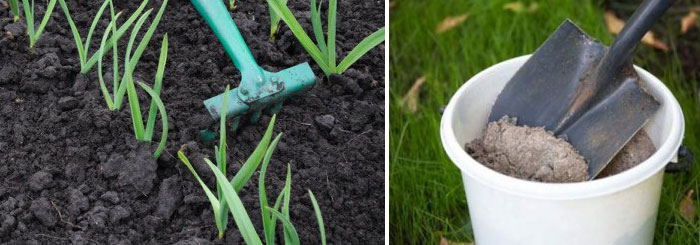
In dry form, ash is sprayed over the surface of the beds, using 10 m2 About 1 kg, or they can be dug over, increasing the ash consumption to 3 kg per area. When applied to the soil in the spring or fall along with other fertilizers, the substrate consumption can reach approximately 6 kg.
If necessary, wood ash is combined with certain fertilizers and substrates:
- compost, humus or peat;
- urea (1 g of urea and 20 g of ash are dissolved in 1 liter of water);
- sawdust, after which the beds are mulched (such mulch protects against dehydration and harmful insects).
Ash in compost
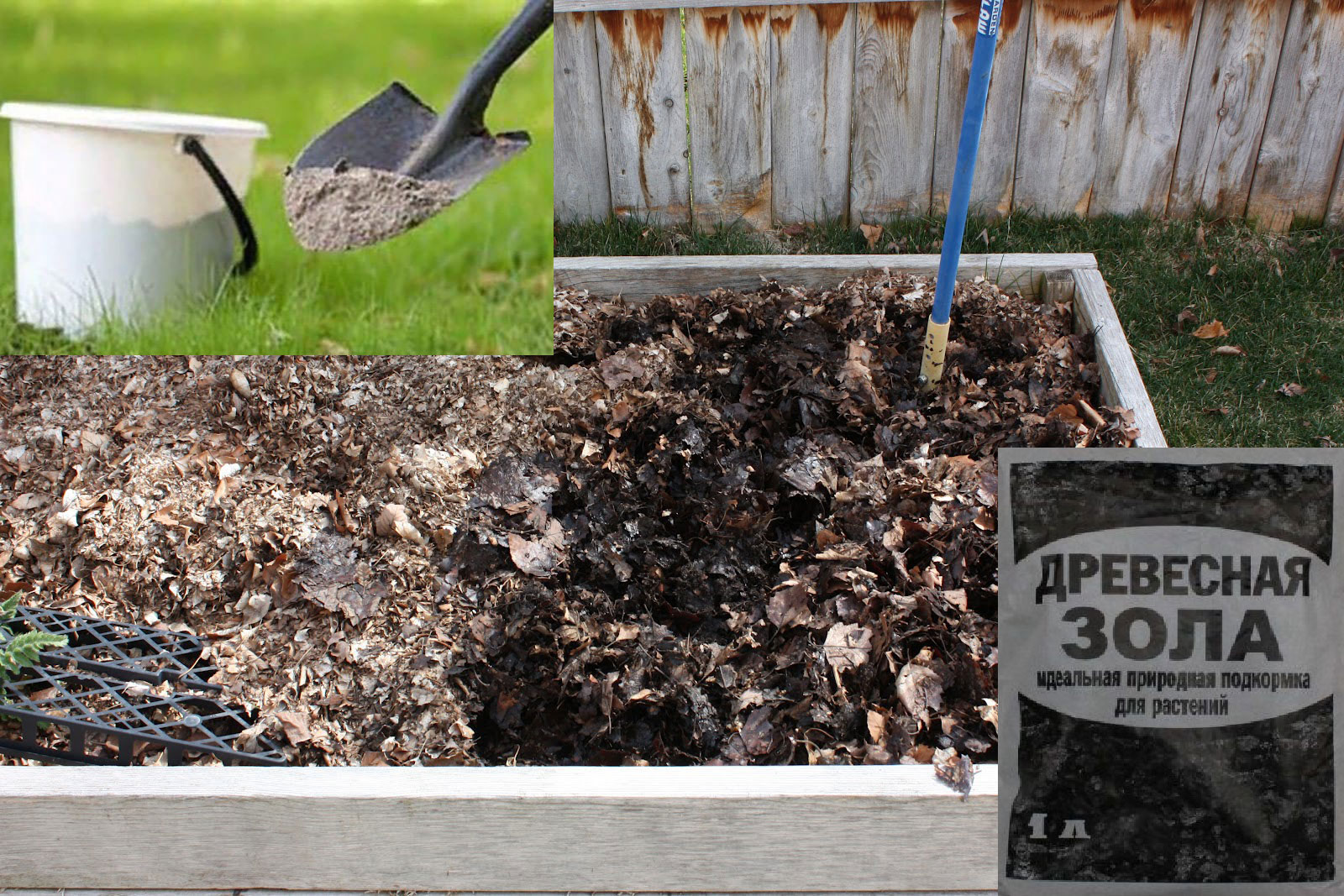
Ash activates decomposition, enriching the compost with beneficial microelements for plants and making it alkaline. Therefore, if you plan to fertilize alkaline soils with organic matter, ash should not be added.
Ash infusions
The following common methods are used to prepare wood ash infusion:
- Dissolve approximately 50 g of sugar and 15 g of yeast in 3 liters of water. After 72 hours, add a shovel of ash, compost, and sand, 5 kg of chicken manure or cow dung, 10 kg of compost, 1 liter of kefir, and 3 liters of home-brewed mash to a 200-liter container. After 7 days, the infusion is ready. Before use, dilute with water in a 1:1 ratio.
- A 250-liter container is filled one-third full with herbs (chamomile, nettle, plantain, etc.), then topped with 5 kg of ash and 20 kg of compost. The resulting mixture is filled to the top with water and left to steep for 10-14 days. The day before fertilizing, the resulting infusion is diluted tenfold.
Planting onion sets with ash
Avoid planting onions in the same place where they grew last year. Good predecessors include potatoes, cucumbers, cabbage, zucchini, and tomatoes. The site should be level and well-drained. It also shouldn't be flooded, as this will cause the onions to rot.
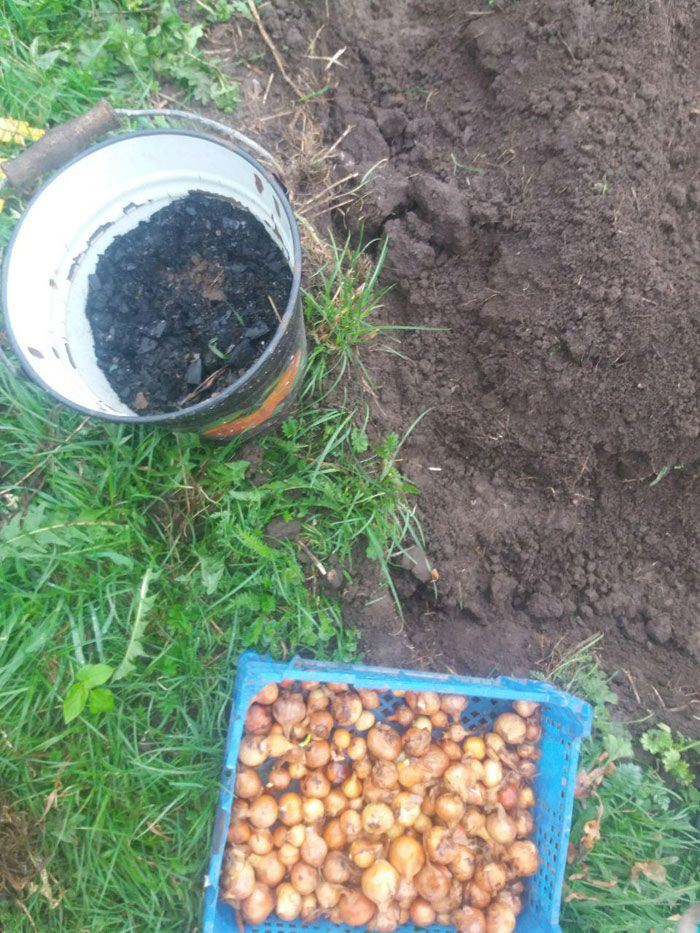
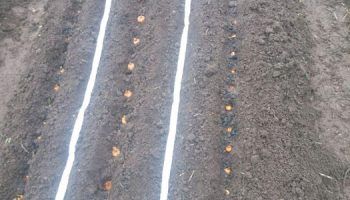
After choosing a site, prepare the soil. Dig the soil thoroughly, scatter humus, and spread it across the bed. Next, make furrows, add ash, cover with a thin layer of soil, and water with warm water. Next, plant the onions: place each bulb in the furrows, spaced 15 cm apart, and press lightly into place.
Mistakes in fertilizing onions with ash and advice from Top.tomathouse.com
To achieve good results when growing onions, our portal http://top.tomathouse.com recommends following these guidelines:
- You can sprinkle ash on the onions from time to time;
- apply ash powder to all cuts, as well as to the bulbs and their seeds before storing them;
- store the ashes in a dry place, preferably in a sealed container, with air humidity less than 50%;
- to combat onion aphids, use an ash infusion obtained by infusing 100 g of ash diluted in 10 liters of water for 48 hours;
- do not use ash fertilizers to compensate for nitrogen deficiency; there is no nitrogen in the substrate;
- Do not mix wood ash with nitrogen-containing fertilizers, as this will result in the formation of ammonia, which is toxic to plants;
- Do not use ash together with fertilizers that contain phosphorus, since the latter, as a result of chemical reactions, is transformed into a form that is inaccessible to assimilation by plants;
- do not allow ash to mix with manure or bird droppings, as this leads to the formation of nitrogen that is not available for absorption by onions;
- Due to the alkalizing properties of ash, it is not used when the soil pH is above 7.