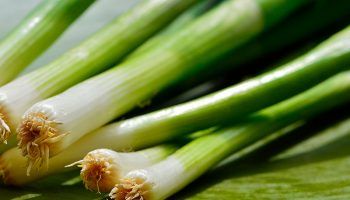
Onions are classified as herbaceous plants. The genus includes edible and ornamental varieties. This vegetable is a source of numerous vitamins, making it frequently used in cooking and folk medicine. Both the greens and the bulbs are eaten.
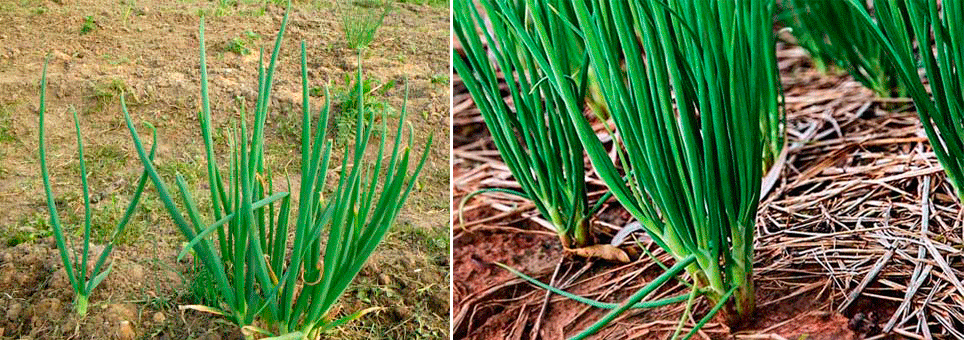
The latter resemble turnips in appearance. The long leaves are distinguished by a narrow, flat shape. To obtain a bountiful harvest, a fairly simple procedure must be followed. Thanks to the low cost, growing green onions can be a profitable family business.
Selecting onion varieties that are best suited for planting for green onions
The first step is to purchase suitable varieties.
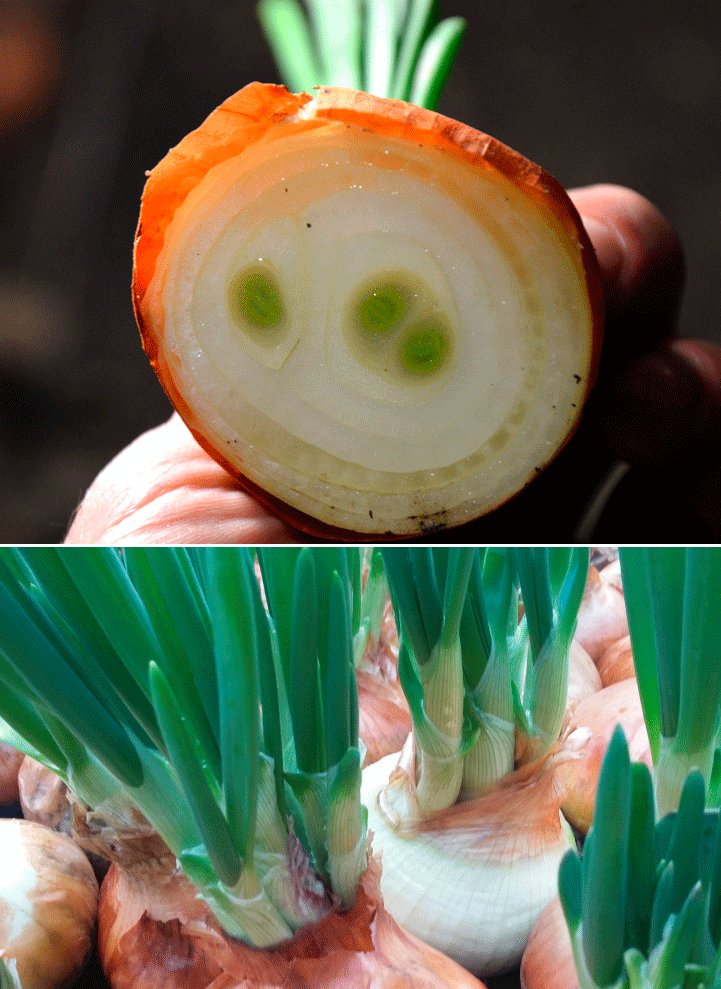
Among the wide selection, preference should be given to multi-germ varieties. Each geranium produces 3-5 leaves.
| Variety | Description |
| Arzamas | 2-3 embryonic mid-season variety. Frost-resistant. Susceptible to onion fly and downy mildew. |
| Bessonovsky | 2-3 embryonic, early maturing. Disease-resistant, but susceptible to downy mildew. |
| Pogarsky improved | |
| Rostov improved | 3-4 embryonic, early maturing. Cold-resistant, disease-resistant. |
| Spassky improved | Possibly 10 rudiments, mid-season ripening. Frost-resistant. Affected by onion fly and common onion diseases. |
| Strigunovsky | Mid-season, with approximately 3 rudiments. Susceptible to pests and diseases. |
Welsh onions are particularly popular. They are often called winter onions, Tatar onions, tubular onions, or sand onions. Both annual and perennial varieties produce uniform greens. The main difference between them is the number of cuttings possible. The yield per 9 m² ranges from 20 to 35 kg.
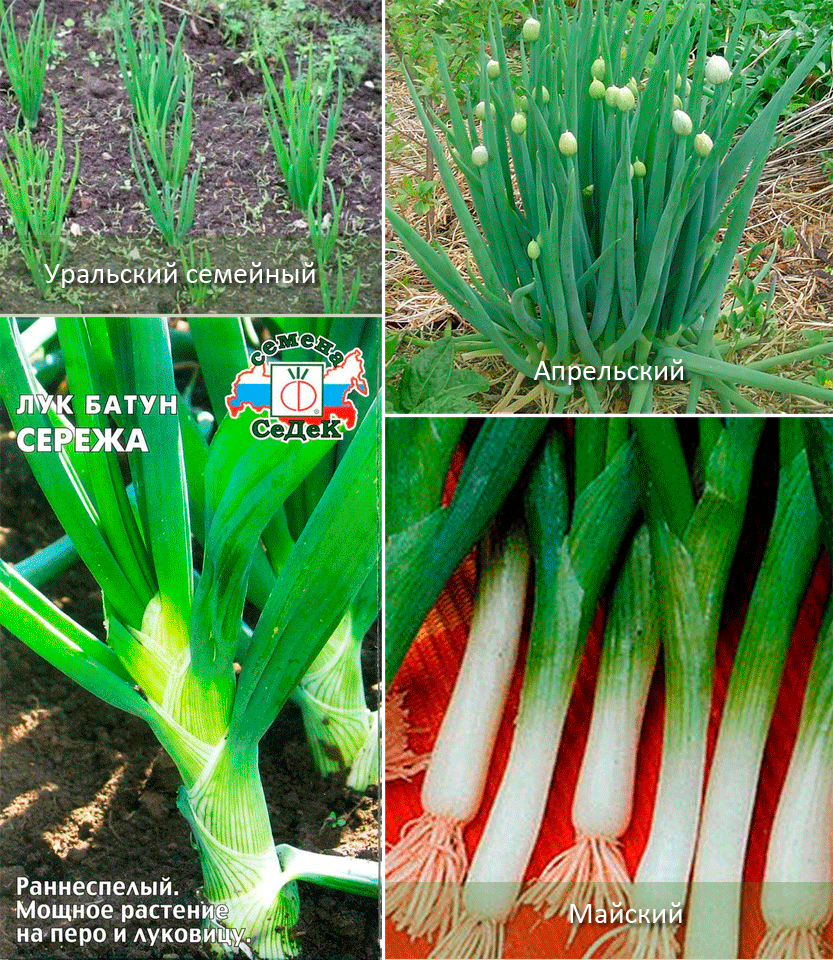
When selecting onions for forcing greens, don't ignore varietal characteristics. For example, the most popular varieties include:
- April - early, large leaves, do not become coarse for a long time. Cold-resistant, disease-resistant;
- Maysky is a mid-late onion that is grown for sale and personal use;
- Ural Family is a mid-season, frost-resistant, and productive variety. Its leaves have a delicate texture and a semi-sharp flavor;
- Serezha is an early, winter-hardy variety. Its gray-green feathers reach over 50 cm in length.
Chives are prized for their aromatic leaves. Their characteristics include impressive length, delicate texture, and narrow shape.
Growing pearl onions (leeks) produces broad, linear greens with a delicate flavor. If all the rules are followed, a single plot can yield at least 20 kg.
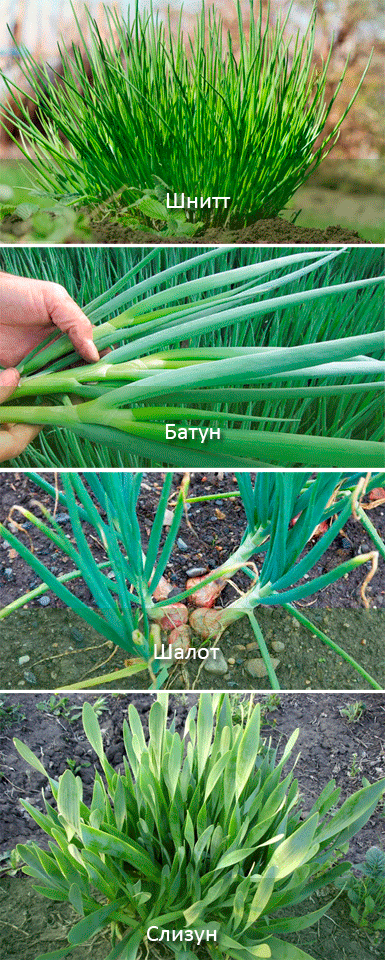
Shallots are the leader in terms of green leaf production. Experienced gardeners note the high yield and ease of cultivation of this variety.
Slizun has a faint garlic aroma, a delicate texture, and wide, flat tips. This variety is resistant to low temperatures and ripens early. It can be grown indoors. Canadian and Egyptian varieties of this multi-tiered onion are also characterized by high frost resistance. It does not freeze even with sudden temperature fluctuations.
To determine the number of rudiments, cut the bulb crosswise. Gardeners use this feature to differentiate onion hybrids.
Timing for planting green onions
They are determined based on the intended use, climate, planting location, and varietal characteristics. Greens can be grown indoors year-round. The key is to ensure sufficient sunlight and regular moisture. In greenhouses, the vegetable is planted between October and April.
Preparation of planting material
This stage is especially important for any crop. First, the gardener must purchase bulbs. It's important to inquire about the duration of the dormant period, as this determines the length of the growing season.

The next step is to cull the onions and soak them in a disinfectant solution. To speed up the greening process, trim the onions by a quarter. The treated material should be soaked in warm water for 5-6 hours.
Methods for forcing onions into greens
There are many ways to grow onions. They can be planted outdoors, indoors, or in sawdust. Due to their low maintenance, gardeners typically encounter no problems cultivating and planting them.
In open ground
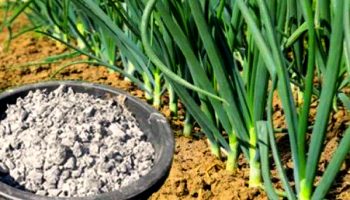
Herbaceous crops are planted in early spring or fall. Prepared seeds can be planted using either strip or bridge methods.
In the latter case, the gardener plants the bulbs in dense rows. To plant 1 m², about 10 kg of vegetables are required. The next step is to cover the crops with soil.
The ribbon method is also simple. Vegetables are planted in furrows, leaving at least 10-15 cm between them. During fall planting, the bulbs are covered with a layer of organic fertilizer after being transplanted into the soil.
Green onions can be grown from seeds. This method is rarely used, as the savings in seed purchases don't justify the time spent. The first harvest won't be seen until six months after planting.
Mandatory care includes soil preparation, mulching, fertilizing, and regular watering. Experienced gardeners often plant damaged specimens left over from culling in a separate bed. This minimizes unnecessary expenses.
In the greenhouse
The structure in which green onions are grown must meet the following requirements:
- Sufficient shelving. These devices help save space and increase yield. Separate sections warm up faster than undivided space;
- Proper location. The greenhouse is placed in a well-lit area. To compensate for the lack of light, phytolamps are installed in the greenhouse;
Drip irrigation. Regular watering is essential for a bountiful harvest; - The presence of an air temperature control system. It should not fall below 18°C. The overall health of the crops depends on this.
On sawdust
They are often used as soil substitutes. You can purchase soil substitutes at a pet store. Before pouring them into a pre-prepared container, disinfect the bedding with boiling water or a weak solution of potassium permanganate.
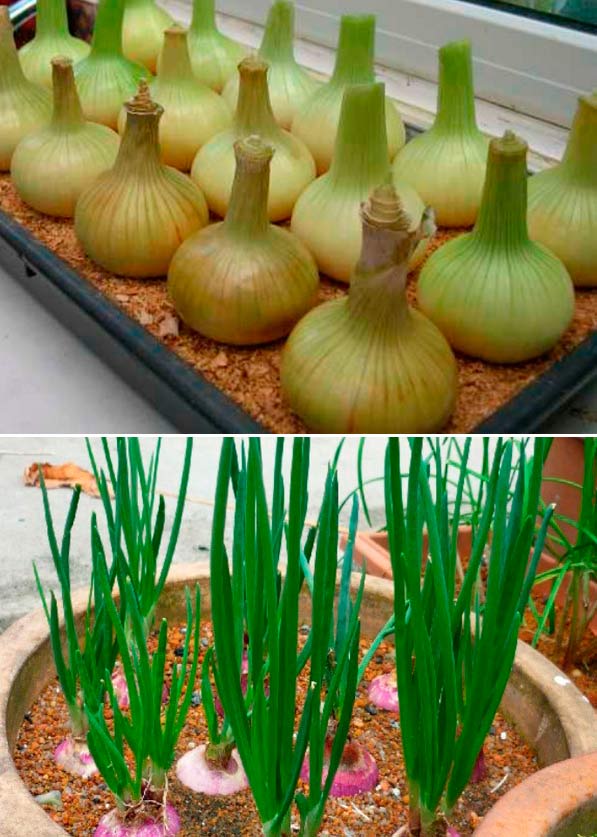
Line the bottom of the container with oilcloth, and peel the husks from the onions themselves. Then, wet the sawdust and place the treated onions on it. Regularly water the onions with a solution made of hydrogen peroxide and water. Use 10 ml of the main component per 1 liter of liquid. Ignore.
Sawdust retains moisture for a long time. The container with the planted bulbs can be placed in a garage or on a balcony. It's important to note that a new batch of sawdust will be needed for the next planting.
At home
Onion forcing at home is carried out in the following ways:
- In the soil. Fertile soil can be purchased at a flower shop or collected from a garden plot. The soil is added to the container only after cultivation. One bed will require 7-8 medium-sized heads of greenery. The resulting greens are enough for a family of three;
- In water. Select a container to fill with a solution of warm water and mineral fertilizer. The bulbs should be positioned so that only the bases are submerged in the liquid. To prevent rot, it is recommended to add 2-3 tablets of activated charcoal to the container. Feathers will appear within a week. You can begin cutting the linear leaves after 10-14 days.
Regardless of the method chosen, there are a few important rules to remember. This vegetable is a sun-loving plant, so special attention should be paid to lighting. Additional grow lights will need to be installed near the containers containing the bulbs.
It is strictly forbidden to place containers with water and soil near the heating system.
In the room where onions are grown, the air temperature should not be less than +22 ℃.
Top.tomathouse.com recommends: Growing Green Onions Hydroponically
Hydroponics is a method of growing herbaceous crops using a nutrient solution and an artificial medium. This technology allows for easy control of nutrient regimens, temperature, carbon dioxide concentration, and nutrient solution flow. The hydroponic system was developed with all the needs of vegetable crops in mind. Plant roots are exposed to air saturated with moisture. The substrate is made from chemically inert materials.
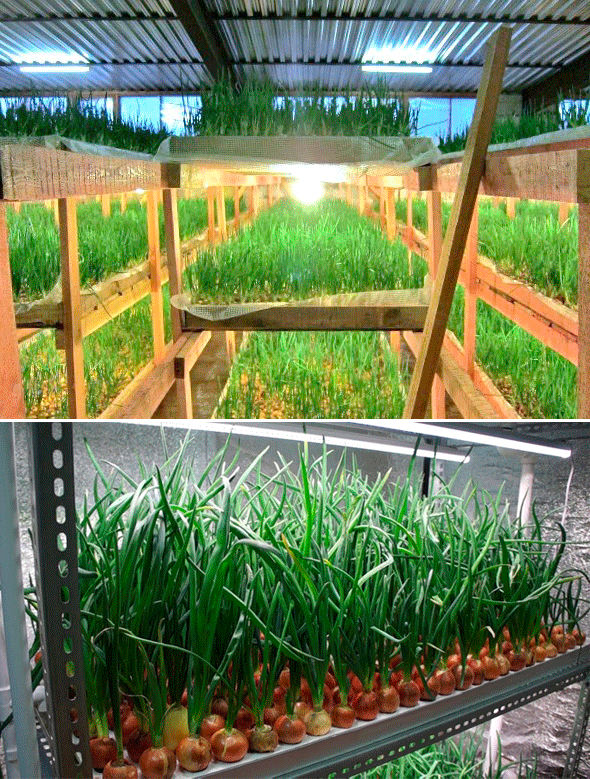
This method is popular among those who plan to grow greens year-round. Its main advantage is its short growing season.
Special varieties are used for forcing. Among them are Arzamassky, Spassky, Soyuz, and Bessonovsky.
To ensure a bountiful harvest, it is recommended to use autumn harvest heads for sowing.
An added bonus is the lack of weed problems. Thanks to this super method, growing onions is quick and easy, and doesn't require significant investment. The latter is especially important when running a business. The resulting profit will justify all expenses.