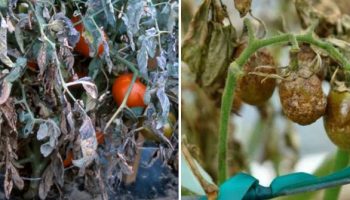
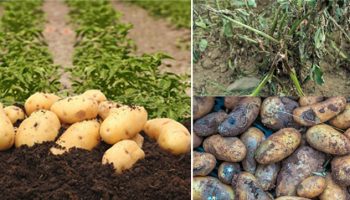
Powdery mildew is one of a number of diseases that affect flowers, plants, and vegetables. It is sometimes called powdery mildew or powdery mildew due to its appearance, the white patches that appear on the leaves.
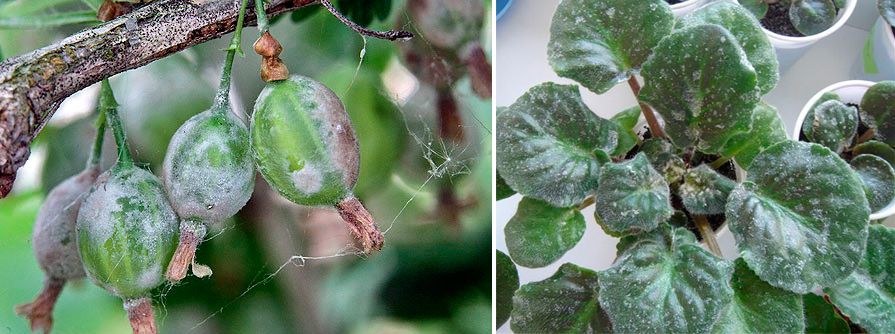
Content
- 1 What is powdery mildew and how does it appear?
- 2 Top.tomathouse.com provides general information on how to combat powdery mildew.
- 3 Differences between powdery mildew and downy mildew
- 4 Powdery mildew on vegetables
- 5 Controlling powdery mildew on shrubs and trees
- 6 Powdery mildew on garden flowers
- 7 Powdery mildew on houseplants
- 8 Downy mildew
What is powdery mildew and how does it appear?
Powdery mildew is a fungal disease caused by Erysiphea or powdery mildew fungi, of which there are approximately 700 species. A vast majority of crops are susceptible, but only a small percentage are resistant. Grapes, gooseberries, and roses are the most susceptible. Peaches, beets, pumpkins, and cereals are also susceptible. Symptoms are generally similar across all plants, but the pathogens vary. For example, Sphaerotheca mors-uvae favors gooseberries and black currants, Blumeria graminis attacks cereals, Uncinula necator attacks grapes, and Erysiphe cichoracearum attacks squash and cucumbers.
The first and most noticeable symptom is a white coating on leaves, petioles, young shoots, and stems. Drops of moisture may appear on the surface.
The disease causes rapid wilting of the plant and disruption of photosynthesis.
In addition, powdery mildew causes cracks to form on the leaves, through which other pathogens can enter, leading to re-infection.
Plants are most often susceptible to this infection during prolonged rainfall, high air humidity, and also due to excessive amounts of nitrogen in the soil.
Incorrect watering can cause disease.
Top.tomathouse.com provides general information on how to combat powdery mildew.
When the first signs of the disease are detected, remove the wilted parts of the plant. Then, treat the affected bushes and the surrounding soil with a fungicide to prevent further fungal growth.
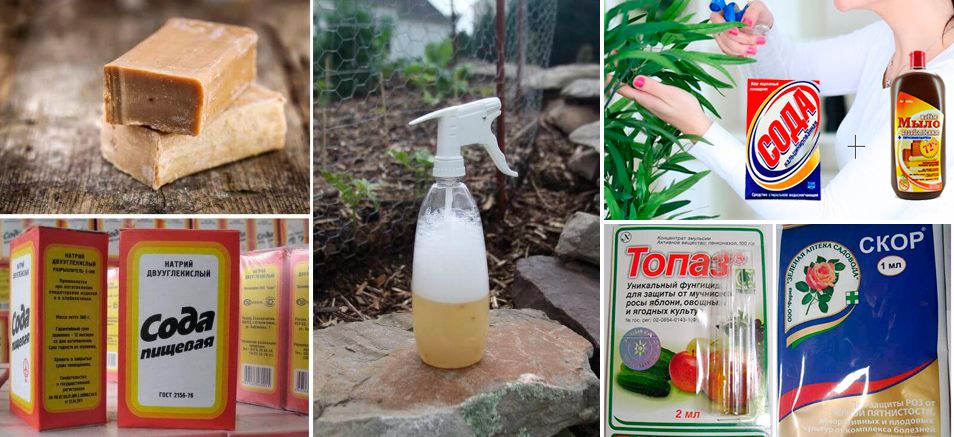
If indoor plants are infected, treatment is the same as for open-air plants, with one exception. After removing the infected parts, remove the top layer of soil from the container where the plant is growing, as it contains a colony of fungi. Replace it with new soil and treat it with a fungicide, just like the plant itself.
Read the article about combating powdery mildew on indoor plants.
As a preventative measure, it is necessary to carefully follow the rules for caring for the flower.
Differences between powdery mildew and downy mildew
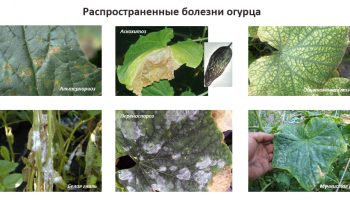
Powdery mildew fungi grow on the surface, and as the disease progresses, they first cover the outer surface and then the inner surface (the mold resembles flour). Leaves curl but rarely fall off. Downy mildew always develops on the underside of the leaves, with gray mold visible underneath and a yellow or light brown coating on top. Leaves rarely dry out; they become spotted, turn black, and then fall off.
Powdery mildew on vegetables
The disease also attacks vegetables, as we mentioned above, and the fungi are especially fond of beets and pumpkins.
Cucumbers
Powdery mildew on cucumbers is treated by spraying with fungicide solutions (Topaz, Oxychom). Folk remedies are also suitable, for example, 1 liter of kefir or sour milk per bucket of water, applied three times a day. In addition to this solution, you can use sulfur powder at a rate of 30 g per 10 m²; colloidal sulfur is also suitable, at 30 g per bucket of water.
Other methods of control include: infusion of mullein, marigolds, solutions of potassium permanganate in water, and soda with soap. You can read more about all the remedies, including folk remedies, on our website.
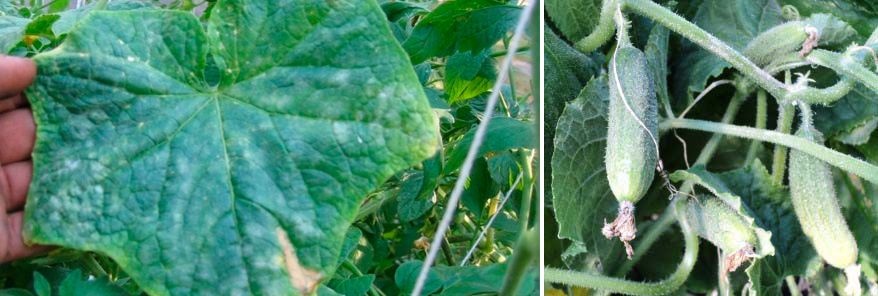
Tomatoes
Greenhouse tomatoes are often affected. To prevent the possibility of disease disinfection with fungicides is necessary.
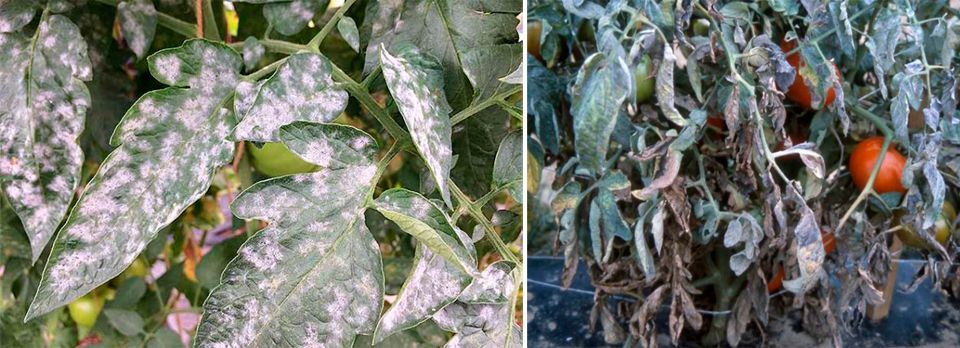
The disease often appears when seeds are planted for seedlings, causing the leaves to dry out at the edges. Control is the same as for cucumbers.
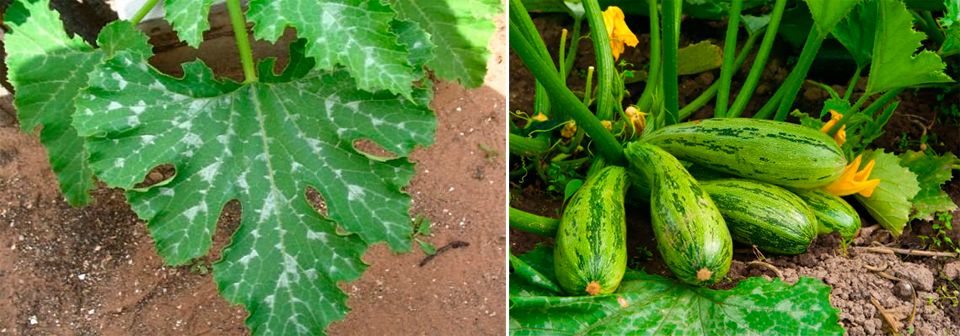
Zucchini
More drastic measures are needed. Remove all infected leaves and thoroughly dig up the surrounding soil. Then spray the area with a solution of soda ash or chemicals such as Kefalon or Carborane.
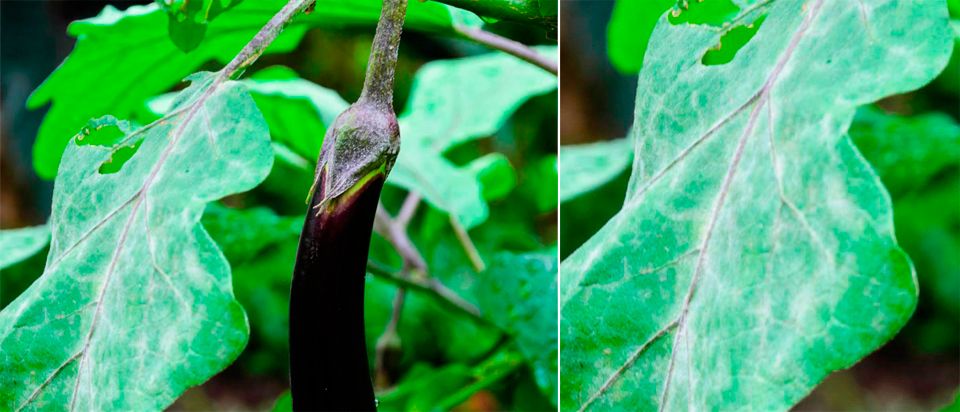
Eggplants
The infestation can be eliminated with a solution of washing soda or fungicides. At least 4-5 sprays are required.
Onion
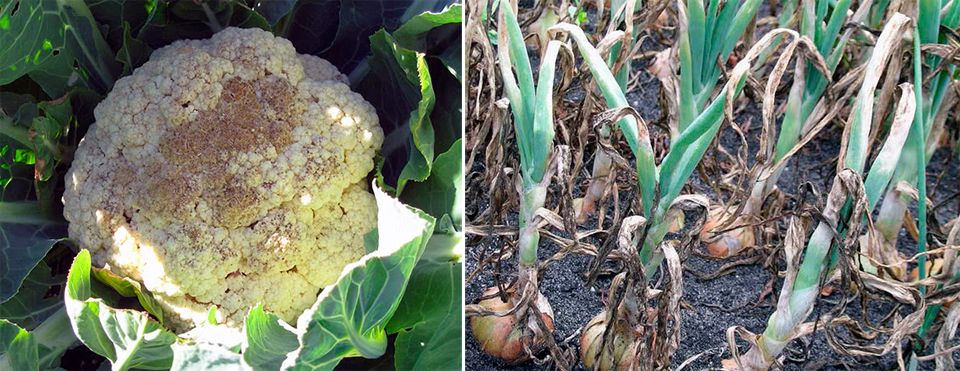
It is most often affected by downy mildew (peronosporosis). With normal powdery mildew, the infection begins on the outer surface of the green mass, while with downy mildew, it begins on the inner surface.
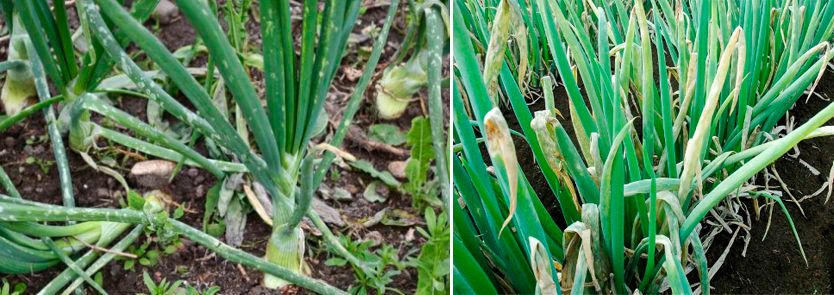
False rot is carried by wind or raindrops. However, the conditions for its development are exactly the same as for regular rot. Diseases can be controlled by destroying the affected parts and spraying with a solution of baking soda or copper sulfate with soap added. How to prepare the first solution: take a 10-liter bucket of hot water, add 100 grams of grated laundry soap, 2 heaping tablespoons of baking soda, and stir. Spray three times a day, about a week apart.
Peas
The leaves and stems of the crop are susceptible to damage, and a characteristic whitish coating appears on the surface.
The disease develops rapidly in hot climates and high air humidity.
Preventive measures include earlier planting.
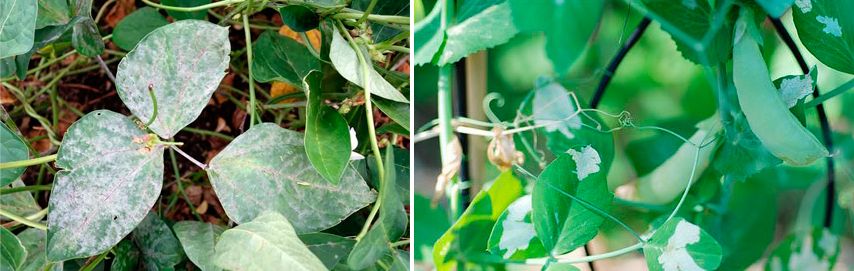
At the first signs of damage, the use of Energen is effective. 1 m² of area is sprayed with a liter of solution: 10 drops of the preparation per 50 ml of water. A repeat is required after a week and a half.
Pumpkin
As with peas, leaves and stems are susceptible to the disease. If a white coating appears, remove the affected parts immediately.
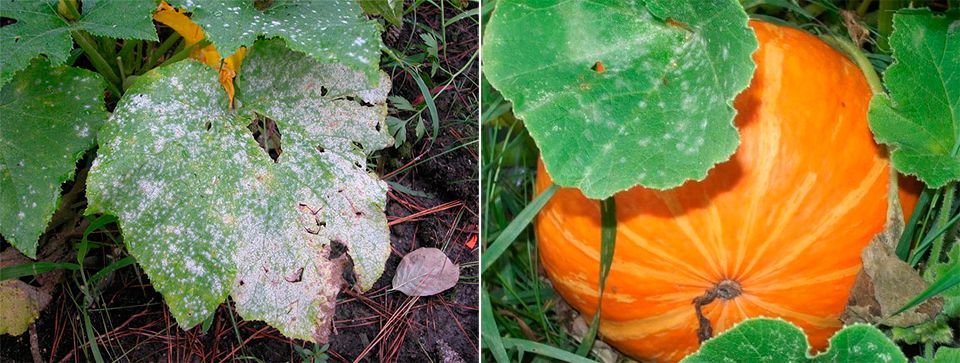
Regular spraying is recommended as a preventative measure. fungicides or folk remedies.
Controlling powdery mildew on shrubs and trees
Powdery mildew often affects fruit bushes and trees.
Currant
You can’t delay treatment, because by the second half of summer the entire bush will be infected, and possibly the nearby ones as well.
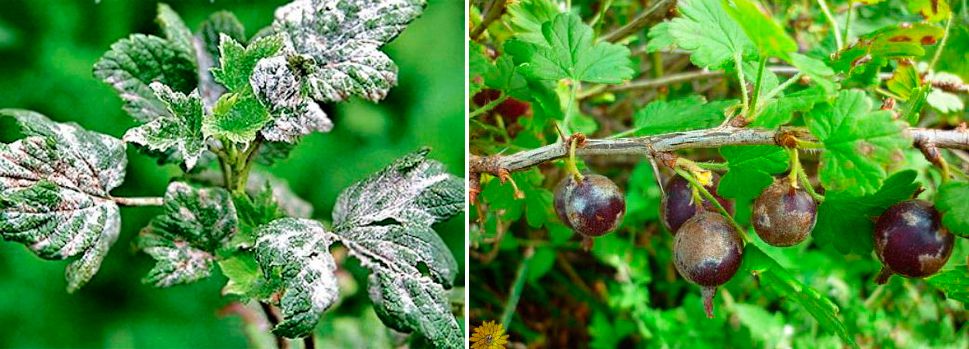
Control involves promptly removing infected parts and then spraying with fungicides. Folk remedies can also be used, but only if you understand the plant's specific characteristics; otherwise, another disease may develop.
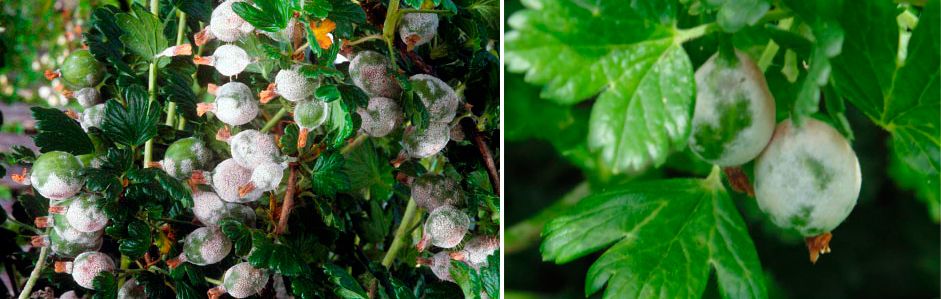
Gooseberry
The situation is exactly the same as with currants. Folk remedies include spraying with kefir, wood ash, cow dung, and soda ash. Among chemical treatments, Gaupsin is very popular.
Grape
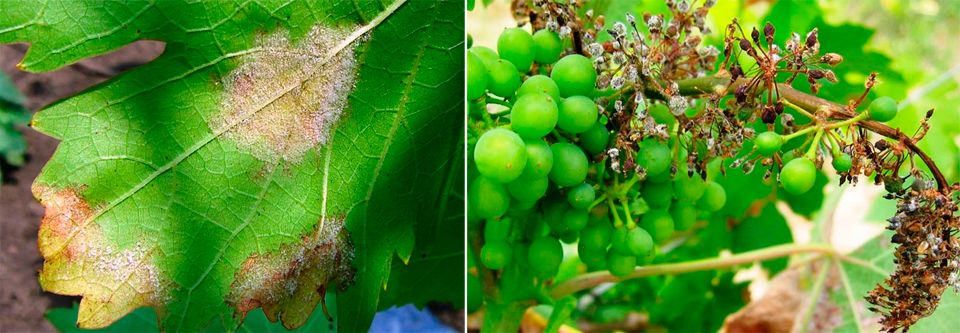
The disease affecting grapes is called oidium, a type of powdery mildew. Symptoms are identical to those of the original disease and develop at high temperatures and humidity.
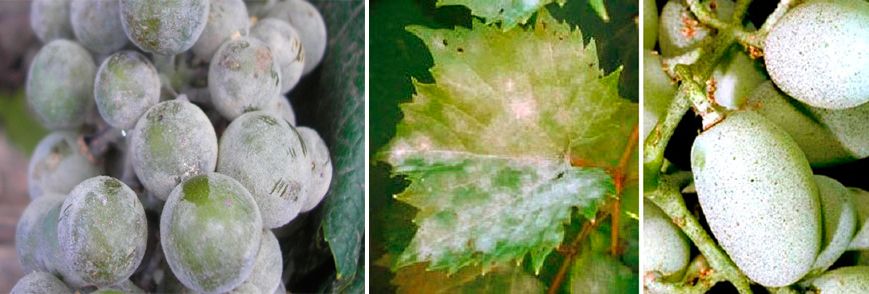
Control is fairly straightforward. Infected leaves should be removed promptly, and fungicide treatments should be applied. Thorough soil tillage is also recommended.
Strawberry
Berry damage is noticeable by curling leaf edges that take on a bronze tint, the appearance of a white rash and a moldy odor.
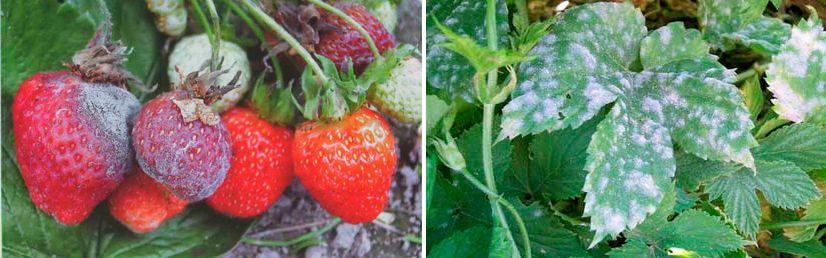
As a preventative measure, it's important to follow proper growing practices. It's also recommended to spray the plant with a 1% colloidal sulfur suspension. This should only be done after flowering has finished or after harvesting.
If prevention does not help, medications such as Fundazol and Topaz are used.
Apple
Unlike other plants, apple trees do not die when infected, but suffer a 50% loss in yield, and the fruit's flavor is also impaired. A side effect is poor tolerance to low temperatures.
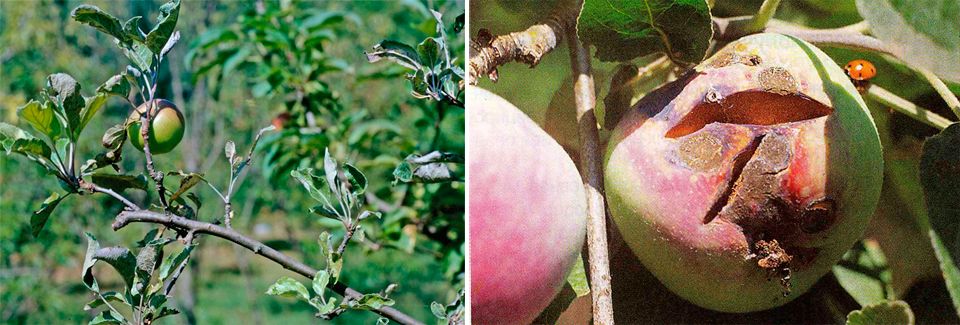
In order to get rid of the disease, the best solution would be to use Soda ash, mixed with soap. Dissolve 50 grams in 2-3 liters of water, then top up to 10 liters (a bucket) and add 10 grams of soap. Colloidal sulfur (30 grams per bucket of water) also works well. Regularity: three times a day every 3-4 days.
Powdery mildew on garden flowers
Even the beautiful representatives of the garden did not escape this problem.
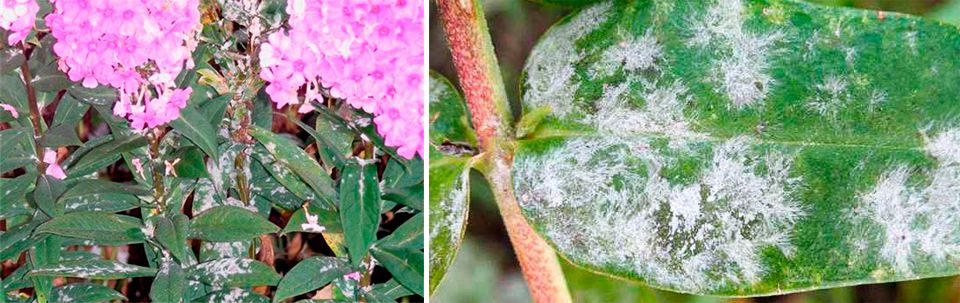
Phloxes
If symptoms of the disease are detected, remove the affected leaves. If the infestation is severe, dig up the entire bush. Nearby plants or flower remainsspray with a solution of colloidal sulfur (20-30 g per bucket of water).
Roses
Signs include premature curling of leaves and the formation of a felt coating on the stems.
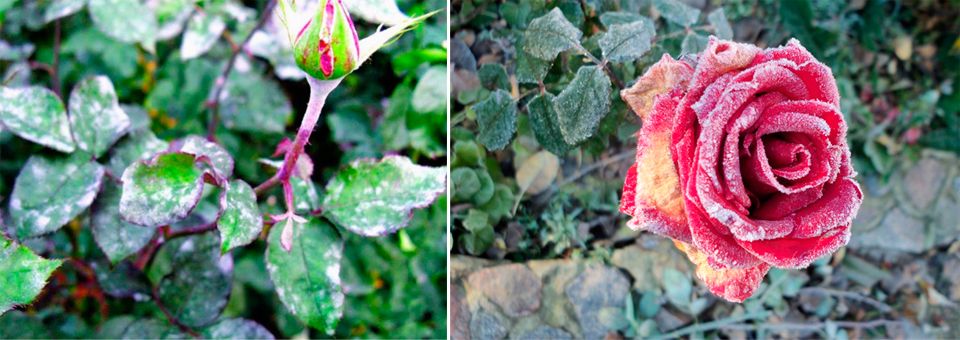
The disease will prevent roses from growing further and will eventually kill them. If symptoms are detected, spray with the recommended solutions. More details:Powdery mildew on roses: description and control measures
As a preventative measure, keep the soil around your roses as clean as possible and free of any weeds.
Petunia
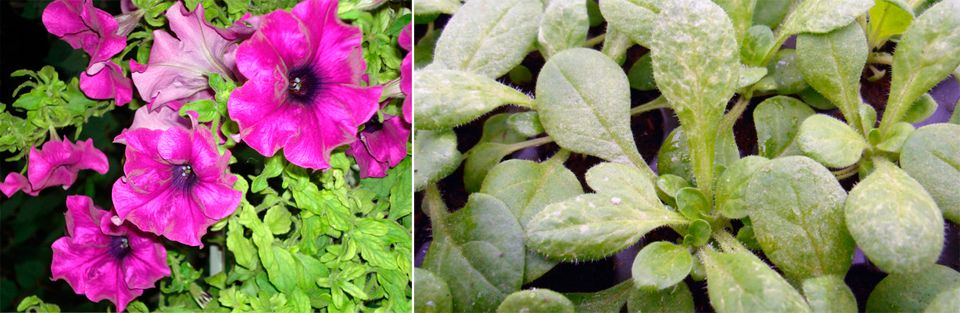
The disease causes rot, which leads to the sudden death of the plant. The symptoms are the same: a whitish rash. Control methods include removing infected parts, spraying the remaining parts, and thoroughly tilling the soil.
Violets
The buds of this flower are most susceptible to the disease.
Fungal growth is often caused by excess nitrogen in the soil. To address this problem, it's necessary to first conduct a complete soil analysis and then apply fertilizers that stabilize the soil's various nutrients.
Powdery mildew on houseplants
Indoor plants are no less susceptible to the disease than those grown outdoors. However, in their case, the disease is much more difficult to treat.
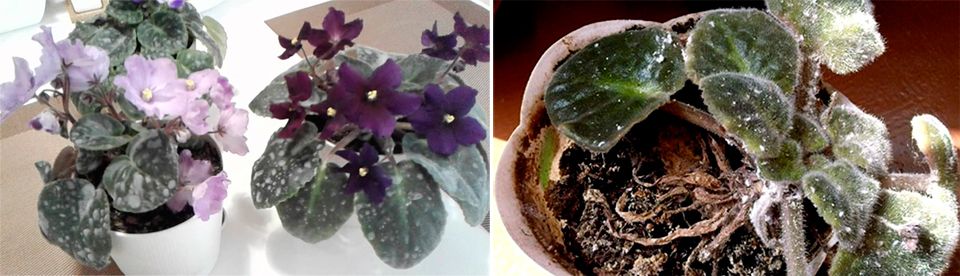
If signs of infection are detected, first remove all infected parts, as always, and then spray the remaining ones. Then, remove the top layer of soil from the container—the thicker the better, as this is where the fungi are found.
Place fresh, disinfected and fertilized soil in place of the removed one.
However, in some cases, a complete replanting of the plant into different soil will be required if the disease has become severe.
As a preventative measure, it is worth paying more attention to the polyOverwatering is the most common cause of powdery mildew. Also avoid excessively humid, musty air, and excessive use of nitrogen fertilizers. However, every plant is different, so simply follow the growing recommendations for your specific plant.
Downy mildew
This is a type of disease. It is most often found on vegetables.
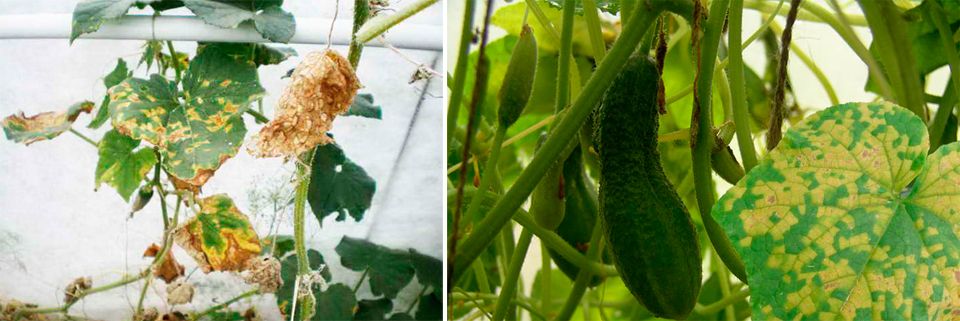
Cucumbers
It typically appears in August, when nighttime temperatures drop quite low. This causes condensation, which in turn provides an ideal breeding ground for unwanted spores. Additionally, a lack of potassium and phosphorus in the soil can also cause the disease.
Onion
It is best to use resistant varieties (Valenty, Orion, Sputnik, Ryabchik).
At the first sign of trouble, immediately stop using organic fertilizers and nitrogen-based fertilizers. Reduce watering to prevent further spread. Spray with 1% Bordeaux mixture. Onions can be eaten after 20 days. After harvesting, treat the soil with fungicides.
Control involves removing severely damaged plants and using fungicides and folk remedies. The following are very helpful:
- fermented milk products (sour milk, kefir, yogurt) in a ratio of 1:10 with cold water;
- treatment with wood ash (50 g per 1 sq.m) once a week;
- fermented grass, pour half a bucket of weeds with hot water, leave for 2-3 days, strain, use for spraying.
Sunflower
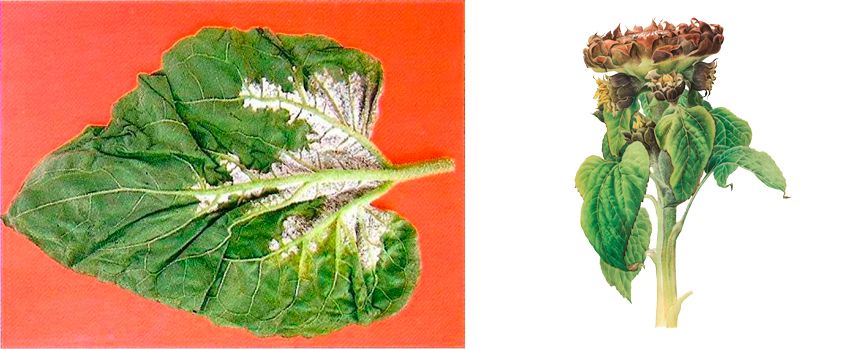
The causative agent is Plasmopara halstedii. The disease affects growth, delays ripening, and the root system stops developing. This most often leads to death, but it is possible for the plant to still bloom, but with much worse results.
Fungicides are used for control.
Grape
In the case of grapes, this is very serious. Failure to notice even the most subtle signs promptly can result in the loss of the entire vineyard. Therefore, regular preventative maintenance is essential, even if no symptoms are observed.
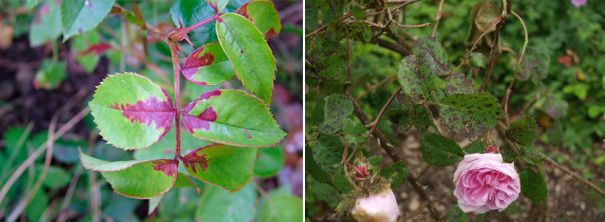
Roses
The disease progresses extremely rapidly on flowers, causing irreparable damage within just a day. Solutions such as Thanos, Previkur, and Ridomil are recommended as effective treatments.
Houseplants
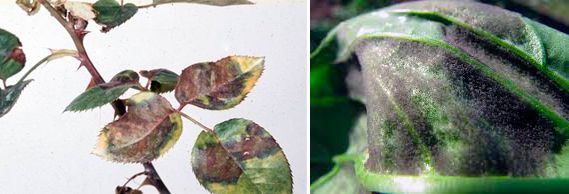
The sign is the appearance of yellow spots and wilting on the leaves.
To prevent this, seeds should be hydrothermally treated before planting. Treatment involves five sessions of spraying with a 1% Bordeaux mixture solution or fungicidal preparations.