Pricking out seedlings is a laborious process. It takes a lot of time and effort, and for inexperienced gardeners, it can be a difficult ordeal.
The root system of seedlings is fragile, and improper handling weakens their immune system, leading to increased disease and death. Beginners may find it easier to use the suggested method, which is readily used by experienced gardeners.
Advantages of the method of growing tomatoes without picking
Once they've grown strong seedlings without replanting, gardeners rarely return to the traditional method. There are several reasons:
- Reducing costs for seedling containers and soil.
- Saving time.
- Young plants are not subject to stress.
- The taproot develops fully and is pinched during transplanting. This factor reduces the amount of watering required for tomatoes in the garden.
- The seedlings take root faster in a permanent location, since even the thinnest ones are not damaged during planting.
Planting seeds and caring for young tomatoes is similar to the traditional method of obtaining healthy seedlings.
Various methods of growing without picking
The initial stage is entirely consistent with traditional methods. The seeds undergo pre-planting treatment, the substrate is prepared and disinfected, and containers are selected. The choice of container influences subsequent steps.
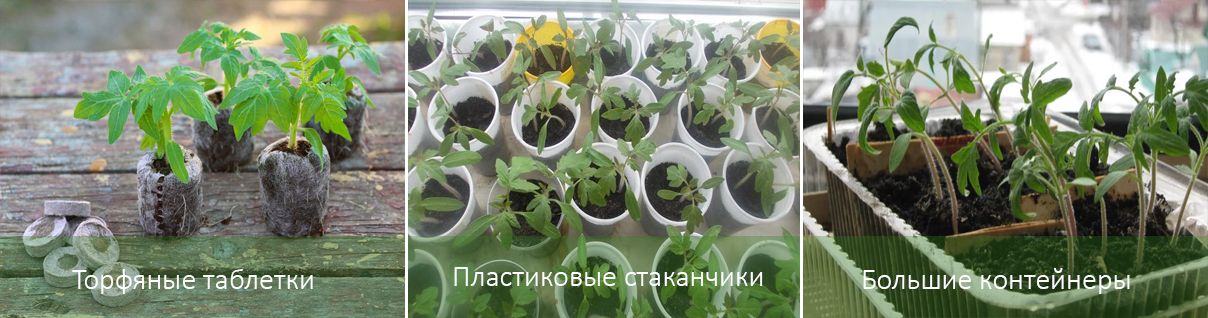
Peat tablets
This method requires some investment, but it eliminates the hassle of growing substrate. Medium-diameter tablets are soaked, and the seeds are sown. When roots begin to break through the protective shell, the seedlings are transplanted into pots, greenhouse beds, or under plastic covers if climate conditions permit outdoor tomato cultivation.
The cost of peat tablets can be reduced by using tea bags – seeds only need warmth and moisture to germinate successfully.
Plastic cups
Such containers are inexpensive. If necessary, they can be used throughout the winter to store food packaging and plastic bottles of various beverages. The standard recommendation is a 0.5-liter capacity. If tomatoes will be grown in a heated greenhouse, smaller containers are used.
The cups are disinfected and drainage holes are made. They are filled a third full with soil and 2-3 seeds are planted. When the first sprouts appear, the strongest ones are left. The weak ones are trimmed with nail scissors, and the healthy ones are transplanted to obtain more seedlings.
As the seedlings grow, add soil, stimulating the development of additional roots.
Seeds are sown in a similar manner in special trays sold in stores. The small cell size presents no difficulty, as the soft walls allow for easy removal of the seedlings and transplantation into the soil.
Planting in bags
Thick plastic bags, either homemade or used for dairy products, are used. They are thoroughly washed and disinfected beforehand. At the sowing stage, the edges are folded over, then gradually straightened, and soil is added. Before planting, the bags are carefully cut open, and the plants, complete with soil, are placed into the planting holes.
Large containers
If suitable containers are unavailable, seeds are sown in regular wooden or plastic seedling boxes using standard techniques. The spacing between seeds is 10 x 10 cm. When the first seeds sprout, they are separated with cardboard or plastic partitions. These partitions prevent the seedlings' roots from intertwining.
Pots made of peat or pressed cardboard
This method is expensive and is typically used for germinating seeds of exotic, expensive, or particularly productive varieties at home. Sowing is done in the usual manner. The main difference from plastic containers is that drainage holes are not required. Before planting the seedlings in the beds, simply carefully remove the bottom to allow the taproot to penetrate the soil unimpeded.
Seedlings in toilet paper
This method is gaining popularity because it's virtually free and doesn't require much space initially. It's called a "snail"—a roll of toilet or filter paper rolled into two layers. Seeds are placed between the layers, with polyethylene tape used as a moisture-retaining layer. This method is especially valuable if there are many seeds and their germination is questionable. The rolls are easily unrolled, mature seedlings are selected, and they are planted in pots.
Top.tomathouse.com recommends: an economical way to grow tomato seedlings without picking in five-liter bottles
Maximum savings are achieved by growing tomato seedlings in five-liter bottles. The seeds are soaked and immediately planted in a container cut in half lengthwise. This is done as follows:
- Drainage holes are made and a layer of crushed eggshells is poured in.
- Add 2 cm of clean sand and 10 cm of nutritious soil mixture on top.
- Spread the sprouted seeds at intervals of 7 x 7 cm and sprinkle with substrate.
The bottle is kept on a well-lit windowsill and watered regularly. Fertilizer is applied twice during the growing period.
The grown seedlings are transplanted into the soil. To untangle the roots, the soil is washed off with lukewarm water.