Late blight is especially prevalent on members of the nightshade family, so completely eliminating this fungus from tomatoes is unlikely, especially in humid climates. However, even a novice gardener can limit its spread and harmful effects.
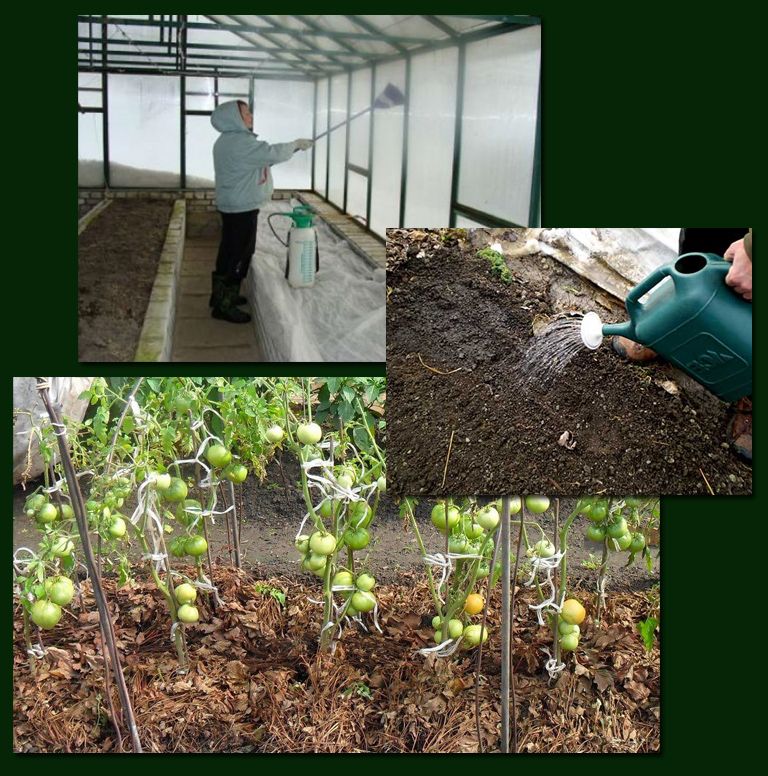
Soil disinfection
The soil is watered with a weak solution of copper sulfate or a solution of peracetic acid (a liter of 9% vinegar is mixed with 200 ml of hydrogen peroxide and left for a week in a warm place).
Disinfection is carried out in the spring, 2-3 weeks before planting tomatoes.
A week after disinfection, you can plant trichoderma in the soil.
Greenhouse treatment
To disinfect the greenhouse surface, it is not recommended to use harsh products. A solution of any non-chlorine bleach works well. Dilute it according to the instructions and spray it over the greenhouse surface. This is not recommended at temperatures below 5°C (41°F). Any remaining product should be removed with a cloth.
Ventilation
If nighttime temperatures do not drop below 12 degrees Celsius, the greenhouse should be left open to prevent excess condensation and humidity. At low temperatures, only the window can be left open. The main thing is to avoid drafts, which are harmful to the plants.
Watering
Watering should be done in the morning, minimizing the area of soil being wetted. For this, you can use a drip irrigation system, which is fairly easy to make yourself, for example, from plastic bottles.
Mulching
Mulch (sawdust, covering material, grass clippings) is used to prevent bacteria from the soil from reaching the plant itself. It's important not to mulch the soil until the ground has warmed up completely.
Processing
If the humidity in the area is high and the weather conditions are not hot, but rainy, then it will definitely be impossible to avoid the appearance of late blight, and fungicides must be used to combat it.