Hibiscus (Chinese rose) is a member of the mallow family and is widely distributed in subtropical and tropical zones.
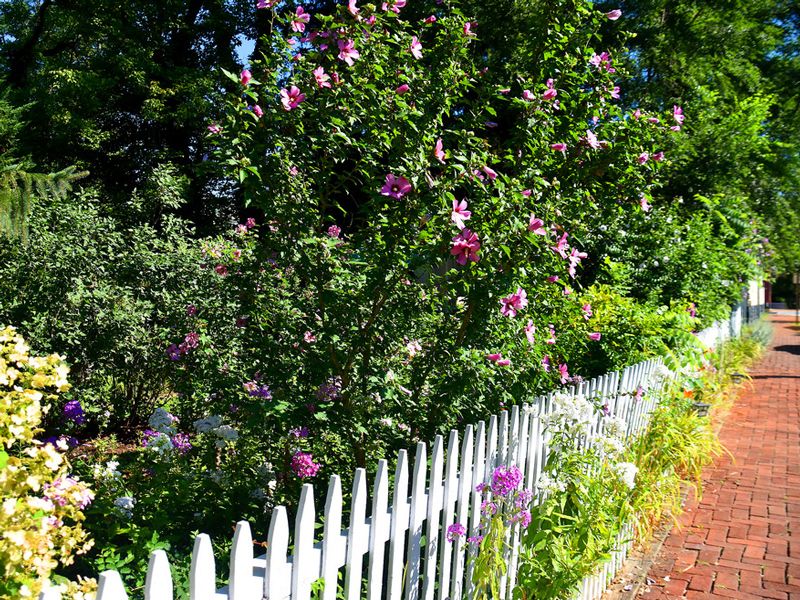
This flower has many varieties: herbaceous crops, shrubs and trees are found there.
Varieties and types of garden hibiscus
There are approximately 300 species of China rose in nature. Only a few can grow and bloom in temperate climates in the central part of the world:
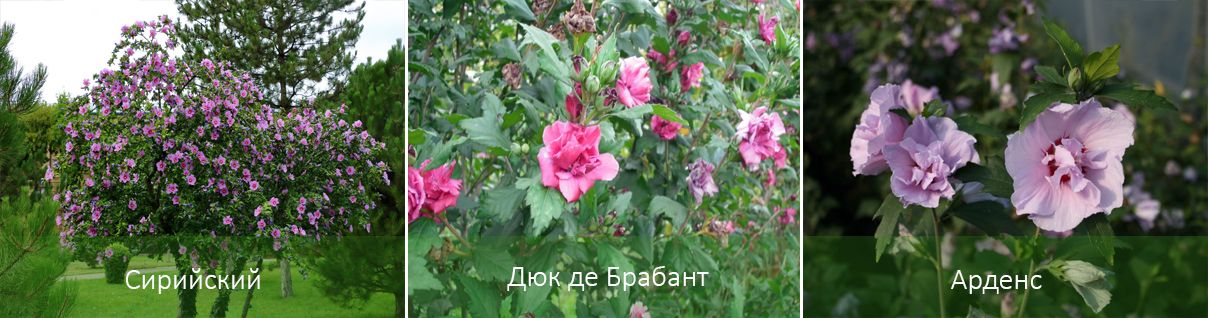
- Syrian – 5-6 meters tall, is a deciduous shrub. The leaves are ovate with solitary flowers in a variety of shades.
- Duke de Brabant is a variety of Syrian hibiscus that grows up to 2 meters tall, with a light brown trunk and rich dark green leaves. It produces double flowers in purple and red throughout the summer.
- Ardens is a deciduous shrub, up to 1.5 meters tall, with a lush and beautiful crown. Its leaves are ovate, trilobed, and green. It blooms with double purple flowers.
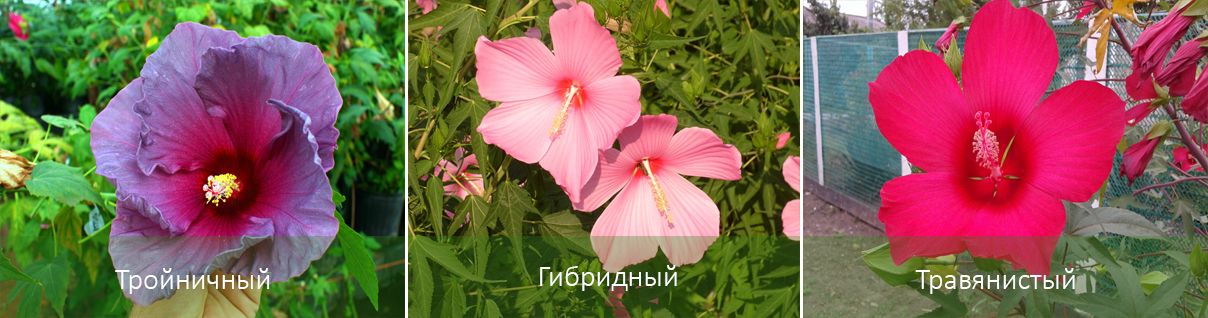
- The trifoliate tree, native to Africa, is a highly branched tree. It gets its name from the three-lobed structure of its leaves, which bear yellow buds with red centers in the axils.
- Hybrid – a perennial plant with large flowers of various colors.
- Herbaceous is a frost-hardy variety of hibiscus that blooms from August to September. The stems are large, sunflower-like, and the flowers are white or light pink.
- Marsh is a perennial variety with heart-shaped leaves and lilac, crimson, red, and violet flowers. It can withstand temperatures down to -30°C.
Planting in open ground
Planting in open ground should be done in spring before frost sets in. It can also be planted in autumn, but be sure to cover the base of the trunk with pine bark or spruce branches.
The China rose can grow in one place for about 20 years, provided the garden location is sunny and sheltered from wind and drafts. The soil should be rich, loose, and well-drained.
Technology for planting hibiscus in open ground:
- A deep planting hole is dug, which should be twice the size of the shoot, since the roots need a lot of space.
- A 4-5 cm thick drainage layer is poured onto the bottom; broken brick, expanded clay, foam balls and crushed stone are suitable.
- Sand mixed with compost, humus, peat and leaf soil is poured onto the drainage layer to a thickness of 16-18 cm.
- The hibiscus seedling is placed in the hole and rooted thoroughly, ensuring the root collar is level with the ground. It's crucial to plant the plant correctly in the hole.
- Afterwards, the hole is filled with soil, the plant is hilled and watered.
Hibiscus is repotted in spring or early summer before flowering. The top roots are removed, and the bush is moved to the new location with a lump of soil to avoid damaging the root system. Before planting, the crown is lightly pruned to help the plant establish itself more quickly in its new location.
Caring for garden hibiscus
Hibiscus thrives in loamy soil and does not tolerate limestone. Drainage and regular loosening are essential, as the shrub will die in waterlogged or overwatered soil. In the spring, the Chinese rose requires a greenhouse, as it prefers warmth and high humidity. These structures are removed in the summer.
If the shrub grows in a herbaceous plant, it should be watered frequently, especially in the first few months after planting. Reduce watering after flowering.
When planting in spring, to ensure a successful wintering, it's advisable to mulch the soil around the base of the plant. Cover the top with spruce branches or pine bark. After planting, water the shrub generously, loosen the soil around the roots, prune the branches, and fertilize. With careful care, the plant blooms from August to September.
Water as the soil around the base of the hibiscus dries. The water should be at room temperature; in hot weather, double the amount. If the plant doesn't have enough water, its leaves will droop.
The shrub needs fertilizing in spring and summer, twice a week. Phosphorus-containing fertilizers are suitable.
Regular loosening of the soil helps the root system breathe and become saturated with nutrients.
It's best to prune Chinese garden roses in spring or June; this improves flowering and creates a beautiful, neat shape. Types of pruning:
- Thinning, which involves removing weak and old shoots;
- Stimulating treatment is carried out in March-April and is necessary for good growth and early flowering;
- Corrective, with its help the correct and decorative shape is given to the tree crown;
- Autumn is carried out after flowering.
A young tree requires proper care before winter: it needs to be pruned, watered generously, and the base insulated with spruce branches, humus, compost, or dry sawdust. Afterward, wrap the tree in cotton cloth and bend it to the ground; a special mini-greenhouse can be used.
Features of hibiscus propagation
Plant propagation occurs in three ways.
Seeds
The plant is grown from late January to March. Before sowing, soak the seed in a strong potassium permanganate solution for half an hour, then place it in a solution containing a growth stimulant for 24 hours. After sowing, plant the seedlings in a container with peat and sand, cover with plastic wrap or glass. The temperature inside the pot should be at least 27°C. During the day, remember to open the plastic wrap and ventilate the seedlings, as well as water them thoroughly and regularly. As soon as the first three leaves appear, transplant the seedlings into separate pots and provide them with good lighting. Plant them in a garden near the house at the end of May.
cuttings
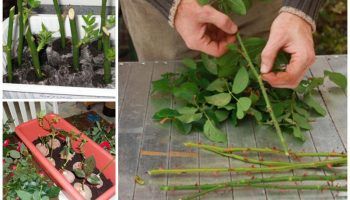
Cut off shoots with three internodes and treat the lower cut portion of the plant with a growth stimulant. Then repot into a pot filled with peat and place in a greenhouse with a temperature of at least 27°C. Once the shoots have rooted, pinch them off and replant them in different containers. Fill the pot with turf soil and sand. Once the bush has grown, it can be planted in a garden plot. Flowering will begin within the first year after planting.
Rhizome division
Dig the hibiscus out of the hole, identify the main root, and cut it in half. Immediately treat the cut with ash, and bury the new root, cut side down, in the hole, after treating it with a growth stimulant. Water with warm water.
The main problems when growing in a garden
Garden hibiscus is susceptible to pests and diseases:
- The most dangerous insects for China roses are aphids and spider mites. You can protect the plant from these pests by planting lavender nearby, and geraniums during the summer. This will repel aphids and create a beautiful floral arrangement. If you don't want to plant these plants, you can treat them with insecticides. Spider mites are difficult to control, so you'll need to use specialized products like Fitoverm and Taurus.
- The main disease of the shrub is chlorosis. It occurs due to a deficiency of iron and nitrogen. Leaves gradually turn yellow and fall off, while young shoots become covered with a yellow coating and become twisted. To prevent this, regularly fertilize the hibiscus. If the disease has already progressed, add iron chelate to the soil and spray it on the leaves.
- Yellowing leaves may be due to dry soil; increase watering, and the problem will resolve itself. This problem can also arise from injury to the root system during repotting or loosening the soil. In this case, it's advisable to strengthen the shrub's roots by placing them in a growth and rooting stimulant solution, such as Kornevin, and spraying the leaves with it.
- Leaf drop is typical for Syrian hibiscus, as it is a deciduous species. For herbaceous plants, the death of all above-ground parts before frost is normal. If this occurs prematurely and the leaves begin to turn yellow, the plant should be treated in the same way as for yellowing.
Top.tomathouse.com advises: how to prepare hibiscus for winter?
To ensure good growth and abundant flowering next year, the bush should be properly prepared for winter:
- First, determine the hibiscus variety: frost-hardy ones can simply be covered with spruce branches, while heat-loving ones should be moved to a pot in a warm place for the winter. It's important to remember that tree-like varieties shed their leaves in winter.
- Fertilize the root system with potassium in the fall, stop feeding with nitrogen fertilizers.
- Water once every 2 weeks until the first frost.
- Insulate the soil at the base of the bush with pine bark, sawdust, compost or humus to a thickness of 10 centimeters.
- Cover the hibiscus with a special material or build a greenhouse.
Growing garden hibiscus (Chinese rose) is not difficult; if you follow all the rules and recommendations, the flower will become a real decoration of the garden.