Russula is a very common mushroom, often encountered by mushroom pickers in the forest. It's important not to confuse it with other mushrooms that are poisonous or dangerous.
Russula got its name from its ease of preparation. Literally a day after pickling, the mushrooms are ready to eat; they are completely ready for culinary use.
Content
- 1 Description of russula, photo
- 2 Where to collect russula mushrooms, where they grow
- 3 When to collect russula mushrooms, season
- 4 37 types of russula mushrooms in a table with photos, descriptions, edibility, and distribution range.
- 4.1 Black milk cap (Russula adusta)
- 4.2 Blackening milk cap (Russula nigricans)
- 4.3 Russula aeruginea (green russula)
- 4.4 Russula alutacea (green-red russula)
- 4.5 Amethyst Russula (Russula amethystina)
- 4.6 Russula aquosa
- 4.7 Golden russula (Russula aurata)
- 4.8 Blue russula, azure russula (Russula azurea)
- 4.9 Birch russula (Russula betularum)
- 4.10 Russula caerulea (Russula caerulea)
- 4.11 Yellow Russula (Russula claroflava)
- 4.12 Russula consobrina (Russula consobrina)
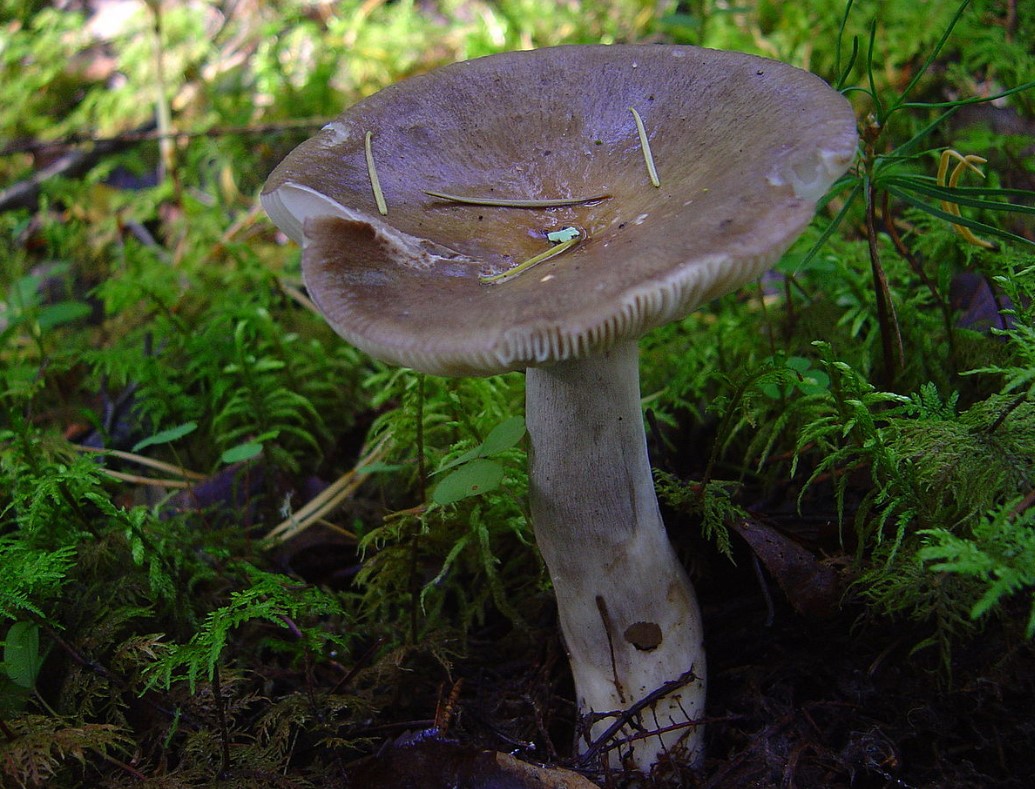
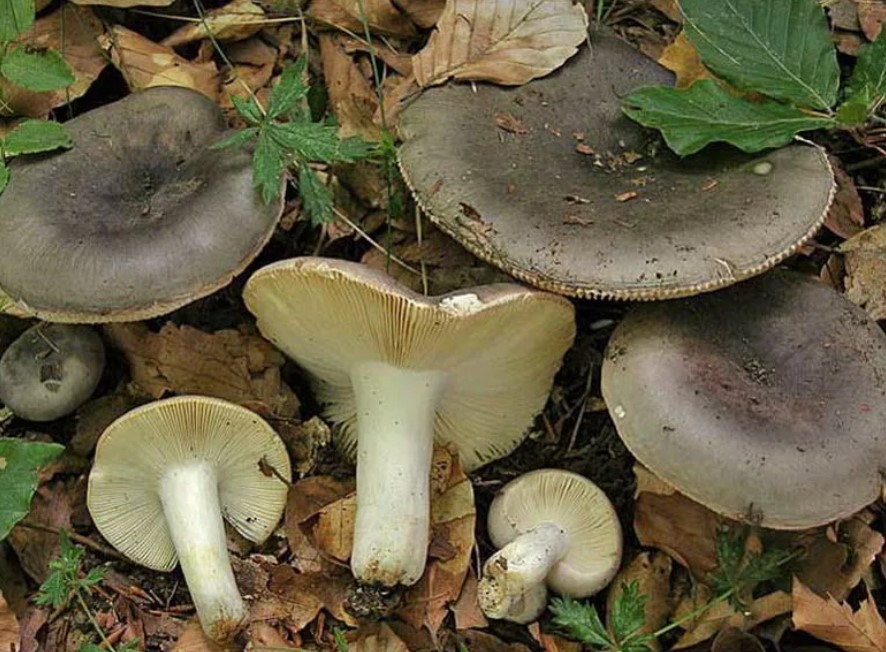
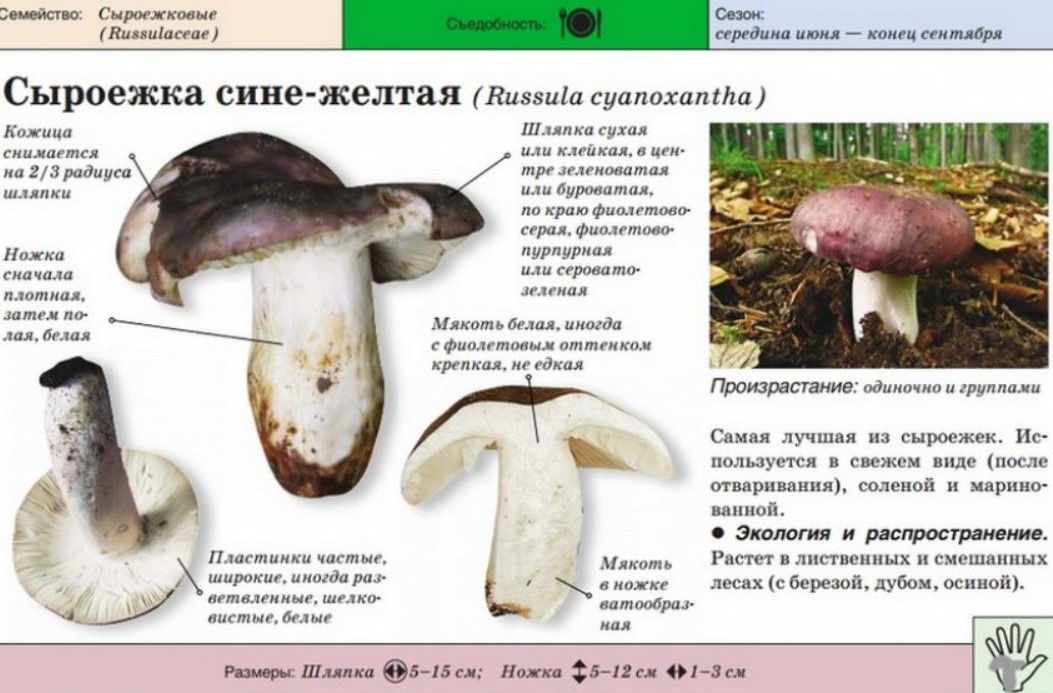
- 4.13 Russula cyanoxantha (Blue-yellow Russula)
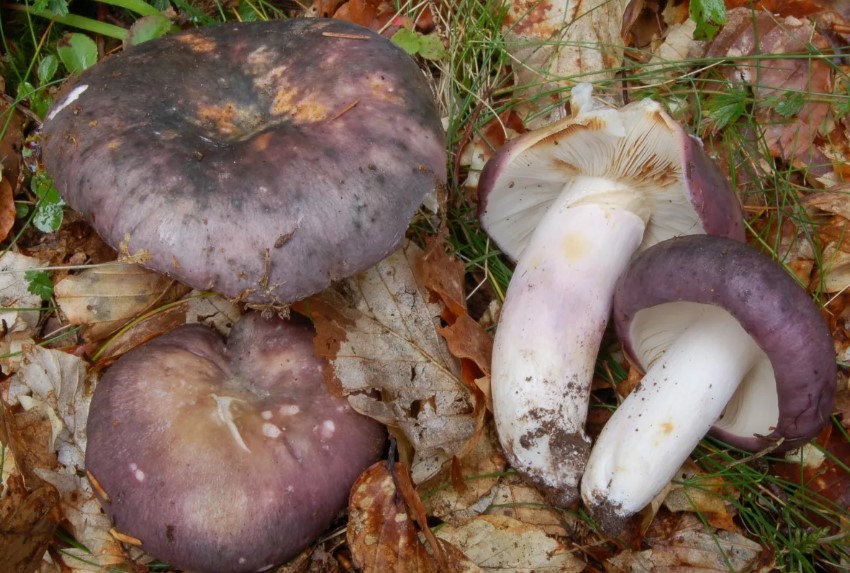
- 4.14 Russula decolorans
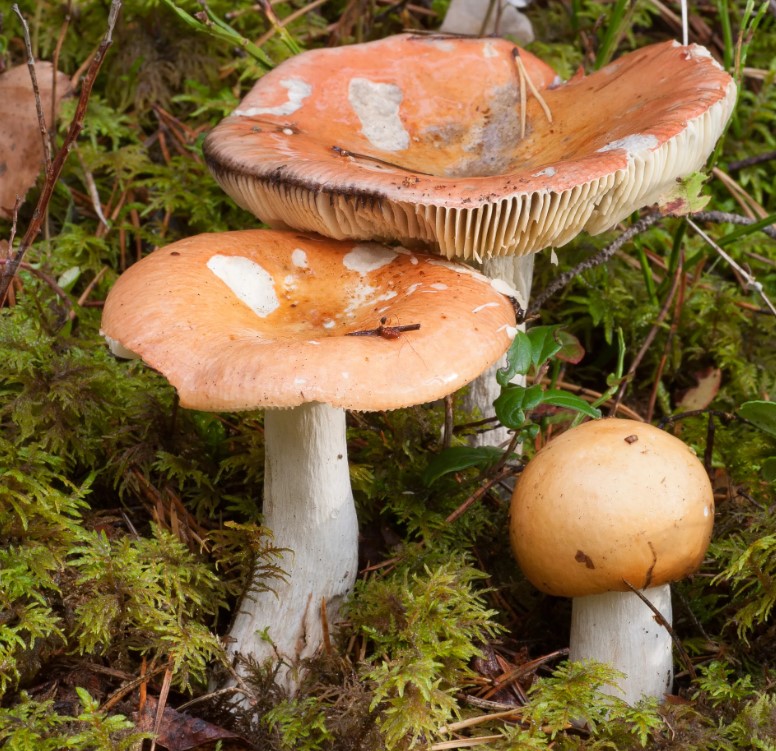
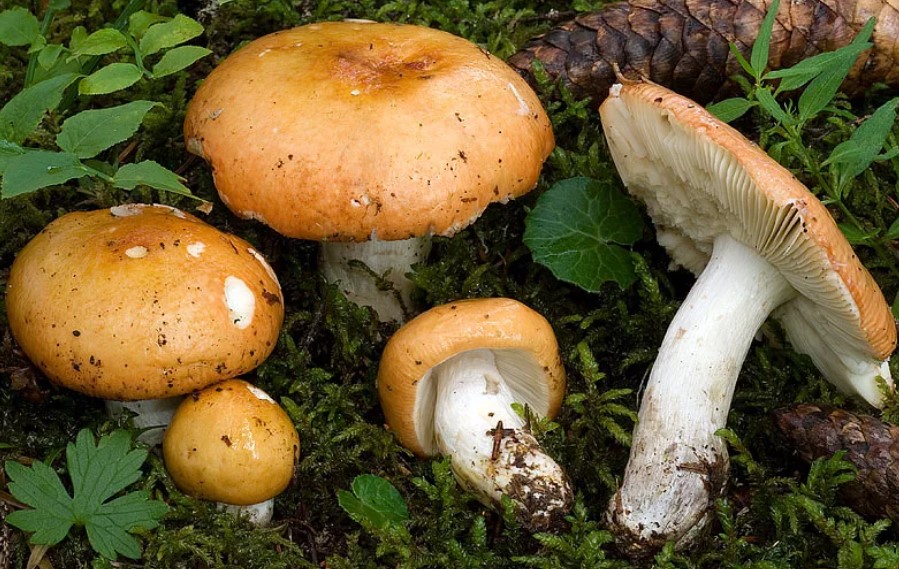
- 4.15 White diaper (Russula delica)
- 4.16 Russula heterophylla
- 4.17 Russula integra (whole, wonderful russula)
- 4.18 Golden-yellow russula (Russula lutea)
- 4.19 Russula mustelina (smooth-skinned russula)
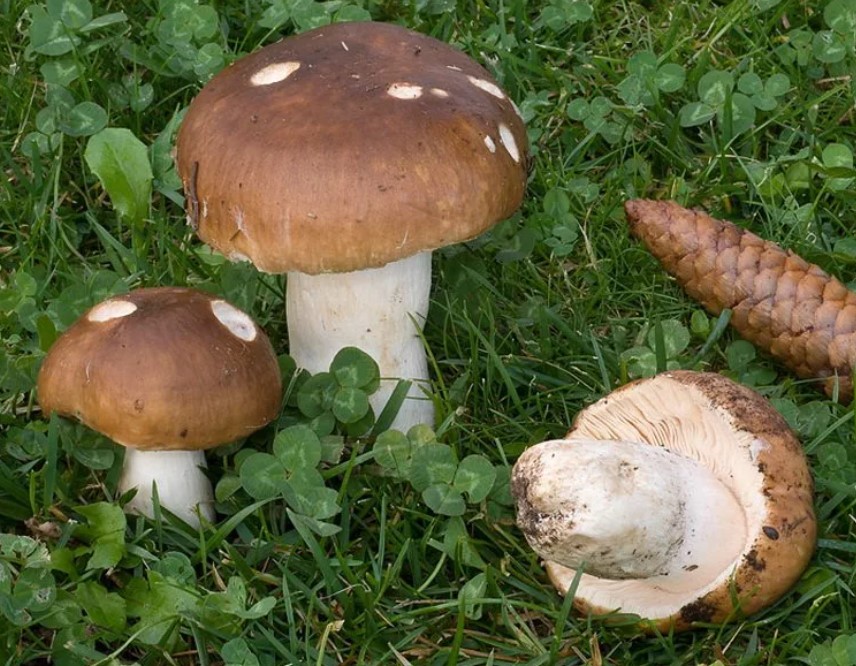
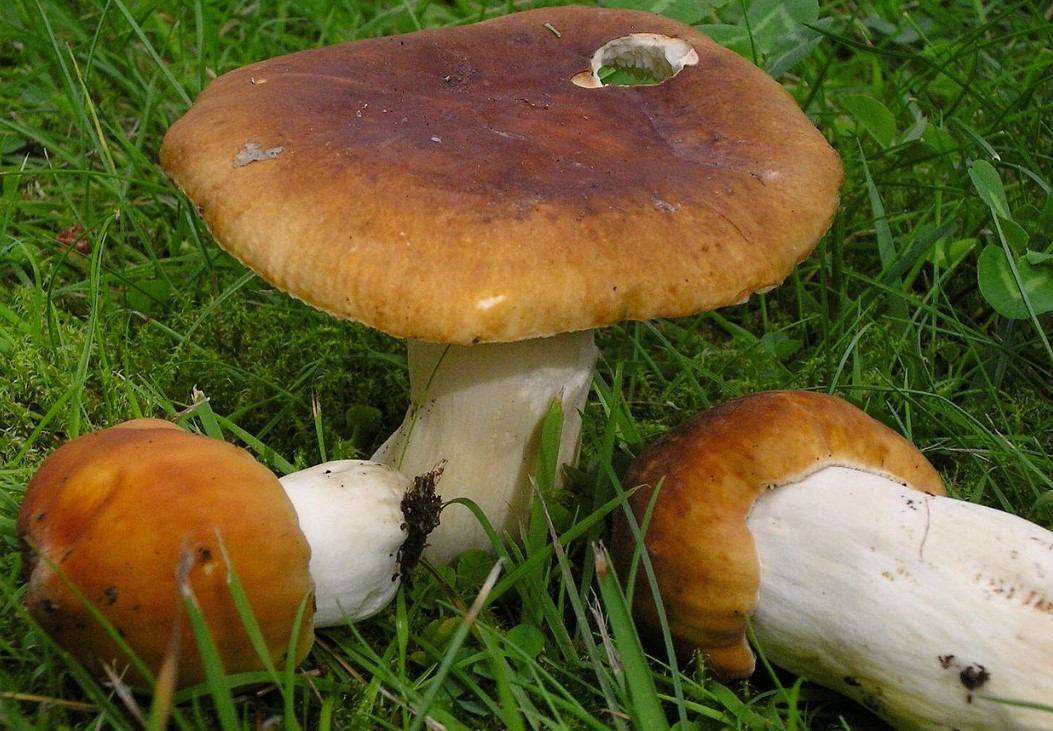
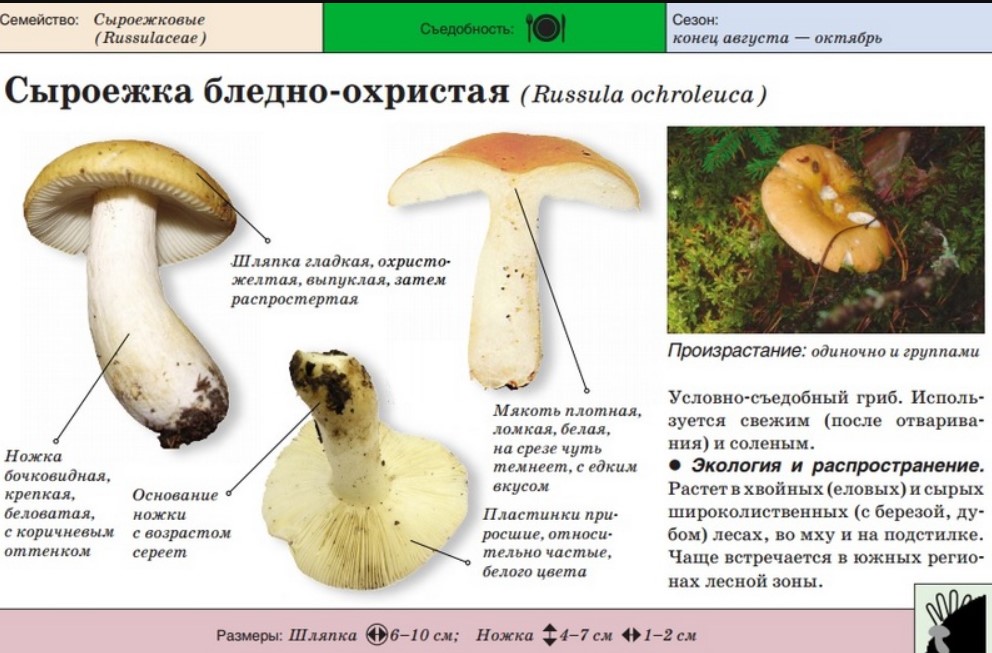
- 4.20 Ocher Russula (Russula ochroleuca)
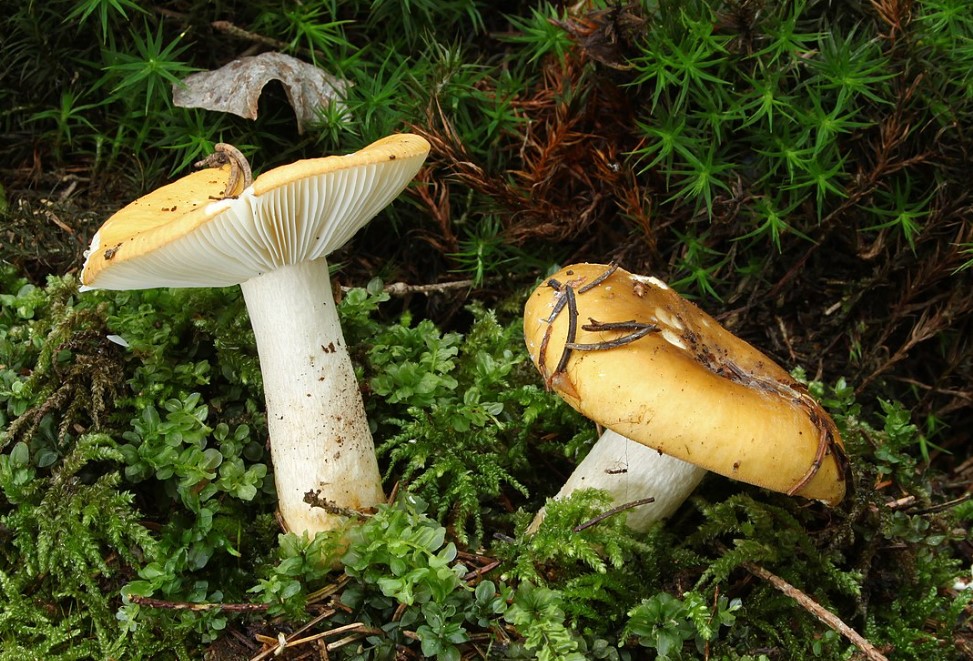
- 4.21 Olive russula (Russula olivacea)
- 4.22 Russula paludosa (marsh russula)
- 4.23 Russula puellaris
- 4.24 Russula pulchella (Beautiful Russula)
- 4.25 Russula rosea
- 4.26 Turkish russula (Russula turci)
- 4.27 Russula undulata
- 4.28 Edible russula (Russula vesca)
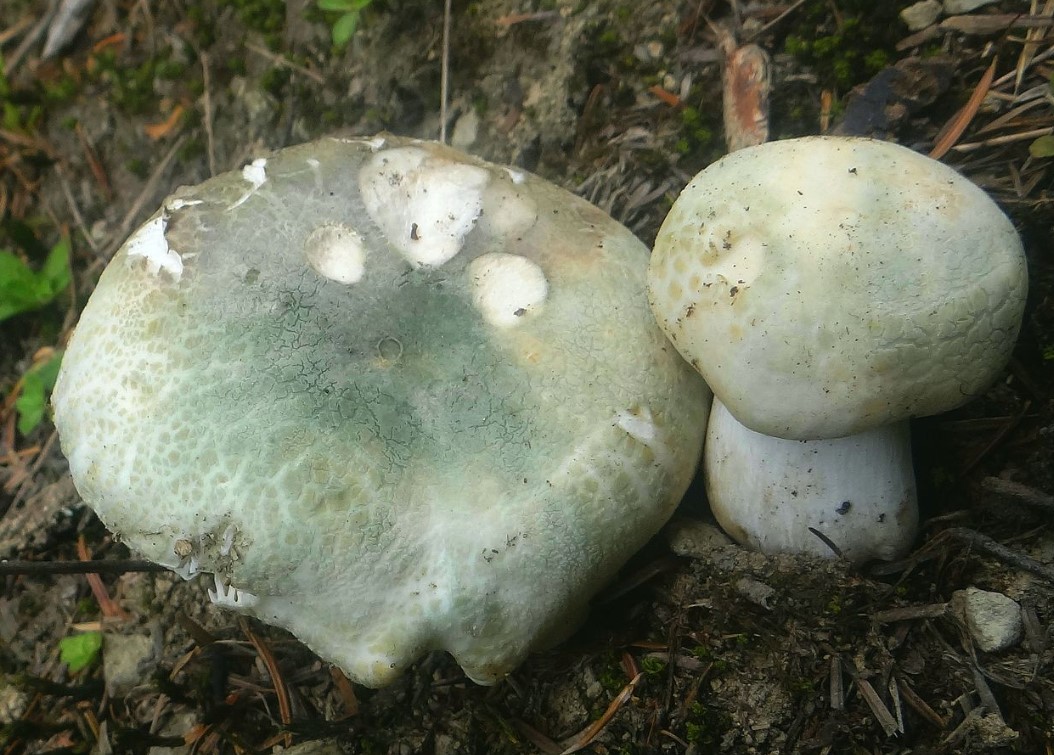
- 4.29 Russula virescens
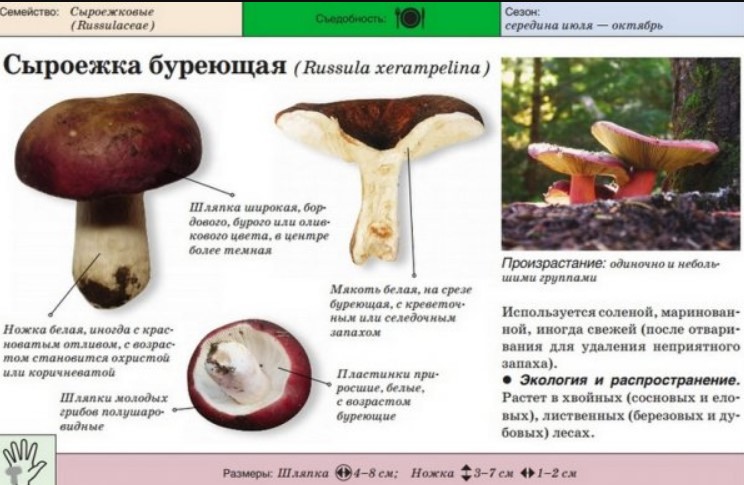
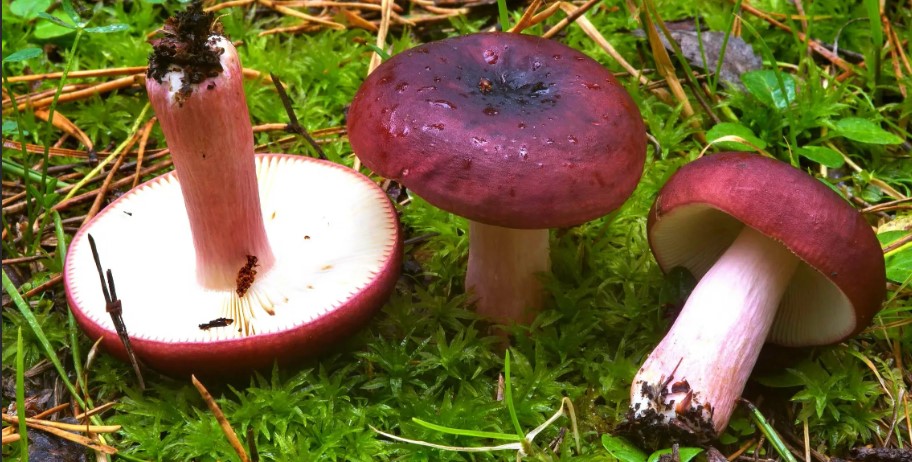
- 4.30 Russula xerampelina (Browning, aromatic russula)
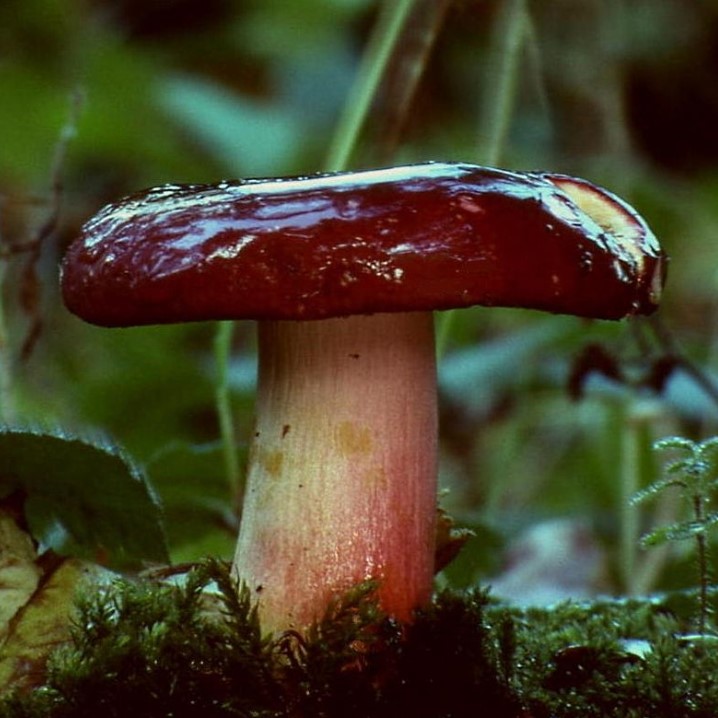
- 4.31 Russula emetica
- 4.32 Russula fellea
- 4.33 Valuy (Russula foetens)
- 4.34 Russula fragilis
- 4.35 Russula mairei
- 4.36 Russula sanguinea (blood-red russula)
- 4.37 Russula sardonia
- 5 The benefits and harms of russula
- 6 Growing russula mushrooms at home
- 7 Caloric content of russula mushrooms
- 8 What to do to prevent russula mushrooms from tasting bitter
Description of russula, photo
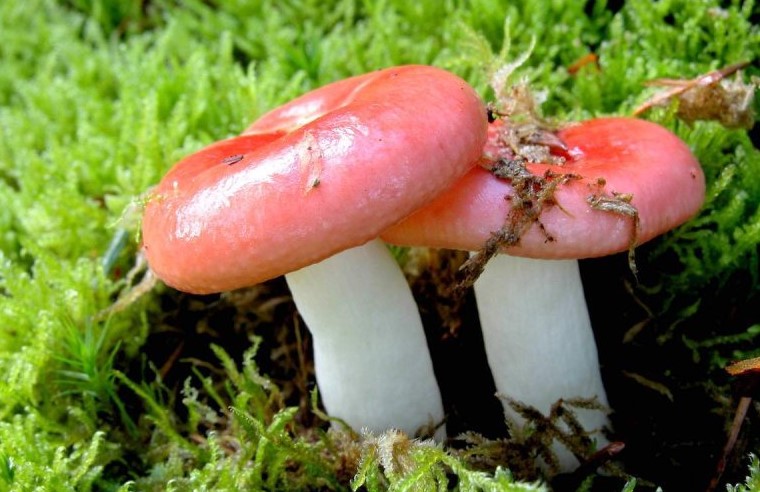
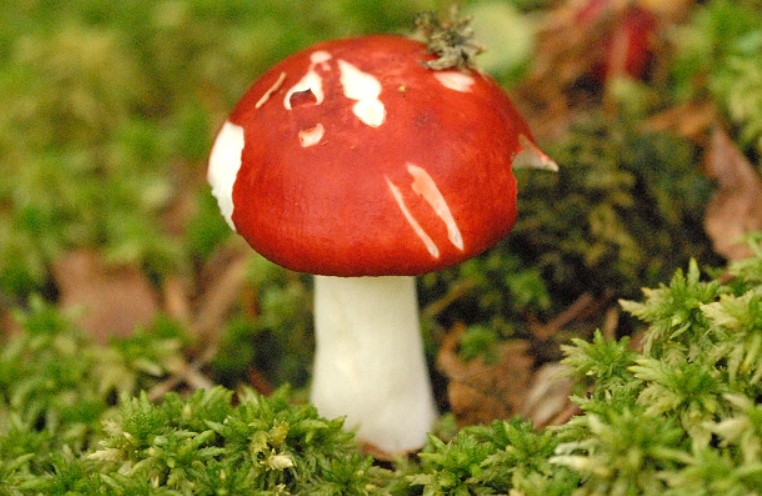
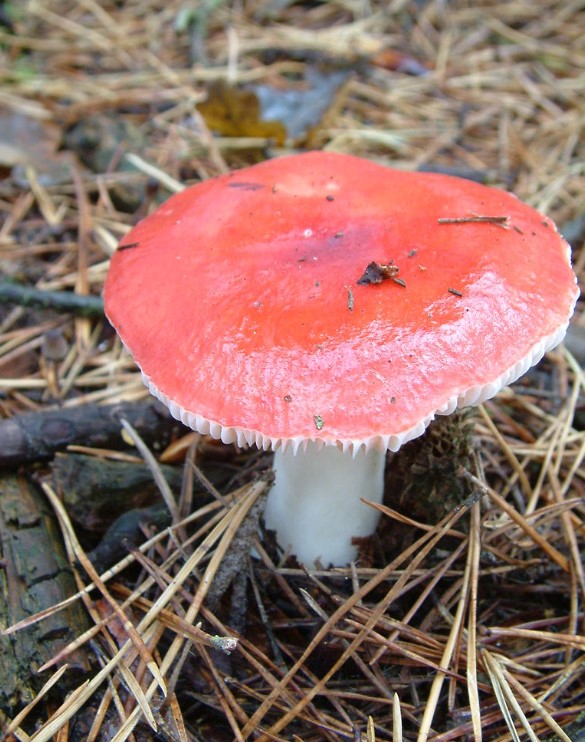
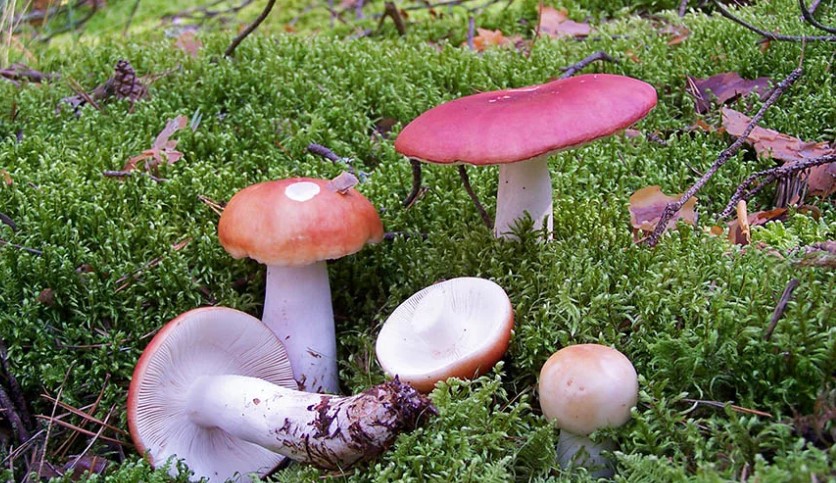
The russula is a small mushroom with a recognizable appearance:
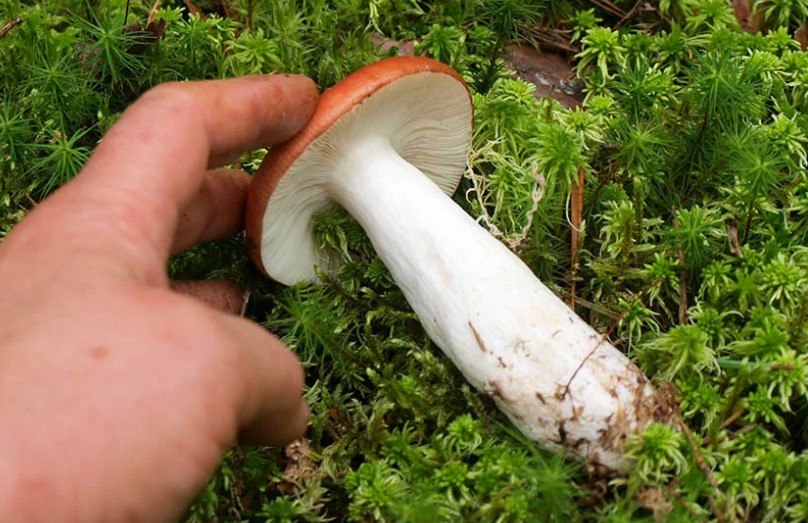
- The cap can be spherical, bell-shaped, or convex, but is most often flat with a small depression in the center. The edges can be smooth, serrated, or concave. The cap skin can be matte or shiny, dry or covered in mucus. The diameter varies from 3 to 30 cm. The inner surface is covered with yellow or white gills.
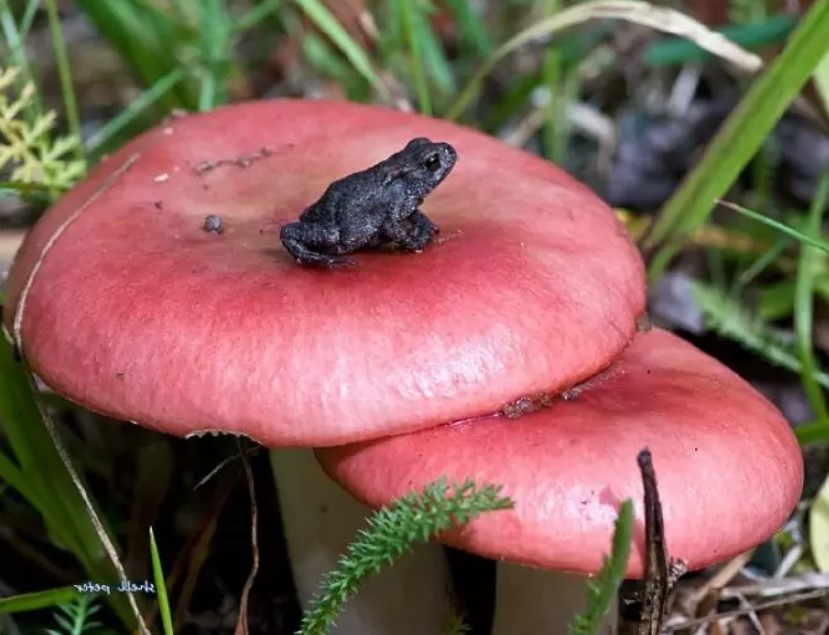
- Stem. The stem can reach 18 cm in height, but is most often between 6-8 cm. There are no tubercles or rings on the surface; the shape is generally cylindrical, though occasionally a thickening may occur at the base. As the stem grows, characteristic cavities may appear inside.
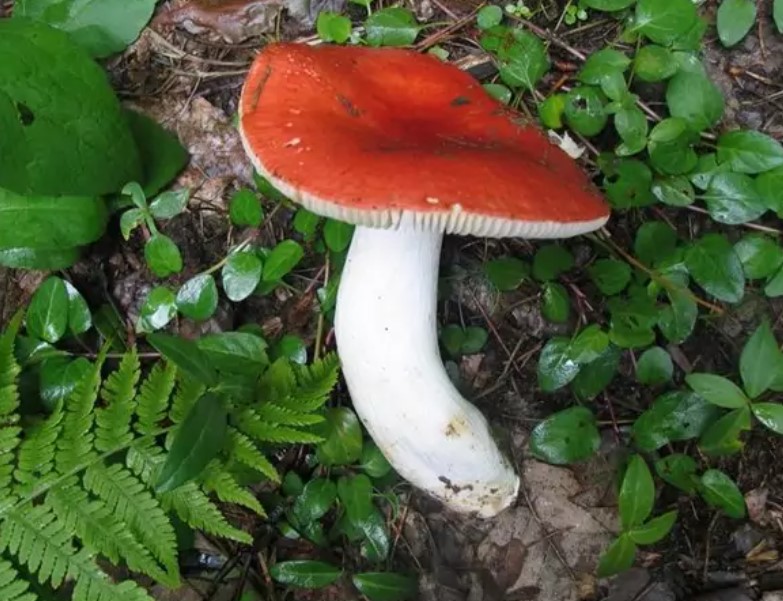
- The flesh is fairly dense, often brittle. The color is white, but when damaged, it often turns gray, red, black, or brown. The aroma is sweet, the taste is mild or bitter.
Where to collect russula mushrooms, where they grow
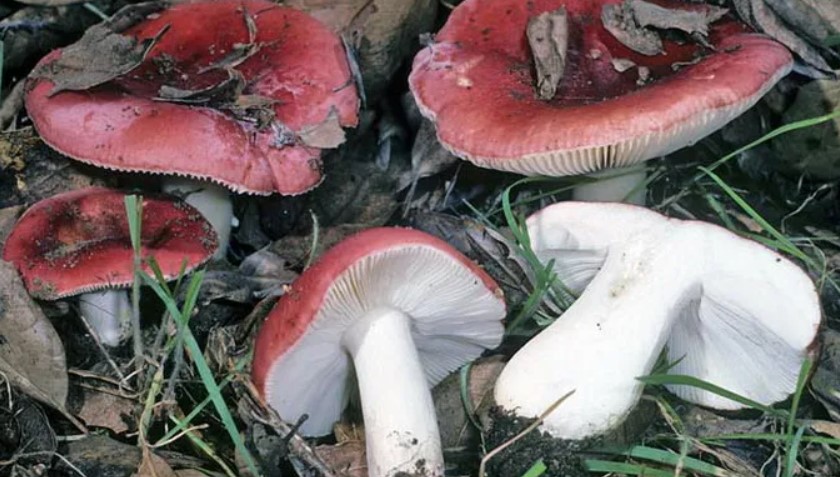
Russula mushrooms are very common, growing in both mountainous and coastal areas. They thrive in coniferous, deciduous, and mixed forests. They can grow singly or in groups. Because they are very fragile, it is not recommended to store them with other mushrooms.
When to collect russula mushrooms, season
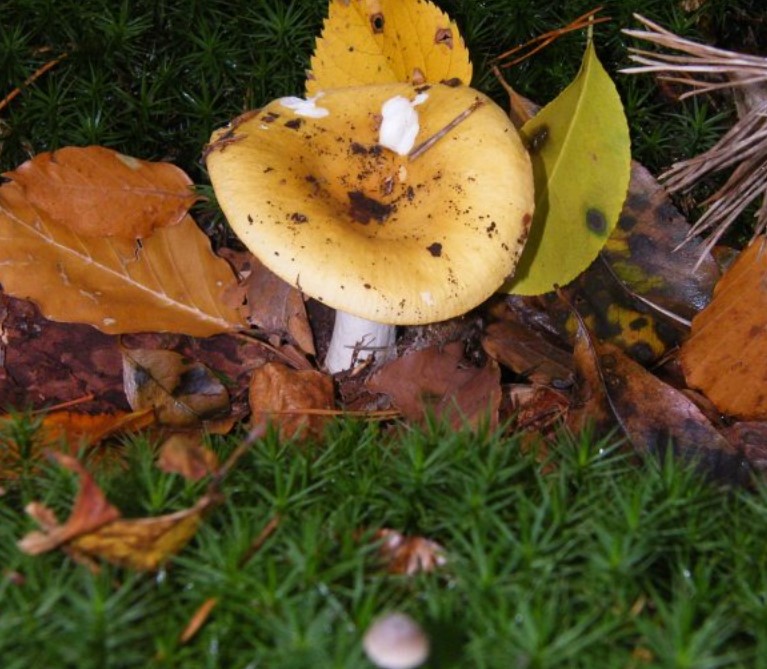
The first russula mushrooms appear as early as May, and the harvest season ends in October. A particularly bountiful harvest can be obtained in warm weather after rainfall.
37 types of russula mushrooms in a table with photos, descriptions, edibility, and distribution range.
There are over 250 species of russula, most of which are edible.
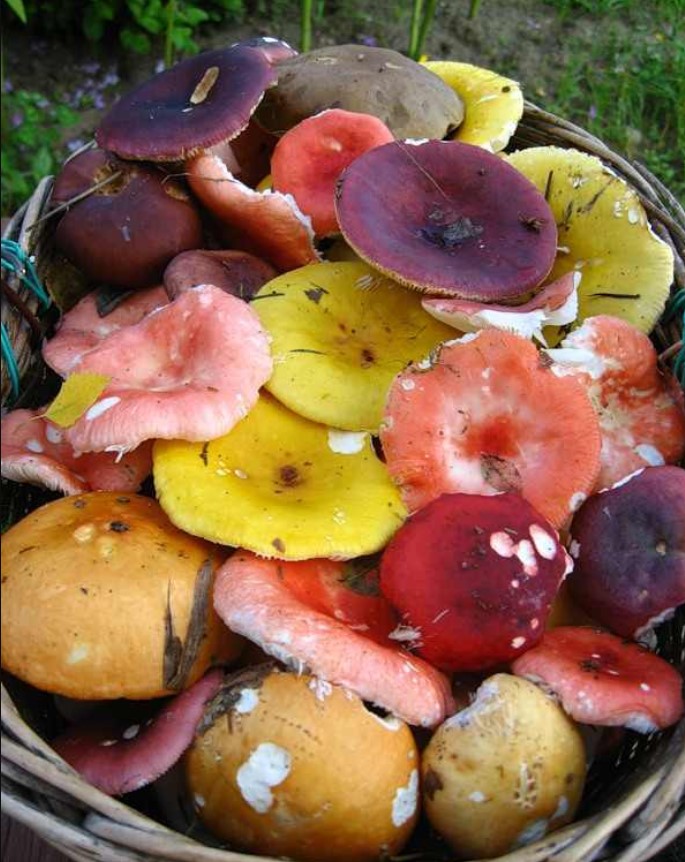
Below are descriptions of popular varieties of russula found in nature.
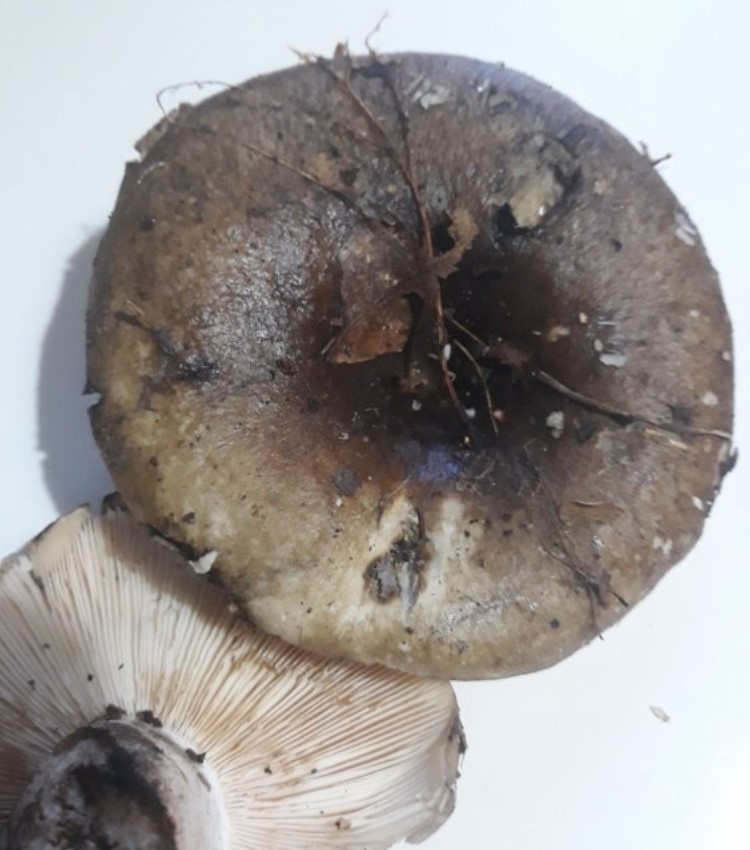
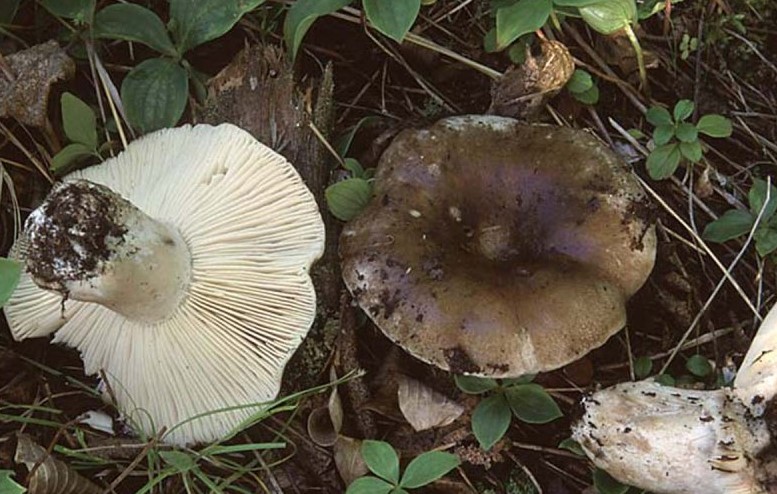
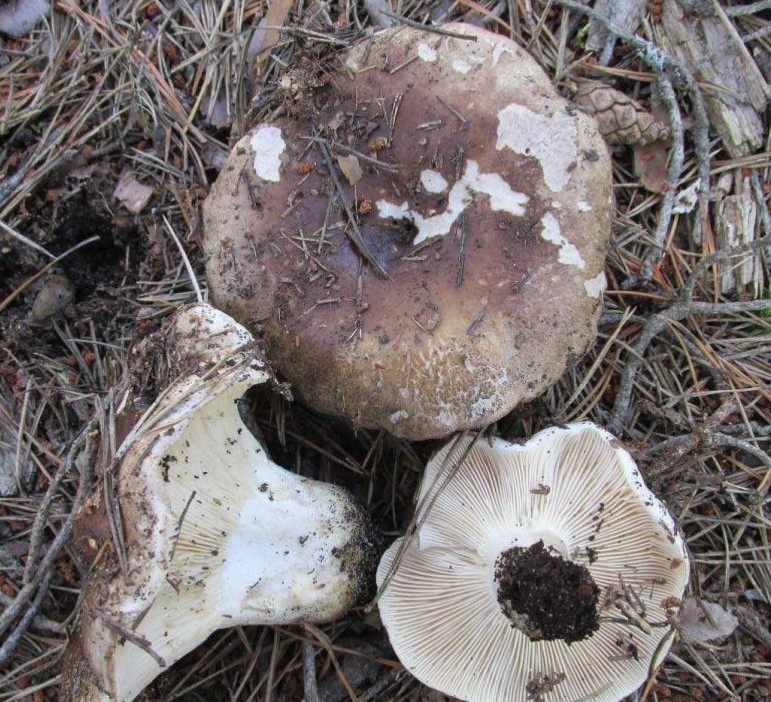
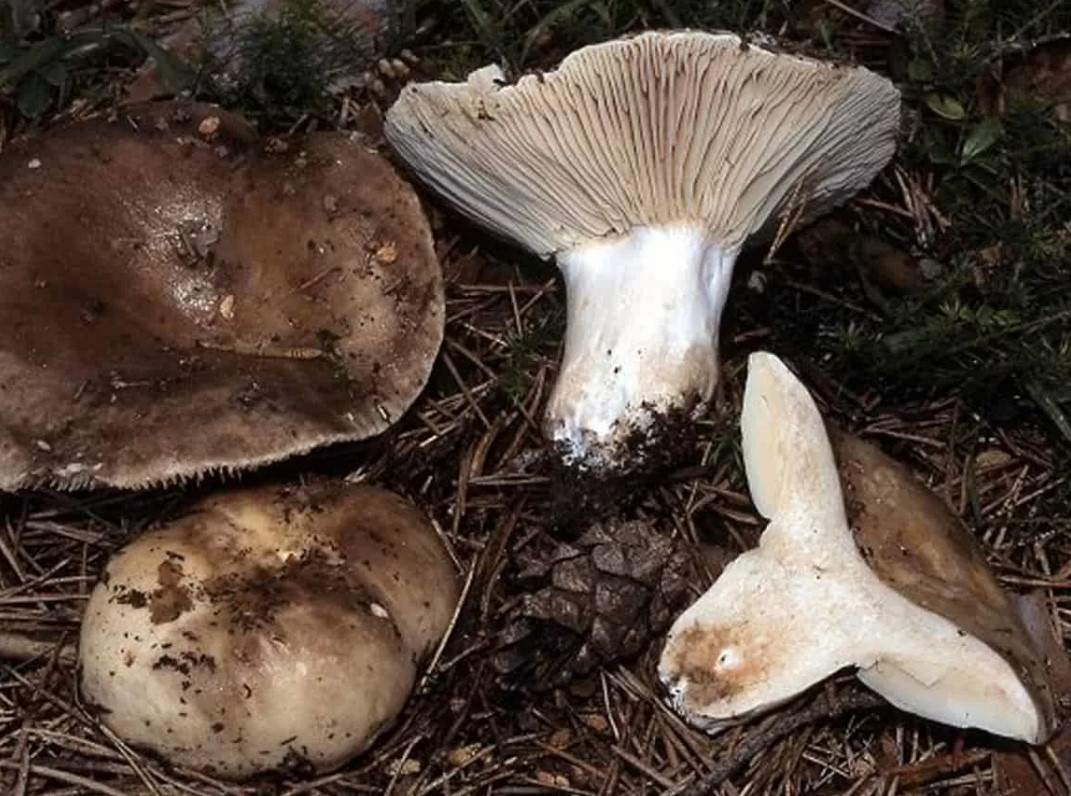
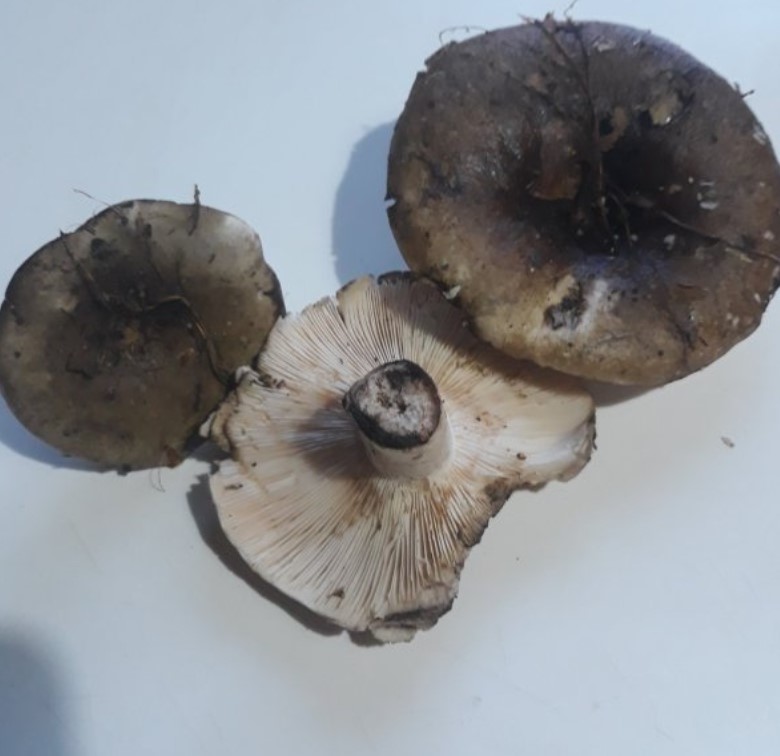
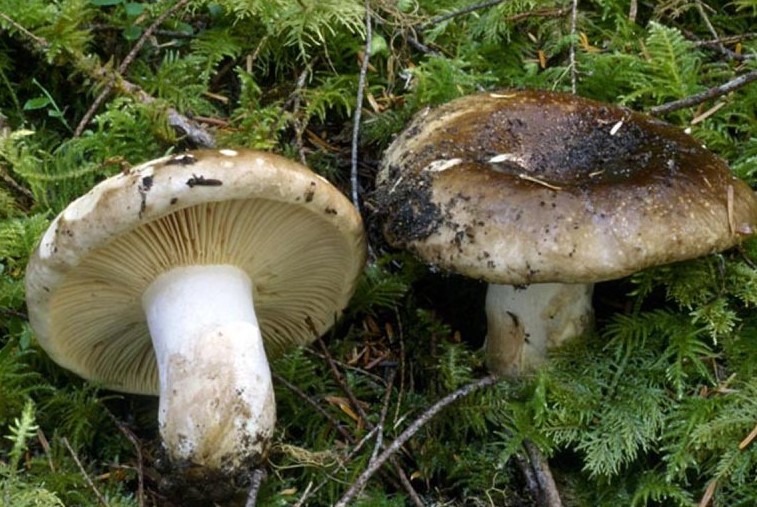
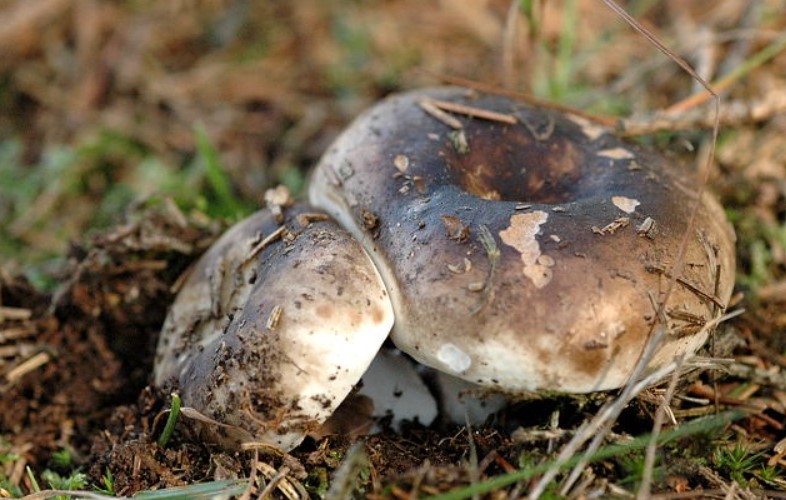
Black milk cap (Russula adusta)
| View | Description | Edibility | Place of growth |
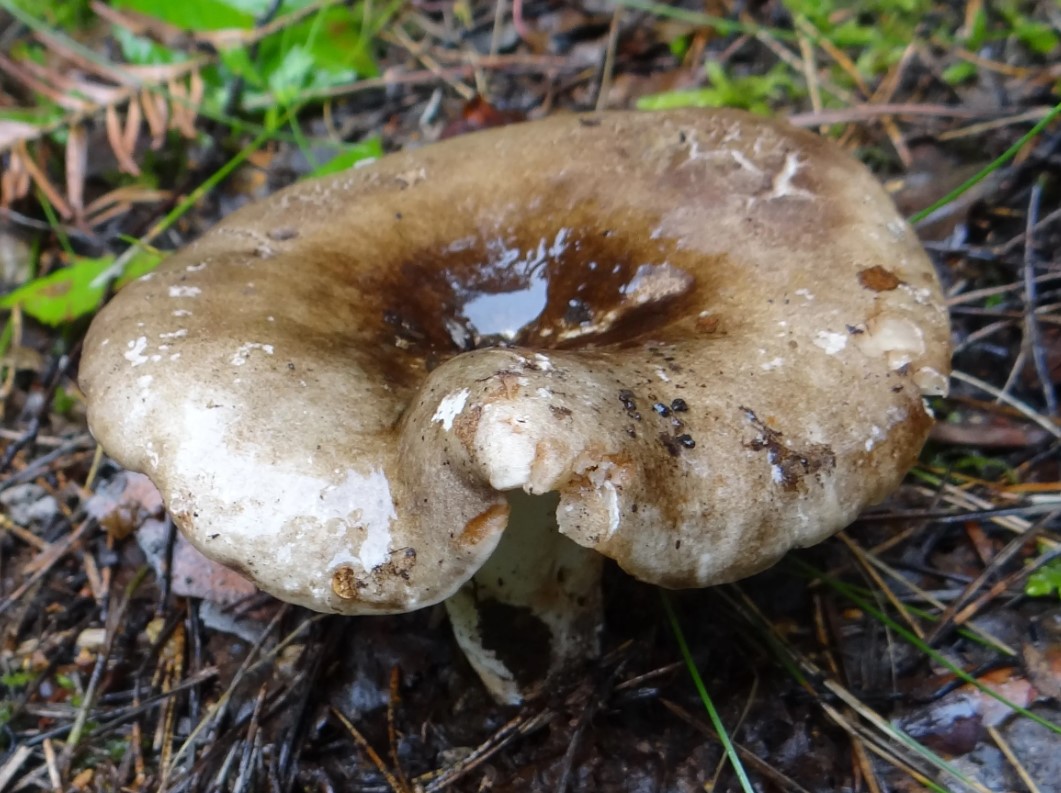
| Black milk cap | The cap is concave in the middle, ranging from 5 to 25 cm in diameter, and grayish in color, turning brown with age. The stem is slightly lighter than the cap; when touched, dark spots appear. When cut, the flesh turns red, then gray. | Edible. Used for pickling. | It most often grows in coniferous forests. However, it can also be found in mixed and deciduous forests in the north. |
Photo gallery of black milk cap mushrooms
Blackening milk cap (Russula nigricans)
| View | Description | Edibility | Place of growth |
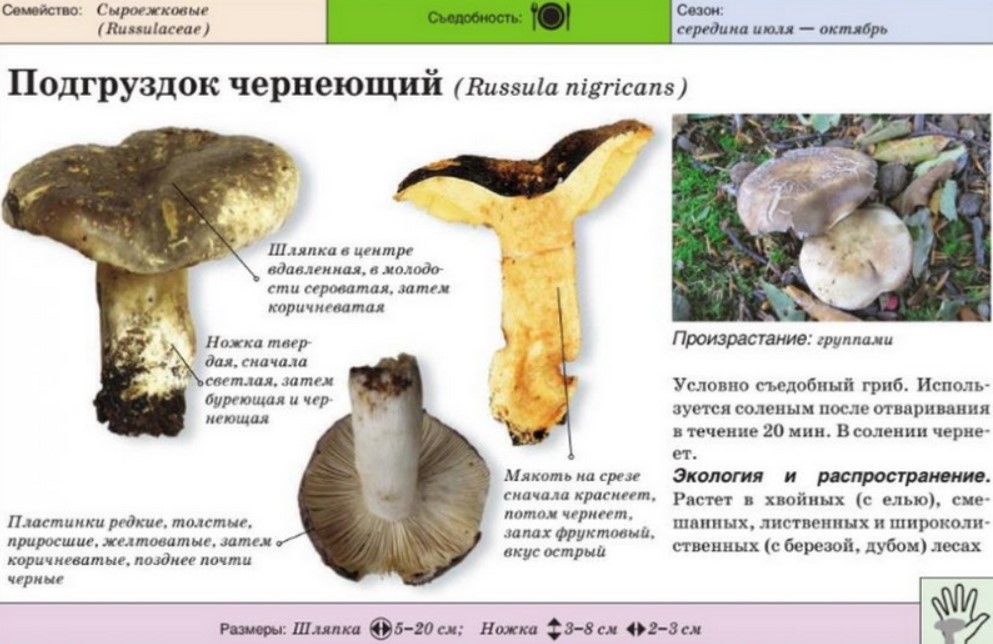
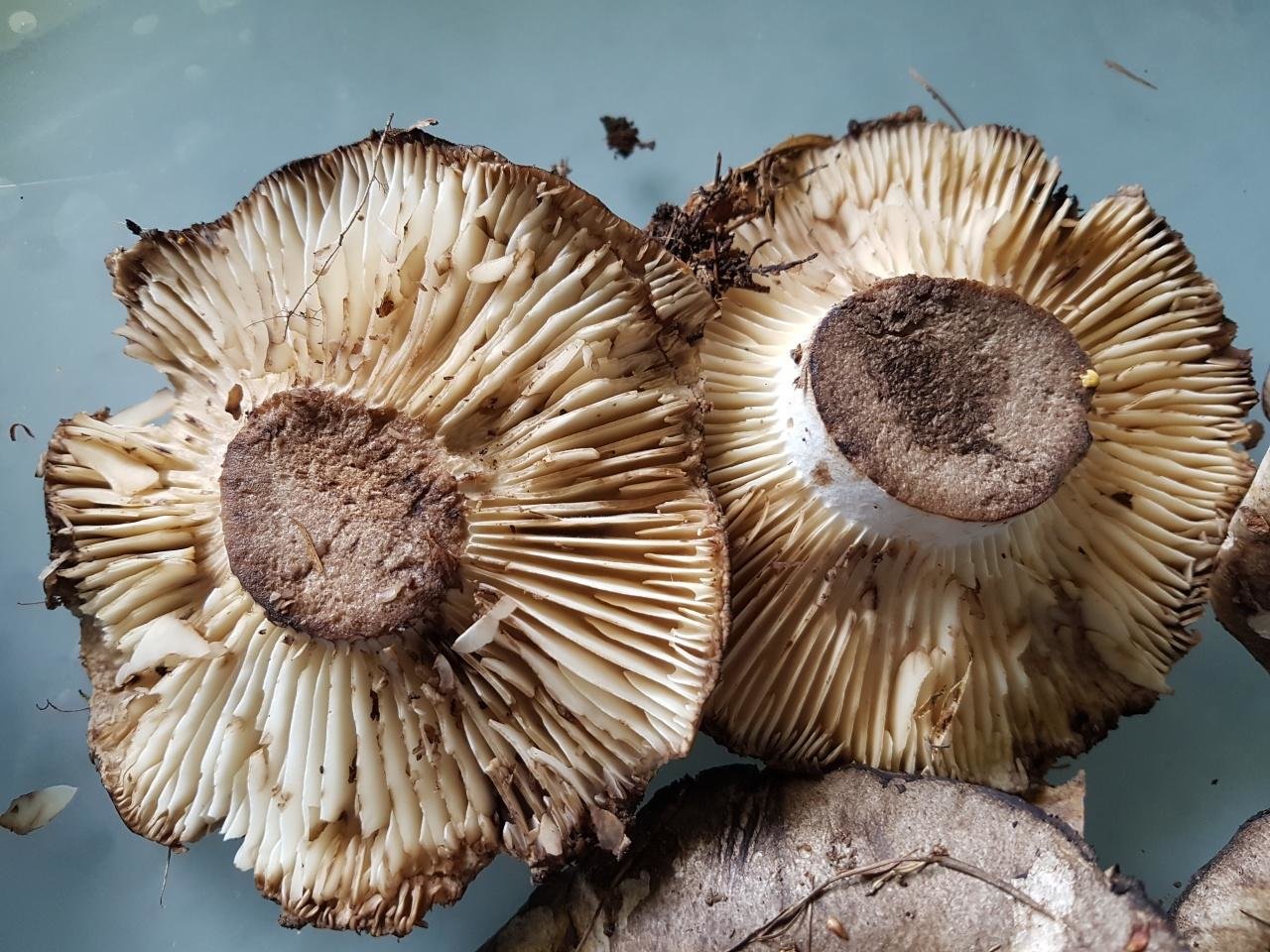
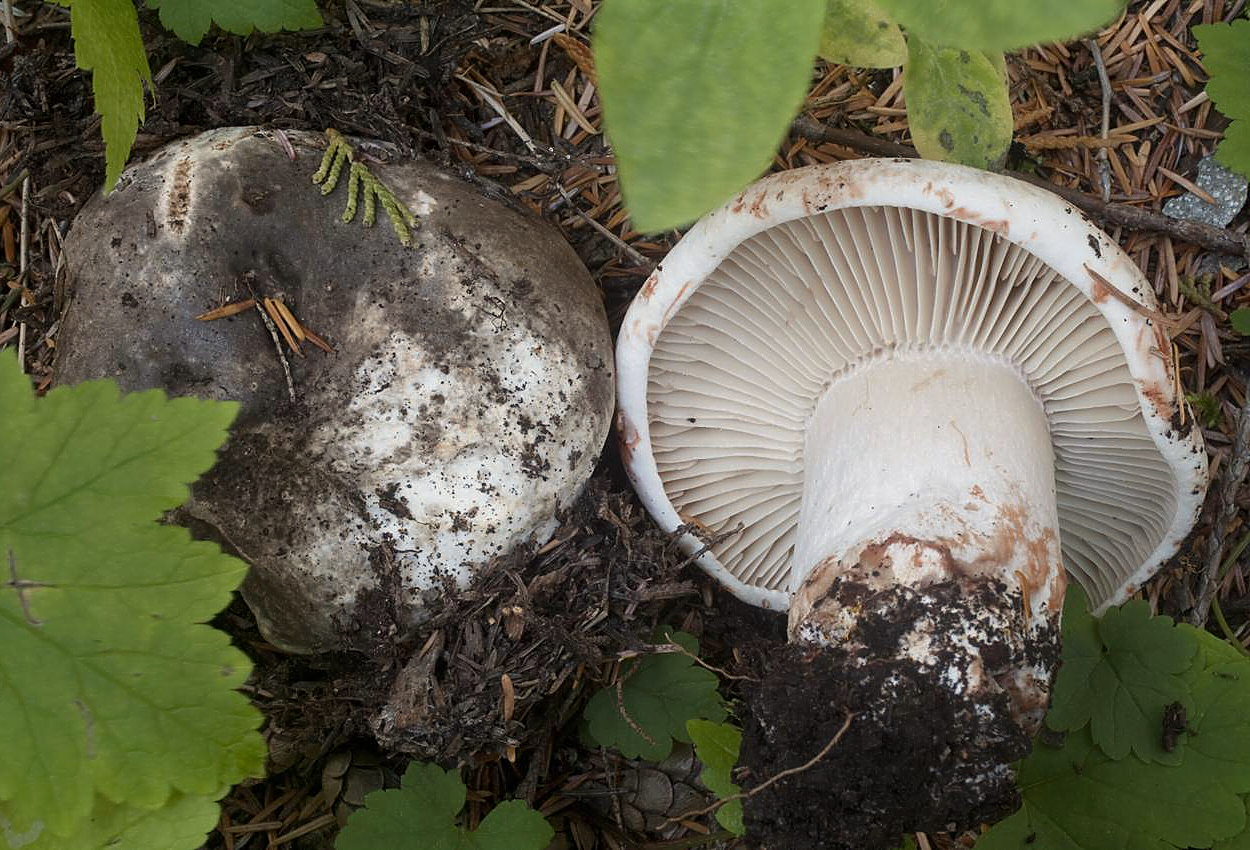
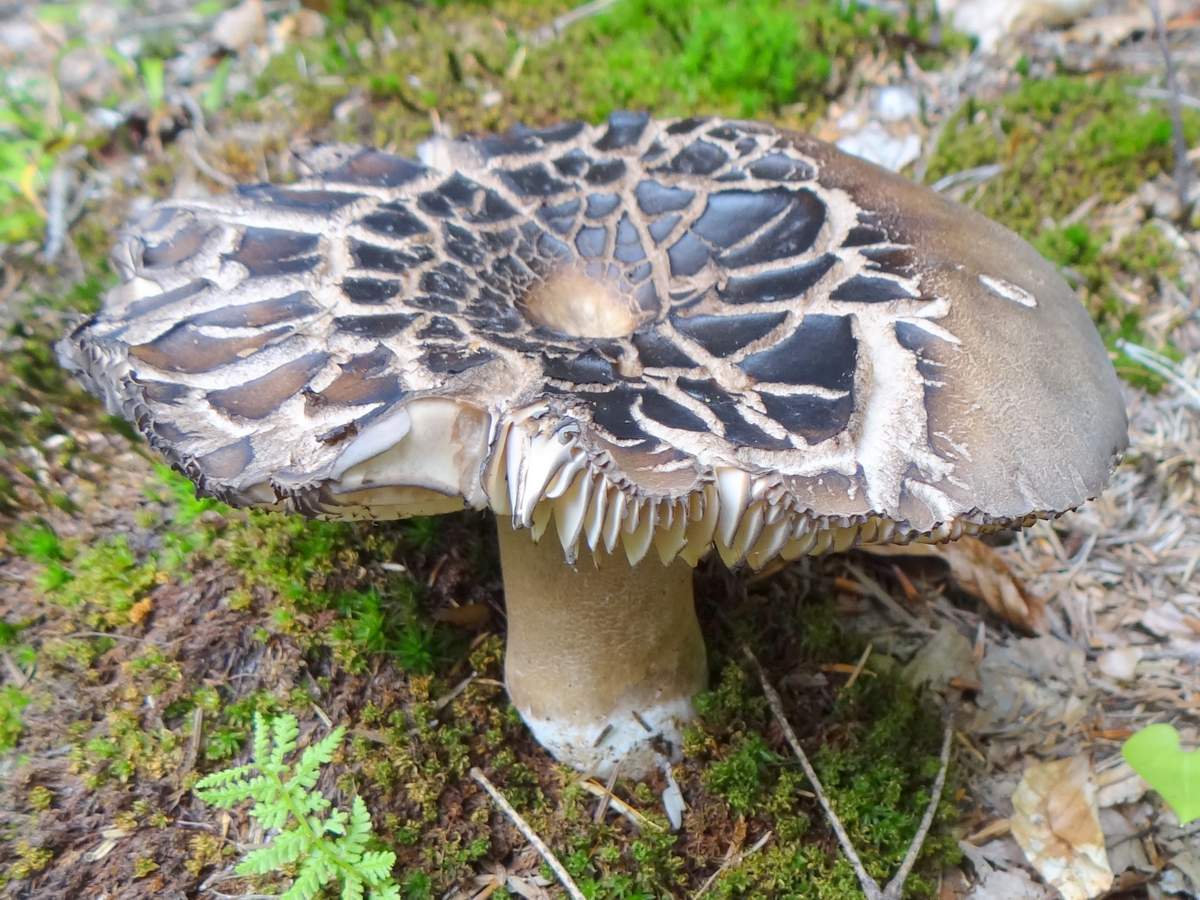
| Blackening milk cap | The cap is 5-15 cm in diameter, sometimes up to 25 cm. When young, it is almost white, becoming gray with brown spots over time. The cap is initially convex, then flattened and spreading. The stem is strong, typically up to 10 cm. The flesh is white and thick, gradually turning red where cut. | Edible. Has a slightly bitter taste. | It grows in spruce, deciduous, and mixed forests. The mushroom is collected in temperate latitudes.
|
Photo gallery of the blackening milk cap
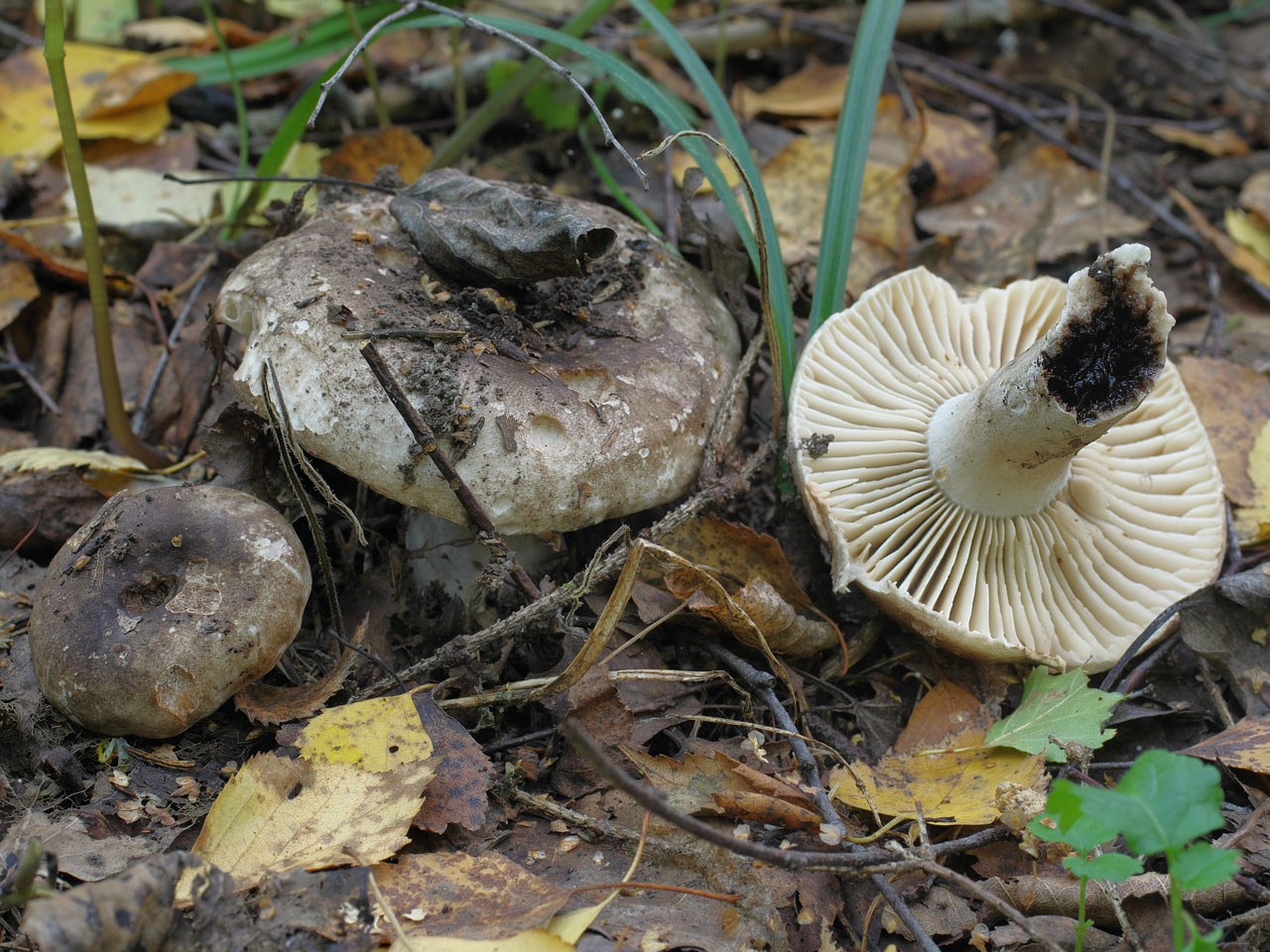
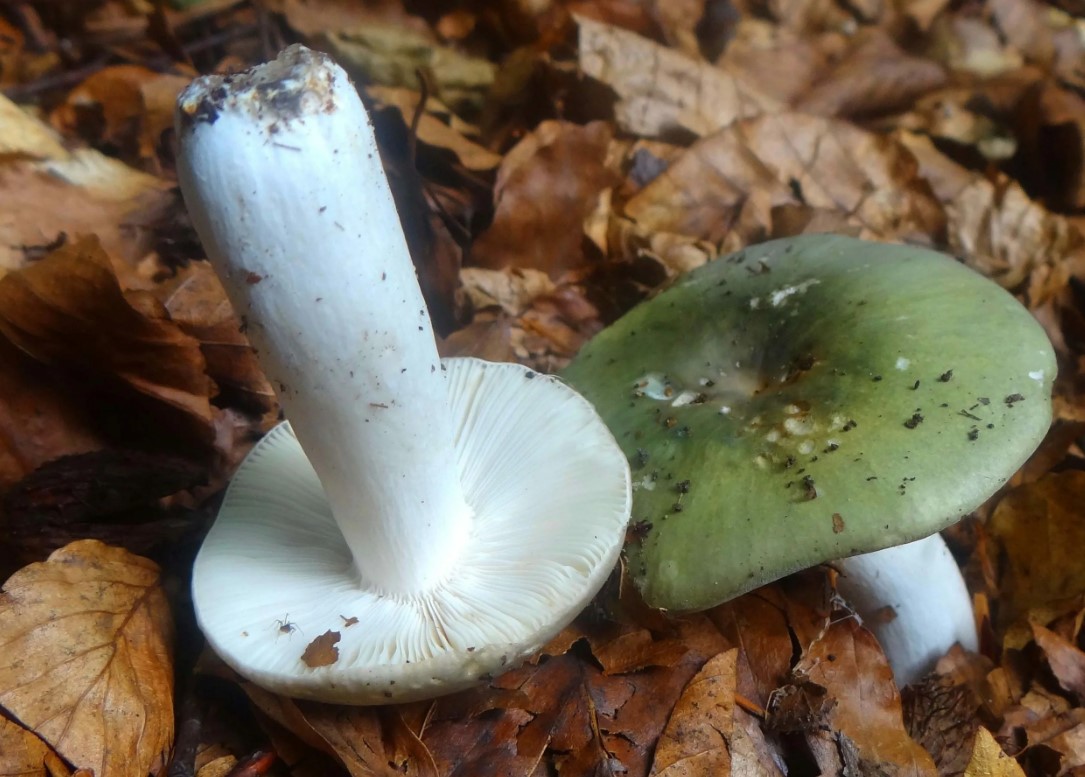
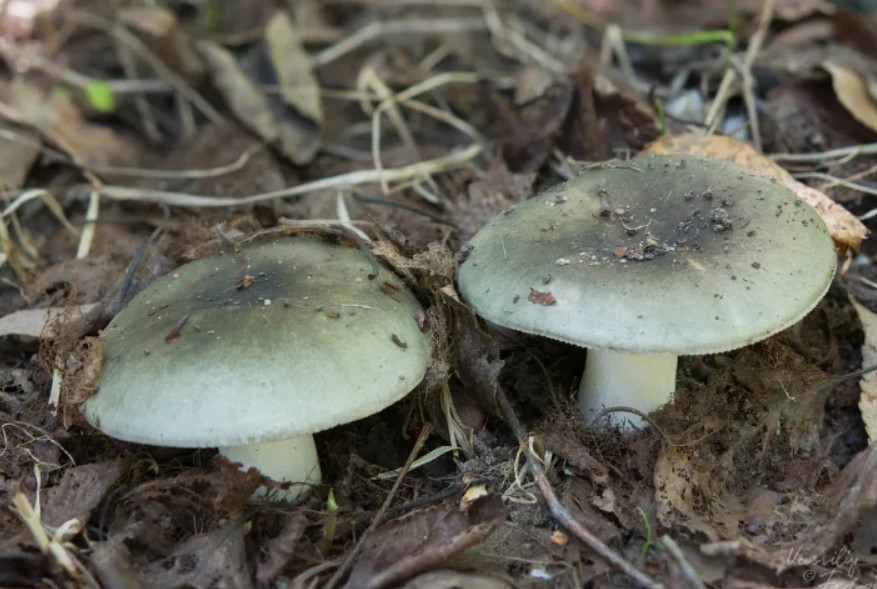
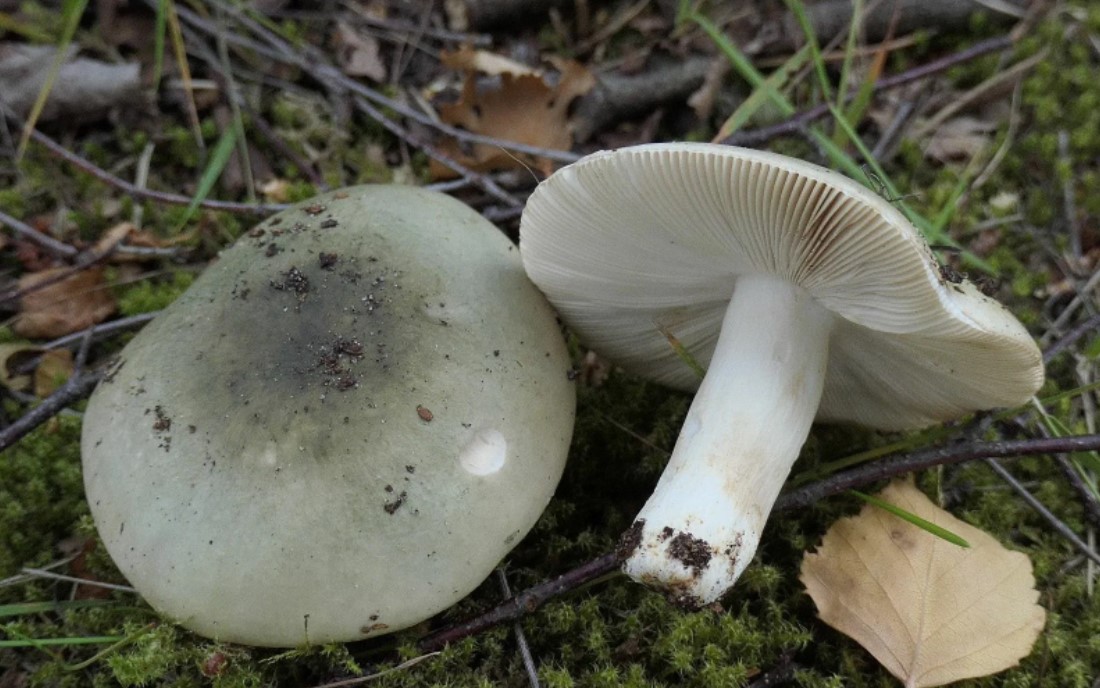
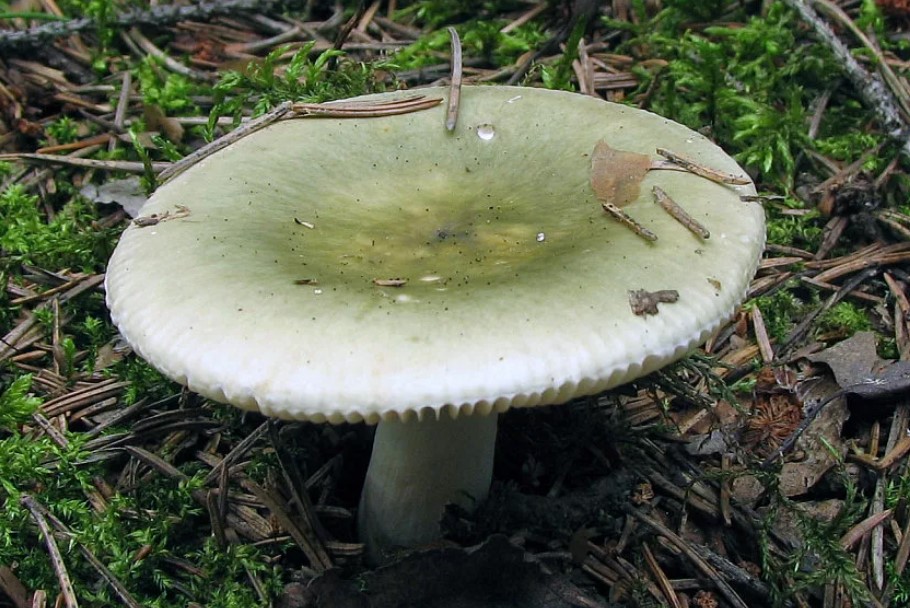
Russula aeruginea (green russula)
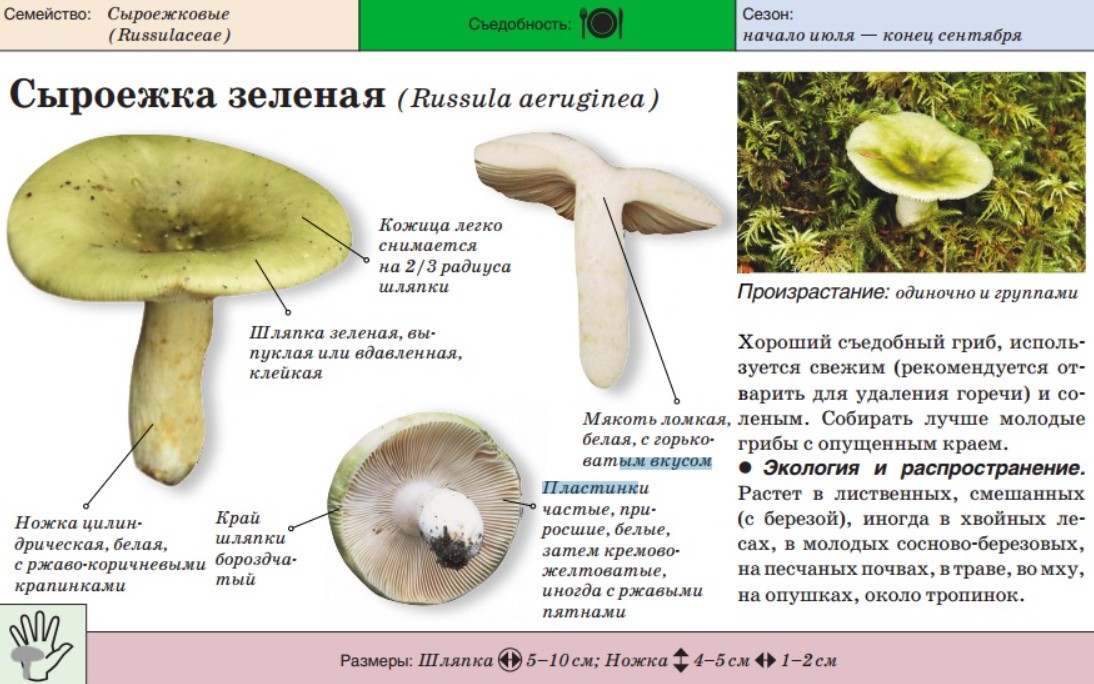
| View | Description | Edibility | Place of growth |
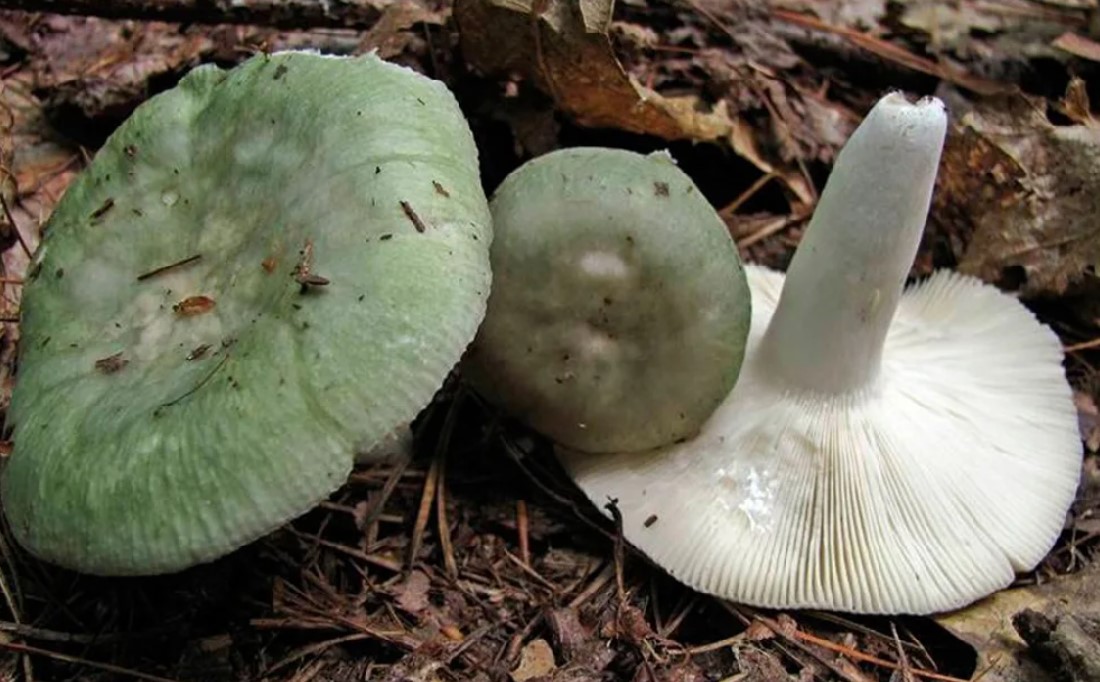
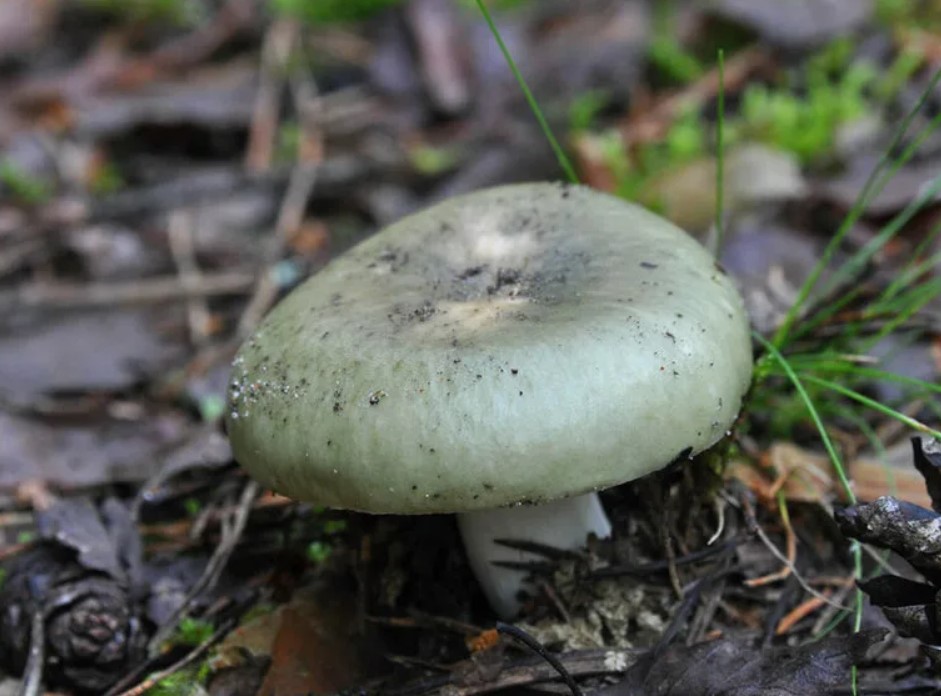
| Green russula | The cap is up to 14 cm in diameter and greenish or yellowish in color. The stem is white, becoming spotted with brown over time. | Edible. | Mixed and deciduous forests of the European part. |
Photo gallery of green russula
Russula alutacea (green-red russula)
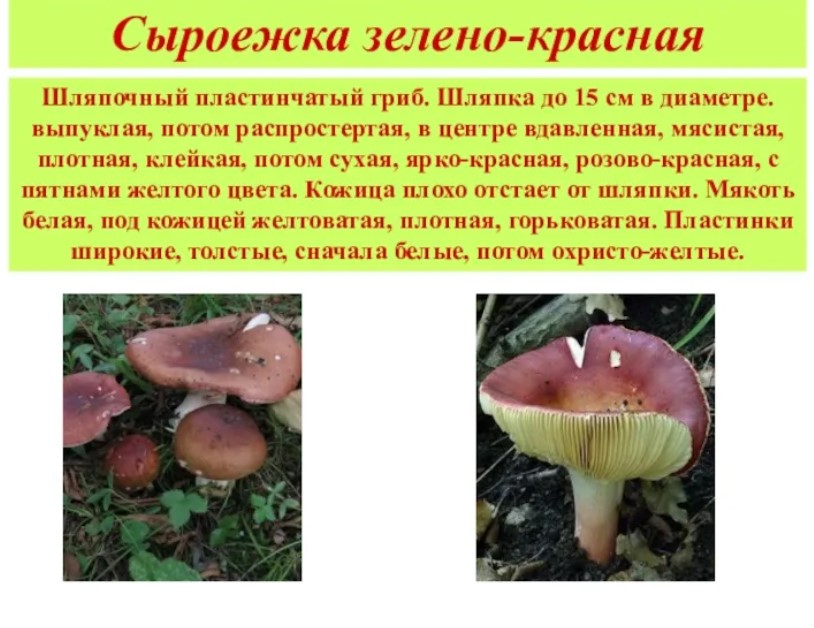
| View | Description | Edibility | Place of growth |
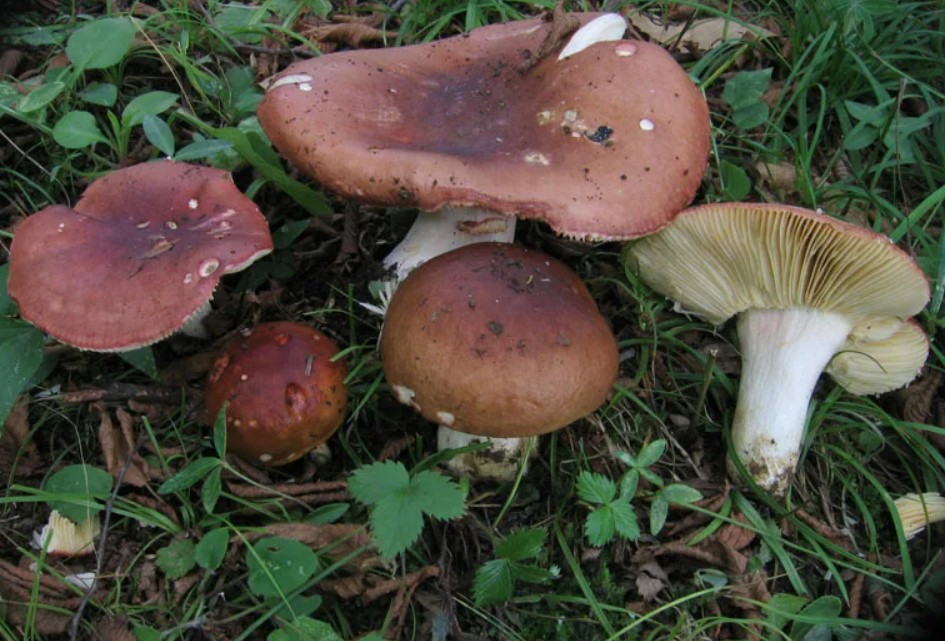
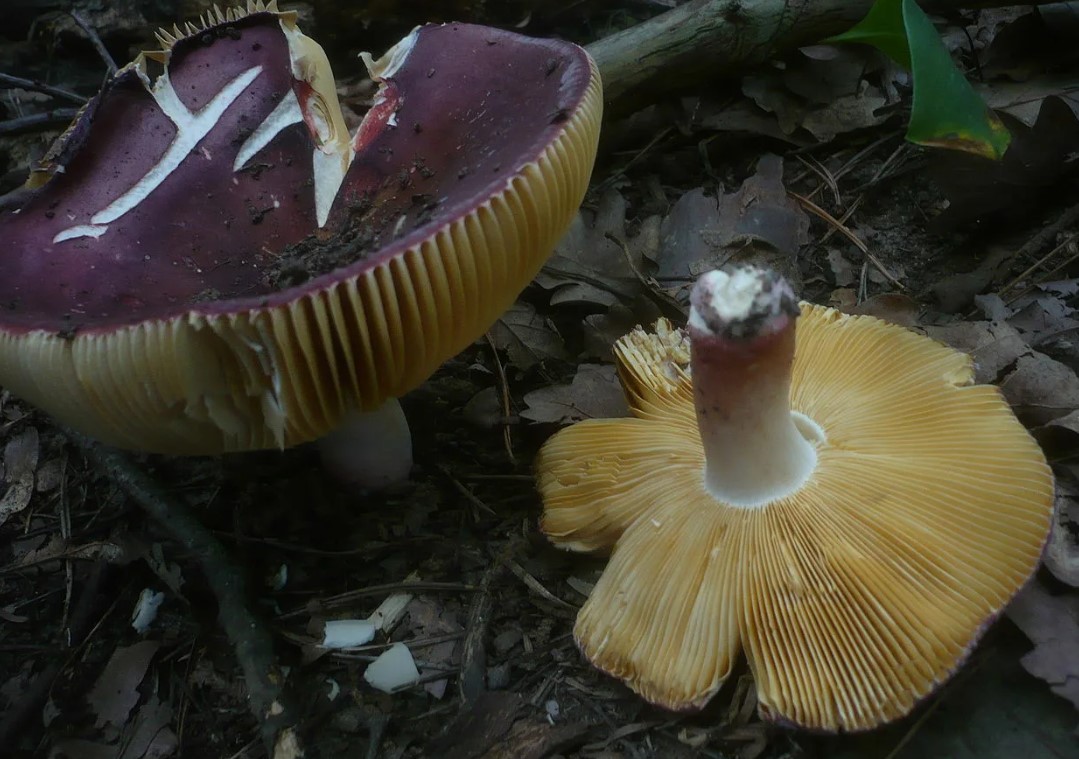
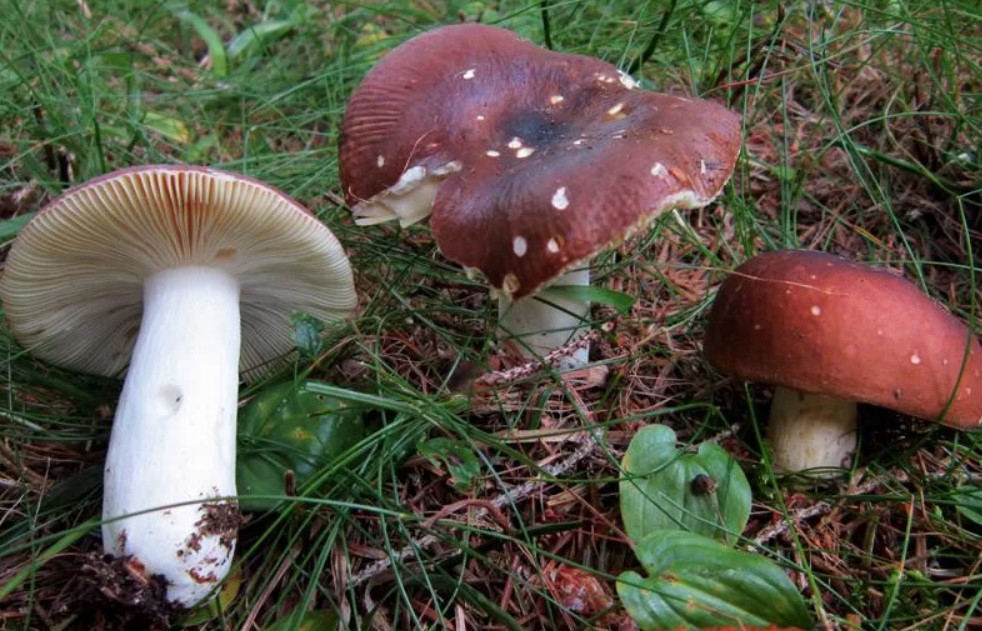
| Russula alutacea (green-red russula) | The cap is 5 to 15 cm in diameter, with a depressed center and shades ranging from purple-red to brown. The stem is up to 10 cm long, no more than 3 cm in diameter, and white, with a possible yellow or pink tint. | Edible. | It grows in small groups and is common in the broadleaf forests of North America and Eurasia. |
Photo gallery of the green-red russula
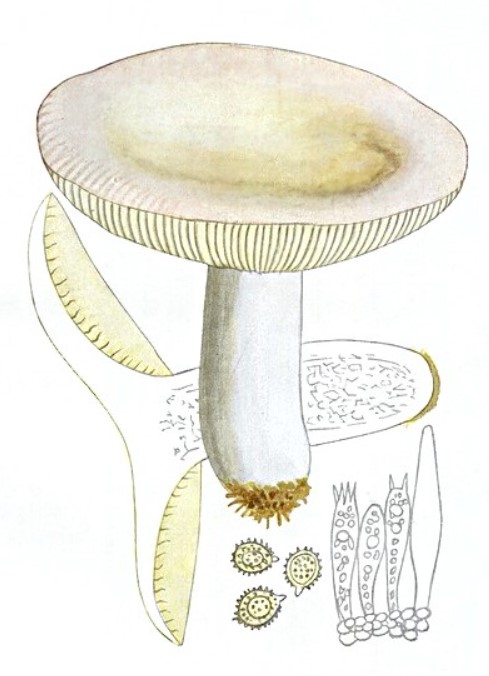
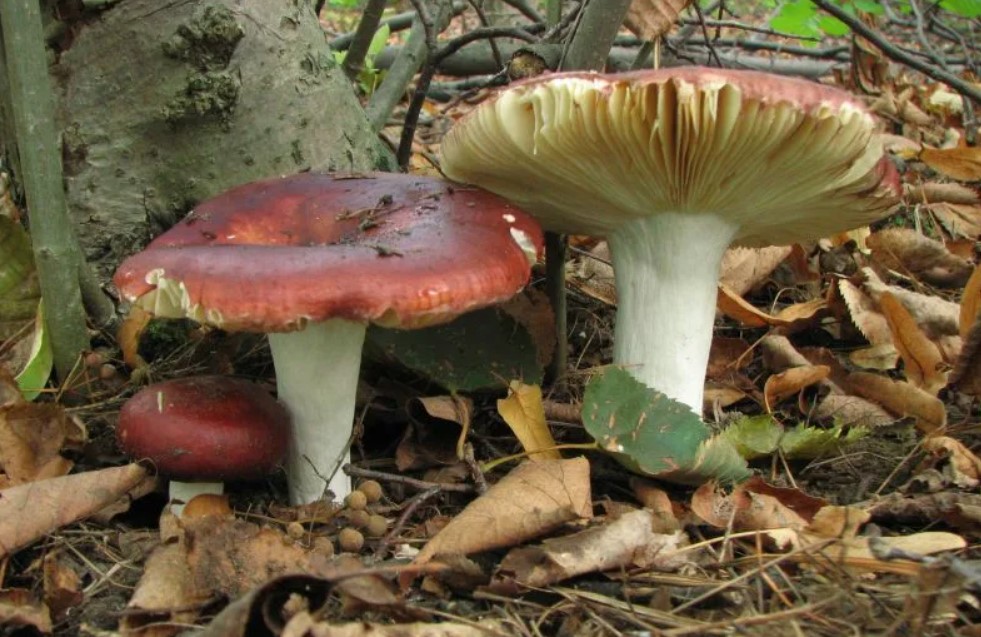
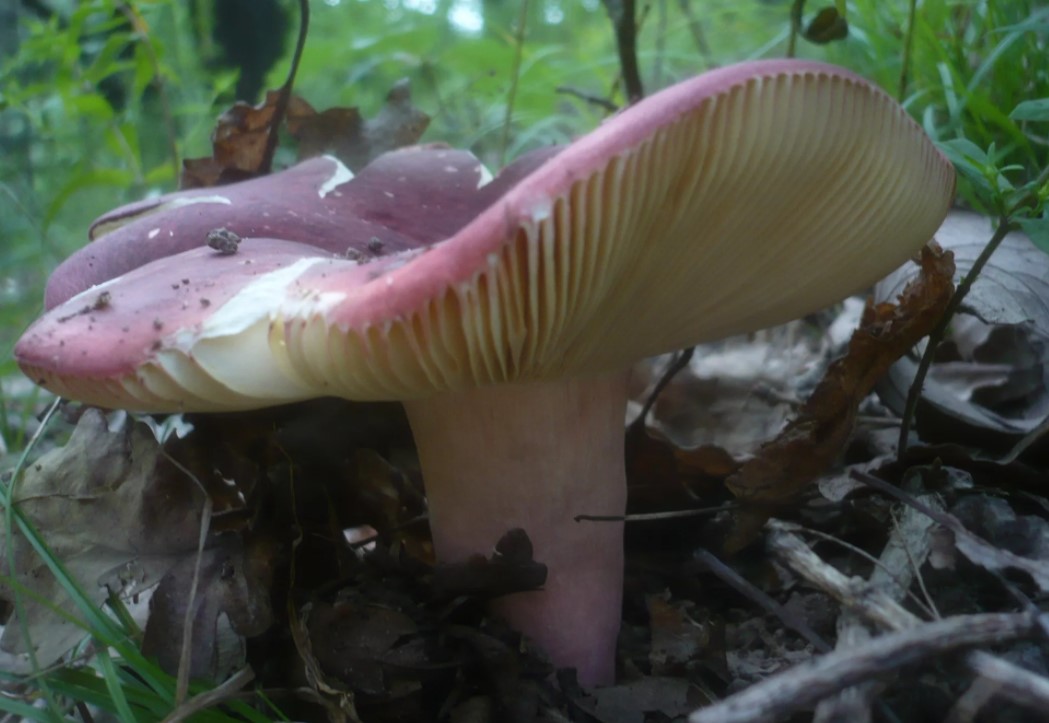
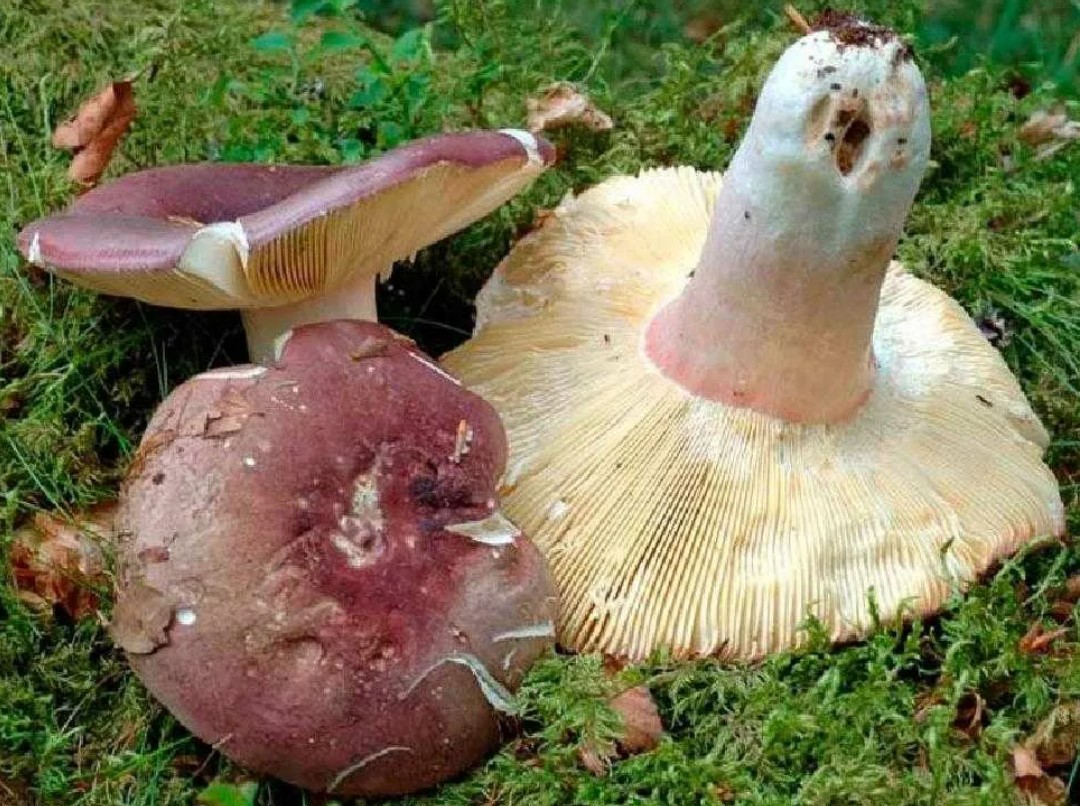
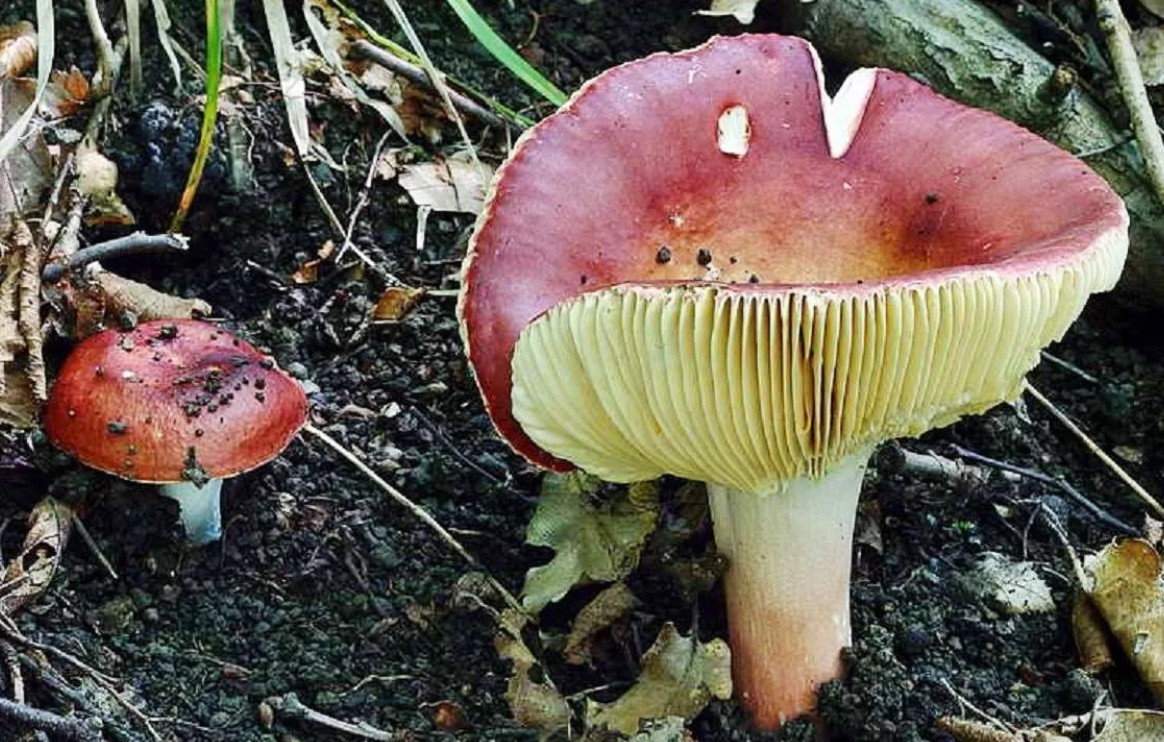
Amethyst Russula (Russula amethystina)
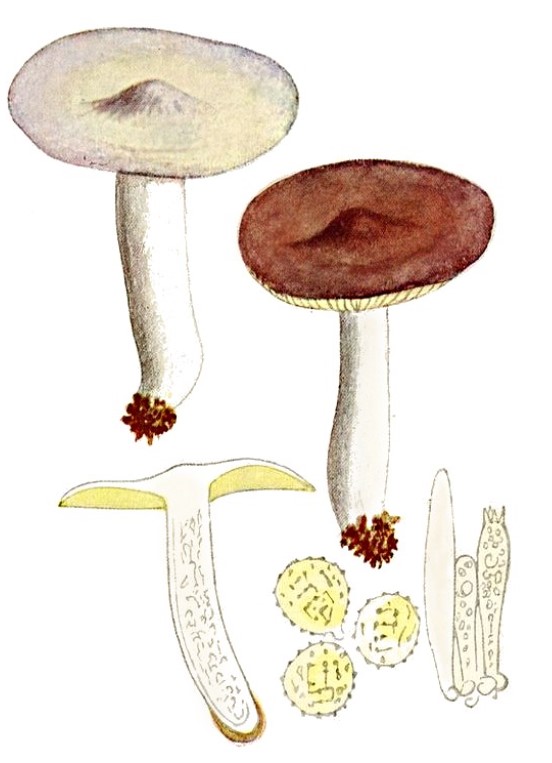
| View | Description | Edibility | Place of growth |
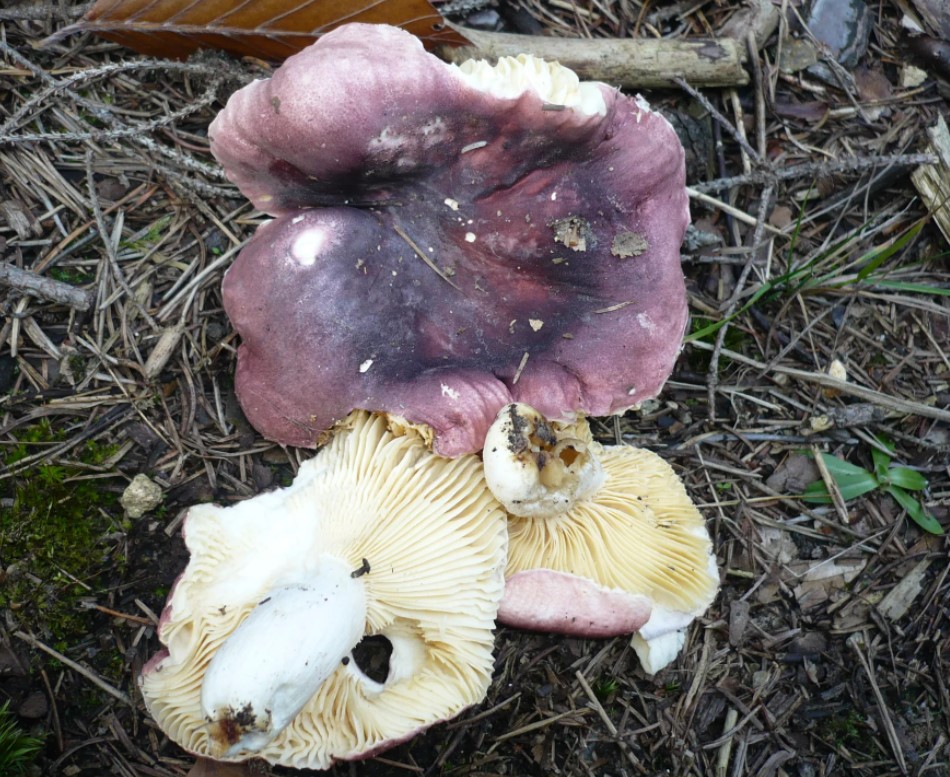
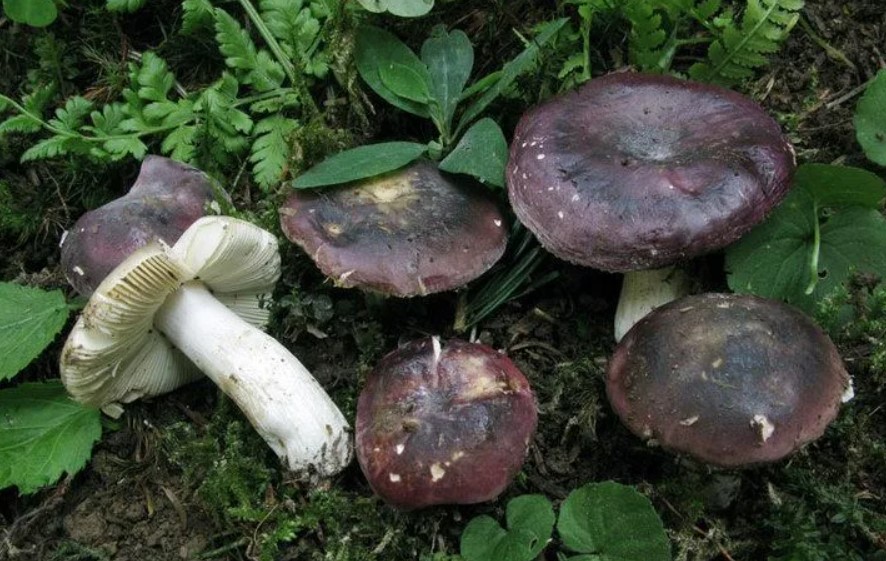
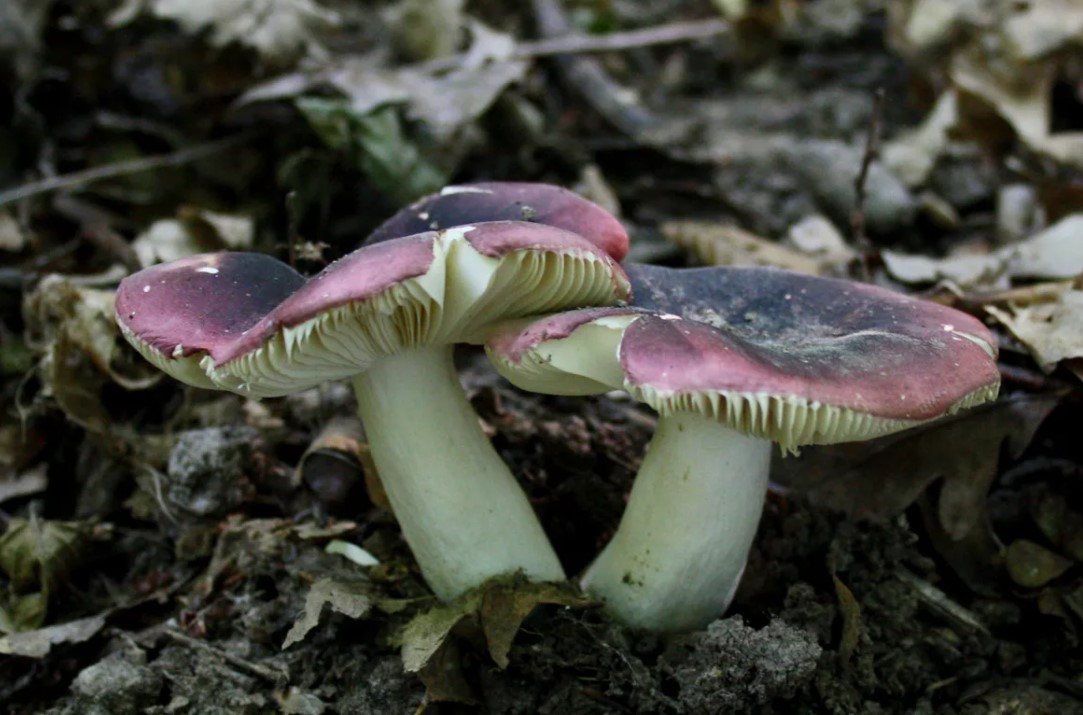
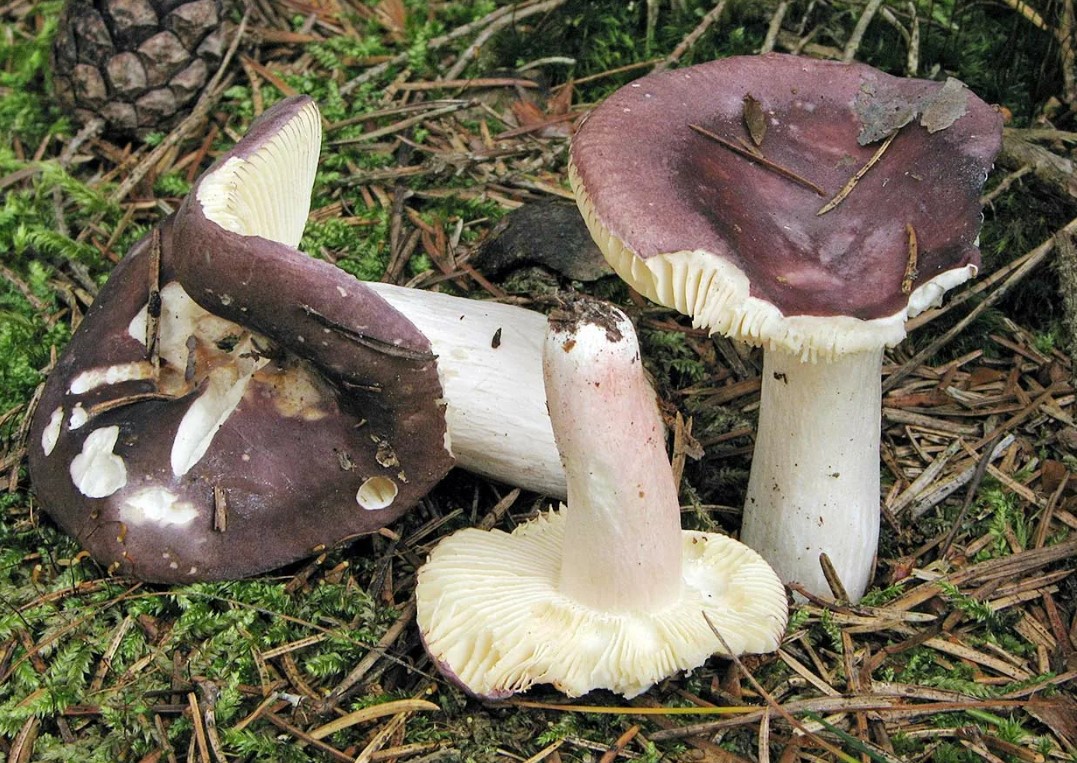
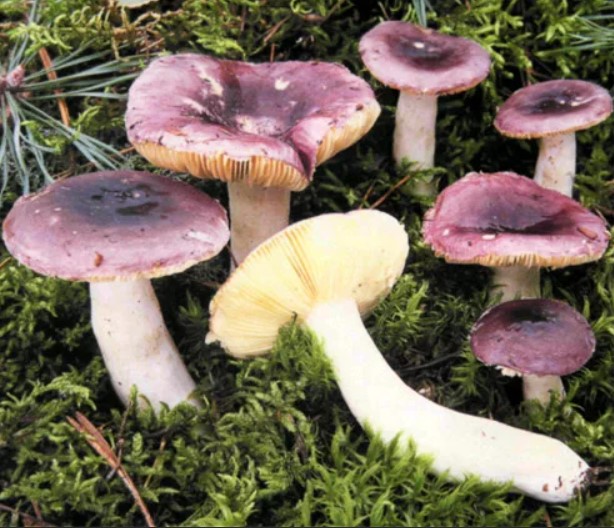
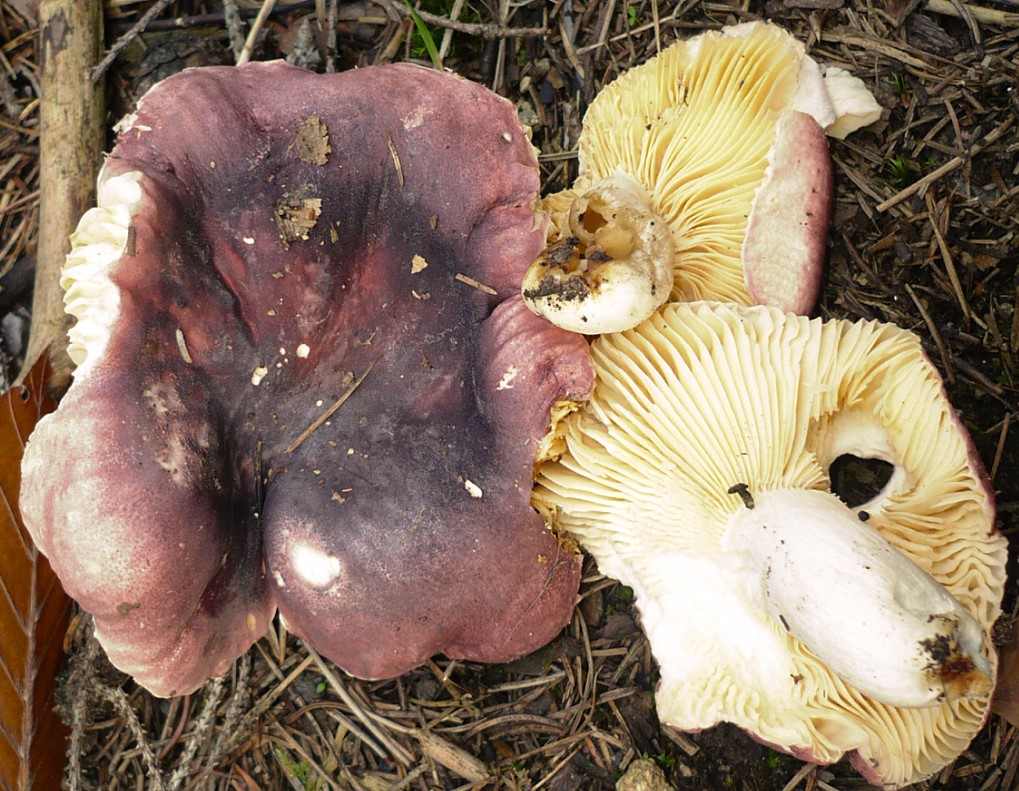
| Amethyst Russula (Russula amethystina) | The cap is slightly depressed, thin, and up to 7-10 cm in diameter. The color is purple or brownish-wine. The stem is up to 8 cm tall, changing from white to brown as it grows. | Edible. | Temperate zone of the Northern Hemisphere. |
Photo gallery of the amethyst russula
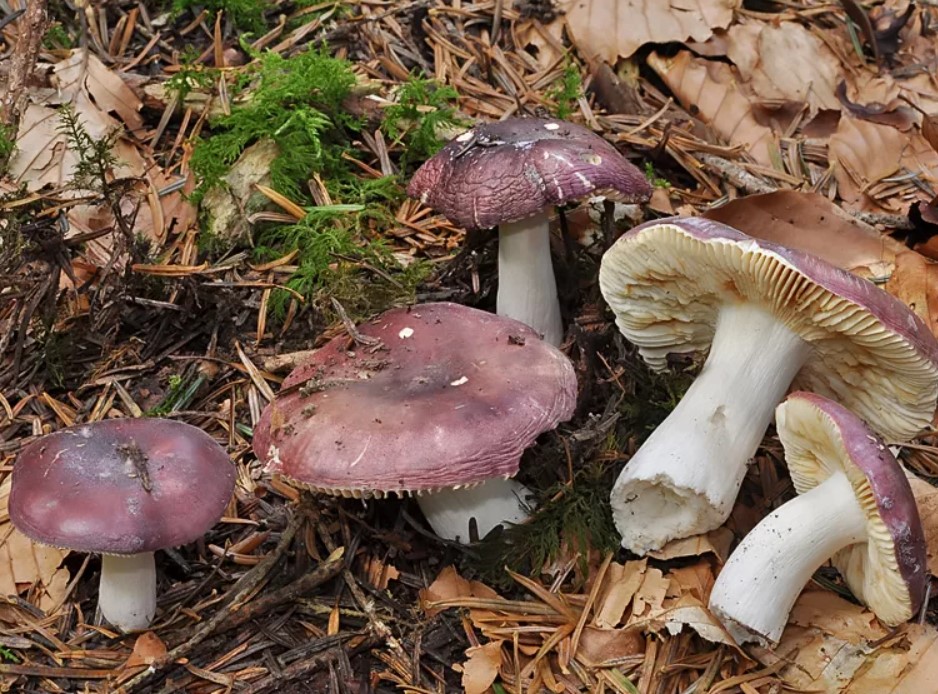
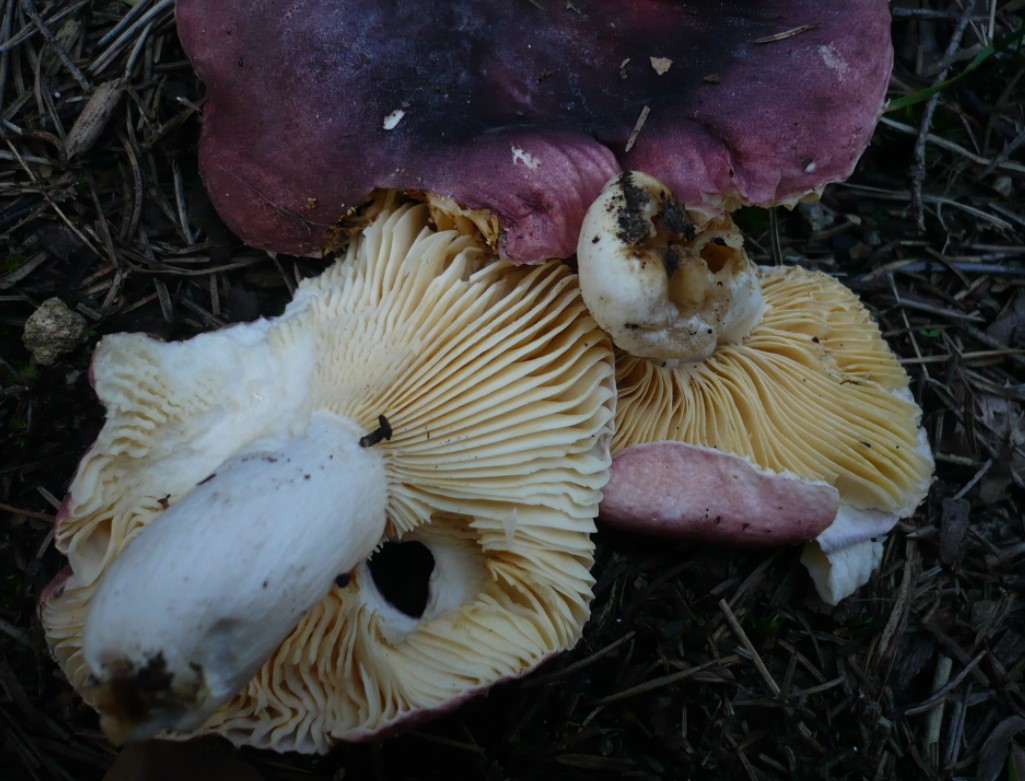
Russula aquosa
| View | Description | Edibility | Place of growth |
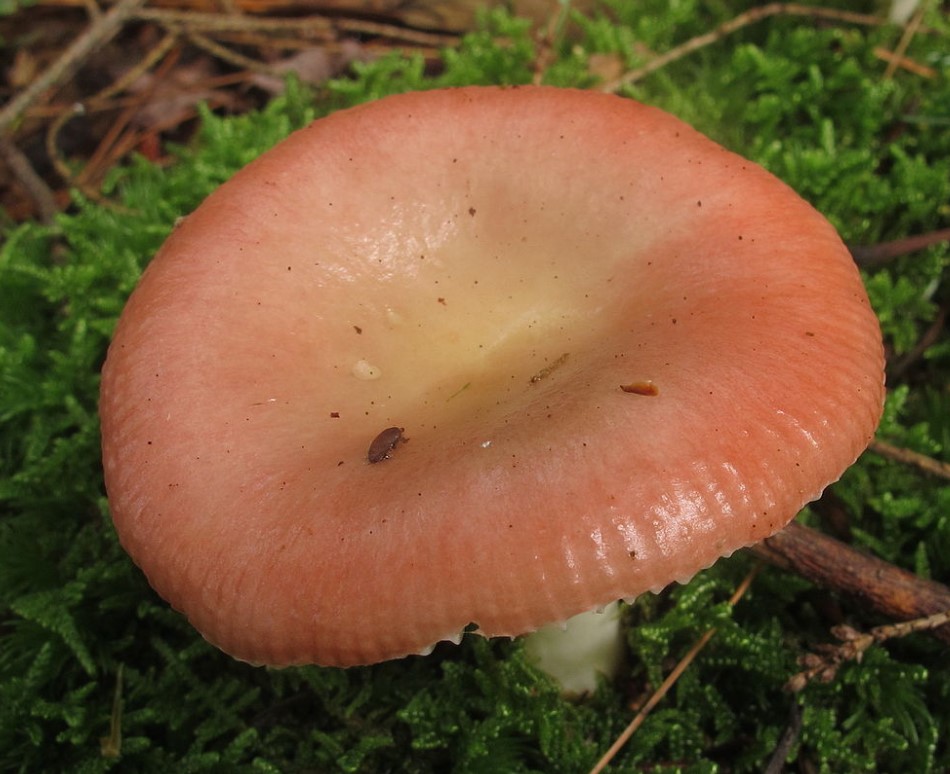
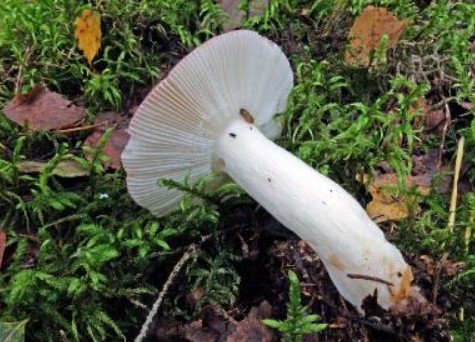
| Russula aquosa | The cap is 4-5 cm in diameter and flattened in mature mushrooms. The center is yellow, while the rest is purple-red. The stem is brittle. It reaches a height of up to 6 cm and is white. | Conditionally edible. | It grows in damp forests and is found in sphagnum bogs in Europe. |
Photo gallery of watery russula
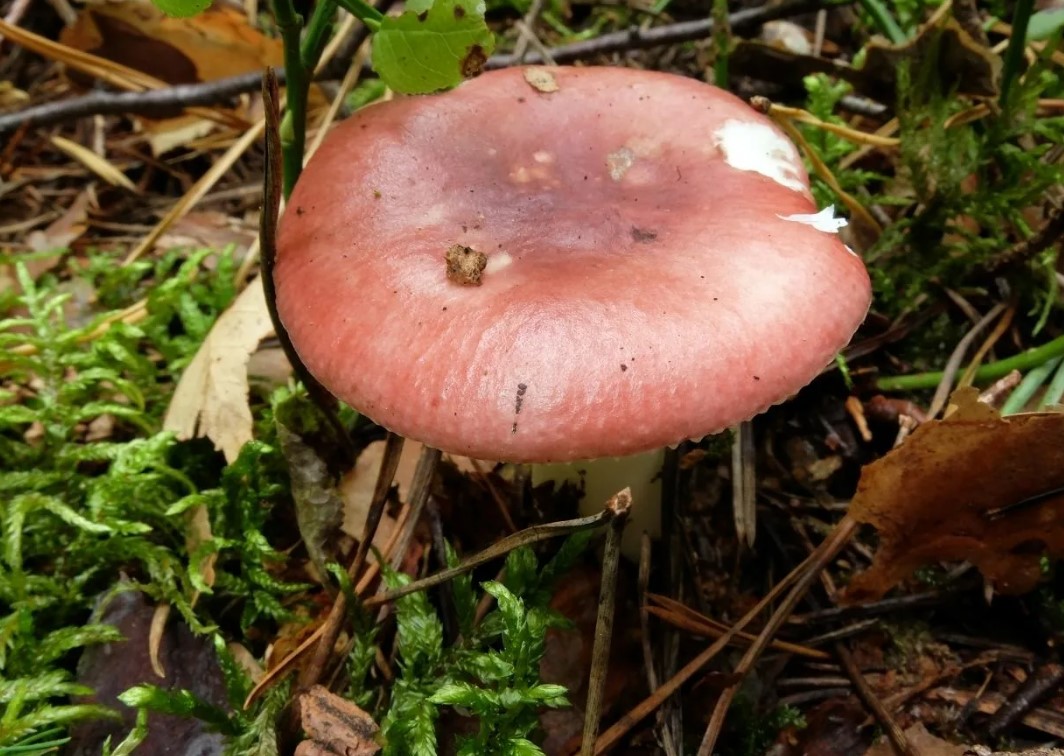
Golden russula (Russula aurata)
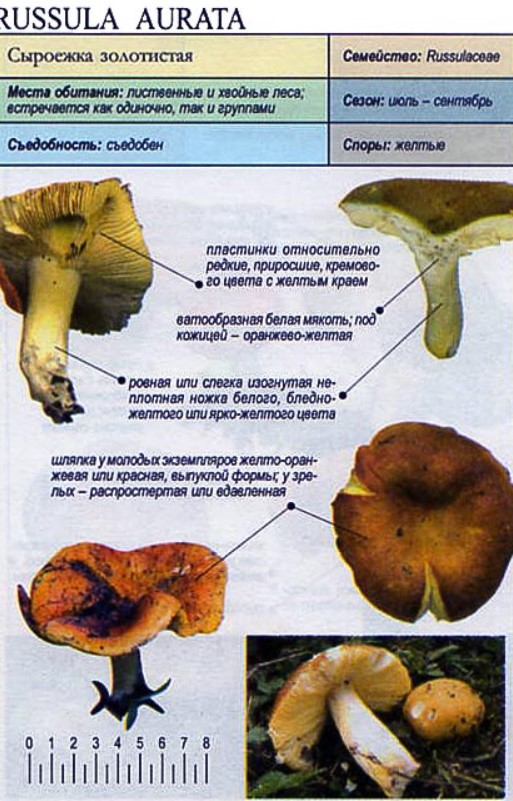
| View | Description | Edibility | Place of growth |
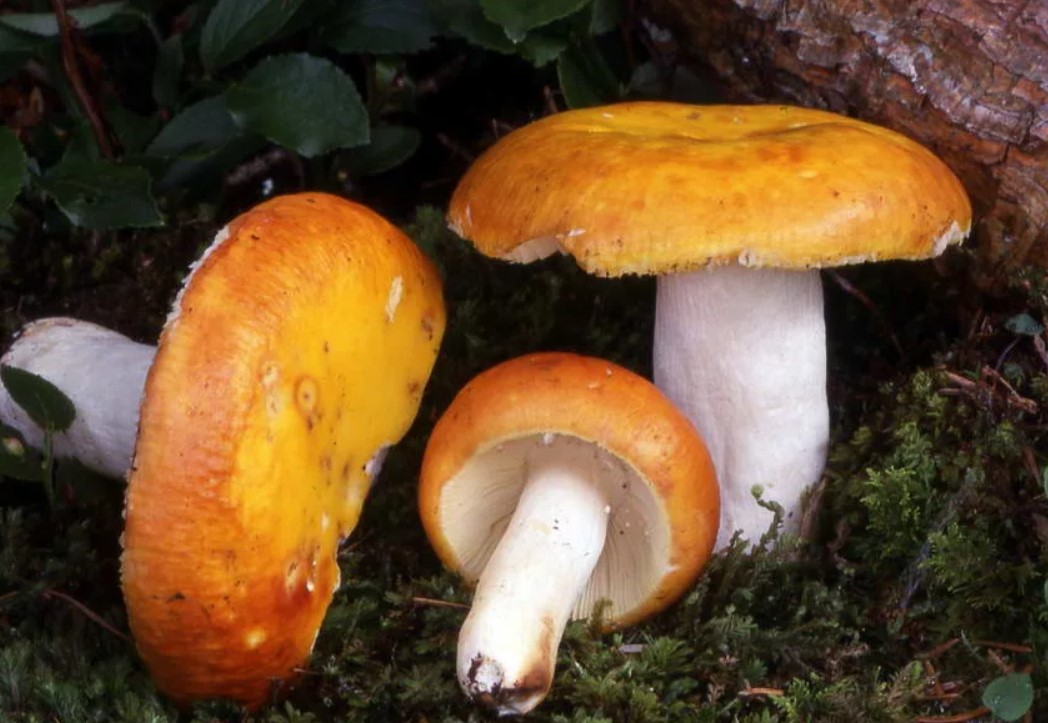
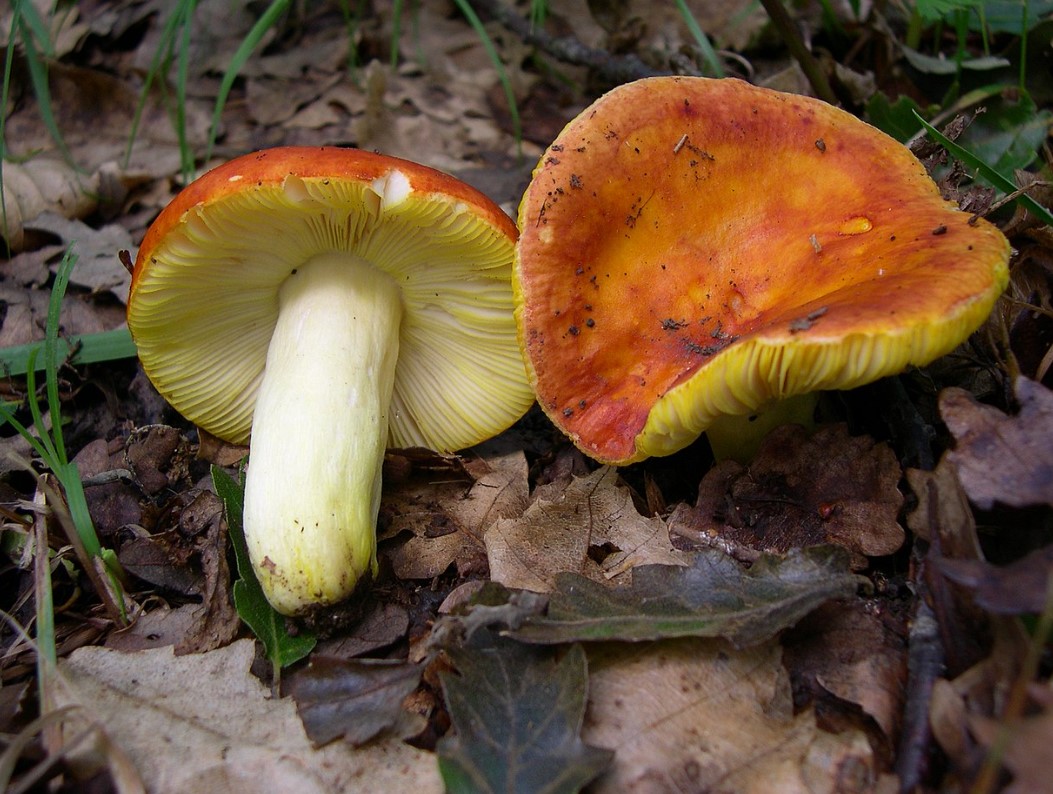
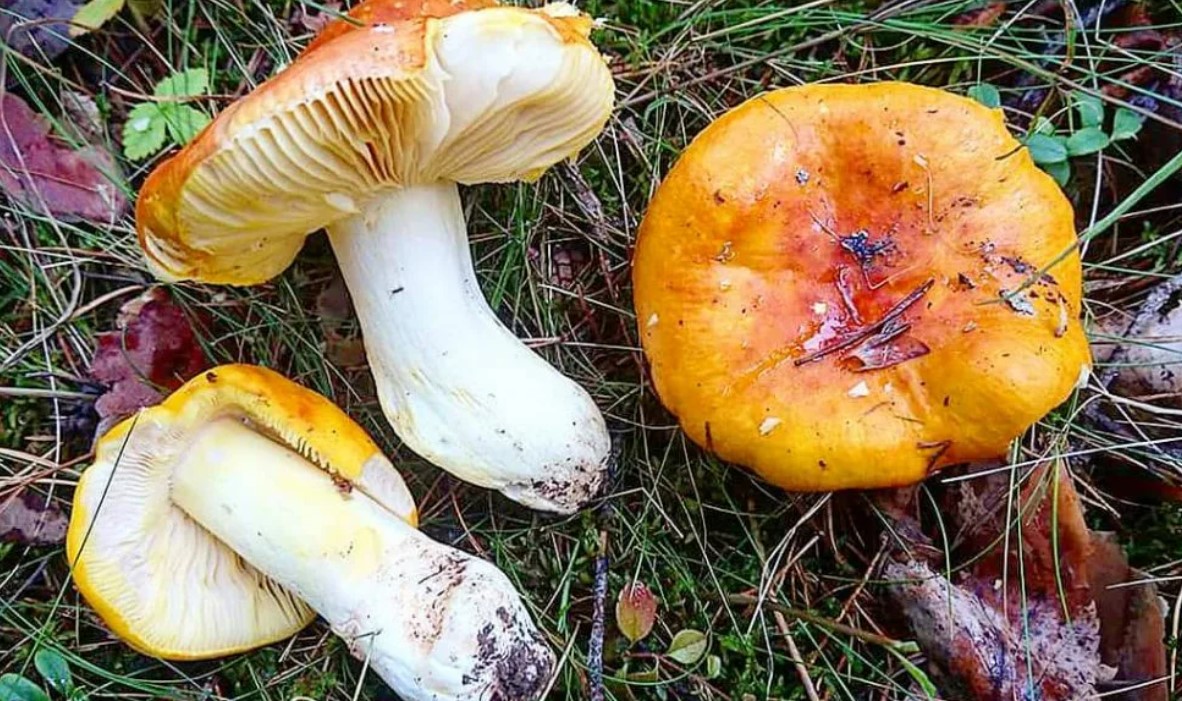
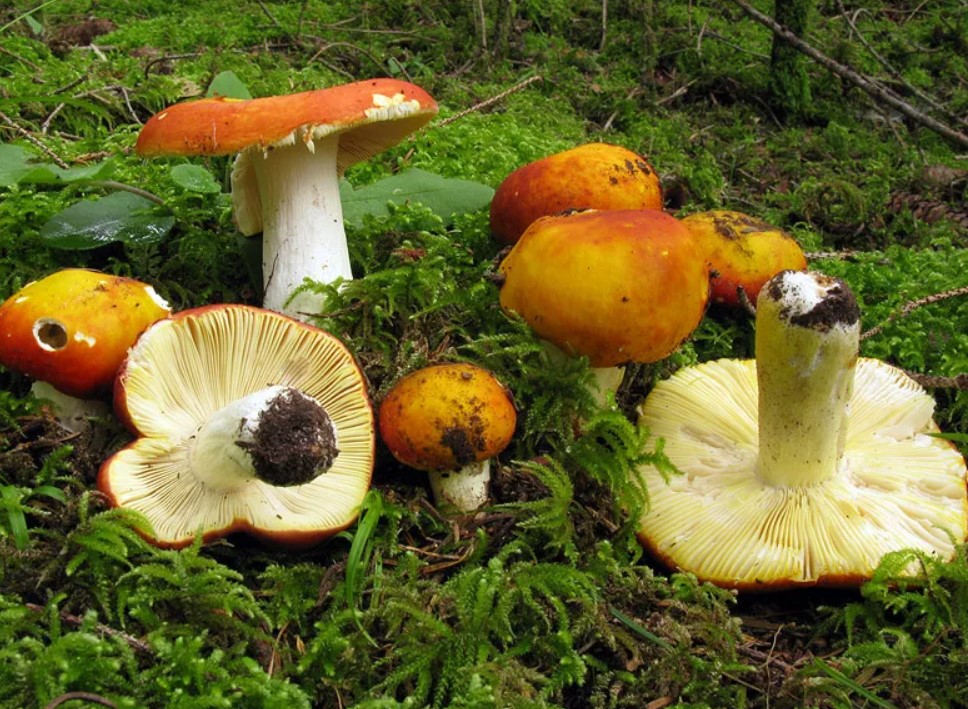
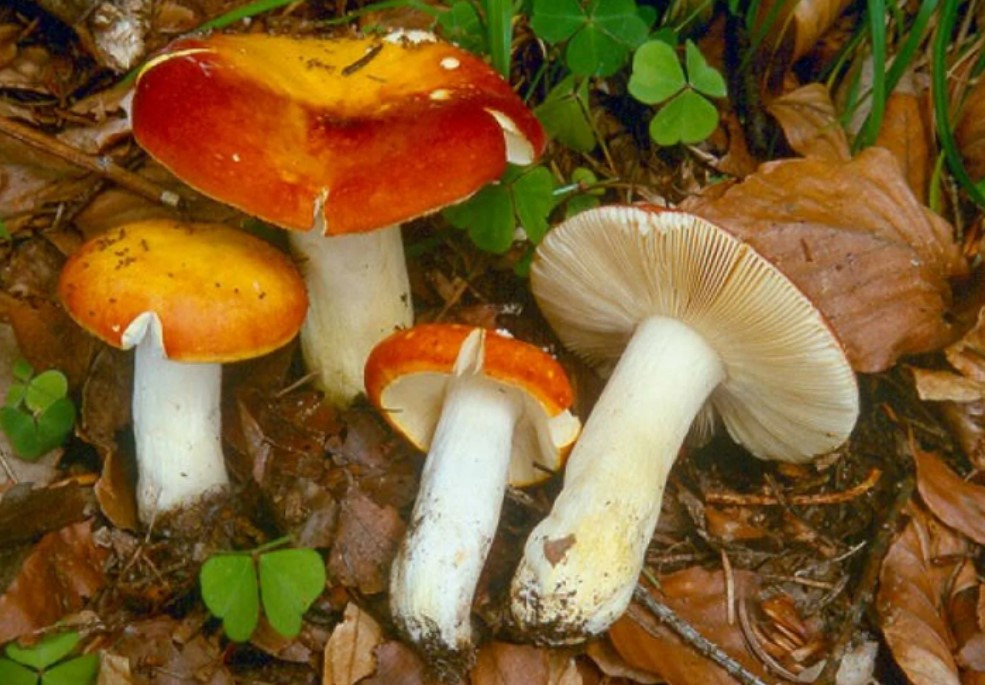
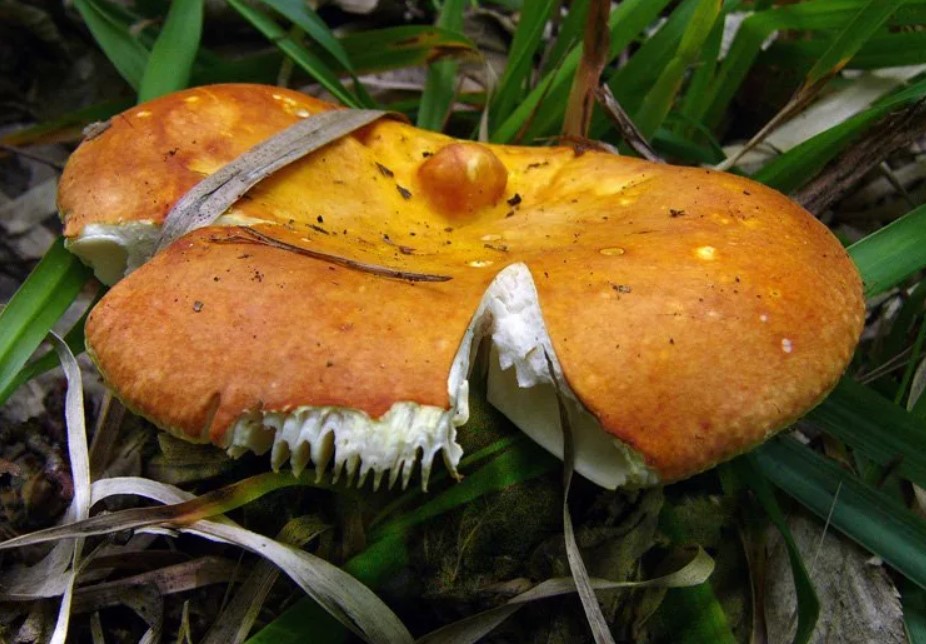
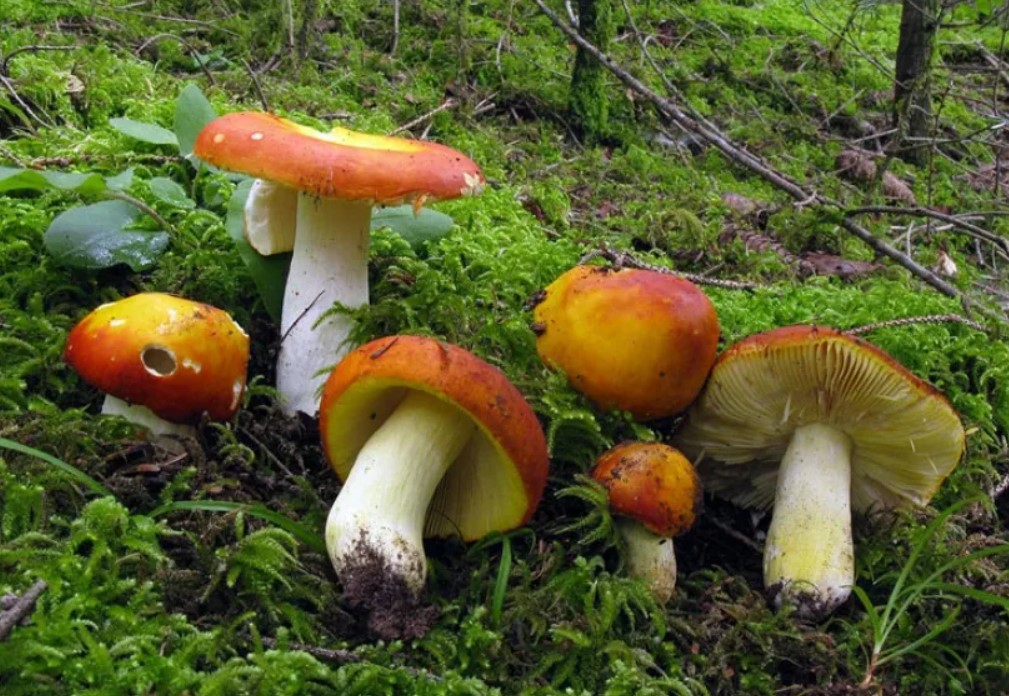
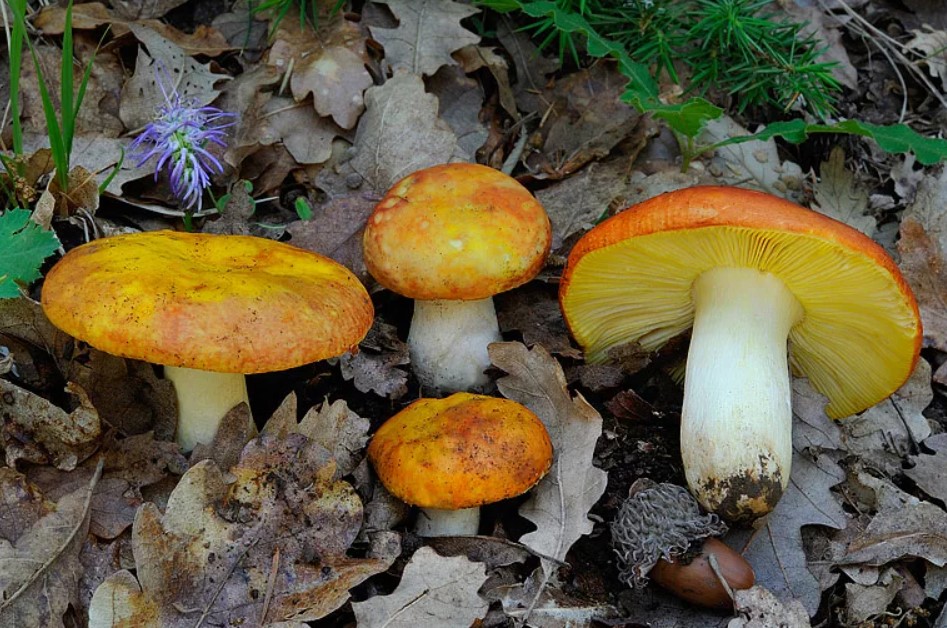
| Golden russula (Russula aurata) | The cap is up to 9 cm in diameter. The color can be copper-red or red-orange with a bright yellow center. The stem is white and may have a yellow tint. | Edible. | A rare mushroom that grows in broadleaf forests of North America and Eurasia. |
Photo gallery of golden russula
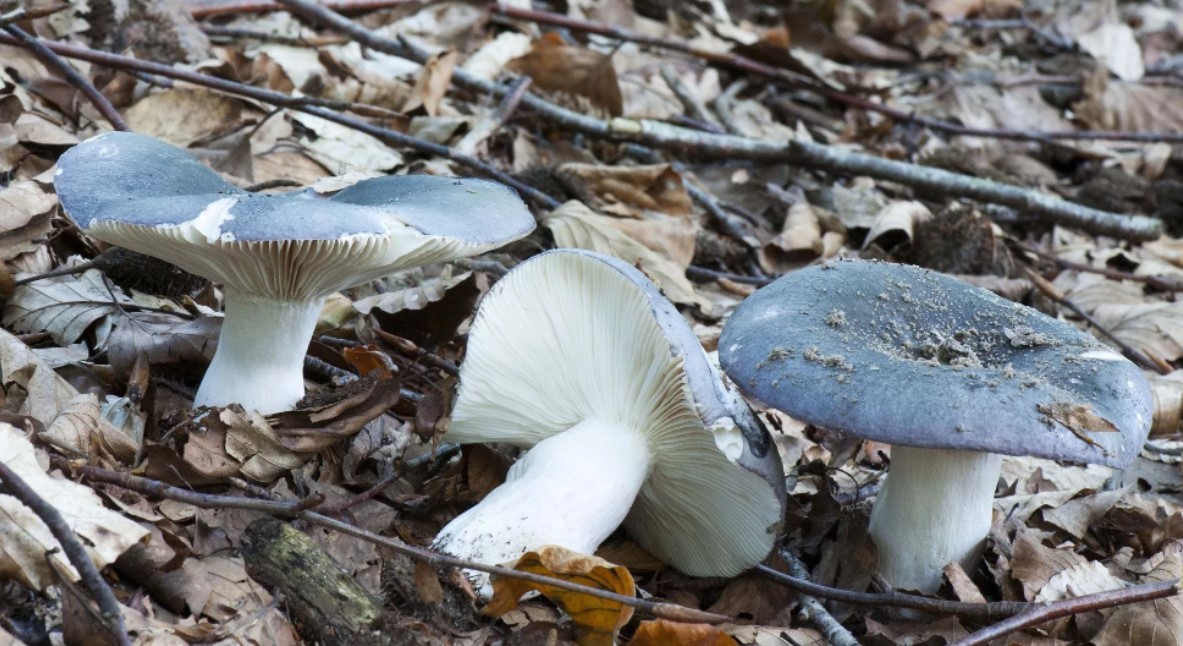
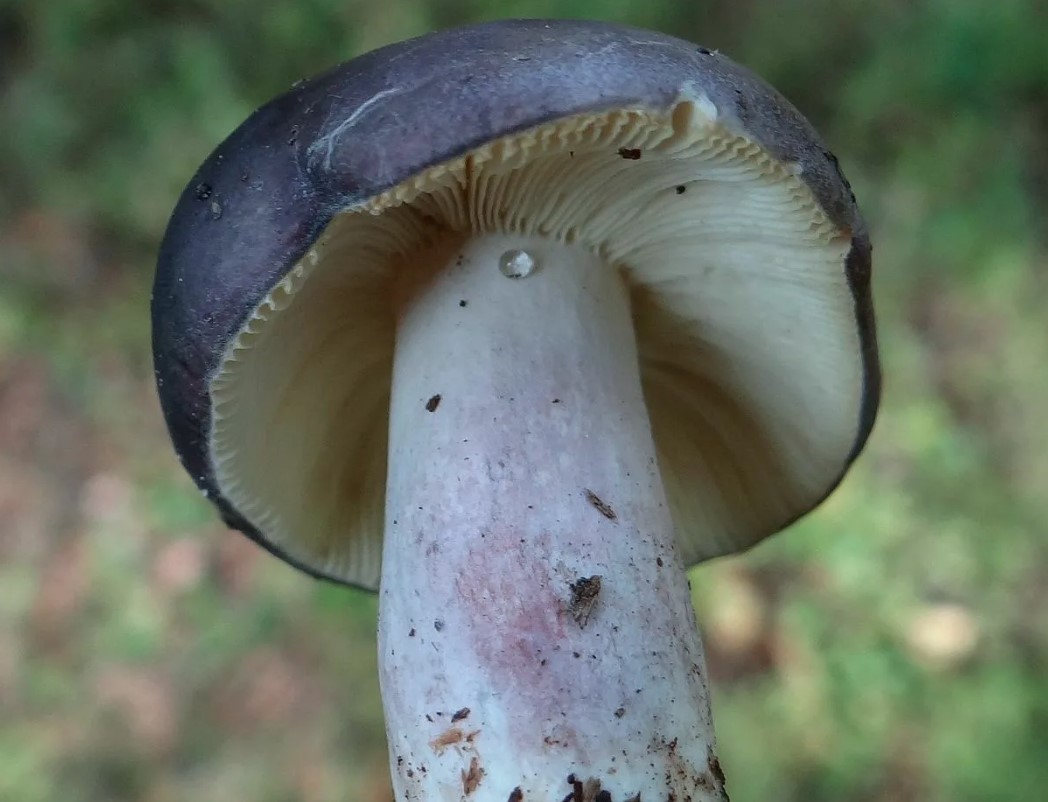
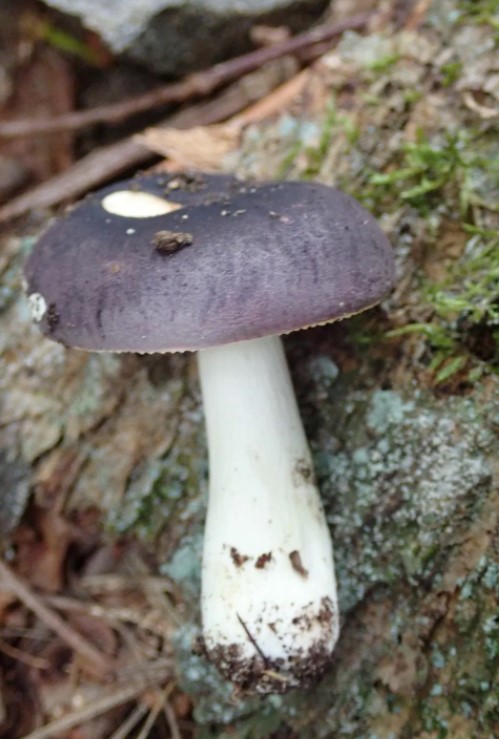
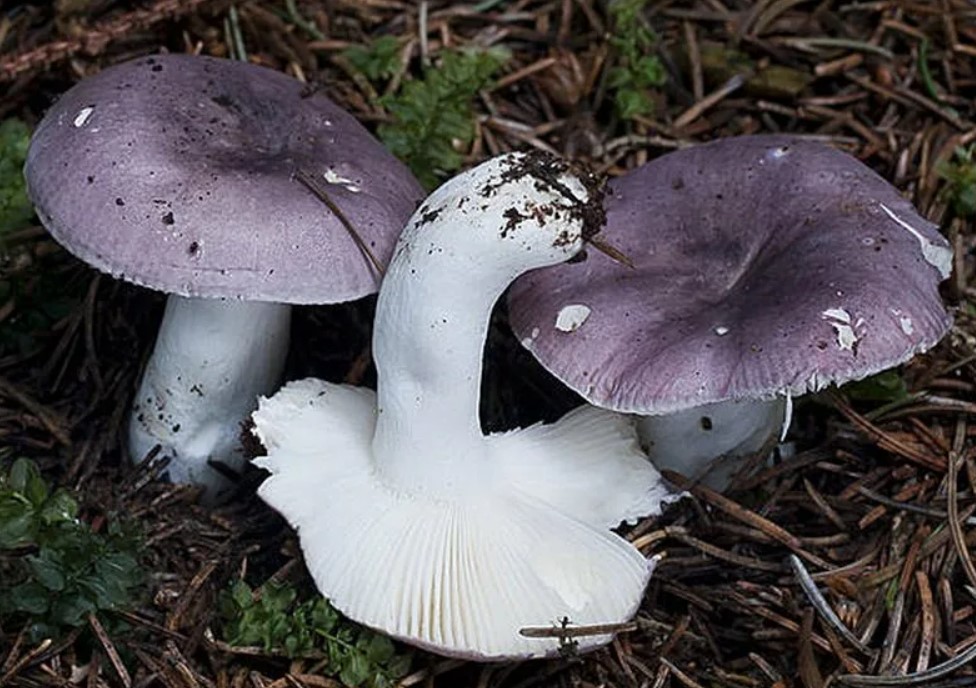
Blue russula, azure russula (Russula azurea)
| View | Description | Edibility | Place of growth |
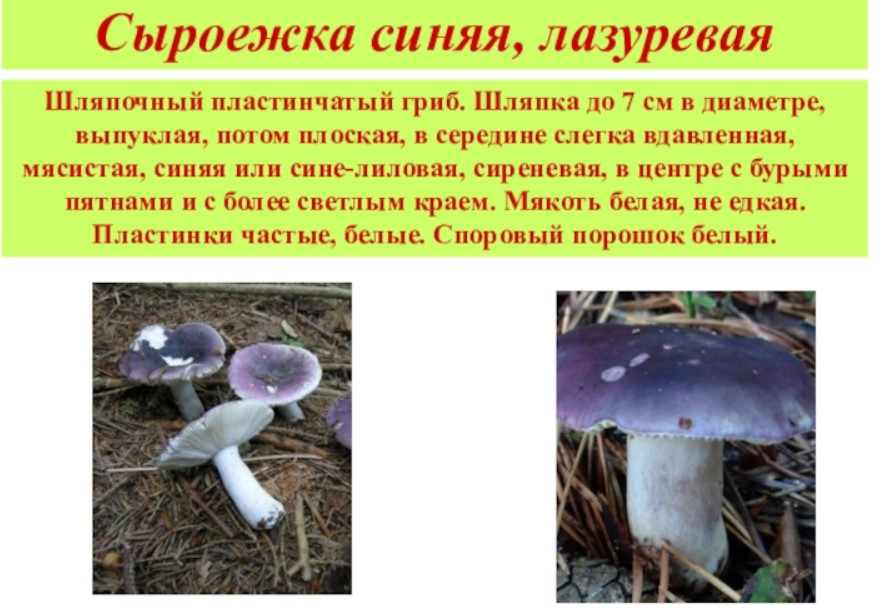
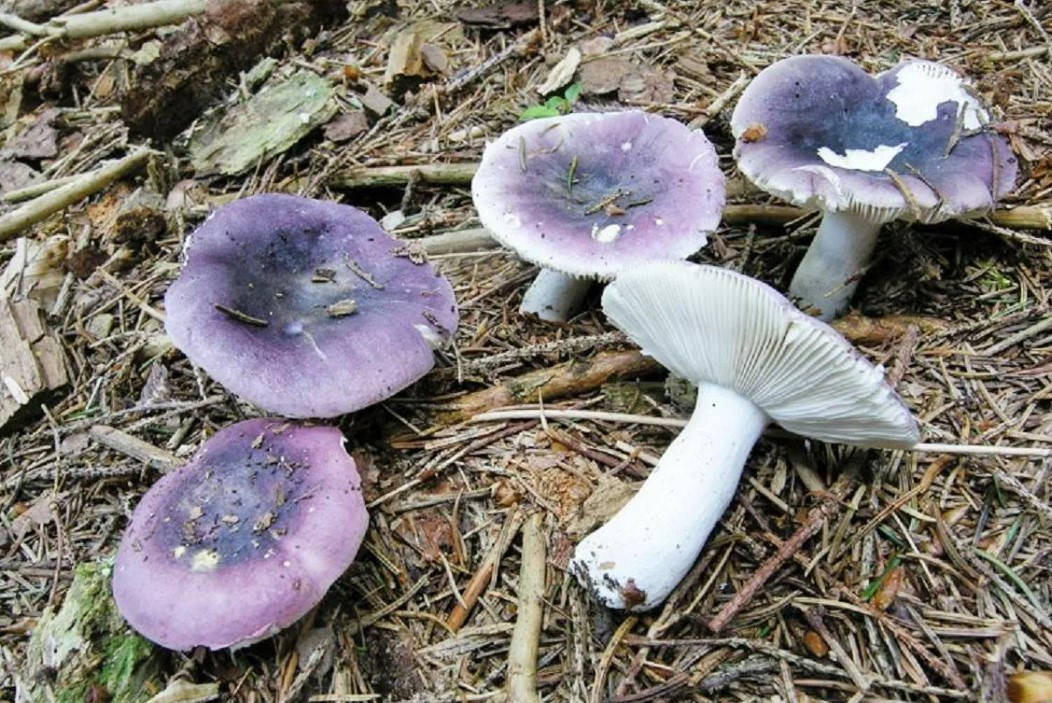
| Blue russula, azure russula (Russula azurea) | The cap diameter ranges from 3 to 10 cm, and the color ranges from blue to dark purple. The surface of the stem and cap is covered with a cobwebby coating. | Edible. | Coniferous forests of Eurasia. |
Photo gallery of blue and azure russula
Birch russula (Russula betularum)
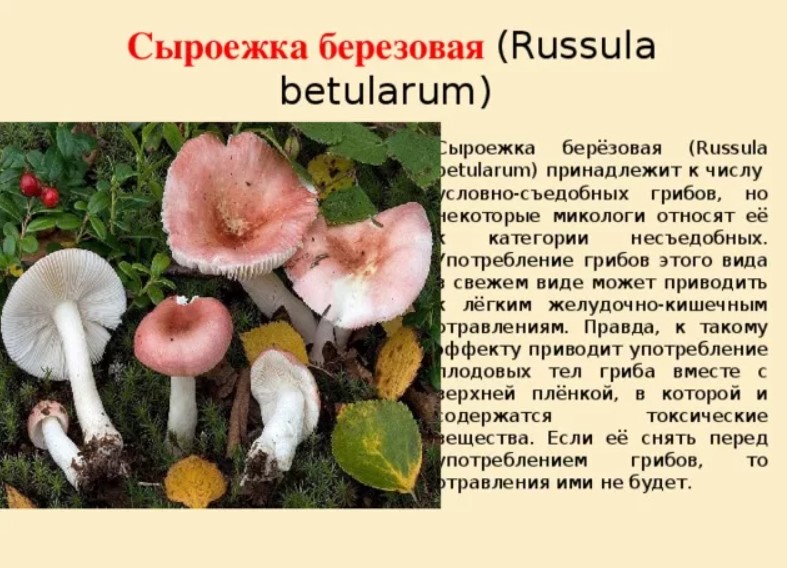
| View | Description | Edibility | Place of growth |
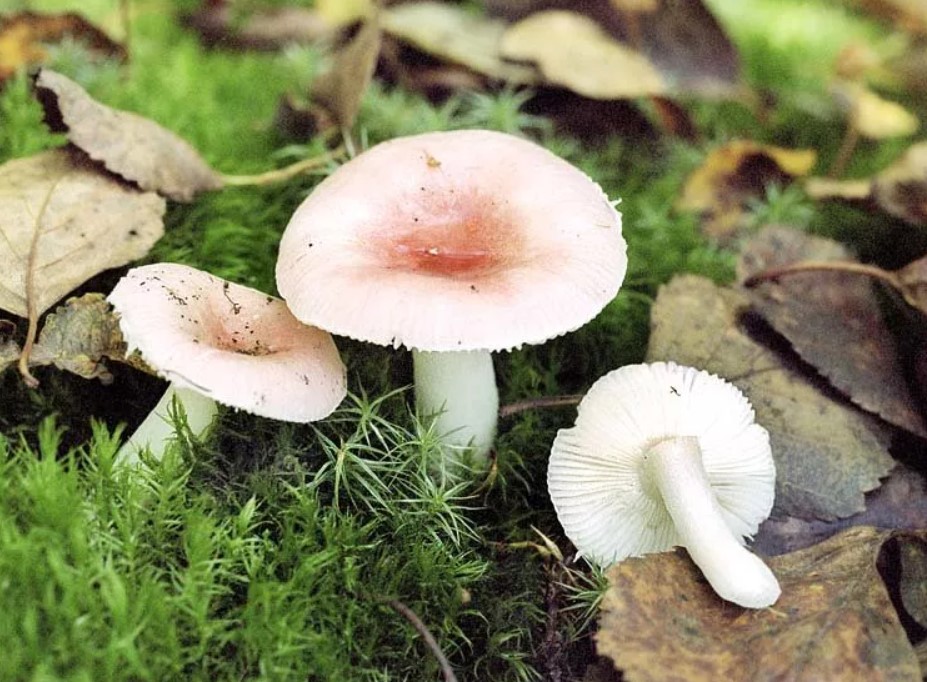
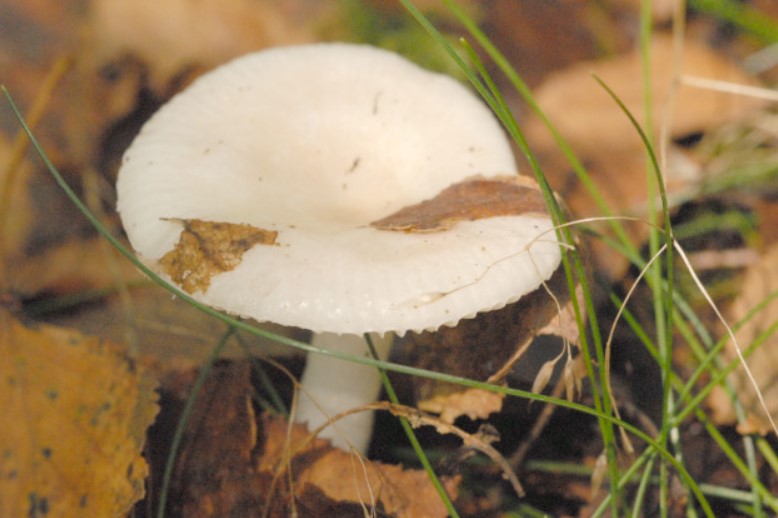
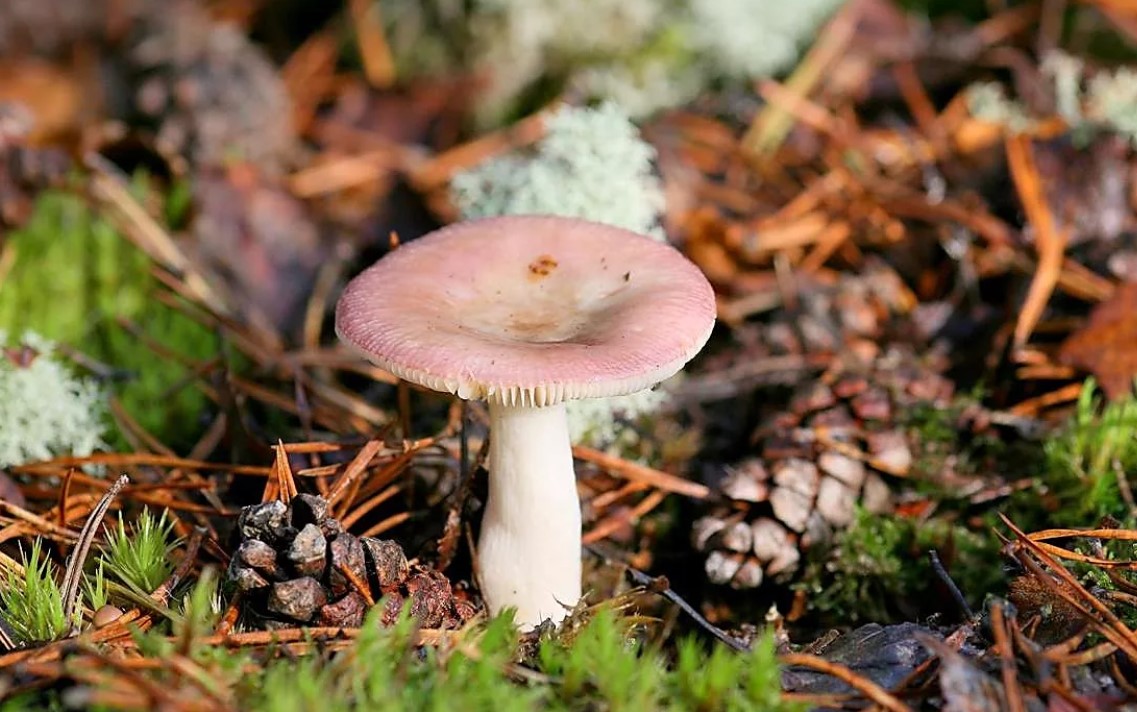
| Birch russula (Russula betularum) | The cap is no more than 5 cm in diameter, with wavy edges. Color can vary: white, pinkish, copper, red, or lilac-pink. The stem is white or yellowish and fragile. | Conditionally edible. May cause intestinal upset. | It grows in spruce and birch forests of Northern Europe. |
Photo gallery of the birch russula
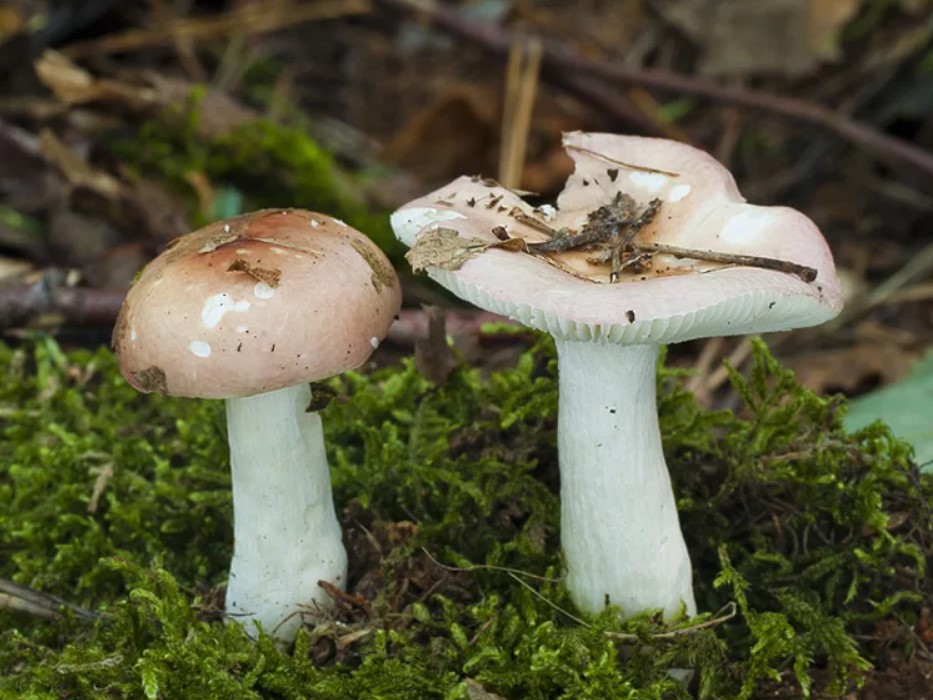
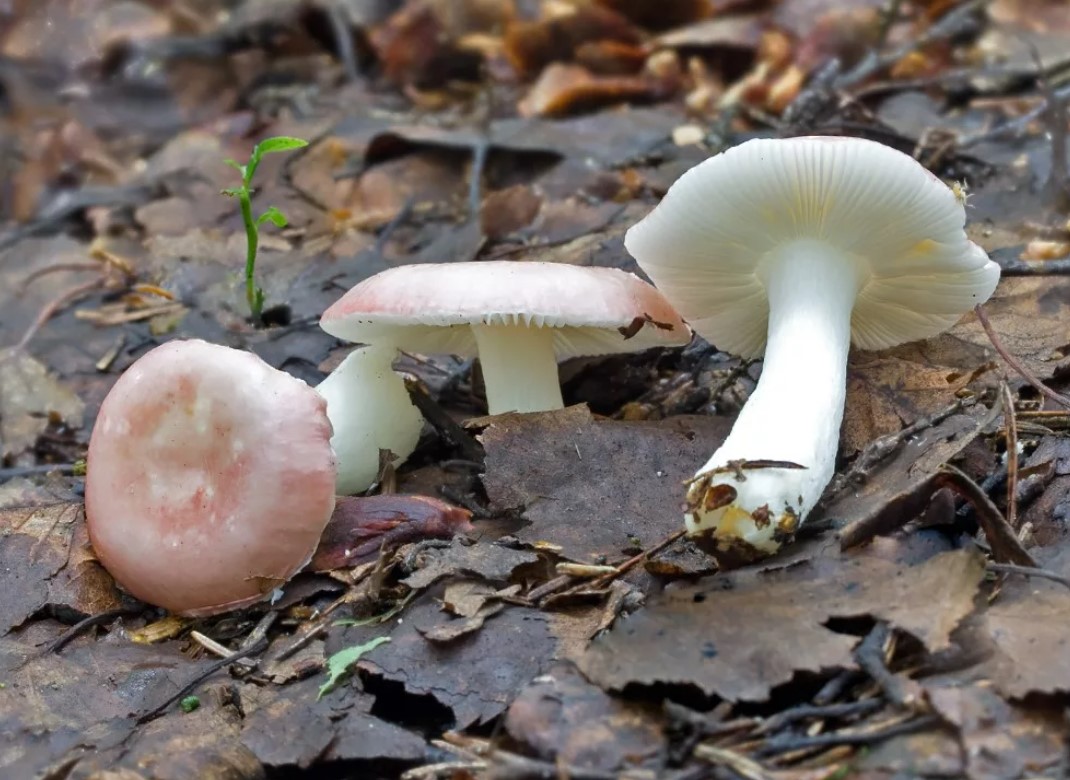
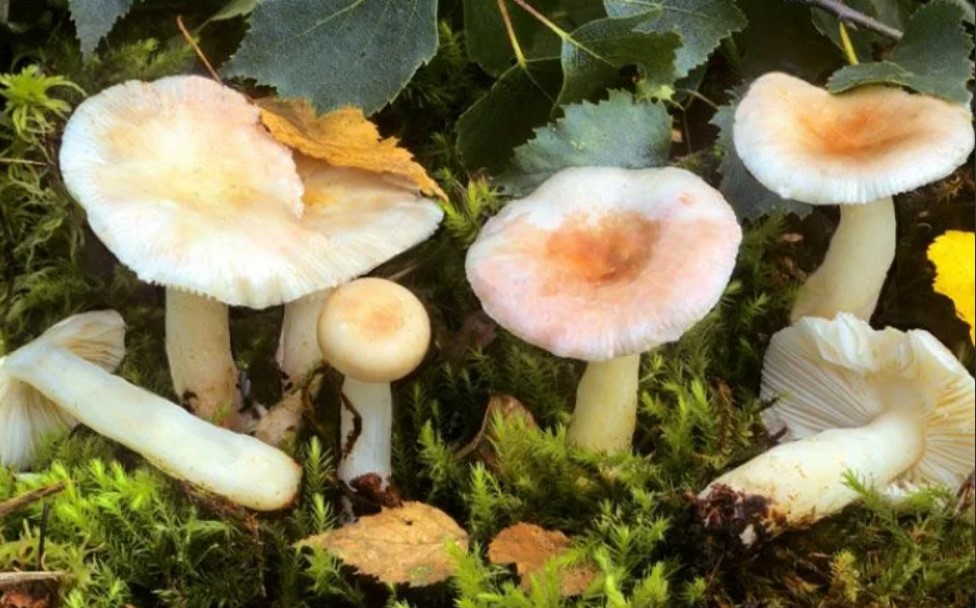
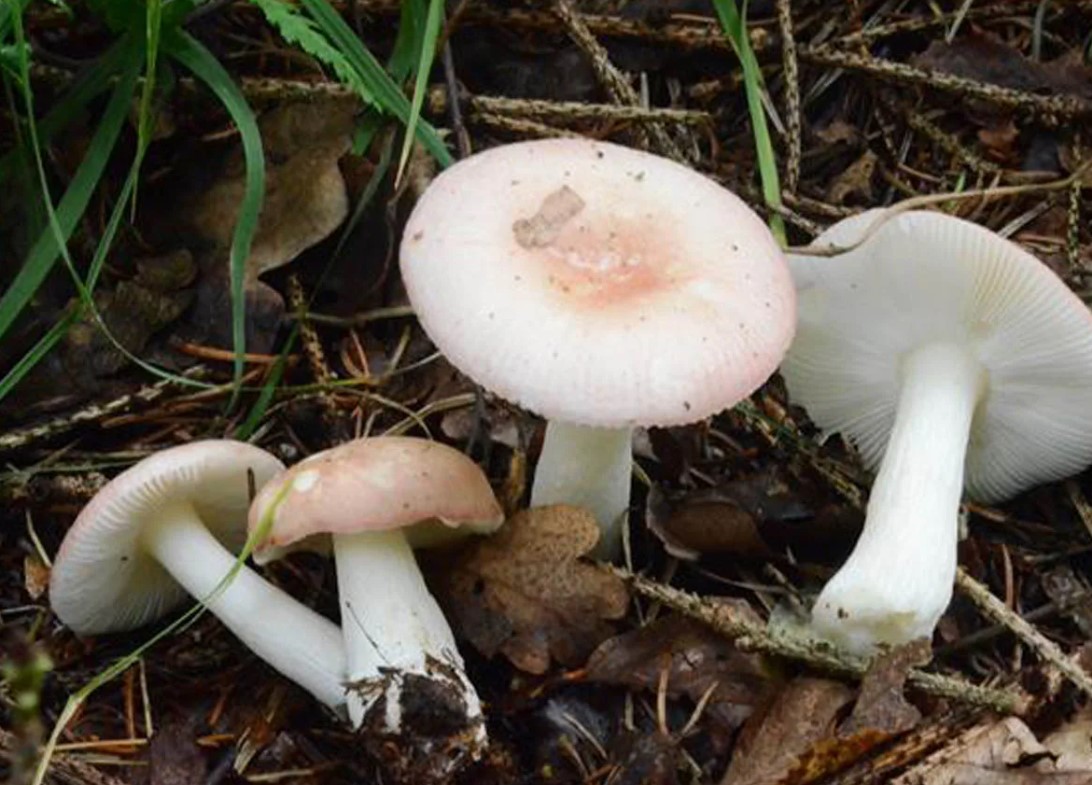
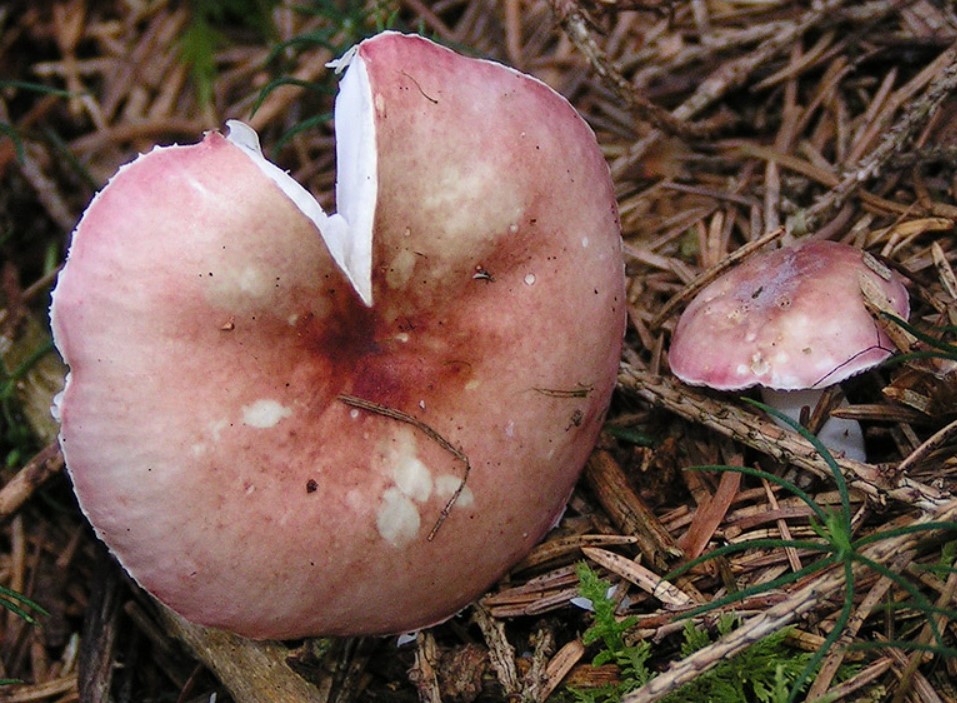
Russula caerulea (Russula caerulea)
| View | Description | Edibility | Place of growth |
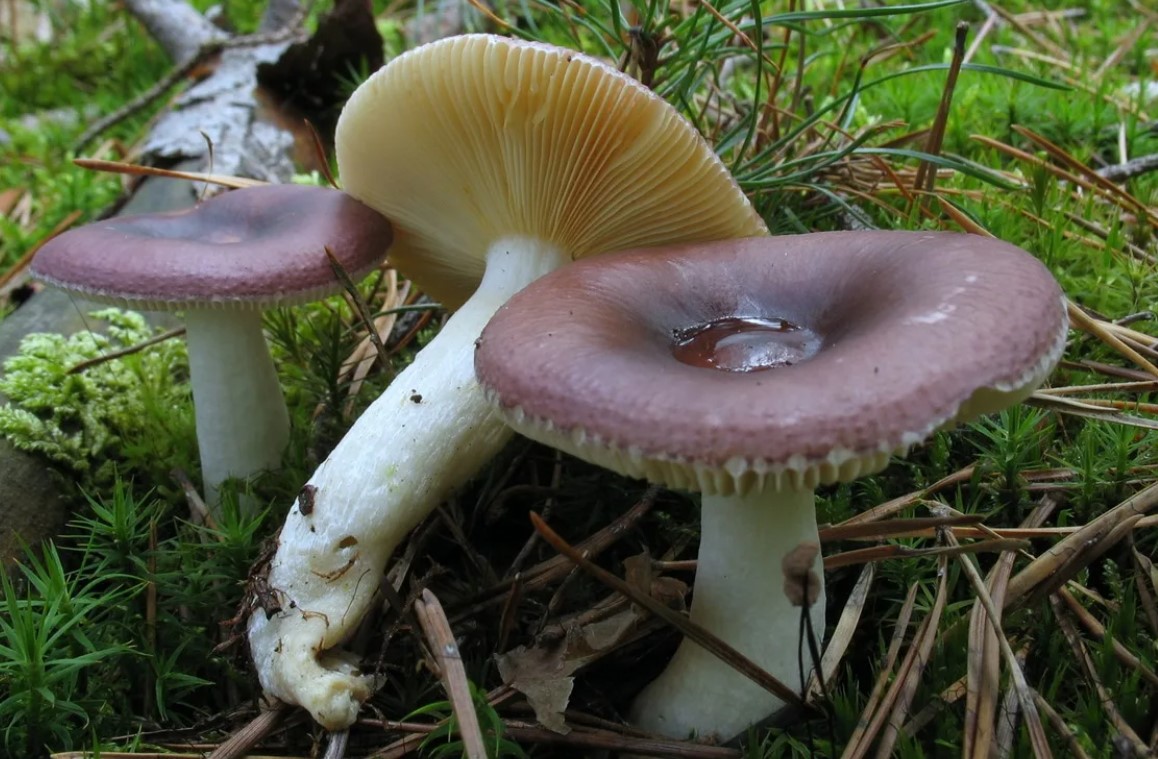
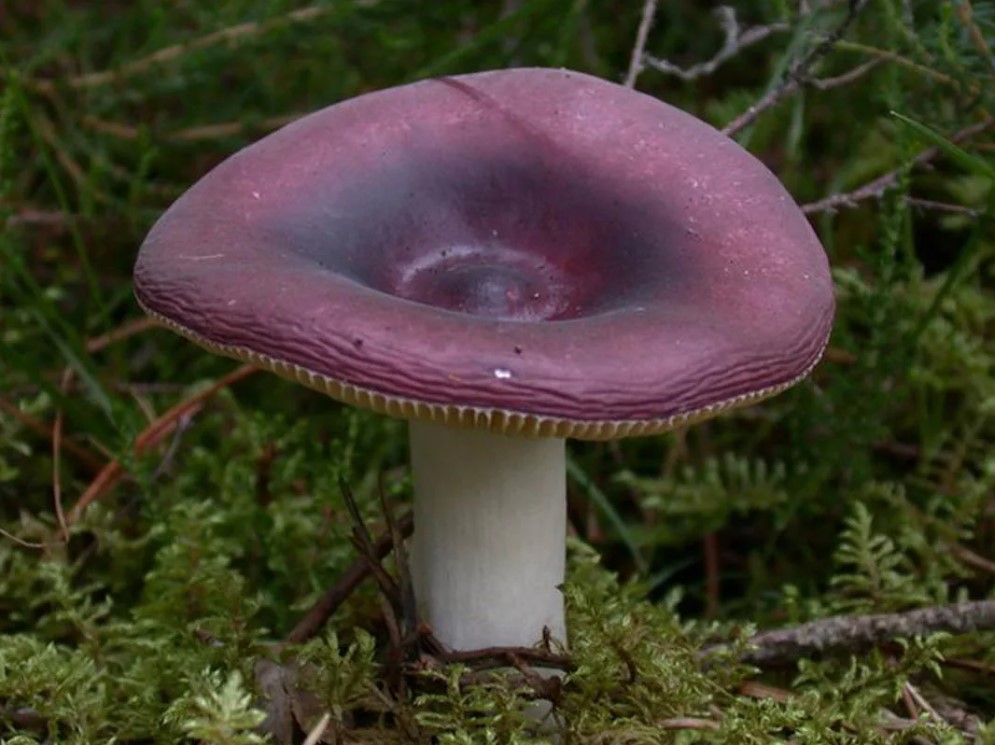
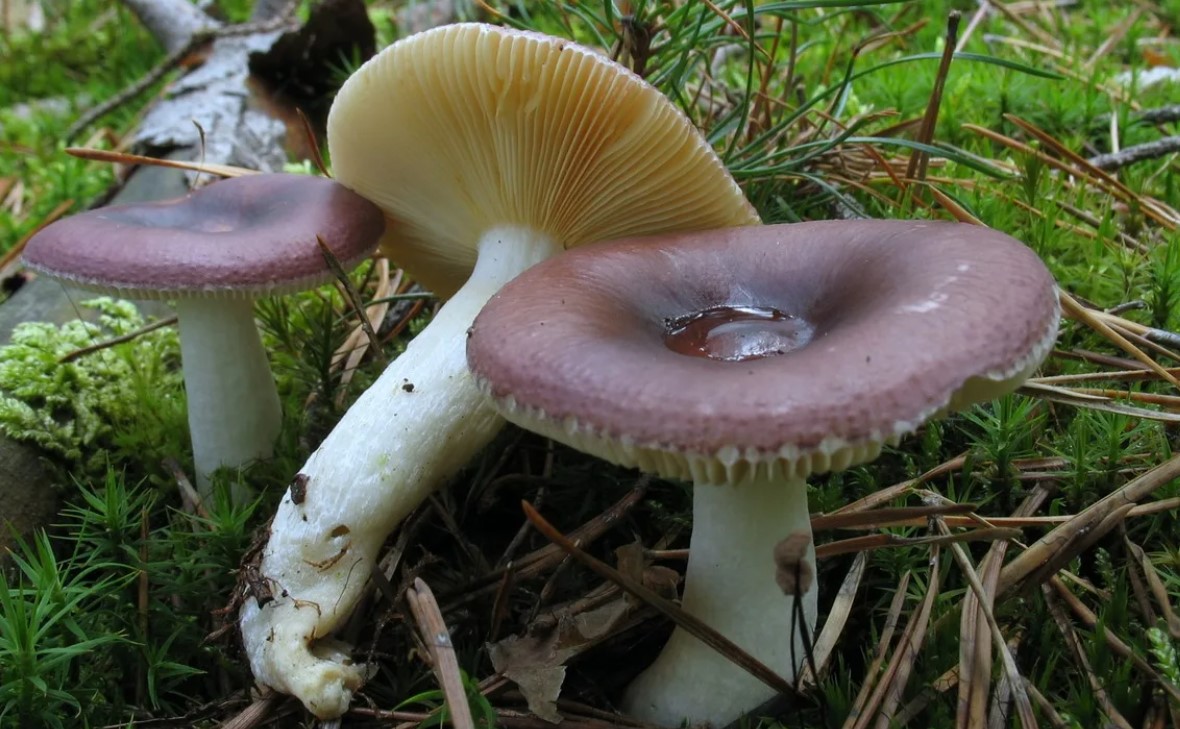
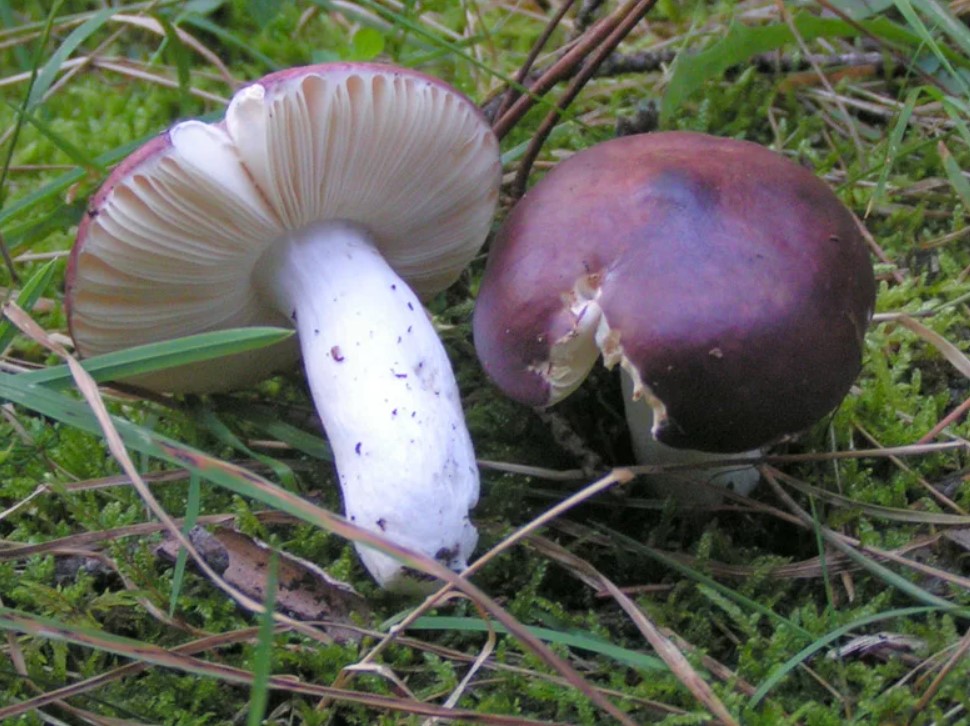
| Blue russula, tuberculate-azure russula (Russula caerulea) | The cap is 3-12 cm in diameter and is a brownish-lilac color, fading in damp weather and fading to brown in the sun. The stem is sturdy and changes color from white to gray. | An edible, very aromatic mushroom. | Coniferous forest of North America and Eurasia. |
Photo gallery of blue and tuberculate-azure russula
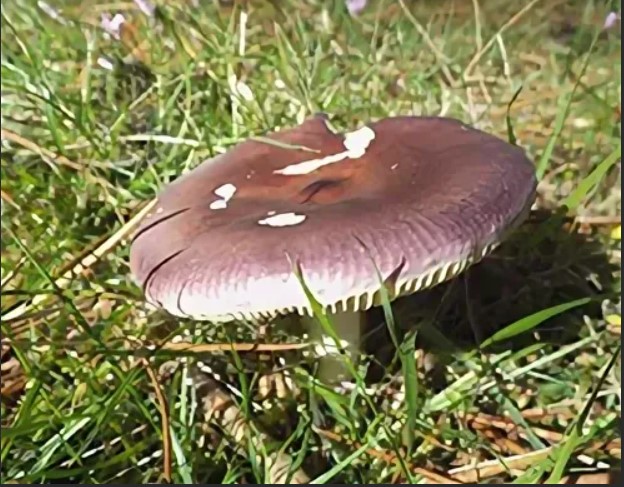
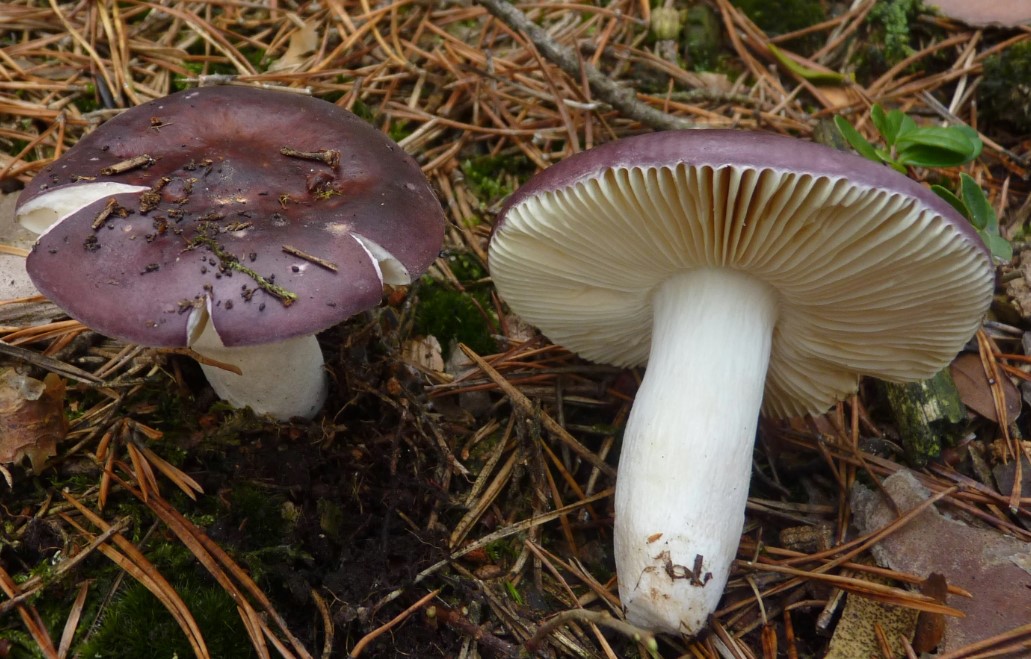
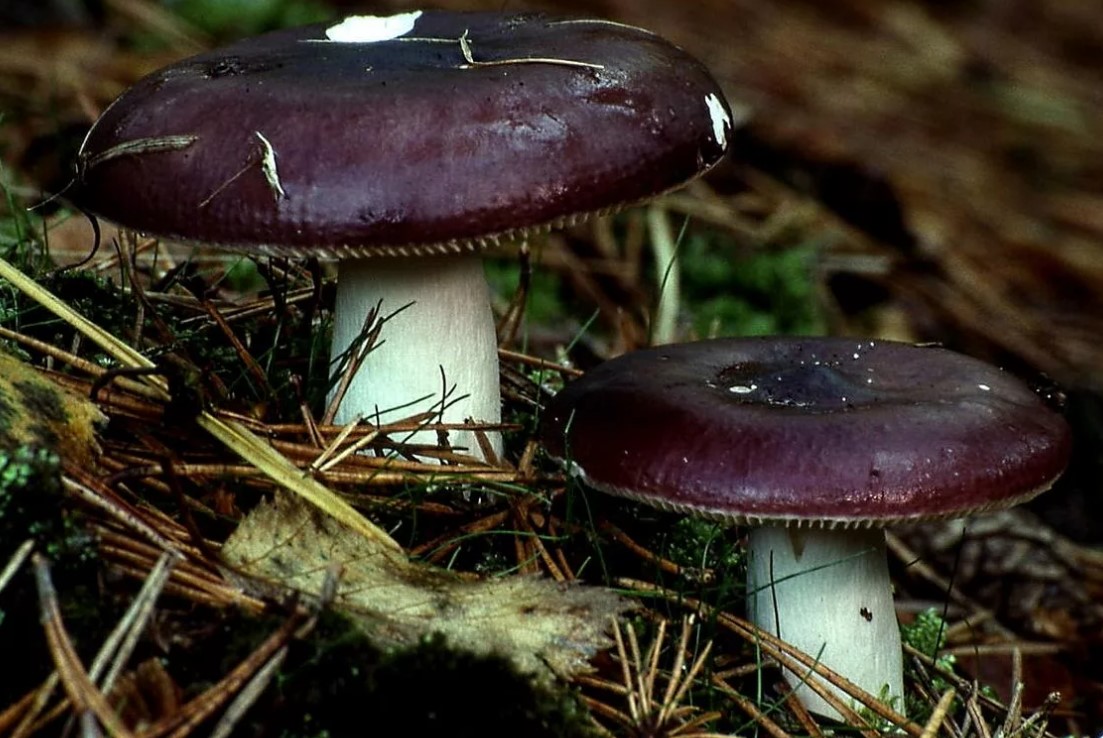
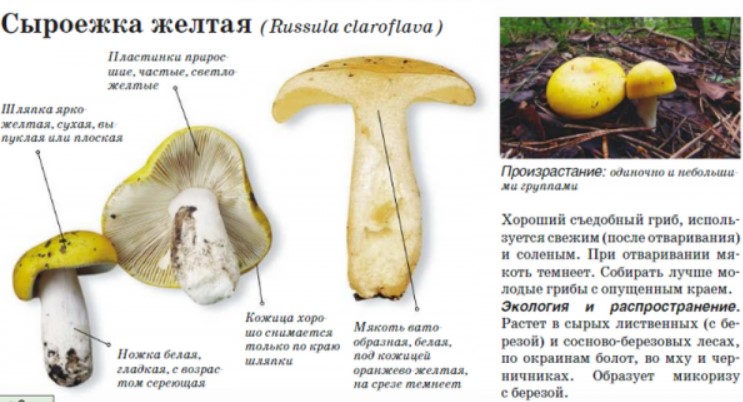
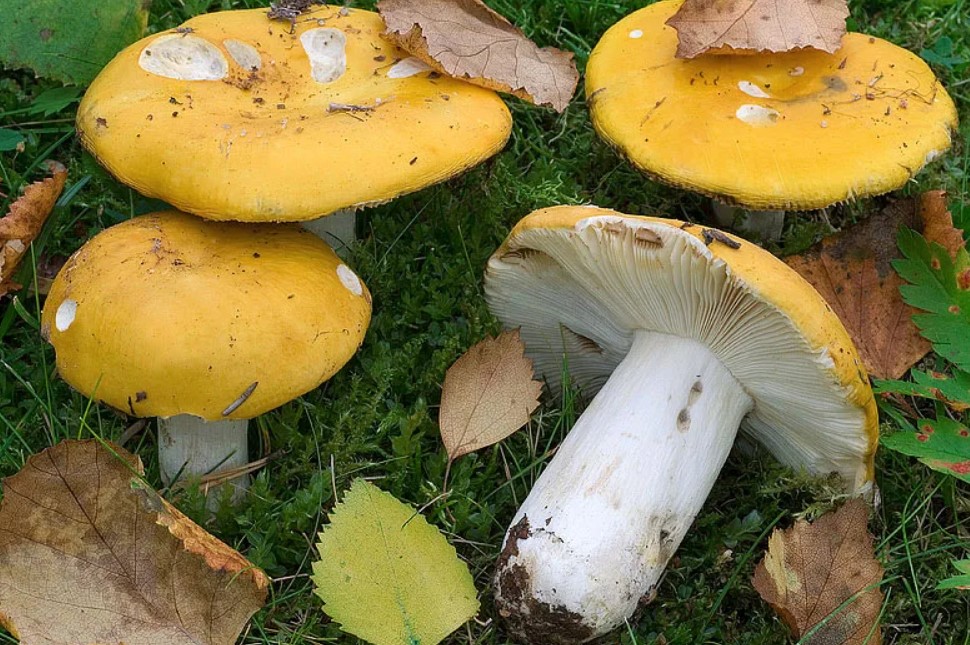
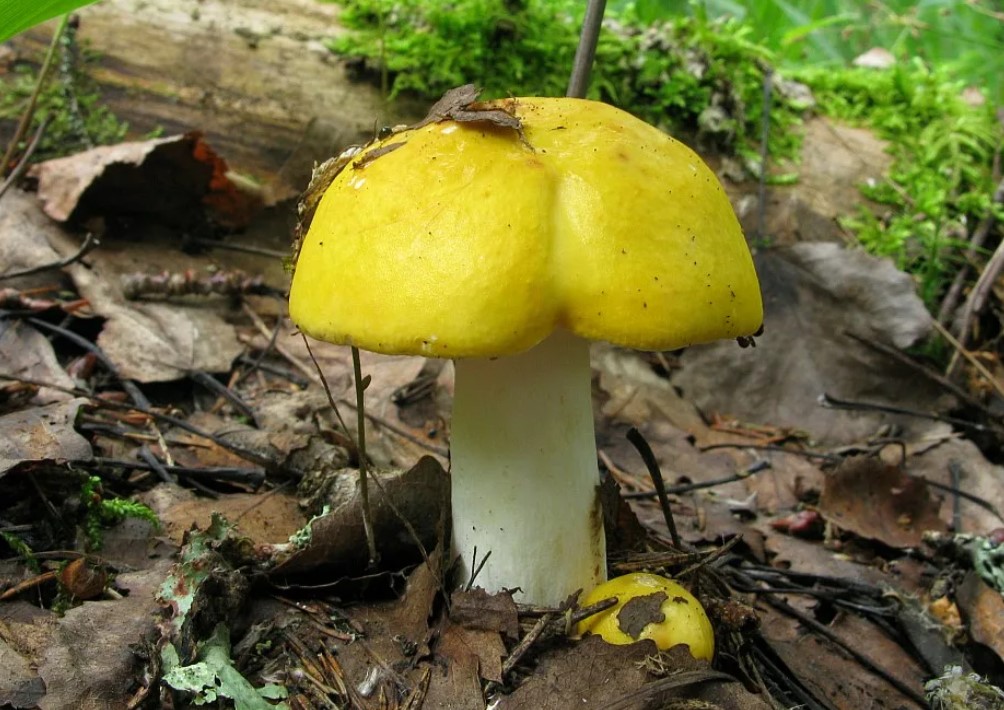
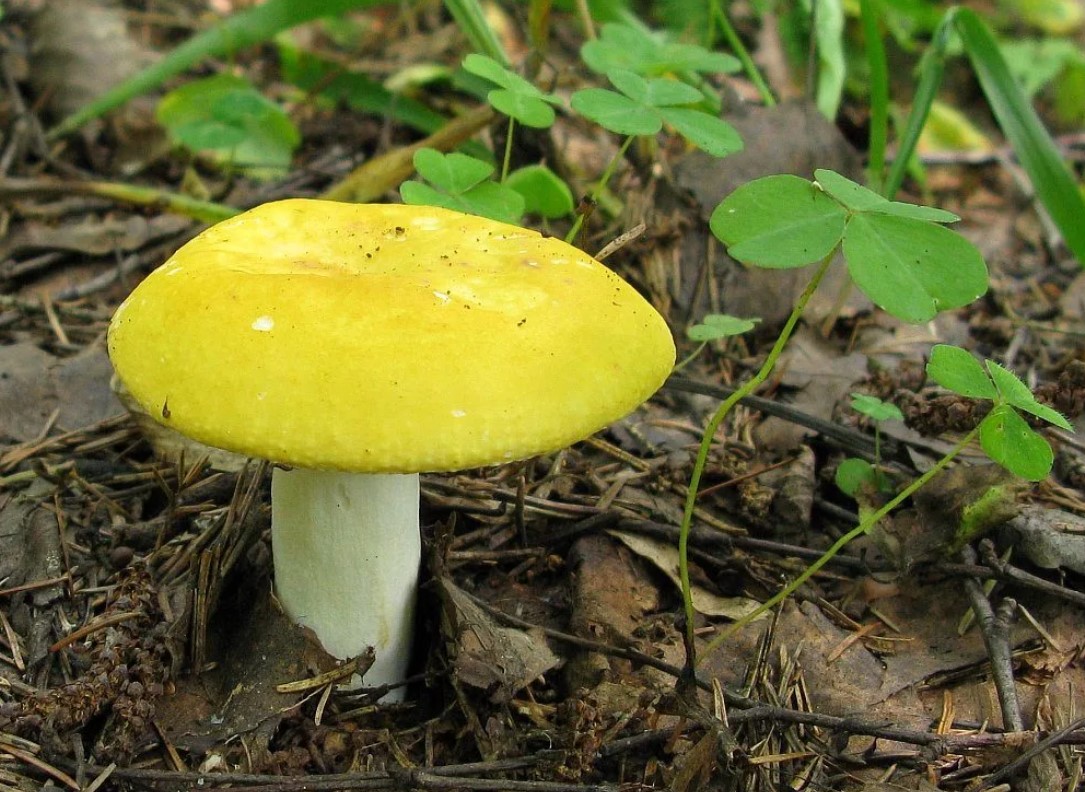
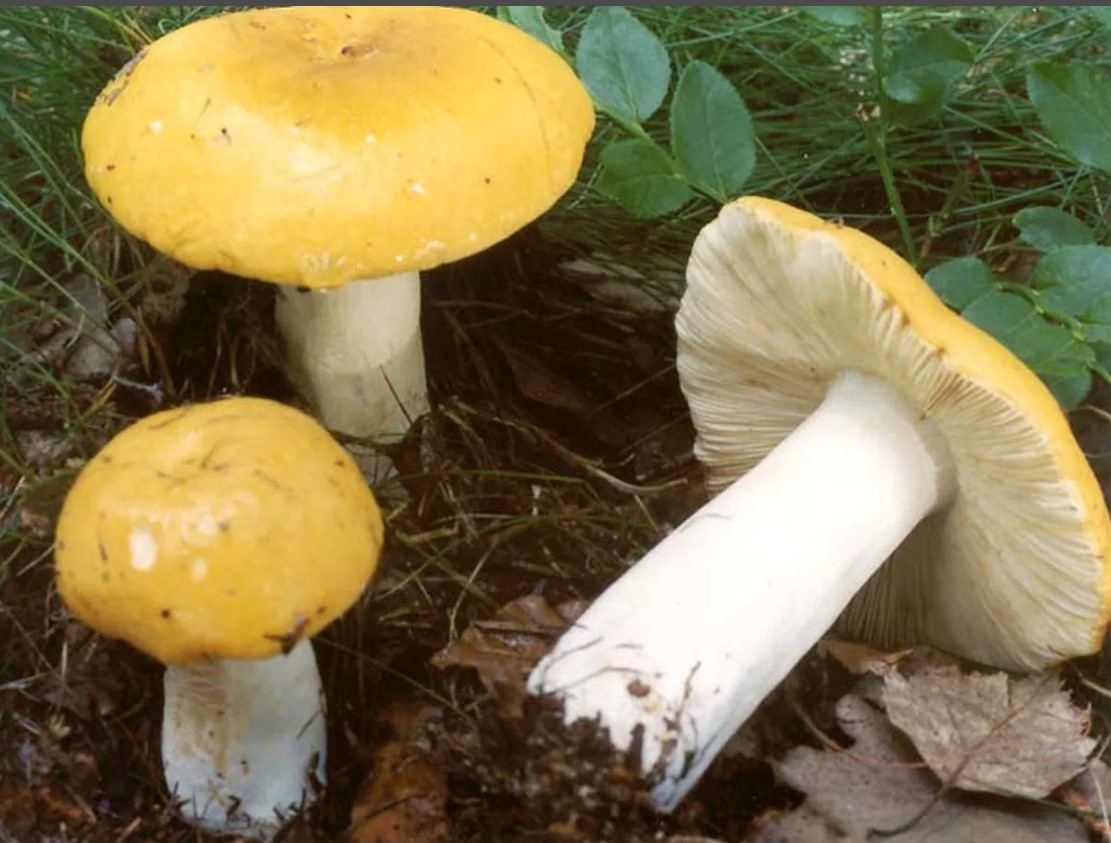
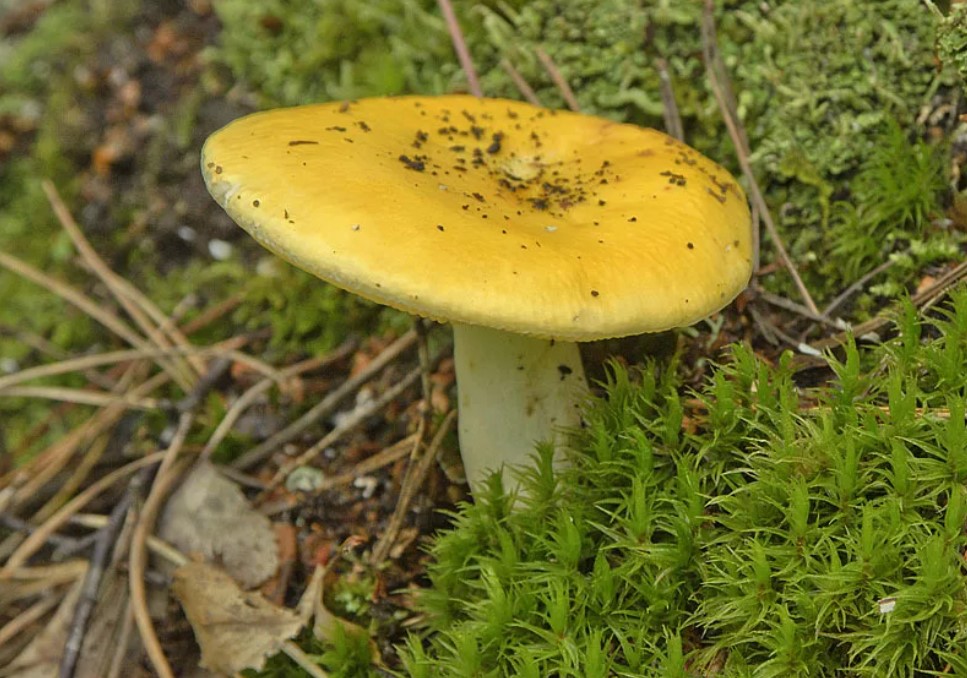
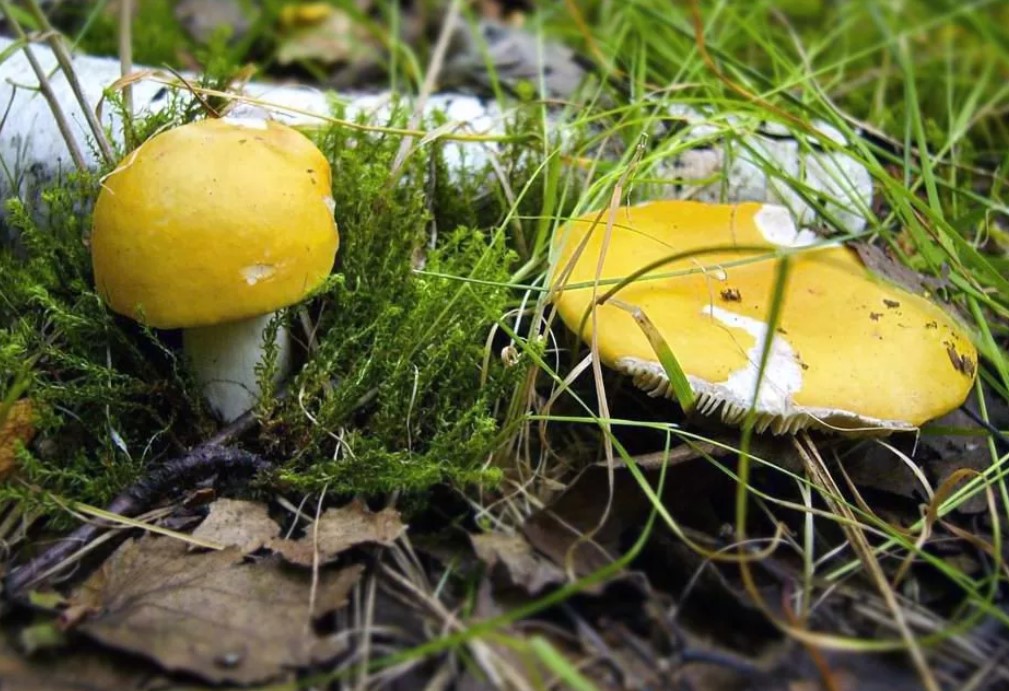
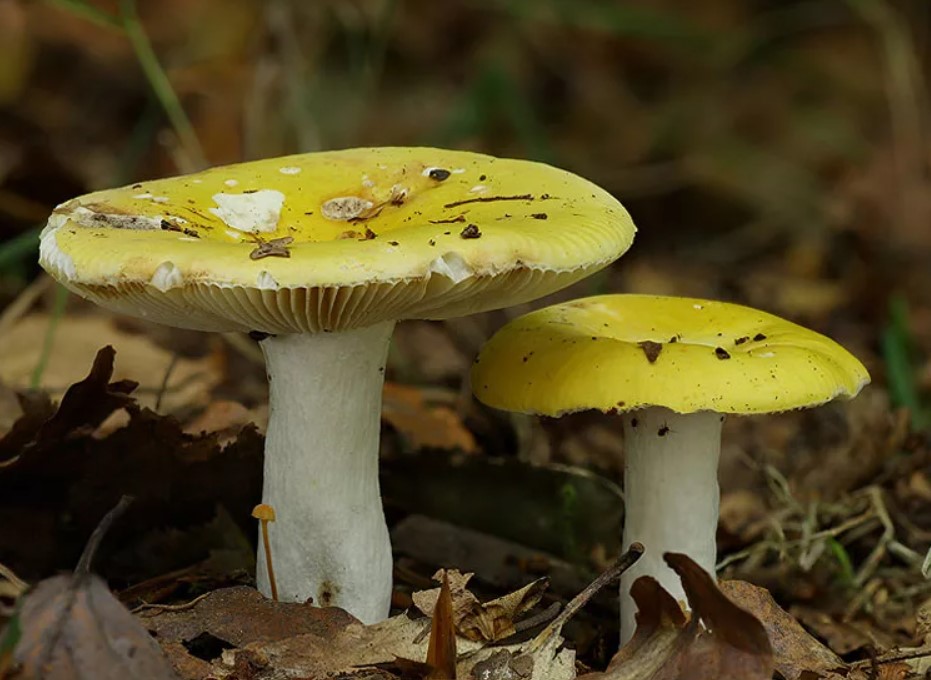
Yellow Russula (Russula claroflava)
| View | Description | Edibility | Place of growth |
| Yellow Russula (Russula claroflava) | The cap diameter ranges from 3 to 12 cm, is bright yellow, and has a greenish center. The stem is sturdy, white or yellowish. | Edible. | Prefers swampy areas of birch forests. |
Photo gallery of yellow russula
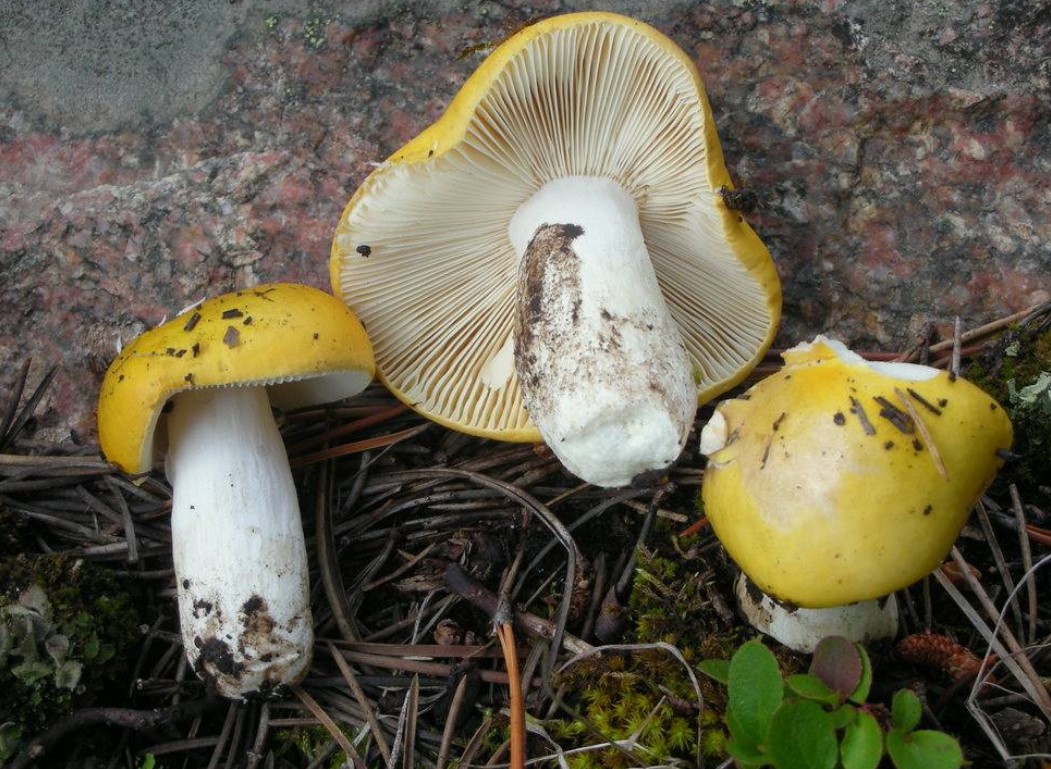
Russula consobrina (Russula consobrina)
| View | Description | Edibility | Place of growth |
| Russula consobrina (Russula consobrina) | The cap is up to 11 cm in diameter and grayish-green with a lilac tint. The stem is about 7 cm long and white or grayish. | Edible. | Prefers broadleaf forests. |
Photo gallery of the gray russula
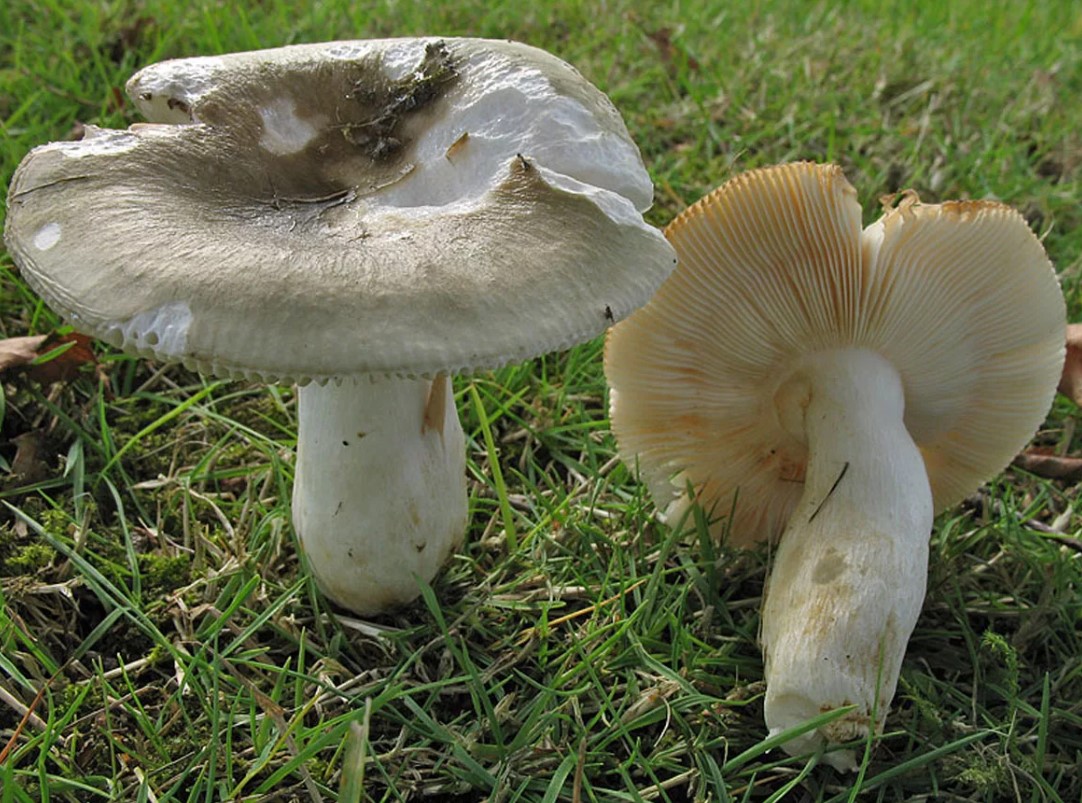
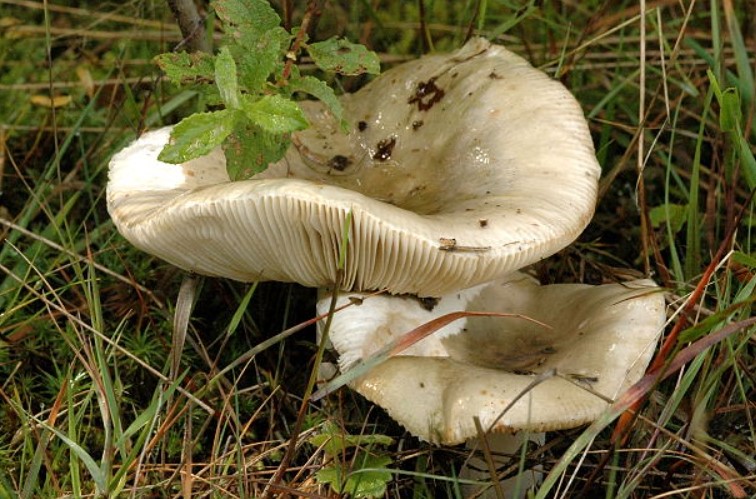
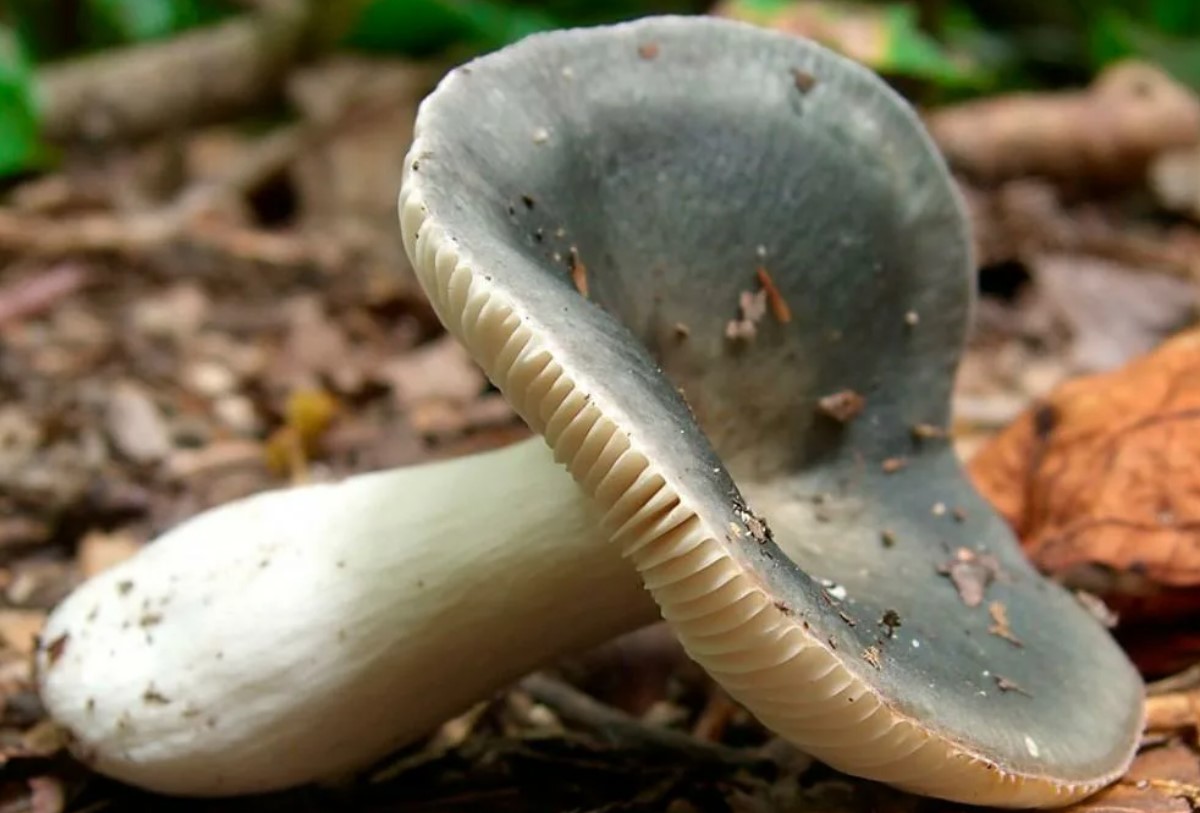
Russula cyanoxantha (Blue-yellow Russula)
| View | Description | Edibility | Place of growth |
| Russula variegata, blue-yellow | The cap is up to 15 cm in diameter and violet-gray in color, with a brown or greenish center. The stem is up to 12 cm long, white, and may have a purple tint. | Edible. | Deciduous forests. |
Photo gallery of the blue-and-yellow russula
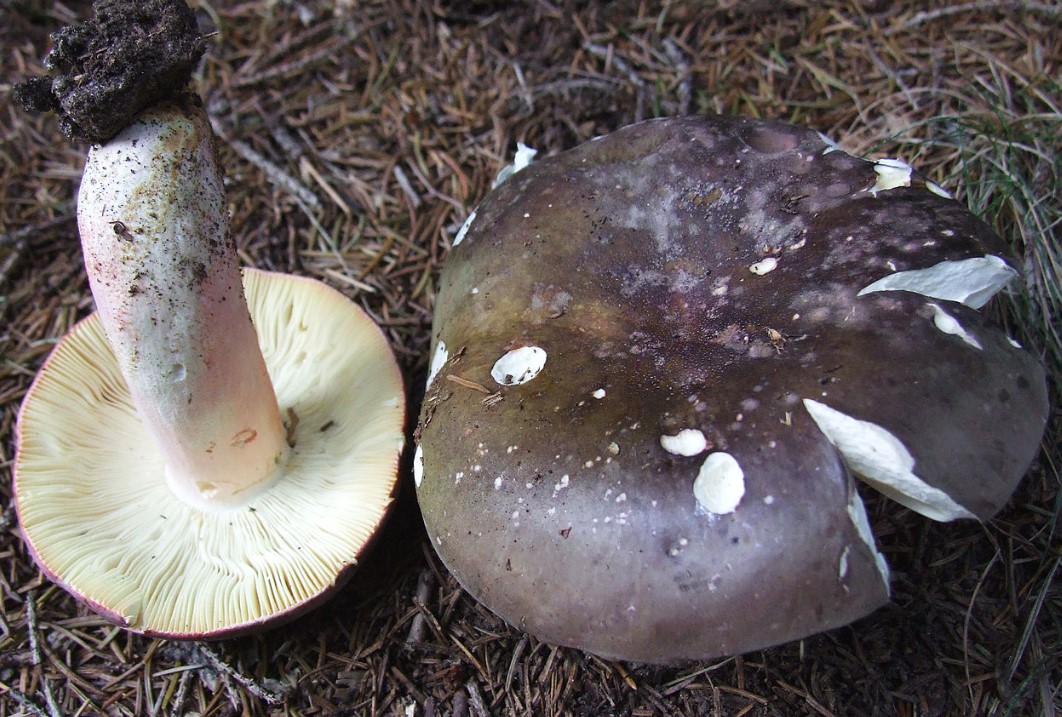
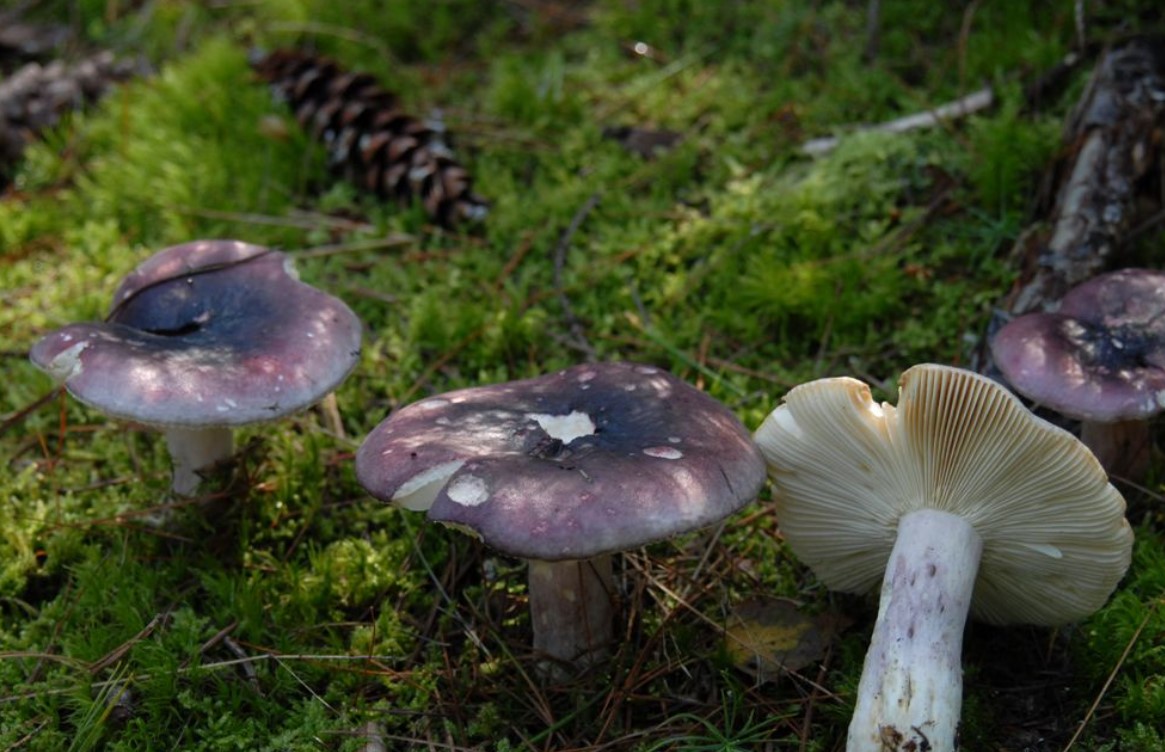
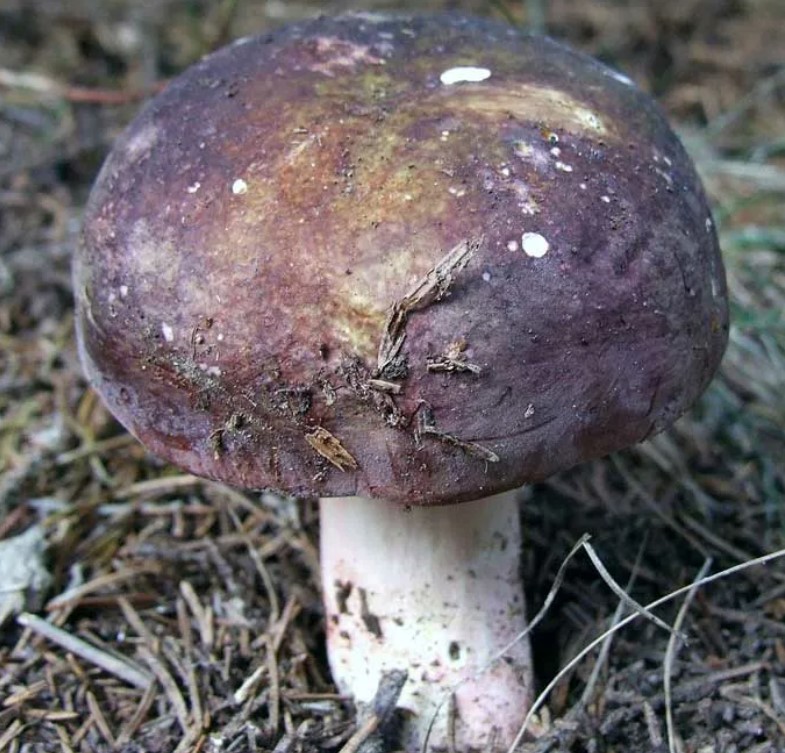
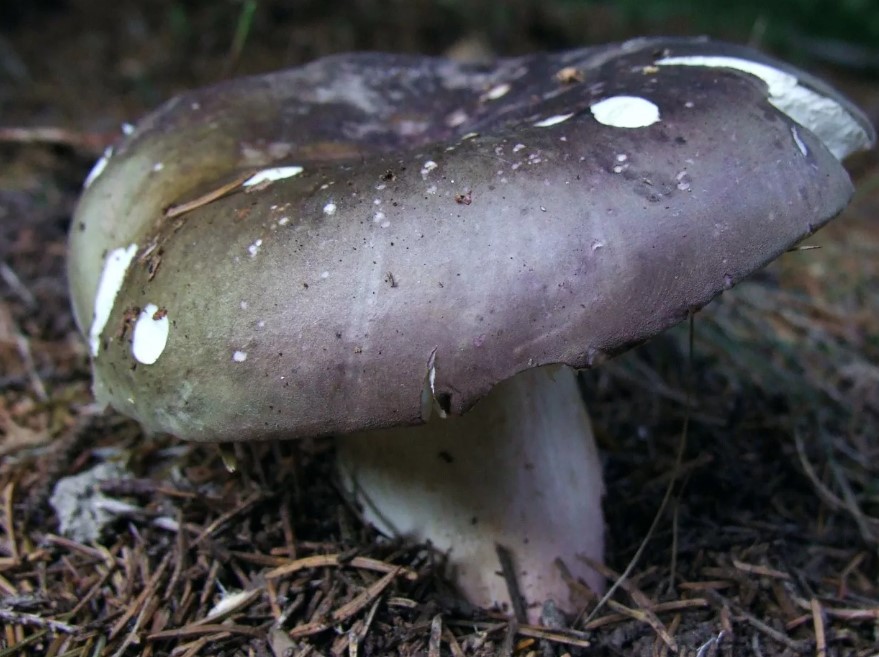
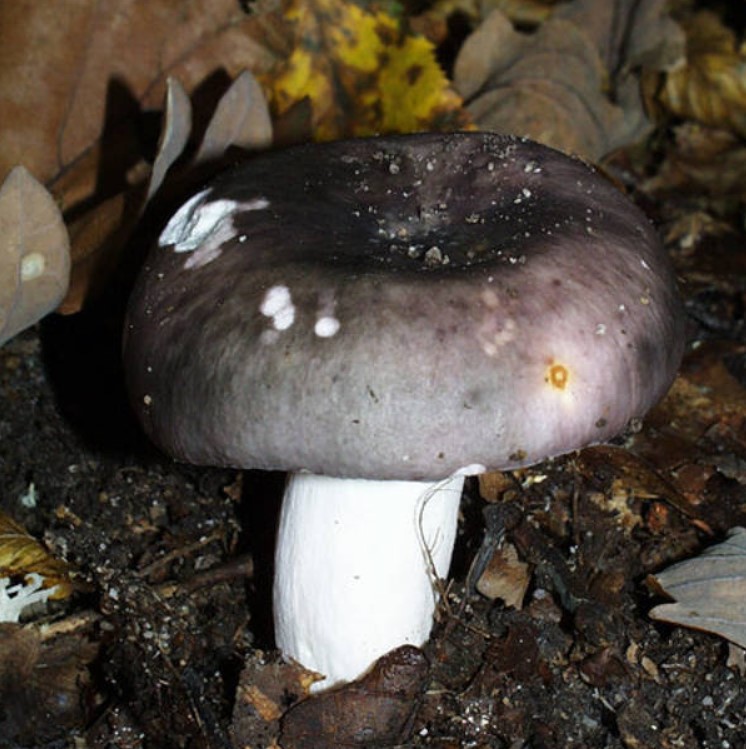
Russula decolorans
| View | Description | Edibility | Place of growth |
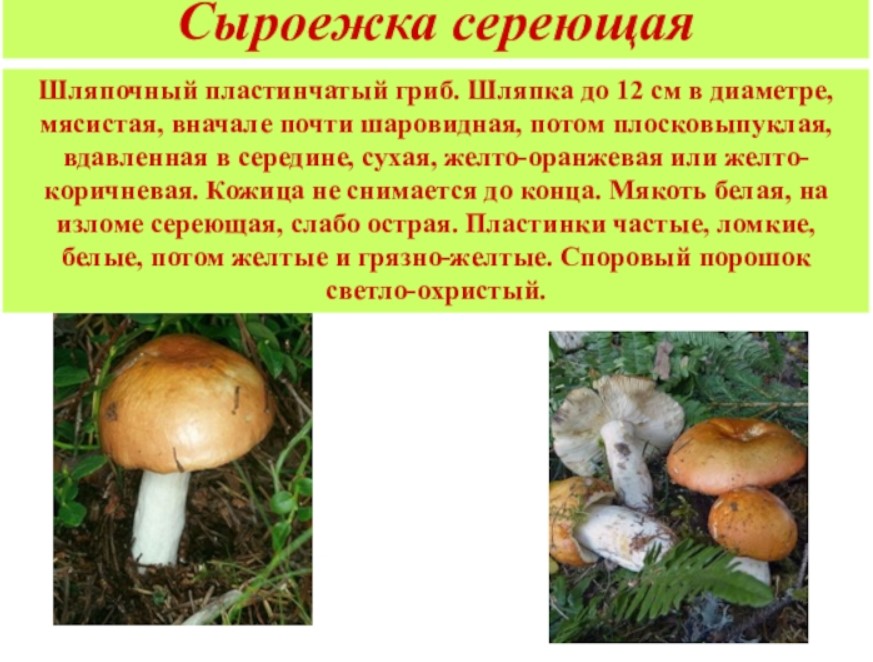
| Russula decolorans | The cap is 5-10 cm in diameter, with a ribbed edge. The color is red-orange, but lighter than that of the golden russula. It lightens to orange-yellow toward the concave center. The stem is light-colored. The flesh turns gray when cut and pressed, then black. | Edible. | It grows in mixed forests with alder, birch and spruce. |
Photo gallery of Russula sulcata
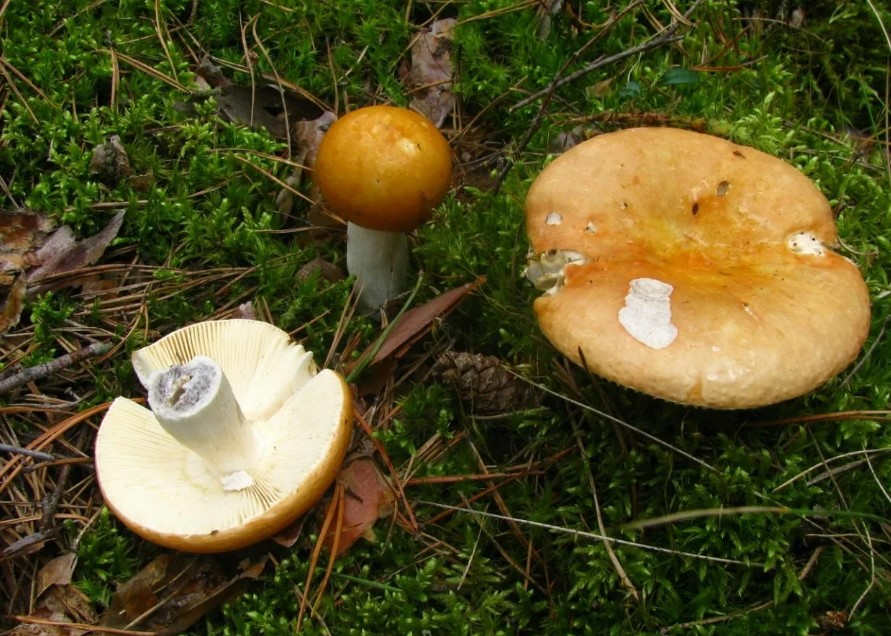
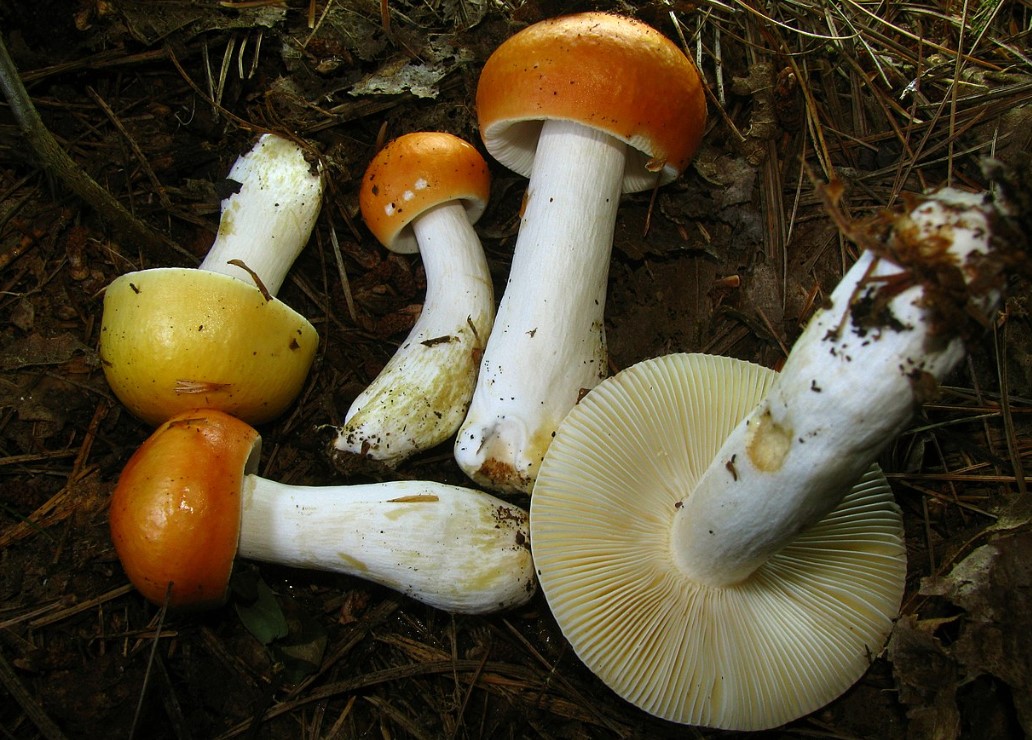
White diaper (Russula delica)
| View | Description | Edibility | Place of growth |
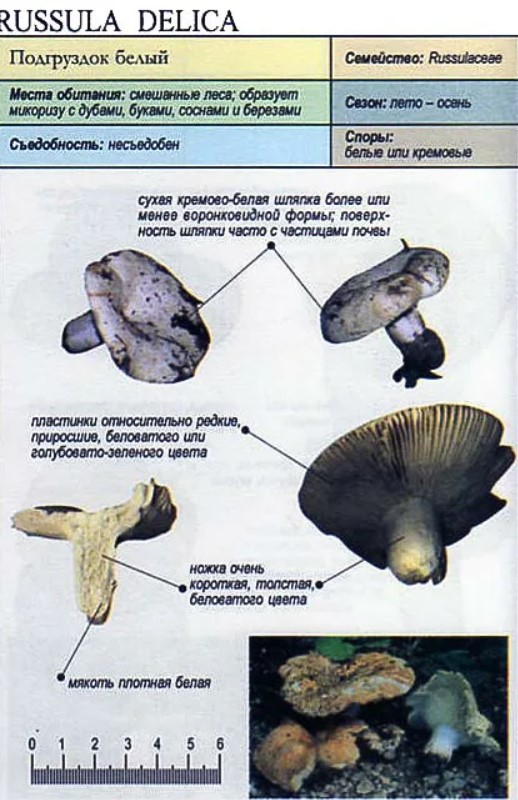
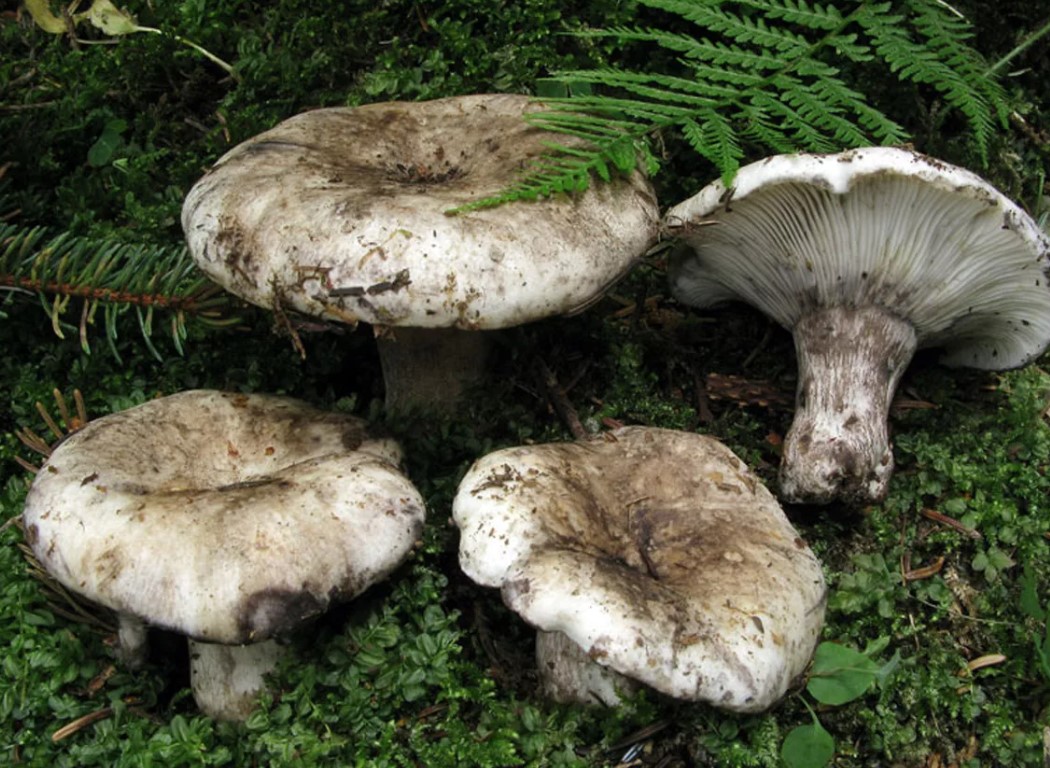
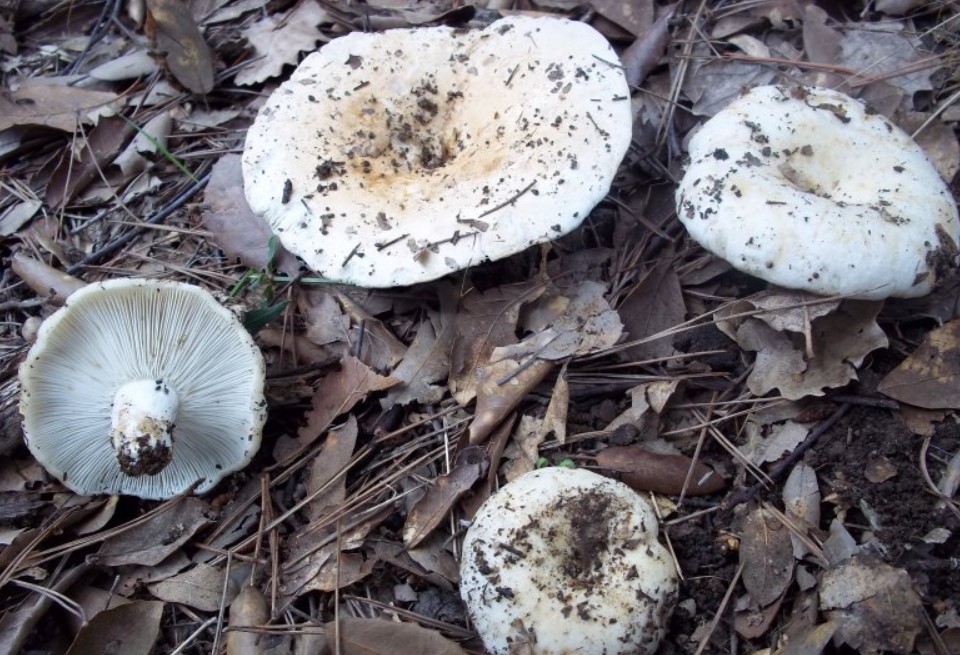
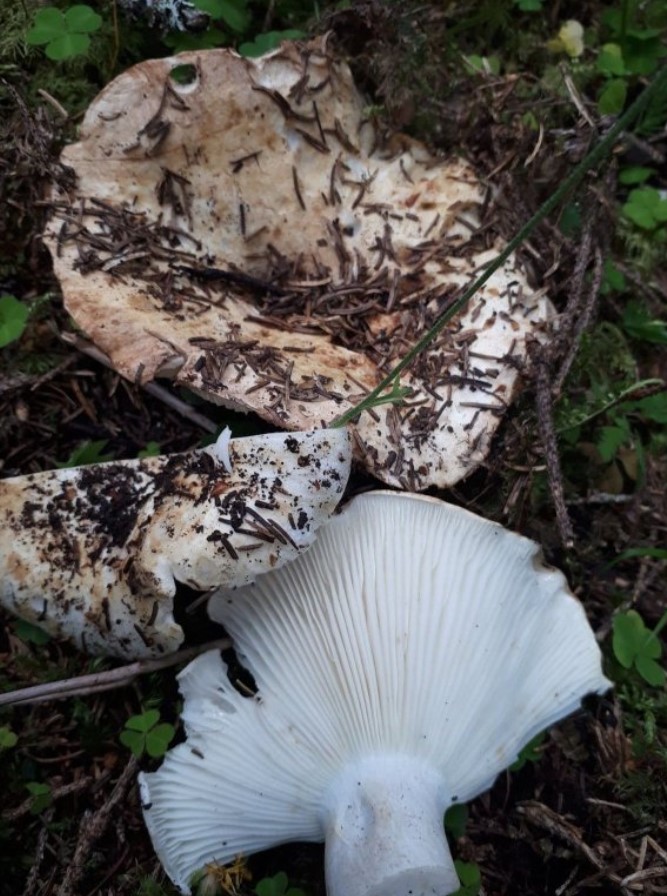
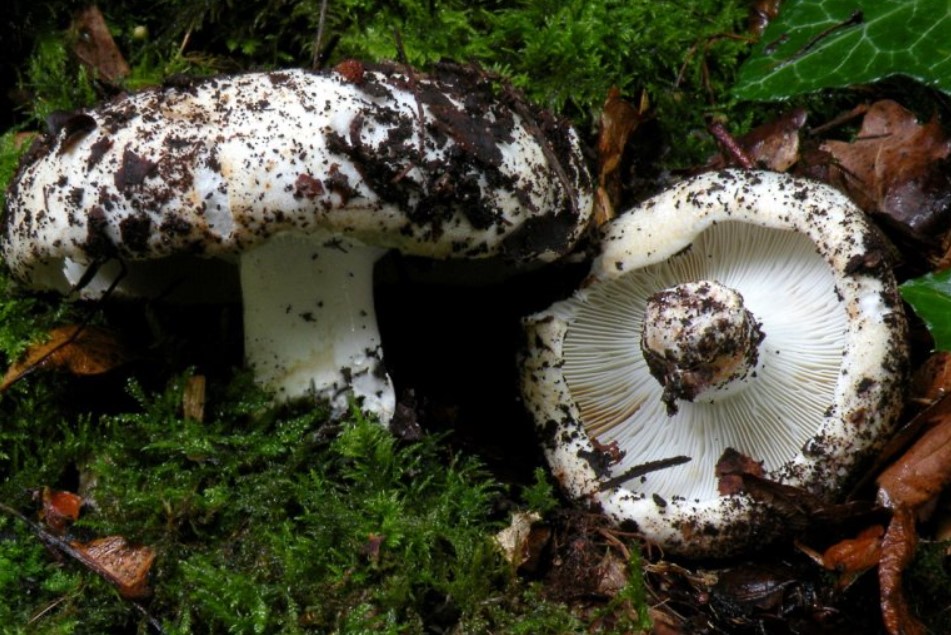
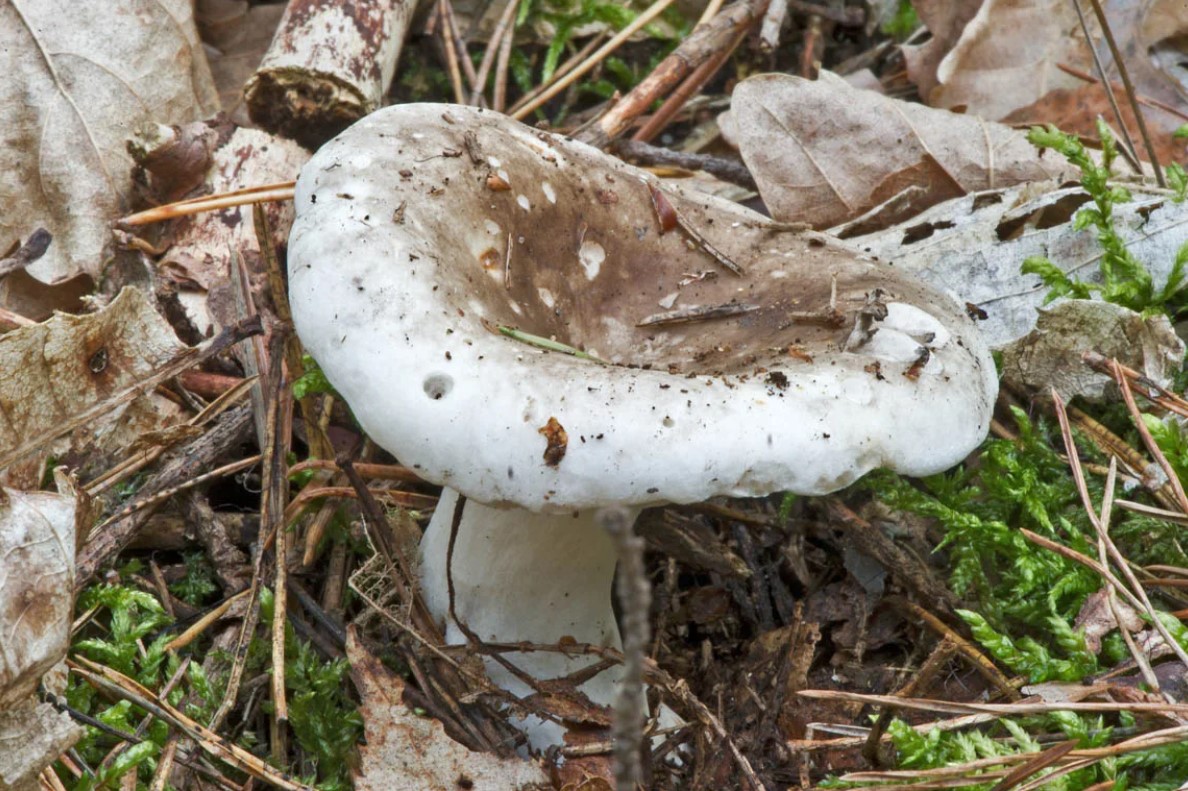
| White milk cap (Russula delica) | It's very similar in appearance to the common milk cap. The cap is large, white when young and brown when mature. The diameter reaches 10-20 cm, with specimens occasionally reaching 30 cm. The stem is white, with brownish spots. | Edible. | Mixed forests. Occasionally found in coniferous forests. Widely distributed throughout Eurasia. |
Photo gallery of white milk cap mushrooms
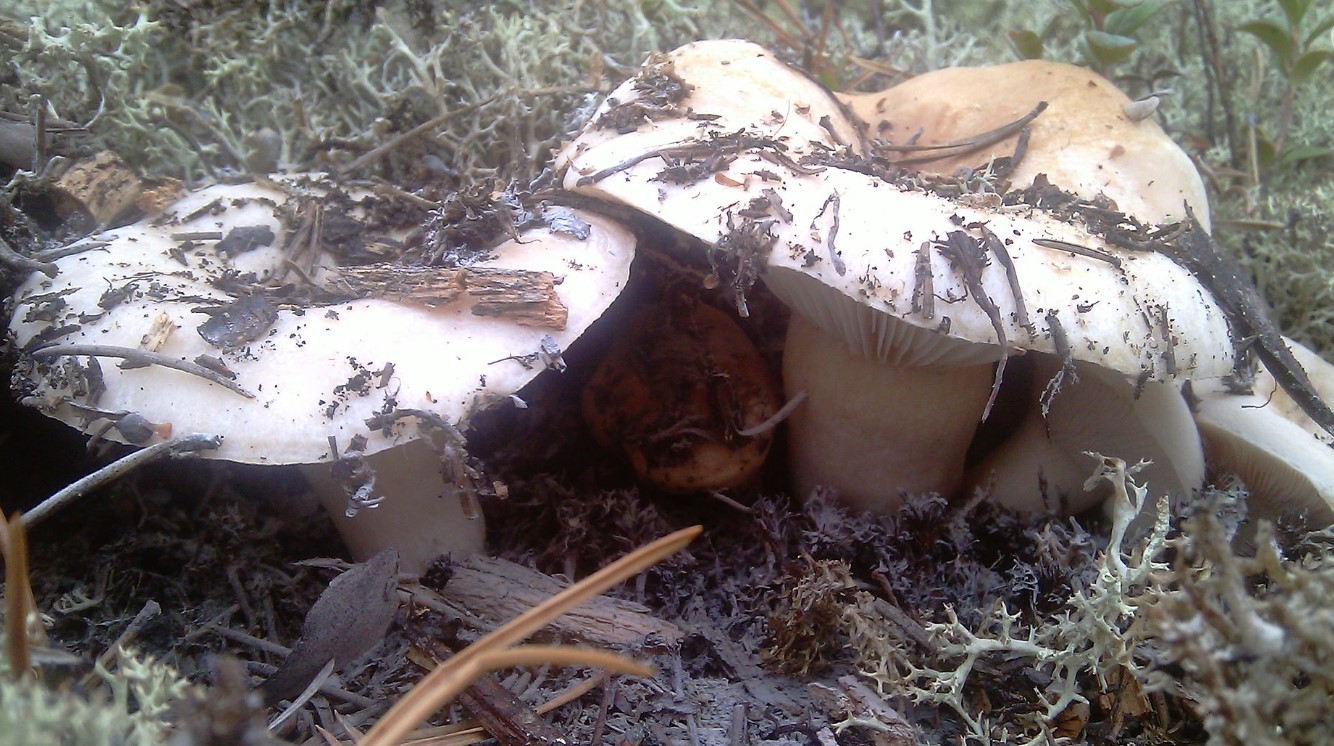
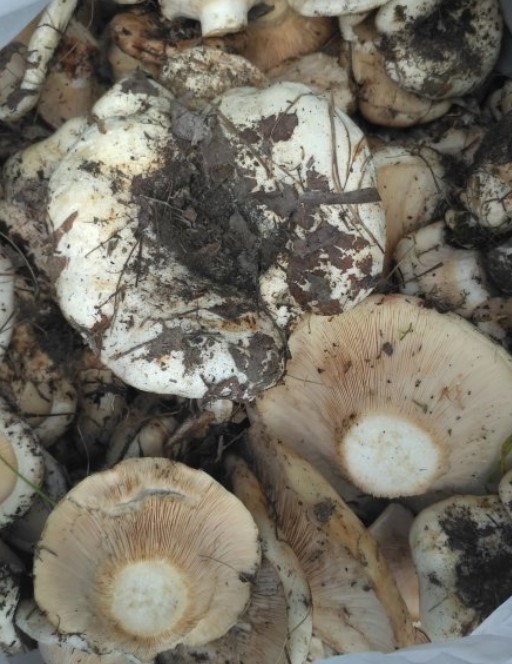
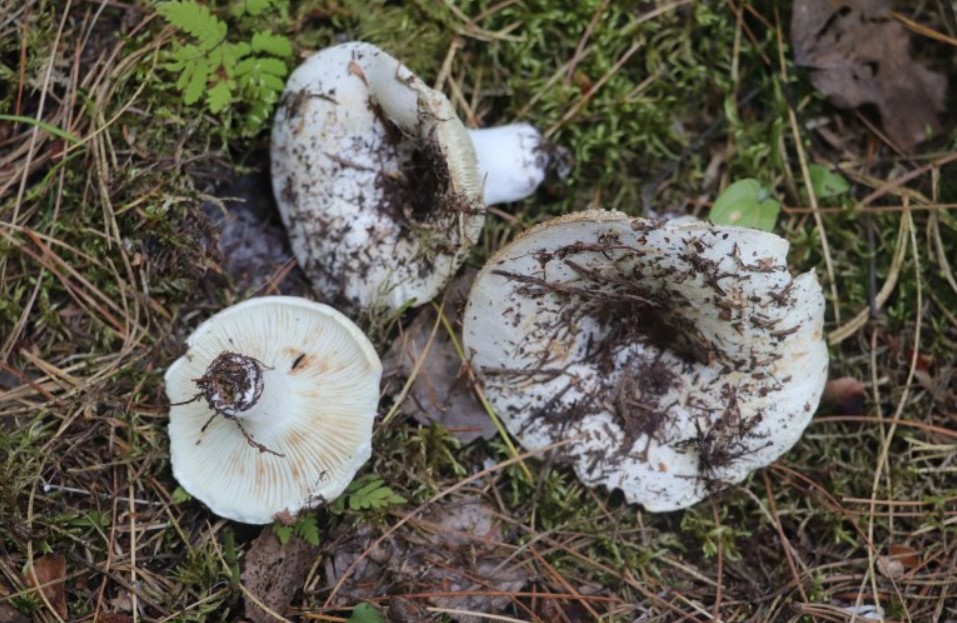
Russula heterophylla
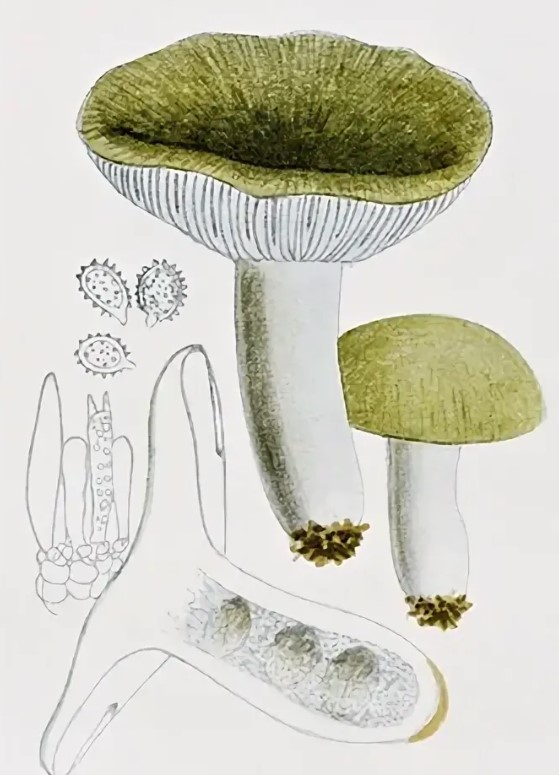
| View | Description | Edibility | Place of growth |
| Russula heterophylla, forked, multi-layered, greenish-brownish, green | The cap diameter varies from 5 to 12 cm, the color can be from greenish to brown and even yellow, the stem is almost conical in shape, white, with small yellowish spots. | Edible. | It grows mainly in broadleaf forests of Europe. |
Photo gallery of Russula forkata
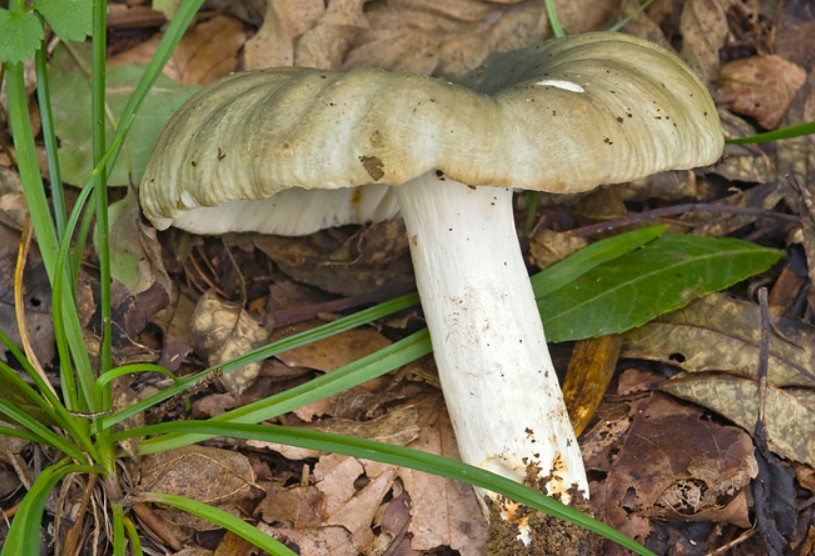
Russula integra (whole, wonderful russula)
| View | Description | Edibility | Place of growth |
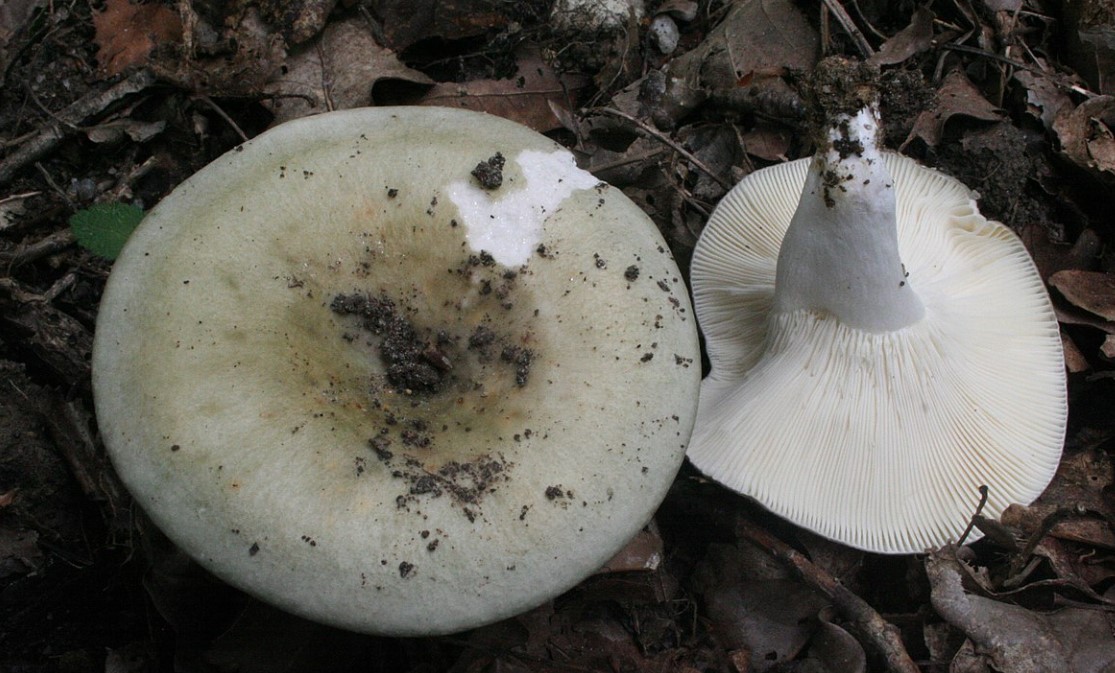
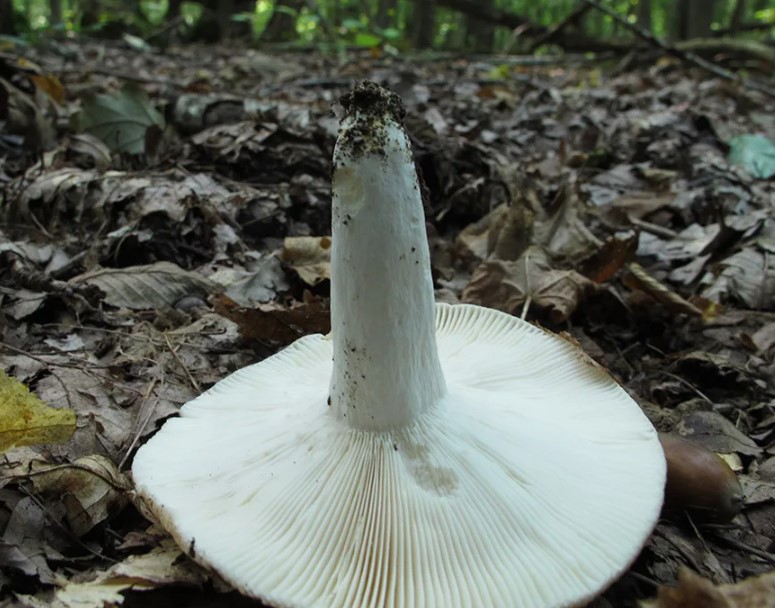
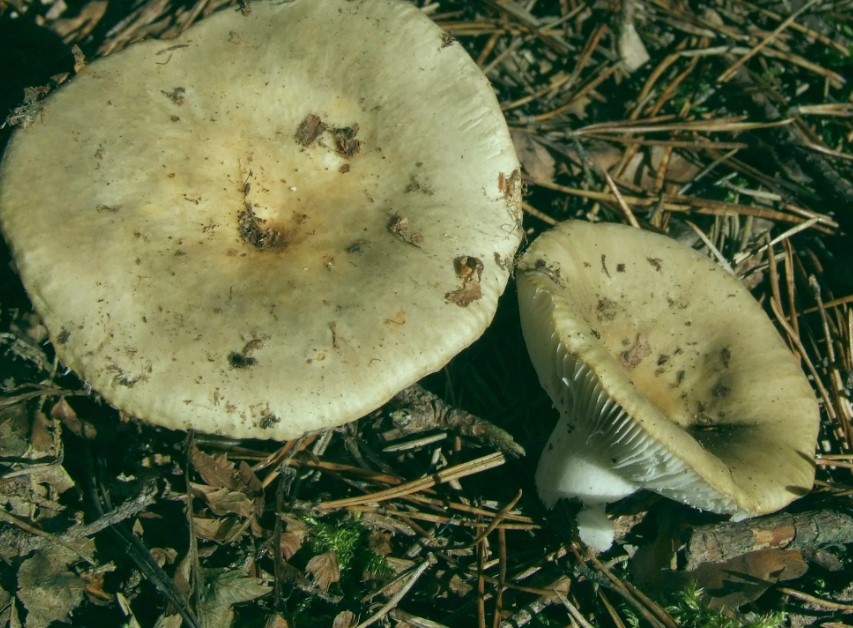
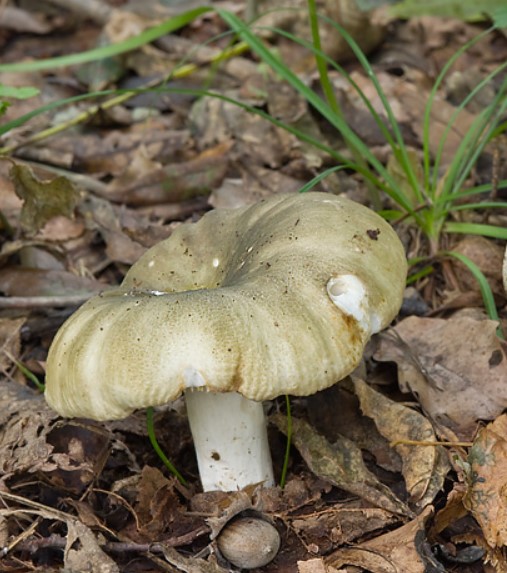
| Russula integra (whole, wonderful russula) | The cap is depressed in the center, 4 to 12 cm in diameter, red at the edges and brown or yellowish in the center. The stem is strong, white with a pinkish bloom. | Edible, used both fresh and salted. | Coniferous forests. |
Photo gallery of whole russula
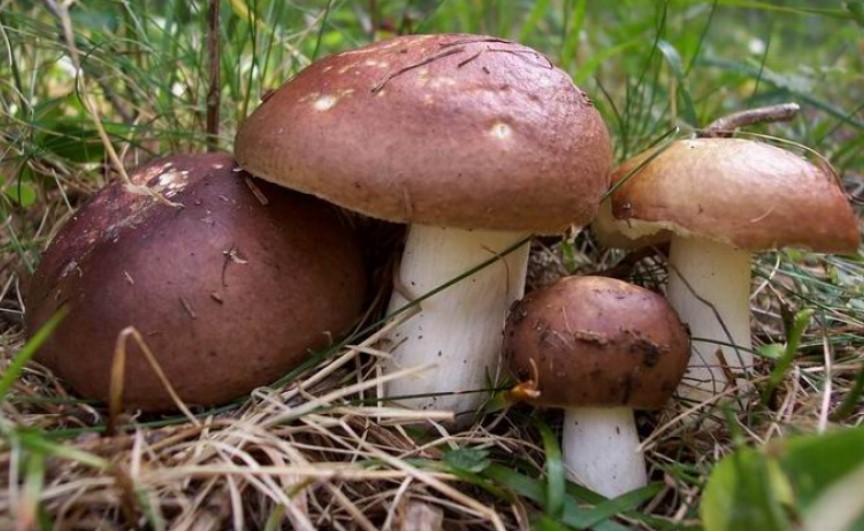
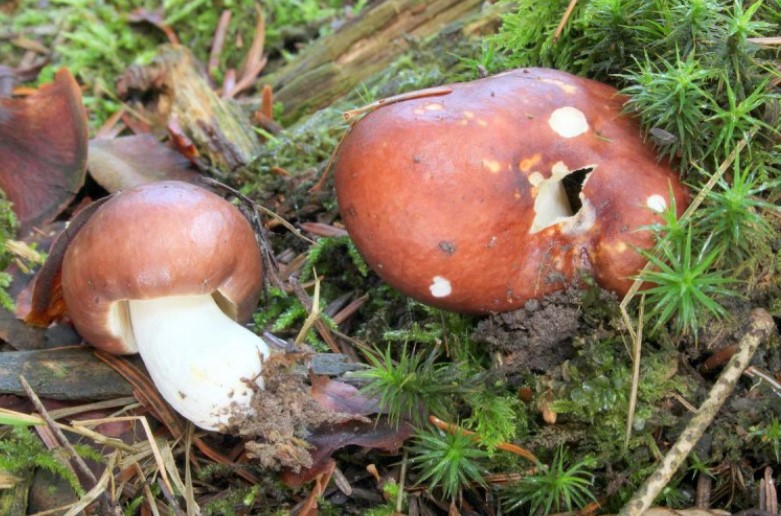
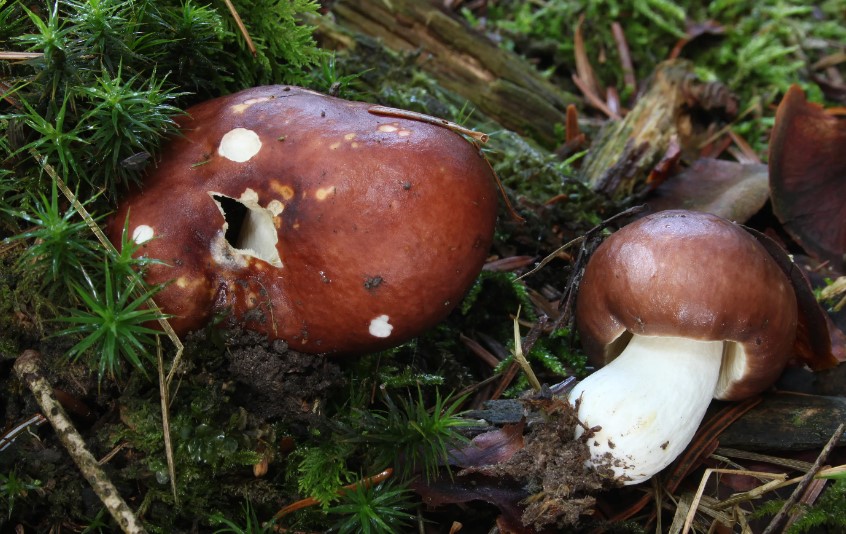
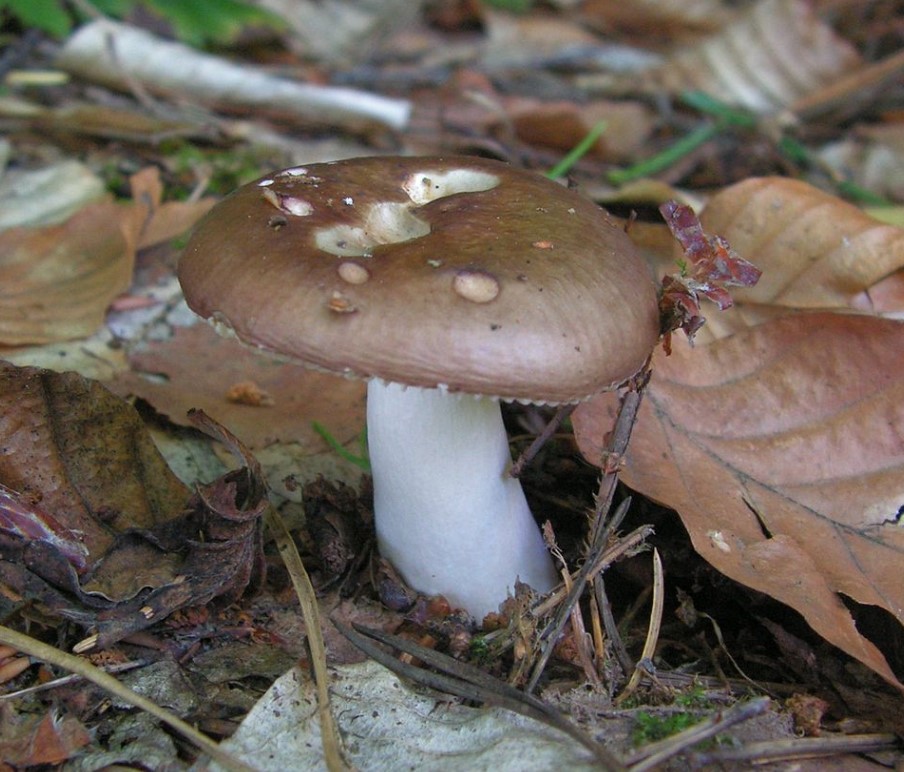
Golden-yellow russula (Russula lutea)
| View | Description | Edibility | Place of growth |
| Golden-yellow russula (Russula lutea) | The cap diameter ranges from 2 to 8.5 cm. Its color varies: yellow, red, white, apricot, or reddish-pink. The stem is cylindrical, white, and turns grayish-yellow with age. The flesh is brittle. | Edible. | It grows in coniferous and deciduous forests of Europe. |
Photo gallery of golden yellow russula
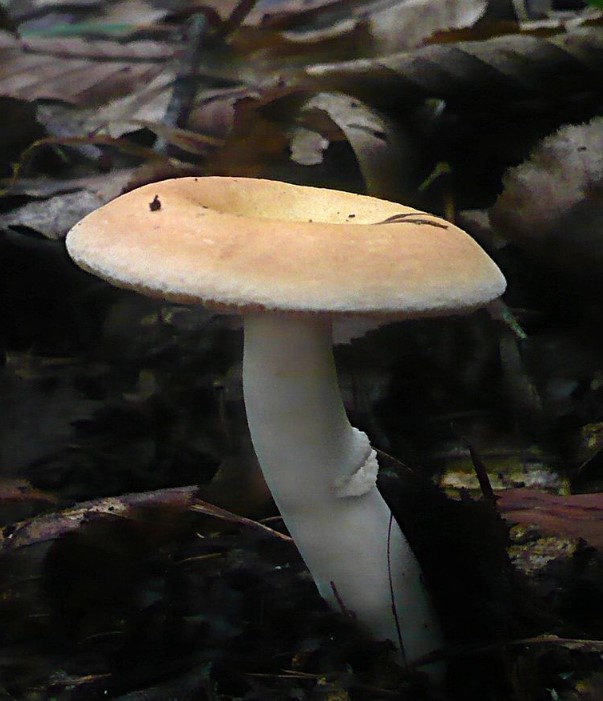
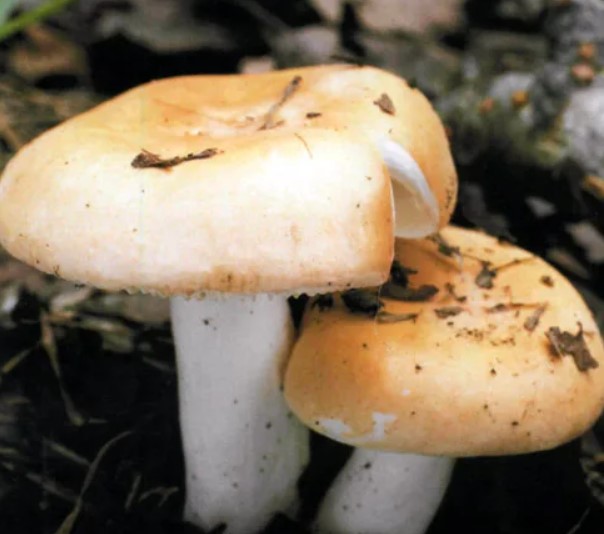
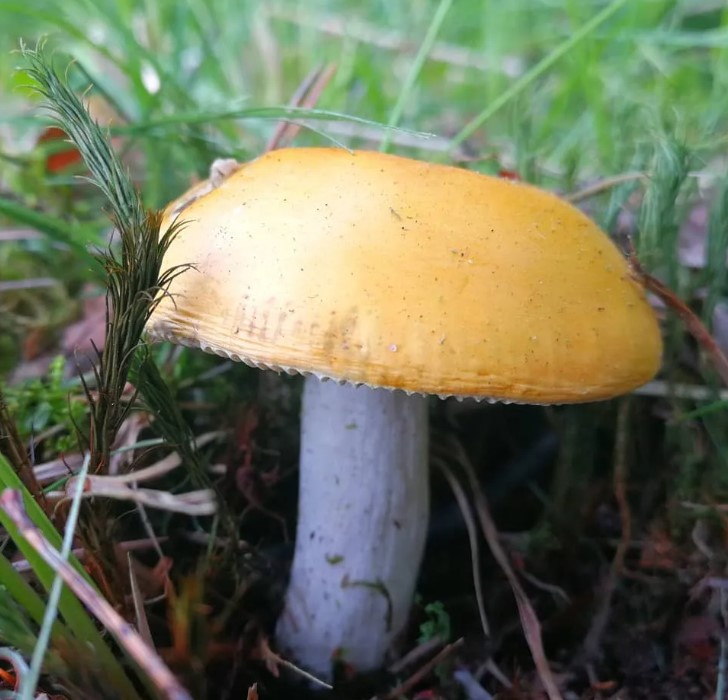
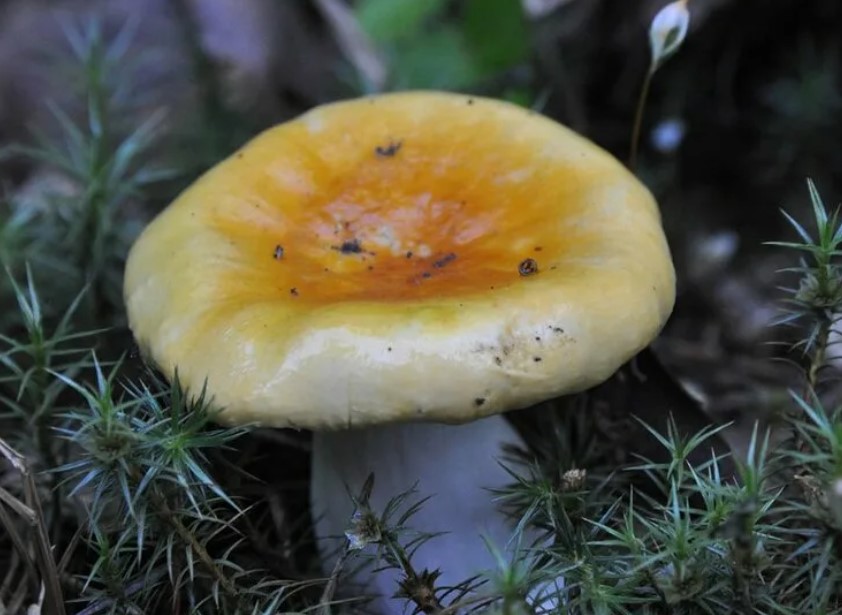
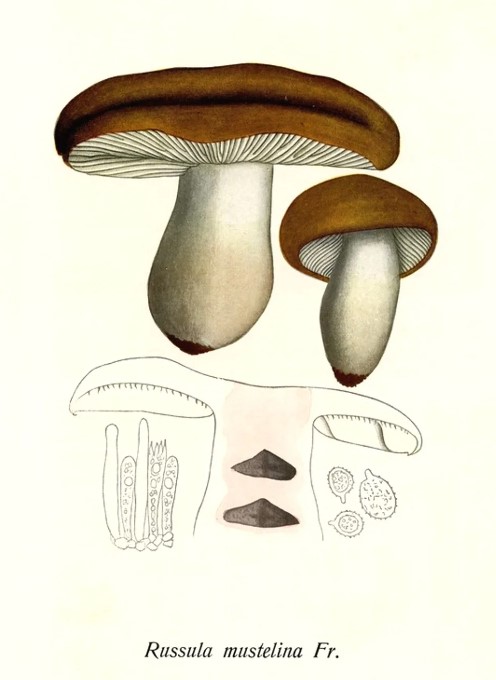
Russula mustelina (smooth-skinned russula)
| View | Description | Edibility | Place of growth |
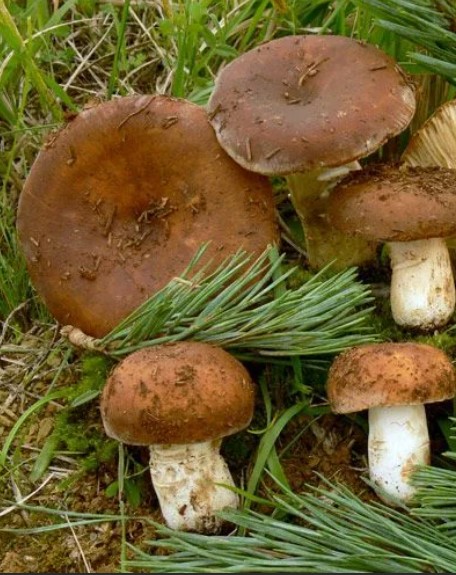
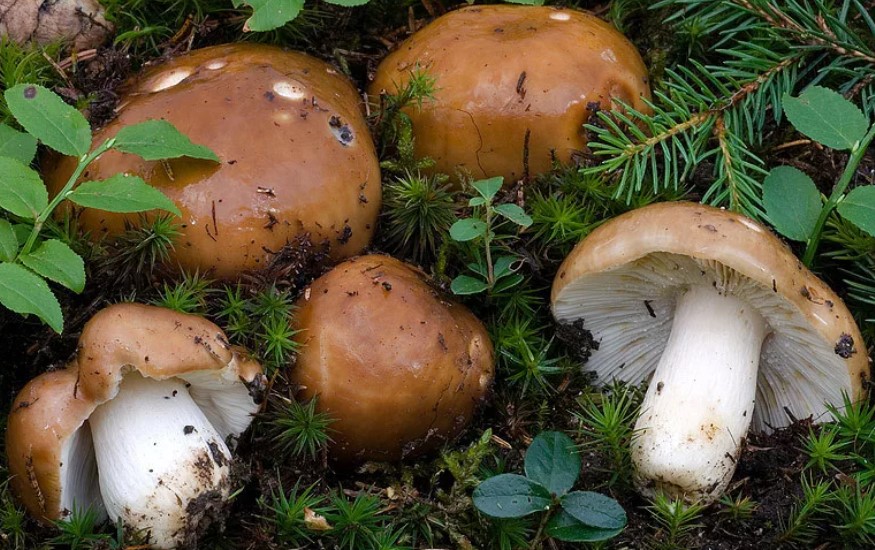
| Russula mustelina (smooth-skinned russula) | The cap is flattened, 5 to 14 cm in diameter, ochre-brown with a darker center. The stem is cylindrical and white; as it grows, cavities form within it, and brown spots appear on the surface. | Edible. | It grows in the mountainous regions of North America and Eurasia, preferring coniferous forests. |
Photo gallery of the smooth-skinned russula
Ocher Russula (Russula ochroleuca)
| View | Description | Edibility | Place of growth |
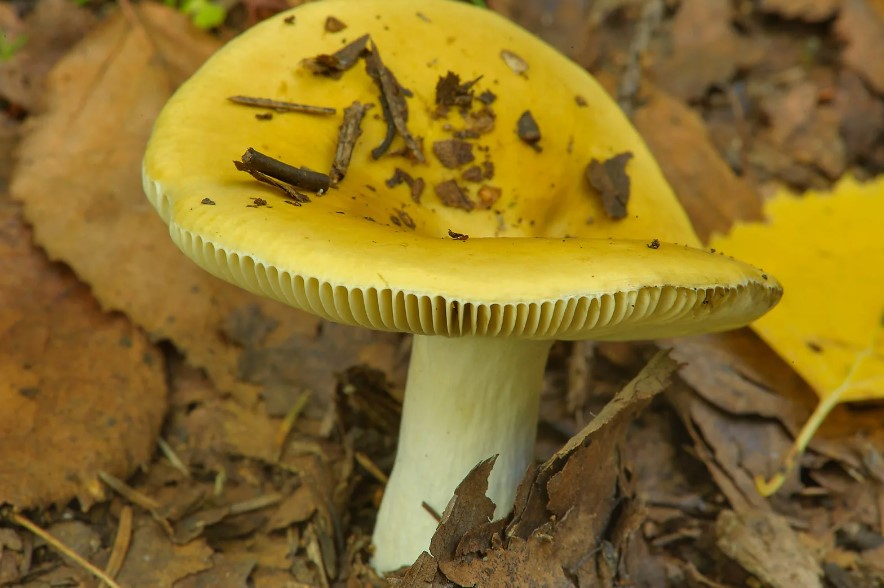
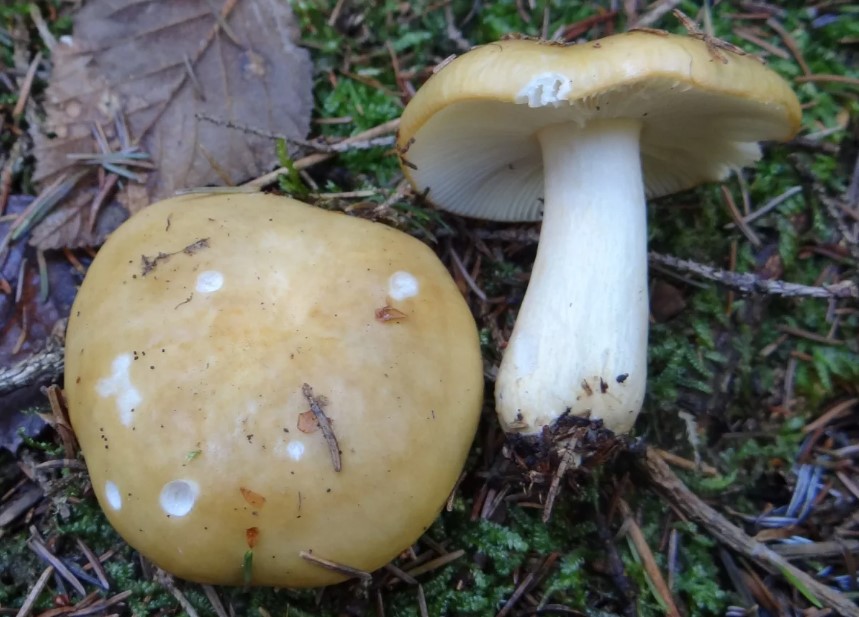
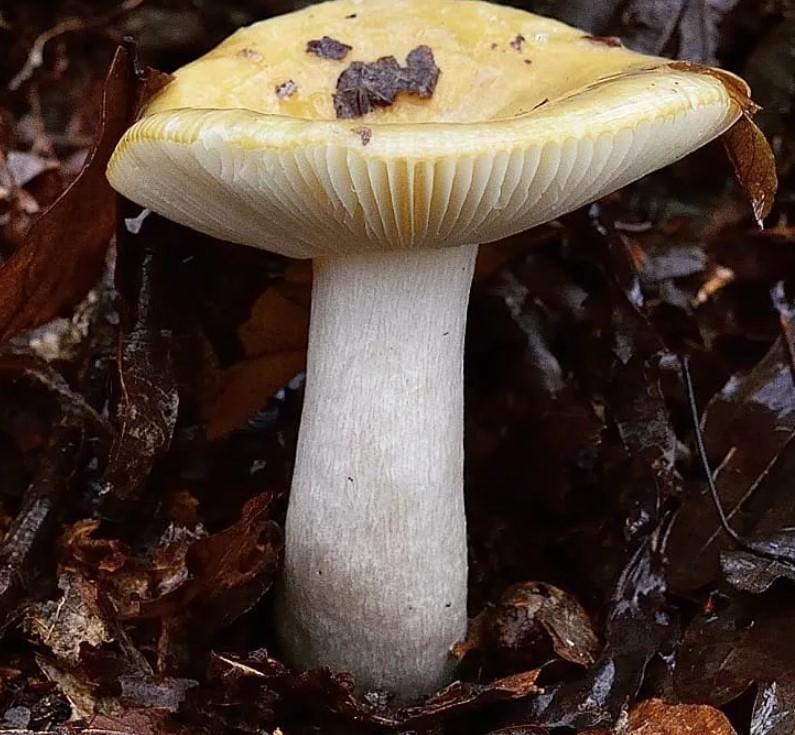
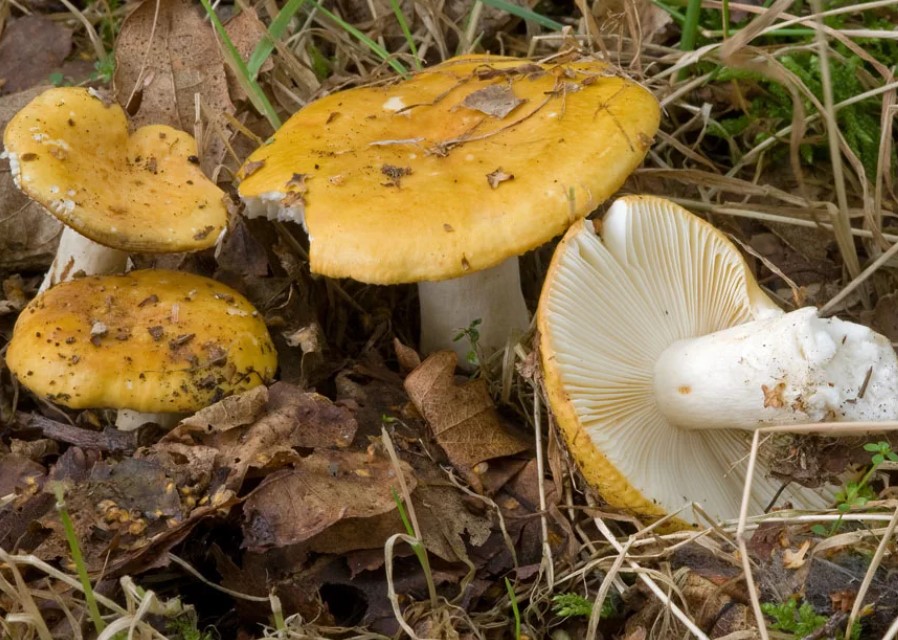
| Ocher Russula (Russula ochroleuca) | The cap is 4 to 10 cm in diameter, with furrows appearing along the edges with age. The color is ochre, sometimes greenish-yellow. The stem is white, turning brown or gray with increased humidity. | Edible. | Distributed throughout Europe. |
Photo gallery of Russula ochracea
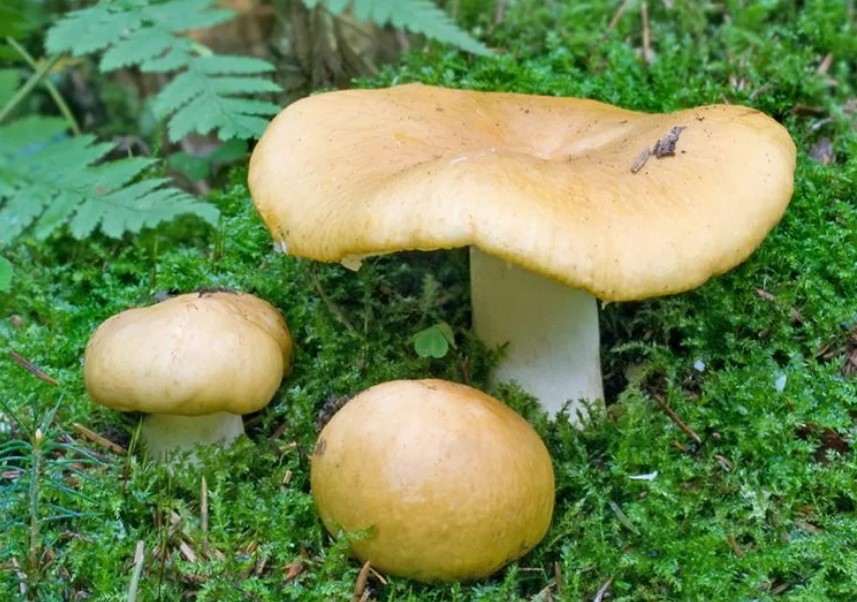
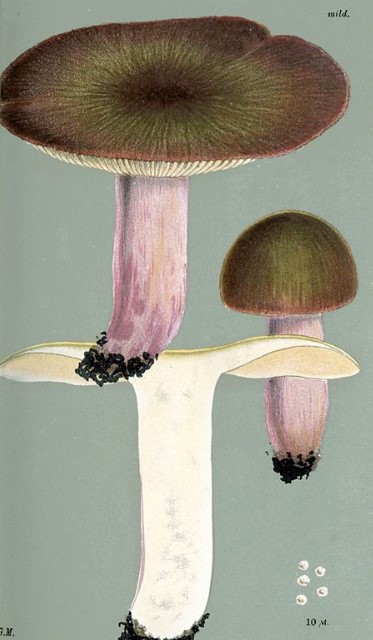
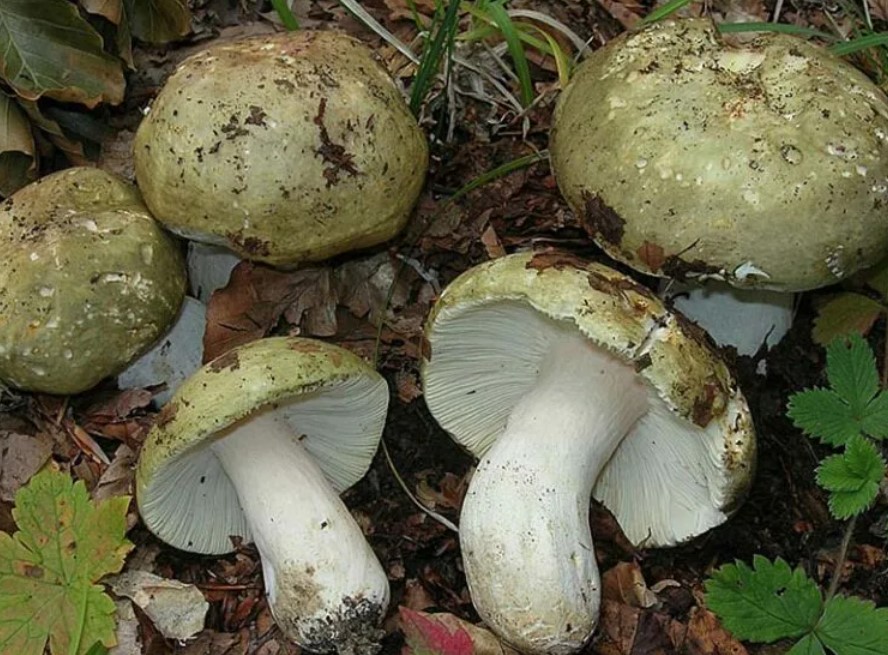
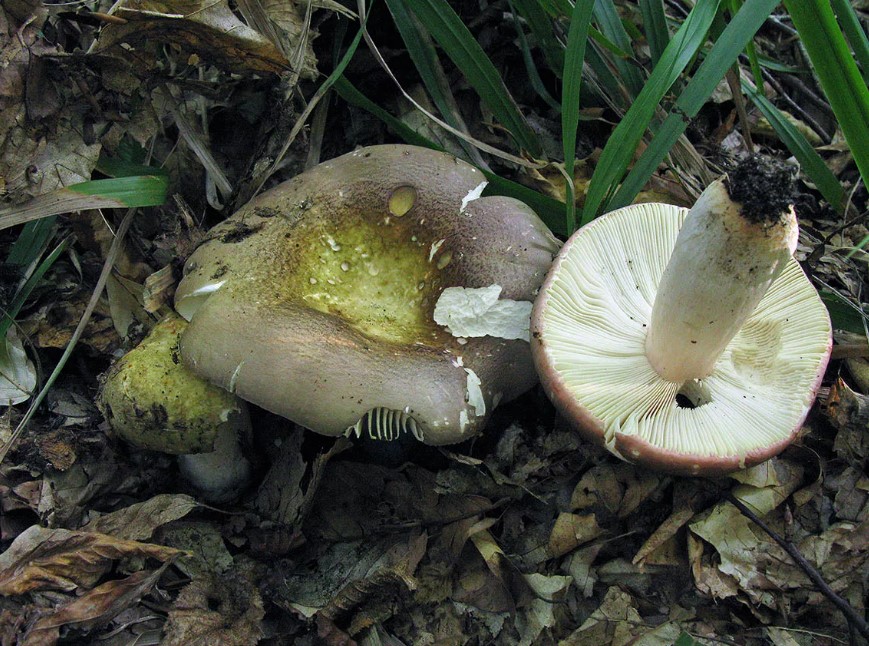
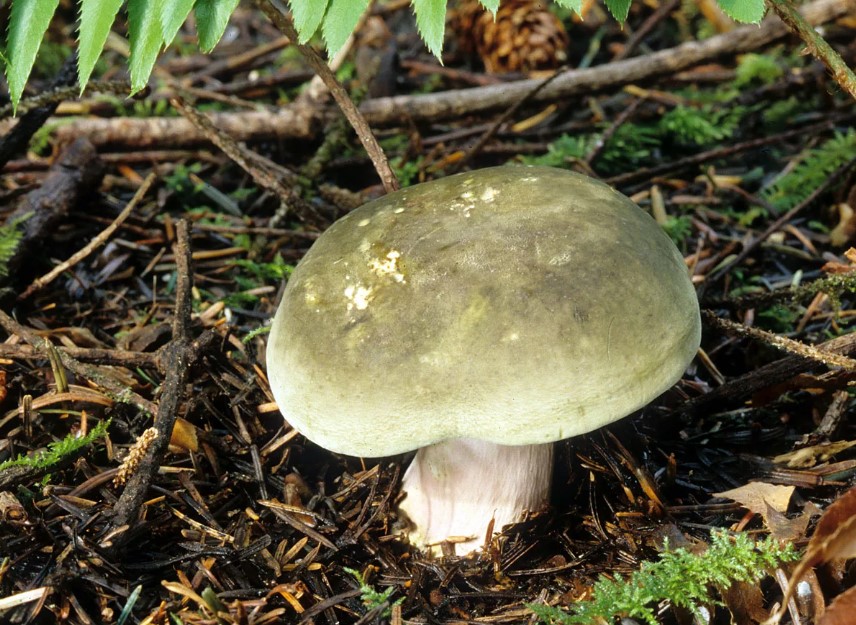
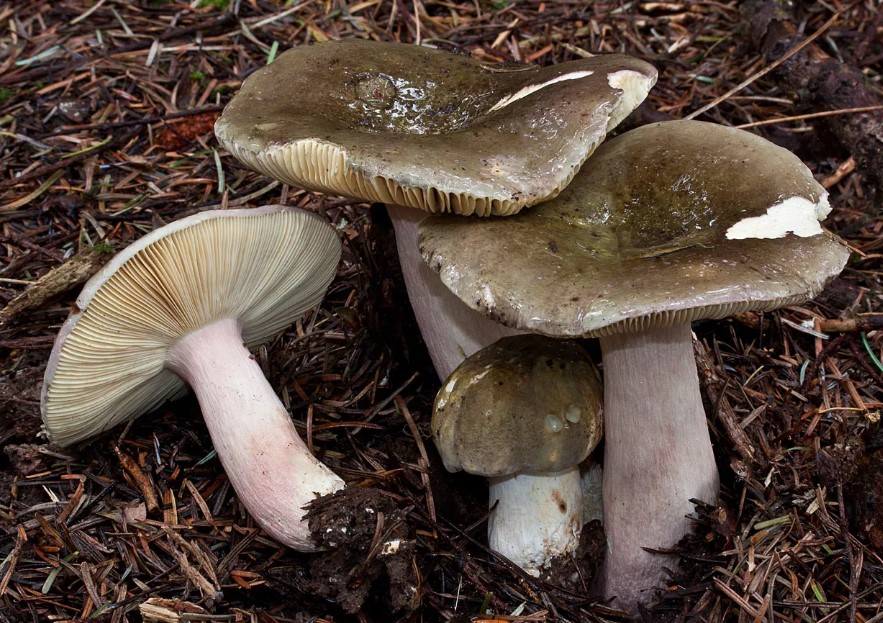
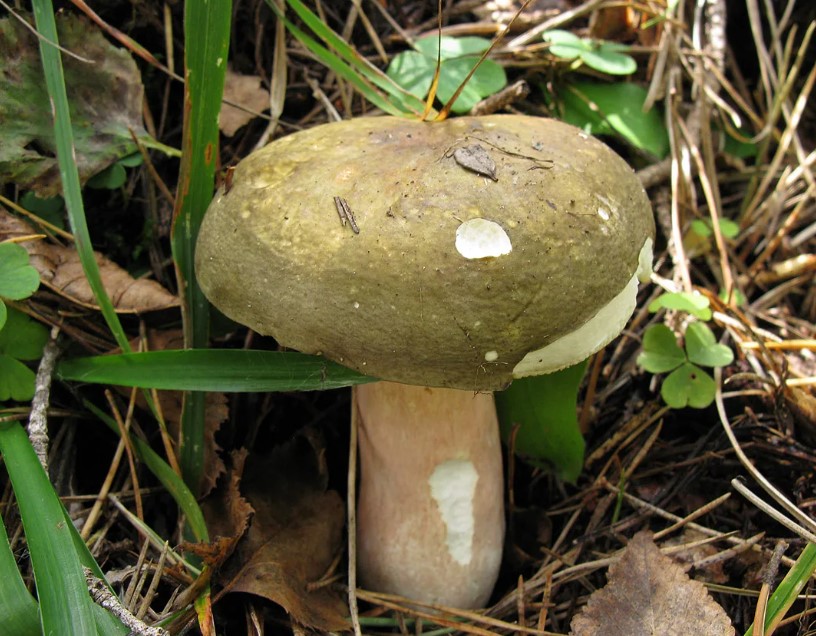
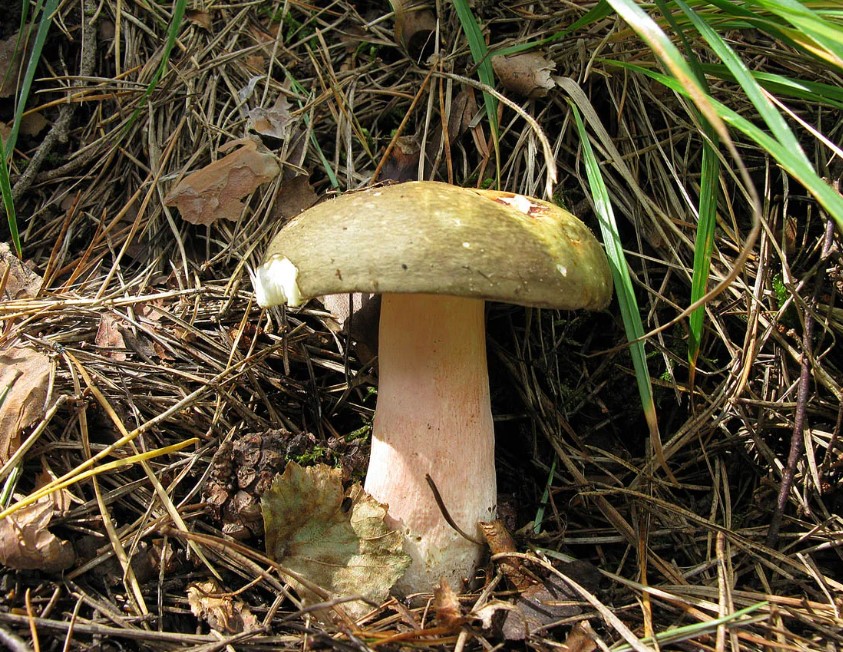
Olive russula (Russula olivacea)
| View | Description | Edibility | Place of growth |
| Olive russula (Russula olivacea) | A large mushroom, the cap can reach 30 cm in diameter. Its color ranges from olive green to wine red. The stem, up to 18 cm tall, is white with a pinkish tint. | It is considered edible, but the mushroom can cause gastrointestinal upset in some people. | Pine forests of North America and Europe, prefers mountainous and coastal areas. |
Photo gallery of olive russula
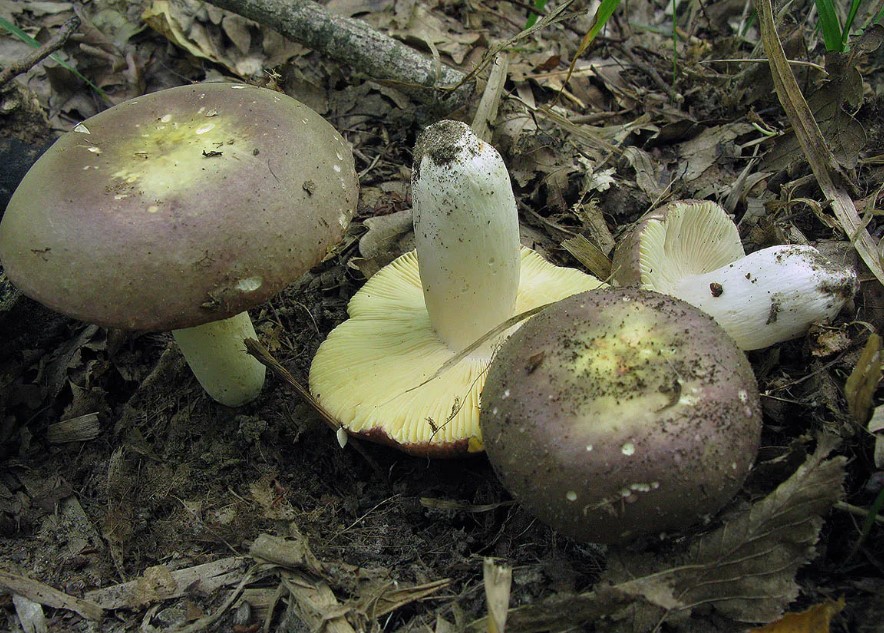
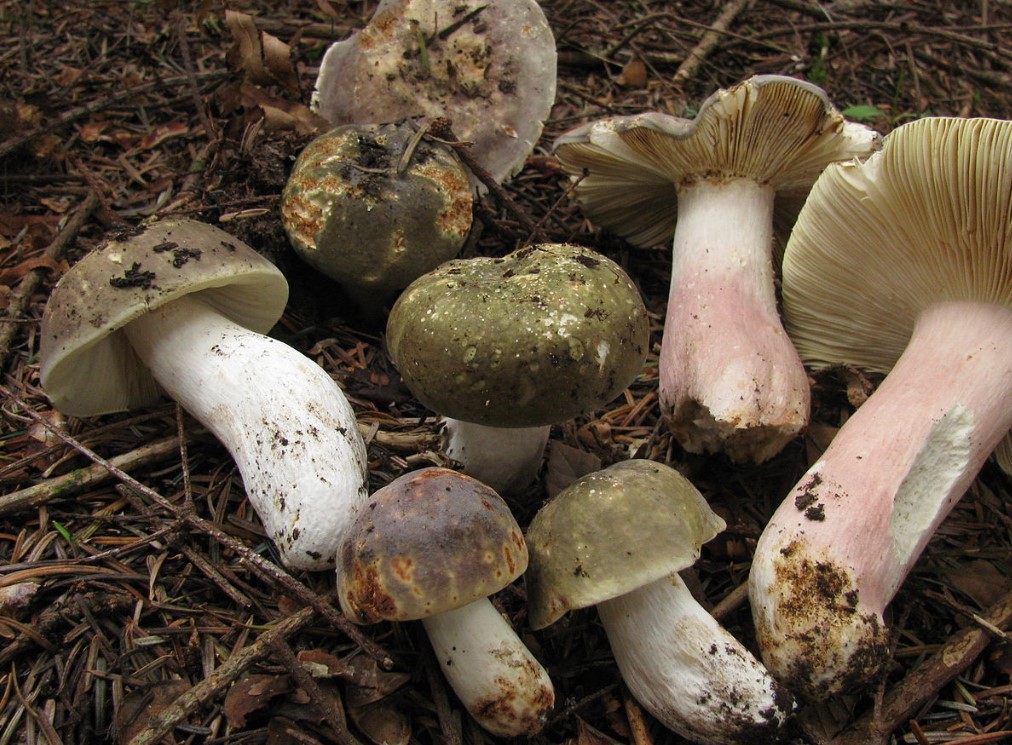
Russula paludosa (marsh russula)
| View | Description | Edibility | Place of growth |
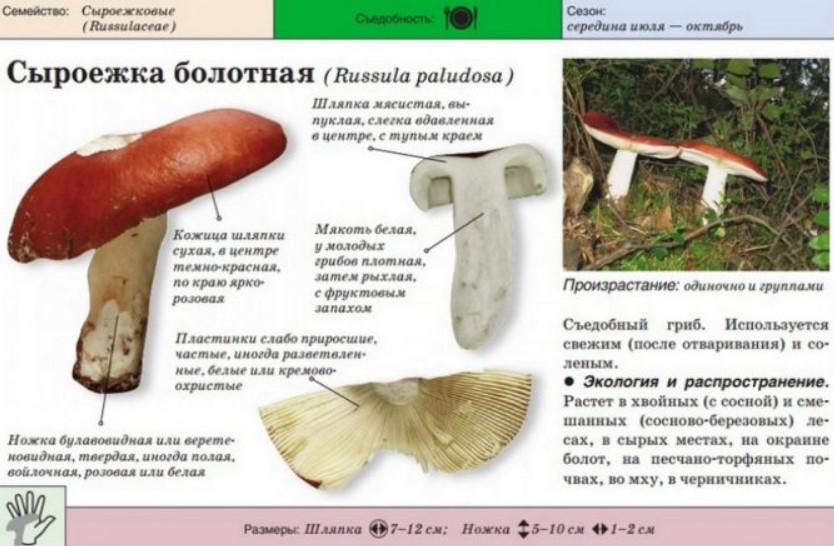
| Russula paludosa (marsh russula) | The cap is 5-10 cm in diameter, with ribbed edges. The color is bright red or orange-red, with the center several shades darker. The stem is up to 8 cm tall, white with a pinkish tint. | Edible. | Mainly coniferous forests, lives on the edges of swamps, likes pine forests with high humidity. |
Photo gallery of the marsh russula
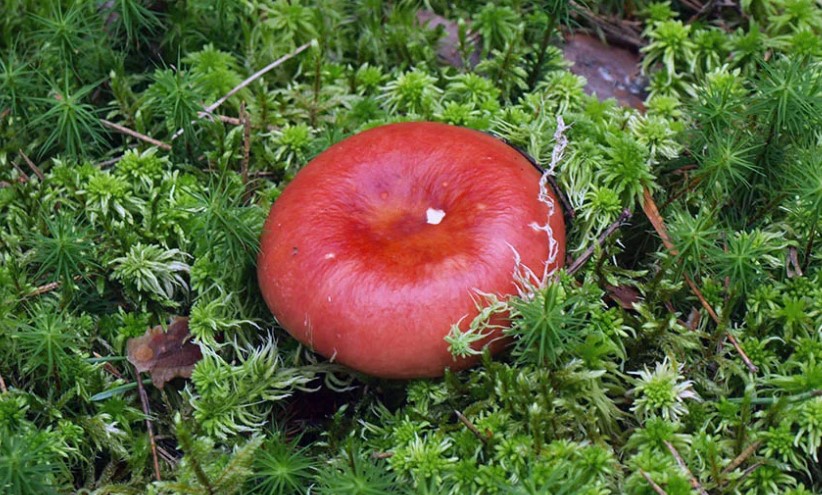
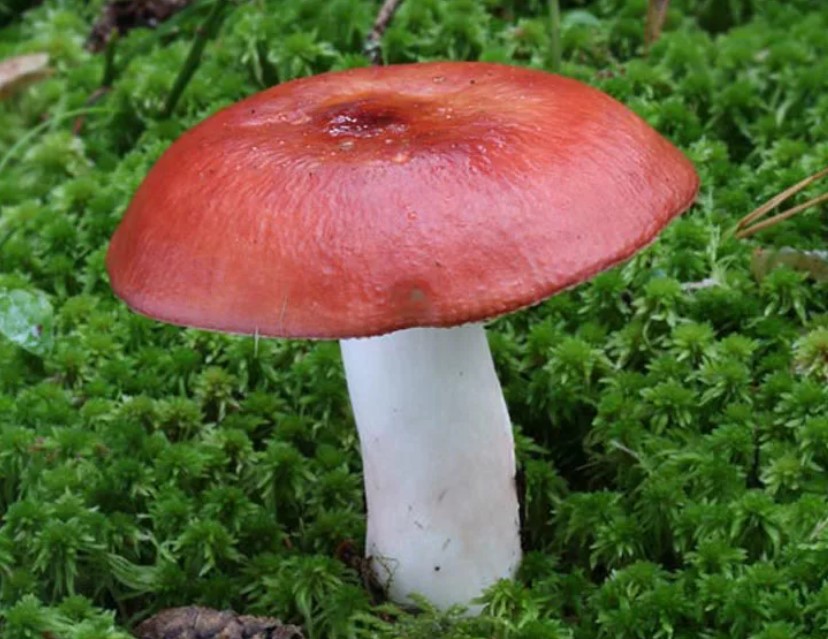
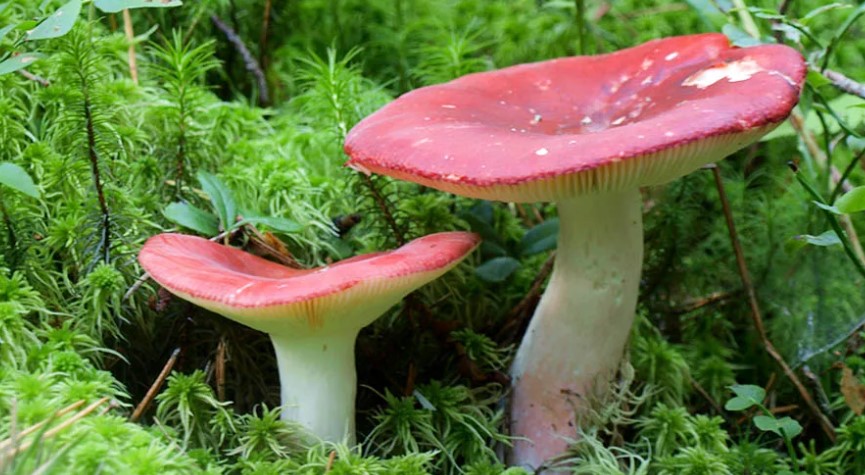
Russula puellaris
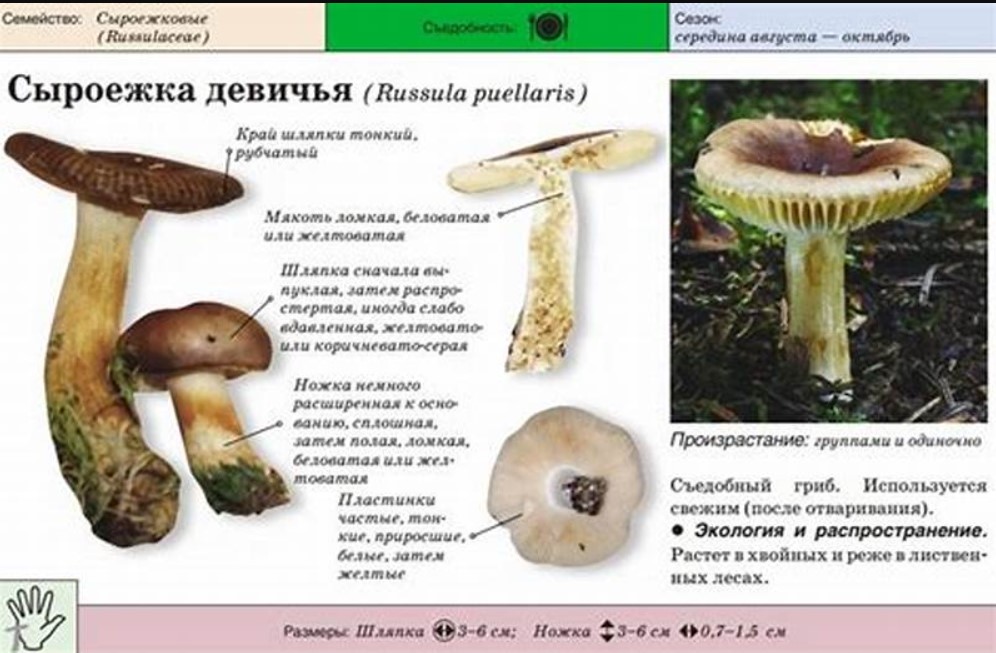
| View | Description | Edibility | Place of growth |
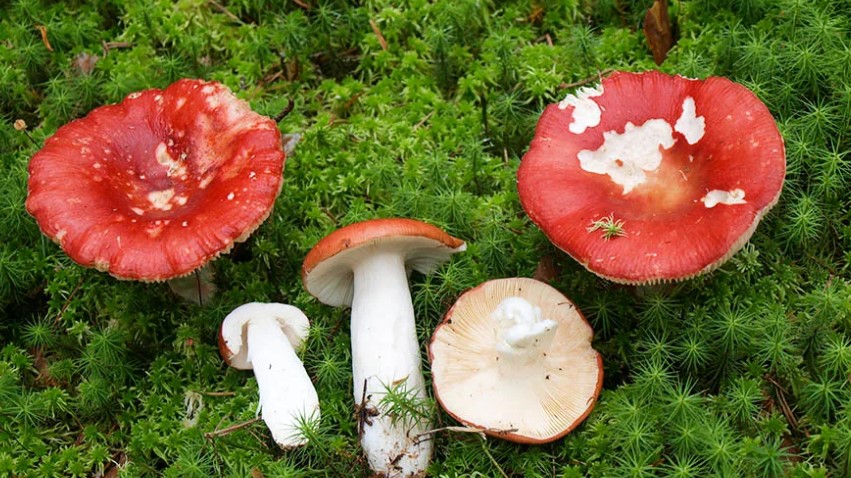
| Russula puellaris | The cap is grooved, up to 11 cm in diameter. It is dark purple or brick-red in color, fading with age. The stem is white and hollow in mature mushrooms. It turns yellow when cut and pressed. | Edible. | It grows in the forests of Eurasia. |
Photo gallery of the common russula
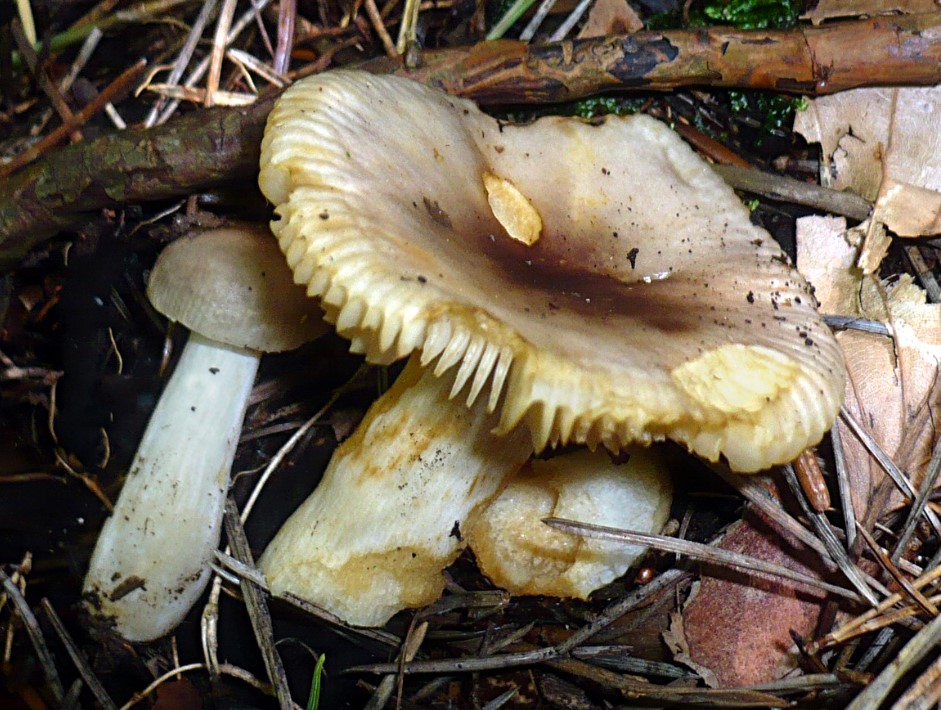
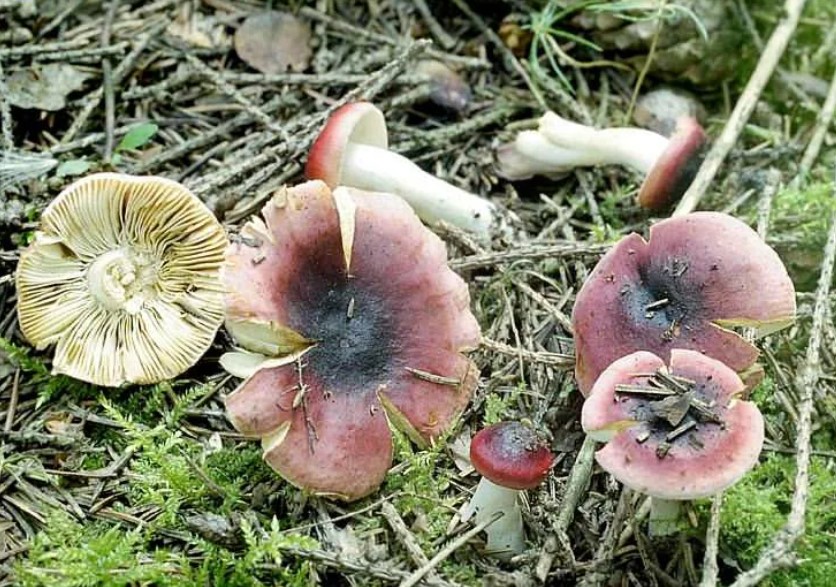
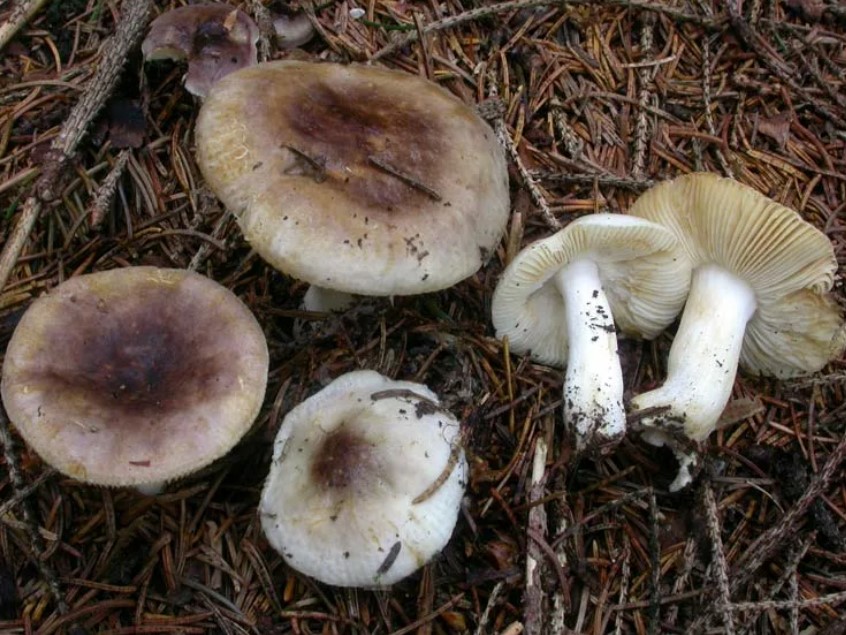
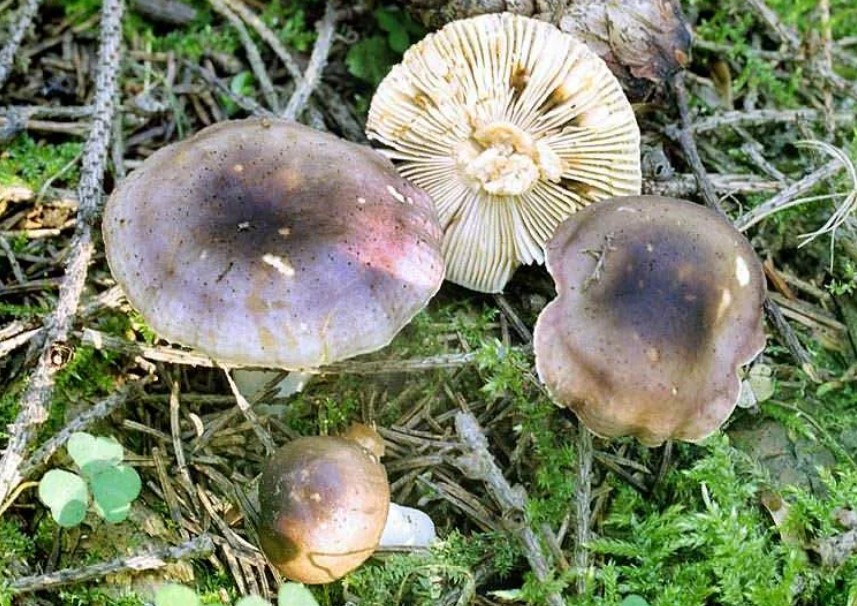
Russula pulchella (Beautiful Russula)
| View | Description | Edibility | Place of growth |
| Russula pulchella (beautiful russula, fading) | The cap is bright red, slightly lighter in color, and ranges from 5 to 10 cm in diameter. The stem, up to 7 cm tall, is white with a pinkish tint. It may turn gray when damaged. | Conditionally edible. | Prefers deciduous forests, less common in coniferous forests. |
Photo gallery of the beautiful, fading russula
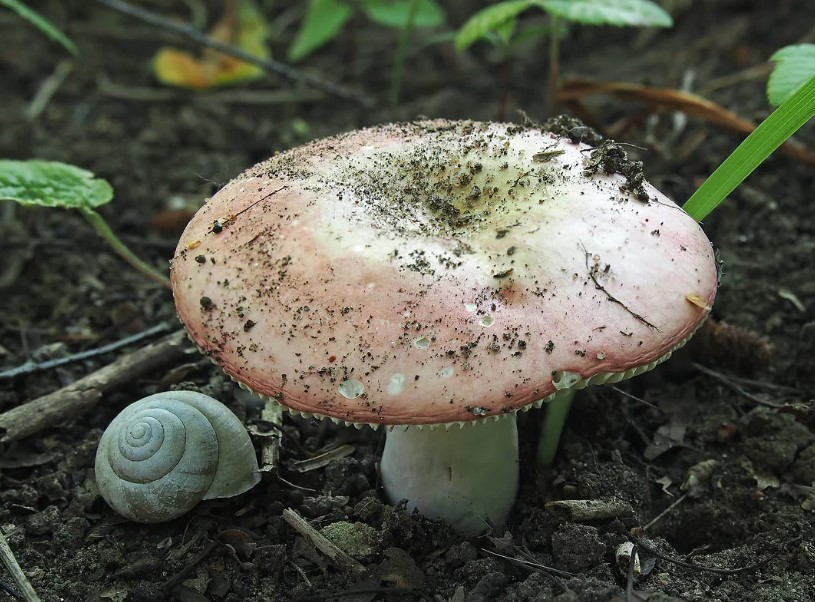
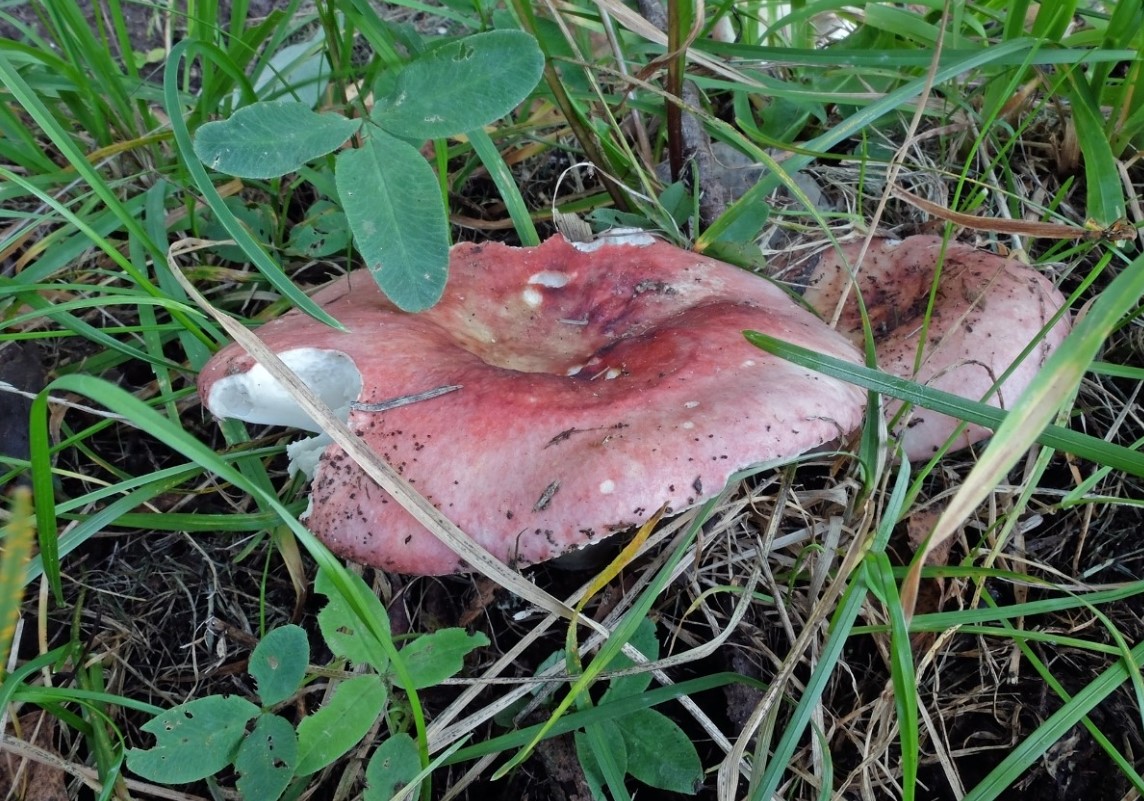
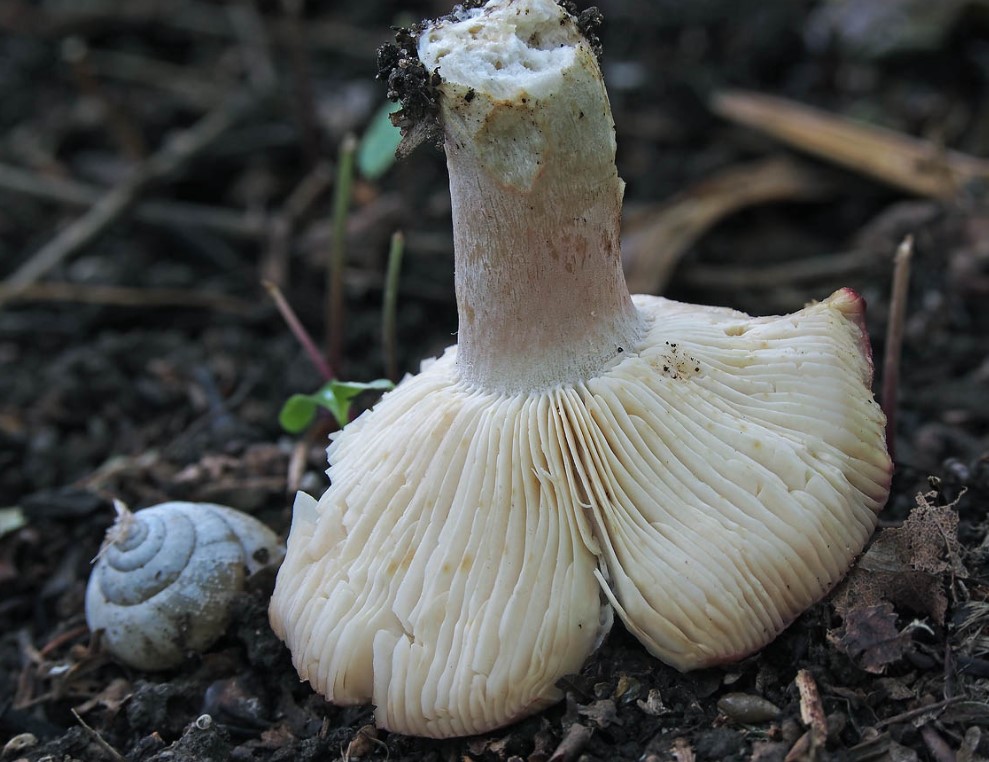
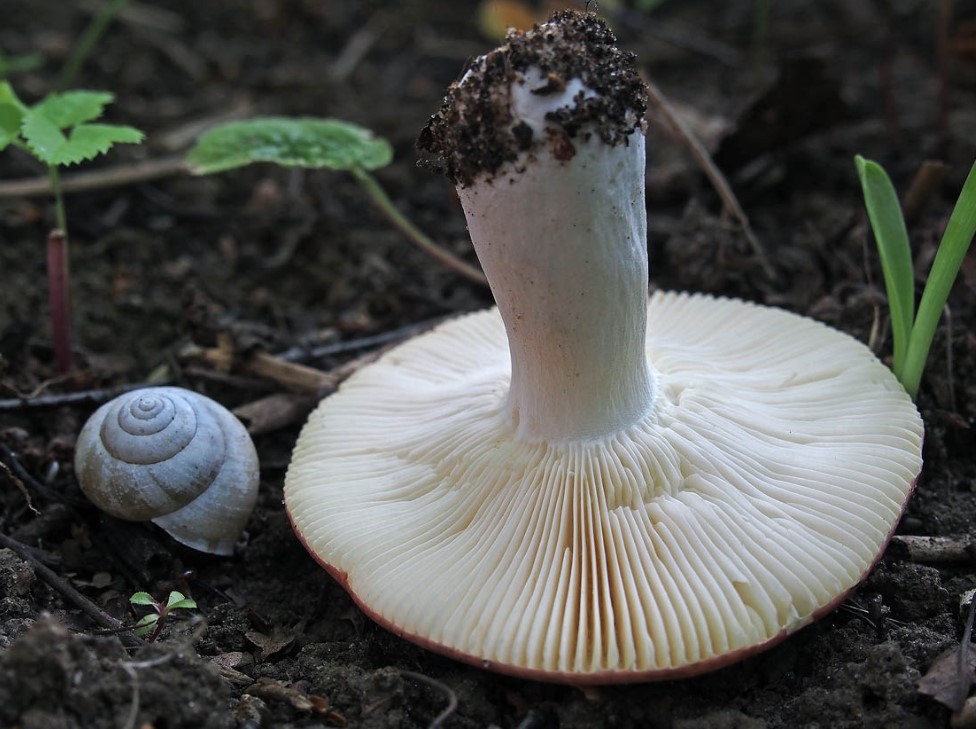
Russula rosea
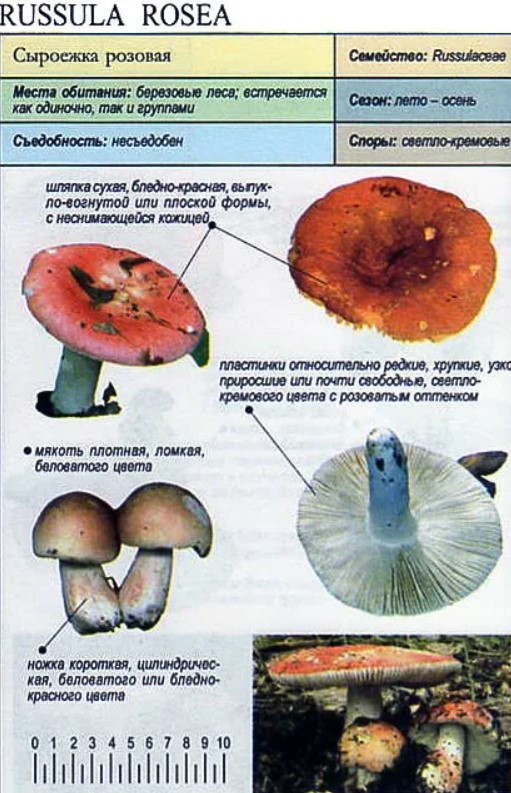
| View | Description | Edibility | Place of growth |
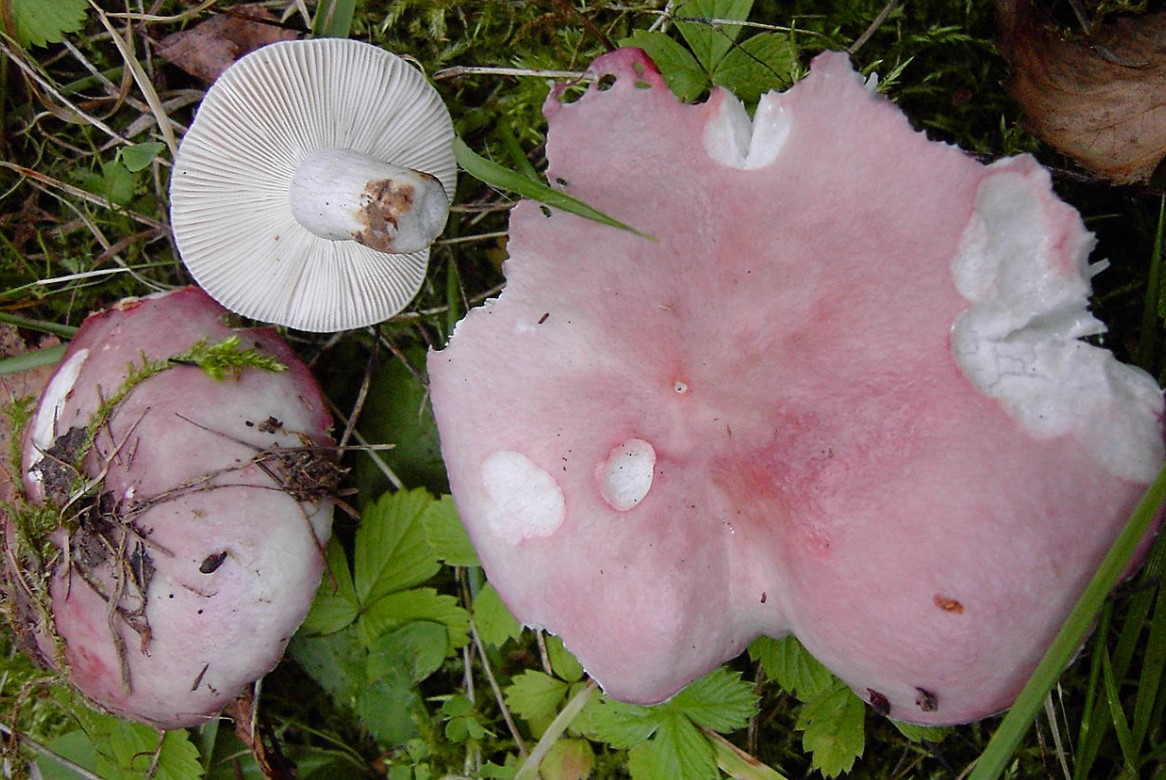
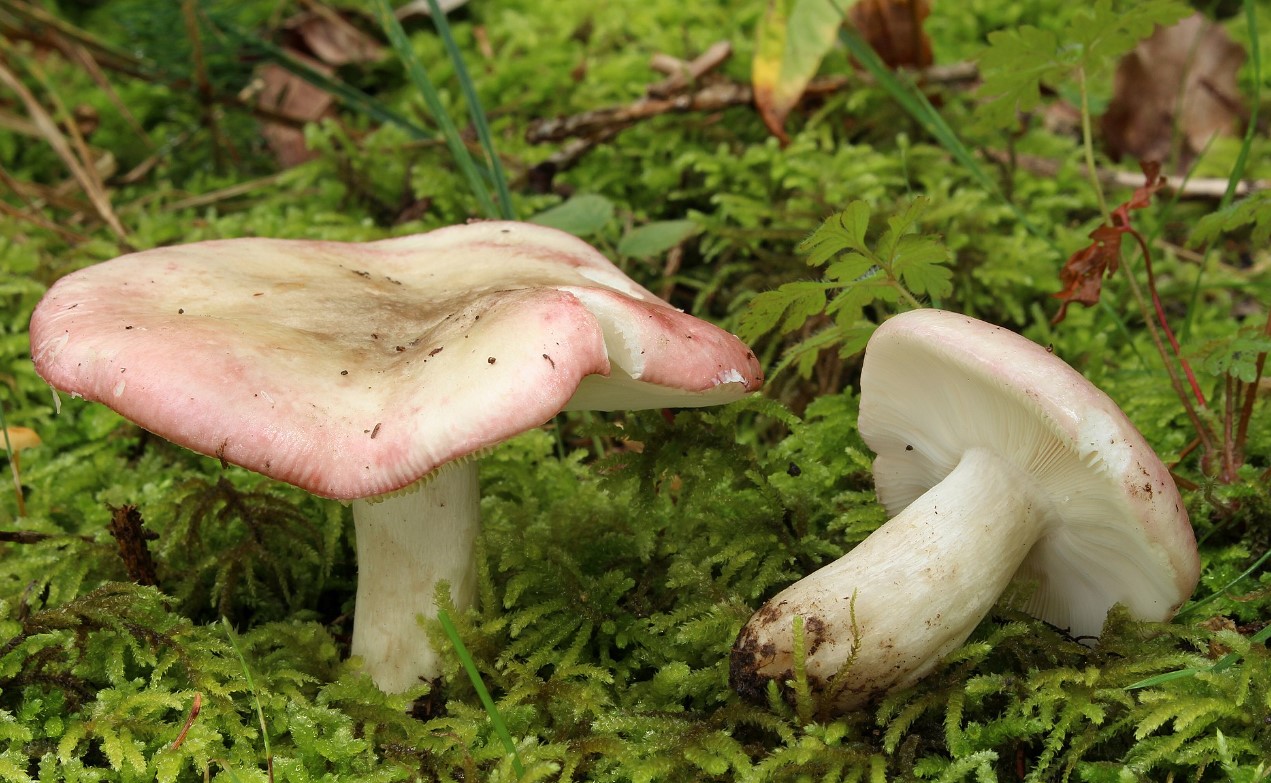
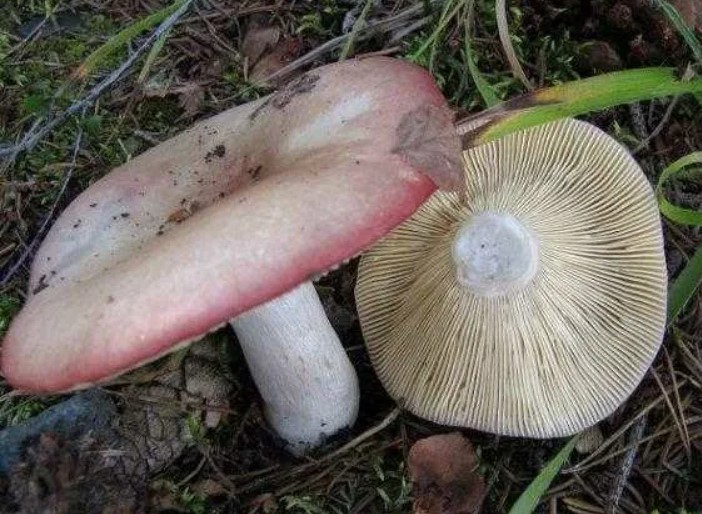
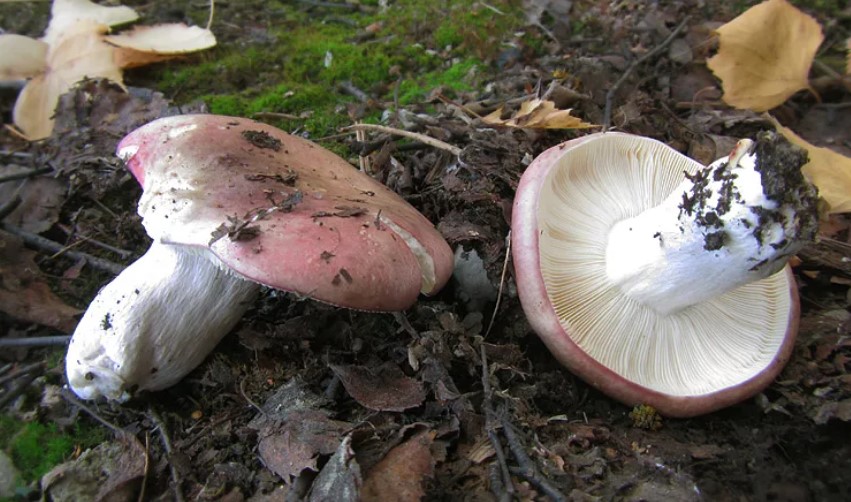
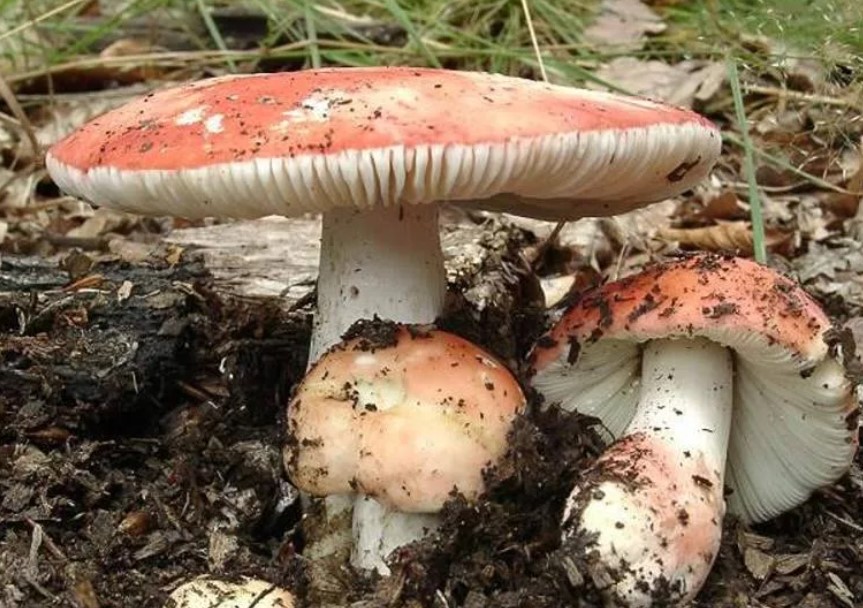
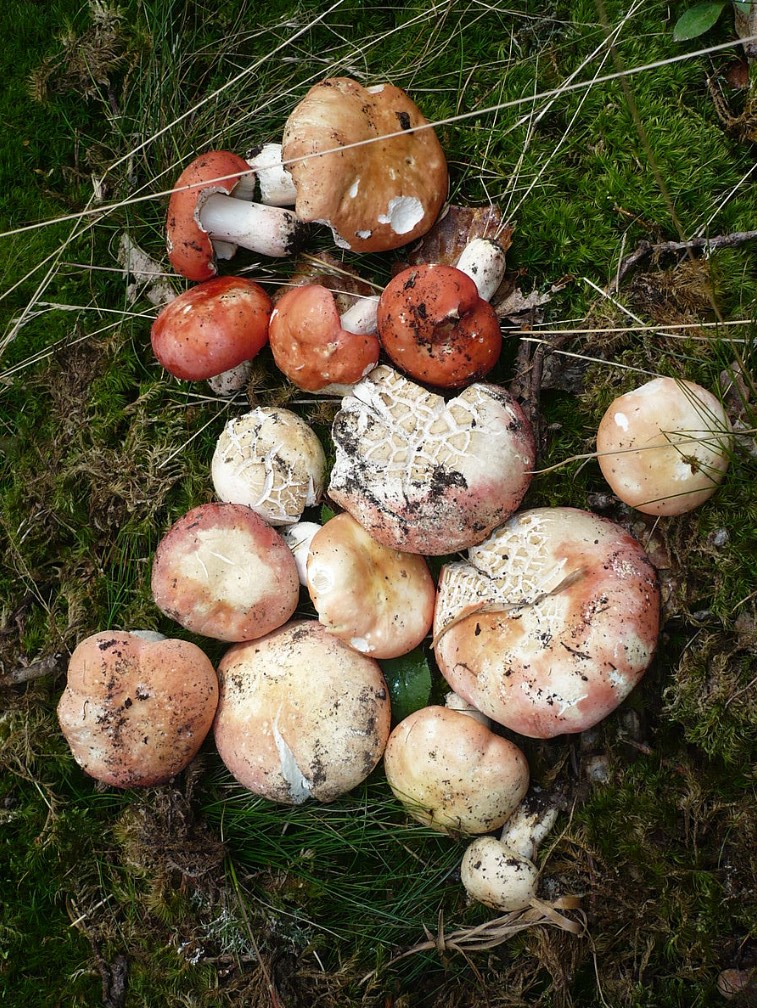
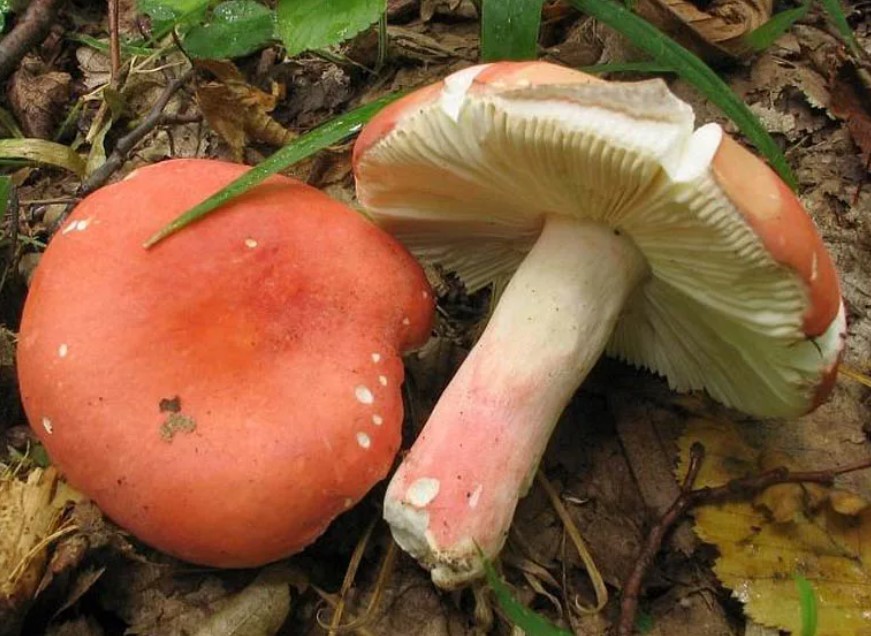
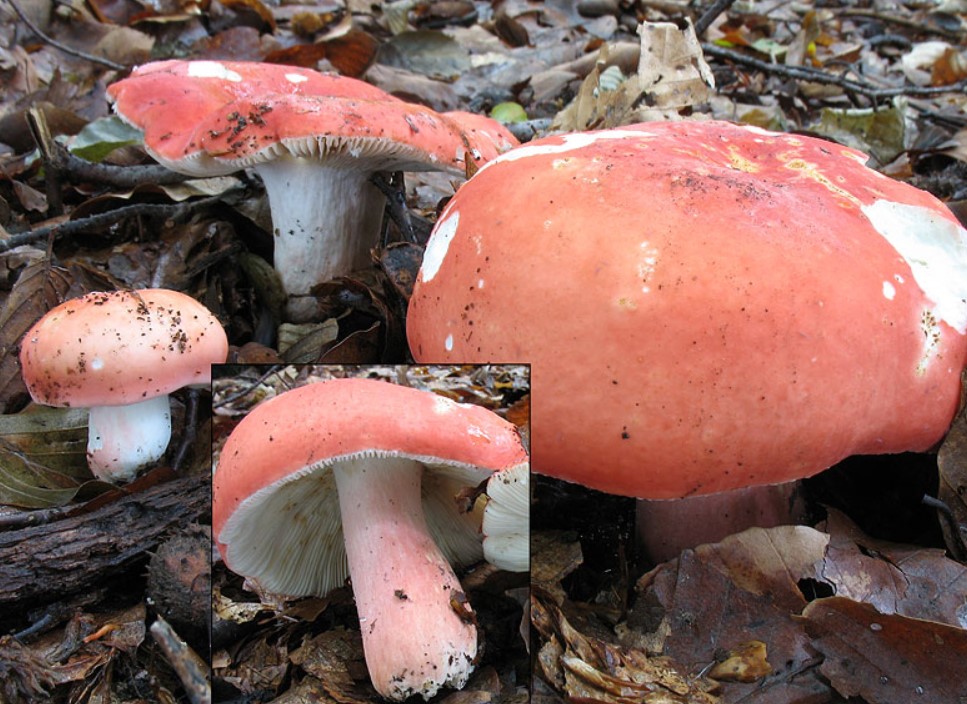
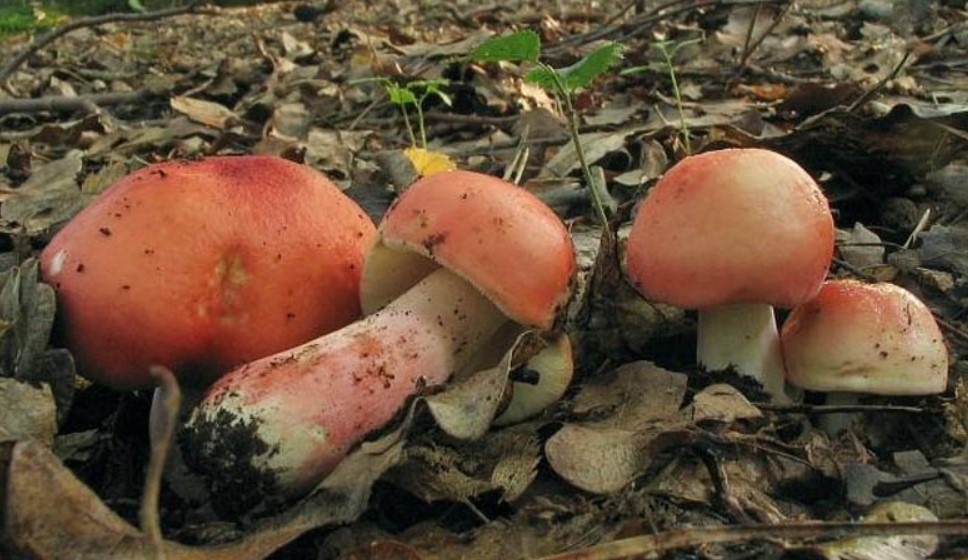
| Russula rosea | The cap is 3.5-11 cm in diameter, carmine red in color, becoming lighter as it grows. The stem is white, with a pinkish bloom or red veins at the base. | Conditionally edible. | It grows in deciduous forests of North America and Eurasia, but is very rare in coniferous forests. |
Photo gallery of the pink russula
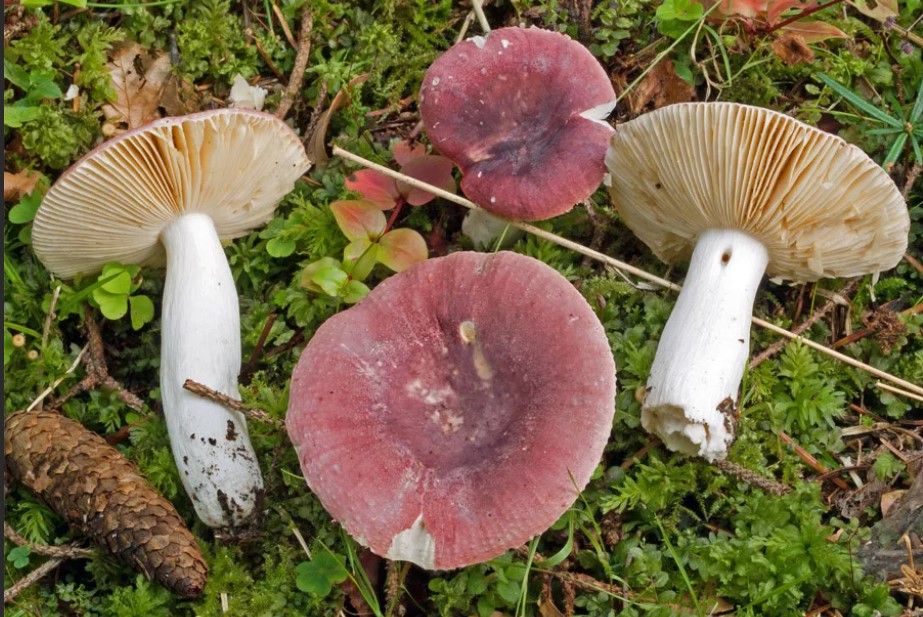
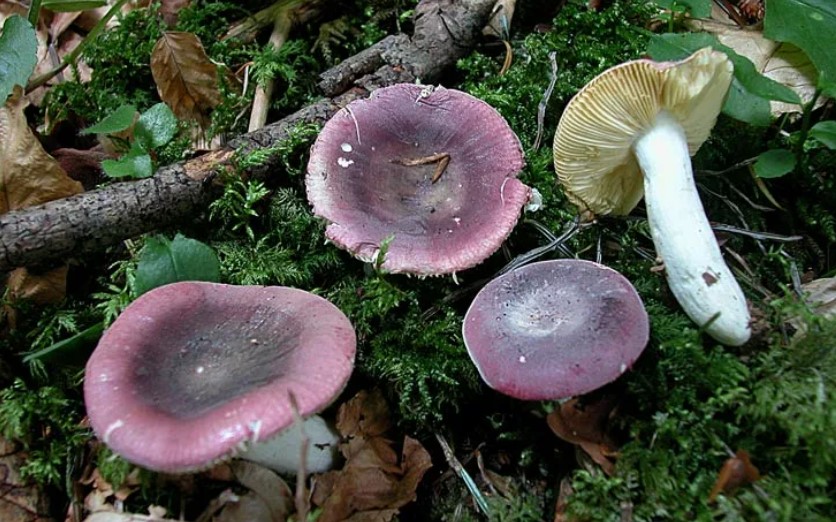
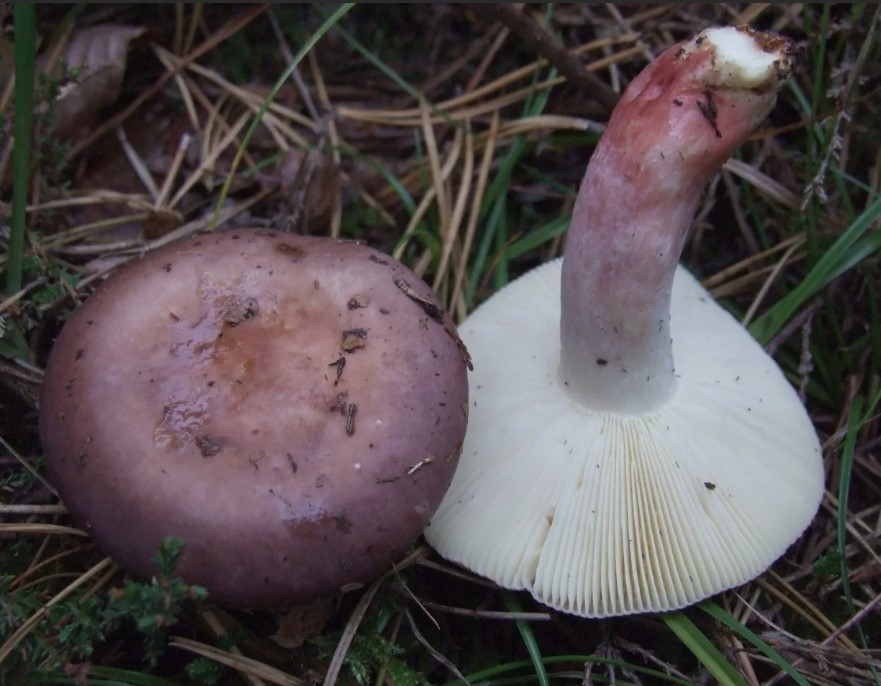
Turkish russula (Russula turci)
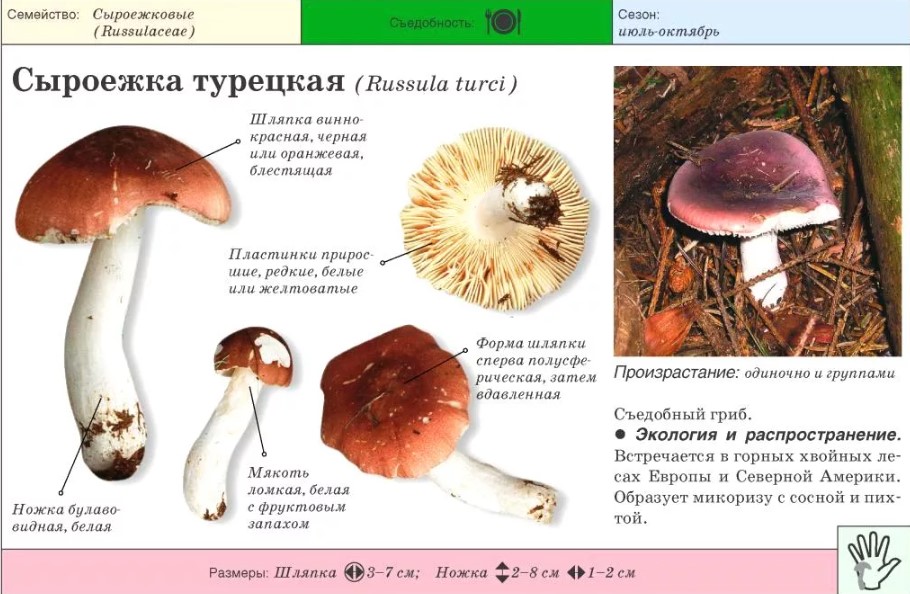
| View | Description | Edibility | Place of growth |
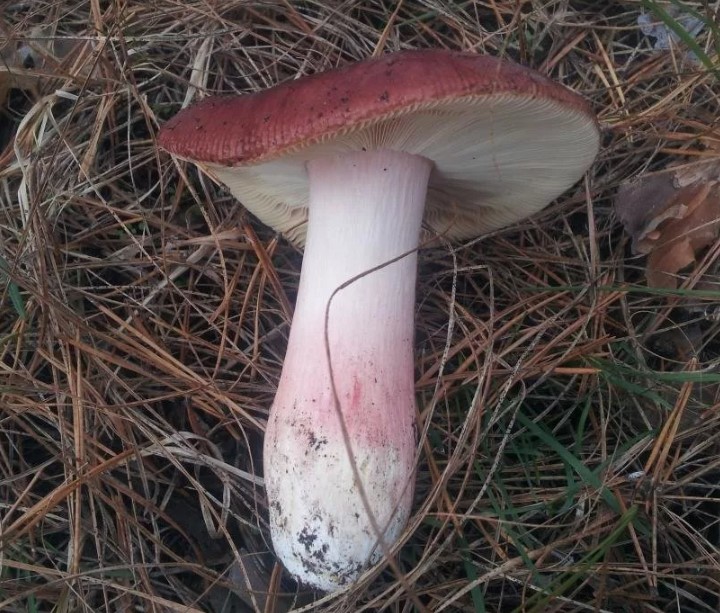
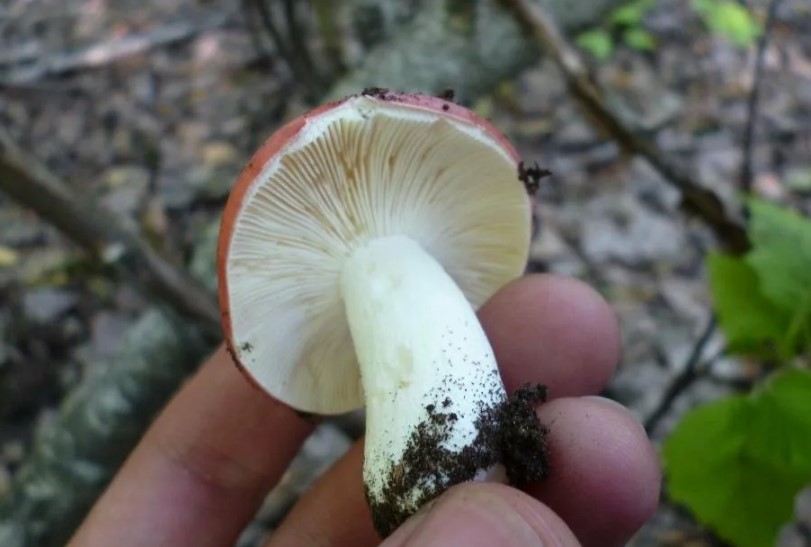
| Turkish russula (Russula turci) | The cap diameter is 3-10 cm, and the color ranges from lilac to brownish-violet. The cylindrical stem is white with a yellowish or pinkish tint. | Edible. | Pine forests of Europe. |
Photo gallery of Turkish russula
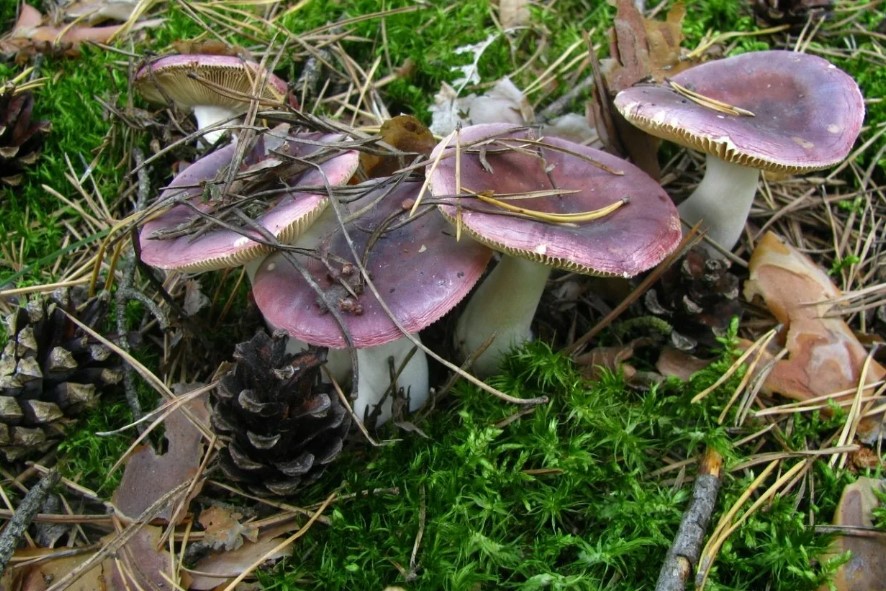
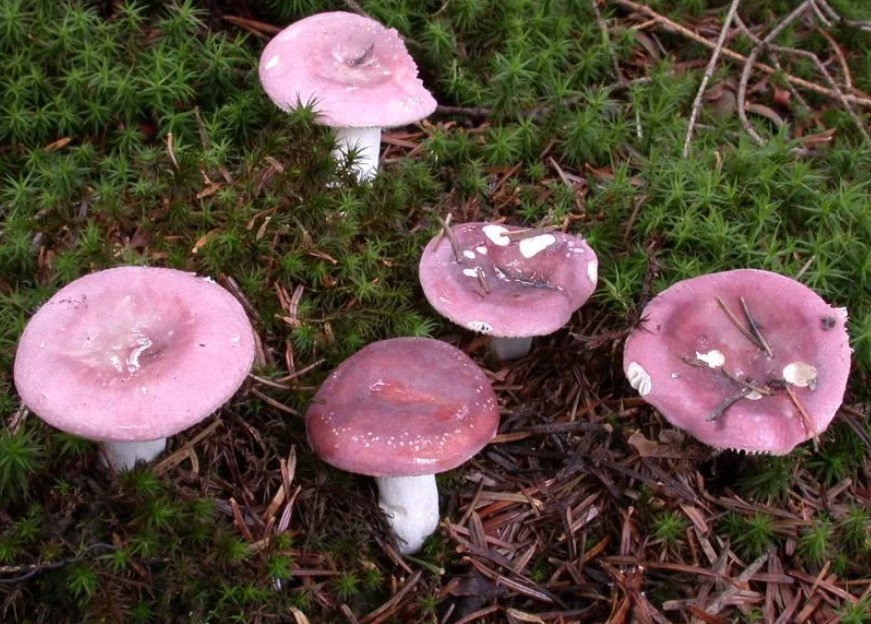
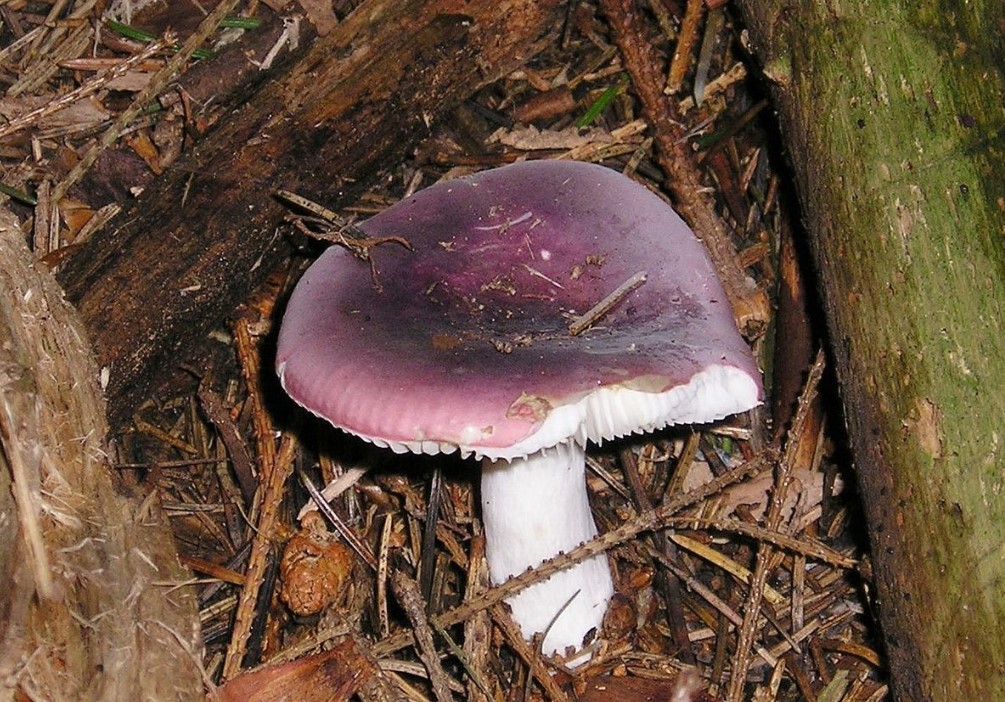
Russula undulata
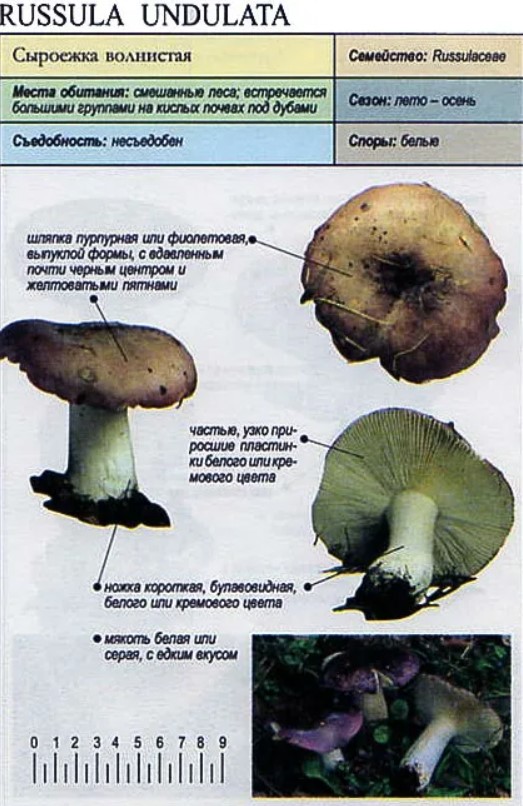
| View | Description | Edibility | Place of growth |
| Russula undulata | The cap measures 4-9 cm. The center can be purple-red or wine-colored, with pinkish or crimson edges. Small brownish or yellowish spots may be present on the surface. The stem is short. The color depends on the weather. When dry, it is white with a reddish tint; when wet, it has a gray tint. | Edible. | Deciduous and coniferous forests of Europe. |
Photo gallery of Russula undulata
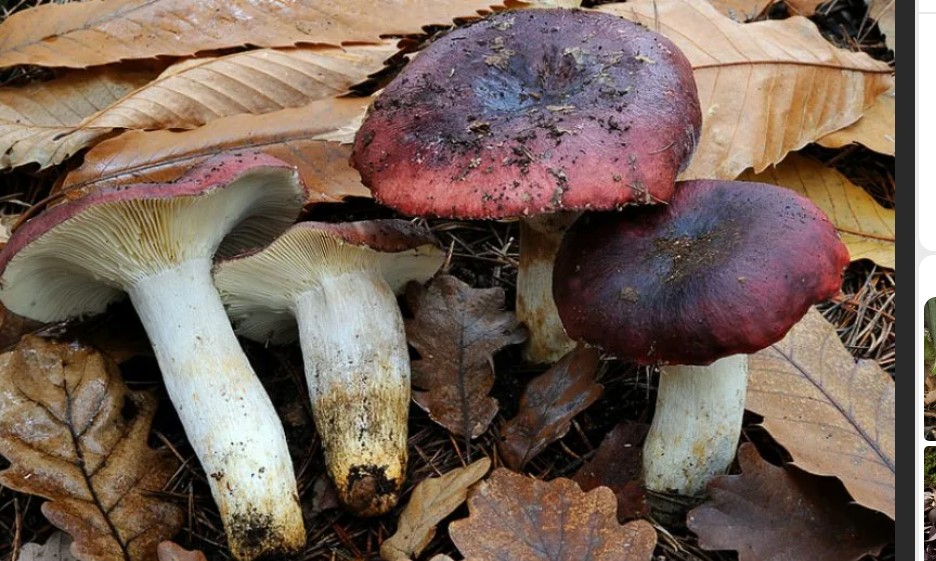
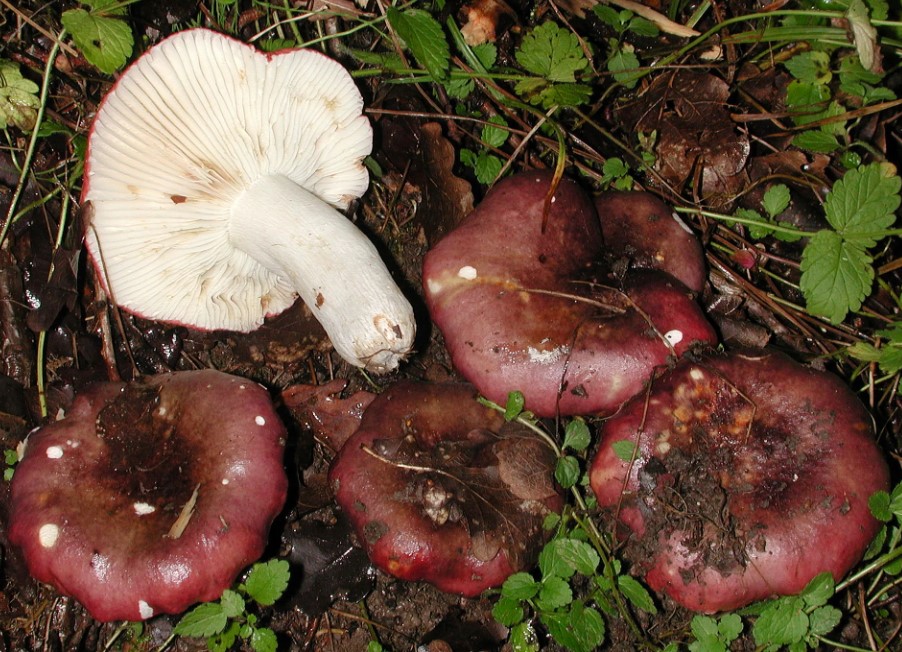
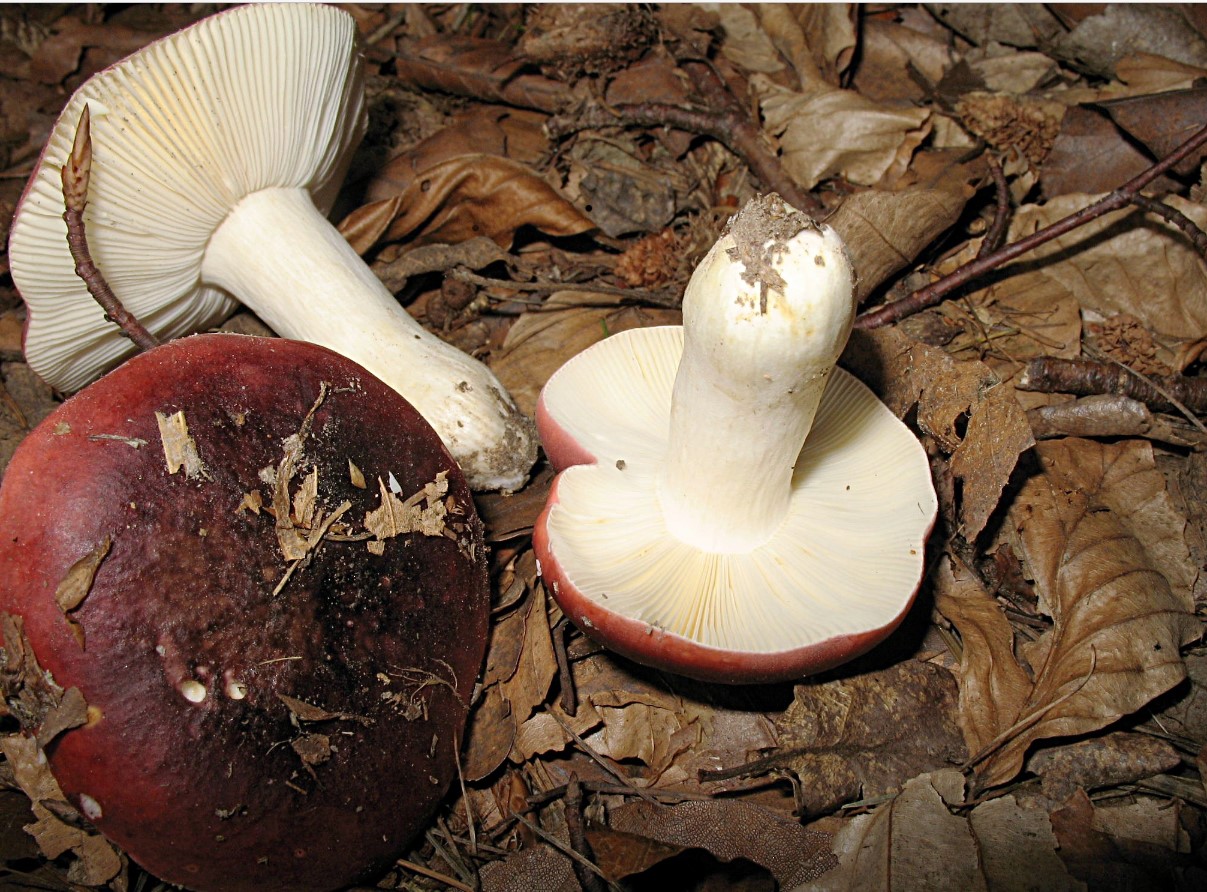
Edible russula (Russula vesca)
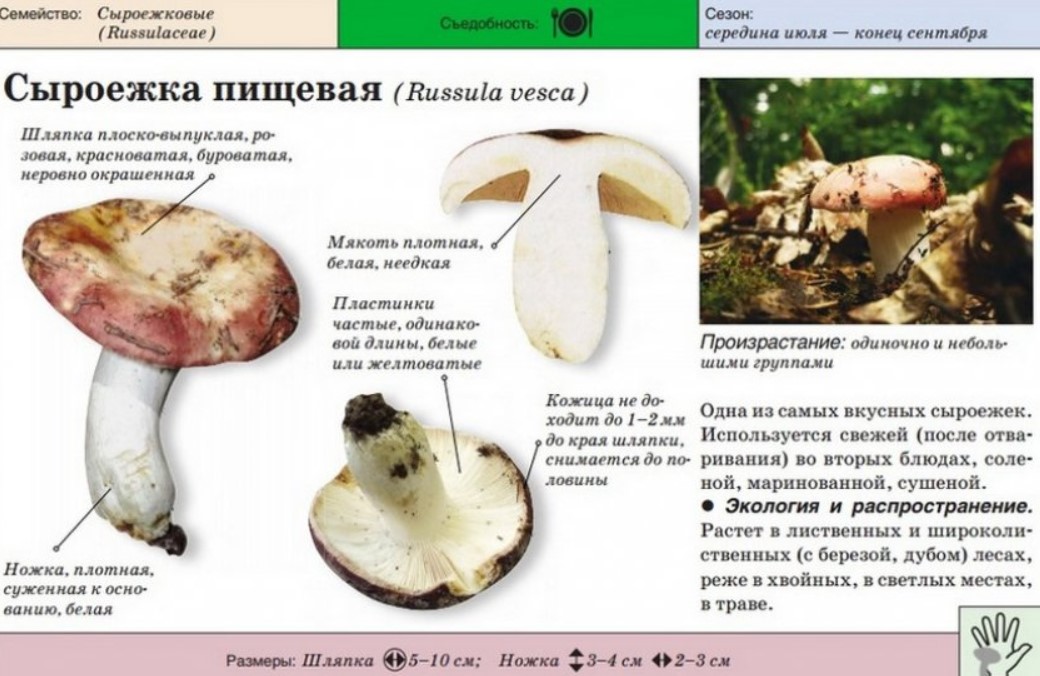
| View | Description | Edibility | Place of growth |
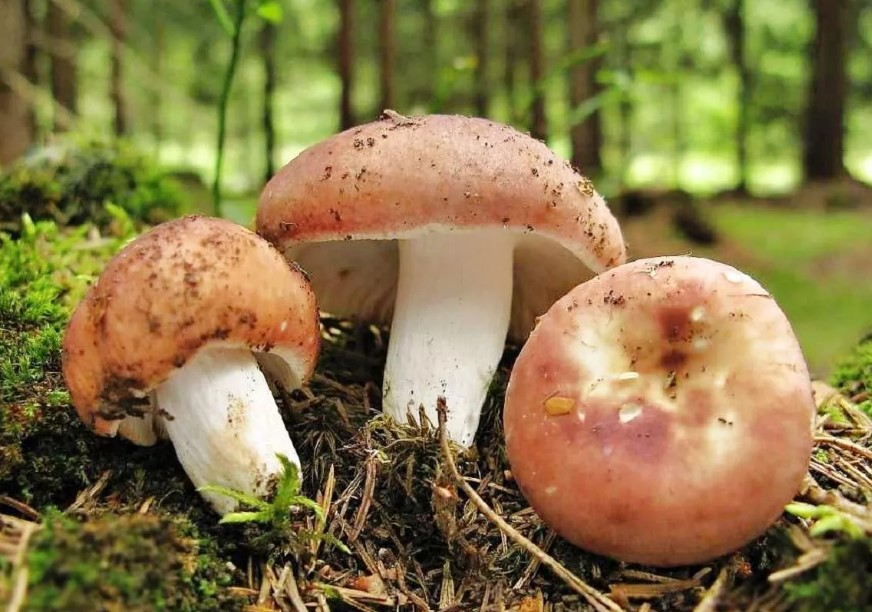
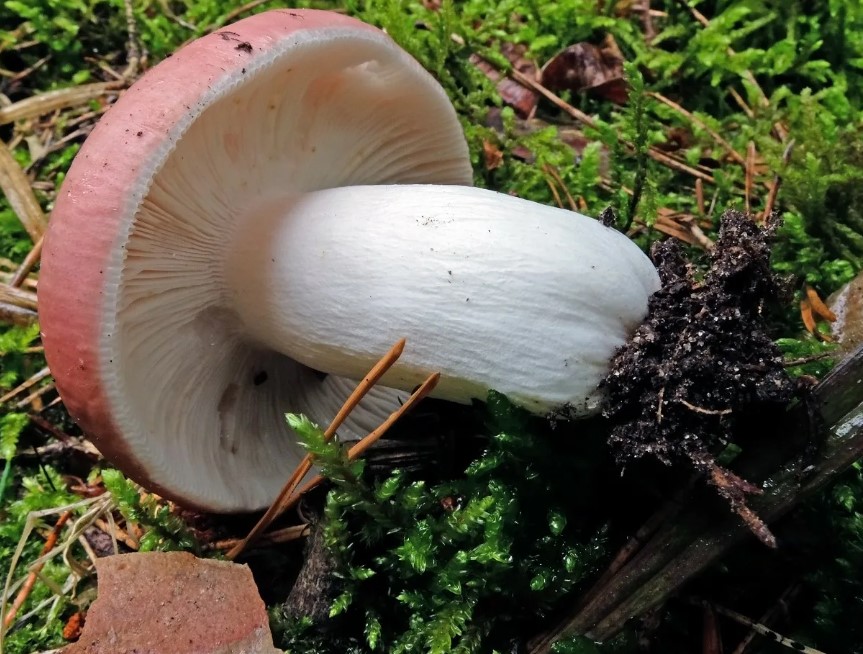
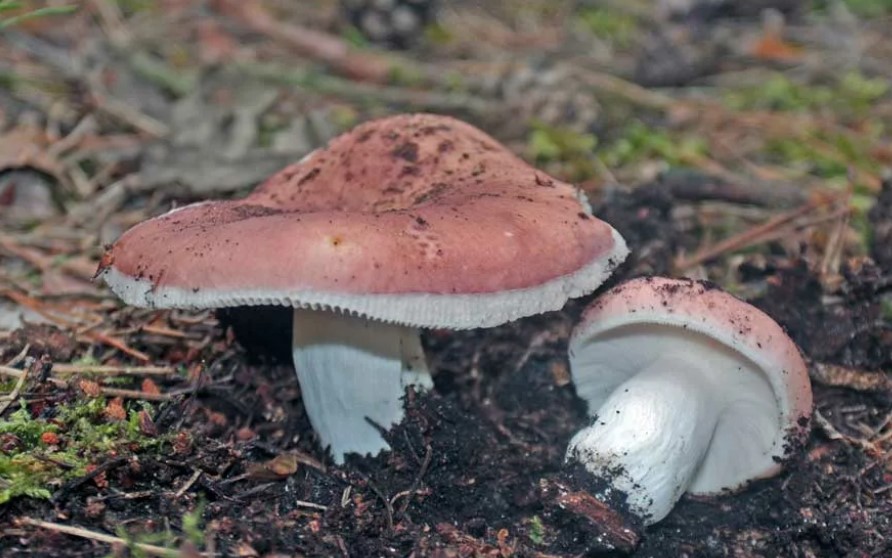
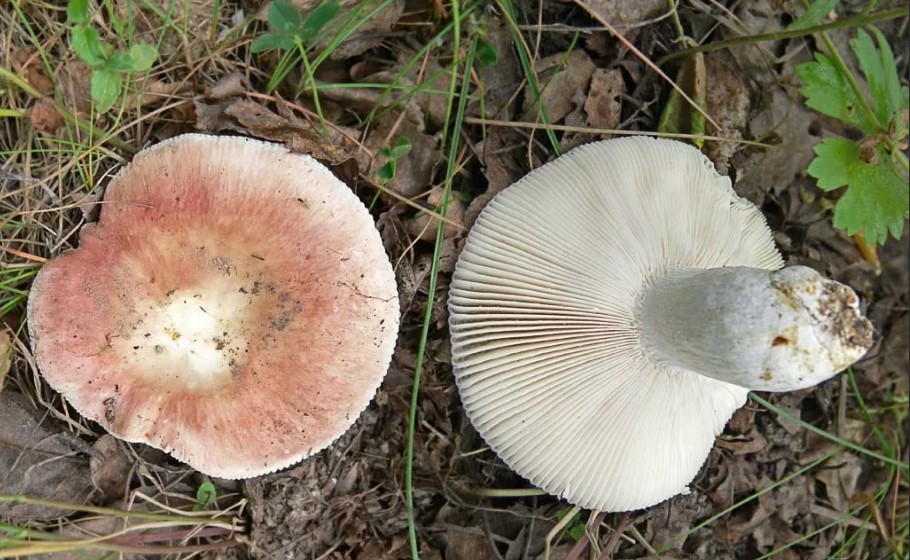
| Edible russula (Russula vesca) | The cap diameter is 5-11 cm. Coloration is very diverse: white, gray, brown-green, pinkish, and wine-red. The stem is cylindrical, turning yellow-brown at the base. | Edible, with very tasty pulp. | Broadleaf forests of Eurasia. |
Photo gallery of edible russula
Russula virescens
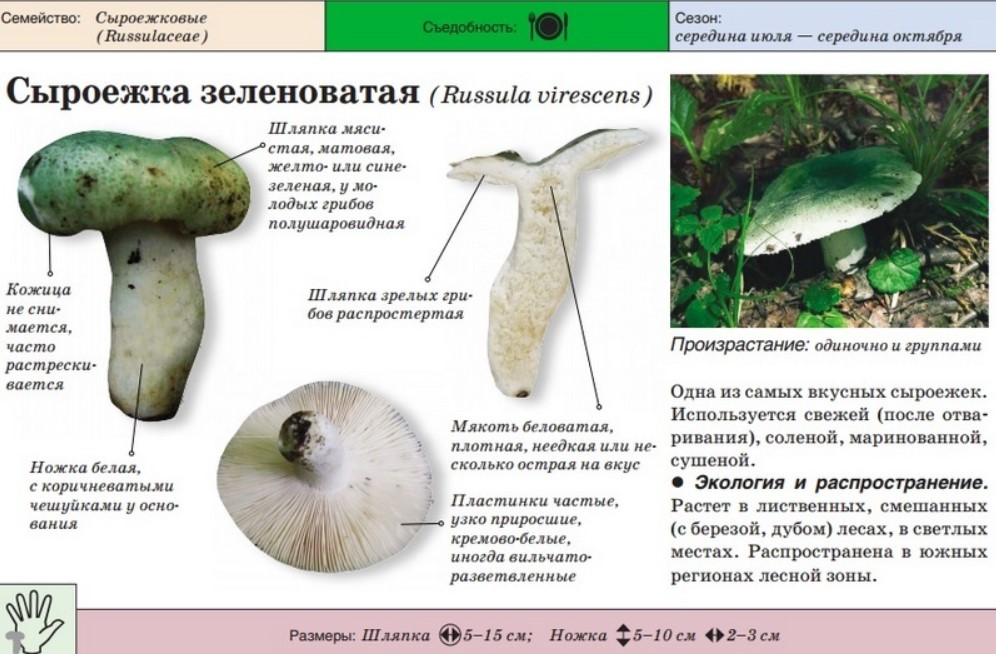
| View | Description | Edibility | Place of growth |
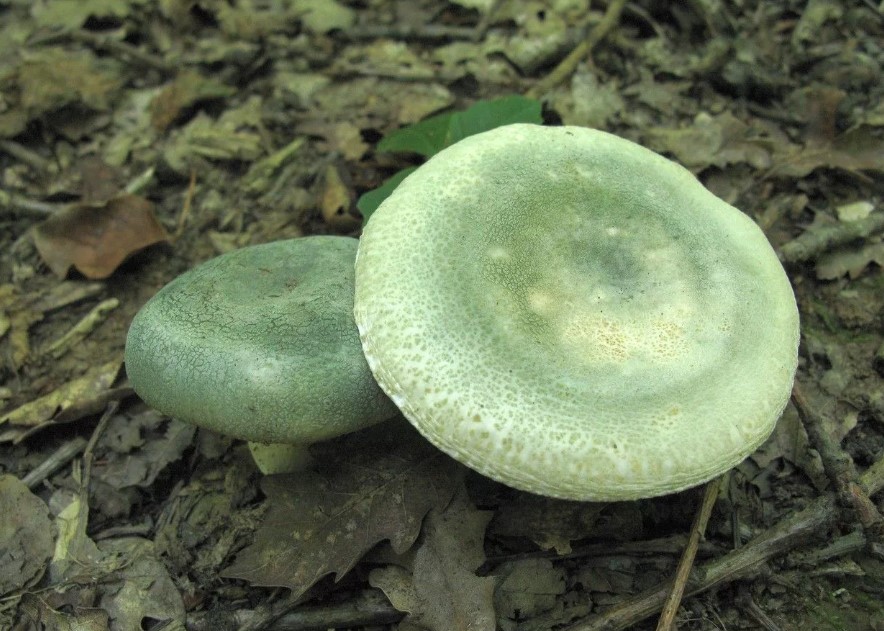
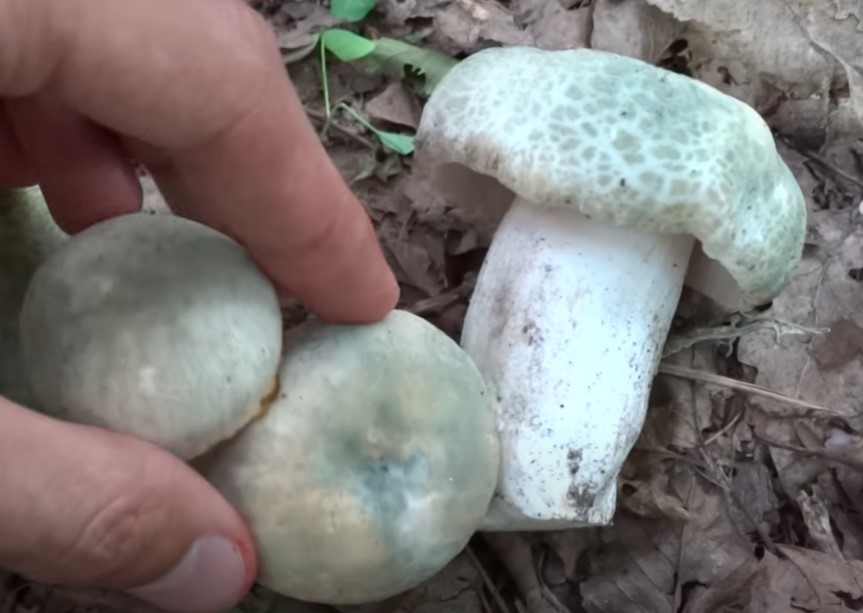
| Russula virescens | The cap reaches 15 cm in diameter and is gray or dark green. The skin cracks over time, becoming scaly. The stem is strong and reddish-brown. | An edible, very tasty mushroom. | It grows in the broadleaf forests of Eurasia. |
Photo gallery of Russula viridis
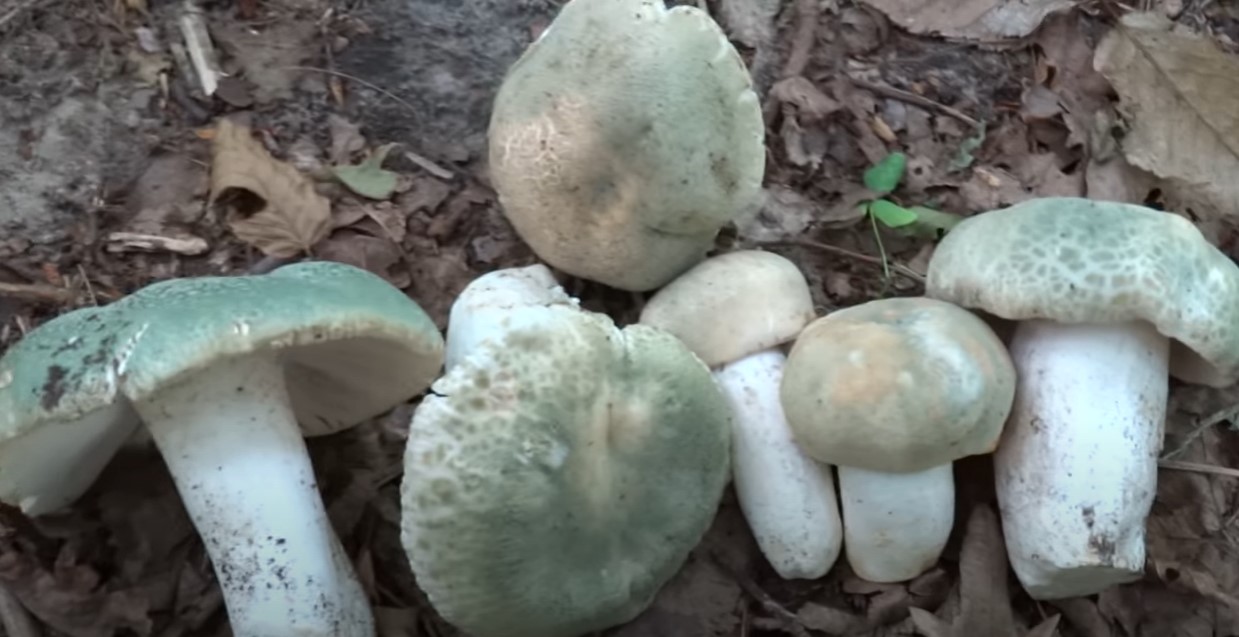
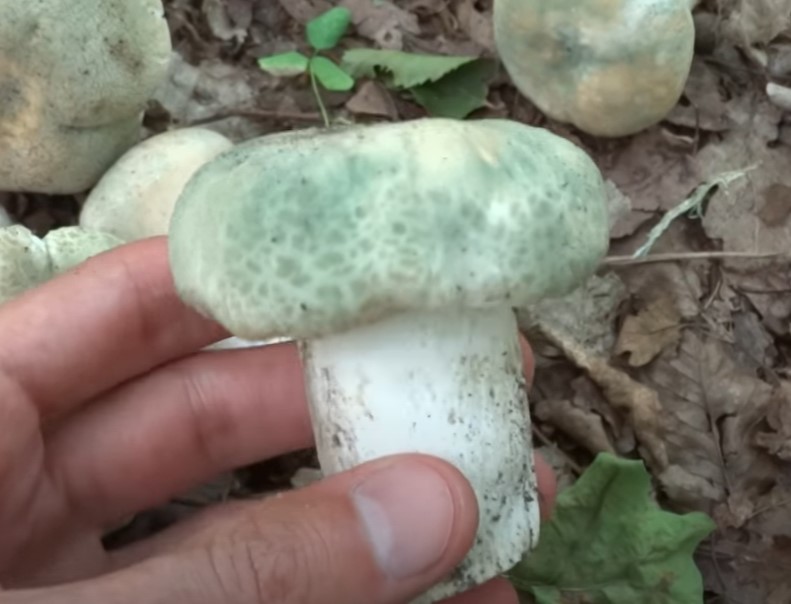
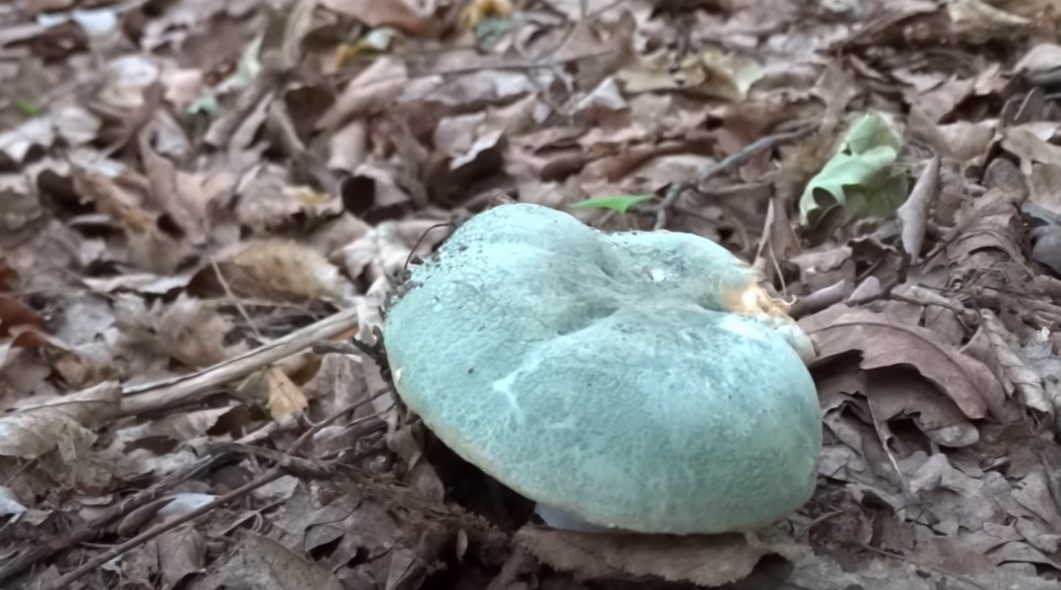
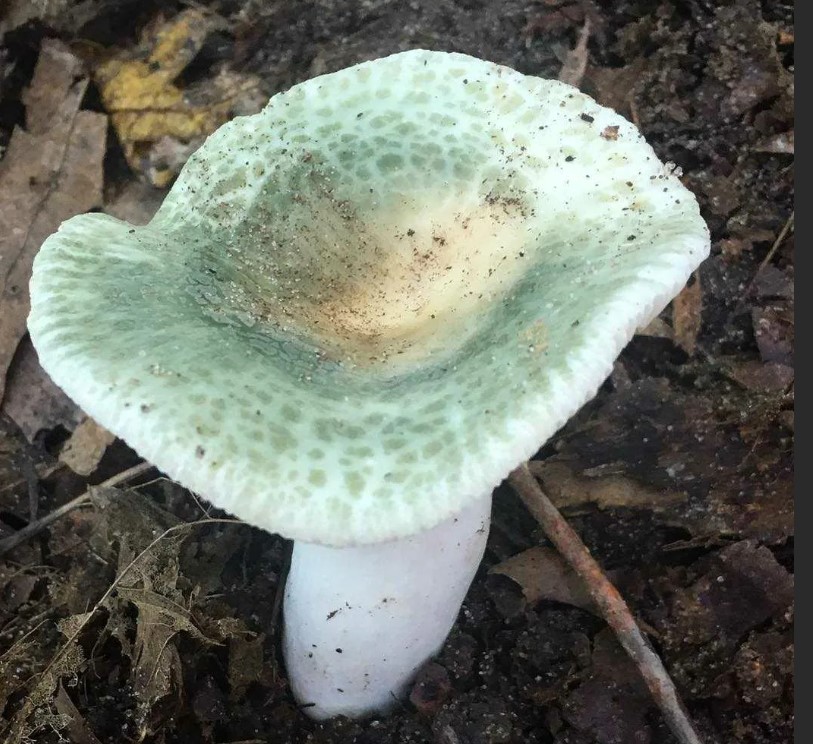
Russula xerampelina (Browning, aromatic russula)
| View | Description | Edibility | Place of growth |
| Russula xerampelina (Browning, aromatic russula) | The cap is 3.5-10.5 cm in diameter and funnel-shaped in adulthood. The color is reddish-purple, with a much darker center. Brown spots may sometimes appear on the matte surface. The stem is club-shaped, light in color, with a reddish tint. | Edible, but has a specific aroma. | Prefers coniferous forests of Eurasia, found both in the mountains and on the plains. |
Photo gallery of Russula russula
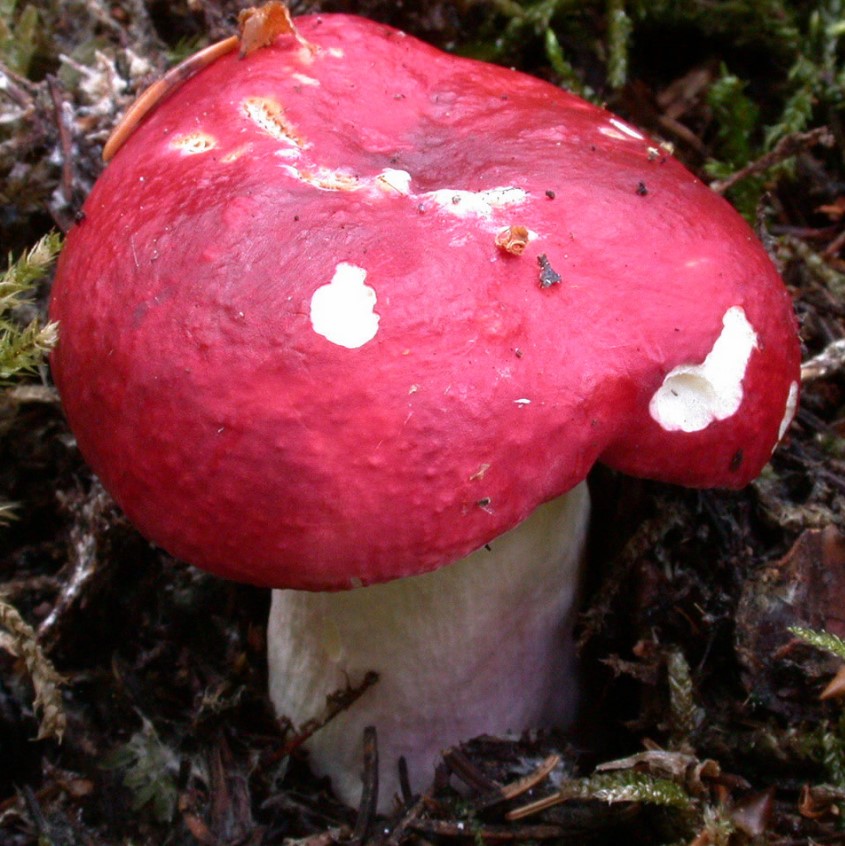
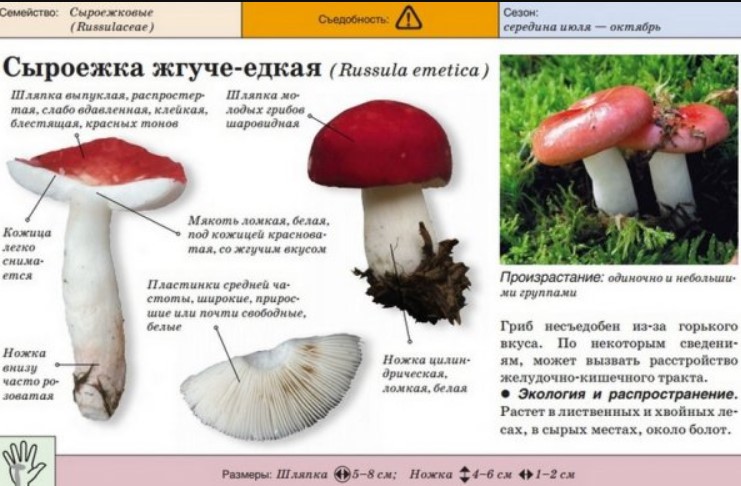
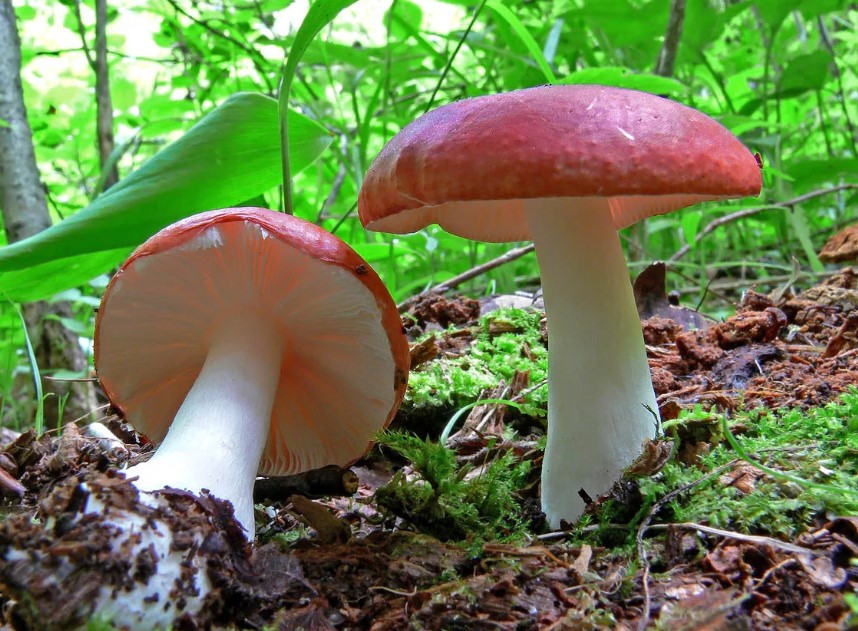
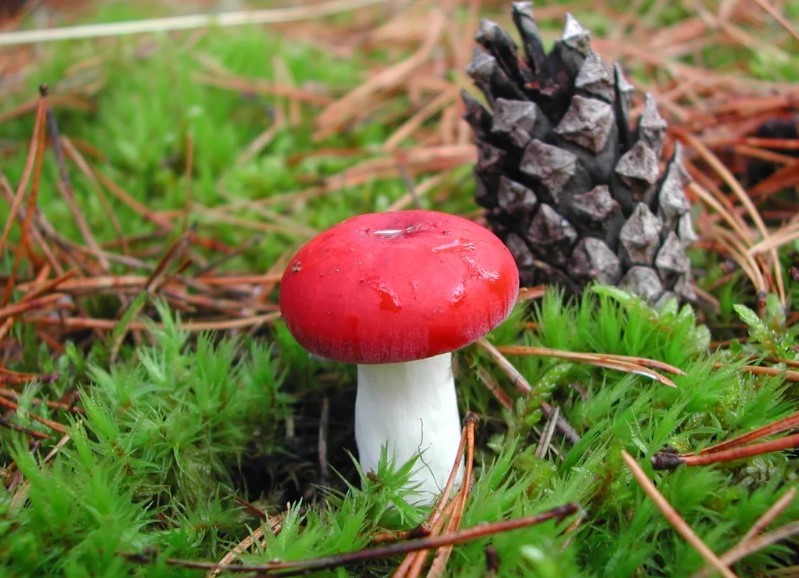
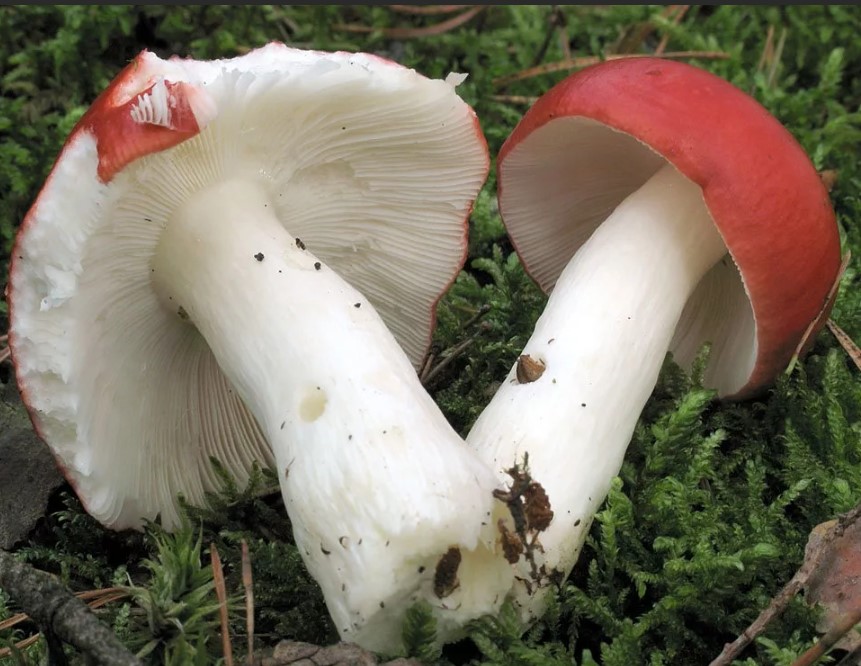
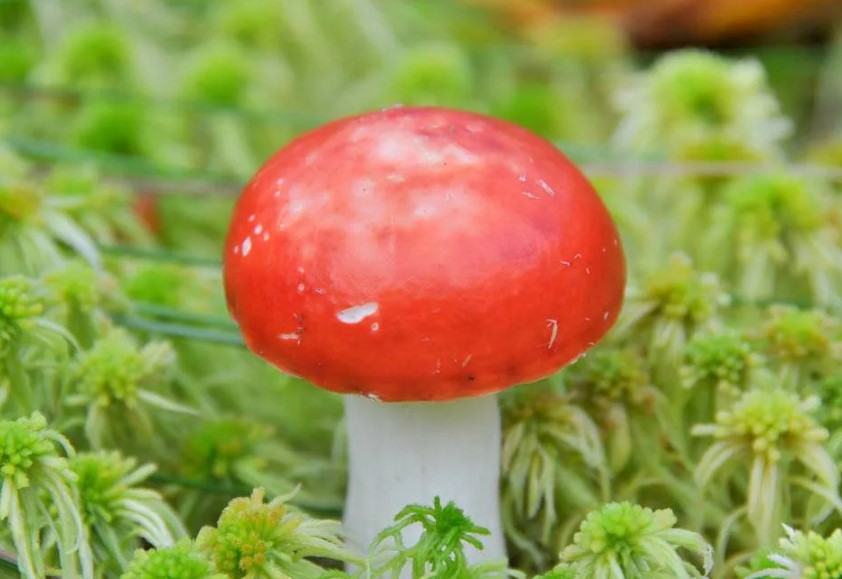
Russula emetica
| View | Description | Edibility | Place of growth |
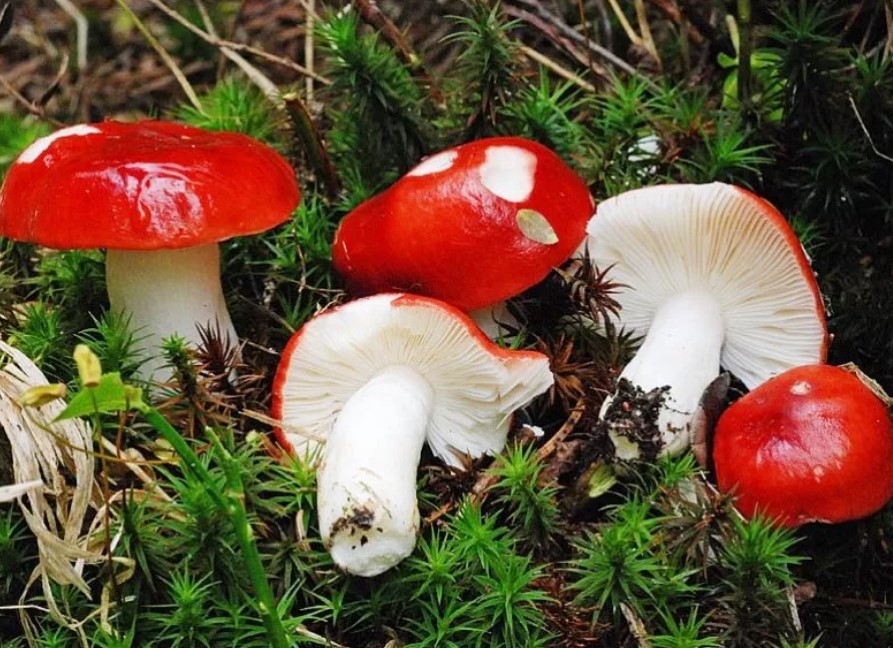
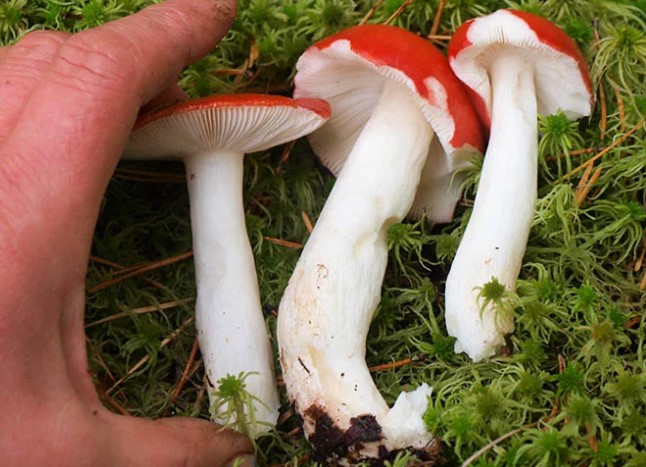
| Russula emetica | The cap is initially convex, later becoming conical. It is up to 9 cm in diameter and red. The stem is cylindrical, pinkish or white. The flesh is bitter. | Inedible. After washing and cooking, it can be used for pickling. | Coniferous and deciduous forests. |
Photo gallery of the caustic russula
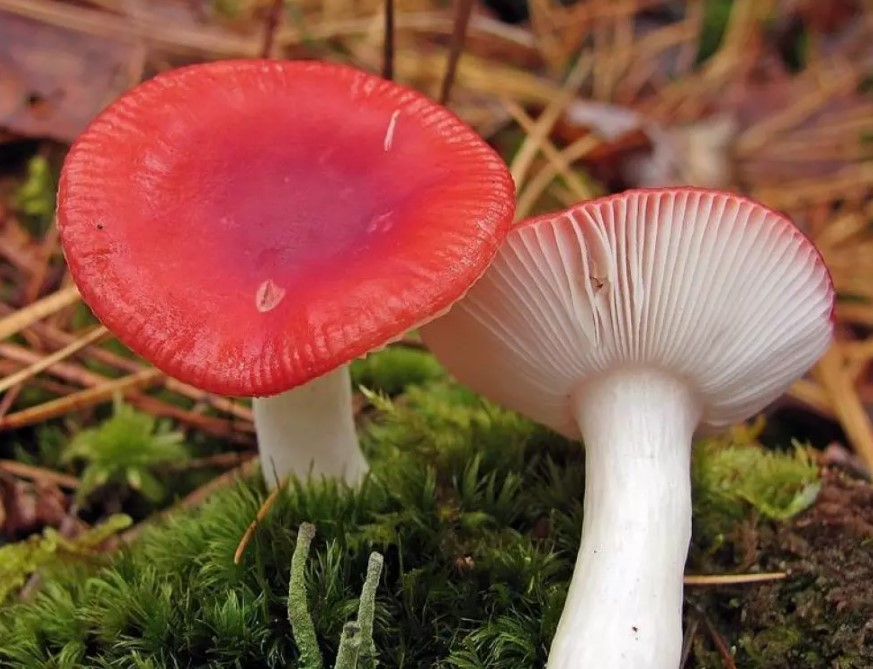
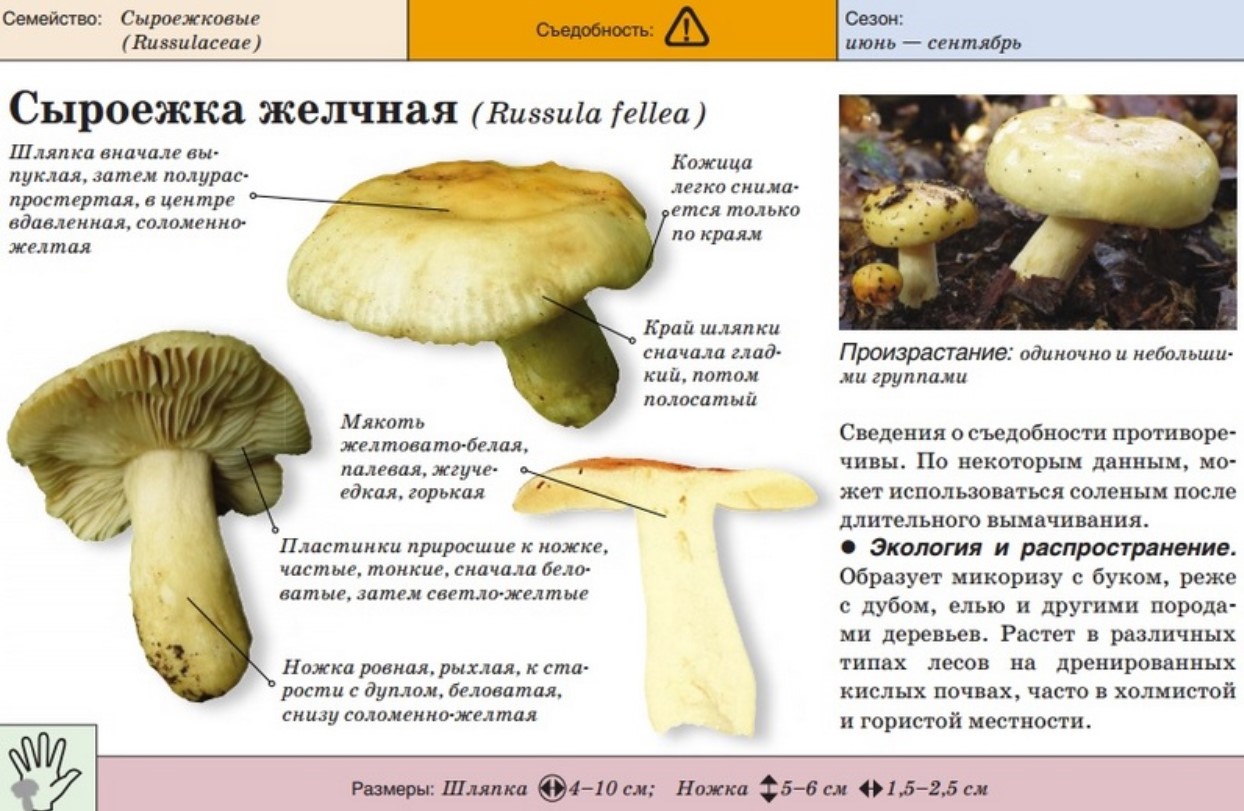
Russula fellea
| View | Description | Edibility | Place of growth |
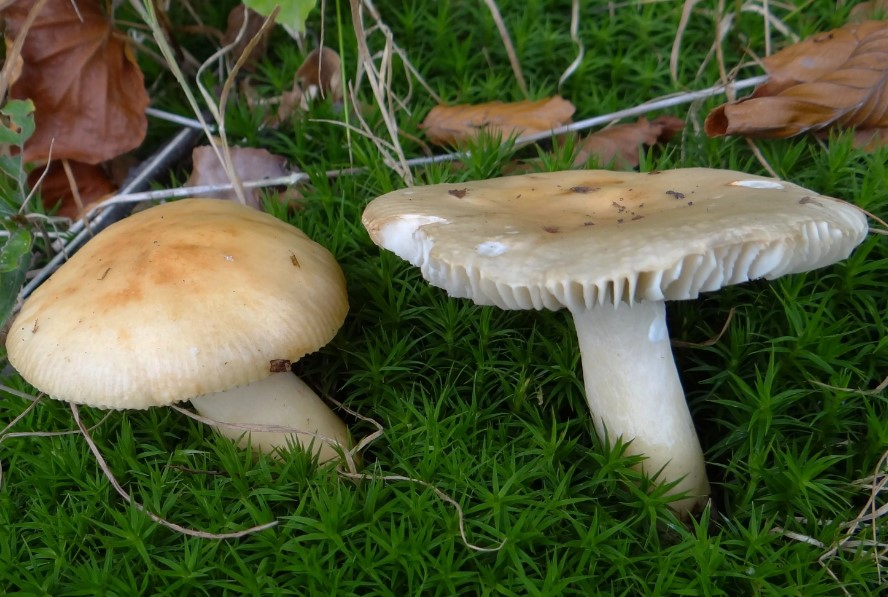
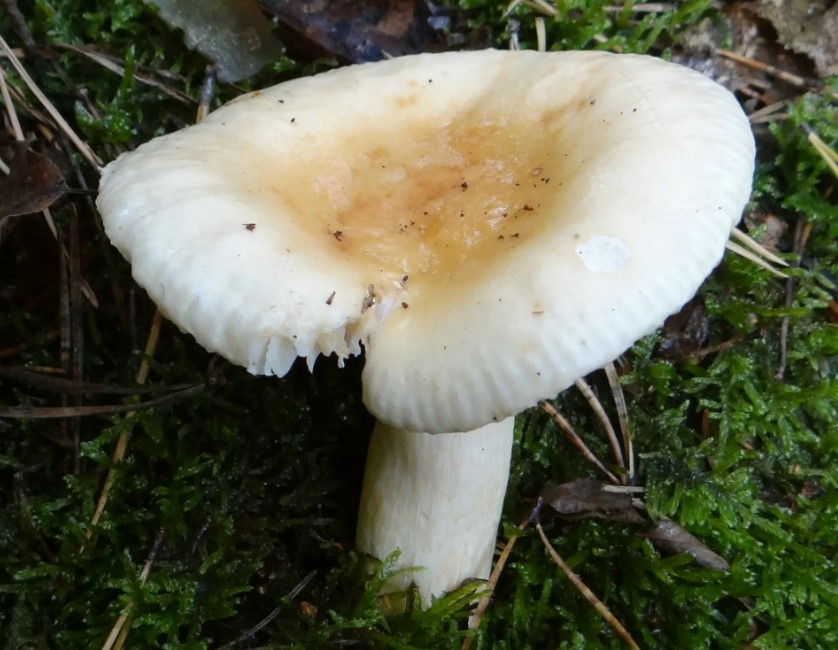
| Russula fellea | The cap is 4-9 cm in diameter, with a slightly ribbed margin. It is straw-yellow in color and can fade to light white. The stem is club-shaped and develops cavities with age. The flesh has a pungent odor and a bitter taste. | Inedible. | Southern regions of Europe. |
Photo gallery of Russula gallica
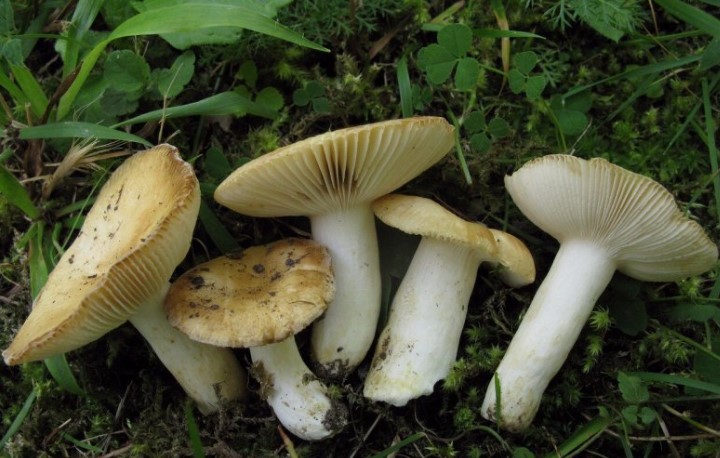
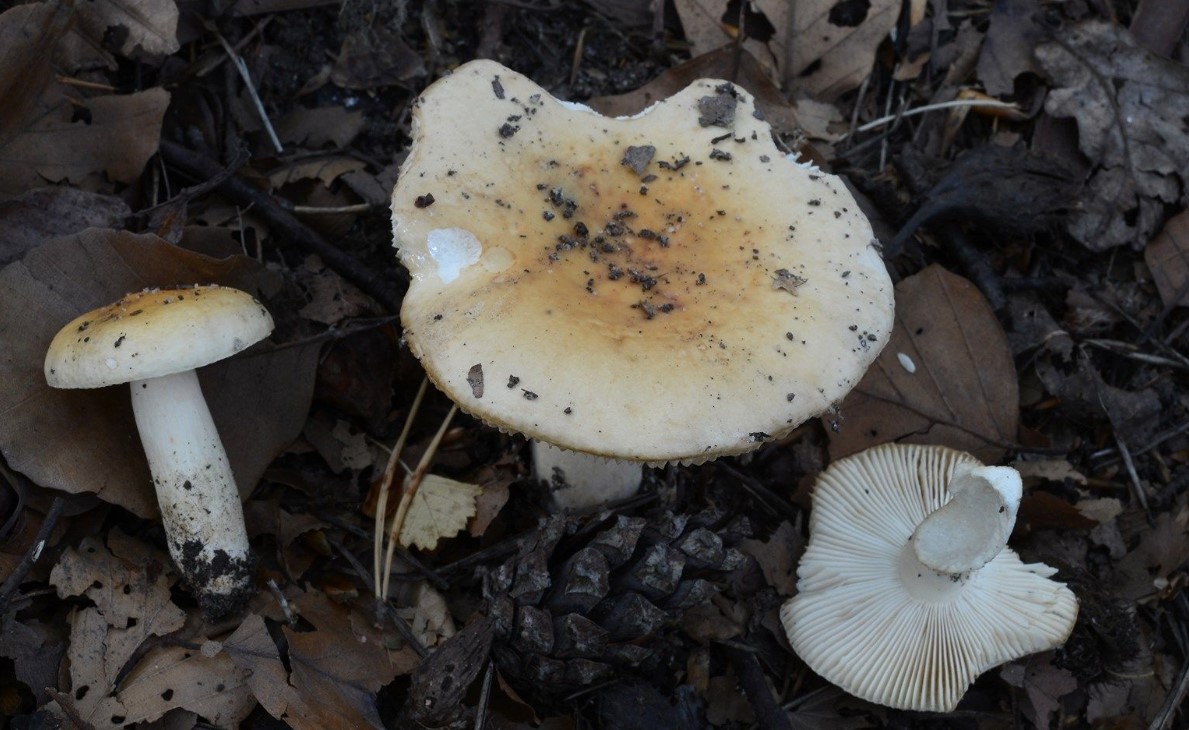
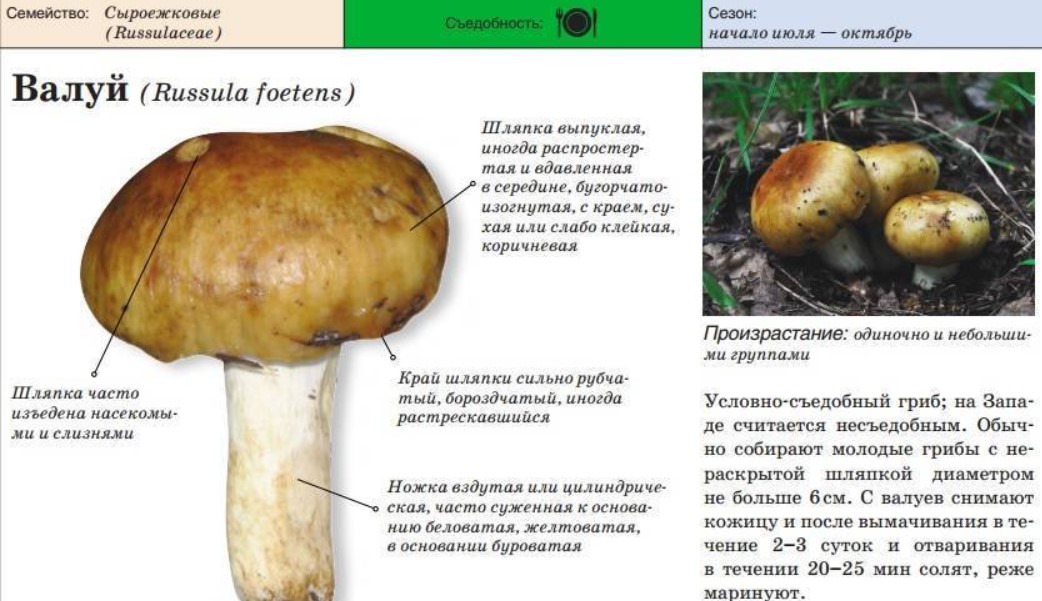
Valuy (Russula foetens)
| View | Description | Edibility | Place of growth |
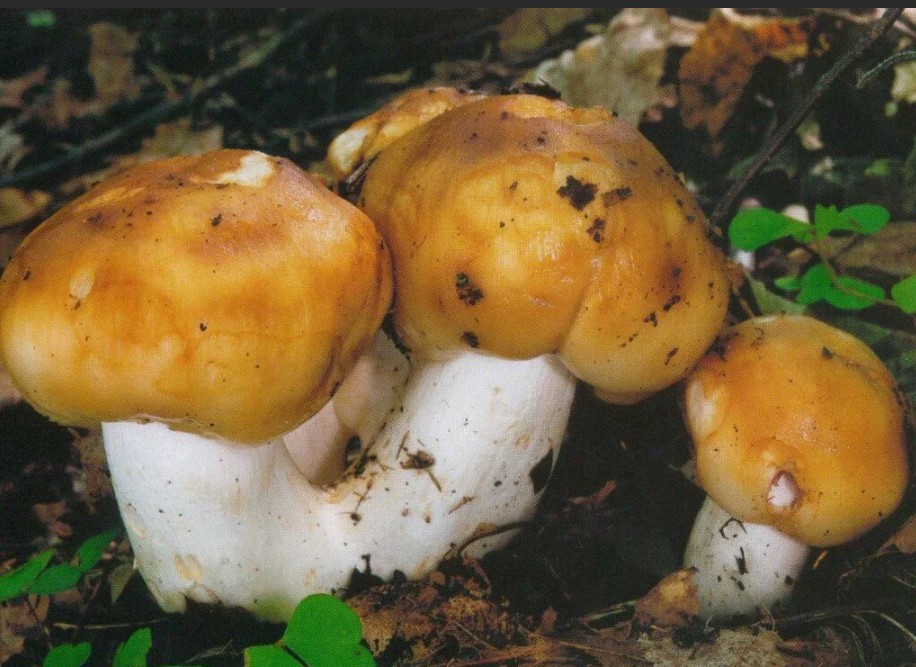
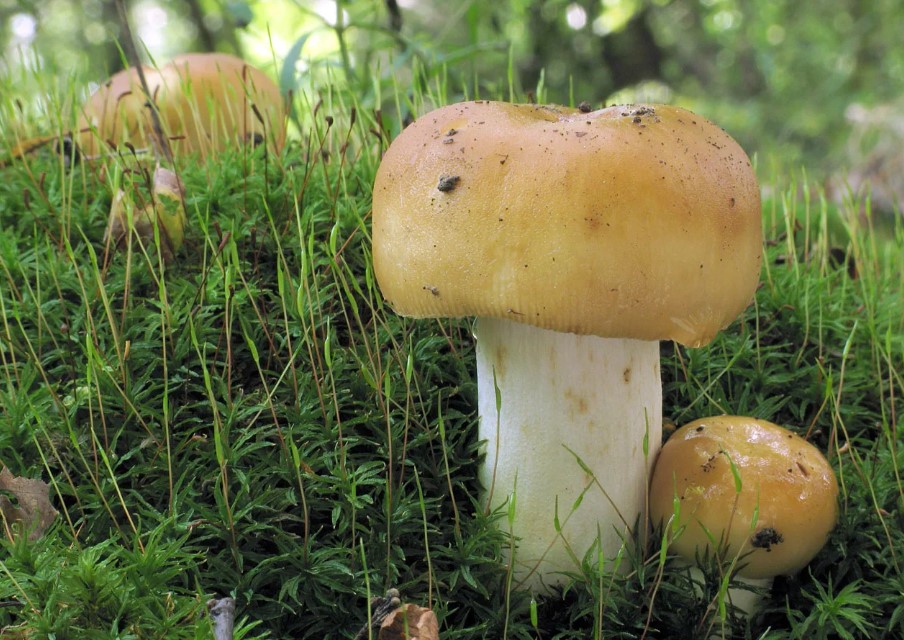
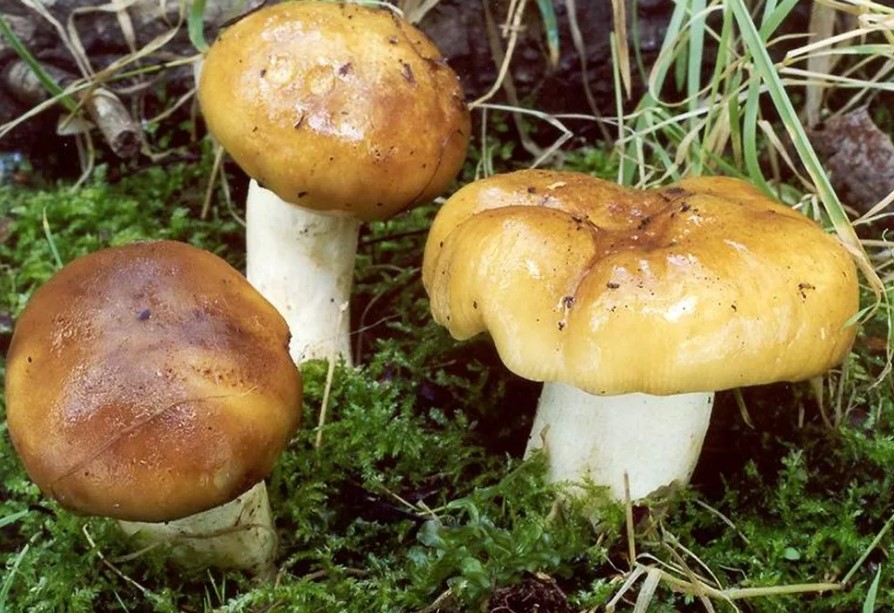
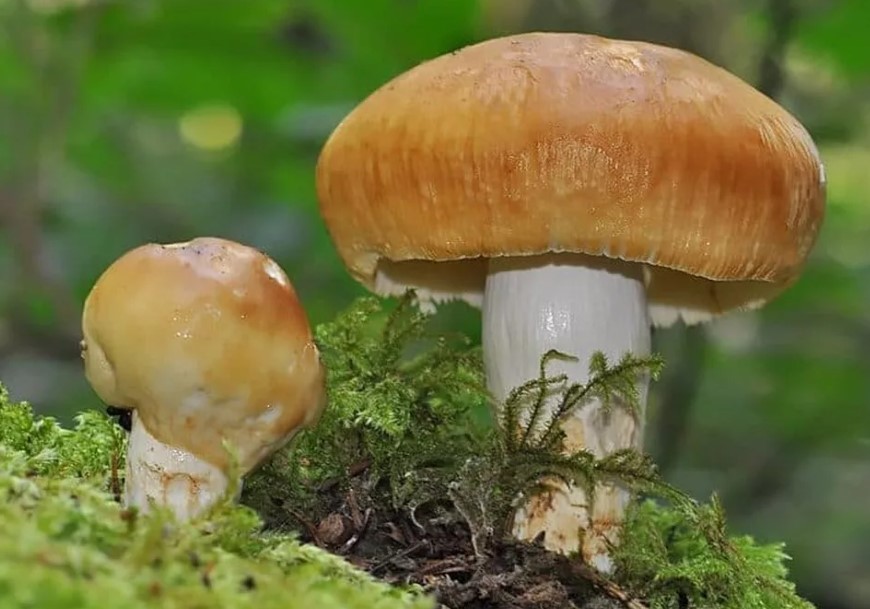
| Valuy (Russula foetens) | The cap is smooth and fleshy, with distinct radial grooves. The flesh is white when cut, but immediately turns brown. The stem is up to 12 cm long and barrel-shaped. The white stem may have brown spots on the surface. | Conditionally edible. | It is often found in coniferous and deciduous forests of Eurasia and North America. |
Valuya photo gallery
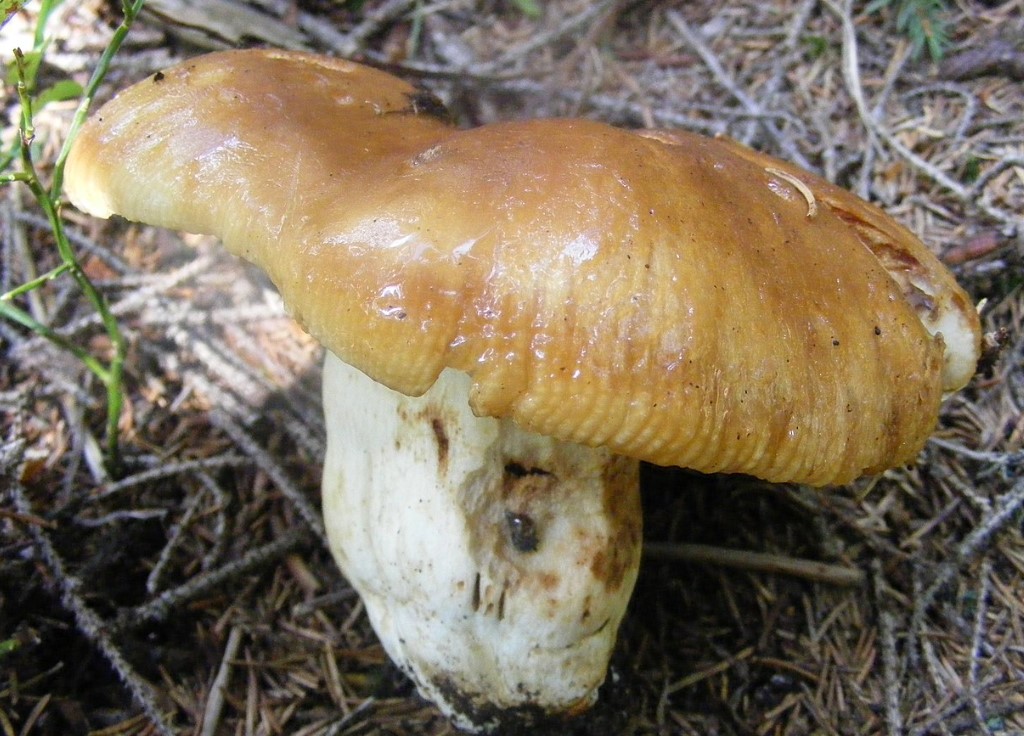
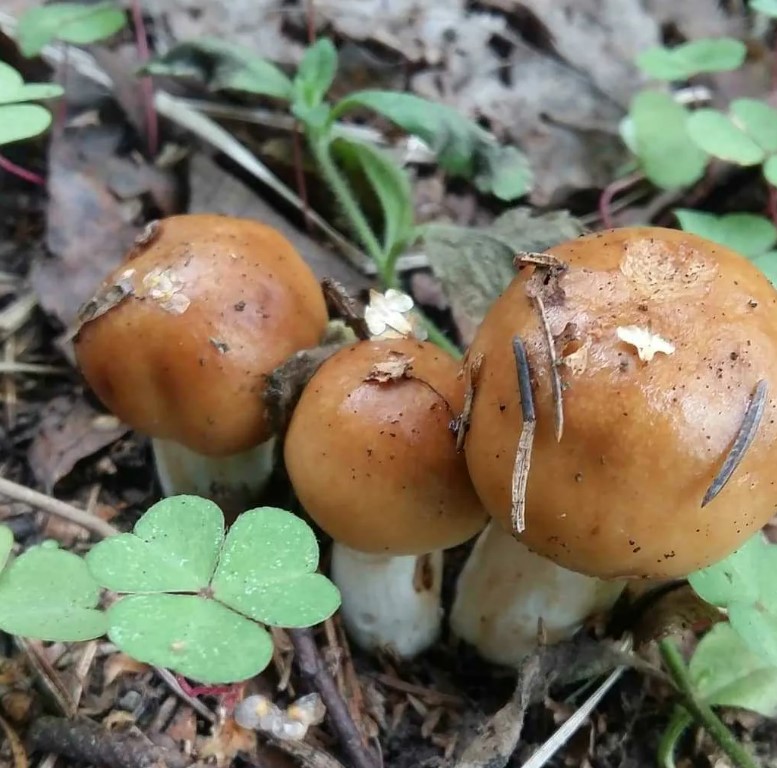
Russula fragilis
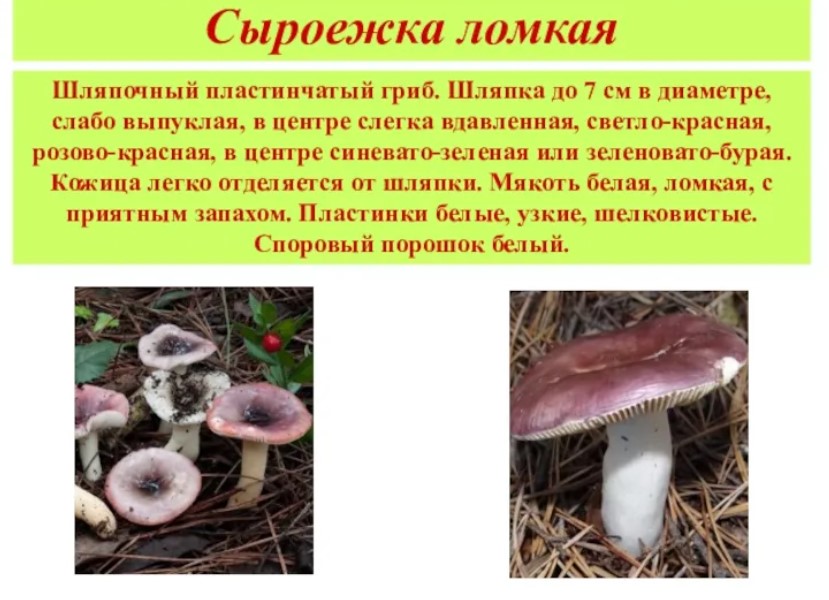
| View | Description | Edibility | Place of growth |
| Russula fragilis | The cap diameter varies from 2 to 6.5 cm, and its color can vary from light purple, olive, lilac, or white. The stem is white, turning yellow over time. The mushroom is very fragile. | Edible. | Deciduous and coniferous forests of Europe. |
Photo gallery of Russula brittle
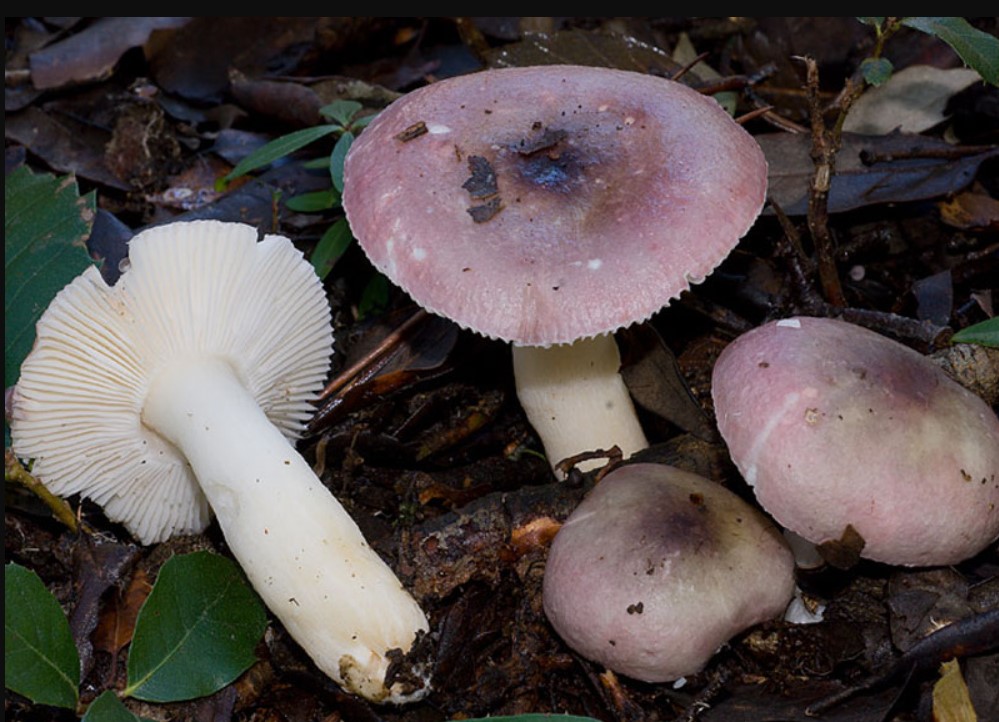
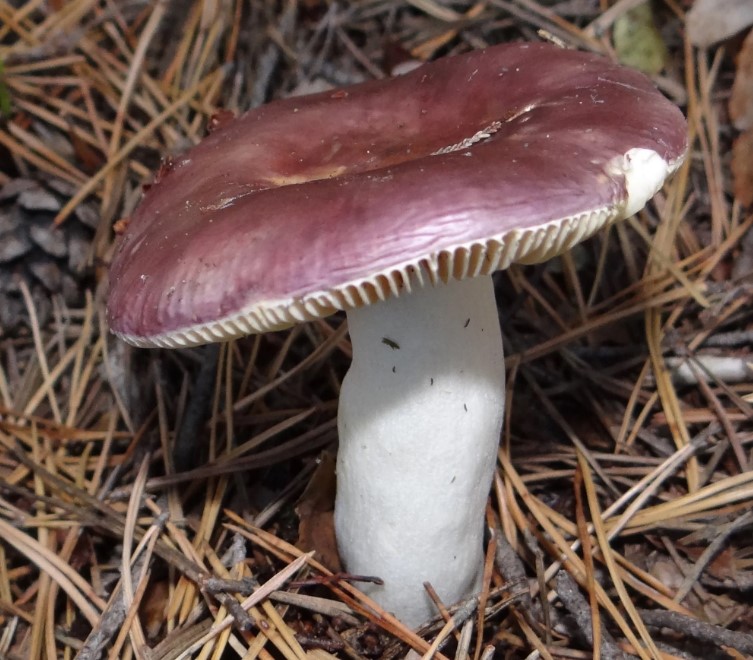
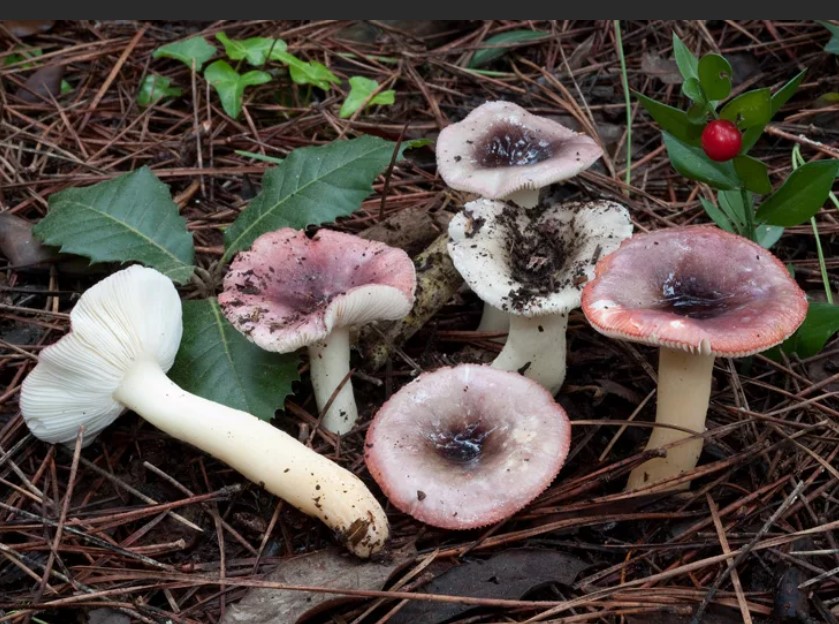
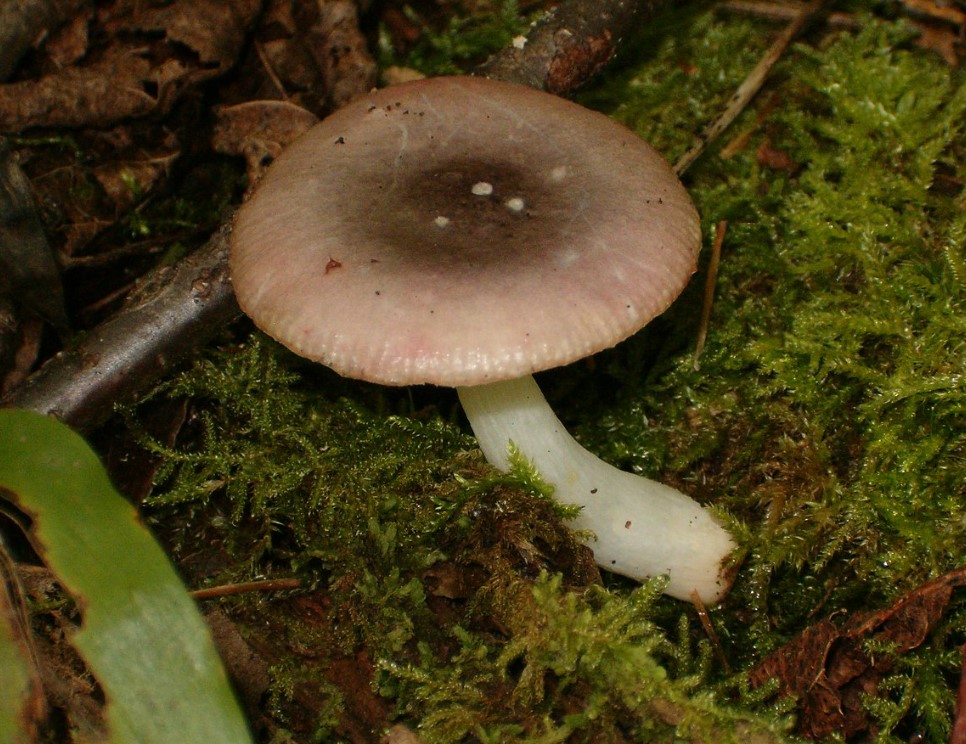
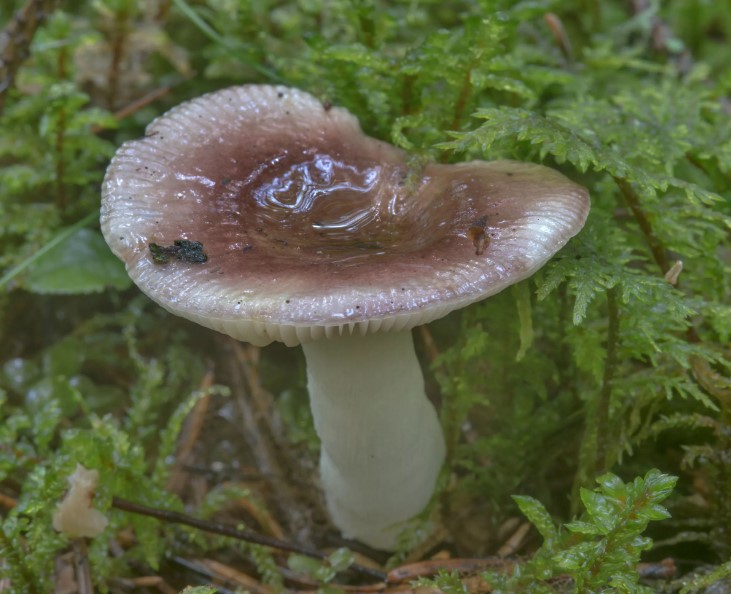
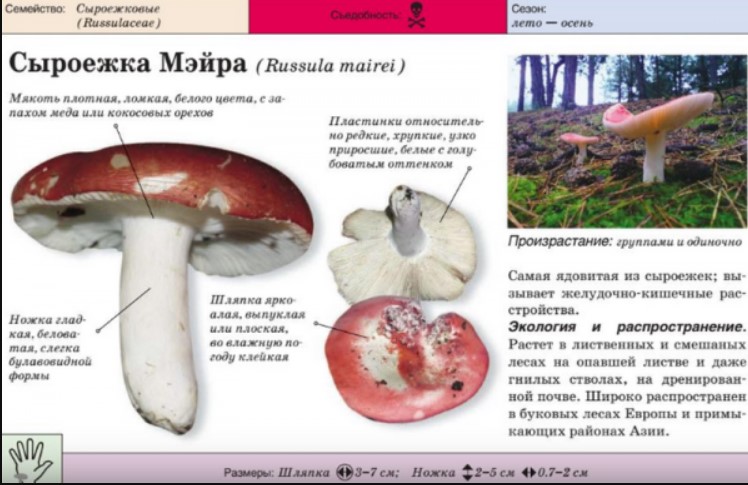
Russula mairei
| View | Description | Edibility | Place of growth |
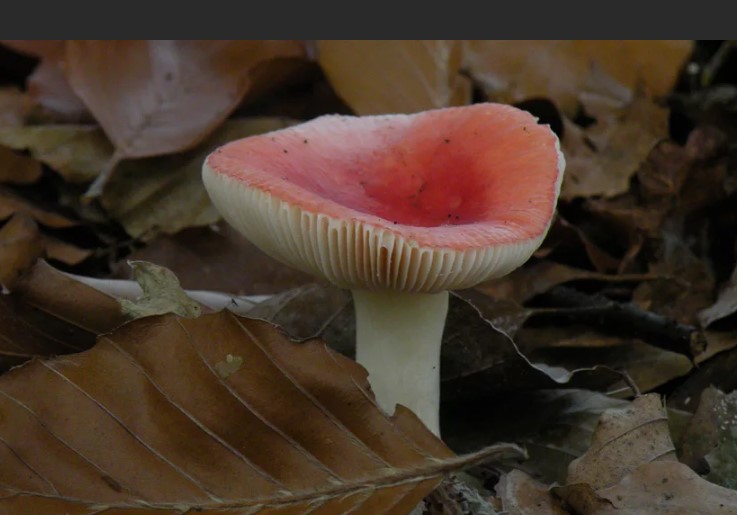
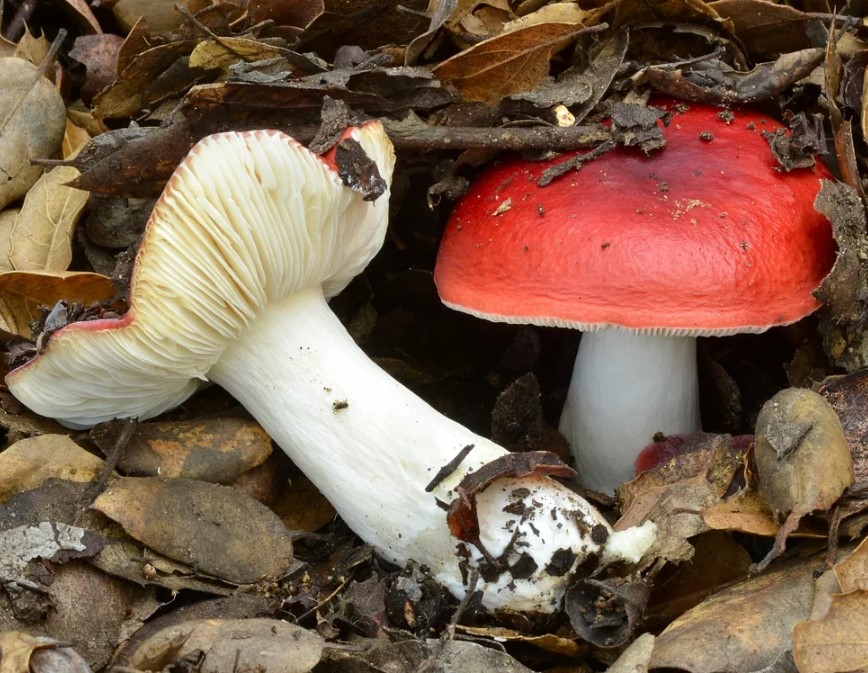
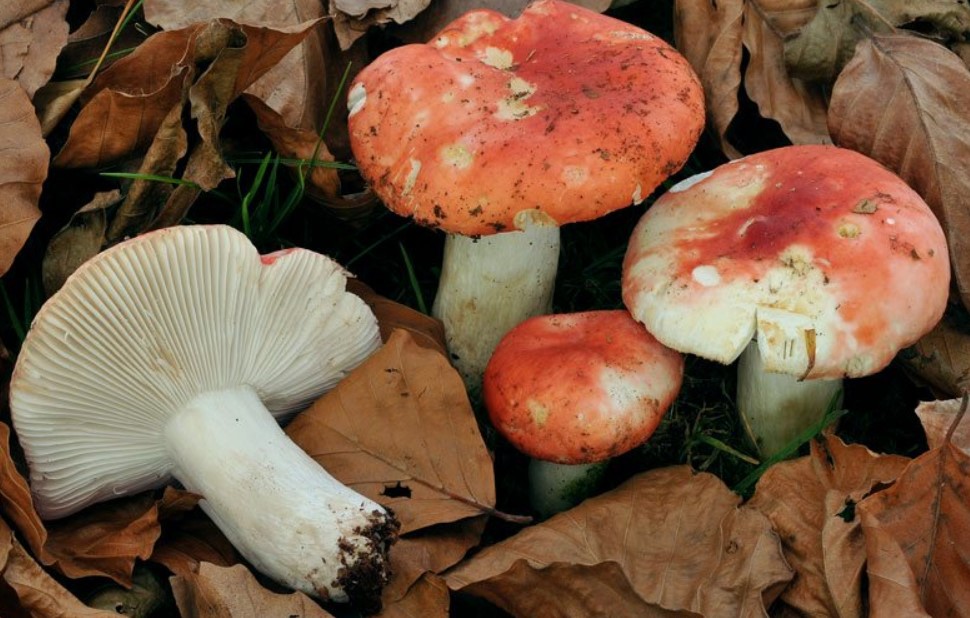
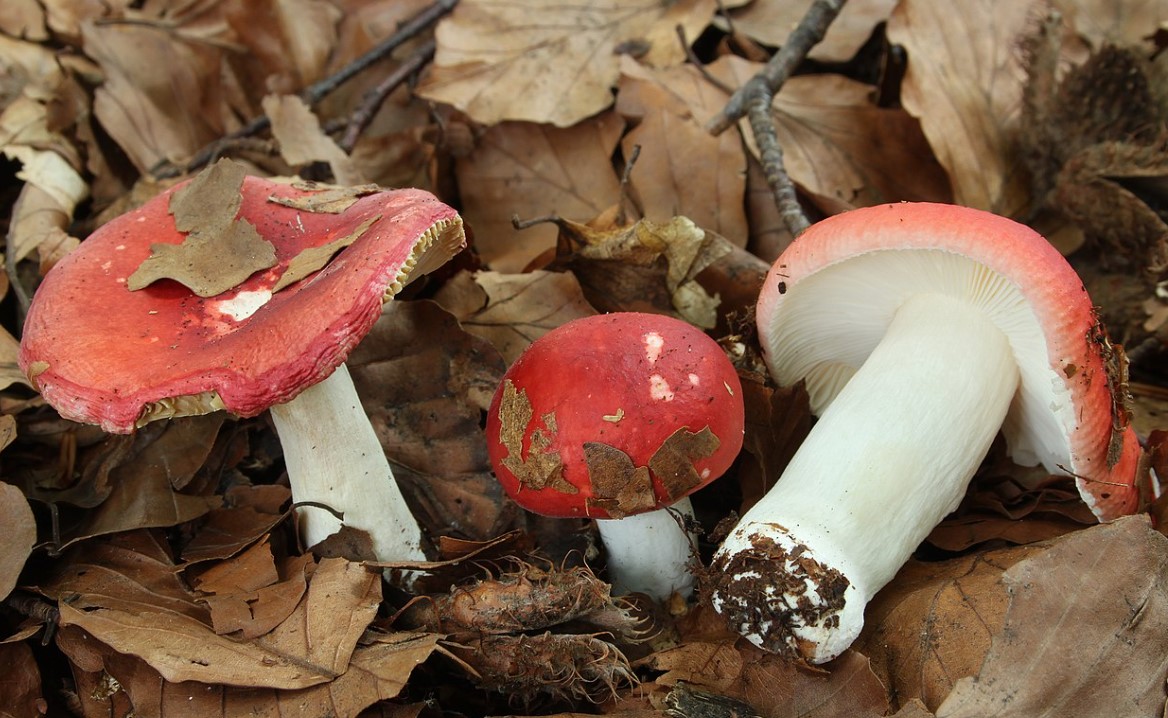
| Russula mairei | The cap is 3-9 cm in diameter and bright red, fading to pinkish or white over time. The stem is white, sometimes brownish or yellowish at the base. | Inedible. | Found in beech forests of Southern Europe. |
Photo gallery of Mayr's russula
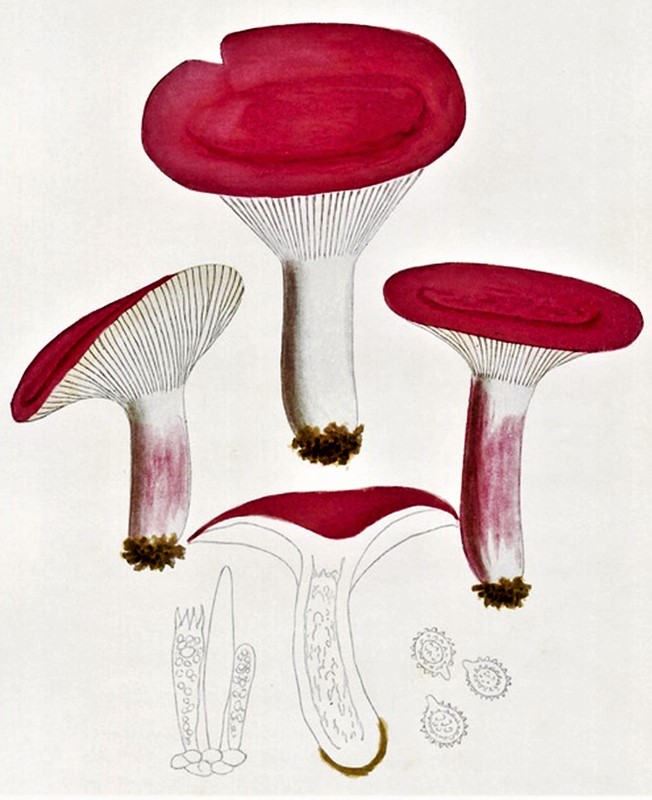
Russula sanguinea (blood-red russula)
| View | Description | Edibility | Place of growth |
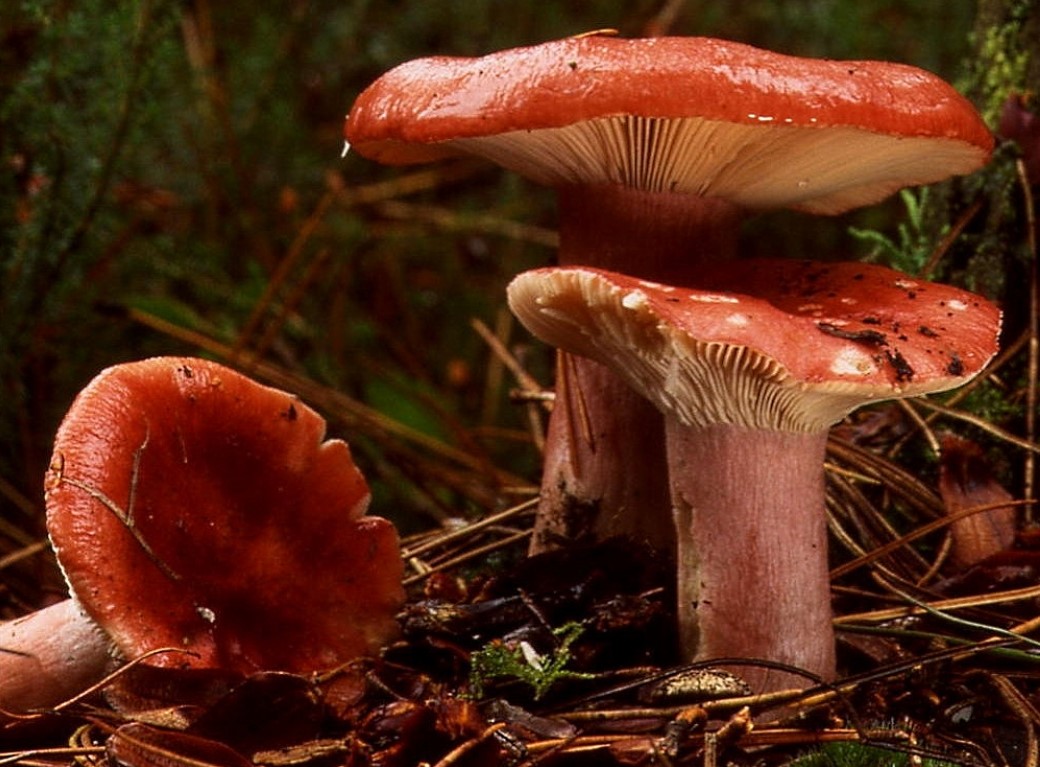
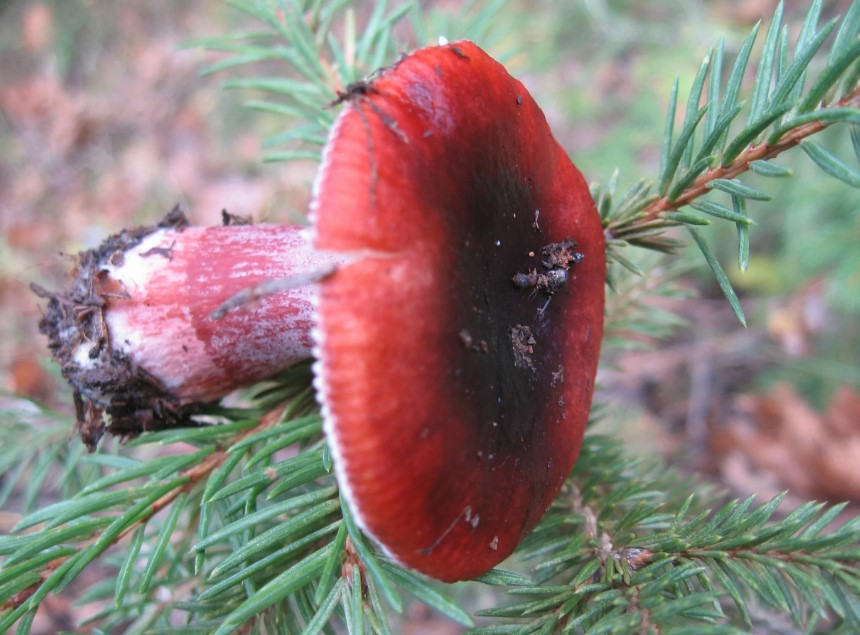
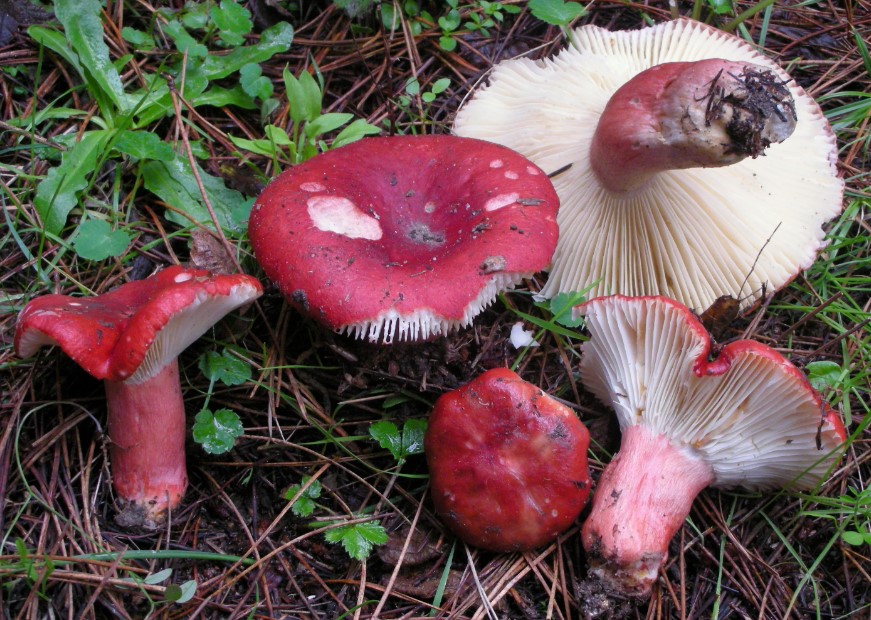
| Russula sanguinea (blood-red russula) | The cap diameter is up to 10 cm, and the color ranges from bright red to purple-red. The stem is pinkish, especially near the base. It turns yellow with age. | Inedible. | It grows under pine trees in mixed and coniferous forests of Eurasia and North America. |
Photo gallery of the blood-red russula
Russula sardonia
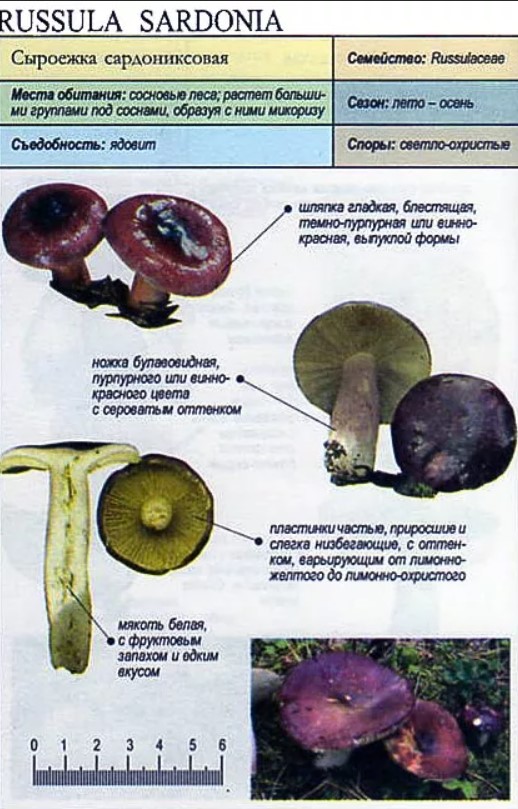
| View | Description | Edibility | Place of growth |
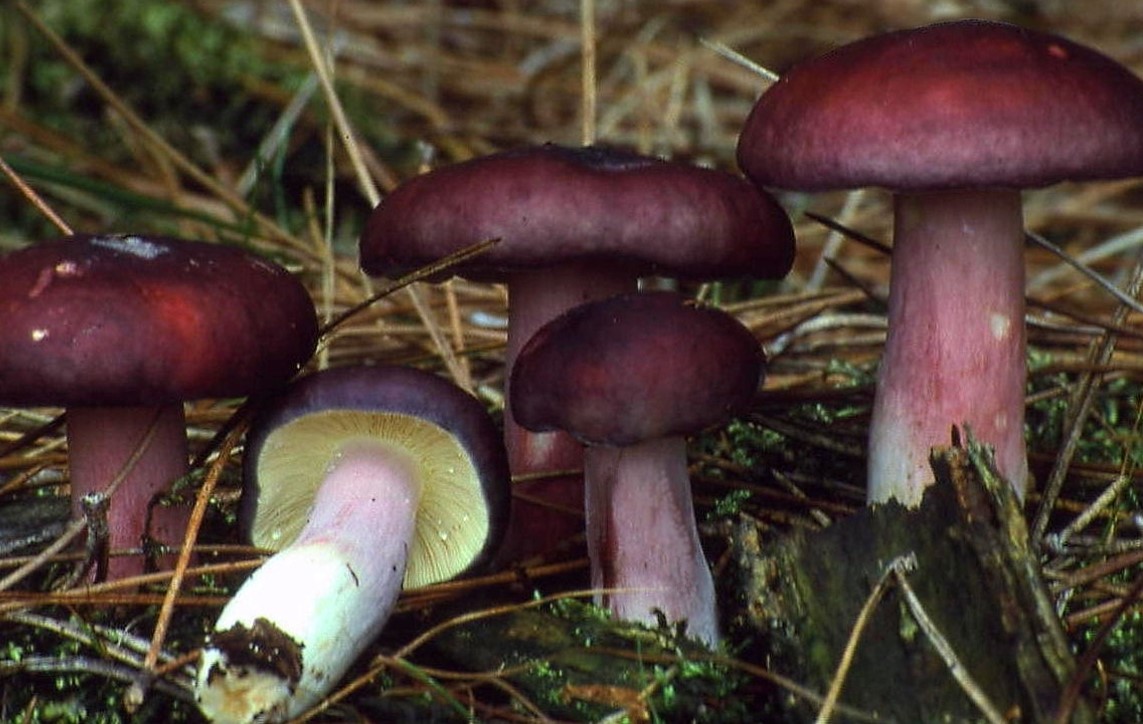
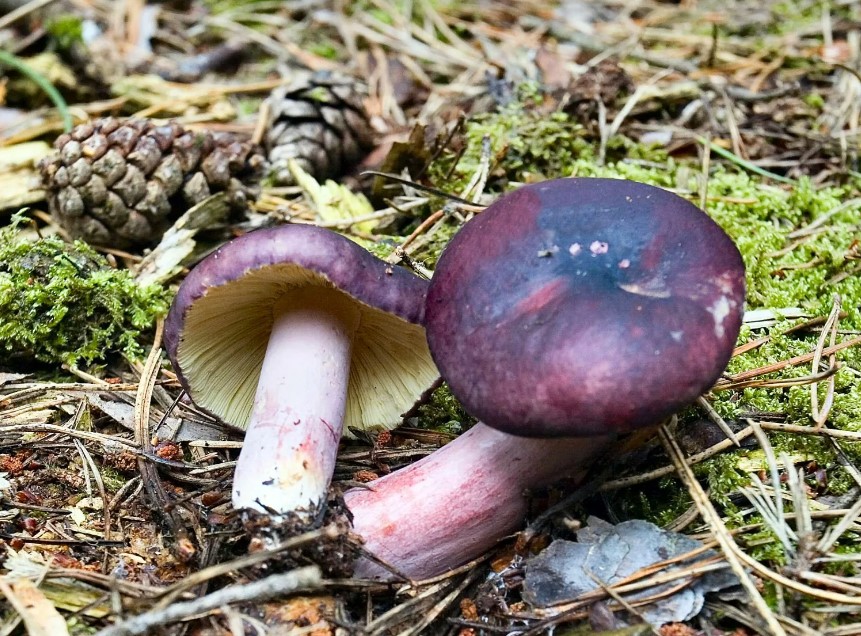
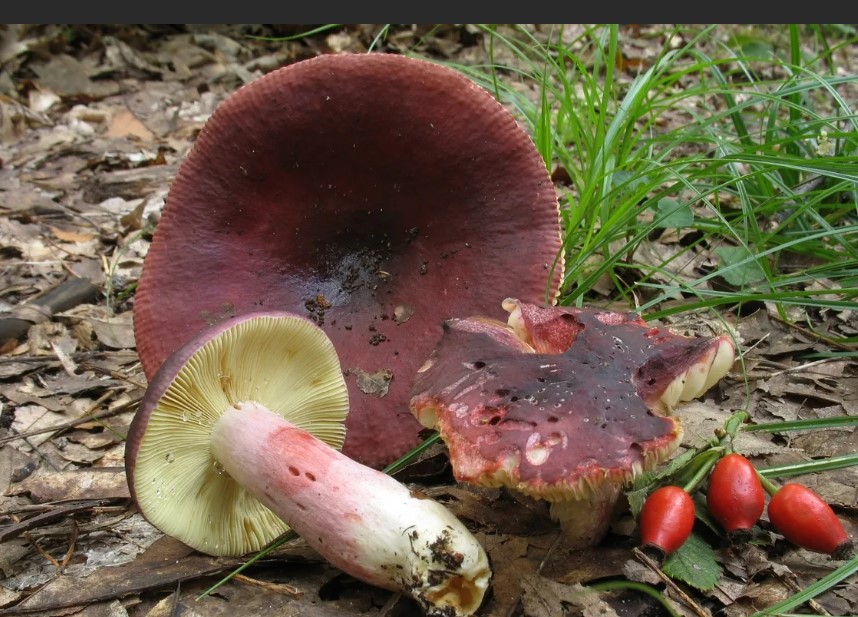
| Russula sardonia | The cap diameter ranges from 3.5 to 10 cm. The color ranges from violet-red to reddish-brown, rarely greenish-yellow or yellow-brown. The stem has a purple or pinkish hue. | Inedible. | It grows only under pine trees in mixed or coniferous forests of Europe. |
Photo gallery of Russula sardonyx
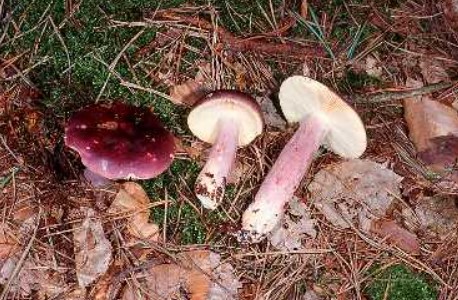
The benefits and harms of russula
Pharmacologists worldwide have long used mushrooms, including russula, to create dietary supplements that support human health. Russula pulp is used to produce an extract that improves blood quality. The mycelium is used in anti-tumor drugs.
Young russula mushrooms are used as diuretics and antiparasitic agents.
In addition, mushrooms contain a lot of useful substances:
- Riboflavin – supports the functioning of the visual organs, mucous membranes and skin condition.
- Ascorbic acid – strengthens the body’s defenses, mucous membranes and capillary walls, and normalizes oxidative processes.
- Nicotinamide – normalizes protein-carbohydrate metabolism, helps skin cells regenerate faster, participates in cellular respiration, and keeps blood pressure under control.
- Magnesium and potassium are essential for the normal functioning of the heart muscle and help the nervous system function.
- Iron – normalizes oxygen metabolism in cells, participates in the process of transmitting nerve impulses to the periphery from the brain, and regulates enzymatic activity in tissues.
- Lecithin – helps the liver function, promotes the elimination of toxins, and stabilizes cholesterol levels.
- Omega-6 – accelerates the regeneration process, improves the appearance of skin, hair and nails.
- Protein – has a unique composition, identical to animal protein.
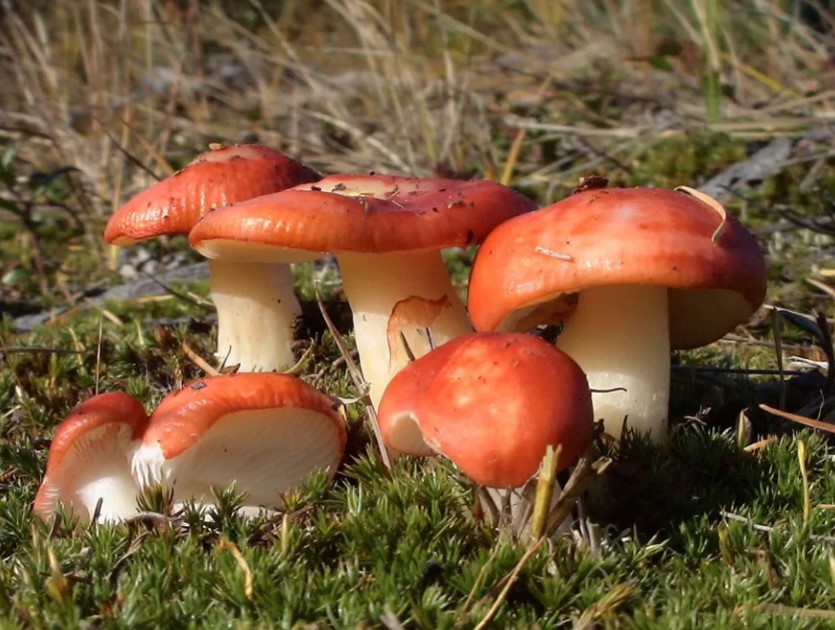
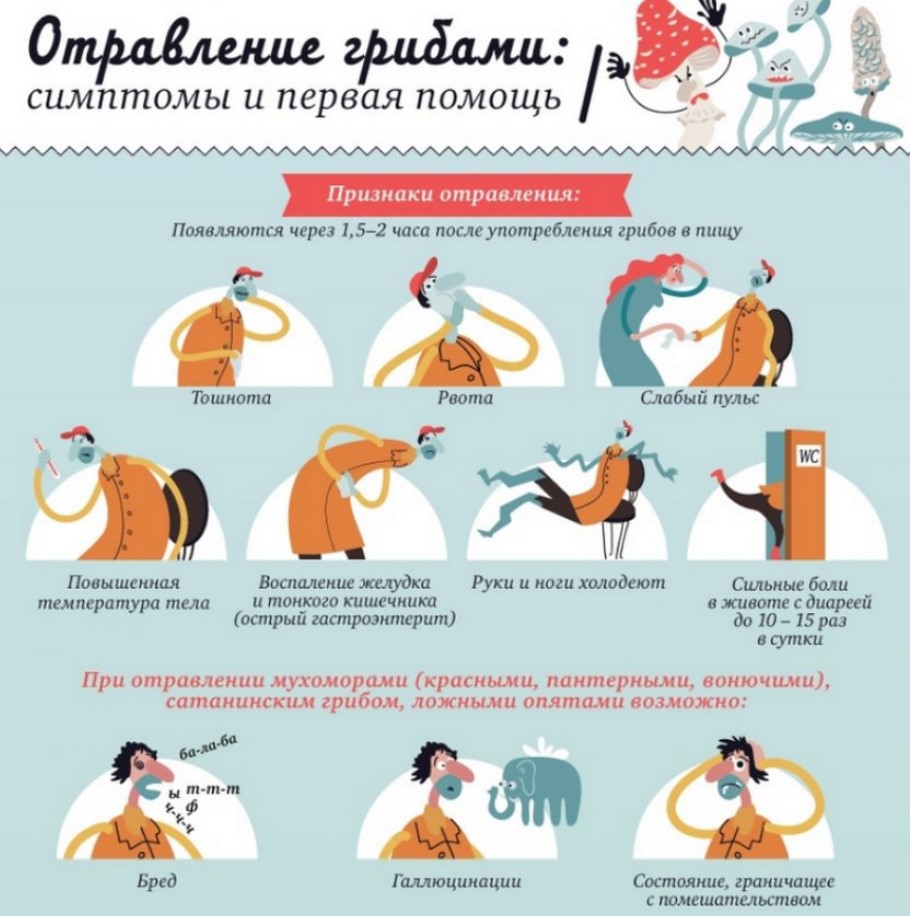
Thus, consuming russula mushrooms has a beneficial effect on all processes in the human body. However, there is another side to the issue, when it comes to individual reactions or inedible/conditionally edible mushrooms. In such cases, russula mushrooms can cause harm to a person. This can manifest itself in the following ways:
- Nausea or vomiting.
- Diarrhea.
- Pain in the stomach and intestines.
- Slowing of the heartbeat.
- Temperature increase.
It is not recommended to consume russula:
- For children under 10 years old.
- For pregnant and lactating women.
- People with acute or chronic gastrointestinal diseases.
Growing russula mushrooms at home
If you've decided to try growing russula mushrooms, for example, at your dacha, then you'll need a special approach, which we'll explain.
Choose a fairly shaded area of 3 square meters. Dig a 30 cm hole and fill it with the mixture in several layers: first, fallen leaves, grass, or tree bark (10 cm), then forest humus (tree soil will also work) (10 cm), the third layer is dry mycelium with dry soil, and the final layer is a repeat of the first (5 cm). Once everything is ready, drip irrigation should be applied.
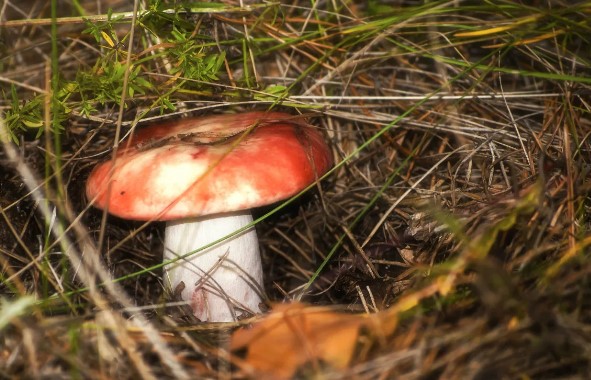
Expect the first harvest in about two months, and subsequent ones will delight you almost every week.
You can grow russula indoors in the same way; boxes are ideal for this purpose. Keep in mind that the mycelium lives for about five years.
Caloric content of russula mushrooms
Calories, kcal: 15-19
Proteins, g: 1.7
Fats, g: 0.7
Carbohydrates, g: 1.5
What to do to prevent russula mushrooms from tasting bitter
- You should not pick mushrooms within city limits, near major highways or industrial plants.
- Do not cook the stems, use only the caps.
- The caps must be cleared of the film (usually red), which makes the mushroom glossy and bitter.
Read more about edible and inedible russula mushrooms and how to distinguish them in the article. 30 types of edible and inedible russula mushrooms + 8 poisonous look-alikes, lots of photos.