From May to October, the forest is filled with various mushrooms, and russula mushrooms are found everywhere.
Some mushroom pickers are skeptical about russula mushrooms: their flavor isn't always vibrant, and their fragile texture requires extra care when harvesting.
Today, there are over 250 species of russula. Most are edible, but some varieties require extreme caution as they can be poisonous.
This article describes the most common types of russula found in Europe.
Content
- 1 13 types of edible russula mushrooms with descriptions and photos
- 1.1 Black milk cap (Russula adusta)
- 1.2 Russula decolorans
- 1.3 White milk cap (Russula delica)
- 1.4 Valuy (Russula foetens)
- 1.5 Golden yellow (Russula lutea)
- 1.6 Blackening milk cap (Russula nigricans)
- 1.7 Ocher Russula (Russula ochroleuca)
- 1.8 Russula paludosa (marsh russula)
- 1.9 Russula puellaris
- 1.10 Pink russula (Russula rosea)
- 1.11 Turkish russula (Russula turci)
- 1.12 Purple Russula (Russula violeipes)
- 1.13 Beautiful russula (Russula lepida)
- 2 Is the false russula edible?
- 3 15 Types of Inedible Russula Mushrooms + Photos
- 3.1 Russula acetolens (vinegar russula)
- 3.2 Hot Russula (Russula amarissima)
- 3.3 Russula aquosa
- 3.4 Cedar, purple-brown russula (Russula badia)
- 3.5 Birch Russula (Russula betularum)
- 3.6 Russula densifolia
- 3.7 Russula (Russula farinipes)
- 3.8 Gall russula (Russula fellea)
- 3.9 Reddening False Russula (Russula fuscorubroides)
- 3.10 Russula fragilis
- 3.11 Russula pectinata
- 3.12 Russula queletti
- 3.13 Red Russula (Russula sanguinea)
- 3.14 Russula sardonia (Sardonyx russula)
- 3.15 Russula undulata
- 4 2 types of inedible, most toxic russula mushrooms
- 5 8 poisonous russula look-alikes + lots of photos
13 types of edible russula mushrooms with descriptions and photos
Let's look at edible russula mushrooms, their descriptions, characteristics, and distribution areas.
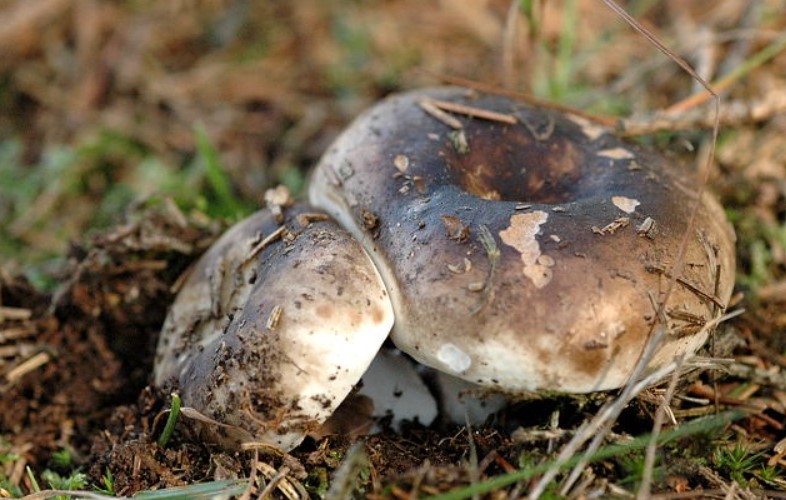
Black milk cap (Russula adusta)
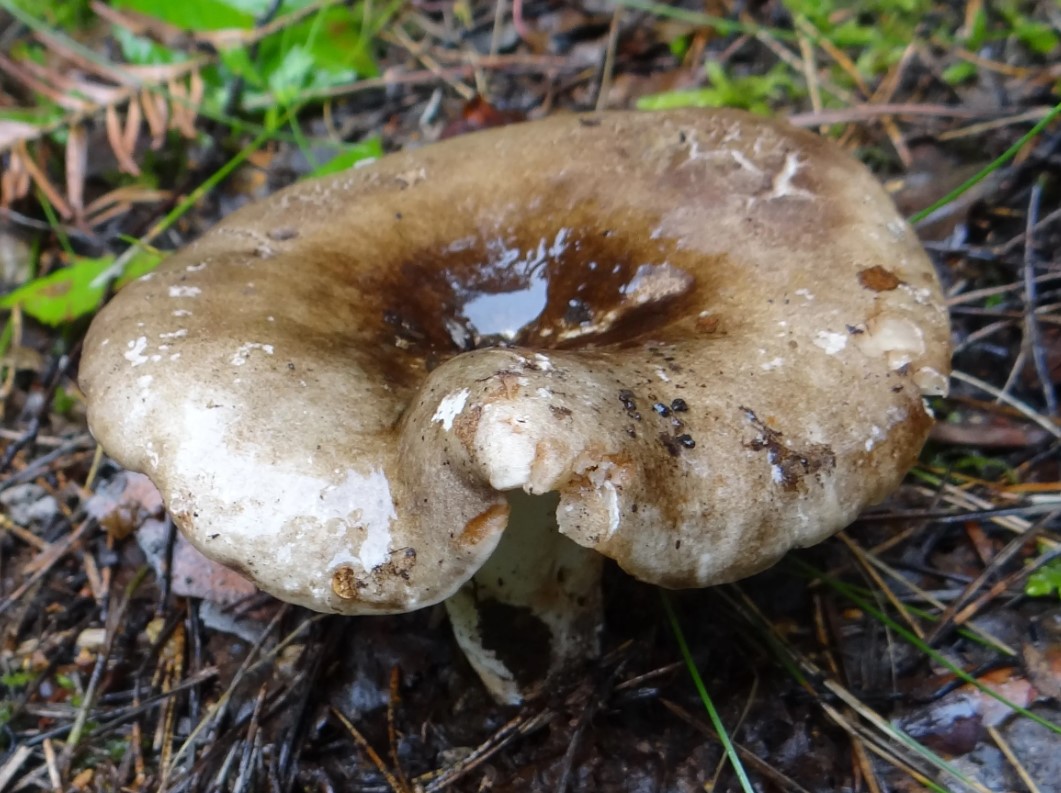
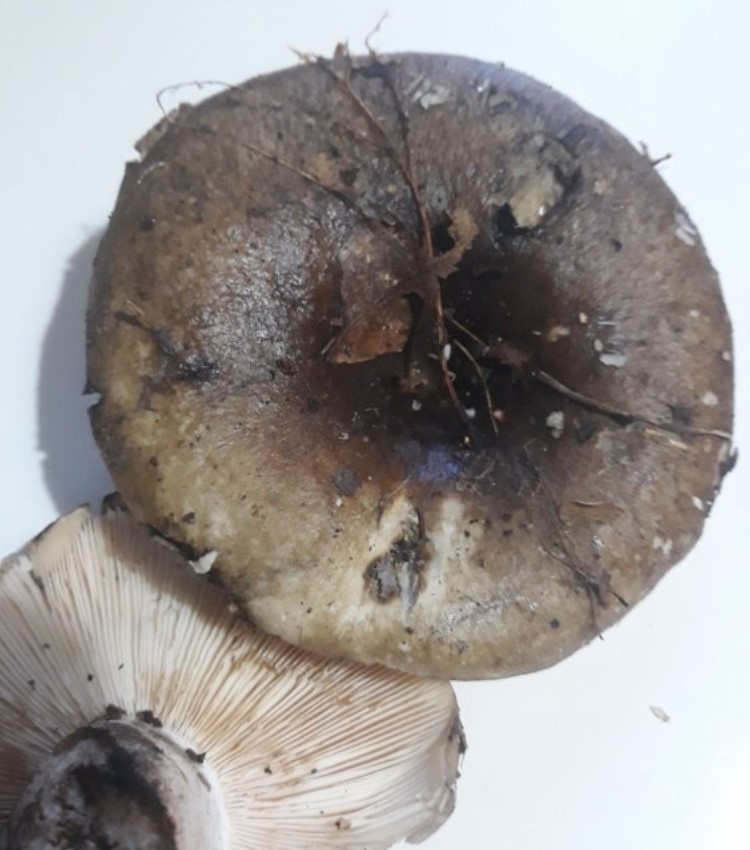
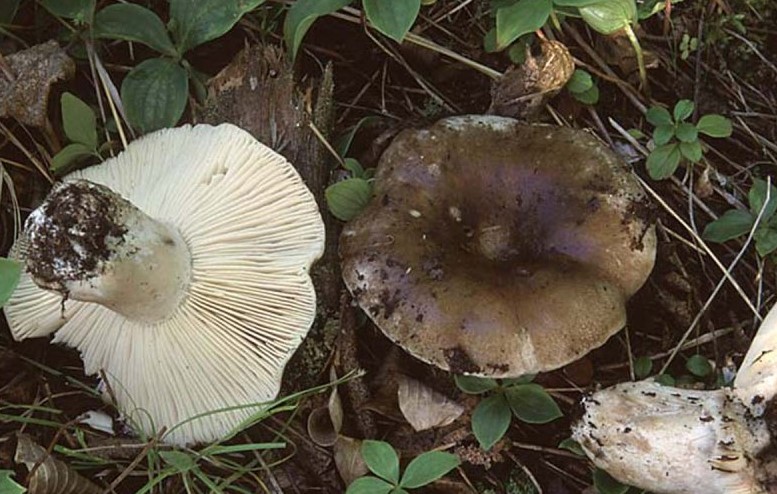
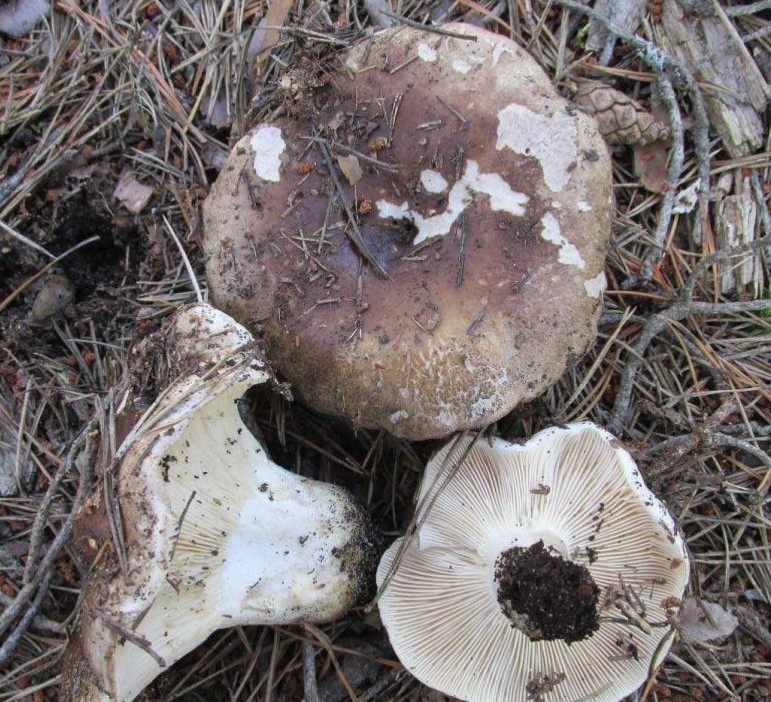
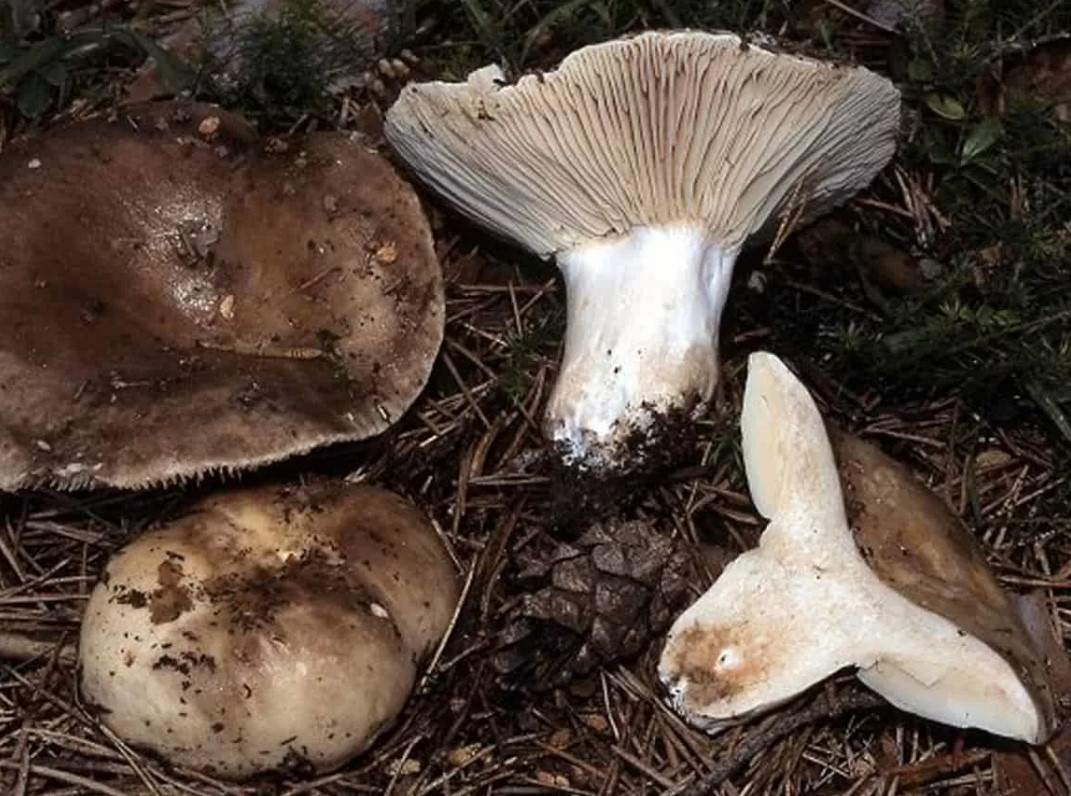
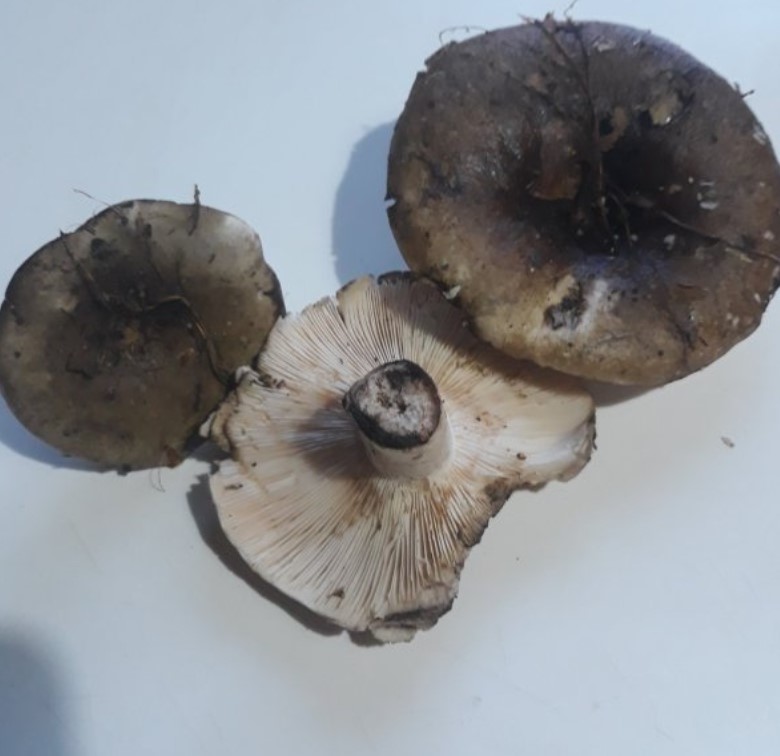
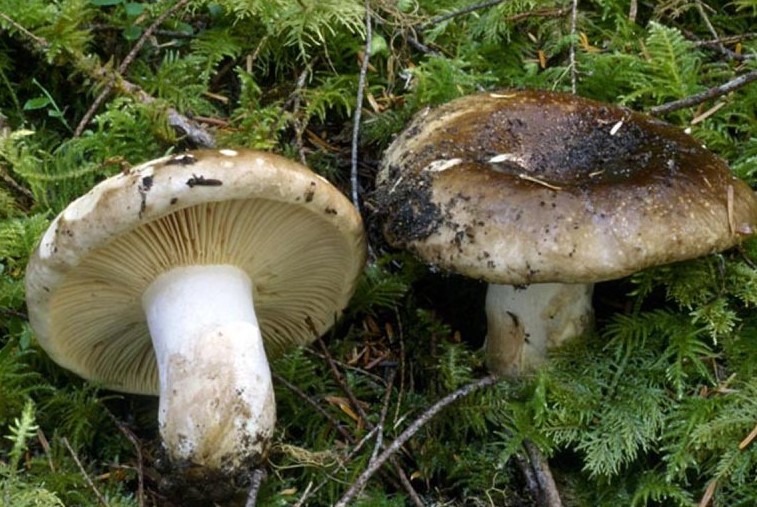
The cap is 5-25 cm in diameter and gray, turning brown with age. The stem is lighter than the cap, with dark spots appearing when touched. When cut, the flesh turns red, then gray. The mushroom is edible.
It grows in coniferous forests; in the North it can be found in mixed and deciduous forests.
Photo gallery of black milk cap mushrooms
Russula decolorans
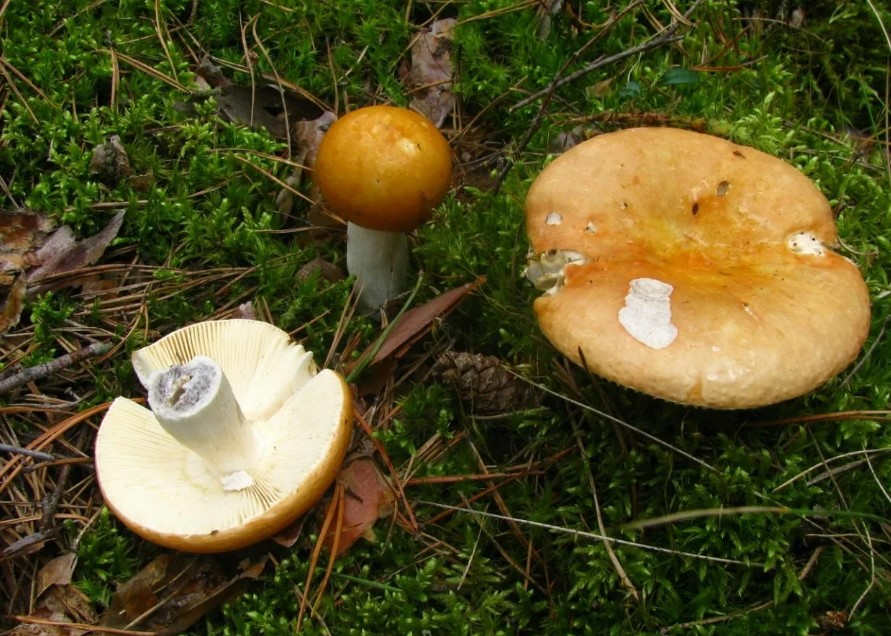
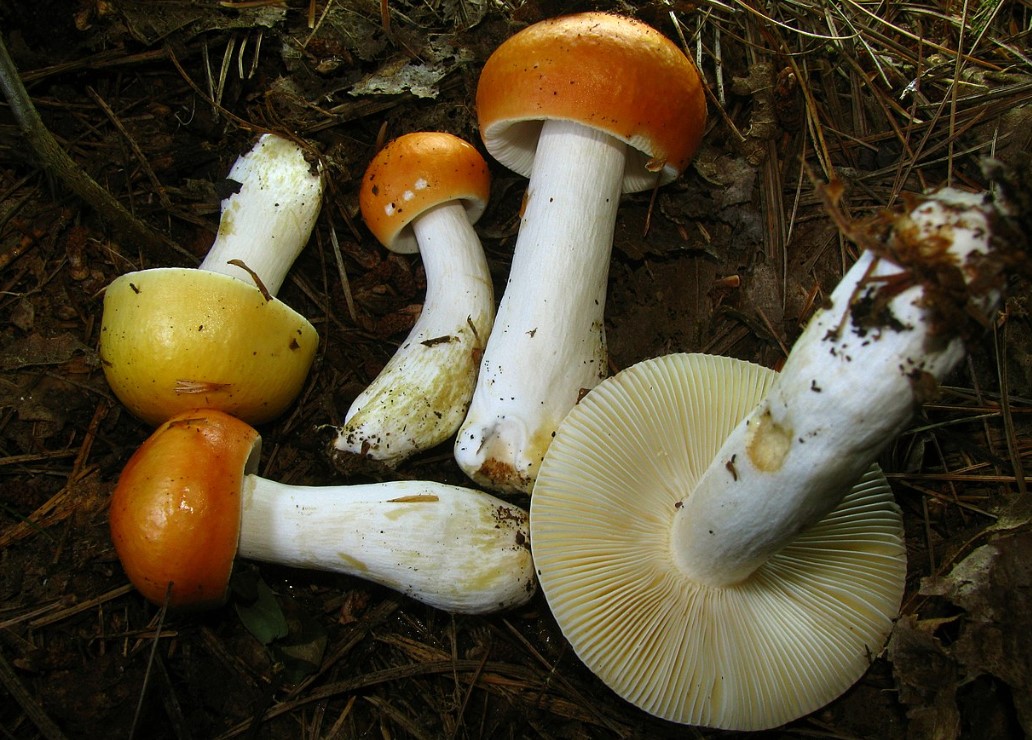
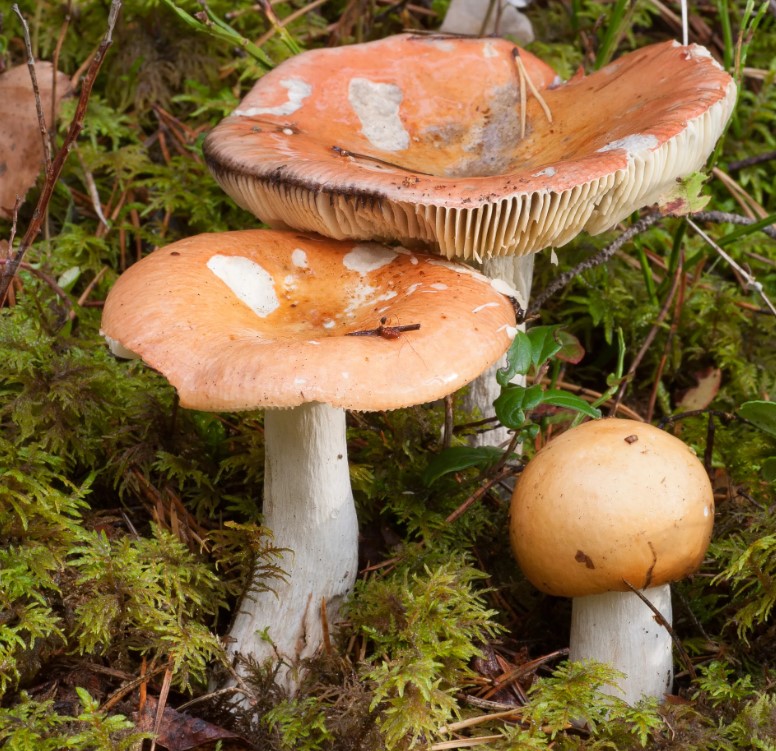
The cap can range from 4 to 11 cm in diameter and is orange-brown or brownish in color. The edges of young mushrooms are smooth, while furrows develop in older ones. The stem is firm, the center may be slightly softer, and is white in color, later turning dark gray. If the flesh is damaged, it turns gray. This color persists after processing.
It grows in spruce forests and is rare; in certain areas it is even listed in local Red Data Books.
Photo gallery of Russula sulcata
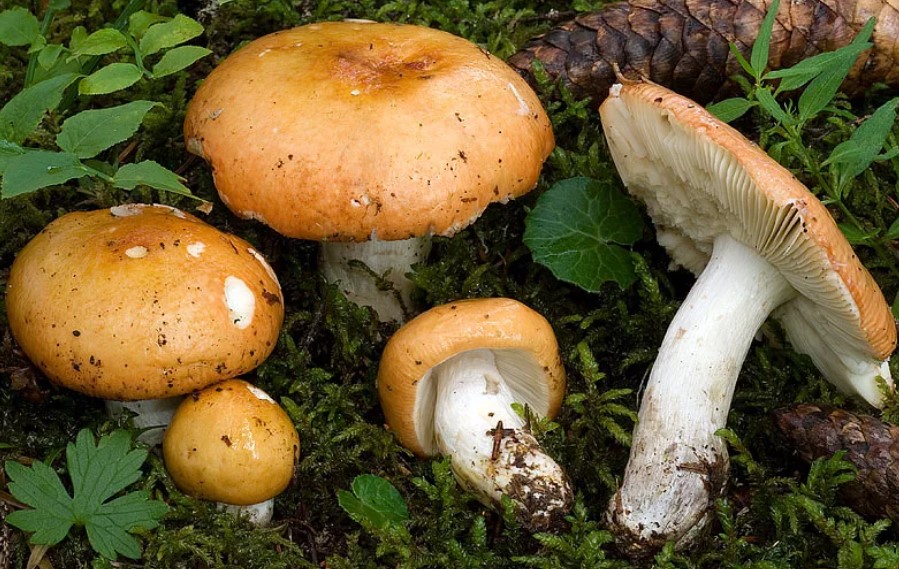
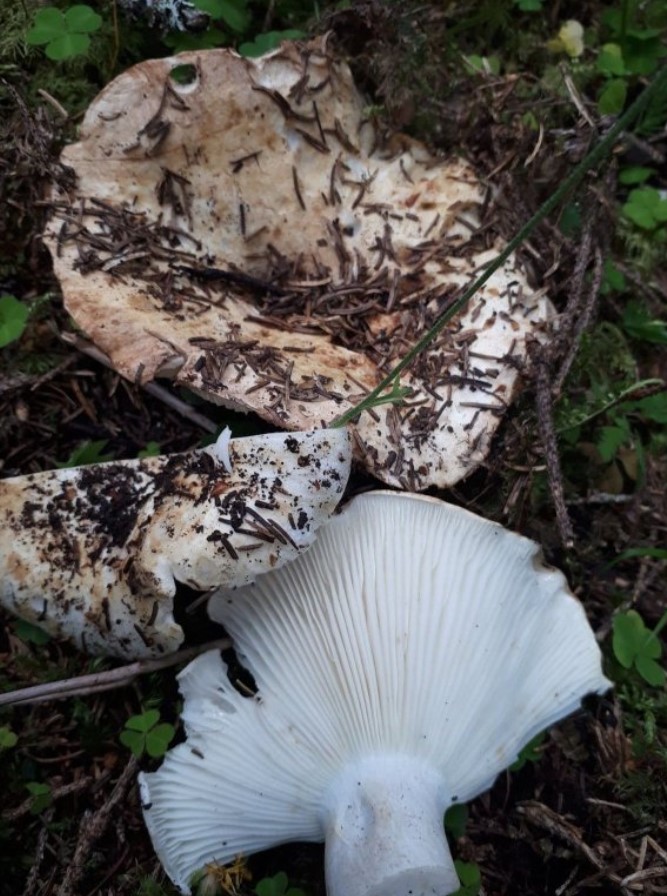
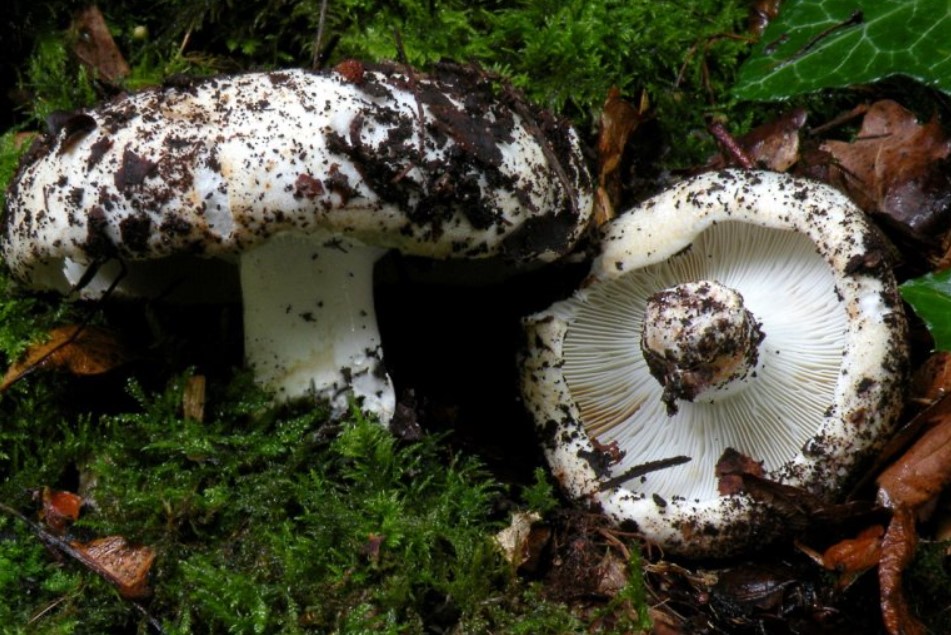
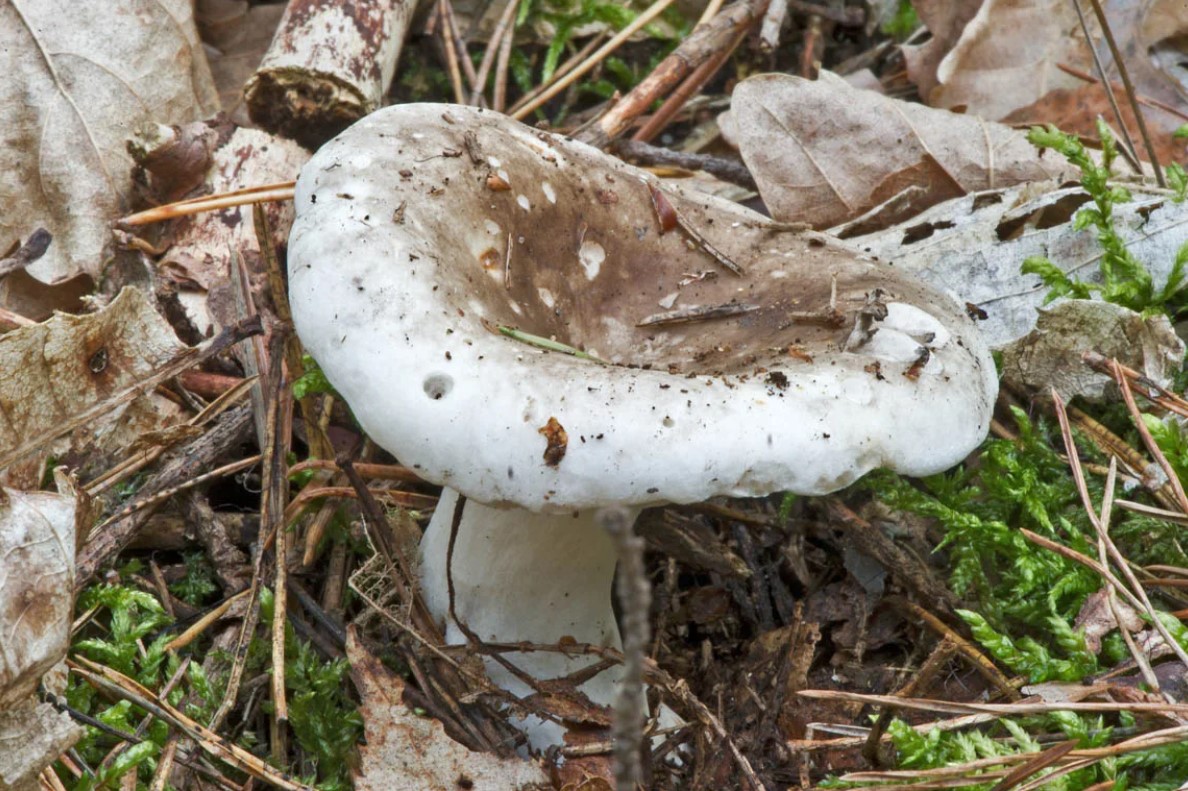
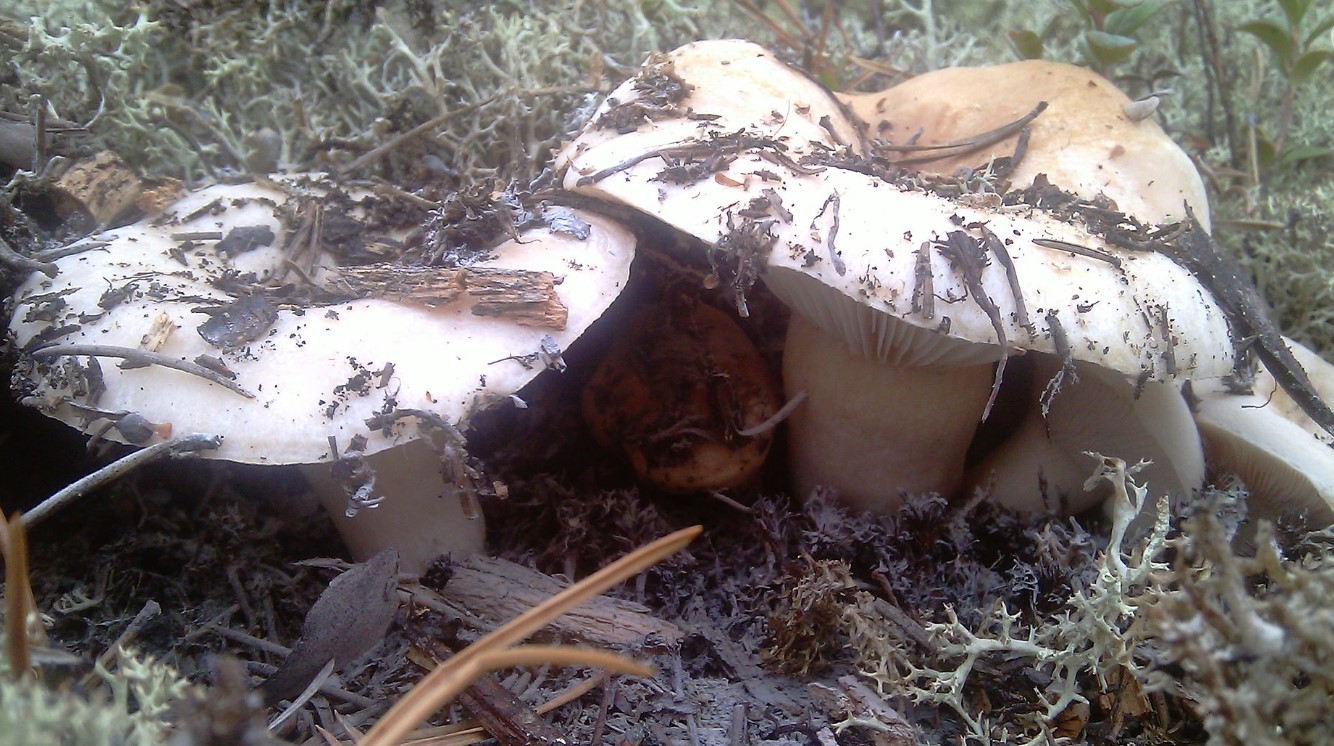
White milk cap (Russula delica)
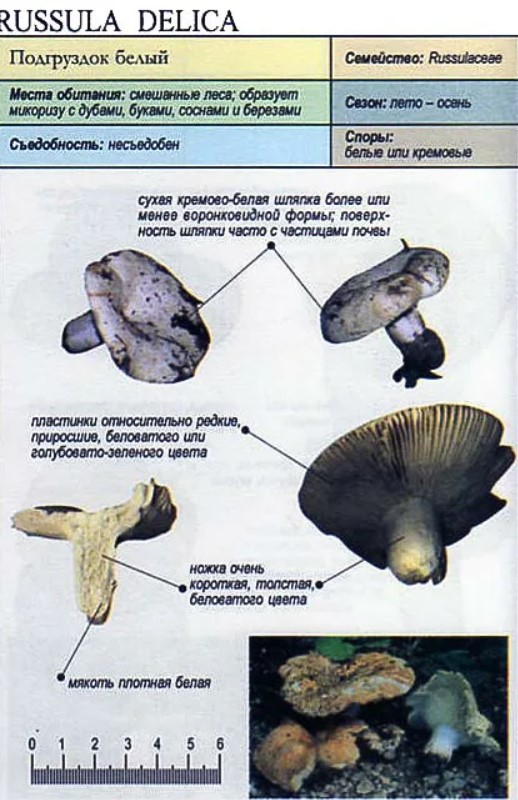
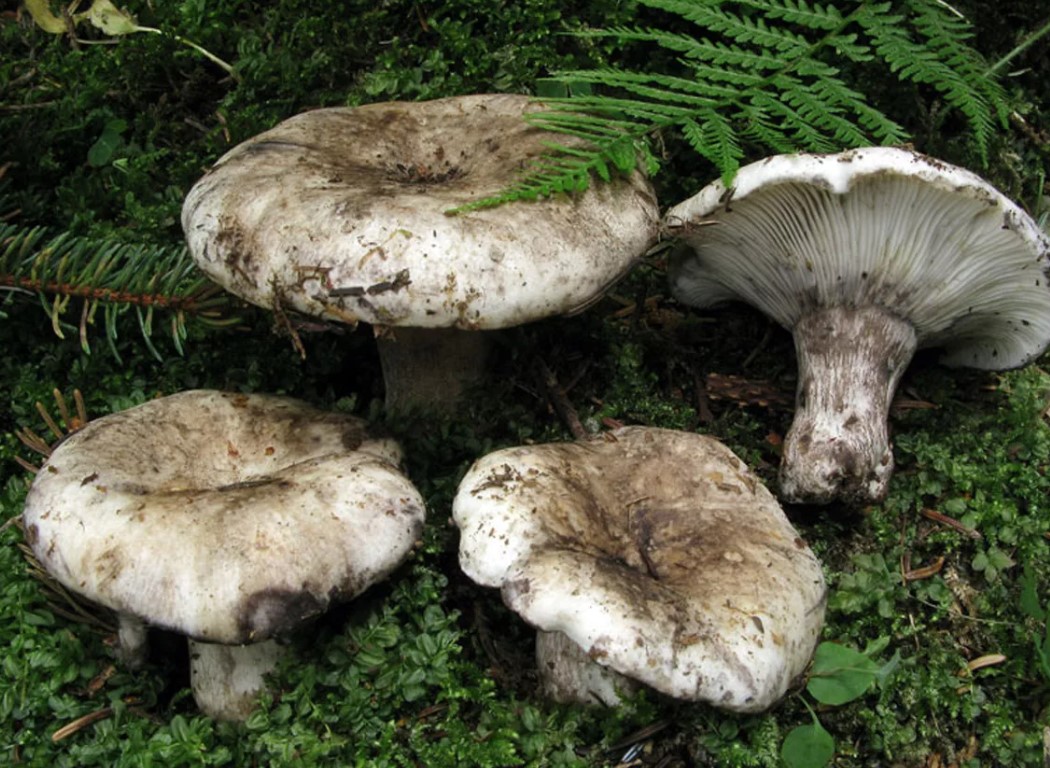
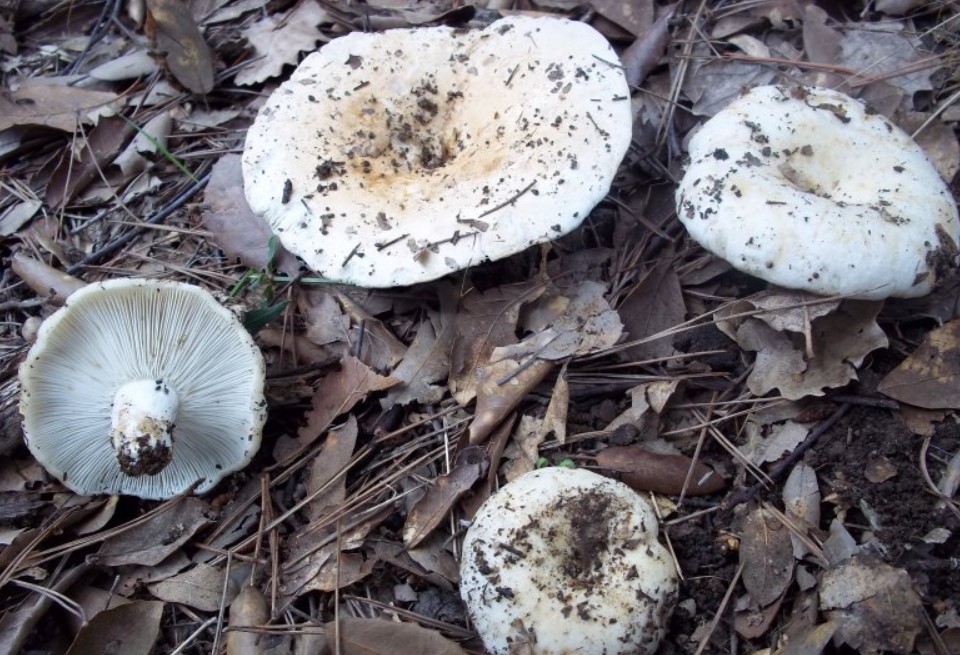
The cap is dry, funnel-shaped, with curved edges. Its diameter is 10-30 cm, white, turning brown as it grows. The stem is white and firm, with small brown spots on its surface.
It grows mainly in broadleaf forests and is extremely rare in coniferous forests.
An edible mushroom. The flavor is mediocre, though the flesh is very aromatic.
Photo gallery of white milk cap mushrooms
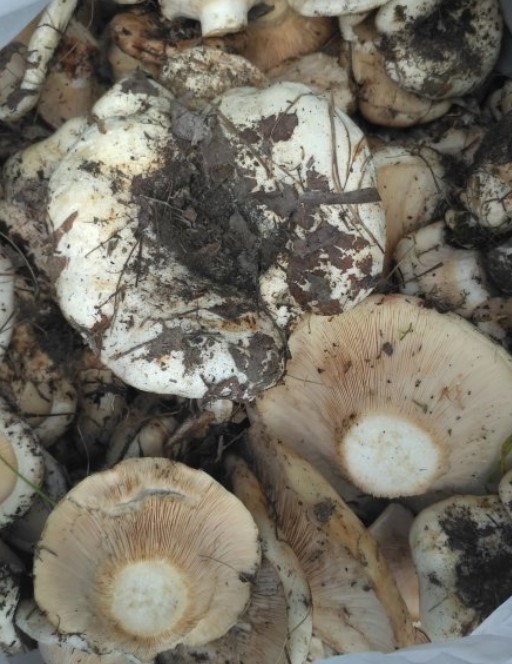
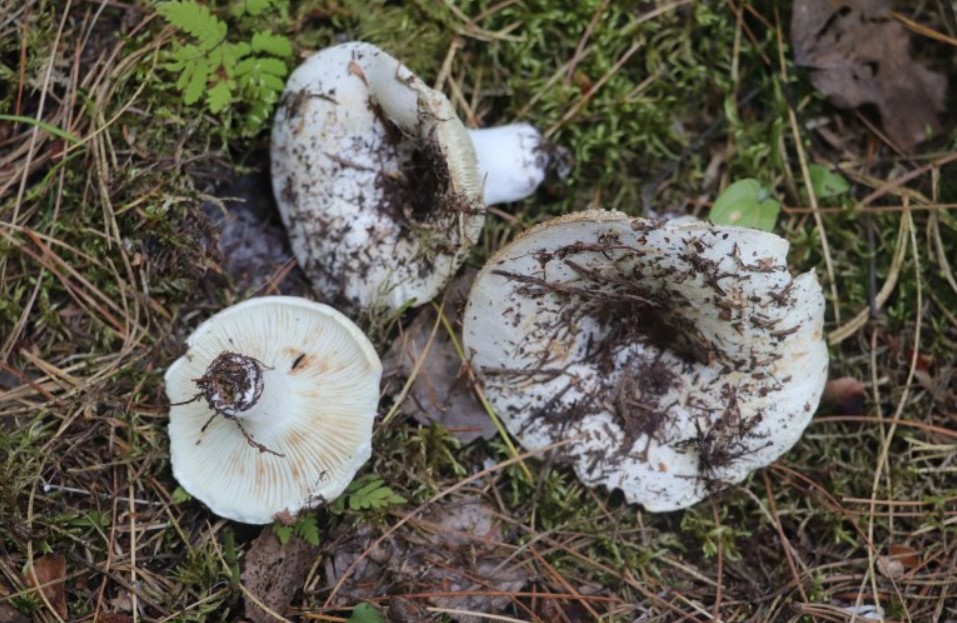
Valuy (Russula foetens)
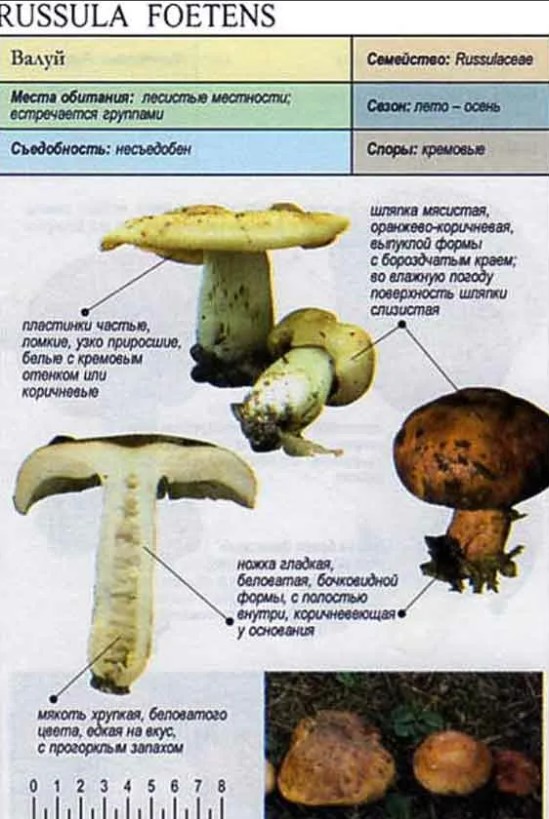
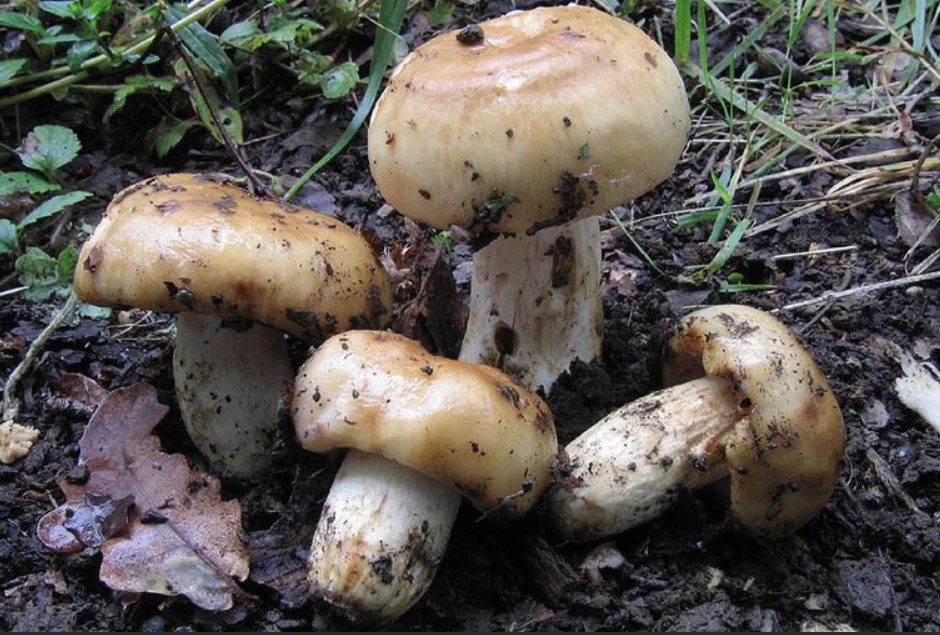
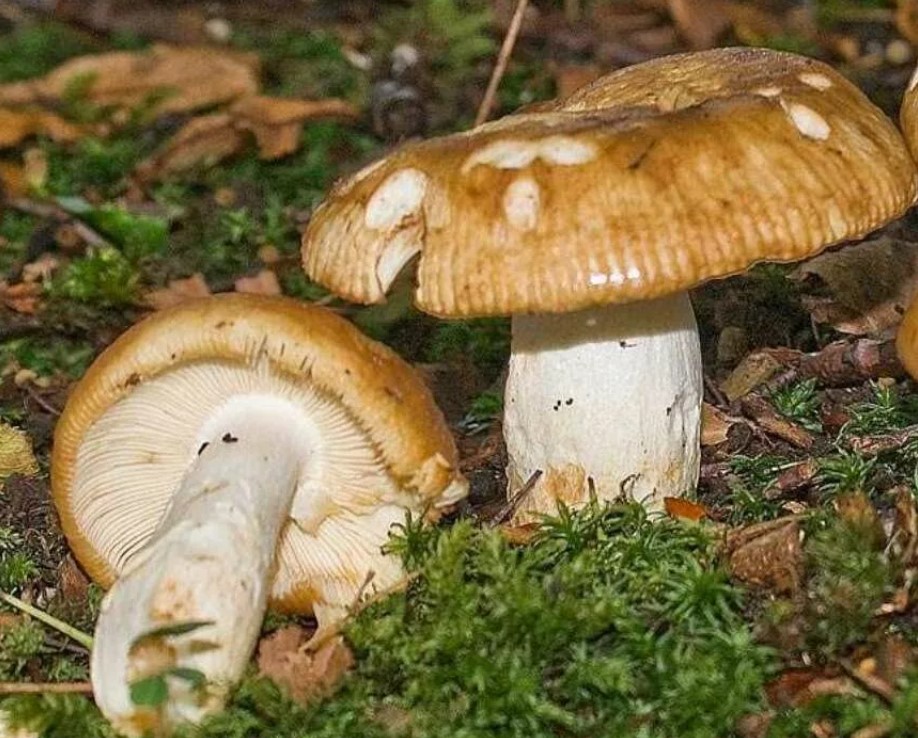
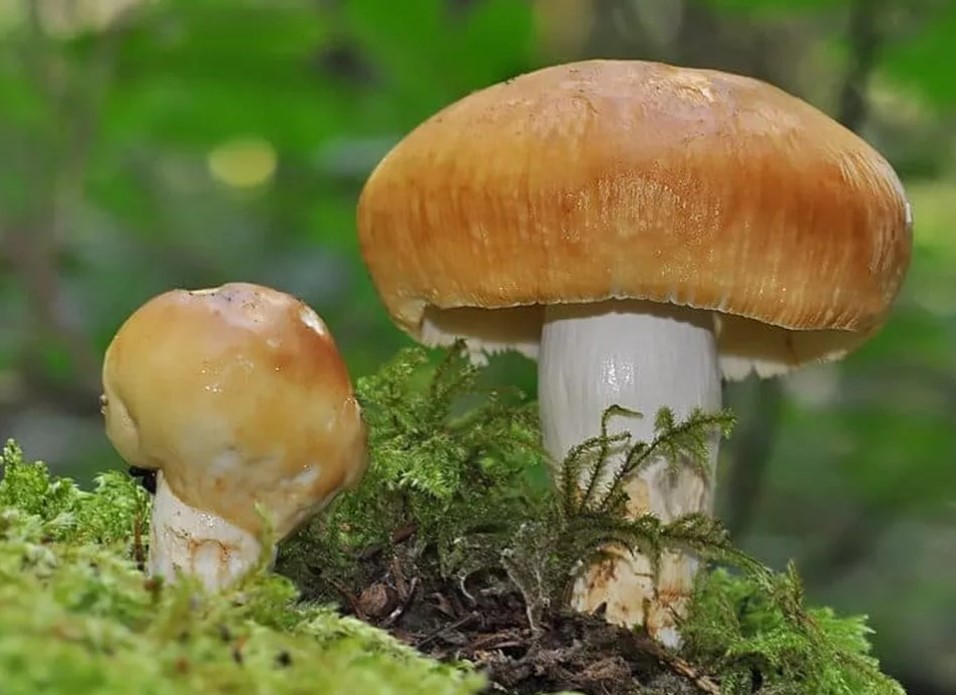
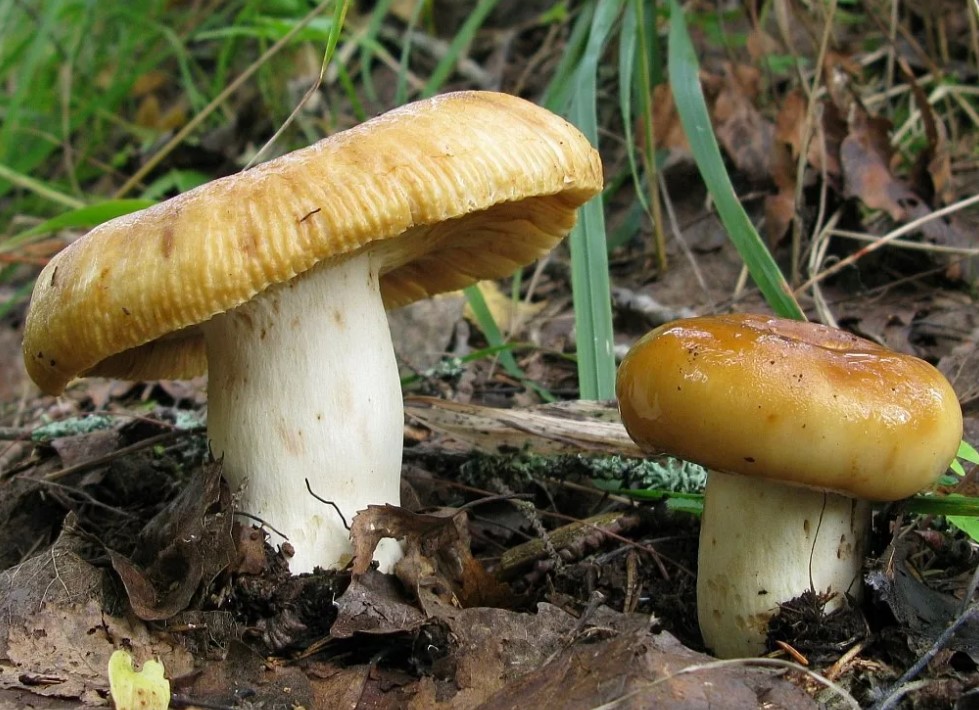
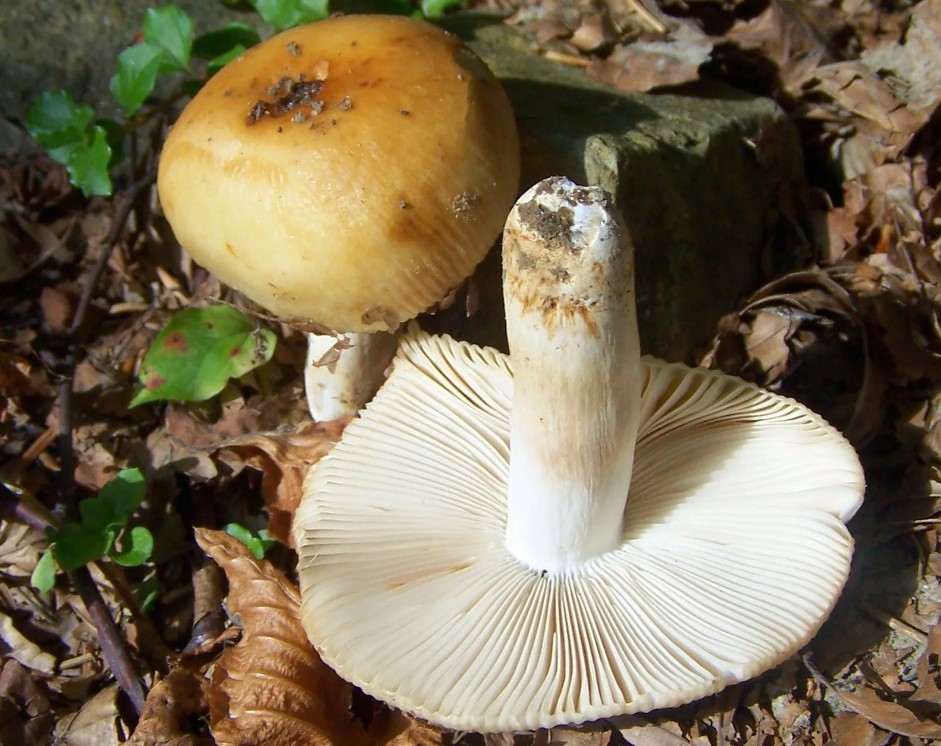
The cap diameter varies from 8 to 12 cm, initially spherical, then flattening. The color is yellow-brown or yellow. The surface is slimy. The flesh darkens after cutting.
The stem is up to 12 cm high, white, with brown spots on the surface.
Grows in small groups in warm, humid forests of various types.
Edible mushroom.
Valuy's photo gallery
Golden yellow (Russula lutea)
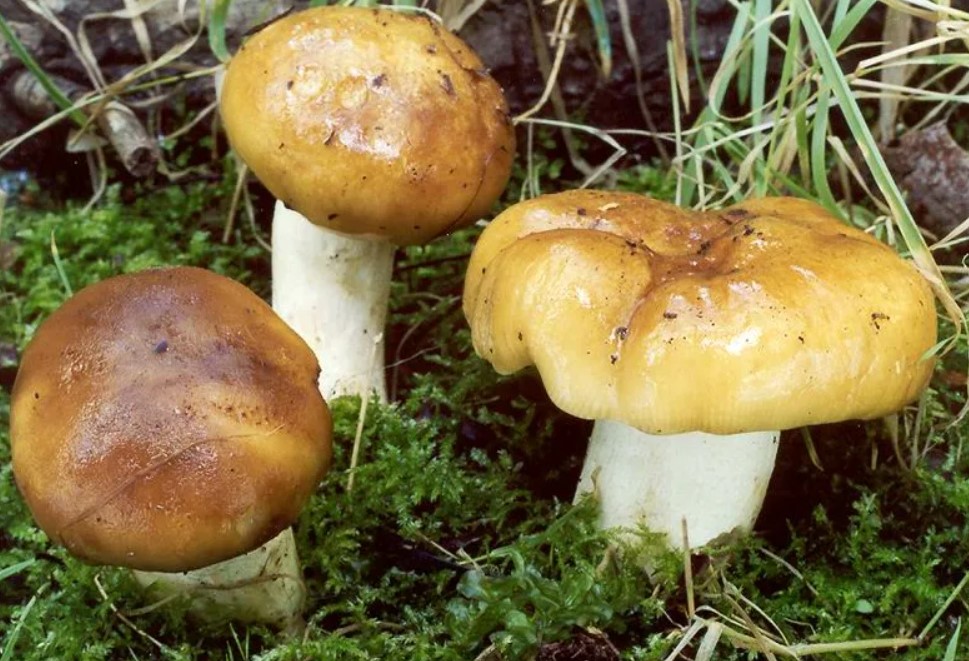
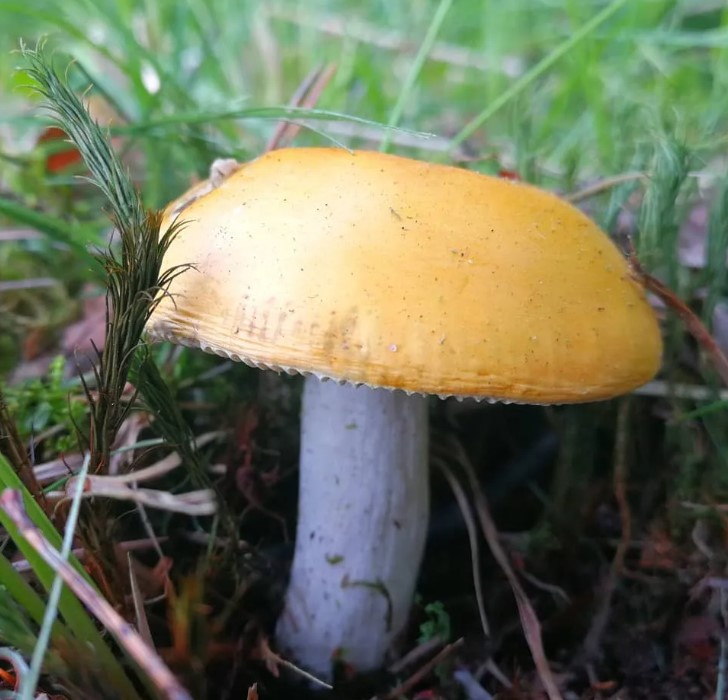
The cap diameter ranges from 2 to 8.5 cm, and its color can be yellow, apricot, reddish, or even white. The stem is brittle and cylindrical. In young mushrooms, it is white; in mature mushrooms, it is grayish-yellow.
Grows in various types of forests.
An edible mushroom with a pleasant taste without bitterness.
Photo gallery of golden yellow russula
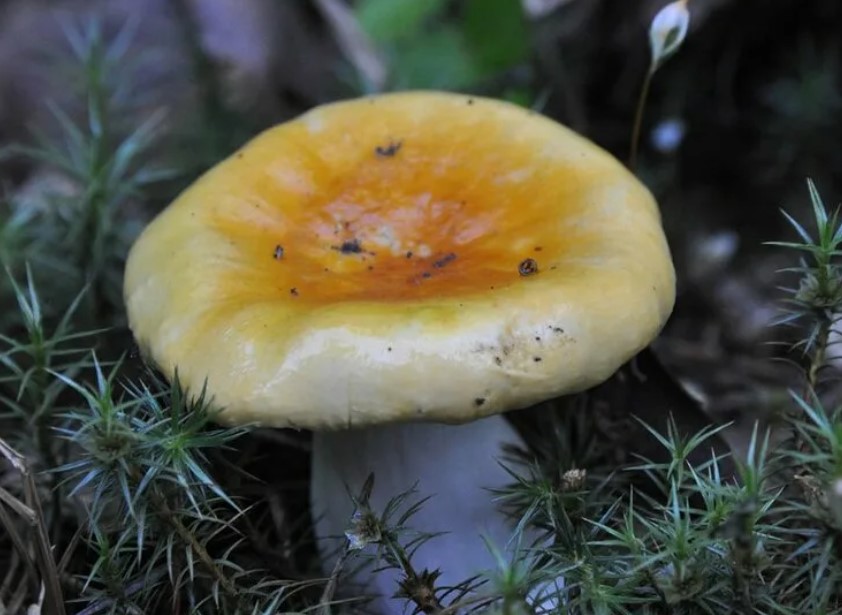
Blackening milk cap (Russula nigricans)
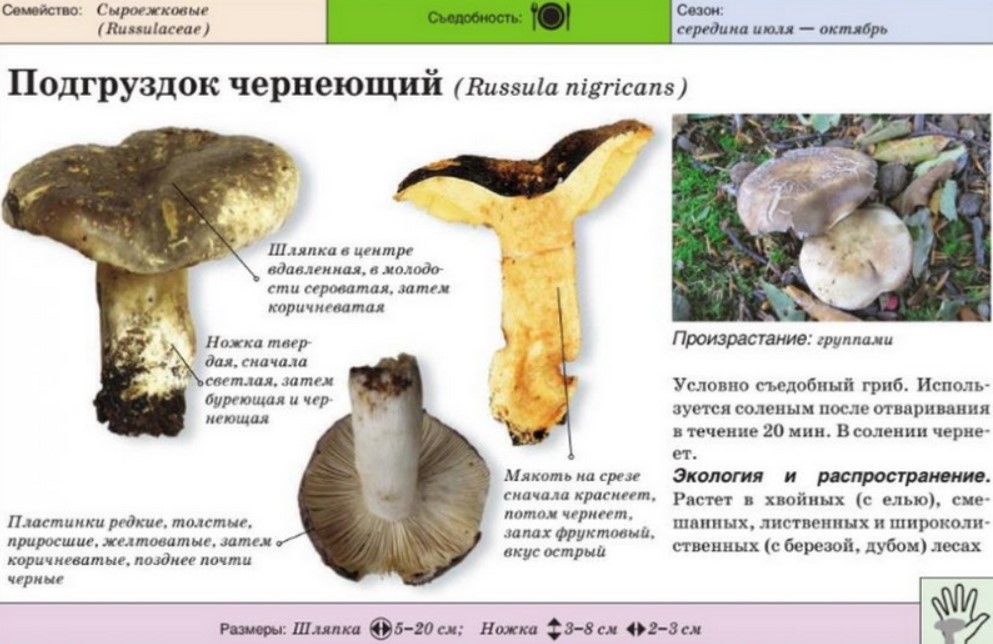
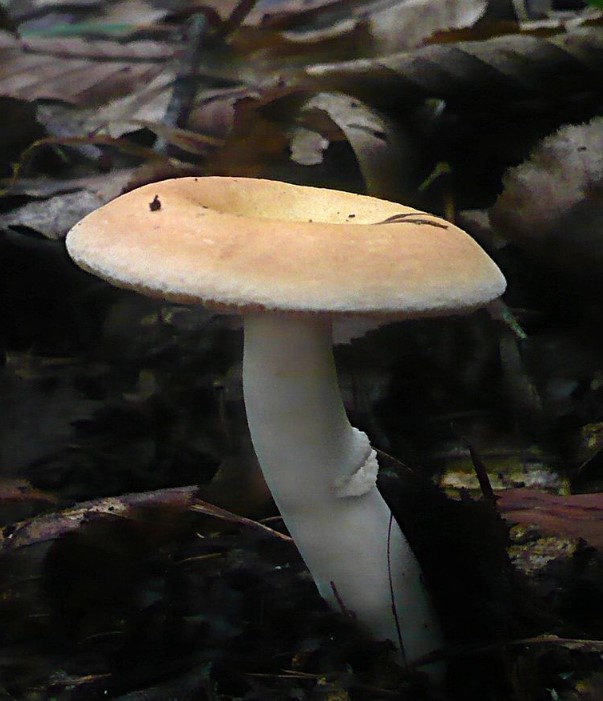
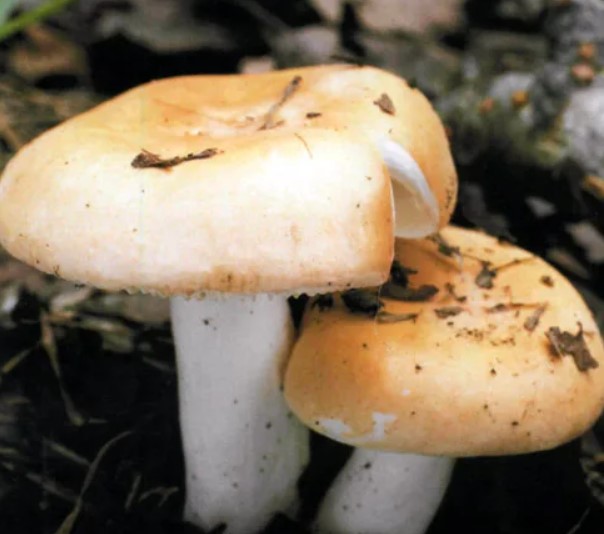
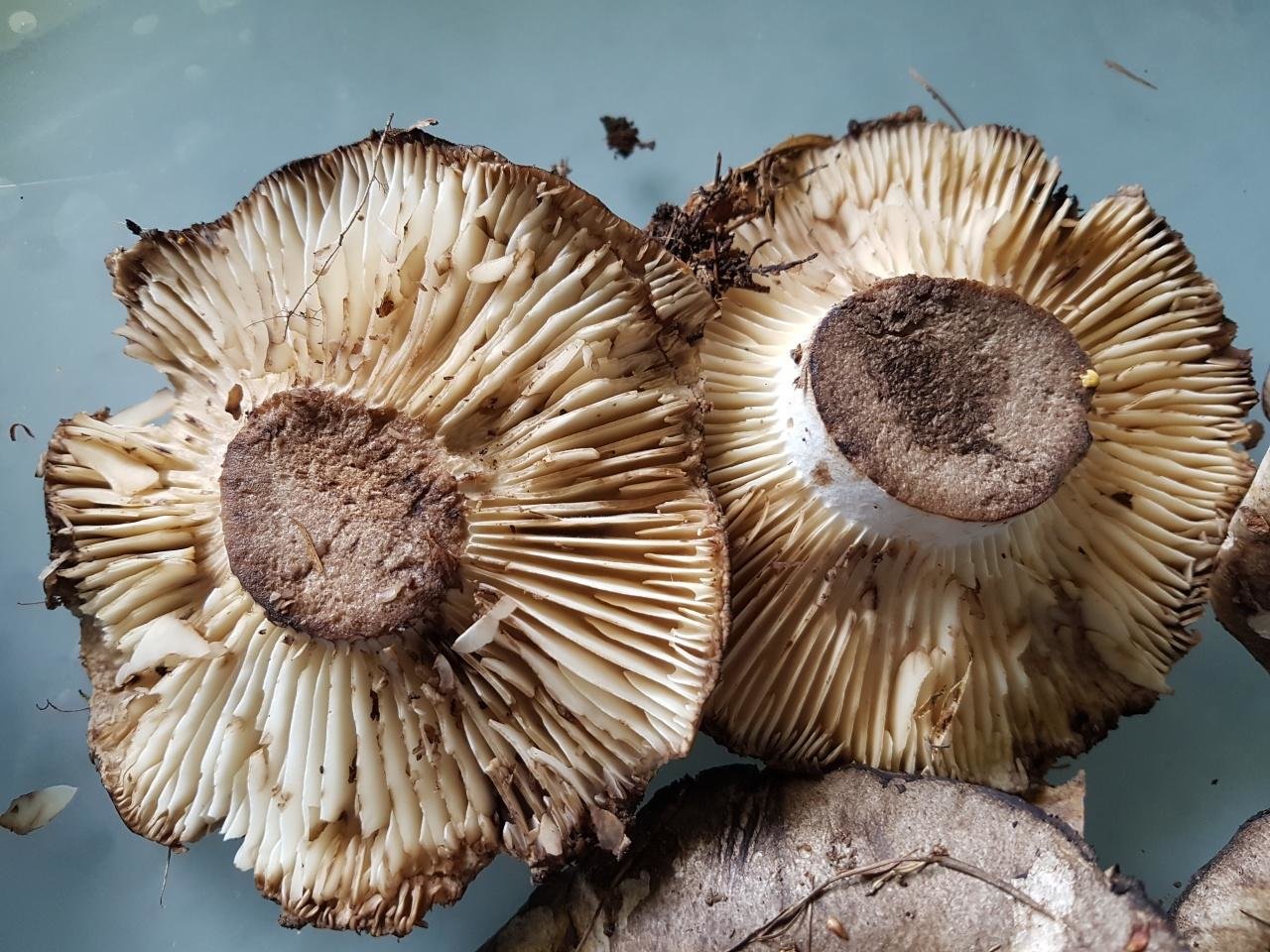
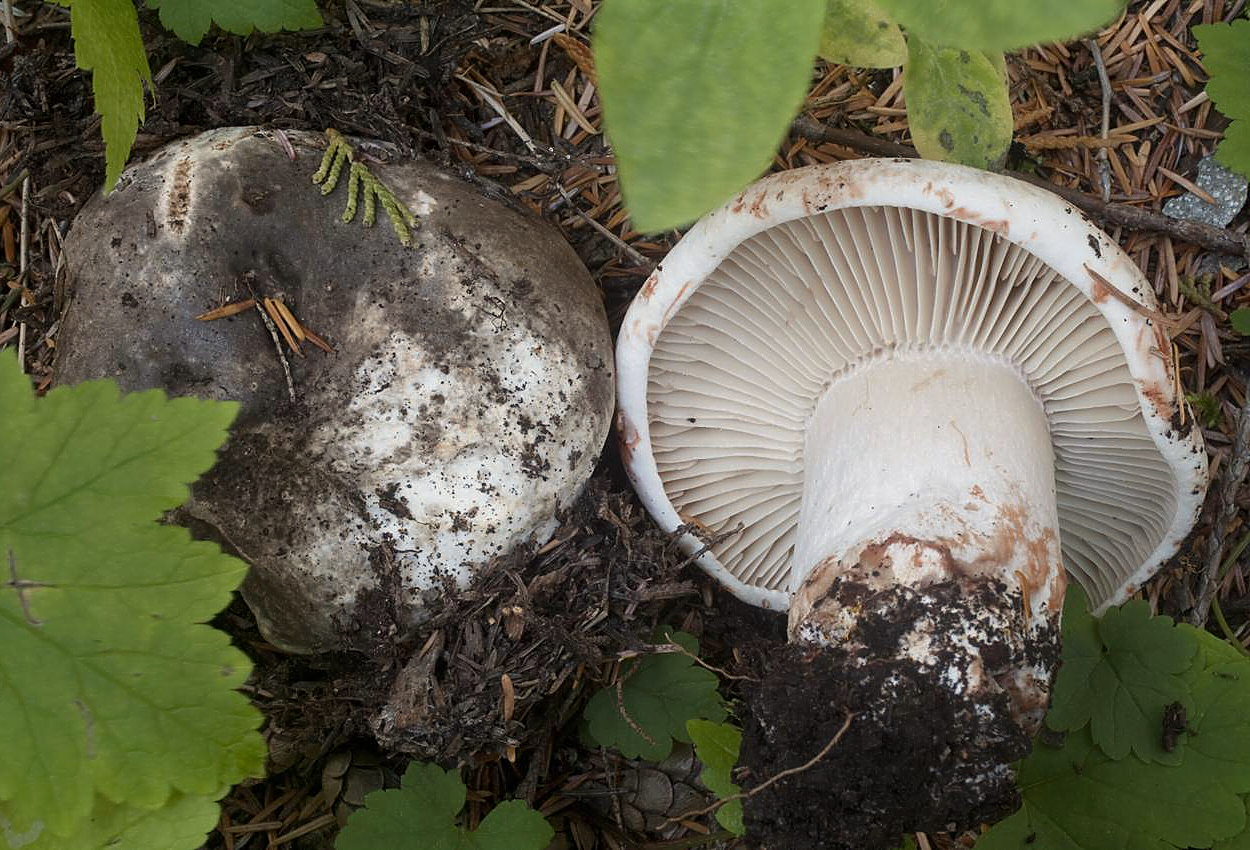
The cap is 5-15 cm in diameter, initially very light in color, changing to a dirty gray or brownish with age. The center is more prominent than the margins. The surface is predominantly dry.
The stem is up to 10 cm high, cylindrical in shape, and the color becomes darker as it grows.
The pulp is brittle, aromatic, and slightly bitter.
The mushroom is edible.
Photo gallery of the blackening milk cap
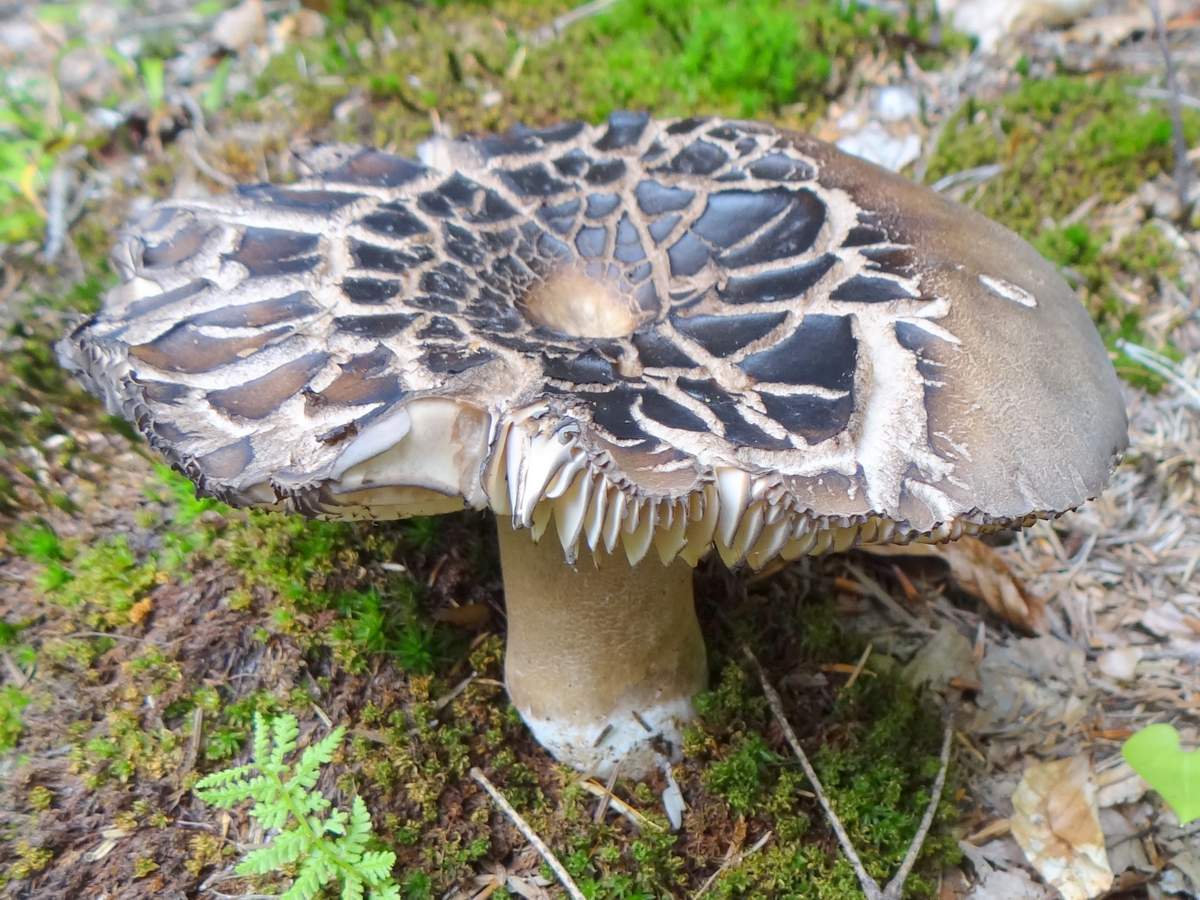
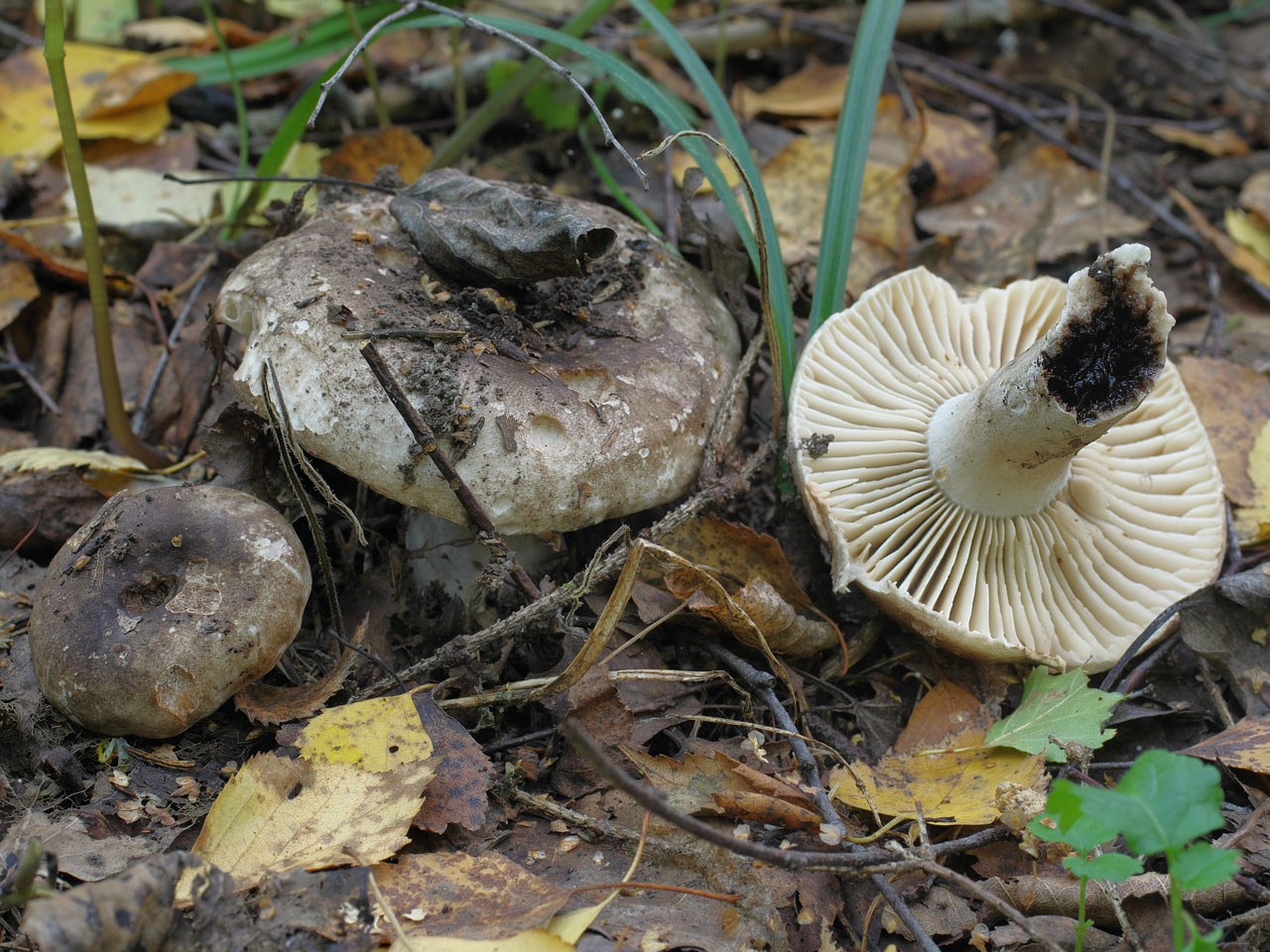
Ocher Russula (Russula ochroleuca)
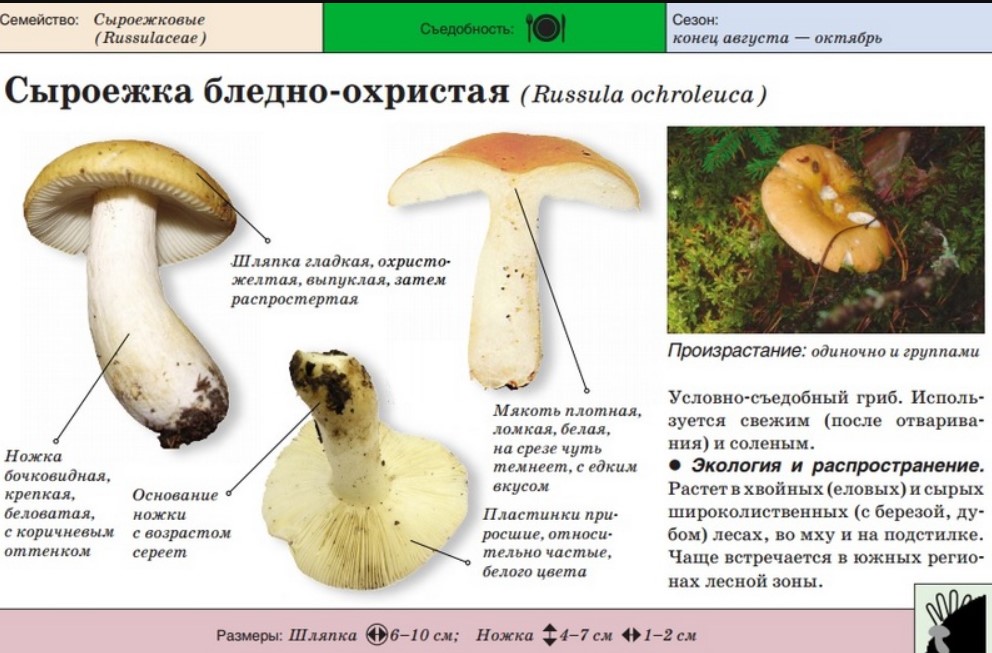
The cap grows from 4 to 10 cm, is slightly depressed, and is yellow or ochre in color. The surface is slimy. The stem is cylindrical and light in color, but darkens with increasing humidity.
The flesh turns slightly brown after cutting.
The mushroom is edible and grows in all types of forests.
Photo gallery of Russula ochracea
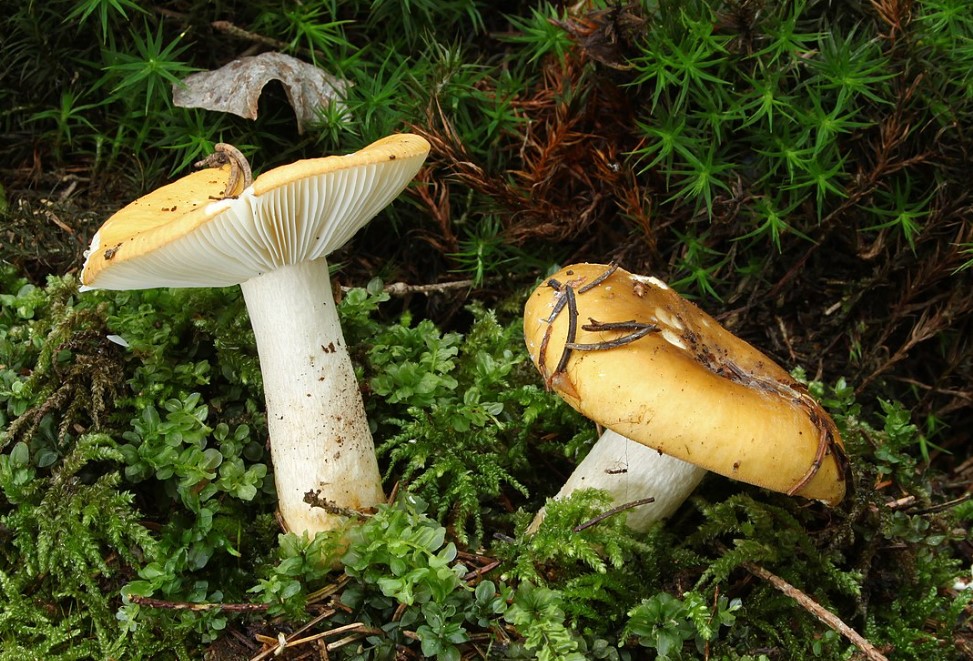
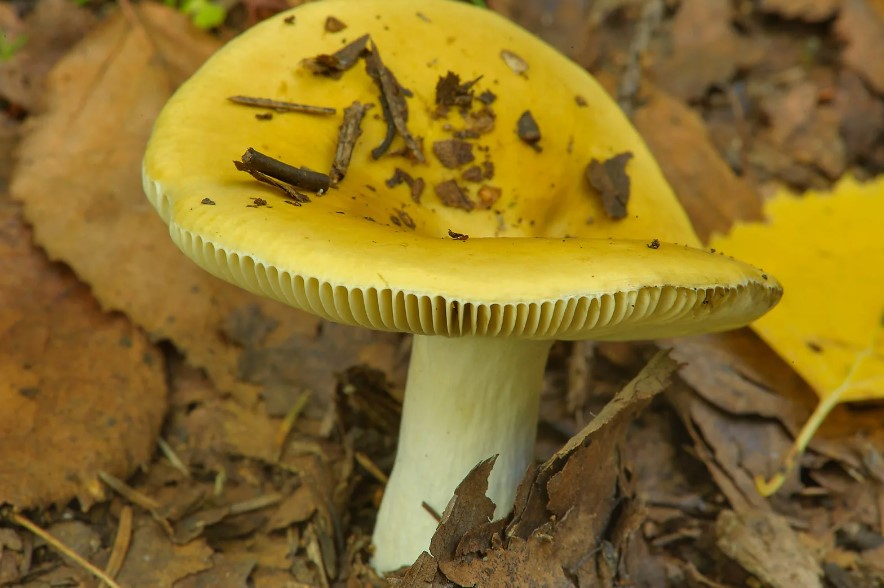
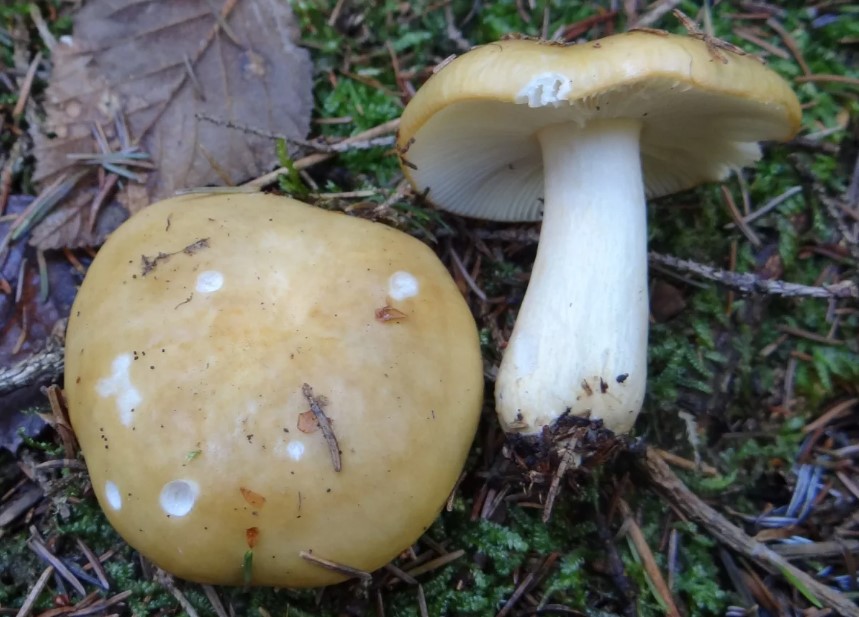
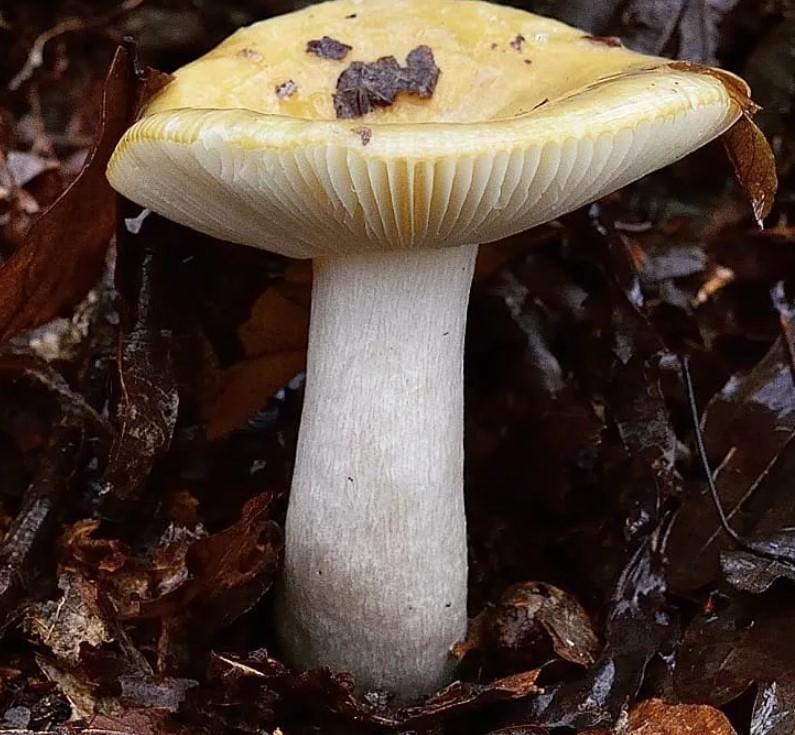
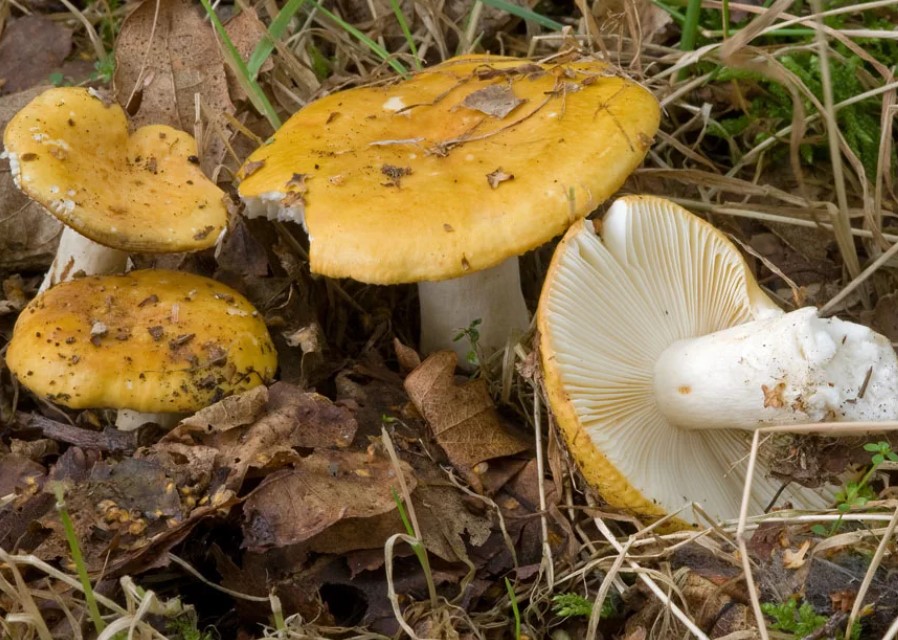
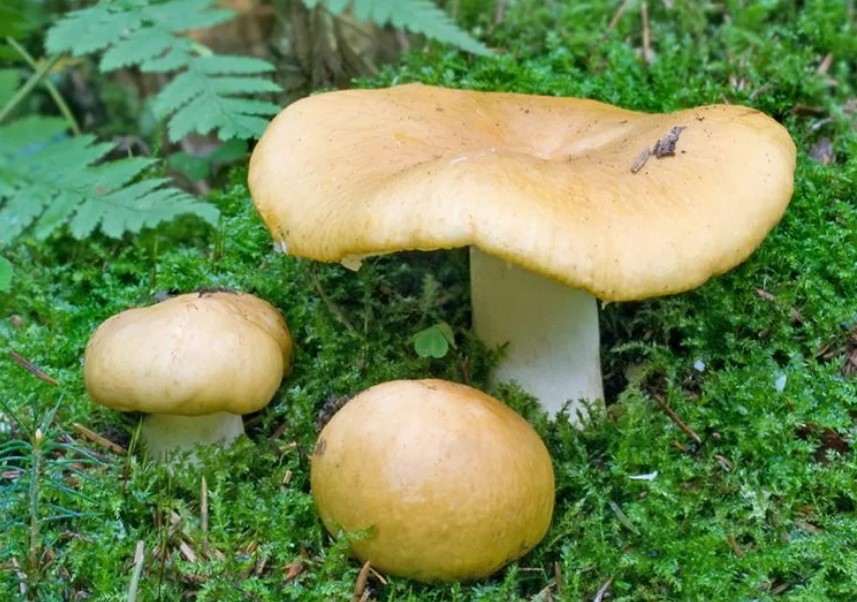
Russula paludosa (marsh russula)
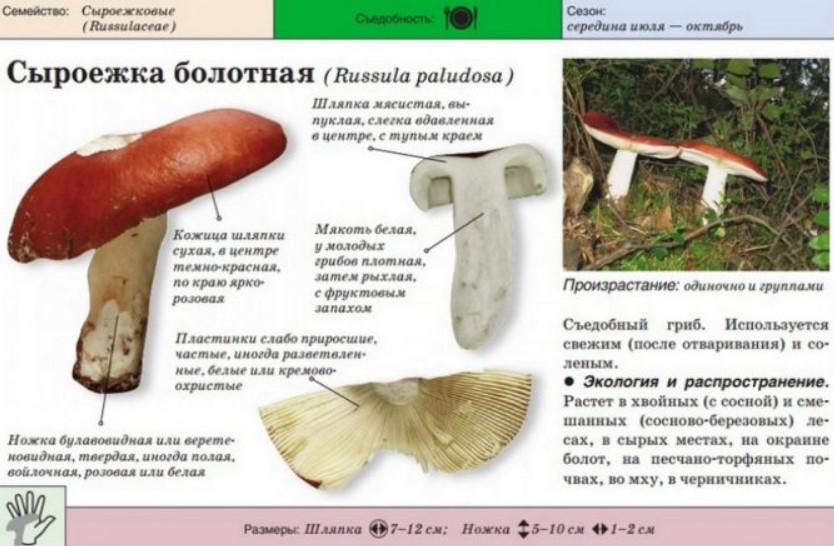
The cap is 5-10 cm long with a slightly depressed center. The color is bright red or orange-red, with the center several shades darker. The stem is up to 8 cm tall, white with a pinkish tint.
Mainly coniferous forests, lives on the edges of swamps, likes pine forests with high humidity.
Edible.
Photo gallery of the marsh russula
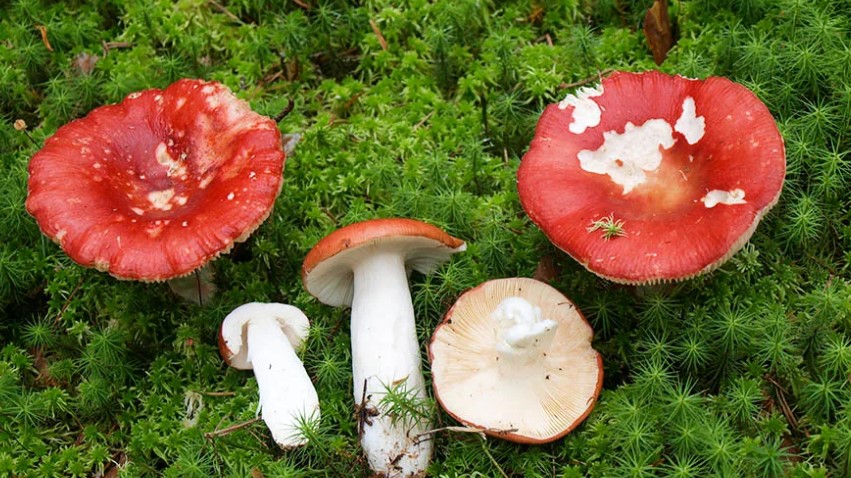
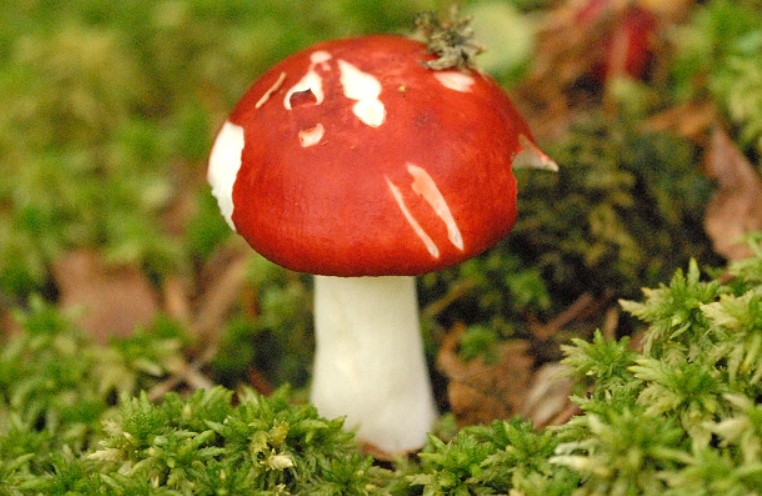
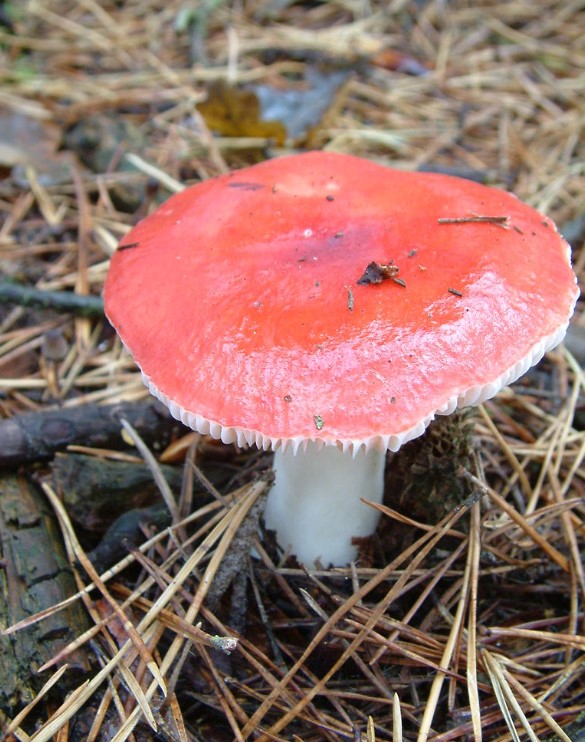
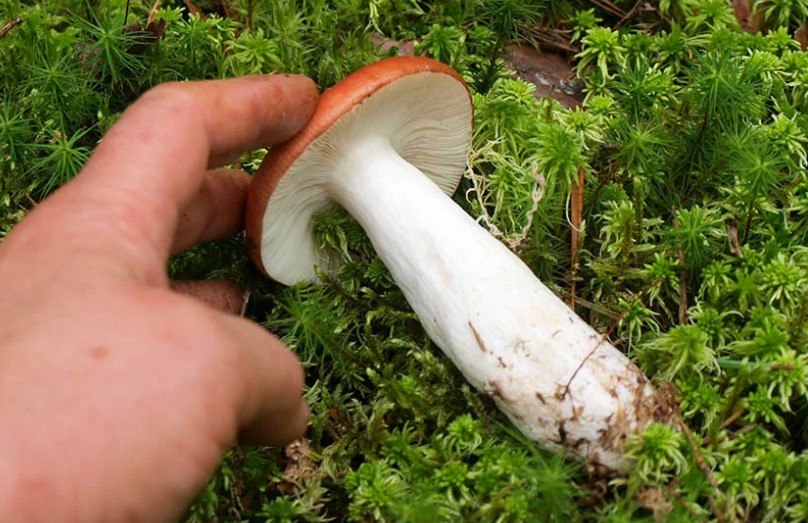
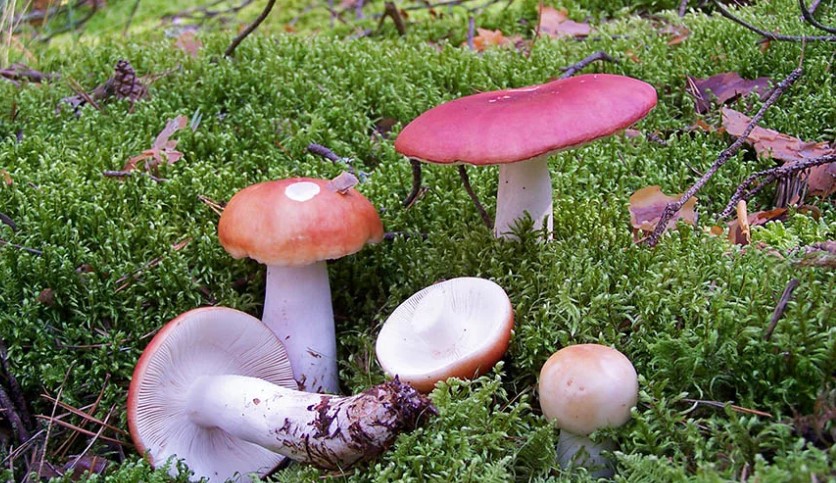
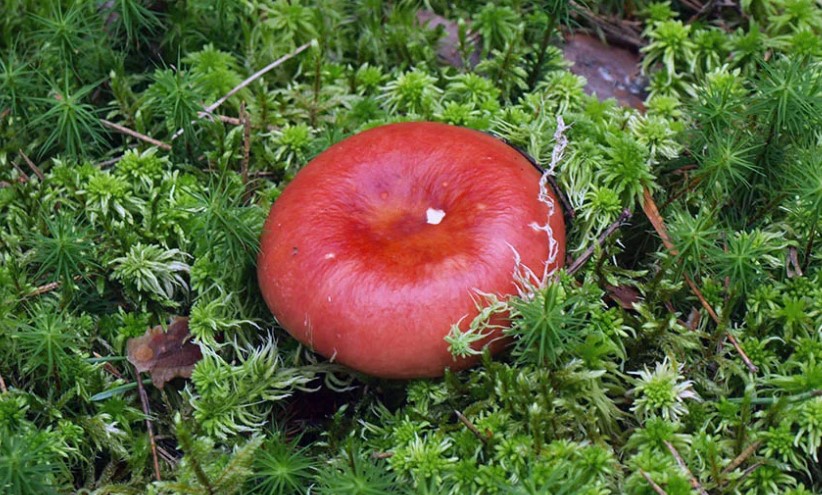
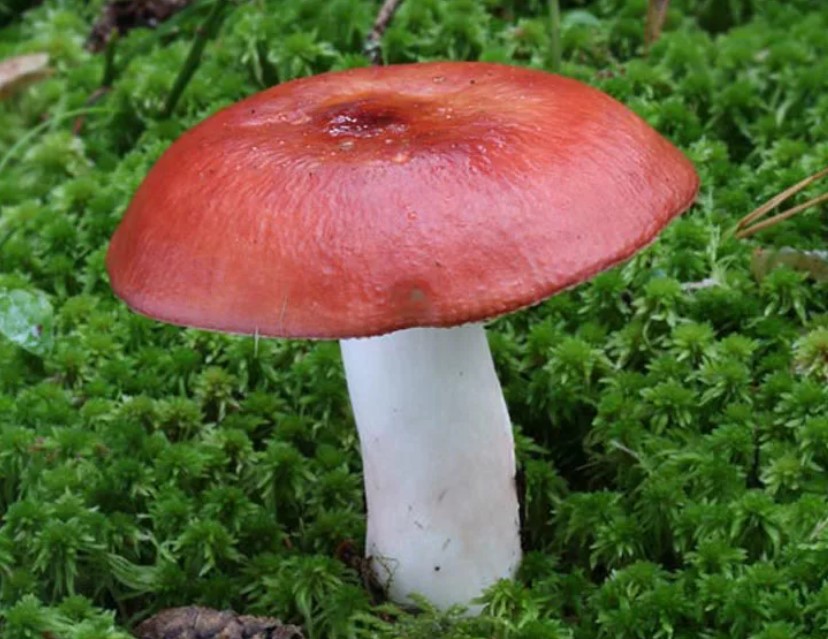
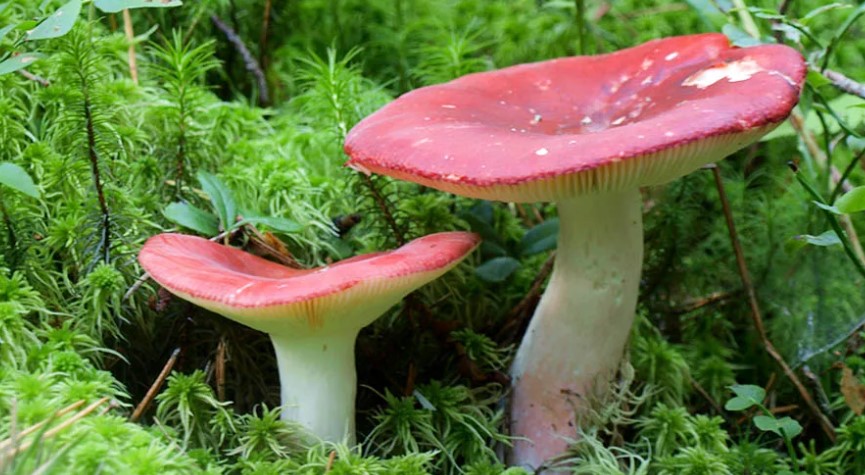
Maiden russula (Russula puellaris)
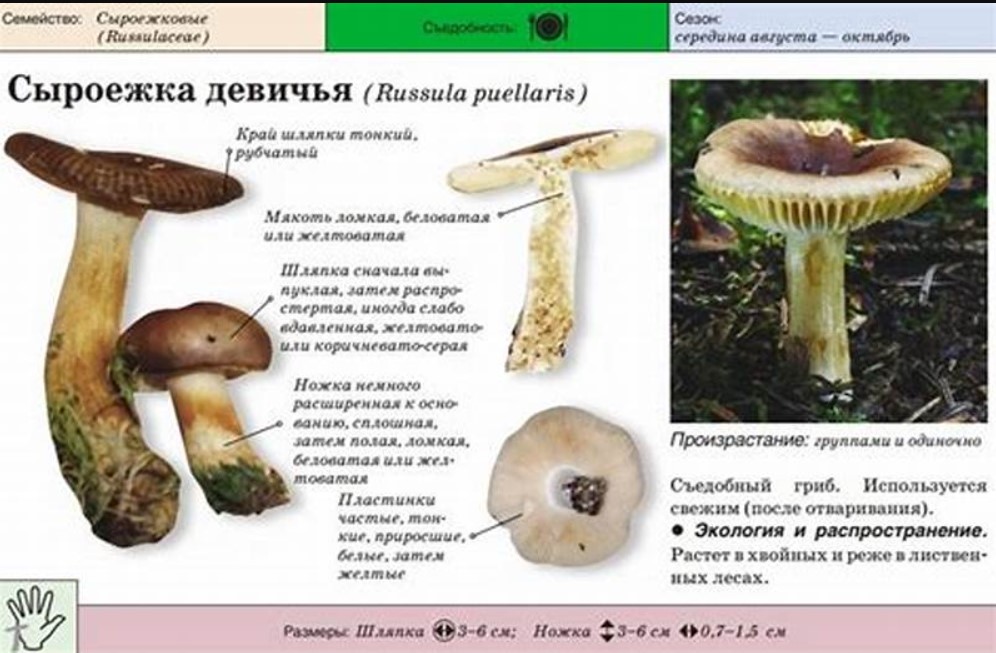
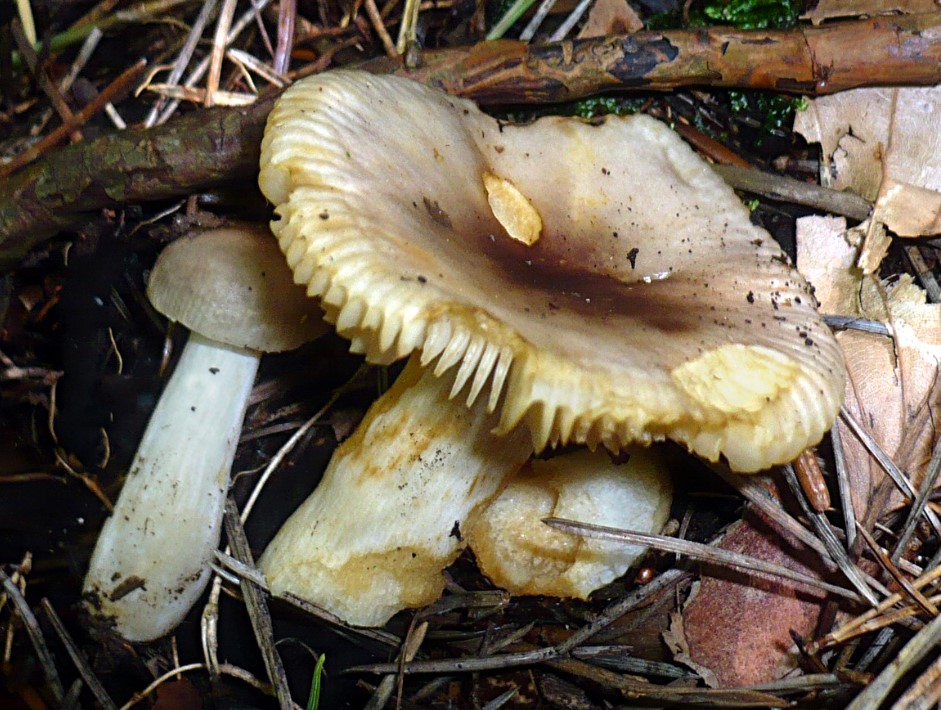
The cap has grooved edges and a diameter of 5 to 11 cm. The surface is sticky, the color is dark purple or brick red.
When pressed, the stem takes on a dirty yellow hue.
It grows in both deciduous and coniferous forests.
Edible mushroom.
Photo gallery of the common russula
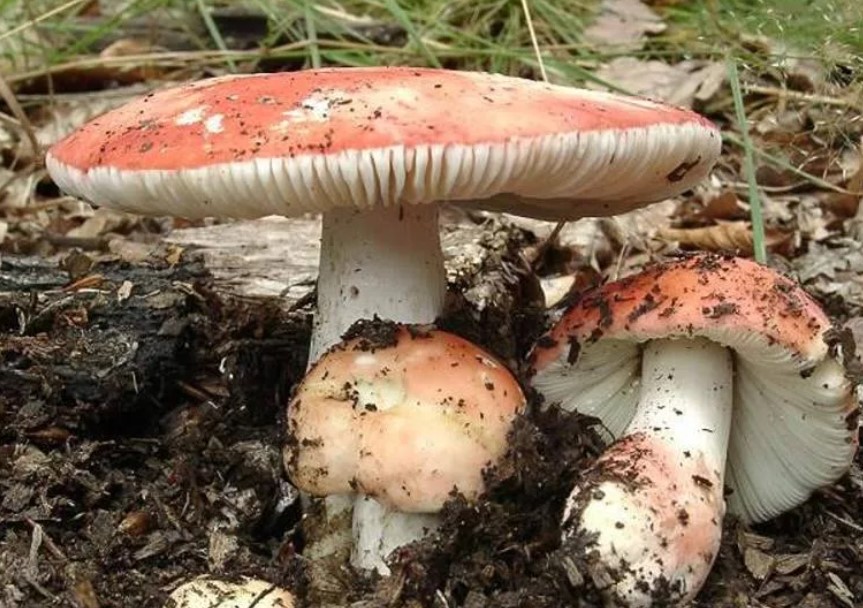
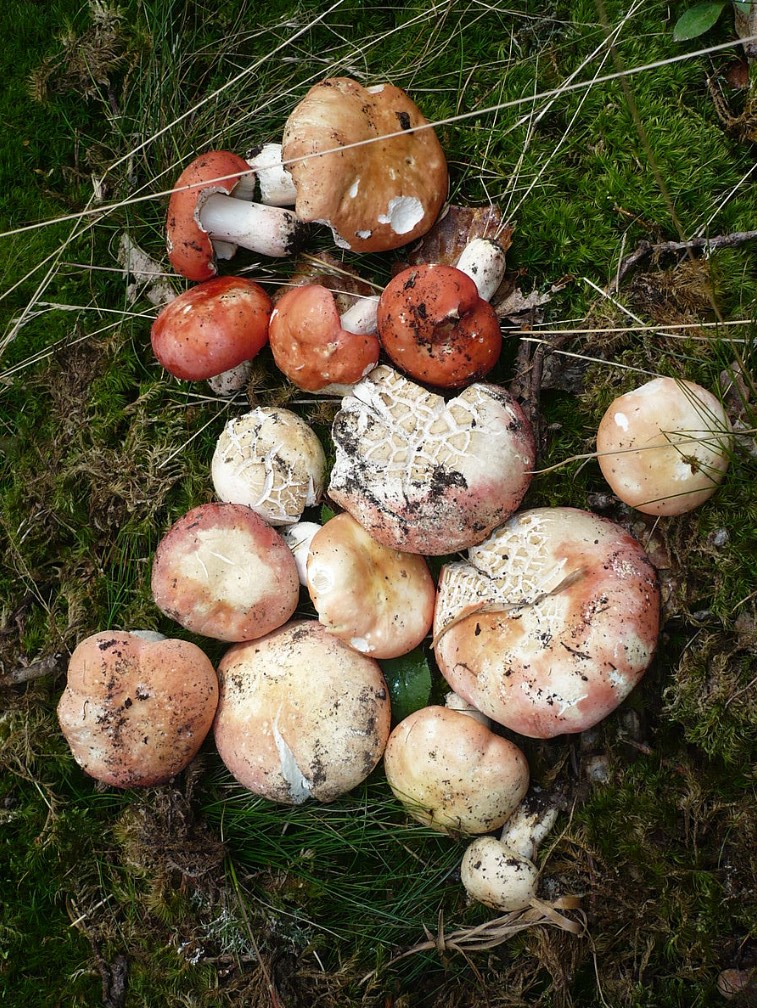
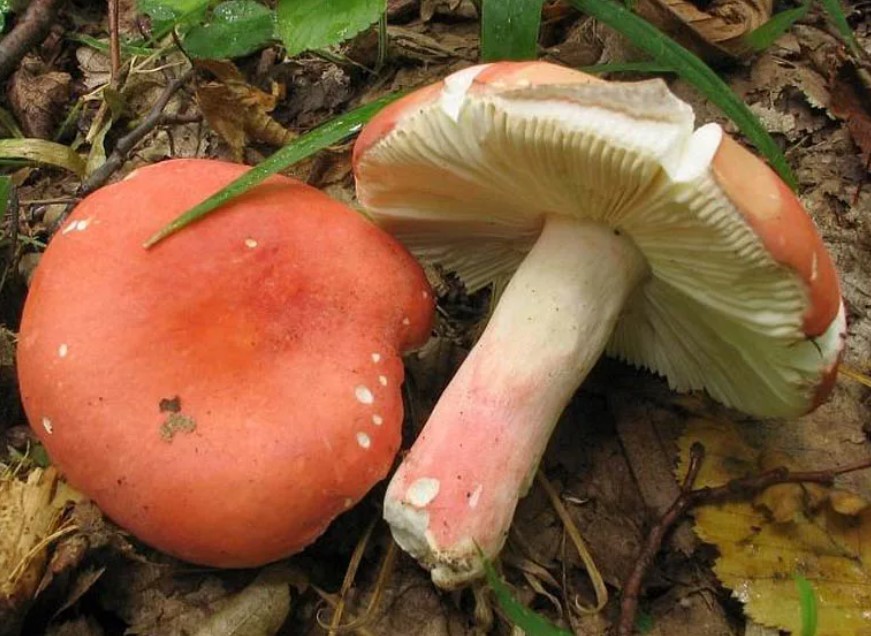
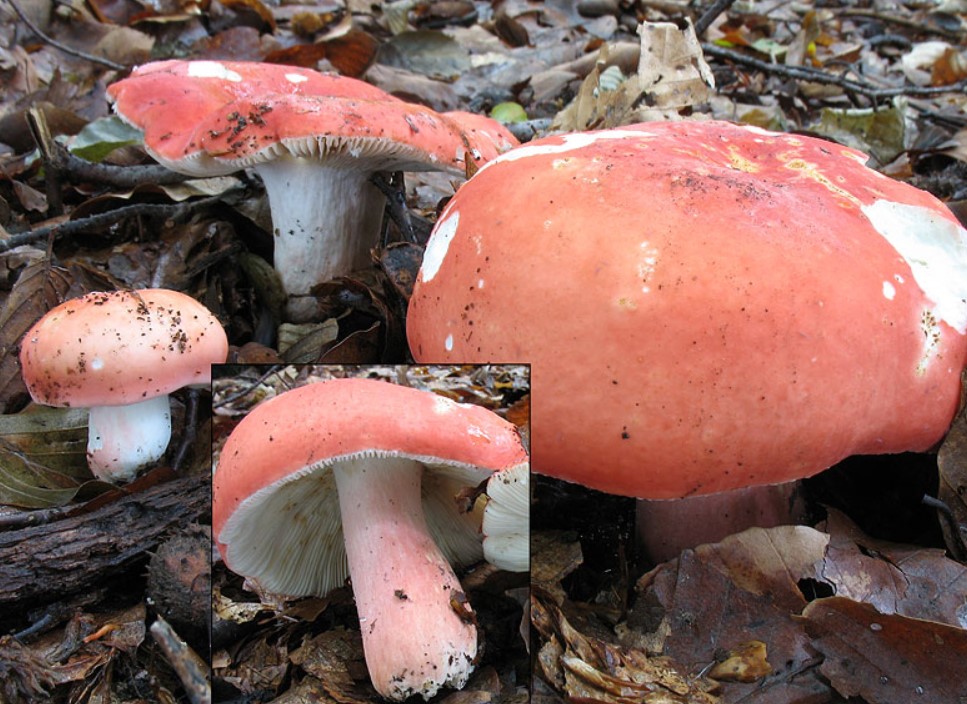
Pink russula (Russula rosea)
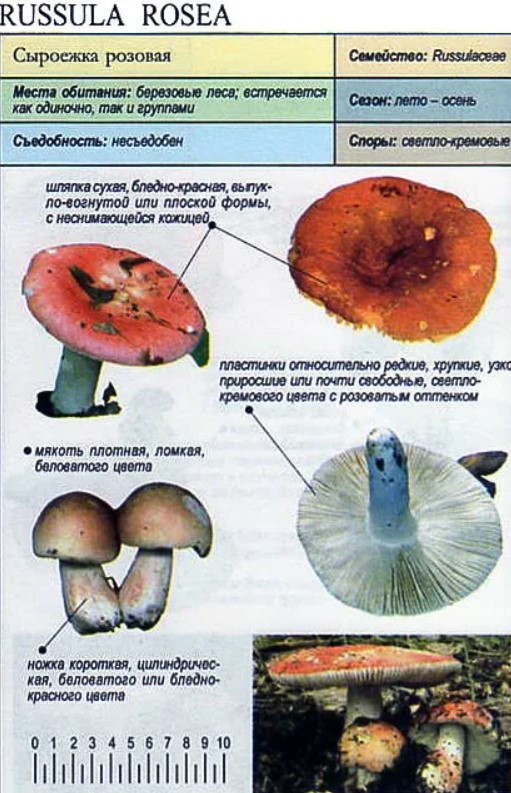
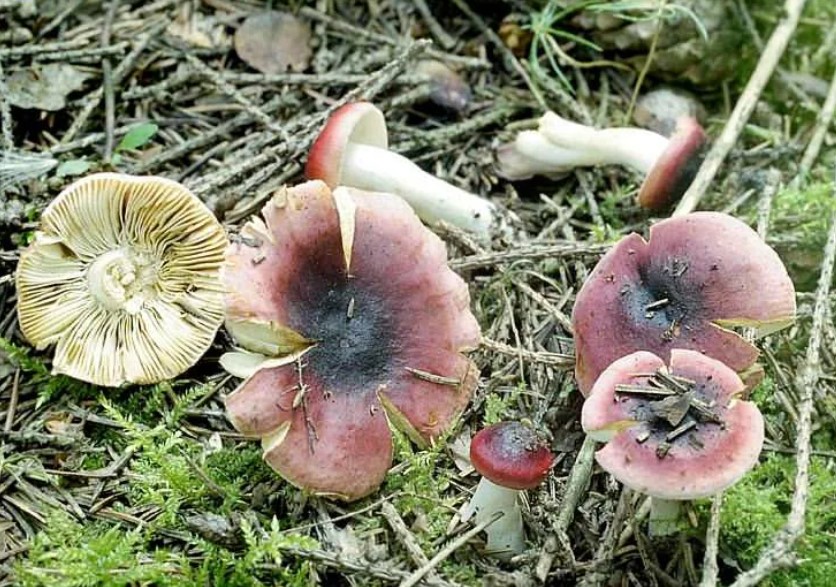
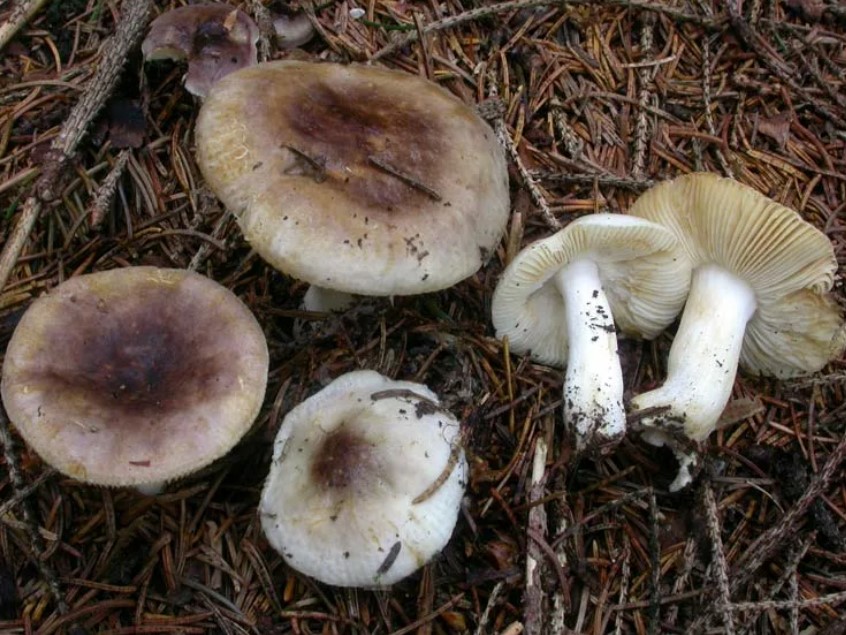
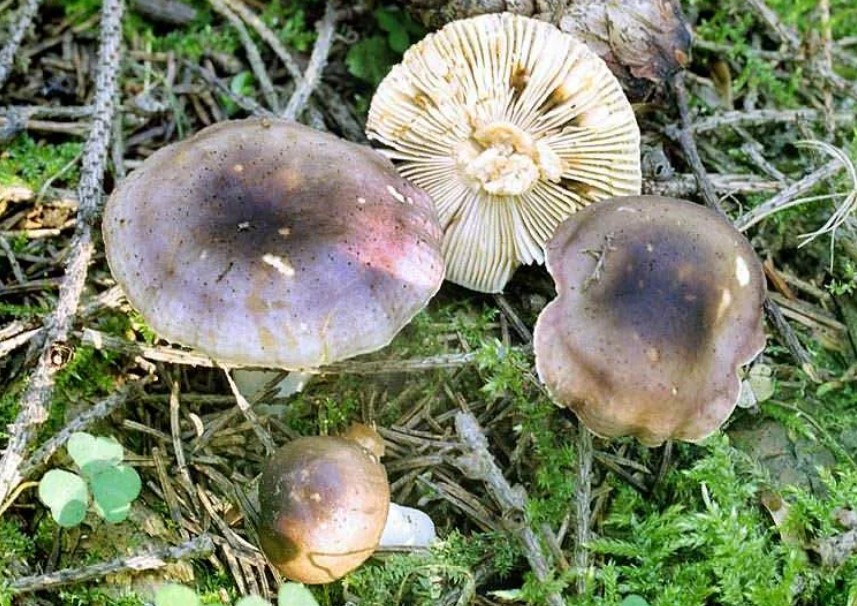
The cap is 3.5-11 cm in diameter, with a slightly flattened center. The color is deep red, becoming noticeably lighter in rainy weather. The stem is white, sometimes with pinkish veins at the base.
The flesh turns grey on exposure to air.
Prefers deciduous forests, but is sometimes found in coniferous ones.
The mushroom is edible, but in some sources it is considered inedible.
Photo gallery of the pink russula
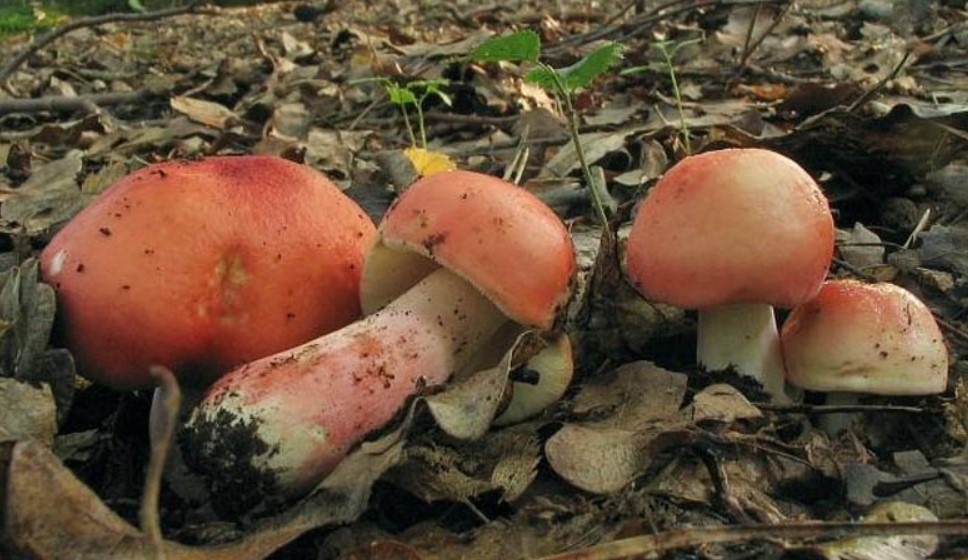
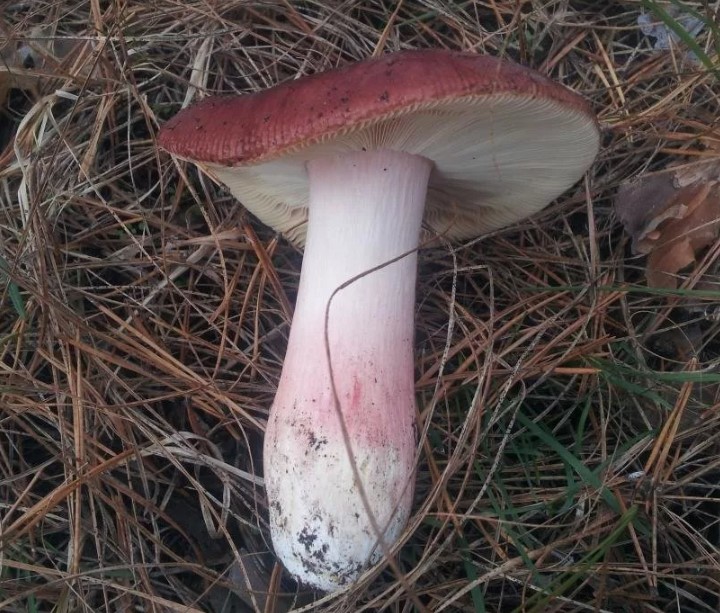
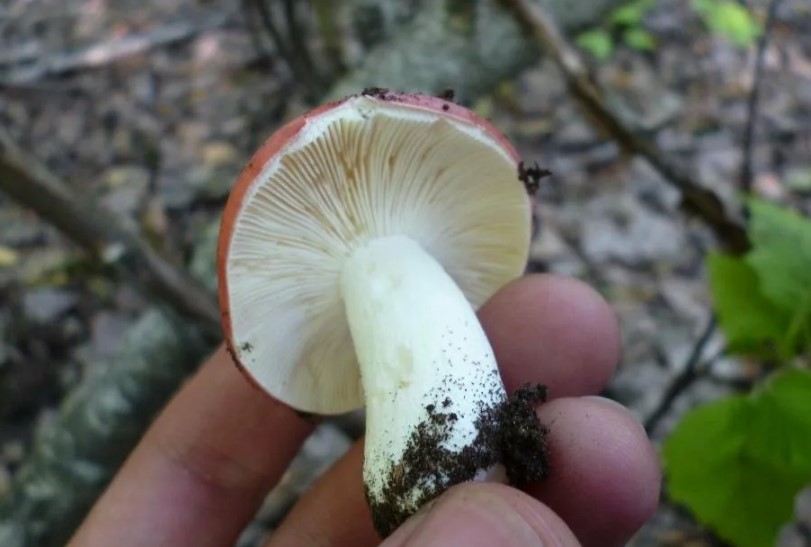
Turkish russula (Russula turci)
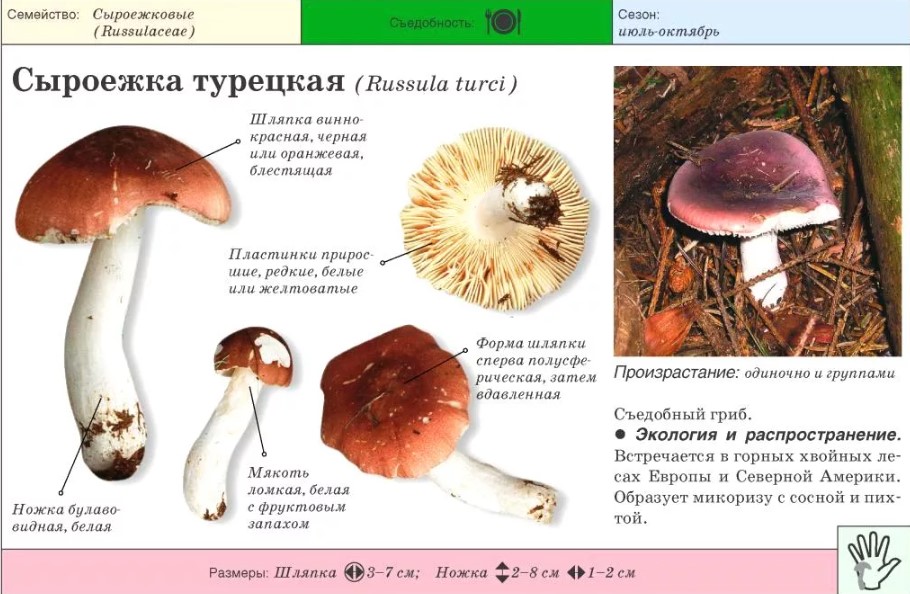
The cap is 3-10 cm. The color ranges from orange to dark purple. The stem is white and club-shaped.
Predominant in pine forests of Europe.
Edible.
Photo gallery of Turkish russula
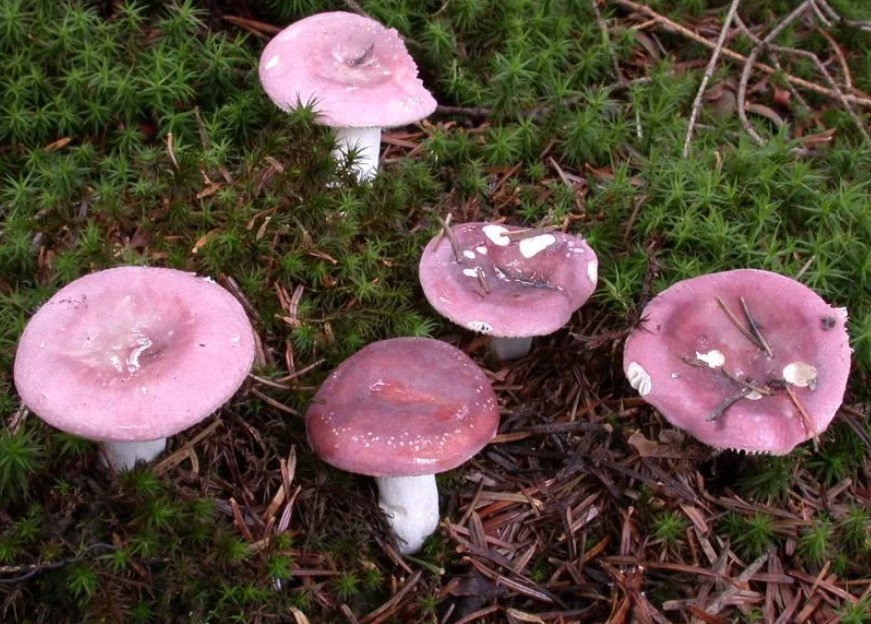
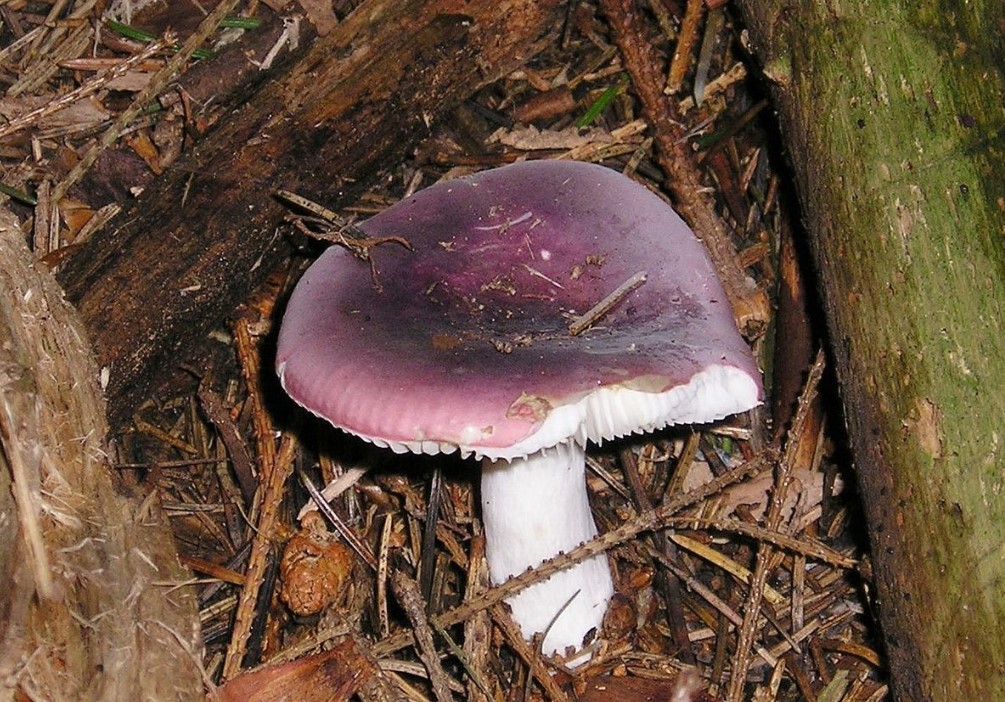
Purple Russula (Russula violeipes)
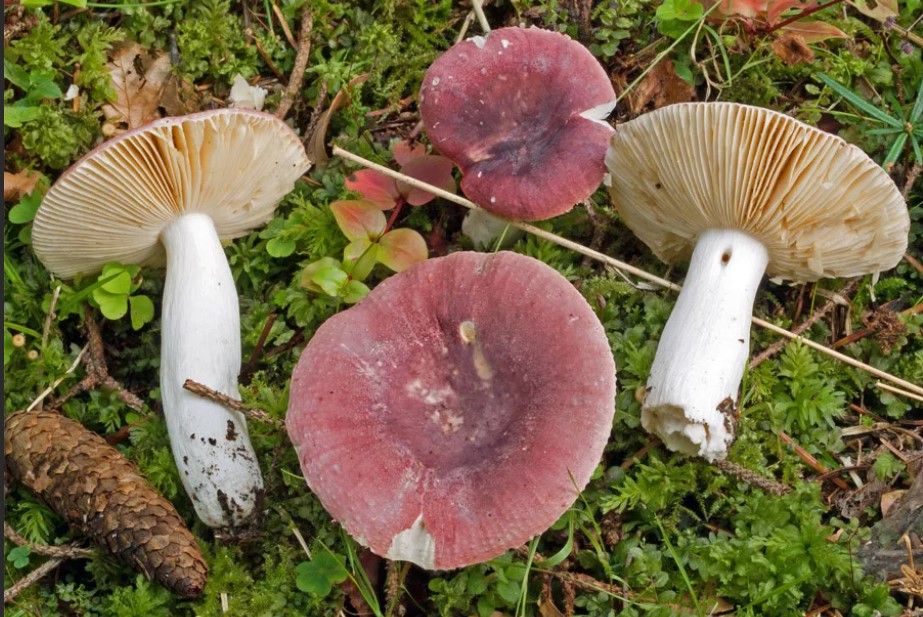
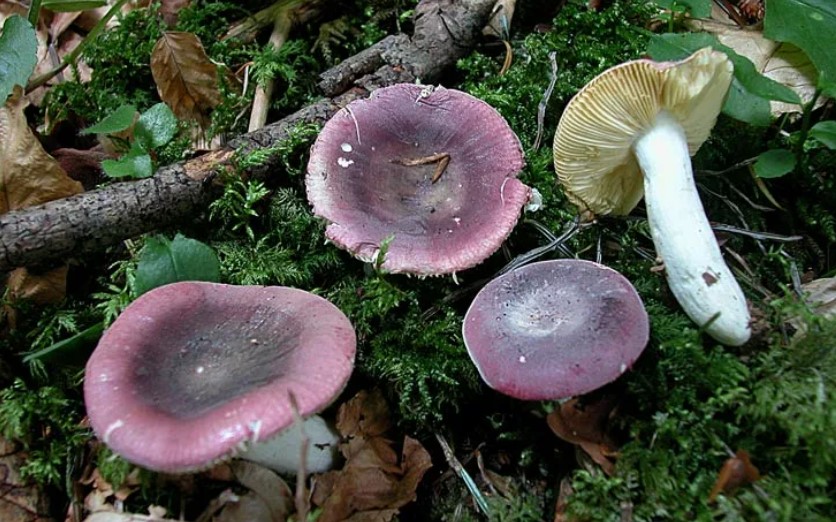
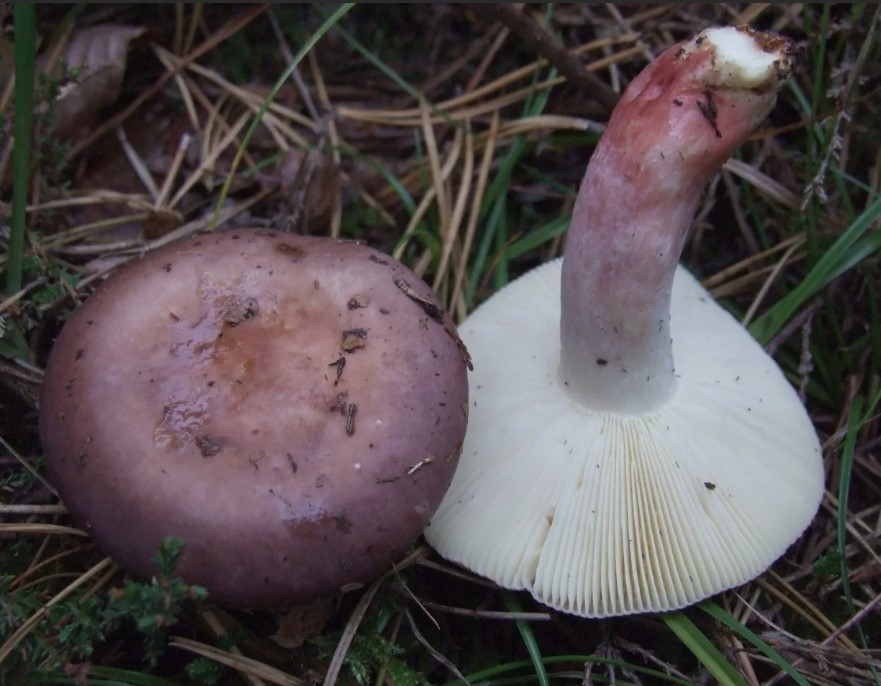
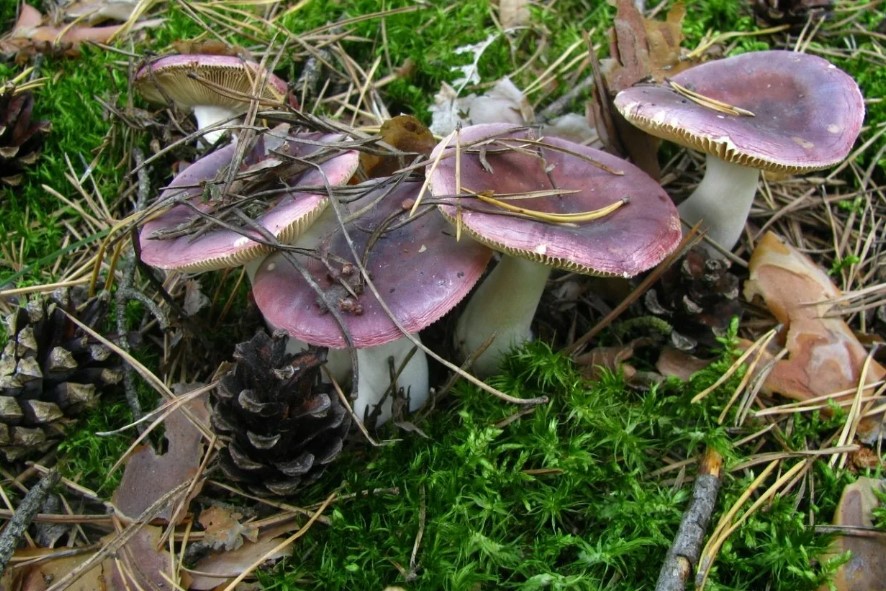
The cap is small, up to 5 cm in diameter. The color is pinkish-purple with a gray tint. The stem is up to 5 cm tall, white, and brittle. The flesh is pungent, with a faint fruity aroma.
Prefers deciduous forests. The mushroom is edible.
Photo gallery of purple russula
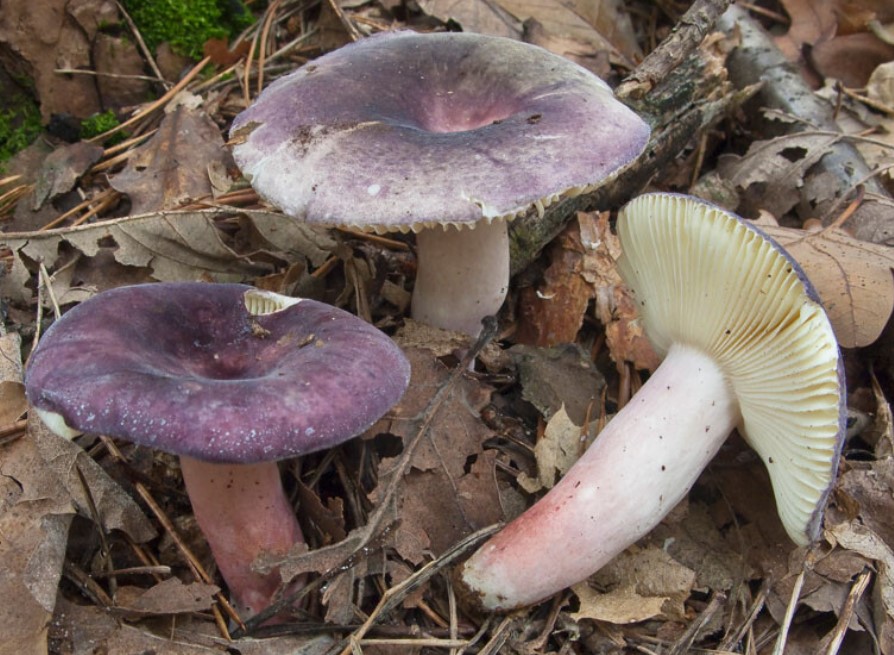
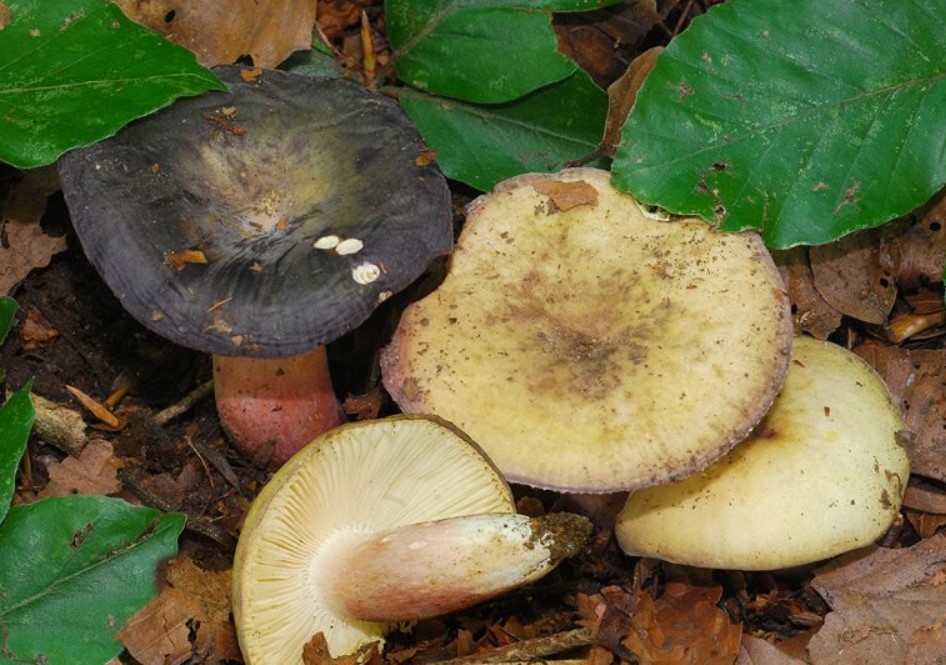
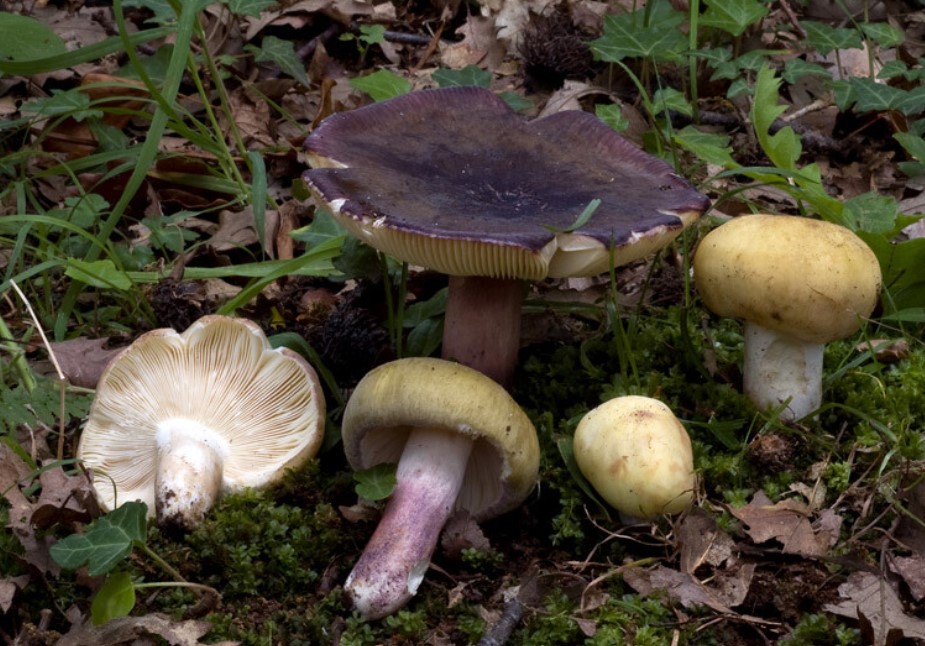
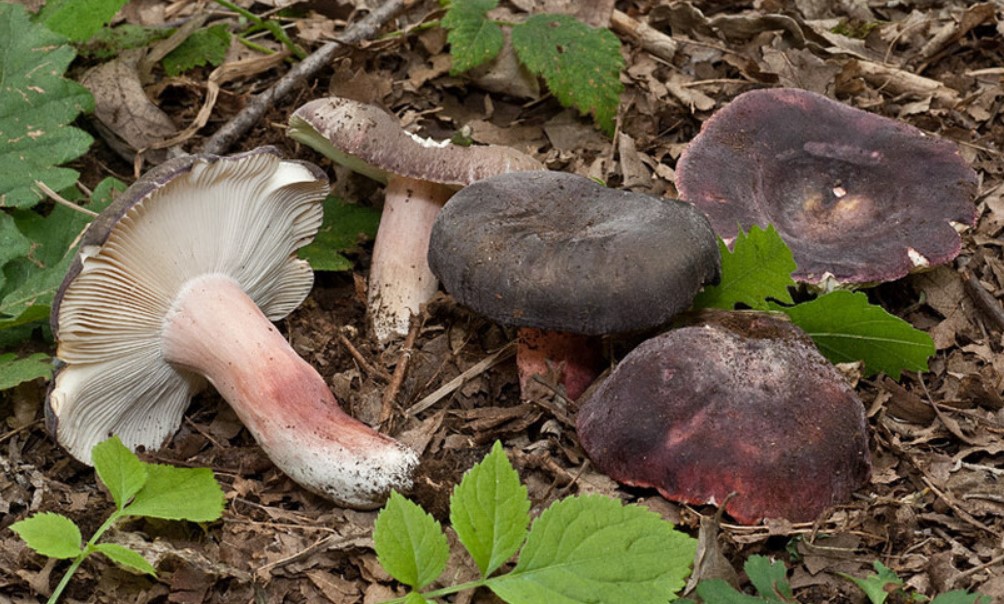
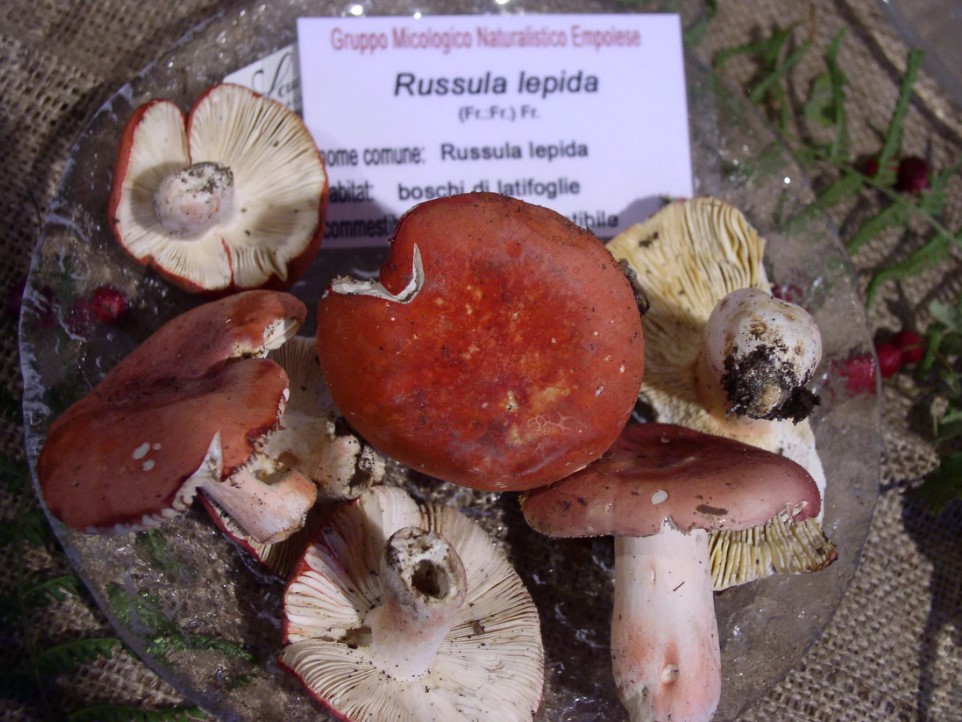
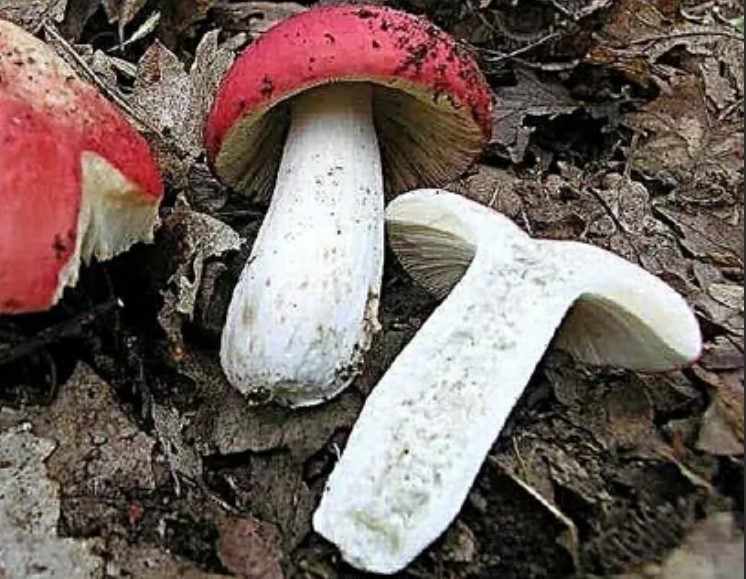
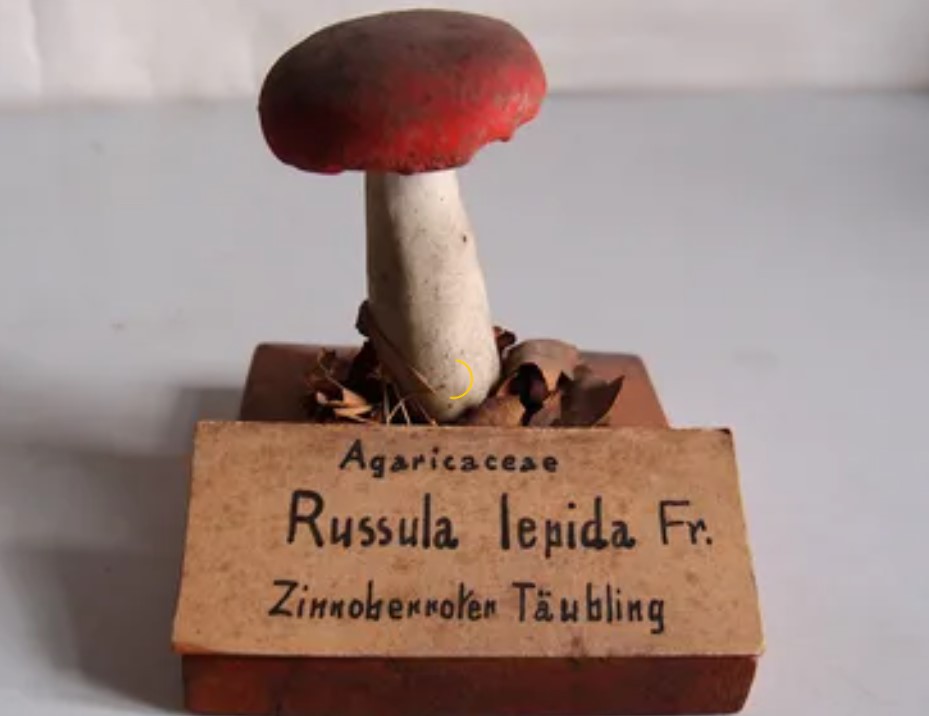
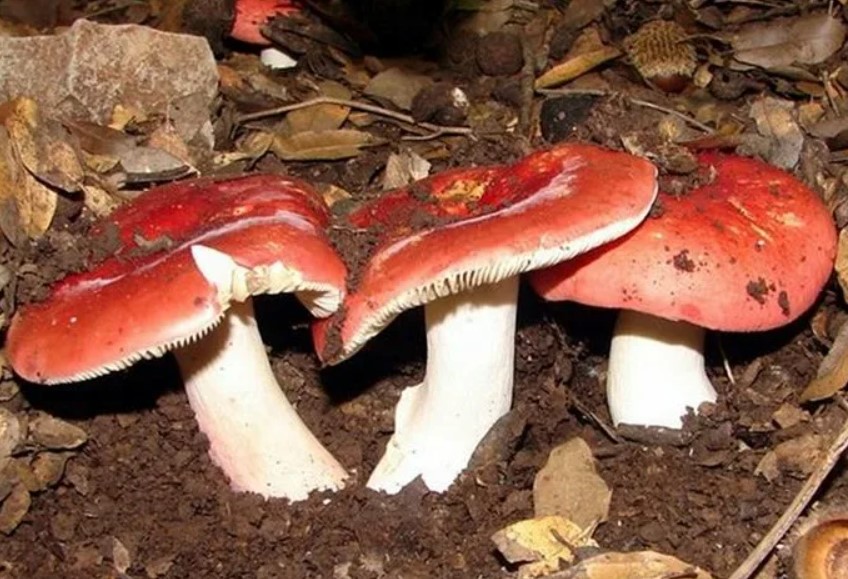
Beautiful russula (Russula lepida)
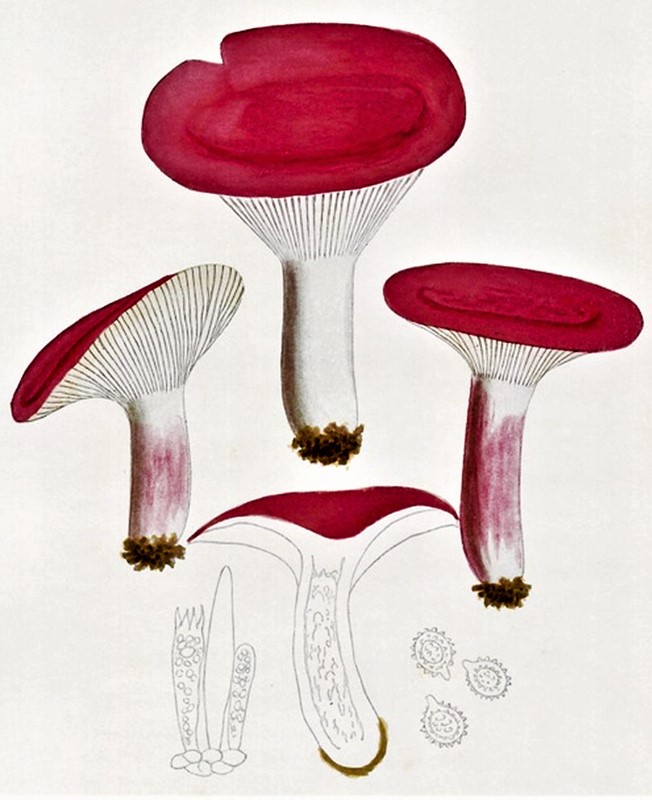
It resembles the red russula in appearance, with a cap up to 10 cm in diameter and a reddish-pink color with a distinct center. This color later lightens as the mushroom grows.
The stem is up to 4 cm high, white or pinkish.
It prefers deciduous forests and begins growing in August. It is considered conditionally edible and can be used as a pickle after boiling.
Photo gallery of the beautiful russula
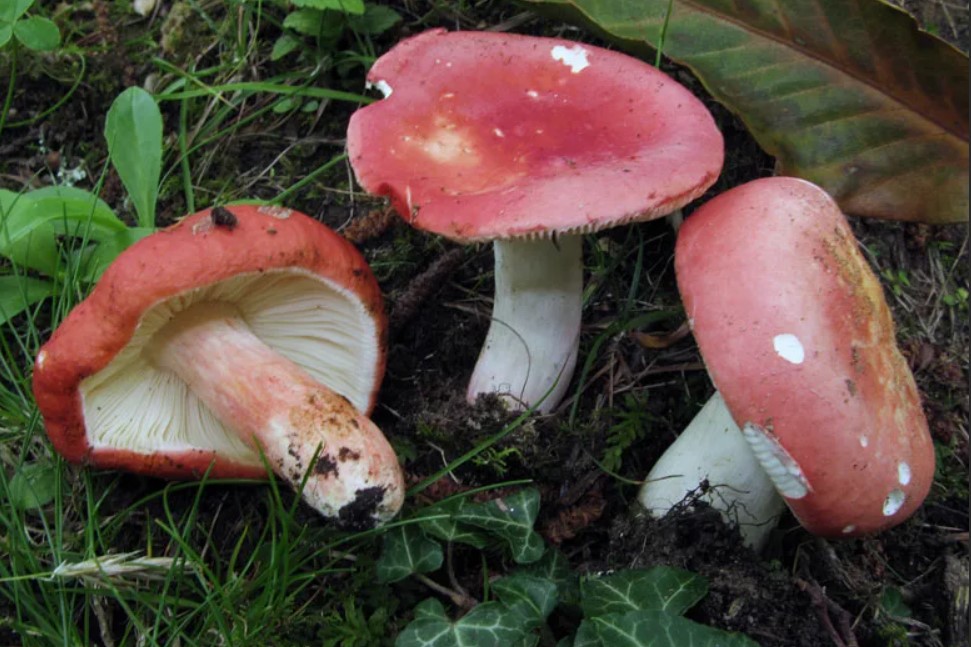
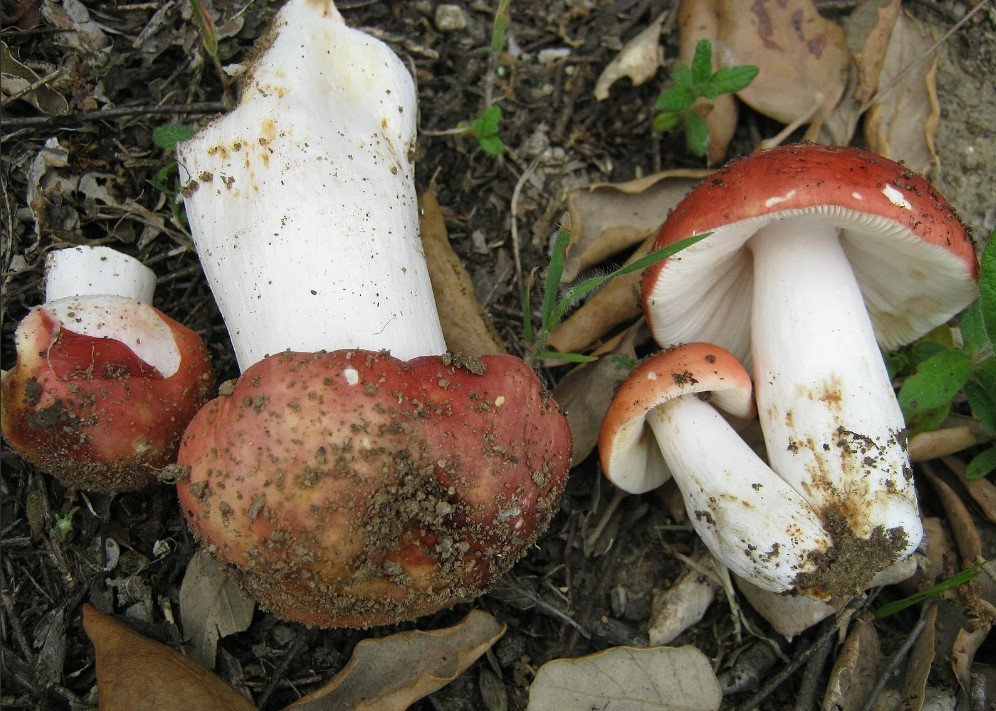
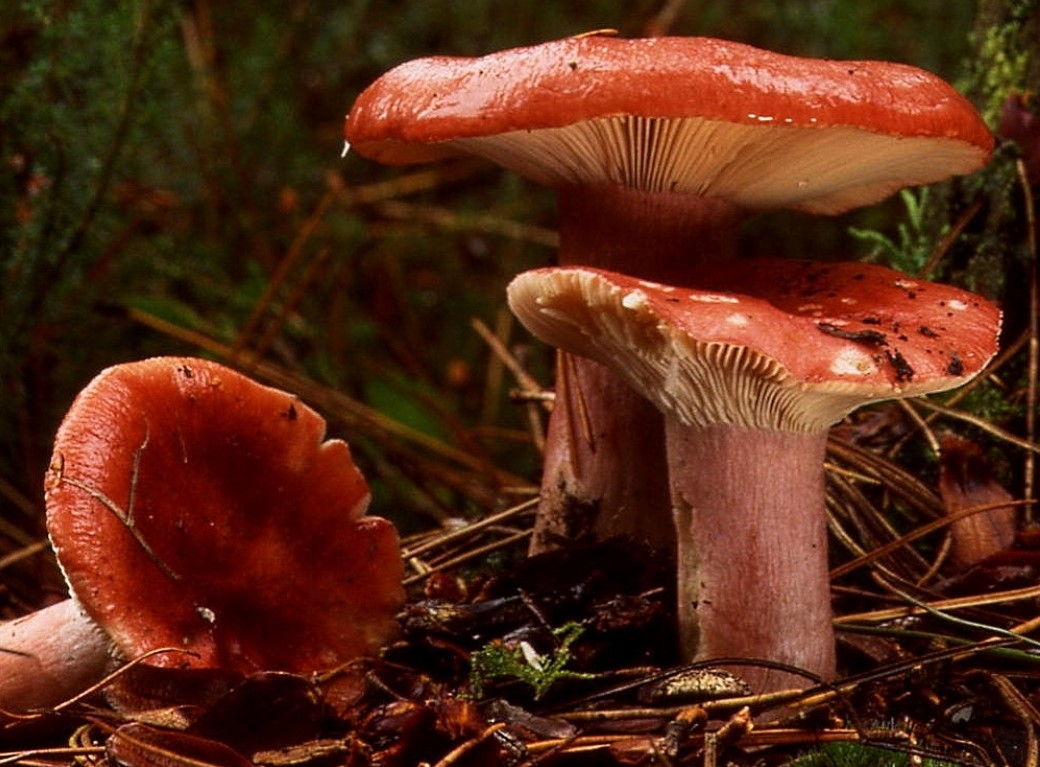
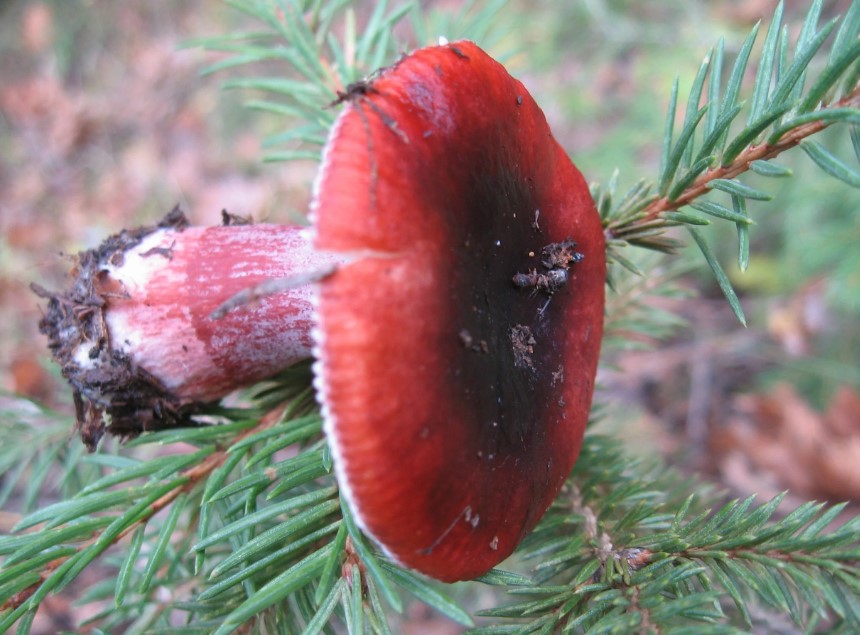
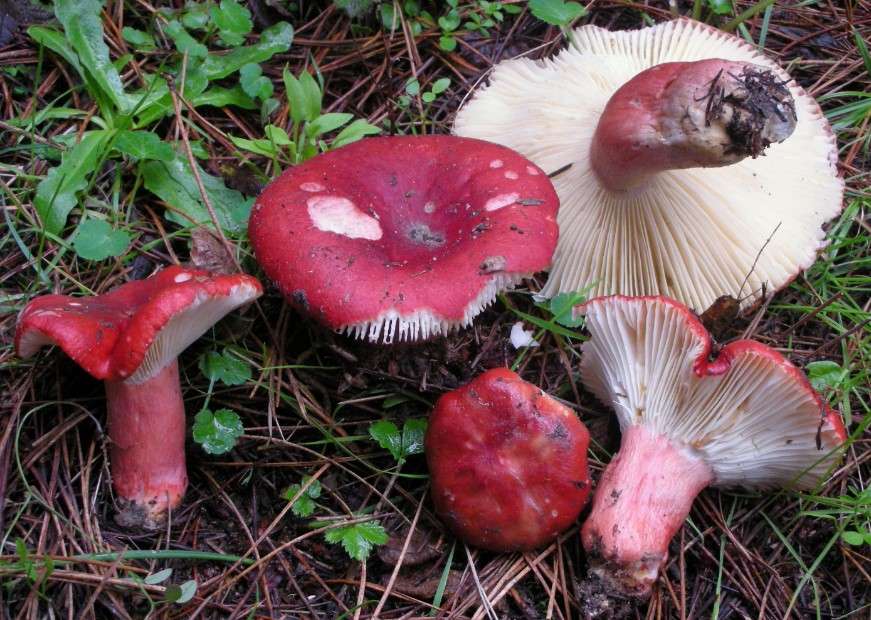
Read more about edible species in the articleRussula: 37 species with 253 photos and descriptions, where and when they grow, benefits and harms.
Is the false russula edible?
Among all the russula species, there are some inedible mushrooms. Although it's more accurate to call them conditionally edible, as eating a false russula won't cause death due to its minimal toxin content. However, it can easily cause gastrointestinal problems. Therefore, it's best to play it safe and know your enemy.
The flesh of these mushrooms may have an unpleasant odor that lingers even after processing. The taste will be bitter, making false russula fairly easy to recognize. They also have several other characteristics:
- The pulp is too strong, and has not been touched by the forest inhabitants.
- The cap color of false mushrooms is brighter and more saturated until it fades in the sun.
- The stem is not pure white, but has pink veins at the base.
15 Types of Inedible Russula Mushrooms + Photos
Among the inedible russula, there are several types; let's take a look at them.
Russula acetolens (vinegar russula)
The cap is up to 7-8 cm in diameter, yellowish in color with a bright center. Rarely found, it grows in deciduous and coniferous forests. The mushroom is noted to have a pungent vinegar or mustard odor.
Photo gallery of vinegar russula
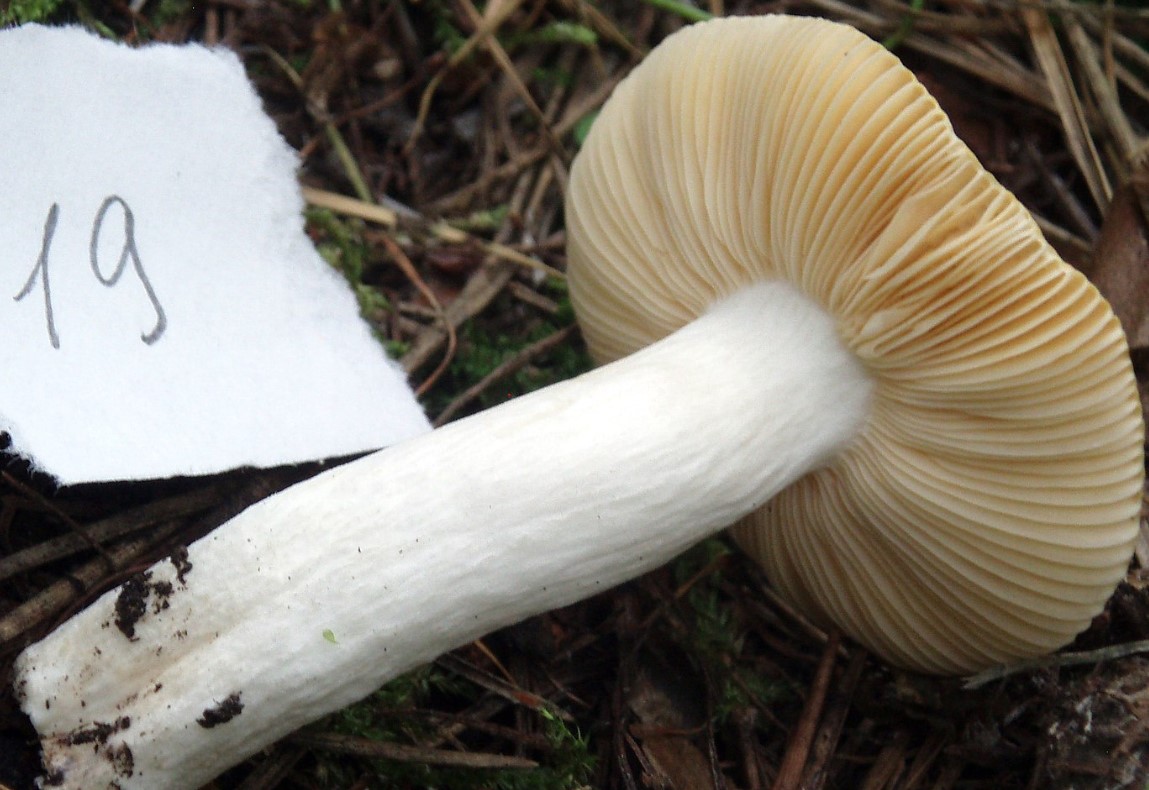
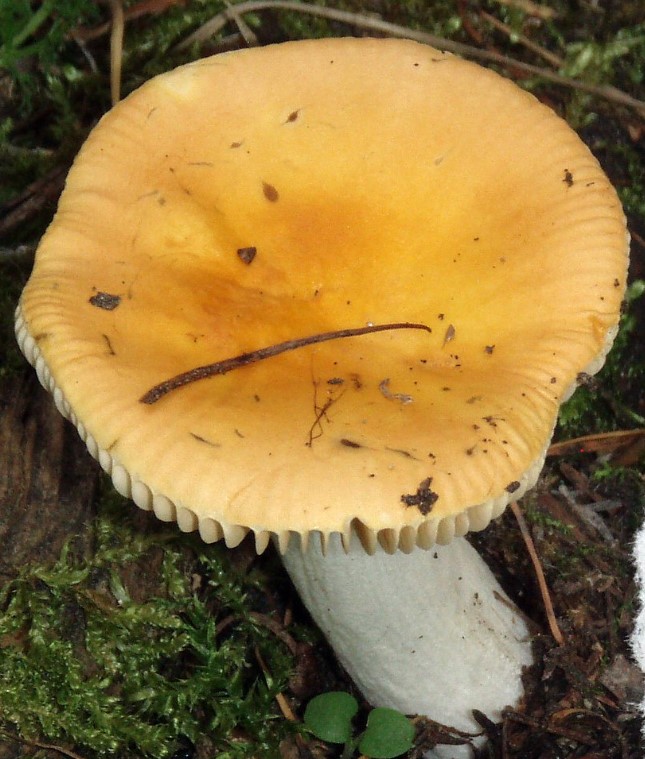
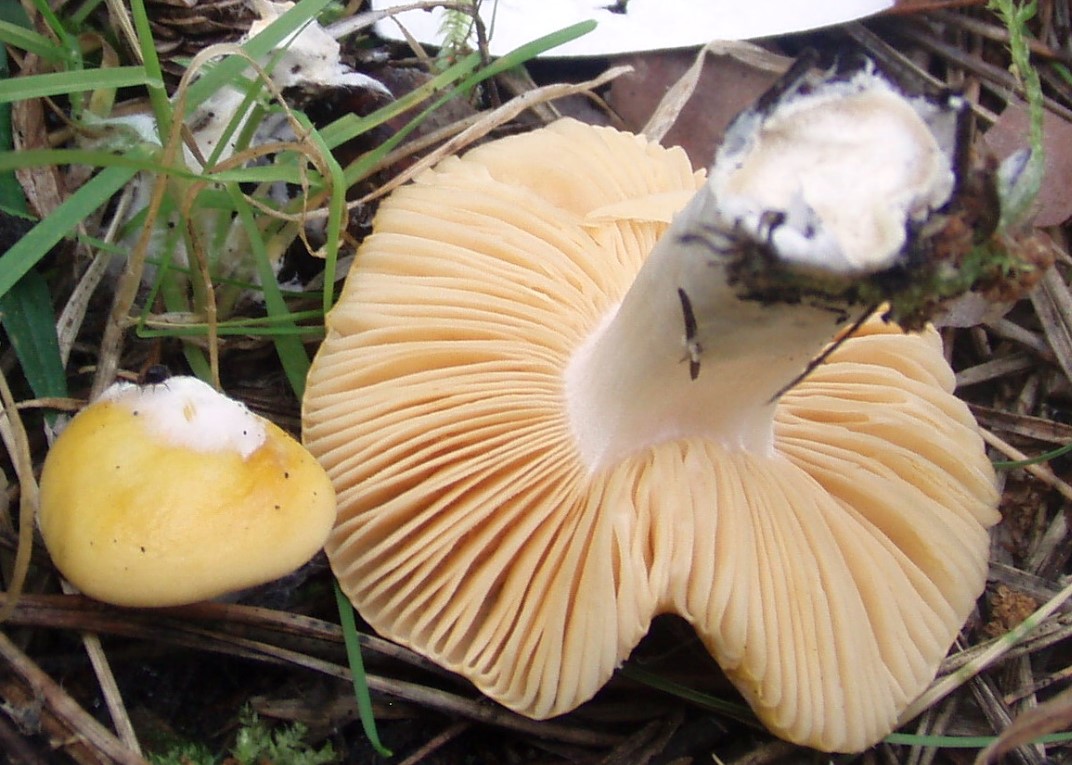
Hot Russula (Russula amarissima)
The cap diameter is 4-9 cm and is very rare, as it prefers to grow exclusively under beech trees. The taste is very bitter, and the flesh has a faint fruity aroma.
Photo gallery of Russula spp.
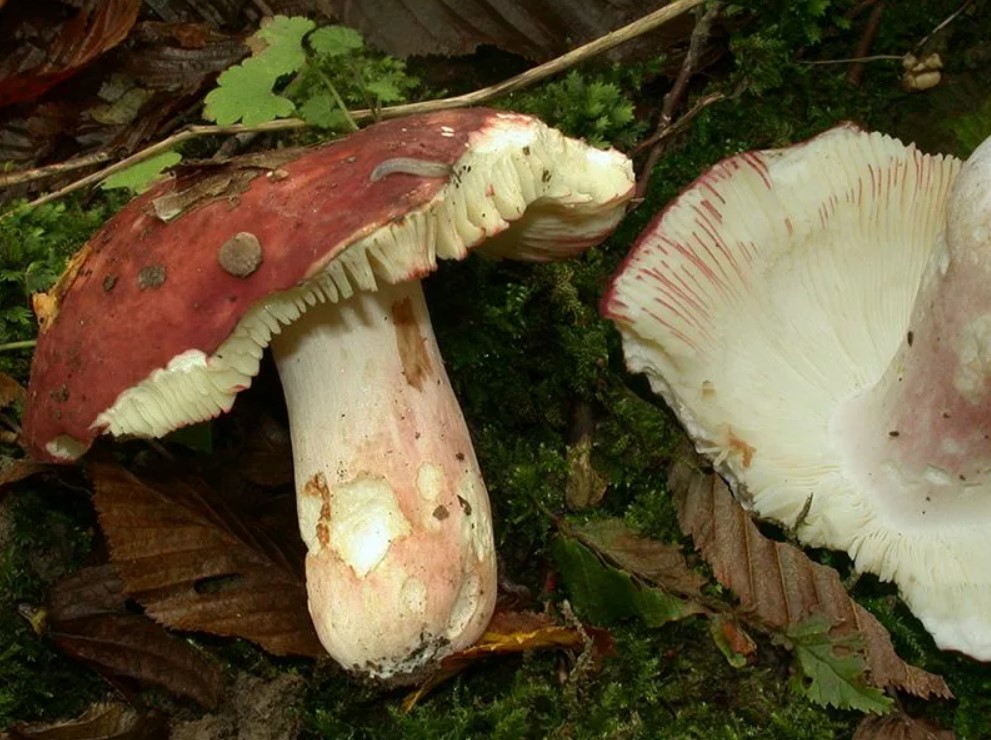
Russula aquosa
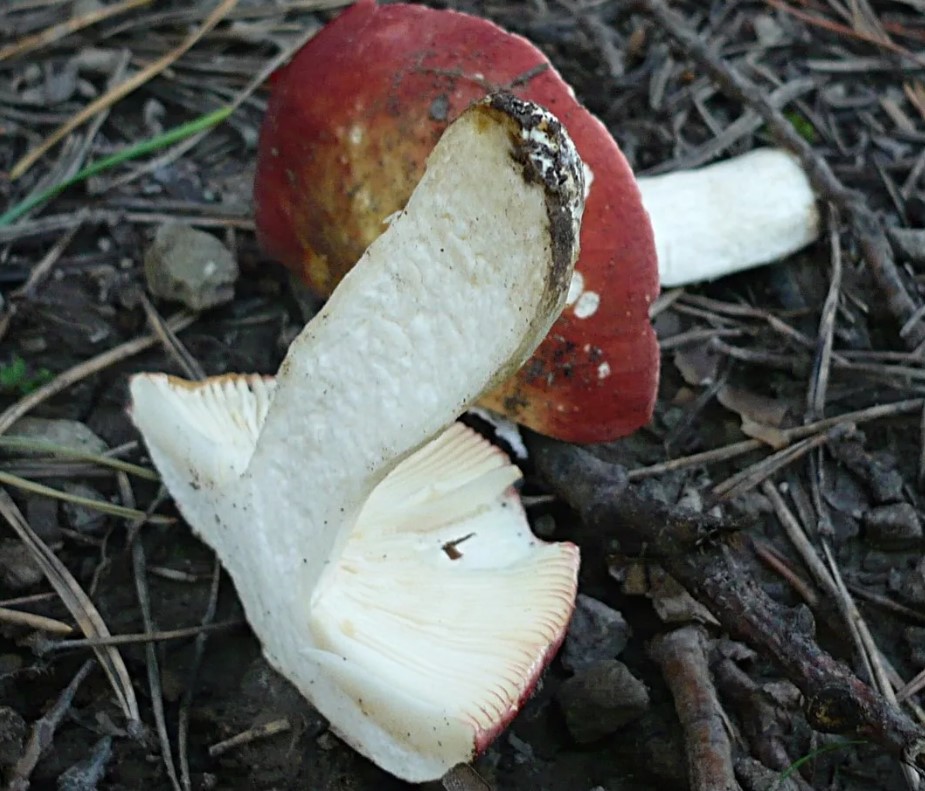
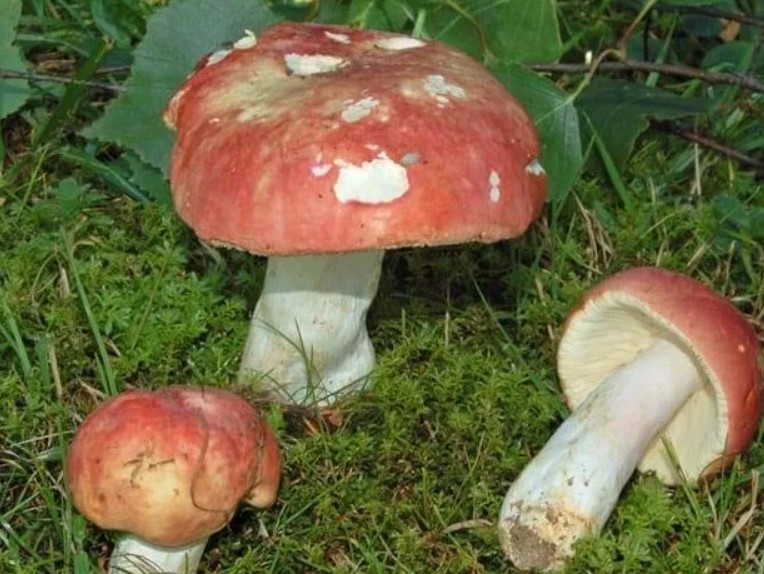
This rare mushroom is distinguished by its small cap, up to 5 cm in diameter. It is bright red and has a slimy surface. The stem is up to 6 cm tall and white. Its aroma is similar to radish, and its taste is pungent. It prefers marshy areas and damp forests.
Photo gallery of watery russula
Cedar, purple-brown russula (Russula badia)
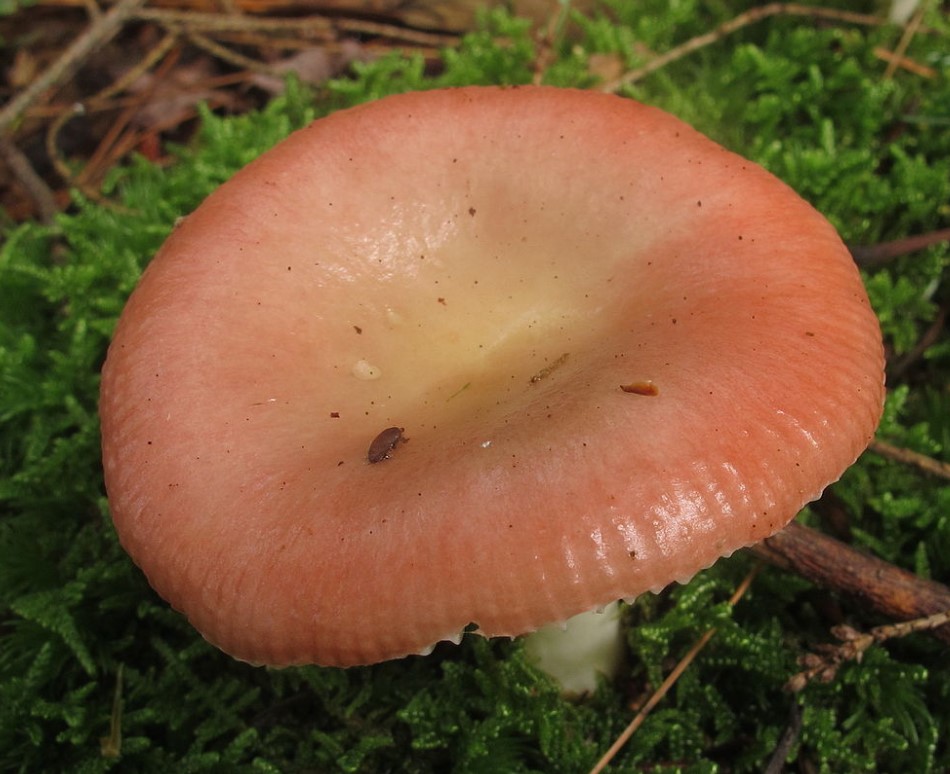
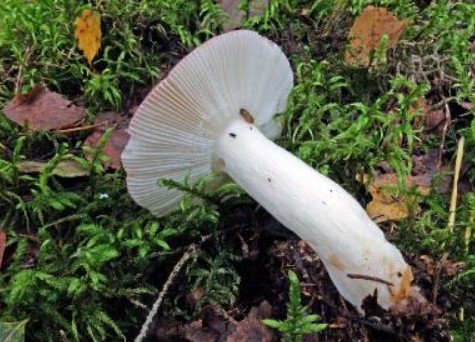
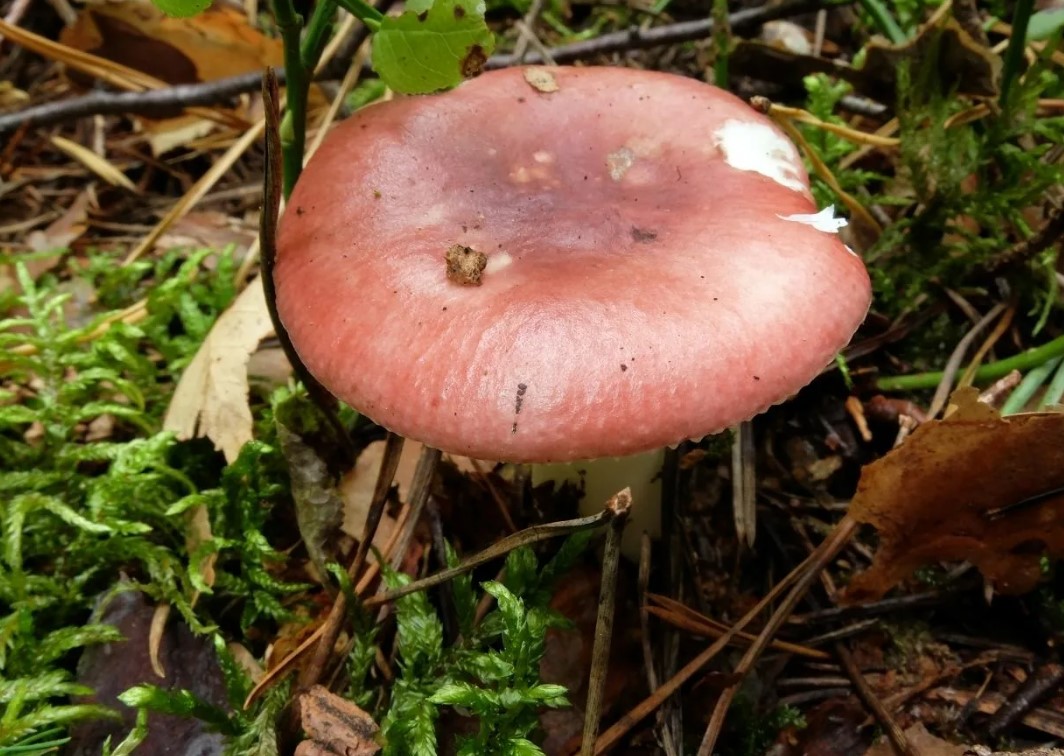
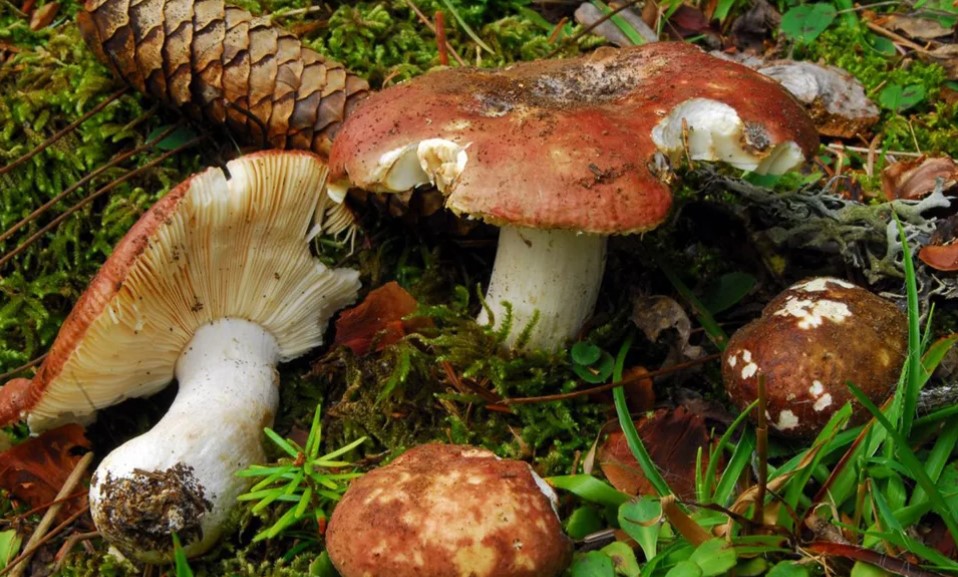
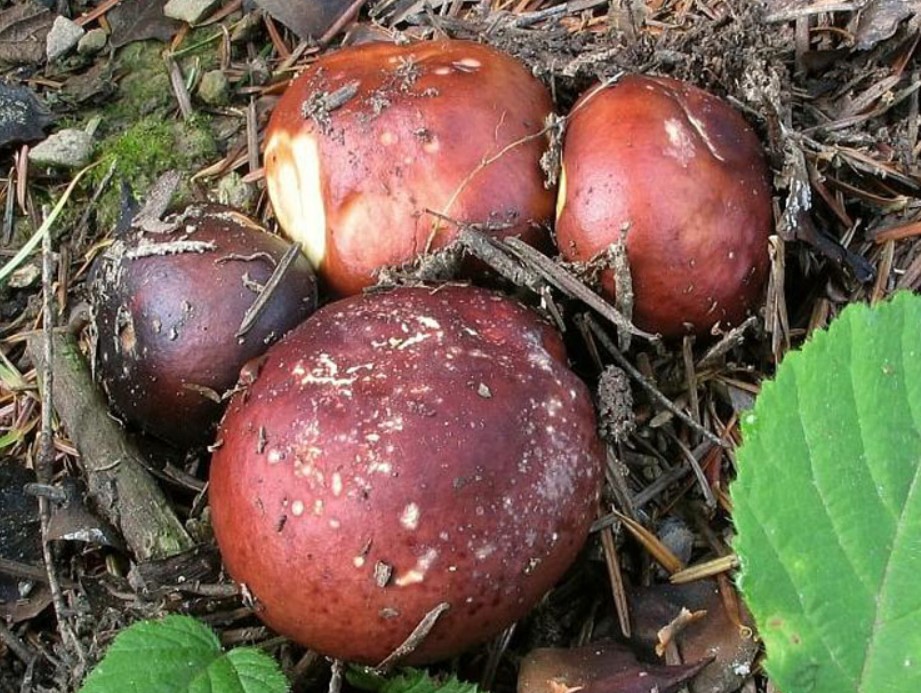
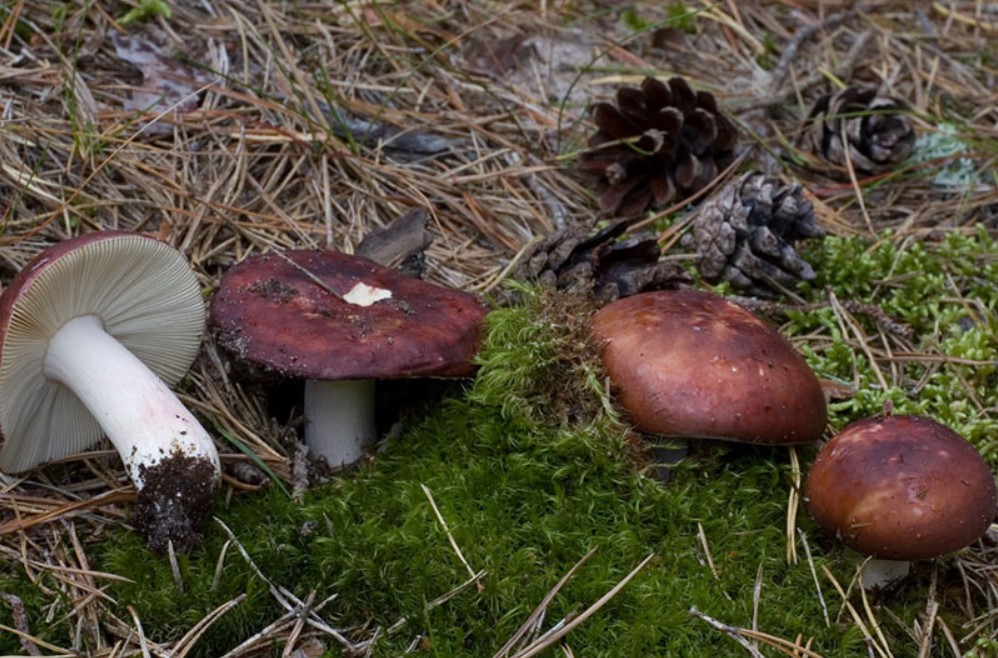
The cap is smooth, but the edges may become ribbed with age. The diameter ranges from 3 to 12 cm, and the color is rich, purple-brown. The stem is up to 7 cm tall and reddish. The flesh has a slight woody aroma and a bitter taste. The mushroom prefers coniferous forests, especially pine forests.
Photo gallery of the purple-brown russula
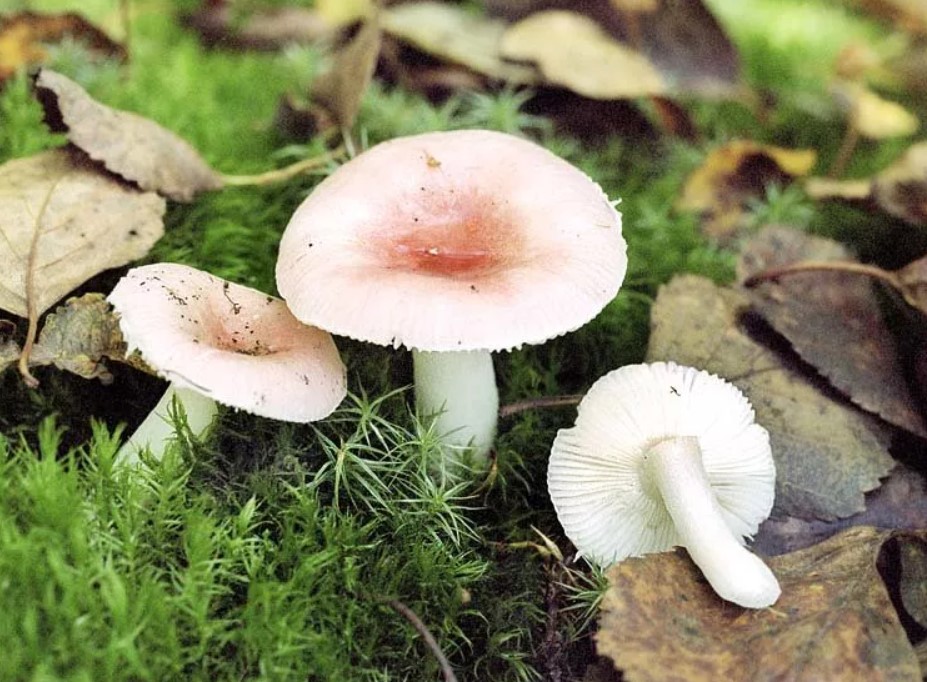
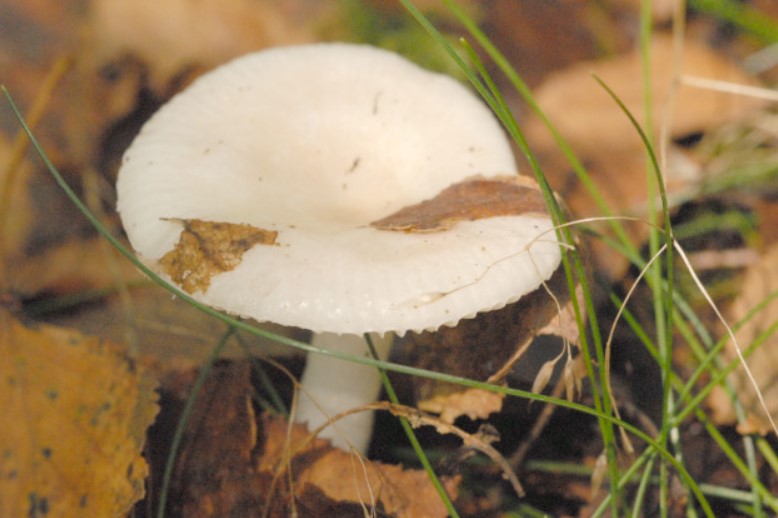
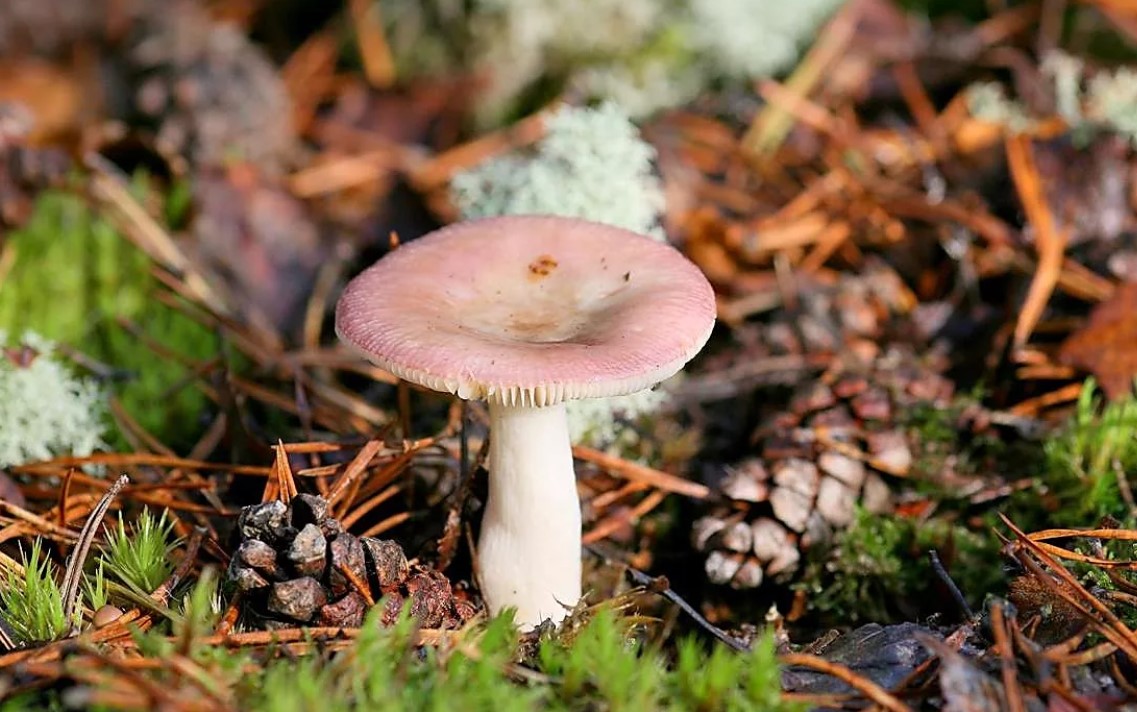
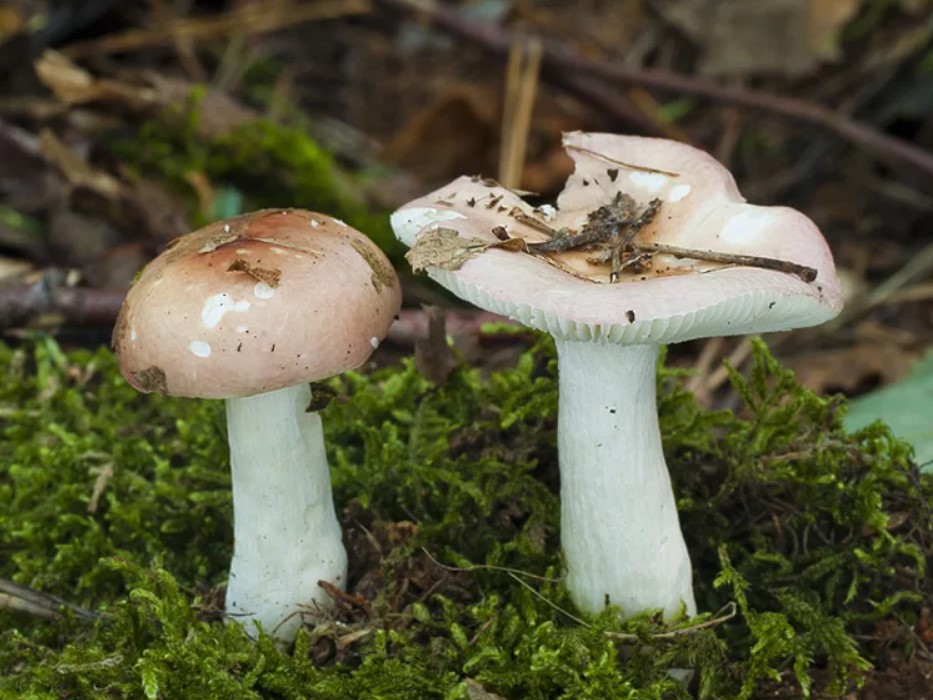
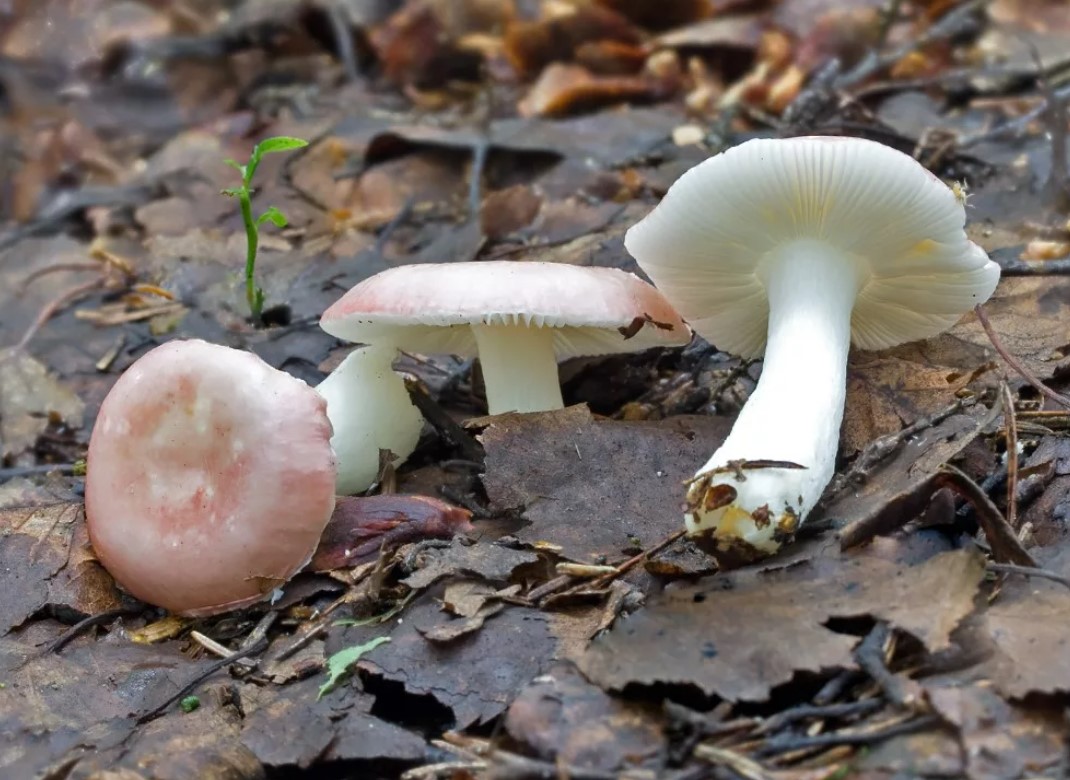
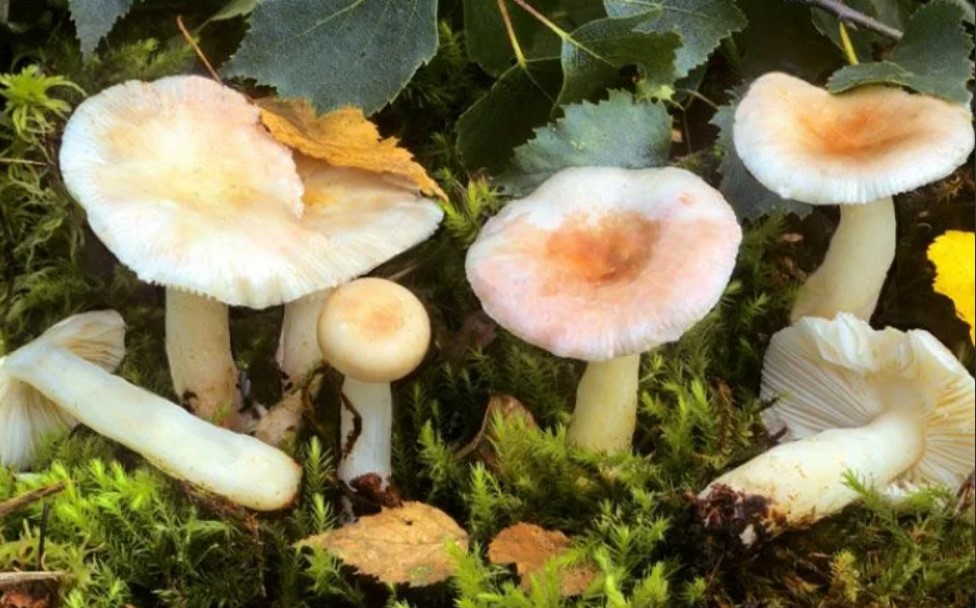
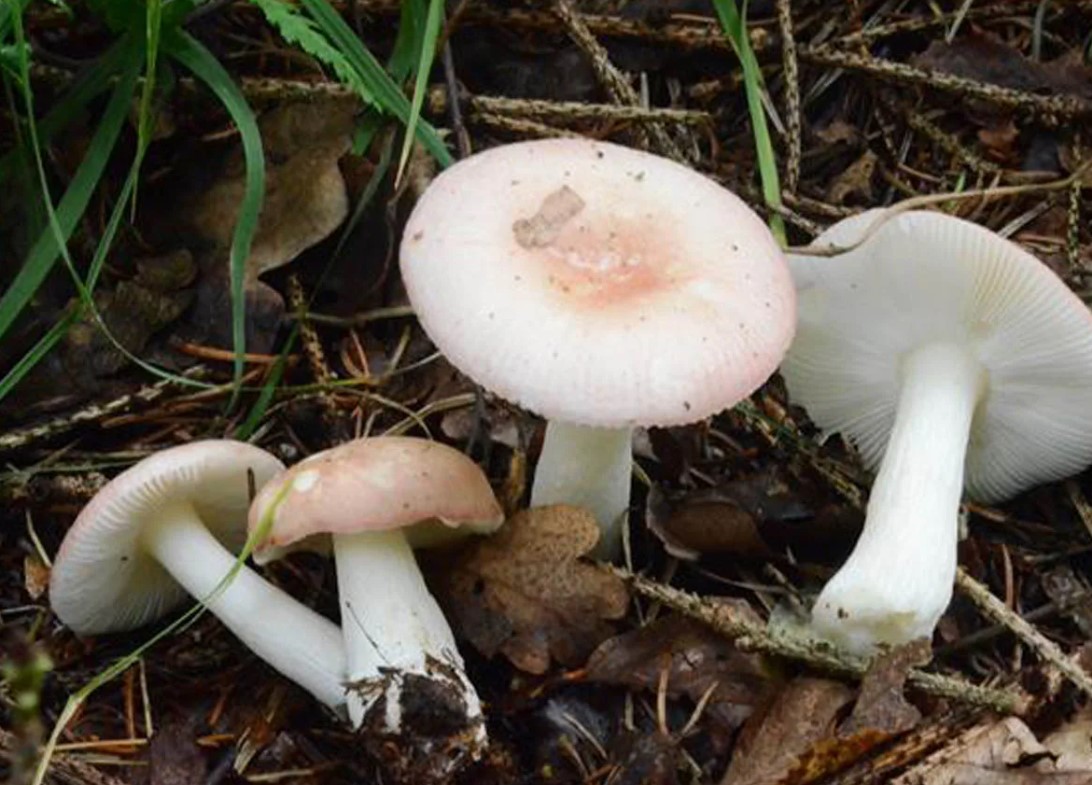
Birch Russula (Russula betularum)
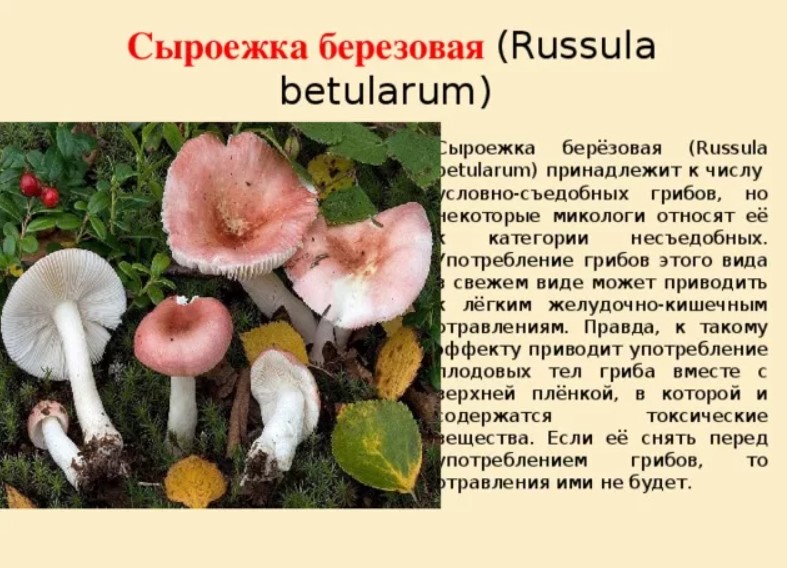
A small mushroom with a cap ranging from 2 to 5 cm in diameter, the edges of young specimens are wavy. The color can be dark red with a copper tint, but birch russulas are more common with a pale cap with a pinkish tint.
The stem is wrinkled and yellowish. The mushroom prefers mixed forests, especially spruce and birch.
Photo gallery of the birch russula
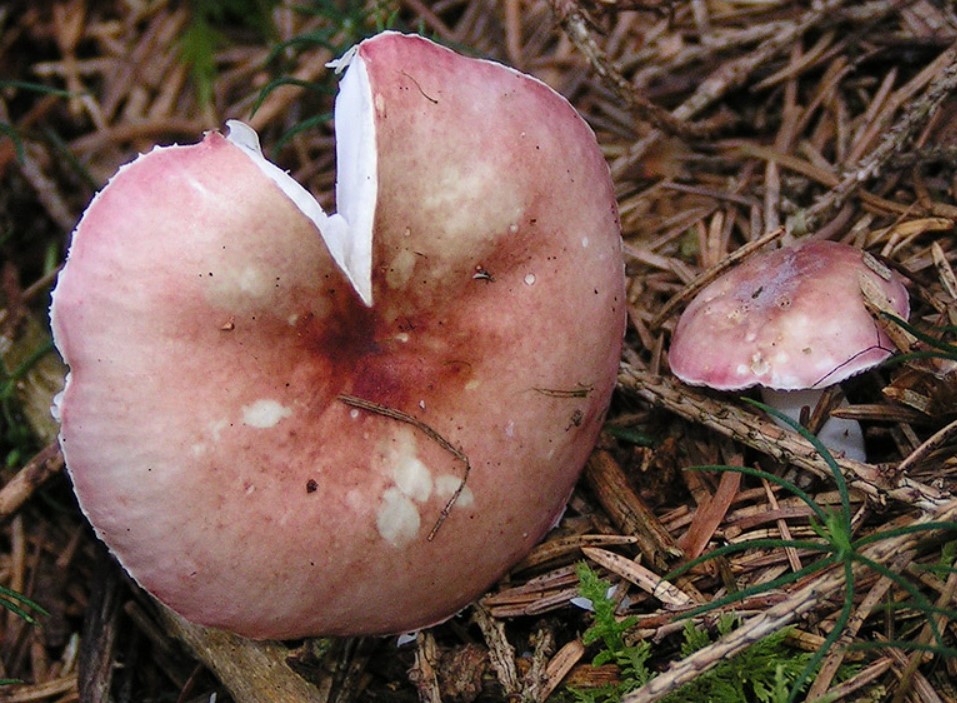
Russula densifolia
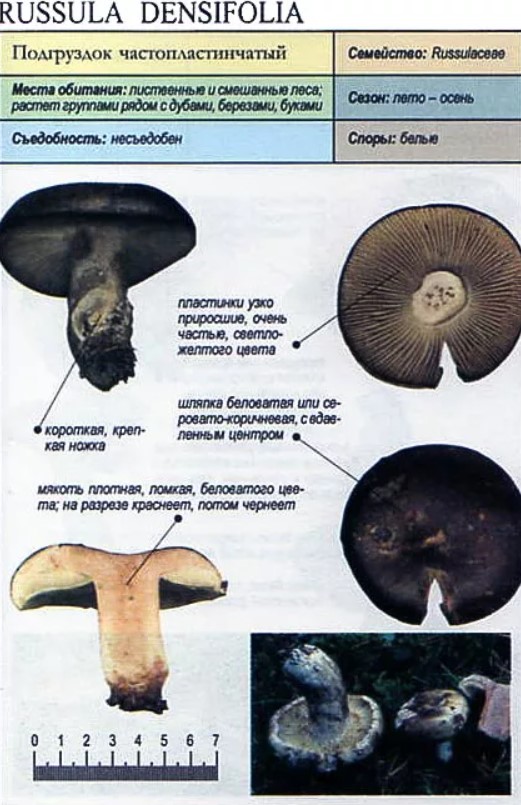
The cap reaches 12 cm in diameter, grayish in color, turning brownish or olive as it matures. The stem is also the same color. The flesh is red, darkening after cutting.
It grows mainly in regions with a warm climate in forests of various types.
Photo gallery of Russula podgruzdka (frequently-lamellar milk cap)
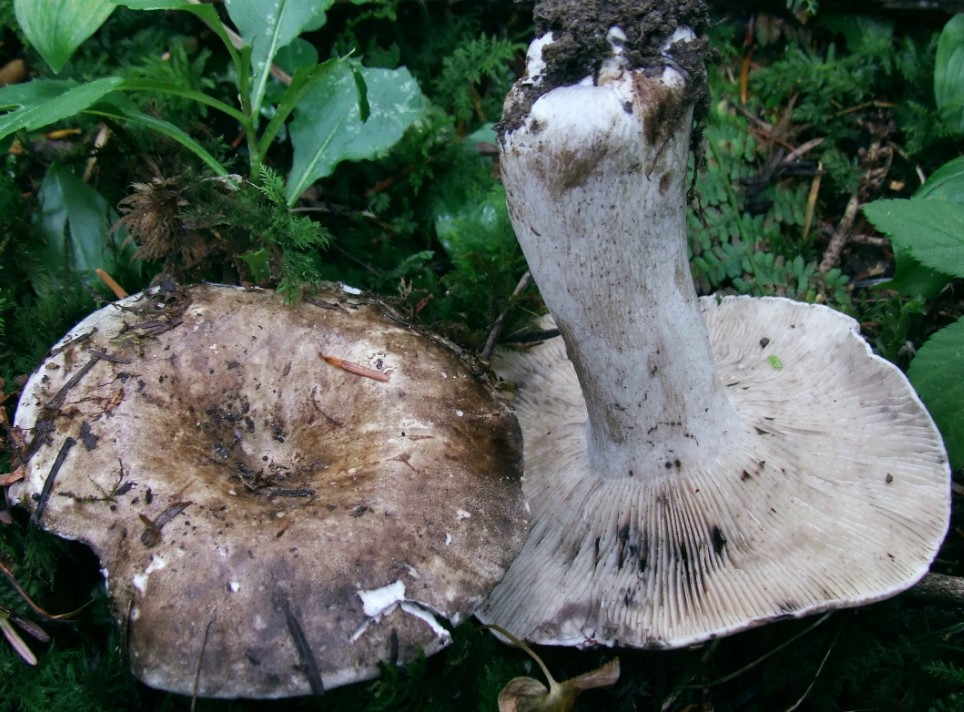
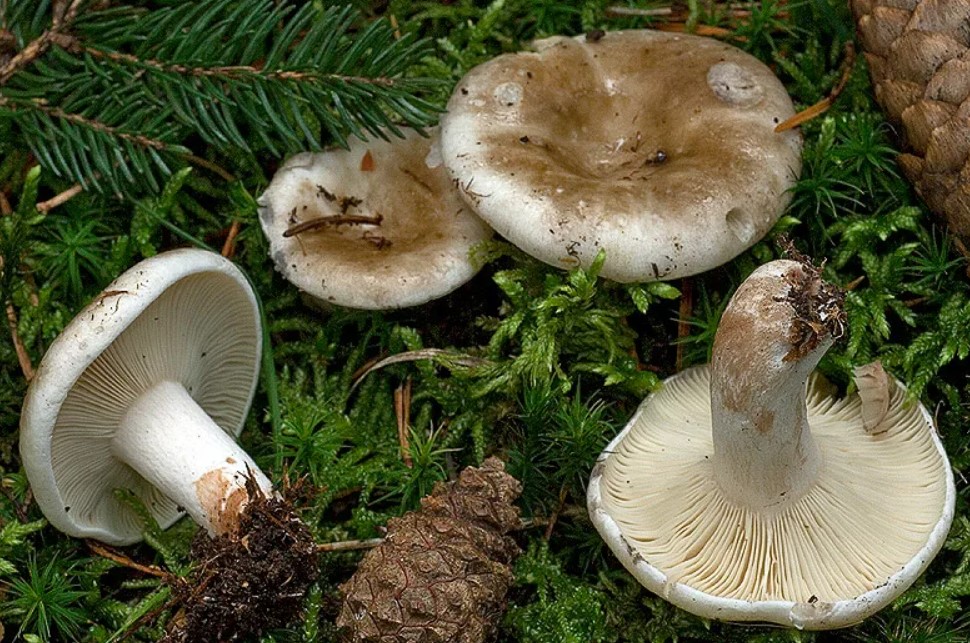
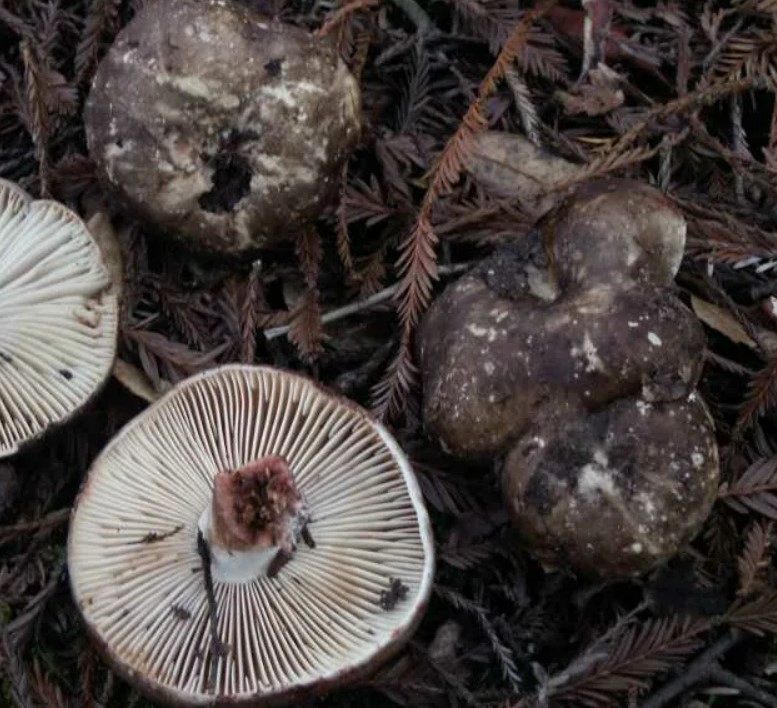
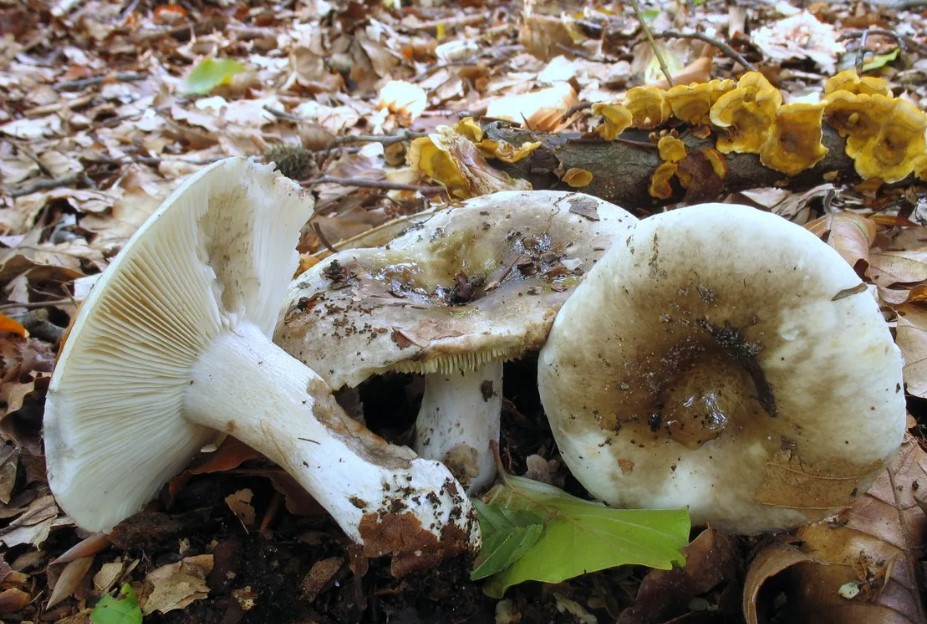
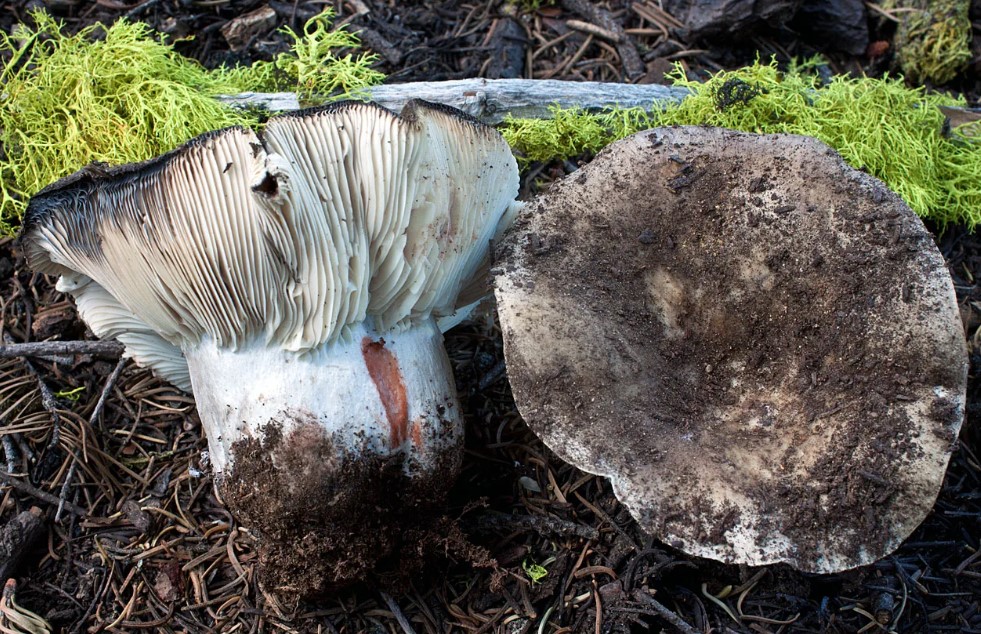
Russula (Russula farinipes)
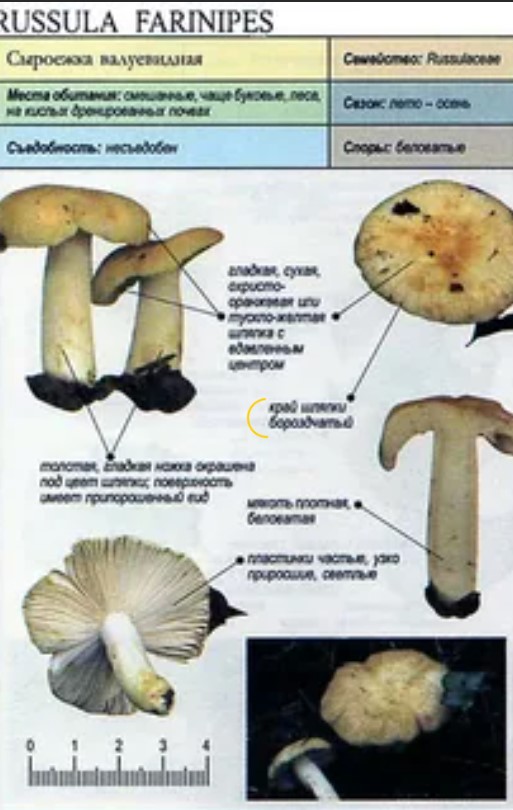
The cap has a depressed center, yellow or ochre-orange in color. The surface is dry, lightly powdered, and the edges are furrowed. The mushroom grows primarily in beech forests.
Photo gallery of Russula valueidae
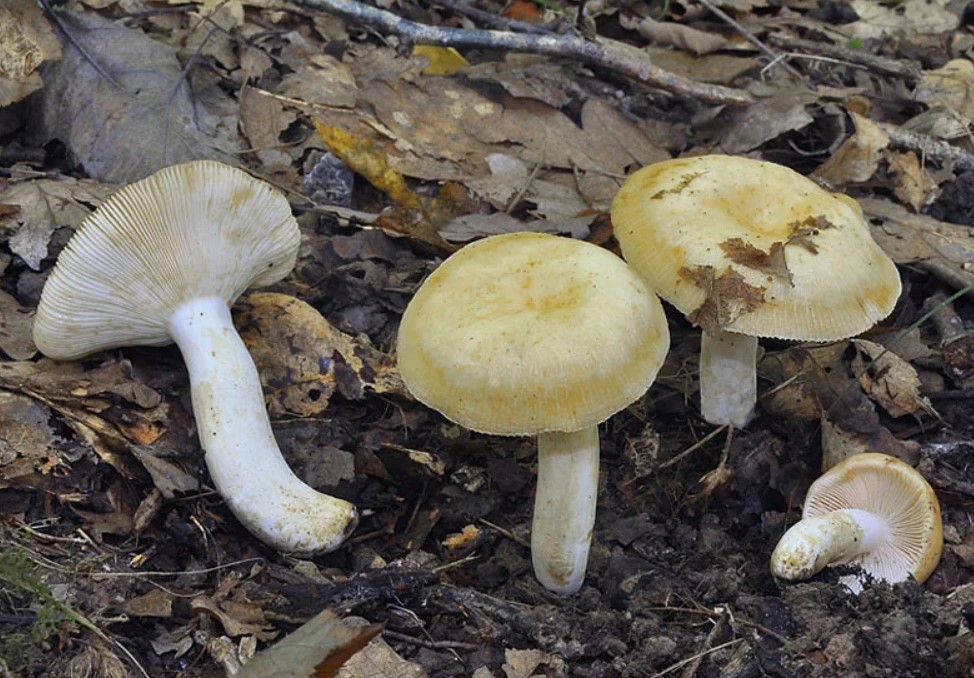
Gall russula (Russula fellea)
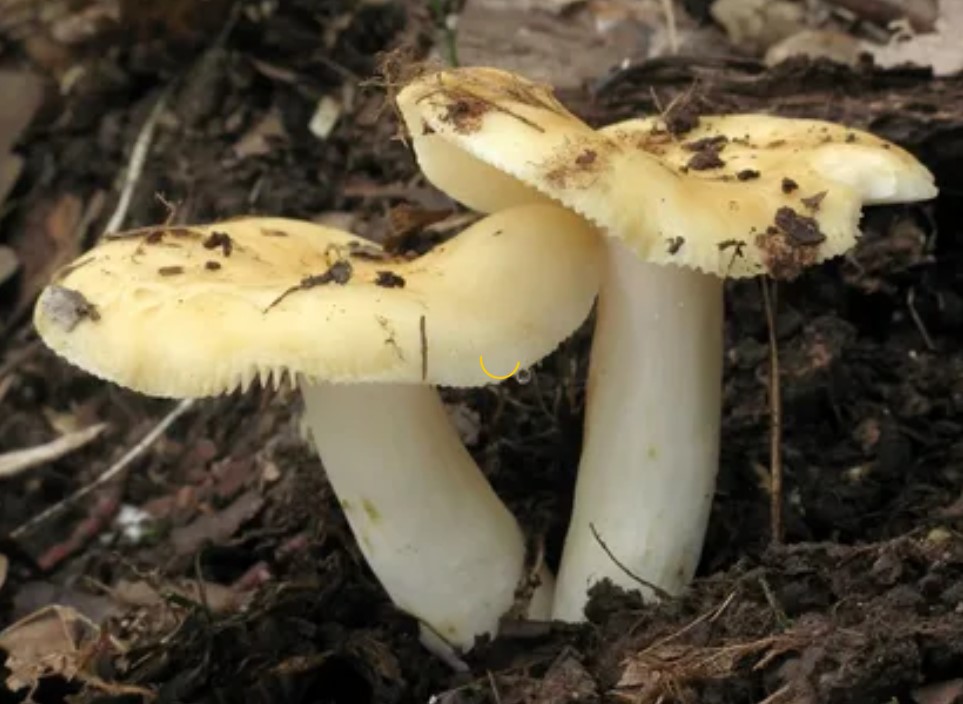
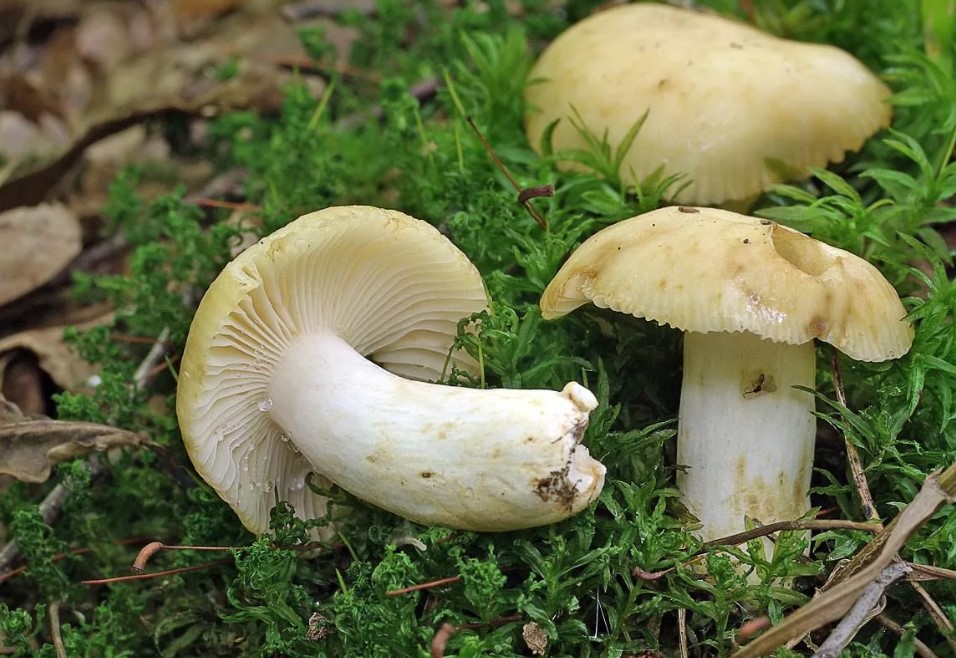
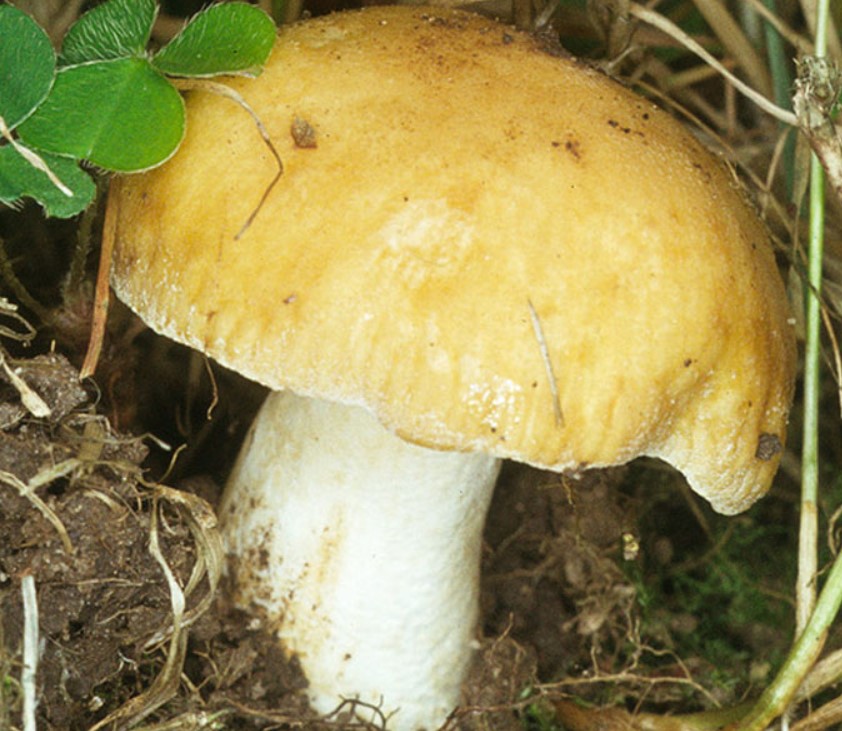
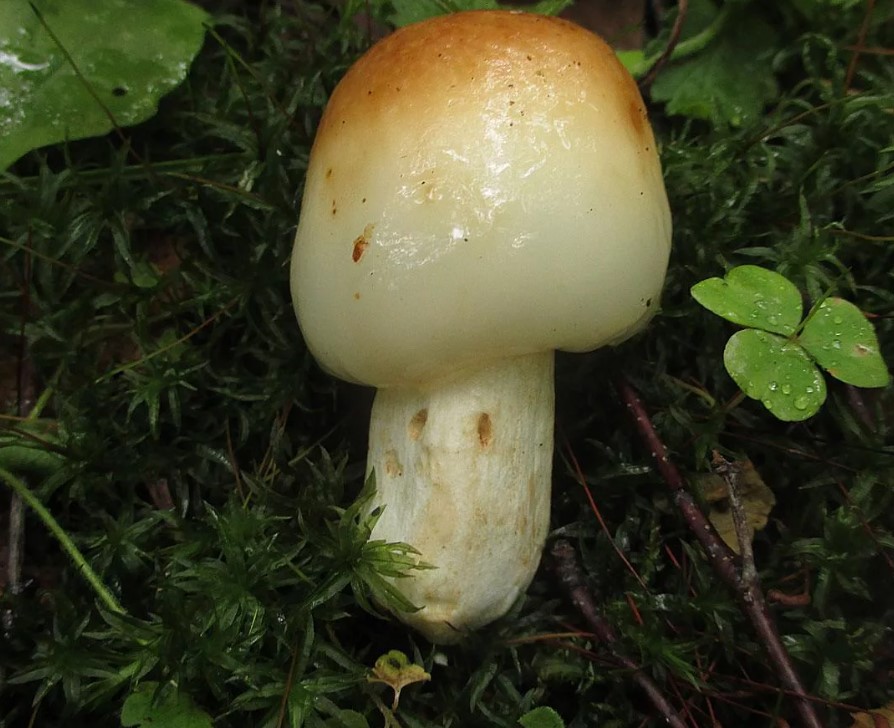
The cap diameter ranges from 4 to 9 cm, with a slightly ribbed margin and a depressed core. The color is yellow, but can fade to beige. The stem is light ochre, heavily wrinkled in mature mushrooms. It prefers beech or oak forests, and is occasionally found in coniferous stands.
Photo gallery of the caustic russula
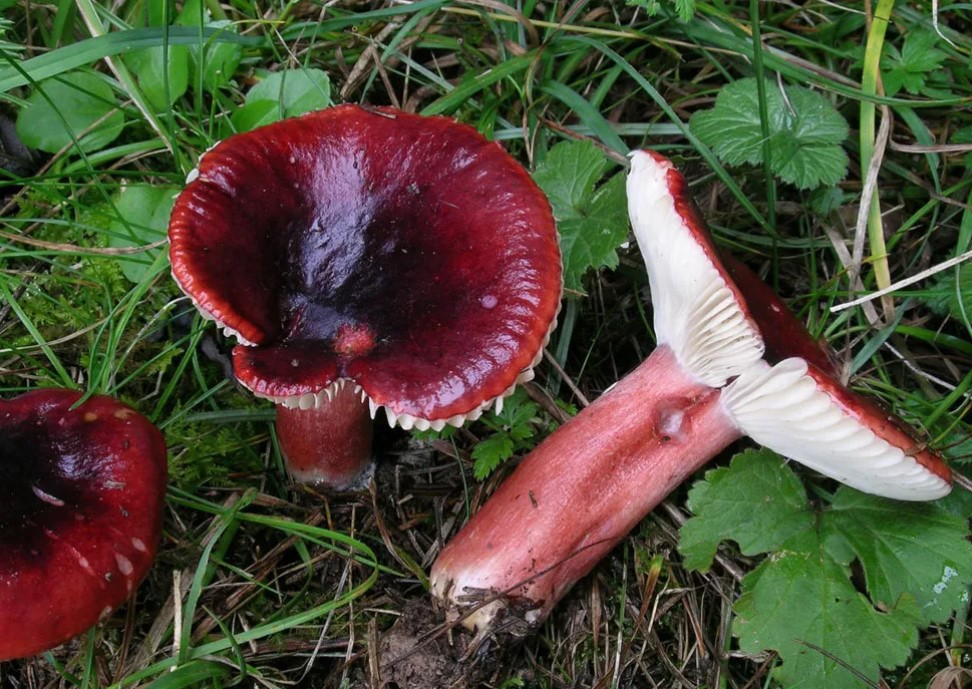
Reddening False Russula (Russula fuscorubroides)
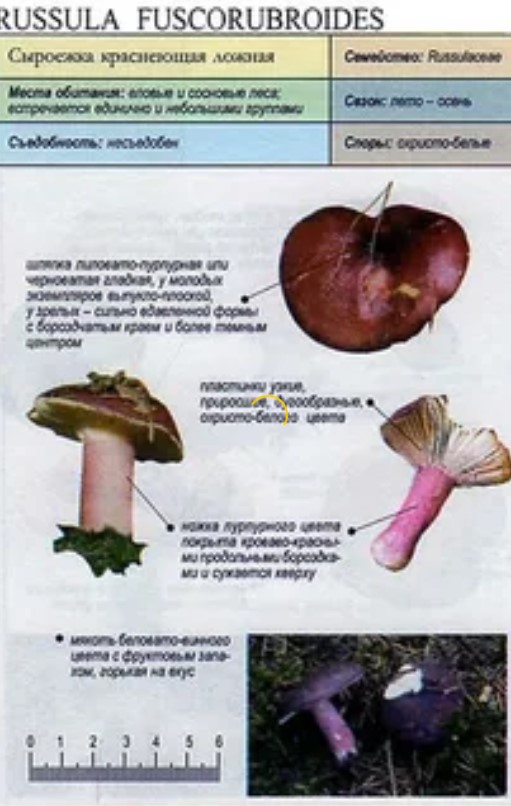
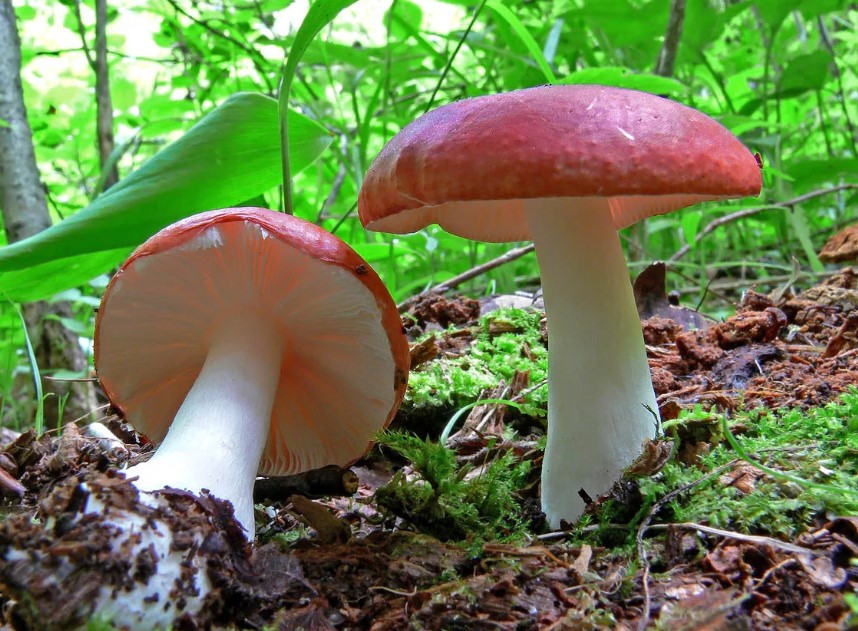
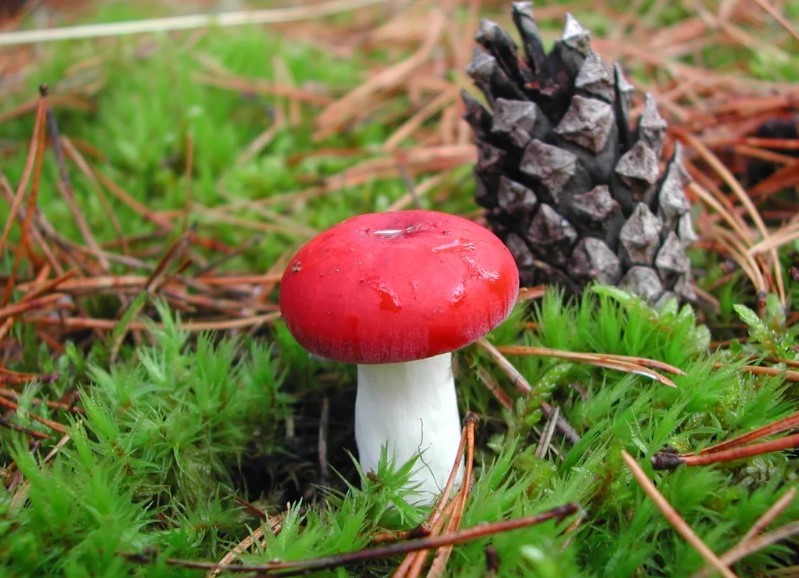
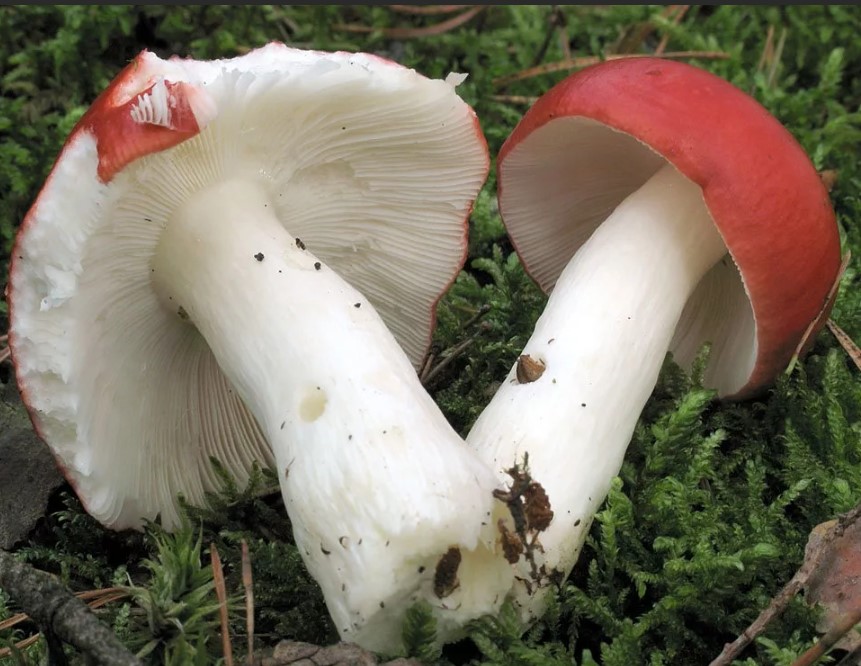
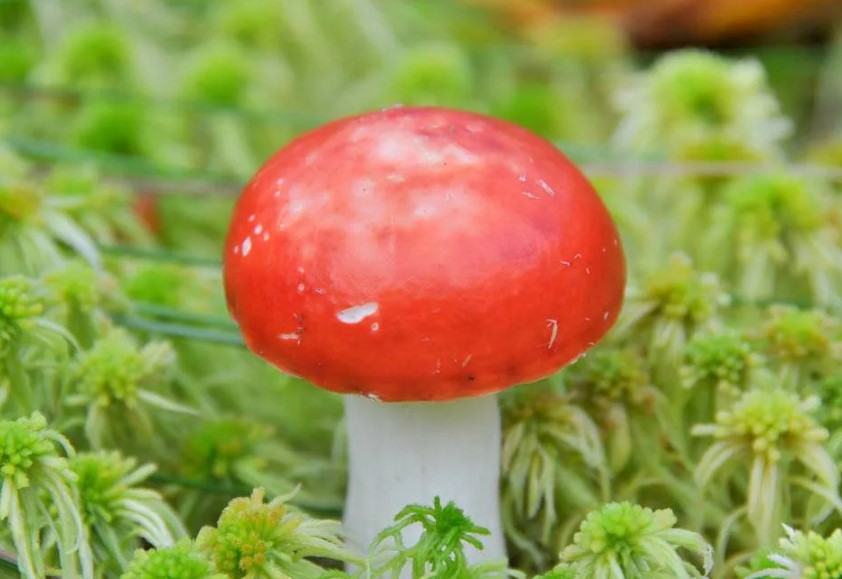
The cap is 4 to 14 cm in diameter and convex, but slightly depressed in the middle. The surface cracks, and the mucilage disappears in mature mushrooms. The color is bright purple or deep brown. The stem, up to 9 cm tall, is purple with rusty grooves. The flesh is bitter. It prefers coniferous forests.
Photo gallery of the blushing false russula
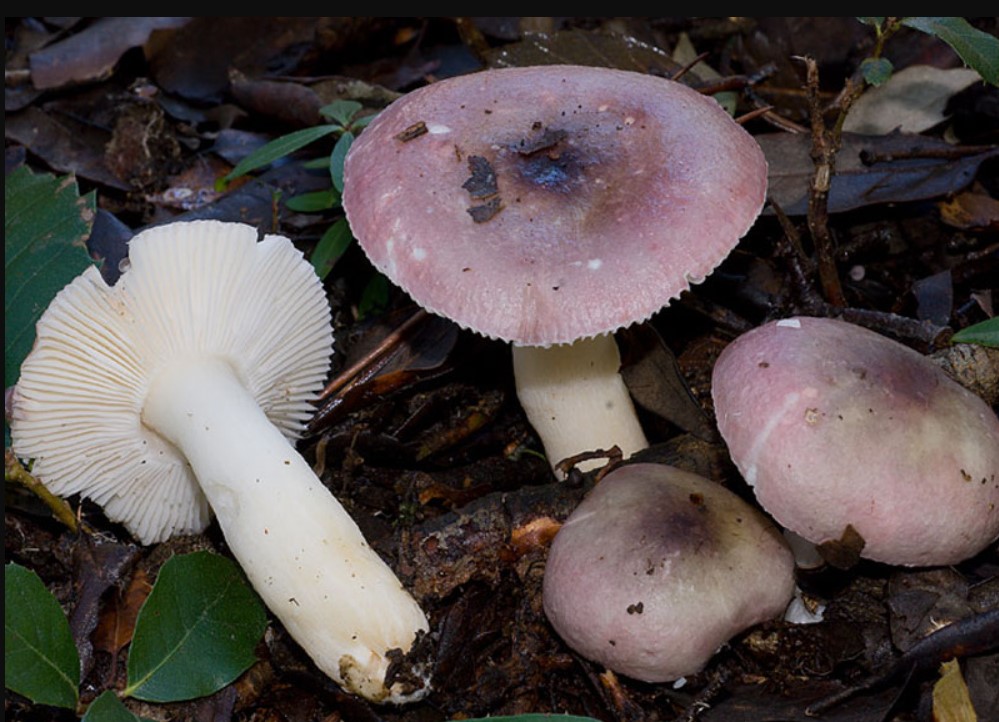
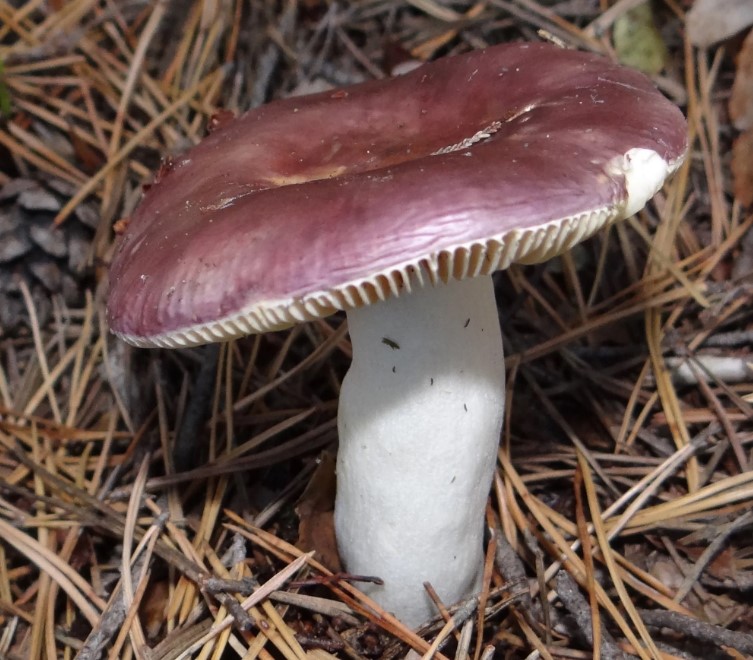
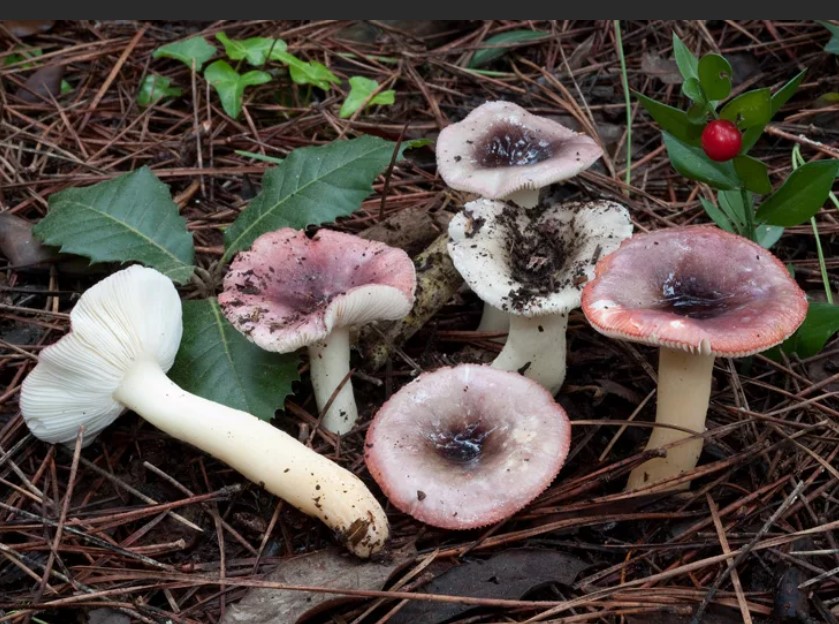
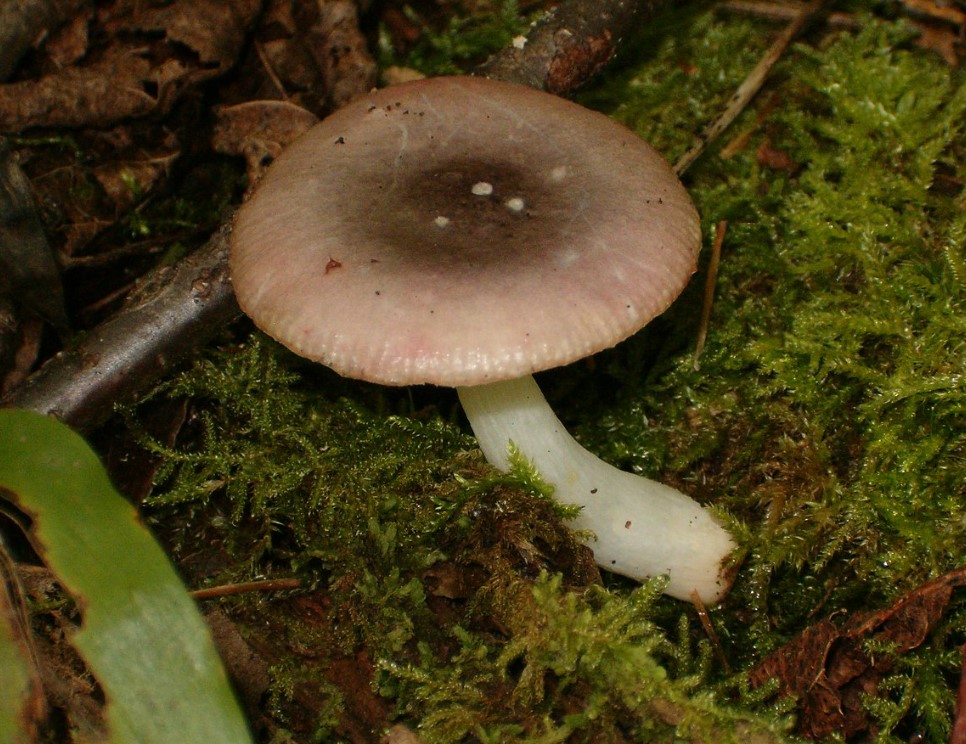
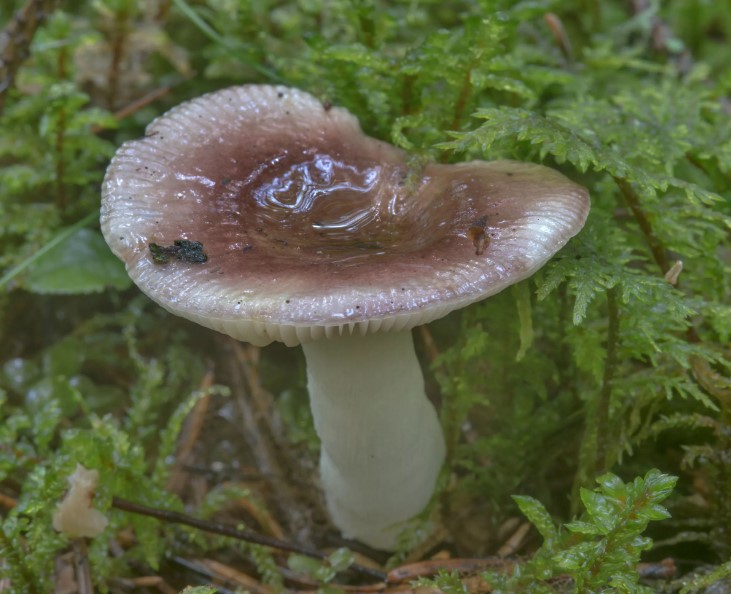
Brittle Russula (Russula fragilis)
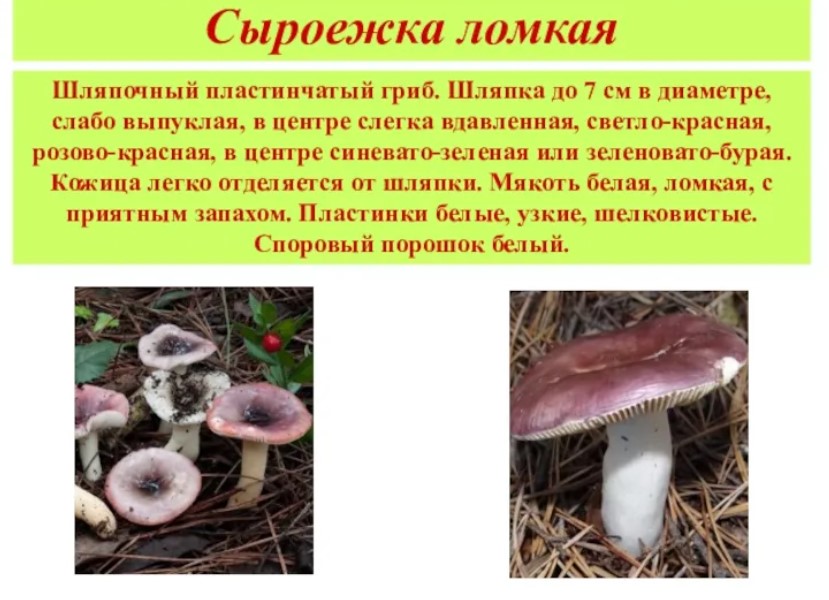
The cap grows from 2 to 6.5 cm in diameter and is very brittle. Coloration varies widely: olive, greenish, gray, light yellow, purple or reddish-purple, and lilac. The surface is slimy, with small scales. The stem color changes from light to yellowish as it grows. The flesh is usually yellowish, very brittle, and has an unpleasant odor.
Photo gallery of Russula brittle
Russula pectinata
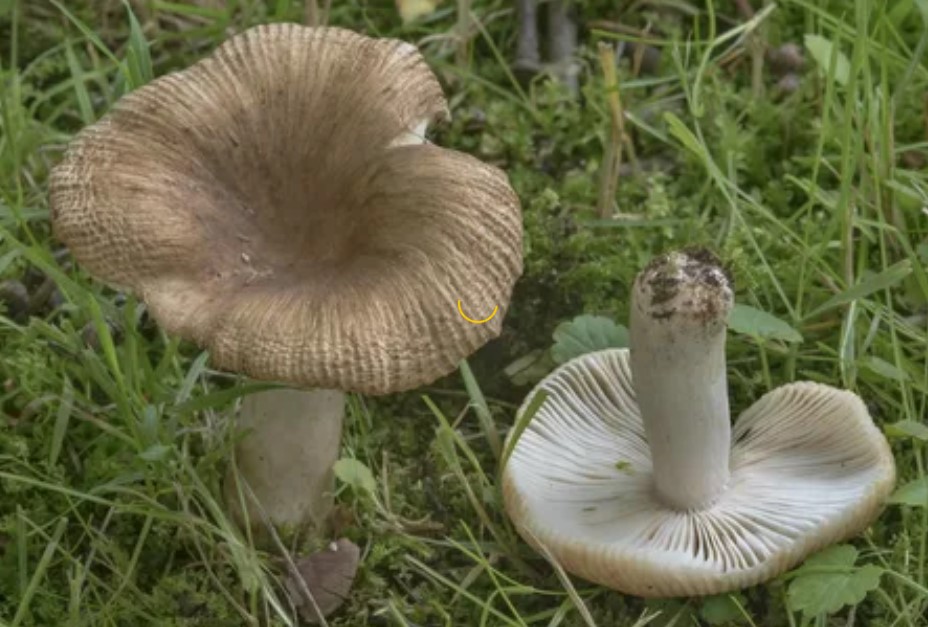
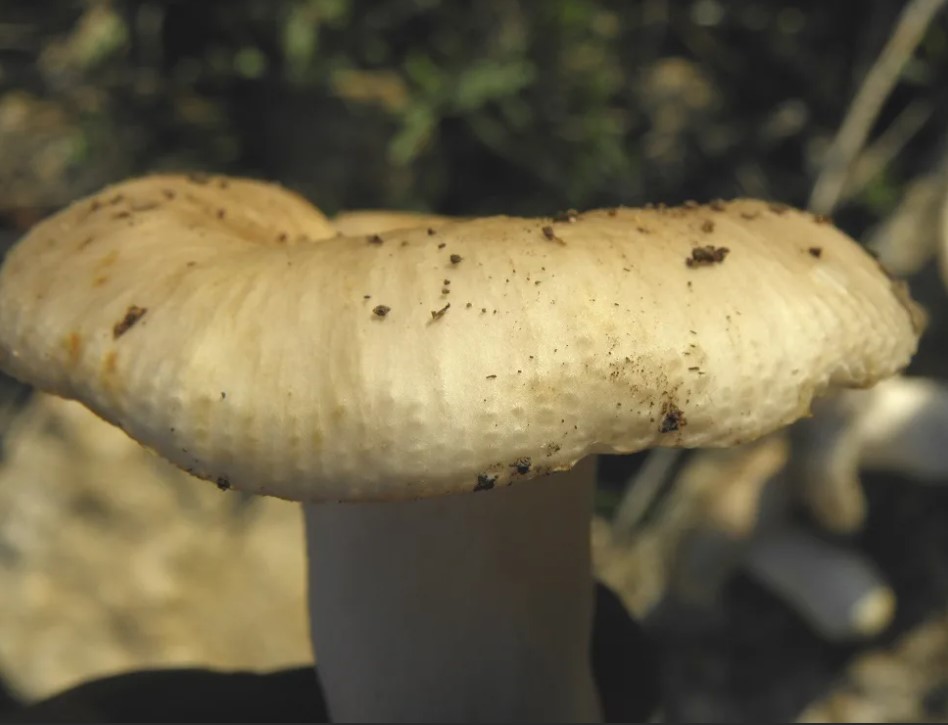
The cap is up to 9 cm in diameter, with ribbed edges and little flesh. The color is yellowish-gray, and the surface is slightly slimy. The flesh is brittle and has a fishy odor. The stem is up to 8 cm tall, grayish, with pink veins at the base. It grows in mixed and deciduous forests.
Photo gallery of the Russula erinacea
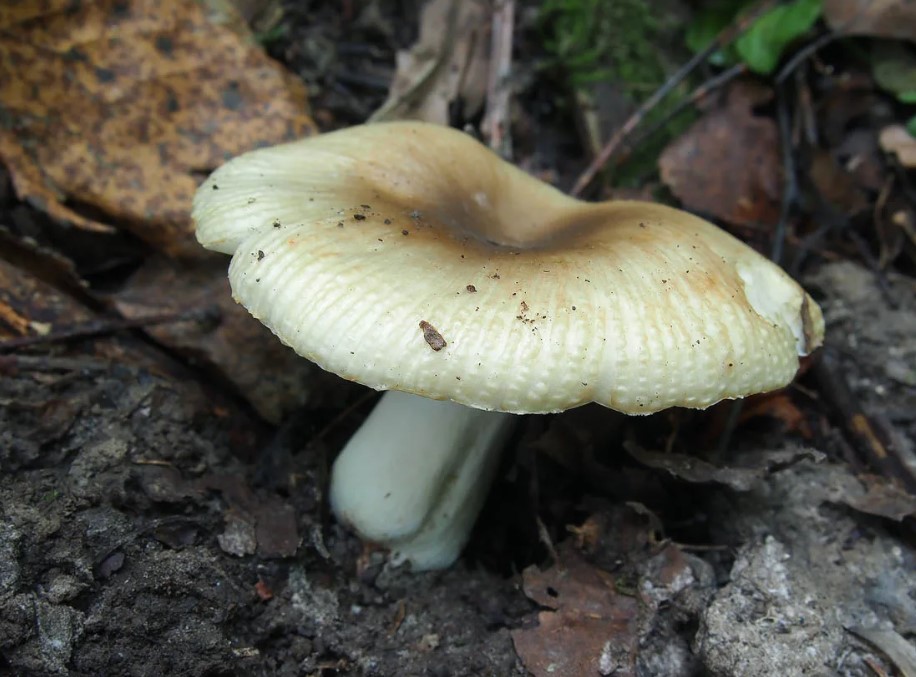
Russula Kele (Russula queletti)
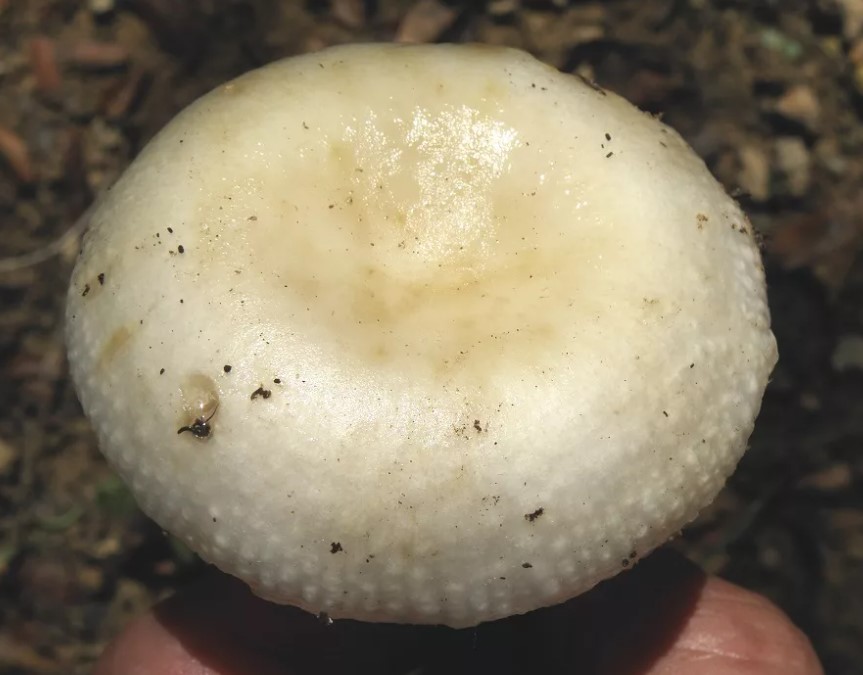
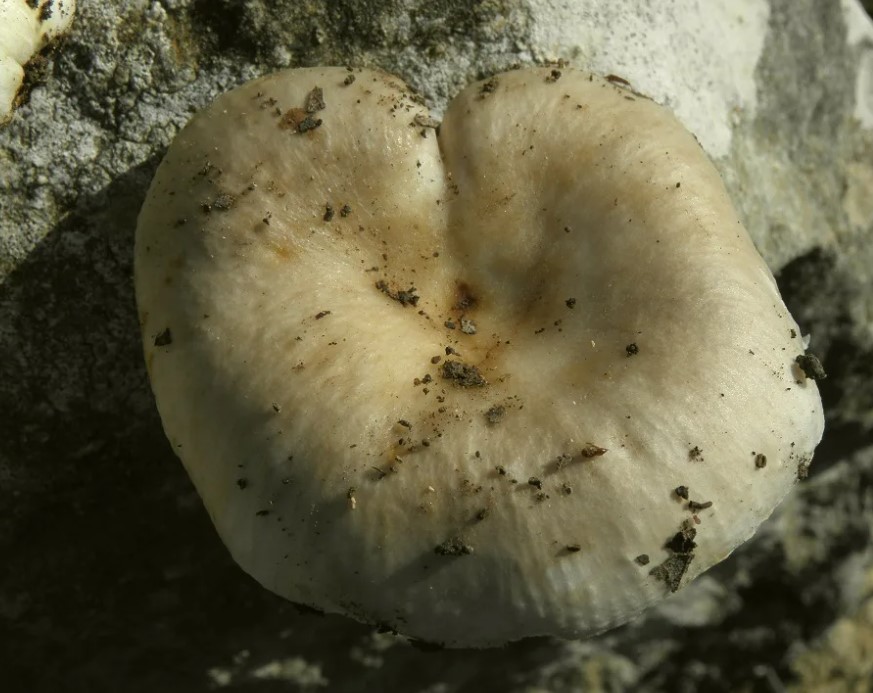
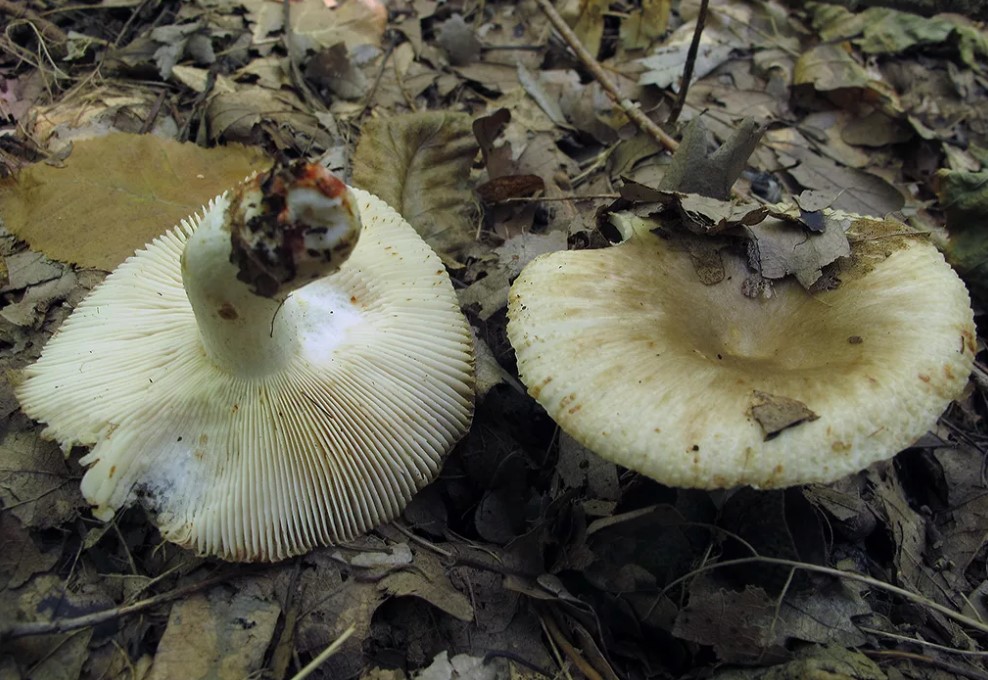
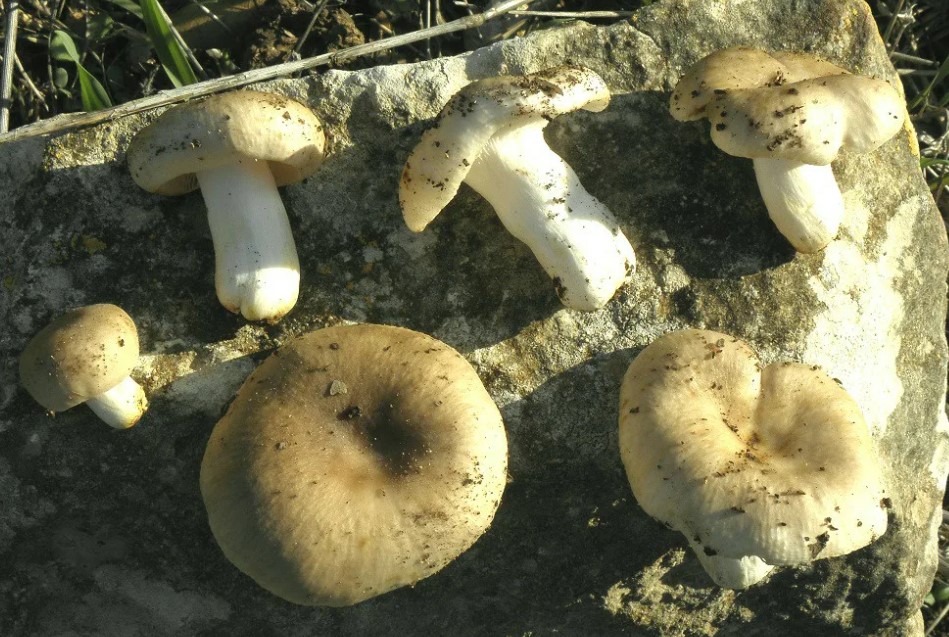
The cap is 4-8 cm in diameter, and the surface is covered in mucus. The stem and cap are violet, purple, dark cherry, or purple-brown. The edges may have a greenish tint. The stem is up to 8 cm tall. The flesh remains unchanged after cutting and has a subtle, sweet aroma.
Photo gallery of Kele's russula
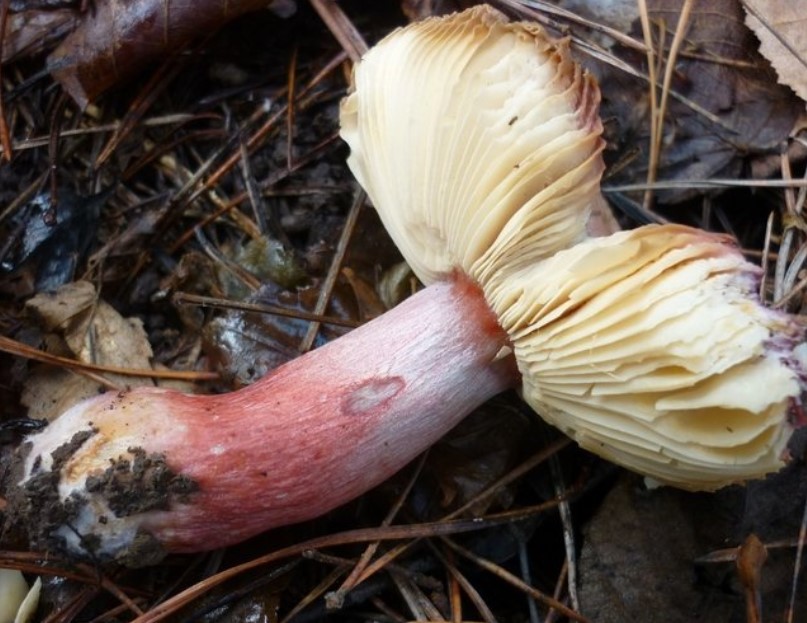
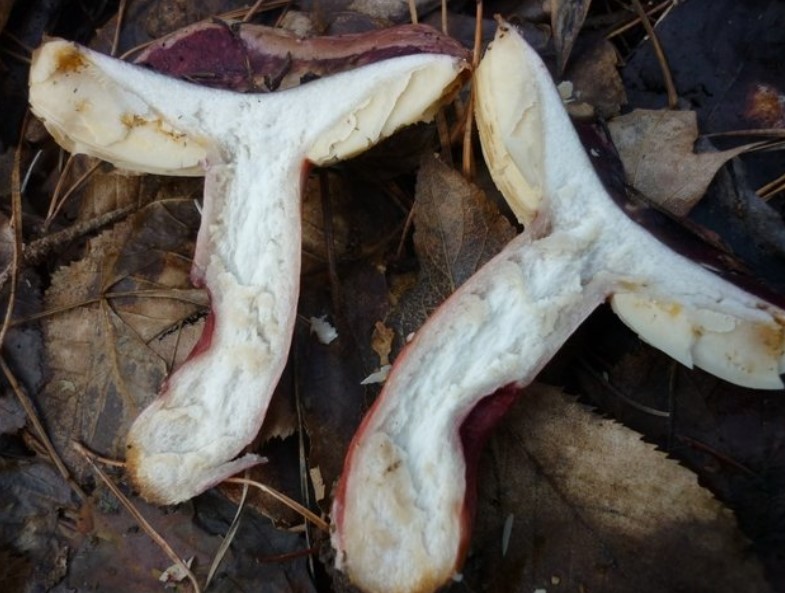
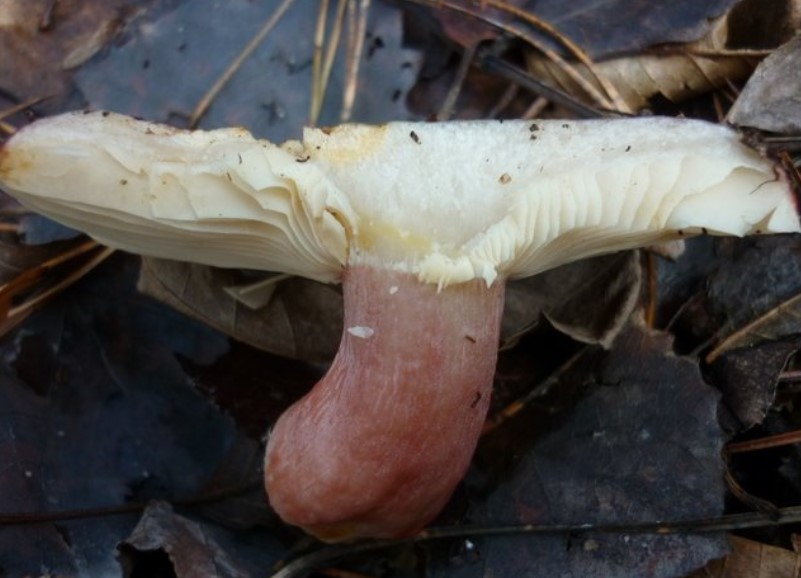
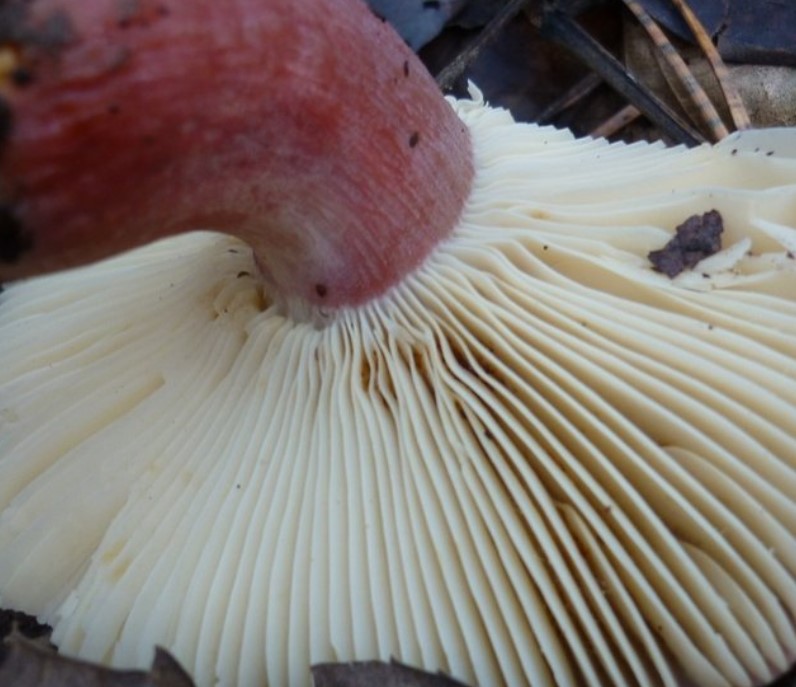
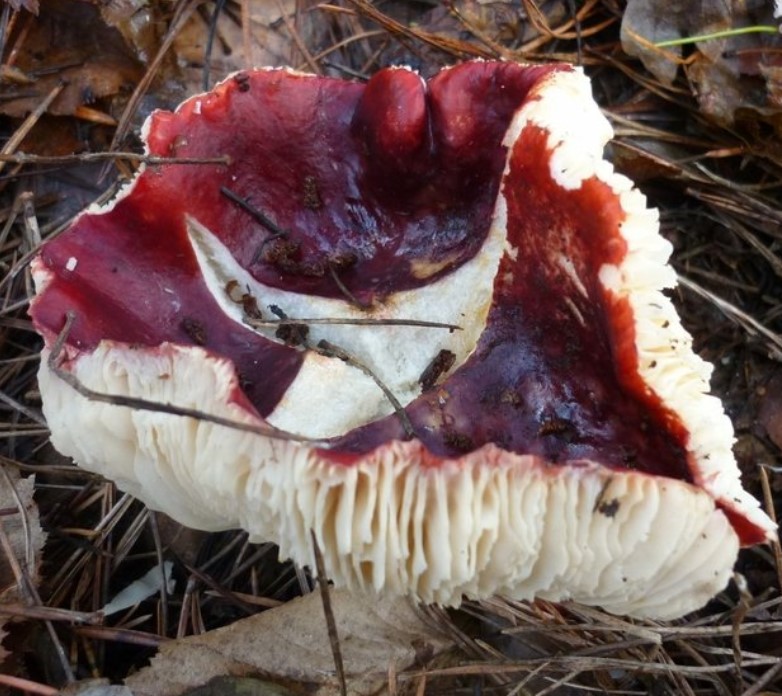
Red Russula (Russula sanguinea)
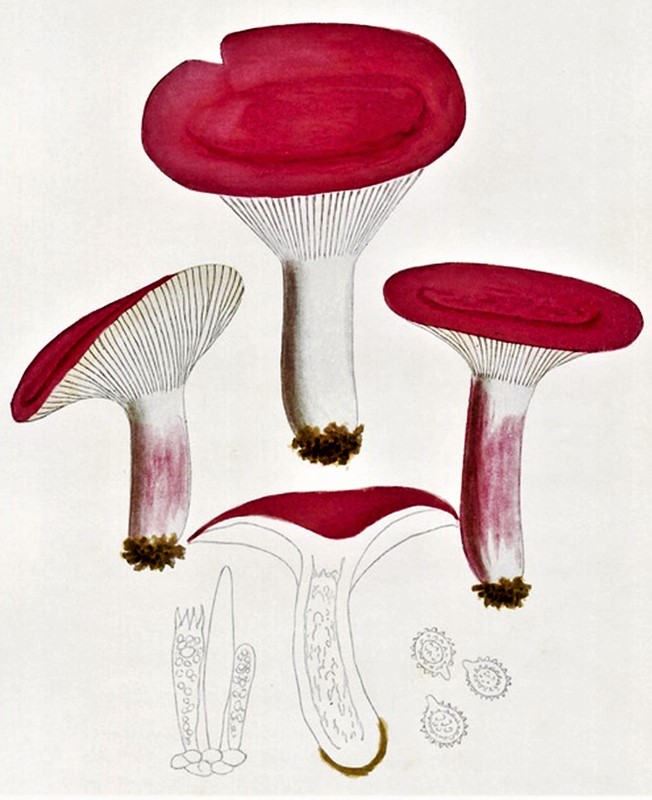
The cap is 3.5-10 cm in diameter and bright red or reddish-purple in color. After fading, it can become almost white. The stem is slightly lighter than the cap and has a distinct pinkish tint. The aroma is fruity, and the taste is bitter.
Photo gallery of the blood-red russula
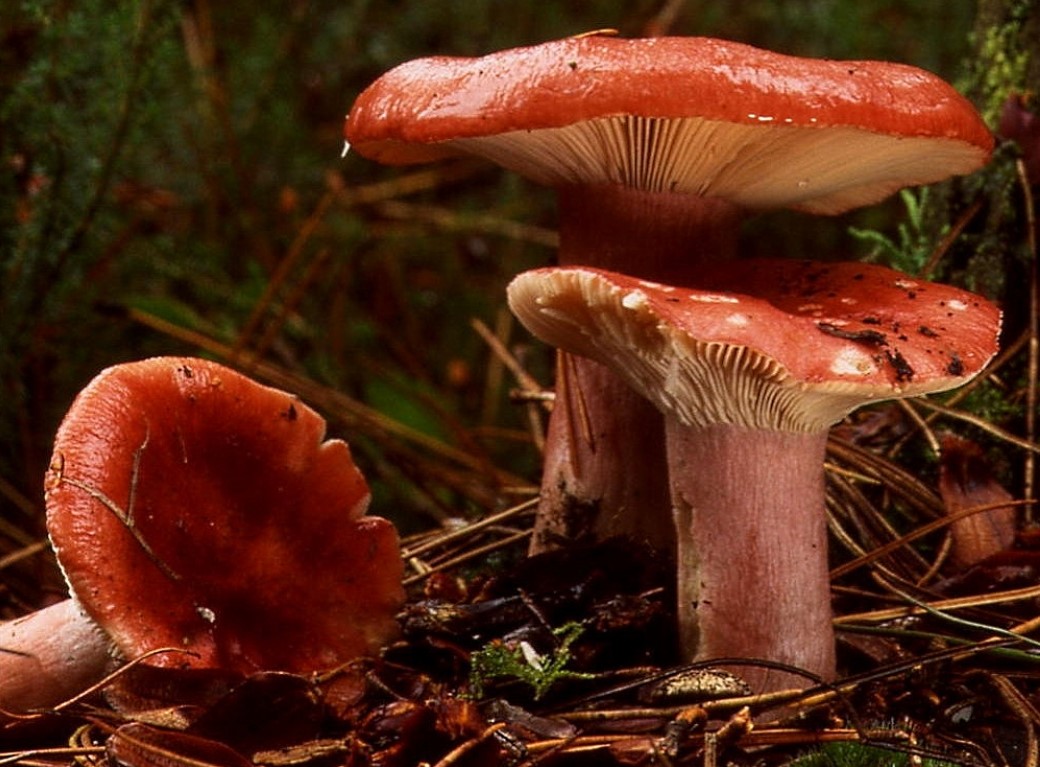
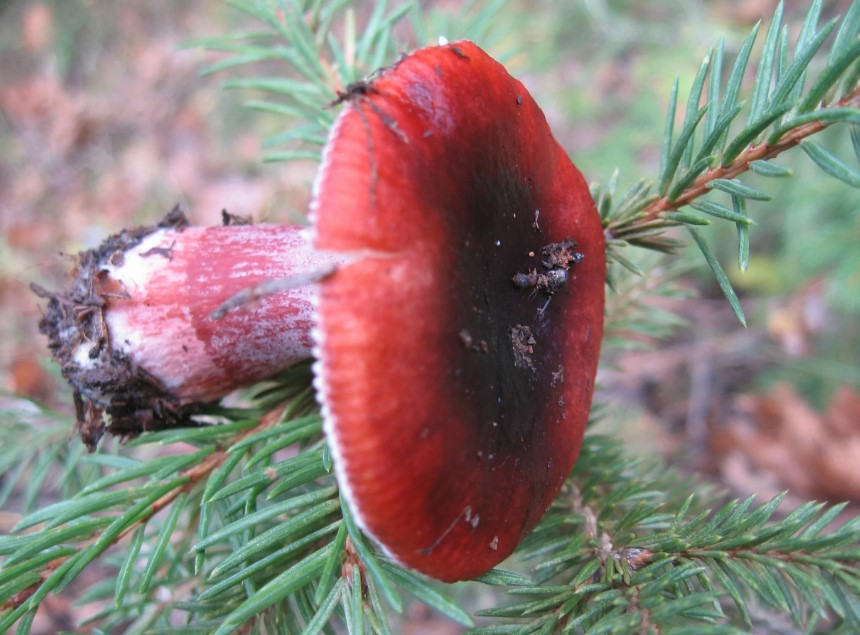
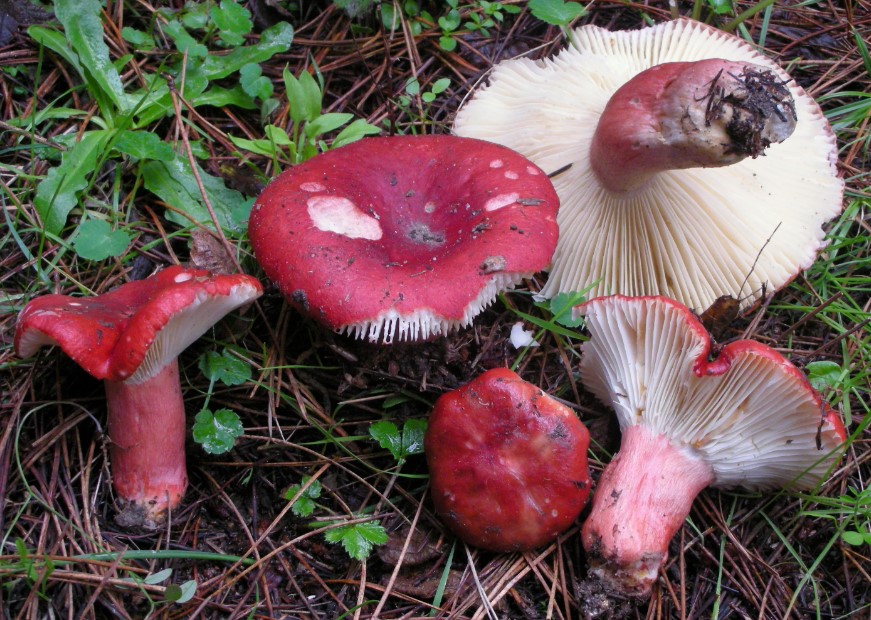
Russula sardonia (Sardonyx russula)
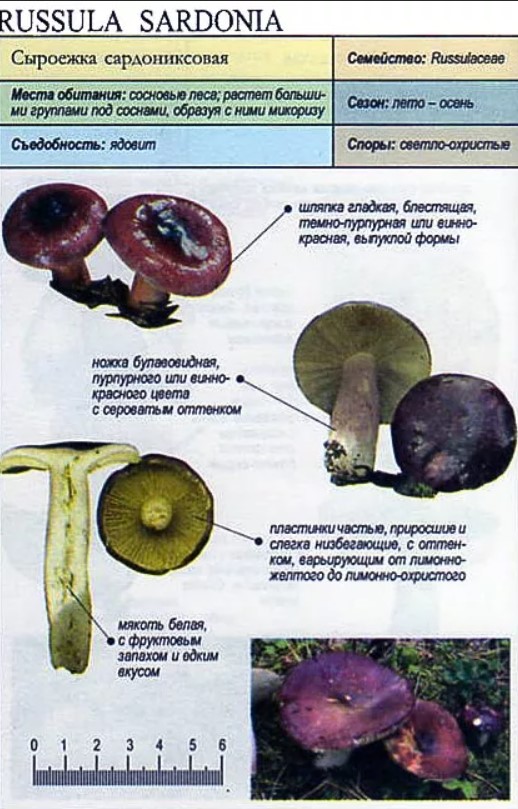
The cap is 3.5-10 cm in diameter, purple-red and brownish in color, and may have a greenish tint. The stem has a pinkish or purple tint. The flesh is yellowish and has a very pungent taste. It grows only under pine trees.
Photo gallery of Russula sardonyx
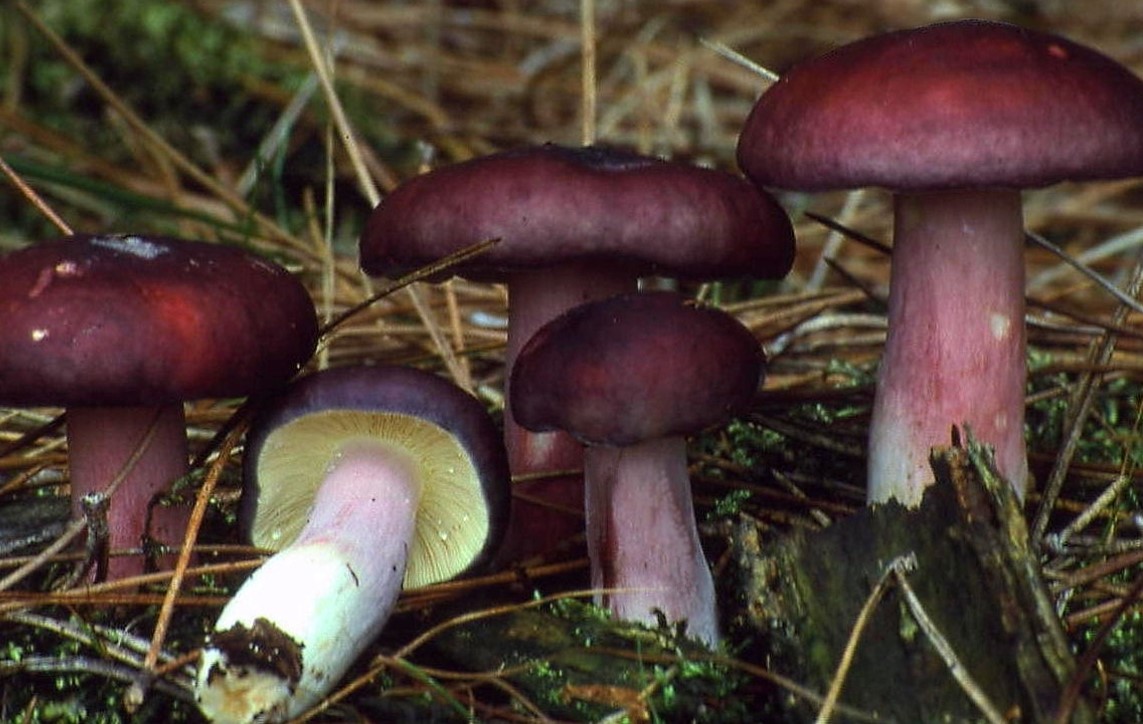
Russula undulata
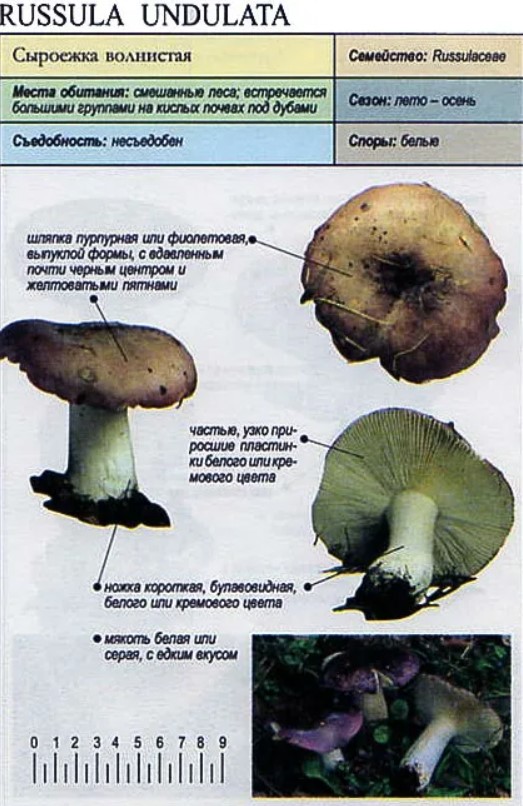
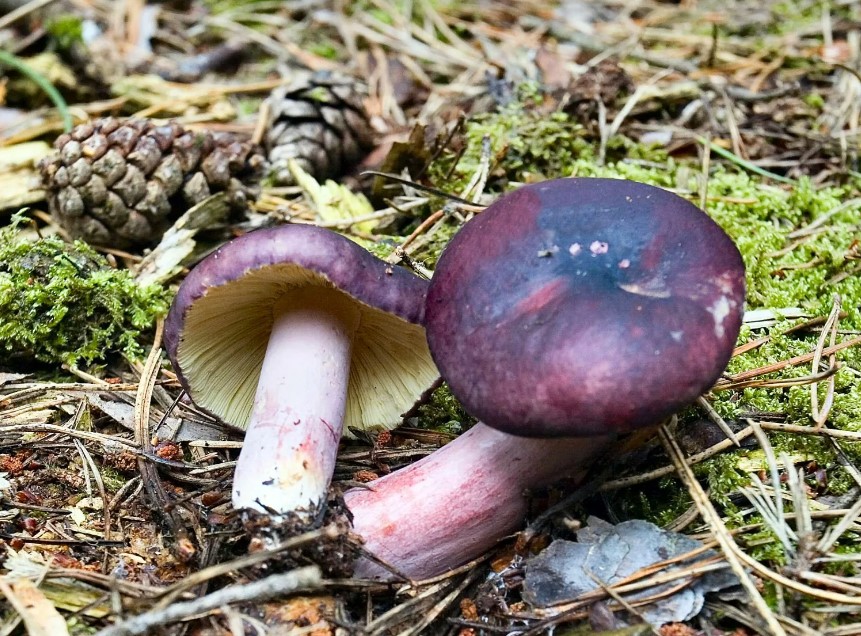
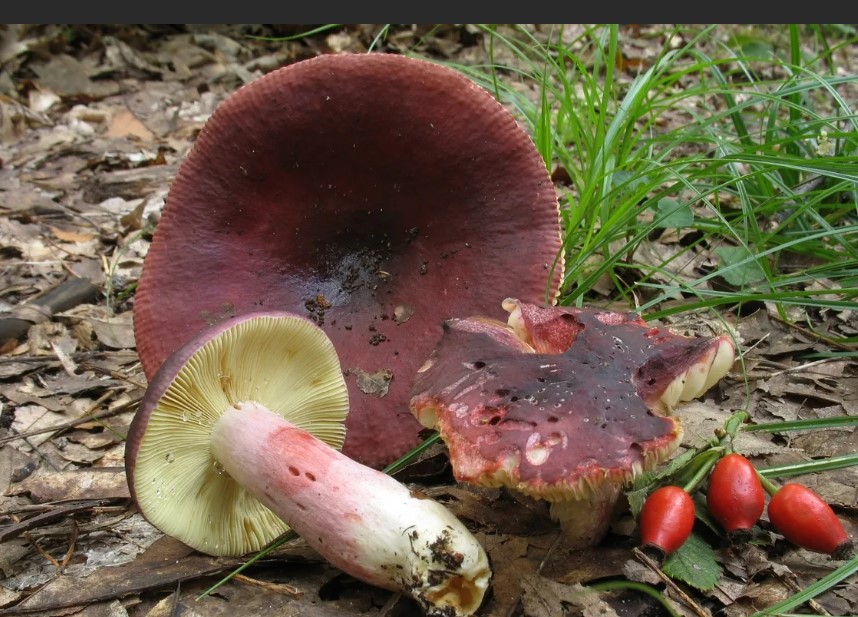
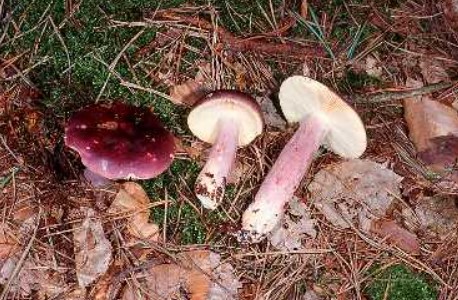
The cap is bell-shaped, up to 15 cm in diameter, and has a slimy surface and smooth edges when young. The color is gray-green, changing to dark brown or blackish-purple as it matures.
The stem is up to 10 cm tall, white, with a yellowish-brown base and a pinkish upper part. The flesh begins to redden when cut, later turning a dark gray. Corrugated russulas grow in deciduous or coniferous forests at elevated altitudes.
Photo gallery of Russula undulata
2 types of inedible, most toxic russula mushrooms
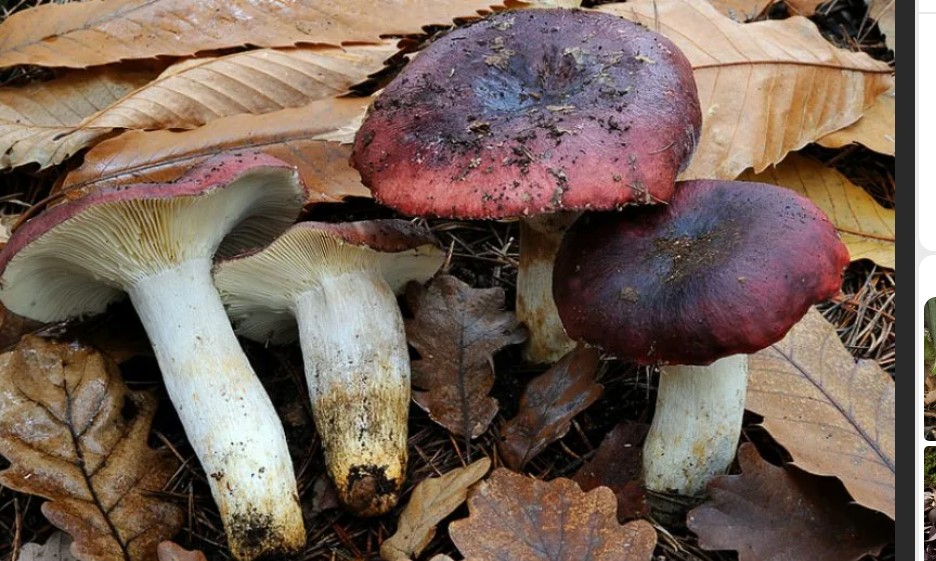
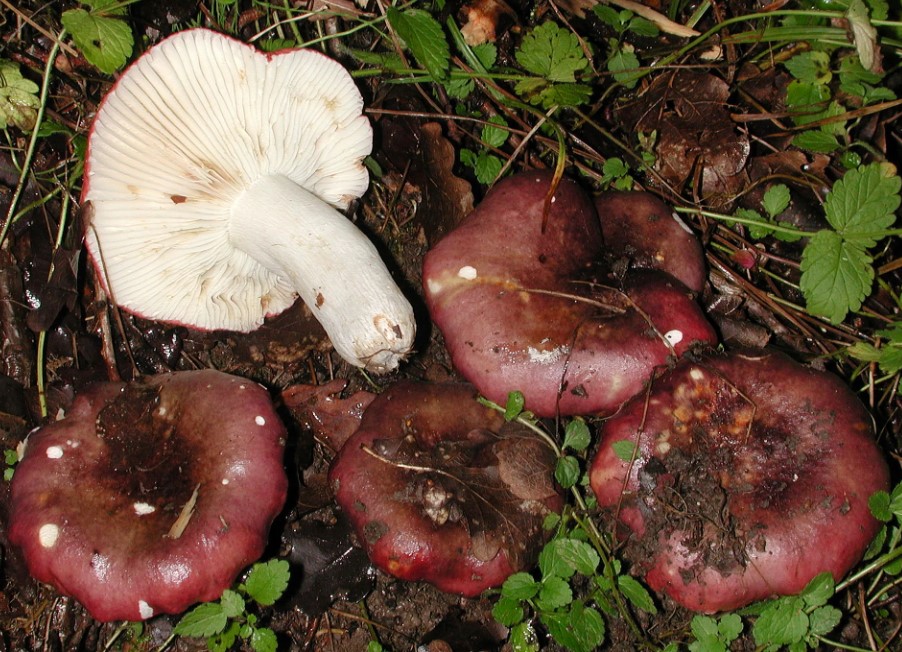
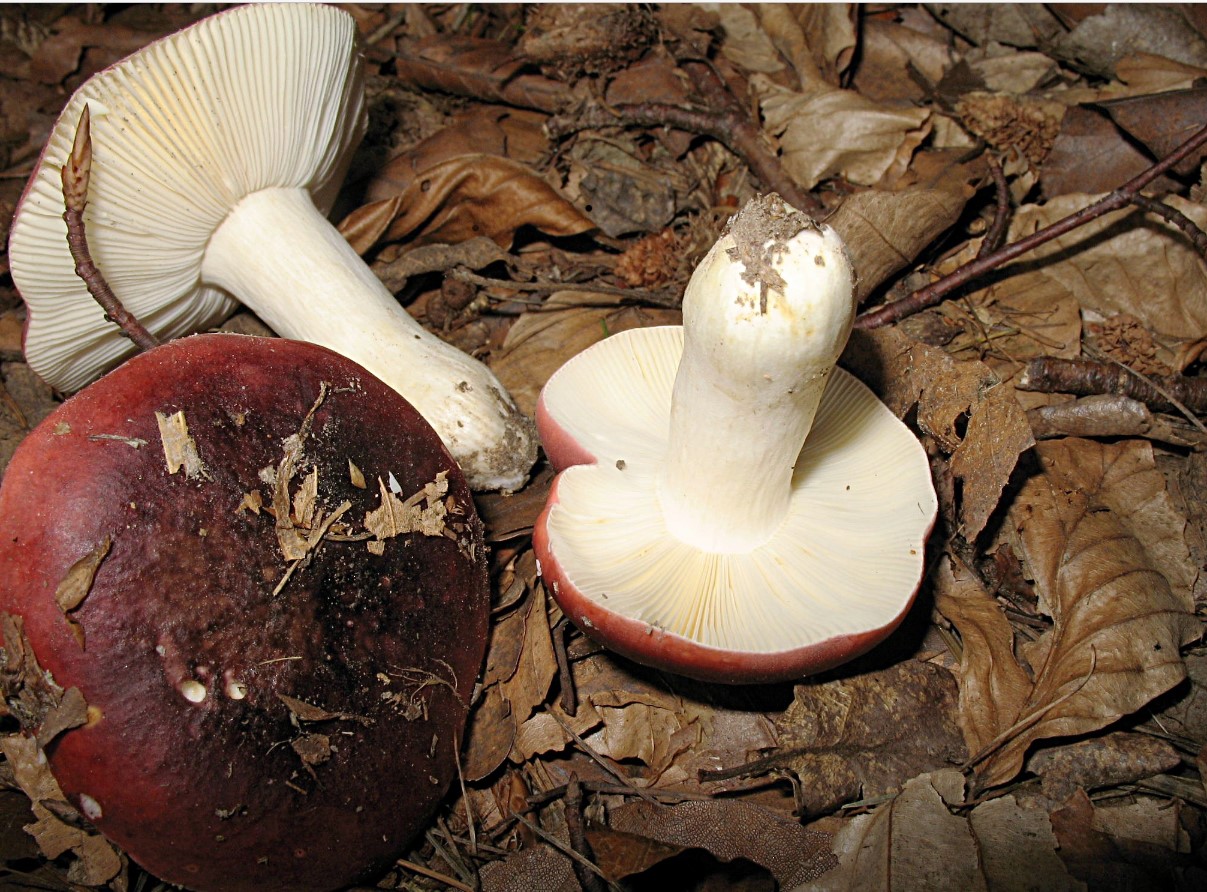
Inedible russula mushrooms can have a distinctly bitter taste due to the presence of toxic substances. Eating these mushrooms is strictly not recommended. They are not fatal, and a person won't have time to eat much due to the unpleasant taste. However, they can cause poisoning.
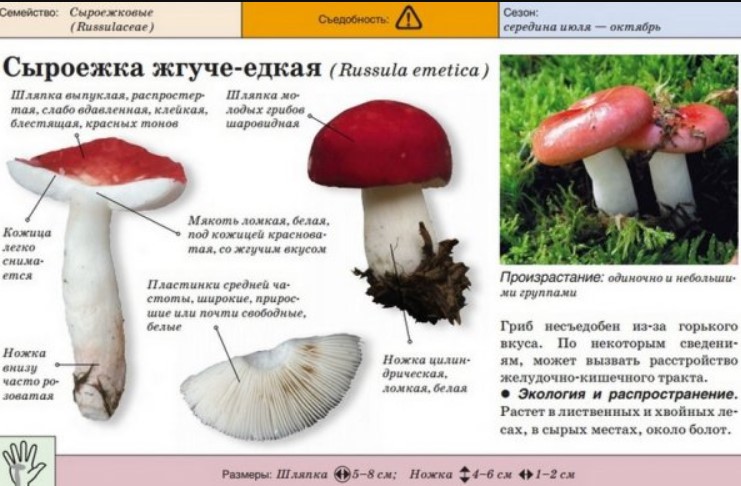
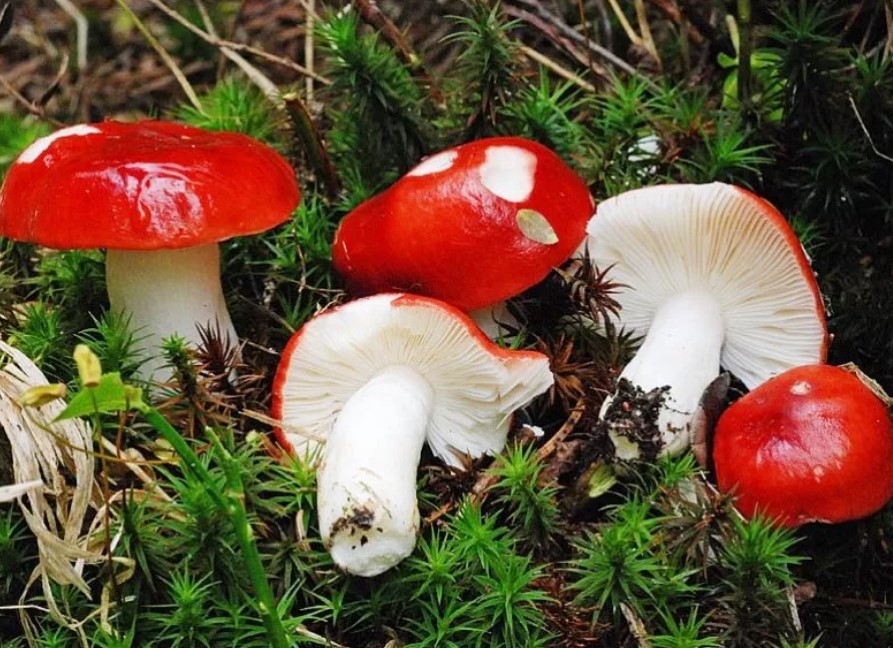
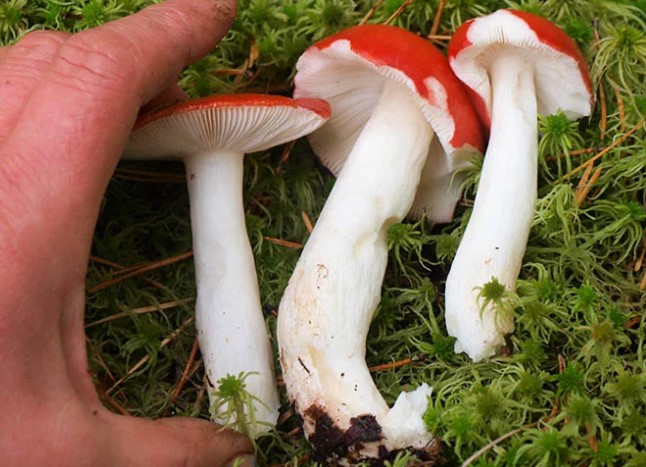
Russula emetica
The cap of a mature mushroom is funnel-shaped, up to 9 cm in diameter, with ribbed, blunt edges. The stem is pinkish and cylindrical. The flesh is very bitter, with a sweetish aroma.
The mushroom grows in deciduous and coniferous forests.
Photo gallery of the caustic russula
Russula Meira (Russula mairei)
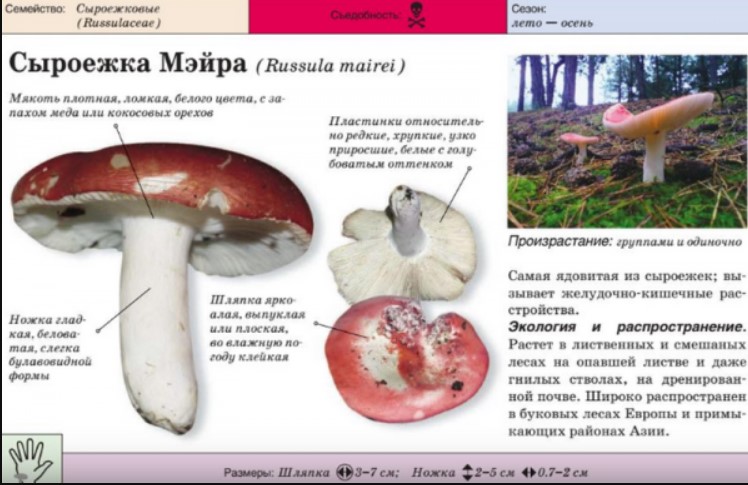
The cap is 3-9 cm in diameter and bright red. As it grows, it fades to a pinkish hue. The stem is white and cylindrical. It has a bitter flavor, a slightly sweet aroma, and the flesh is red when cut.
Photo gallery of Mayr's russula
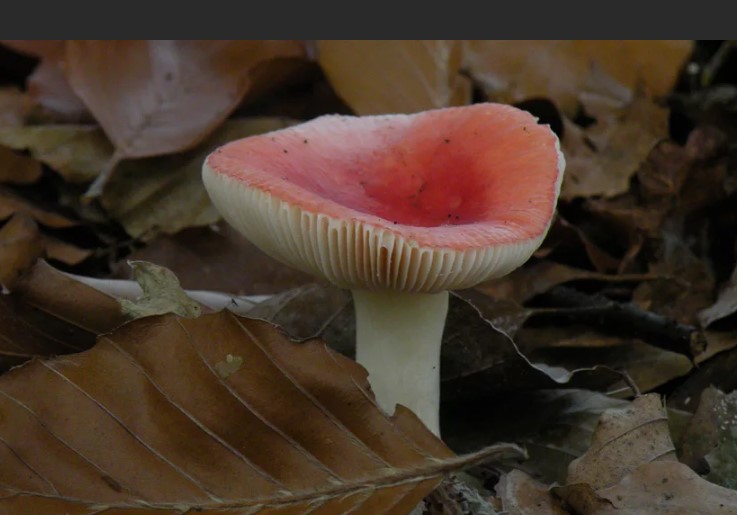
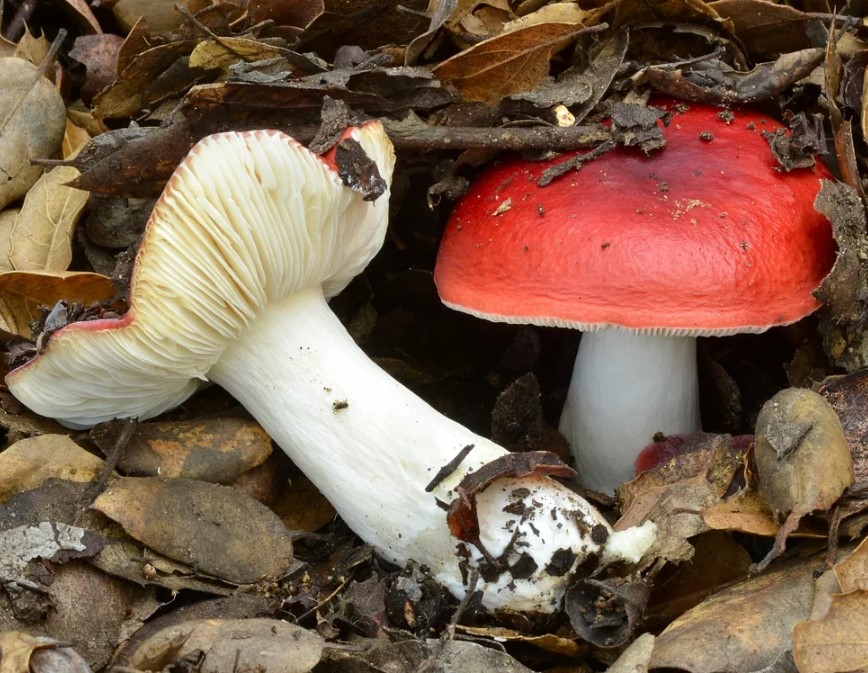
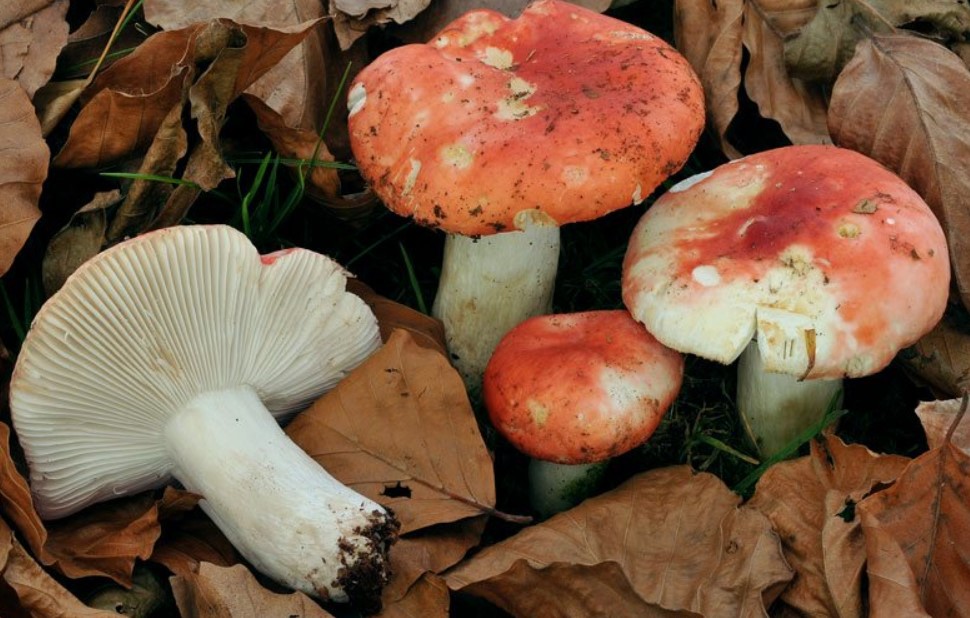
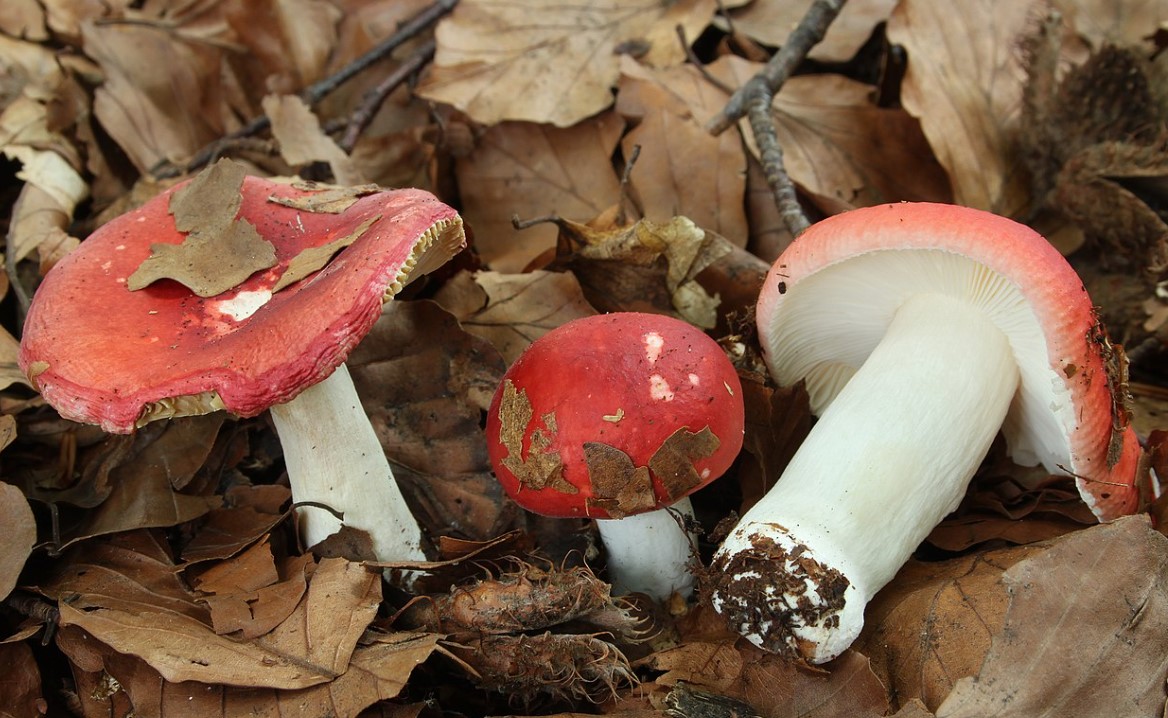
8 poisonous russula look-alikes + lots of photos
It's virtually impossible to become seriously poisoned by russula; this mushroom is quite harmless. The danger lies in the possibility of confusing this mushroom with other mushrooms considered poisonous.
Below are the most similar poisonous mushrooms to russula.
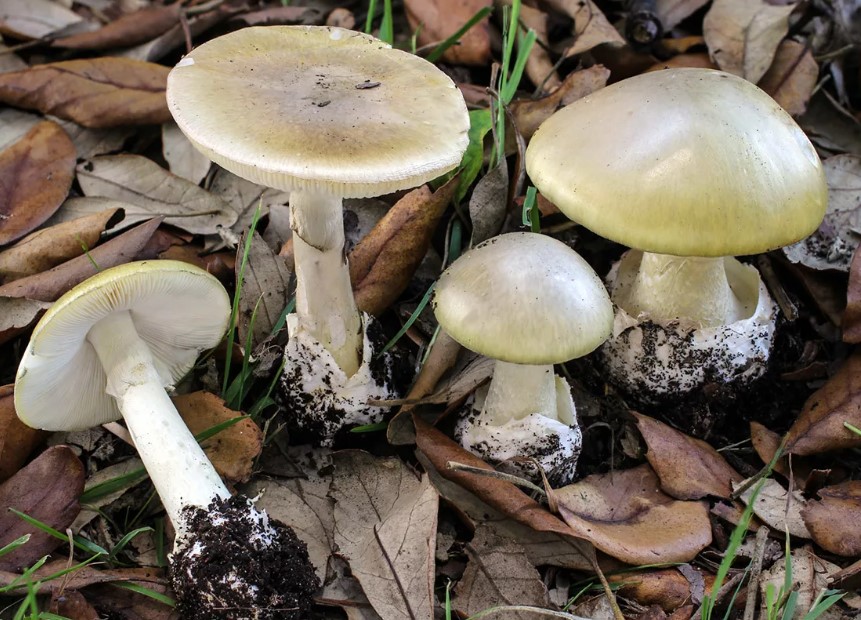
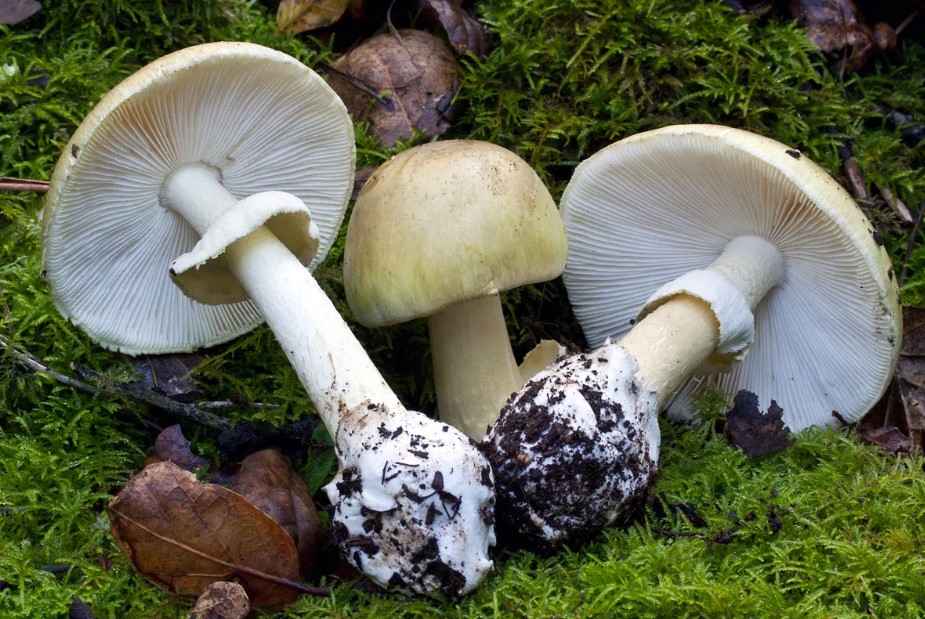
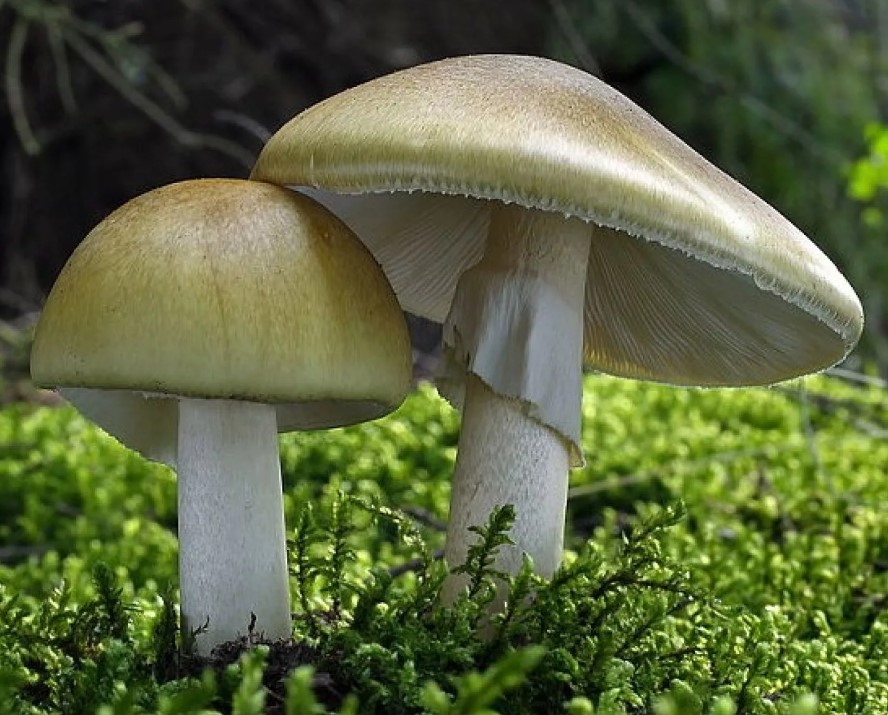
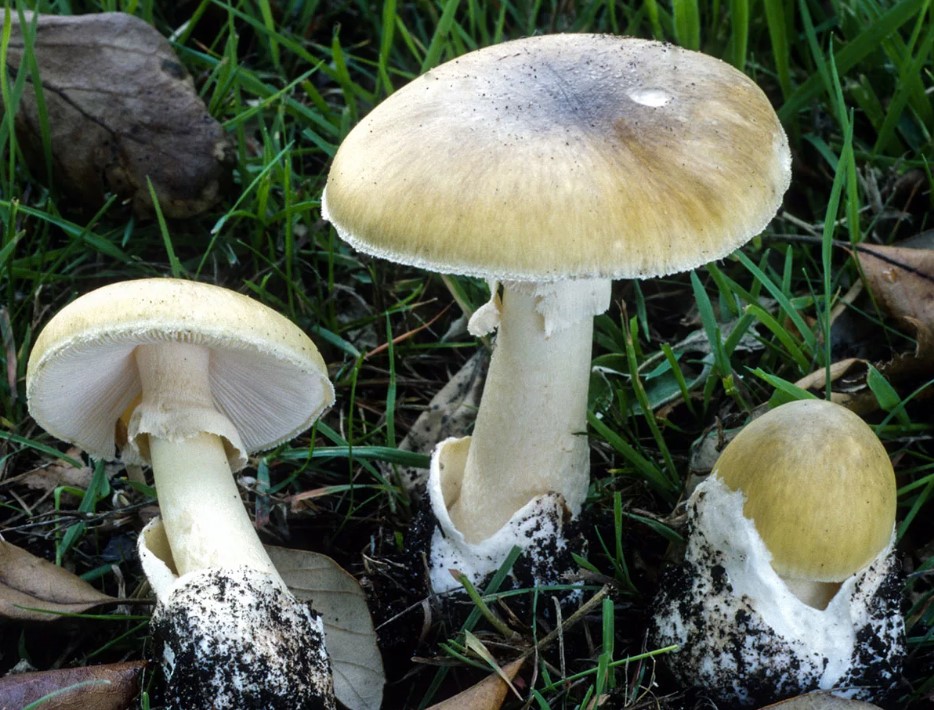
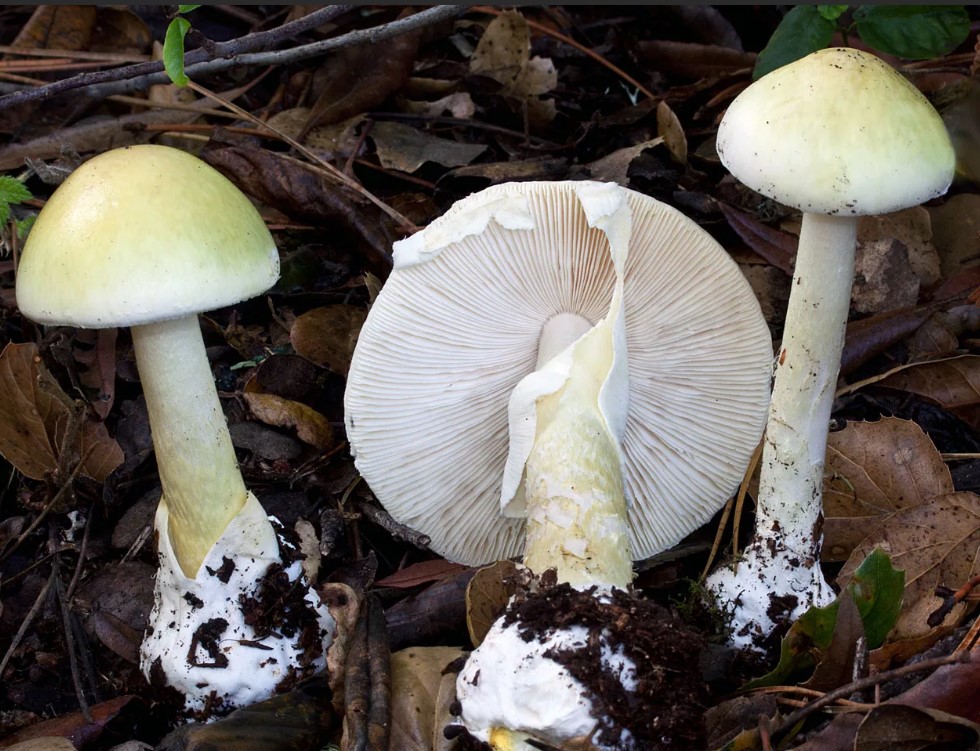
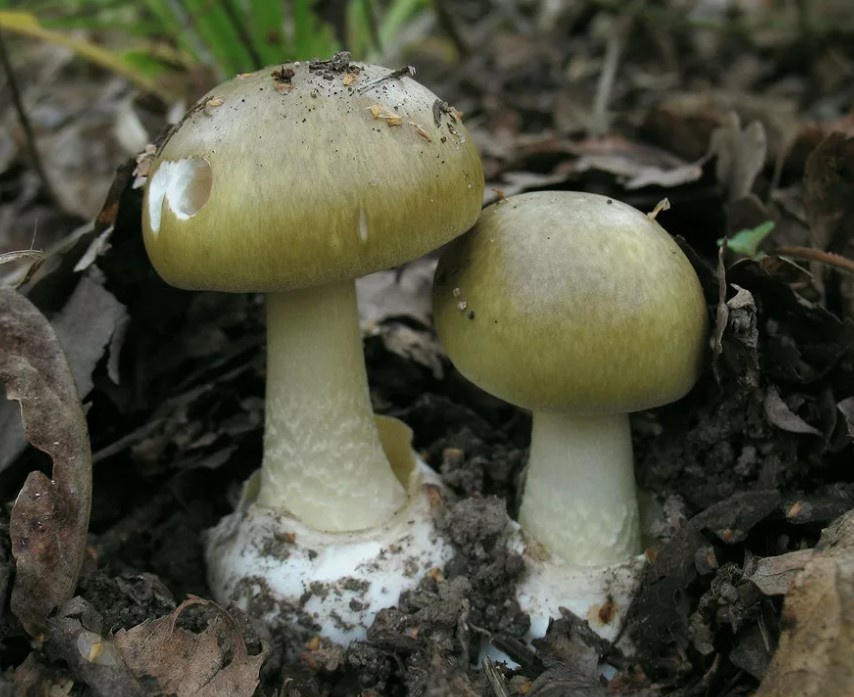
Death cap (Amanita phalloides)
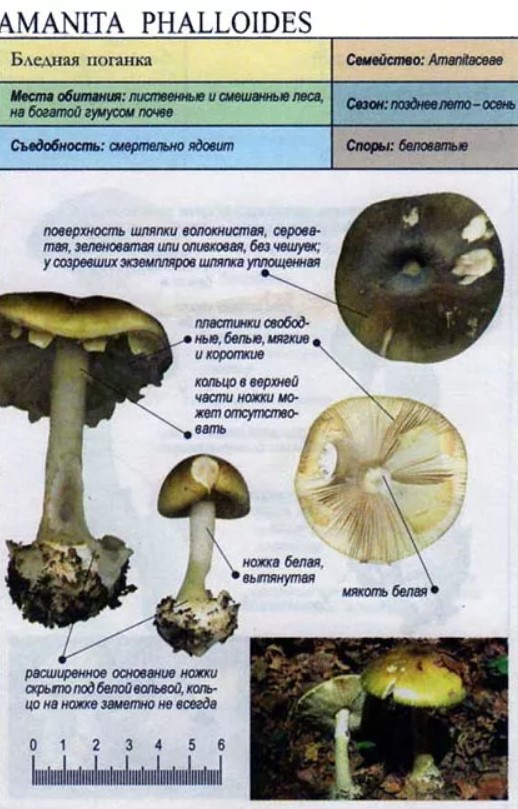
Poisoning can be fatal. It resembles the green russula in appearance, but has several significant differences:
- The stem's base is embedded in a tuberous thickening with a membranous covering, the volva. A similar covering is also present at the top of the stem, the so-called skirt.
- The gills located at the base of the toadstool cap are always white. This characteristic is always present in mature mushrooms; young russulas also have specimens with light-colored gills.
Death Cap Photo Gallery
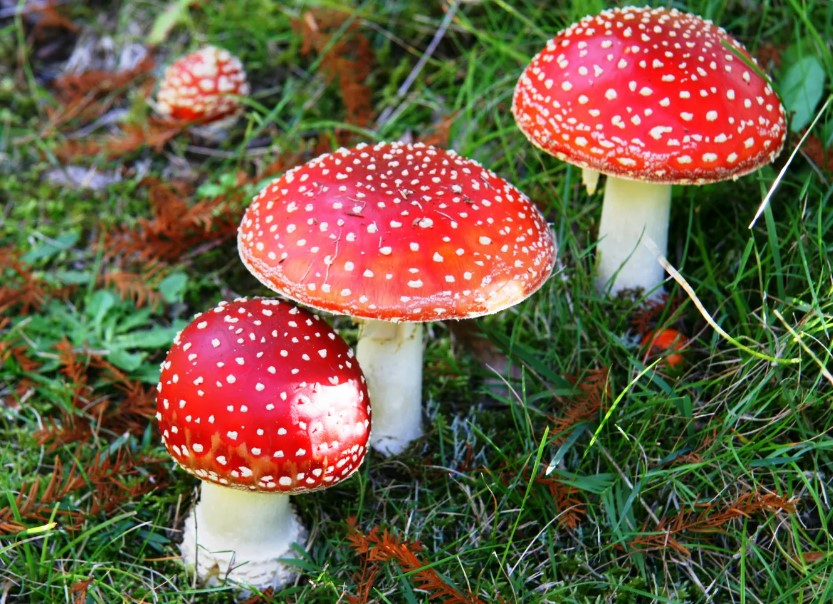
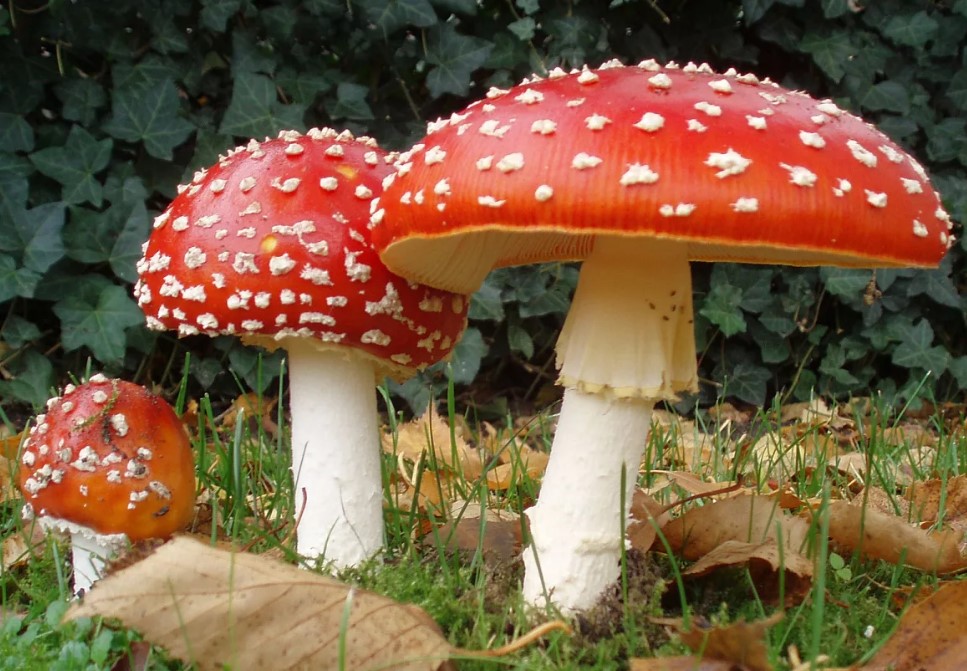
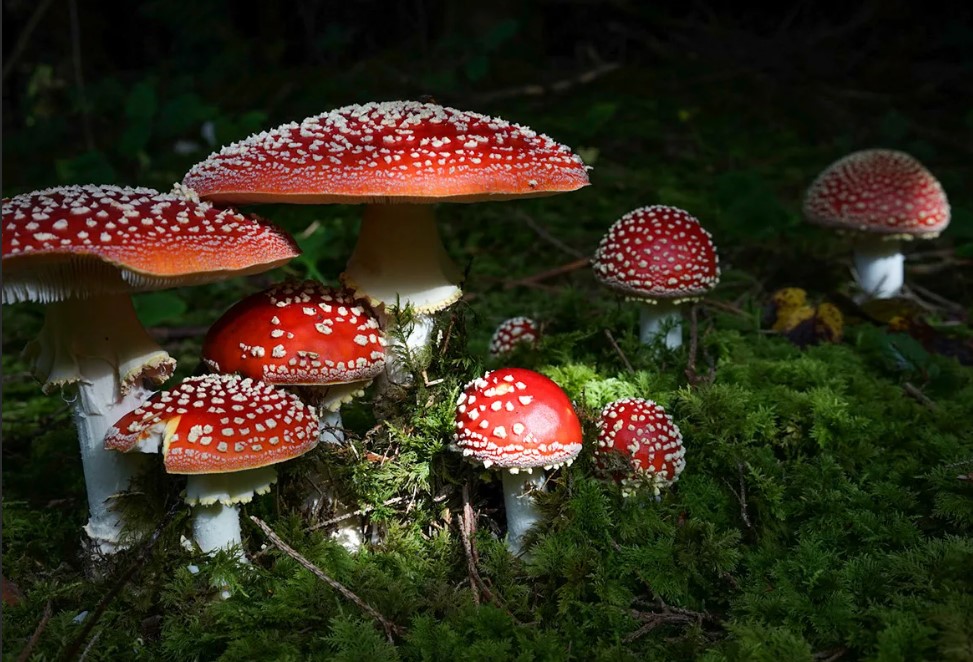
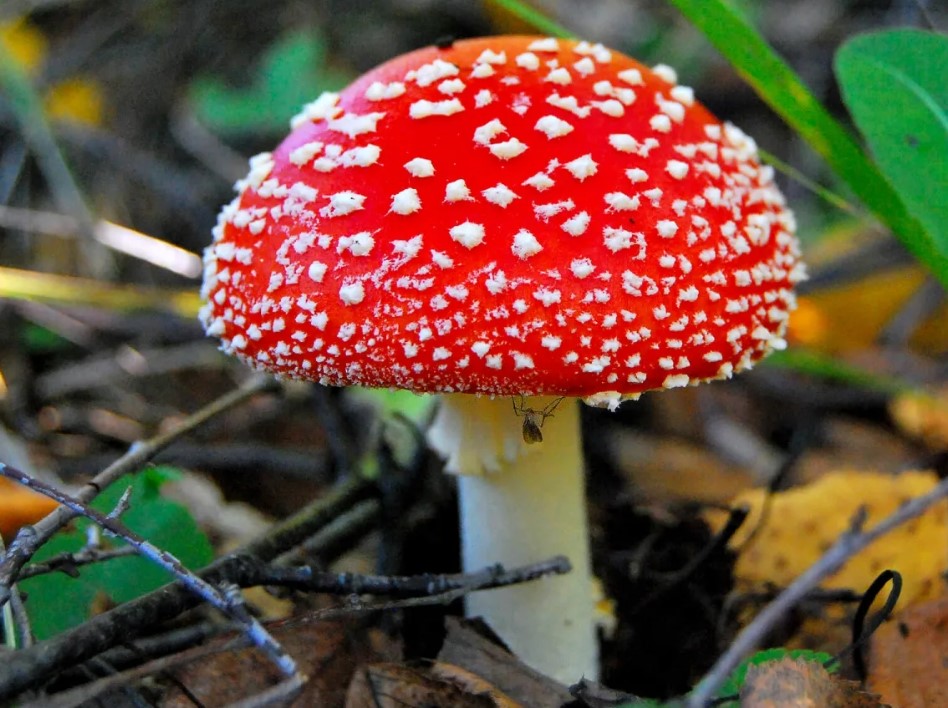
Red fly agaric (Amanita muscaria)
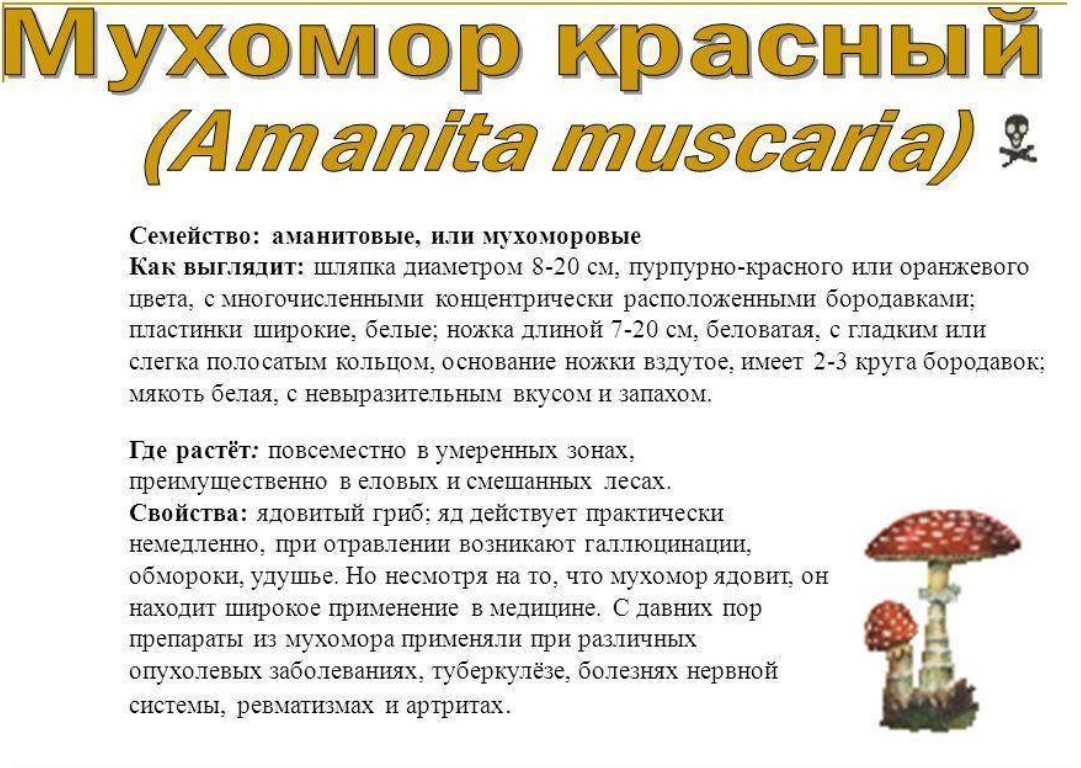
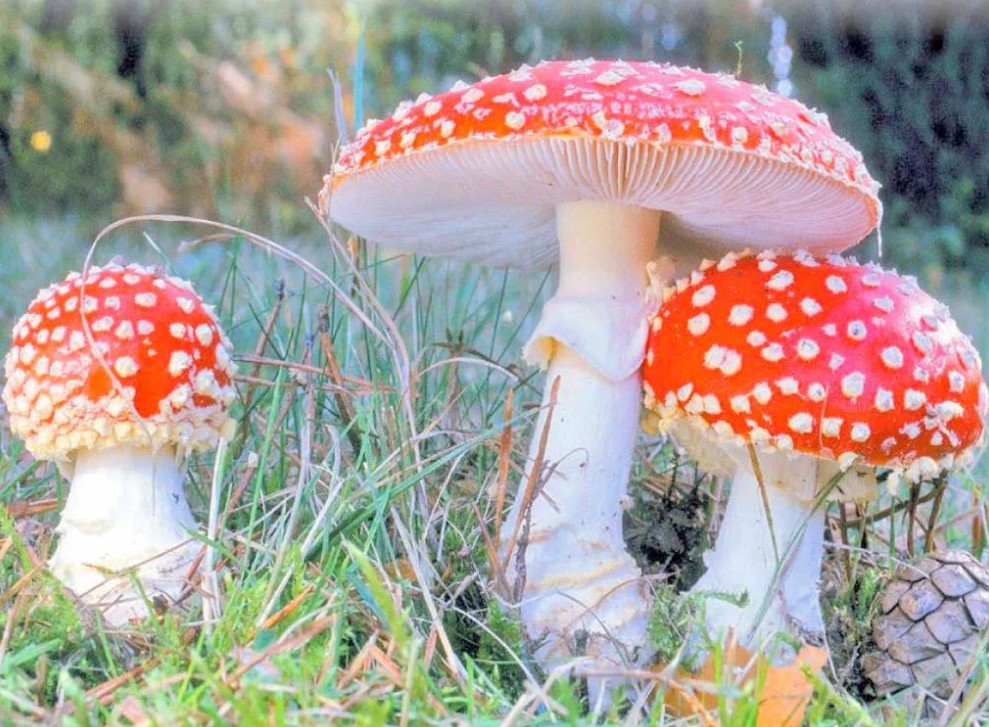
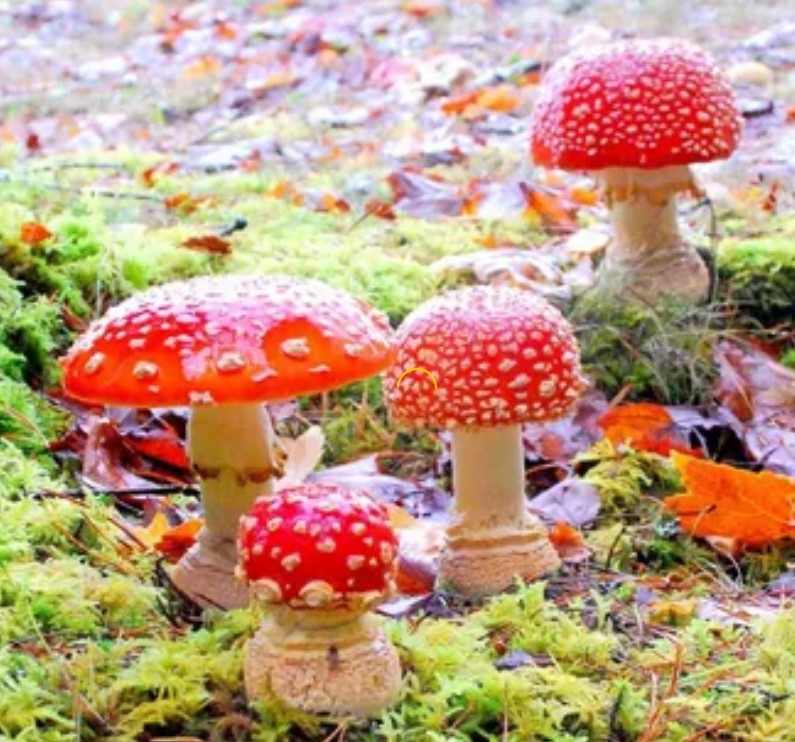
The fly agaric's main distinguishing feature is the light-colored flakes on its bright red, flat-convex cap. The gills are white, while those of russulas are cream or pale yellow. The fly agaric's stem is very tall, up to 20 cm, and has a volva at the base, as well as a greenish ring.
Photo gallery of red fly agaric
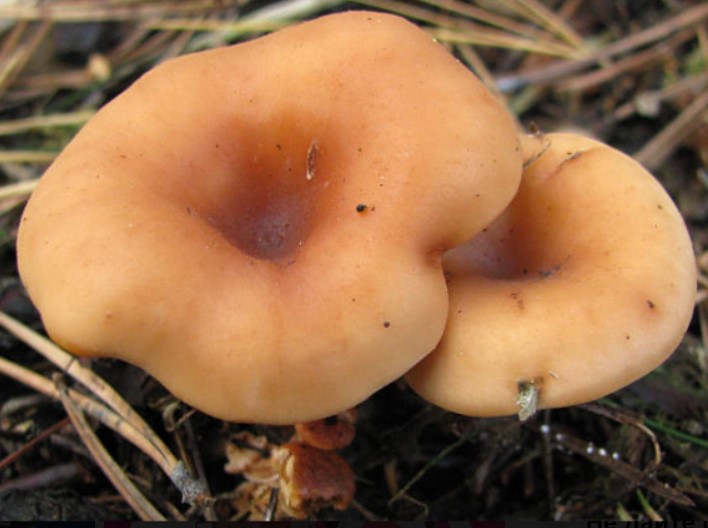
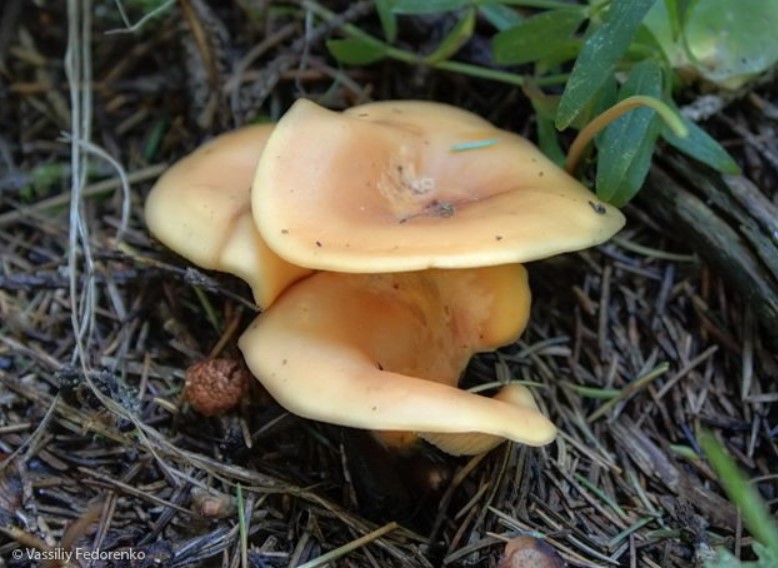
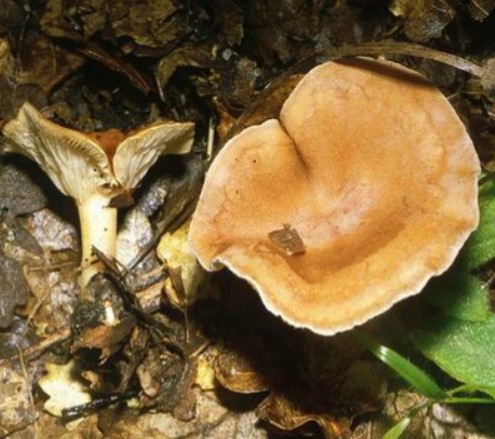
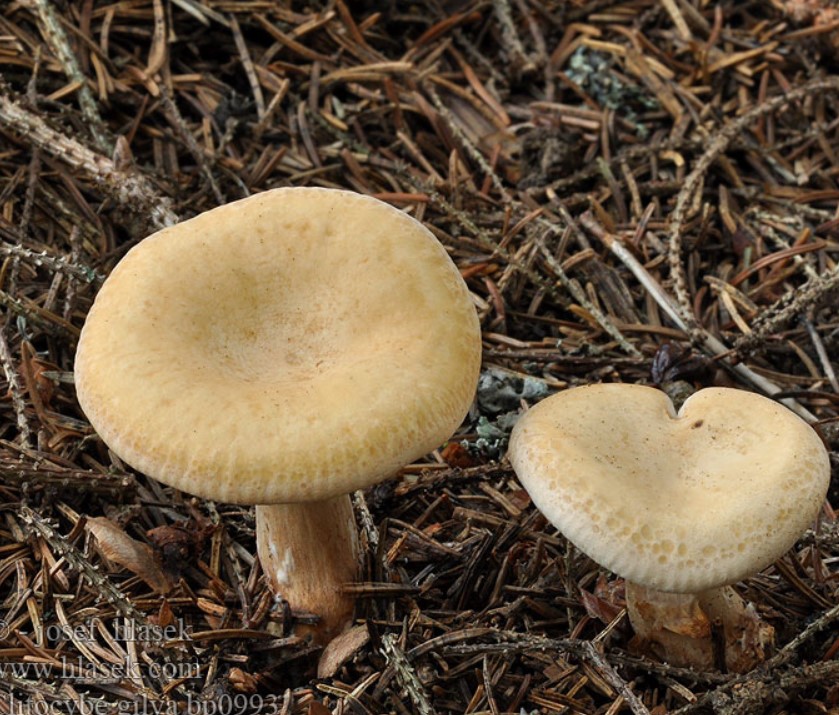
Brown-yellow talker (Paralepista gilva)
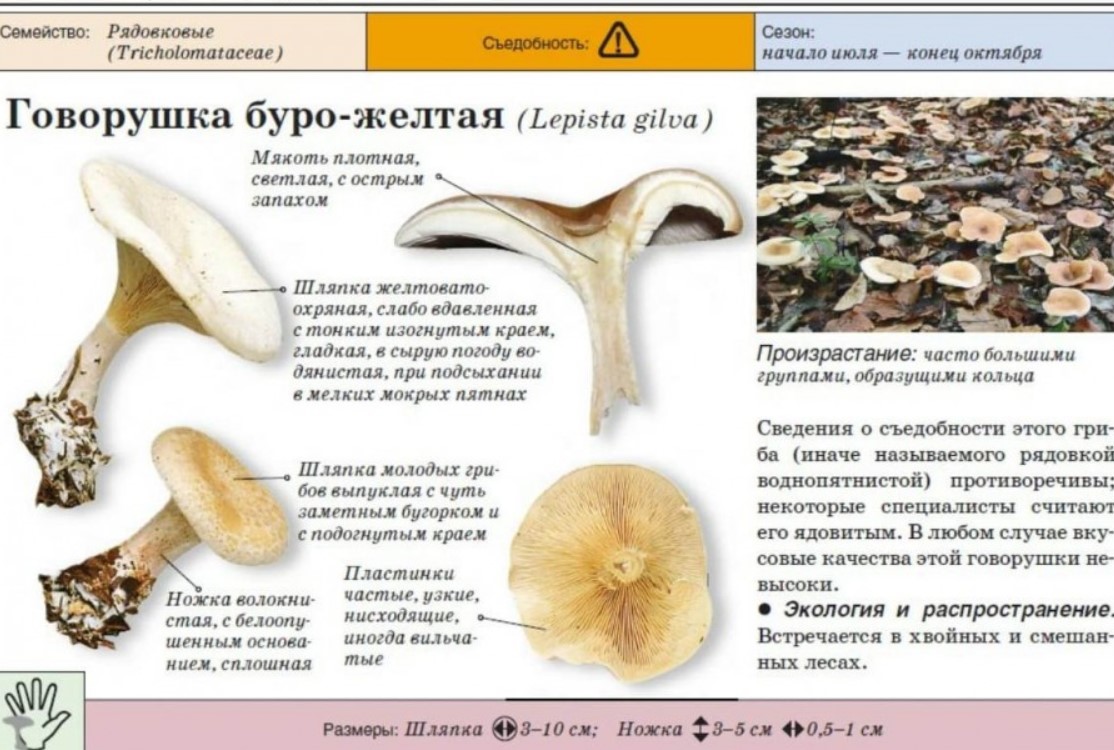
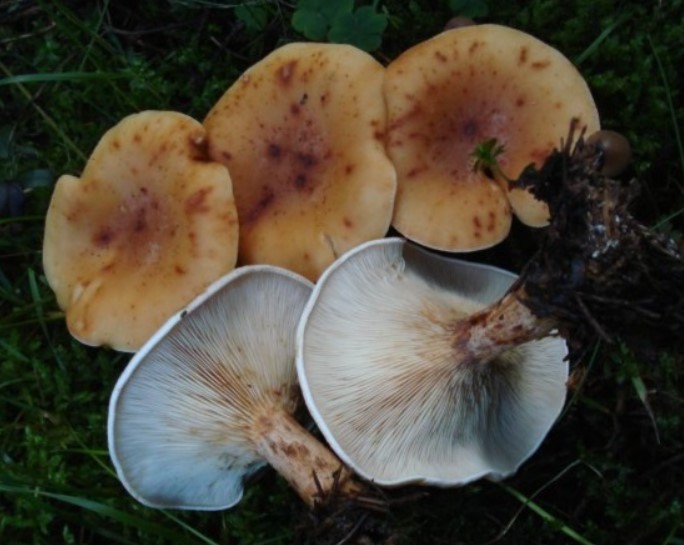
The cap ranges from 3 to 10 cm in diameter and is a uniform ochre or orange color. The gills are fairly closely spaced and brown. The mushroom is distinguished by a very thin stem, up to 5 cm tall, which tapers toward the base.
Photo gallery of the brown-yellow talker
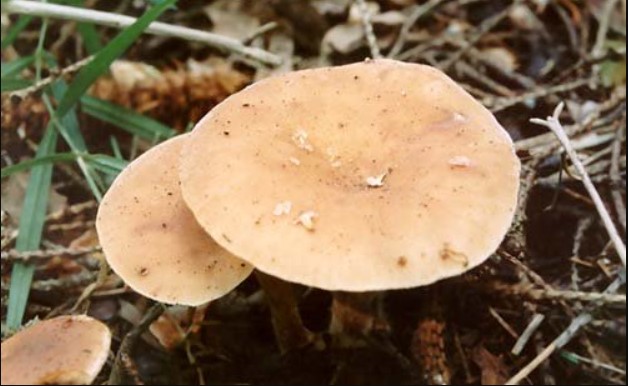
Read about talker mushrooms in the following articles:
Talker mushrooms: 6 species with descriptions in tables + 91 photos, when and how to collect;
Talker or smoky rowan (gray): 59 photos, description, 5 dangerous lookalikes, how to cook.
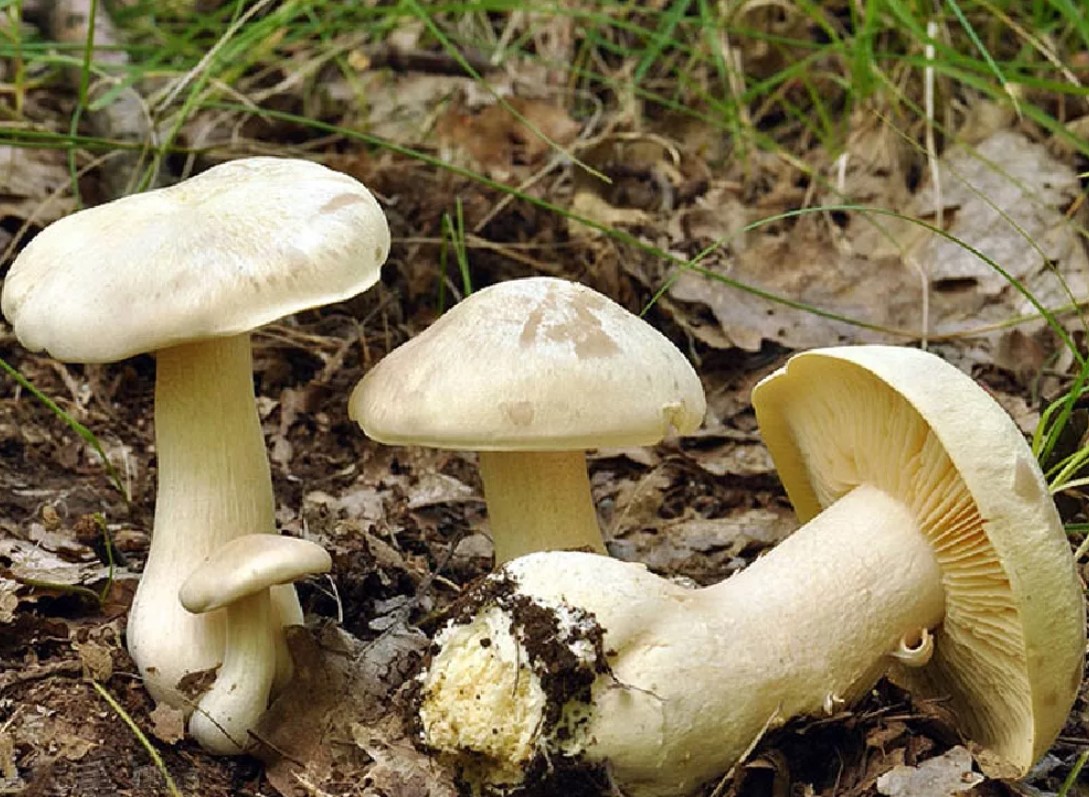
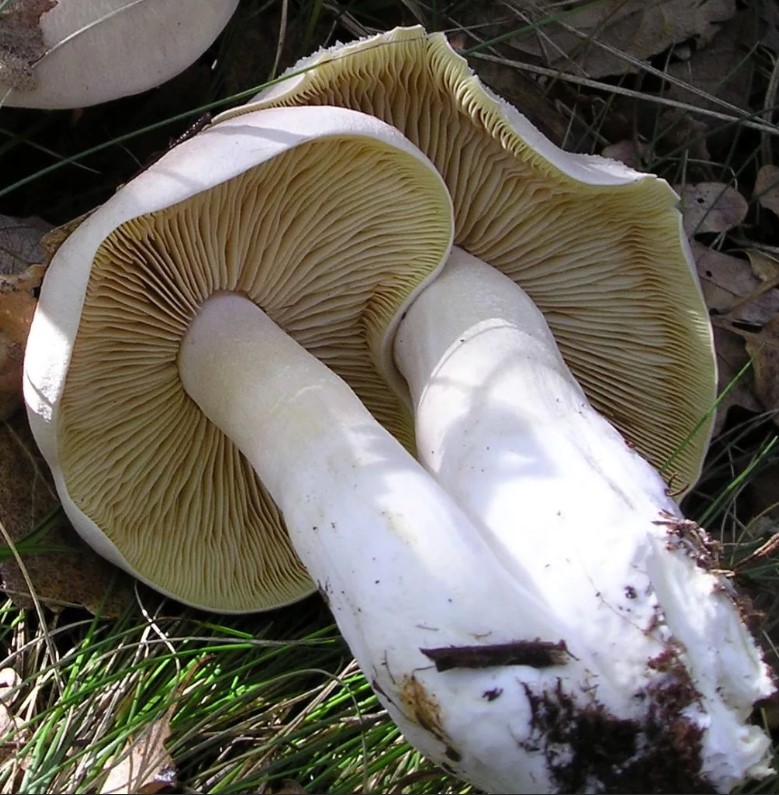
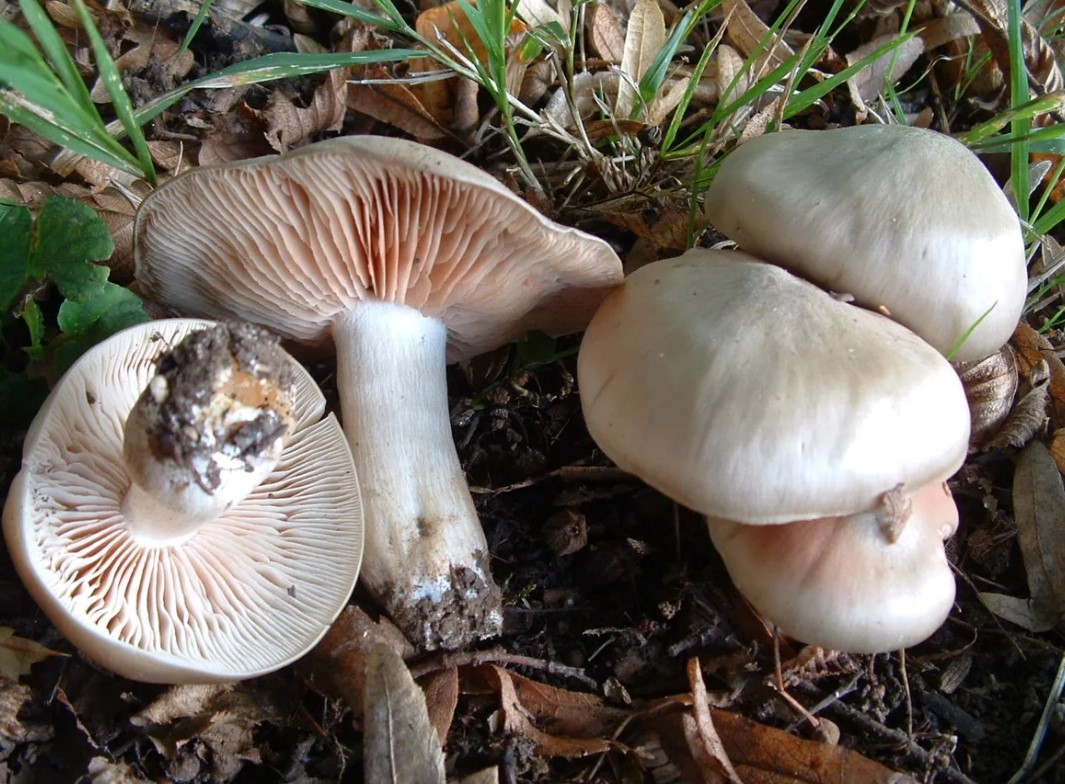
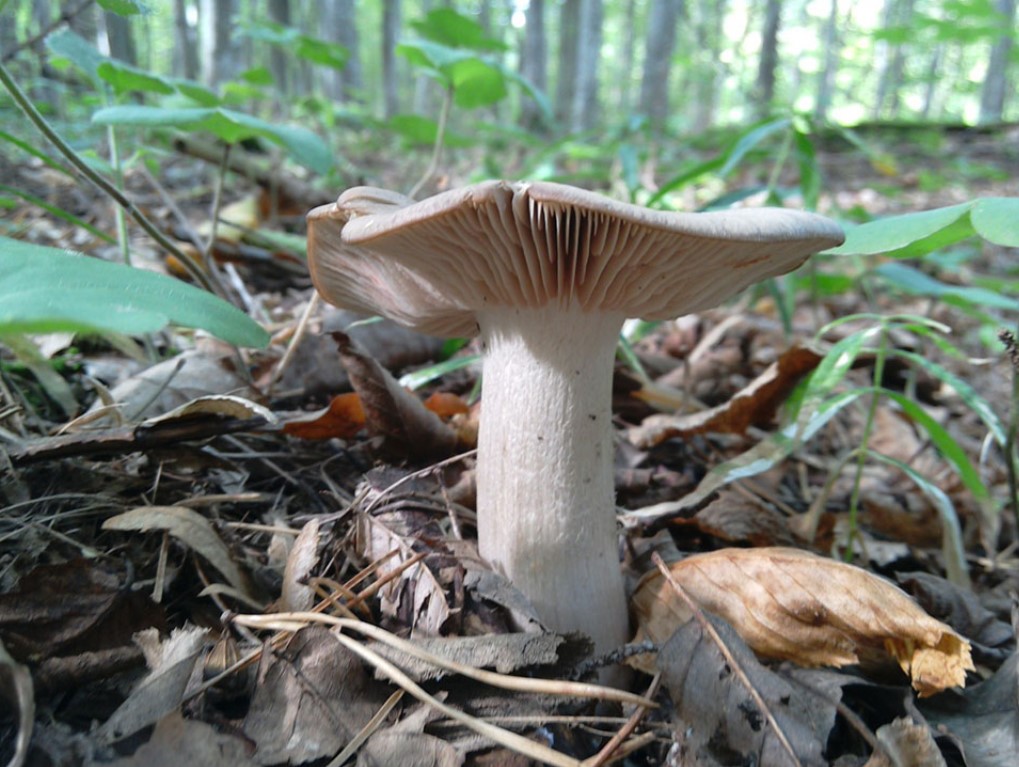
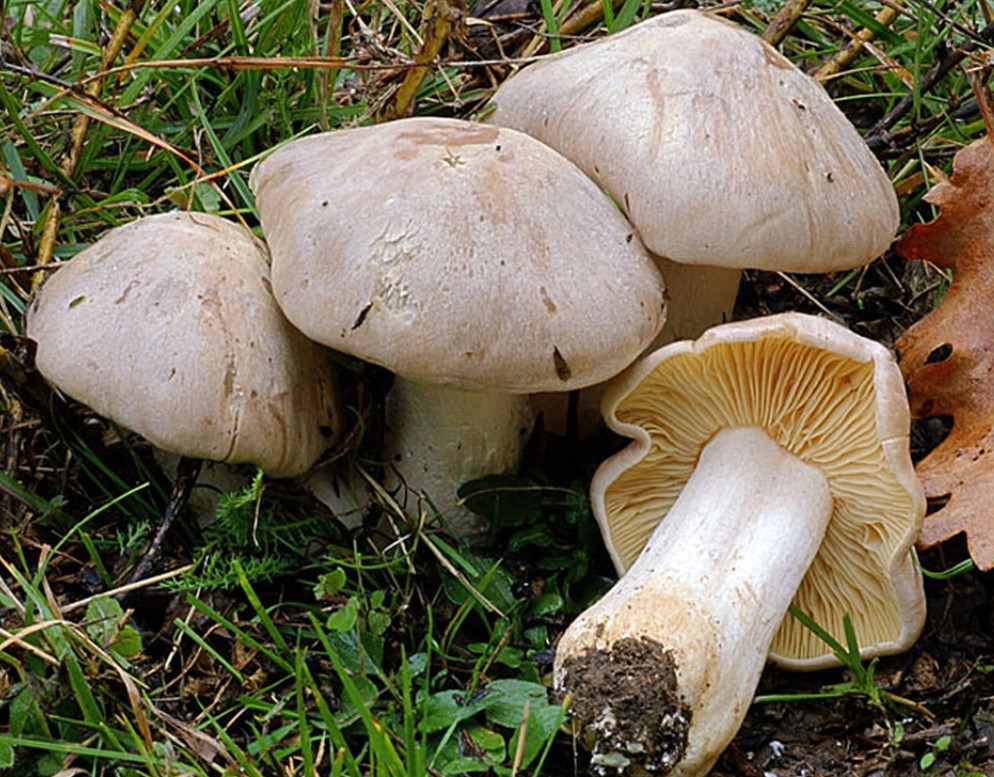
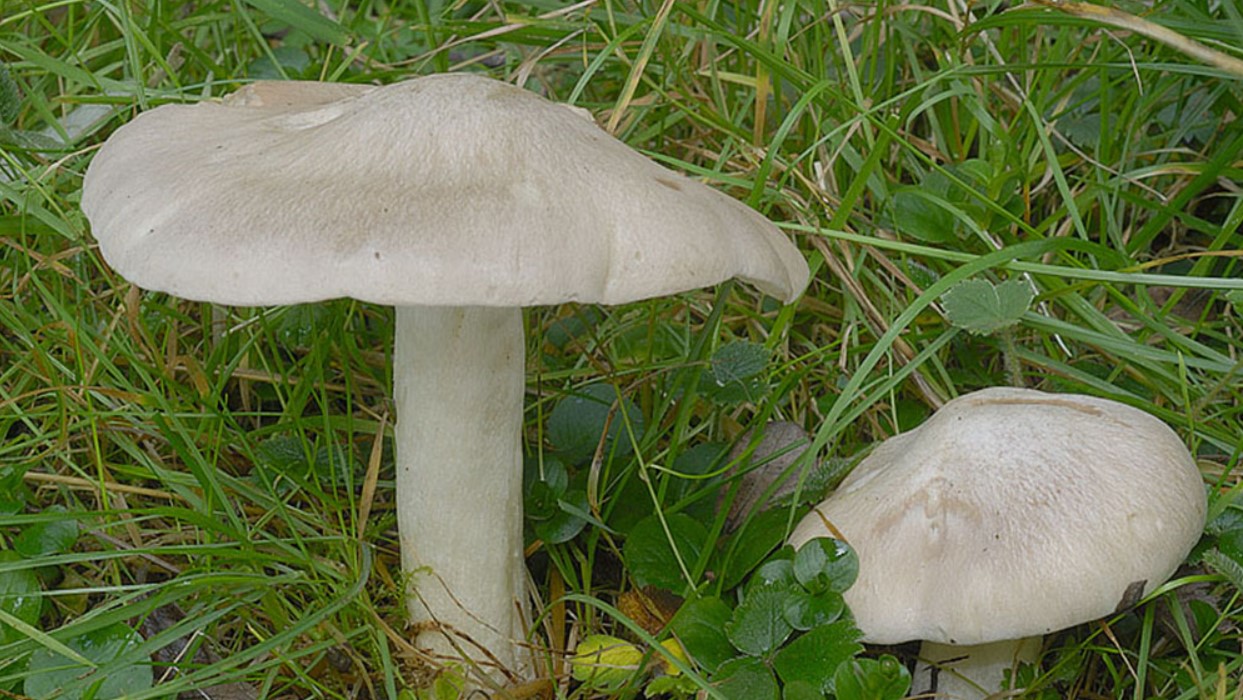
Poisonous Entoloma (Entoloma sinuatum)
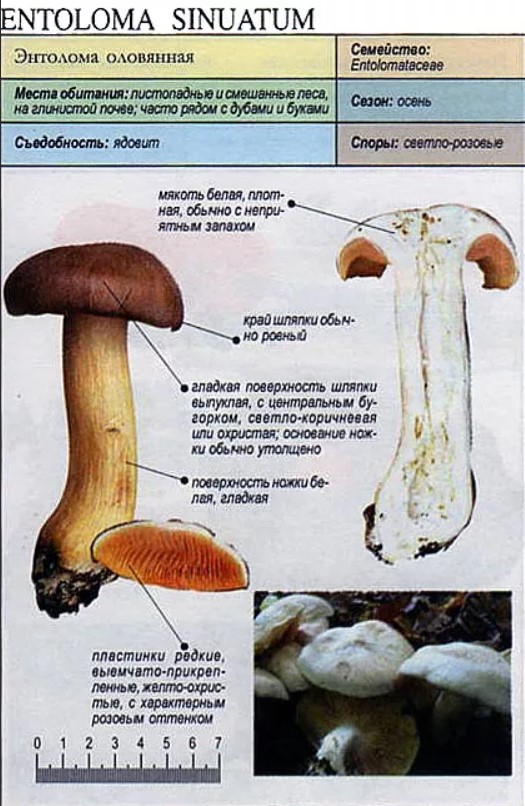
The cap is up to 20 cm in diameter and has a large bump in the center. The color is grayish-brown, pale beige. The stem is curved and white. The flesh has a very unpleasant odor.
Photo gallery of Entoloma venomosa
Hebeloma crustuliniforme
It has a distinctive yellow-brown cap with a dark tubercle in the center. The diameter is 3-10 cm. The stem is up to 10 cm high and very thin. The mushroom grows in broadleaf and mixed forests.
Photo gallery of Hebeloma adhesive
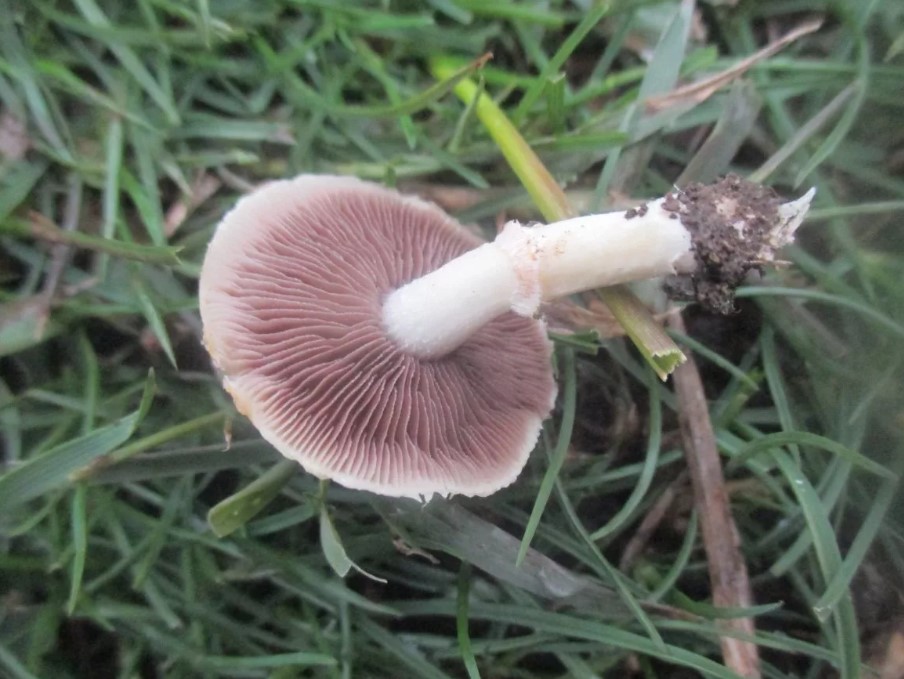
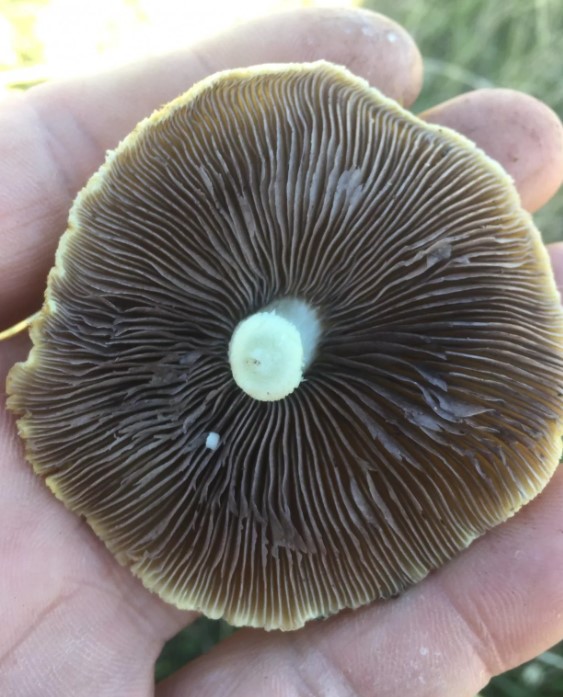
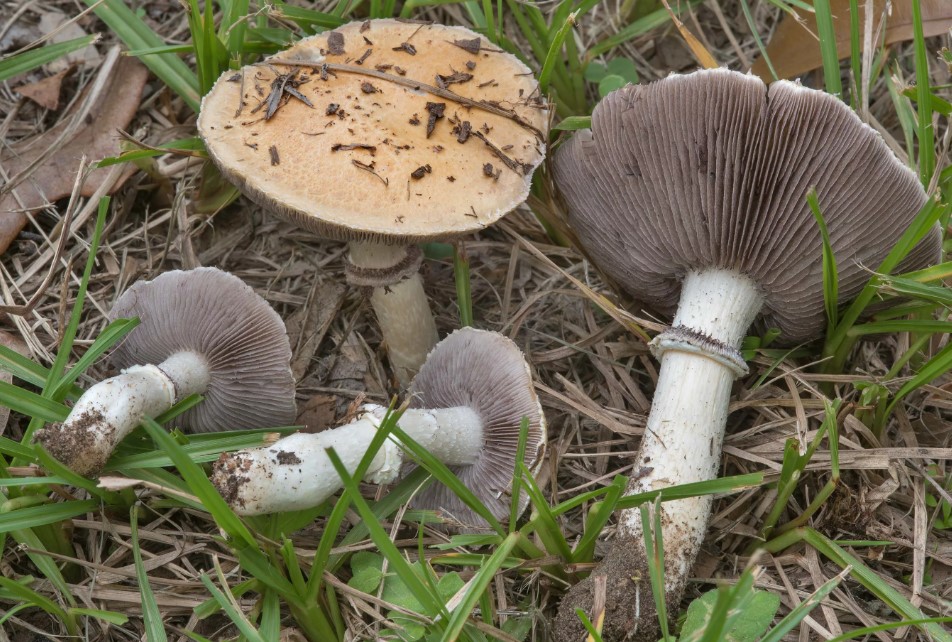
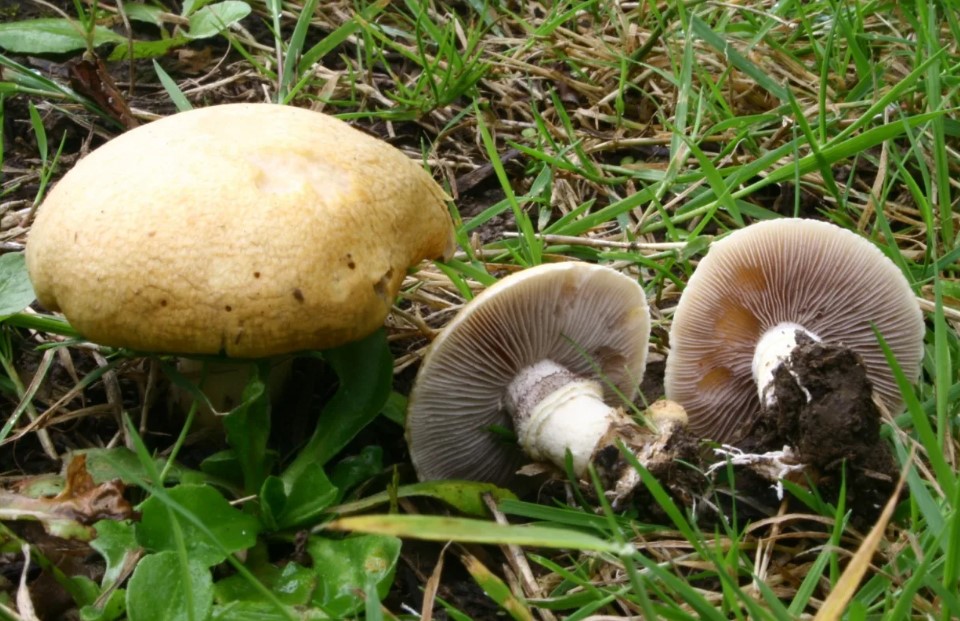
Psilocybe coronilla
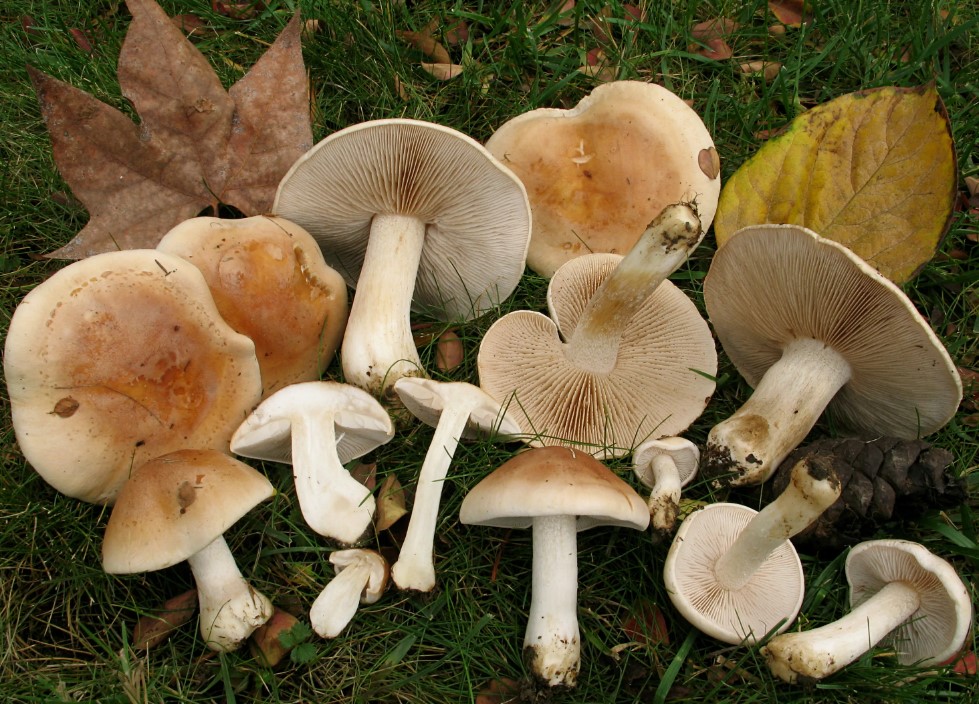
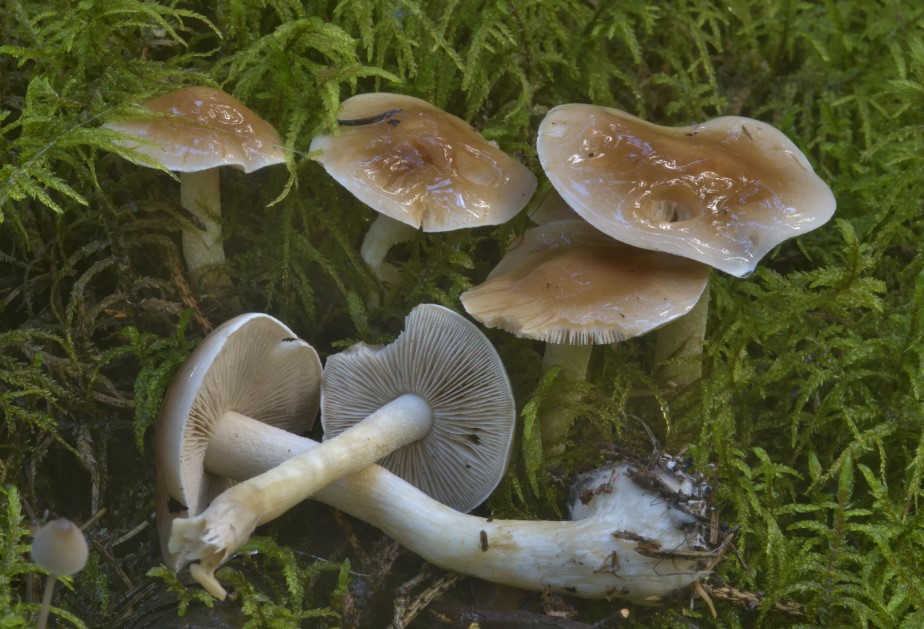
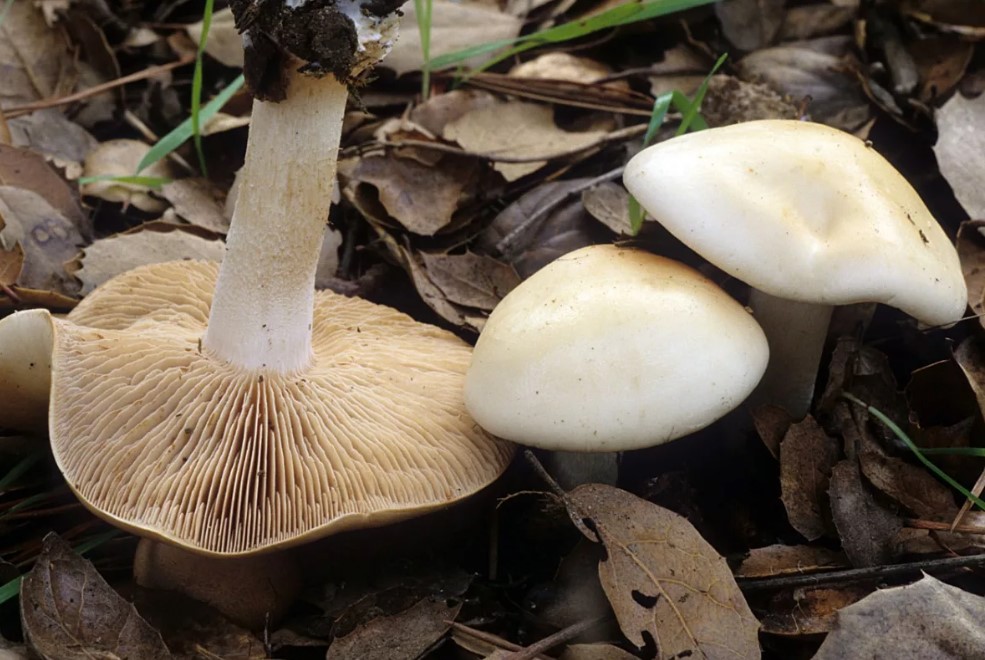
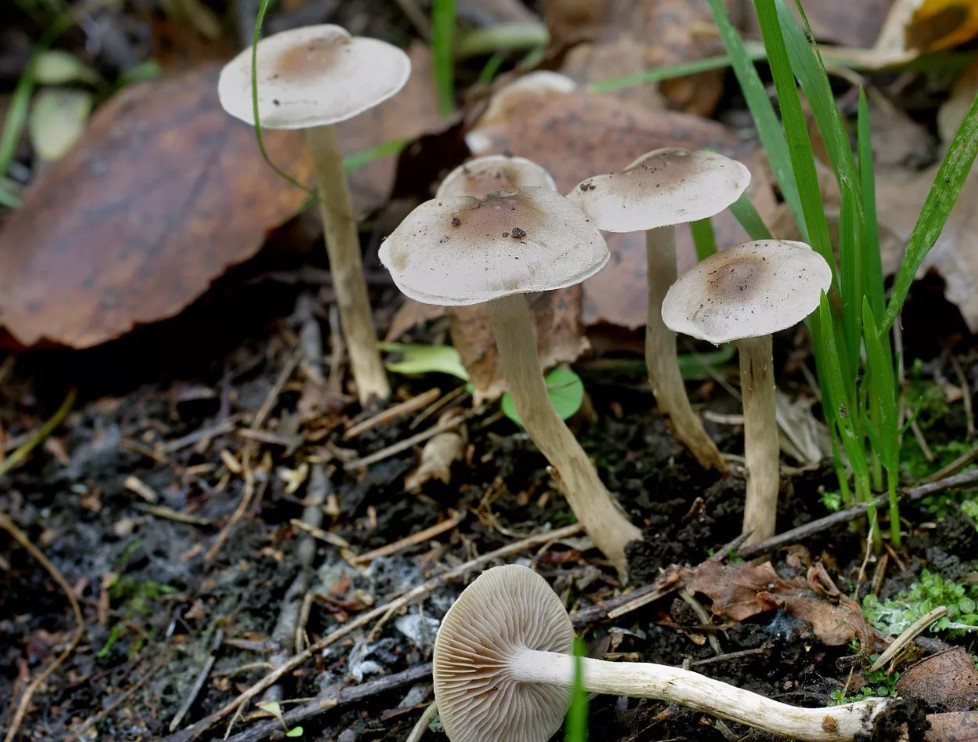
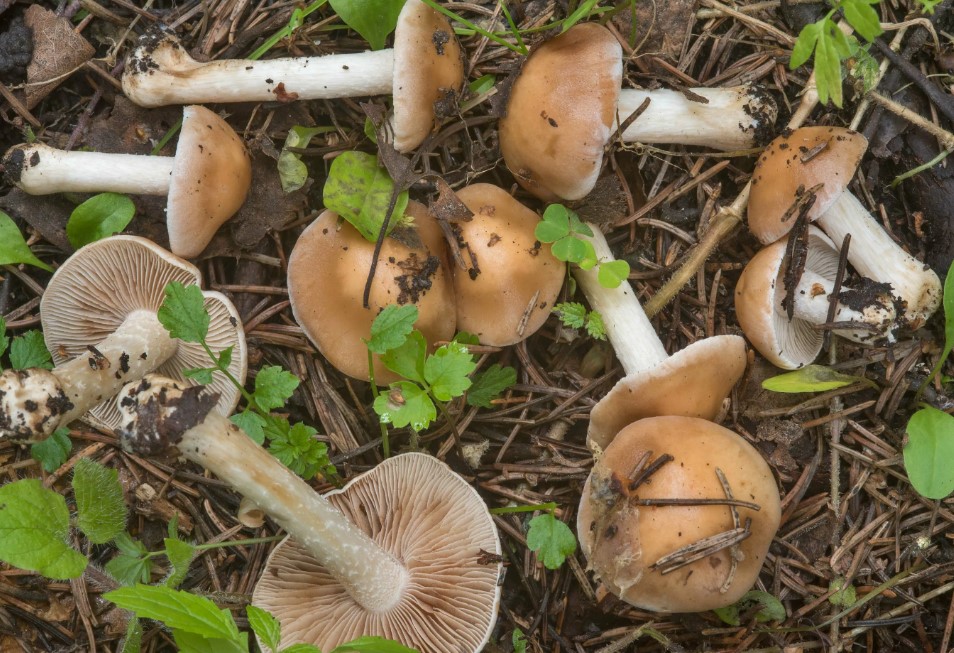
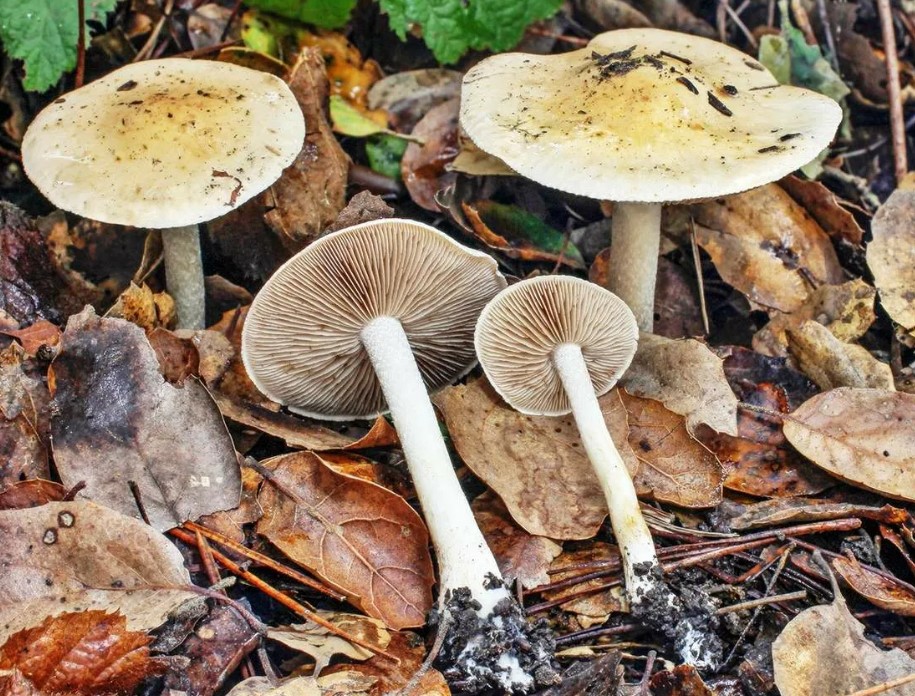
The cap is conical, flattening as it grows. It ranges from 2 to 8 cm in diameter, is yellow, and has flakes along the edges. The stem is cylindrical and tapers at the base. The mushroom is found in meadows and plains.
Photo gallery of Stropharia coronata
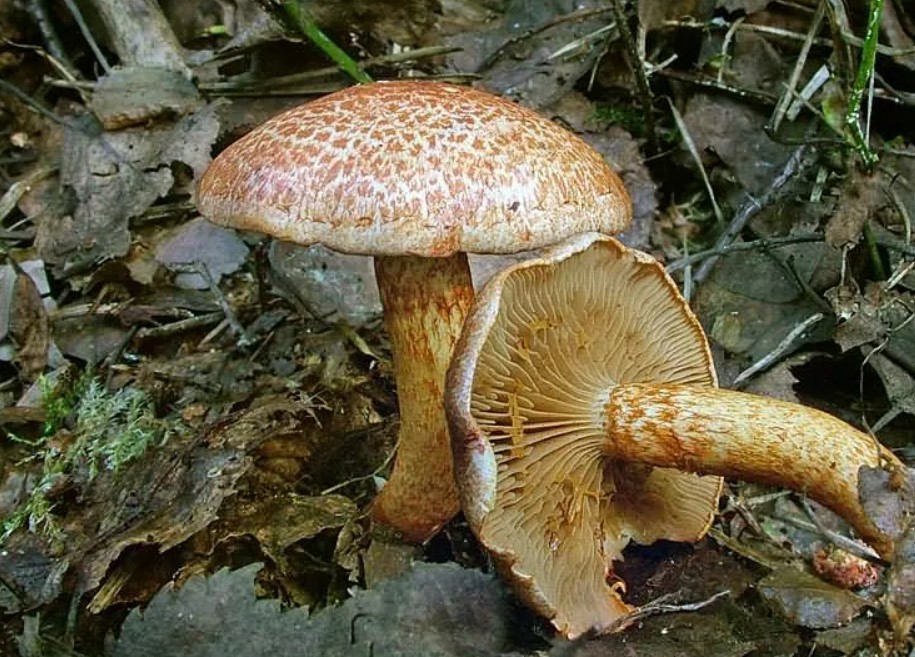
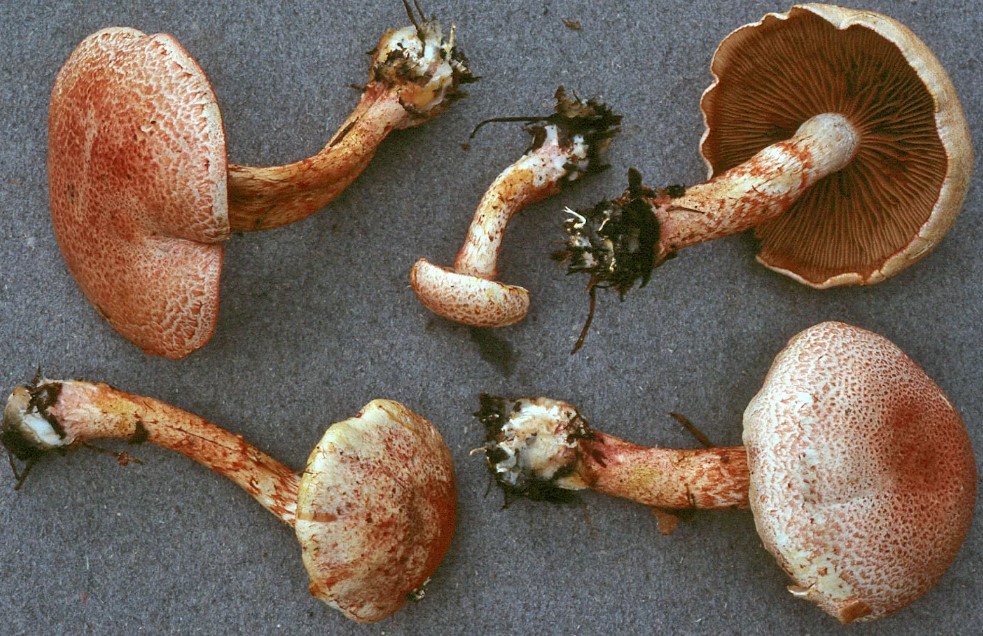
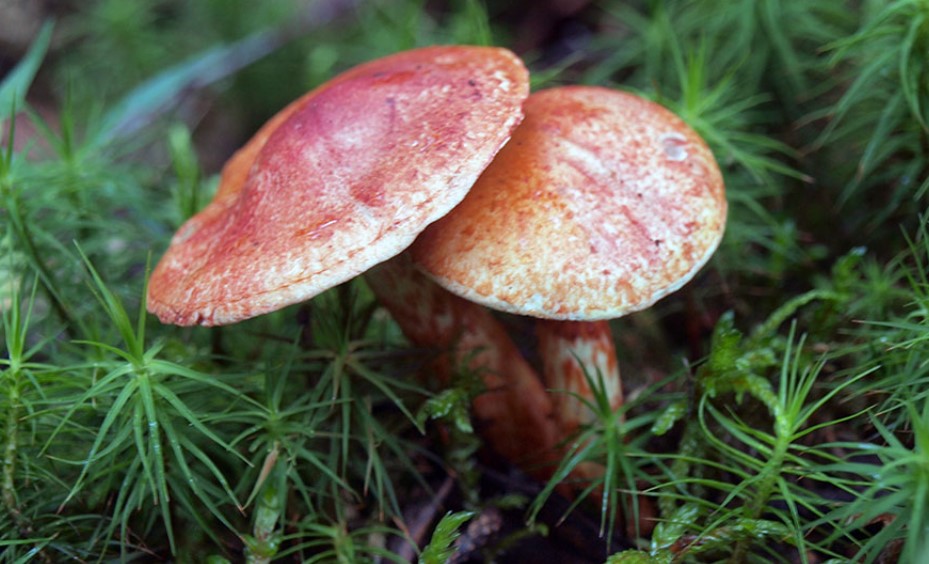
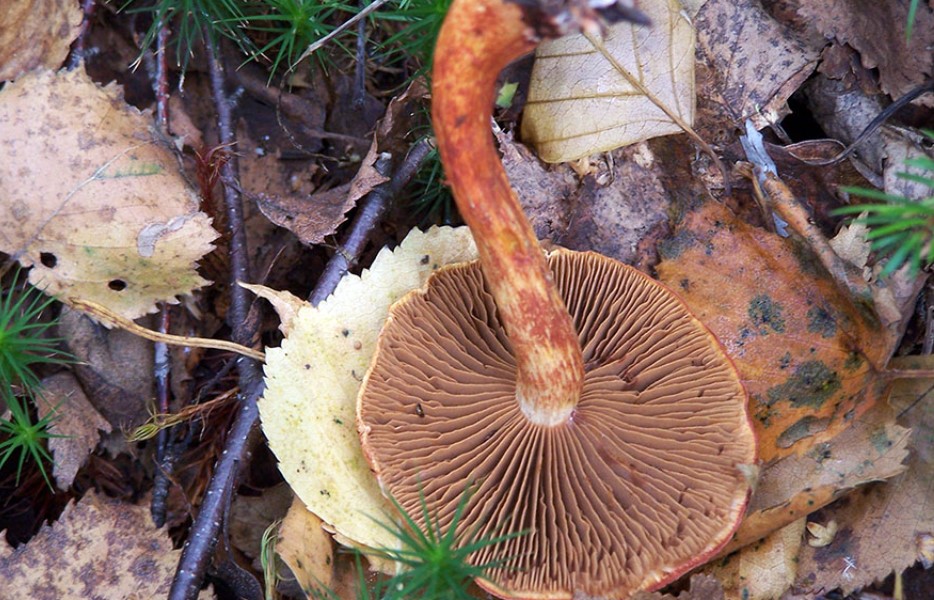
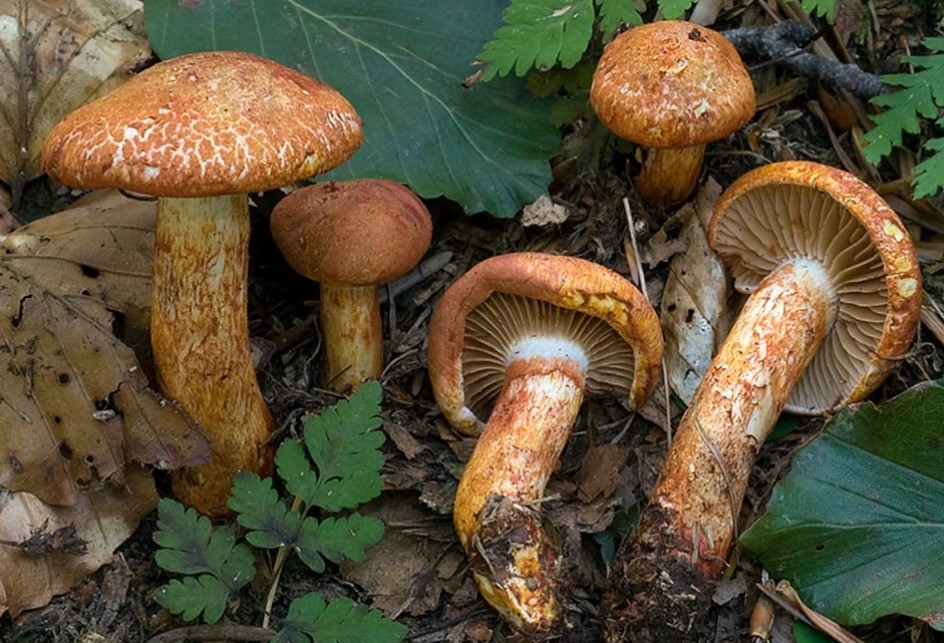
Cortinarius bolaris (Lazy webcap)
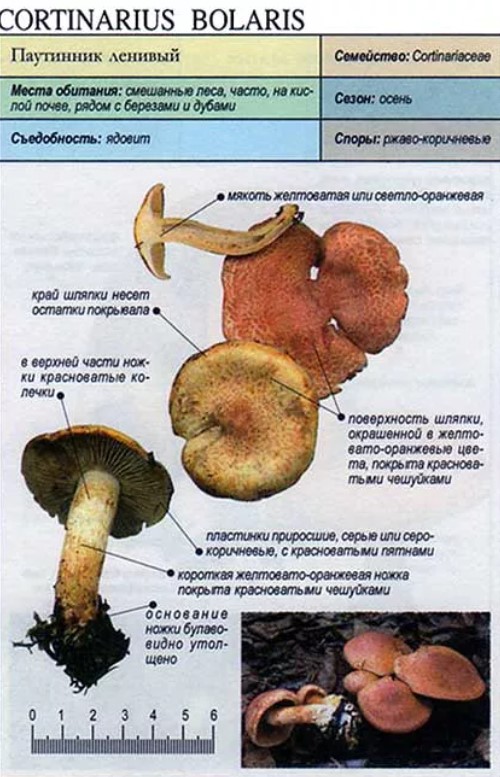
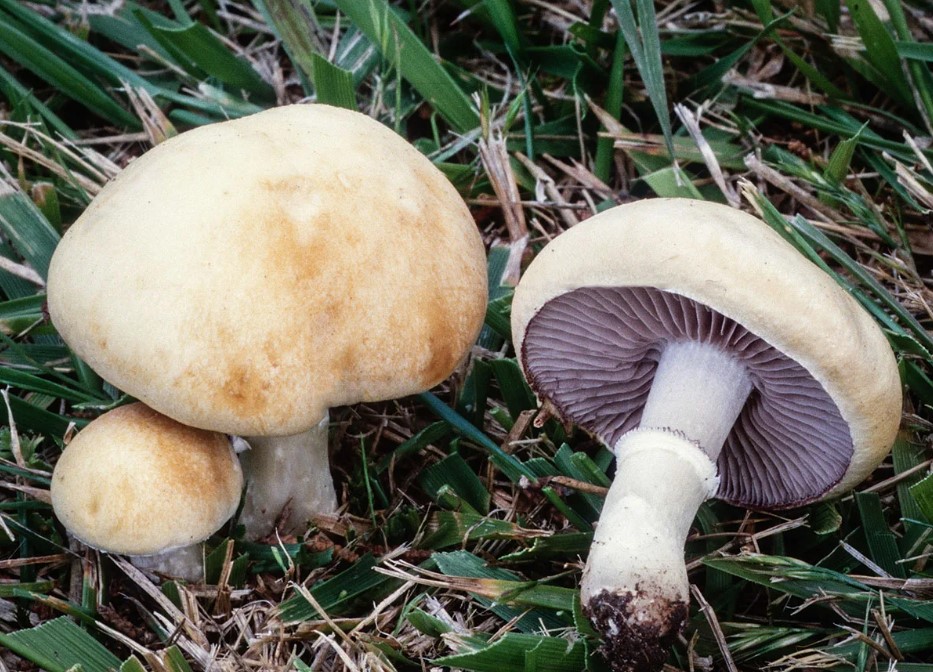
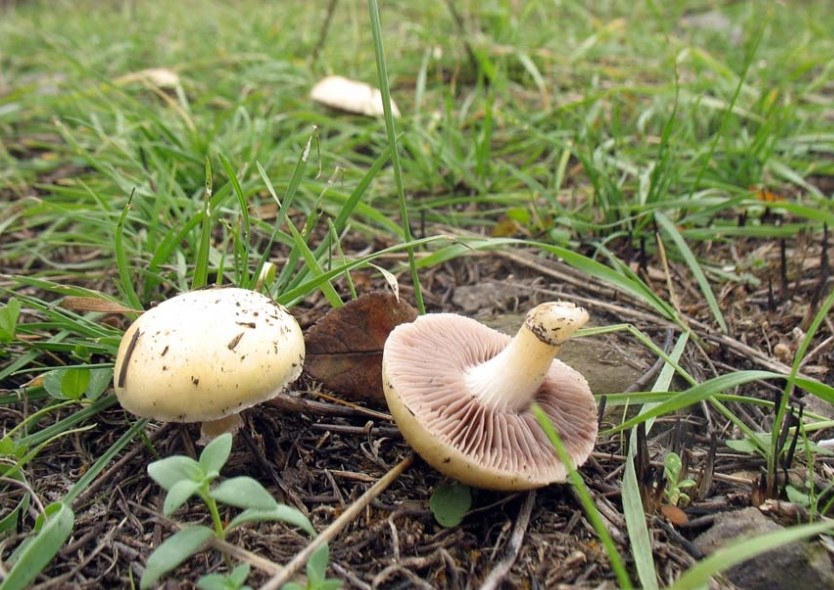
It is distinguished by a small cap, no more than 7 cm in diameter, with red or orange scales visible on its surface. The stem is up to 6 cm high and up to 3 cm in diameter. It grows in both coniferous and broadleaf forests.
Photo gallery of the lazy gossamer
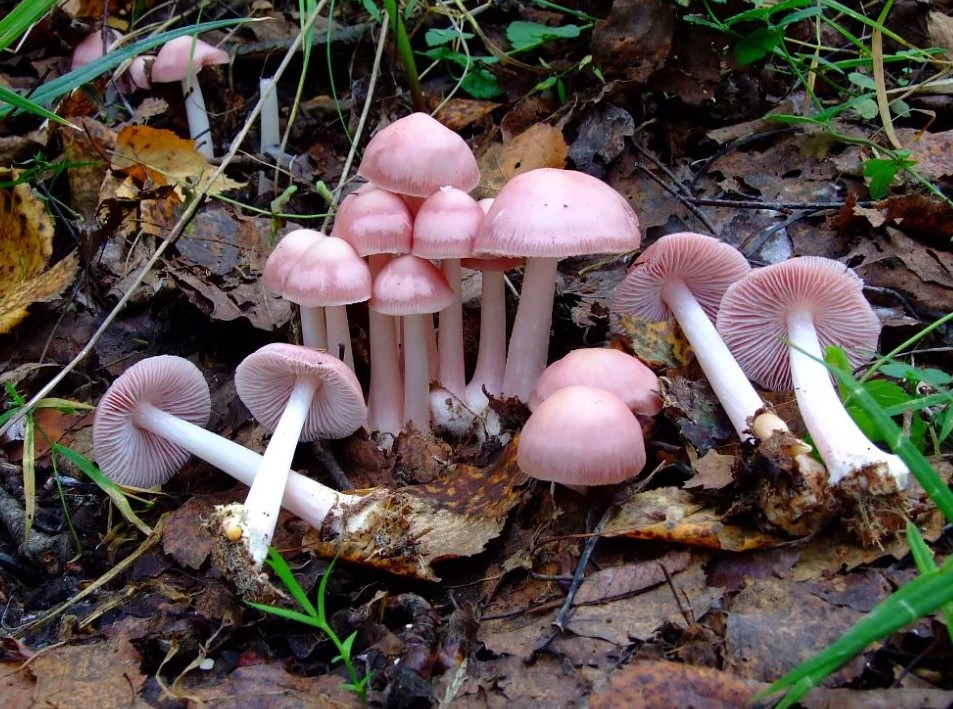
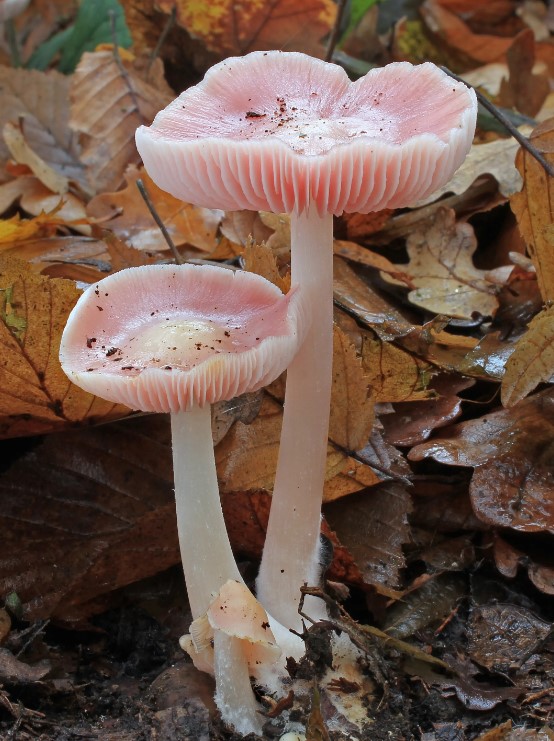
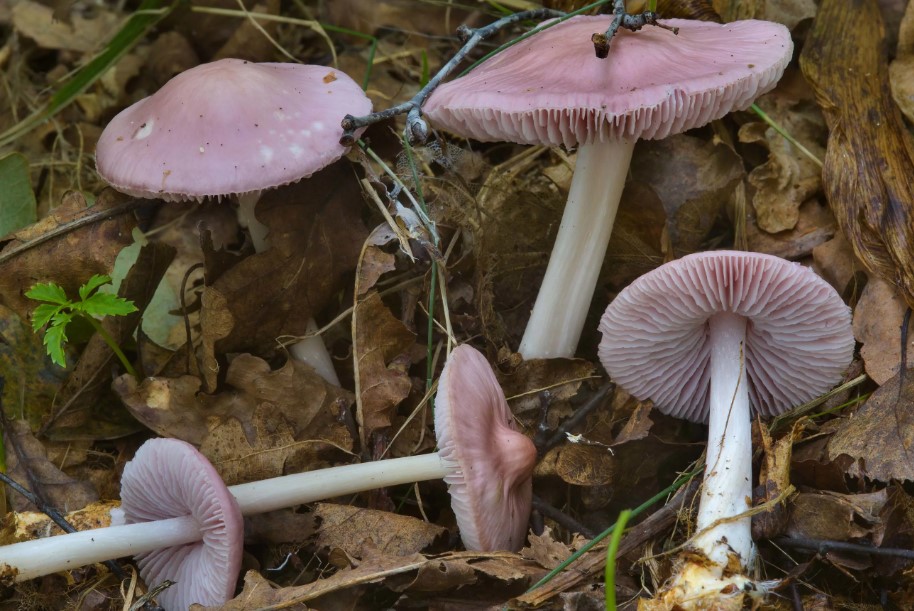
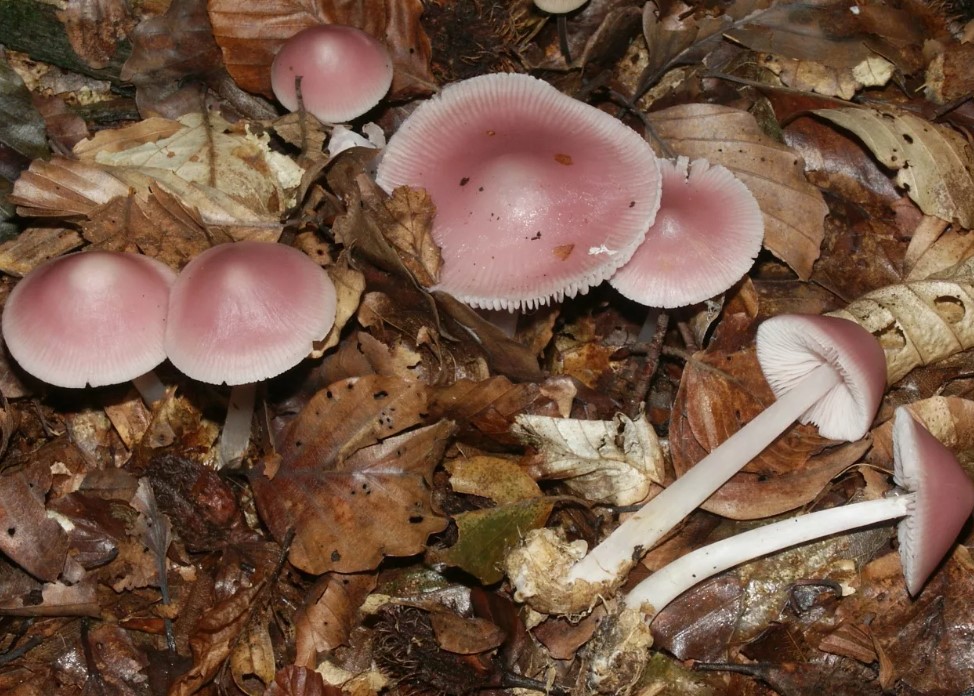
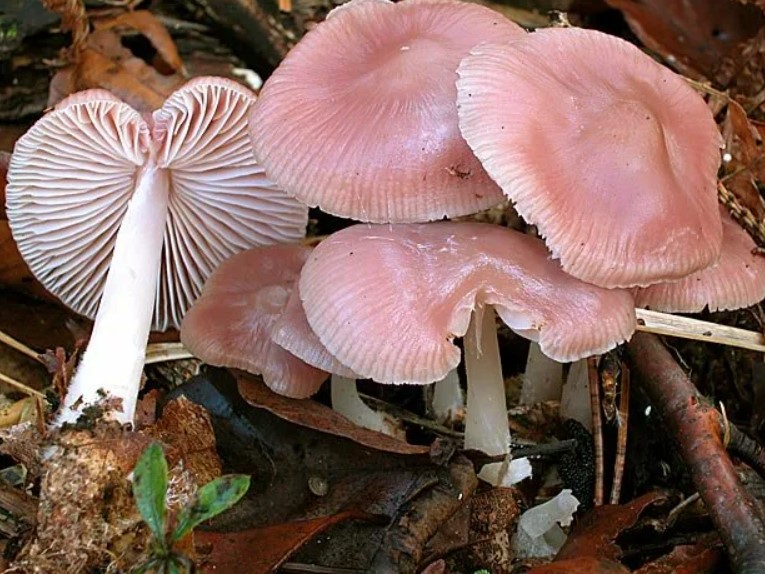
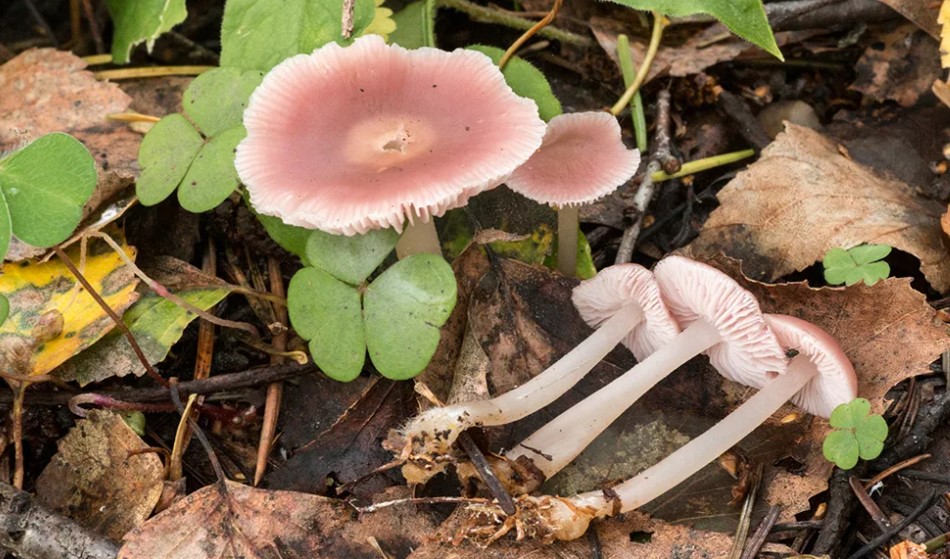
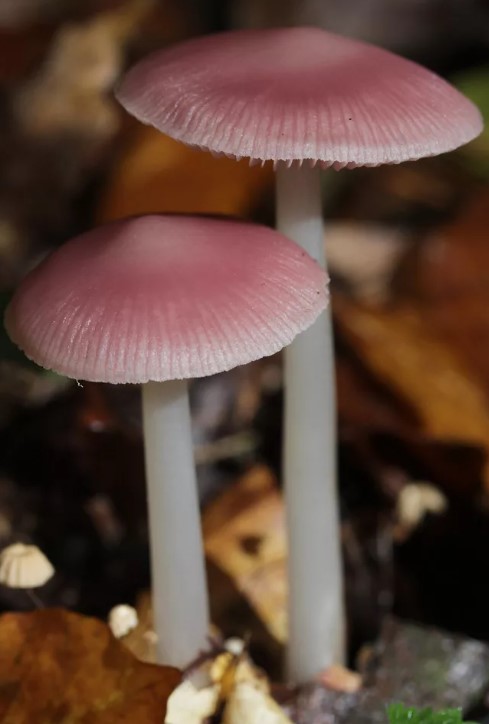
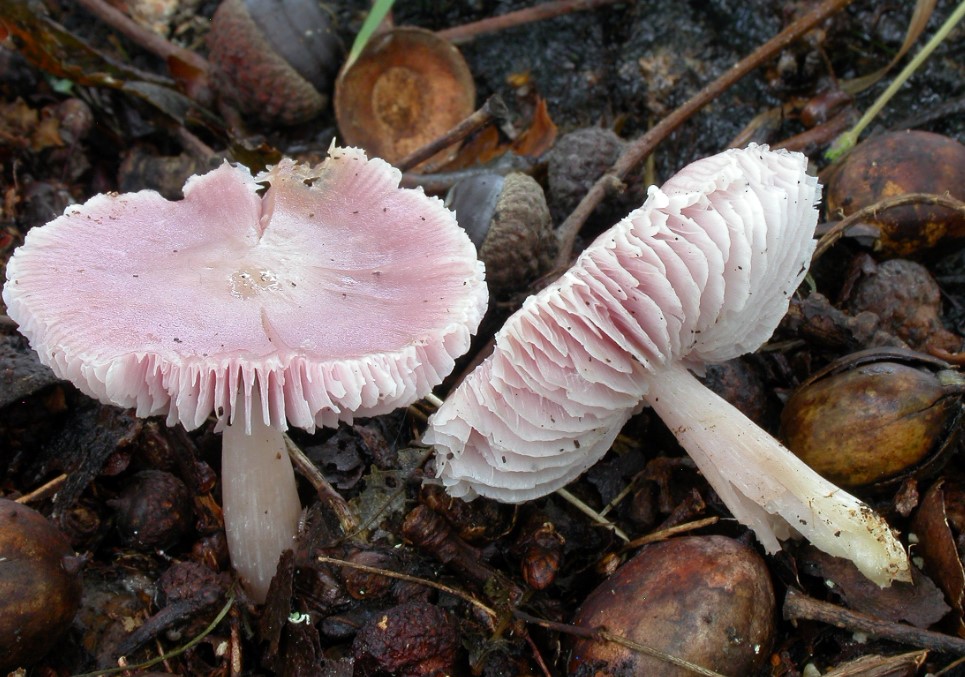
Mycena rosea
The cap is up to 6 cm in diameter, bell-shaped or flat, and the stem is pinkish, up to 10 cm long, and thin. The flesh has a pungent odor. The mushroom is found in broadleaf forests, preferring to grow under oak or beech trees.
Photo gallery of Mycena rosea