Growing tomatoes involves protecting the plants from pests. The most insidious of these are thrips. These inconspicuous little mites suck the nutrients from the leaves, reducing tomato yields. The plant gradually dries out.
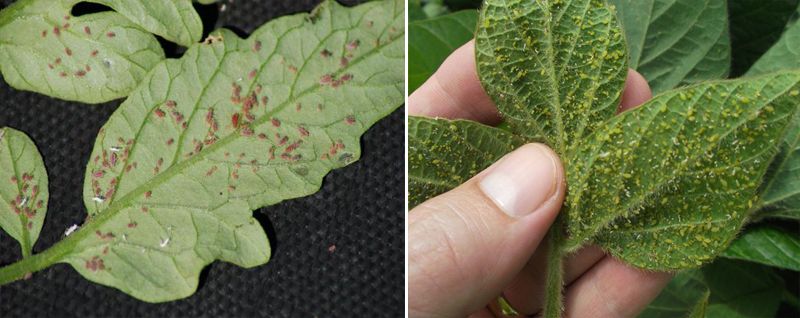
Insects actively reproduce throughout the crop's growing season. Biological and chemical methods are used for control. In the initial stages of infestation, when isolated thrips appear on the bushes, folk remedies based on plant materials can be helpful.
How to identify thrips on tomatoes
These tiny insects are masters of camouflage. They hide in flower buds and on the undersides of leaves. Their inconspicuous coloring and small size (adults grow to 2 mm) help thrips remain undetected. You can detect the pests by the condition of your tomatoes. The main signs of their presence are:
- the leaf becomes lighter, and an openwork mesh of thickenings appears on it;
- yellow spots, over time the pigmentation intensifies and spreads across the entire leaf blade;
- Barely noticeable black dots appear on the greenery - these are the excrements of ticks, fungal pests can develop on them.
The seedlings are starting to wilt. If the shoots are drooping and show a barely noticeable yellowing, it's best to carry out preventative treatment.
These pests prefer to nest and lay eggs on the underside of leaves. Thrips themselves can be difficult to identify due to the diversity of species. These insects can be brown or pale yellow. However, light or dark gray polyphagous thrips are more common. They have a long, needle-like body and a small head with antennae.
Causes of thrips on tomatoes
The larvae of sucking mites are very small. They can be brought into a greenhouse via dirty containers or contaminated soil along with purchased seedlings. When growing tomatoes at home, young shoots are often attacked by insects found on houseplants. Polyphagous pests are often found in apartments.
Thrips thrive in high humidity, with optimal temperatures ranging from 20 to 25°C. The risk of infestation increases if crop rotation is not followed. When growing tomatoes or other nightshades in the same greenhouse, crops are more susceptible to infestation.
Folk remedies for thrips on tomatoes
Experienced gardeners try to use harmless methods to combat sucking insects. These are based on the biological properties of plants and are effective only in the early stages of an infestation, when pests are few in number. Recipes for infusions and decoctions are provided in the table.
| Means | Preparation | Application |
| Marigold bud decoction | 50 g of flowers are crushed and boiled. The liquid is infused for 3 days. | Preventive spraying is carried out once a week. |
| Garlic infusion | 1 teaspoon of garlic pulp is poured into a glass of water and left to infuse for 24 hours. | Wet the affected leaves. |
| Dry mustard | 1 teaspoon of powder is diluted in a liter of water. | Water the soil around the plant to kill pupated larvae. |
| Hot pepper | To prepare the concentrate, boil 30 g of powder in a glass of water for an hour, then let the mixture steep for 24 hours. To prepare the working solution, use 10 ml (2 teaspoons) of concentrate per liter of water. | Treatment is carried out once every two weeks. |
| Tobacco or shag | 80 g of powder is poured into a liter of water, infused for 24 hours, then filtered. | The plantings are watered once a week. |
When growing tomatoes in protected soil, the frame, glass, or film should be prophylactically soaked weekly with a soapy solution. Use green or tar soap with a strong scent.
Chemicals for thrips control on tomatoes
Plant treatment begins at the first signs of damage. Sucking insects are resistant to many pesticides. Modern insecticides effective against mite larvae and adults are listed in the table.
Toxins accumulate in leaves and fruits, so before treating plants during the ripening period, it's necessary to harvest the crop. The next tomato harvest should be done two weeks later.
| Name of the drug | The dosage of the preparation for the preparation of a working solution per liter of water | Application |
| Actellic is an organophosphorus compound based on pirimiphos-methyl | 2 ml | After spraying, wrap the tomato in film for 24 hours. |
| Agravertin and Akarin contain avertin. | 10 ml | The bush is irrigated and isolated from healthy plantings for 24 hours. |
| Vertimek, active ingredient abamectin | 2.5 g | The affected bushes are watered and a protective dome is made from film. |
| Karbofos is a powder or emulsion of organophosphorus compounds. | 7 g | Three sprayings are carried out per season at weekly intervals. |
| Confidor is a wettable powder, an analogue of Actellik. | 2 ml of the mixture diluted according to the instructions | Wet the bushes with signs of damage on the leaves and the soil. |
| Intavir (Inta-vir) contains cypermethrin and is available in tablets. | 1 tablet | Repeated watering of the plant (every 1.5–2 weeks) followed by wrapping with film. |
Marathon, a dry granule, is used for soil treatment. It is applied before watering. The dry insecticide dissolves gradually, killing any larvae that fall into the soil. Thrips poisons are harmful to pets and bees. When preparing solutions and treating plants with pesticides, it is essential to take precautions; it is advisable to wear gloves, goggles, and a respirator.
Biological remedies for thrips on tomatoes
Vertimek and Fitoverm are biological insectoacaricides. They have minimal impact on animals and beneficial insects. They are absorbed by cells within two hours and are easily tolerated by plants. Biological products can be used when thrips appear on seedlings. They remain effective for up to three weeks.
During spraying, the solution should be applied only to the tomatoes. Treating the soil is useless. To retain the insecticide on the leaves, wrap the plant in plastic after spraying, removing the film after 24 hours. By this time, the insects become inactive and die within two to three days. The solutions remain chemically active for two hours, after which they decompose. Toxic concentrations in the fruit persist for the first three days after treatment. The tomatoes can then be harvested.
Spraying is carried out only with freshly prepared solutions.
Top.tomathouse.com recommends: thrips prevention measures for tomatoes
Getting rid of sucking insect populations is difficult. The larvae overwinter peacefully in temperate climates, awaken in the spring, and attack young tomato plants. Thrips are very resilient, so control measures are not always effective.
To prevent insect population growth, it's important to avoid creating favorable conditions for them. Preventative measures:
- regular weeding of plantings;
- cleaning up plant residues after harvesting, deep autumn digging of the soil;
- adherence to crop rotation; it is not advisable to grow other nightshade and vegetable crops that are susceptible to thrips before tomatoes;
- regular sulfur fumigation of greenhouses, hotbeds, film shelters, sanitary treatment of equipment, garter material, containers for seedlings;
- replacing the topsoil after harvesting;
- soil disinfection with a solution of manganese;
- purchasing high-quality planting material.
To repel sucking insects, it is recommended to plant herbs, onions, garlic, calendula, and marigolds near tomatoes. This effective plant protection method is harmless to bees and animals.
Thrips can reproduce throughout the season. When growing tomatoes, it's important to regularly inspect the plants, checking the leaves on both sides. Treatment should be carried out at the first signs of infestation.