Growing onions for bulbs is generally straightforward, but achieving a truly large yield—up to 300-400 g—is a more challenging task. Certain agricultural practices must be followed. This article will explain the best planting material to use and how to care for the seedlings.
Content
Varietal diversity
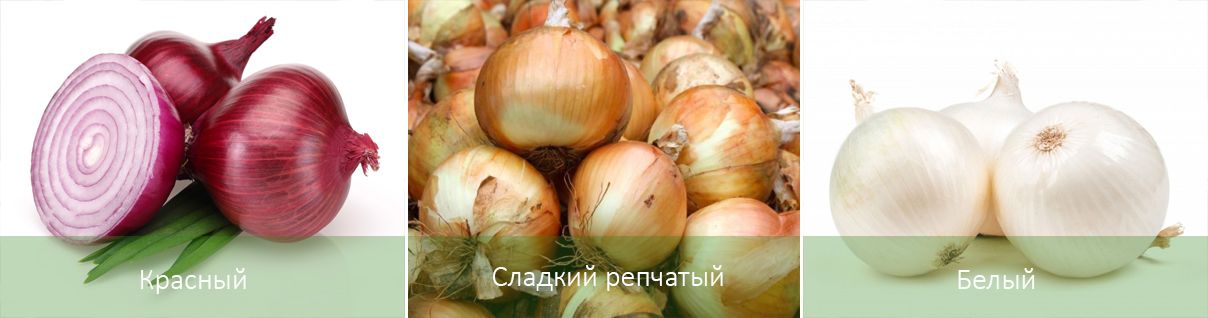
The onion family includes many varieties that differ in taste, appearance, growing conditions, care, and shelf life:
- red – can be eaten raw, since the bitterness and smell are not so pronounced;
- sweet onion - used mainly for frying;
- white – has a sharp taste, crispy;
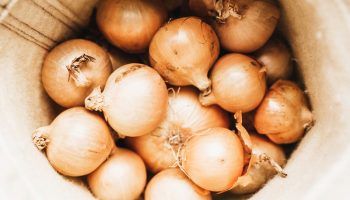
- Yellow onion is the most common, added to most dishes.
According to their taste characteristics, all onion varieties are usually classified into three categories:
- acute - low-yielding and early-ripening varieties;
- semi-sharp – high-yielding, shelf life – average;
- sweet – have excellent taste qualities and are highly productive.
The most common varieties are those with a sharp flavor, as they store well and for a long time. Their distinctive feature is several layers of yellow scales. The best of these include Chalcedony, Bessonovsky, Bamberger, Centurion, and Stuttgarterriesen.
Sweet and semi-sharp onions have a delicate, slightly sweet flavor and a less pronounced aroma, making them ideal for adding raw to salads. Purple onions are recommended for diabetics, as they help normalize blood sugar levels.
The best: Agostana, Albion, Belyanka, Red Baron, Carmen, Veselka, Yaltinsky.
Bulb size depending on variety
Onions are long-day plants, so if there's insufficient light, the bulbs will be small. A unique feature of alliums is their ability to tolerate climate change better than insufficient light.
Onion varieties common in southern regions require at least 15 hours of daylight. Only then will the bulbs gain maximum weight within the allotted time. In northern regions, such varieties don't have time to mature, resulting in small bulbs.
On the contrary, varieties suitable for northern regions, planted in the south, increase feather mass, but do not form a bulb.
Rules for growing onions
Although onions are an easy-to-grow plant, certain agricultural requirements should still be considered. First of all, onions do not have a developed root system, so they require additional nutrition.
Compatibility of crops in the garden bed
Onions of any variety are recommended to be grown after plants that have received sufficient amounts of organic fertilizers:
- cucumbers;
- potatoes;
- cauliflower;
- legumes;
- green manure.
Neutral ones include:
- late varieties of cabbage;
- beet:
- tomatoes.
It is not recommended to plant onions in a plot after carrots and greens.
As for planting, the best options are: radishes, peppers, carrots, and tomatoes. These will protect the onions from diseases and pests.
Soil requirements
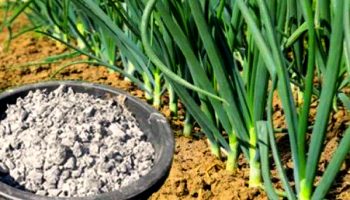
Onions are sensitive to soil acidity, which should not exceed 6.5 units. If the acidity is higher than the permissible level, it can be neutralized with a mixture of slaked lime and wood ash (300 g per 1 m²) or dolomite flour (200 g per 1 m²). Once the acidity has been reduced to the desired level, onions can be planted in the area only after several years.
Fresh manure is prohibited (it's harmful to young plants). Fertilizing the area in the fall is best done at a rate of 2 kg of rotted compost per square meter. To enrich the soil with nutrients, use phosphorus, nitrogen, and potassium mixtures. If the soil is predominantly peaty, nitrogen supplementation is unnecessary.
Environment
Onions can be planted or sown in early spring, when the air temperature reaches +5°C, with a 10-cm-thick soil layer warming to +10°C. At -3°C, onions continue to grow and the bulbs ripen; young plants die when the temperature drops to -5°C.
The optimal temperature for onions is 20°C. If you maintain proper watering and follow the temperature recommendations, seedlings will appear in 10-12 days.
Growing onions from sets
The agricultural technology for growing onions from sets involves fulfilling a number of conditions.
Priming
The plot is prepared in advance, specifically in the fall. The beds are dug (it's essential to turn over the soil layers), and compost is added according to the above-mentioned instructions. If the soil needs to be enriched, superphosphate, urea, or potassium sulfate are added.
In the spring, the plot is fertilized with nitroammophoska, and the beds are regularly loosened. Onions are not planted in the same bed for more than three years in a row.
Planting material
In the fall, onions intended for planting are dried for two weeks and then sorted. Onions with a diameter of 2 cm are optimal for planting. Smaller onions (1.5 cm, or wild oat onions) are used for winter planting. In southern regions, they are planted in a garden bed in late fall, and in northern regions, in the fall, in a greenhouse. Larger diameter onions are used to produce bulbous greens.
Before planting, it is necessary to re-examine the planting material, sort it, removing dried and infected bulbs.
Immediately before planting, it's important to disinfect the onions using fungicides or a potassium permanganate solution. The planting material is treated with the fresh solution for 1.5 hours and then dried for three weeks.
Landing
Landing is carried out in several ways:
- private;
- double-line tape.
The simplest method is in rows.
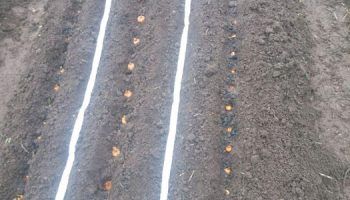
The length of one row is 45 cm, with a distance of 8 cm between adjacent bulbs. Another technique, called ribbon planting, is more complex but also more productive. The pattern is 20 cm by 50 cm, with a distance of 8 cm between bulbs.
The depth of planting the onion sets depends on the size of the bulbs. Small bulbs only need to be planted 3 cm deep, while larger bulbs require 5 cm. If the soil in the bed is dry, water it during planting.
Seedlings appear within ten days. Weeds should be removed regularly, and a soil crust should be prevented from forming on the surface. The bulbs do not require hilling.
Watering, fertilizing, loosening
Caring for planted onions also requires adherence to agricultural technology.
Water regime
Large bulbs require a lot of water to grow, especially during the first month. It's important to ensure the soil doesn't dry out. Traditionally, the beds are watered weekly, but during severe drought, the frequency of watering is doubled.
The soil should be moistened to a depth of at least 10 cm, and as the bulbs grow, up to 25 cm. The beds should be loosened after each watering. Watering should be stopped 30 days before harvesting, but the frequency of loosening should be increased to expose the upper part of the bulb.
Top dressing
Fertilizer is applied according to a specific schedule:
- two weeks after planting, apply a solution of urea and nitrophoska, then be sure to wash off any remaining fertilizer from the onion feathers;
- After a few more weeks, it is appropriate to apply phosphorus-potassium fertilizer (add 15 g of potassium salt and 30 g of superphosphate to a bucket of clean water);
- The next feeding is carried out as needed, the ingredients are similar.
Loosening
Onions are an easy-to-grow plant, but they are sensitive to soil conditions. Therefore, the beds must be carefully and regularly loosened, always by hand, to avoid damaging the root system, which is located at a depth of 10 to 30 cm.
Weeding
Weeds prevent onions from developing fully, so it is important to remove excess plants in a timely manner.
Protection from diseases and insects
Onions are most often susceptible to fungal diseases, namely rot and powdery mildew. As for insects, bulbs are damaged by thrips and onion flies.
At the slightest sign of disease, action is taken immediately. Symptoms include feathers changing color, wilting, and curling. Chemical treatments are not used; it's better to purchase insecticides and fungicides, which are safe for plants and humans.
Possible problems:
- dying off of bulbs – occurs due to dense planting, insufficient watering or fertilizing;
- yellow feathers - the reasons are similar, also among the reasons mentioned are damage by onion flies or early ripening of the bulbs;
- incomplete ripening of bulbs – occurs due to excess nitrogen, can be prevented by adding potassium to the soil;
- the appearance of arrows indicates poor quality planting material.
Harvesting
Harvesting takes place in late summer on a sunny, clear day. If you harvest onions in the rain, they will begin to rot.
You can tell how ripe the bulbs are by the way the tips of the bulbs droop. As soon as the tips fall to the ground, harvest immediately; otherwise, the plants will begin to grow again.
To remove the bulbs, use a shovel to dig up the crop and pull it out. In good weather, the bulbs are dried directly in the garden bed to kill any infections. Drying is done for a week at temperatures between 25°C and 30°C. To prevent rot, dry the onions for 12 hours at 45°C.
Once drying is complete, the leaves are trimmed from each bulb, and the stems are shortened to 3-4 cm. Only whole bulbs without mechanical damage or signs of rot can be stored. Storage containers include baskets, nets, or cardboard (or wooden) boxes.
Top.tomathouse.com recommends: Chinese method for planting onions
The Chinese method is aimed at increasing yields. The key is to plant the onion sets in ridges between the beds. This allows for the growth of large bulbs with a characteristic flattened shape. The upper portion of the plants receives excellent sun exposure and warmth, which is essential for protecting the crop from rot. Furthermore, this planting method makes the beds easy to water, loosen, and weed.
Small bulbs are planted immediately after the snow melts and the temperature reaches 5°C, while larger bulbs are left until May. This planting schedule allows for a harvest from both types of planting material simultaneously.
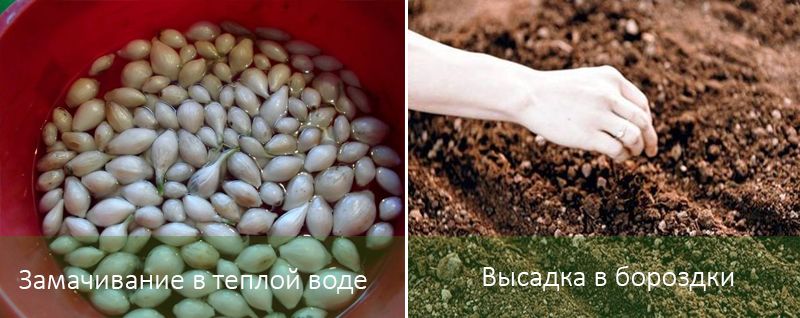
A few weeks before planting, place the box of onions near a heat source, such as a radiator, to ensure the onion sets are thoroughly warmed. Before planting, trim the stems off the onions, but leave the growing collar intact. Otherwise, the onion sets can only be discarded, as they are unsuitable for growing. The day before planting, soak the onions in warm, clean water to stimulate root growth.
The planting area is prepared in advance in the fall and dug again in the spring. Each ridge should be no more than 15 cm high, with a 30 cm spacing between rows. The planting pattern is 10 cm between bulbs, with the sets planted 3 cm deep. Don't trample the bulbs; simply cover them with soil. In dry weather, water the bed as the soil dries.
Fertilizer is applied three times:
- at the end of spring, mullein is used;
- at the beginning of summer, potassium salt, compositions with phosphorus, and urea are added;
- During the formation of bulbs, you can apply fertilizer for the third time.
Another feature of the Chinese method is that the beds should be weeded as weeds appear, but this does not happen very often.