Any gardening job takes a lot of time and effort. But the most tedious, requiring attention all season long, is weed control. Pulling them by hand will only cause the remaining roots to grow even more in the fertilized soil. Therefore, it's best to use specialized equipment to remove weeds by the roots.
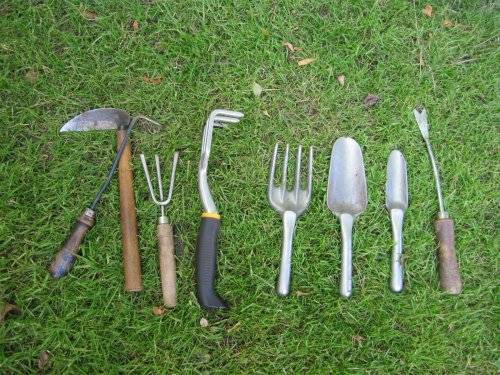
Rake
Rakes are typically used to remove grass clippings. However, they can also be helpful in weed control, especially on lawns. They are excellent at removing creeping plants and those with shallow roots. The sharp tips of the rake pick up these weeds without damaging the lawn, as grasses have a strong root system. Rakes are useless against sow thistle or dandelion.
Root remover
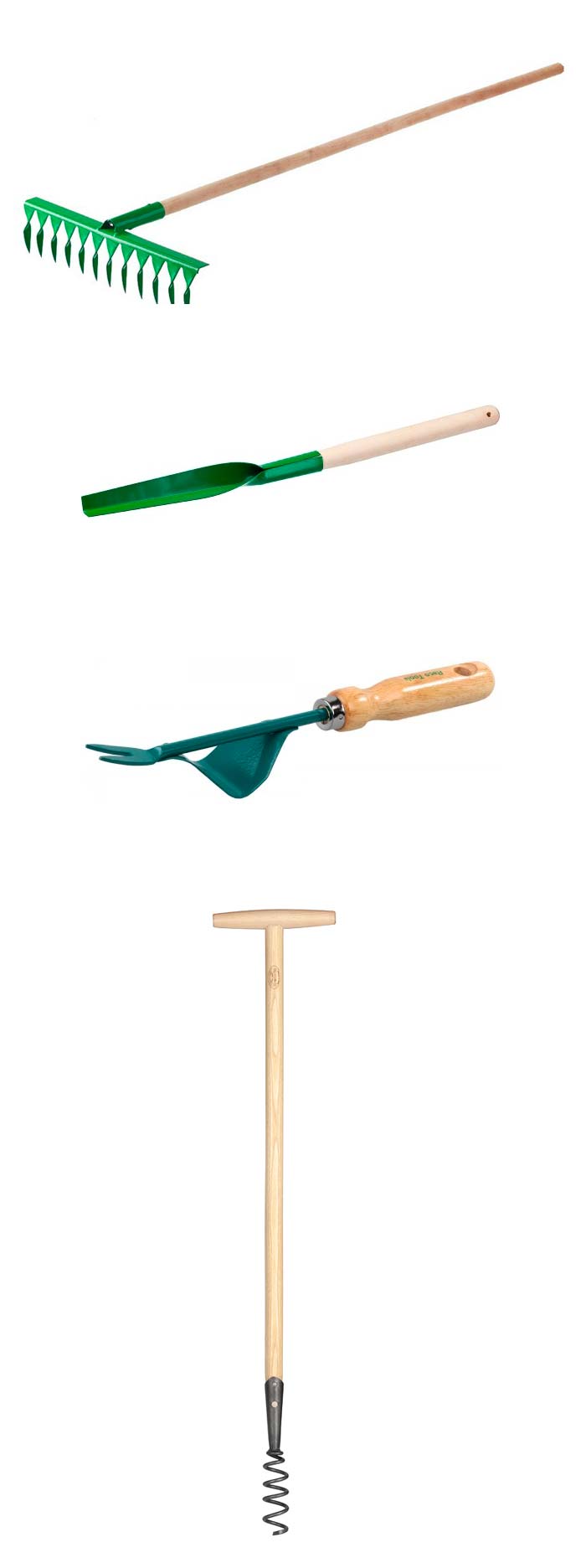
A root puller, as its name suggests, allows you to extract the roots of weeds that are deeply embedded in the soil. It comes in many variations, including:
- an elongated shovel - its end is pointed, blunt or forked - with the help of the handle they press on the ground close to the root of the weed being removed, then, by hooking it, they remove it from the soil;
- V-shaped fork - allows you to grip the root more firmly;
- corkscrew - screw it under the plant and roots, pull it out.
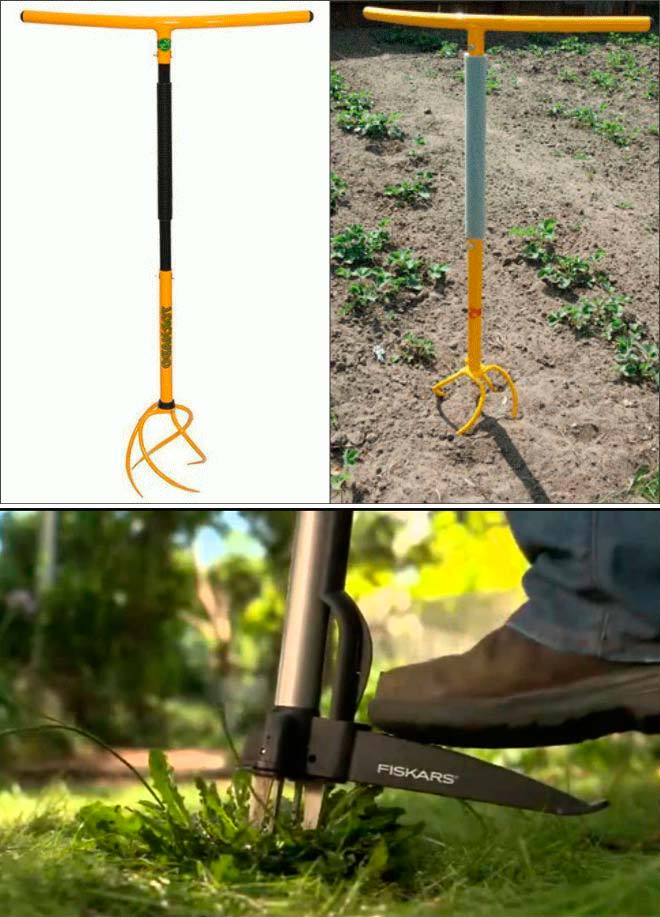
New modifications have now been developed that incorporate a foot rest. This device is inserted into the ground by pressing down on it like a pedal. The steel teeth close around the weed, and with a sharp movement, it is pulled out. Then, with a pushing motion, the tool is released from the uprooted plant.
These are certainly useful tools, but they are only good for treating individual weeds.
Hoe
A hoe will help in the fight against closely located and numerous weeds.
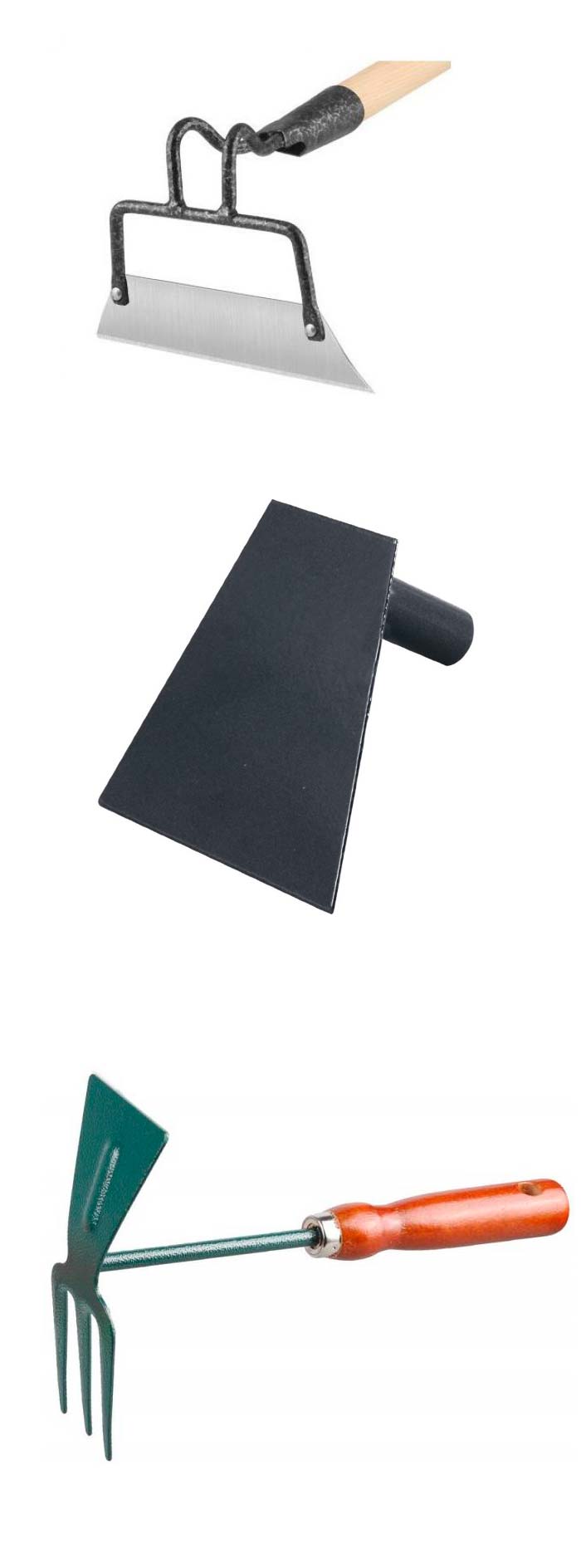
The tool will not only remove weeds, but also loosen the soil, breaking up clods and allowing the roots of noble plants to breathe, and create furrows.
They come in rectangular, triangular, and trapezoidal shapes, with handles of varying heights. For example:
- The so-called garden hoe has a thin blade and is suitable for cutting roots. The most powerful type can remove even burdocks with their roots, but this can damage the roots of other crops, so it requires caution when using. It is good for hilling, for example, potatoes, when weeds are removed along the furrow between plants. The handle in this case should be large, like that of a shovel.
- A hoe—compared to a hoe, its blade is narrower and taller, but still thick. It's used less for removing weeds than for making beds or holes for planting;
- The double-sided hoe is the most popular; on one side it has a sharp blade, reminiscent of a hoe, and on the other side a small rake, allowing you to loosen the soil and rake away weeds.
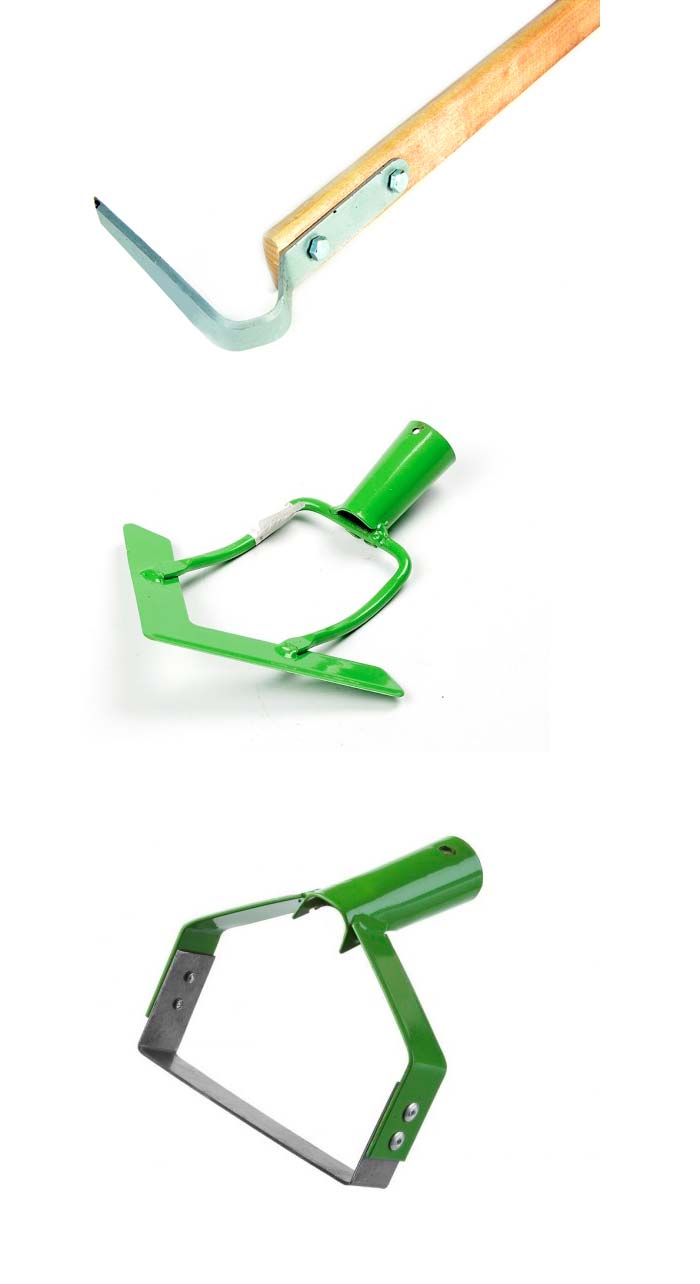
Now new types of hoes have appeared:
- Fokin's flat cutter - a blade curved at 90 degrees, resembling a sharp poker, is attached to the handle;
- Arrow and Stirrup blade - in the first, the blade resembles an arrow, in the second, a stirrup.
I can tell you from experience that you need to have all the tools in your arsenal and use each one for its intended purpose. When loosening and weeding between plants, use a small-handled hoe and a rake; when weeding between rows, use a powerful, high-heeled hoe. And for removing individual weeds with deep roots, use a root puller, and the model you choose is up to you.