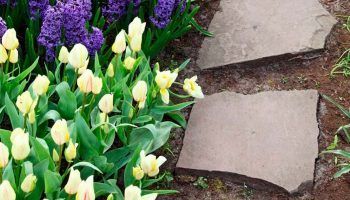
Allium is an ornamental onion, belonging to the onion family. There are approximately five hundred species of this plant. It grows wild in the Northern Hemisphere. It tolerates drought well and is winter-hardy. Its striking appearance makes it suitable for landscaping.
Content
Description
The plant has a distinctive aroma, and many varieties are edible. The leaves are either surrounded by small shoots or solitary, and the root is short.
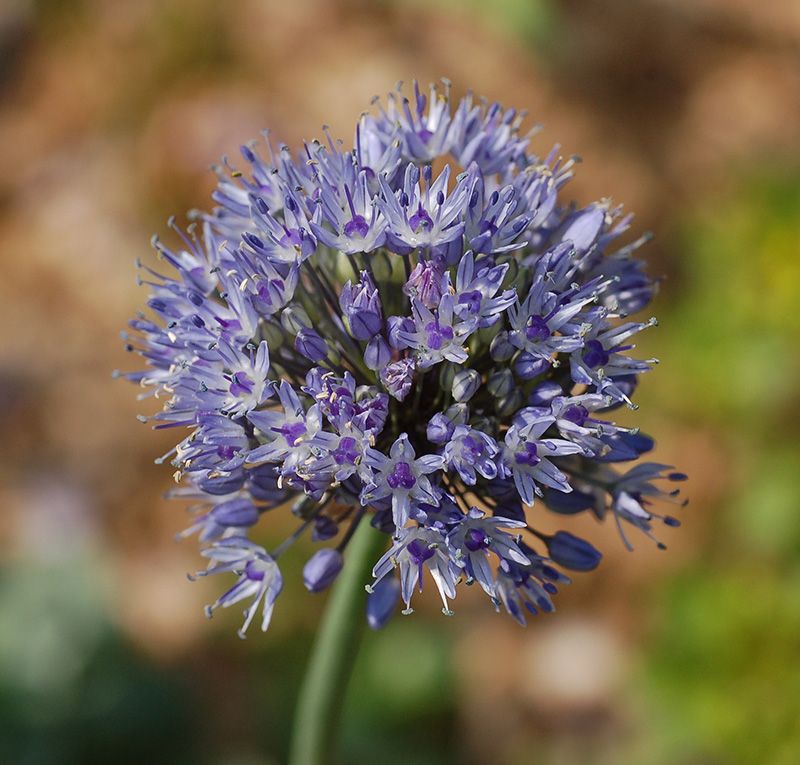
The inflorescences are umbel-shaped, spherical or hemispherical, gathered in a tapering cluster. The flowers are star-shaped with six petals, sepals, or bells.
Types and varieties
Popular varieties:
| View | Description | Flowering time |
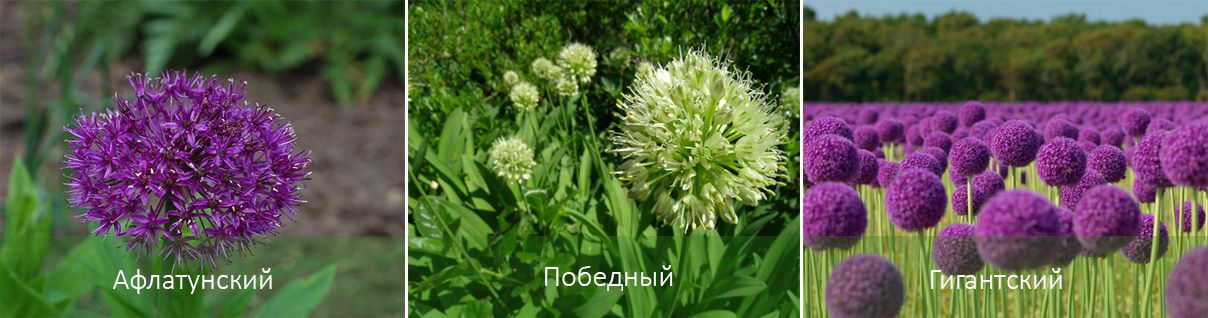
| Giant | As tall as a human, the purple, spherical flowers, composed of small star-shaped buds, are up to 15 cm in diameter. | May-beginning of June. |
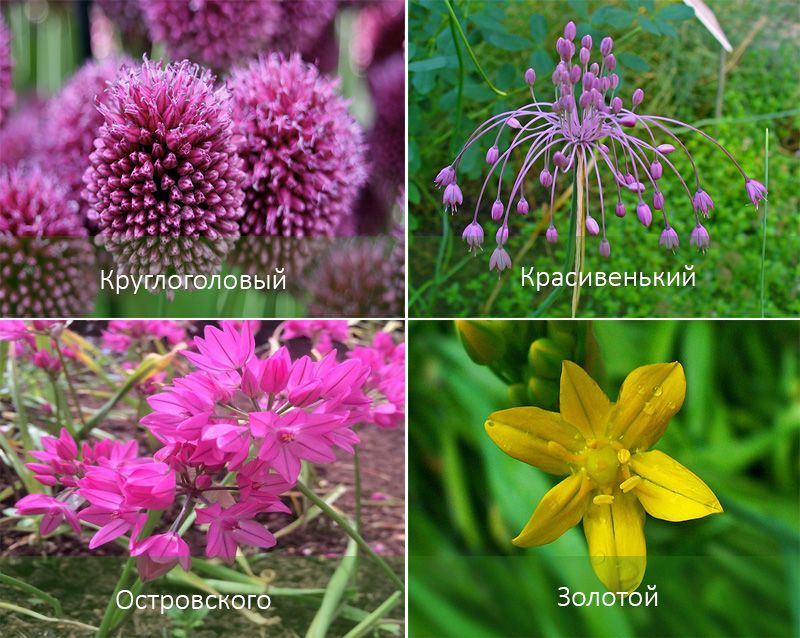
| Roundhead | The inflorescences are pink or burgundy. They are oval in shape and up to 3 cm in circumference. | The second half of summer. |
| Handsome | Small purple flowers collected in umbel-shaped inflorescences. | August. |
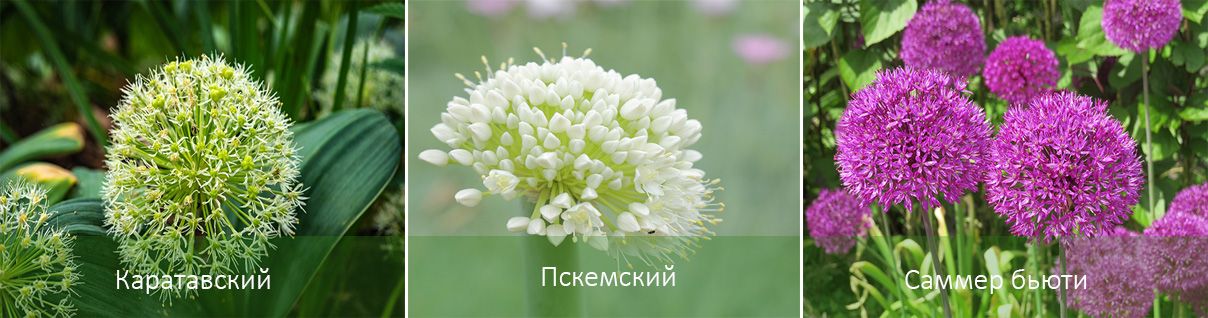
| Karatavsky | The flower stalk is deeply buried in the soil. The leaf blades are wide and edged with reddish or pink. The flowers are snow-white or purple. | June. |
| Gold | Flat, umbel-shaped inflorescences up to 7 cm in circumference are yellow. They resemble miniature lilies. | |
| Ostrovsky | The flowers are lilac-crimson, reminiscent of a pentagram. They have six petals, three of which, spaced every other petal, are shorter. The leaves are elongated and thin, lacking a distinctive onion aroma. | |
| Christopher | The lilac flowers are star-shaped. They are gathered in large inflorescences, up to 25 cm in circumference. They last for 1.5 months. They fade, but do not fall off; instead, they harden and dry out. | |
| Bowed | The leaf blades are flat, fan-shaped, and clustered at the rhizome. The flowers are pinkish or snow-white on stalks reaching 50 cm. | Mid-August. |
| Schubert | Pedicels from 2 to 20 cm. Inflorescences are purple with greenish-pink flowers. | May-July. |
| Blue ceruleum | The violet-blue, spherical inflorescences are arranged on an elongated stalk and range in diameter from 2 to 7 cm. | Late spring-early summer. |
| Sicilian | Delicate pink or milky-white bell-shaped flowers hang on straight stems. Bees make onion honey from the pollen. | April-May. |
| Pskem | The leaves are cylindrical, 2-3 cm thick, and the inflorescences are snow-white and hemispherical. | Beginning of July. |
| Kosoy (uskun, mountain garlic) | The leaves and bulbs are edible. The inflorescences are yellow with numerous protruding stamens. | June-July. |
| Roseum | The bell-shaped inflorescences are large, snow-white, pink, and pale lavender. The flowers reach up to 8 cm in diameter. For the winter, repot the plant into a pot. It is brought indoors because it is sensitive to cold. | May-June. |
| Gladiator | Up to one and a half meters in height. The lilac or purple inflorescence has a diameter of 25 cm. | June. Lasts 2 weeks. |
| Giganteum | Grows up to 150 cm. Lilac inflorescences are no more than 10 cm. | Late spring-early summer. |
| Bulgarian | Flowers are burgundy and white. Height up to 90 cm. | May-June. |
| Amethyst | Red Mohican Perennial grows up to 100 cm. Burgundy-white flowers 5-7 cm. | June-July. |
| Forlock | Dark purple inflorescences 5-6 cm. Up to 60 cm in height. | |
| Ivory Queen | The leaves are corrugated, elongated, and wide. Grows up to 40 cm. | Late May-June. |
| Summer Beauty | The inflorescences are a delicate lavender, slowly fading to a creamy white. They do not produce seeds and retain their shape for several months. | July. |
| Aflatunsky | The bulb is cone-shaped with a pointed end, covered with grayish scales. The leaf blades are glaucous-green, elongated, and ribbon-like. The plant is edible. | May-June. |
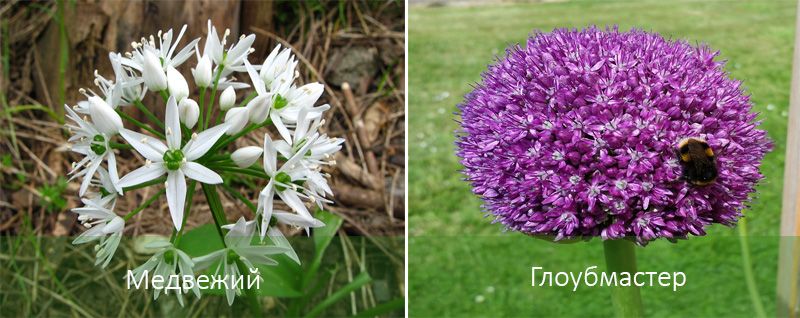
| Bearish | Grows up to 40 cm. Inflorescences are umbels consisting of star-shaped snow-white flowers. | |
| Victorious | Reaches 70 cm. Flowers are white and green. |
Planting and care
Planting and caring for the plant doesn't take much time. Onions prefer full sun, but partial shade is also suitable. Tall varieties (such as siculum) should be planted in areas protected from the wind to prevent gusts from breaking the stems. The plant thrives in moderately fertile, light soil. Allium requires good drainage; if left untreated, the bulbs will rot.
Purchase
Choose firm, large, fleshy, cream-colored bulbs that are free of dryness and mold. Planting material with new shoots is not recommended.
Open ground planting technology
Growing in open ground occurs in autumn or spring:
- The soil is dug up. Humus and wood ash are added to enrich the substrate with potassium.
- The bulbs are planted in moistened holes. The planting depth is equal to three times the bulb's diameter. The distance between holes is 30-50 cm.
- The soil is mulched.
Onions are also grown as seedlings:
- the seeds are sown in a substrate consisting of humus, peat and turf;
- the sprouts are picked;
- seedlings are periodically taken out into the fresh air to harden before planting in open ground;
- plants are transplanted to a permanent location after 2-2.5 months;
- moistened planting holes are 10 cm deep.
Indoor planting technology
Step-by-step planting in indoor conditions:
- Choose a deep pot with plenty of drainage holes. Excess water will kill the plant.
- A drainage layer of fine gravel and perlite is placed on the bottom of the flowerpot.
- Soil is poured on top and the bulb is planted in it.
- The planting material is sprinkled with substrate, and the soil is lightly compacted.
- The soil is watered. If necessary, add soil (there should be a 1.5-2 cm gap from the top of the pot).
Care Features
When watering, you must adhere to the following recommendations:
- Stagnation and excess water are more harmful to a plant than a lack of water.
- Moderate watering is necessary during the growing season, when leaves and inflorescences are forming.
- Water as needed. More frequently in dry weather. During rainy weather, water as the top layer of soil dries out.
Rules for applying fertilizer:
- Fertilizing is done during the growing season. This helps the plant cope with increased stress.
- In spring, feed with nitrogen-containing mixtures.
- In summer, mineral fertilizing is recommended.
- In September, dry phosphorus-potassium fertilizers are used. This prepares the allium for winter.
- During the cold season, mulch with humus and peat.
Reproduction
Allium is propagated:
- bulbs;
- seed;
- bulblets;
- by dividing the rhizome.
In the first case, it's not recommended to sow underdeveloped seed pods. Otherwise, the plant will have a dull color. Almost any onion variety can be propagated this way. The downside is that the allium will only bloom in the third year at best.
With vegetative propagation, flowering occurs as early as the first year. However, not all allium species can be propagated this way: many do not produce "pups," and not all have rhizomes suitable for division.
Some allium varieties produce bulblets. These are small bulblets that grow not in the ground, but at the top of the flower stalk.
Diseases and pests
Onions are affected by the following diseases and insects:
| Disease/Pest | Damage | Control measures |
| Peronosporosis | Blurred greenish spots appear on the foliage. A grayish-purple mycelium forms in a bloom. The foliage turns yellow, brown, and dries up. | Diseased foliage is collected. Bushes are treated with commercially available products (Bordeaux mixture, copper oxychloride, Kartocide, Ridomil). |
| Rust | In spring, orange plaques appear on the foliage. After a while, red-yellow spores form. The foliage dries up. | Affected leaves are destroyed. Onions are sprayed with copper-containing products (copper oxychloride, Bordeaux mixture). |
| Smut | Dark gray streaks appear. Leaf blades and peduncles become curved. | |
| Heterosporium | The leaves turn yellow and become covered with a brown coating. The greenery dries up, and the yield declines. | |
| Cercospora leaf spot | Damage appears in early summer. Distinct gray spots with a thin yellowish border form on the leaves and stems. The affected areas do not rot. The foliage turns yellow and dries out. | |
| Golden bronze beetle | This is a large green insect with a bronze or golden sheen. It reaches 14-20 mm in length. If you look at the photo, you can see transverse white lines on the wings. The larvae are thick, snow-white, and up to 60 mm long. The pupa is yellowish and forms in an earthen cocoon. The pests fly from May until late summer. | Beetles and larvae are collected. |
Use in landscape design
The following varieties are used to decorate rock gardens and rockeries:
- Karatavsky;
- Pskem;
- Summer beauty.
Landscape parks are decorated with allium:
- Aflatunsky;
- victorious;
- gigantic;
- bearish;
- Globemaster.
Slime, angular, chives, and chameleon alliums look aesthetically pleasing in flowerbeds and landscape borders. Neapolitan and pink ornamental onions are used for forcing.
Large varieties are recommended to be planted throughout the flowerbed (for example, Mount Everest). Smaller varieties should be placed in containers. Flowering alliums will decorate any garden plot.