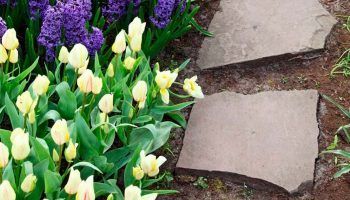
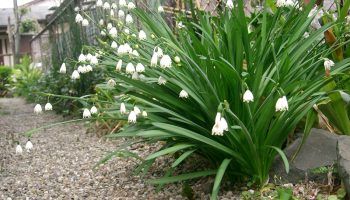
Daffodils are among the most popular flowers in gardens. This is not surprising, as they look beautiful in flowerbeds and exude an unforgettable honey-like aroma during bloom. They are also undemanding in terms of soil, moisture, and light. They tolerate low temperatures well and are resistant to many dangerous pests. However, some growing guidelines should still be followed. This article explains when and how to plant daffodils in the fall.
Content
Description of daffodils
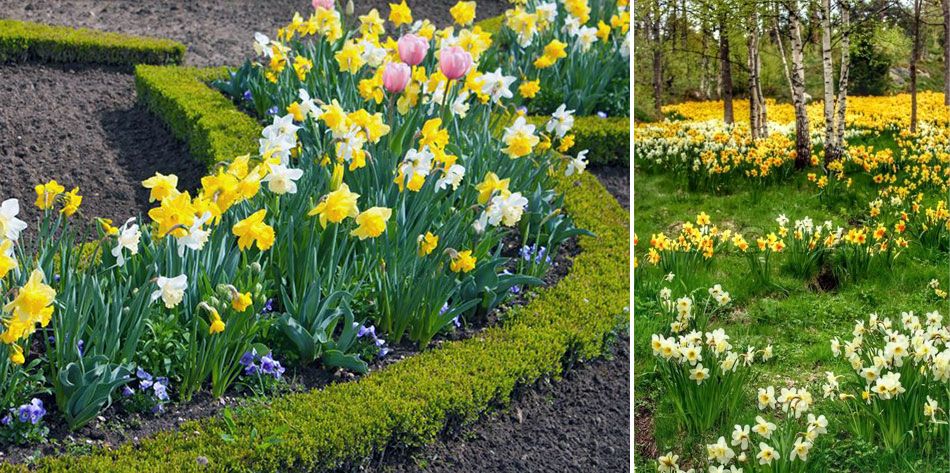
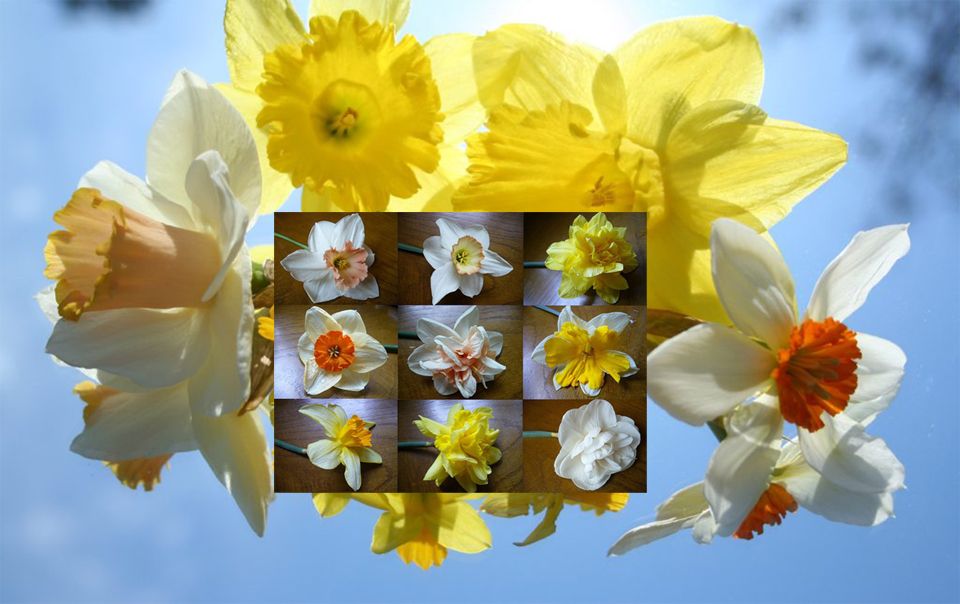
Narcissus belongs to the amaryllis family. The flowers are mostly white and yellow, emitting a delicate honey scent. They grow to approximately 20-45 cm in length. The bloom period lasts only two weeks, from late March to late May.
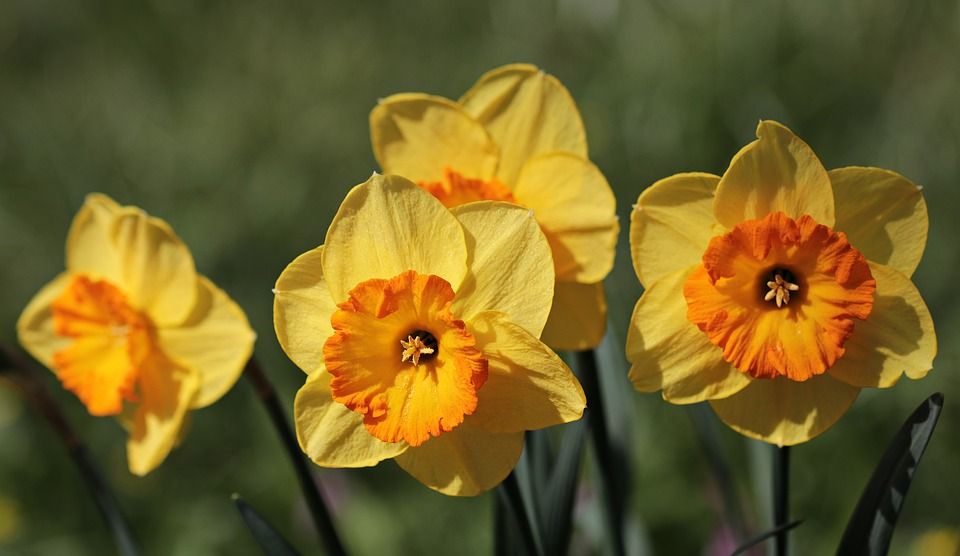
Care and planting of narcissus in open ground are the same for all varieties. This perennial flower can grow in the same spot for about six years without replanting. It requires little care and thrives in any soil. Its leaves are reliably protected from rodents due to the toxic substances they contain.
When to plant daffodils in the fall
Daffodils are planted at roughly the same time of year. Autumn is considered the optimal time for planting daffodils.
The choice of month is determined by the region's climate, variety, and quality of planting material. It's also important to follow the lunar calendar's recommendations.
Read the article to learn about different varieties of daffodils and how to care for them.Narcissus: description, planting, care.
When choosing planting dates, keep in mind that it will take 2-3 weeks for the bulbs to take root.
By region
When choosing planting dates for a specific region, the primary consideration should be soil temperature. To ensure the tubers have time to germinate, the temperature should be at least 8–10°C and remain at this temperature for 2–3 weeks.
Which month to plant daffodils depending on the region:
- In the Moscow region, the Volga region, the Central Black Earth Region, and the Leningrad Region (central Russia) – from mid-August to mid-September. In early autumn, work can begin five days earlier. The temperature for planting outdoors should be around 9–10°C and remain at this level for about two weeks.
- In the Urals, it's early August. If the weather is dry and warm, you can stick to the same dates as in central Russia.
- In Siberia, planting is carried out until the end of August. Depending on the soil temperature, this period should be determined.
- In the south, in Primorye, it will last until late September or early October. Weather conditions must be observed.
During this period, the soil temperature will be suitable. The tubers should take root before the soil freezes, but they will not grow if the weather remains warm for a long time.
Daffodil planting dates according to the lunar calendar in 2024
The moon has a positive influence on all living things, including plants. Therefore, when choosing a day to plant daffodils, it's recommended to consult the lunar calendar for the current year. It indicates favorable and unfavorable dates for gardening, vegetable gardening, and flower gardening.
The following are considered favorable dates for planting daffodils in 2024:
- August: 1-3 (until 14:08), 7-11, 24-26 (until 06:04), 28 (from 11:47)-30 (until 20:08).
- September: 4 (from 19:11 am) - 7 (to 08:18 am), 12 (from 05:36 am) - 14 (to 10:52 am), 16 (from 12:39 pm), 20 (from 12:02 pm) - 22 (to 13:23 pm), 24 (from 17:49)-26, 29 (from 12:42)-30.
- October: 9 (from 12:38 pm) - 11 (to 19:31 pm), 18 (from 14:26 pm) - 19, 26 (from 18:47 pm) - 31 (until 20:29 pm).
Unfavorable and prohibited days:
- August:3 (from 14:13),4, 5 (until 14:13), 18, 19,20 (until 21:25).
- September: 2, 3, 4 (with (04:55), 14 (from 10:52 a.m.)-16 (until 12:39 p.m.), 17, 18.
- October: 1 (from 21:49),2,3 (until 21:49), 11 (from 19:31 pm)-13 (until 22:55 pm),16 (from 14:26),17, 18 (until 14:26),31 (until 15:46).
Read the articles:
- Lunar calendar for the gardener for 2024.
- Lunar calendar for the gardener for August 2024
- Lunar calendar for gardeners for September 2024
- Lunar calendar for the gardener for October 2024.
Is it possible to plant daffodils in spring?
There's some debate about spring planting. While it's possible, the daffodil will grow slowly and bloom much later. If you're choosing a time for planting, the best month is April, or at the very least, late March. You should wait until the snow has completely melted and the temperature has warmed to 7-8°C.
Planting daffodils in open ground in autumn: step-by-step instructions
At the initial stage, planting daffodils in open ground begins with preparation, which includes several steps:
- selection of seed material;
- location;
- priming.
Selection and preparation of seed material
It is important to purchase high-quality and good planting material. It is best not to purchase bulbs by mail delivery. It is unknown what kind of tubers will be sent. If you buy planting material in a store, you can examine them and choose the ones you like yourself. It is best to purchase planting material immediately before planting. In temperate climates, where autumn is early and winter sets in quickly, this is August and September, while in southern regions, you can buy tubers for planting later.
It is not recommended to purchase daffodil bulbs:
- in the spring;
- dug up immediately after flowering or with roots and stems;
- after the ground freezes and frost sets in.
The choice of planting material must be approached with extreme responsibility. They quickly spread across the site to healthy plants. When choosing, pay attention to the fact that the bulbs meet the following characteristics:
- dense to the touch;
- have dry scales of a brown or golden hue;
- the bottom is smooth and dry, without damage;
- There are no mechanical signs, rot, mold or disease on the bulb itself.
Important! You cannot buy tubers that have sprouted and are surrounded by smaller bulbs for autumn planting.
To prevent diseases and pests, bulbs must be disinfected before planting. To do this, they can be soaked in a fungicide solution (Maxim Dachnik, Fundazol, etc.).
In addition, the planting material must be treated with a growth stimulator (Zircon, Epin-Extra).
This will help the bulbs take root better.
Important! When using commercial growth stimulants and fungicides, you must strictly follow the instructions on the packaging.
If possible, it is better to dig up the bulbs from your own garden plot after the bud has finished flowering. It is advisable to inspect the seed on the spot for integrity and rotten parts; it should be large, at least 4-5 cm in diameter and hard to the touch. Smaller bulbs will need to be germinated for several more days or even weeks.
Before planting, it is essential to treat them with a weak solution of fungicide or potassium permanganate; this will protect the future flower from diseases and pests. Tubers from the home garden should be stored in containers or baskets that allow air to pass through. The room must be well ventilated and the temperature up to + 24 degrees.
Location
The growing area should be level and well protected from wind and drafts, with sunlight reaching the flowers. If the garden area meets these requirements, the daffodils will bloom longer. Planting can be done next to deciduous trees; the plant begins to bloom before the leaves open, so there will be enough sunlight.
You cannot plant daffodils under bushes with dense and thick crowns. Also, avoid planting in very wet soil, especially if there is groundwater in it, as the tubers will quickly rot and become infected with fungal pests. The groundwater level should not be higher than 55-60 centimeters.
Soil
The flower can easily grow in any soil: sandy or clayey. The only important condition for the growth of narcissus is the presence of a drainage layer and abundant, timely watering without allowing water to stagnate at the roots. The plant cannot be planted where it was previously grown. tulips, crocuses, irises, hyacinths and others bulbous species, as well as phloxes, chrysanthemums. Places where tomatoes, cucumbers, various herbs and cereal crops were previously grown are suitable.
The soil must be well fertilized. If the soil in the garden is sandy, then you need to add humus, and if it is clayey, then add sand. The main thing is not to add fresh manure to the soil, approximately 20 kilograms per 1 square meter. This fertilizer will still not be enough for the flower, so in June you need to prepare the soil for planting: dig it up and loosen it, adding potassium salt or superphosphate per square meter; if you have humus, that will also be ideal.
Features of planting daffodils
Daffodils should be planted 2-3 months after being dug out of the ground in mid-August, because the flower tubers do not store well. They have unprotected and delicate scales that are similar to tulip bulbs. Therefore, the moisture evaporates instantly and they dry out. Before carrying out the work, it would be correct to sort the tubers by size.
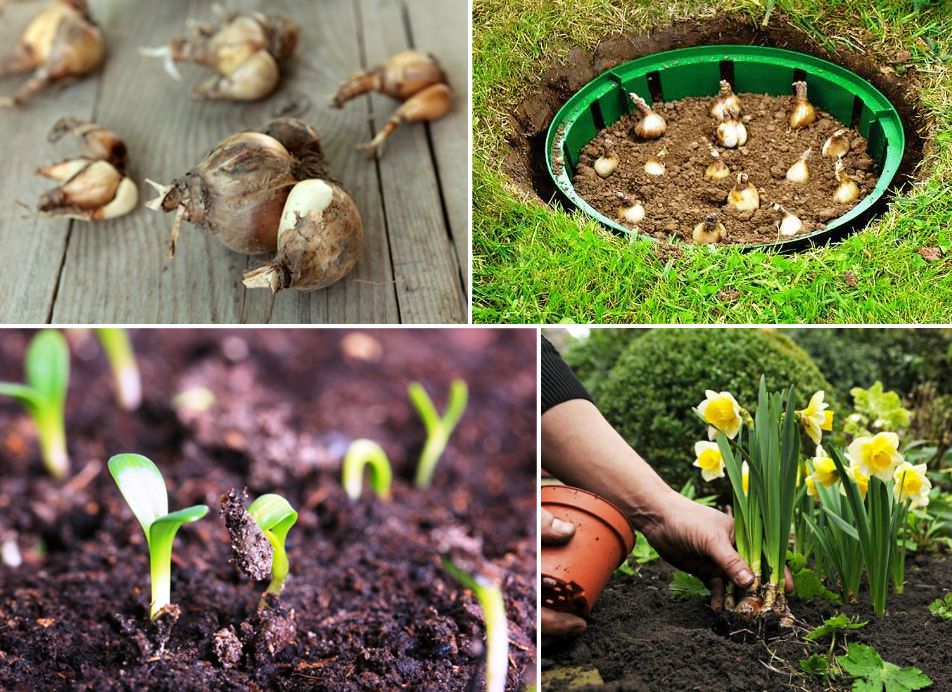
The distance between the holes in large tubers is 20 cm, in small tubers – 8 cm. Depending on their diameter, the planting depth is determined. It should be equal to three heights of a large onion, starting from the very bottom, which is approximately 15-20 cm from the seed to the soil surface. This type of planting material is called “extra” due to its size; it is usually planted for the flowering of the plant. If the tuber is small or a baby tuber, then the height is 8-15 cm, such bulbs are suitable for propagating narcissus, especially if it is a valuable variety.
Also, before planting daffodils in open ground in the fall, you should consider the following nuances:
- If the planting material is placed higher, the plant will bloom earlier than expected and produce more babies;
- If you plant the plants too deep, flowering will start later and there will be fewer babies.
When calculating the assessment, you also need to take into account the soil type. If it is heavy and clayey, reduce it by 2-3 cm. If the soil is light and sandy, on the contrary, dig holes 2-3 cm deeper. The distance between holes should be 15-20 cm.
If daffodils are planted for early germination and abundant flowering, they are planted at a slightly shallower depth than usual. And for a later date and slow growth of the babies on the tuber, a greater depth is made, with drainage generously poured into the bottom of the hole.
When the holes are prepared, fill the bottom with sand. There is no need to make the layer too thick, a thin sand cushion is enough. This is necessary to ensure drainage to prevent the bulbs from rotting and becoming moldy.
The onion in the middle of the hole must be upside down. That is, the sprout should look up. If you accidentally or unknowingly plant an upside-down bulb, it will still sprout, but it will expend a lot of effort and energy and, most likely, will be more susceptible to disease than other seedlings and will definitely grow and bloom more slowly.
Next, the bulb is covered with soil. It needs to be compacted a little to avoid any voids. Additionally, it is recommended to add a small amount of wood ash.
Planting takes place in late summer and early September. But, in wet weather, use a small amount of water to avoid causing rotting. In cold weather, to protect the bulb from freezing, and in dry and hot weather, to retain moisture in the soil, the planting site is mulched: covered with leaves, compost or peat.
Advice! To protect the tubers from moles and rodents, you can plant the bulbs in special plastic baskets. These are containers that have drainage holes in the bottom. The basket is placed in the hole, a thin layer of soil is poured onto the bottom, then sand. Otherwise, the landing rules are standard.
Planting in containers
Daffodils can be grown not only in open ground, but also indoors. Large bulbs germinate and bloom well. Daffodils can be grown in pots with a wall height of 15 cm and a diameter of 9-13 cm. A mandatory requirement is the presence of drainage holes at the bottom.
Planting in a container is carried out as follows:
- Place a 3-4 cm drainage layer on the bottom.
- Sprinkle nutritious soil on top.
- Place the bulbs and press them lightly into the soil. Their number equals the diameter of the pot. You can plant 3 pieces in a container with a circumference of 9 cm.
- Water and place the pot in a dark place with a temperature of + 5… + 8 ° (for example, on an insulated balcony). Store in this form for 3 months. Water moderately twice a month.
- After the time has elapsed, move the pot to a warm, bright place. Increase the number of waterings (adding water as the top layer of soil dries out).
- When sprouts appear, nitrogen-potassium fertilizers are applied. If during flowering daffodils are moved to a temperature of + 10… + 12 ° C, it will last up to 3 weeks.
When grown indoors, planting times are selected individually. If you want to achieve flowering in December, the bulbs are planted in September.
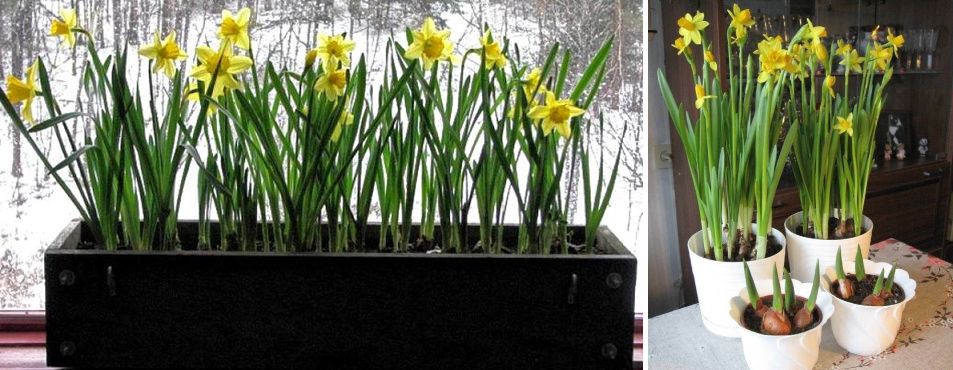
If you want to get beautiful daffodils by the beginning of spring, for example, by March 8, then you should start planting at the end of November.
Read more about forcing daffodils in the article Daffodils in a pot: planting and care,and also about forcing tulips, hyacinths.
Caring for daffodils after planting
Caring for daffodils after planting in late summer-autumn has one main goal - root formation. There is no need to add additional nutrient mixtures.
Watering is carried out as the top layer of soil dries out. After this, it is recommended to loosen the soil to break up the hard crust. There is heavy rainfall, plus it has become sharply colder, plantings need to be protected with plastic film. If this is not done, there is a high risk of tubers rotting.
Daffodils need to be protected from frost in winter. At the first frost, loosen the soil and mulch the plantings with peat, dry leaves, straw, sawdust, wood ash (layer 10-15 cm). Cover the plants with lutrasil or spunbond.
In conclusion, I would like to add that if you were unable to meet the planting deadlines, it is better to postpone the work until spring. In winter, store the bulbs in a dark room at a temperature of + 10… + 12 °C and a relative humidity of 70%. Inspect them regularly for signs of rot, damage and pests.
Top.tomathouse.com recommends: Narcissus - a rodent protector
Narcissus is one of the few plants that mice and other rodents do not eat due to the toxic substances contained in the tubers and leaves of the flower. That's why most gardeners plant them as protection when planting other flowers: tulips, lilies, fritillaries.
Gardeners' reviews of growing daffodils
I usually plant in late September. But you can do it now. Check the condition of the bulbs (sometimes they're already starting to put down roots).
September is already ending.
Last year I planted in early October. There was no winter or frost for a long time. Nothing came up.
In the spring, they appeared 10 days later than everyone else in our plots. But they also avoided some severe frosts. They bloomed well.
Friends, what do you think about the frost resistance of double-flowered varieties? My Obdam was the first to fall. The next day, I cut almost all of them, just to be on the safe side, but I actually planted them for cut flowers.
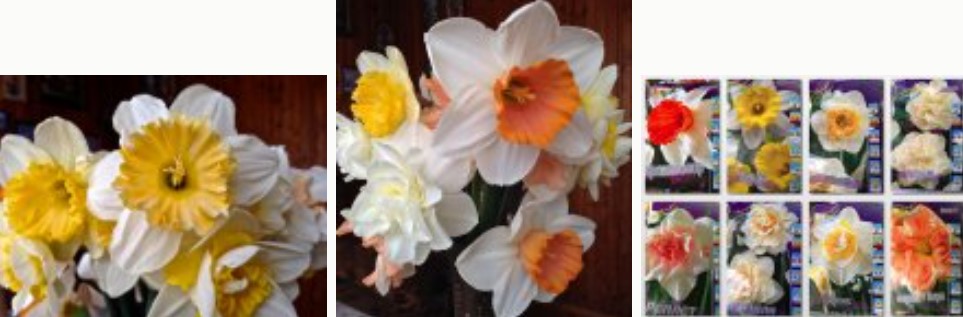
Somehow I haven't had a chance to test them with serious frosts, even though I've been indulging in double daffodils since 2007. It's the South after all.
Many people lie down because of the rain, but Obdam is holding up well, while Tahiti has wilted.
But what a smell Obdam has! Mmmmm
I generally try not to cut back my daffodils; they change so much from the moment they start blooming, it's so interesting to watch! It's different every day!
Daffodil fireworks bring joy to spring!
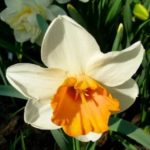
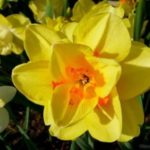
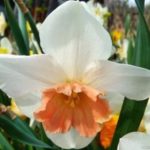
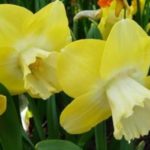
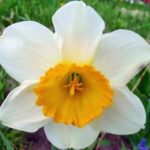
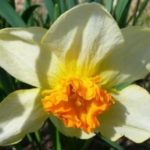
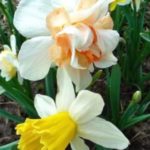
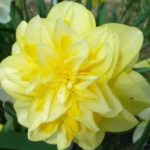
Double daffodils, especially late-blooming ones, require more frequent digging and are less winter-hardy than single-flowering varieties. Furthermore, the former grow and bloom well only in sunny locations.
The signal to dig up is the cessation of flowering.
You should plant them at the end of August, not dig them up. They'll already have roots by then.
Daffodils are dug up when the leaves have fallen over and turned half yellow (late June - early July). Store in a cool place for one month. In late July - early August, the bulbs are sorted. Large and medium-sized bulbs are planted for flowering. The young bulbs should be planted separately in the garden. Daffodils should be planted from August 10th to September 5th, no later. Double daffodils can be planted later, until September 15th - 20th, as they root quickly. During dry summers, the plantings should be watered generously.
Once daffodils have finished blooming, I usually don't plant anything in the same spot. I dig them up every year at the end of July. When tulips bloom, I usually plant marigolds and zinnias between them. Once tulips turn yellow, their bulbs are easy to pull out. Daffodils, on the other hand, are much more difficult to pull out; I dig up the bulbs with a pitchfork, so I don't plant annuals there.
Olga, daffodils can stop blooming for several reasons. The most likely is that they've become overgrown and aren't getting enough nutrition. When the leaf tips begin to yellow (in our case, this happens in the first or second ten days of July), dig up the daffodils, inspect the bulbs for disease, dry them in the shade, and replant them in August, dividing the nests into smaller sections. When choosing a site, remember that daffodils are moisture-loving plants, but like all bulbous plants, they don't tolerate stagnant water, so drainage is essential. If the soil is clayey, add some sand. When planting, it's a good idea to add compost (but never manure!) and ash to the hole. You can also add mineral fertilizer, but avoid nitrogen, as this is a fall fertilizer.
Another reason why daffodils have stopped blooming is bulb diseases or pests. This can be determined, again, by digging up the daffodils and inspecting the bulbs. If bulb rot or damage to the bulbs or roots is noticed, the disease or pest needs to be addressed. Control measures vary from case to case.