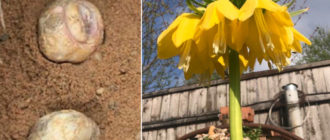
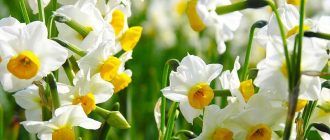
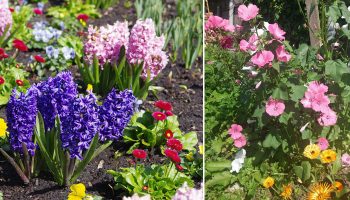
With the arrival of autumn, it's time to decide what your spring flowerbeds will look like. To enjoy beautiful primroses in the spring, you need to plant bulbous plants before the winter cold sets in. There are also bulbous plants that will decorate your flowerbeds in the fall; these should be planted in the spring.
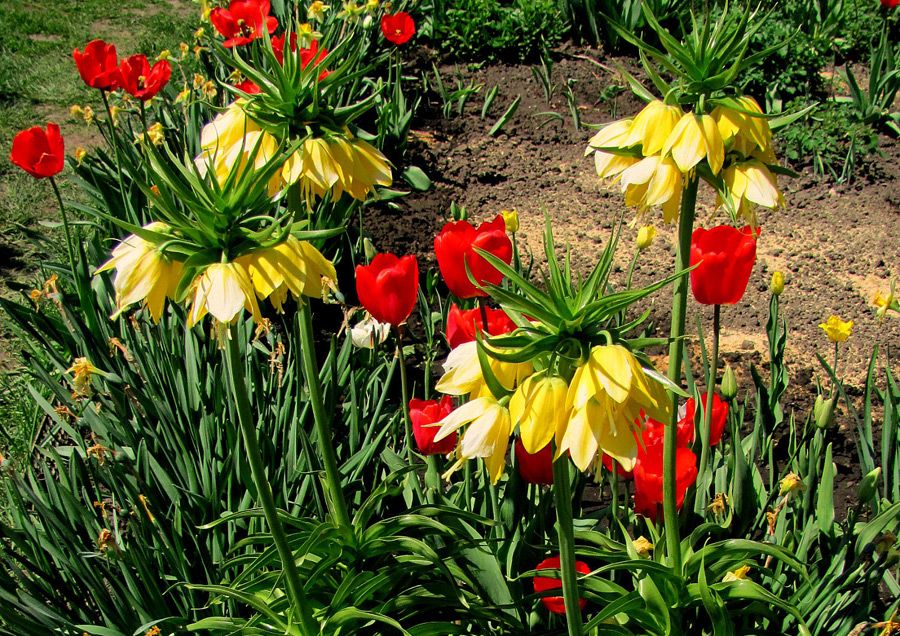
Many of them are easy-to-care-for perennials that, if properly planted in the ground and provided with suitable conditions, will grace your garden for several seasons in a row.
Planting bulbous flowers
Planting bulbous flowers before winter will ensure their early awakening and flowering.
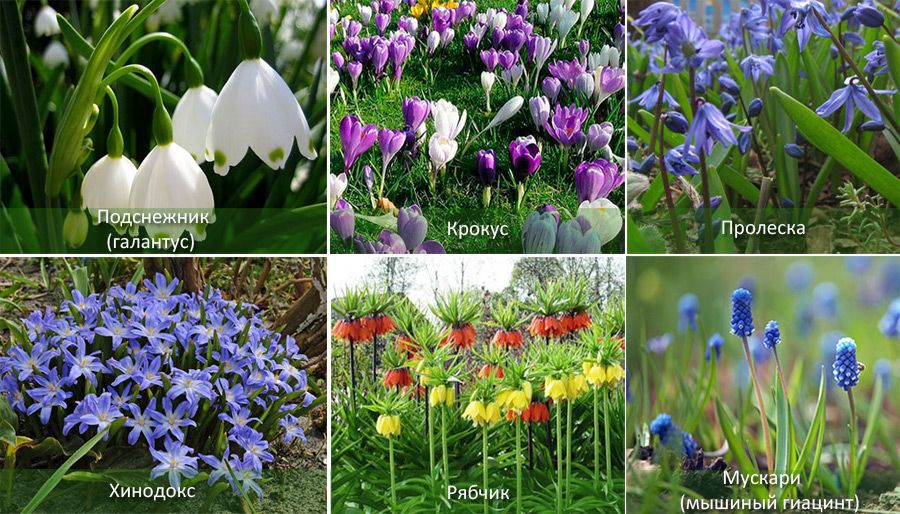
Planting bulbous flowers in autumn is generally suitable for spring primroses: tulips, crocuses, daffodils, spring snowdrop, hyacinths, allium (ornamental onion), muscari, imperial hazel grouseAll-season bulbous plants lilies It is also better to plant them in the first half of autumn until October, but not later, so that they have time to take root.
Some varieties are planted in August-September to give them time to take root, while others are planted only in late autumn to prevent germination and frost damage.
There are bulbous plants that prefer spring planting (gladioli, tigridia etc.)
Benefits of Fall Planting
Many experienced gardeners prefer to plant even those bulbous plants that can be planted in the spring in the fall, because:
- it is more easily tolerated by them in the cool season, when there are fewer pests (insects, rodents) and pathogenic bacteria, and the soil is still warm enough for the roots and underground shoots to germinate;
- During this period, natural stratification of the bulbs in the soil occurs, which has a beneficial effect on the endurance and strength of the plants;
- these flowers are not afraid of spring frosts after thaws, because they have had time to harden off;
- when planted in autumn, growth and abundant flowering in spring begins earlier than usual;
- In autumn there is a lot of rain, providing sufficient soil moisture and the bulbs do not need to be watered until they take root;
- at this time you can buy high-quality bulbous specimens at a good price on sale;
- In the fall, when the harvest has been gathered and gardening work is finished, there is more time to work on flower beds.
Description, planting months, characteristics of spring-flowering bulbous plants
Features of planting bulbous ornamental plants in autumn:
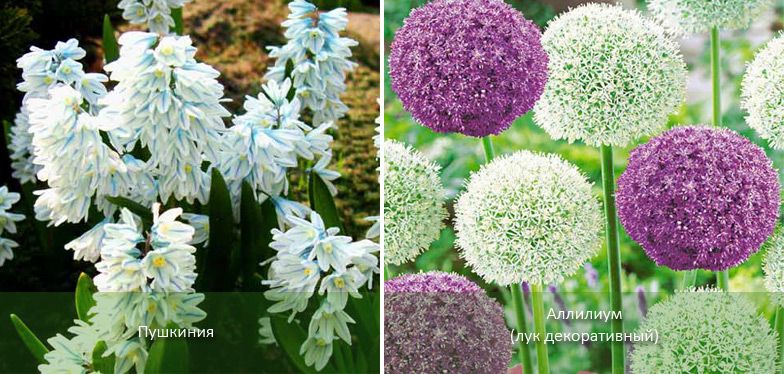
| Name | Description | Month and planting features |
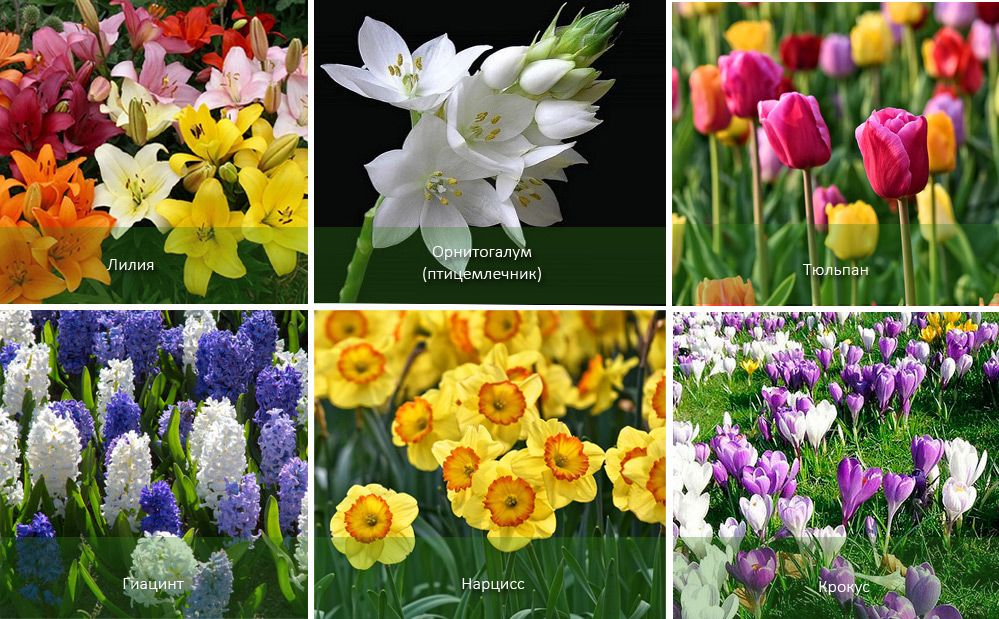
| Tulips | A perennial spring primrose, 15-70 cm tall, from the Liliaceae family, with a short growing season. There are many cultivars and petal colors. The bulbs are ovoid or pear-shaped, varying in size and color depending on the cultivar. | The timing of autumn planting depends on the region: in the Moscow region - from the end of September to mid-October, in Siberia - from the end of August to mid-September. Select large, healthy bulbs, place them in the refrigerator overnight, and then treat them with antifungal agents. Plant in a well-lit, draft-free location. Ensure good drainage to prevent root rot, and the soil should be fertile. Plant the bulbs 10-18 cm deep (deeper in loose soil). Space them 10 cm apart, and 25 cm between rows. |
| Daffodils | Herbaceous plants belonging to the Amaryllis family, there are approximately 50 main species and 60 hybrids. The leaves are linear and basal, and the flowers are large, white, yellow, or pinkish. | Choose a well-lit (or partially shaded) planting site, protected from the wind. The plant loves moisture, but if overwatered, the roots will rot.
In the southern regions, planting occurs until the beginning of November, in the Moscow region - from mid-August to mid-September. Planting holes are prepared from 10 to 25 cm deep, depending on the size of the bulbs. Before filling the holes with the bulbs, add wood ash to each hole. |
| Snowdrop (galanthus) | The earliest snow-white flower is approximately 20 cm. Two oblong-lanceolate leaves emerge from the bulb almost simultaneously. Cultivated varieties: Snowdrop and Elwes. | They prefer areas with a lot of snowfall, bright but sheltered from direct sunlight. They reproduce well on their own, producing small bulblets. They don't like being transplanted.
Plant in July-September at a distance of 10 cm from the ground surface. |
| Crocuses | From the Iridaceae family. Height 20 cm, basal leaves, solitary flowers of various colors. | Planting time: from August to September. The hole depth is 10 cm. |
| Scilla (Scylla) | No more than 15 cm. Flowers are drooping bells, ranging in color from blue to purple, located on straight stems. Leaves are strap-shaped. | Plant at the end of August - beginning of September at a depth of 10 cm. |
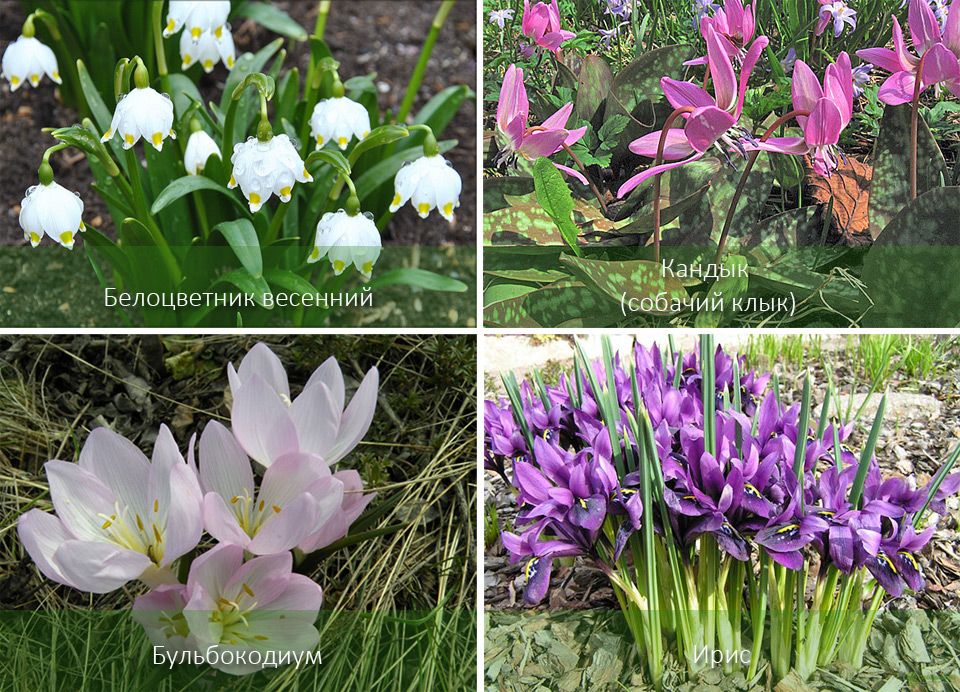
| Spring snowdrop | From the Amaryllis family. Reminiscent of a white violet or snowdrop. The leaves are basal, and the flowers are white and pleasantly fragrant. | Plant daughter bulbs from mid-August to mid-September, planting 10 cm deep. Keep in mind that these flowers grow quickly. |
| Bulbocodium (Colchicum) | A low-growing (10 cm) stemless perennial from the Liliaceae family. It forms basal rosettes of tufts of bluish-green leaves and 1-3 pinkish flowers. | Prefers sunny locations and fertile soil. Plant in September. Dig holes 8 cm deep. |
| Kandyk (dog fang) | Belongs to the Liliaceae family. Height: 10-30 cm, but can reach 60 cm under special conditions. Large, single flowers in pink, purple, yellow, or white. Bulbs are ovoid. | It prefers shaded areas and a level surface, but at elevated sites, as it does not tolerate stagnant water around the rhizomes. It also does not like overly dry soil. It prefers moist, acidic (or slightly acidic) soil, but not alkaline.
The bulbs are planted at a depth of 10-20 cm, depending on the variety (check when purchasing), and spaced 15 cm apart. They have no protective layer, so use wet moss or sawdust for storage for up to 20 days. |
| Hyacinths | Up to 30 cm tall, with a thick stem, small leaves, and bell-shaped flowers gathered in inflorescences. The bulbs are dense and fleshy. | Plant from October to mid-November. Dig holes about 10 cm deep, adding sand to the bottom. After planting, mulch the bulbs with compost. |
| Allium (ornamental onion) | With beautiful, spherical, light-purple inflorescences. Grows very quickly. | Plant in September. Choose a sunny location with good drainage. Fertilize with mineral fertilizers and ash during this period. Plant at a depth of 10 cm. |
| Muscari | A spring-blooming perennial, 10-40 cm tall. It resembles a miniature hyacinth. Its scent is reminiscent of musk. | Depending on the region, planting time ranges from mid-August to October. Holes are made 8 cm deep. |
| Imperial hazel grouse | From the Liliaceae family. They are distinguished by their high frost resistance. Tall trunks (1 m or more) bear clusters of variegated, bell-shaped flowers at the top. | The optimal planting time is between late August and early September. Otherwise, the plant won't have time to take root before the frost. Choose a sunny, wind-protected location. The soil should be loose and fertile. The planting holes should be 20 cm deep. |
| Chionodox | Unpretentious, one of the first spring flowers. The flower stalk is 20 cm. The flowers are bell-shaped, 2-4 cm in size, and come in a variety of colors: blue, light blue, white, and pink. | Plant at the end of August - beginning of September, at a distance of 5-10 cm from the surface. |
| Pushkinia | Elongated linear leaves grow directly from the bulb, and white or blue-tinted bells bloom on the peduncle. | It suffers greatly from weeds, which can completely destroy it if you do not remove them in time.
Plant in September to a depth of approximately 15 cm. |
| Ornithogalum (ornithogalum) | Height: 10-30 cm. Leaves are herbaceous and linear. Inflorescences are composed of six-petaled white flowers. There are varieties used medicinally (caudate). | Does not withstand stagnant moisture.
Planting in September at 6-10 cm. |
| Lilies | Liliaceae family. Over 80 varieties, varying in size, leaf shape, and flower shape. They have different growing conditions. Flowering from August to September. | Autumn planting is from August to September. At this time, you can dig up and replant the bulbs of overgrown plants or plant the bulblets from the leaf axils (to a depth of 2 cm). The bulbs are planted at a depth of 10-20 cm, depending on the variety. The planting site is mulched and covered with spruce branches for the winter. |
| Iris | Different varieties grow from 15 to 80 cm. The leaves are linear-elongated, appearing together with fragrant flowers, the colors of which vary. | They can grow for up to five years without digging. Plant in late September or early October, at a depth three times the bulb's height. |
Features of autumn planting
Planting bulbous plants requires observing a few conditions for full growth and flowering.
Landing dates
It's not always possible to accurately plant bulbous plants due to unpredictable weather. Therefore, it's important to know a few rules to keep your plants healthy, no matter what the weather throws at you.
The average time for bulbs to root in soil that hasn't yet frozen is about two weeks. If necessary, during unexpected autumn frosts, you can protect the planting site by covering it with spruce branches. Even if an early frost occurs, you can still wait for a thaw to plant the bulbs.
Selection of planting material
It's important to sort the bulbs before planting. They must be firm and undamaged, otherwise they will quickly rot in damp, cold soil.
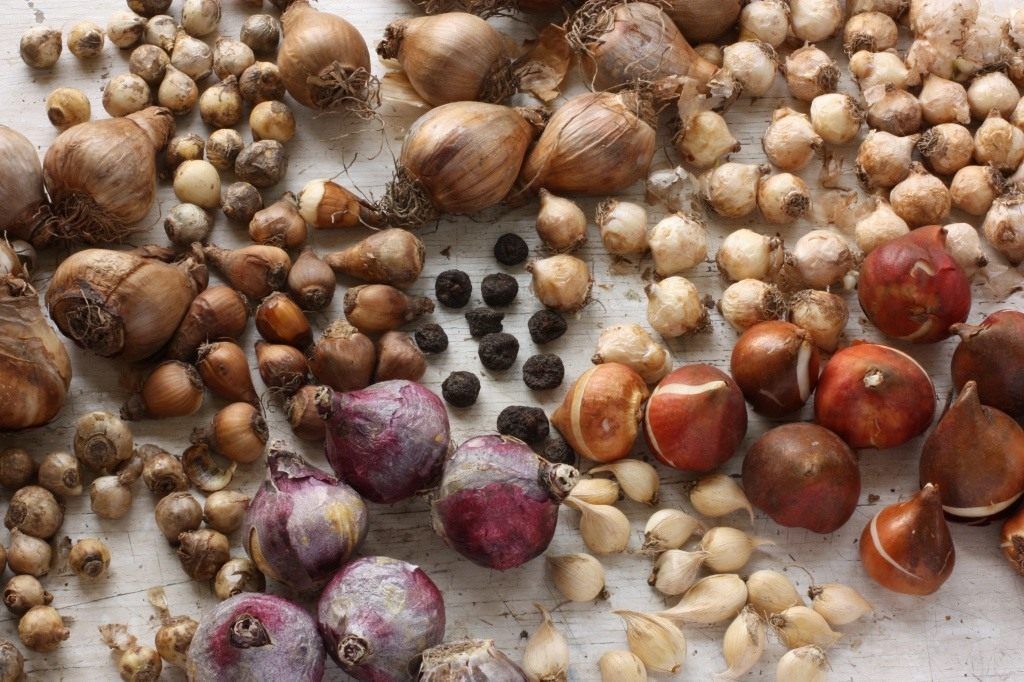
Only minor defects can be left if these areas are covered with dried crusts. They must be treated with antifungal agents.
Don't buy second-rate planting material at sales. They won't produce good plants.
Selecting a site and preparing the soil
For most bulbous plants, outdoor planting sites should be sunny (or at least partially shaded) and avoid a high water table (provide good drainage). These plants also don't like drafts.
The site must be prepared in advance, 2 months before planting:
- make the soil loose enough;
- normalize acidity;
- fertilize with compost.
Planting technology
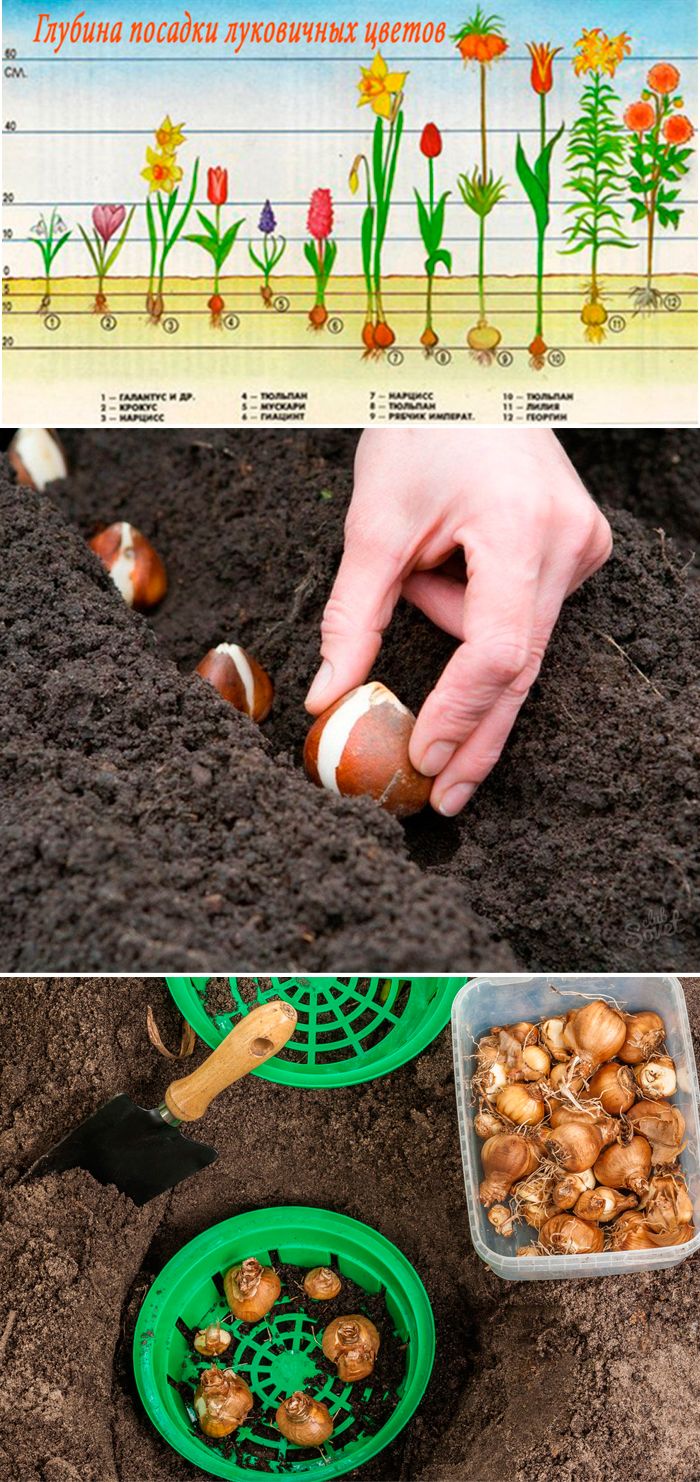
To ensure normal conditions for growing bulbous flowers, you need to follow several rules:
- treat the bulbs with fungicides to protect them from pathogenic microorganisms;
- if the soil is dry, moisten it first;
- do not loosen the soil before planting so that the roots do not rise during watering or precipitation, otherwise the plant will develop poorly;
- The depth and width of the holes depend on the variety and size of the bulbs, but it should be taken into account that if the holes are too shallow, the plant may freeze in winter, and if they are too deep, it will develop and bloom poorly.
In cold regions, it is better to cover most varieties of bulbous plants with insulation for the winter, and remove it in time with the arrival of spring to prevent them from rotting.
Planting bulbs in spring: gladiolus and others
Not all bulbous plants can withstand the frosty winters of the central zone, so some of them can only be planted in the spring, when it is already warm, or at the beginning of summer.
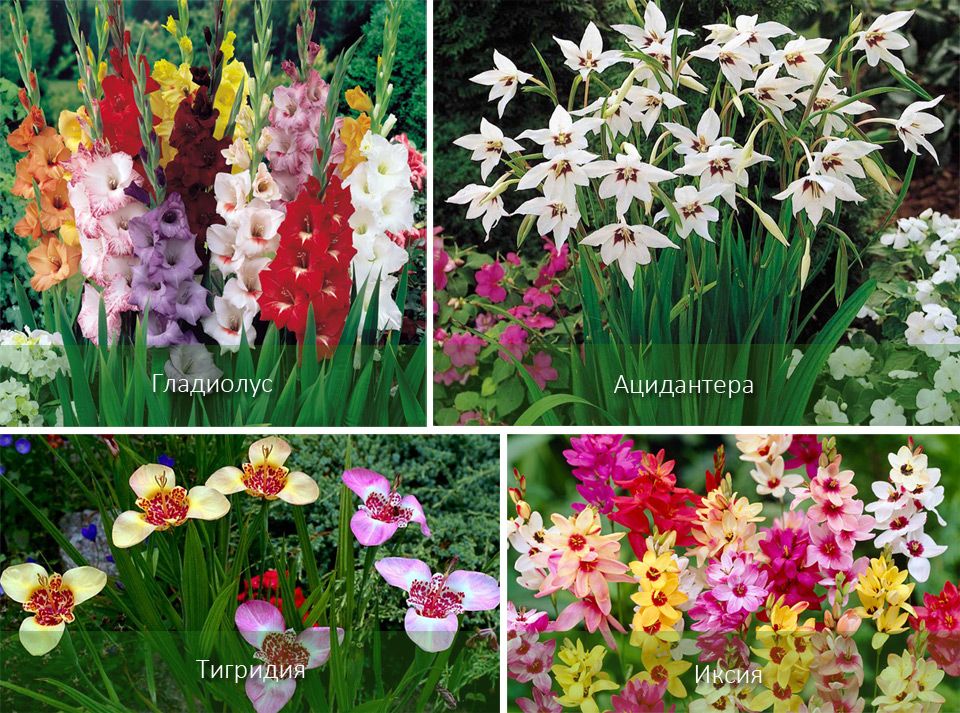
| Name | Description | Landing |
| Gladiolus | A tall, spike-like flower stalk composed of lily-like flowers of varying colors. The leaves are narrow. | Late April - early May (soil temperature +10°C). Sunny location, well-drained soil with a slightly acidic reaction. Plant only once in the same spot. Before planting, treat the bulbs and soil with Fitosporin-M. Plant them deep enough to a depth equal to three times the bulb's length. Cover with peat moss and water thoroughly. |
| Acidanthera | It's called the fragrant gladiolus (120 cm) because of its resemblance to this flower. Large flowers (approximately 12 cm). | Late April-May. Prefers sun, warmth, and moisture. Plant at a depth of 10-12 cm. |
| Crocosmia (montbretia) | No more than 1 m. Flowers (3-5 cm) are pure yellow or with reddish hues. | April-May. A sunny location without stagnant water is required. Depth: 7-10 cm. Flower stalks must be pruned after wilting. |
| Freesia | 30 cm-1 m. Fragrant flowers of various colors. Mainly grown as a houseplant. | May (soil temperature +10°C). Pre-plant indoors, no more than 4 cm deep (March). Protected, sunny location. When planting directly into the ground, plant 6 cm below the ground. |
| Ixia | 30-60 cm. Flowers from white to red, with a darker center. | May. Sunny location, with fertile, well-fertilized soil. Drainage is necessary. Planting depth: 5 cm. |
| Tigridia | The flowers are very short-lived, so it is worth planting several plants close together. | Late May. Plant indoors to speed up the process. A sunny location with well-drained, fertile soil is recommended. Plant at a depth of 5-10 cm, depending on the bulb size. |
And also in spring in May it is possible planting lilies.
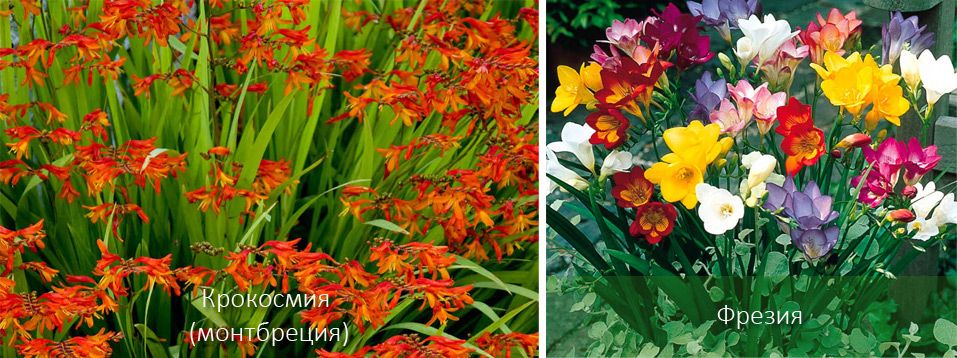
If you follow all the recommendations, you will be able to grow beautiful, hardy plants.
In the landscape, bulbous plants of different colors are combined to give unusual colors to flower beds and flower gardens.