Acidanthera (Muriel's gladiolus, Muriel's gladiolus) is a herbaceous perennial plant of the Iridaceae family. It originates from tropical Africa.
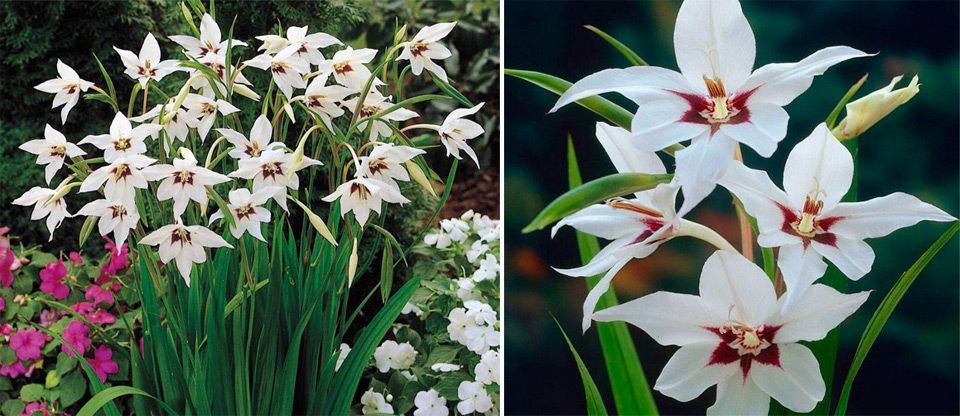
Translated from Greek as "sharp flower," due to the shape of its petals, it is also known as the fragrant gladiolus, due to its delicate aroma.
Content
Description of Acidanthera
The plant is a bulbous tuberous plant. It grows to a height of no more than 1 m. The sword-shaped leaves are approximately 60 cm long.
The flowers are six-petaled, pointed, triangular, and snow-white with a dark center. The sweet aroma attracts insects. The plant is cultivated both as a garden and indoor plant.
Types of Acidanthera
There are about 40 varieties of acidanthera.
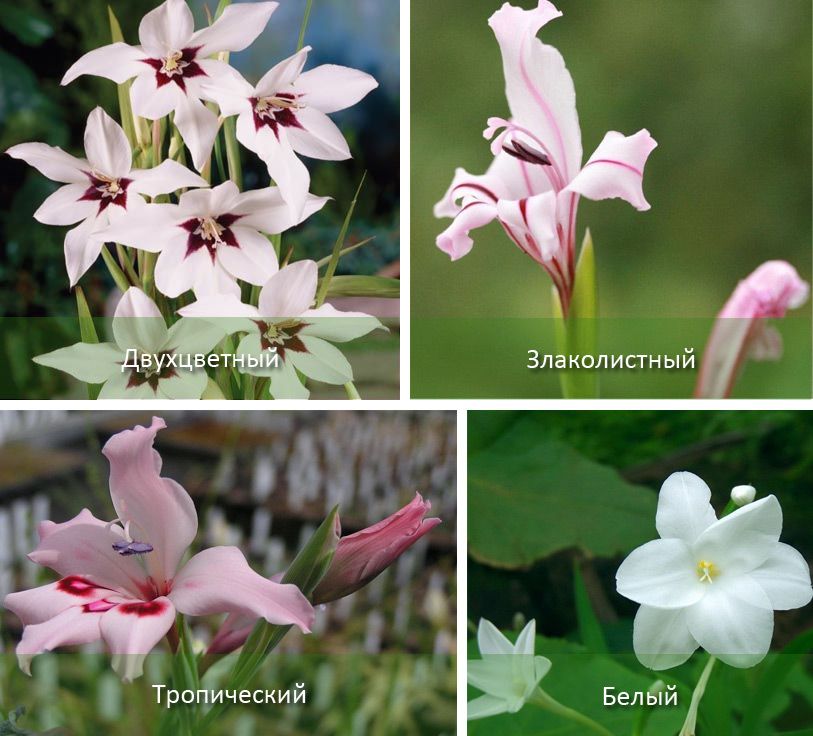
| View | Description
Height (m) |
Leaves | Flowers |
| Two-color | The most popular.
90-1. |
A pair of pointed, dark green ones, coming from the very root. | White with a black and red star in the middle (12 cm). |
| Tropical | Tall, heat-loving. 1.1-1.3. |
Ribbed, reminiscent of thick grass. | Pale pink with red or crimson strokes. |
| White | Straight stem.
Up to 1. |
Rich green. | Snow-white, more rounded and with a strong aroma. |
| Cereal-leaved | Small.
0.5-0.6. |
Thin compared to other types. | Smaller. Petals are light with purple stripes. |
Species that are not widely distributed: short-tubular.
Growing conditions for acidanthera
Indoor and garden acindanthera grows successfully if the growing conditions are met.
Selecting a location
Since the plant is of African origin, it requires a sunny location. In the garden, it should be in a quiet, wind-free spot with good lighting. Indoors, it should be planted in a south-facing window, but away from direct sunlight. It should be backlit in winter, and the temperature should be at least 20°C. In summer, it's best to move it outdoors.
Selecting soil
Choose slightly acidic or neutral soil. It should be well-loosened and contain peat. Drainage or planting in a raised area is essential, as the plant dislikes stagnant water.
At home, they use soil for flowers, and also use a composition of the following components: turf, sand and leaf humus (2:1:1).
Planting acidanthera
Flower planting is done according to a specific pattern.
In a container
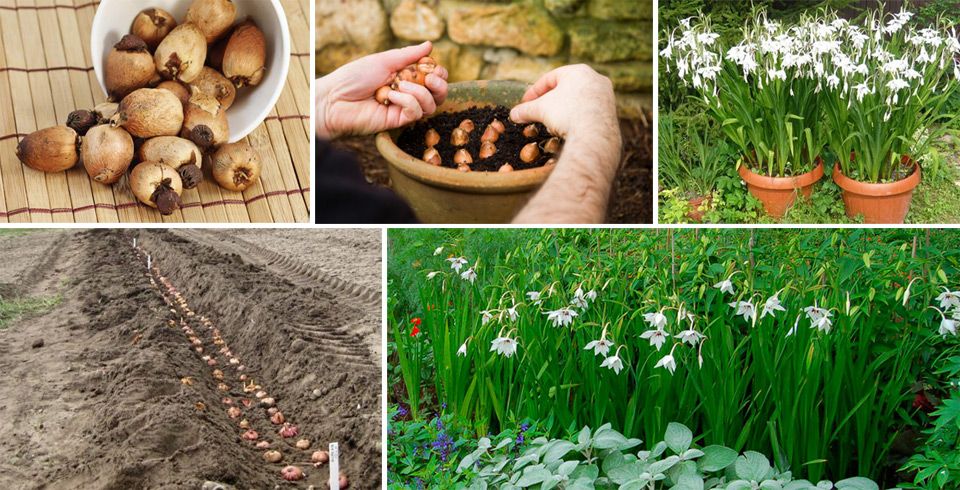
When growing acidanthera in containers, space the flowers about 20 cm apart. For solitary growth, use a pot no larger than 15 cm, as excess space will negatively impact the plant. It's recommended to plant 3-5 bulbs per container.
Into open ground
Planting acidanthera in open ground involves preparation:
- soils;
- bulbs.
The soil for planting flowers is prepared in the fall:
- They put in compost;
- Mulch the chosen place with straw, peat, humus;
- If necessary, add sand and drainage.
In early spring, add mineral fertilizers by digging. Plant in May, after the threat of frost has passed.
Prepare acidanthera corms 2-3 days before planting. This procedure includes:
- Visual inspection, cleaning from dried crust.
- Soaking in a weak solution of potassium permanganate for disinfection.
Planting pattern:
- depth - 10-12 cm;
- between plants - 15-20 cm.
Caring for acidanthera in the garden
Caring for the flower consists of:
- Regular watering, which should vary depending on the amount of rainfall, is essential. Drying out the soil and overwatering it will both negatively impact acidanthera. Reduce watering during flowering.
- Fertilize the soil weekly with mineral fertilizers. Apply compost at planting, nitrogen-containing fertilizers during growth, and potassium-phosphorus mixtures during flowering.
- Weeding, with obligatory loosening.
- Mulching.
- Trimming faded buds.
- Checking and protecting against diseases and pests.
- Proper preparation for the dormant period.
Wintering
To initiate dormancy, after buds have ceased to form, the above-ground portion of the plant is cut off, leaving the lower leaves intact. Leave the plant in the soil until the weather cools (October-November).
Overwintering can take place in the ground in southern regions. Mulching (with peat, pine needles, leaves, or cardboard) is necessary.
In areas with cold, long winters, dig up the bulbs with a large root ball, being careful not to damage them. Then, remove the soil, treat with a fungicide (to prevent mold and rot), and let them dry in a well-ventilated room for about a month.
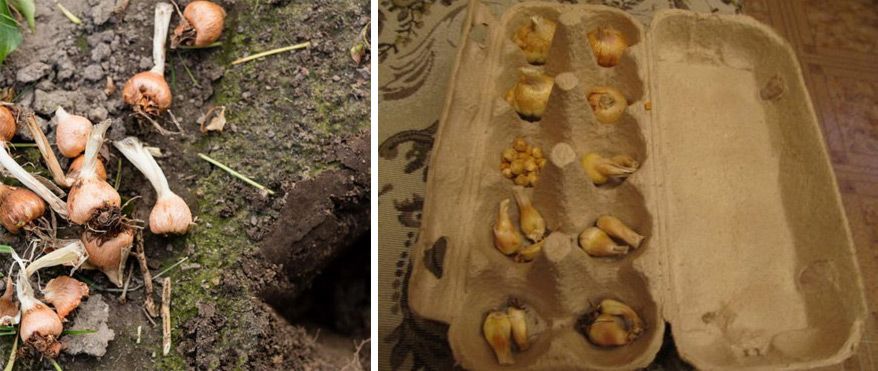
They are then placed in paper or boxes filled with sand. Store in a dry, ventilated place at a temperature of 15°C.
Houseplants also need rest. They are left in the soil, but moved to a dark room at 12°C, and watering is stopped.
Reproduction of Acidanthera
Acidanthera is propagated by seeds or daughter plants. The first method is very difficult and not always successful. The second is the most popular.
The offspring are separated from the mother plant in the fall when dug up. They are planted in early spring in a pot no more than twice its size apart. In the summer, they are transplanted into the ground. Such a young plant can bloom as early as the year of planting.
Diseases and pests
Both in the garden and at home, acidanthera faces troubles.
| Disease/pest | Symptoms
Reasons |
Preventive and mitigation measures |
| Rot | Rusty, dark spots.
Failure to comply with the watering regime. |
Treatment with fungicides (Photosporin-M), 1% Bordeaux mixture. |
| Snails | Presence of insects. | Ammonia, mustard powder. In case of infection: remove insects and affected foliage, treat with insecticides (Fufanon). |
| Slugs | ||
| Aphid |
Top.tomathouse.com recommends: acidanthera in the landscape
Acidanthera is used in group and mixed plantings, in rockeries, on alpine hills, and next to artificial reservoirs.
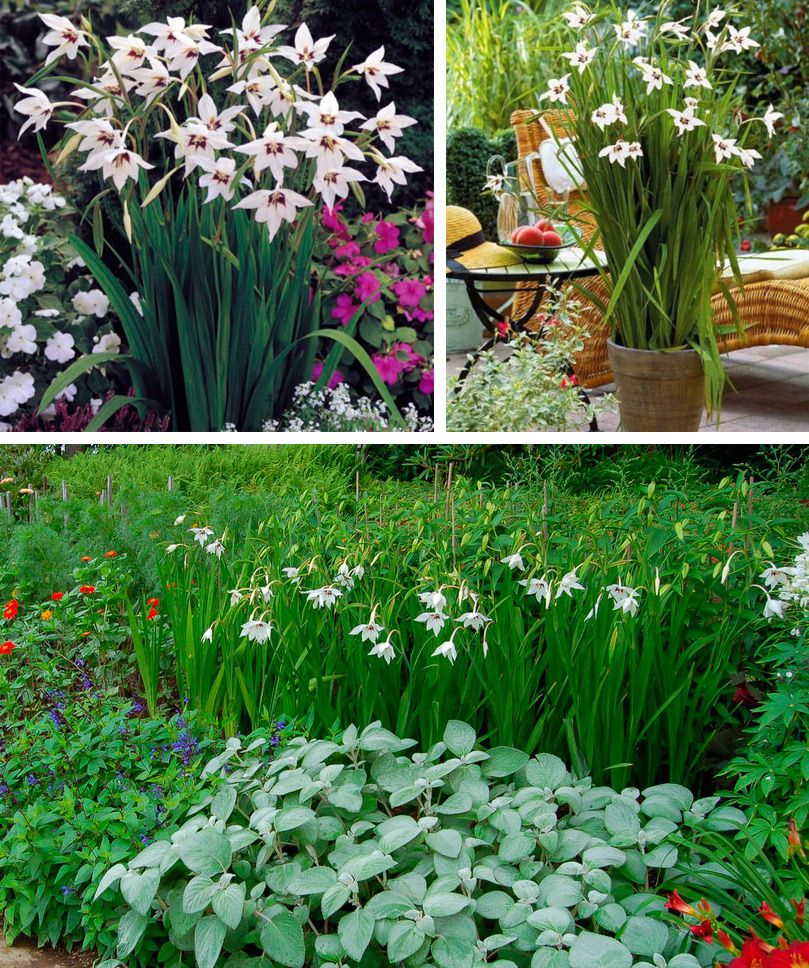
As a tall plant, it's used as a hedge. It's often grown in attractive containers in the garden. Planted nearby are begonia, lily of the valley, alyssum, hosta, brunnera, heuchera, aconite, salvia, and aster.