Ixia is a herbaceous perennial native to South Africa, comprising approximately 60 species. Its name, which literally translates from Greek as "bird glue," derives from the stickiness of its sap, which can attract insects and small birds. Due to its appearance, the flower has been cultivated as an ornamental plant since the mid-18th century. Currently, most Ixia species are hybrids, while species-specific specimens are rare.
Content
Description of the Ixia flower
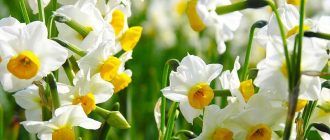
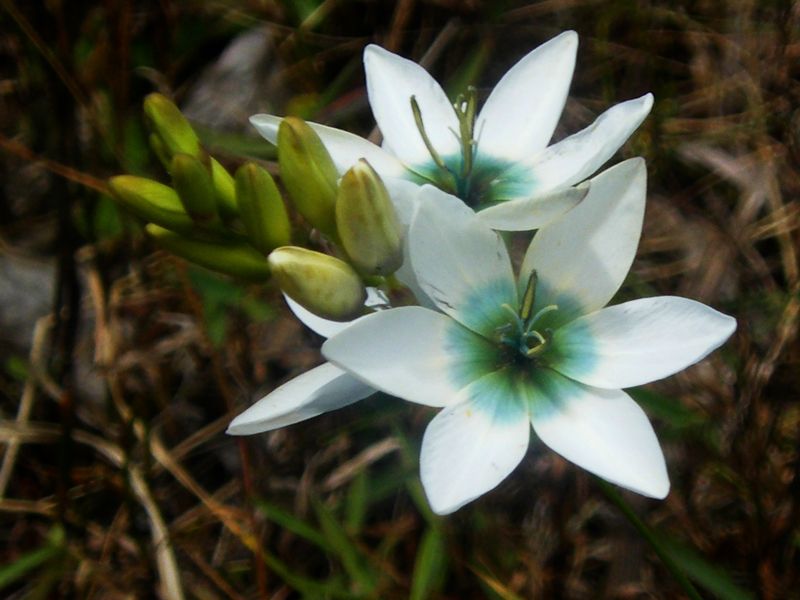
This perennial plant of the Iridaceae family can reach a height of 0.6 m. Its spike-shaped inflorescences are formed by small flowers that exude a distinctive fragrance. Elongated green leaves grow on a slender stem.
A single specimen bears a superficial resemblance to the bellflower family, but has six petals. This bulbous plant comes in a wide range of colors. A single inflorescence can include yellow, white, and red flowers.
Ixia begins blooming in midsummer and finishes blooming a month later. The plant can only be seen open in sunny weather, as it closes in cloudy weather and at night.
Types and varieties of Ixia
Planting different varieties in a plot will add contrast and brightness to any garden, but you can limit yourself to using one type.
Nice
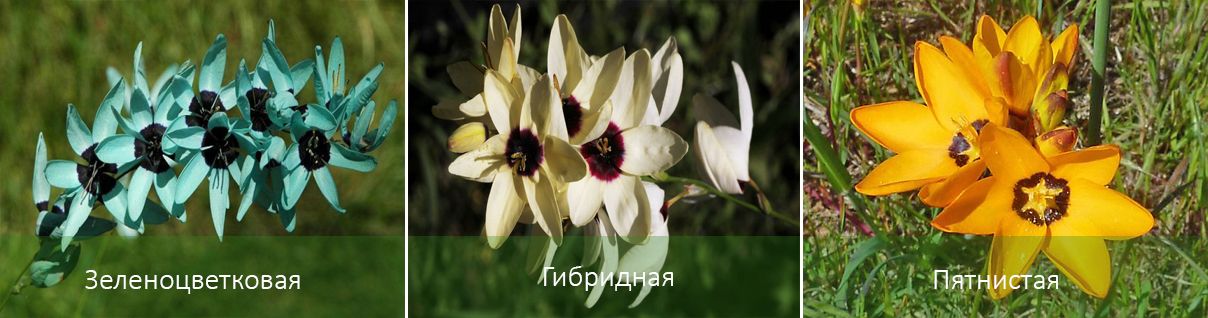
Highly prized for its ornamental qualities, particularly its unique arched petals. The stem grows up to 0.7 m tall, and its top is adorned with fragrant flowers—a favorite summer haunt for butterflies.
Green-flowered
This perennial species is remarkable for the shape of its flowers—they are small, flat, and star-shaped. The dark-hued throat stands out against the rest of the green and turquoise petals.
Hybrid
The size of the stem varies greatly depending on the variety.
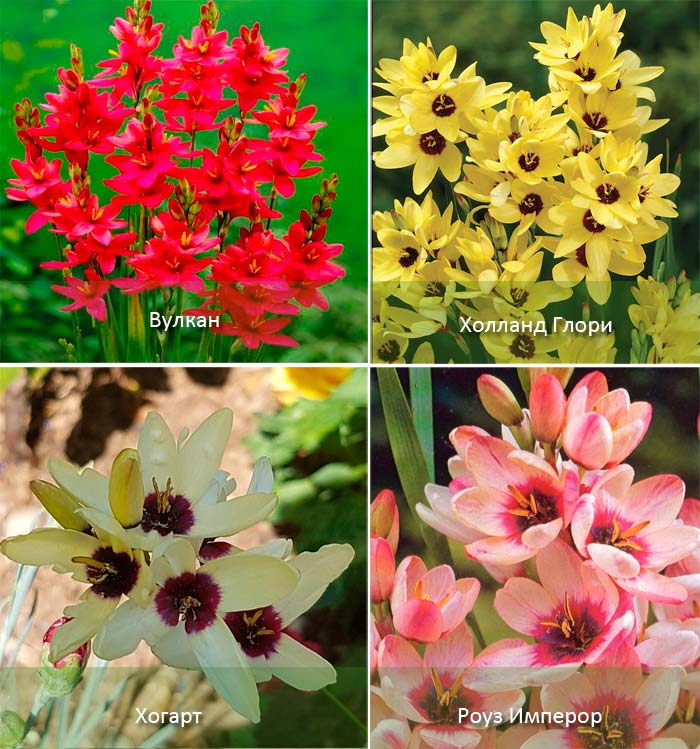
The color range of the inflorescences covers many shades – blue, yellow and red.
| Variety | Flowers |
| Blue Bird | Blue, white. |
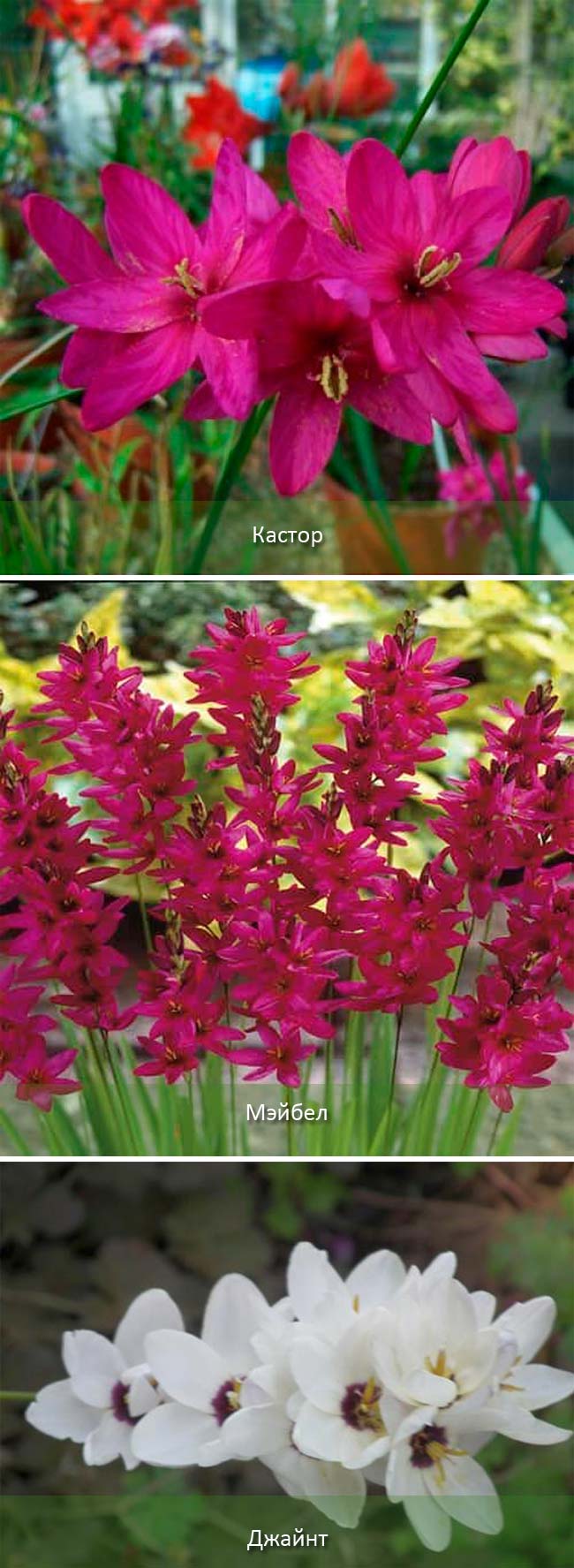
| Castor | Reds. |
| Giant | White and cream. |
| Early Supprize | White and red. |
| Hogarth | Creamy. |
| Holland's Glory and Market | Yellow. |
| Maybelle | Carmine red. |
| Volcano | Fiery hue. |
| Rose Emperor | Soft pink color. |
Spotted (maculata)
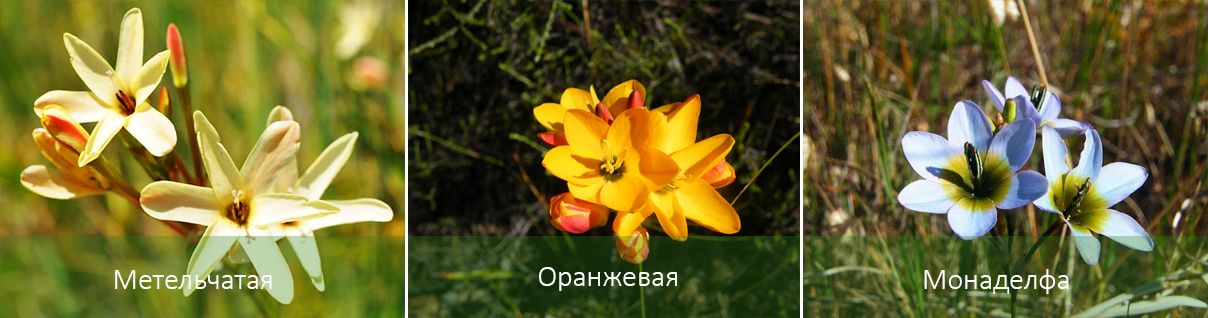
The most widespread species grows up to 0.5 m in height. Its throat contrasts sharply with the color of its petals. The flower can close at dusk. The spike-shaped inflorescences can reach 0.4 cm in cross-section.
Paniculate
The throat and petals are presented in multi-colored delicate tones.
Orange
A dwarf variety (no more than 20 cm). This easy-to-care-for plant can thrive even without proper care, provided it receives regular rainfall. This rapidly spreading variety can outcompete grasses. It is used decoratively in rock gardens. The dark throat contrasts with the rich orange petals.
Monadelfa
It is distinguished by the elongated shape of its pinnate leaves, reaching 20 cm in length. The inflorescences are formed by 10-15 purple flowers. Large, light-colored petals frame the yellowish center. The blooms are particularly lush and require little care. Pink, red, and many other colors are also found.
Mix
It boasts the greatest color diversity of all the other species. Its profuse flowering occurs rapidly and usually ends within three weeks. The variegated ixia does not grow taller than 0.5 m.
Planting Ixia in open ground
The key to successfully growing ixia is proper location and fertile soil, as the plant is easy to grow and requires minimal maintenance.
Location
The plant should be given an open, well-lit location, yet protected from strong gusts of wind and drafts, which can break or bend the stems of tall varieties. Shade or partial shade is undesirable for ixia, as this can impair not only the lushness of its blooms but also the rate of its initial development.
Soil composition, fertilizer
Soil requirements:
- Fertility;
- The presence of drainage (can be made using broken brick, expanded clay or crushed stone).
Fertilizing is recommended the day before planting, and well-rotted manure works well. Clay soil should be diluted with river sand at a rate of 1 bucket per 1 m². Ideally, the fertilizer should contain superphosphate, magnesium, and wood ash in a ratio of 2:1:10.
Time to plant corms
In warmer regions, planting ixia in spring and fall is acceptable; however, this will require additional insulation measures, such as increasing the planting hole's depth by a few centimeters. In other regions, planting in late spring is preferable.
Boarding procedure
The day before planting the tubers, specifically 2-3 weeks before placing them outdoors, it's necessary to begin the "awakening" and germination procedures. The most favorable time for this is mid-spring, due to ixia's heat-loving nature (air temperatures should not fall below 8°C).
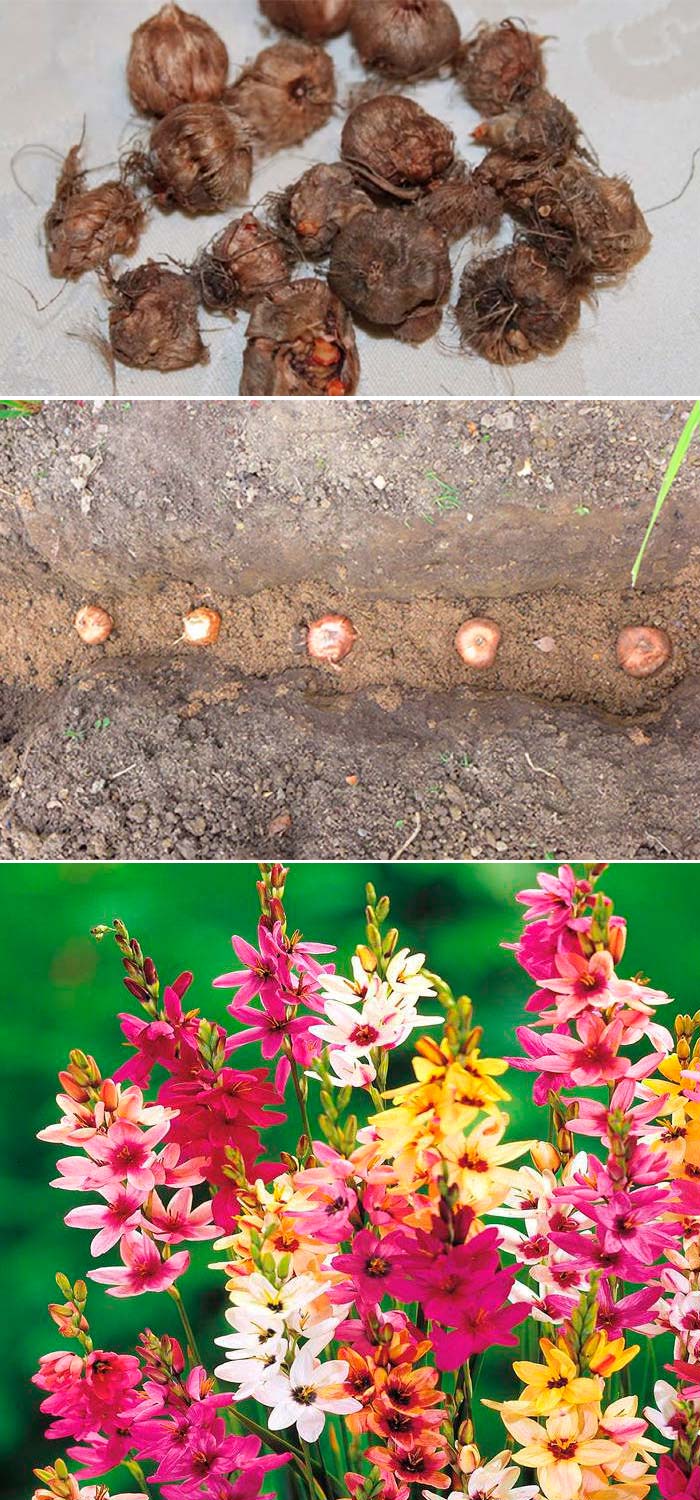
Mature tubers should be disinfected first by soaking them in a weak solution of potassium permanganate. This procedure should not exceed 20 minutes, and the tubers should be rinsed afterwards. Soaking is a preventative measure to prevent the development of fungal diseases. Then, you can begin the sprouting process, which is carried out as follows:
- Prepare a shallow, spacious wooden container and fill it with sand or sawdust. The recommended layer thickness is 10 cm;
- Place the tubers tightly inside relative to each other;
- Cover the container with plastic;
- Leave on the windowsill at a warm temperature;
- The container must be ventilated, as condensation will accumulate on the improvised lid. Do not allow this process to continue for longer than 10 minutes.
In about 15 days, sprouts should appear. Any unsprouted bulbs should be removed, and the remaining ones should be planted outdoors in late spring.
Planting involves several simple steps:
- Digging holes 7 cm deep, while remembering to maintain the required distance between holes of 10-20 cm;
- Placing tubers into holes;
- Sprinkle with a small amount of mulch.
Avoid watering the ixia immediately after planting; it will only need to be watered after 15-20 days. The appearance of small sprouts will be a telltale sign that watering is needed.
Reproduction of Ixia
This is done by cutting the corm with a sharp knife. Each individual section should contain an eye and a base with the rudiments. Before planting, it's important to treat the cuts. Ash or crushed charcoal are suitable for this. The plants will flower later that season.
Propagation by separating daughter corms is also common, but it's best to wait 2-3 years for them to flower. During the summer, the mature plant produces small corms, among which it's important to select the healthiest ones.
Then, the daughter tubers need to be stored in a cool place. For maximum comfort, sprinkle the bulbs with wood ash. With the onset of spring, the tubers can be planted outdoors, and with the arrival of autumn, they can be stored again. After two years, the plant will be ready to bloom.
Propagation by seeds
The advantage of seed propagation is the ability to preserve rare varieties and produce large numbers of young plants at a low cost. This method of cultivation is inferior to other methods only in the lengthy process. Sowing for seedlings should be done in late winter. To do this, you need:
- Mix garden soil with crushed peat and sand in a 2:1:1 ratio to create a soil for Ixia seeds. Then bake the resulting mixture in the oven to disinfect it.
- Fill a pre-prepared box with the mixture;
- Place the seeds on top and cover with a thin layer of the prepared mixture, then spray;
- To create a greenhouse effect, cover the container with glass, and ventilate the seedlings every 2-3 days;
- Some of the sprouted shoots should be removed in order to create a distance of 2 cm between young plants;
- Once the temperature outside warms up, harden off the seedlings by periodically moving them outside. It's important to gradually increase the time the ixia spends outdoors, so by late spring it will be growing successfully outdoors.
In the spring, the bulb that appears during the plant's first growing season should be removed. It should be overwintered in a cool, dark room, and then replanted in the spring for further growth.
Caring for Ixia
Necessary conditions for successful cultivation of ixia:
- The presence of bright sunlight (directly affects the saturation of the color of the inflorescences);
- High air temperature;
- Air humidity is above average.
The latter condition is achieved through regular spraying. Also, remember to weed, loosen, and fertilize the soil. It's important to promptly remove wilted and dead parts, as their presence can lead to a number of diseases or pest infestations.
After the ornamental plant has finished flowering, remove the flower stalks using pruning shears. This will maintain the ixia's neat appearance and also redirect the plant's energy from the surface to the underground parts (the tubers).
Watering
Ixia should be watered regularly immediately after the first shoots emerge. During flowering and bud formation, the plant requires increased moisture, which can be achieved by increasing the amount and frequency of watering. It's best to use slightly warm, settled water. Stimulants can be added to the water to promote flowering.
Top dressing
Ixia benefits from both mineral and organic fertilizers (nitroammophoska, Kemira Lux, potassium humate). Apply no more than once every two weeks; dilute the mixture strictly according to the manufacturer's instructions. Fertilizing should begin in early June and end after the plant has finished flowering.
Diseases and pests
The plant is virtually immune to insect pests and diseases. Only excessive soil moisture can trigger disease. If this occurs regularly, the ixia bulbs will become moldy.
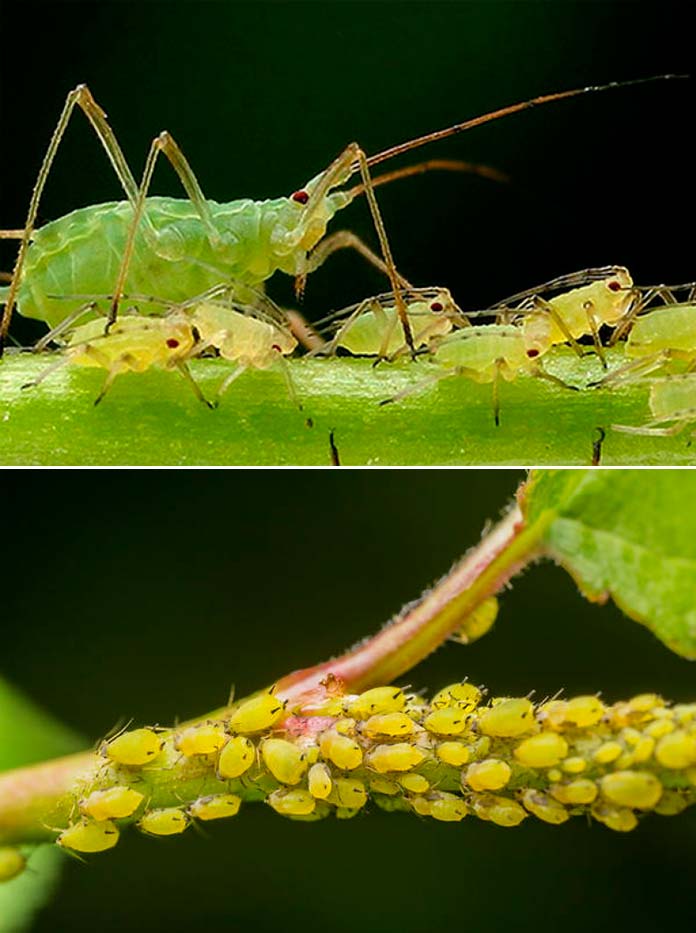
In rare cases, Ixia is attacked by aphids, which can be easily controlled by simply spraying each bush. In such cases, an insecticide solution is most effective, guaranteeing long-term protection against recurrence. Several treatments, once every 30-35 days throughout the season, are sufficient.